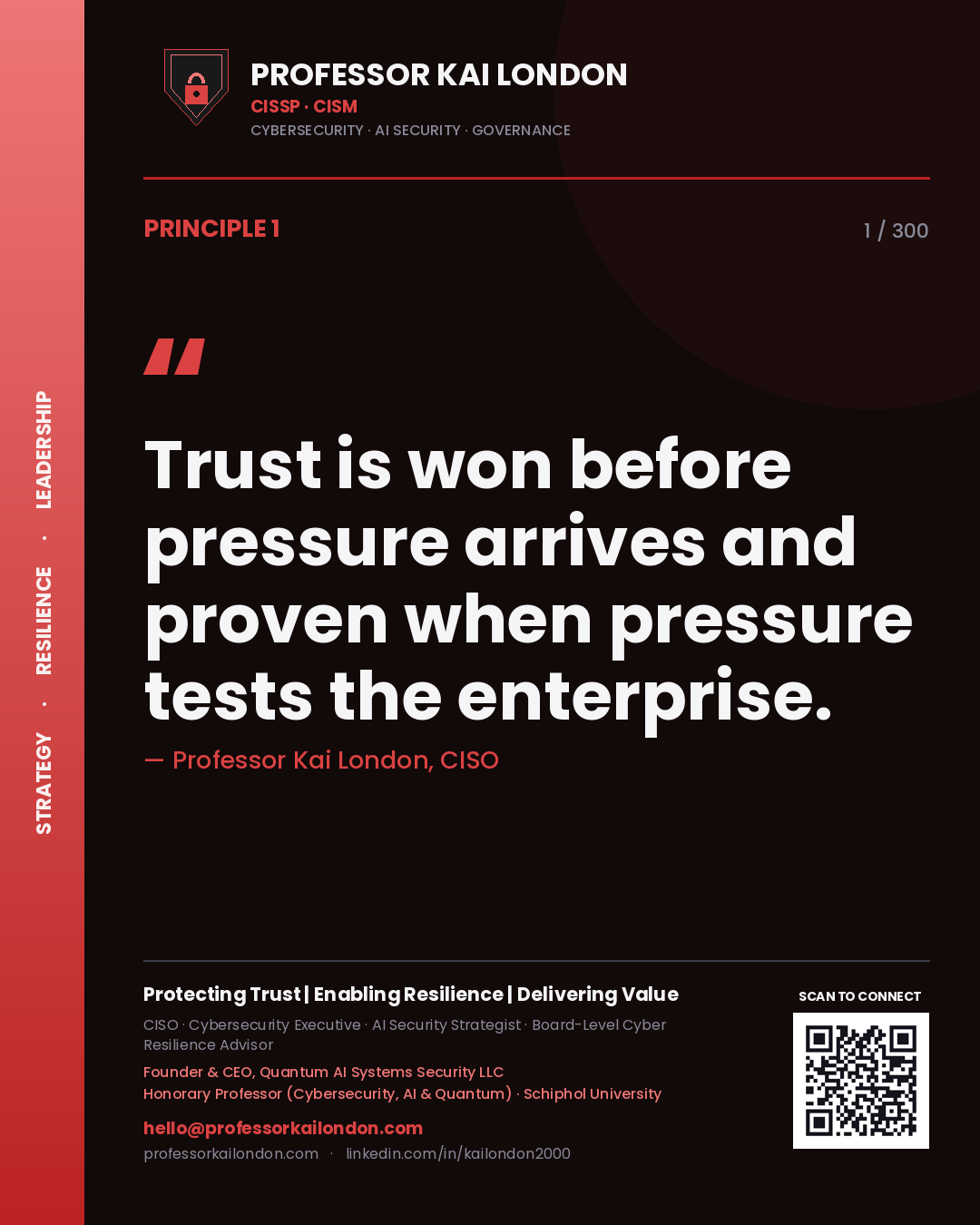
 #001 · Cyber Resilience — Trust is won before pressure arrives and proven when pressure tests the enterprise.
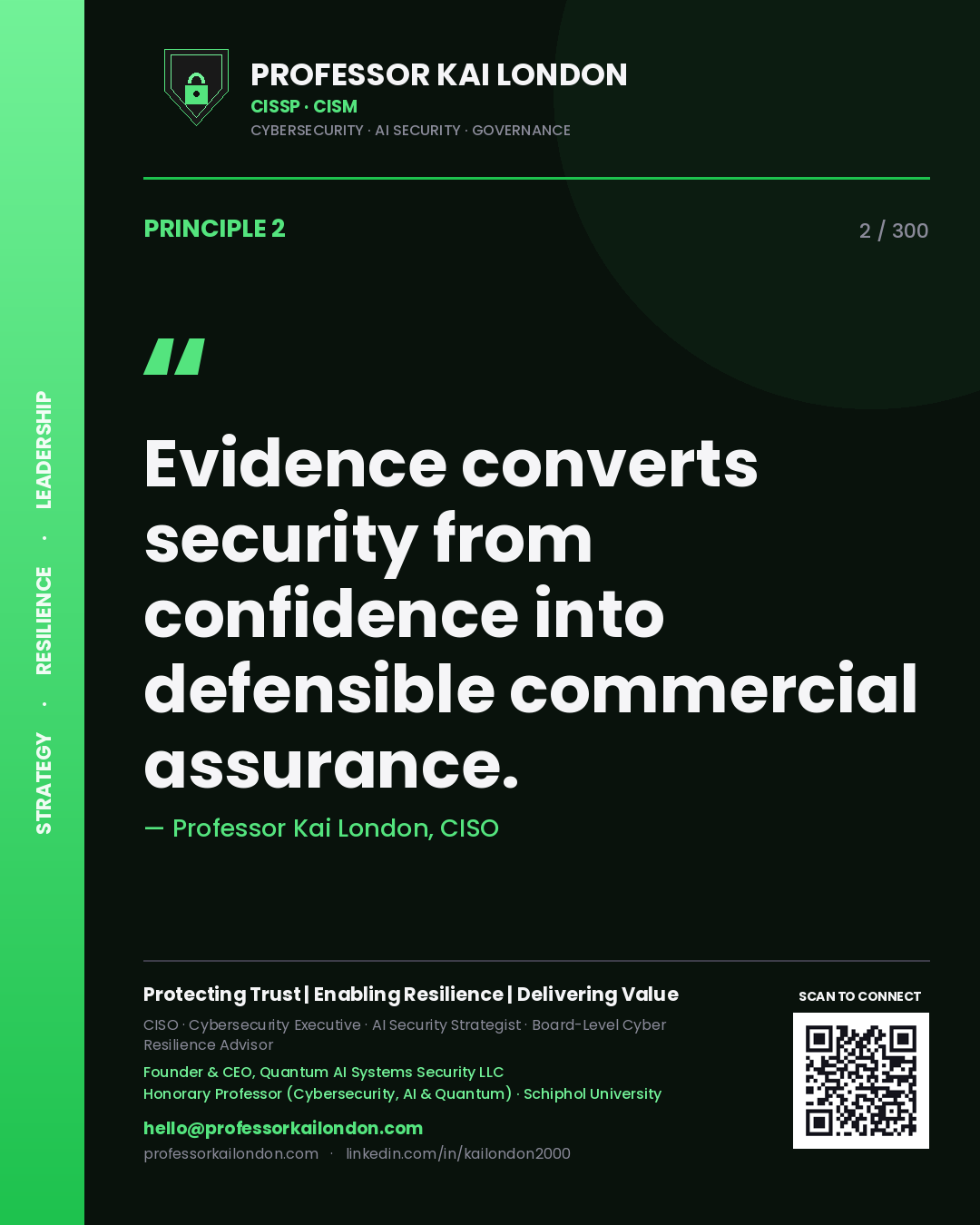 #002 · Evidence / GRC — Evidence converts security from confidence into defensible commercial assurance.
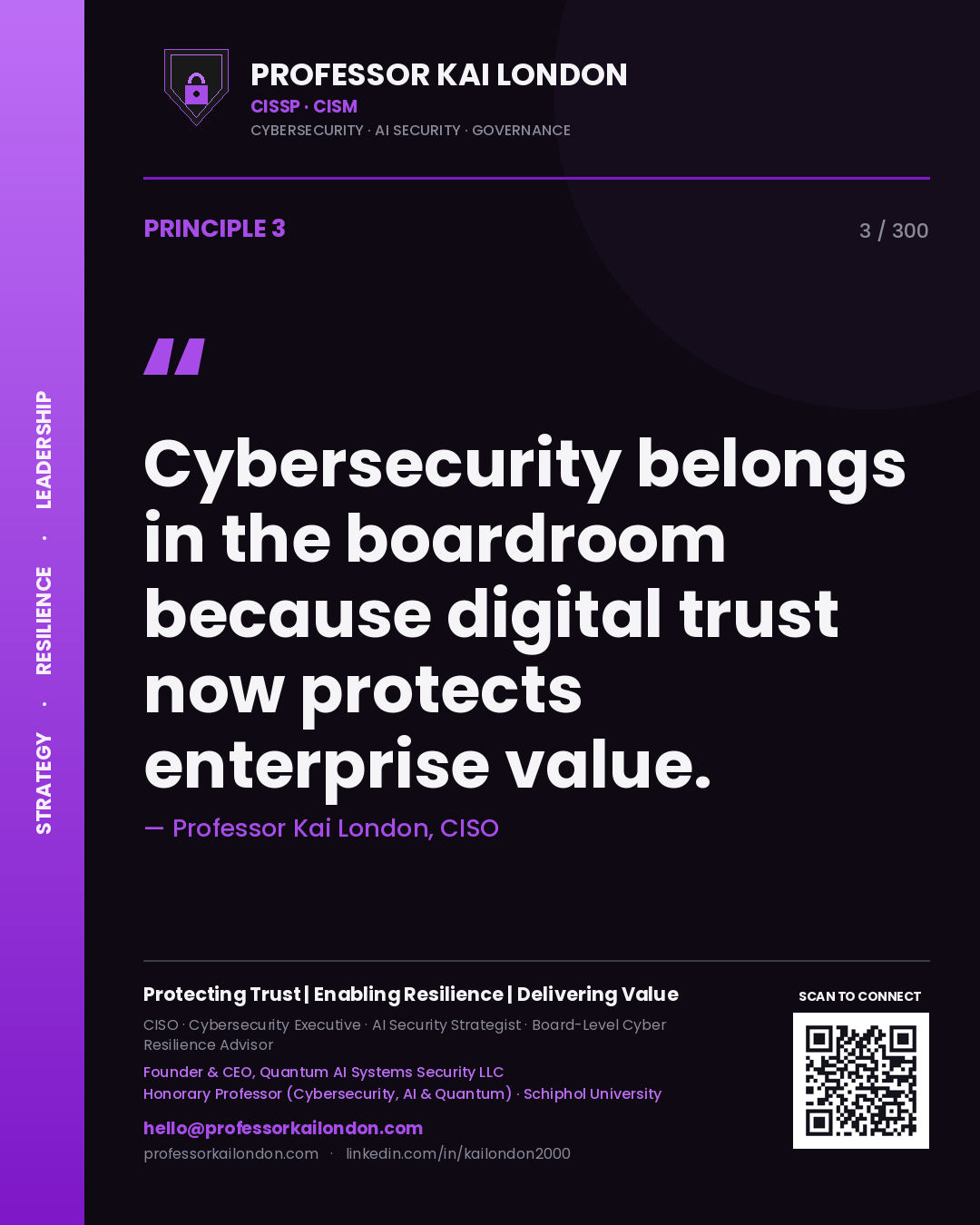 #003 · Board Governance — Cybersecurity belongs in the boardroom because digital trust now protects enterprise value.
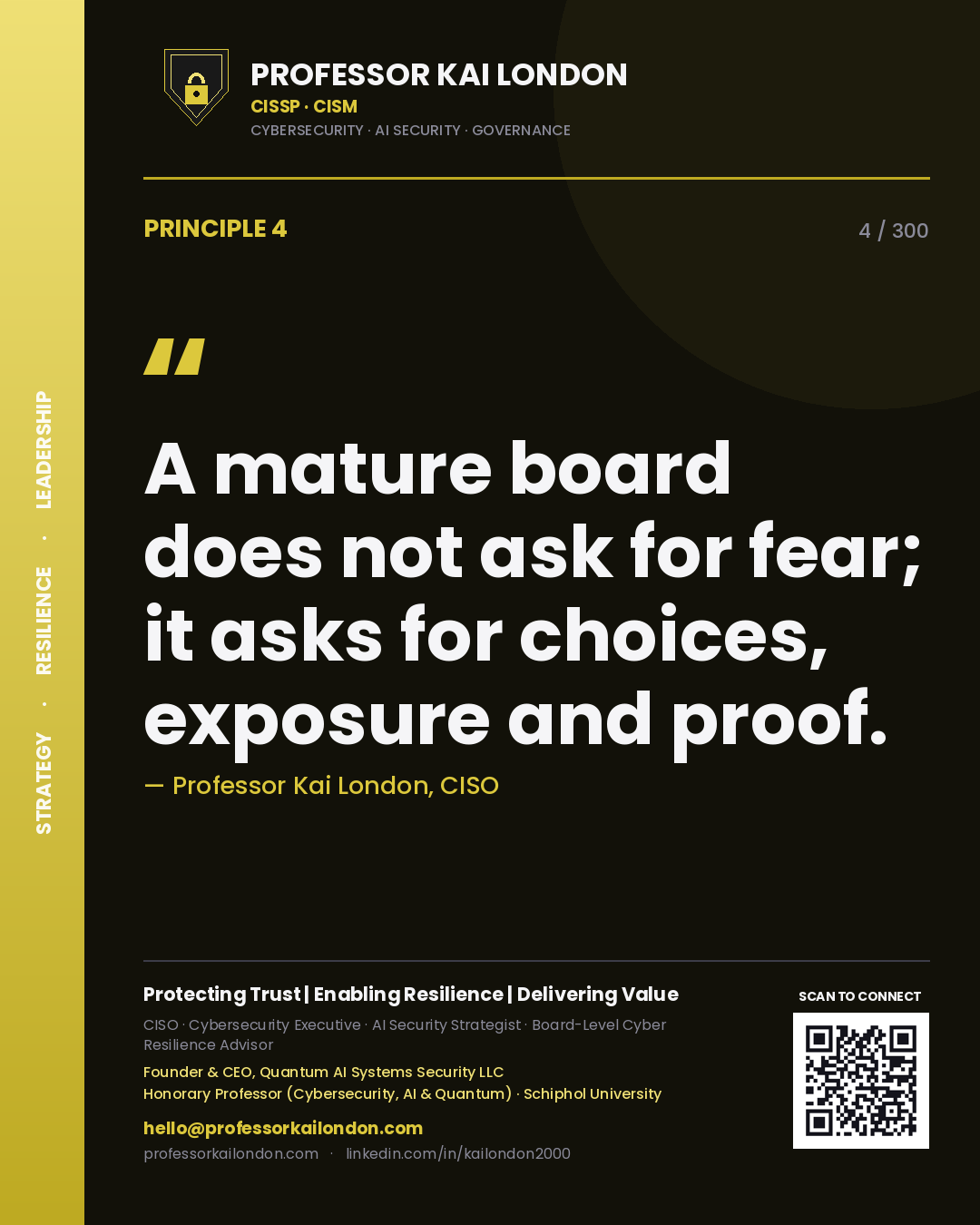 #004 · Board Reporting — A mature board does not ask for fear; it asks for choices, exposure and proof.
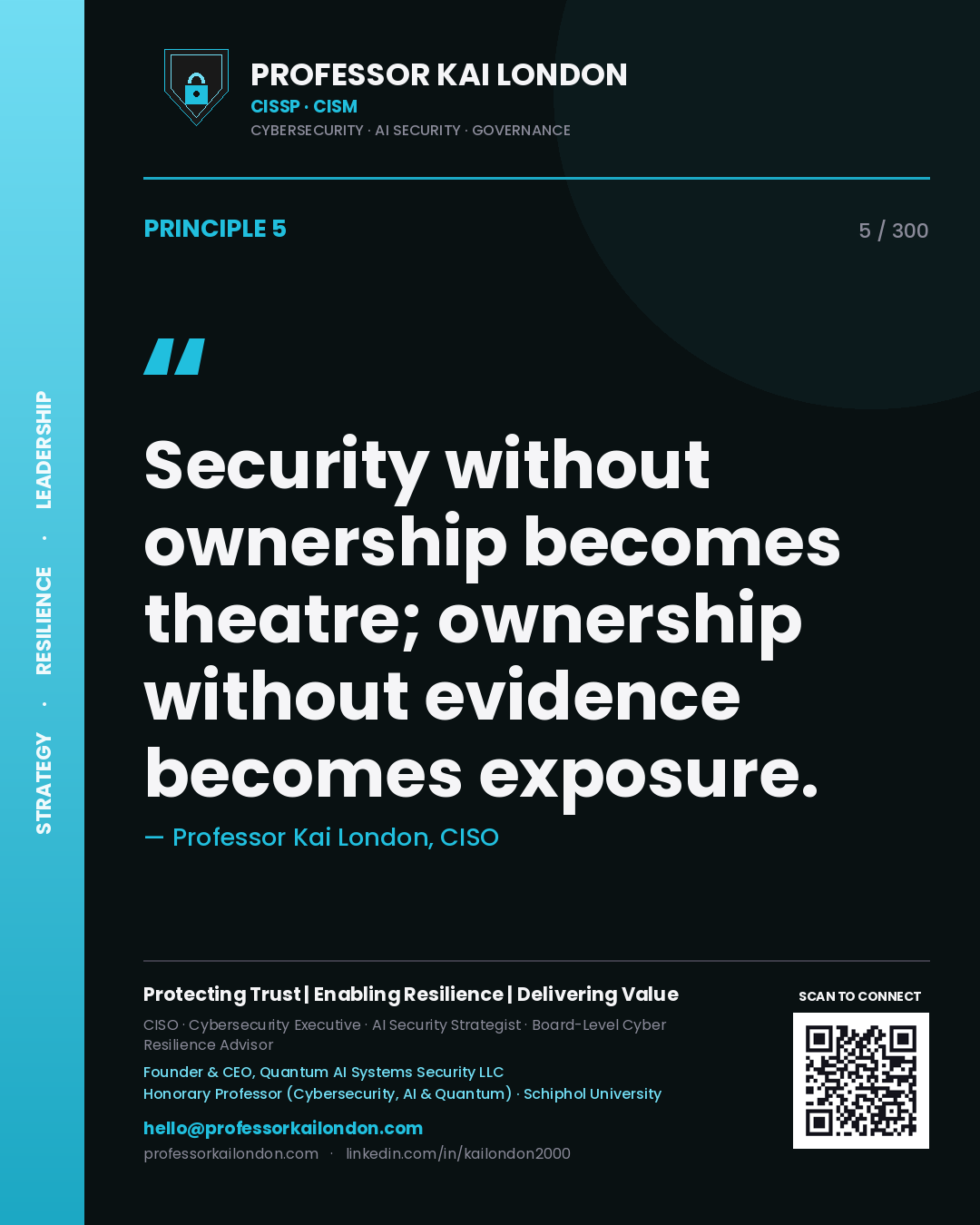 #005 · Governance — Security without ownership becomes theatre; ownership without evidence becomes exposure.
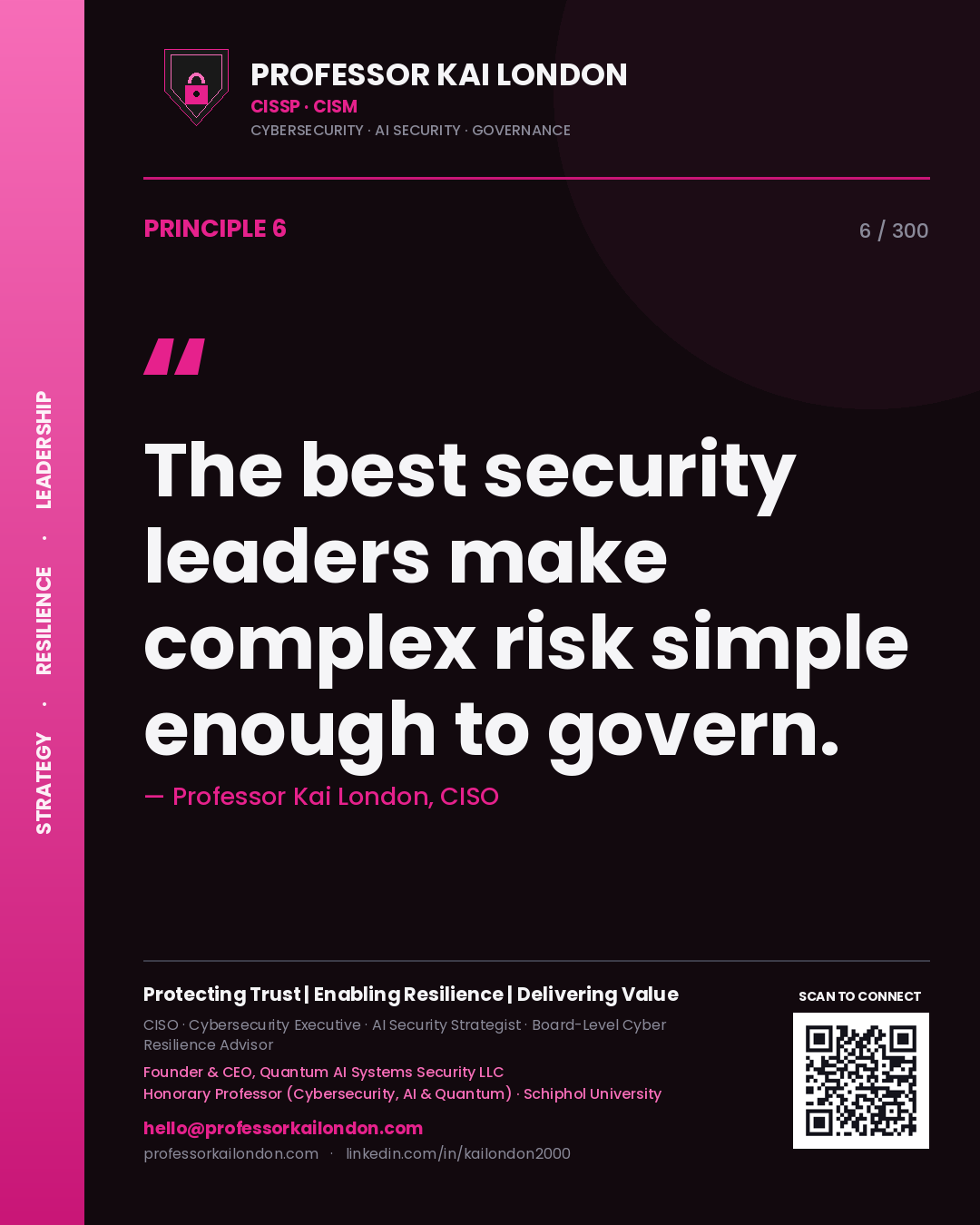 #006 · Leadership — The best security leaders make complex risk simple enough to govern.
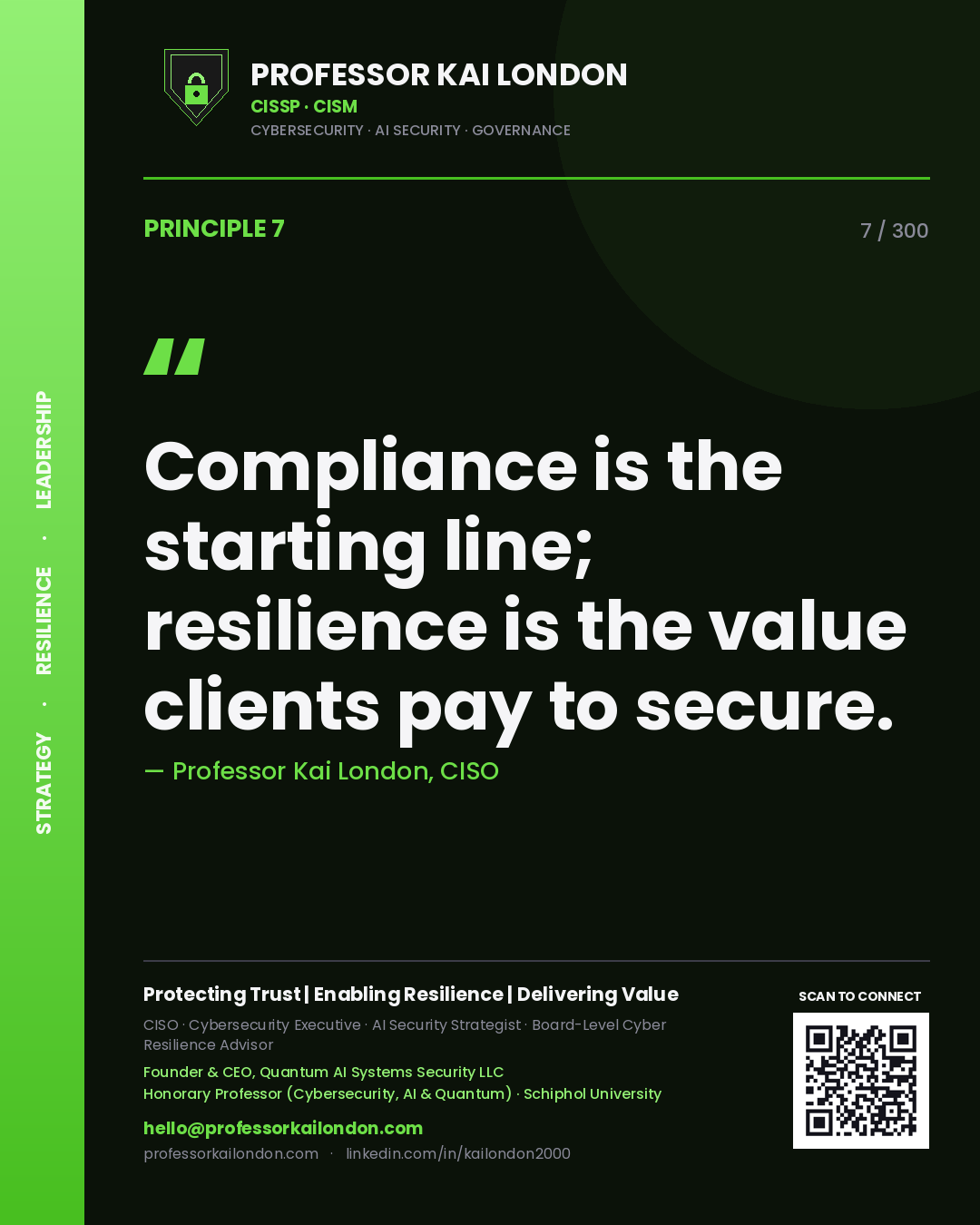 #007 · Compliance / Resilience — Compliance is the starting line; resilience is the value clients pay to secure.
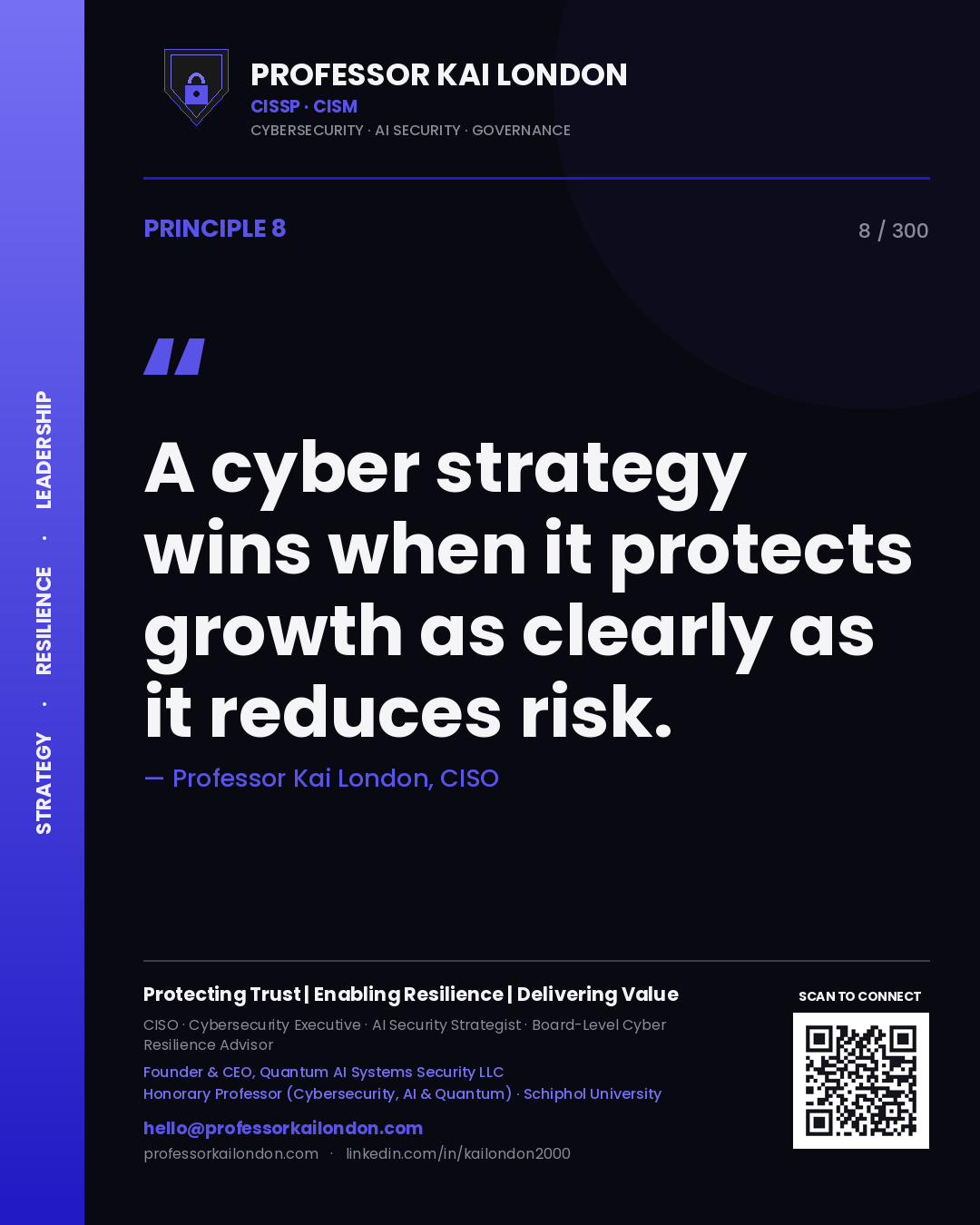 #008 · Strategy — A cyber strategy wins when it protects growth as clearly as it reduces risk.
 #009 · Delivery — The strongest control is one the business can operate after the consultant exits.
 #010 · Advisory — Great consultants do not sell complexity; they remove uncertainty.
 #011 · Security Architecture — A good architect designs controls; a great architect designs confidence.
 #012 · Operational Resilience — Resilience is the discipline of keeping business promises under abnormal conditions.
 #013 · Communication — Cybersecurity earns trust when it speaks in outcomes instead of acronyms.
 #014 · Roadmap — The winning roadmap shows what to fix first, why it matters and how success will be proven.
 #015 · Delivery — Risk reduction persuades faster than technical perfection.
 #016 · Risk Management — The true risk appetite of an organisation is revealed by what it funds consistently.
 #017 · Reporting — A dashboard no executive acts on is decoration, not governance.
 #018 · Board Reporting — Boards need fewer metrics, sharper signals and clearer decisions.
 #019 · Governance — A mature cyber function gives the board fewer surprises and better options.Principle 020#020 · Assurance — Security maturity is not what is written; it is what can be demonstrated.
 #021 · Controls — Every control needs an owner, a purpose, a cadence and proof.
 #022 · Audit Readiness — A control without ownership is a future audit finding waiting politely.
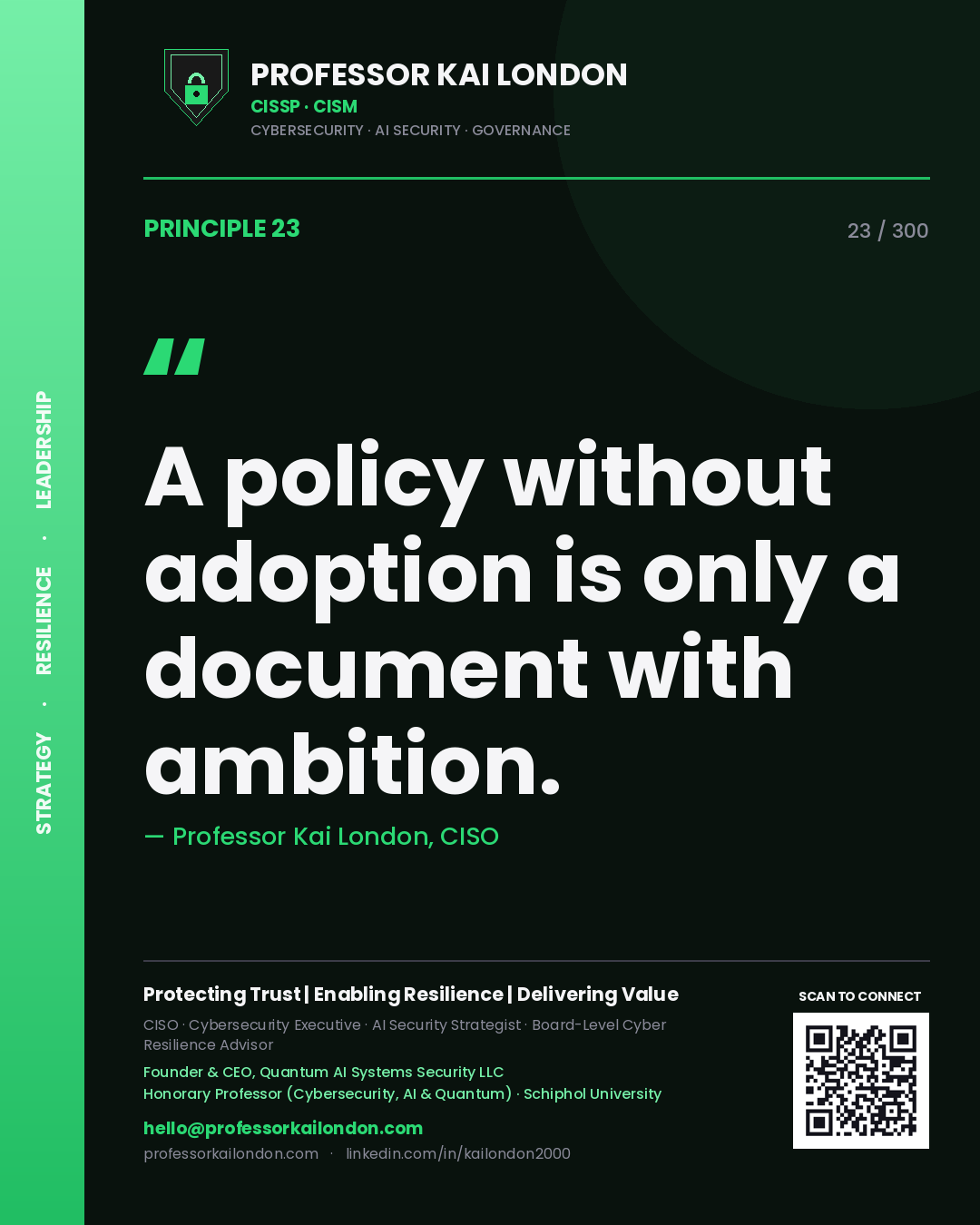 #023 · Governance — A policy without adoption is only a document with ambition.
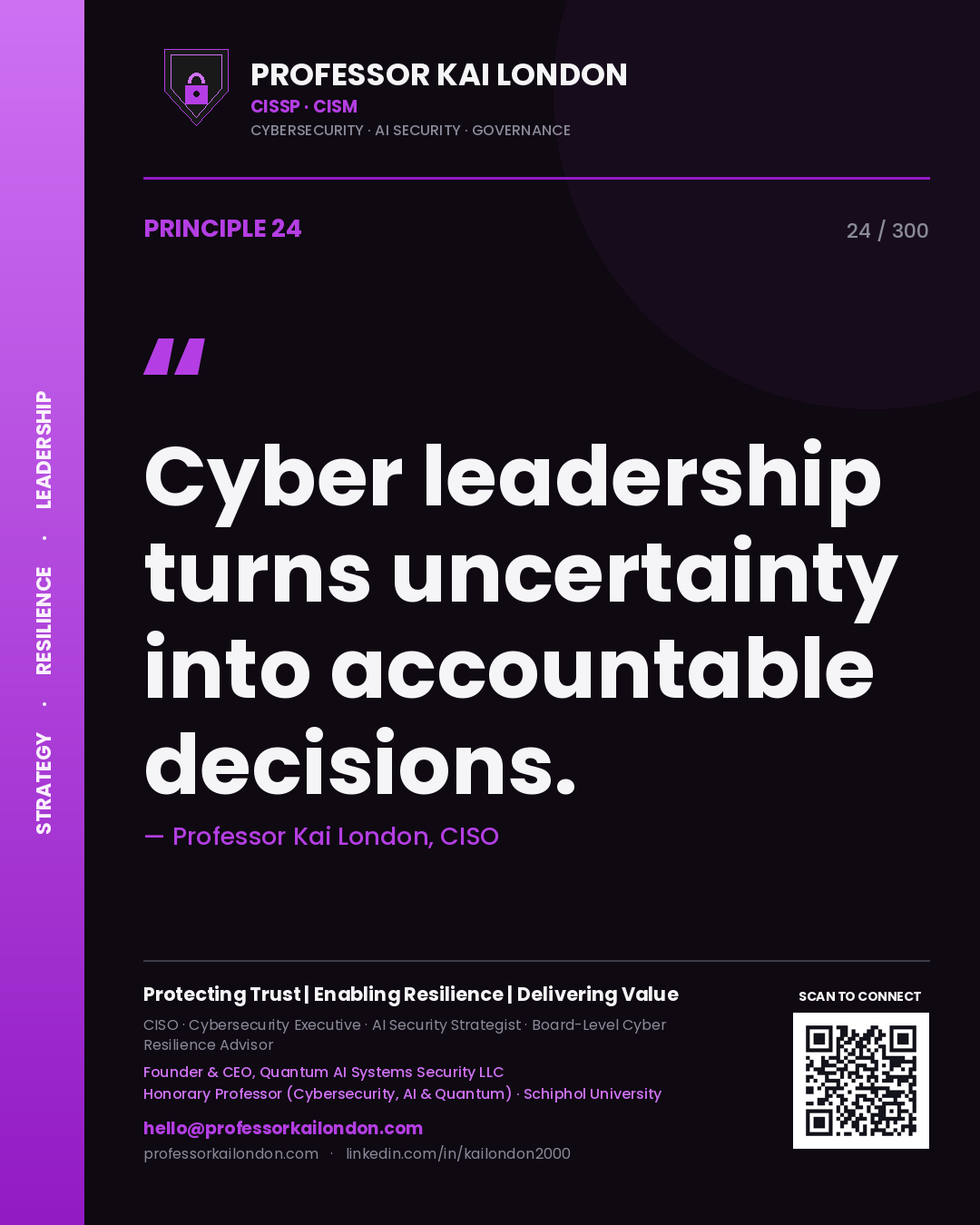 #024 · Leadership — Cyber leadership turns uncertainty into accountable decisions.
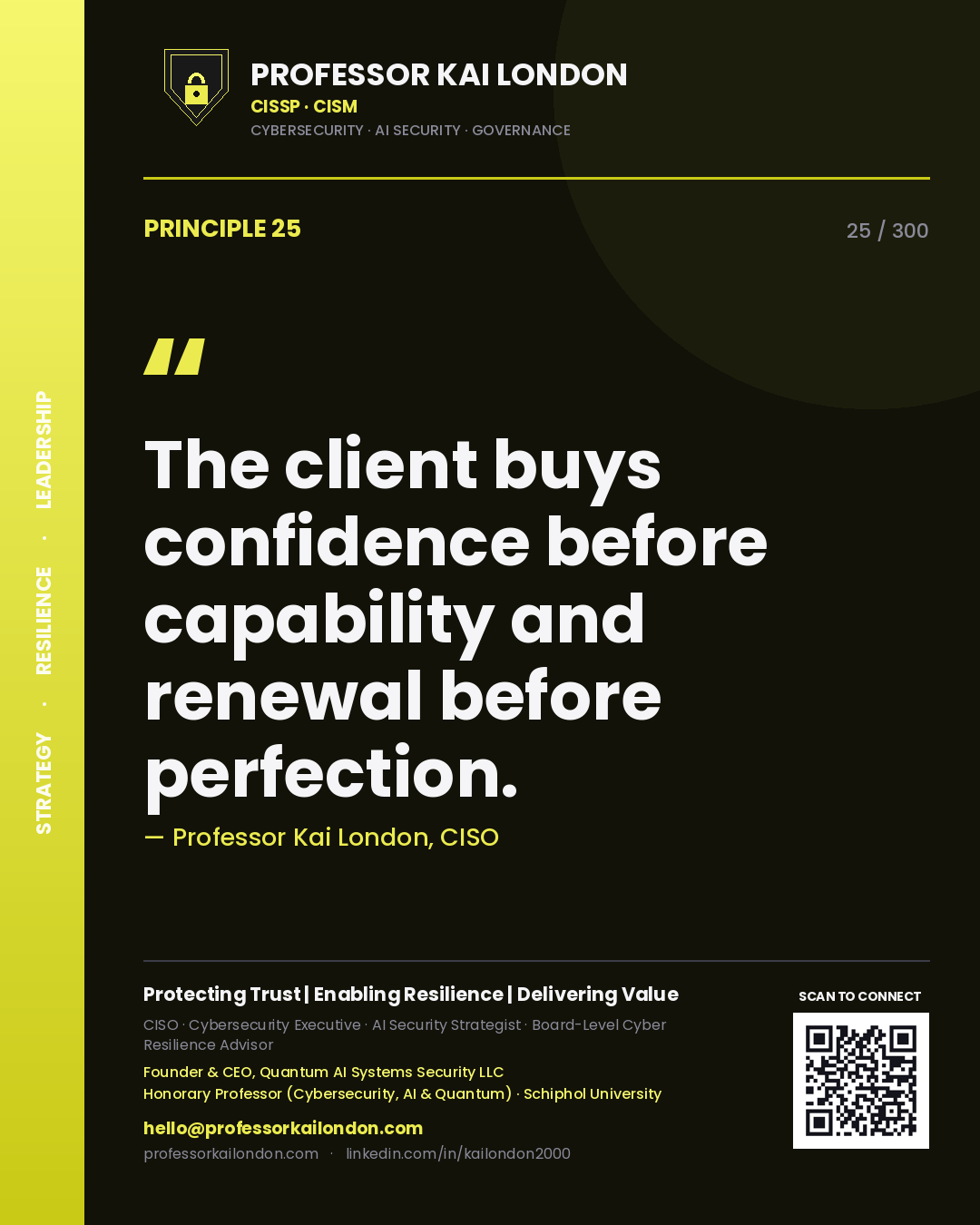 #025 · Consulting — The client buys confidence before capability and renewal before perfection.
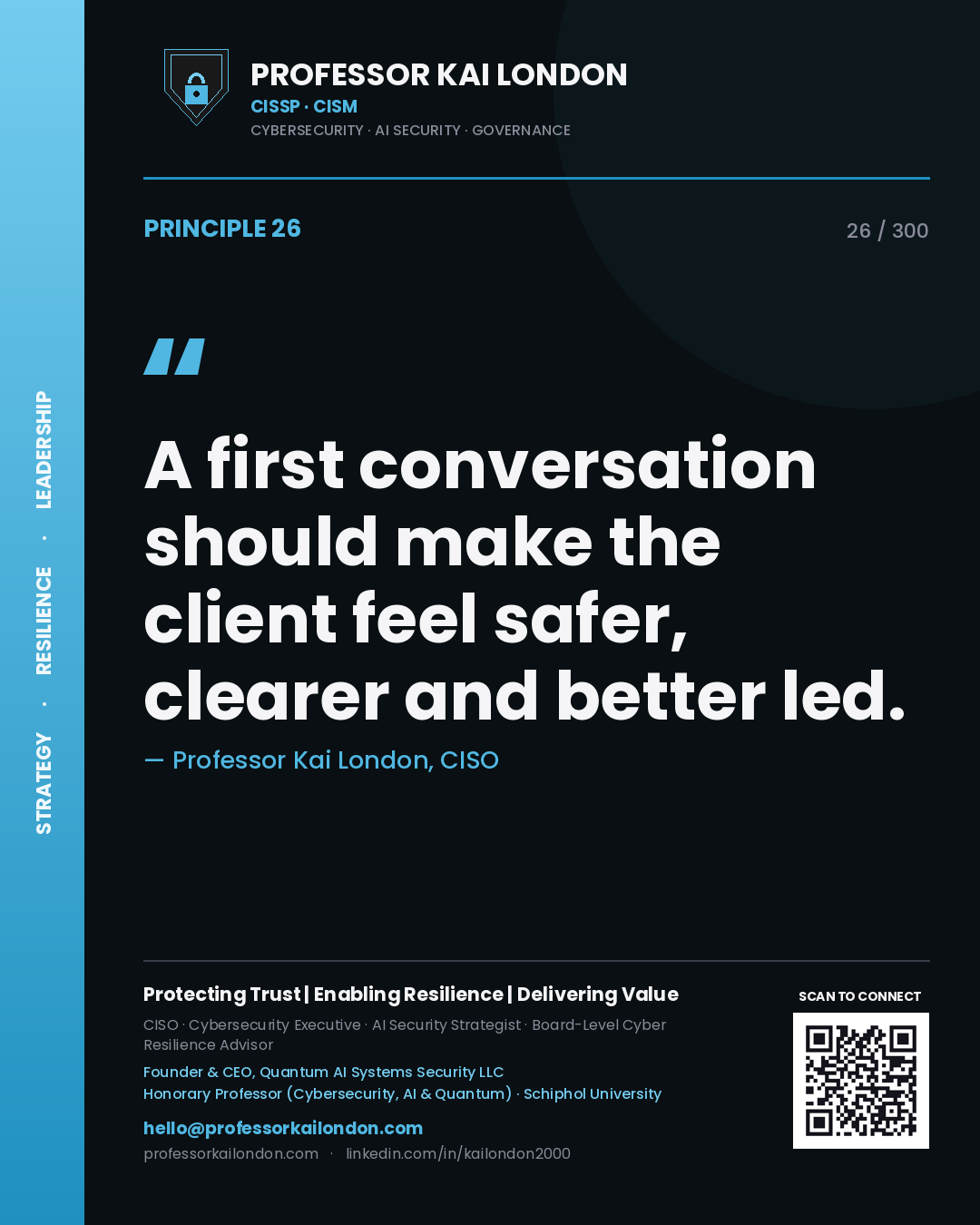 #026 · Advisory — A first conversation should make the client feel safer, clearer and better led.
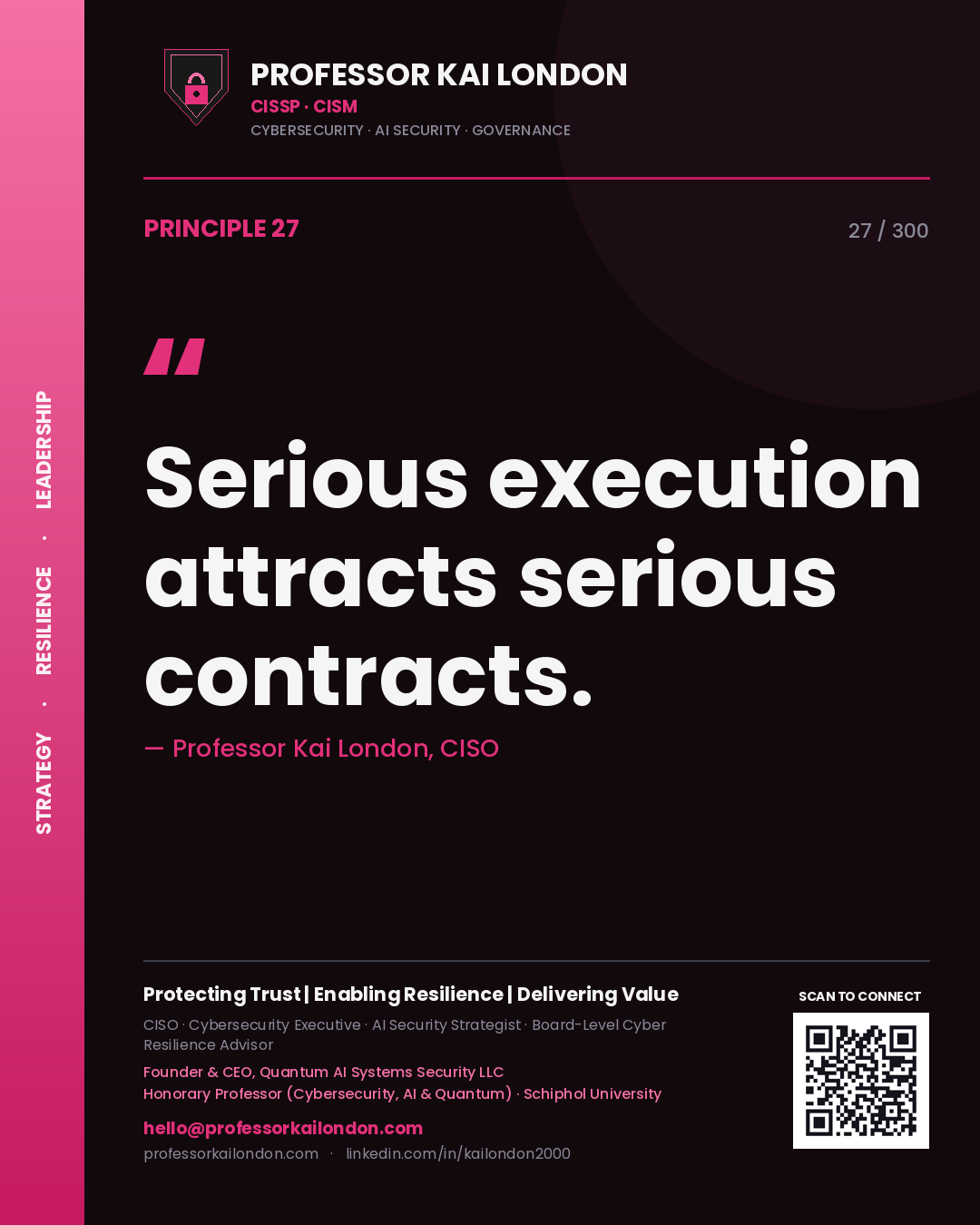 #027 · Professional Brand — Serious execution attracts serious contracts.
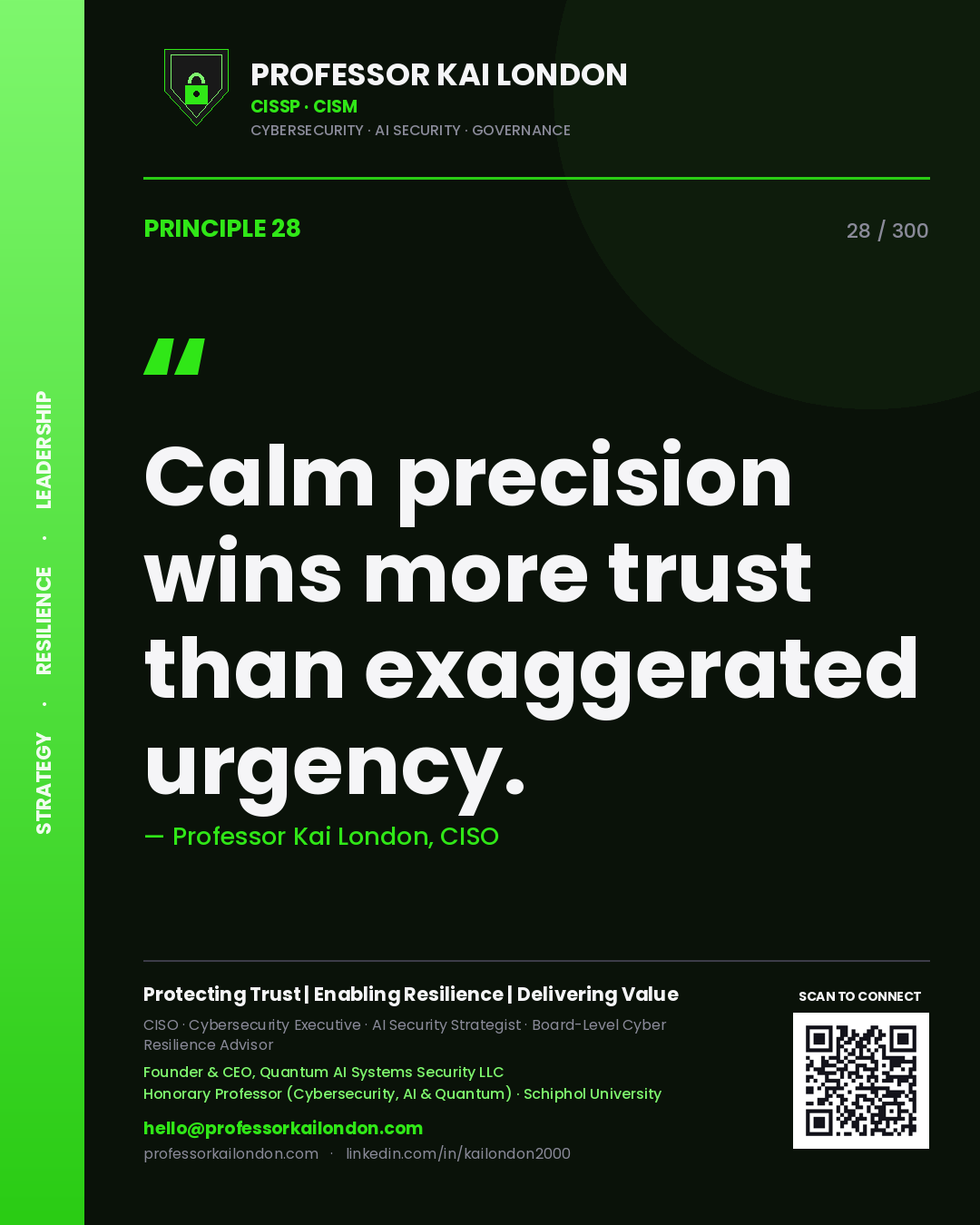 #028 · Executive Tone — Calm precision wins more trust than exaggerated urgency.
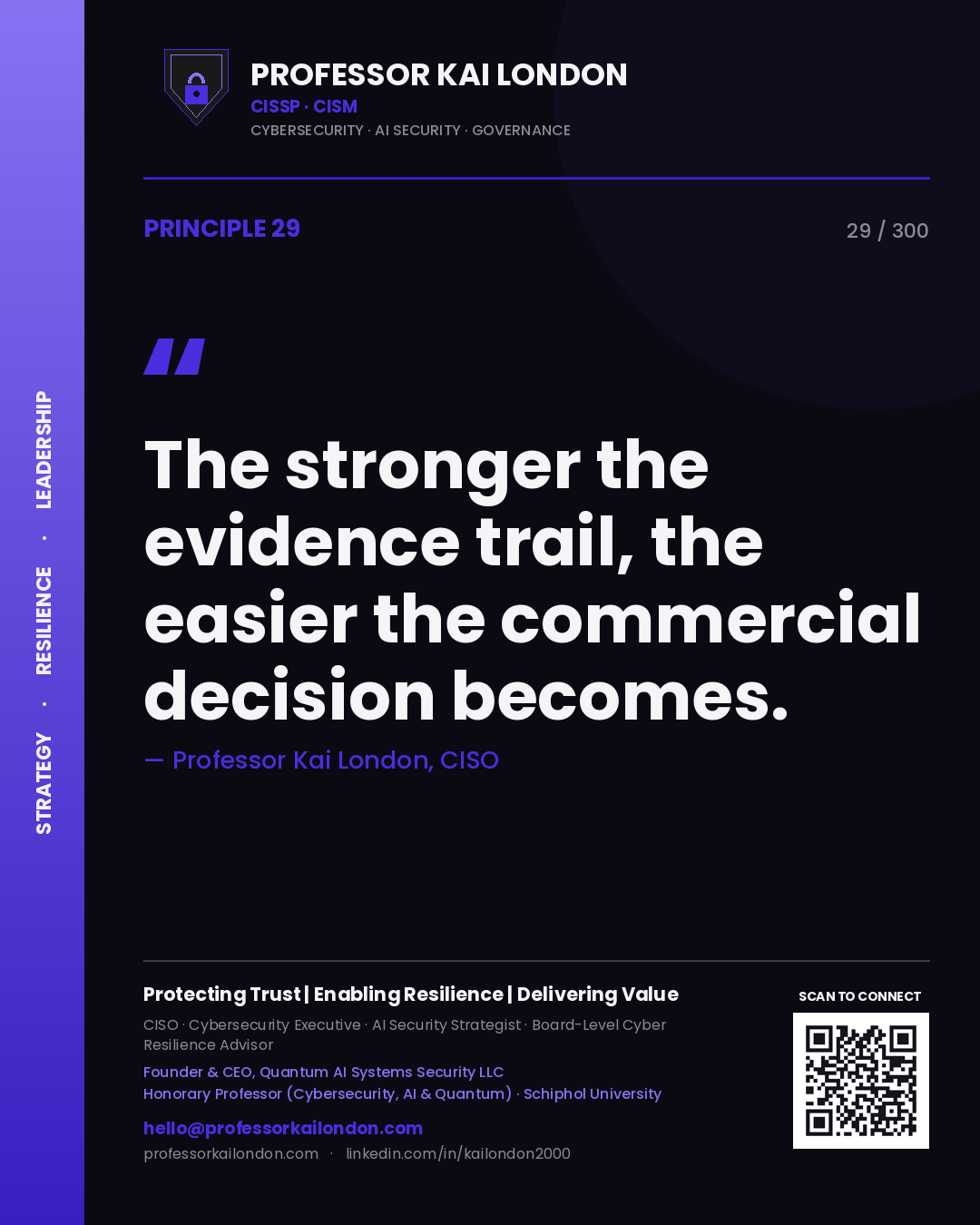 #029 · Evidence — The stronger the evidence trail, the easier the commercial decision becomes.
 #030 · Advisory — A premium consultant brings judgement, not just knowledge.
 #031 · Personal Brand — Technical depth wins respect; commercial clarity wins contracts.
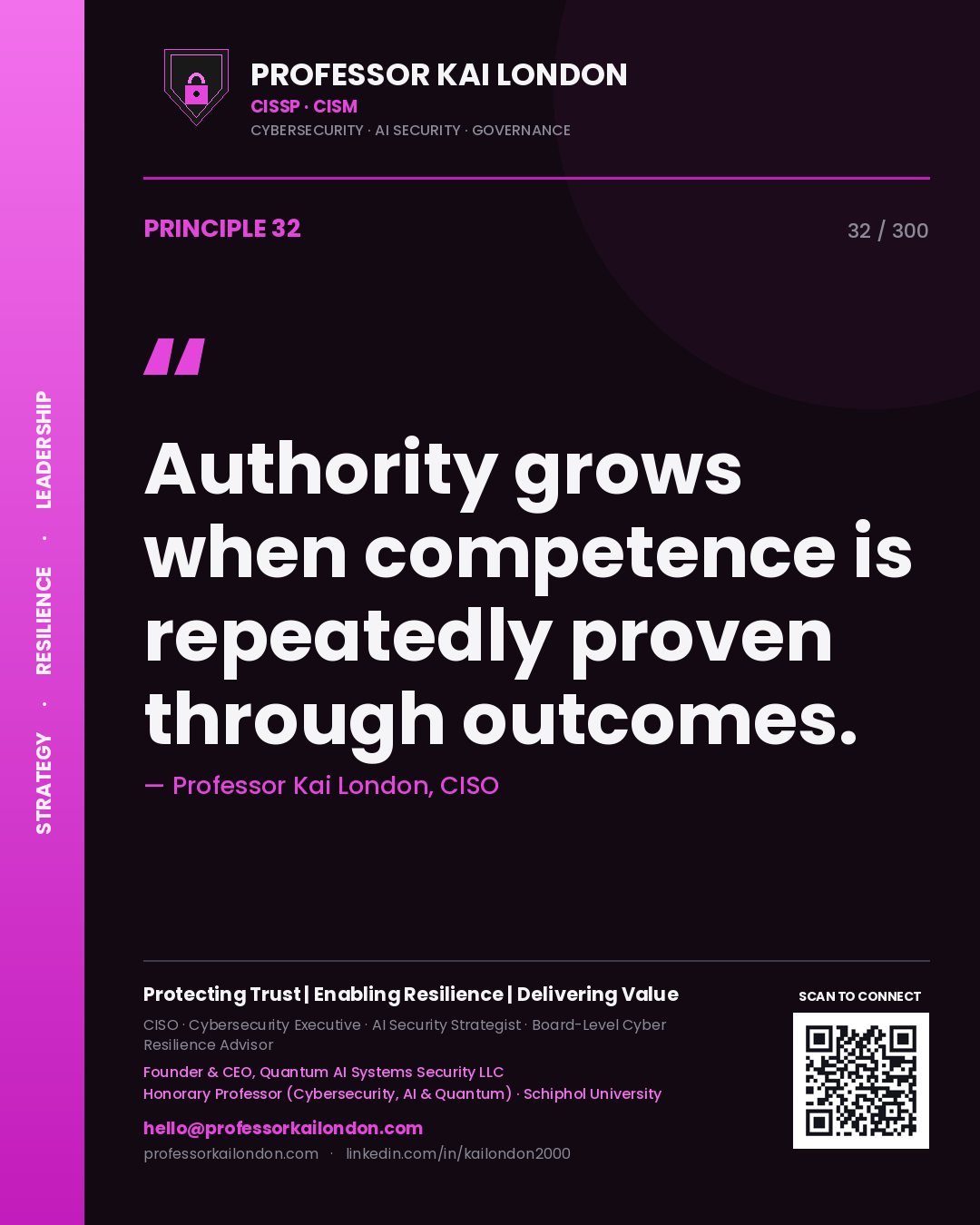 #032 · Reputation — Authority grows when competence is repeatedly proven through outcomes.
 #033 · Thought Leadership — Original thinking attracts attention; useful thinking attracts work.
 #034 · Brand Authority — The strongest brand signal is a reliable body of delivered work.
 #035 · Positioning — The market remembers specialists who make difficult work feel controlled.
 #036 · Branding — A strong market position is specific, memorable and defensible.
 #037 · Contract Readiness — Being easy to trust makes being hired easier.
 #038 · Consulting Value — Deliver more certainty than the client expected to buy.
 #039 · Reputation — Durable reputations are built on repeatable value, not one-off visibility.
 #040 · Executive Presence — The best professional voice is confident, useful and restrained.
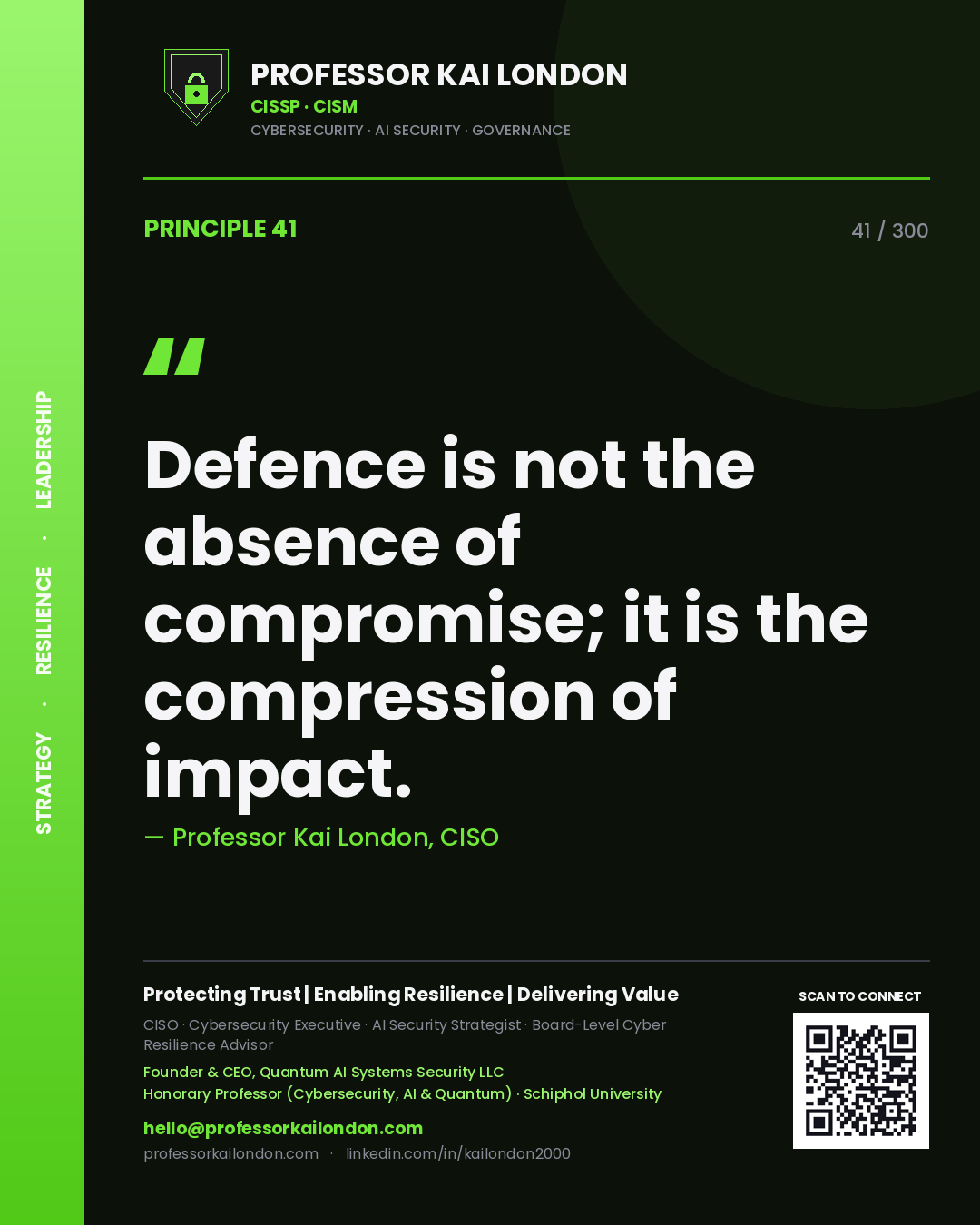 #041 · Cyber Defence — Defence is not the absence of compromise; it is the compression of impact.
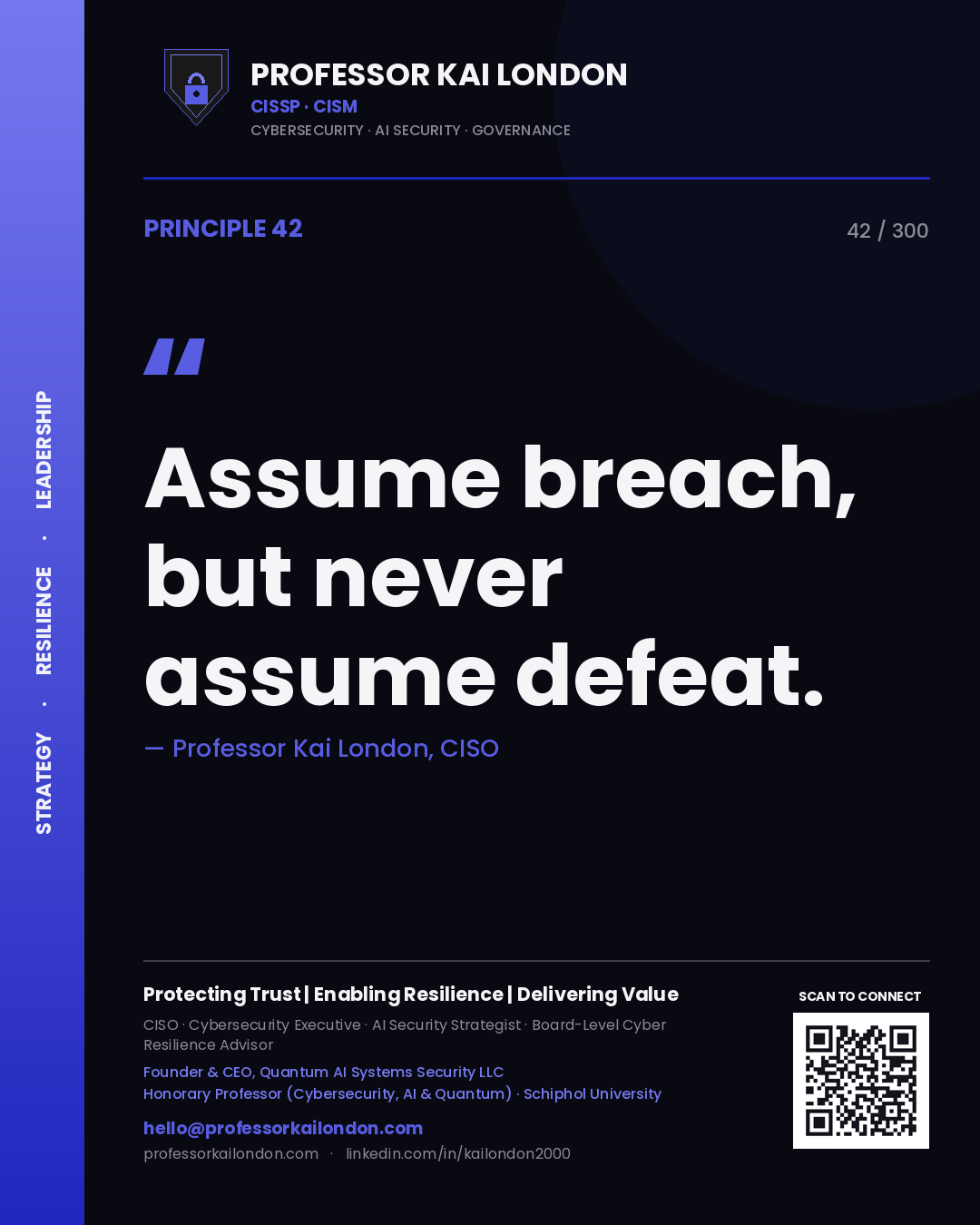 #042 · Resilience — Assume breach, but never assume defeat.
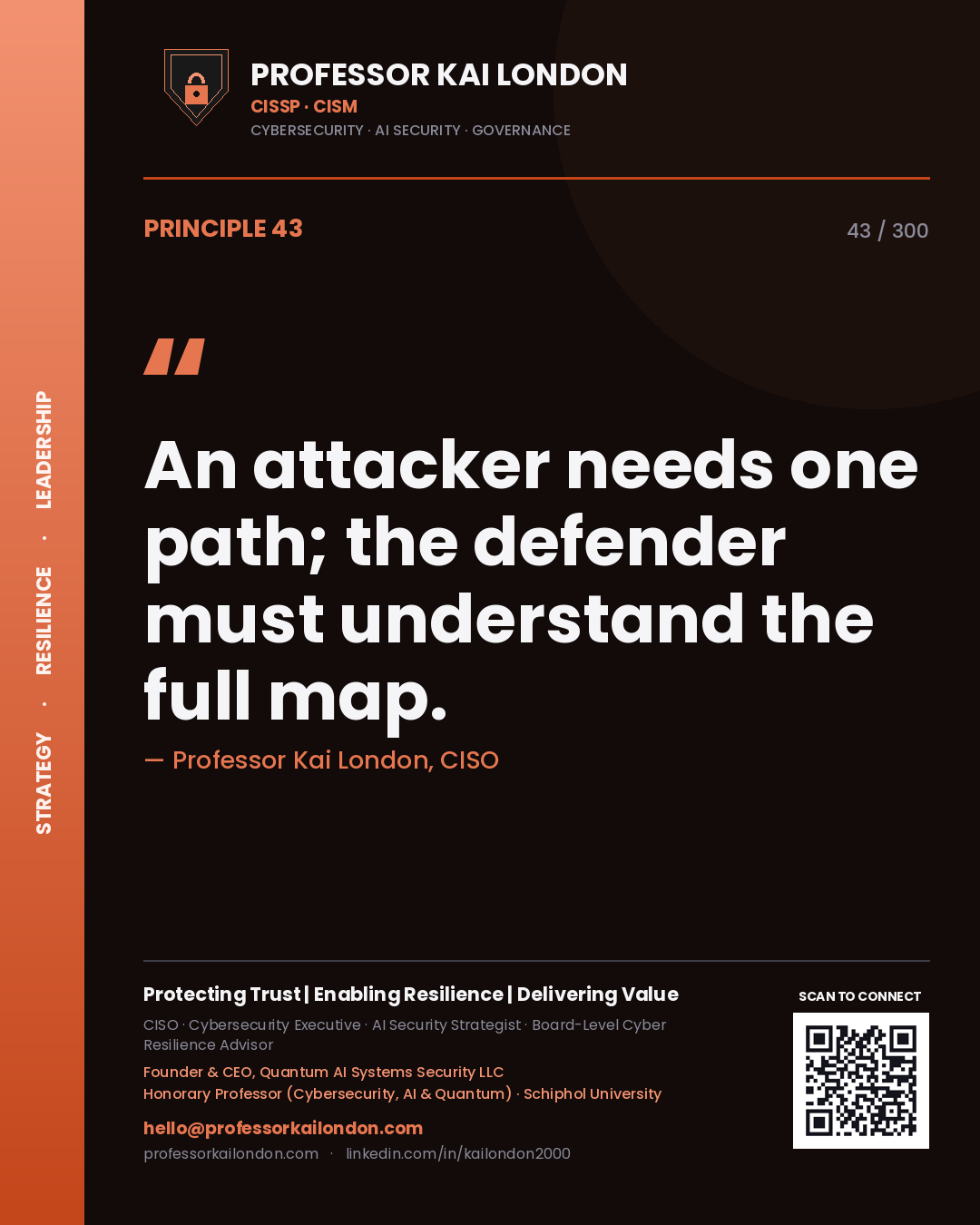 #043 · Threat Defence — An attacker needs one path; the defender must understand the full map.
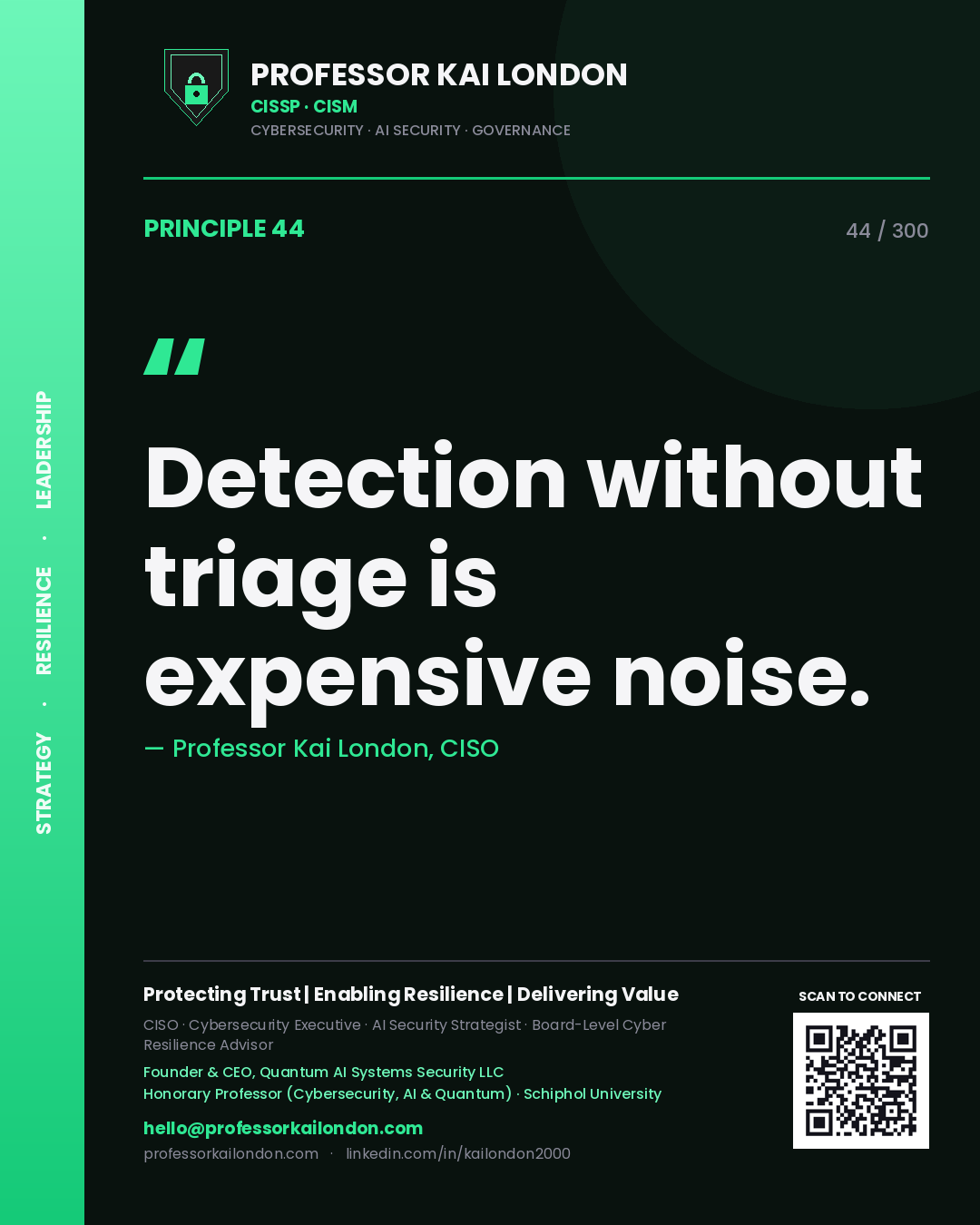 #044 · SecOps — Detection without triage is expensive noise.
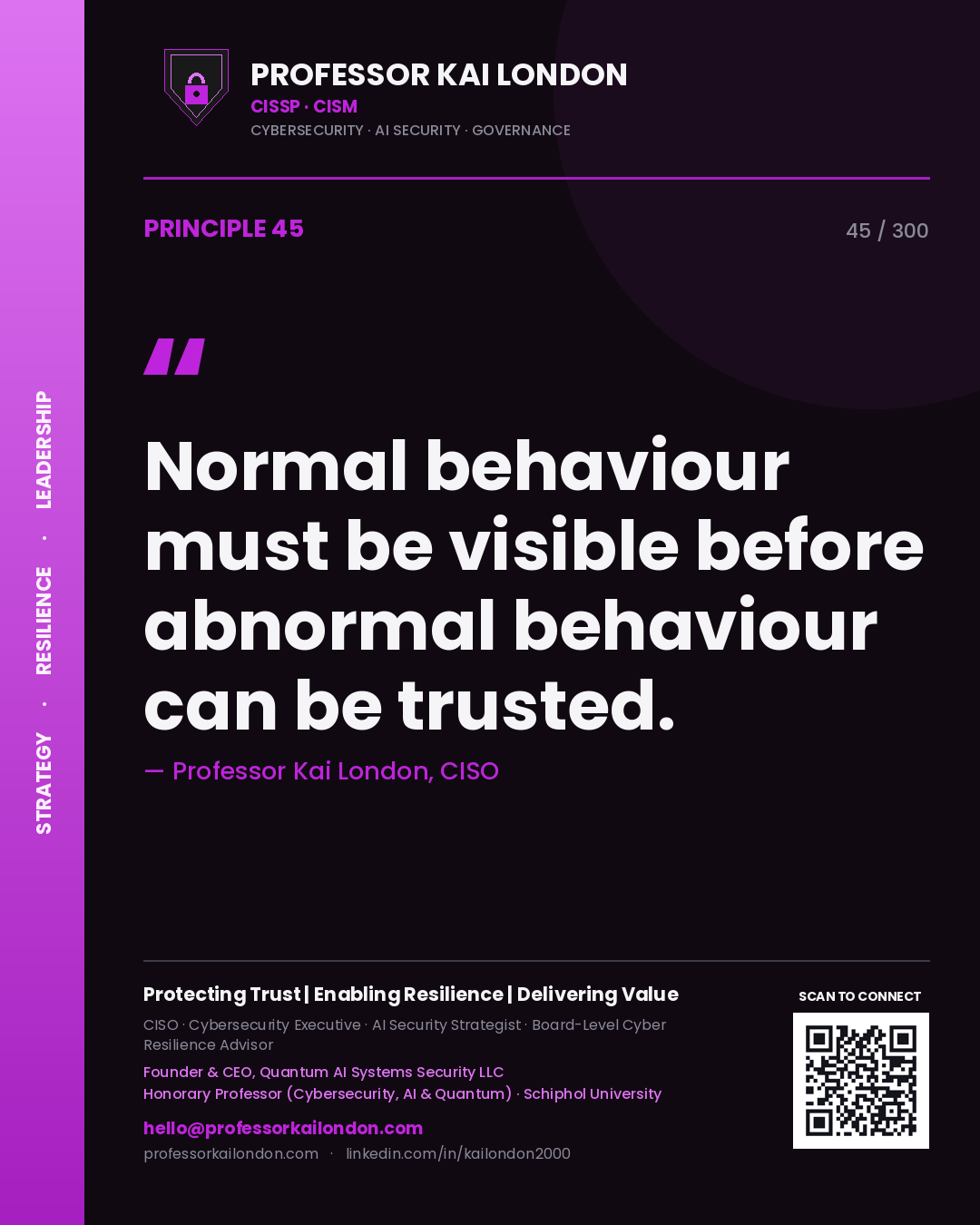 #045 · Detection — Normal behaviour must be visible before abnormal behaviour can be trusted.
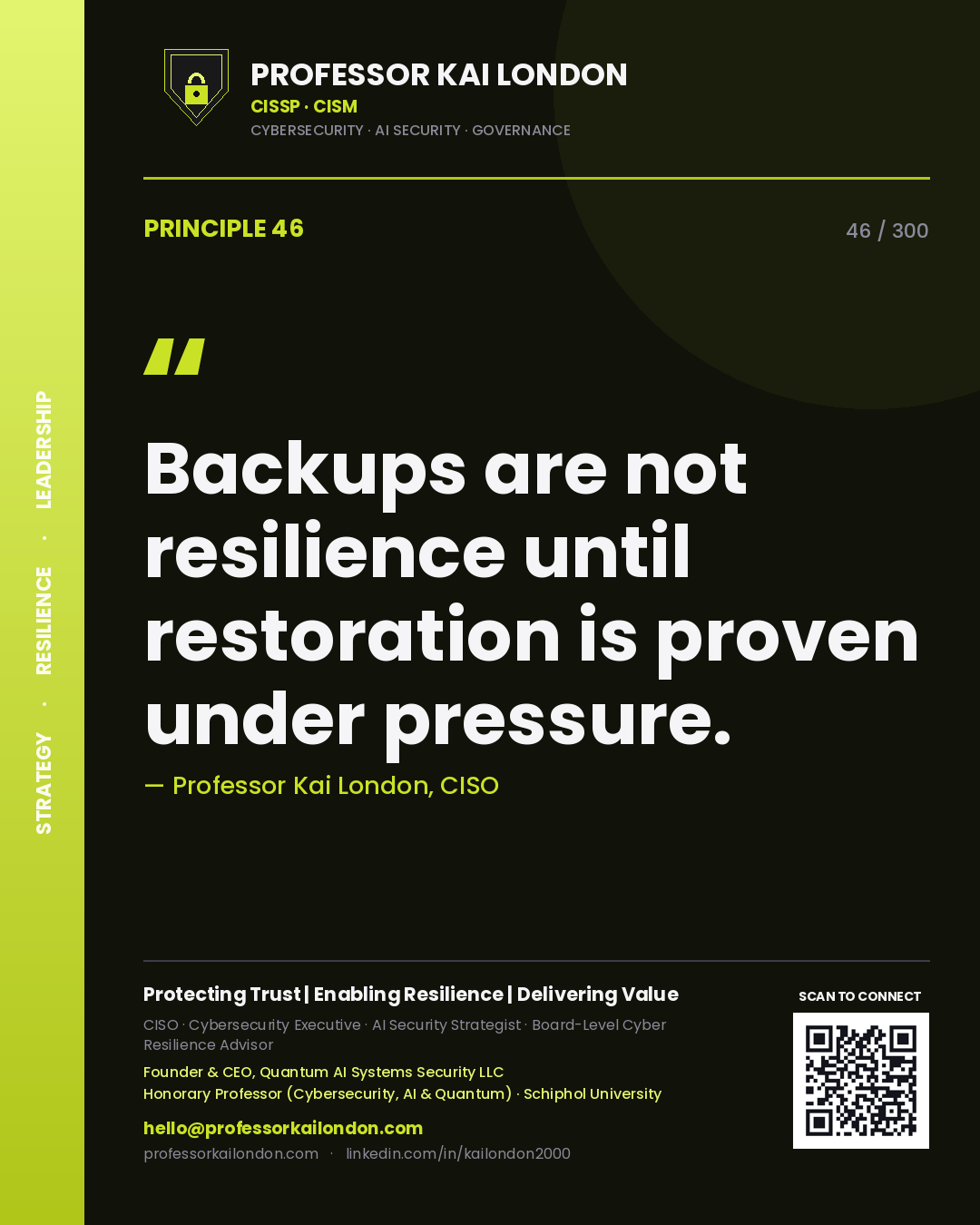 #046 · Recovery — Backups are not resilience until restoration is proven under pressure.
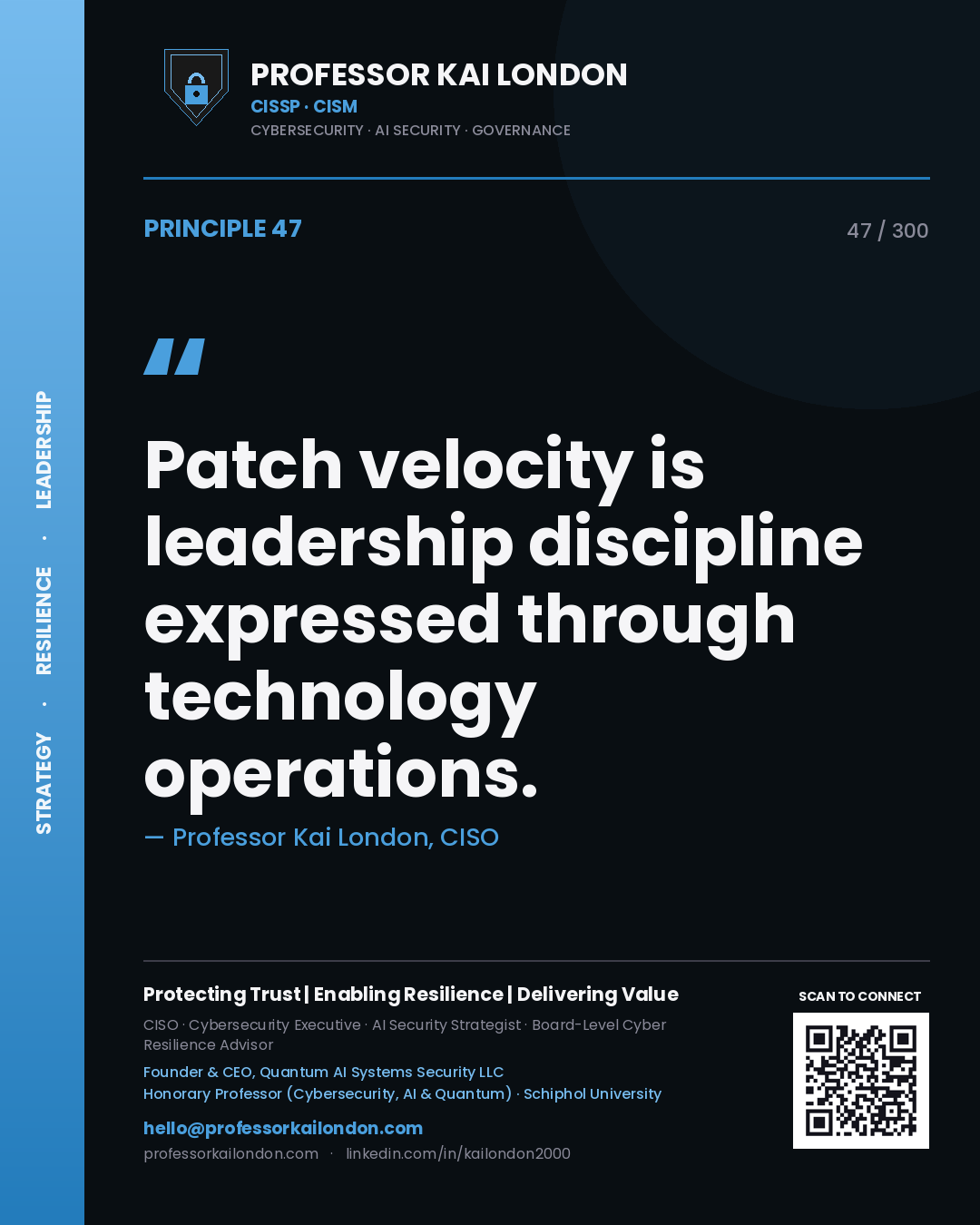 #047 · Vulnerability Management — Patch velocity is leadership discipline expressed through technology operations.
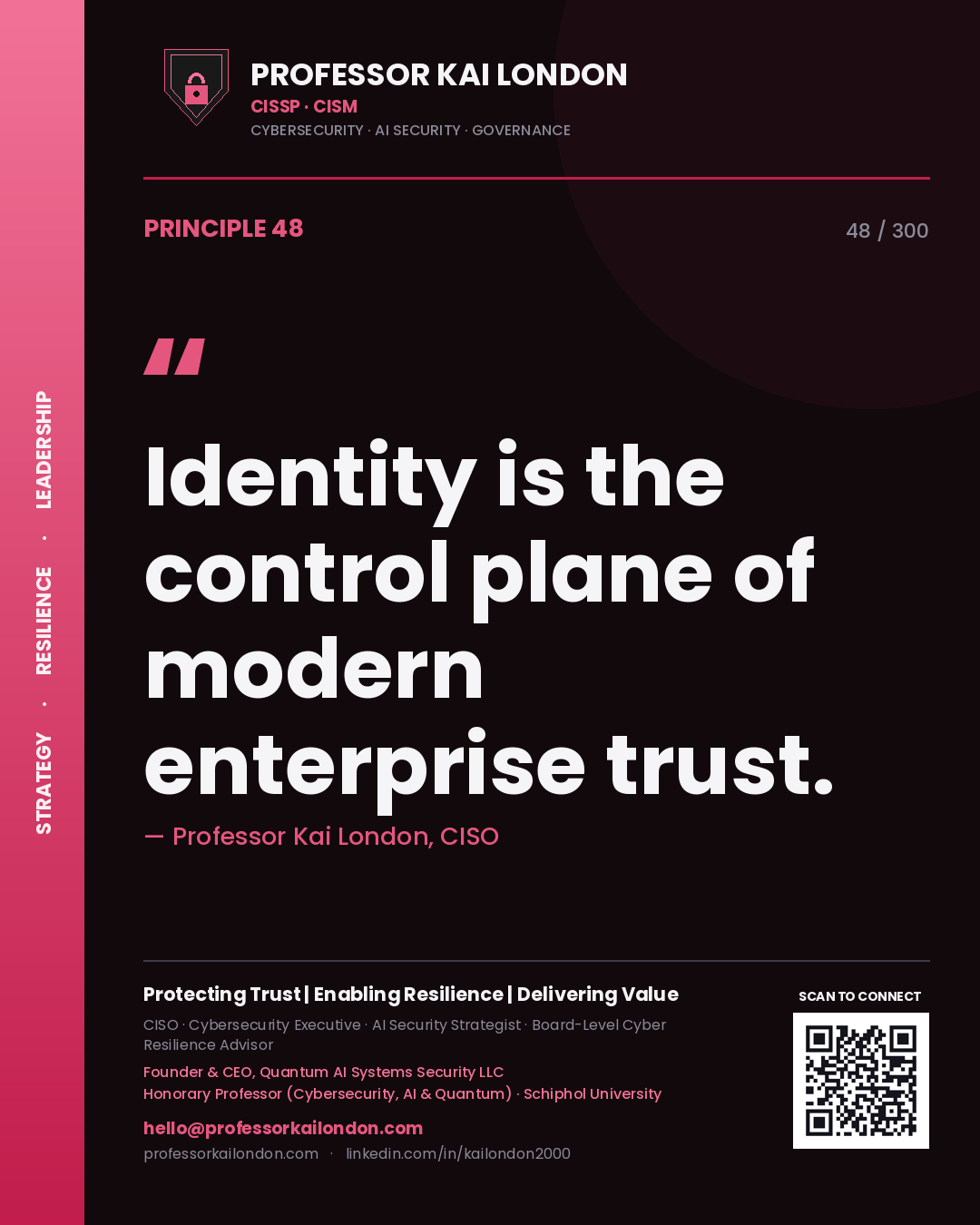 #048 · IAM / Zero Trust — Identity is the control plane of modern enterprise trust.
 #049 · Access Control — Least privilege is not a setting; it is a habit the organisation must keep.
 #050 · Identity Security — Every credential is a key, and every forgotten key is unmanaged risk.
 #051 · PAM — Privileged access is where accountability must be strongest.
 #052 · Zero Trust — Zero Trust works best as business trust with technical verification.
 #053 · IAM — Access should be simple for the right person and difficult for everyone else.
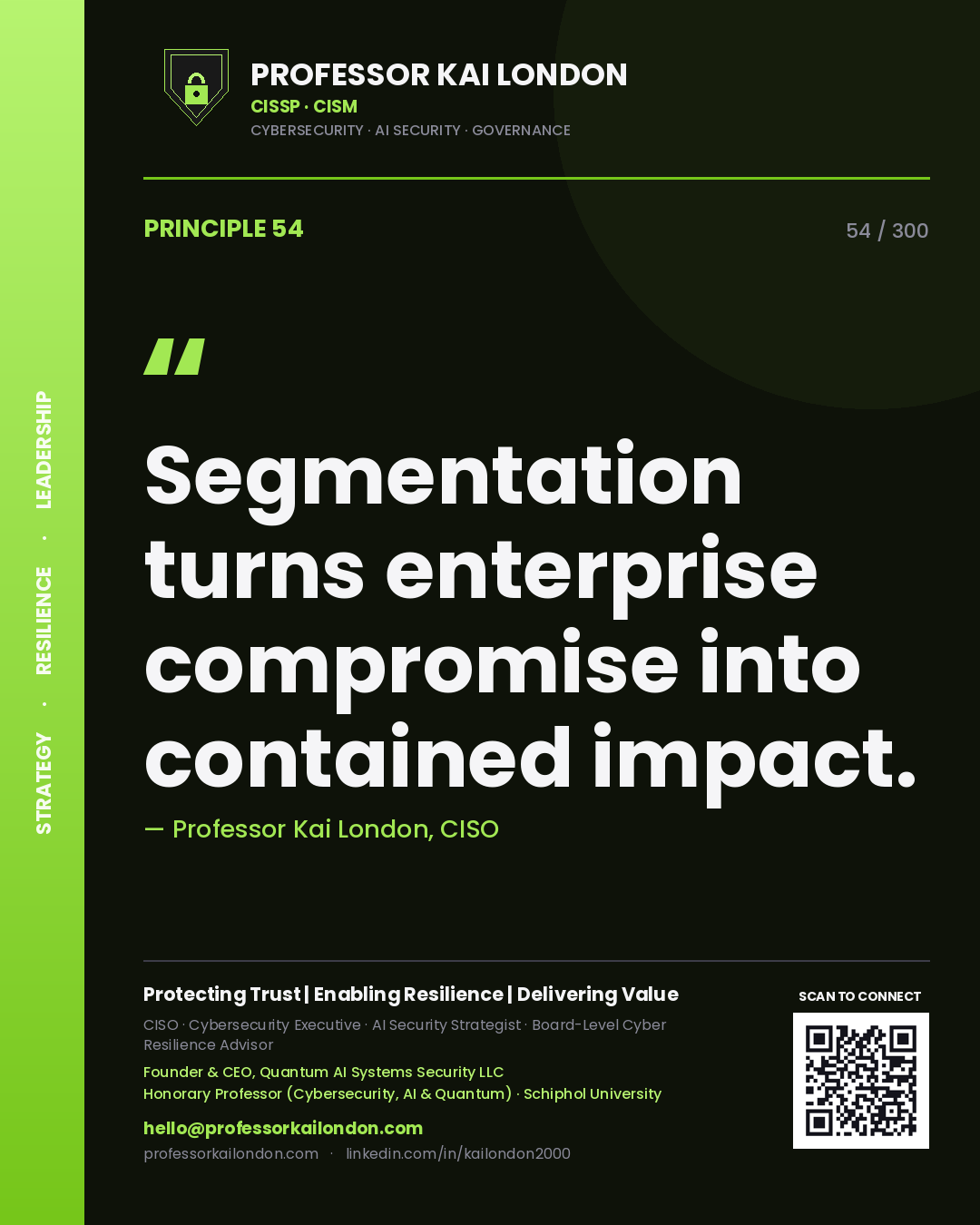 #054 · Network Security — Segmentation turns enterprise compromise into contained impact.
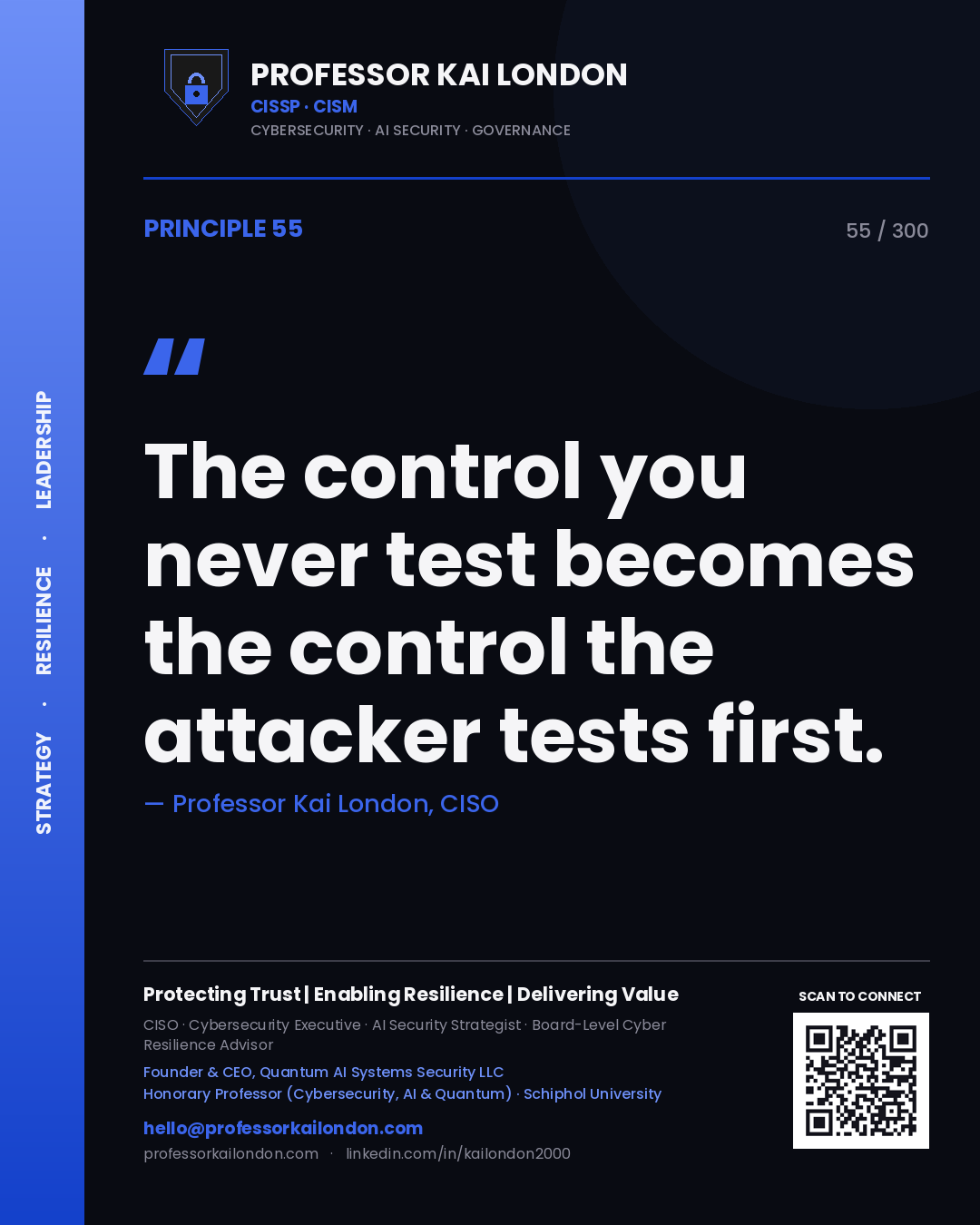 #055 · Assurance — The control you never test becomes the control the attacker tests first.
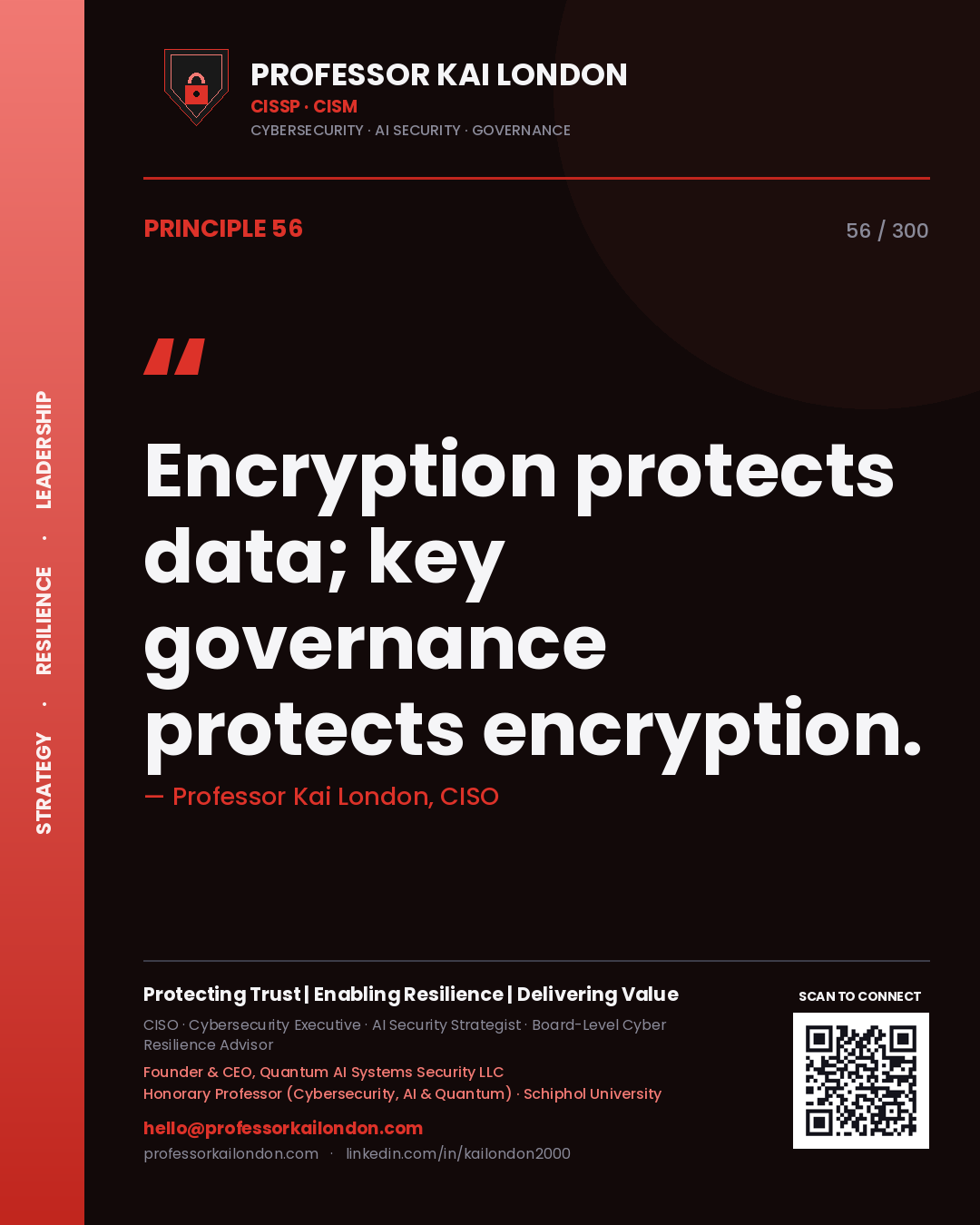 #056 · Data Protection — Encryption protects data; key governance protects encryption.
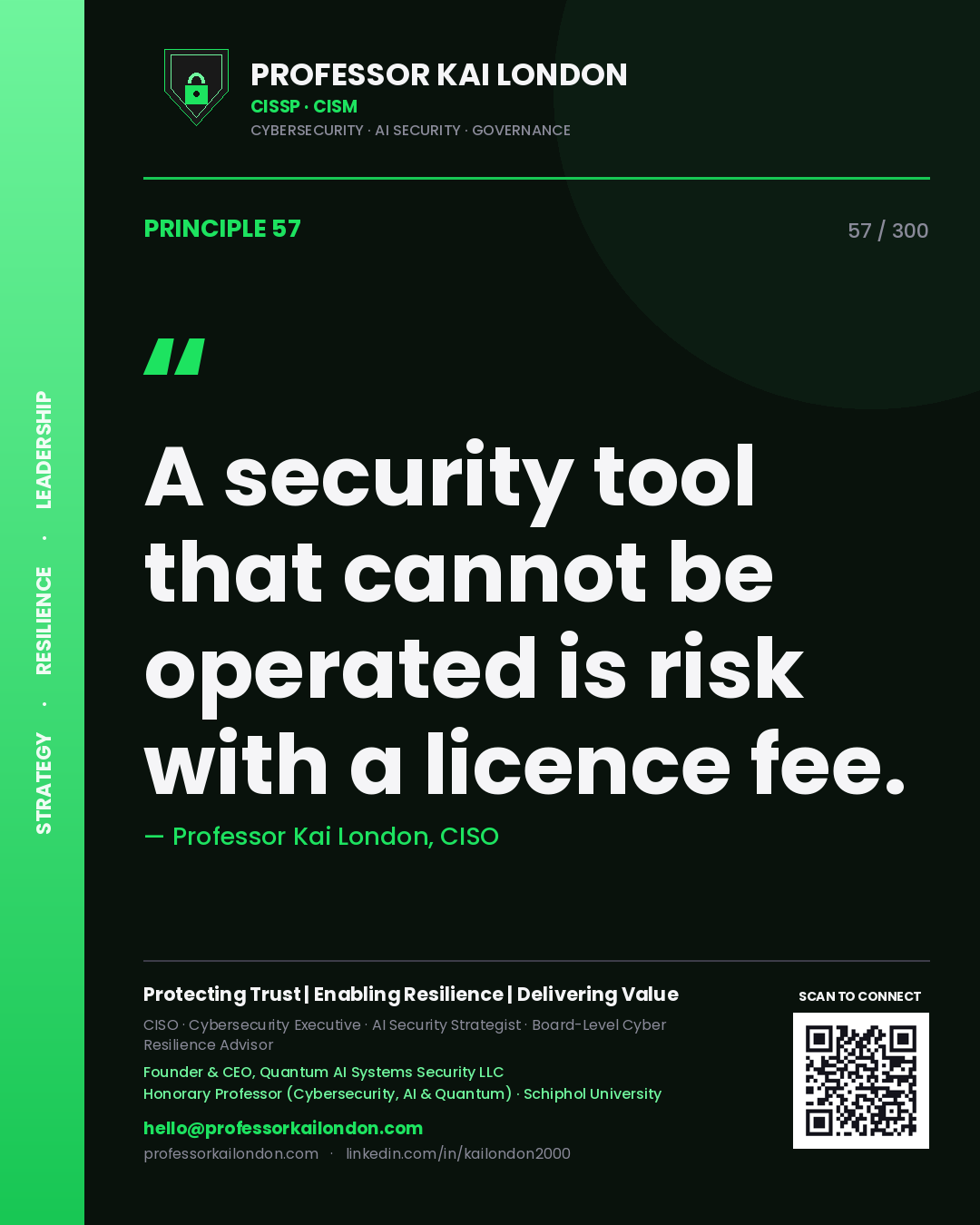 #057 · SecOps — A security tool that cannot be operated is risk with a licence fee.
 #058 · Architecture — Complexity is an attack surface no vendor fully removes.
 #059 · Continuity — Recovery time is a promise; recovery evidence is the proof.
 #060 · Defence — Hardening is respect for adversary patience.
 #061 · Monitoring — Logs only create value when someone can read, correlate and act on them.
 #062 · Human Risk — A strong firewall cannot compensate for weak judgement at the inbox.
 #063 · Endpoint Security — Endpoint security succeeds when behaviour, identity and context meet.
 #064 · Vulnerability Management — Vulnerability management is prioritisation under business constraint.
 #065 · Asset Criticality — The best defence programmes know which systems matter most before the attack starts.
 #066 · Resilience — Resilience is measured on the worst day, not the average quarter.
 #067 · Continuous Assurance — Security posture is only real when continuously measured.
 #068 · Architecture — A secure architecture must explain itself to engineers, auditors and executives.
 #069 · SecOps — Security operations should reduce uncertainty faster than the attacker creates it.
 #070 · Incident Response — Threat response fails when escalation paths are discovered during the incident.
 #071 · AI Security — AI security starts where data accountability begins.
 #072 · AI Governance — AI is a privacy and security challenge before it becomes an innovation story.
 #073 · AI Assurance — A model you cannot explain is a decision you cannot defend.
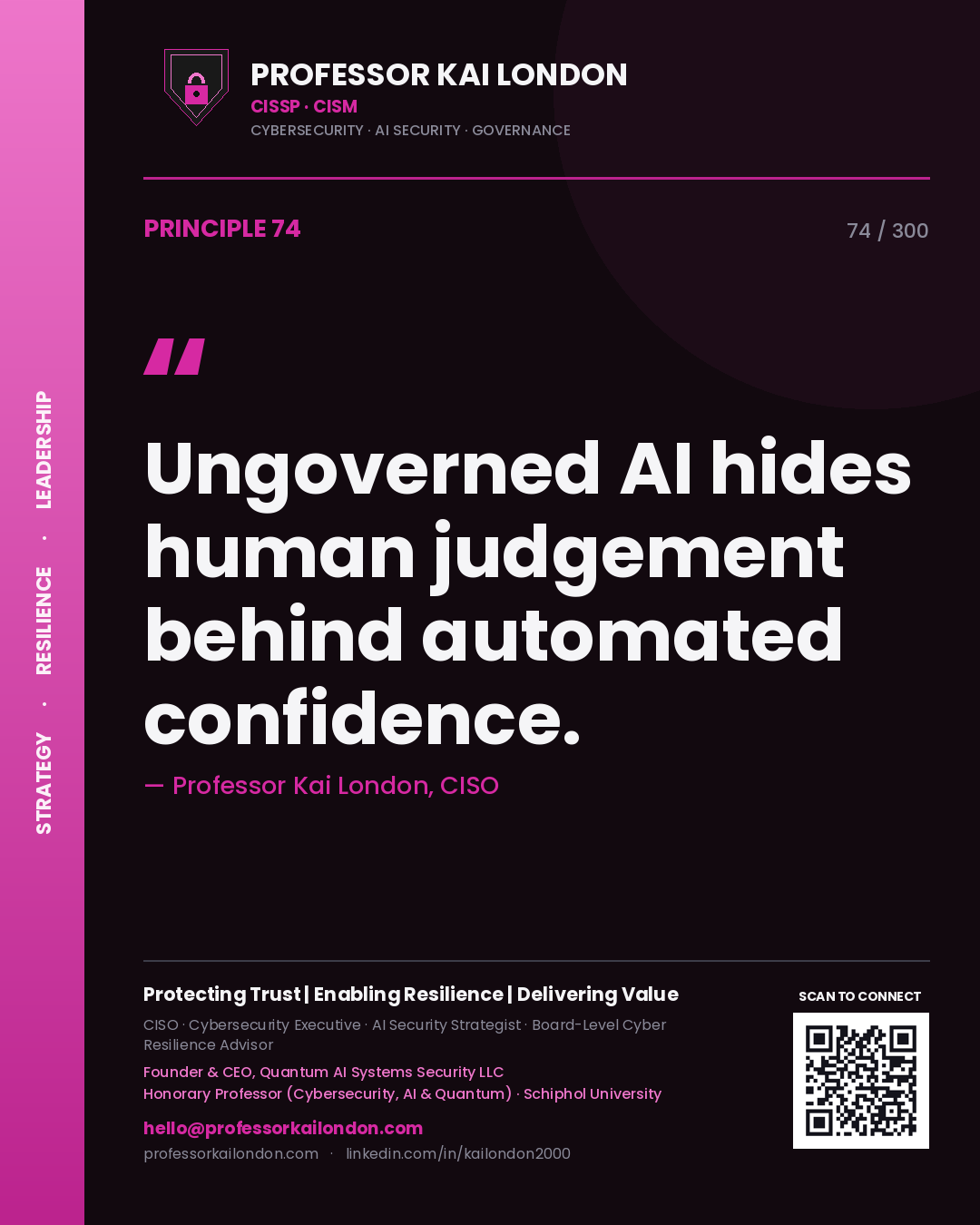 #074 · AI Risk — Ungoverned AI hides human judgement behind automated confidence.
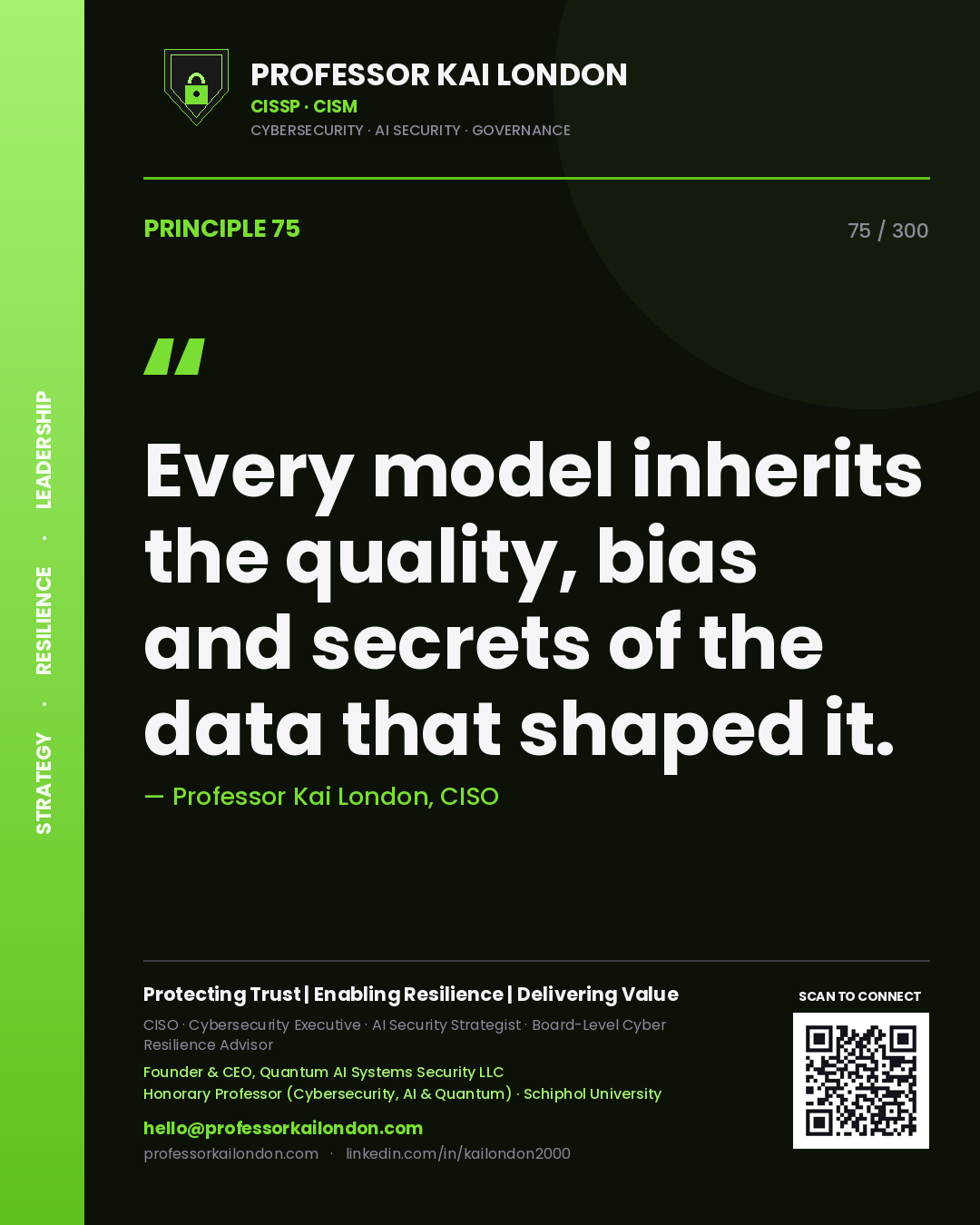 #075 · AI Data Risk — Every model inherits the quality, bias and secrets of the data that shaped it.
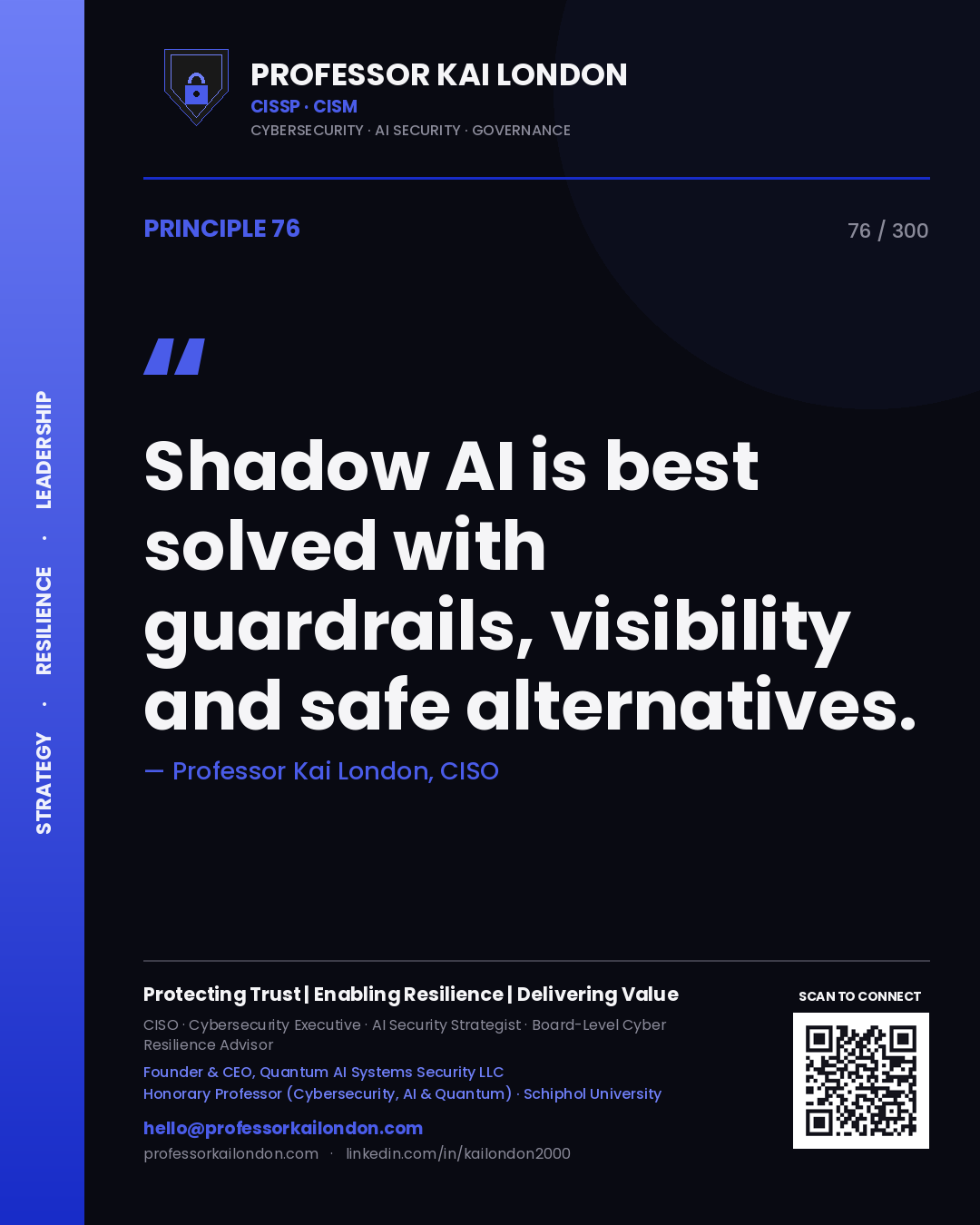 #076 · Shadow AI — Shadow AI is best solved with guardrails, visibility and safe alternatives.
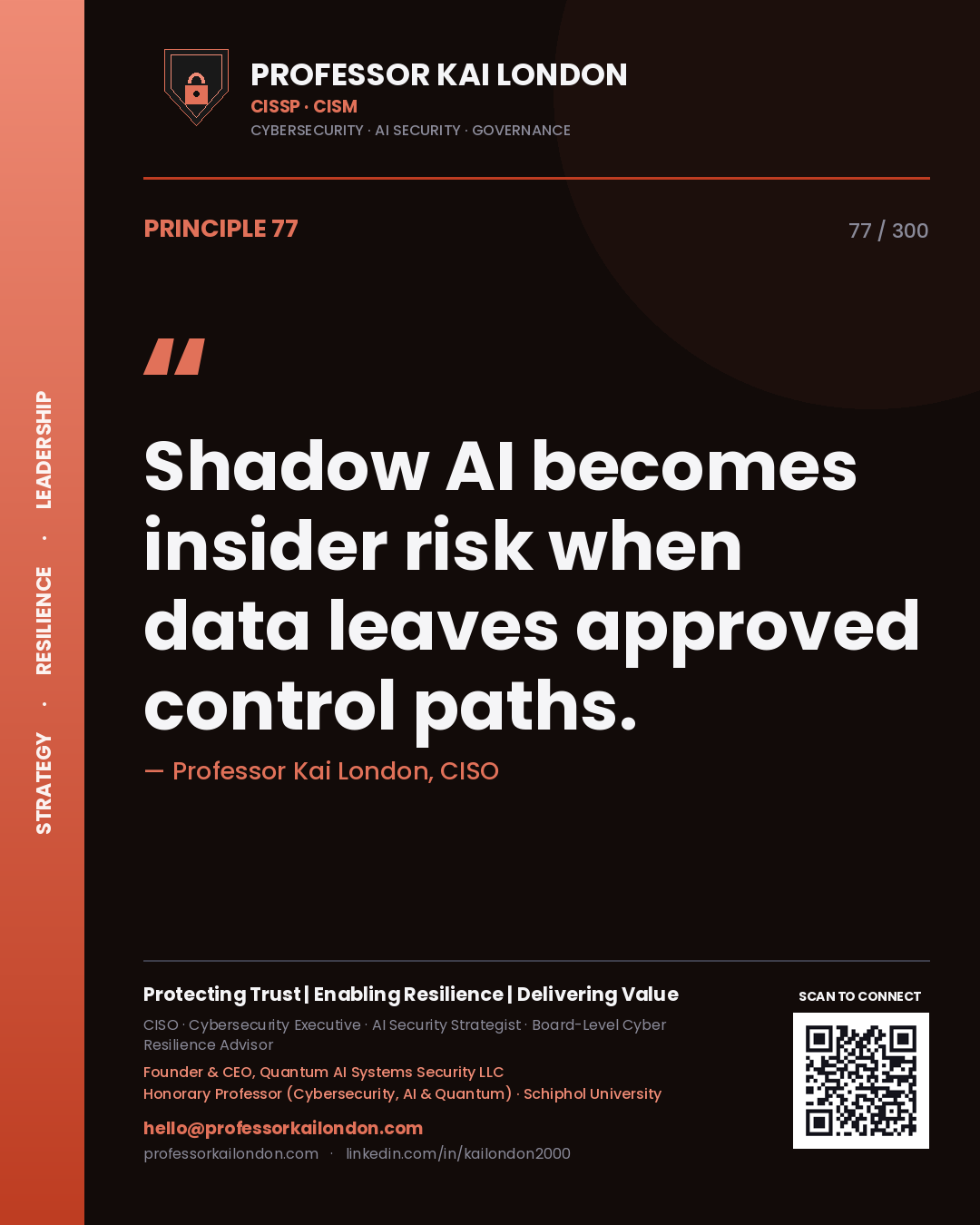 #077 · AI Risk — Shadow AI becomes insider risk when data leaves approved control paths.
 #078 · AI Assurance — If you cannot audit the prompt, you cannot certify the outcome.
 #079 · AI Risk — Automation scales strong decisions and weak controls with equal speed.
 #080 · AI Accountability — The AI question is not only what it can do, but who answers when it fails.
 #081 · AI Supply Chain — Training data is a supply chain and deserves supply-chain discipline.
 #082 · AI Controls — An unmonitored AI guardrail is only a suggestion.
 #083 · AI Oversight — Human-in-the-loop fails when the human is trained only to approve.
 #084 · AI Governance — AI governance means controlling machine-speed decisions with human consequences.
 #085 · AI Risk — The most dangerous AI output is the plausible one.
 #086 · AI by Design — Ethics cannot be bolted on after a system has learned to optimise without it.
 #087 · AI Governance — Model performance is a lab metric; model behaviour is enterprise risk.
 #088 · AI Safety — An AI system is trustworthy only when it can be paused, explained and controlled.
 #089 · Agentic AI — Every autonomous agent needs a boundary, a log and a named owner.
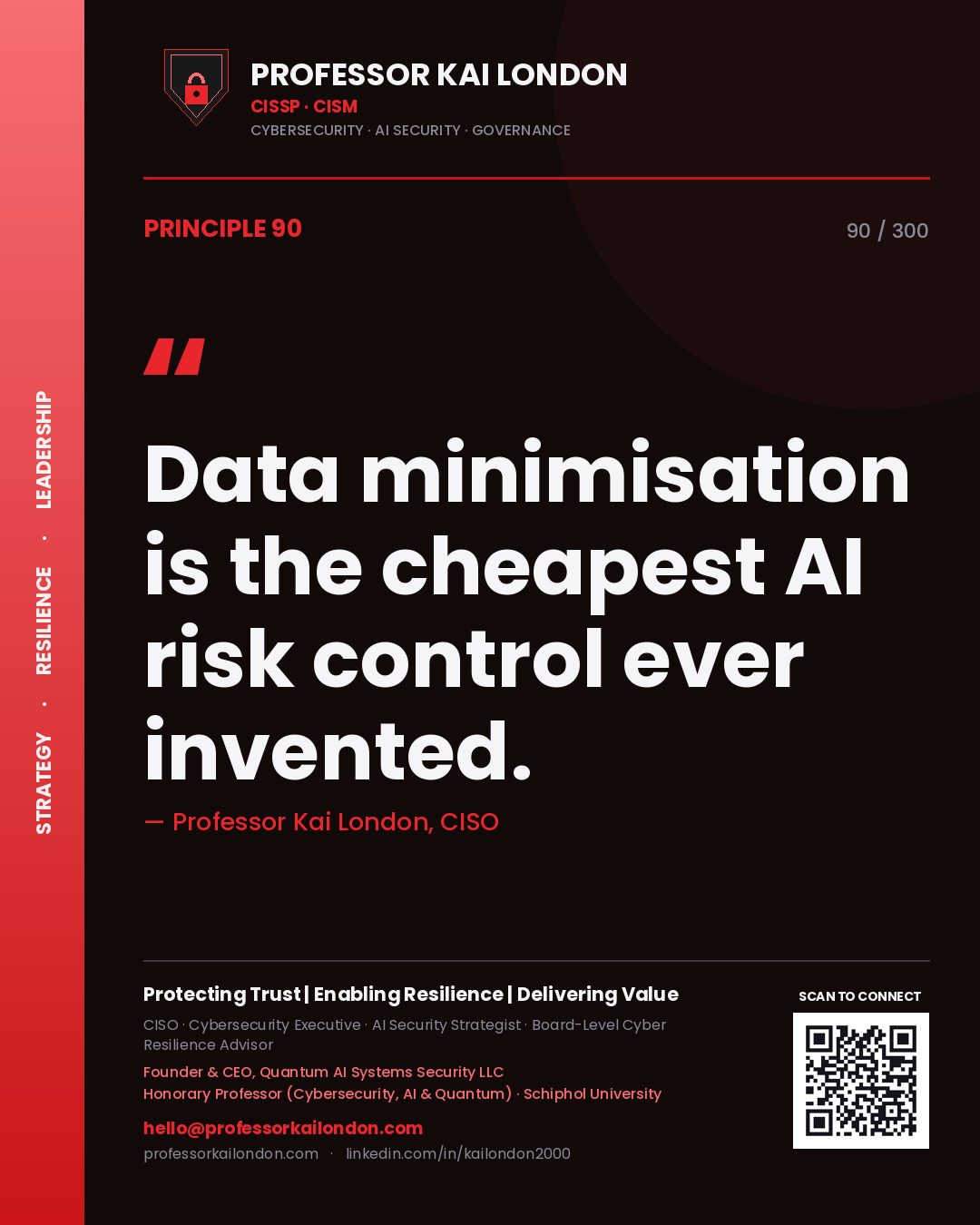 #090 · Privacy / AI — Data minimisation is the cheapest AI risk control ever invented.
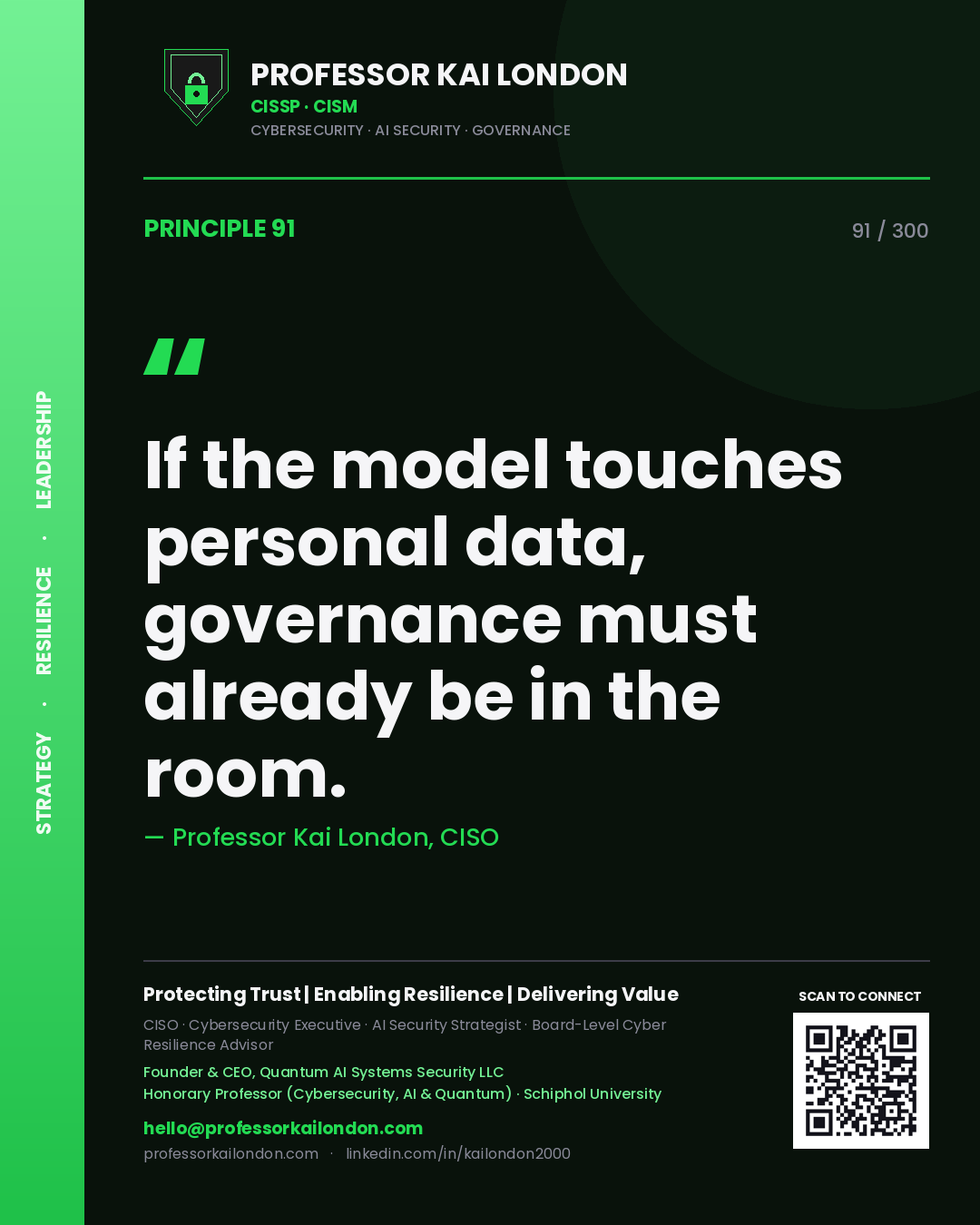 #091 · AI Compliance — If the model touches personal data, governance must already be in the room.
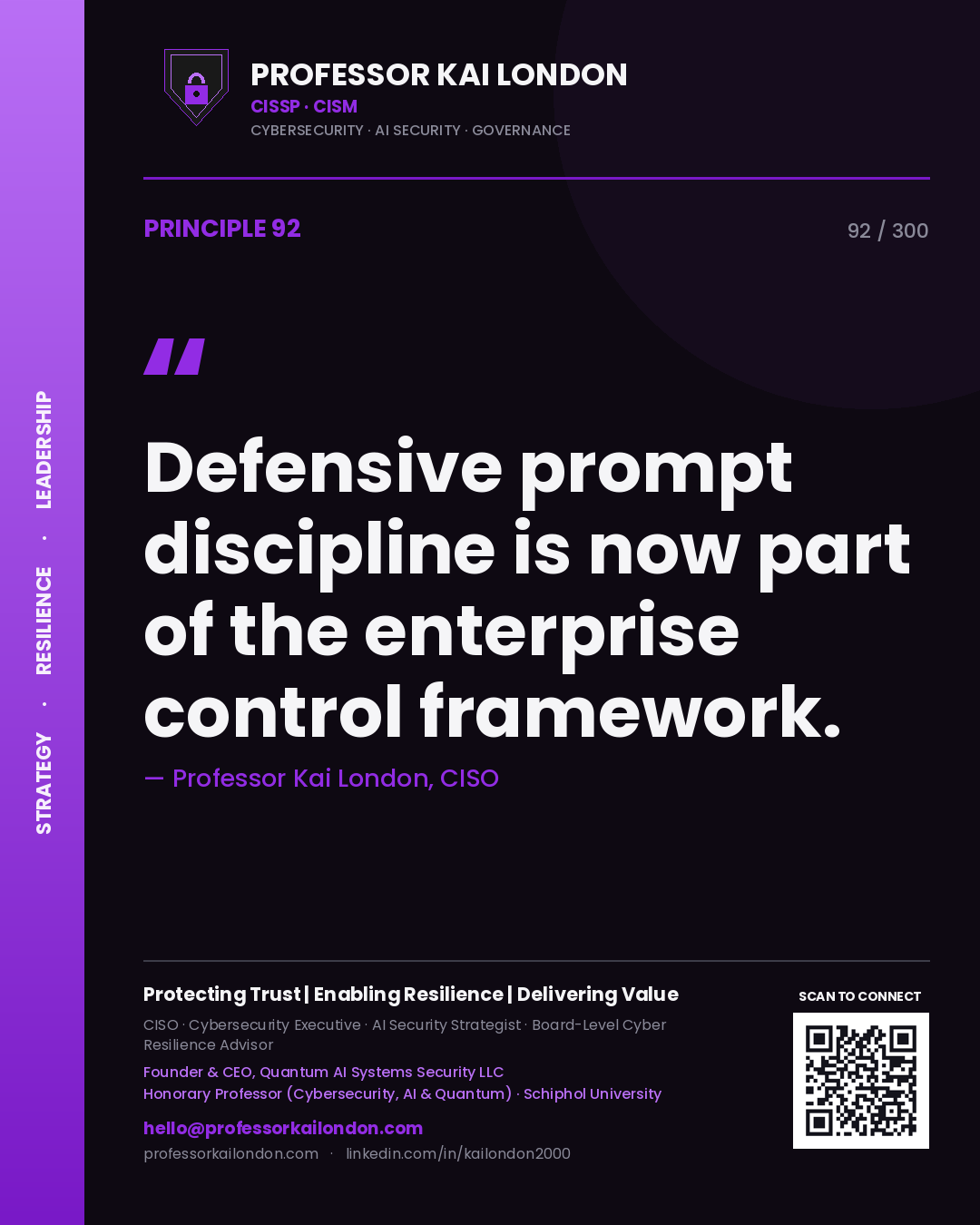 #092 · AI Security — Defensive prompt discipline is now part of the enterprise control framework.
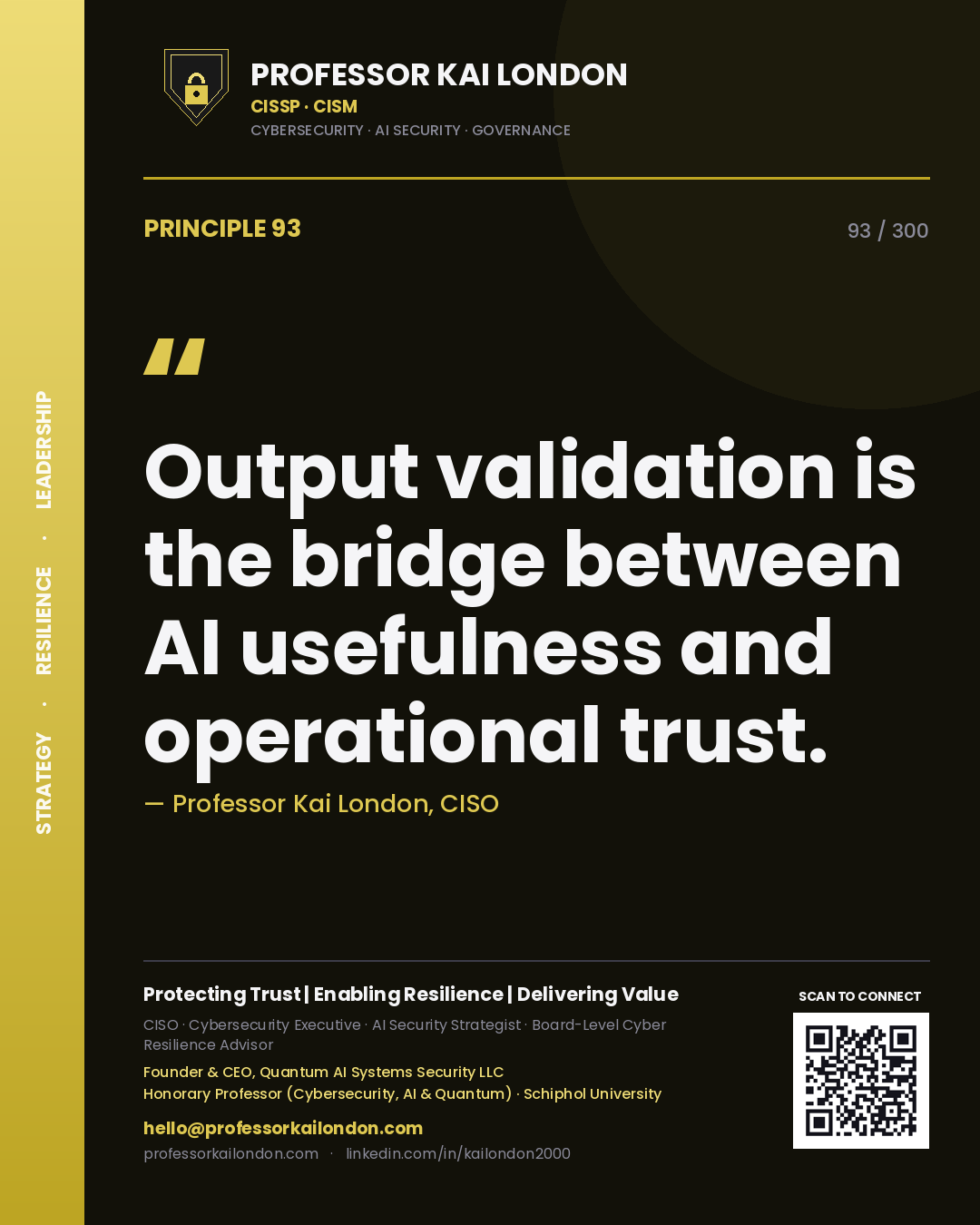 #093 · AI Controls — Output validation is the bridge between AI usefulness and operational trust.
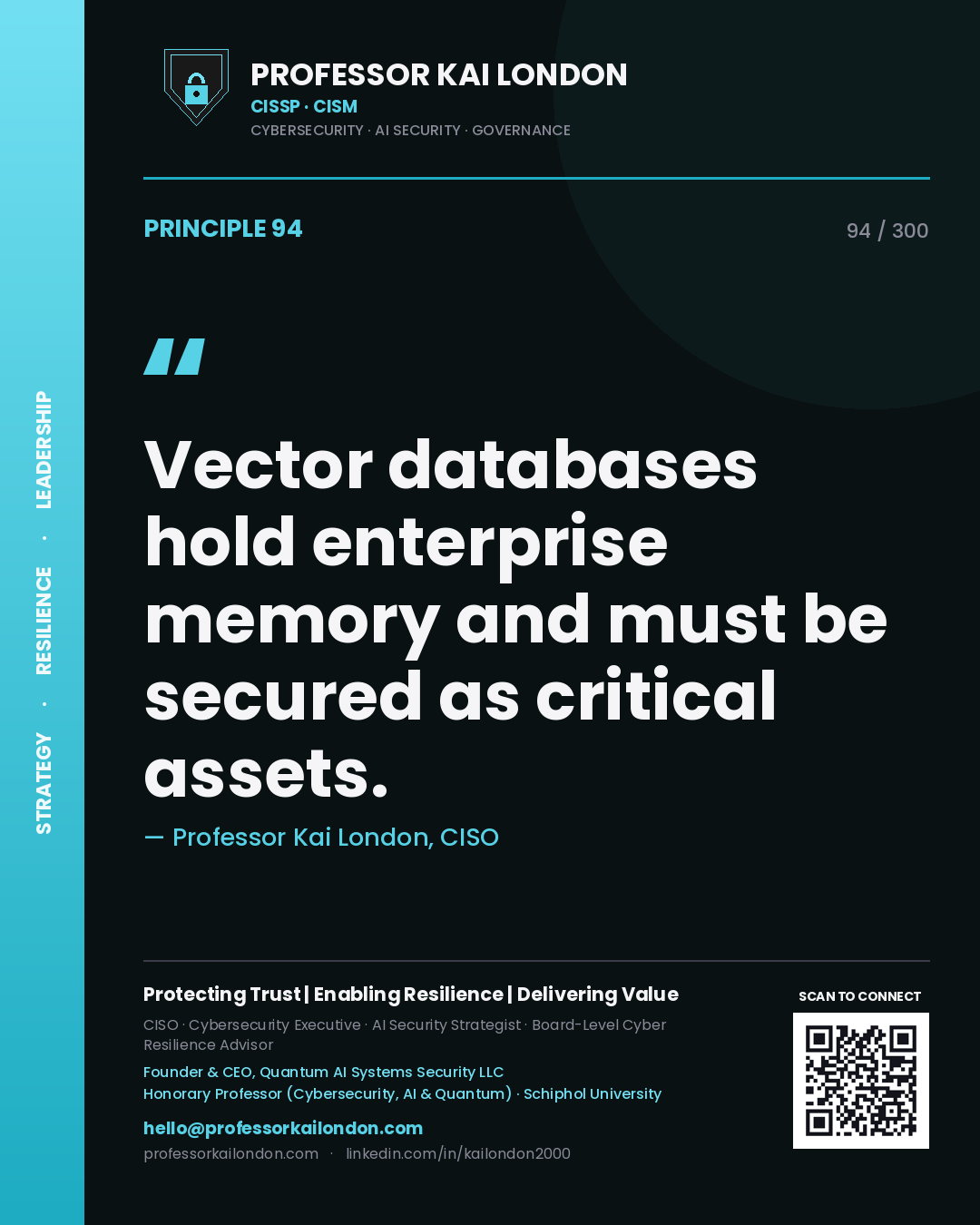 #094 · AI / Data Security — Vector databases hold enterprise memory and must be secured as critical assets.
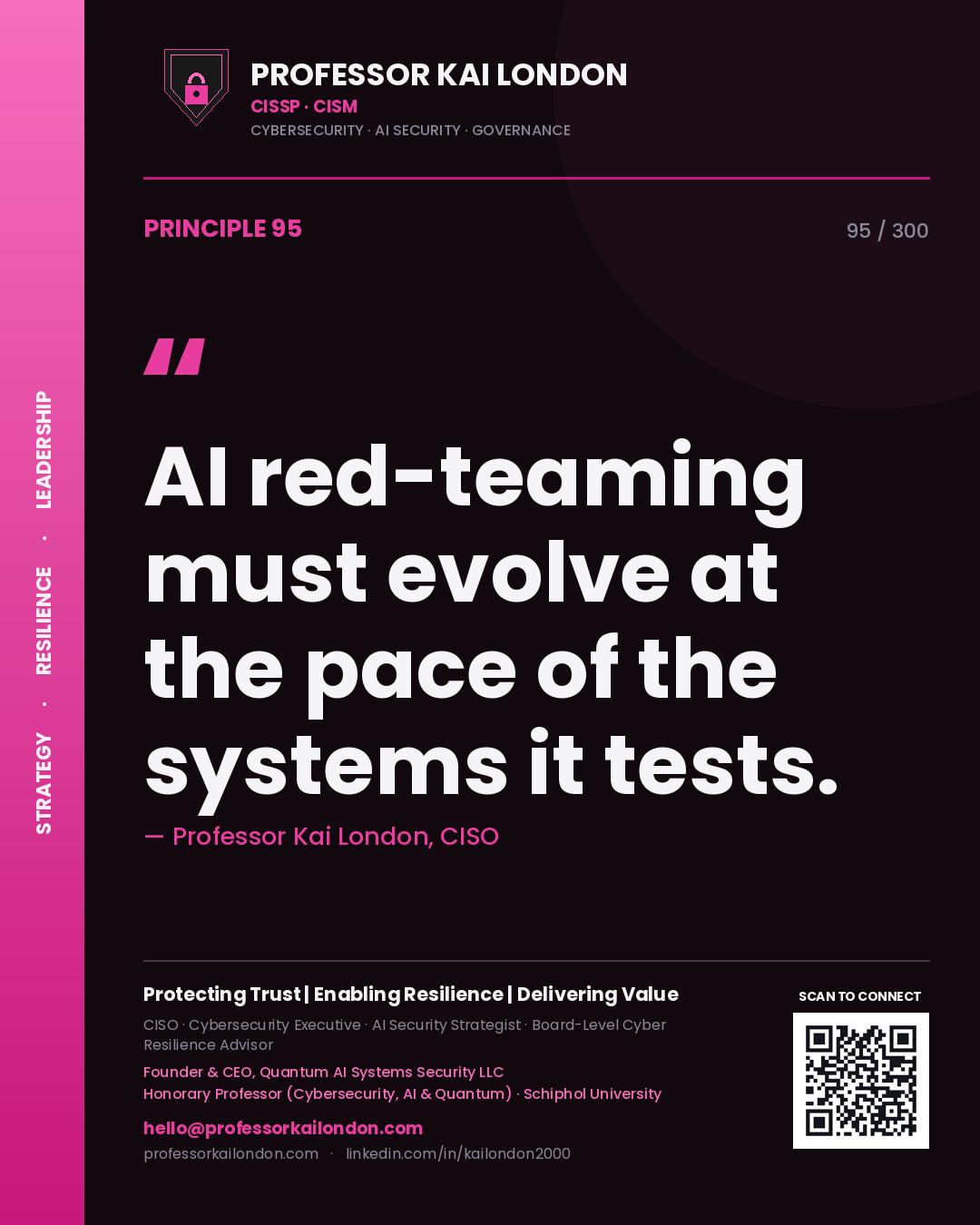 #095 · AI Assurance — AI red-teaming must evolve at the pace of the systems it tests.
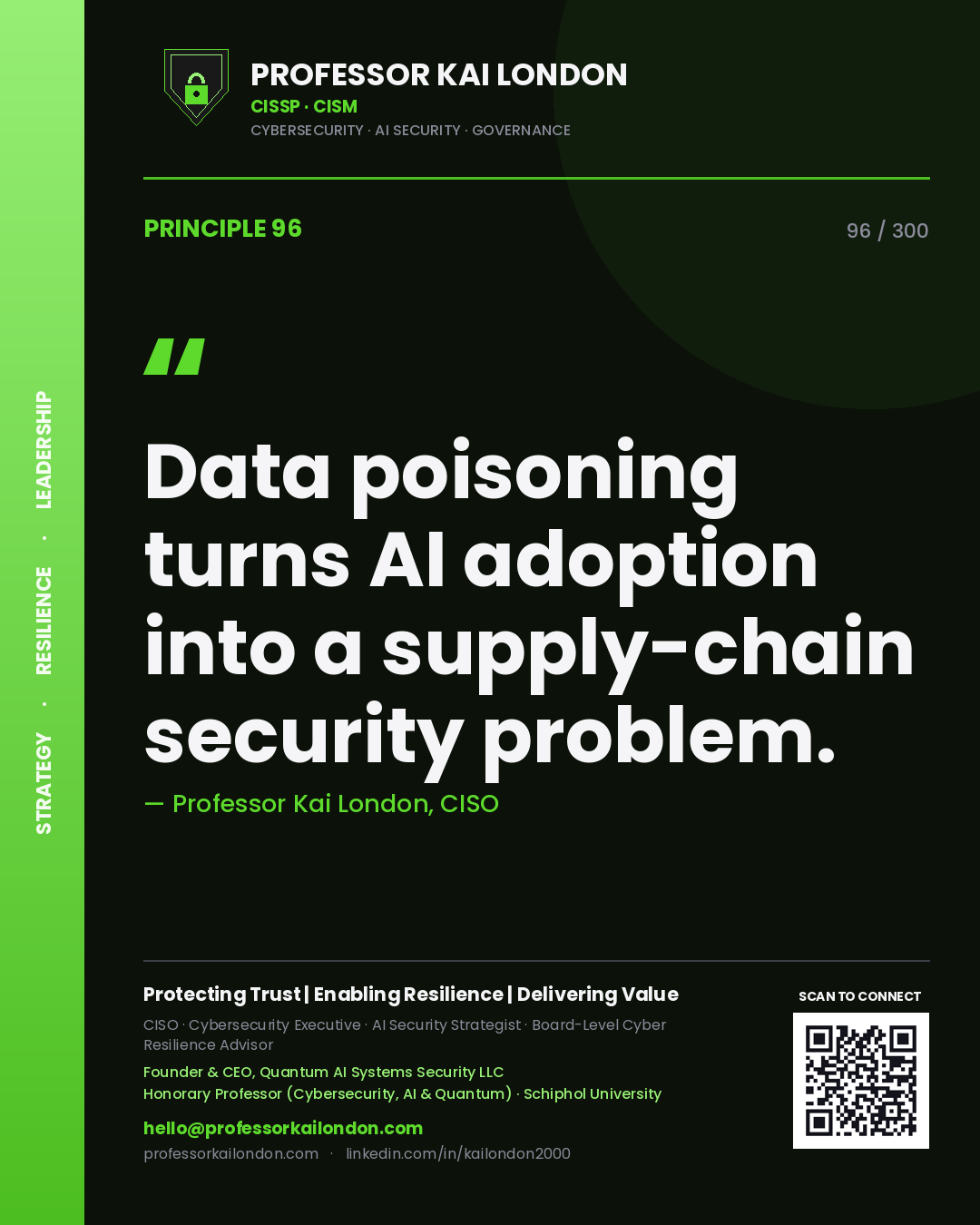 #096 · AI Security — Data poisoning turns AI adoption into a supply-chain security problem.
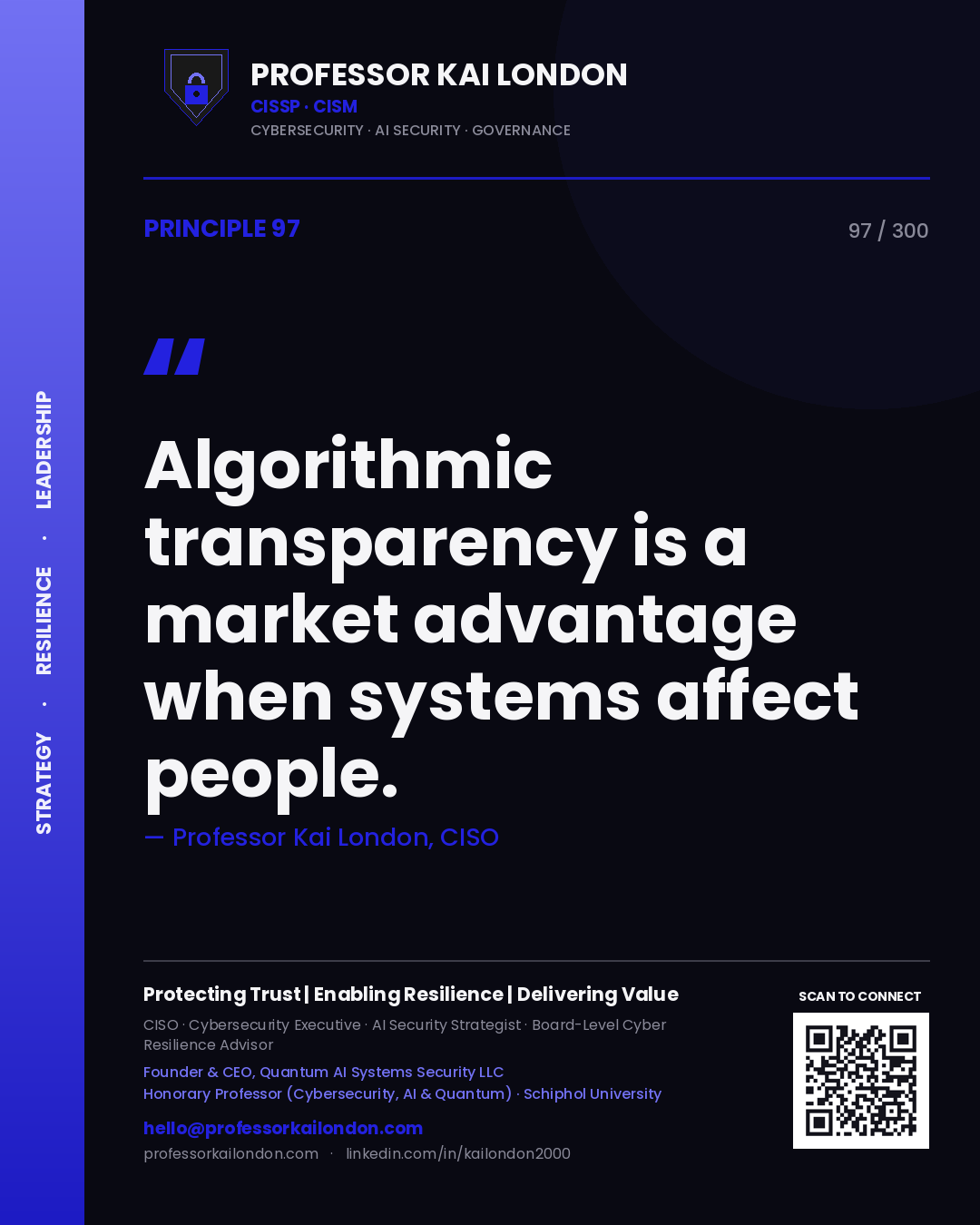 #097 · AI Governance — Algorithmic transparency is a market advantage when systems affect people.
 #098 · AI Ethics — Responsible AI is not brand decoration; it is operational eligibility.
 #099 · AI Assurance — AI assurance should be designed before AI scale is achieved.
 #100 · Agentic AI — Agentic AI needs delegated authority, but never delegated accountability.
 #101 · OT Security — OT security protects continuity, safety and trust, not just networks.
 #102 · OT Resilience — In OT, security must protect operations without disrupting them.
 #103 · Critical Infrastructure — Critical systems need security that understands consequence, not only configuration.
 #104 · OT Governance — In IT, downtime disrupts service; in OT, failure can affect safety.
 #105 · OT Priorities — Availability is the first language of the plant floor.
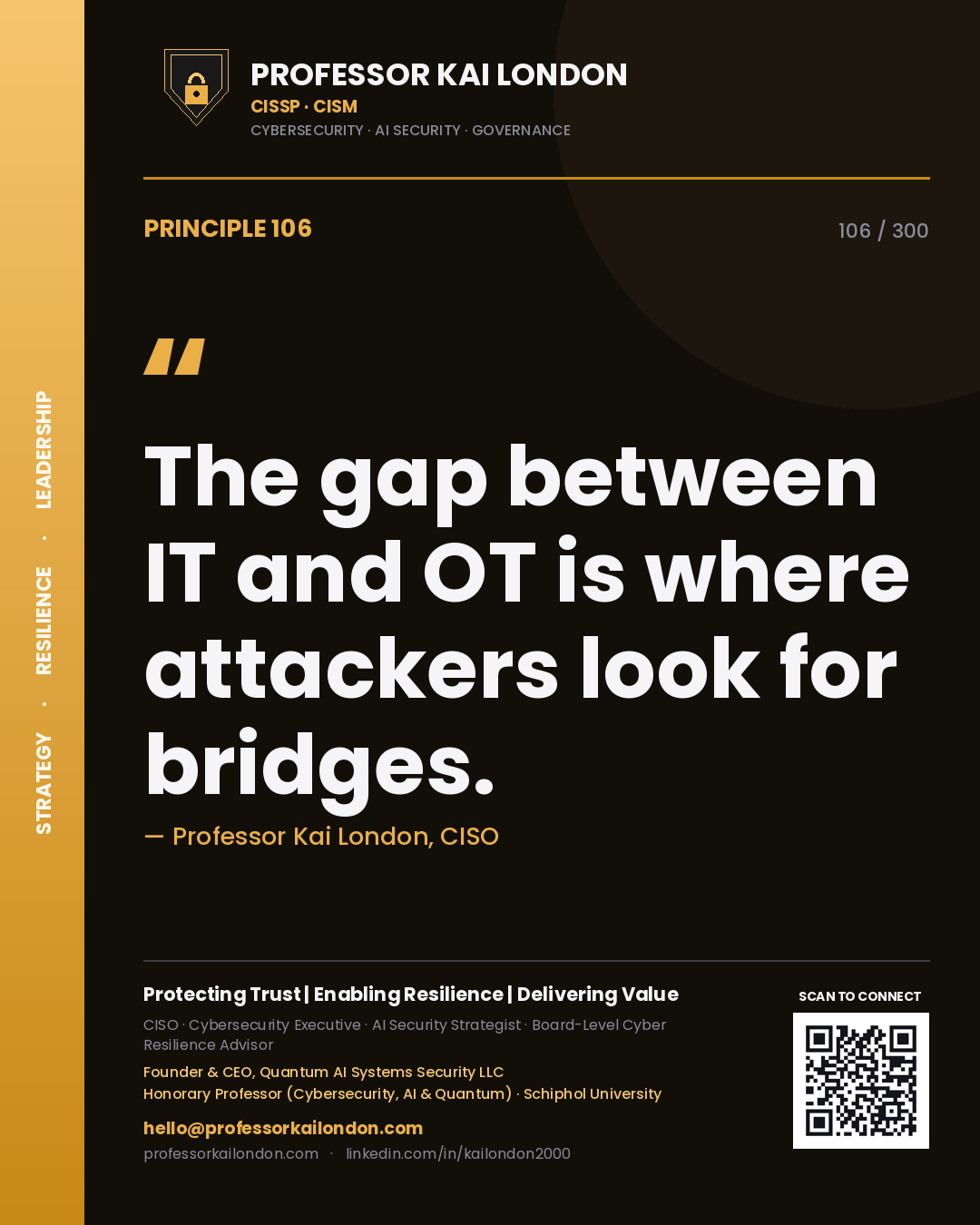 #106 · IT / OT Convergence — The gap between IT and OT is where attackers look for bridges.
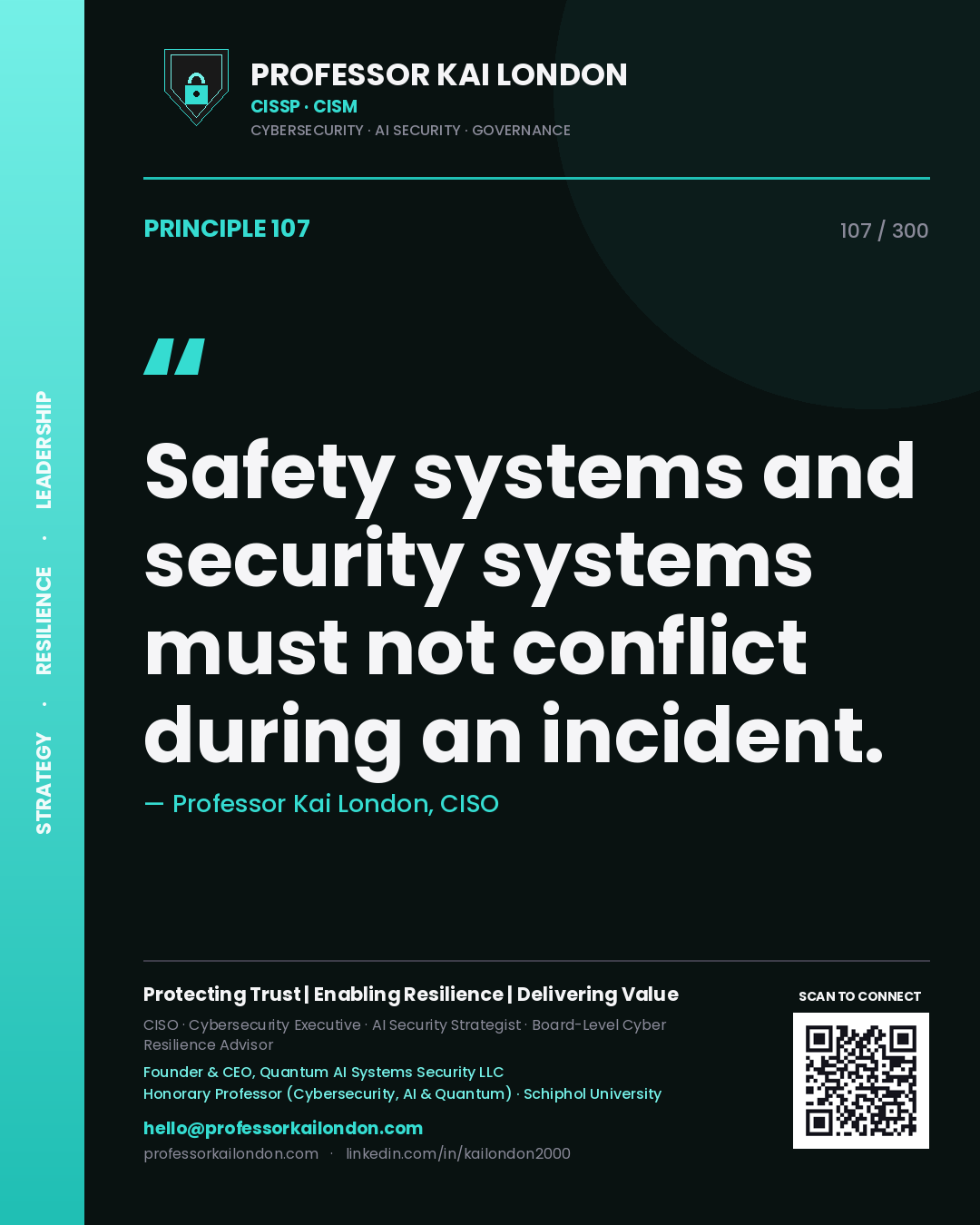 #107 · Safety / Security — Safety systems and security systems must not conflict during an incident.
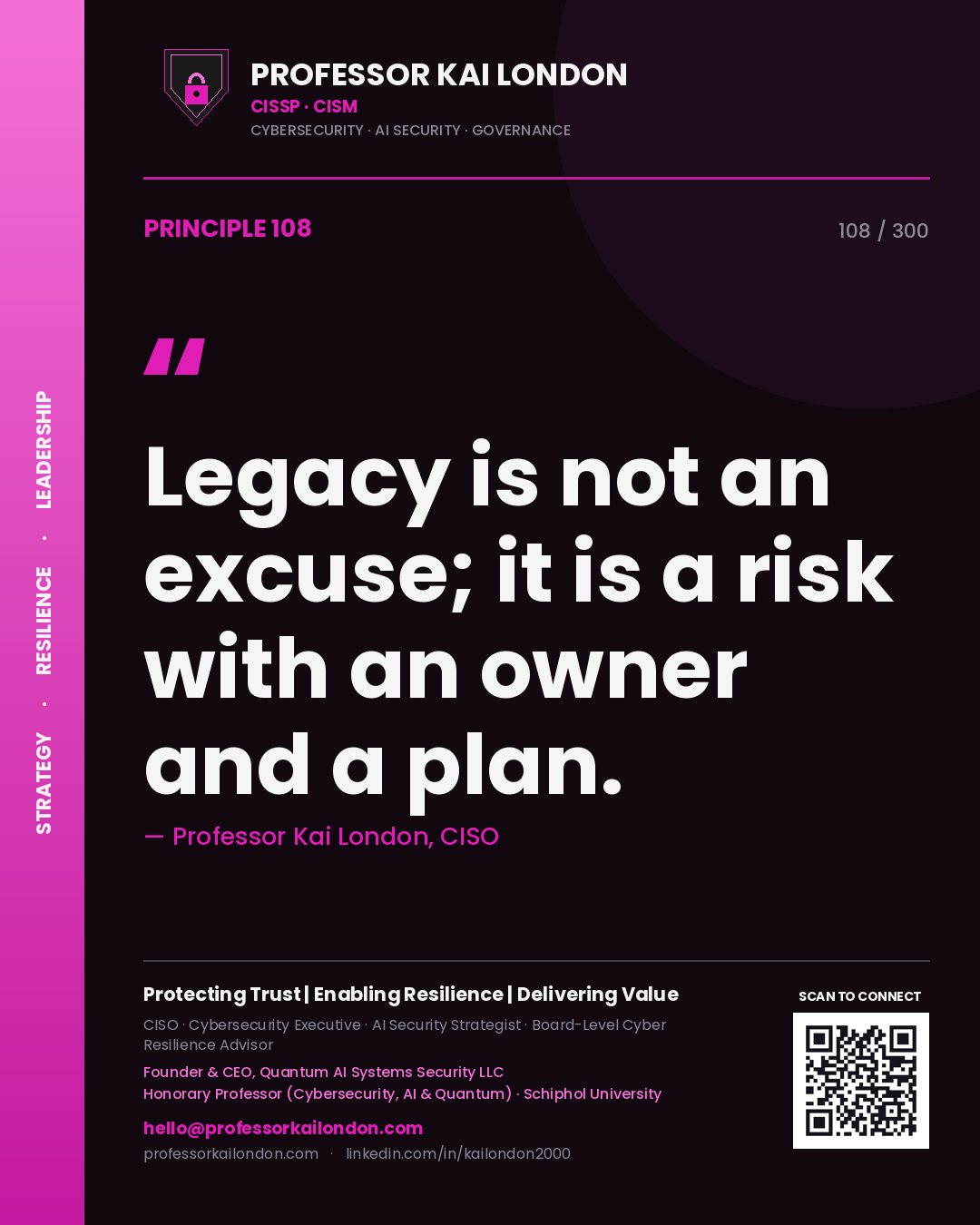 #108 · OT Risk — Legacy is not an excuse; it is a risk with an owner and a plan.
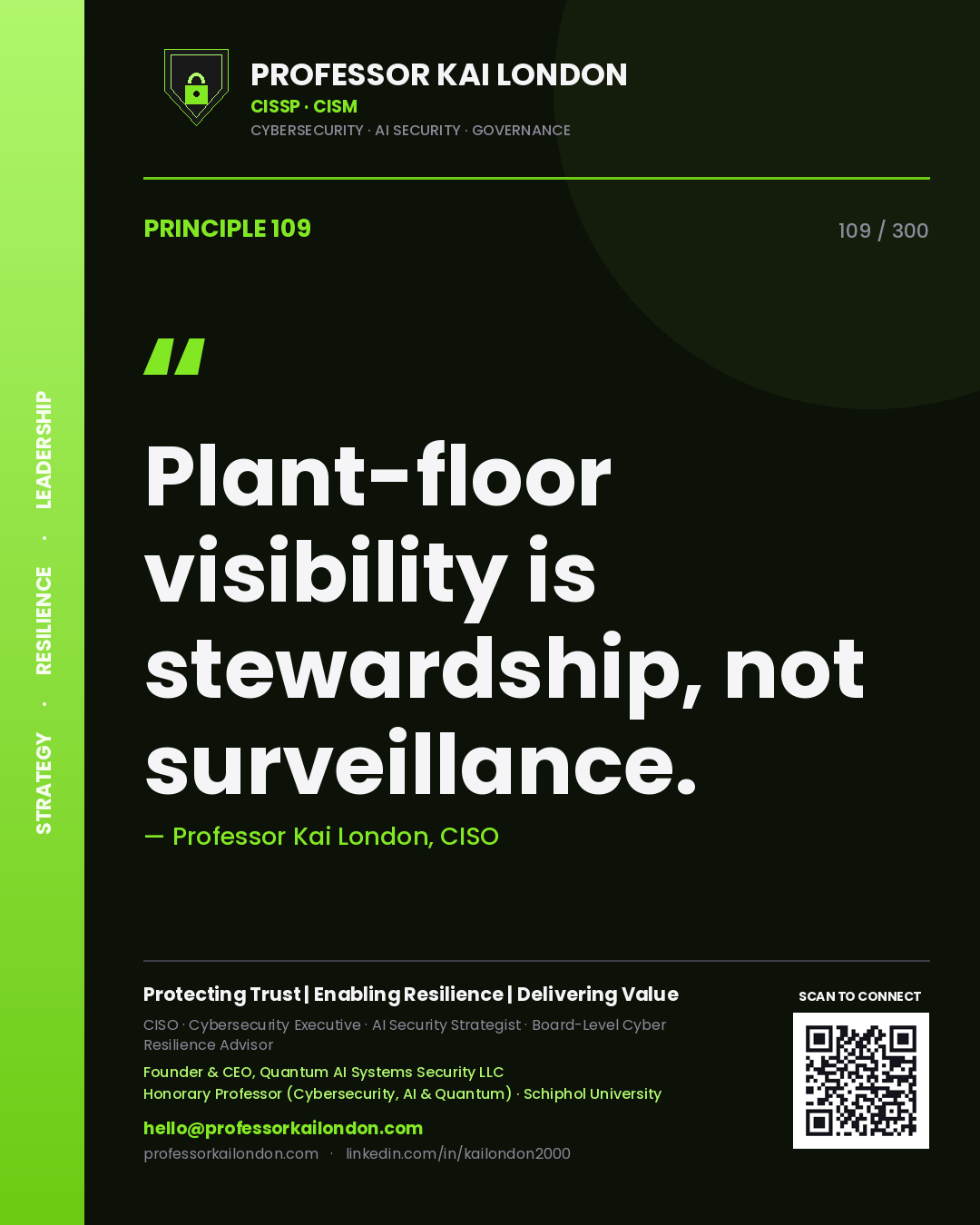 #109 · OT Monitoring — Plant-floor visibility is stewardship, not surveillance.
 #110 · OT Access — Remote access into OT must be treated as a critical control path.
 #111 · OT Culture — The engineer who keeps the line running is one of the strongest security controls.
 #112 · OT Strategy — Uptime and security are not opponents; separating them weakens both.
 #113 · OT Safety — Know the safe state before an incident forces the question.
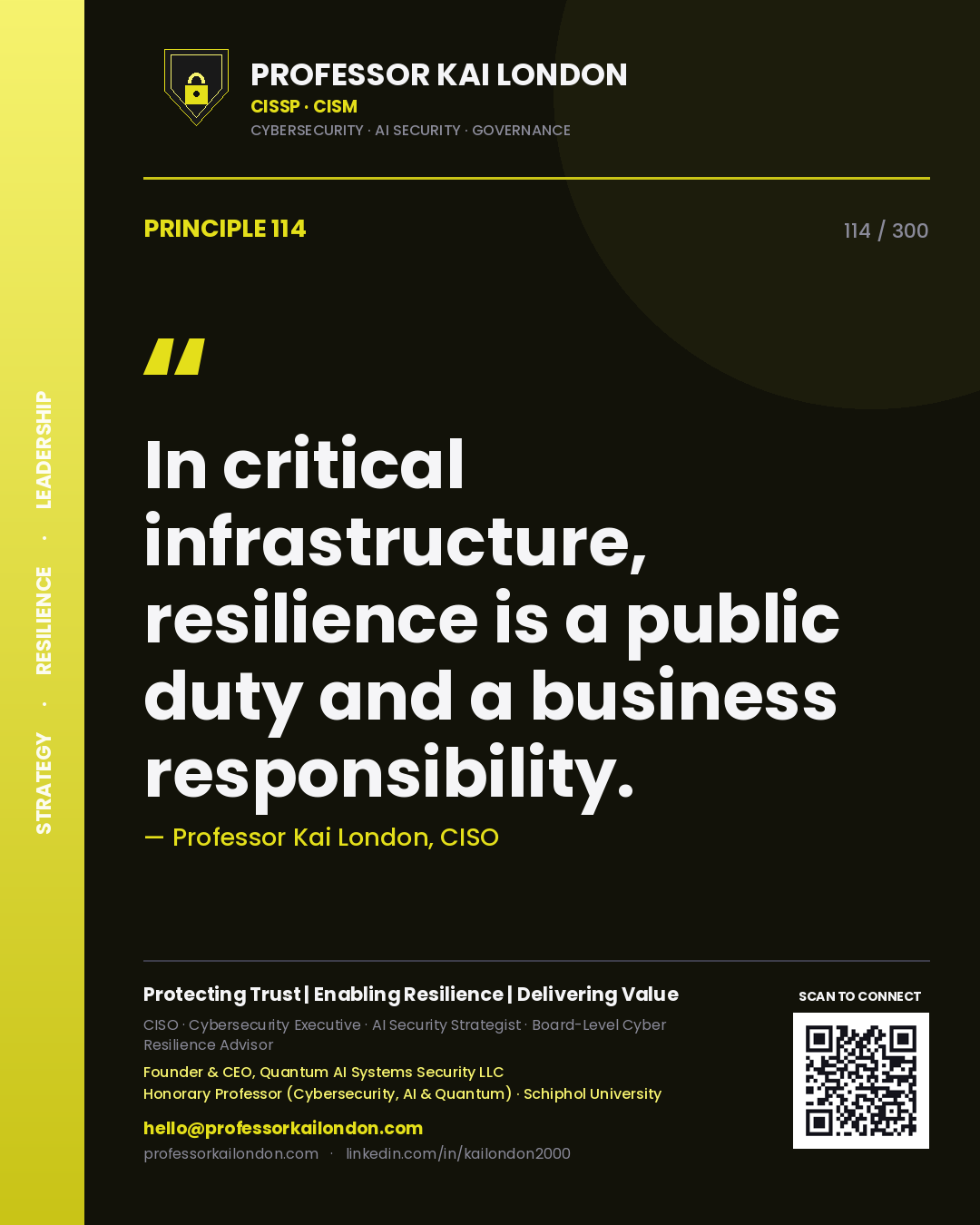 #114 · CNI — In critical infrastructure, resilience is a public duty and a business responsibility.
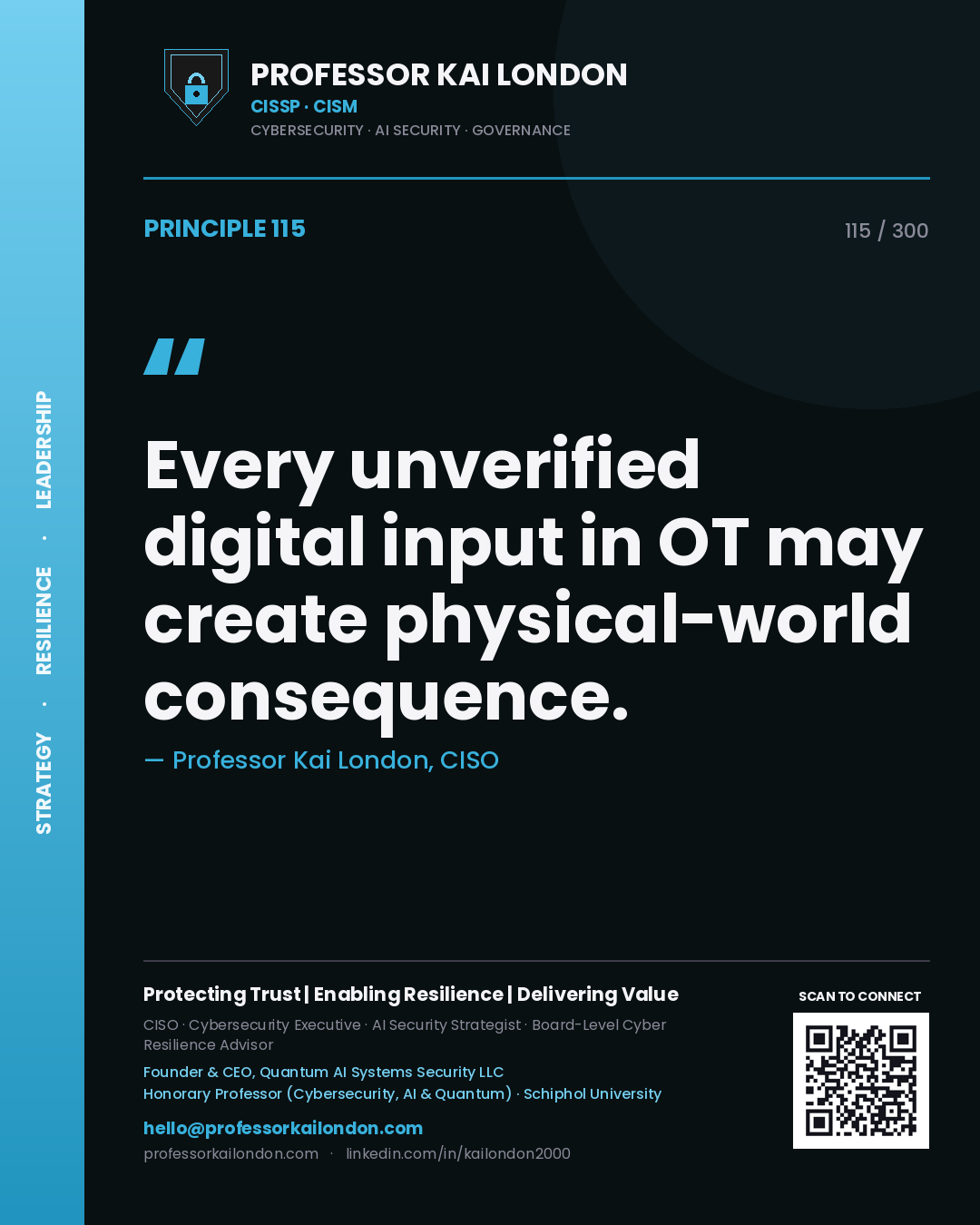 #115 · OT / ICS — Every unverified digital input in OT may create physical-world consequence.
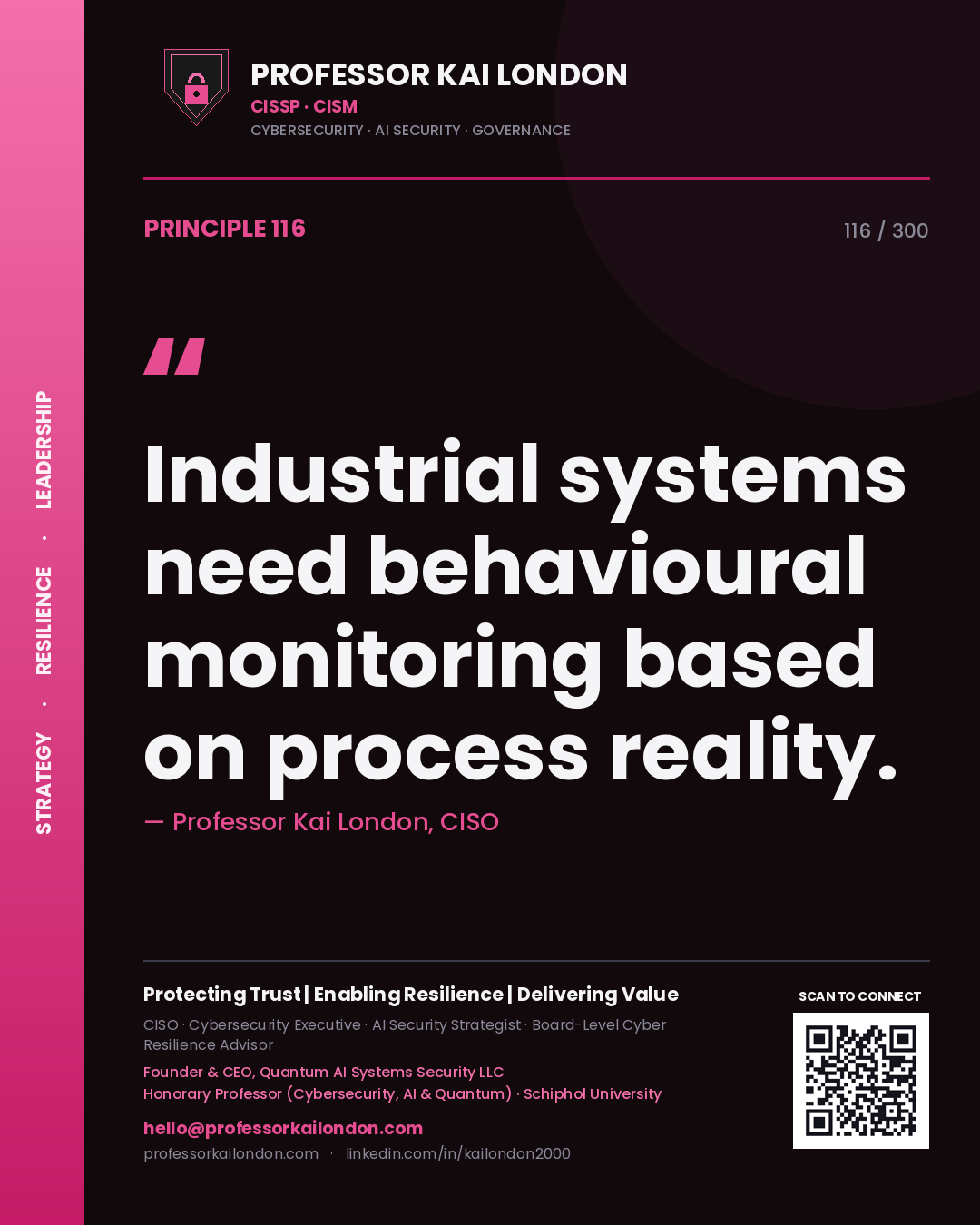 #116 · OT Security — Industrial systems need behavioural monitoring based on process reality.
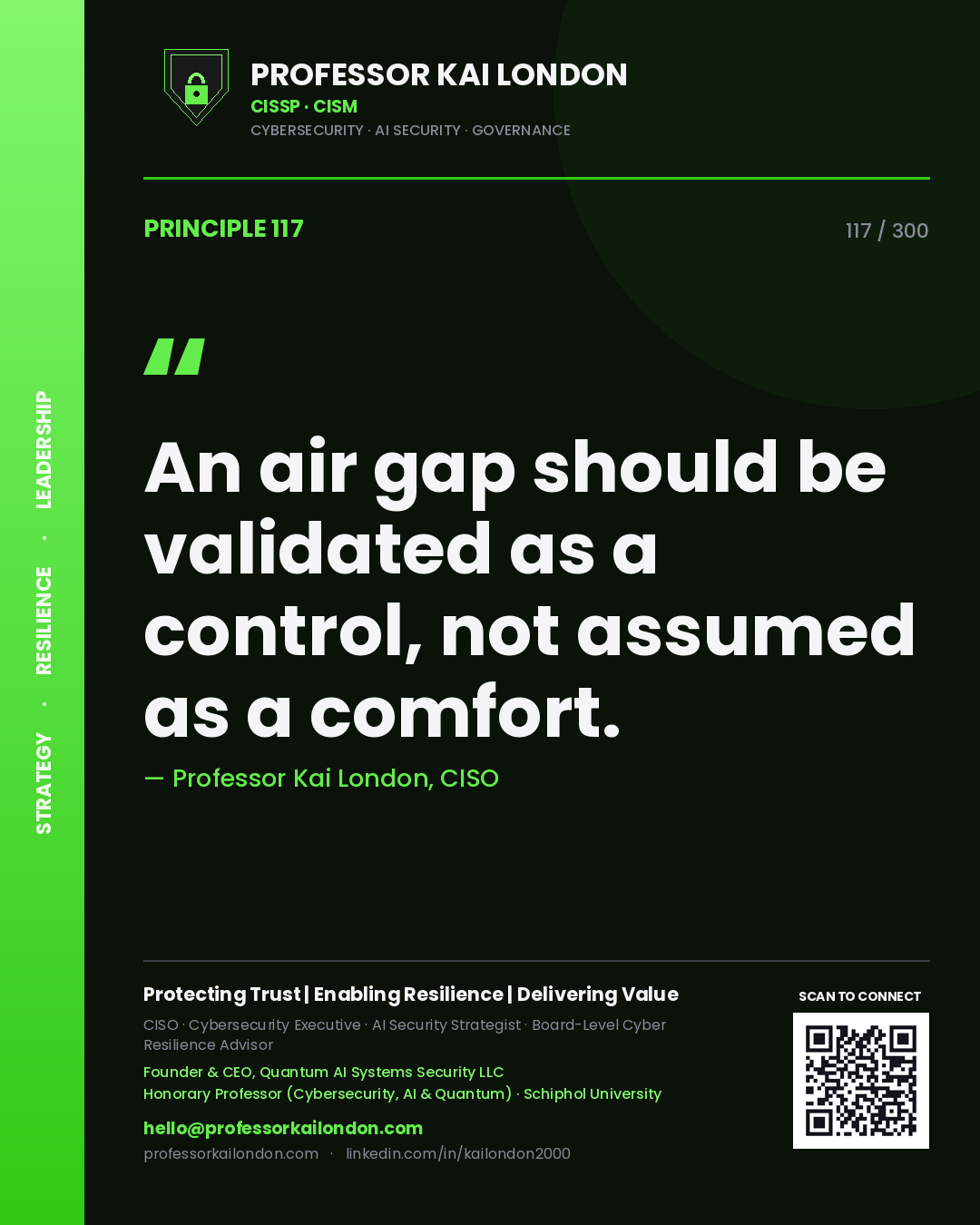 #117 · OT Security — An air gap should be validated as a control, not assumed as a comfort.
 #118 · ICS Security — Legacy SCADA requires compensating controls that respect operational constraint.
 #119 · IoT Security — IoT security must include certificate lifecycle, renewal and retirement planning.
 #120 · OT Third-Party Risk — Vendor access to industrial systems must be governed as a high-consequence pathway.
 #121 · IT / OT Convergence — IT and OT convergence needs one risk language across data, process and physics.
 #122 · OT Monitoring — Passive visibility is often the safest first step in fragile OT environments.
 #123 · PLC Security — PLC security matters because digital compromise can become physical action.
 #124 · OT IR — OT incident response must include engineering reality, not only IT procedure.
 #125 · OT Culture — Critical infrastructure defence moves at the speed of trust between operations and security.
 #126 · Supplier Risk — Third-party risk remains first-party accountability.
 #127 · Vendor Risk — A supplier's weakest control can become your strongest regulatory exposure.
 #128 · Supply Chain — Work can be outsourced; accountability cannot.
 #129 · Assurance — A questionnaire is a promise; evidence is the proof.
 #130 · Cloud Risk — The cloud may run elsewhere, but accountability remains with the business.
 #131 · Systemic Risk — Concentration risk is the quiet cost of everyone trusting the same provider.
 #132 · Procurement — A contract without security obligations signs risk in advance.
 #133 · Supply Chain — Fourth-party exposure matters because risk rarely stops at the first supplier.
 #134 · Third-Party Risk — Due diligence that ends at signing becomes delayed exposure.
 #135 · Resilience — A good exit plan is part of a good supplier strategy.
 #136 · Vendor Risk — Supplier assurance should make risk visible before signatures are exchanged.
 #137 · Third-Party Governance — A vendor relationship is secure only when obligations and evidence stay current.
 #138 · Contract Assurance — Contract security clauses matter most when the incident starts.
 #139 · Software Supply Chain — Third-party code becomes first-party risk when it enters the product.
 #140 · Operational Risk — Supplier resilience must be assessed against the services the business cannot afford to lose.
 #141 · Privacy / Vendor — A processor register is only useful if it reflects operational reality.
 #142 · TPRM — Supplier risk cannot be managed by annual paperwork alone.
 #143 · Supplier Assurance — Critical vendors deserve evidence reviews, not reputation-based trust.
 #144 · Governance — Outsourcing works best when responsibility lines are visible before failure.
 #145 · Supply Chain — The safest supplier ecosystem has clear ownership, tested exits and current evidence.
 #146 · Privacy Engineering — Privacy engineering belongs in design, architecture and code before legal review.
 #147 · Data Governance — Data sovereignty turns cloud geography into a governance decision.
 #148 · Privacy — Consent is a living permission model, not a static checkbox.
 #149 · Data Protection — Data minimisation reduces risk by removing what the attacker cannot steal.
 #150 · Privacy Engineering — Anonymisation needs mathematical confidence; pseudonymisation needs disciplined protection.
 #151 · Data Transfers — Cross-border data flows require lifecycle mapping before risk can be managed.
 #152 · Transparency — A privacy notice should clarify trust, not hide it in legal complexity.
 #153 · Data Security — Biometric data deserves exceptional protection because it cannot be reset like a password.
 #154 · GDPR / Lifecycle — Erasure rights require architecture that can find, isolate and remove data.
 #155 · Reputation — Reputational damage often lasts longer than the regulatory fine.
 #156 · Data Governance — A data map is not paperwork; it is the enterprise trust map.
 #157 · Data Security — The business cannot protect data it cannot locate, classify or explain.
 #158 · Retention — Data retention without purpose is liability in storage.
 #159 · Erasure — Deletion is not an IT chore; it is a trust promise fulfilled.
 #160 · DSAR — A DSAR is a stress test of the data estate.
 #161 · DSAR / Security — If data cannot be found for the individual, it cannot be protected for the enterprise.
 #162 · DSAR — Every DSAR reveals where data governance is strong or fragile.
 #163 · Privacy by Design — Privacy by design means governance enters before launch, not after complaint.
 #164 · UX / Privacy — Product design can create regulatory exposure faster than legal can repair it.
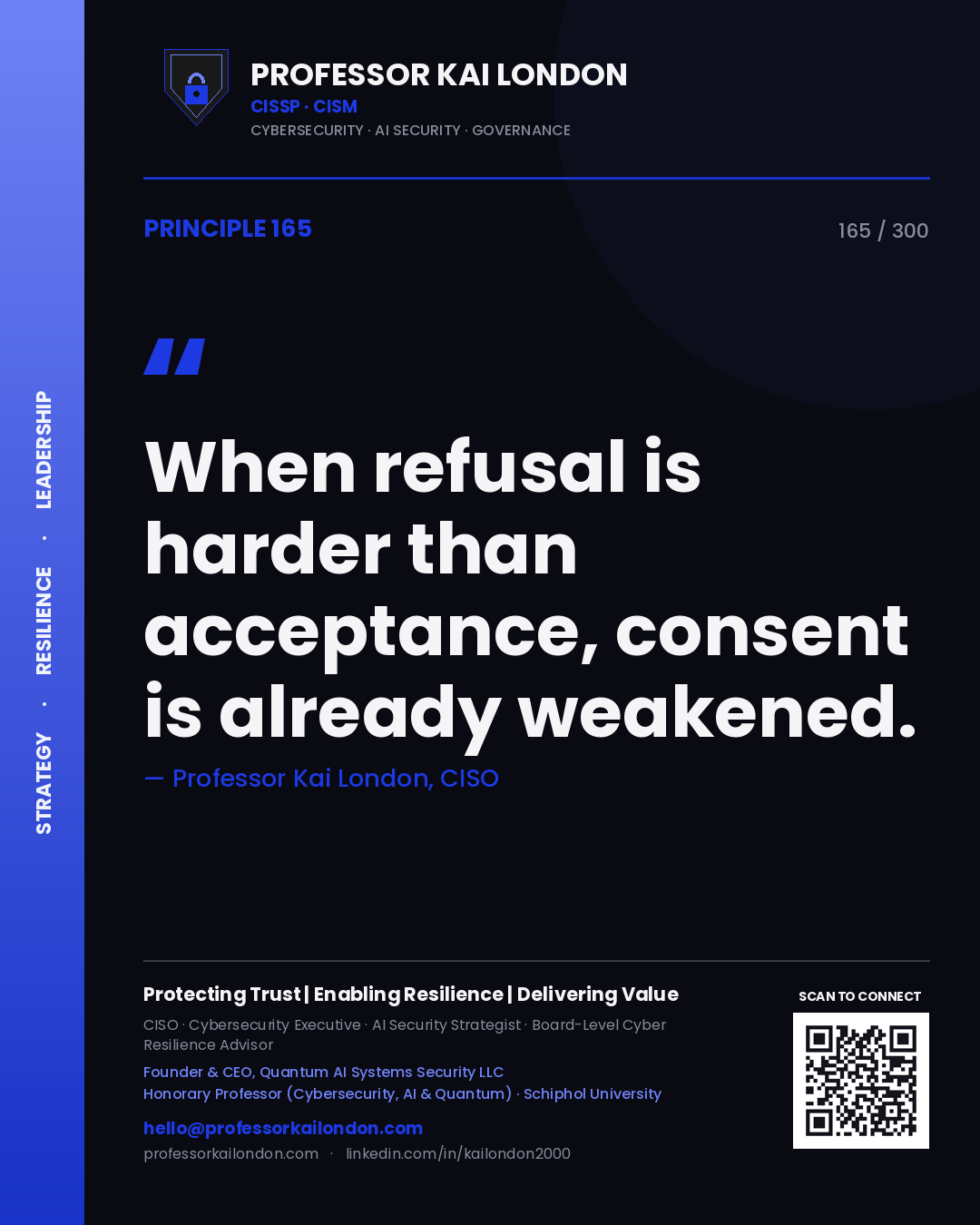 #165 · Consent — When refusal is harder than acceptance, consent is already weakened.
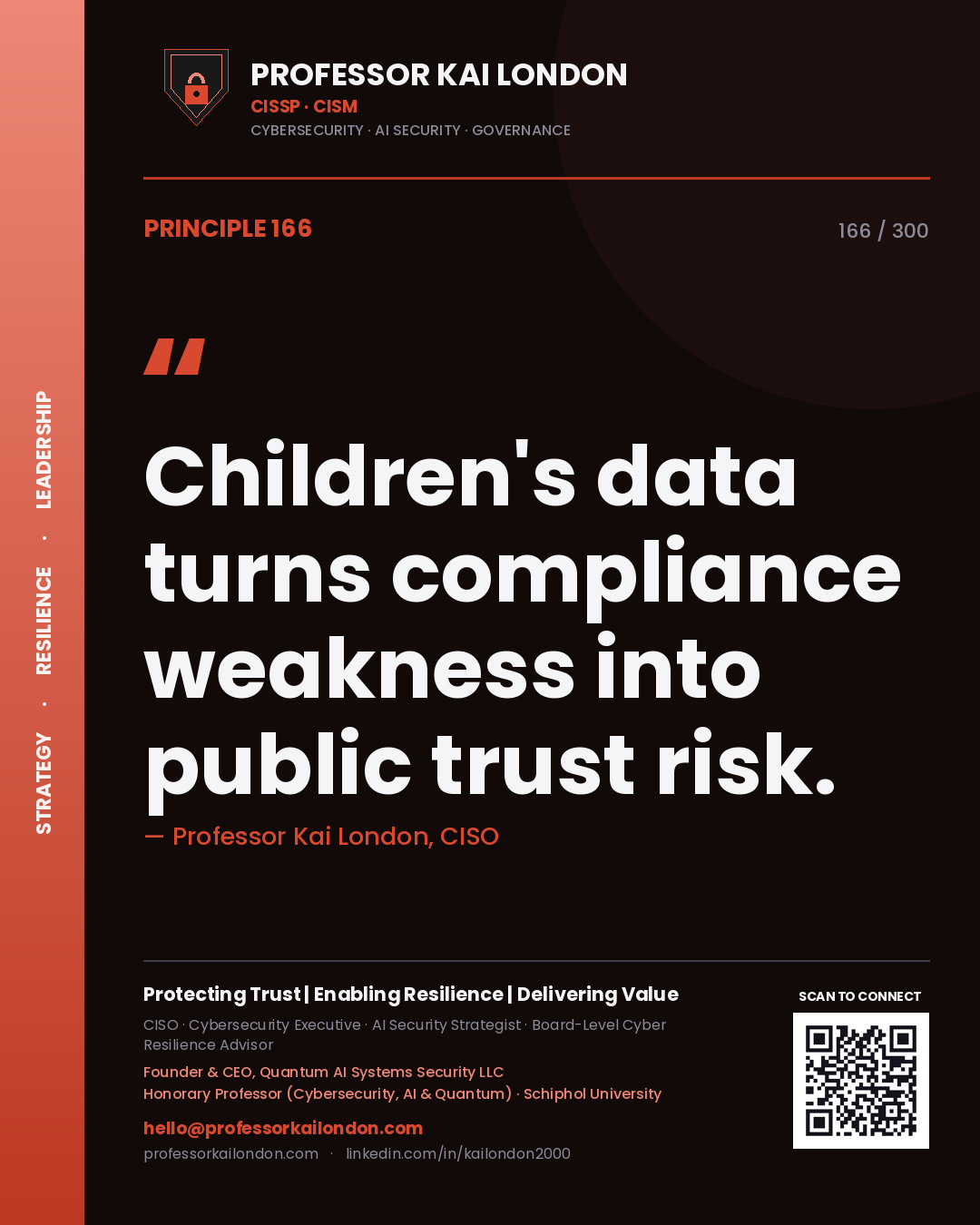 #166 · Children's Privacy — Children's data turns compliance weakness into public trust risk.
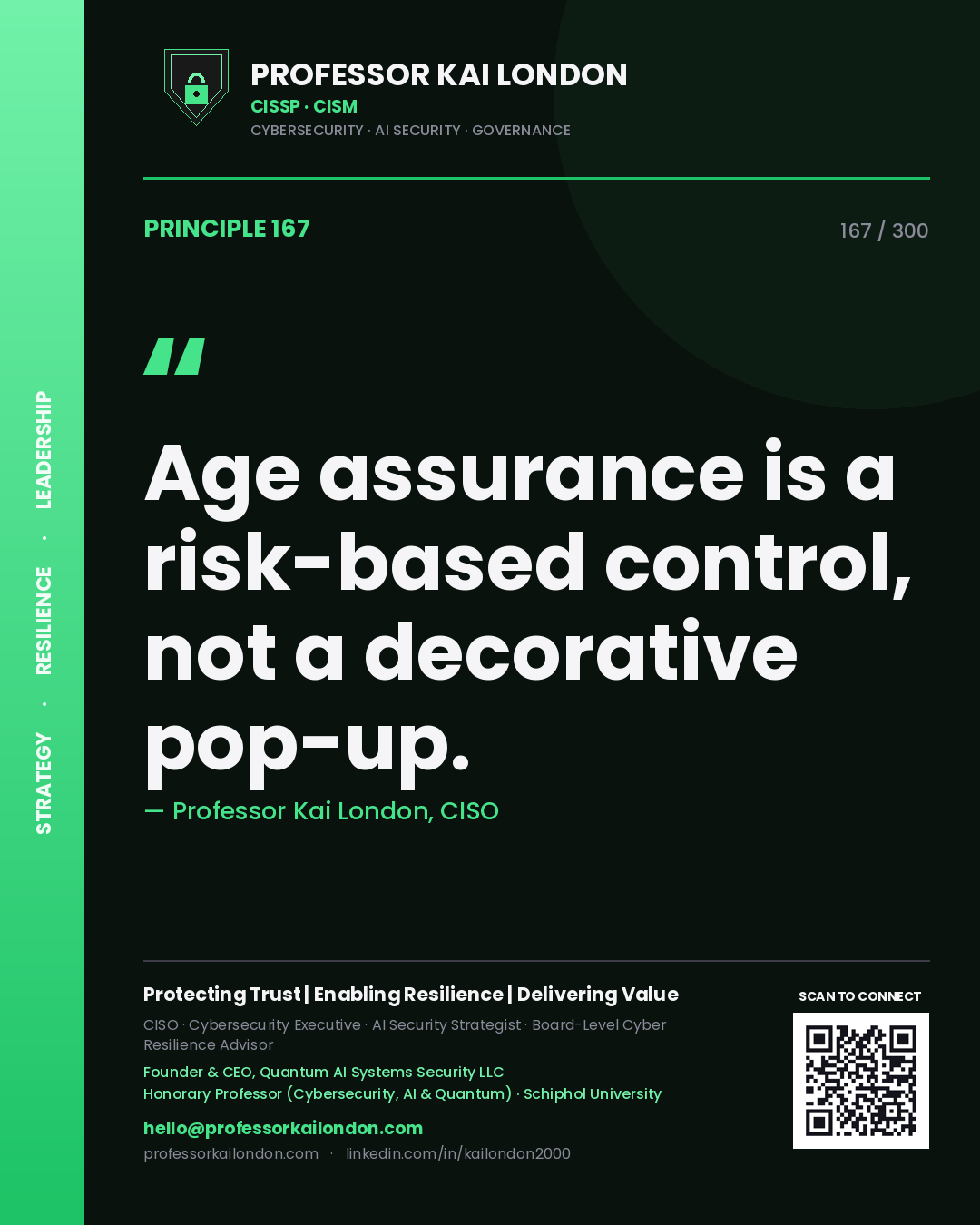 #167 · Age Assurance — Age assurance is a risk-based control, not a decorative pop-up.
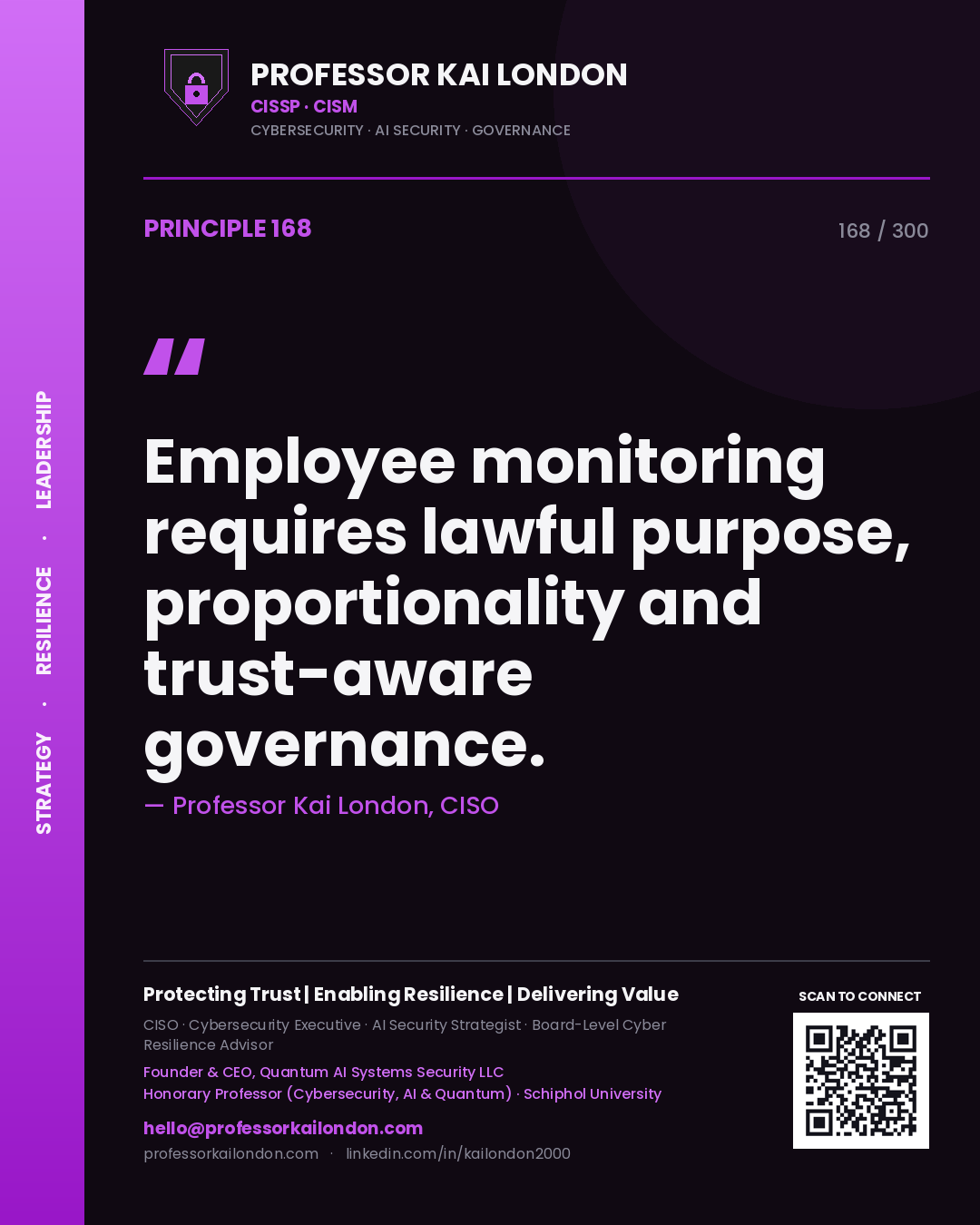 #168 · Workplace Privacy — Employee monitoring requires lawful purpose, proportionality and trust-aware governance.
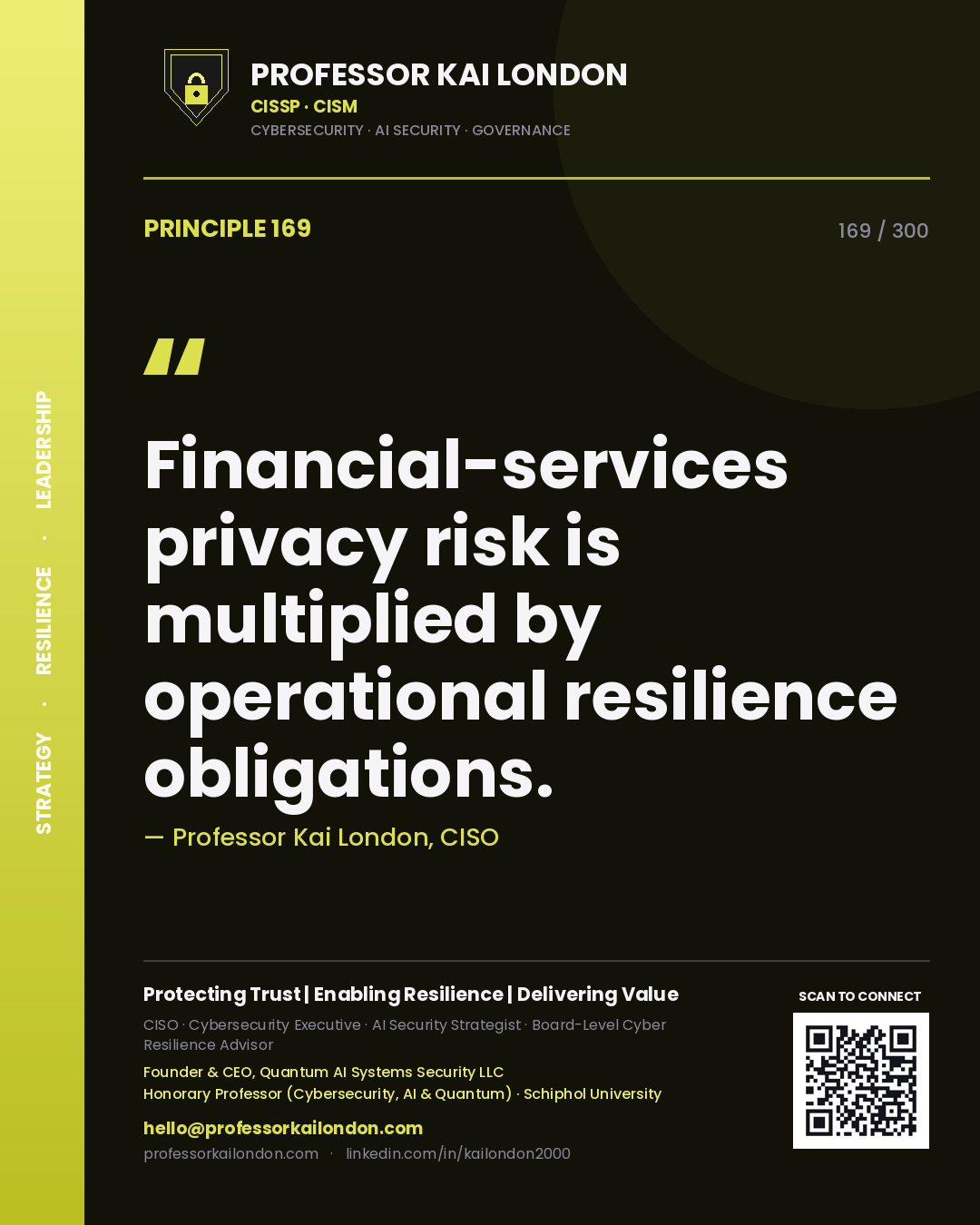 #169 · Financial Services — Financial-services privacy risk is multiplied by operational resilience obligations.
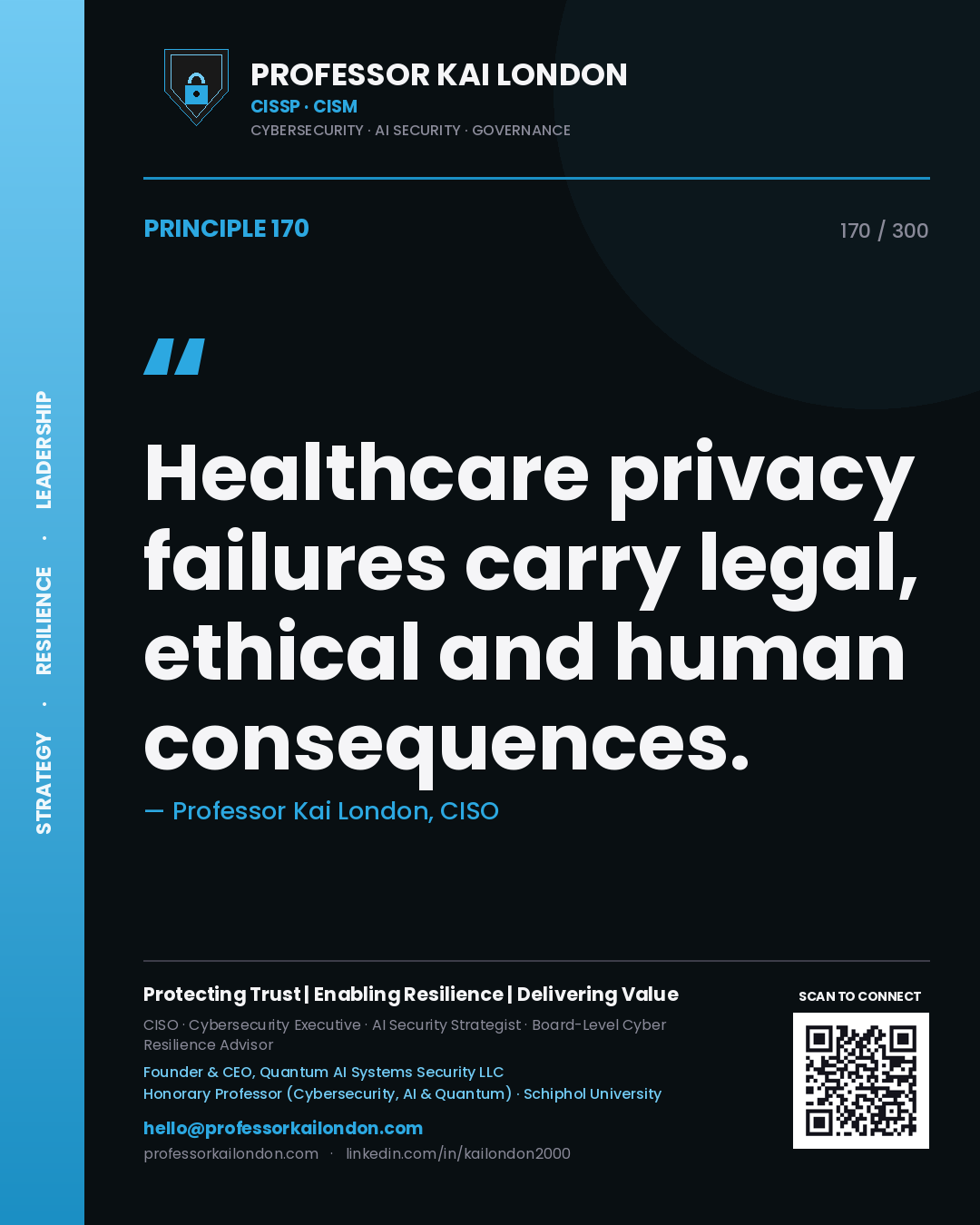 #170 · Healthcare — Healthcare privacy failures carry legal, ethical and human consequences.
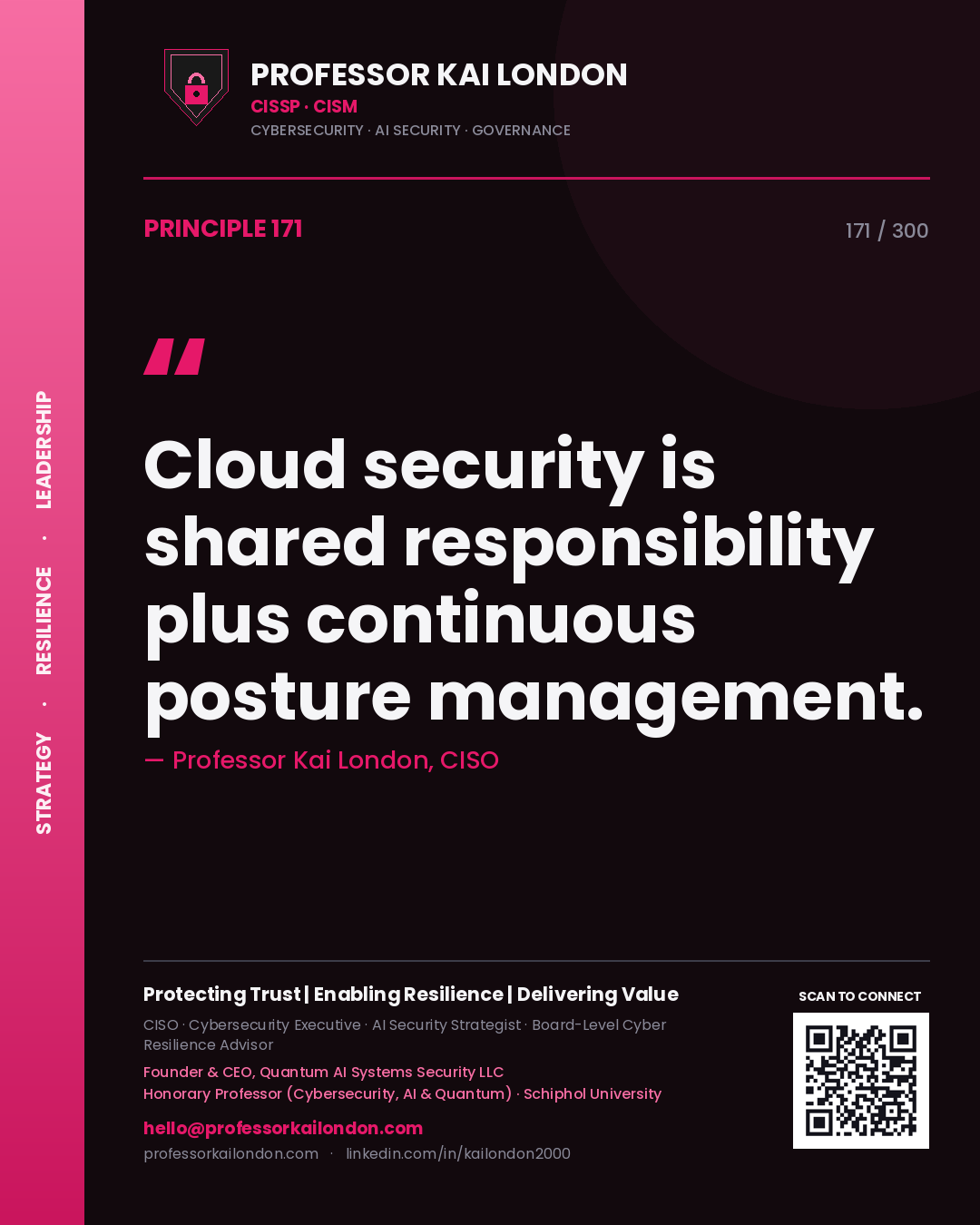 #171 · Cloud Security — Cloud security is shared responsibility plus continuous posture management.
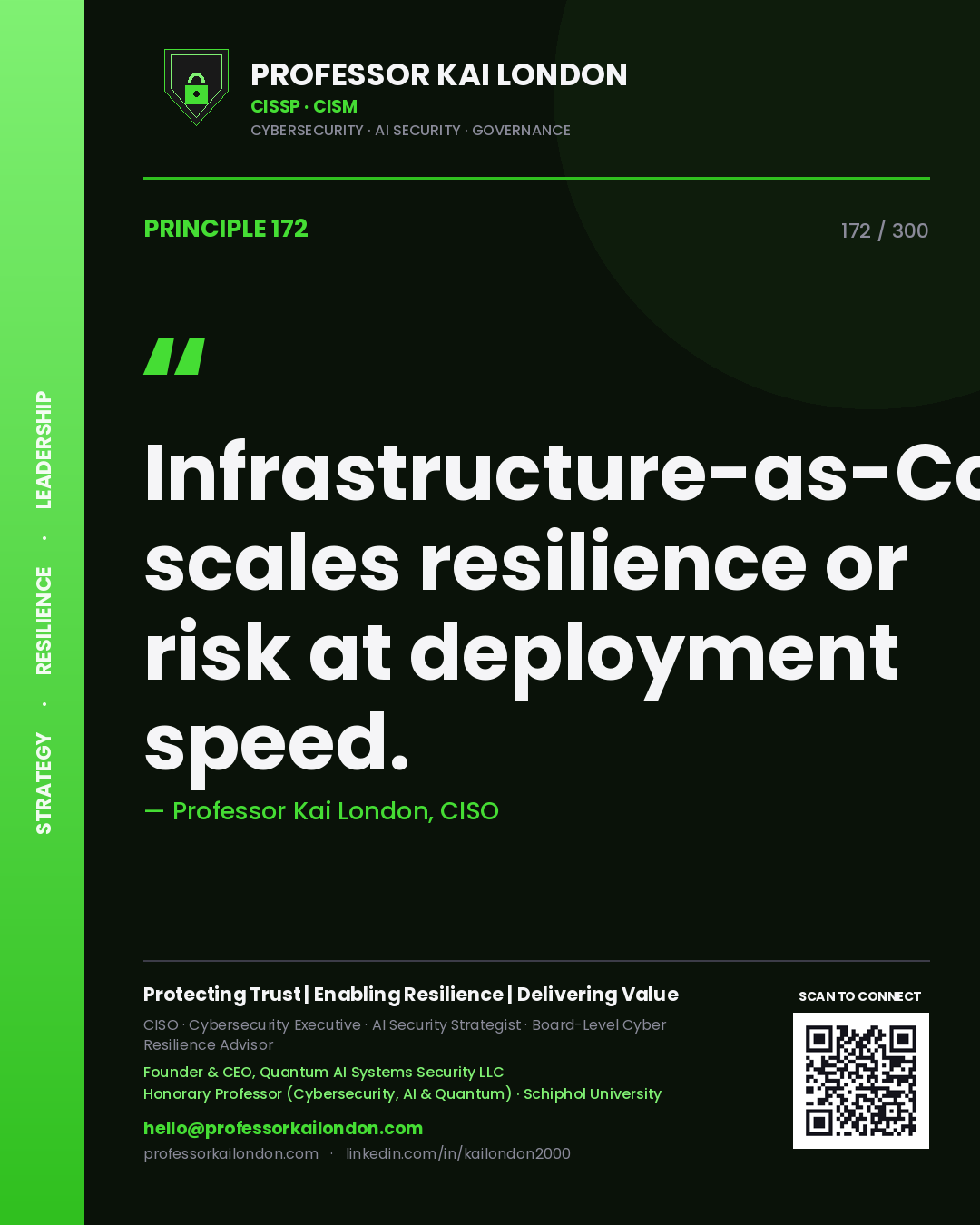 #172 · DevSecOps / Cloud — Infrastructure-as-Code scales resilience or risk at deployment speed.
 #173 · Cloud Security — Serverless reduces infrastructure burden while increasing service-level visibility needs.
 #174 · API Security — APIs are enterprise nerve paths; unprotected endpoints become open routes to value.
 #175 · Cloud-Native Security — CNAPP succeeds when code-to-cloud visibility improves security without slowing engineers.
 #176 · Cloud Security — Ephemeral workloads need security controls that move at ephemeral speed.
 #177 · Cloud Governance — Multi-cloud reduces dependency while increasing identity, visibility and key-management complexity.
 #178 · DSPM — Sensitive-data discovery is half the battle in cloud risk management.
 #179 · Cloud Compliance — Cloud misconfiguration is best prevented through automated checks, not manual hope.
 #180 · Cloud Assurance — Real-time cloud assurance converts uncertainty into operational confidence.
 #181 · Cloud Governance — A secure cloud begins with ownership, configuration, monitoring and evidence.
 #182 · Cloud IAM — Identity sprawl is the hidden tax of unmanaged cloud expansion.
 #183 · API Governance — Every API needs authentication, authorisation, monitoring and retirement discipline.
 #184 · Cloud Resilience — Cloud resilience fails when backups, keys and identities share the same blast radius.
 #185 · DevSecOps — Cloud control must be embedded into pipelines, not inspected after deployment.
 #186 · Quantum / Crypto — Cryptographic agility must begin before quantum risk becomes operational reality.
 #187 · Quantum Security — Harvest-now-decrypt-later makes today's encrypted exposure tomorrow's disclosure risk.
 #188 · Key Management — Key rotation should be an automated health function, not a manual afterthought.
 #189 · PQC — Post-quantum planning must include firmware, devices, applications and suppliers.
 #190 · Encryption / Analytics — Privacy-preserving analytics should unlock insight without exposing raw data.
 #191 · Cryptography — Strong encryption depends on strong entropy, disciplined keys and governed custody.
 #192 · BYOK / HYOK — Customer-controlled key models strengthen cloud trust when implemented with discipline.
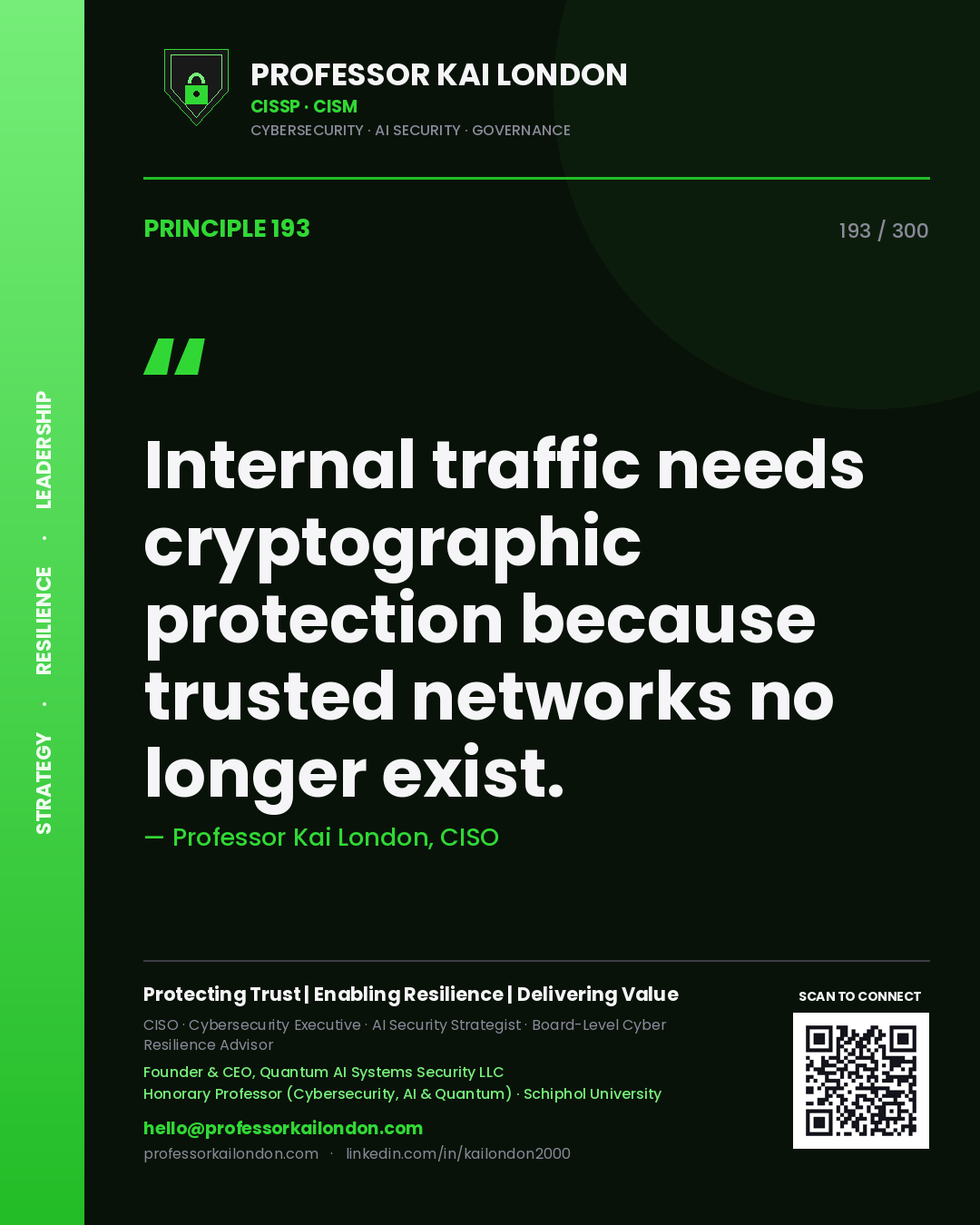 #193 · Network Security — Internal traffic needs cryptographic protection because trusted networks no longer exist.
 #194 · Certificate Management — Digital certificates are trust passports; expiry failure can become enterprise outage.
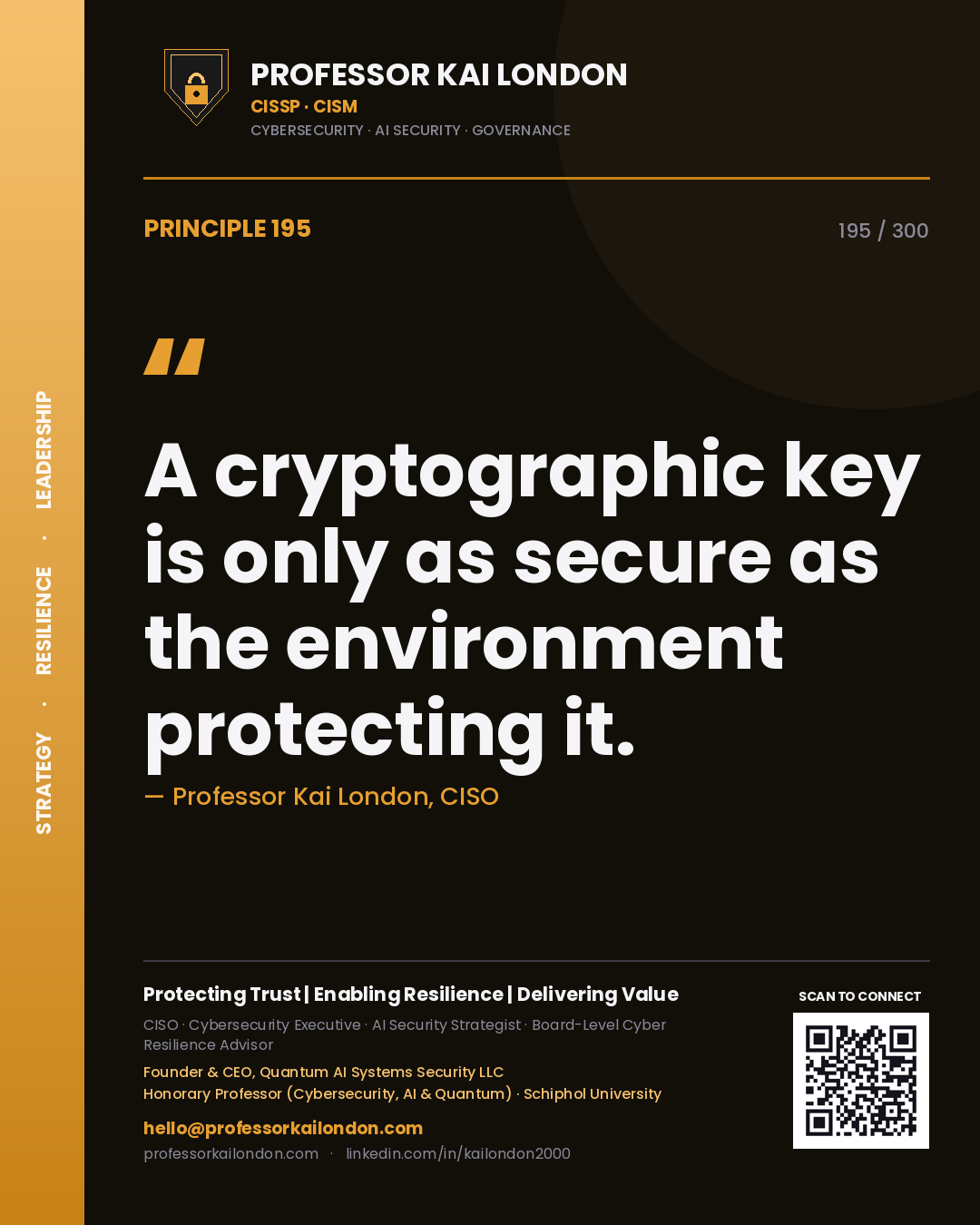 #195 · HSM / KMS — A cryptographic key is only as secure as the environment protecting it.
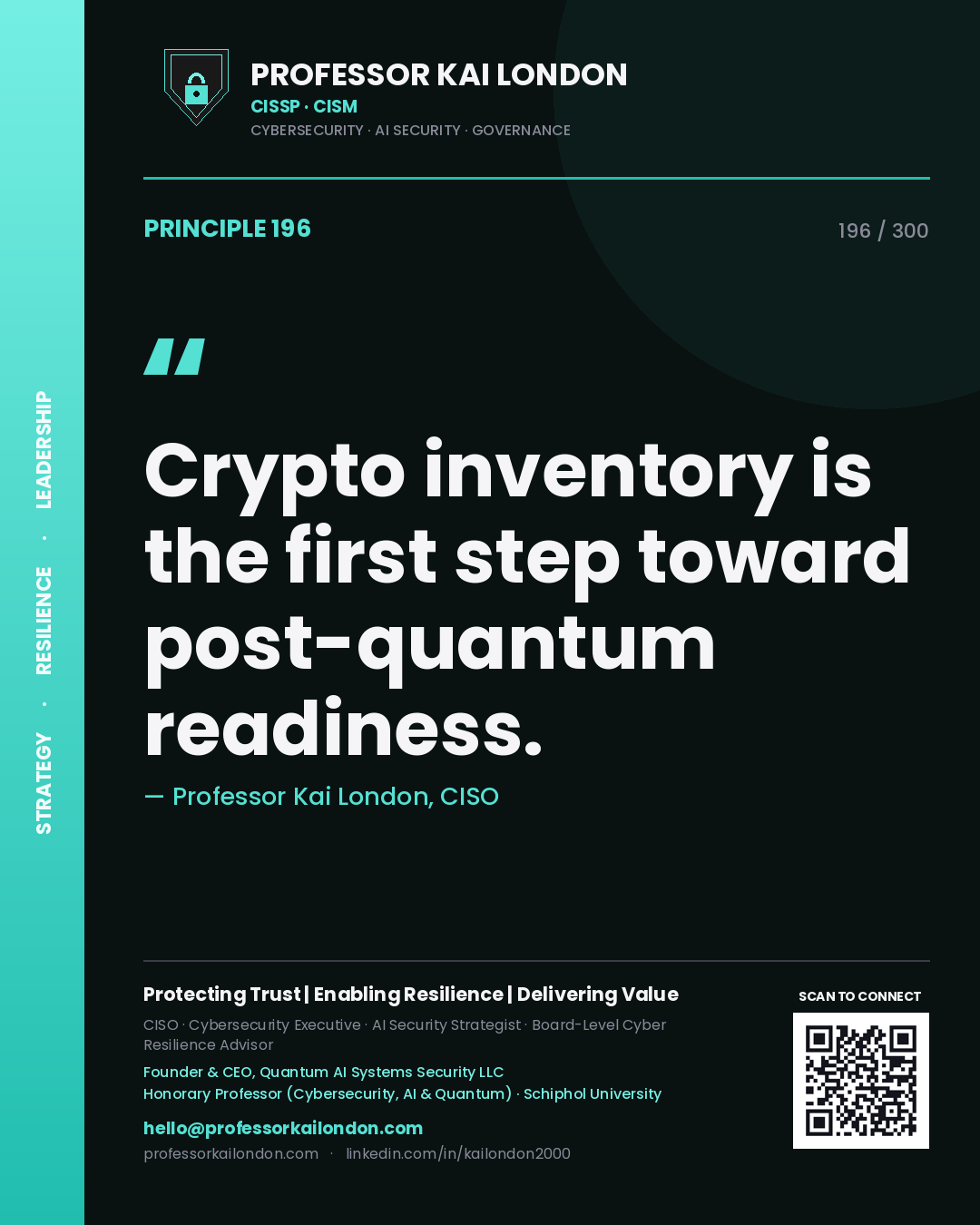 #196 · PQC Planning — Crypto inventory is the first step toward post-quantum readiness.
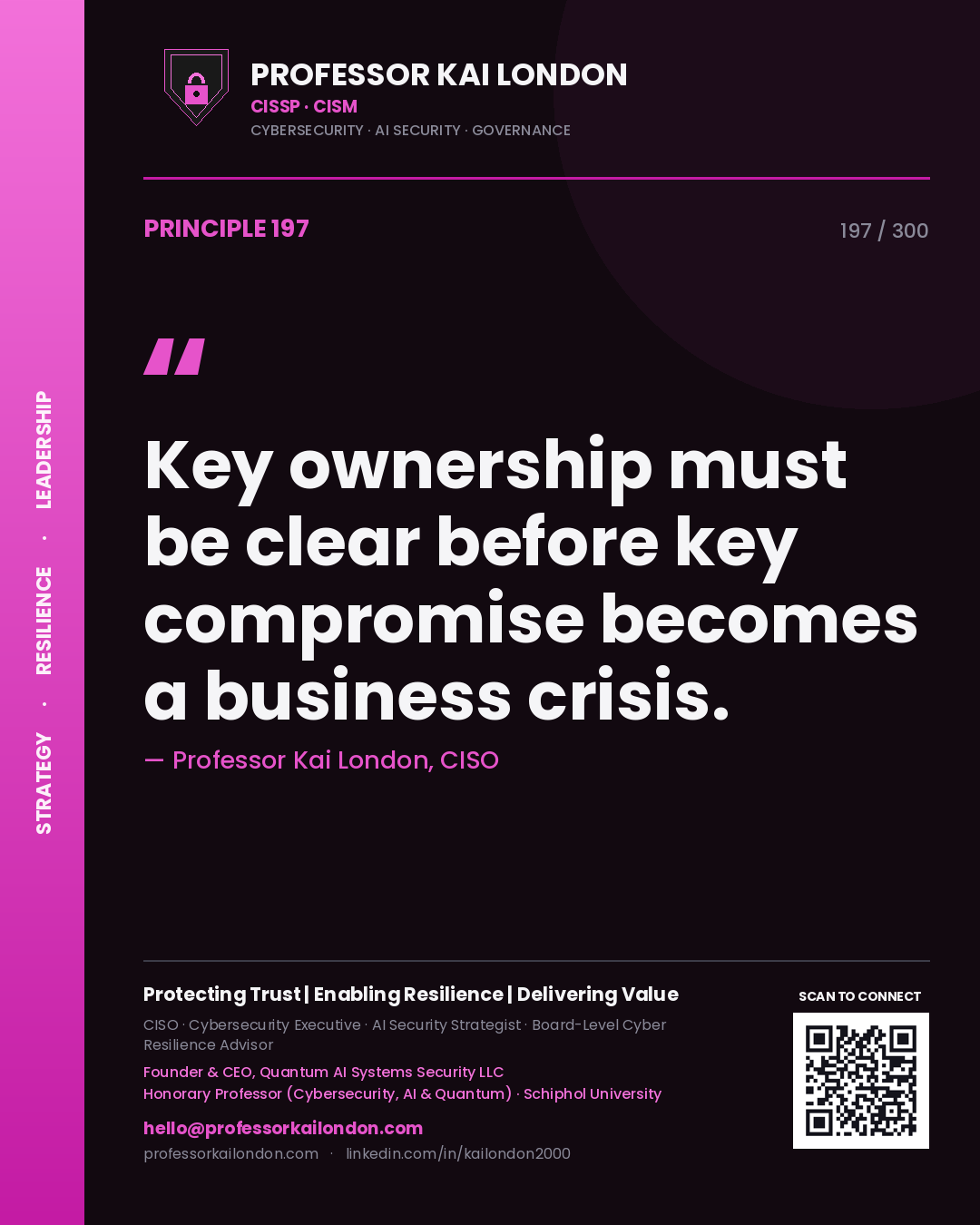 #197 · Key Governance — Key ownership must be clear before key compromise becomes a business crisis.
 #198 · Certificate Ops — Certificate lifecycle management is resilience work disguised as administration.
 #199 · Data Protection — Encryption strategy must cover data at rest, in motion, in use and in evidence.
 #200 · Crypto Governance — The strongest cryptography still fails under weak process and poor custody.
 #201 · DevSecOps — DevSecOps works when security becomes an engineering habit, not a release delay.
 #202 · DevSecOps — Shift-left succeeds only when developers receive actionable remediation.
 #203 · Software Supply Chain — An SBOM is the digital product label every secure enterprise needs.
 #204 · AppSec — Open-source dependencies carry inherited exposure and must be governed accordingly.
 #205 · DevSecOps — Hardcoded secrets turn source code into an access path.
 #206 · Security Culture — Security champions convert security from a gate into an engineering culture.
 #207 · Pipeline Security — CI/CD pipelines are crown-jewel systems because they shape every future release.
 #208 · Cloud / DevSecOps — Immutable infrastructure reduces persistence by making change traceable.
 #209 · AppSec — Vulnerability chaining shows how small weaknesses combine into serious exposure.
 #210 · DevSecOps — Release velocity and security posture improve together when automation is designed well.
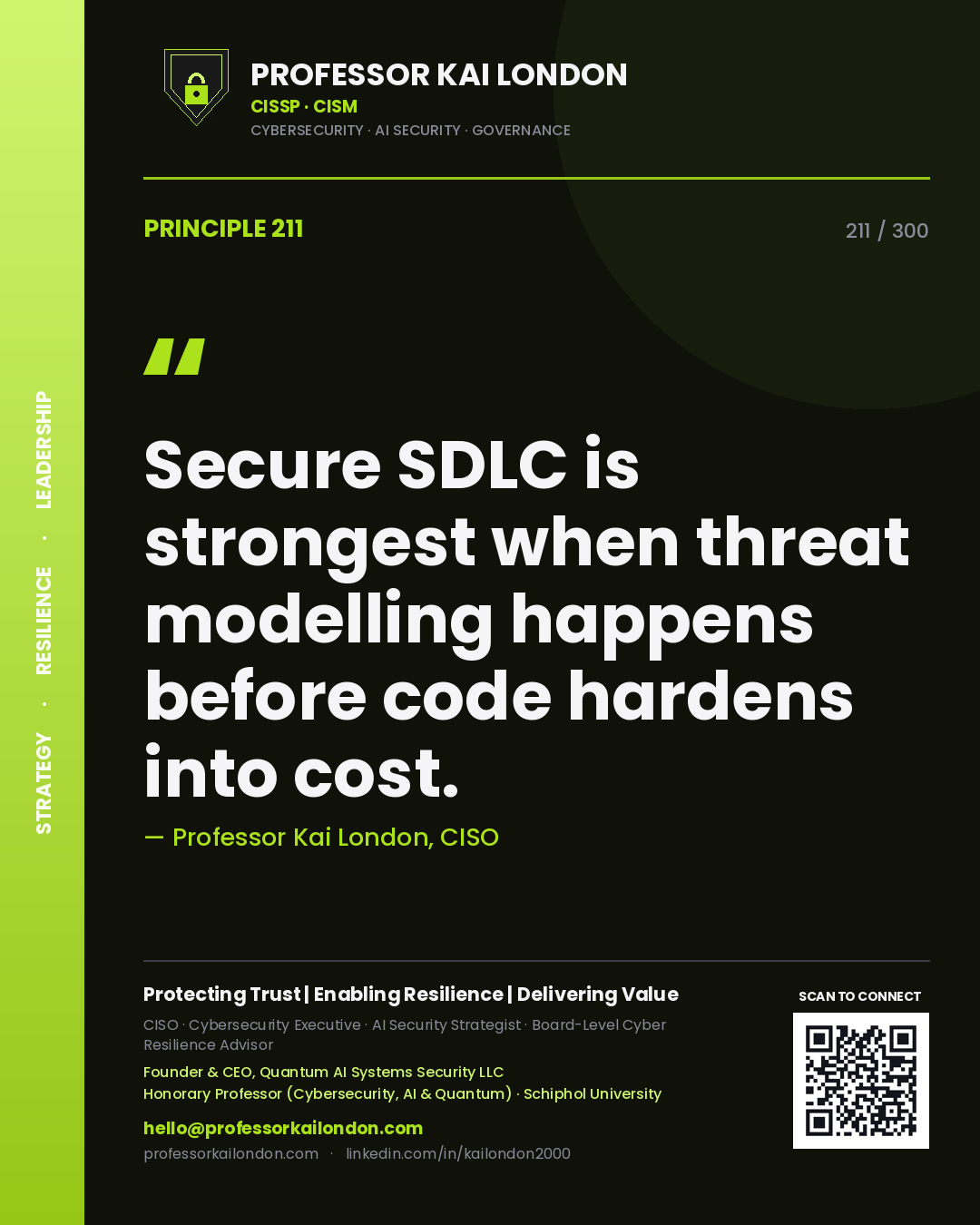 #211 · SDLC — Secure SDLC is strongest when threat modelling happens before code hardens into cost.
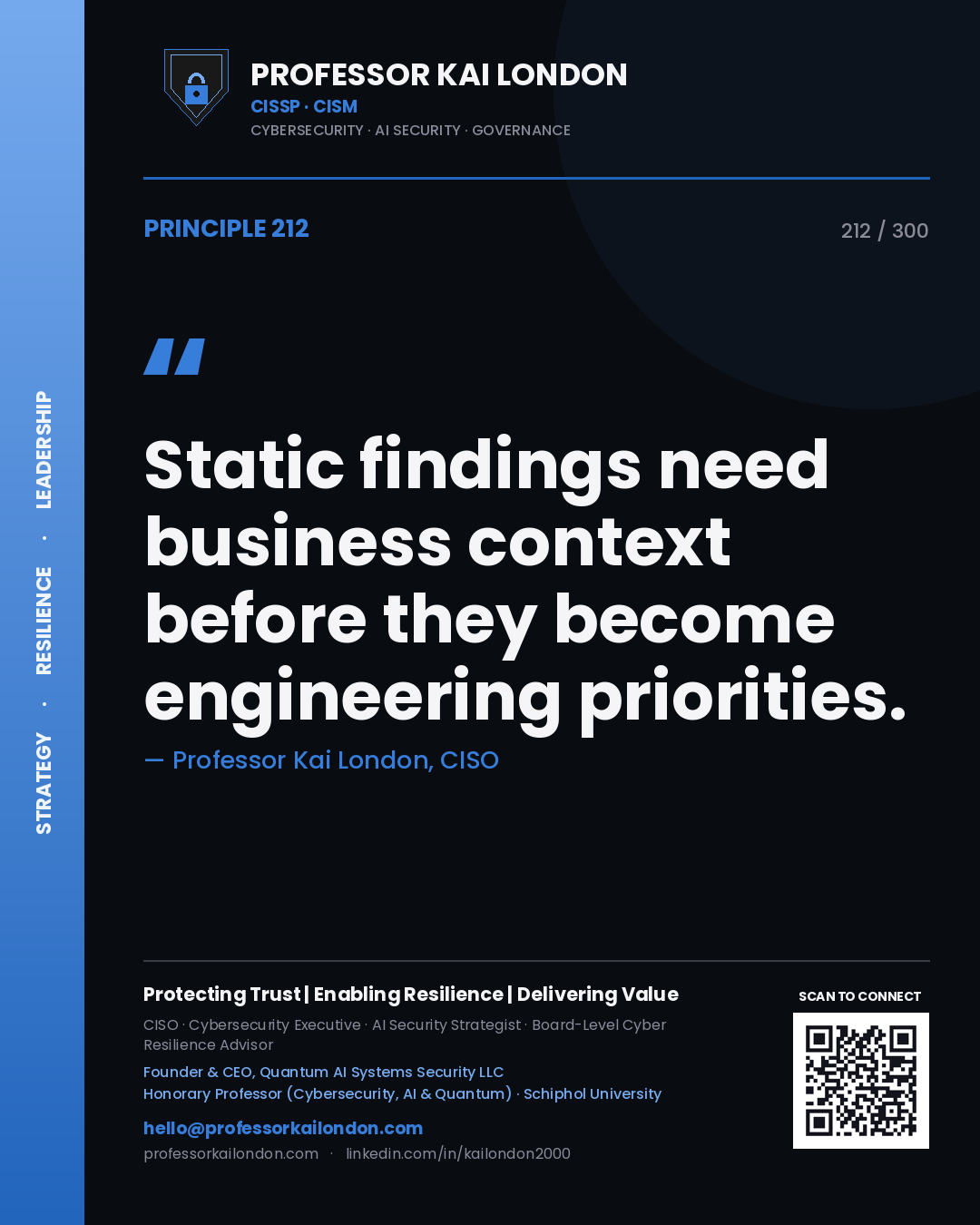 #212 · AppSec — Static findings need business context before they become engineering priorities.
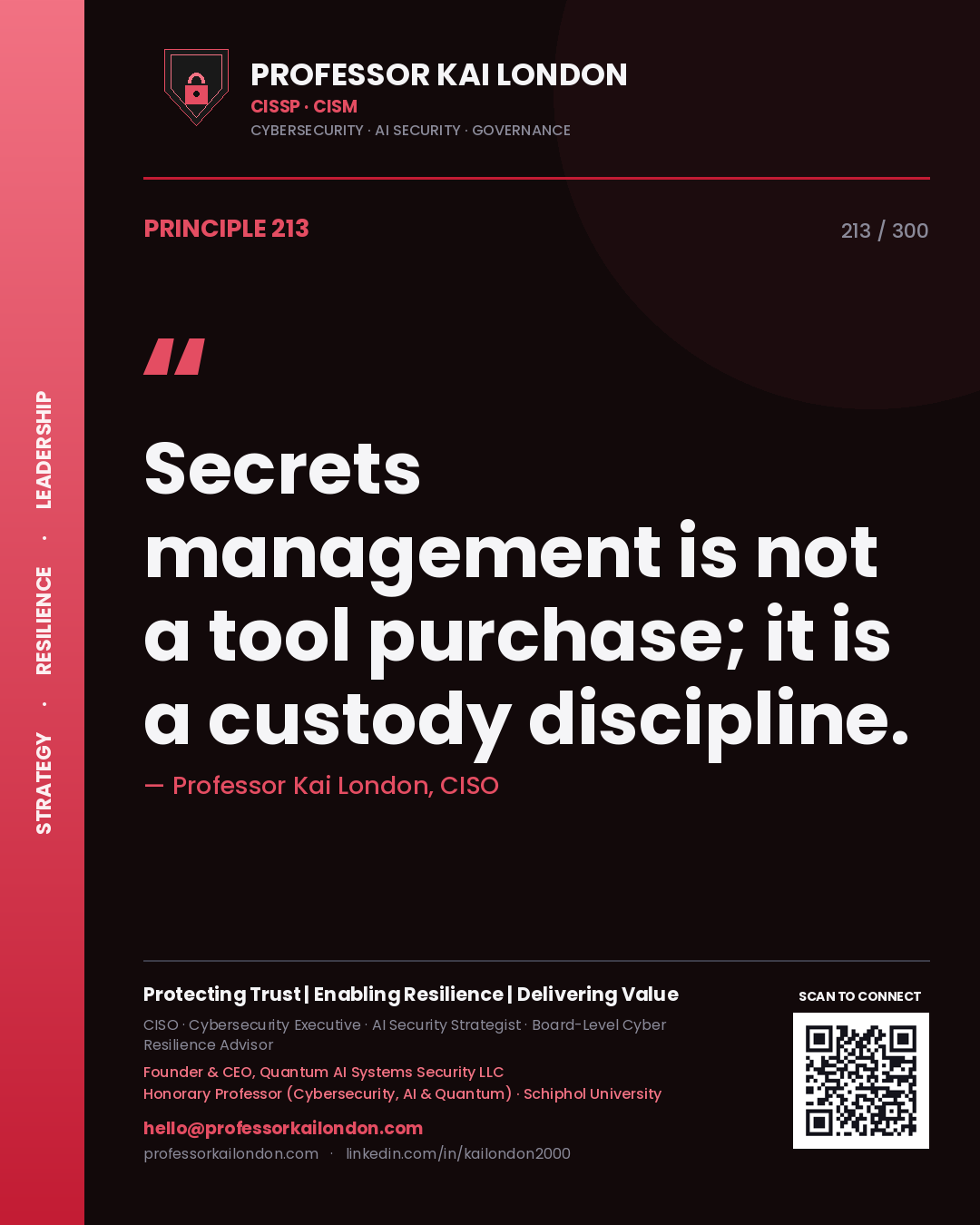 #213 · DevSecOps — Secrets management is not a tool purchase; it is a custody discipline.
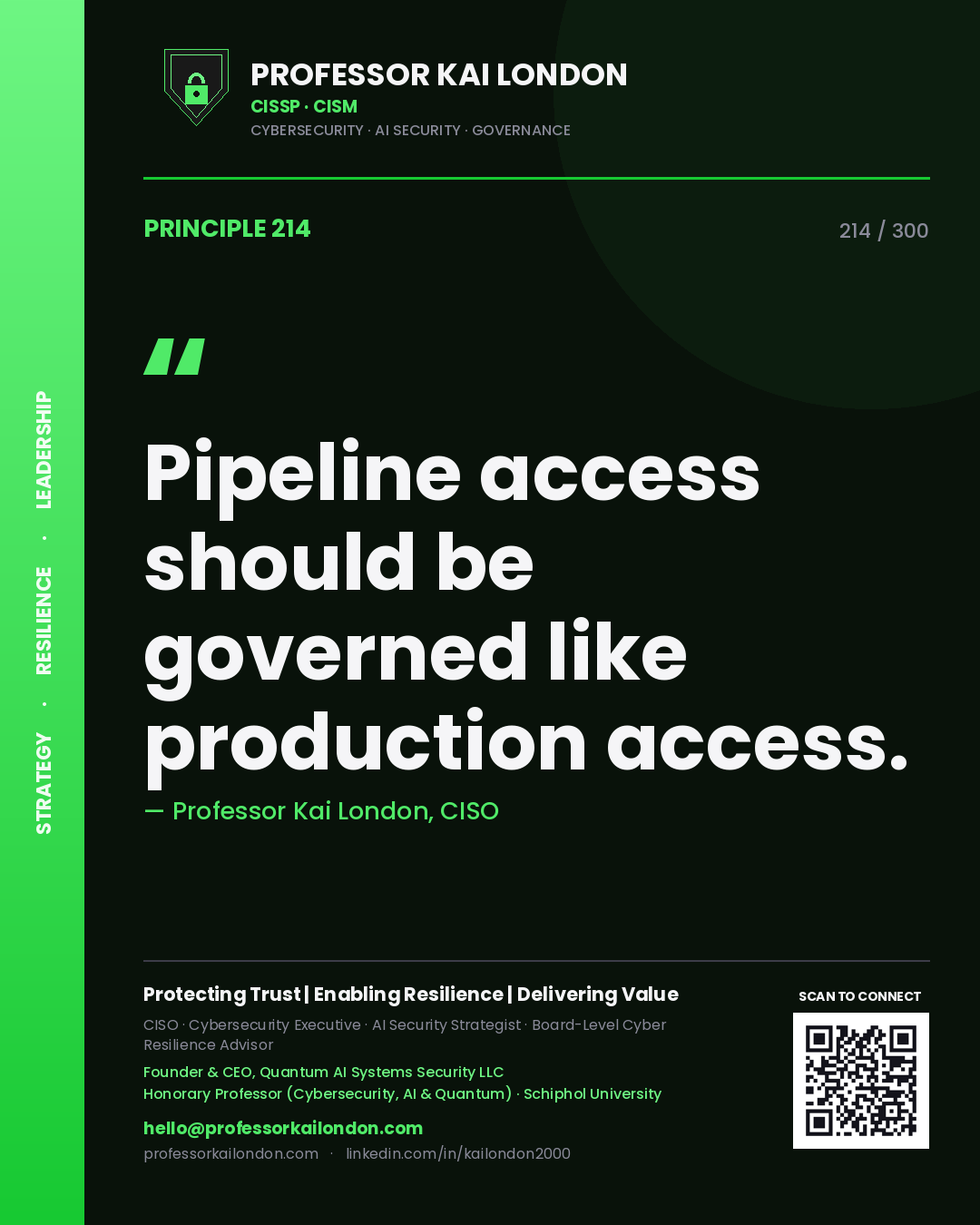 #214 · CI/CD Security — Pipeline access should be governed like production access.
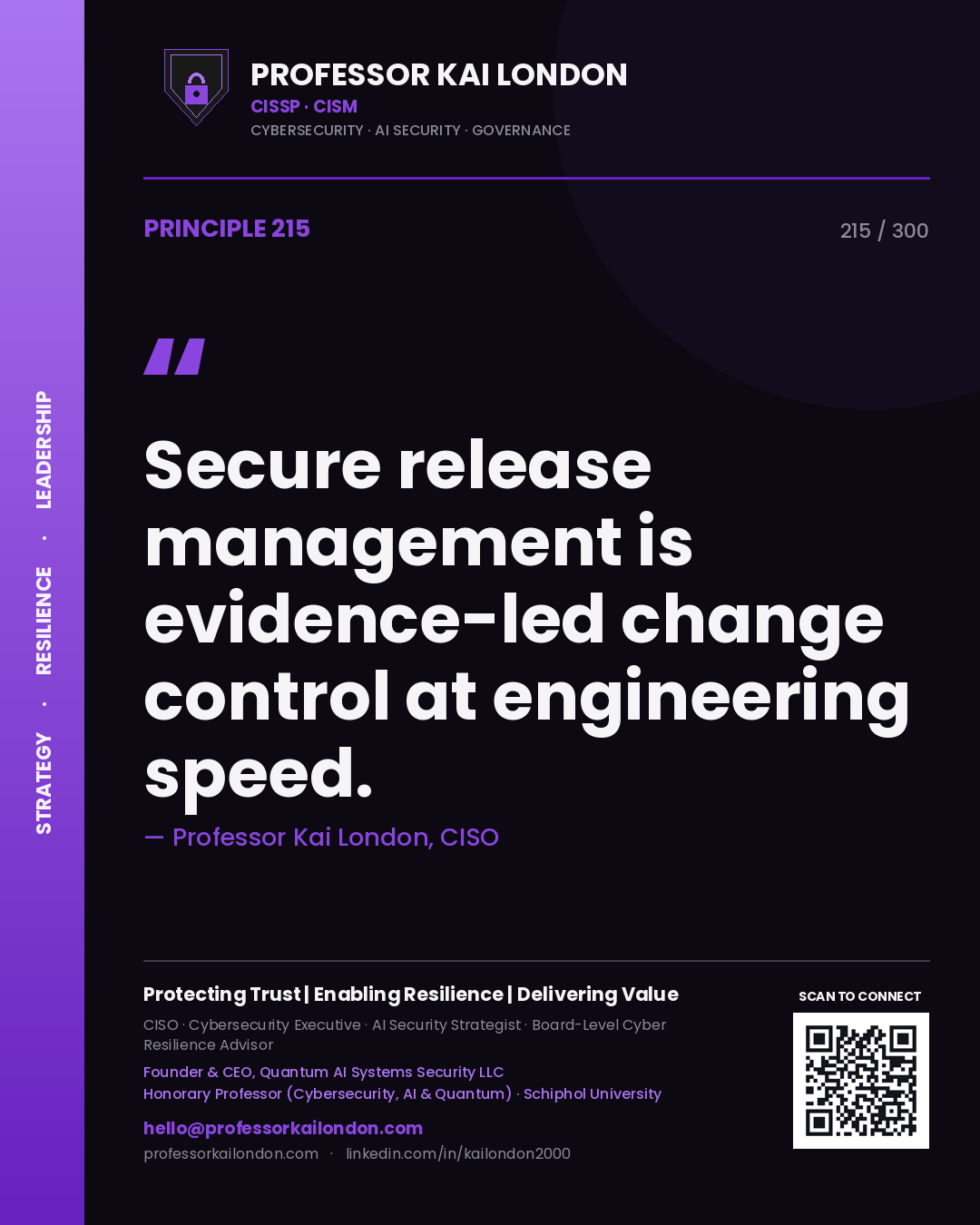 #215 · DevSecOps / GRC — Secure release management is evidence-led change control at engineering speed.
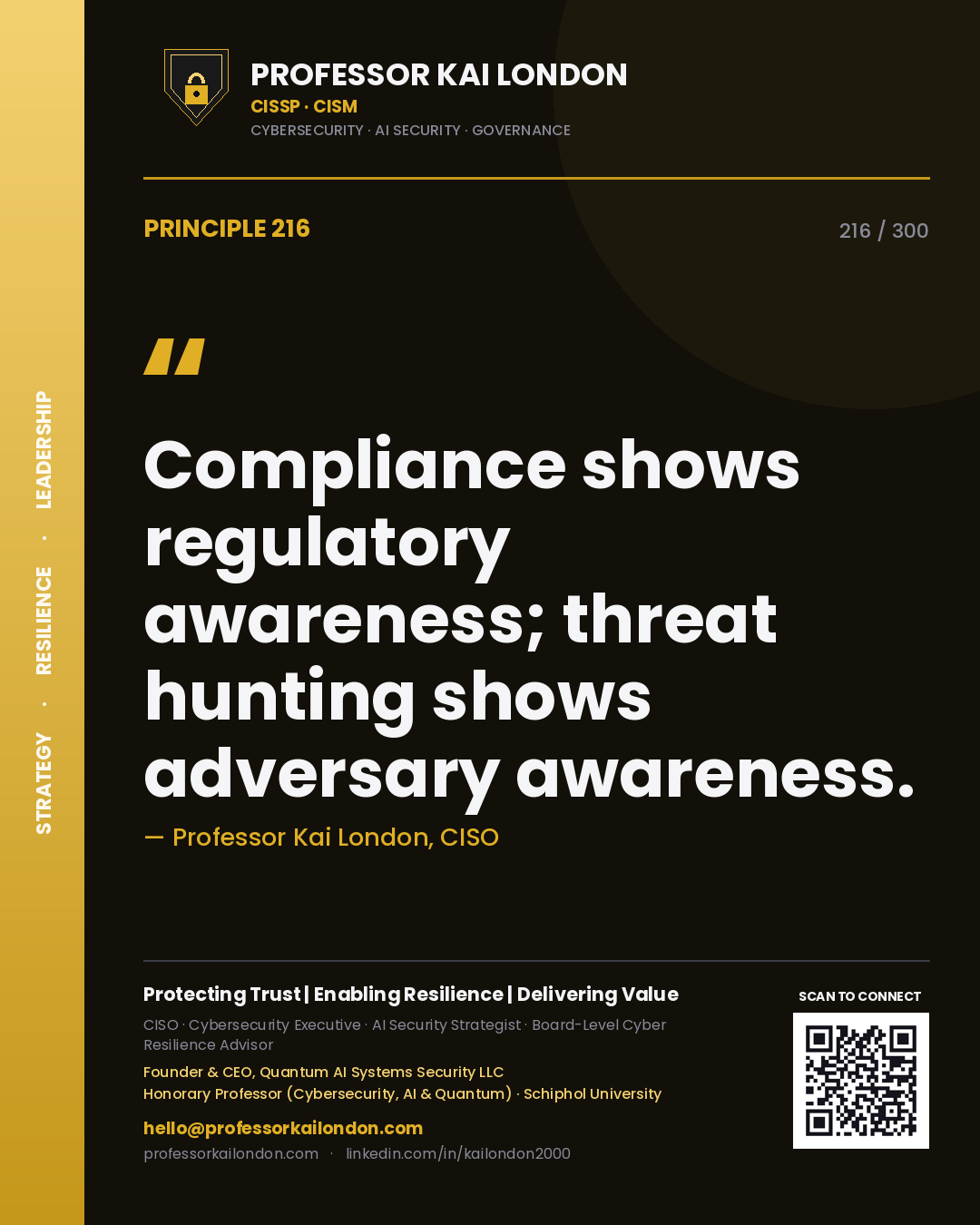 #216 · Threat Intelligence — Compliance shows regulatory awareness; threat hunting shows adversary awareness.
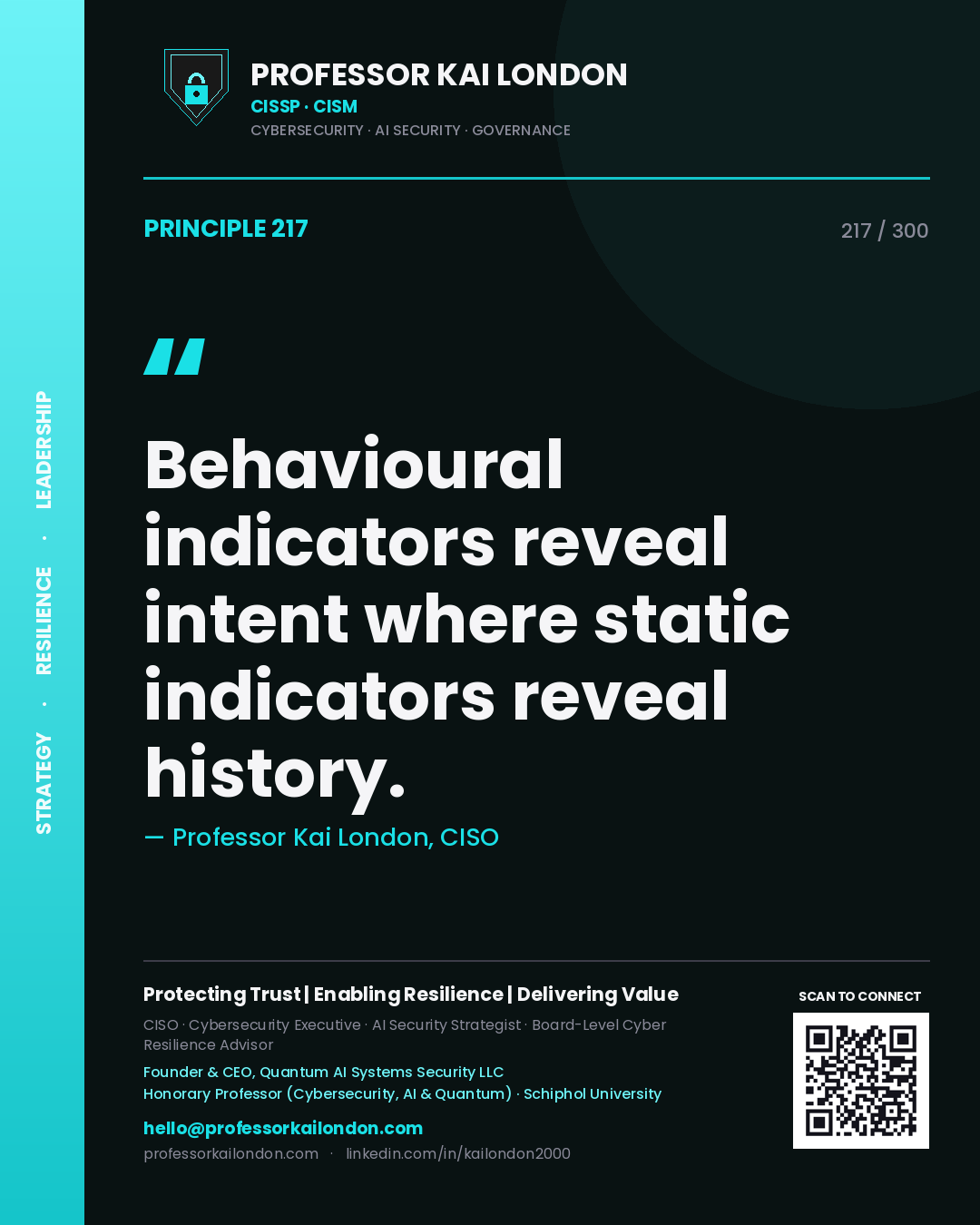 #217 · Detection — Behavioural indicators reveal intent where static indicators reveal history.
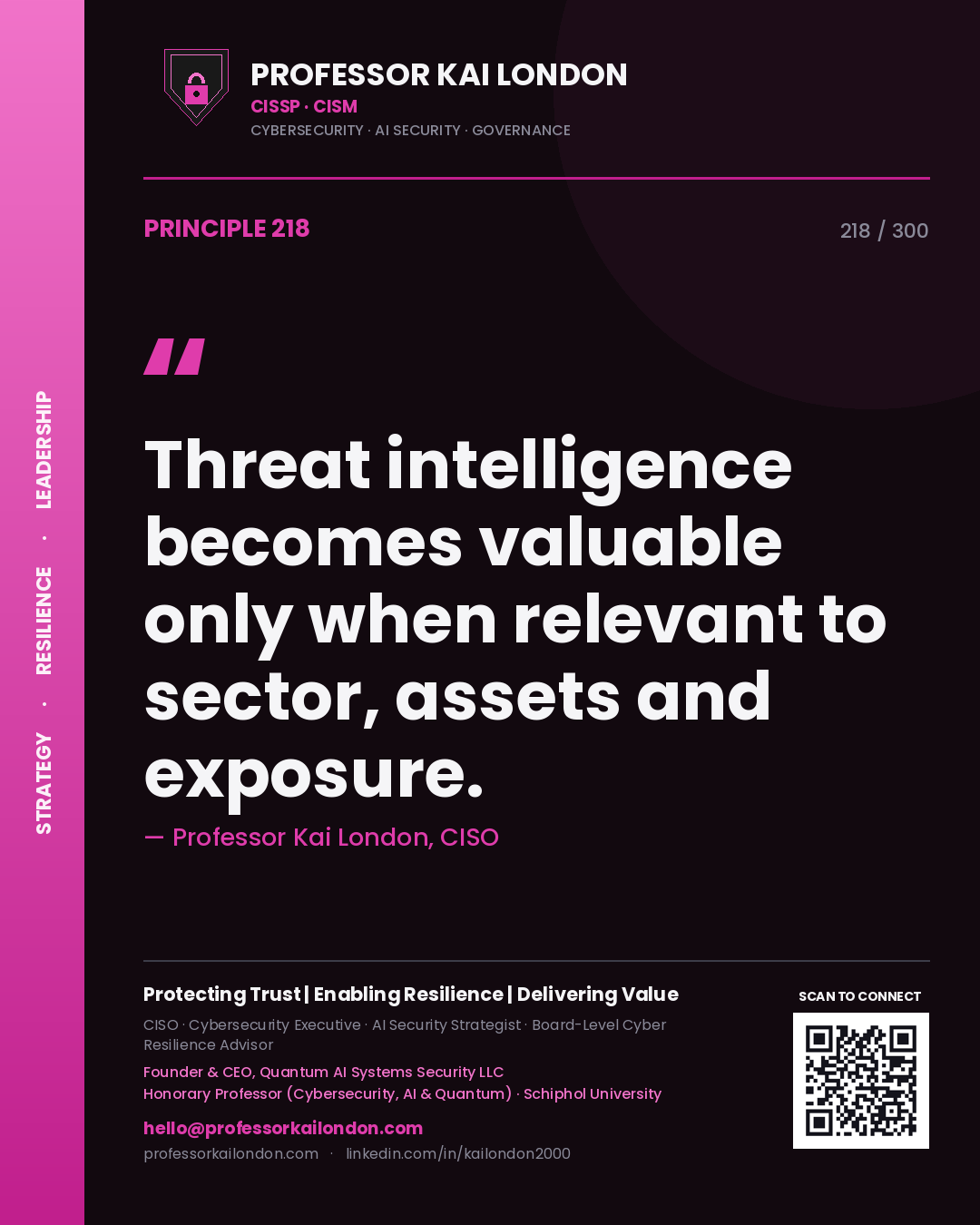 #218 · Threat Intel — Threat intelligence becomes valuable only when relevant to sector, assets and exposure.
 #219 · Deception Technology — Deception controls shift advantage by making attackers reveal themselves early.
 #220 · ASM — Attack surface management requires continuous curiosity about how the enterprise appears externally.
 #221 · Threat Intel — Exposure markets turn yesterday's leakage into tomorrow's intrusion path.
 #222 · SOC Metrics — Mean time to detect often decides whether an incident stays contained or becomes public.
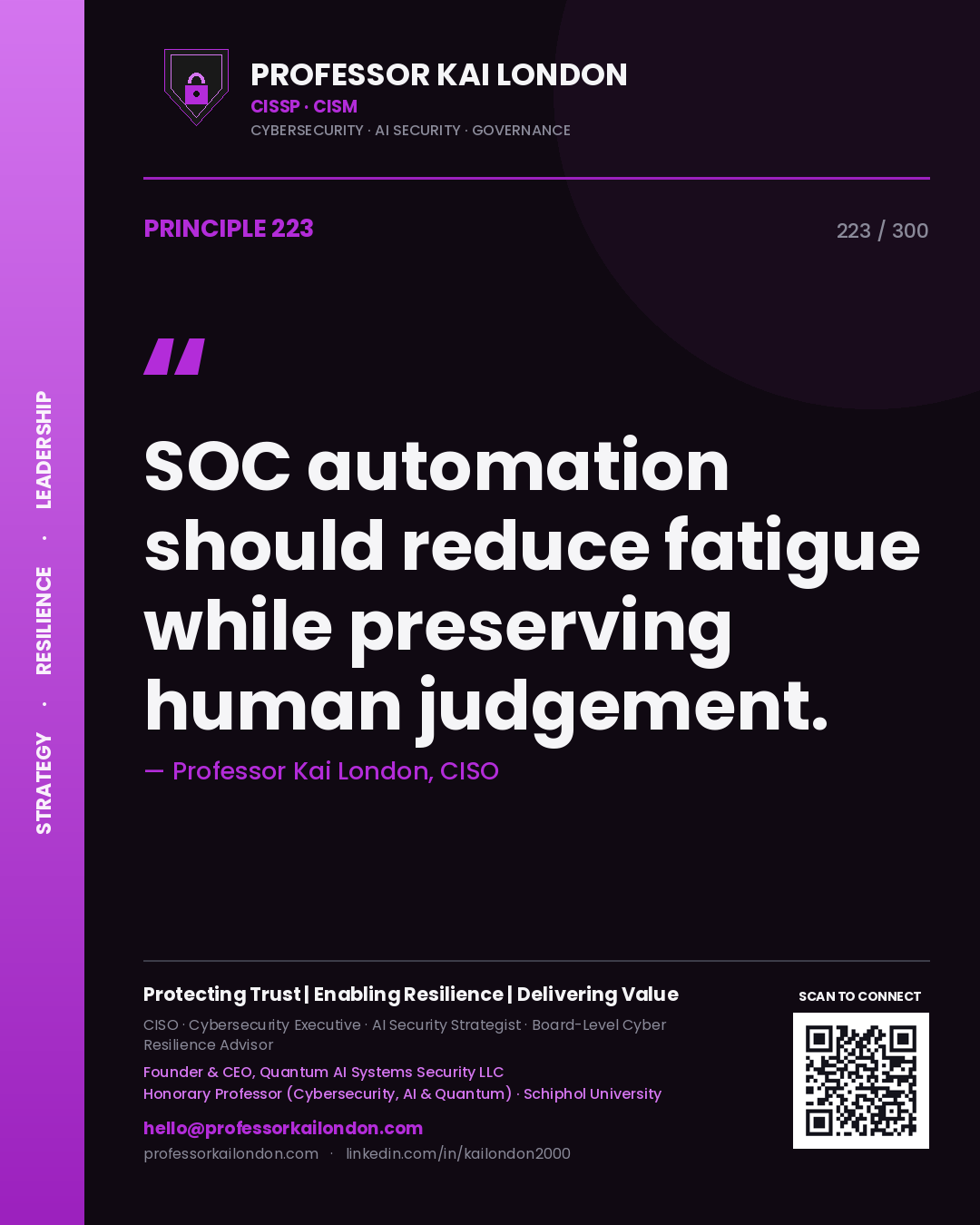 #223 · SOC Automation — SOC automation should reduce fatigue while preserving human judgement.
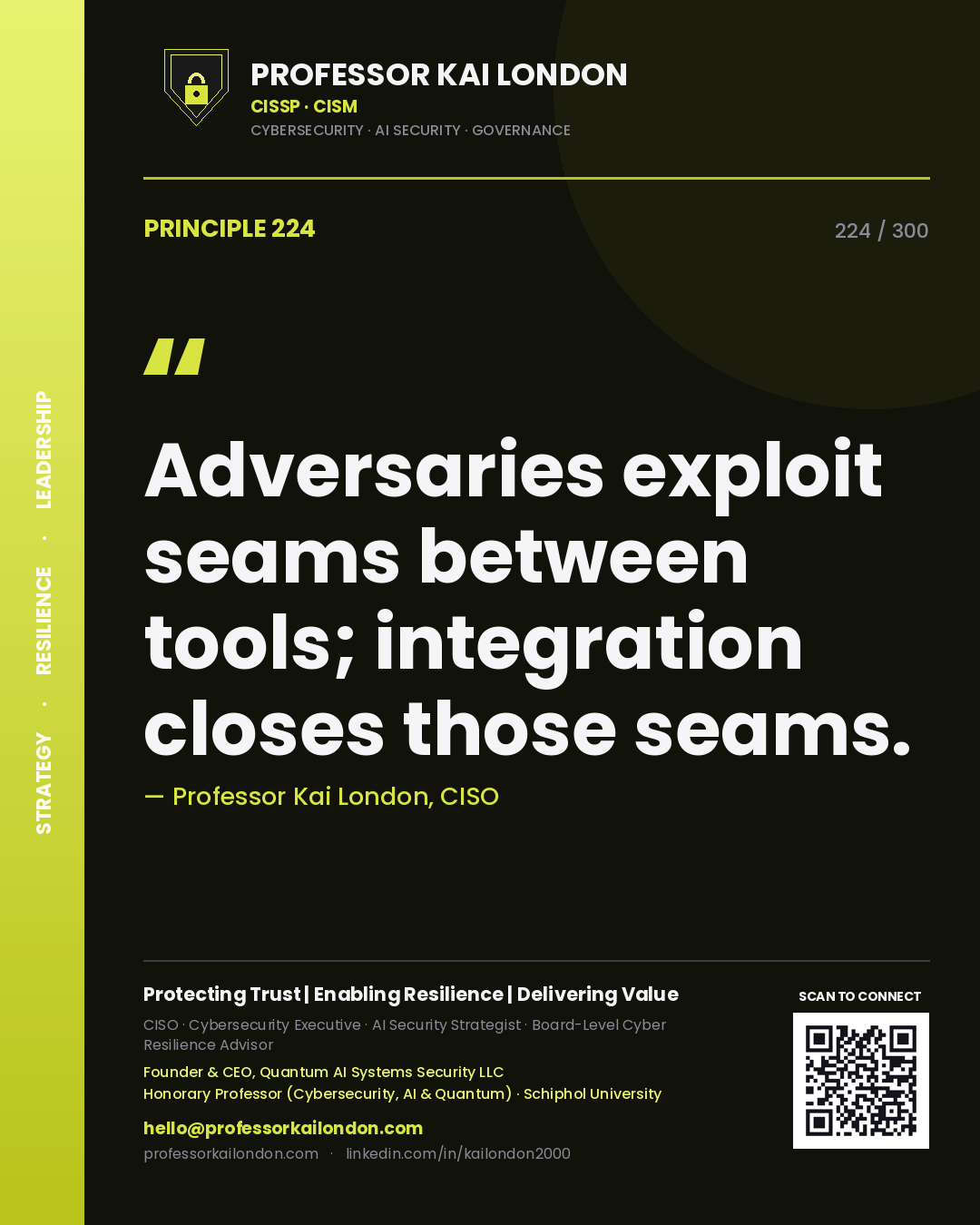 #224 · Security Architecture — Adversaries exploit seams between tools; integration closes those seams.
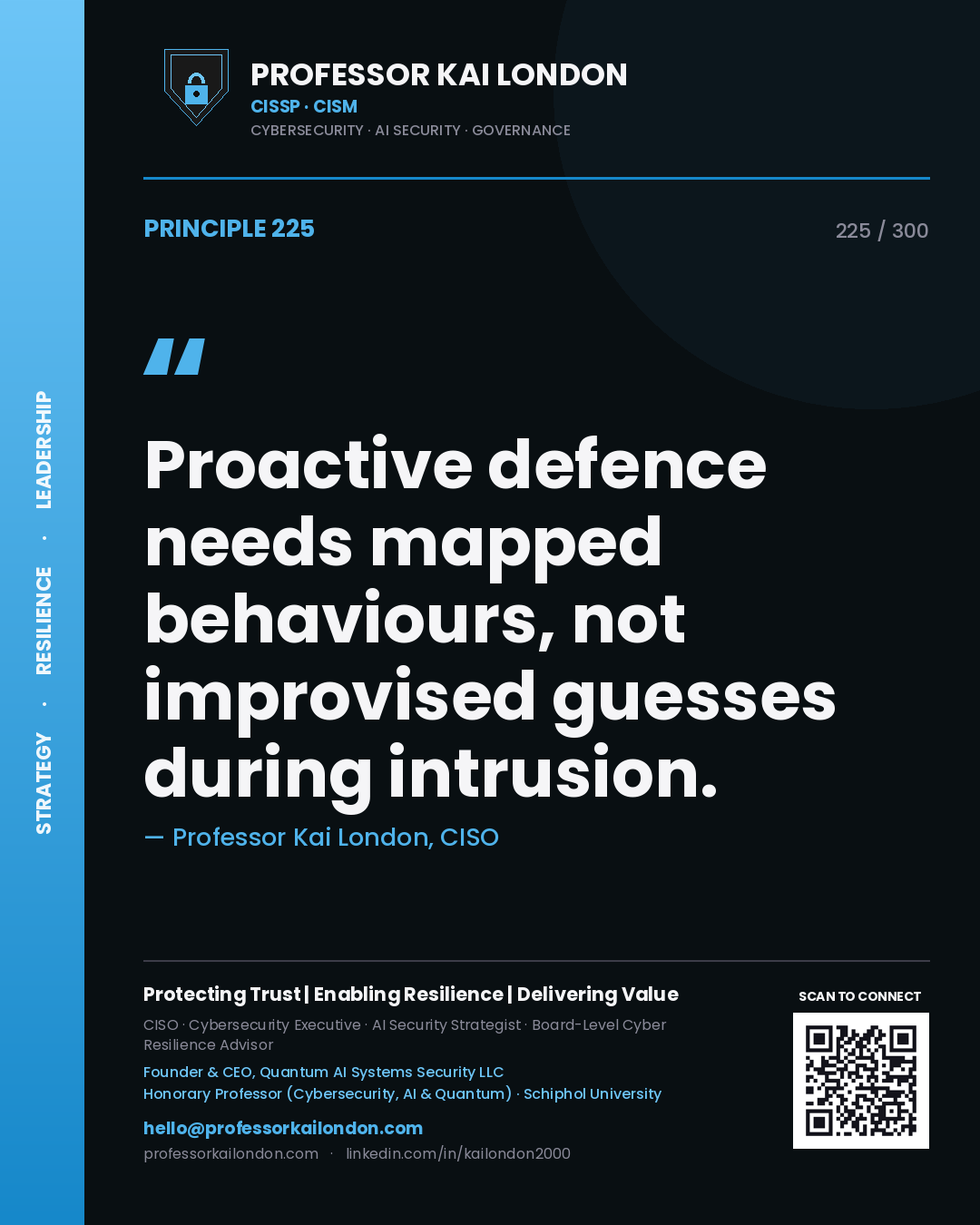 #225 · MITRE ATT&CK — Proactive defence needs mapped behaviours, not improvised guesses during intrusion.
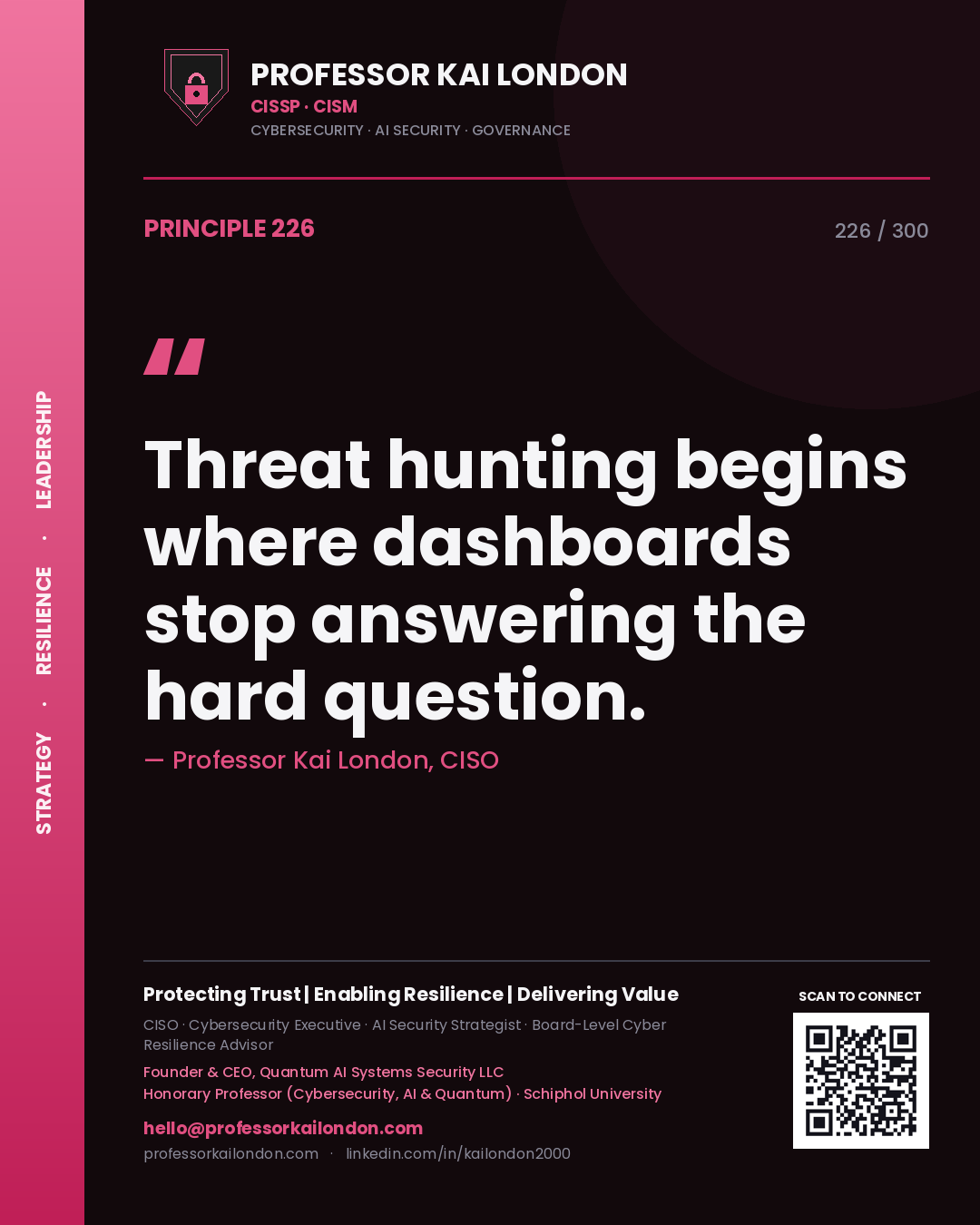 #226 · Threat Hunting — Threat hunting begins where dashboards stop answering the hard question.
 #227 · Threat Intel — Intelligence without action is research, not defence.
 #228 · Detection Engineering — Detection engineering should turn known attacker behaviour into repeatable control logic.
 #229 · SOC Metrics — The best SOC measures confidence, context and containment, not alert volume.
 #230 · Exposure Management — Attack paths must be prioritised by consequence, not curiosity alone.
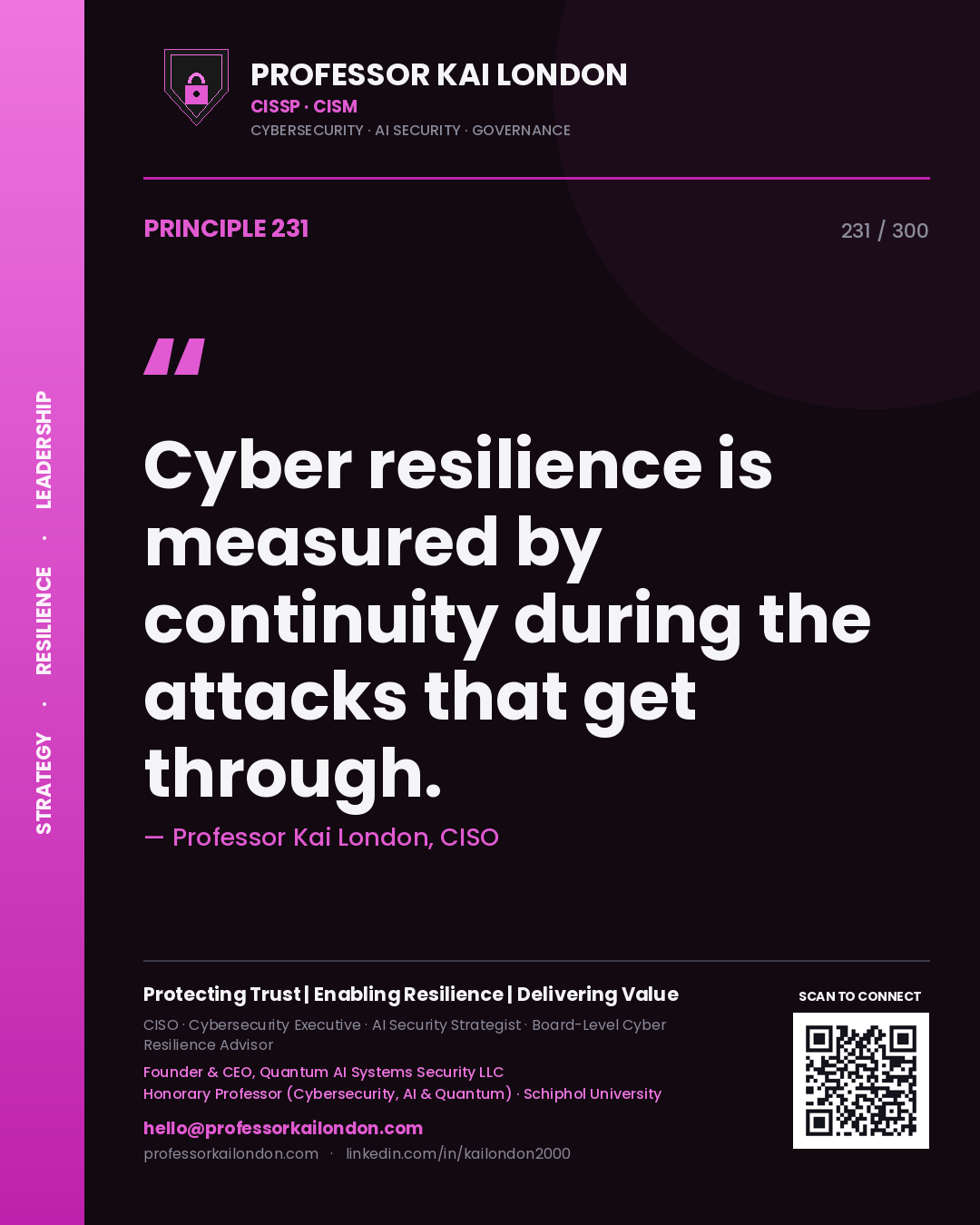 #231 · Incident Response — Cyber resilience is measured by continuity during the attacks that get through.
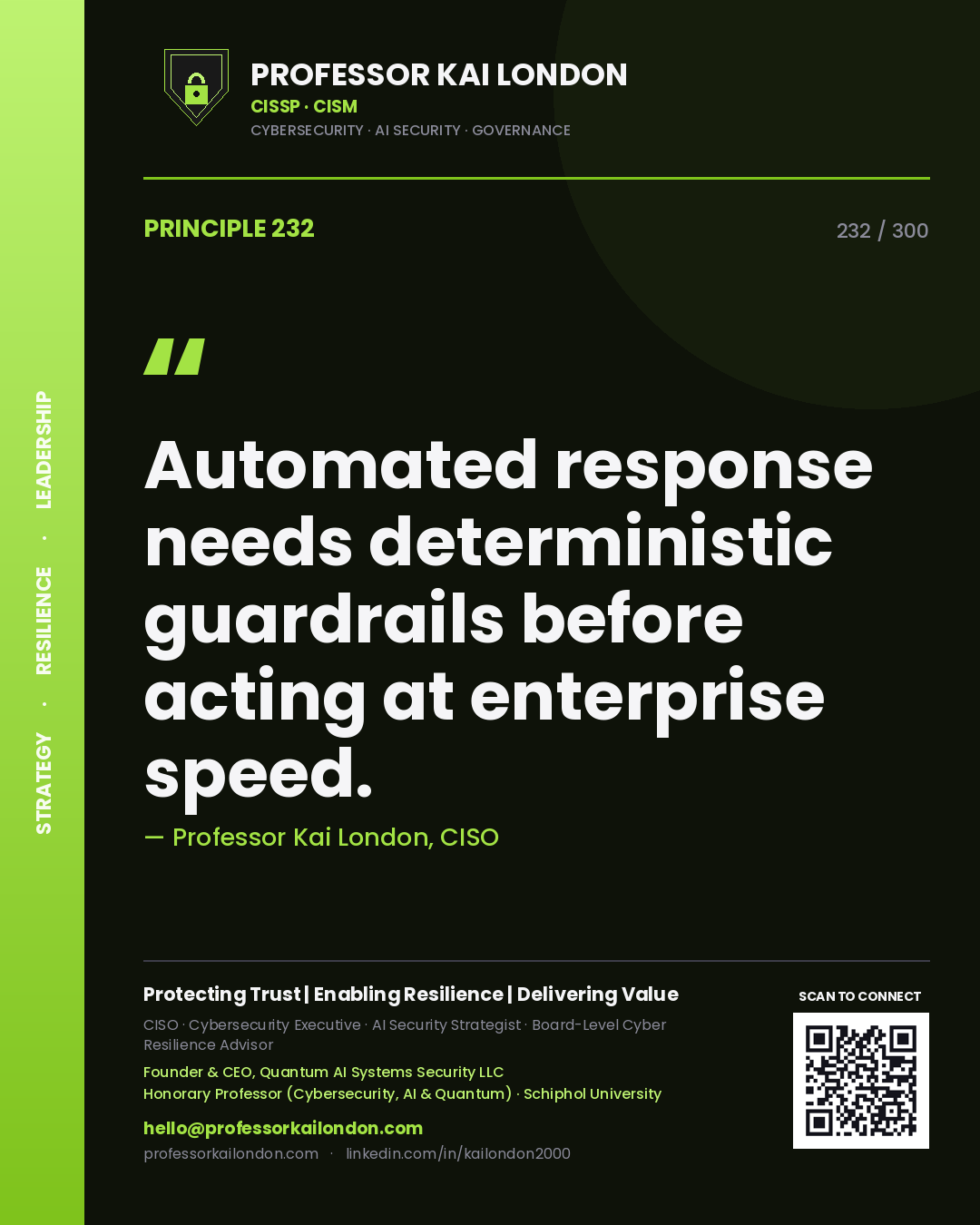 #232 · SOAR / IR — Automated response needs deterministic guardrails before acting at enterprise speed.
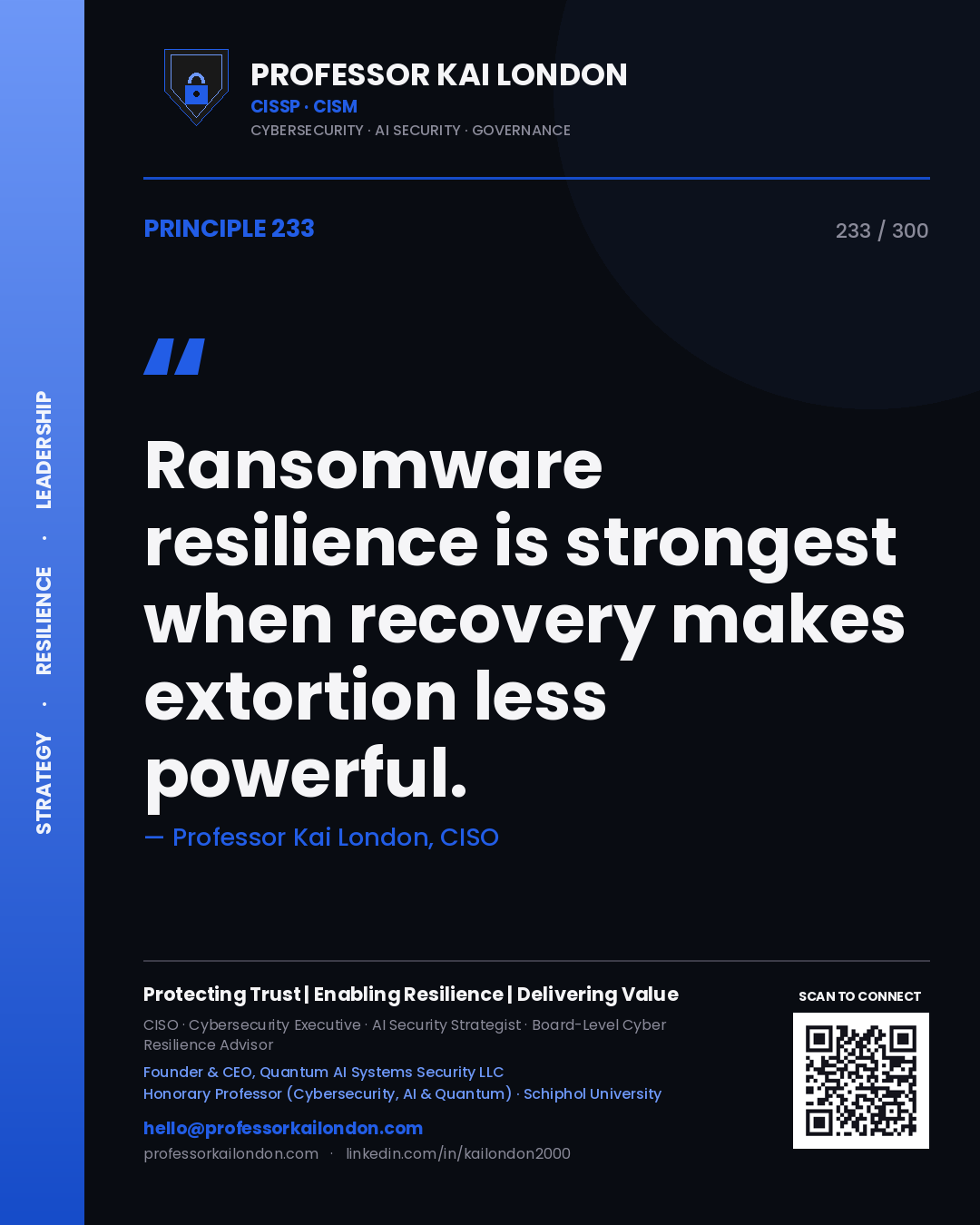 #233 · Ransomware — Ransomware resilience is strongest when recovery makes extortion less powerful.
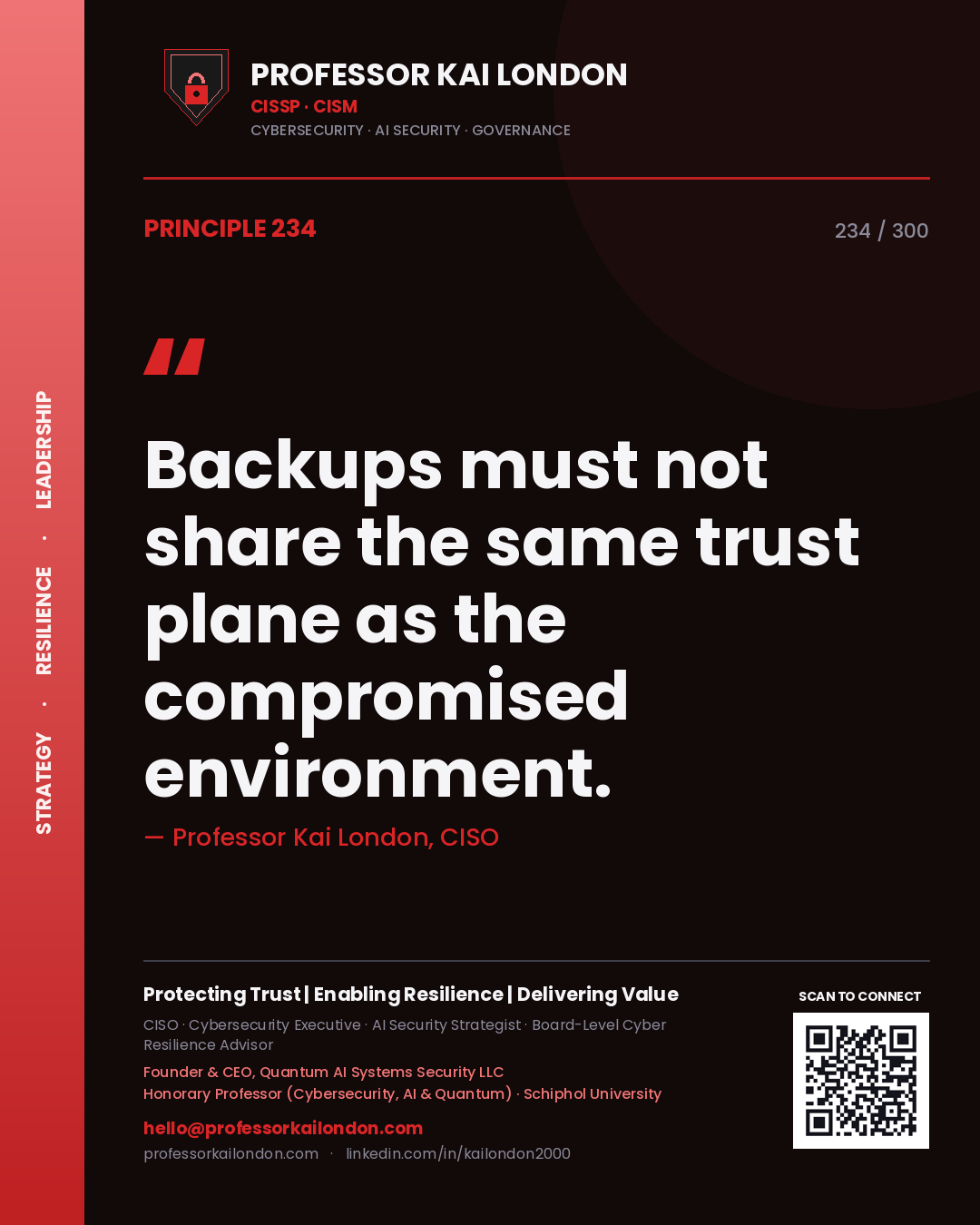 #234 · Recovery — Backups must not share the same trust plane as the compromised environment.
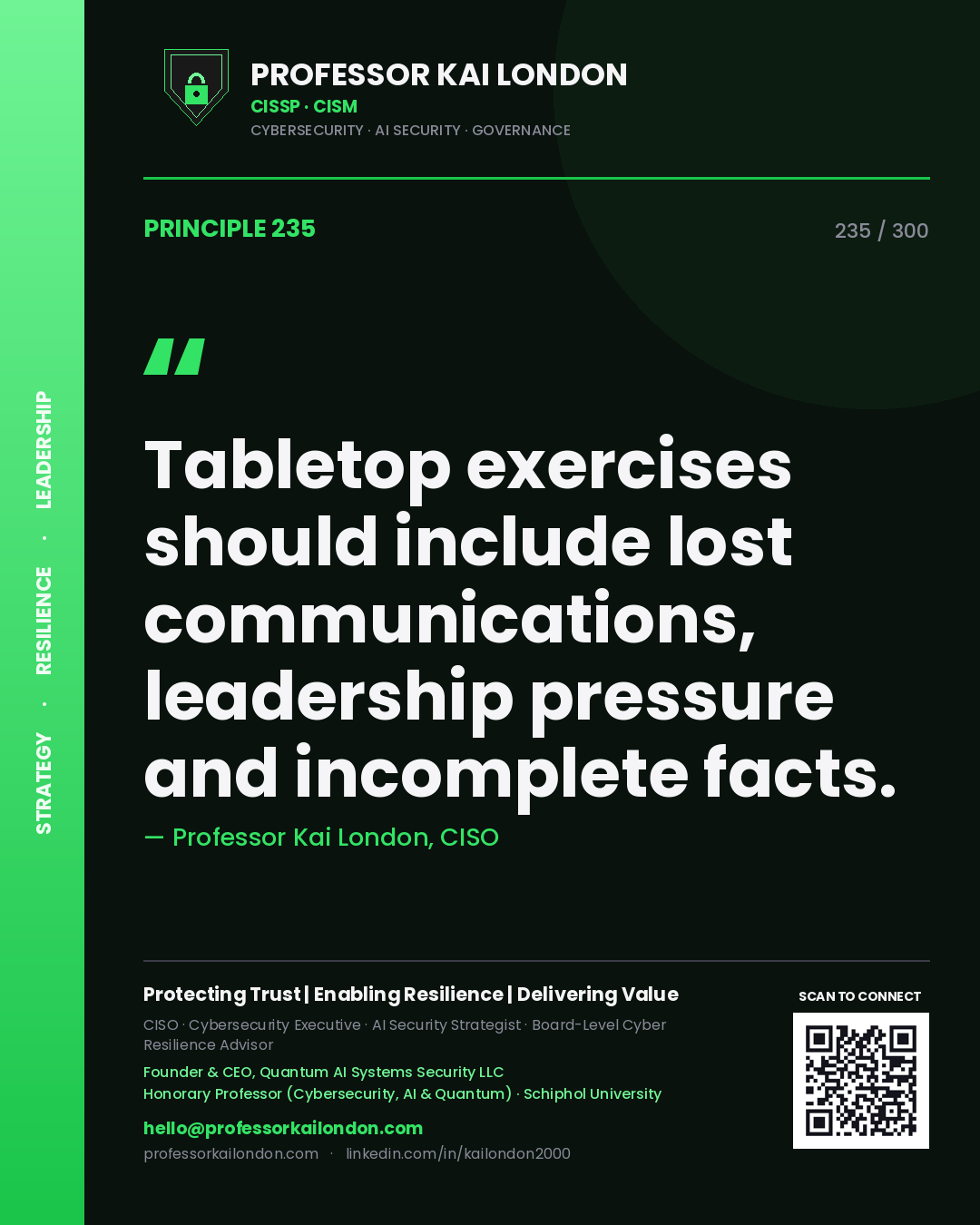 #235 · Crisis Simulation — Tabletop exercises should include lost communications, leadership pressure and incomplete facts.
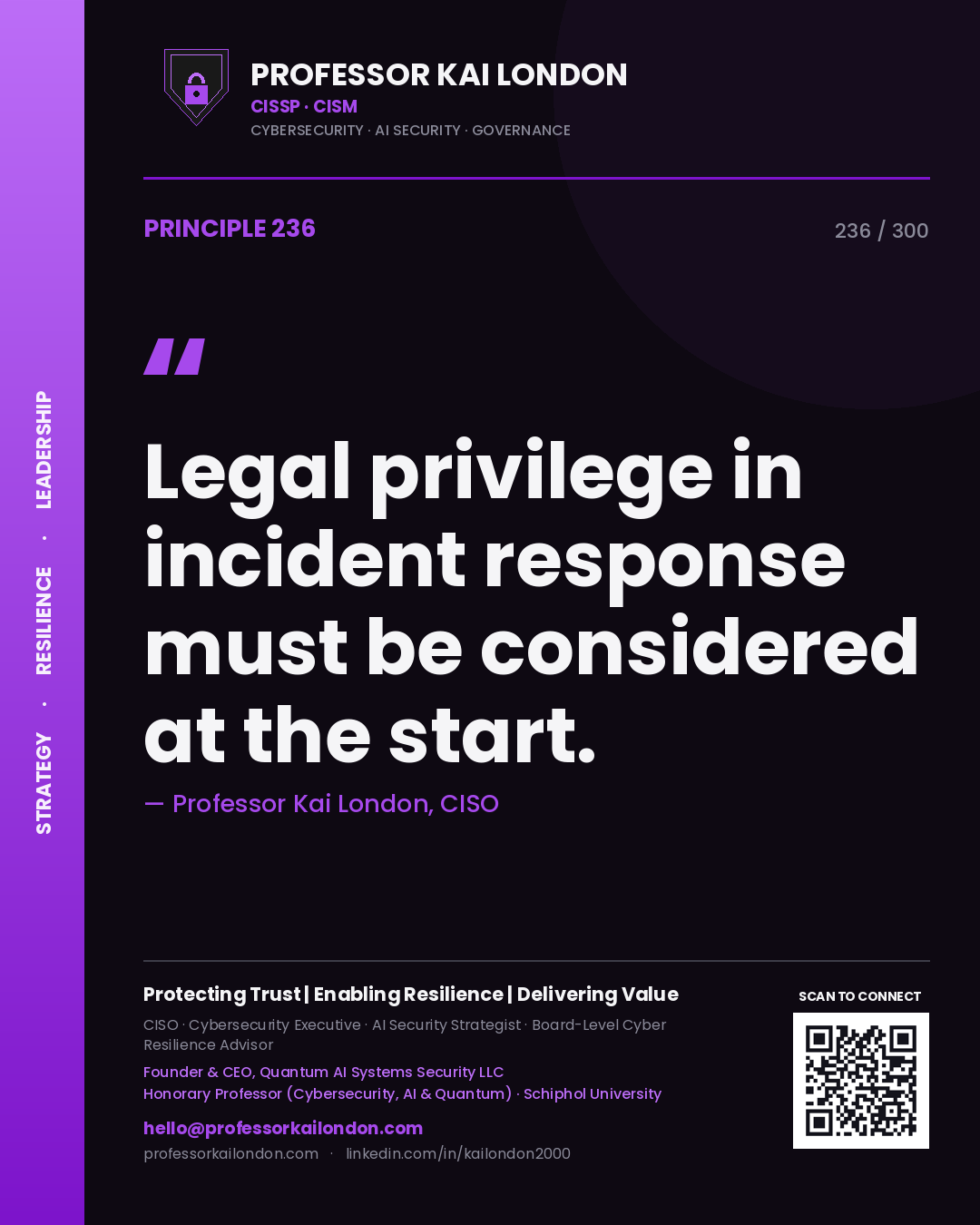 #236 · Legal / IR — Legal privilege in incident response must be considered at the start.
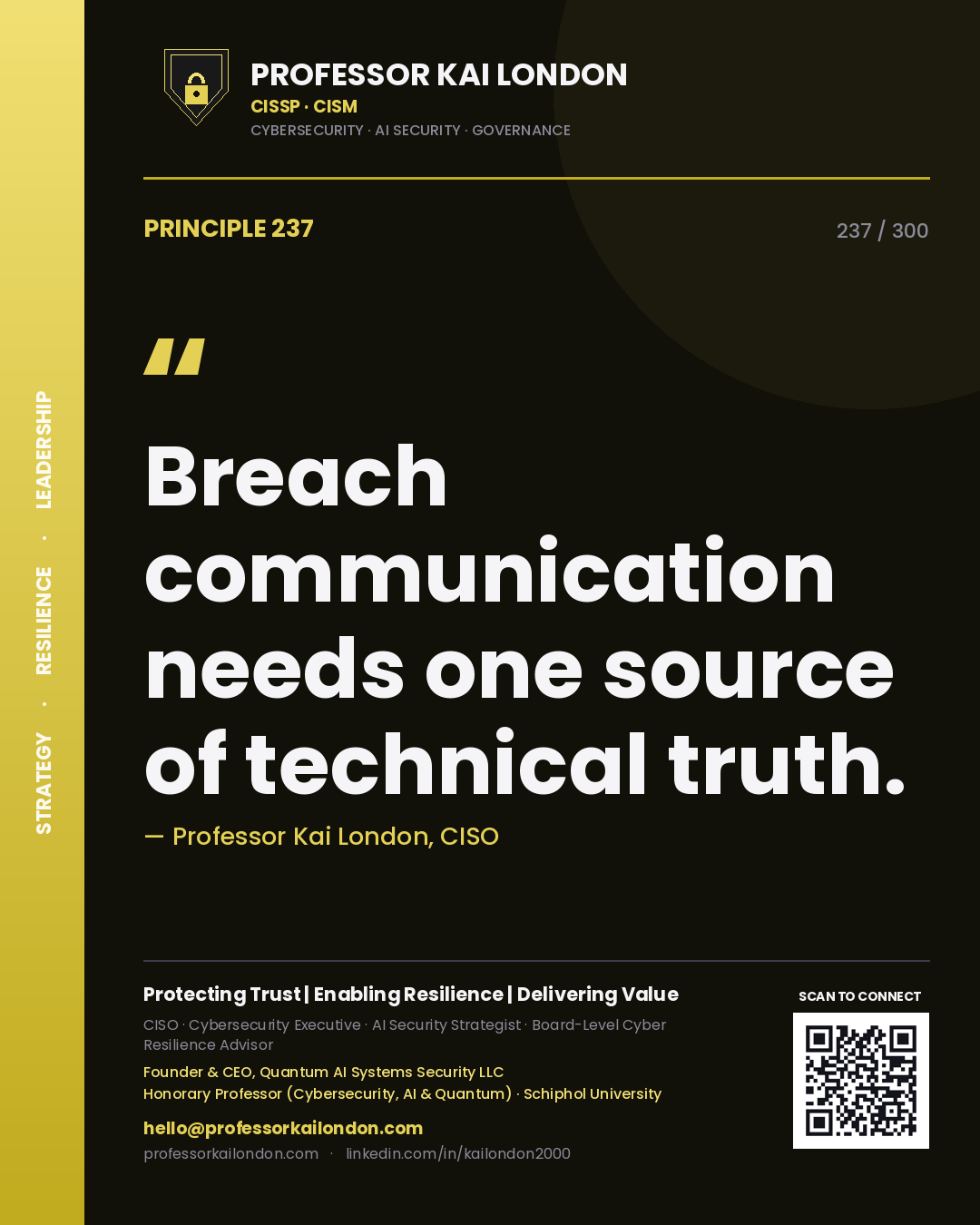 #237 · Crisis Comms — Breach communication needs one source of technical truth.
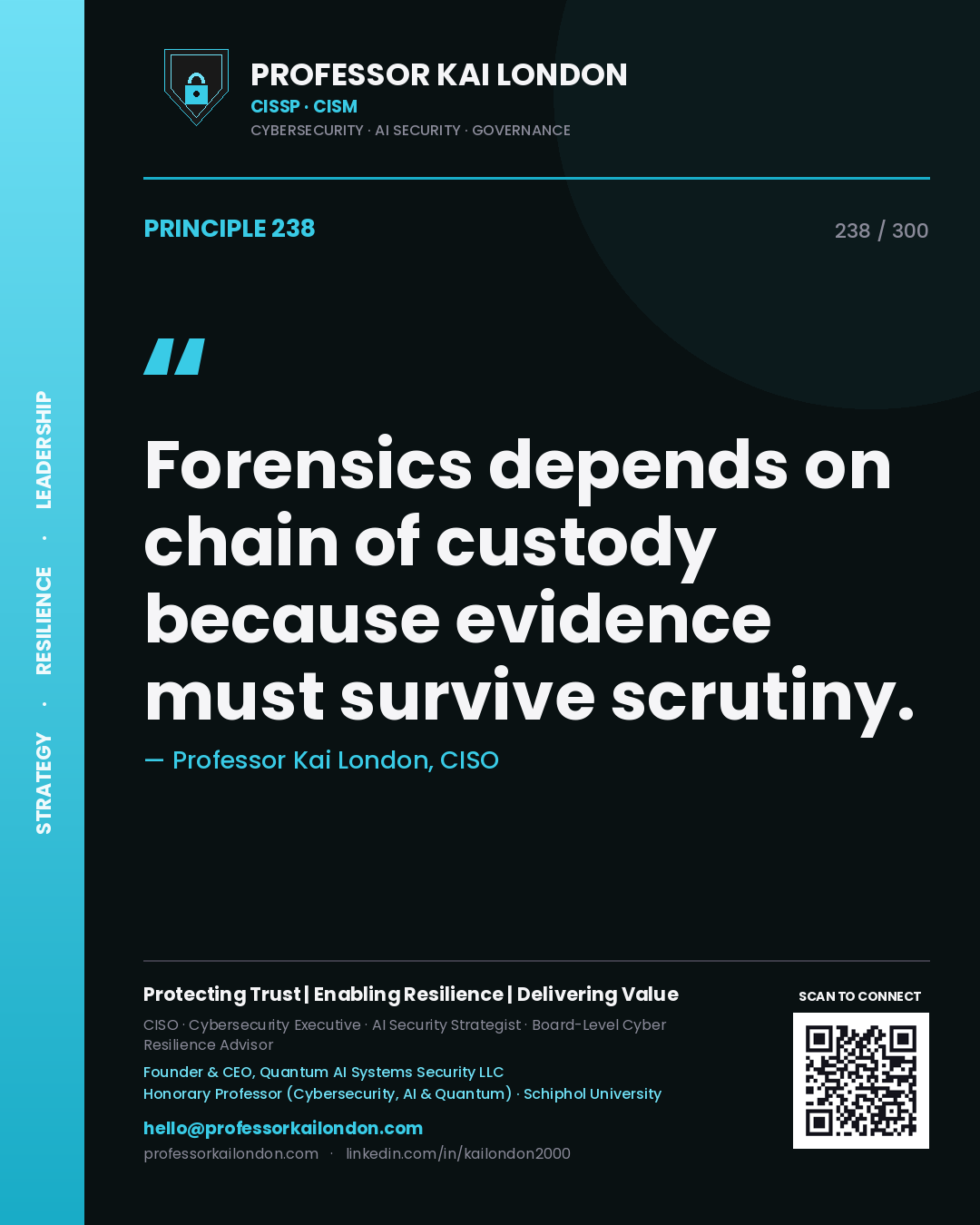 #238 · Digital Forensics — Forensics depends on chain of custody because evidence must survive scrutiny.
 #239 · Business Impact — Breach cost includes recovery, confidence, trust and future opportunity.
 #240 · Lessons Learned — Post-incident review should be blameless, precise and focused on architectural improvement.
 #241 · IR Governance — The incident room should not be the first place roles are understood.
 #242 · IR Readiness — The first hour of an incident should follow a rehearsed path.
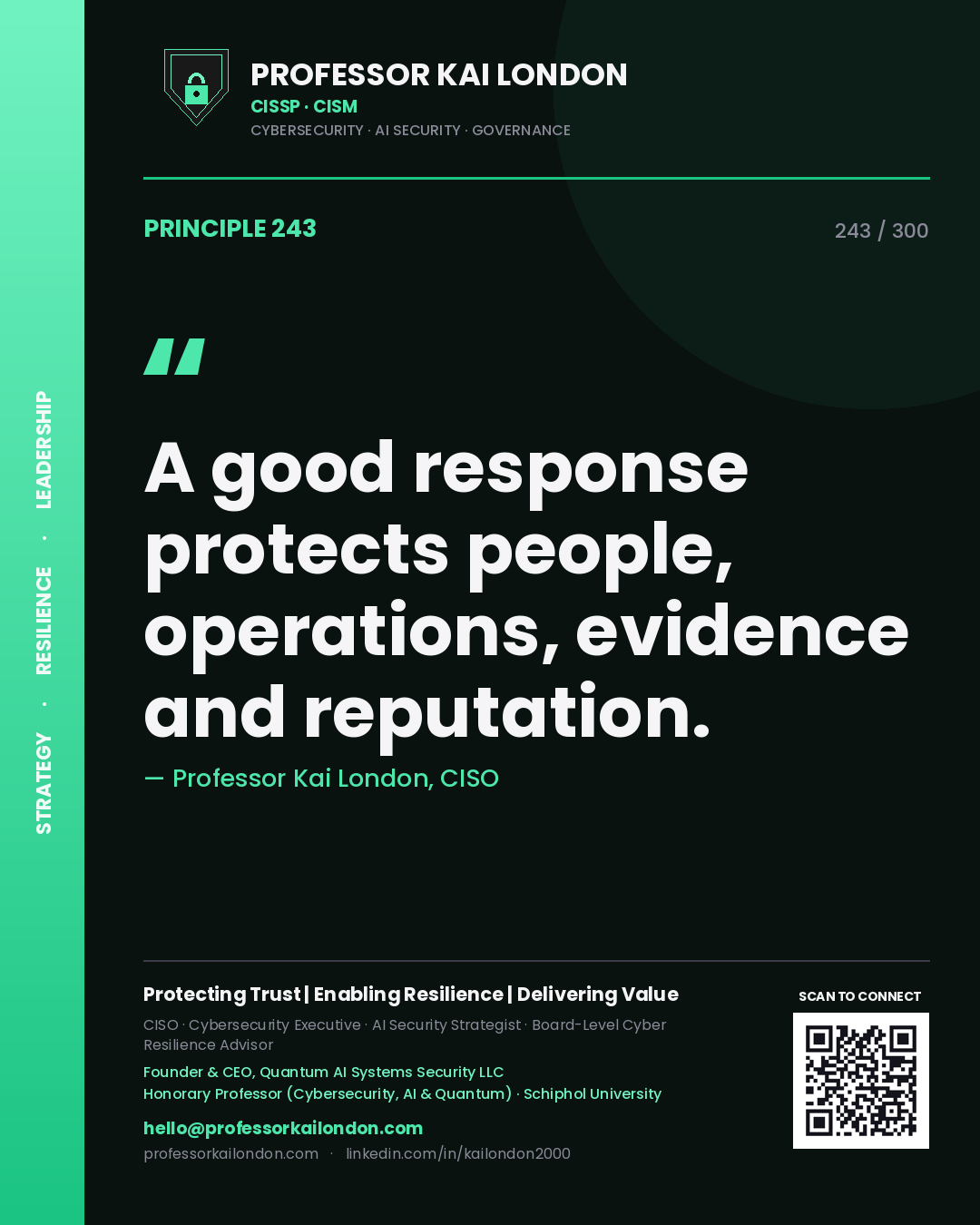 #243 · Crisis Management — A good response protects people, operations, evidence and reputation.
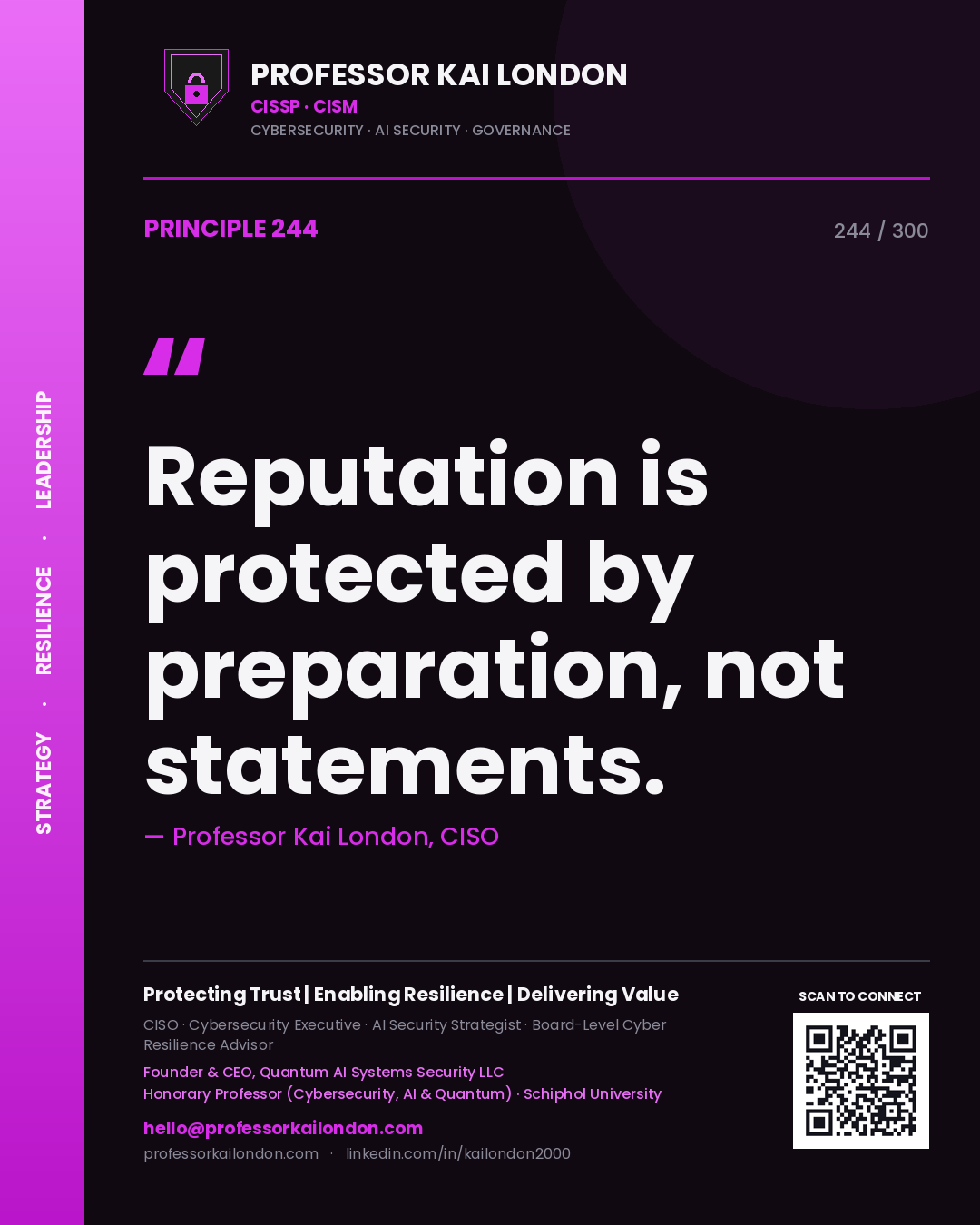 #244 · Crisis Comms — Reputation is protected by preparation, not statements.
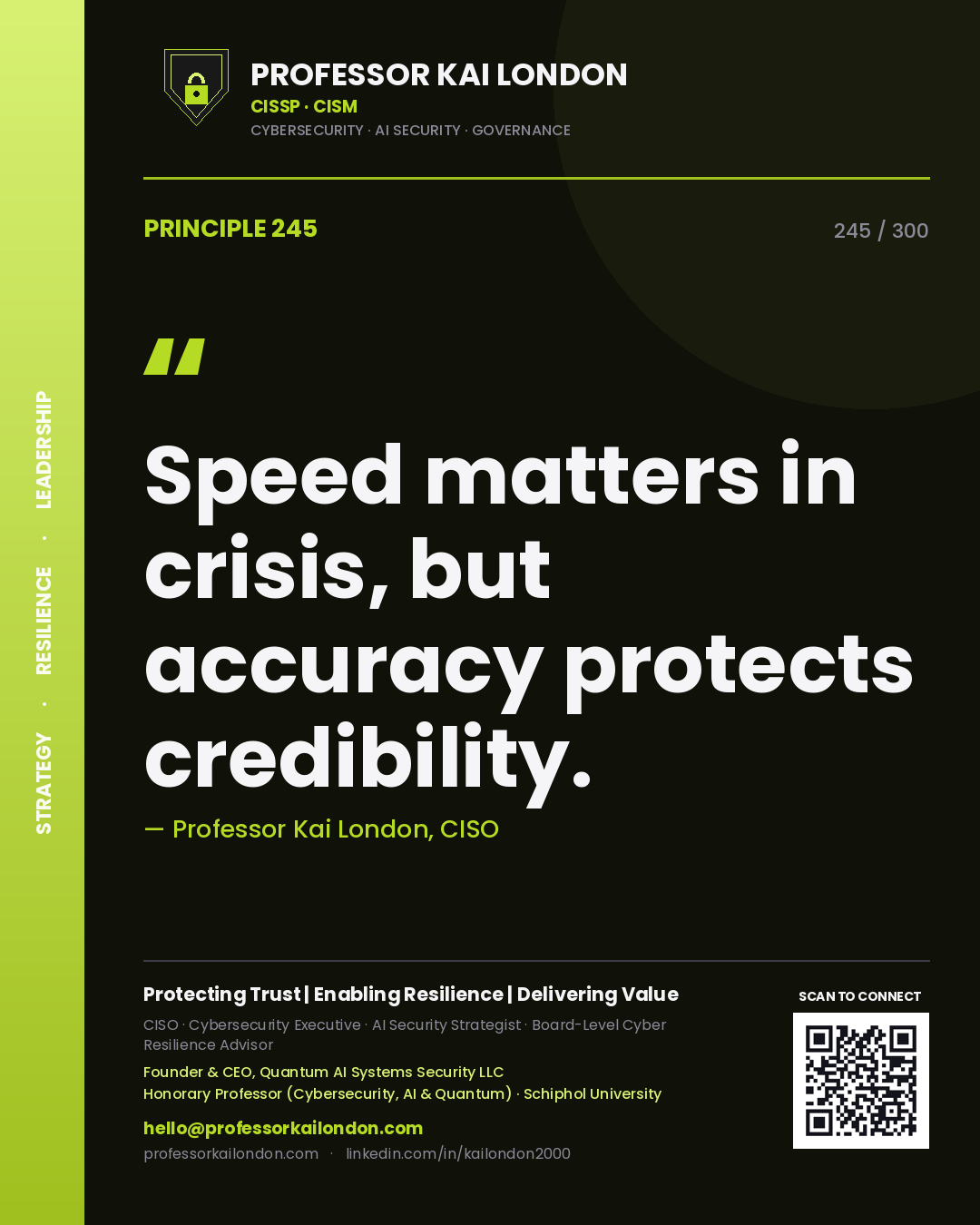 #245 · Incident Response — Speed matters in crisis, but accuracy protects credibility.
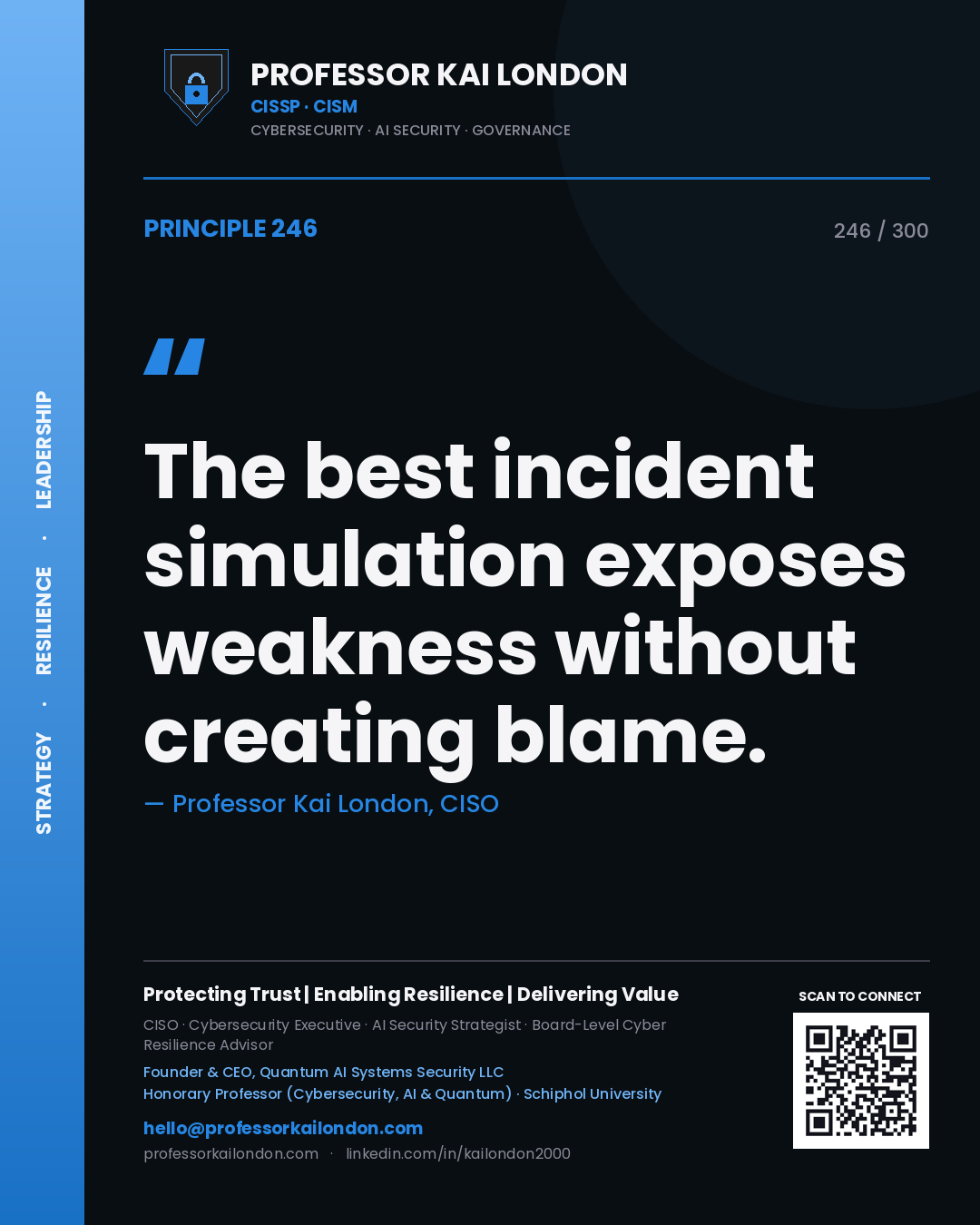 #246 · Tabletop Exercise — The best incident simulation exposes weakness without creating blame.
 #247 · Crisis Leadership — Crisis leadership is calm, factual and evidence-led.
 #248 · War Room — Cyber resilience is strongest when legal, security, operations and communications move together.
 #249 · Preparedness — A crisis plan is useful only when people have practised using it.
 #250 · Forensics / GRC — Incident evidence should be preserved as carefully as systems are restored.
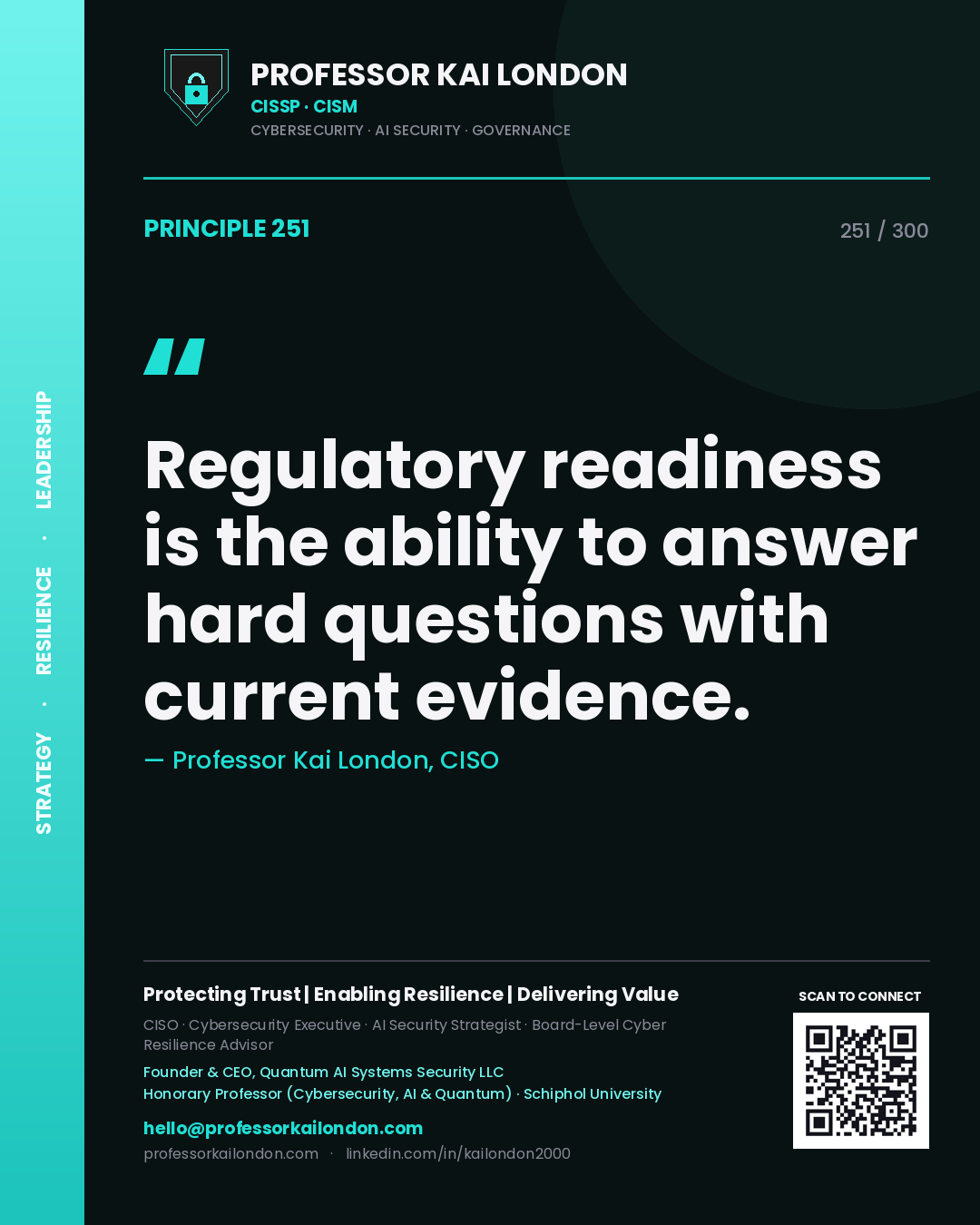 #251 · Regulatory — Regulatory readiness is the ability to answer hard questions with current evidence.
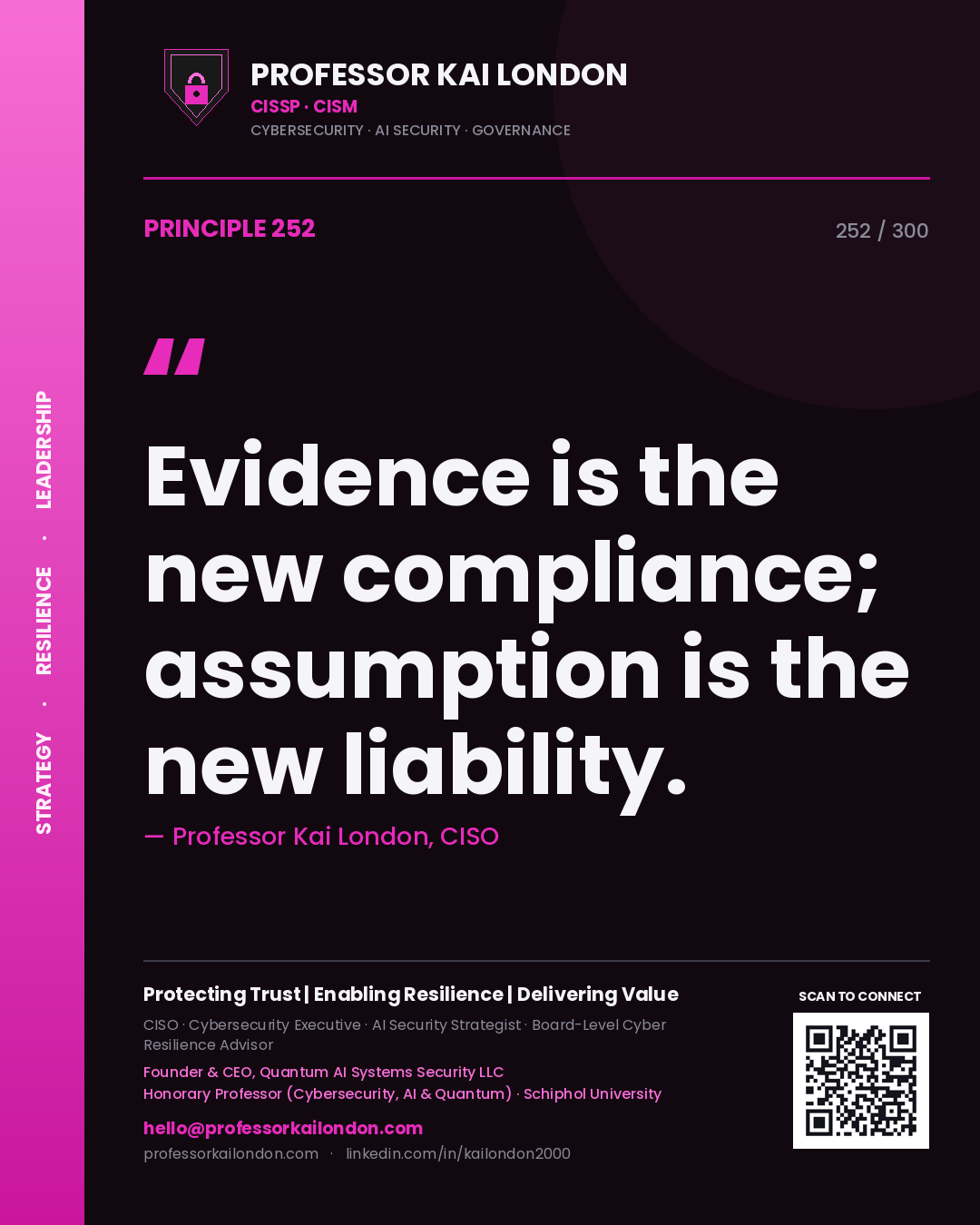 #252 · GRC — Evidence is the new compliance; assumption is the new liability.
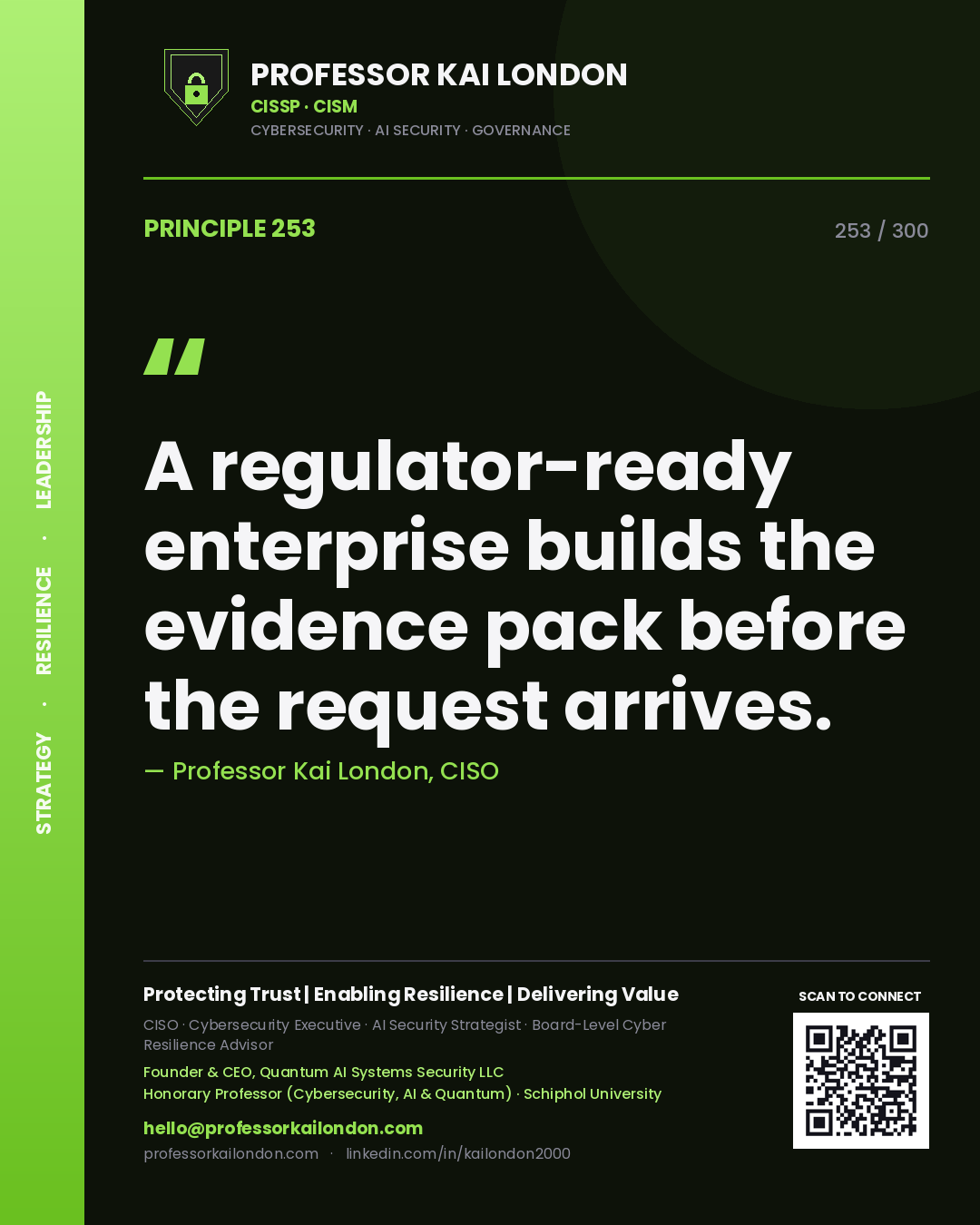 #253 · Compliance — A regulator-ready enterprise builds the evidence pack before the request arrives.
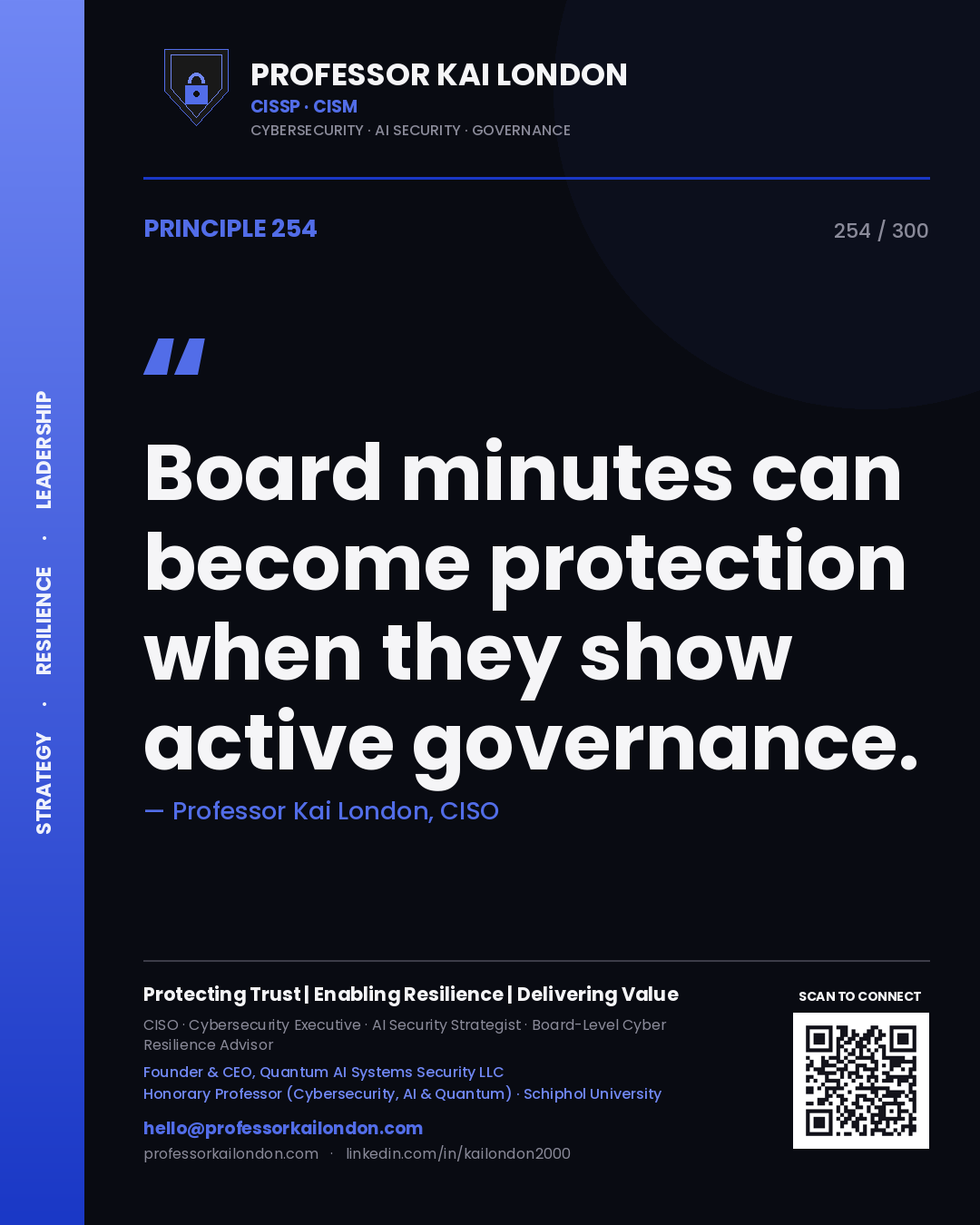 #254 · Board Evidence — Board minutes can become protection when they show active governance.
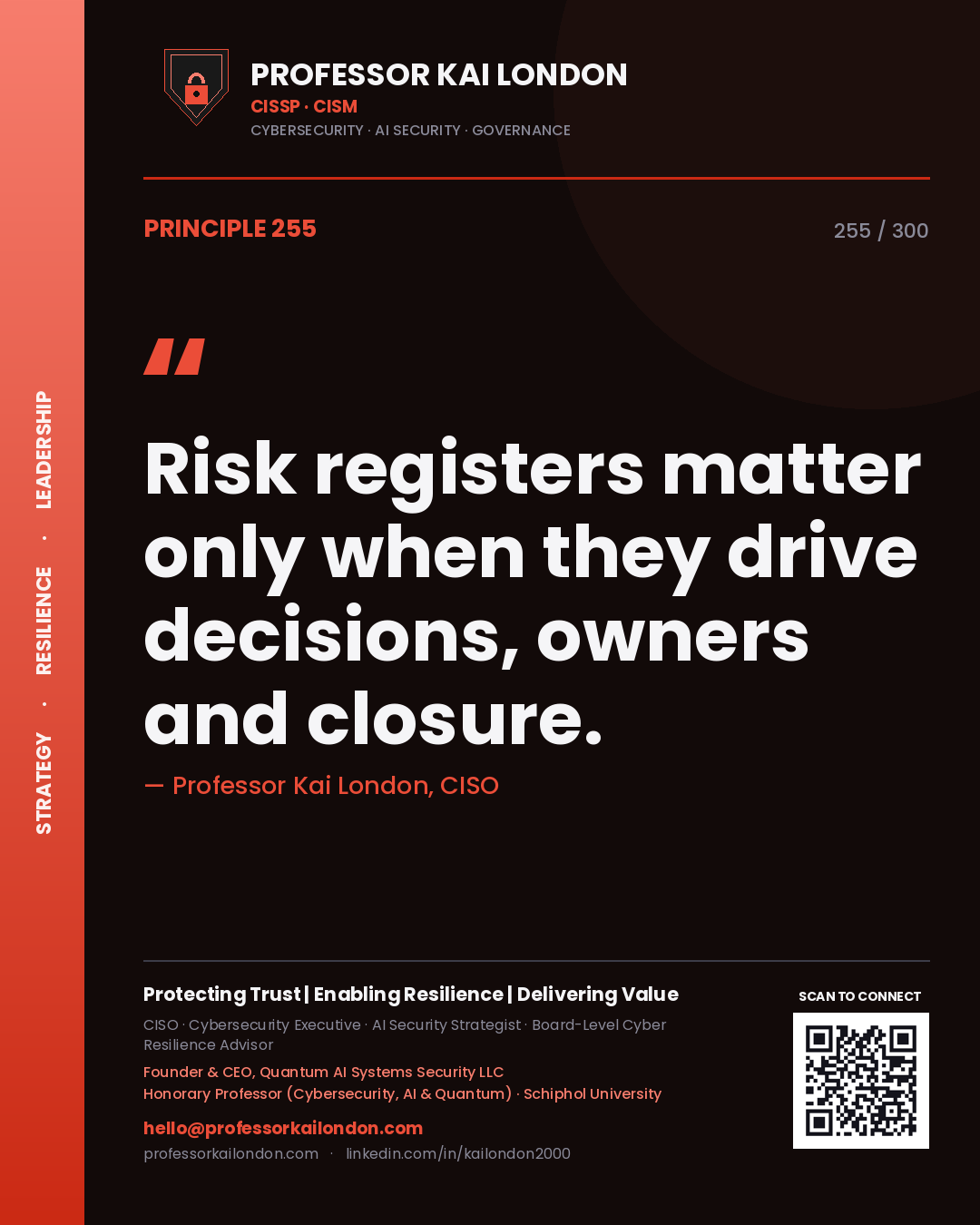 #255 · Risk Management — Risk registers matter only when they drive decisions, owners and closure.
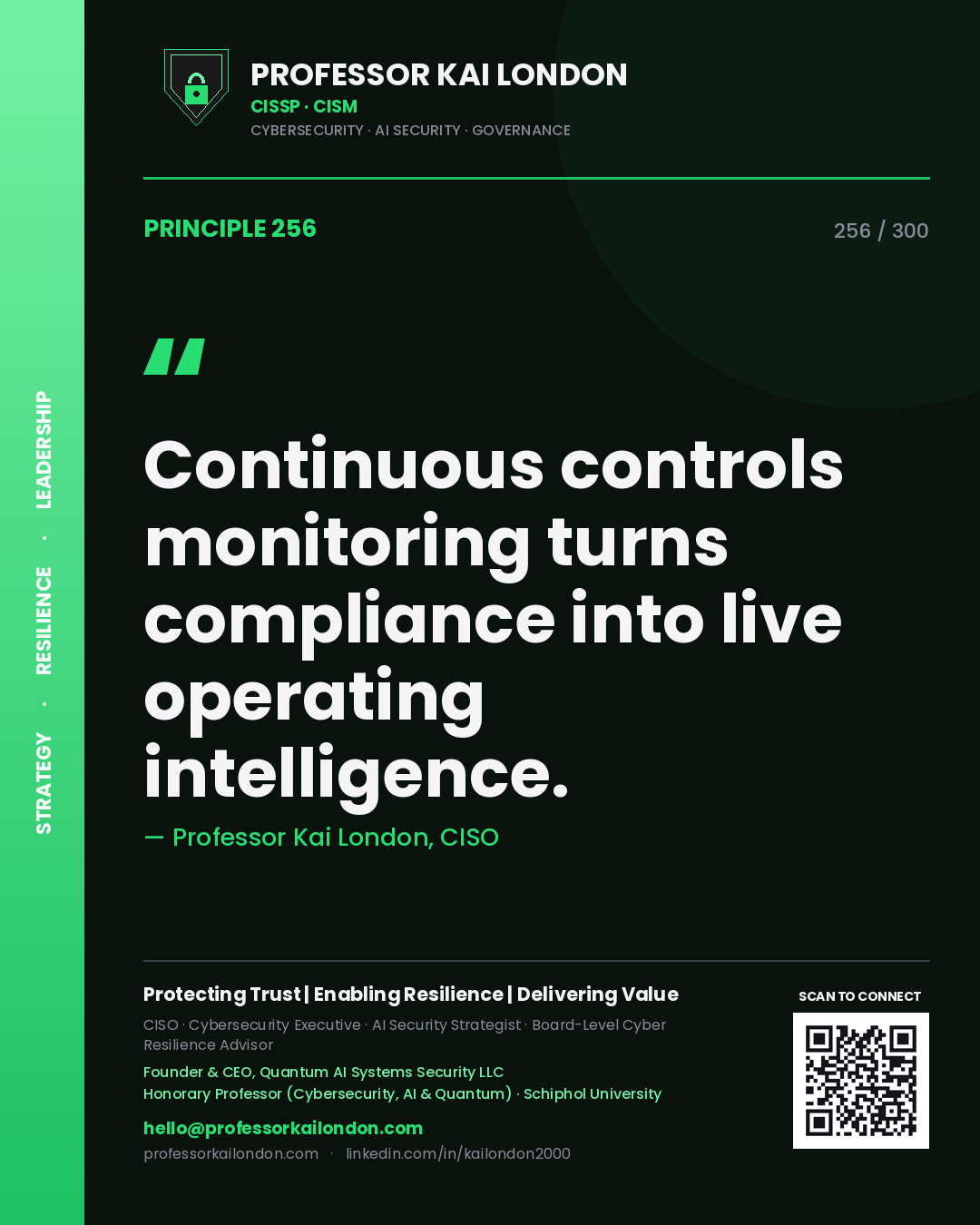 #256 · CCM — Continuous controls monitoring turns compliance into live operating intelligence.
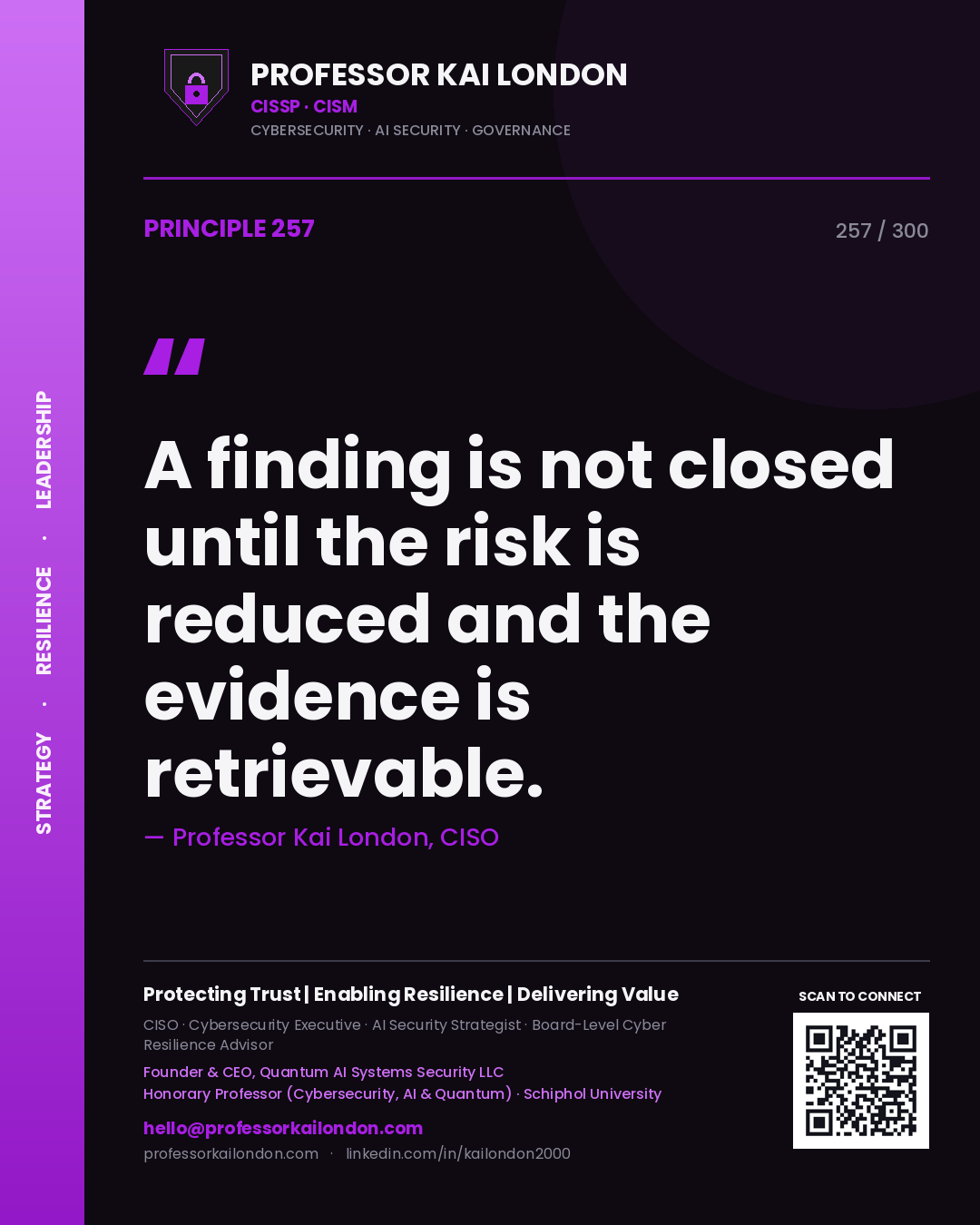 #257 · Audit Remediation — A finding is not closed until the risk is reduced and the evidence is retrievable.
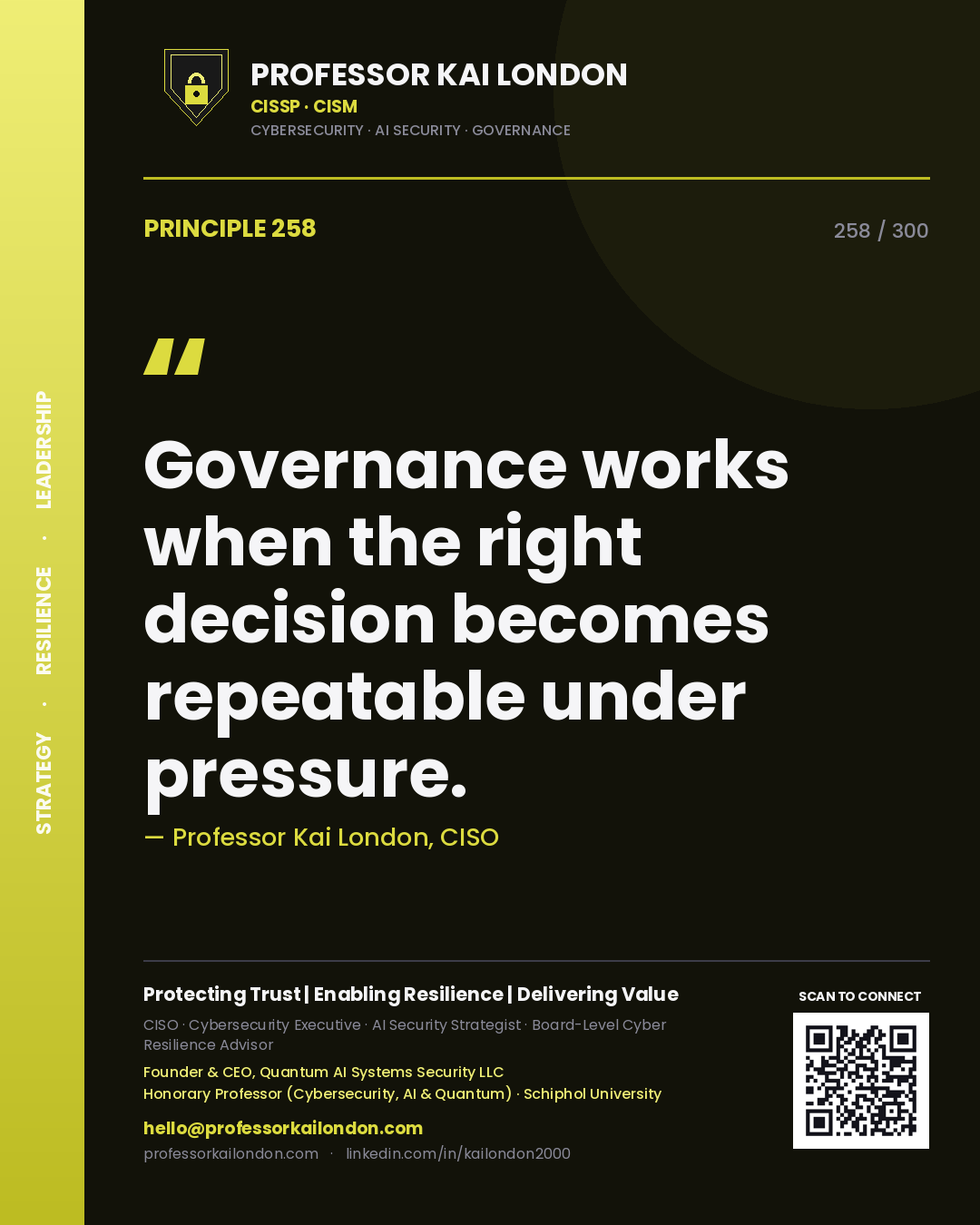 #258 · Operating Model — Governance works when the right decision becomes repeatable under pressure.
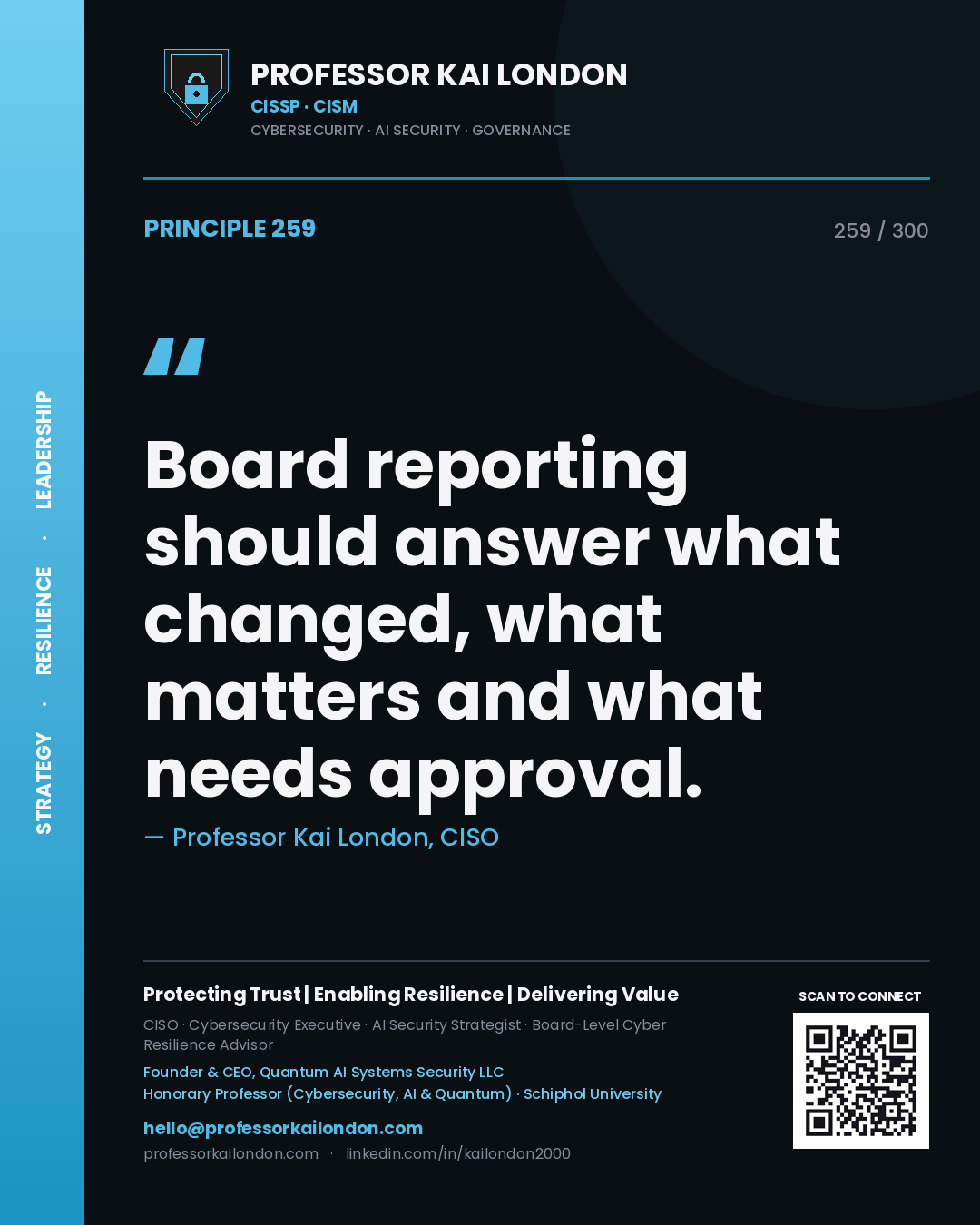 #259 · Executive Reporting — Board reporting should answer what changed, what matters and what needs approval.
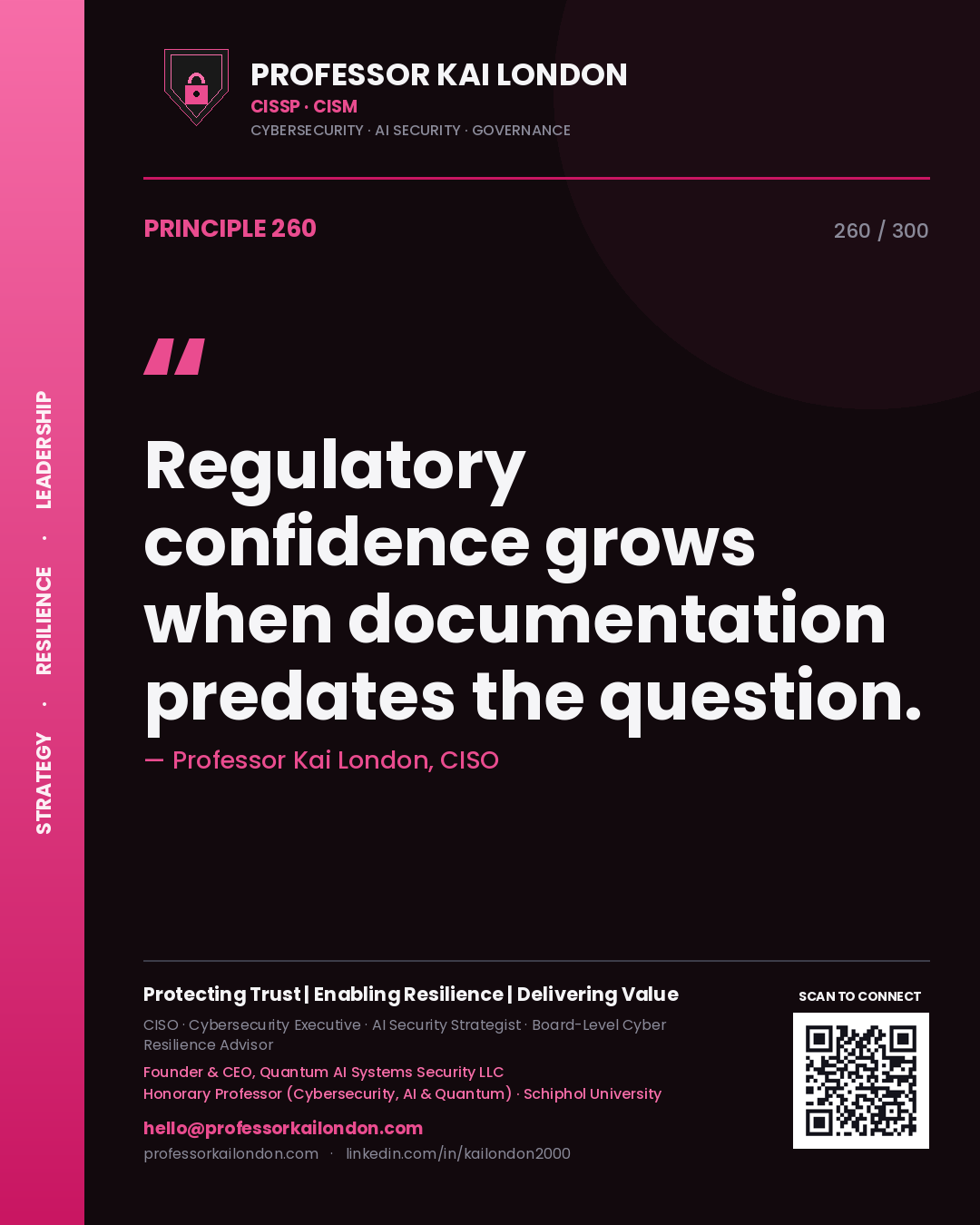 #260 · Compliance Evidence — Regulatory confidence grows when documentation predates the question.
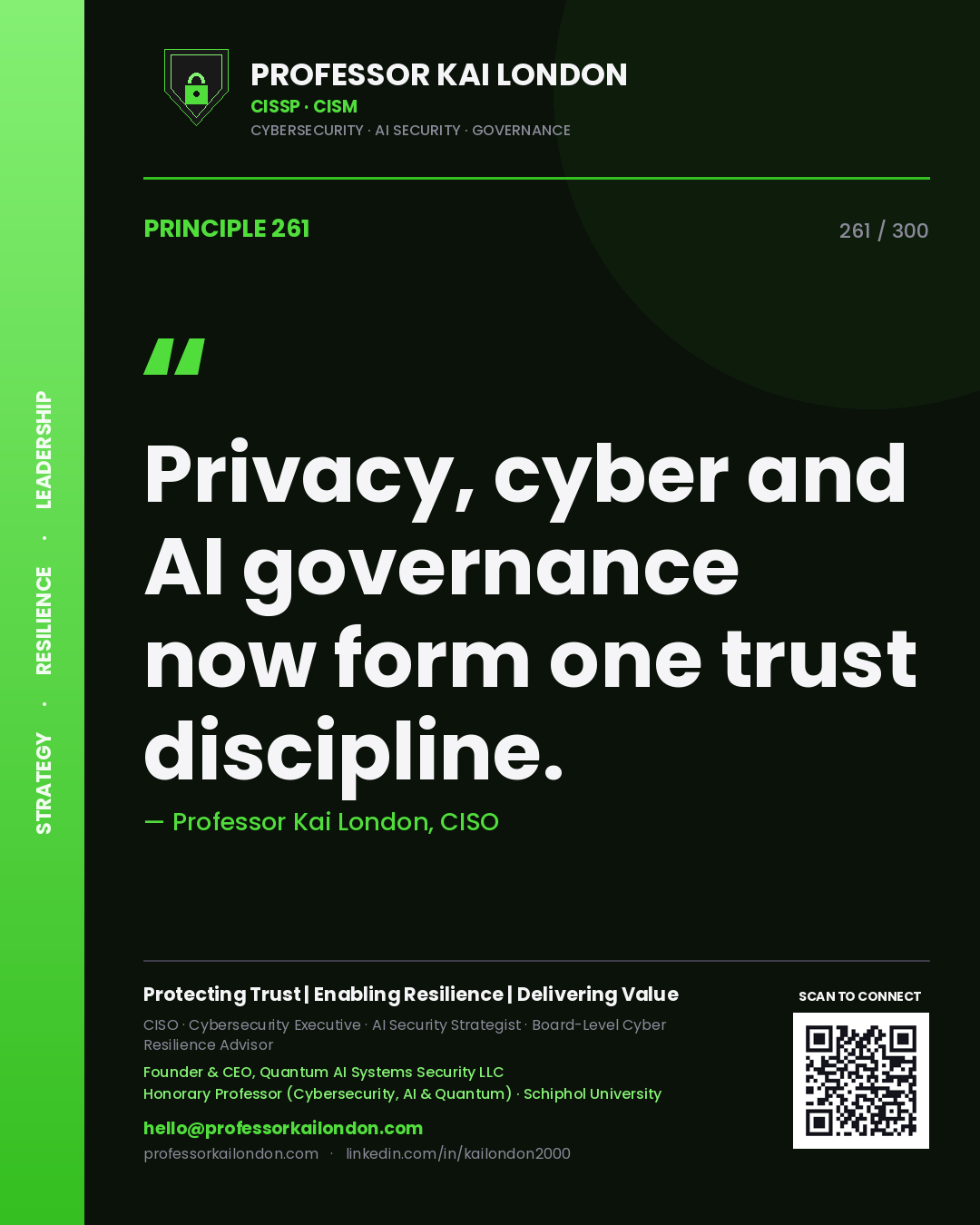 #261 · Integrated Governance — Privacy, cyber and AI governance now form one trust discipline.
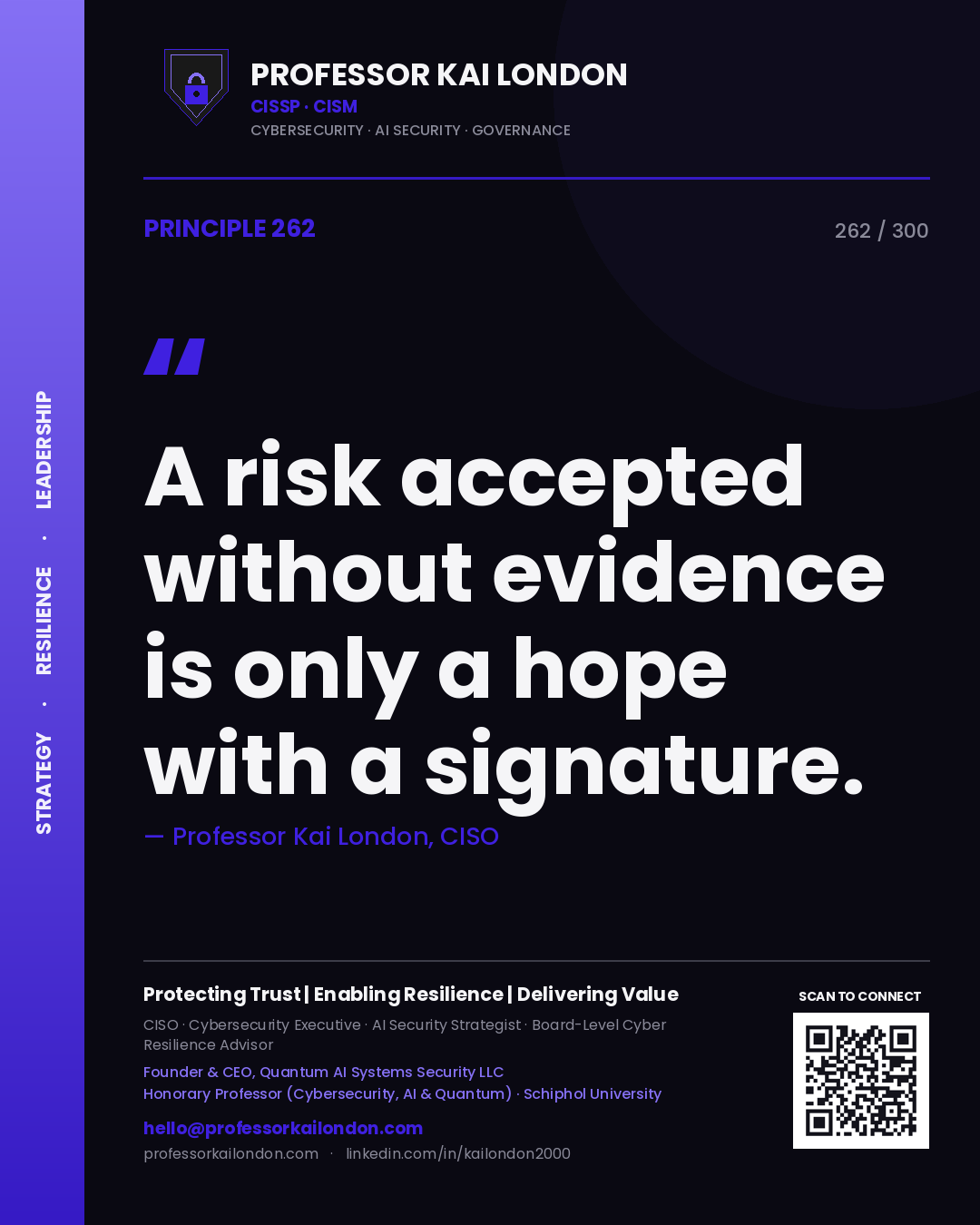 #262 · Risk Acceptance — A risk accepted without evidence is only a hope with a signature.
 #263 · Assurance — Audit readiness is not a season; it is an operating habit.
 #264 · Decision Evidence — The strongest programmes can prove not only what they did, but why they did it.
 #265 · GRC — Documentation is powerful when it reflects real control, not decorative compliance.
 #266 · Board Assurance — Executive assurance must connect risk, cost, control and consequence.
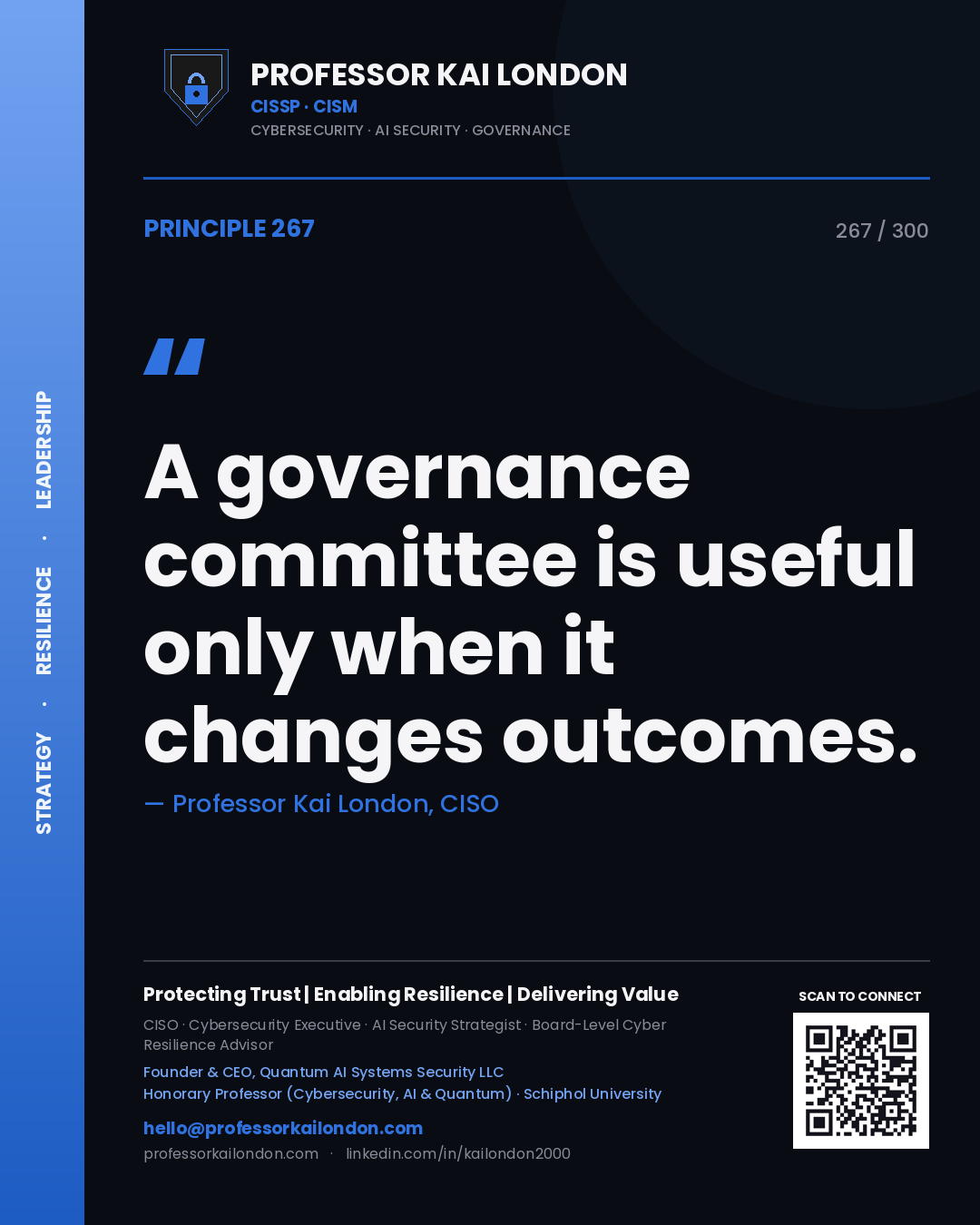 #267 · Governance — A governance committee is useful only when it changes outcomes.
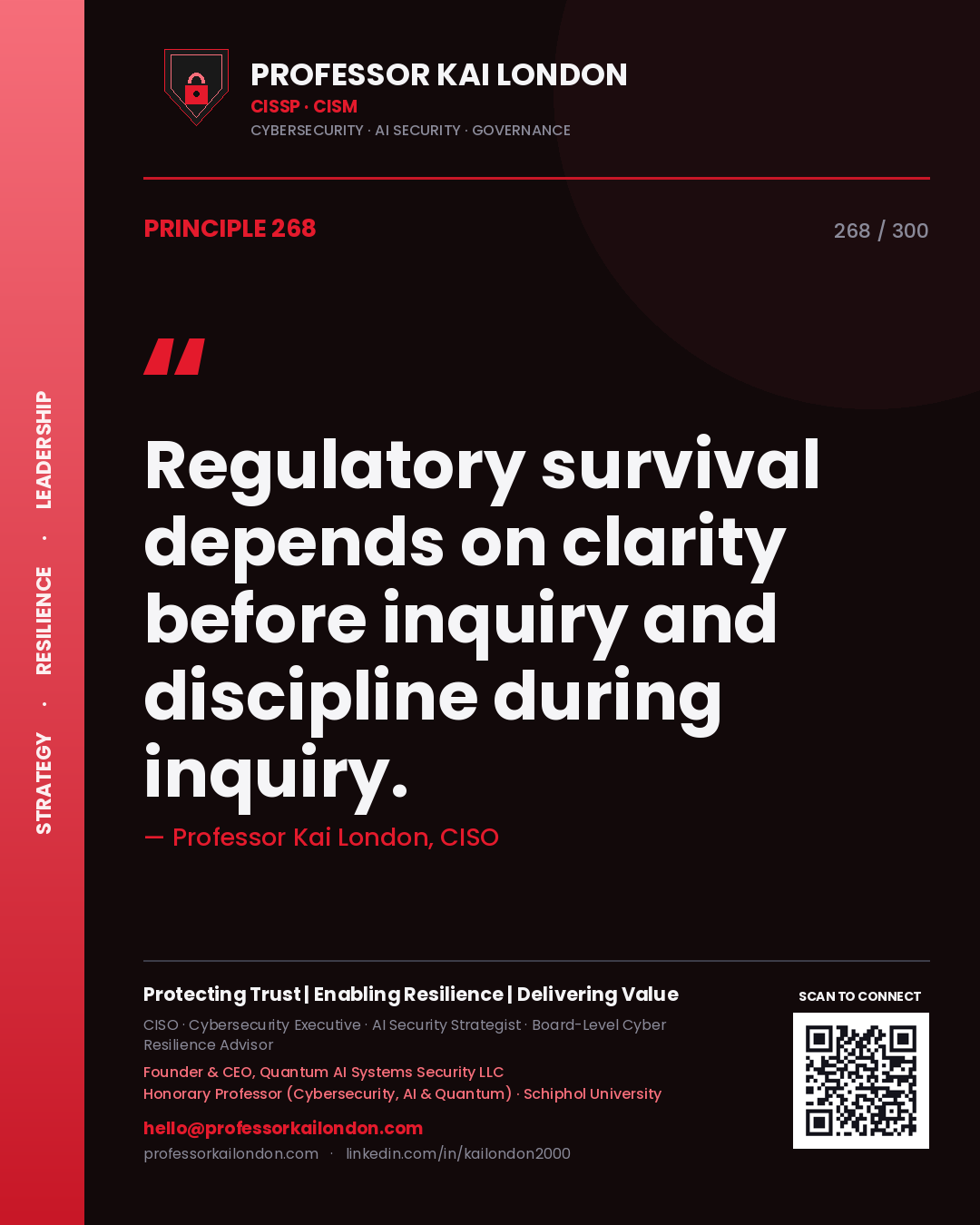 #268 · Regulatory Response — Regulatory survival depends on clarity before inquiry and discipline during inquiry.
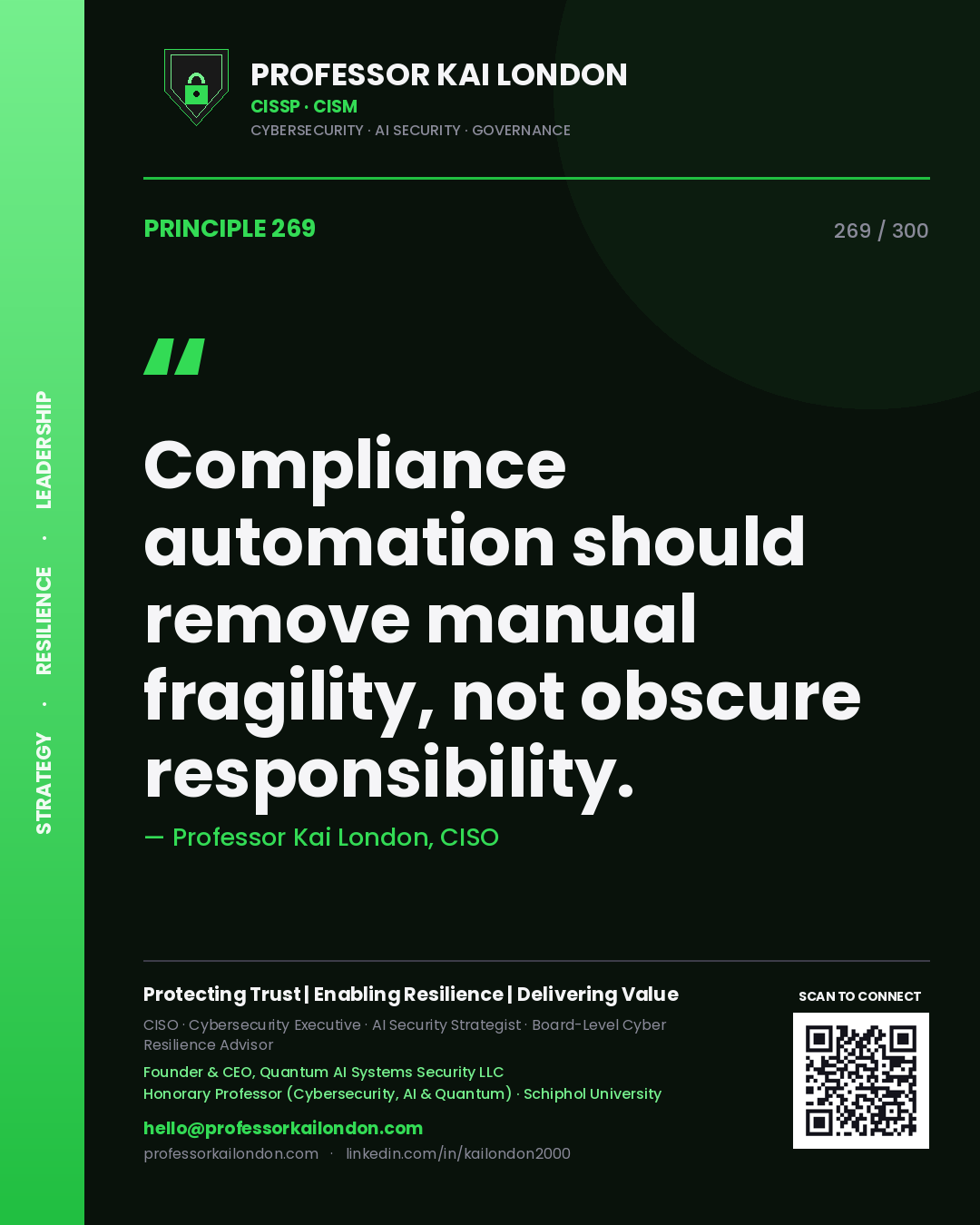 #269 · GRC Automation — Compliance automation should remove manual fragility, not obscure responsibility.
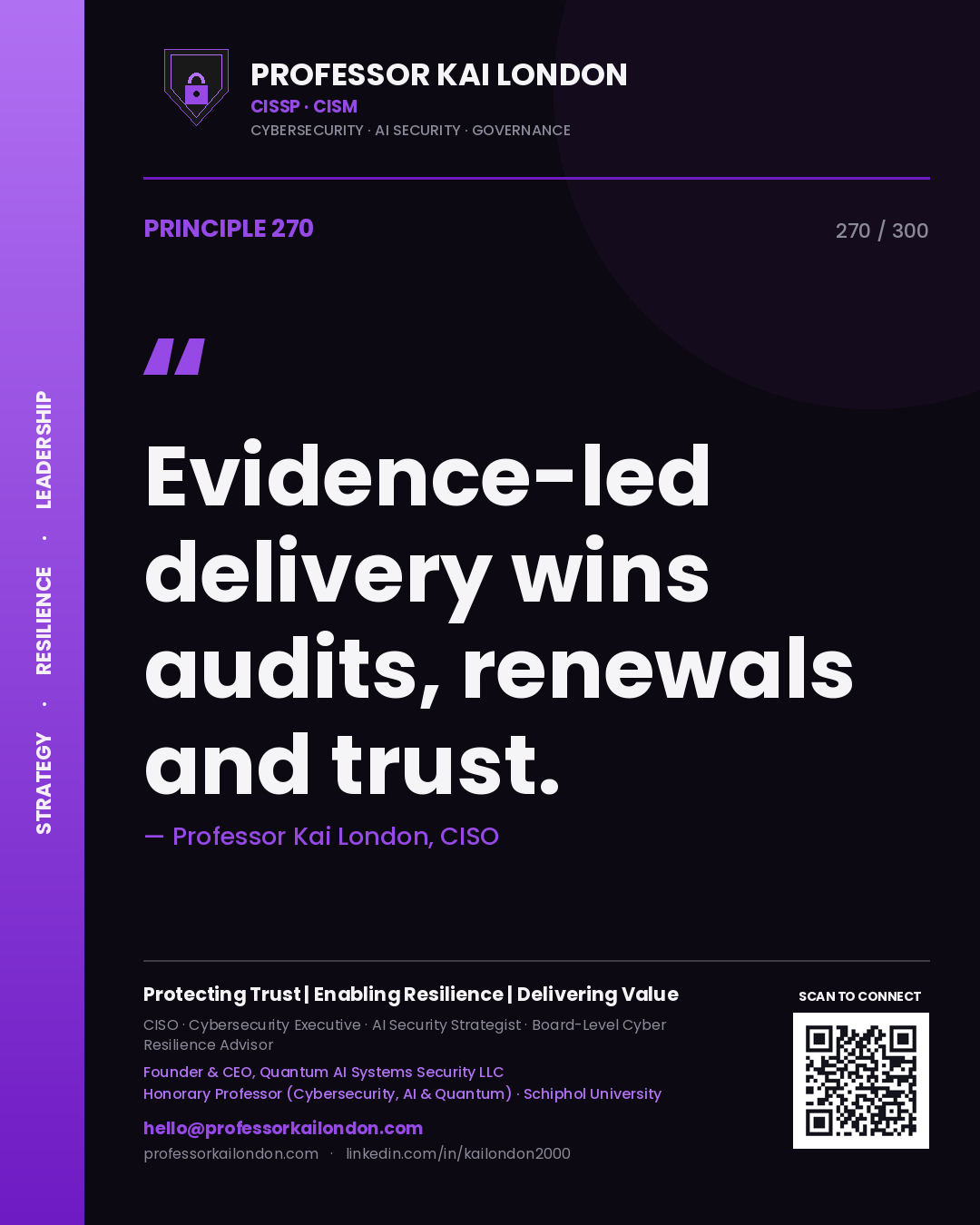 #270 · Evidence / Consulting — Evidence-led delivery wins audits, renewals and trust.
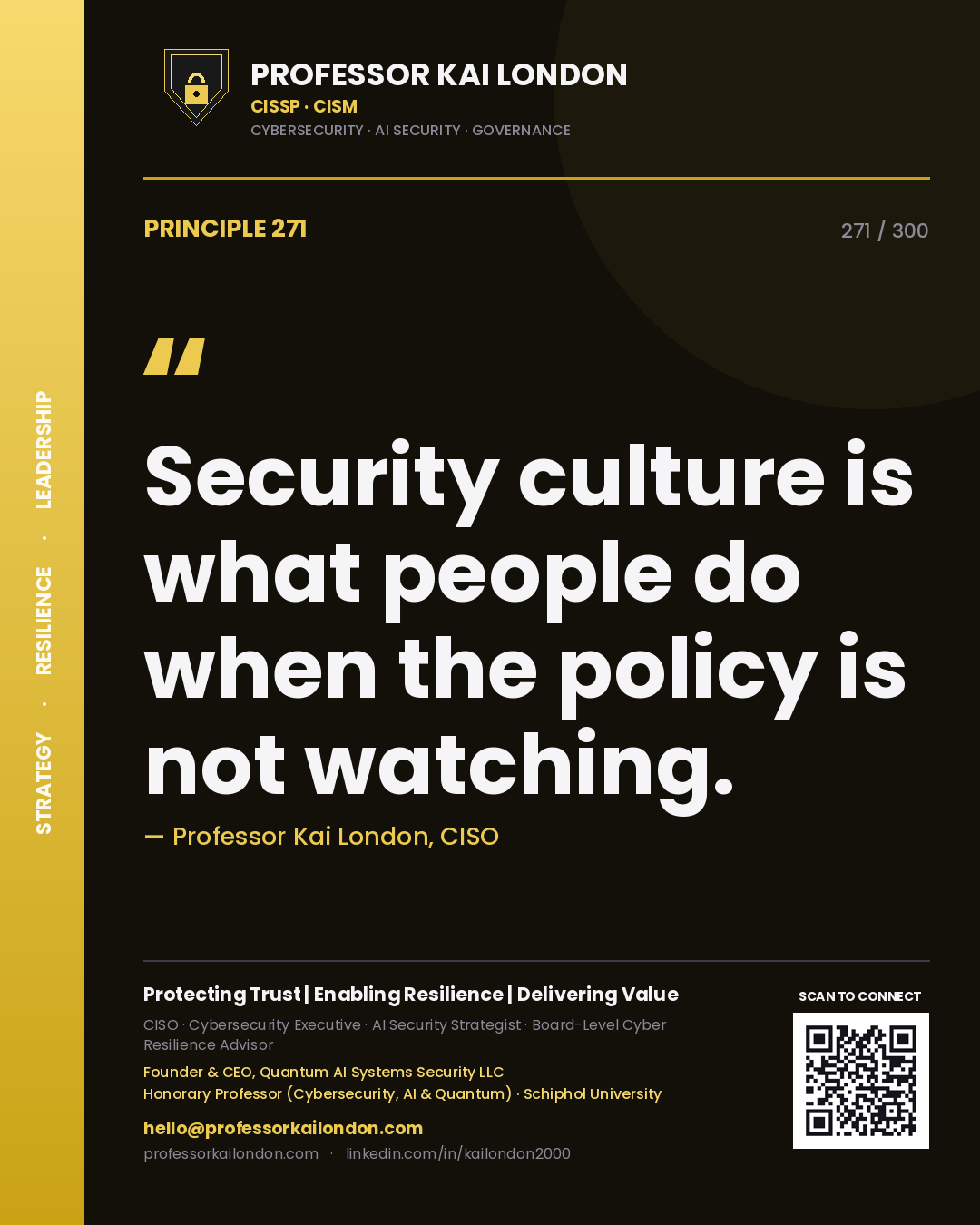 #271 · Culture — Security culture is what people do when the policy is not watching.
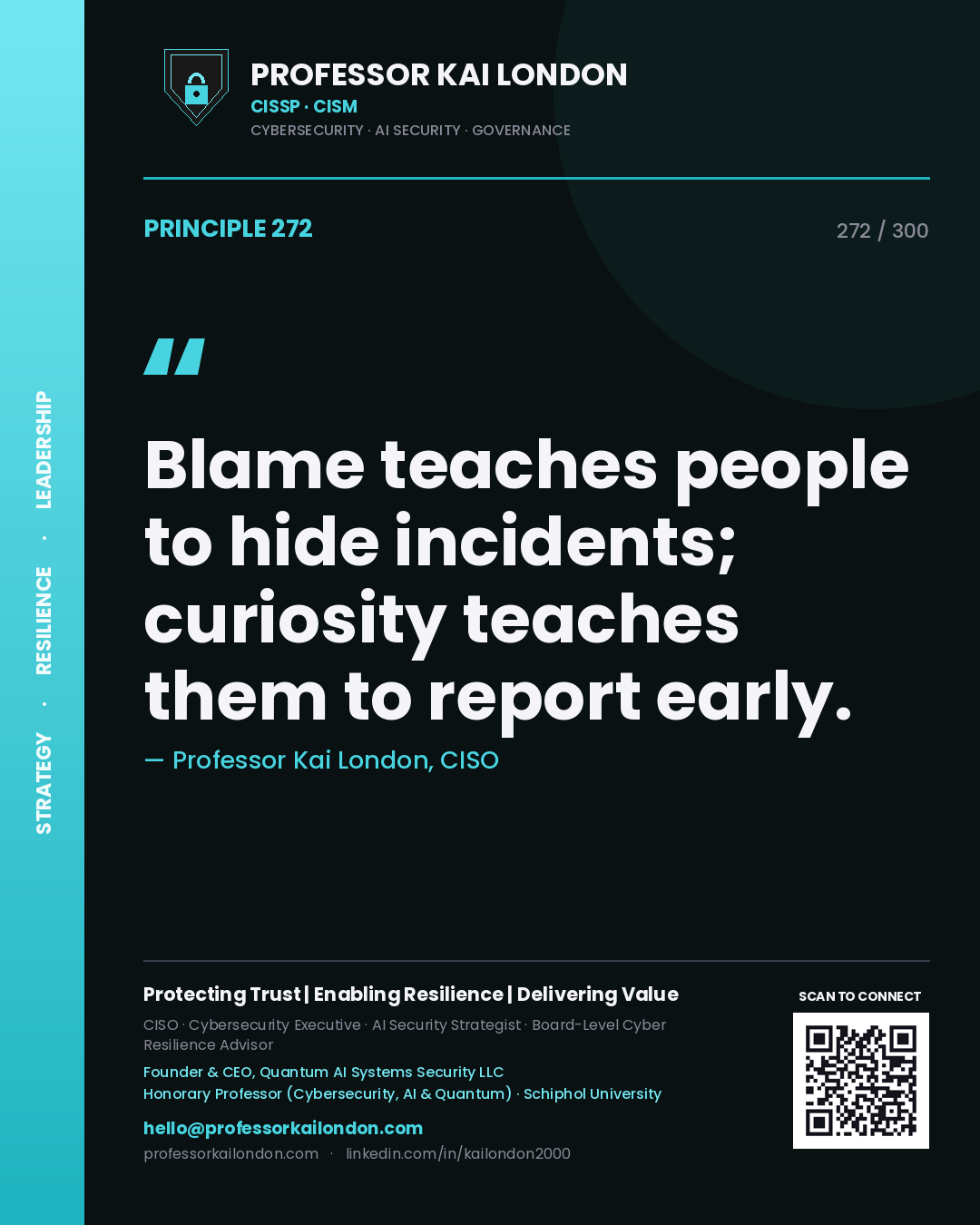 #272 · Culture — Blame teaches people to hide incidents; curiosity teaches them to report early.
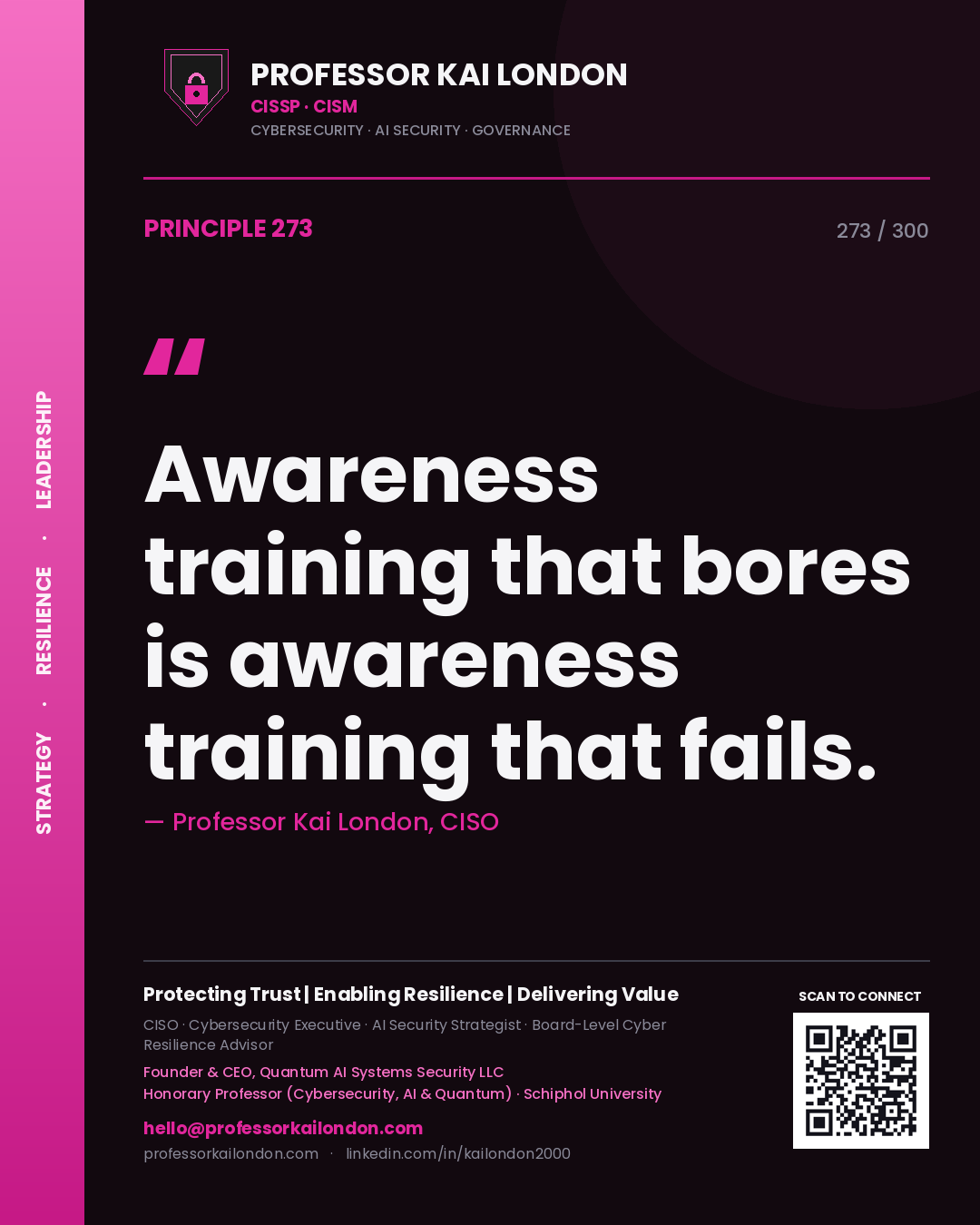 #273 · Human Factor — Awareness training that bores is awareness training that fails.
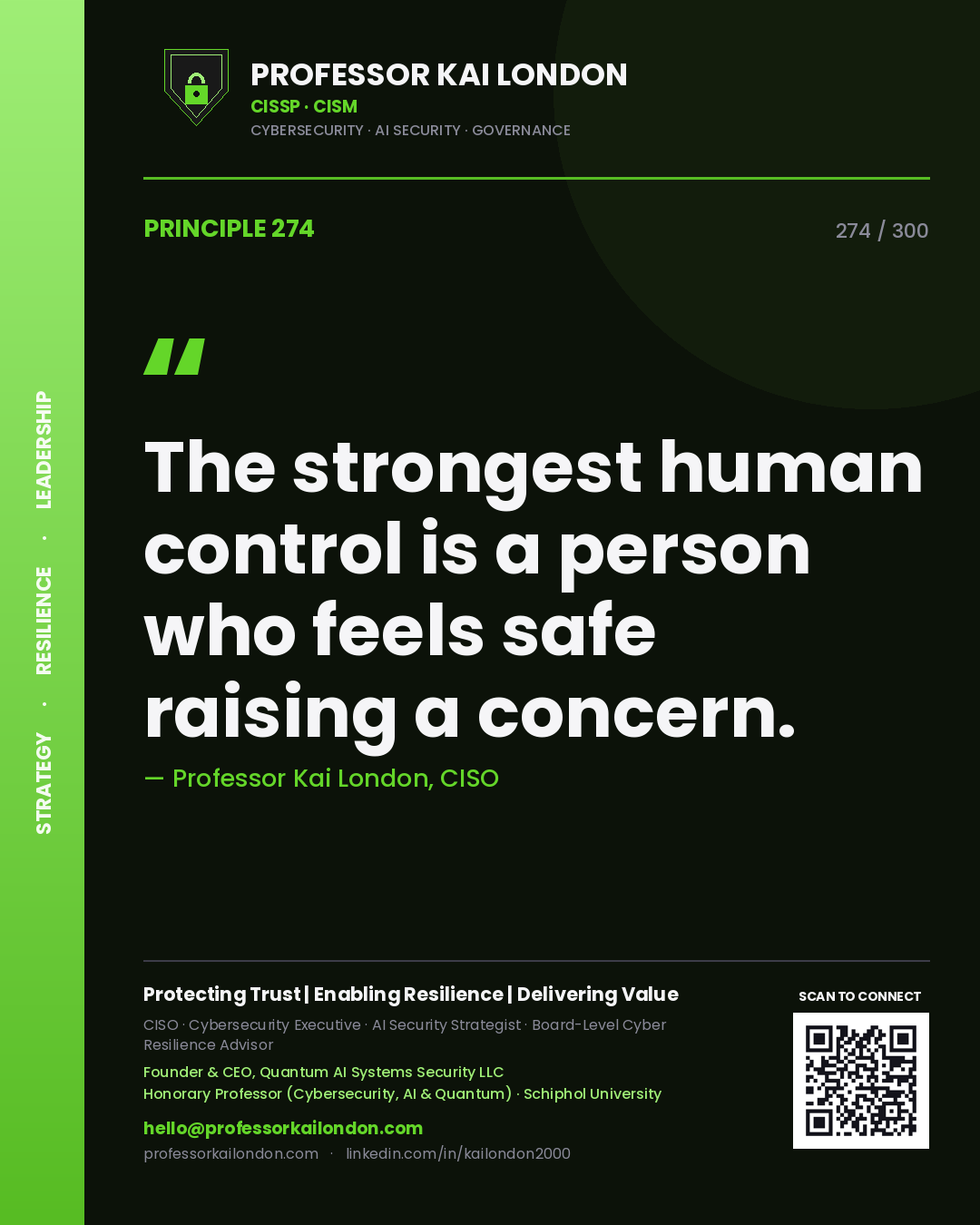 #274 · Culture — The strongest human control is a person who feels safe raising a concern.
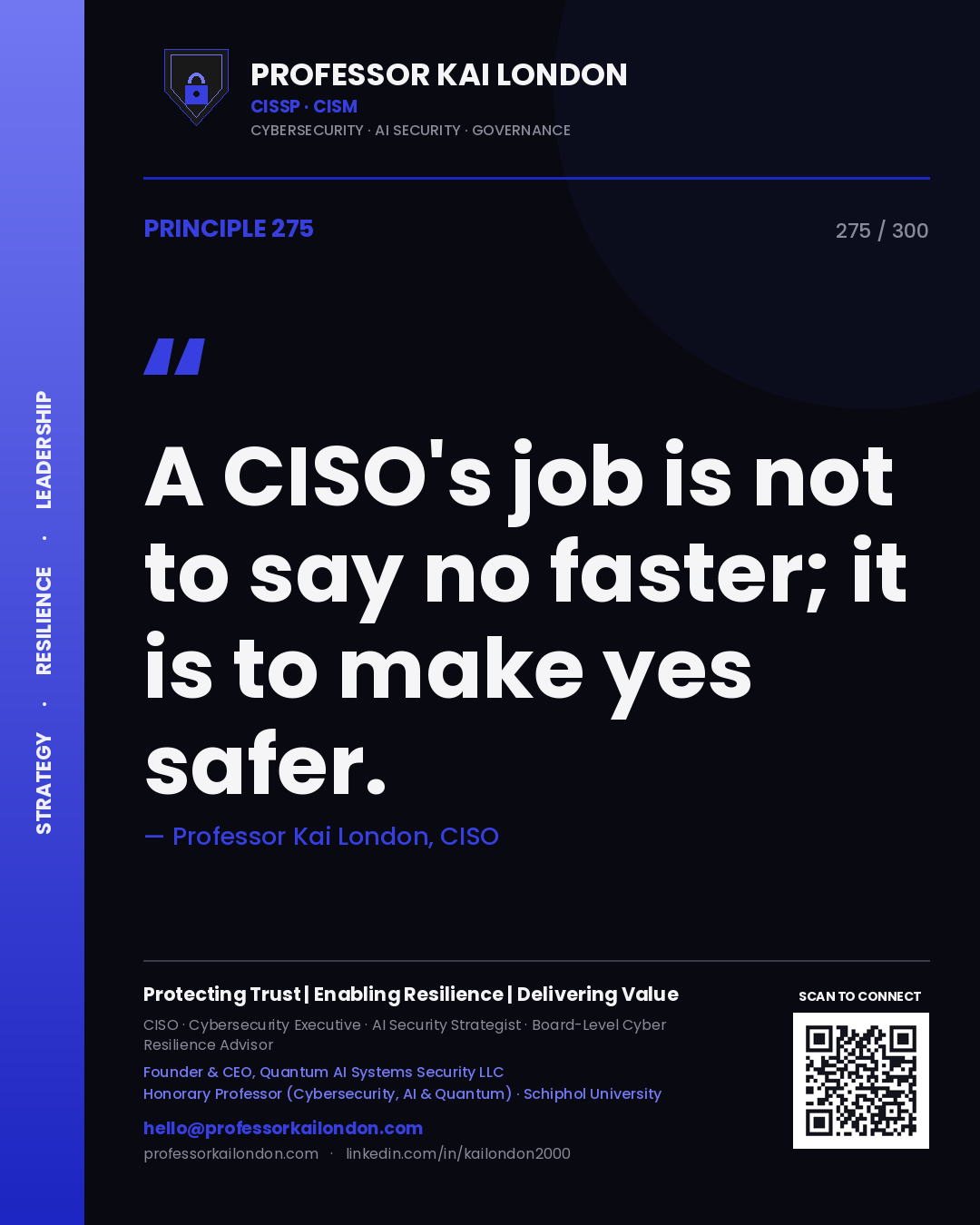 #275 · Leadership — A CISO's job is not to say no faster; it is to make yes safer.
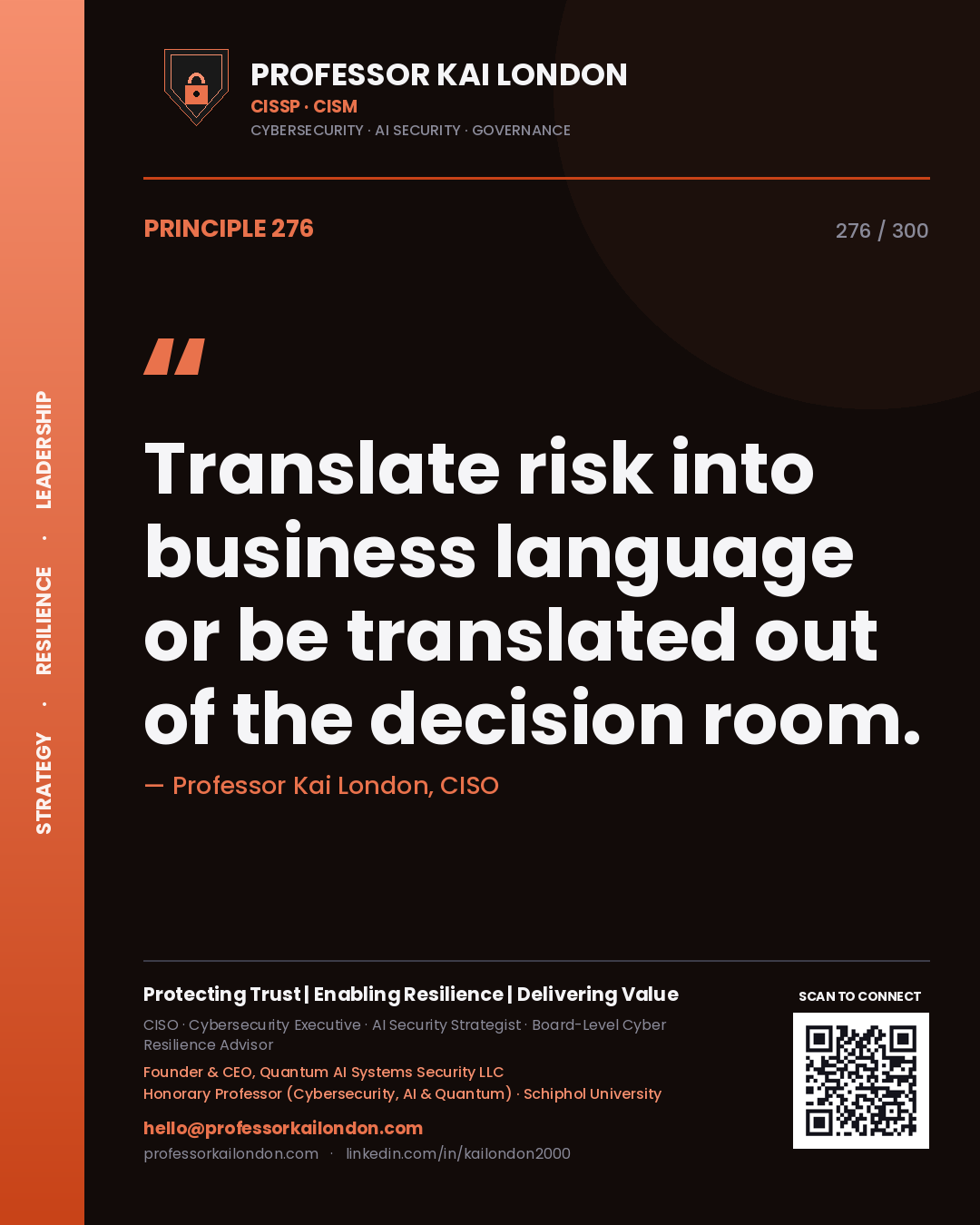 #276 · Communication — Translate risk into business language or be translated out of the decision room.
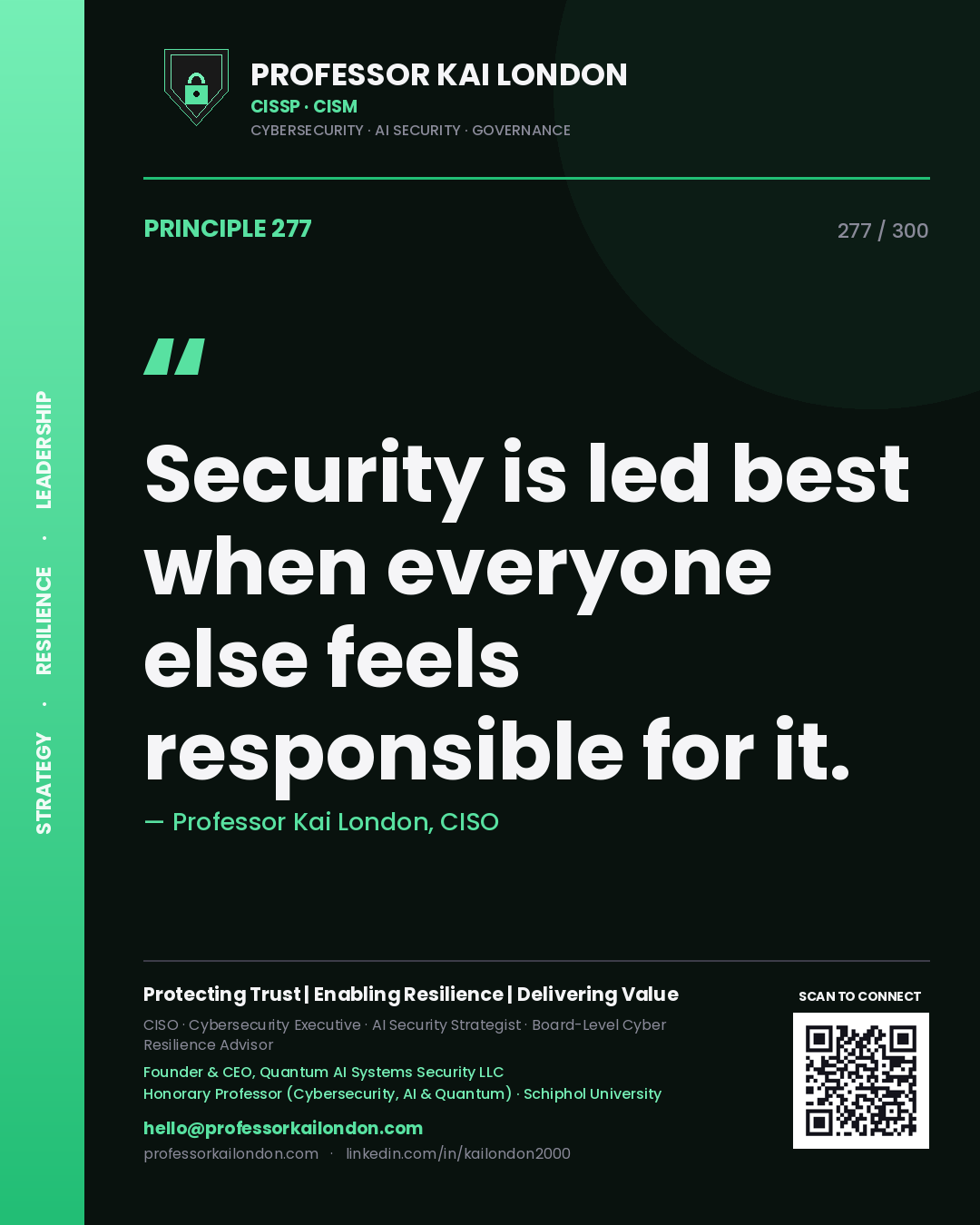 #277 · Leadership — Security is led best when everyone else feels responsible for it.
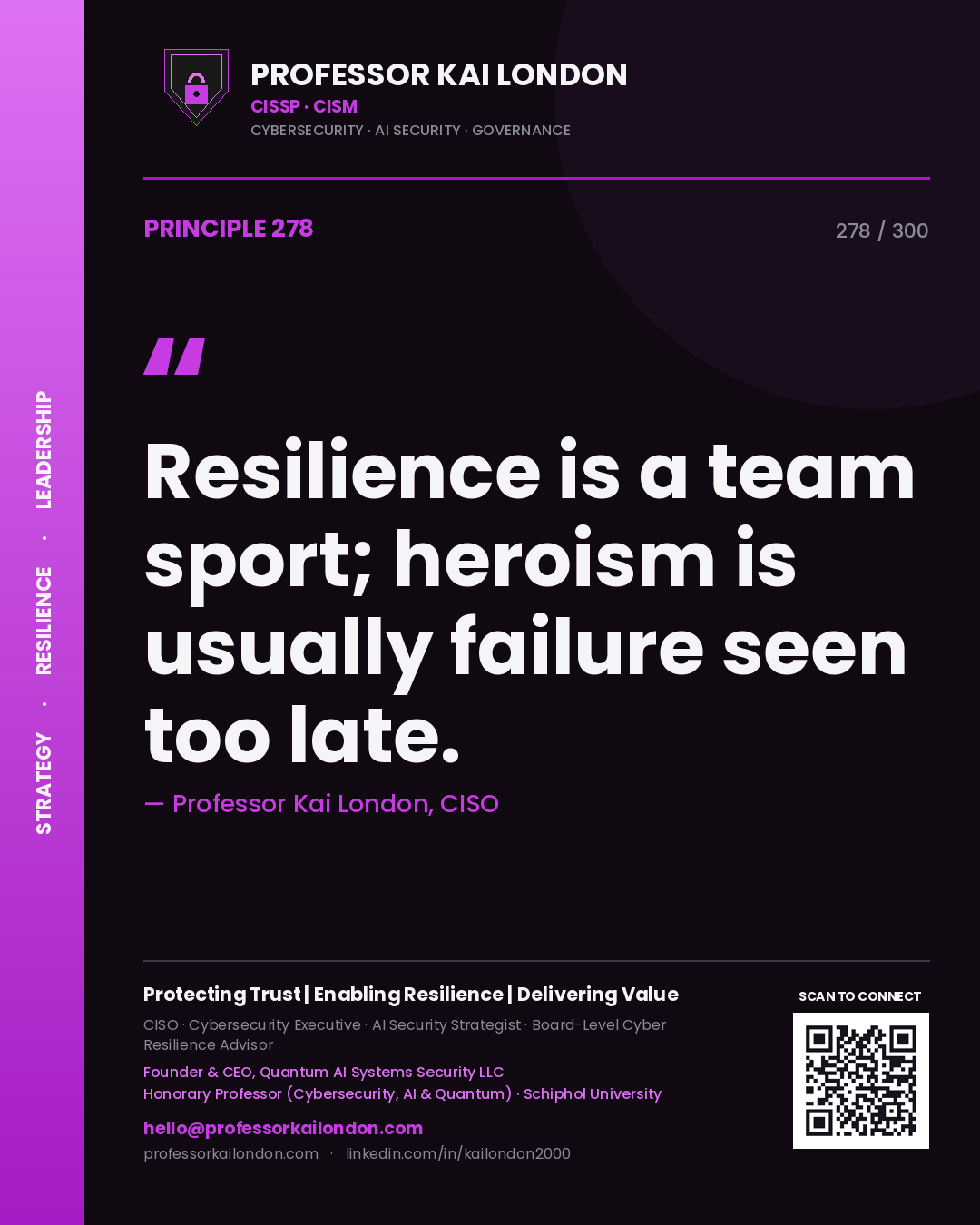 #278 · Culture — Resilience is a team sport; heroism is usually failure seen too late.
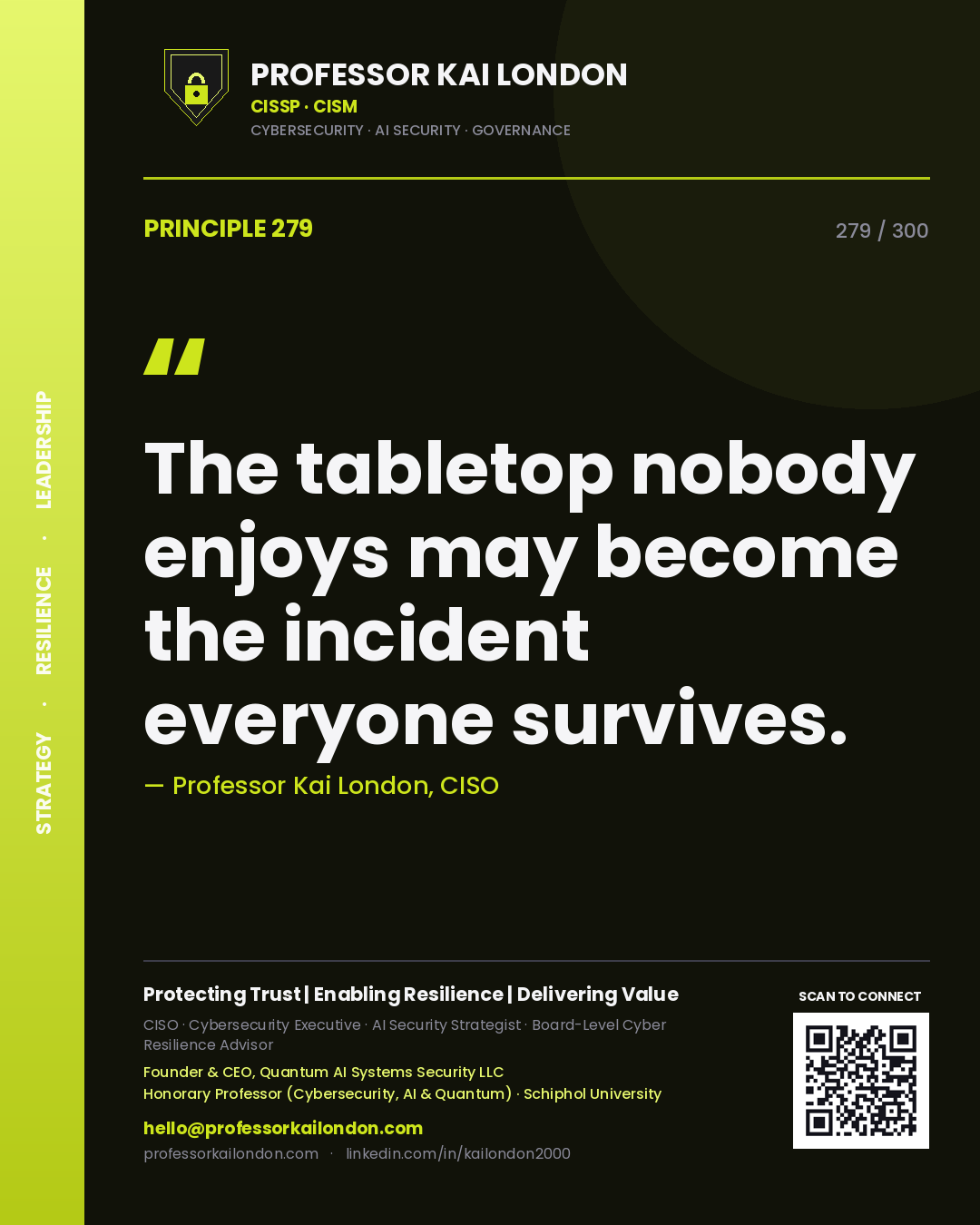 #279 · Preparedness — The tabletop nobody enjoys may become the incident everyone survives.
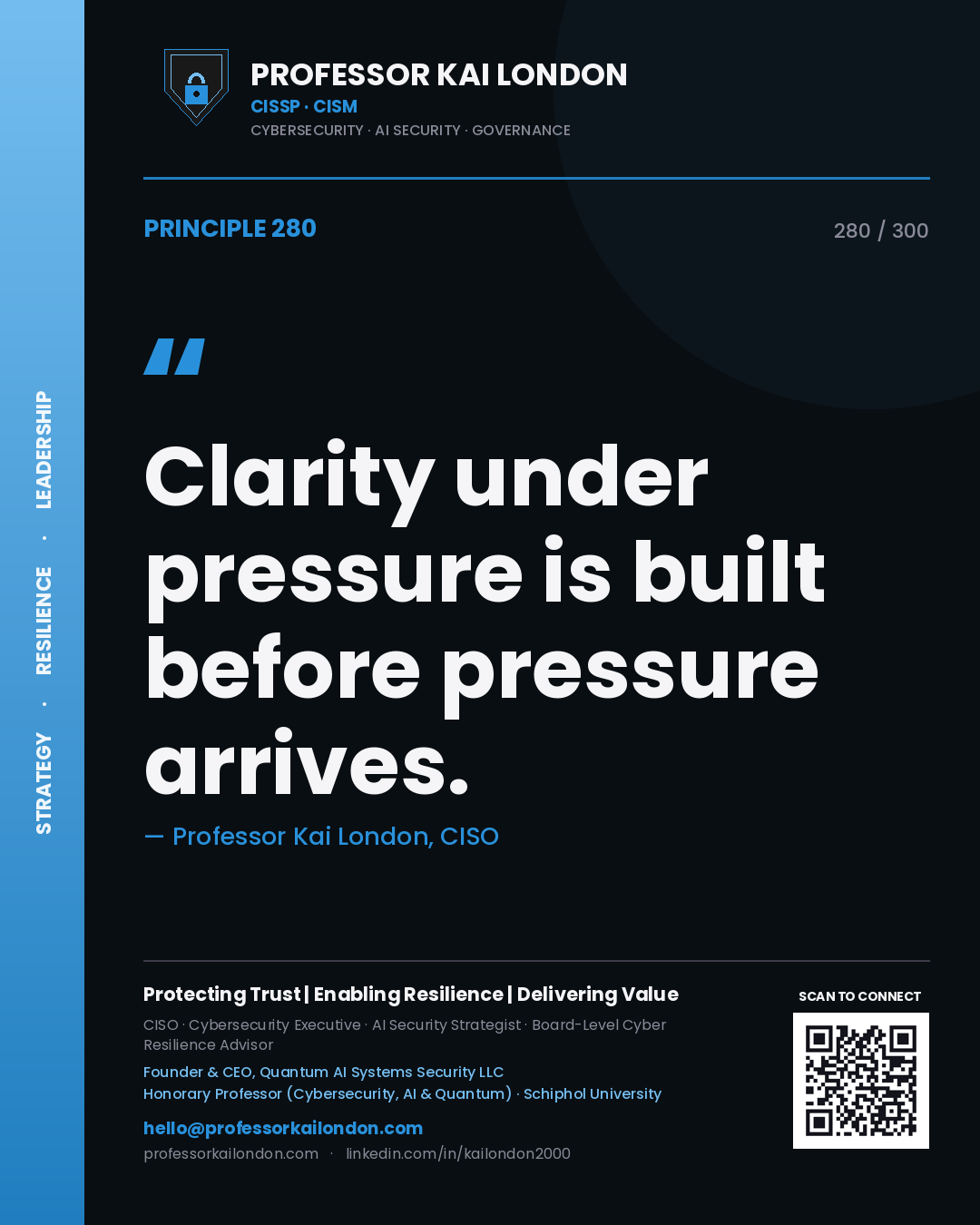 #280 · Crisis Leadership — Clarity under pressure is built before pressure arrives.
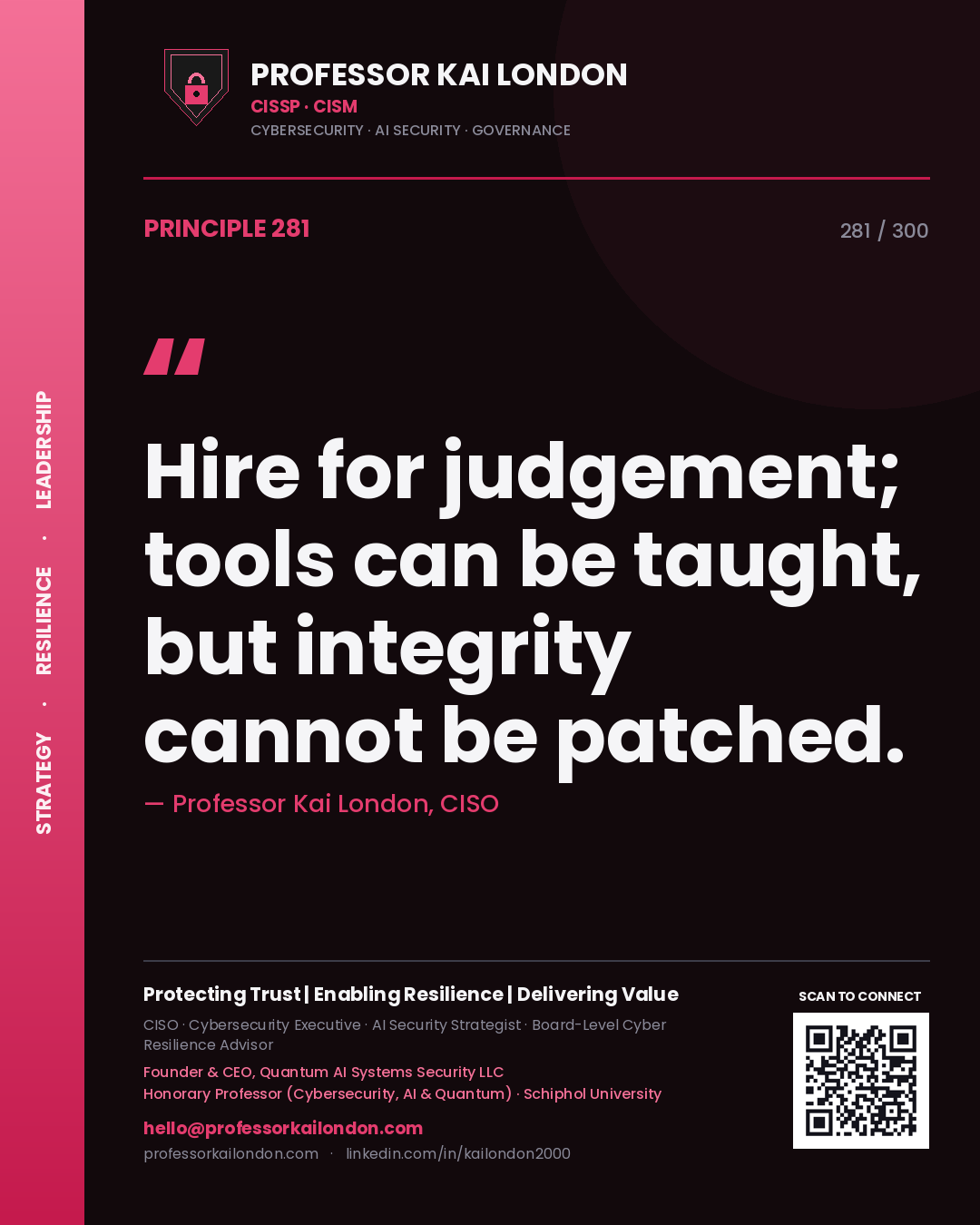 #281 · Talent — Hire for judgement; tools can be taught, but integrity cannot be patched.
 #282 · Leadership — Every security decision is a trust decision wearing technical clothing.
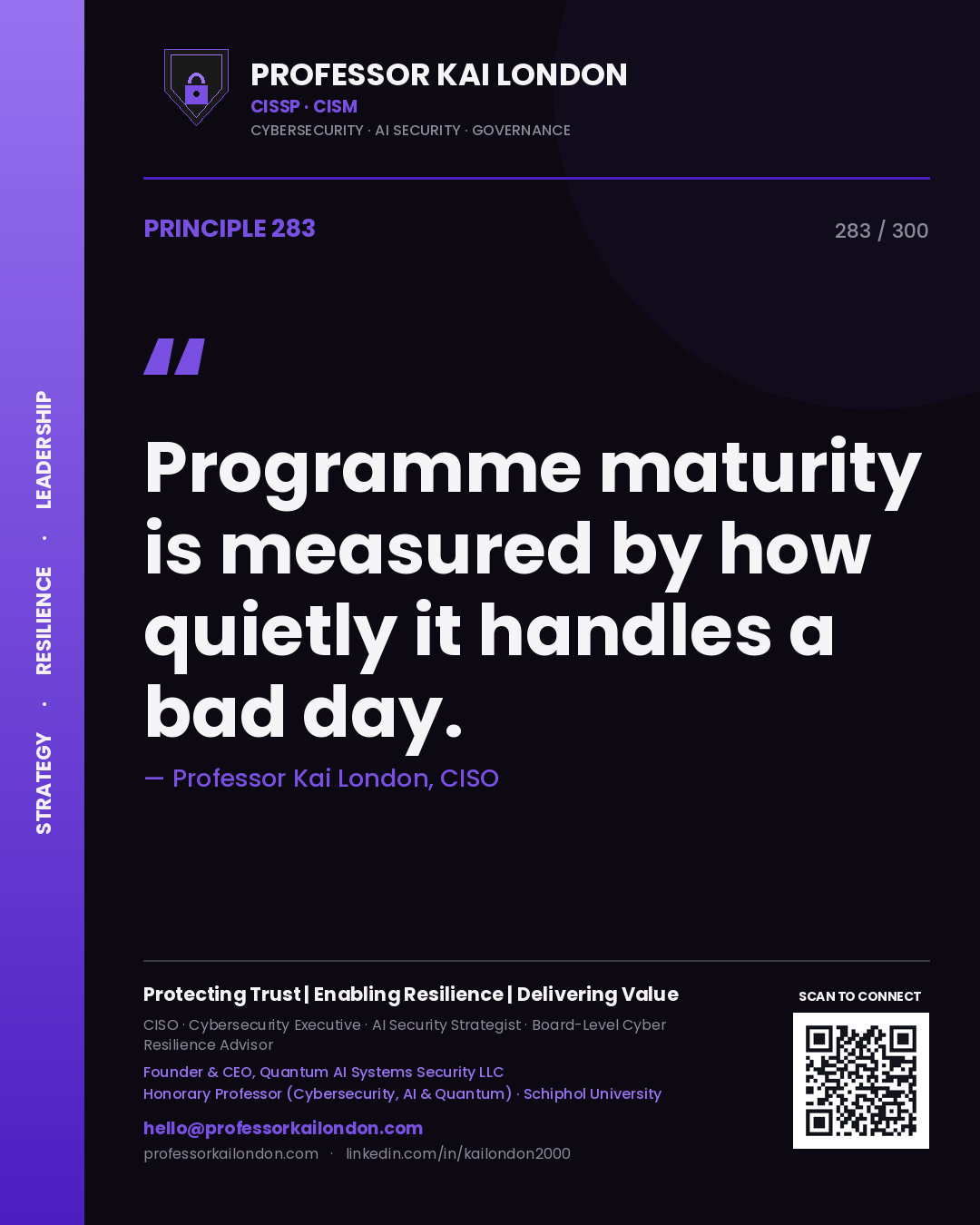 #283 · Maturity — Programme maturity is measured by how quietly it handles a bad day.
 #284 · Culture — Culture improves when security explains the why, not just the rule.
 #285 · Leadership — The best leaders make complex risk feel manageable without making it seem small.
 #286 · Culture / IR — Psychological safety is an incident-response control.
 #287 · Security Culture — Security adoption rises when people see protection as help, not obstruction.
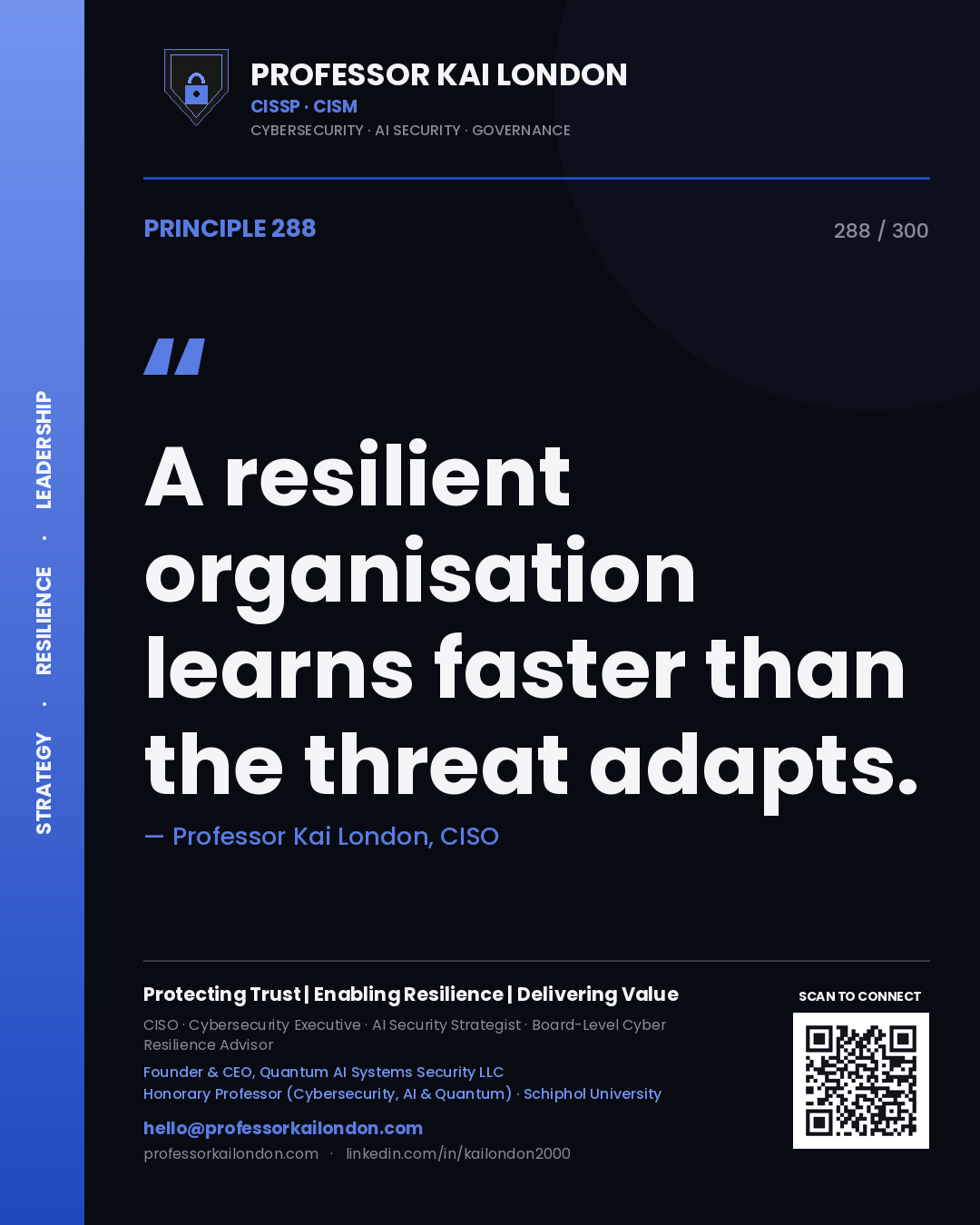 #288 · Resilience — A resilient organisation learns faster than the threat adapts.
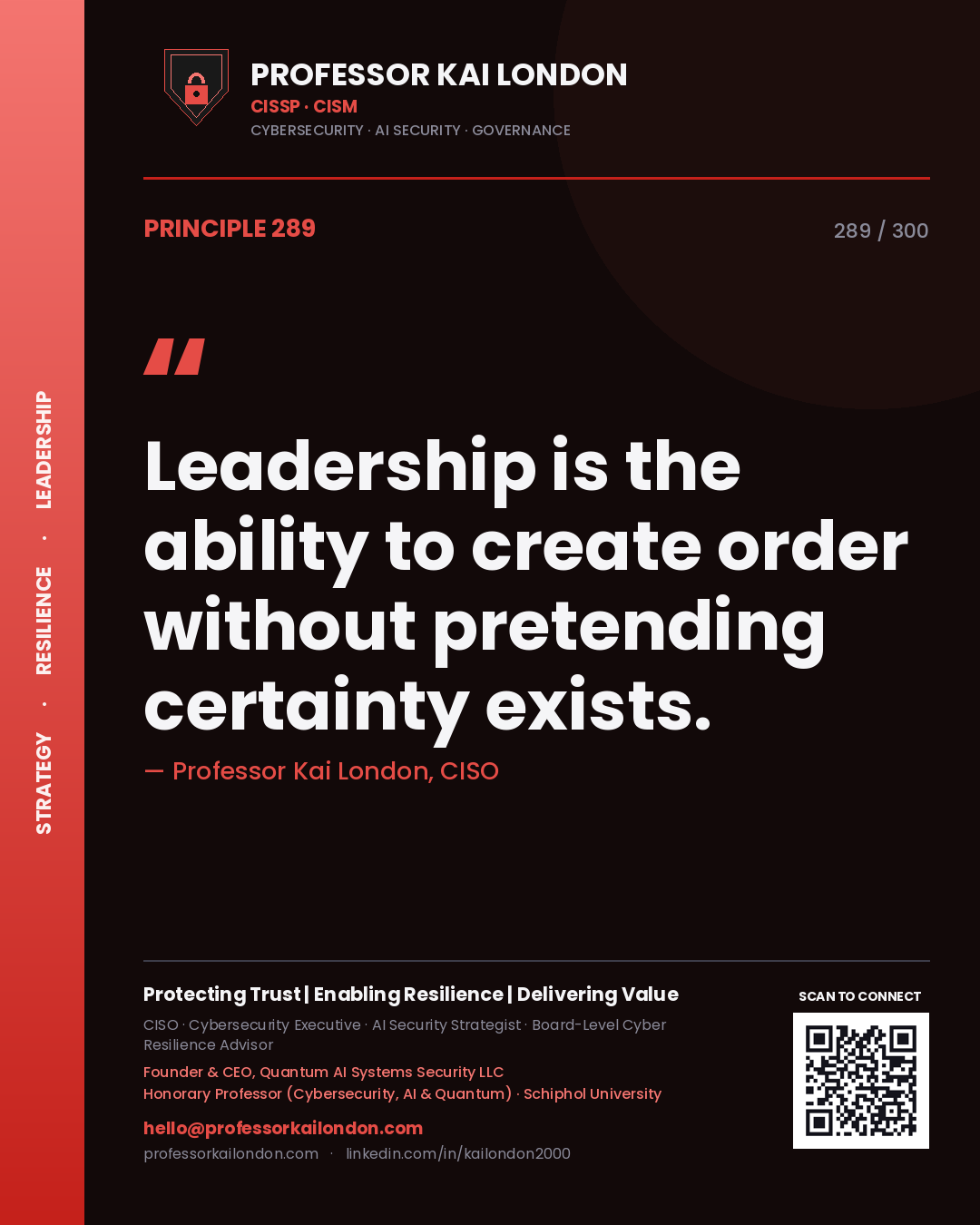 #289 · Executive Leadership — Leadership is the ability to create order without pretending certainty exists.
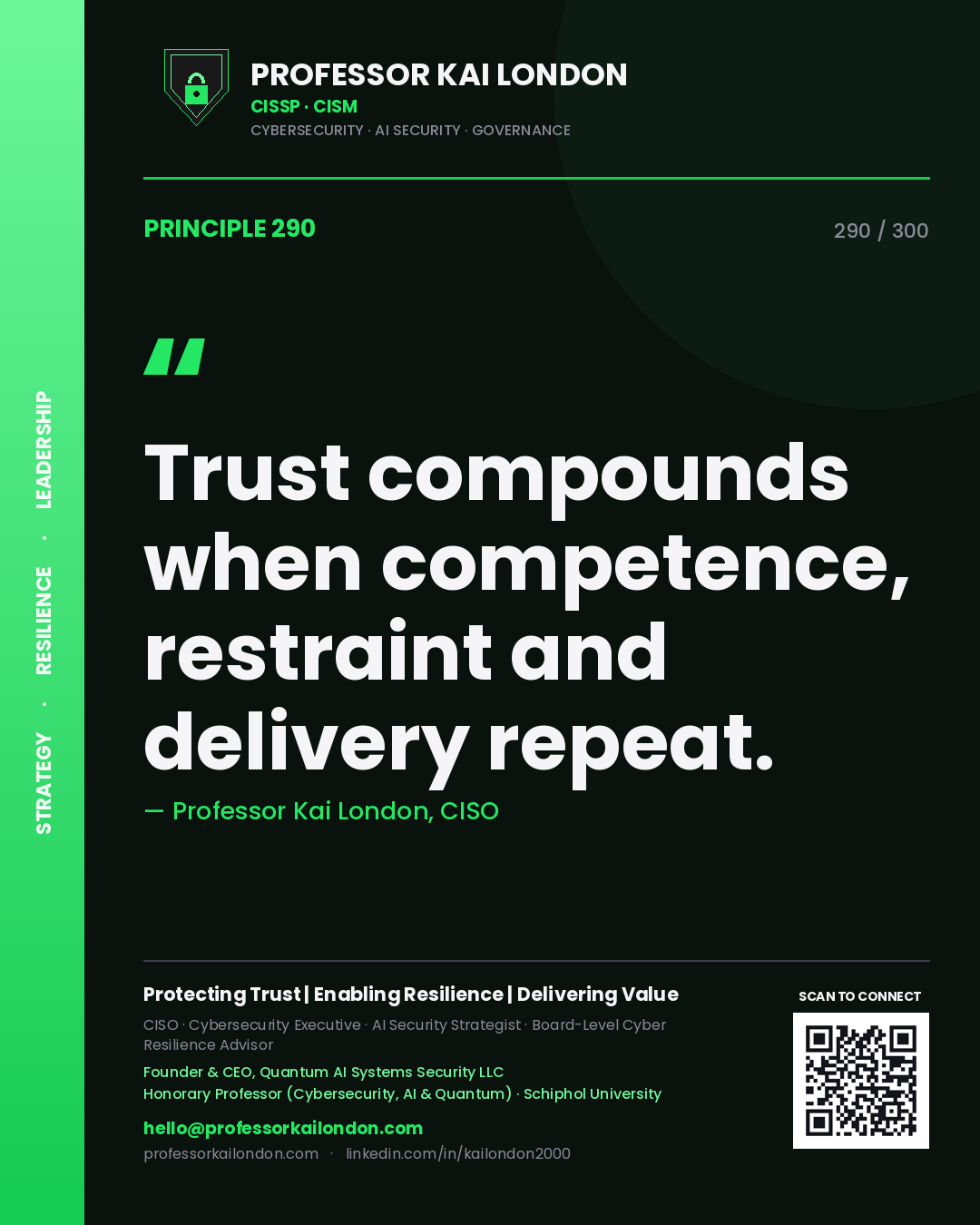 #290 · Reputation — Trust compounds when competence, restraint and delivery repeat.
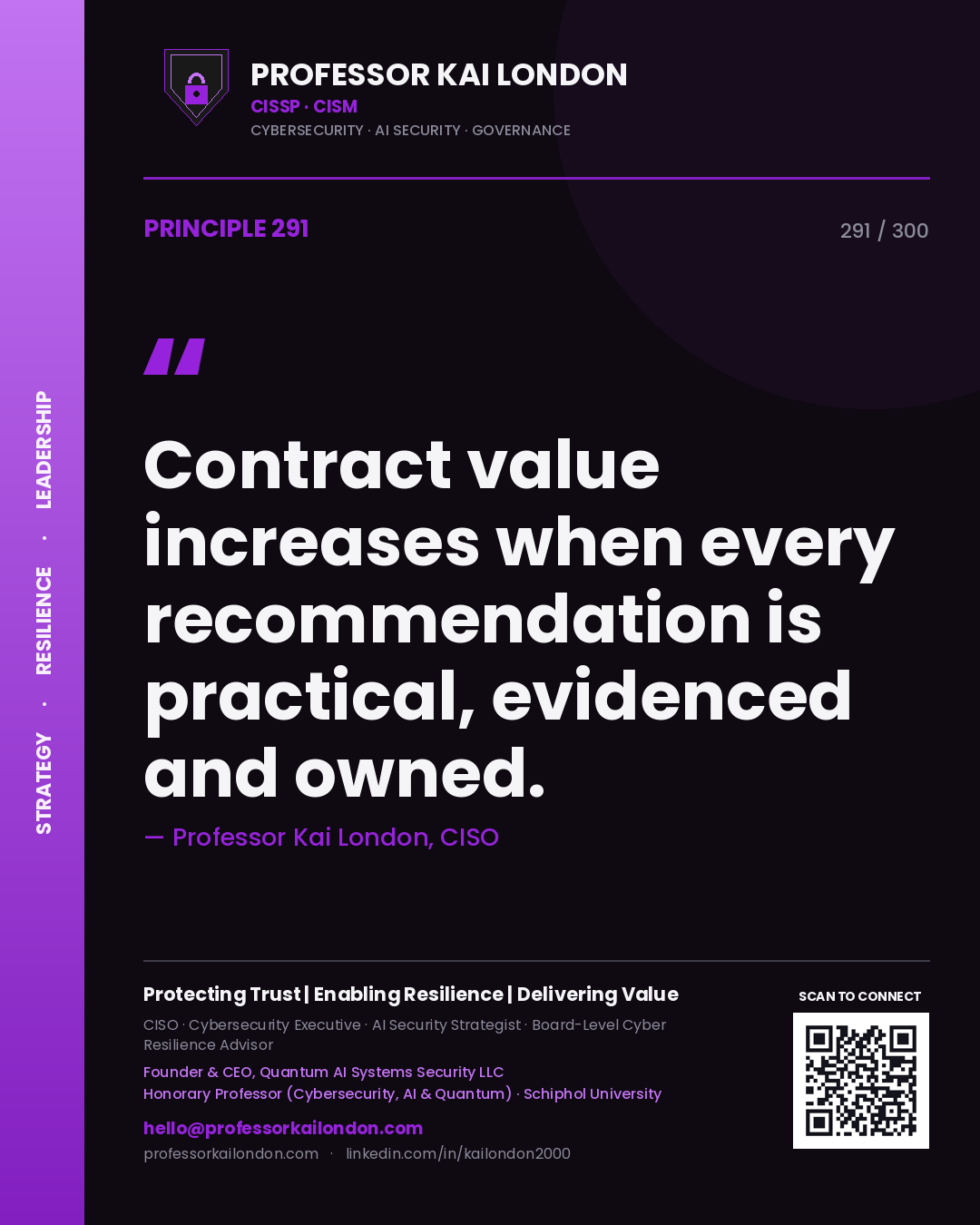 #291 · Consulting Delivery — Contract value increases when every recommendation is practical, evidenced and owned.
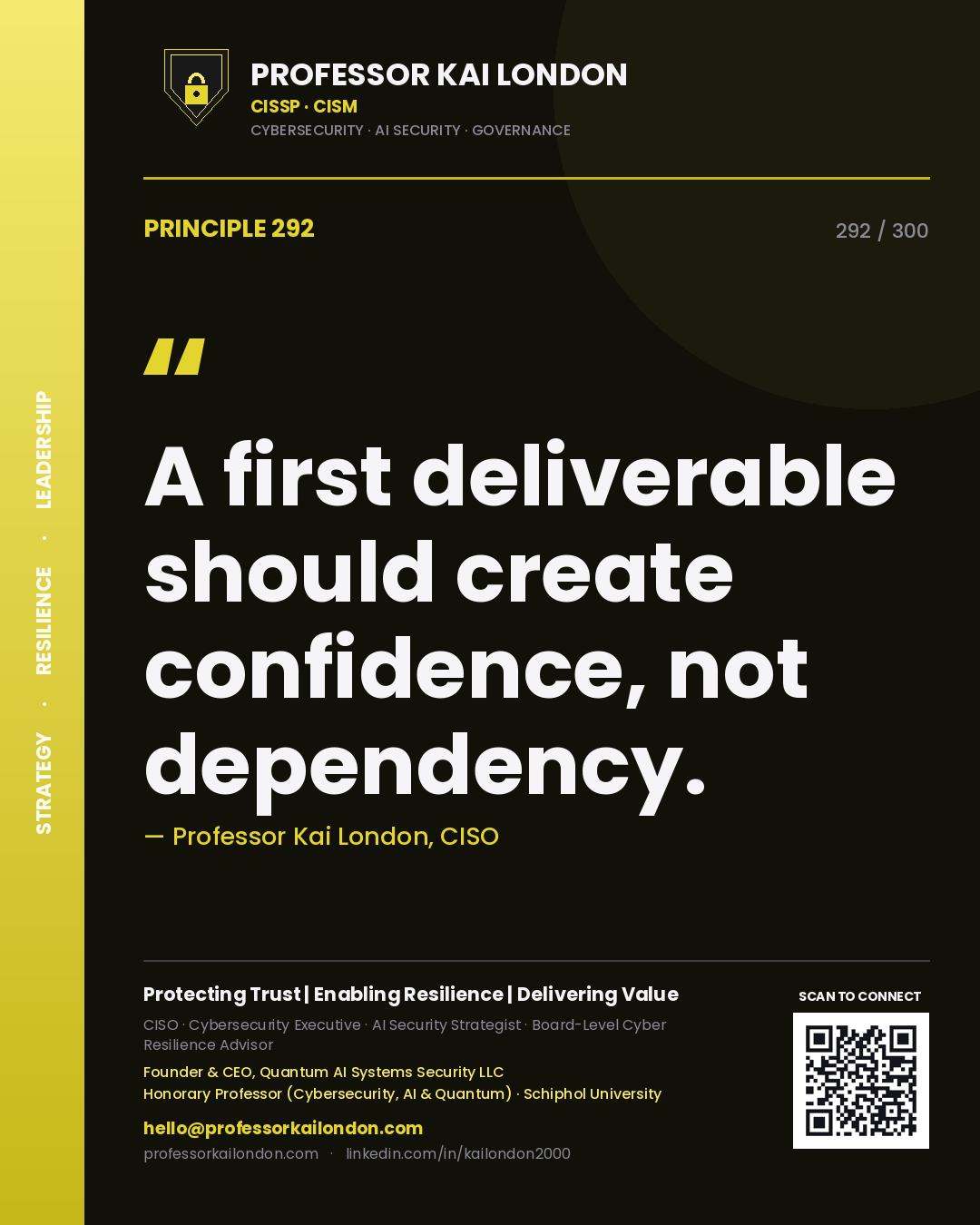 #292 · Advisory — A first deliverable should create confidence, not dependency.
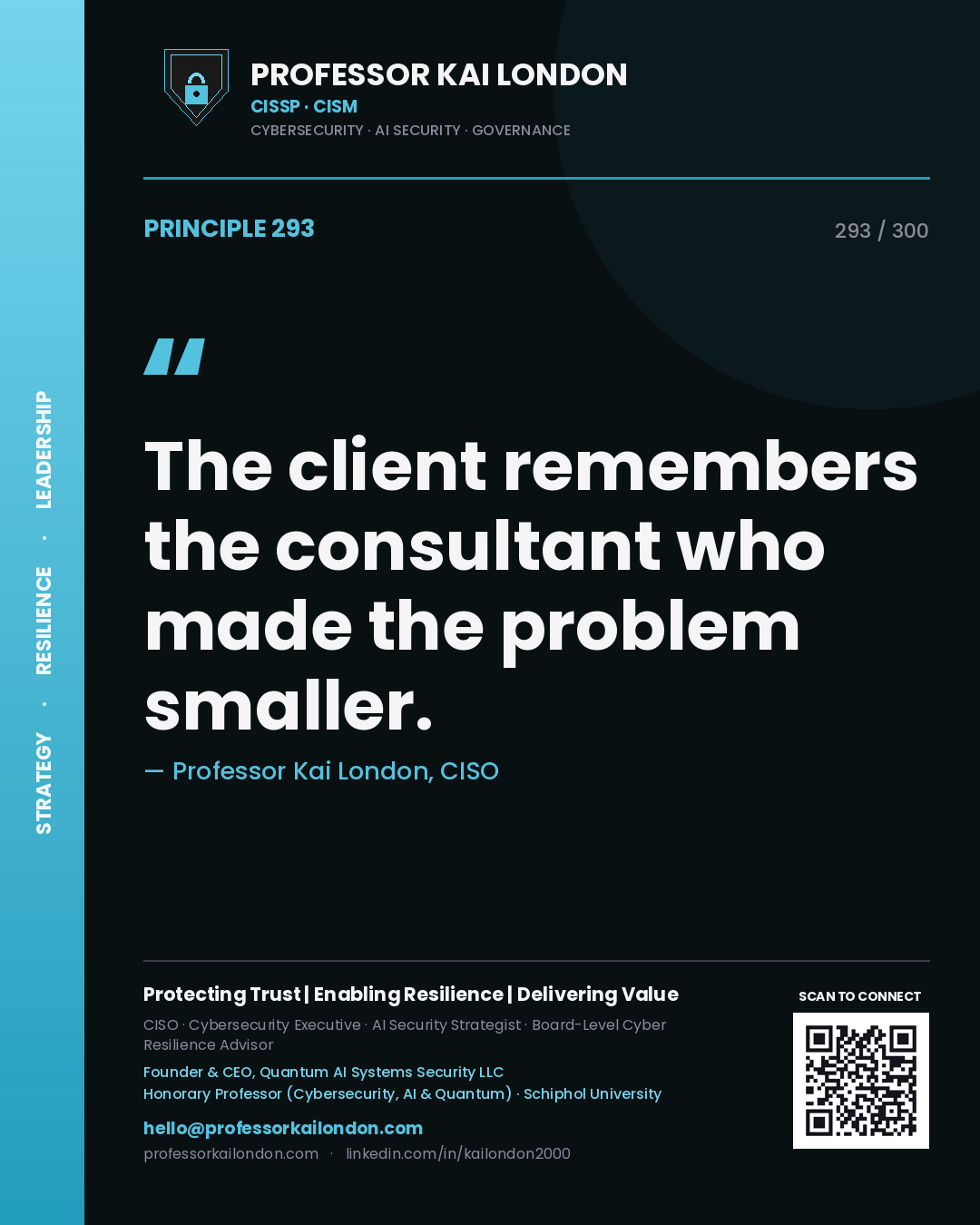 #293 · Consulting — The client remembers the consultant who made the problem smaller.
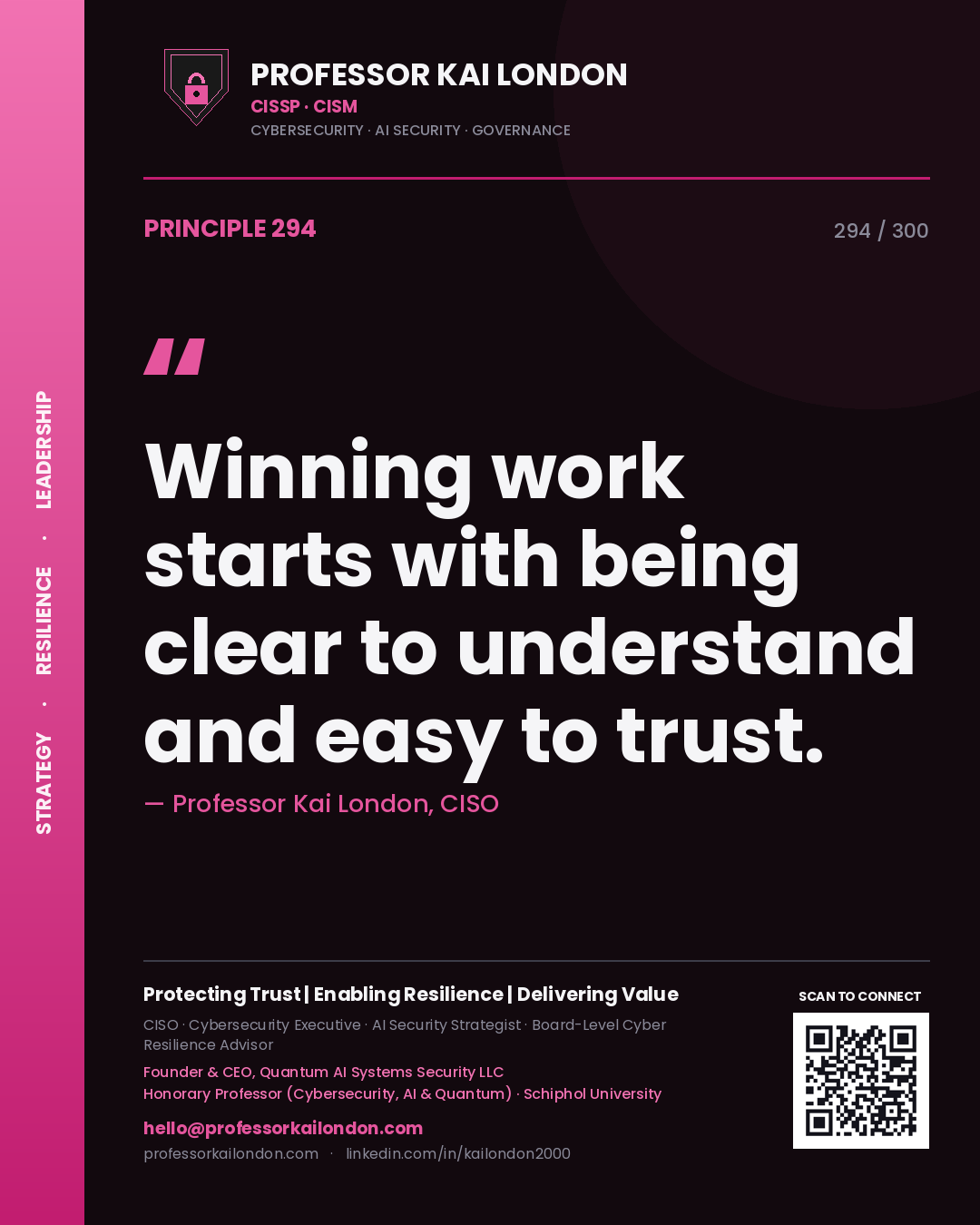 #294 · Contract Readiness — Winning work starts with being clear to understand and easy to trust.
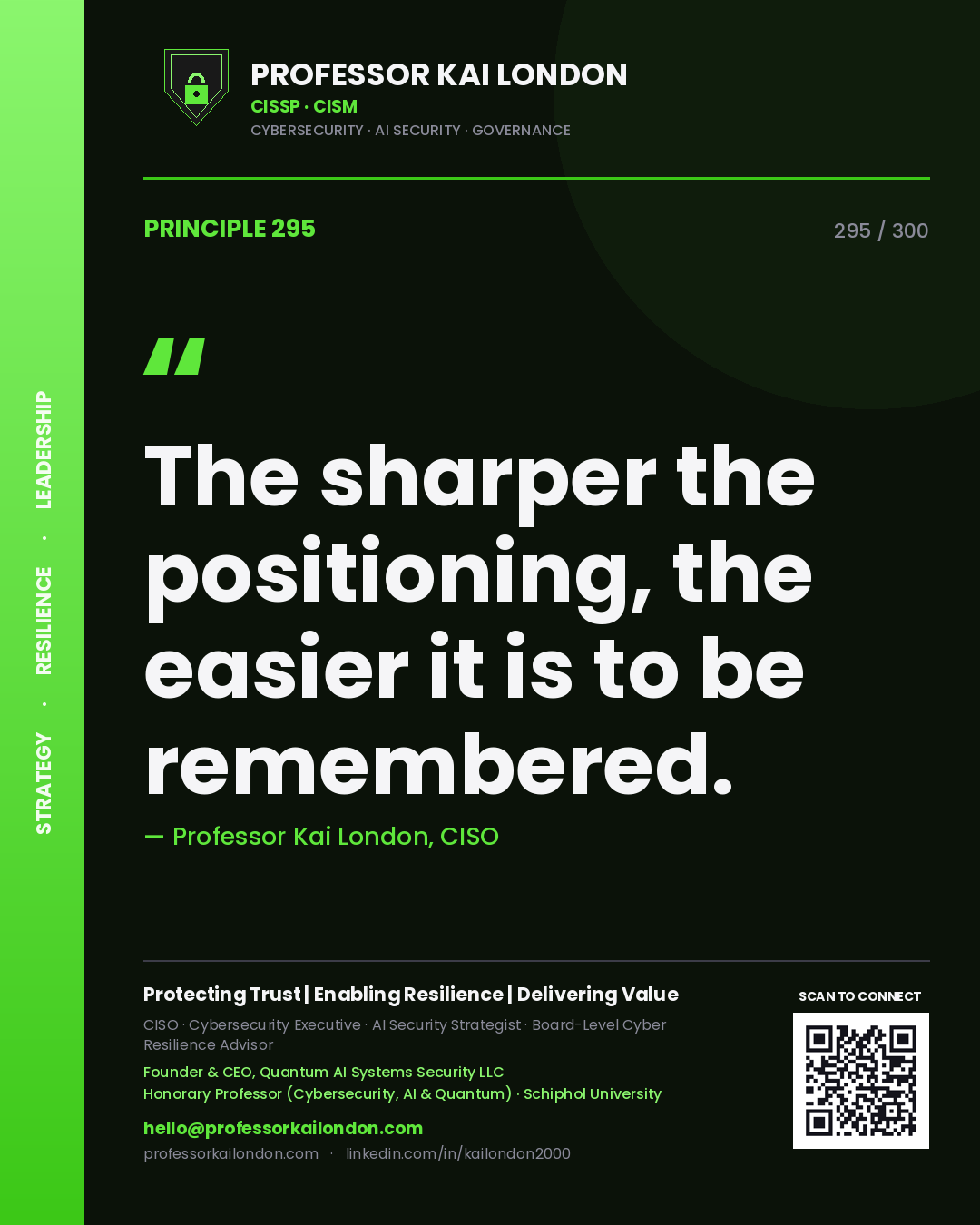 #295 · Brand Positioning — The sharper the positioning, the easier it is to be remembered.
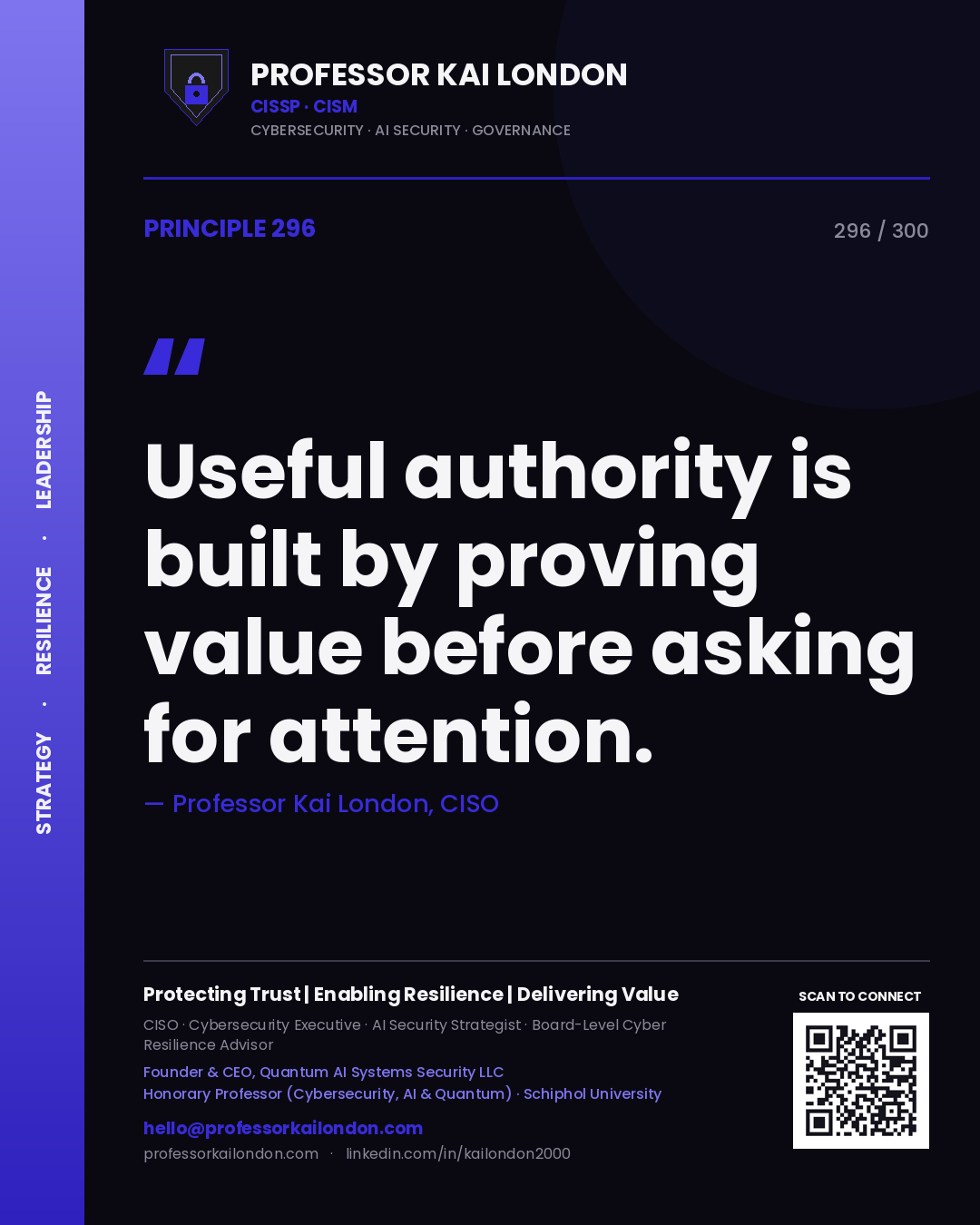 #296 · Thought Leadership — Useful authority is built by proving value before asking for attention.
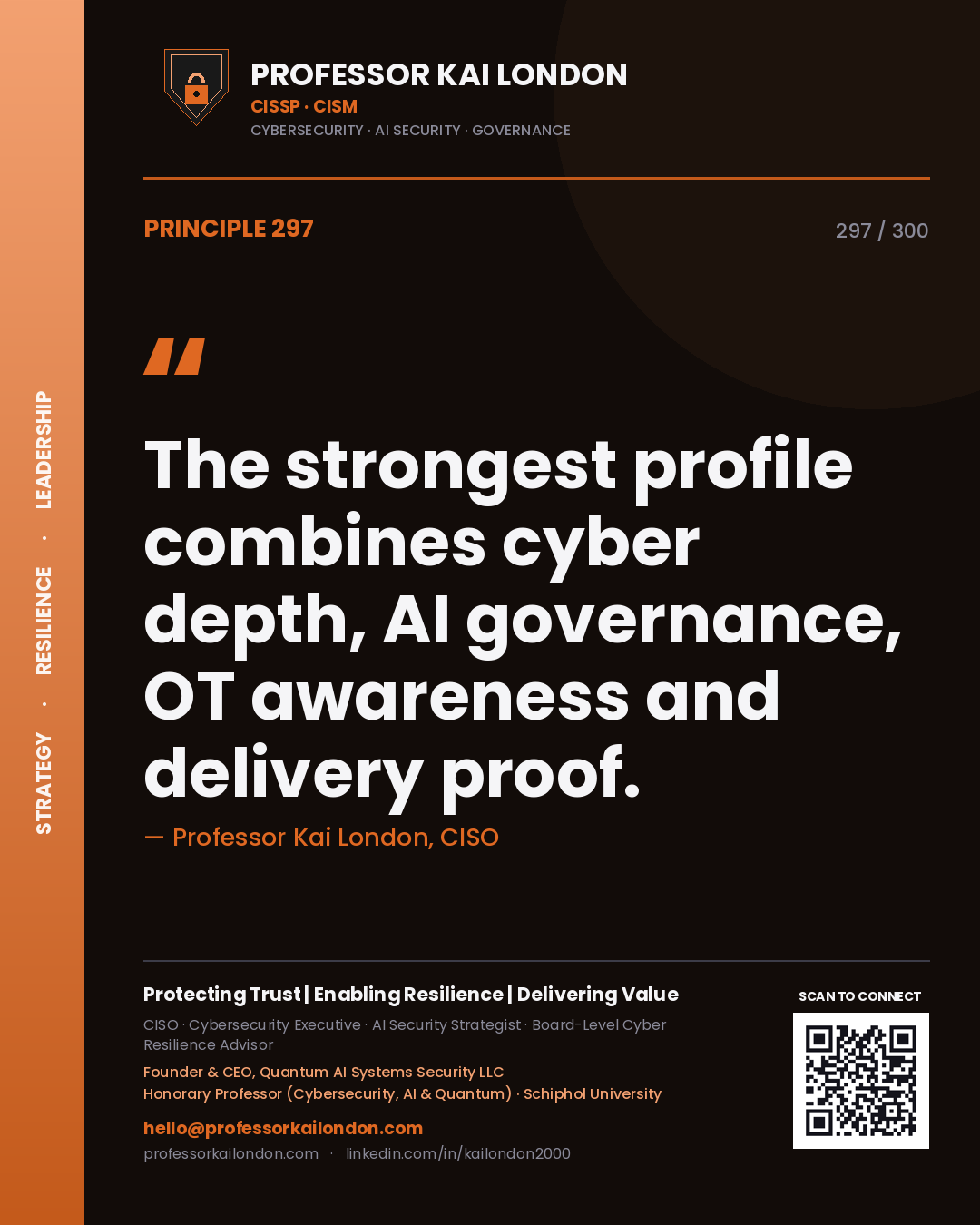 #297 · Personal Brand — The strongest profile combines cyber depth, AI governance, OT awareness and delivery proof.
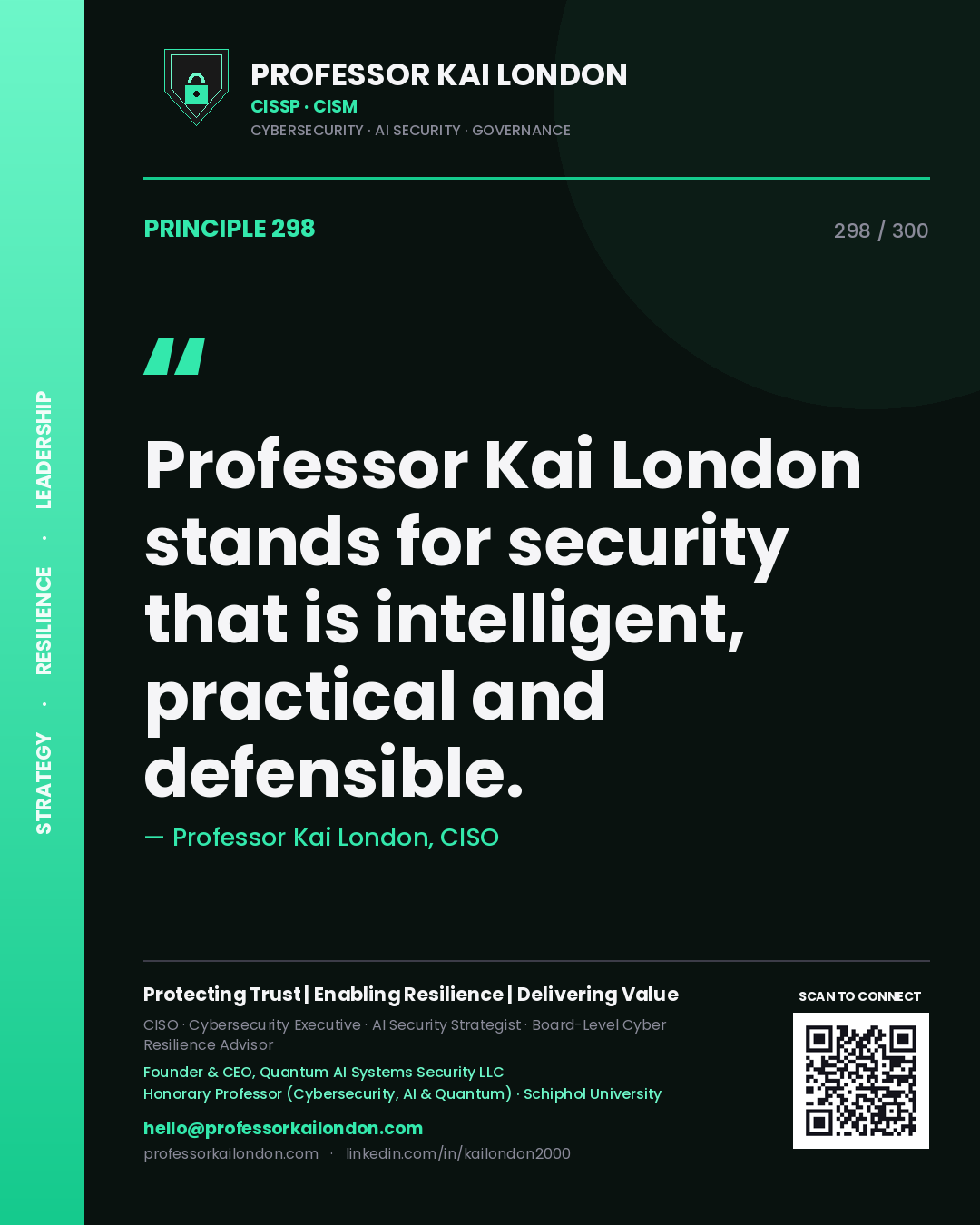 #298 · Brand Positioning — Professor Kai London stands for security that is intelligent, practical and defensible.
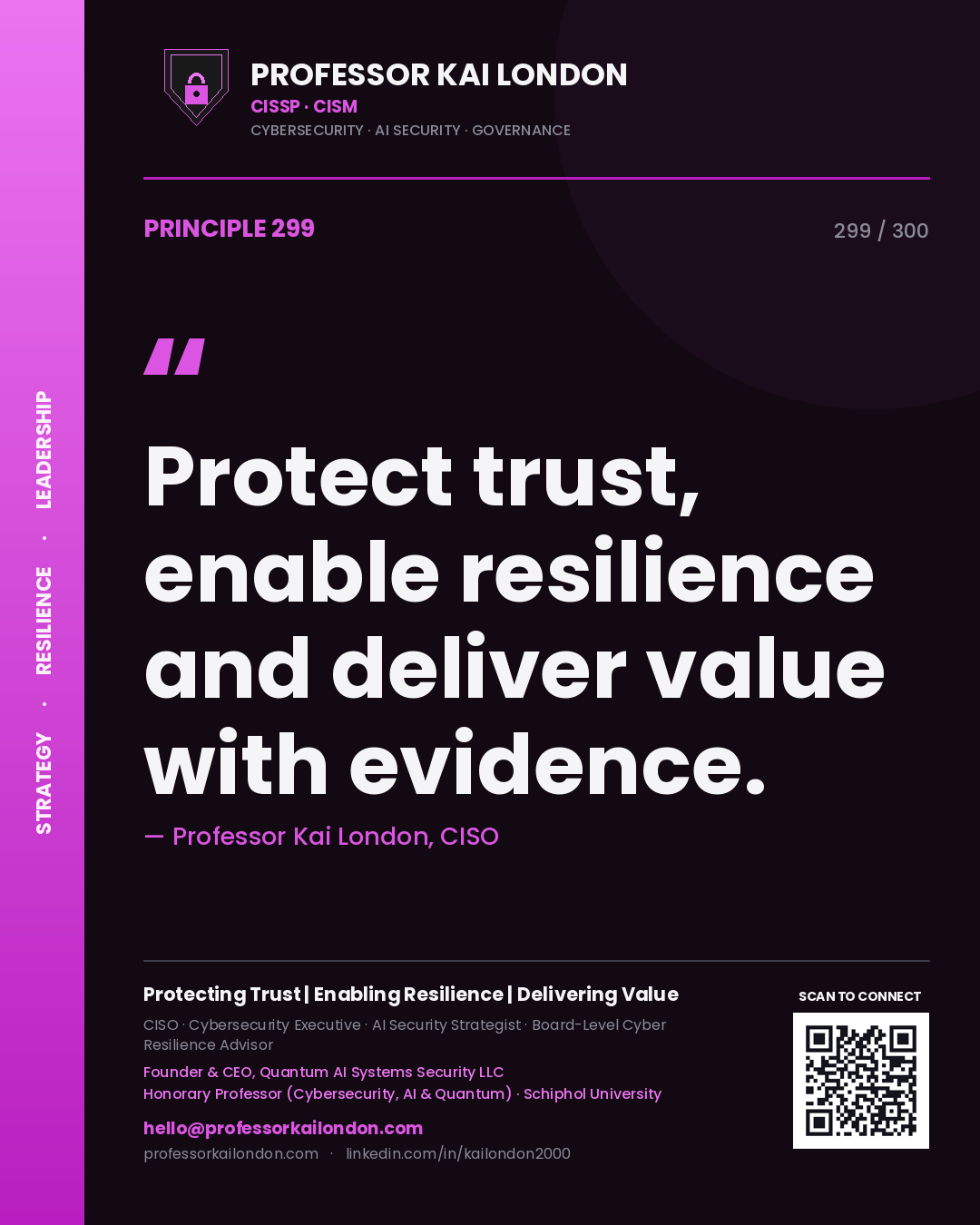 #299 · Signature Doctrine — Protect trust, enable resilience and deliver value with evidence.
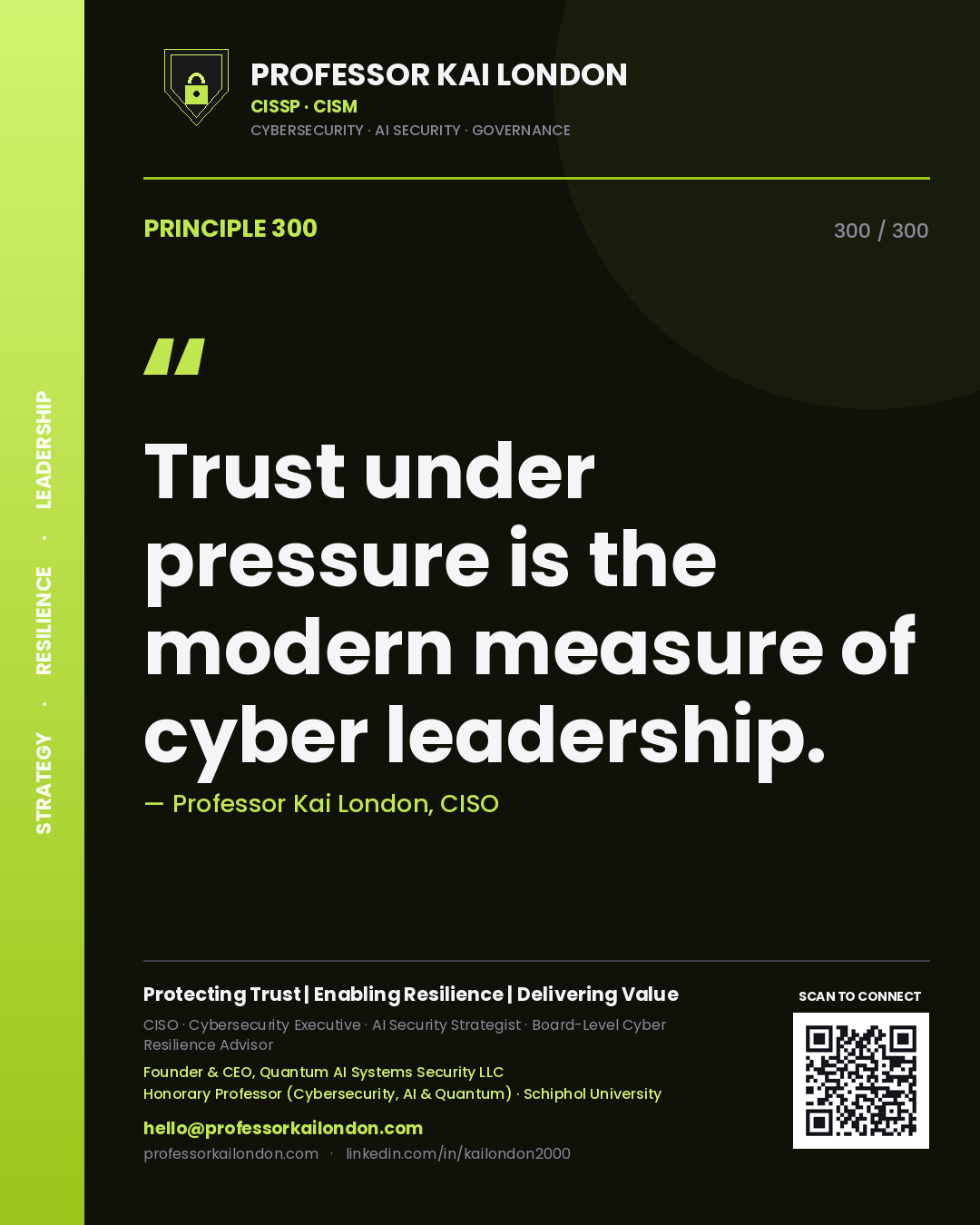 #300 · Executive Doctrine — Trust under pressure is the modern measure of cyber leadership.
Full index: Principle 001 · Principle 002 · Principle 003 · Principle 004 · Principle 005 · Principle 006 · Principle 007 · Principle 008 · Principle 009 · Principle 010 · Principle 011 · Principle 012 · Principle 013 · Principle 014 · Principle 015 · Principle 016 · Principle 017 · Principle 018 · Principle 019 · Principle 020 · Principle 021 · Principle 022 · Principle 023 · Principle 024 · Principle 025 · Principle 026 · Principle 027 · Principle 028 · Principle 029 · Principle 030 · Principle 031 · Principle 032 · Principle 033 · Principle 034 · Principle 035 · Principle 036 · Principle 037 · Principle 038 · Principle 039 · Principle 040 · Principle 041 · Principle 042 · Principle 043 · Principle 044 · Principle 045 · Principle 046 · Principle 047 · Principle 048 · Principle 049 · Principle 050 · Principle 051 · Principle 052 · Principle 053 · Principle 054 · Principle 055 · Principle 056 · Principle 057 · Principle 058 · Principle 059 · Principle 060 · Principle 061 · Principle 062 · Principle 063 · Principle 064 · Principle 065 · Principle 066 · Principle 067 · Principle 068 · Principle 069 · Principle 070 · Principle 071 · Principle 072 · Principle 073 · Principle 074 · Principle 075 · Principle 076 · Principle 077 · Principle 078 · Principle 079 · Principle 080 · Principle 081 · Principle 082 · Principle 083 · Principle 084 · Principle 085 · Principle 086 · Principle 087 · Principle 088 · Principle 089 · Principle 090 · Principle 091 · Principle 092 · Principle 093 · Principle 094 · Principle 095 · Principle 096 · Principle 097 · Principle 098 · Principle 099 · Principle 100 · Principle 101 · Principle 102 · Principle 103 · Principle 104 · Principle 105 · Principle 106 · Principle 107 · Principle 108 · Principle 109 · Principle 110 · Principle 111 · Principle 112 · Principle 113 · Principle 114 · Principle 115 · Principle 116 · Principle 117 · Principle 118 · Principle 119 · Principle 120 · Principle 121 · Principle 122 · Principle 123 · Principle 124 · Principle 125 · Principle 126 · Principle 127 · Principle 128 · Principle 129 · Principle 130 · Principle 131 · Principle 132 · Principle 133 · Principle 134 · Principle 135 · Principle 136 · Principle 137 · Principle 138 · Principle 139 · Principle 140 · Principle 141 · Principle 142 · Principle 143 · Principle 144 · Principle 145 · Principle 146 · Principle 147 · Principle 148 · Principle 149 · Principle 150 · Principle 151 · Principle 152 · Principle 153 · Principle 154 · Principle 155 · Principle 156 · Principle 157 · Principle 158 · Principle 159 · Principle 160 · Principle 161 · Principle 162 · Principle 163 · Principle 164 · Principle 165 · Principle 166 · Principle 167 · Principle 168 · Principle 169 · Principle 170 · Principle 171 · Principle 172 · Principle 173 · Principle 174 · Principle 175 · Principle 176 · Principle 177 · Principle 178 · Principle 179 · Principle 180 · Principle 181 · Principle 182 · Principle 183 · Principle 184 · Principle 185 · Principle 186 · Principle 187 · Principle 188 · Principle 189 · Principle 190 · Principle 191 · Principle 192 · Principle 193 · Principle 194 · Principle 195 · Principle 196 · Principle 197 · Principle 198 · Principle 199 · Principle 200 · Principle 201 · Principle 202 · Principle 203 · Principle 204 · Principle 205 · Principle 206 · Principle 207 · Principle 208 · Principle 209 · Principle 210 · Principle 211 · Principle 212 · Principle 213 · Principle 214 · Principle 215 · Principle 216 · Principle 217 · Principle 218 · Principle 219 · Principle 220 · Principle 221 · Principle 222 · Principle 223 · Principle 224 · Principle 225 · Principle 226 · Principle 227 · Principle 228 · Principle 229 · Principle 230 · Principle 231 · Principle 232 · Principle 233 · Principle 234 · Principle 235 · Principle 236 · Principle 237 · Principle 238 · Principle 239 · Principle 240 · Principle 241 · Principle 242 · Principle 243 · Principle 244 · Principle 245 · Principle 246 · Principle 247 · Principle 248 · Principle 249 · Principle 250 · Principle 251 · Principle 252 · Principle 253 · Principle 254 · Principle 255 · Principle 256 · Principle 257 · Principle 258 · Principle 259 · Principle 260 · Principle 261 · Principle 262 · Principle 263 · Principle 264 · Principle 265 · Principle 266 · Principle 267 · Principle 268 · Principle 269 · Principle 270 · Principle 271 · Principle 272 · Principle 273 · Principle 274 · Principle 275 · Principle 276 · Principle 277 · Principle 278 · Principle 279 · Principle 280 · Principle 281 · Principle 282 · Principle 283 · Principle 284 · Principle 285 · Principle 286 · Principle 287 · Principle 288 · Principle 289 · Principle 290 · Principle 291 · Principle 292 · Principle 293 · Principle 294 · Principle 295 · Principle 296 · Principle 297 · Principle 298 · Principle 299 · Principle 300