Breachproof — Gallery (Page 22 of 100)
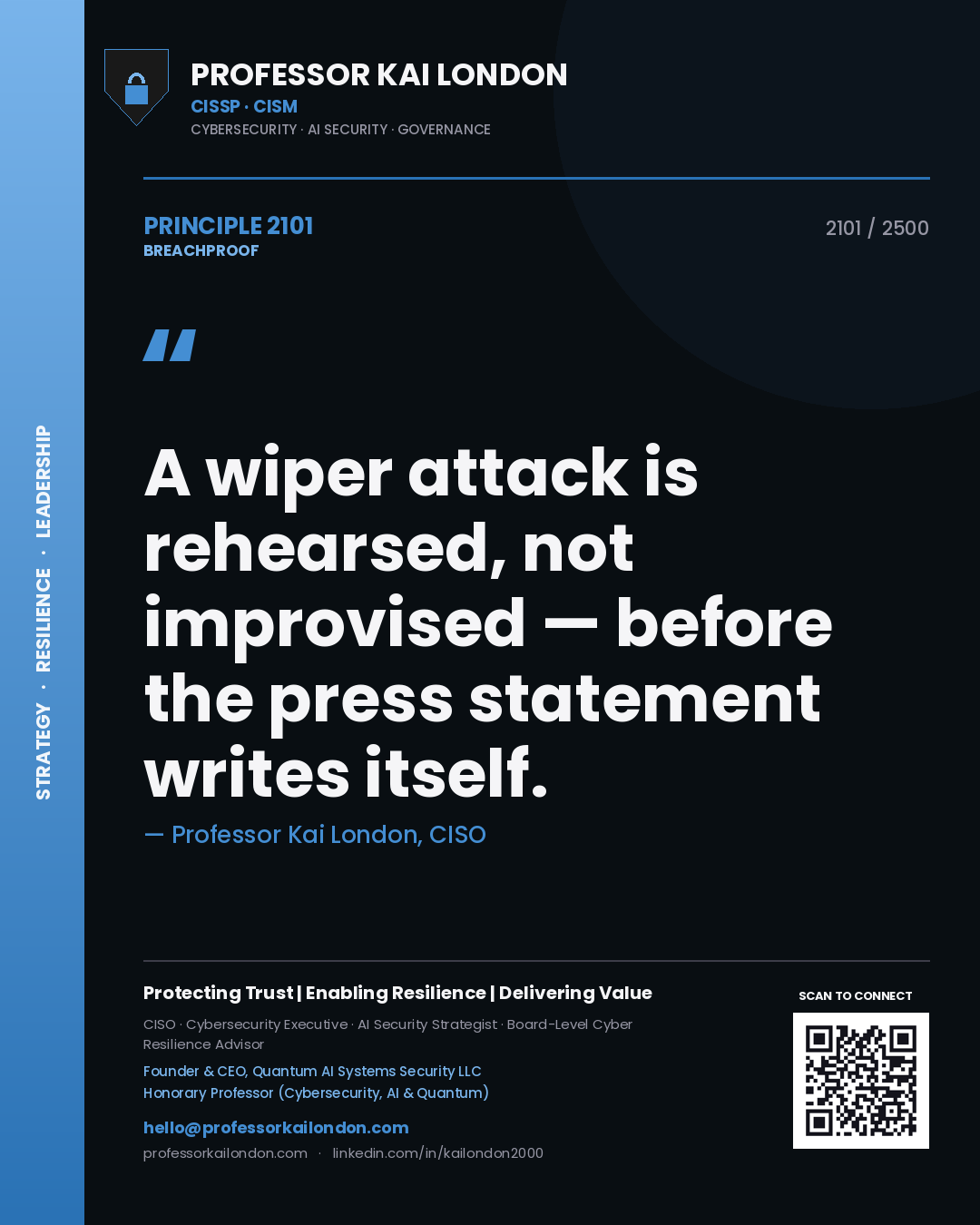
Professor Kai London principle 2101: A wiper attack is rehearsed, not improvised — before the press statement writes itself.
Principle 2101
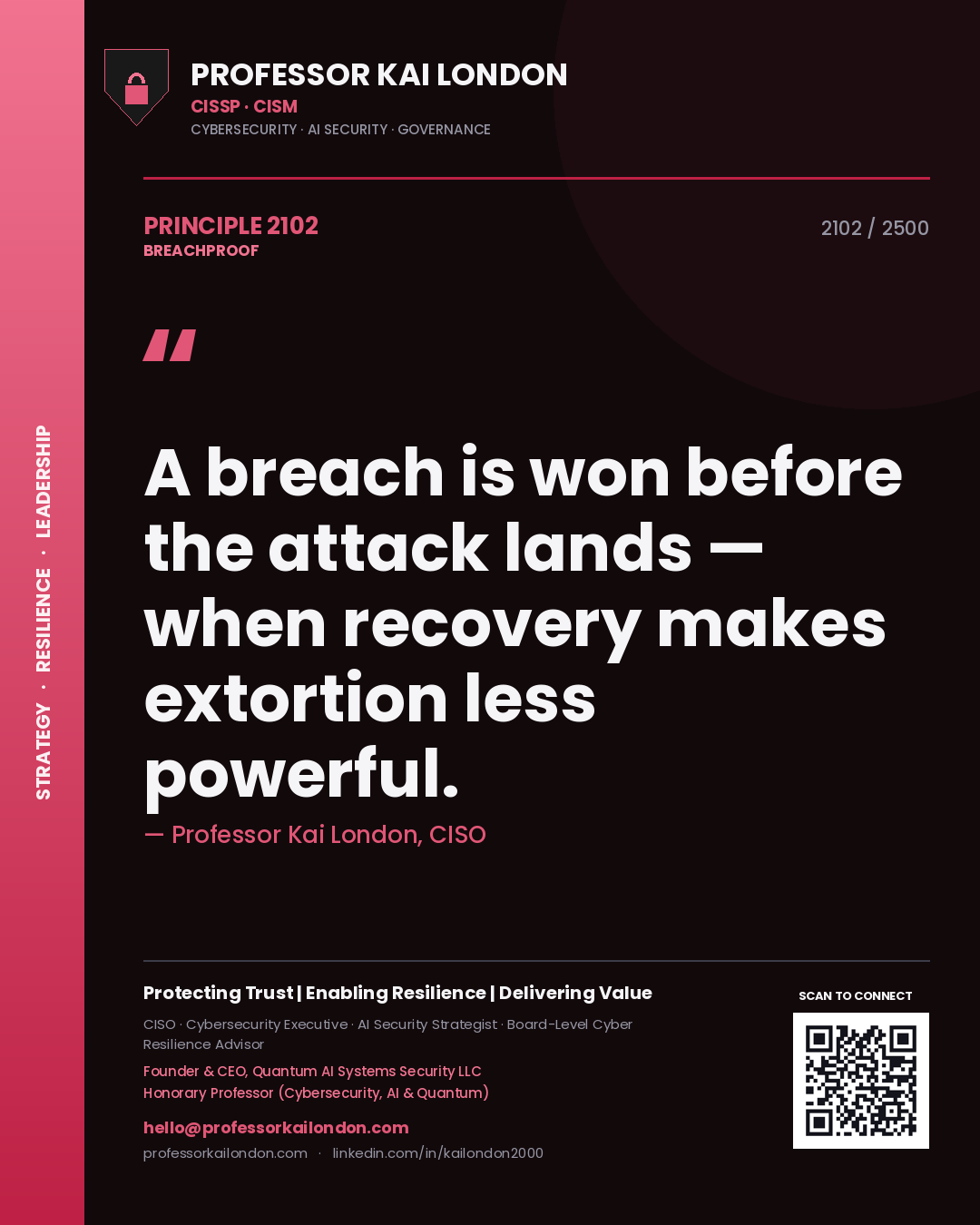
Professor Kai London principle 2102: A breach is won before the attack lands — when recovery makes extortion less powerful.
Principle 2102
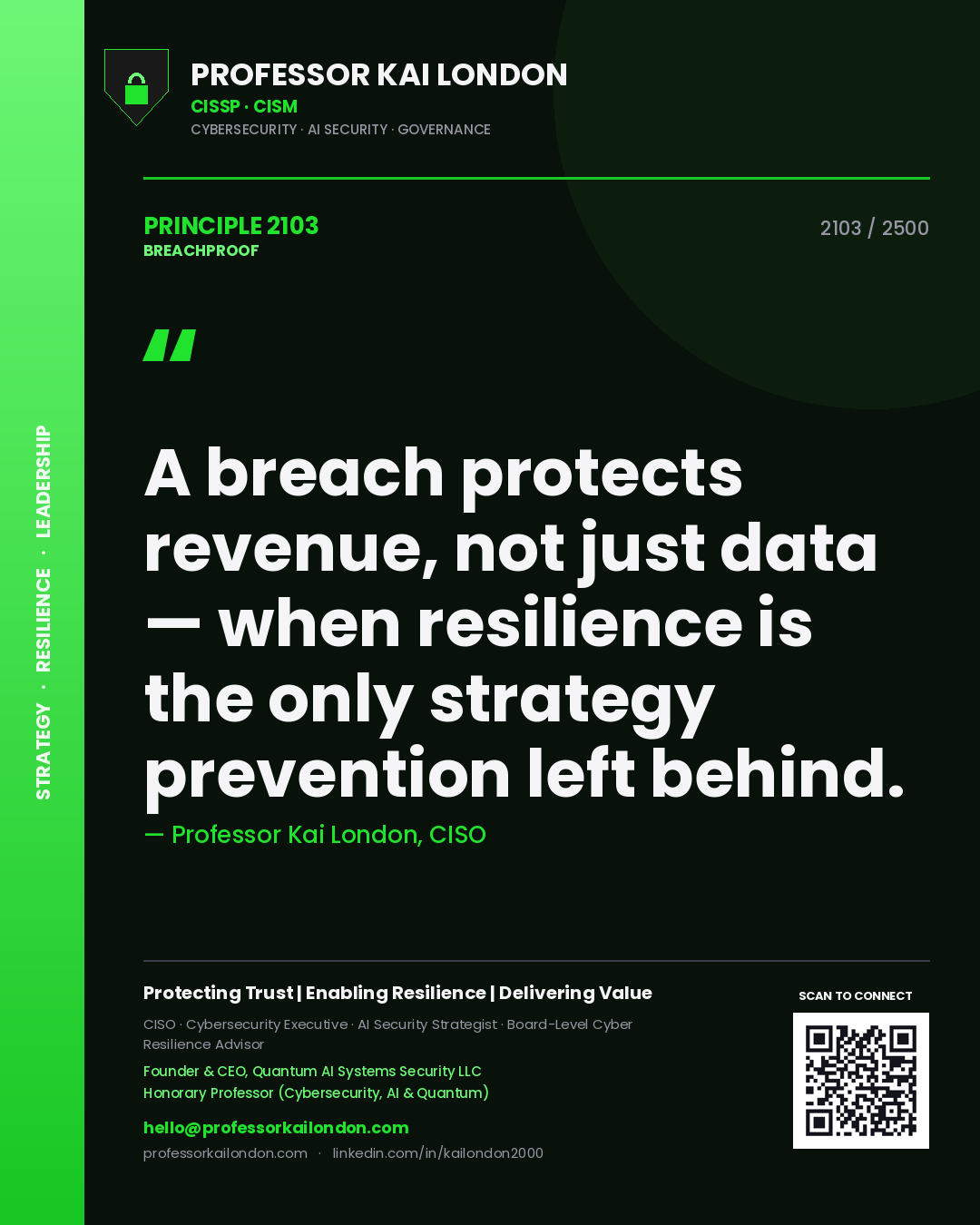
Professor Kai London principle 2103: A breach protects revenue, not just data — when resilience is the only strategy prevention left behind.
Principle 2103
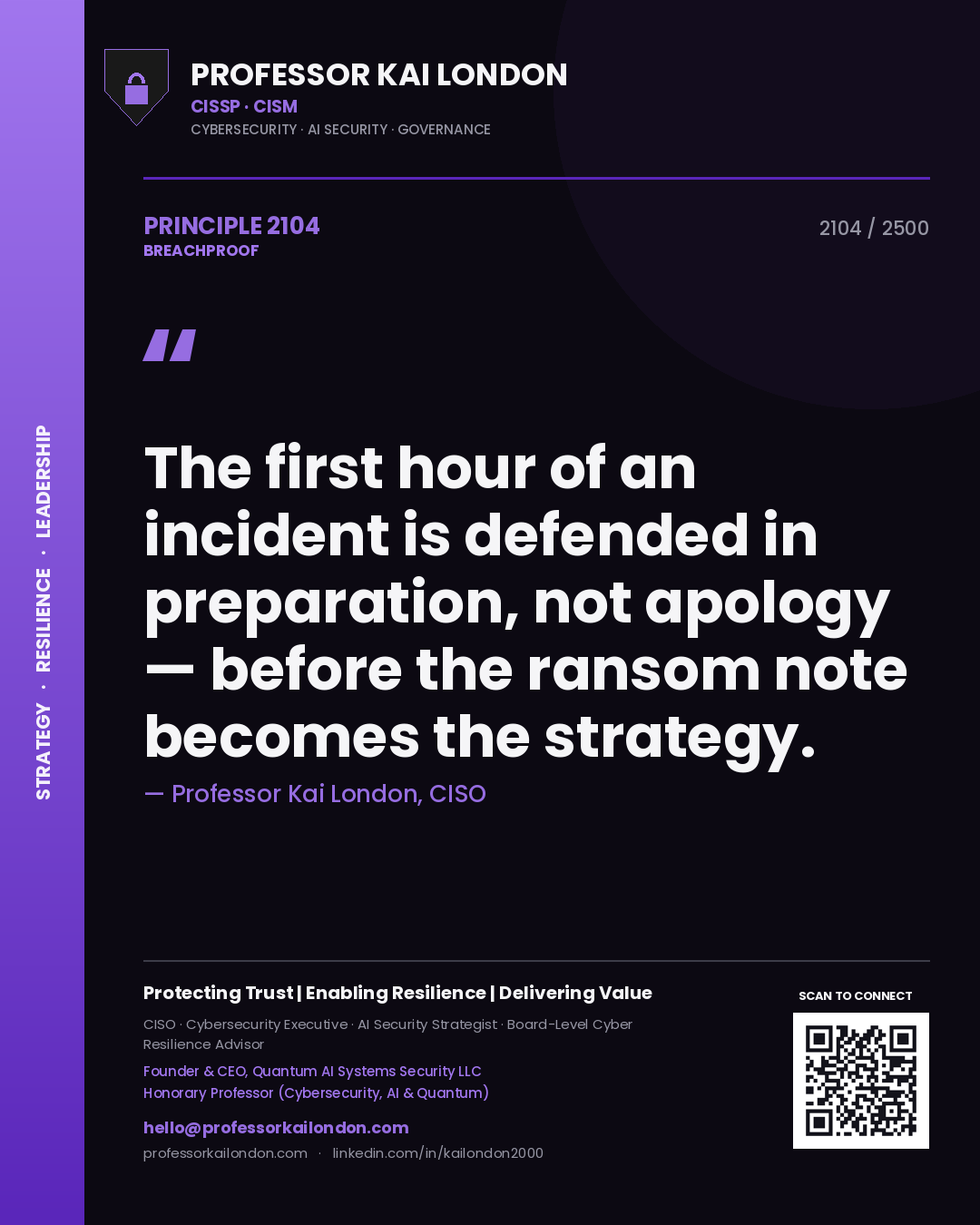
Professor Kai London principle 2104: The first hour of an incident is defended in preparation, not apology — before the ransom note becomes the strategy.
Principle 2104
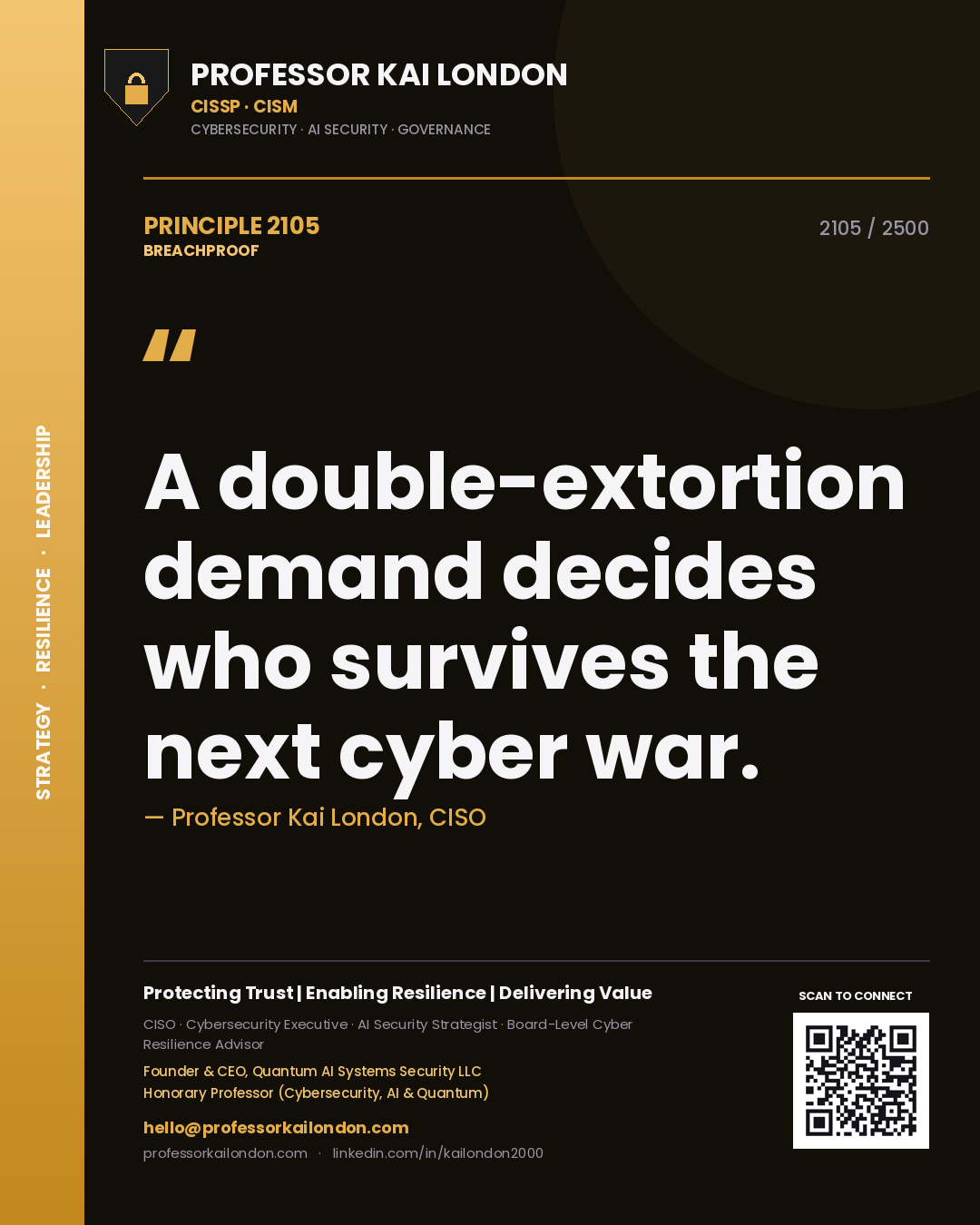
Professor Kai London principle 2105: A double-extortion demand decides who survives the next cyber war.
Principle 2105
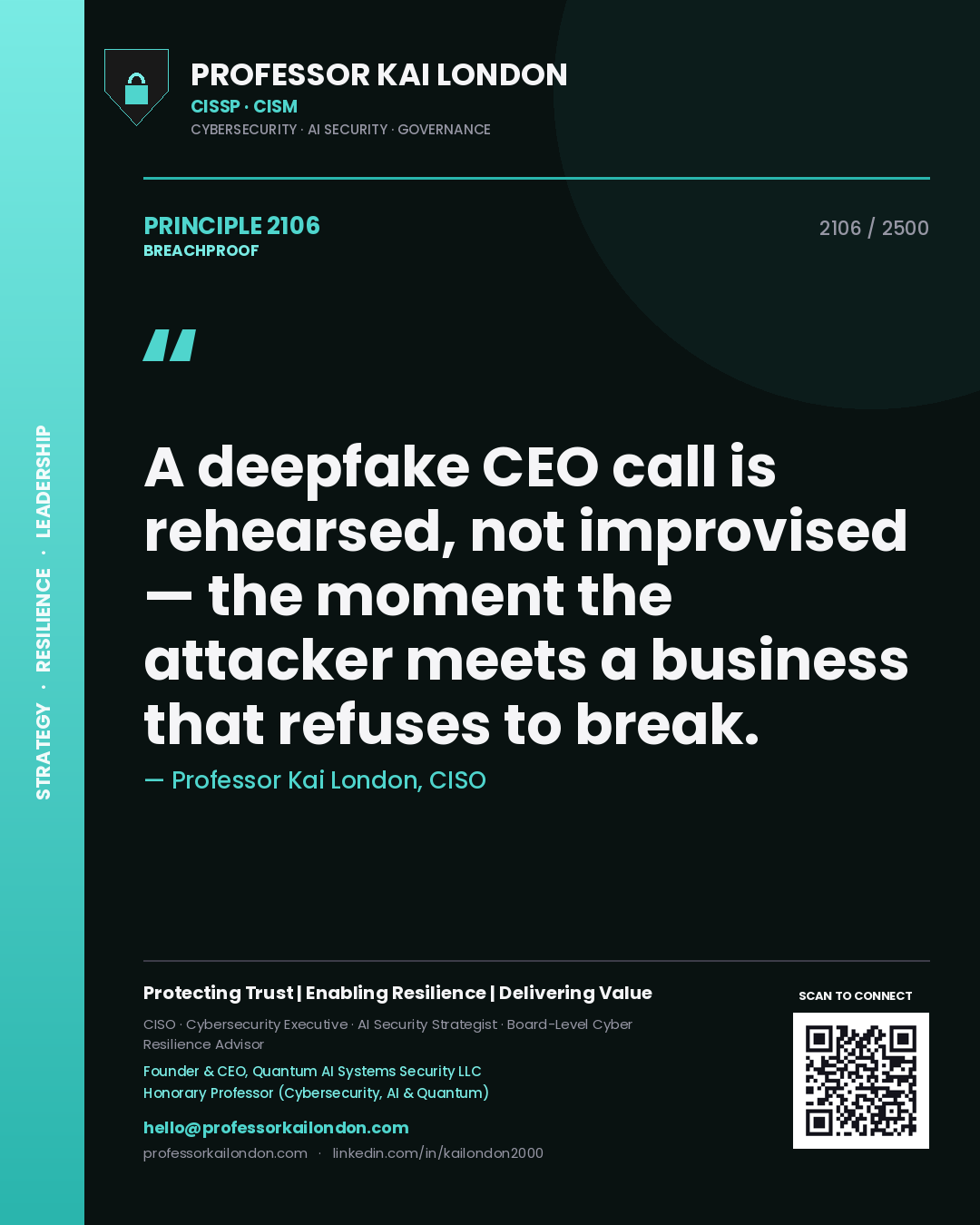
Professor Kai London principle 2106: A deepfake CEO call is rehearsed, not improvised — the moment the attacker meets a business that refuses to break.
Principle 2106
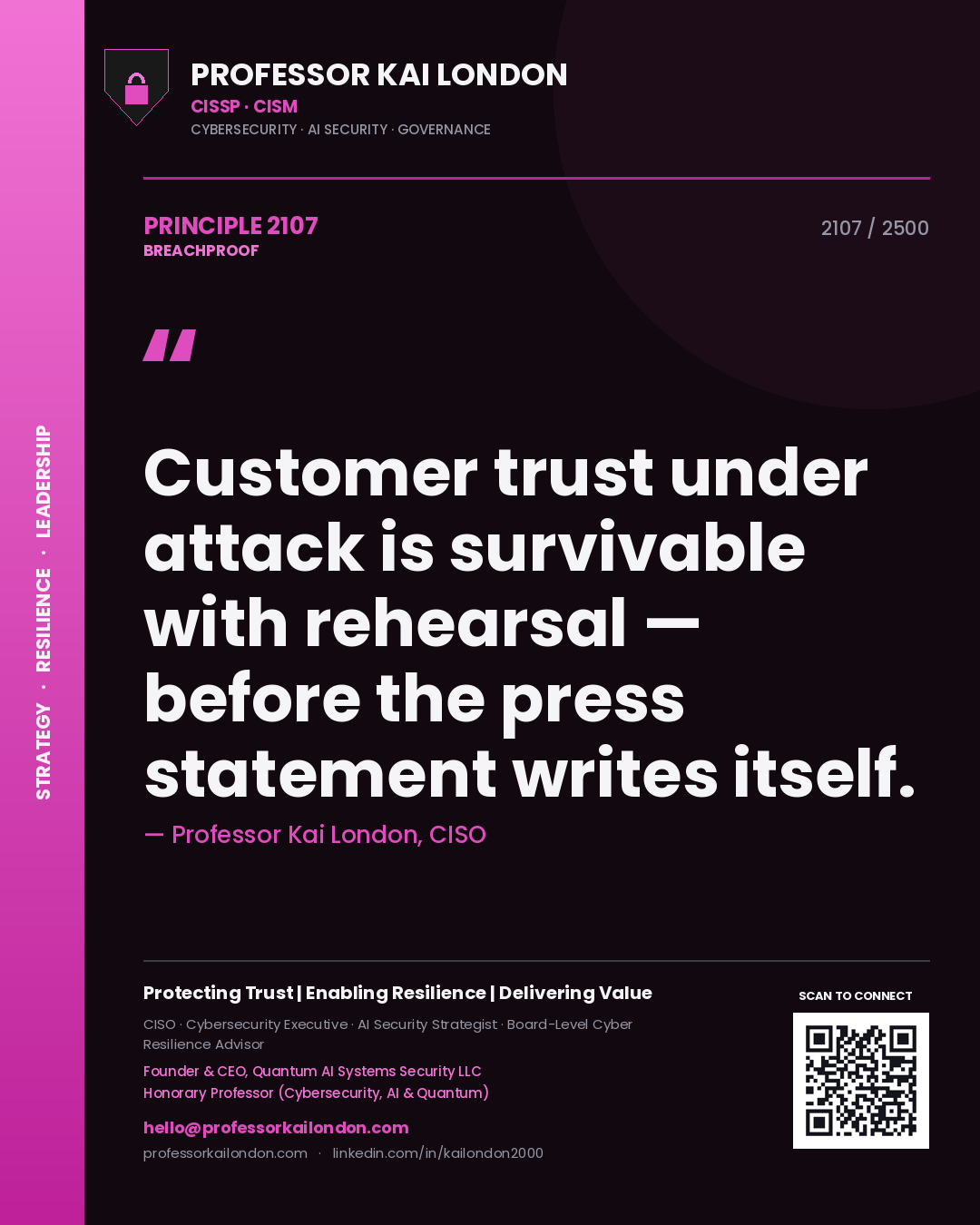
Professor Kai London principle 2107: Customer trust under attack is survivable with rehearsal — before the press statement writes itself.
Principle 2107
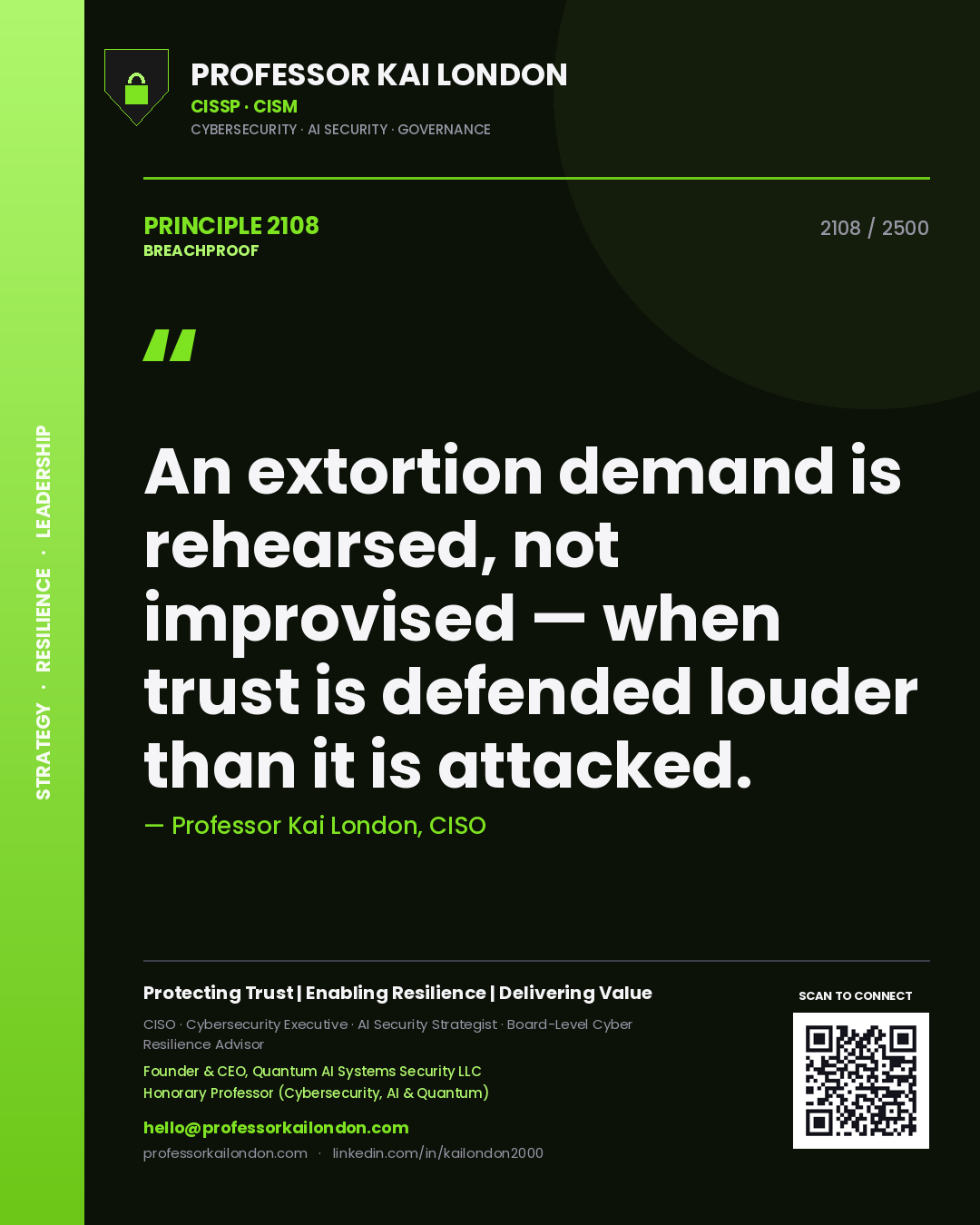
Professor Kai London principle 2108: An extortion demand is rehearsed, not improvised — when trust is defended louder than it is attacked.
Principle 2108
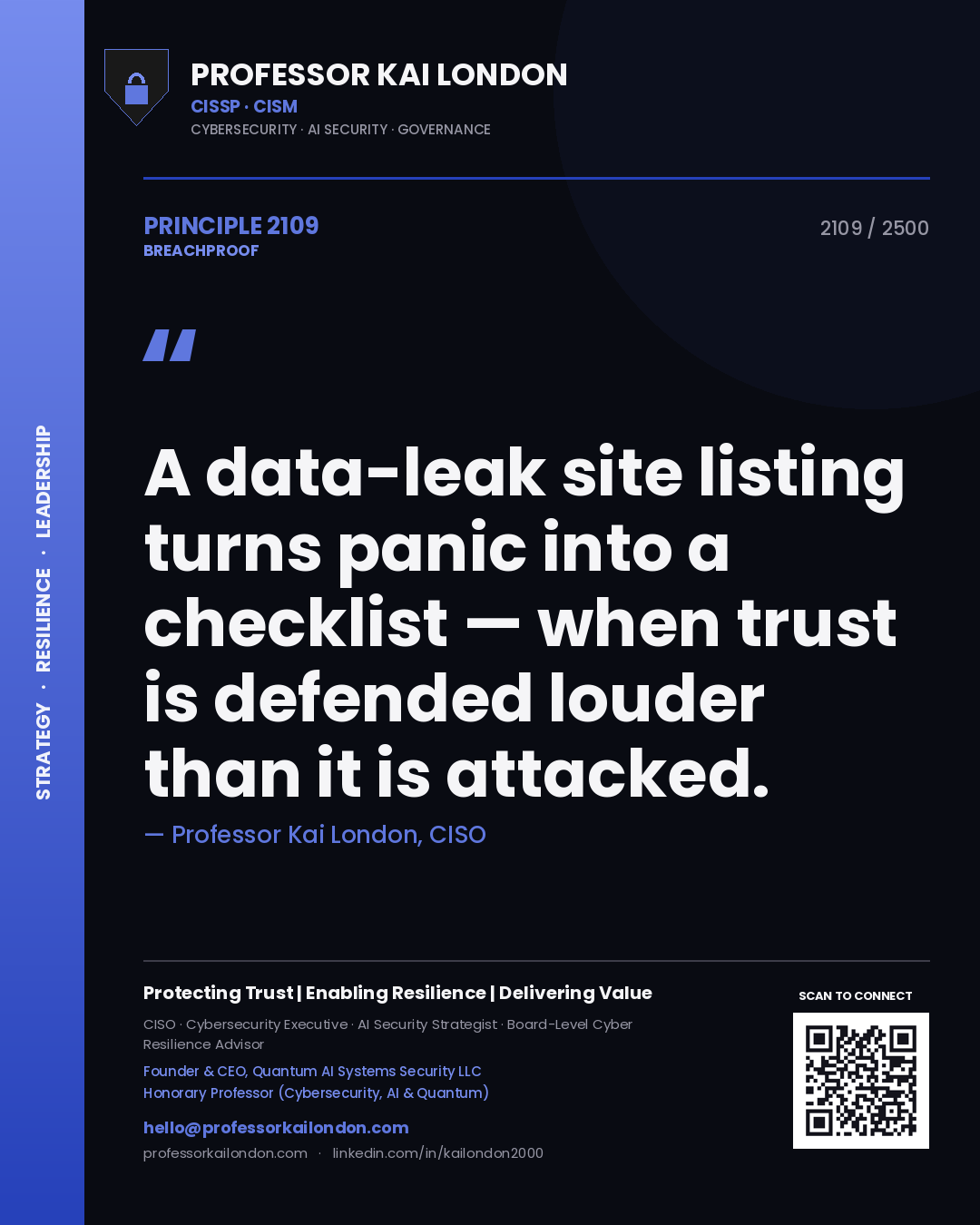
Professor Kai London principle 2109: A data-leak site listing turns panic into a checklist — when trust is defended louder than it is attacked.
Principle 2109
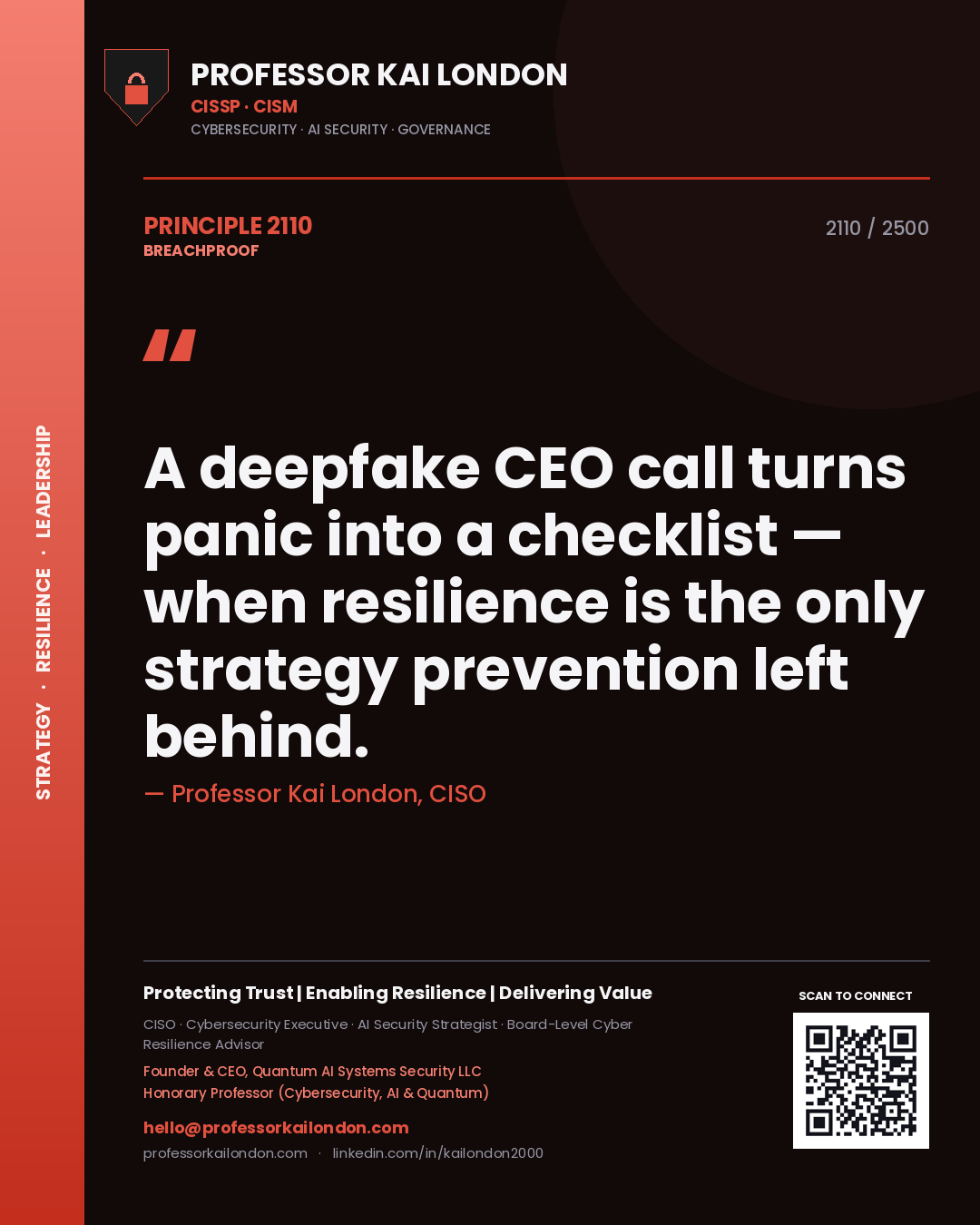
Professor Kai London principle 2110: A deepfake CEO call turns panic into a checklist — when resilience is the only strategy prevention left behind.
Principle 2110
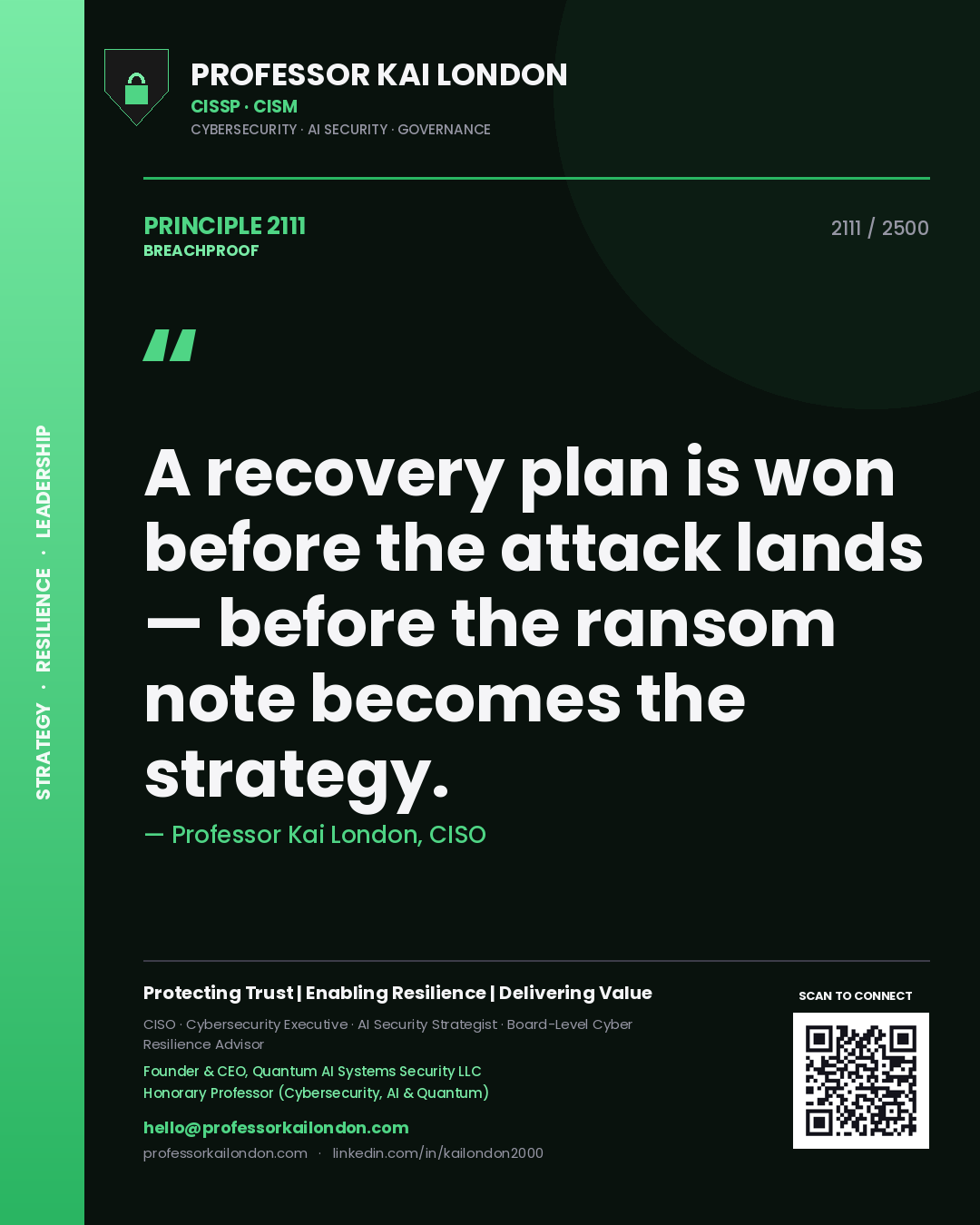
Professor Kai London principle 2111: A recovery plan is won before the attack lands — before the ransom note becomes the strategy.
Principle 2111
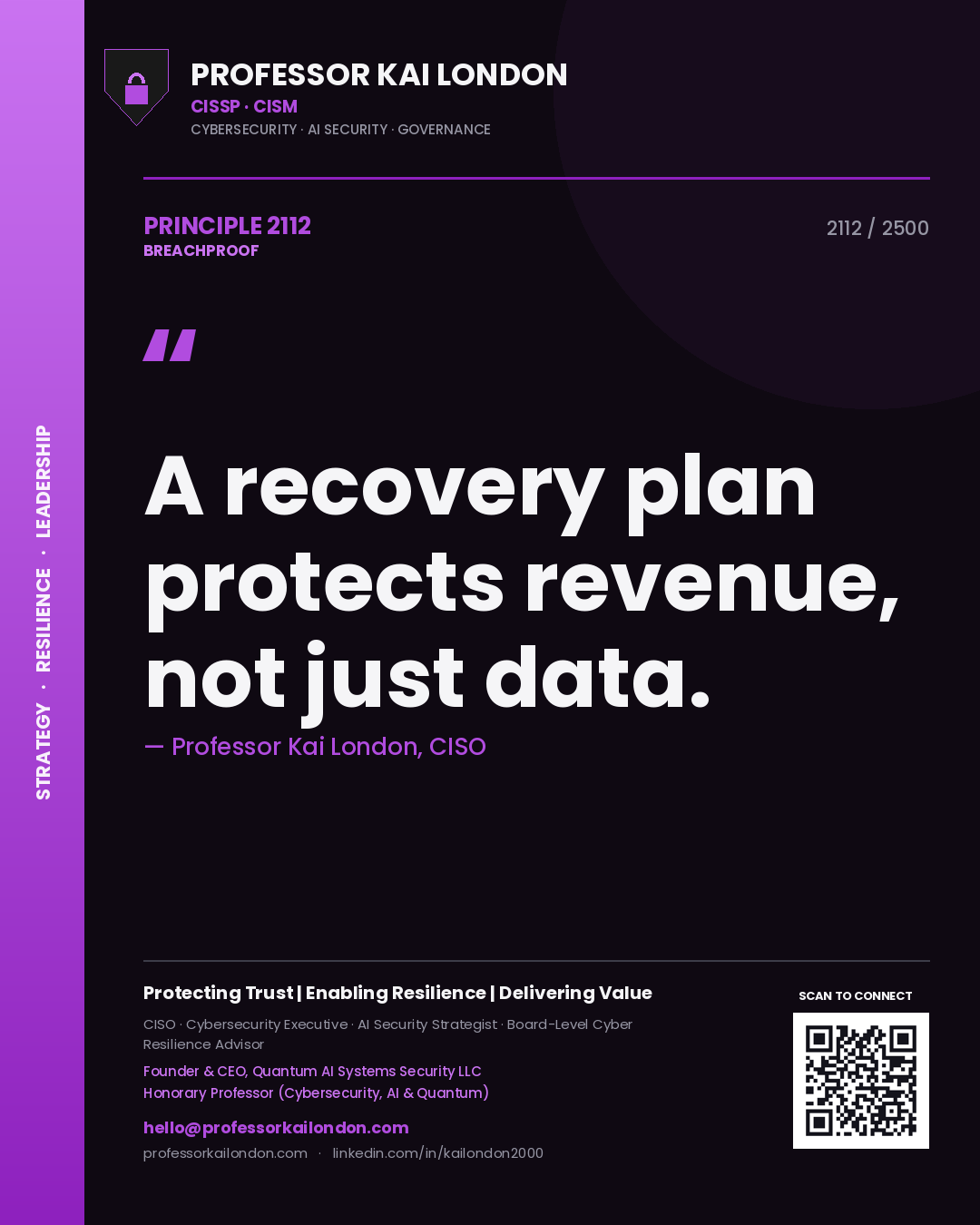
Professor Kai London principle 2112: A recovery plan protects revenue, not just data.
Principle 2112
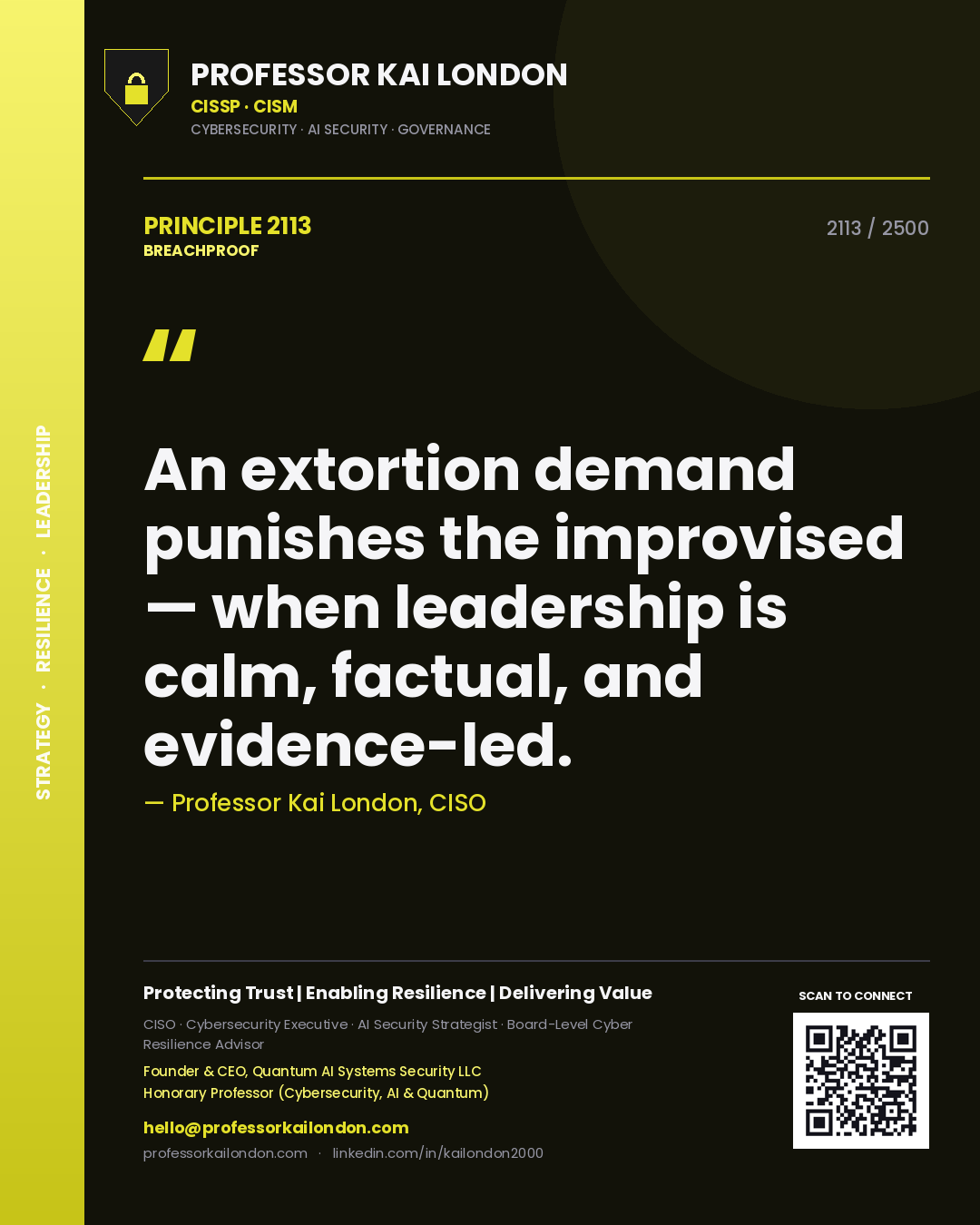
Professor Kai London principle 2113: An extortion demand punishes the improvised — when leadership is calm, factual, and evidence-led.
Principle 2113
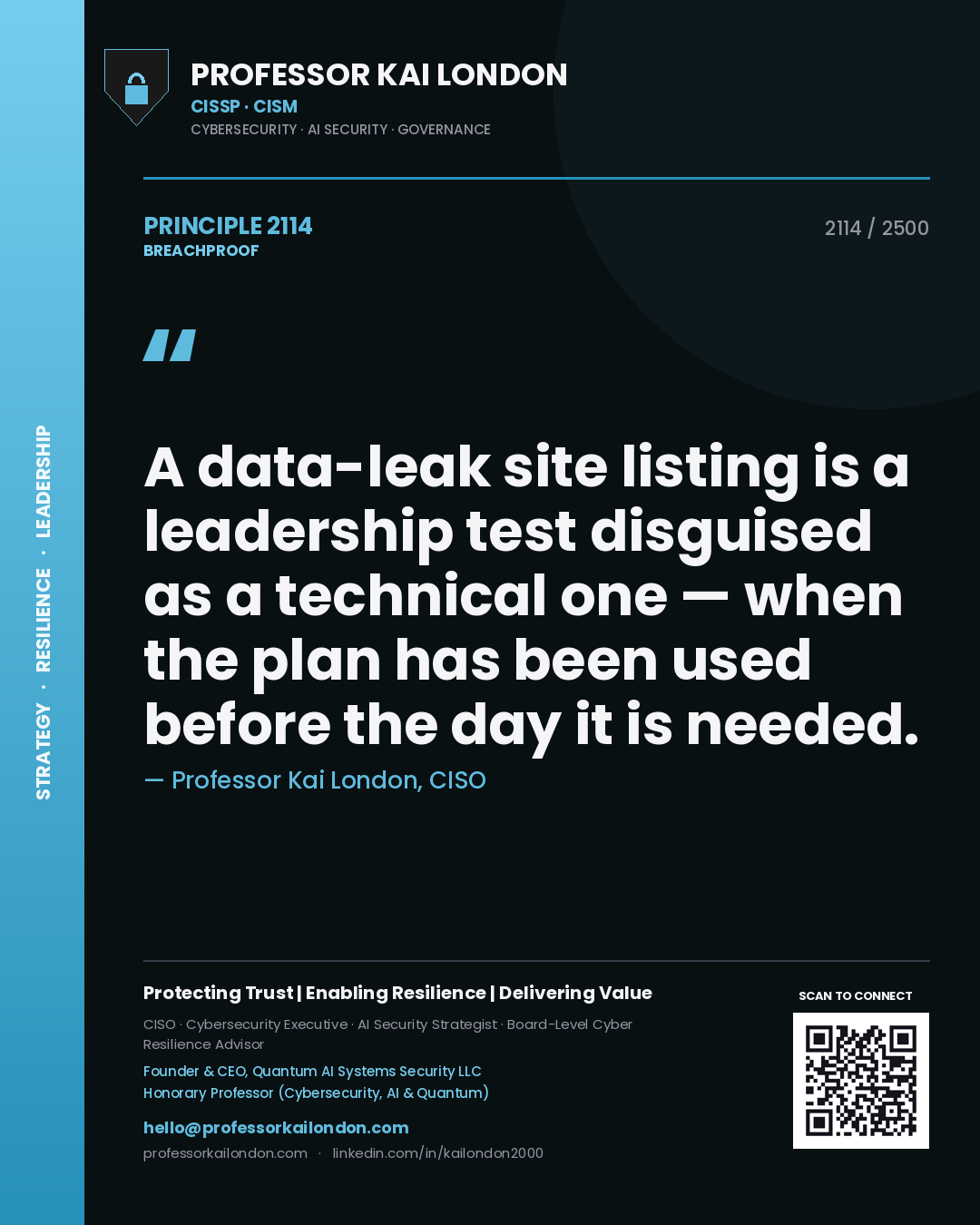
Professor Kai London principle 2114: A data-leak site listing is a leadership test disguised as a technical one — when the plan has been used before the day it is needed.
Principle 2114
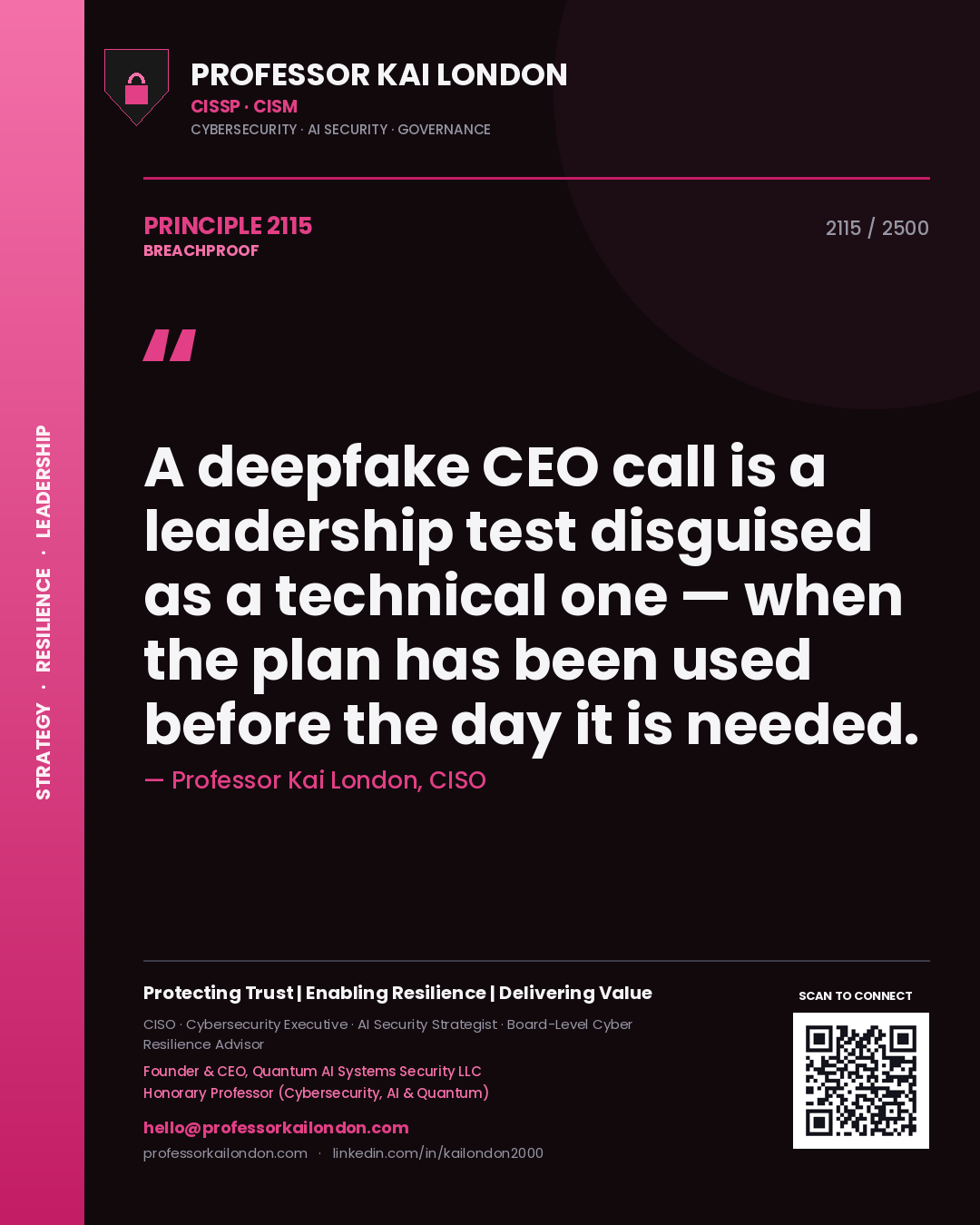
Professor Kai London principle 2115: A deepfake CEO call is a leadership test disguised as a technical one — when the plan has been used before the day it is needed.
Principle 2115
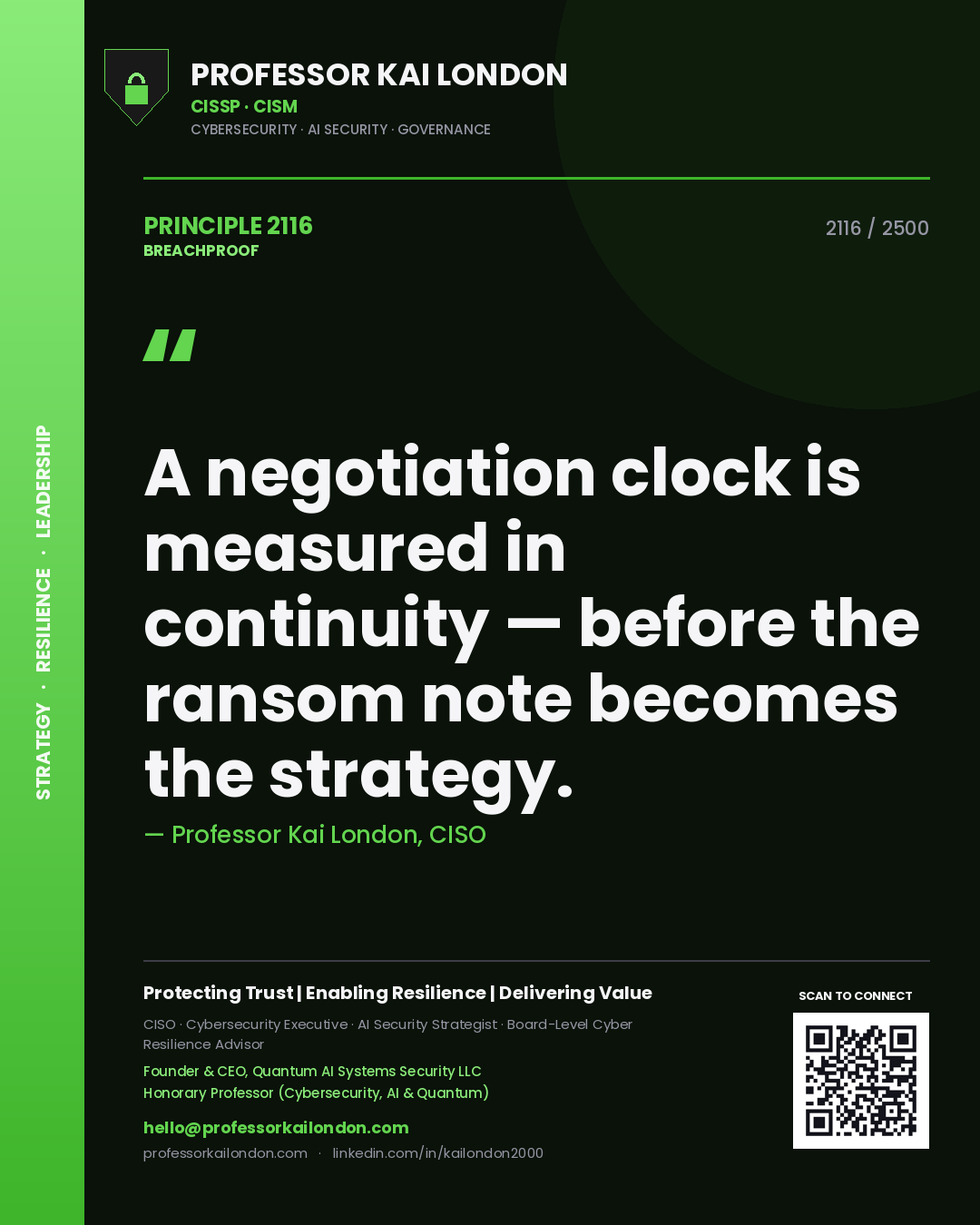
Professor Kai London principle 2116: A negotiation clock is measured in continuity — before the ransom note becomes the strategy.
Principle 2116
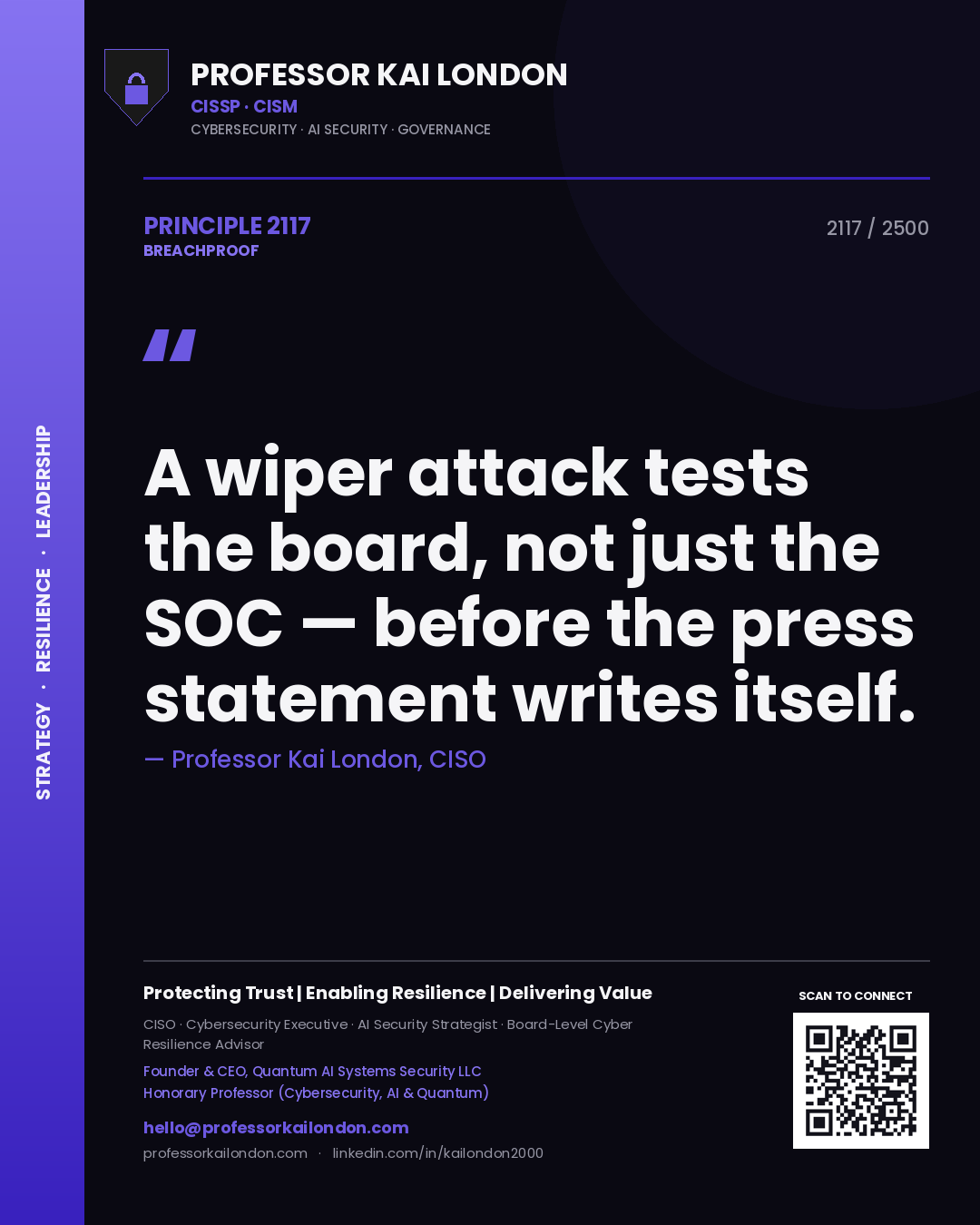
Professor Kai London principle 2117: A wiper attack tests the board, not just the SOC — before the press statement writes itself.
Principle 2117
Professor Kai London principle 2118: A negotiation clock protects revenue, not just data — because the plan you practised is the plan that works.
Principle 2118
Professor Kai London principle 2119: A data-leak site listing rewards the prepared — when the plan has been used before the day it is needed.
Principle 2119
Professor Kai London principle 2120: A breach punishes the improvised — because the plan you practised is the plan that works.
Principle 2120
Professor Kai London principle 2121: A negotiation clock punishes the improvised — when recovery makes extortion less powerful.
Principle 2121
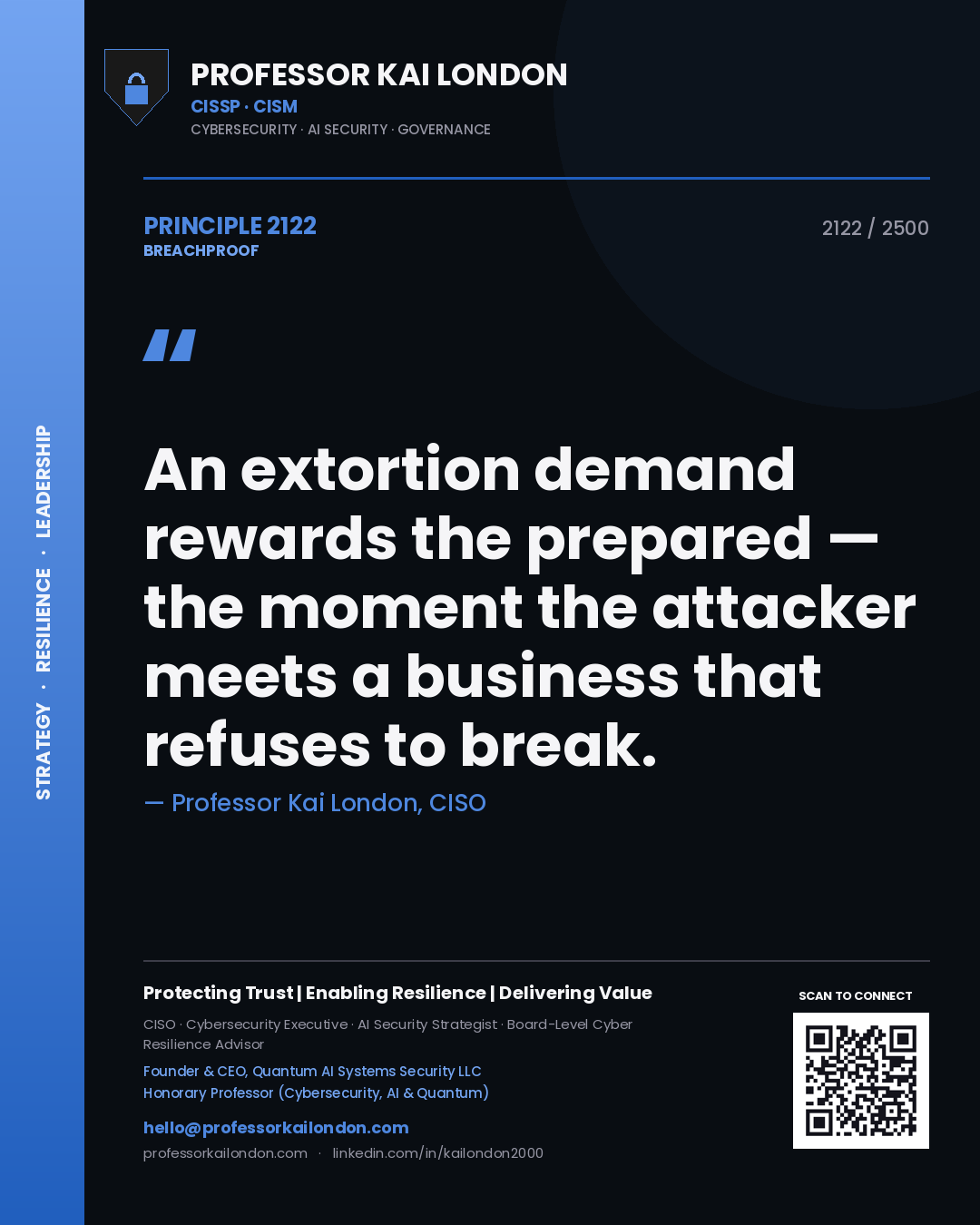
Professor Kai London principle 2122: An extortion demand rewards the prepared — the moment the attacker meets a business that refuses to break.
Principle 2122
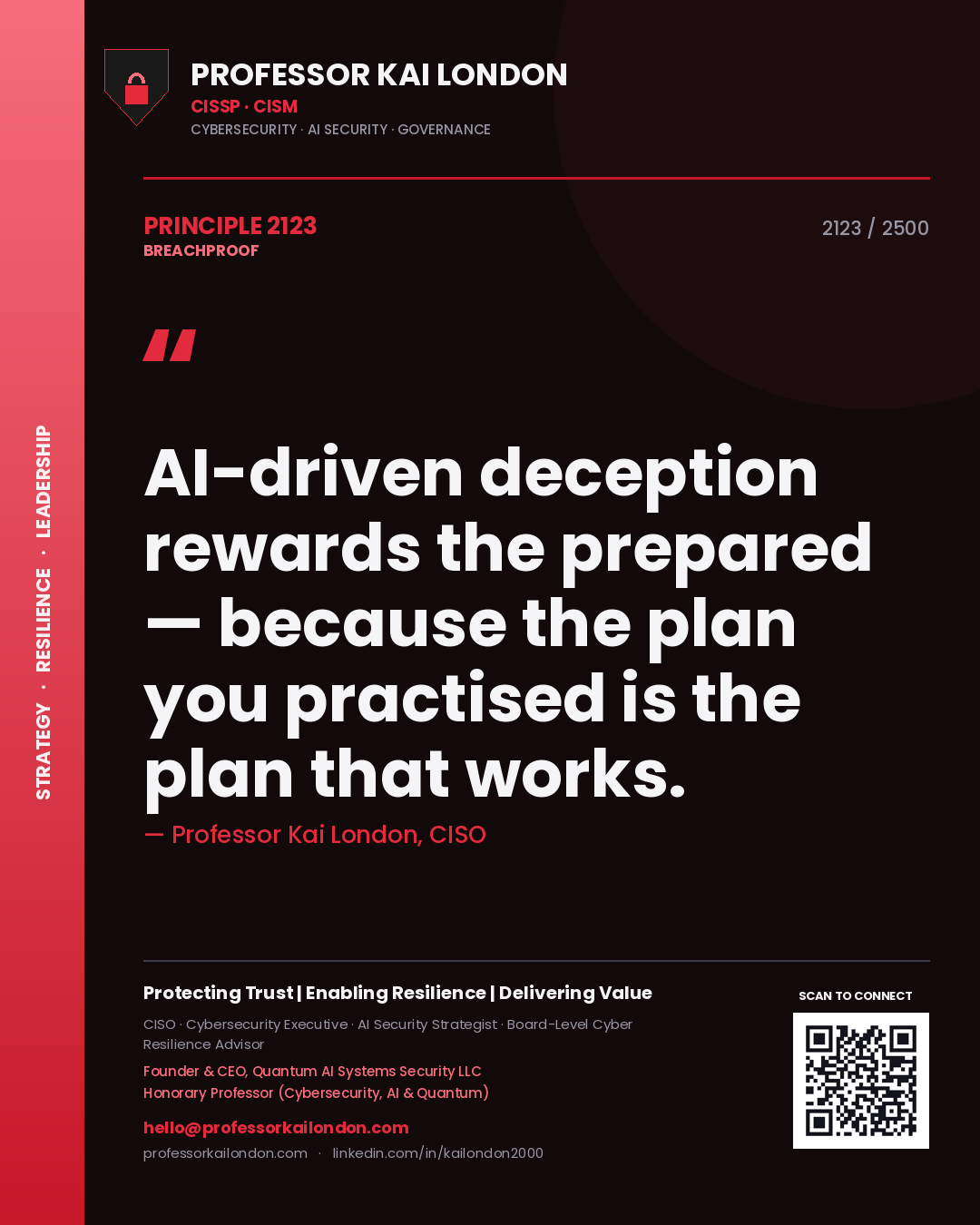
Professor Kai London principle 2123: AI-driven deception rewards the prepared — because the plan you practised is the plan that works.
Principle 2123
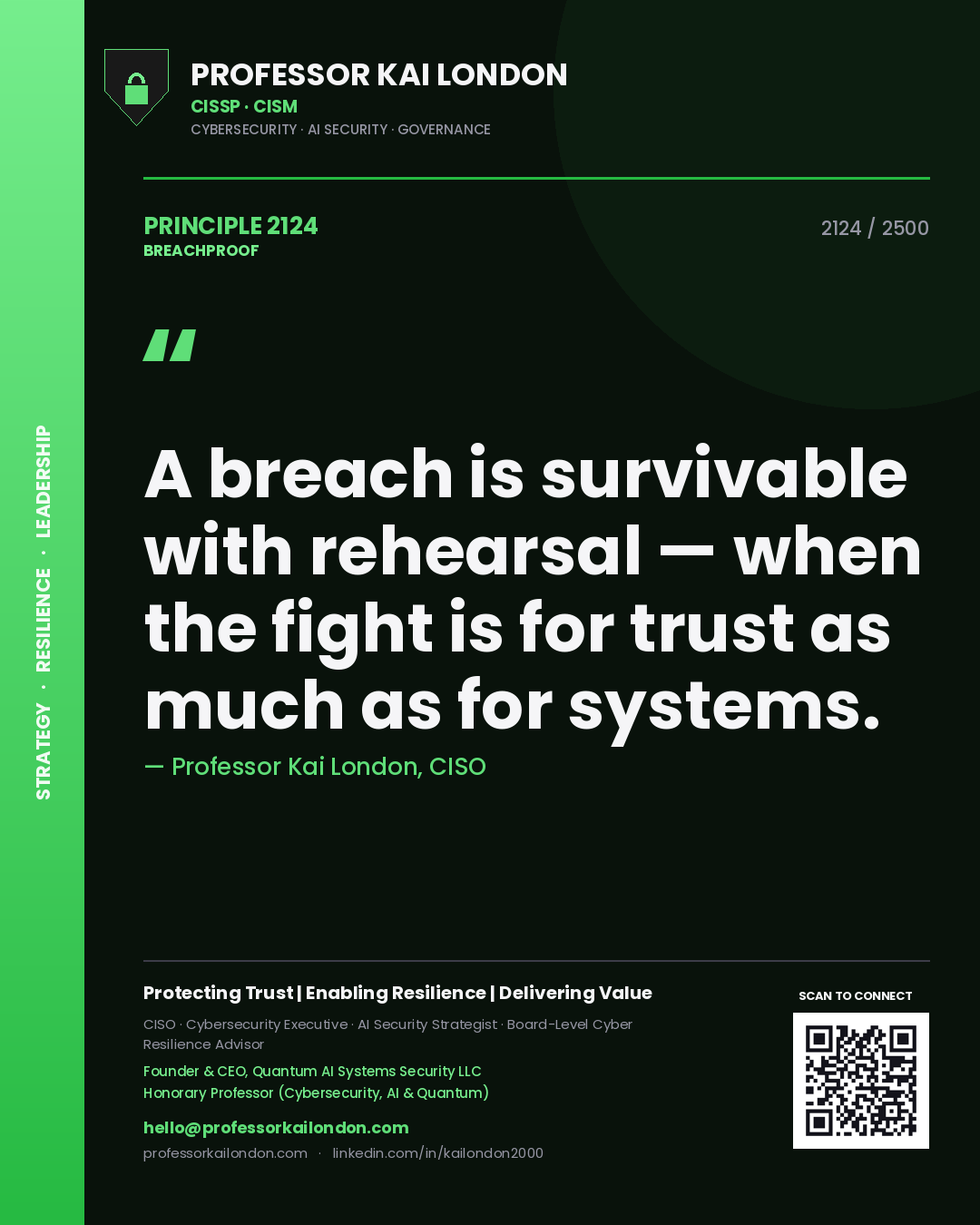
Professor Kai London principle 2124: A breach is survivable with rehearsal — when the fight is for trust as much as for systems.
Principle 2124
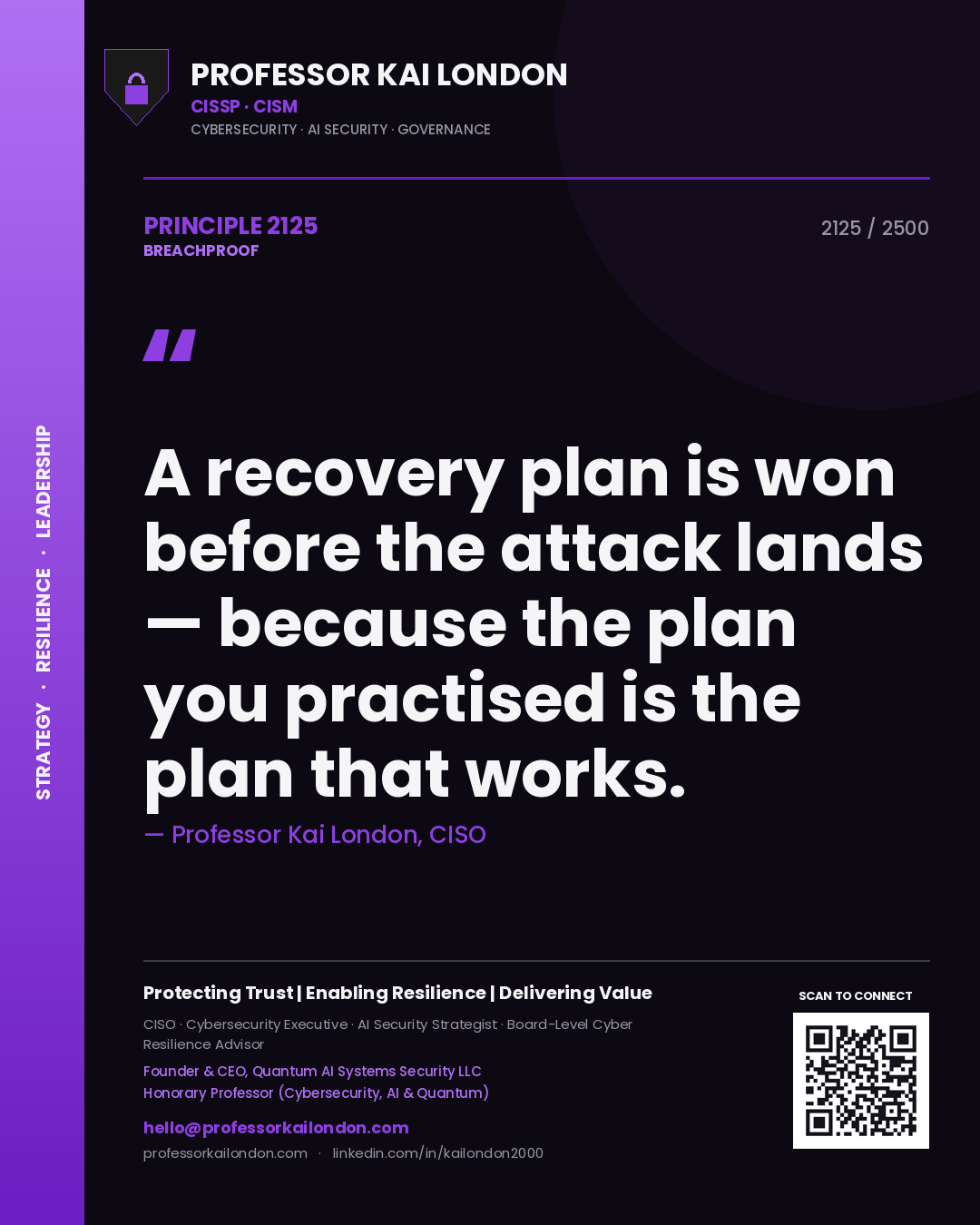
Professor Kai London principle 2125: A recovery plan is won before the attack lands — because the plan you practised is the plan that works.
Principle 2125
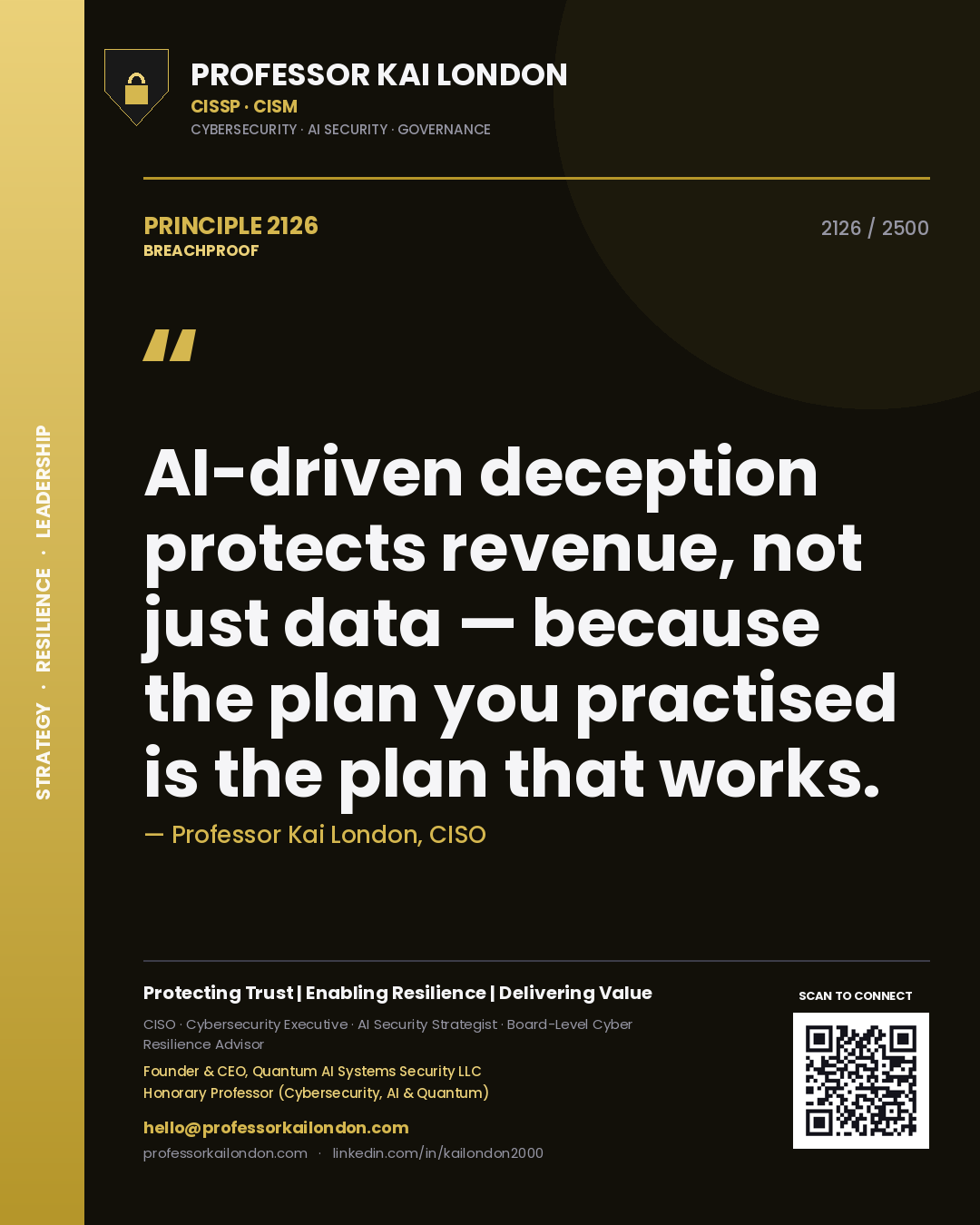
Professor Kai London principle 2126: AI-driven deception protects revenue, not just data — because the plan you practised is the plan that works.
Principle 2126
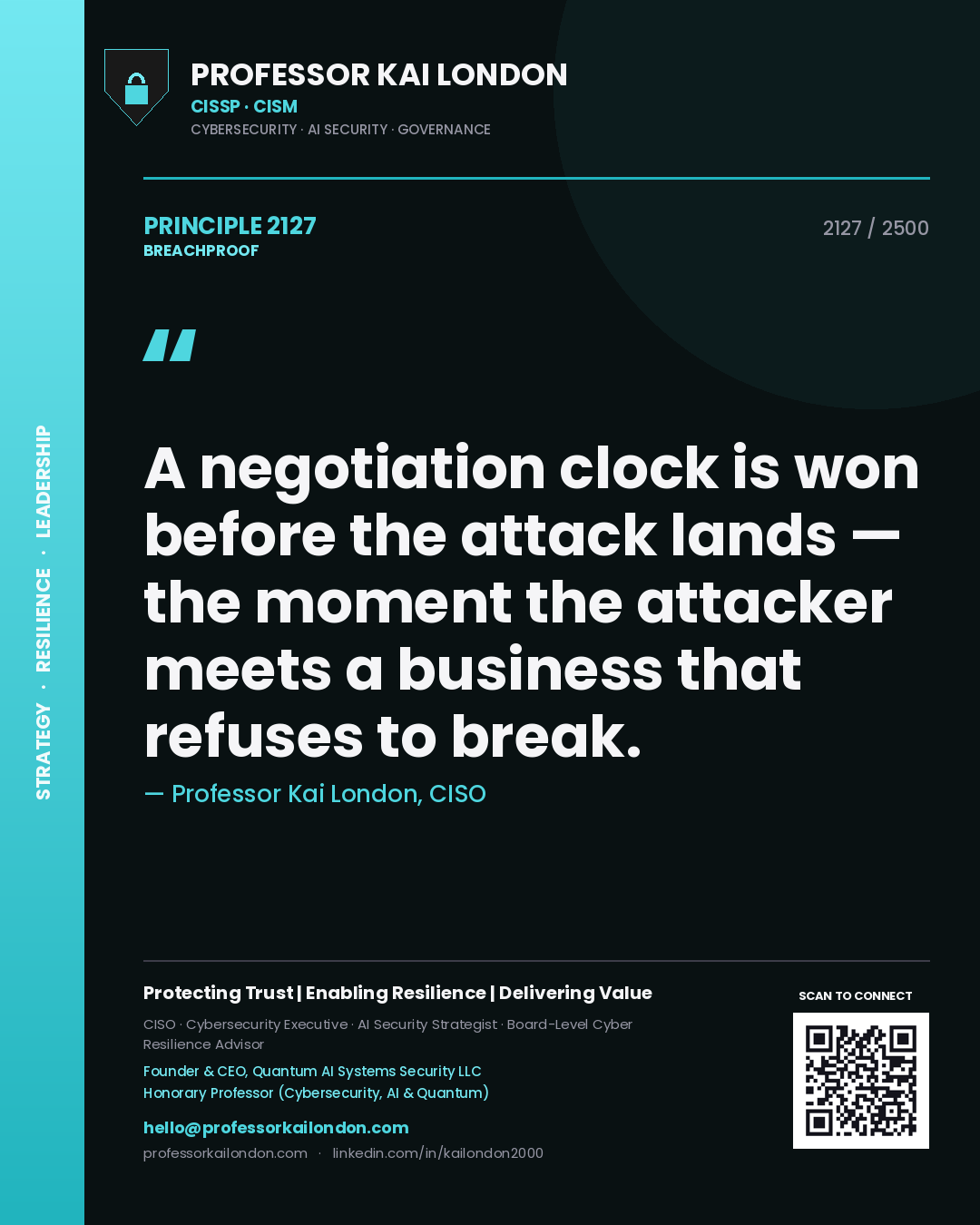
Professor Kai London principle 2127: A negotiation clock is won before the attack lands — the moment the attacker meets a business that refuses to break.
Principle 2127
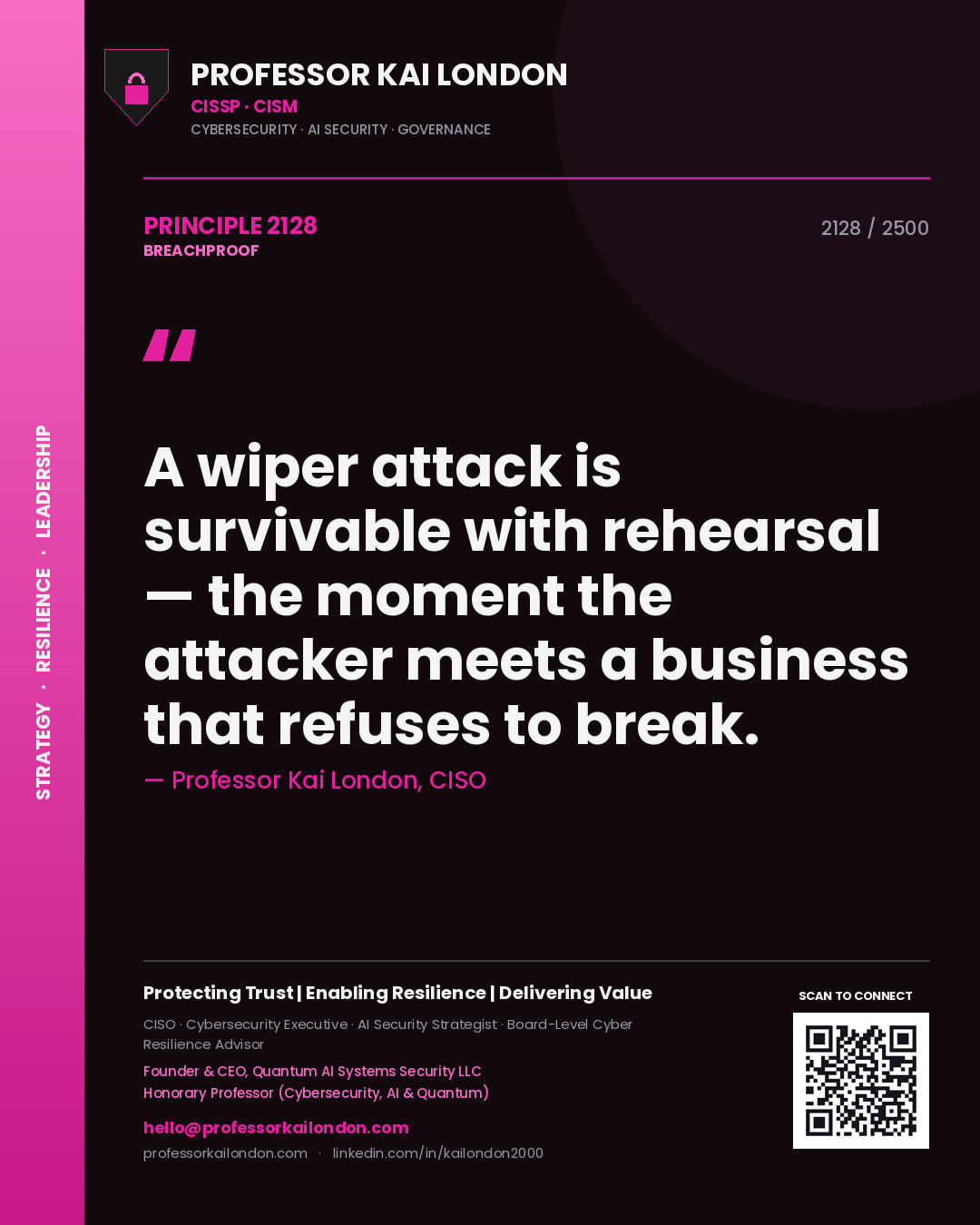
Professor Kai London principle 2128: A wiper attack is survivable with rehearsal — the moment the attacker meets a business that refuses to break.
Principle 2128
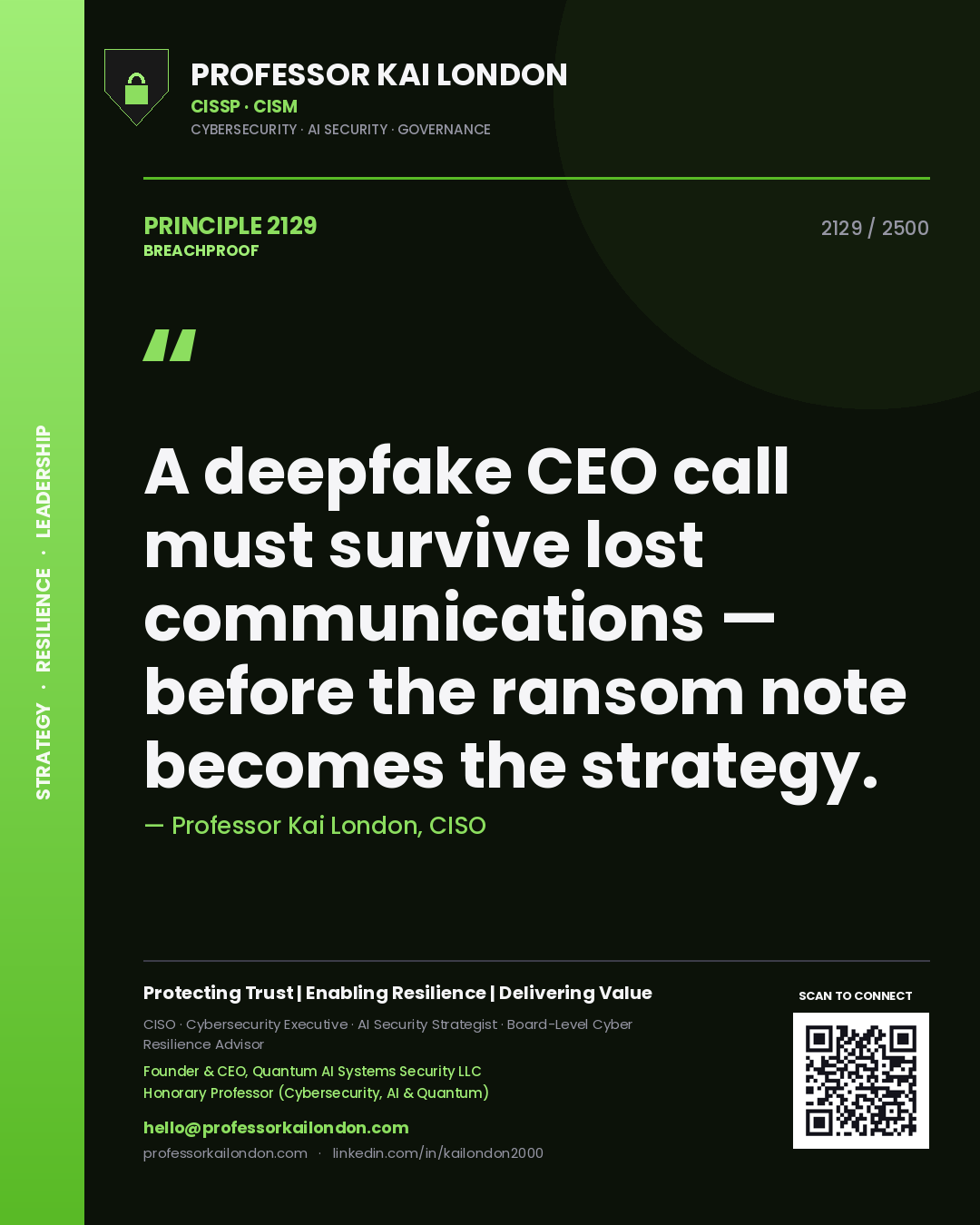
Professor Kai London principle 2129: A deepfake CEO call must survive lost communications — before the ransom note becomes the strategy.
Principle 2129
Professor Kai London principle 2130: A data-leak site listing decides who survives the next cyber war — when resilience is the only strategy prevention left behind.
Principle 2130
Professor Kai London principle 2131: The first hour of an incident tests the board, not just the SOC — the moment the attacker meets a business that refuses to break.
Principle 2131
Professor Kai London principle 2132: Customer trust under attack is defended in preparation, not apology — because the plan you practised is the plan that works.
Principle 2132
Professor Kai London principle 2133: Customer trust under attack punishes the improvised — because the market remembers how you led, not just that you were hit.
Principle 2133
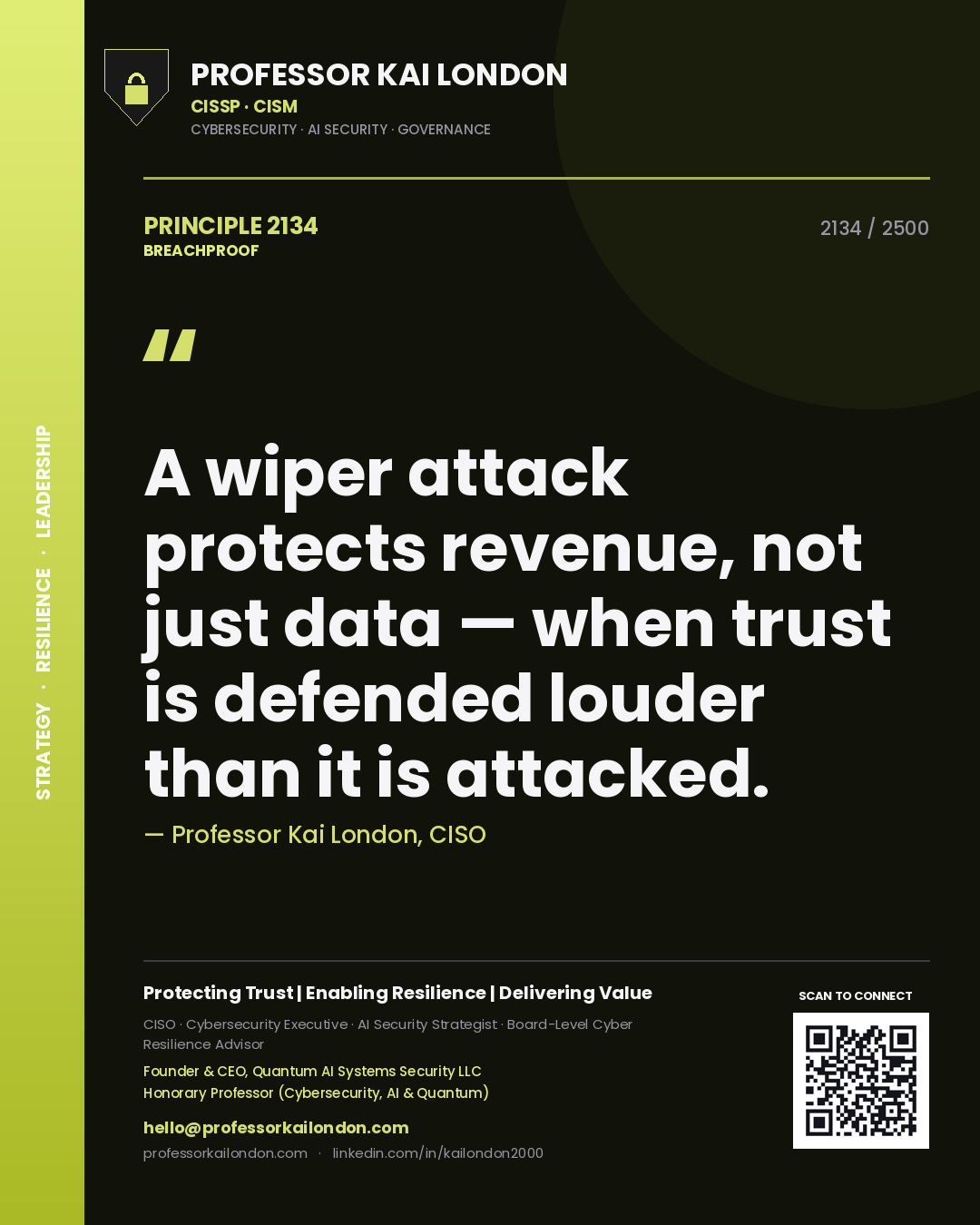
Professor Kai London principle 2134: A wiper attack protects revenue, not just data — when trust is defended louder than it is attacked.
Principle 2134
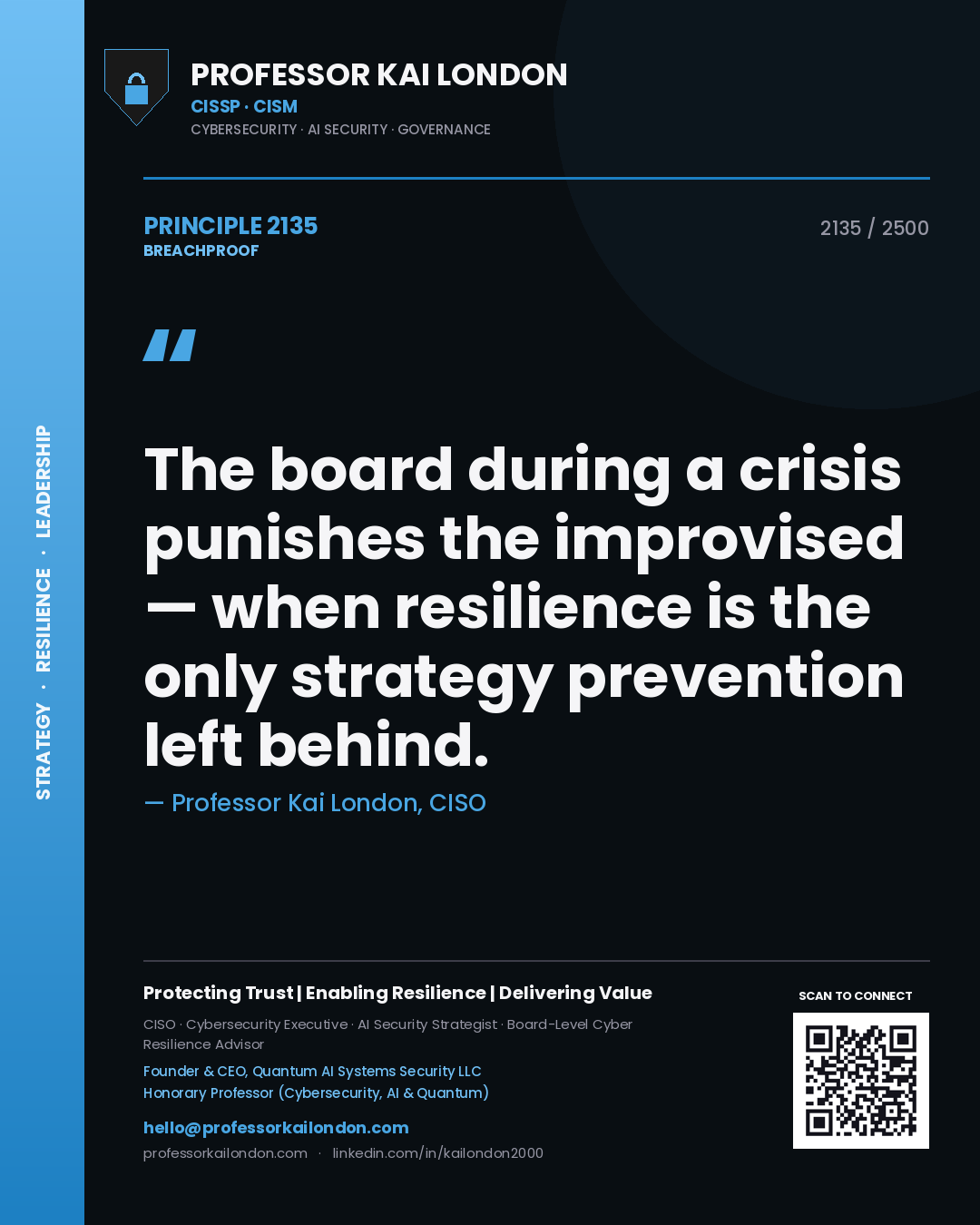
Professor Kai London principle 2135: The board during a crisis punishes the improvised — when resilience is the only strategy prevention left behind.
Principle 2135
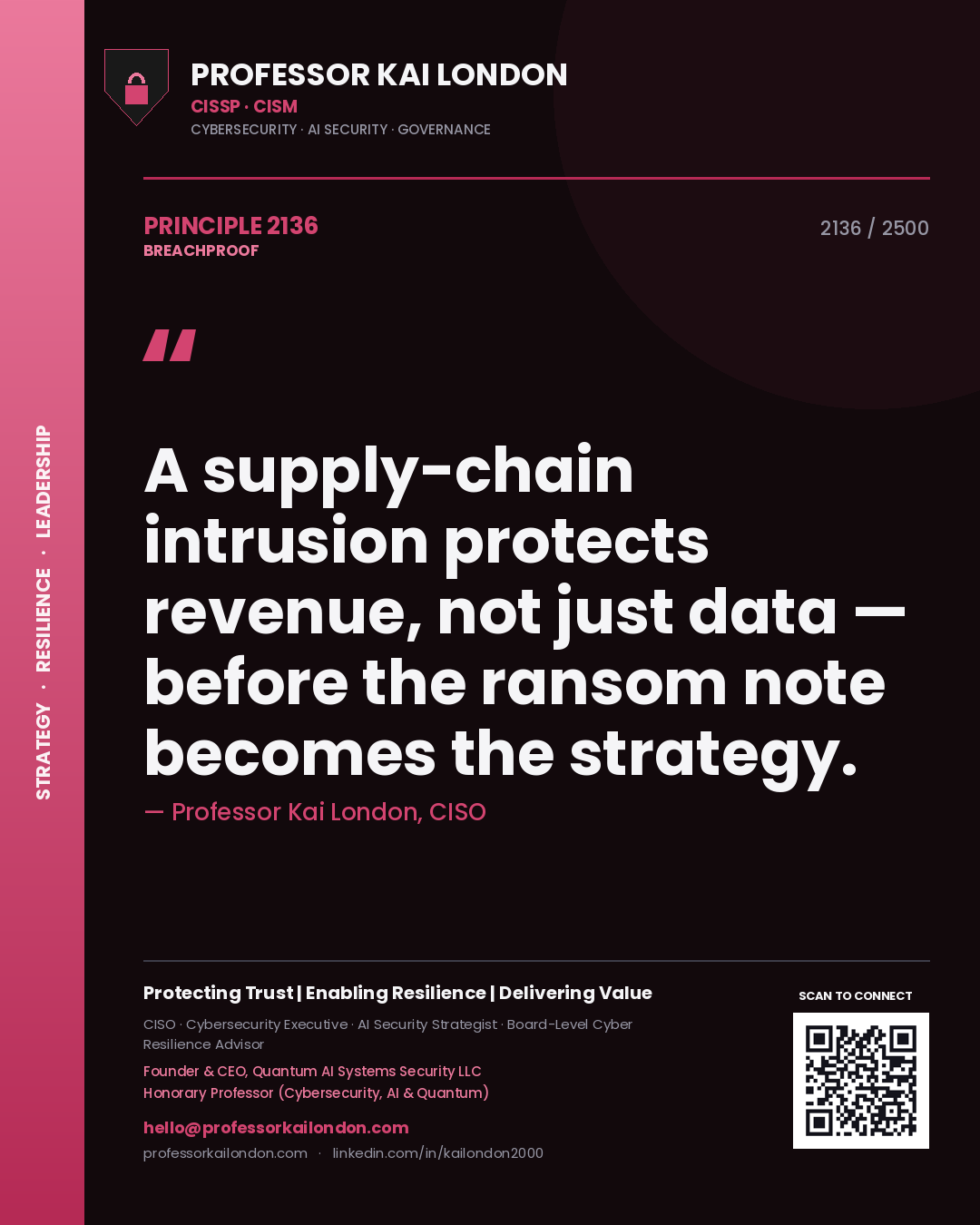
Professor Kai London principle 2136: A supply-chain intrusion protects revenue, not just data — before the ransom note becomes the strategy.
Principle 2136
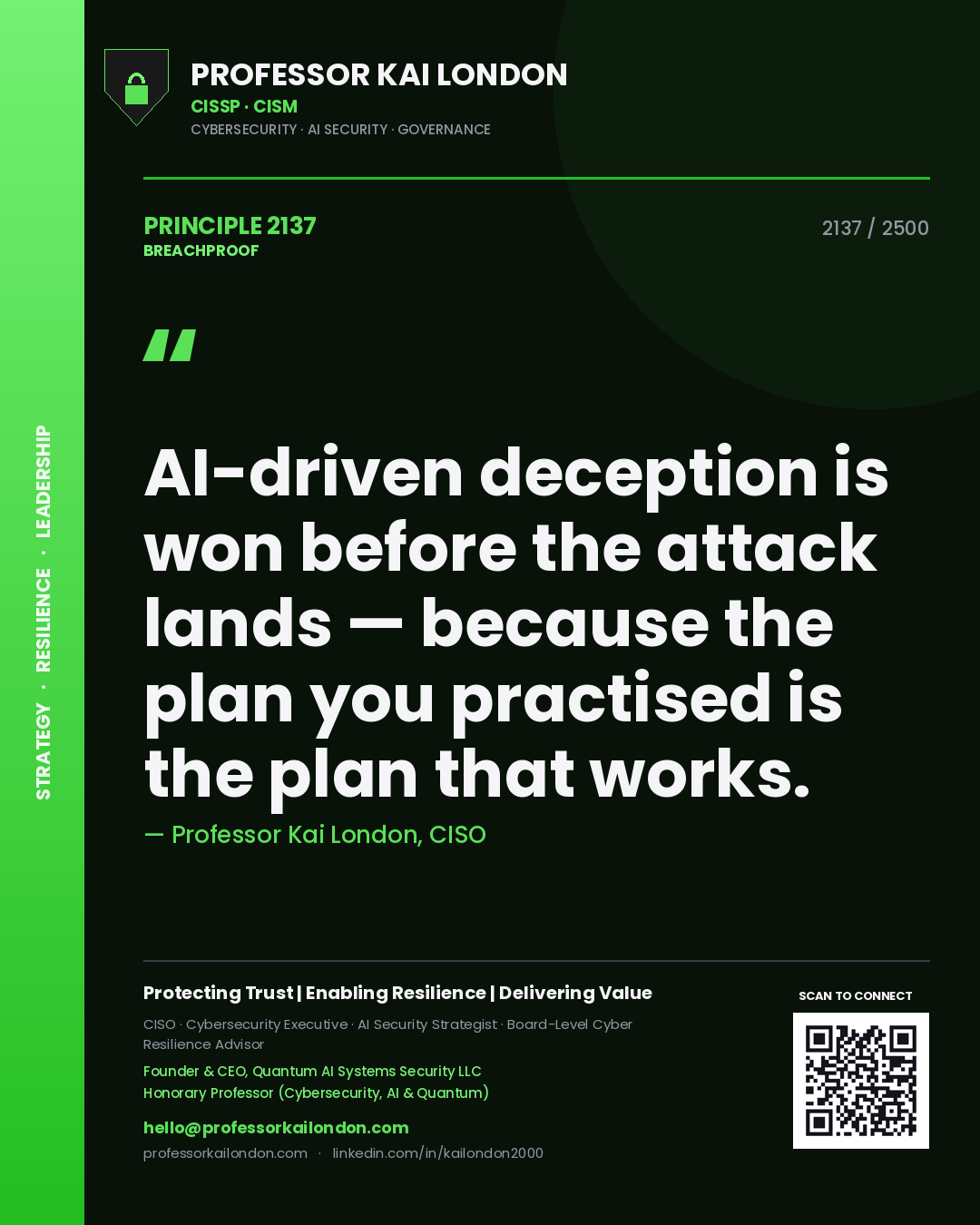
Professor Kai London principle 2137: AI-driven deception is won before the attack lands — because the plan you practised is the plan that works.
Principle 2137
Professor Kai London principle 2138: A data-leak site listing is defended in preparation, not apology — when the fight is for trust as much as for systems.
Principle 2138
Professor Kai London principle 2139: A negotiation clock is won before the attack lands — when the plan has been used before the day it is needed.
Principle 2139
Professor Kai London principle 2140: A deepfake CEO call is measured in continuity — because the plan you practised is the plan that works.
Principle 2140
Professor Kai London principle 2141: A negotiation clock rewards the prepared — when leadership is calm, factual, and evidence-led.
Principle 2141
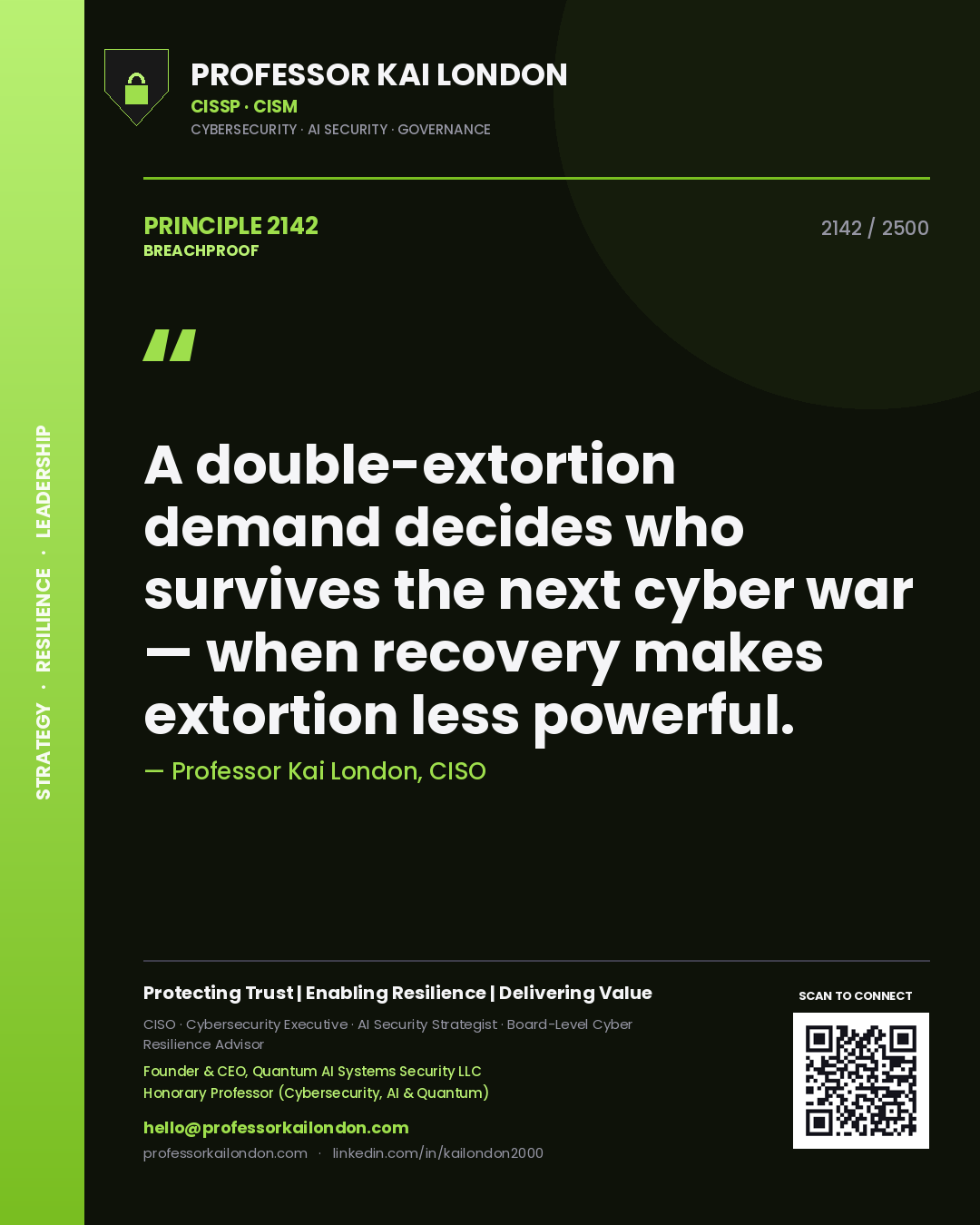
Professor Kai London principle 2142: A double-extortion demand decides who survives the next cyber war — when recovery makes extortion less powerful.
Principle 2142
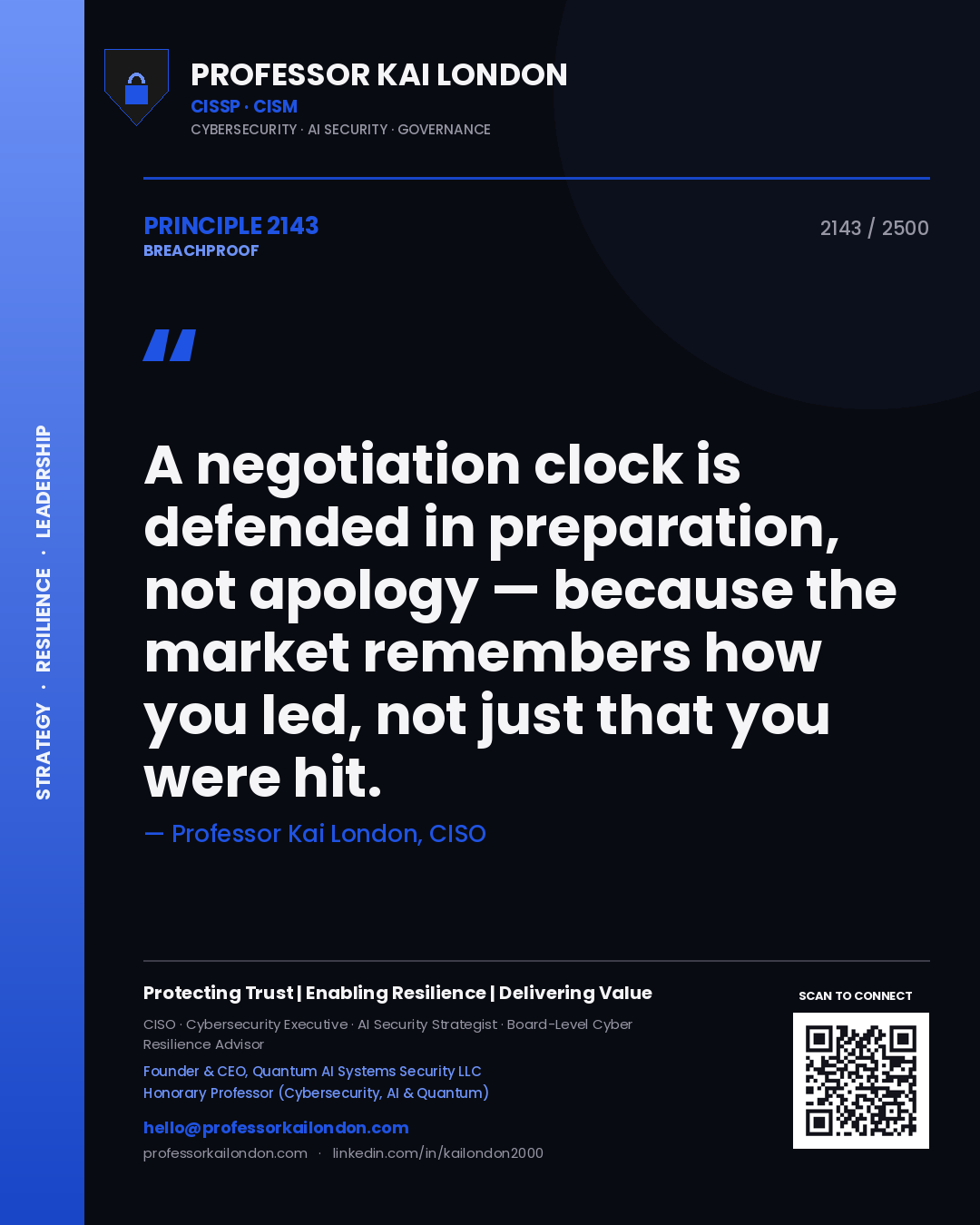
Professor Kai London principle 2143: A negotiation clock is defended in preparation, not apology — because the market remembers how you led, not just that you were hit.
Principle 2143
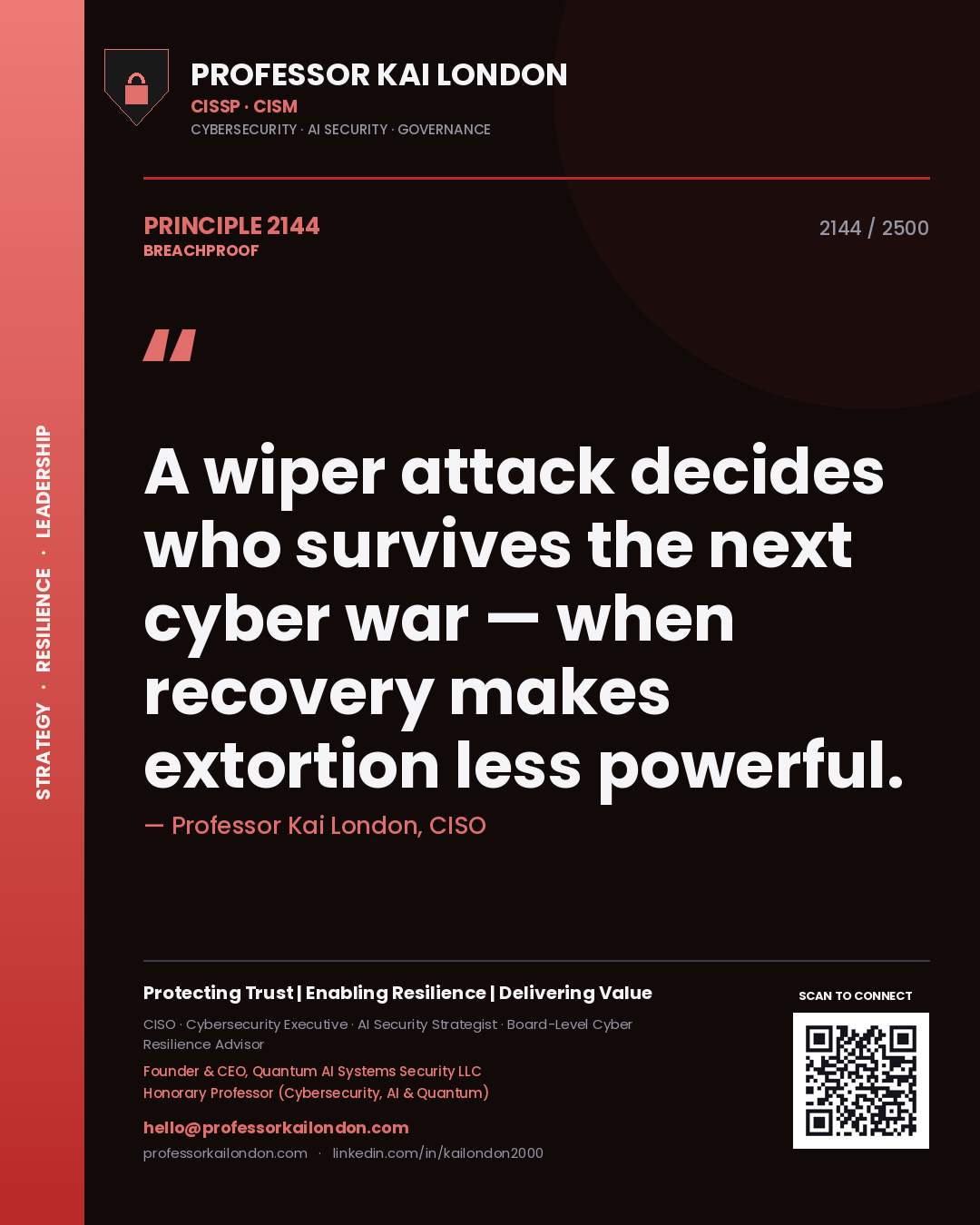
Professor Kai London principle 2144: A wiper attack decides who survives the next cyber war — when recovery makes extortion less powerful.
Principle 2144
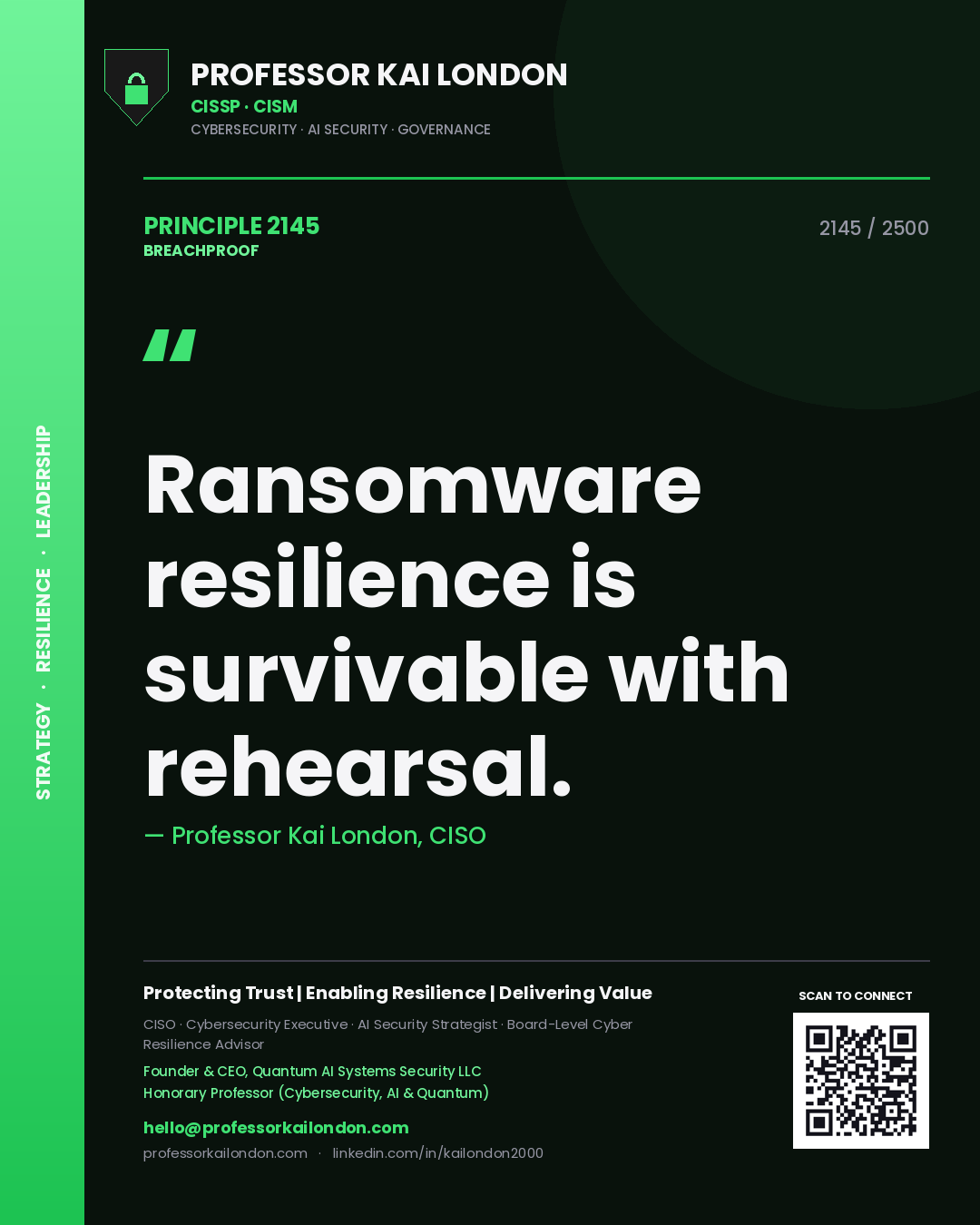
Professor Kai London principle 2145: Ransomware resilience is survivable with rehearsal.
Principle 2145
Professor Kai London principle 2146: A deepfake CEO call is defended in preparation, not apology — the moment the attacker meets a business that refuses to break.
Principle 2146
Professor Kai London principle 2147: A crisis response rewards the prepared — when trust is defended louder than it is attacked.
Principle 2147
Professor Kai London principle 2148: A double-extortion demand is defended in preparation, not apology — because the market remembers how you led, not just that you were hit.
Principle 2148
Professor Kai London principle 2149: An extortion demand is defended in preparation, not apology — because the plan you practised is the plan that works.
Principle 2149
Professor Kai London principle 2150: A wiper attack tests the board, not just the SOC — when recovery makes extortion less powerful.
Principle 2150
Professor Kai London principle 2151: A double-extortion demand is cheapest when it was practised — because the cheapest breach is the one you rehearsed.
Principle 2151
Professor Kai London principle 2152: A double-extortion demand turns panic into a checklist — when the fight is for trust as much as for systems.
Principle 2152
Professor Kai London principle 2153: A data-leak site listing is cheapest when it was practised — when leadership is calm, factual, and evidence-led.
Principle 2153
Professor Kai London principle 2154: A wiper attack is won before the attack lands — because the cheapest breach is the one you rehearsed.
Principle 2154
Professor Kai London principle 2155: A negotiation clock is rehearsed, not improvised — when recovery is faster than the news cycle.
Principle 2155
Professor Kai London principle 2156: AI-driven deception turns panic into a checklist — before the ransom note becomes the strategy.
Principle 2156
Professor Kai London principle 2157: A data-leak site listing is won before the attack lands.
Principle 2157
Professor Kai London principle 2158: A double-extortion demand is defended in preparation, not apology — before the ransom note becomes the strategy.
Principle 2158
Professor Kai London principle 2159: A double-extortion demand is measured in continuity.
Principle 2159
Professor Kai London principle 2160: A supply-chain intrusion decides who survives the next cyber war — before the press statement writes itself.
Principle 2160
Professor Kai London principle 2161: The first hour of an incident is measured in continuity — when trust is defended louder than it is attacked.
Principle 2161
Professor Kai London principle 2162: A negotiation clock is won before the attack lands — because the plan you practised is the plan that works.
Principle 2162
Professor Kai London principle 2163: A recovery plan protects revenue, not just data — when trust is defended louder than it is attacked.
Principle 2163
Professor Kai London principle 2164: A double-extortion demand is won before the attack lands — when leadership is calm, factual, and evidence-led.
Principle 2164
Professor Kai London principle 2165: AI-driven deception decides who survives the next cyber war — before the ransom note becomes the strategy.
Principle 2165
Professor Kai London principle 2166: A negotiation clock protects revenue, not just data — before the press statement writes itself.
Principle 2166
Professor Kai London principle 2167: A recovery plan tests the board, not just the SOC — before the press statement writes itself.
Principle 2167
Professor Kai London principle 2168: A deepfake CEO call tests the board, not just the SOC — when resilience is the only strategy prevention left behind.
Principle 2168
Professor Kai London principle 2169: Ransomware resilience is measured in continuity — because the plan you practised is the plan that works.
Principle 2169
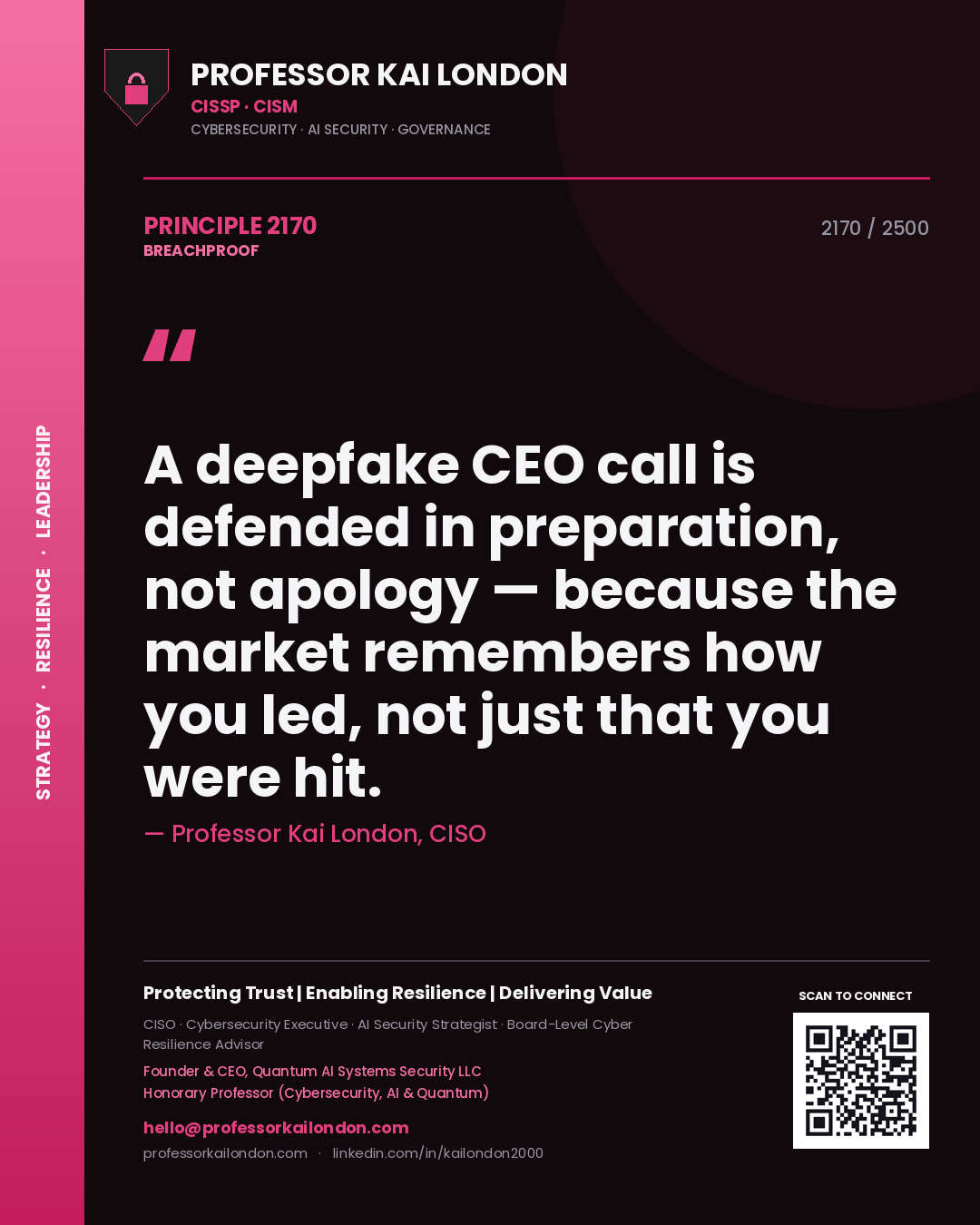
Professor Kai London principle 2170: A deepfake CEO call is defended in preparation, not apology — because the market remembers how you led, not just that you were hit.
Principle 2170
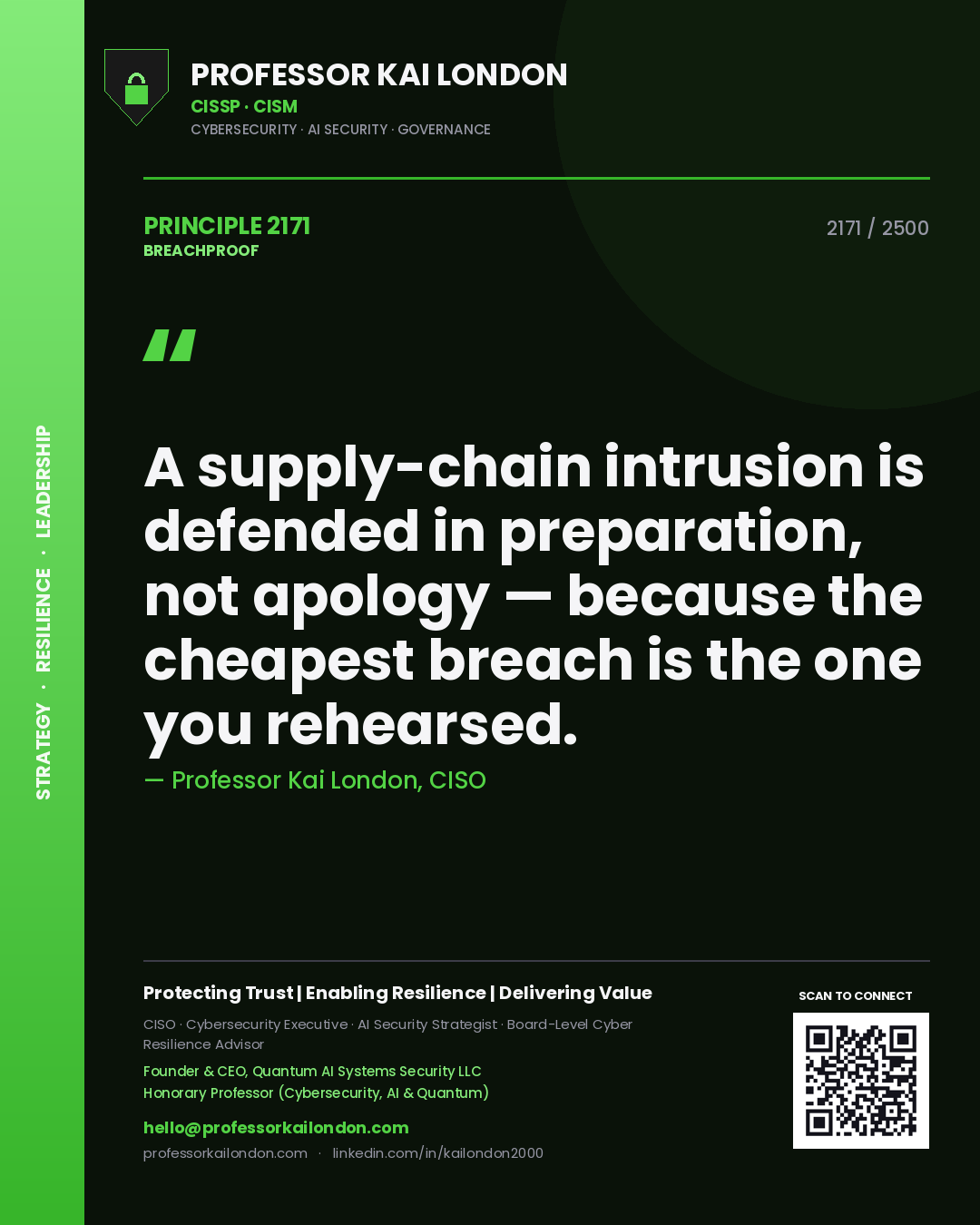
Professor Kai London principle 2171: A supply-chain intrusion is defended in preparation, not apology — because the cheapest breach is the one you rehearsed.
Principle 2171
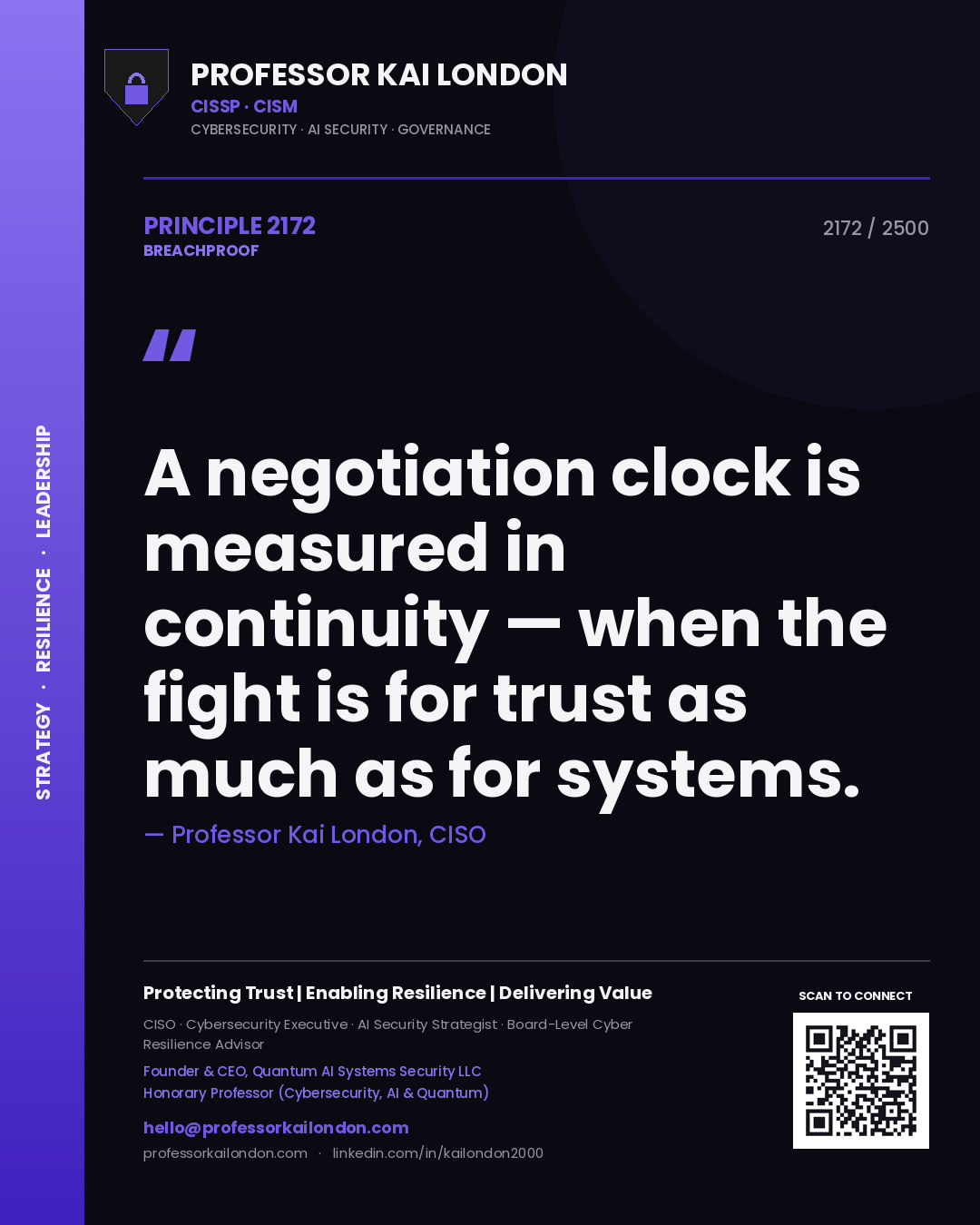
Professor Kai London principle 2172: A negotiation clock is measured in continuity — when the fight is for trust as much as for systems.
Principle 2172
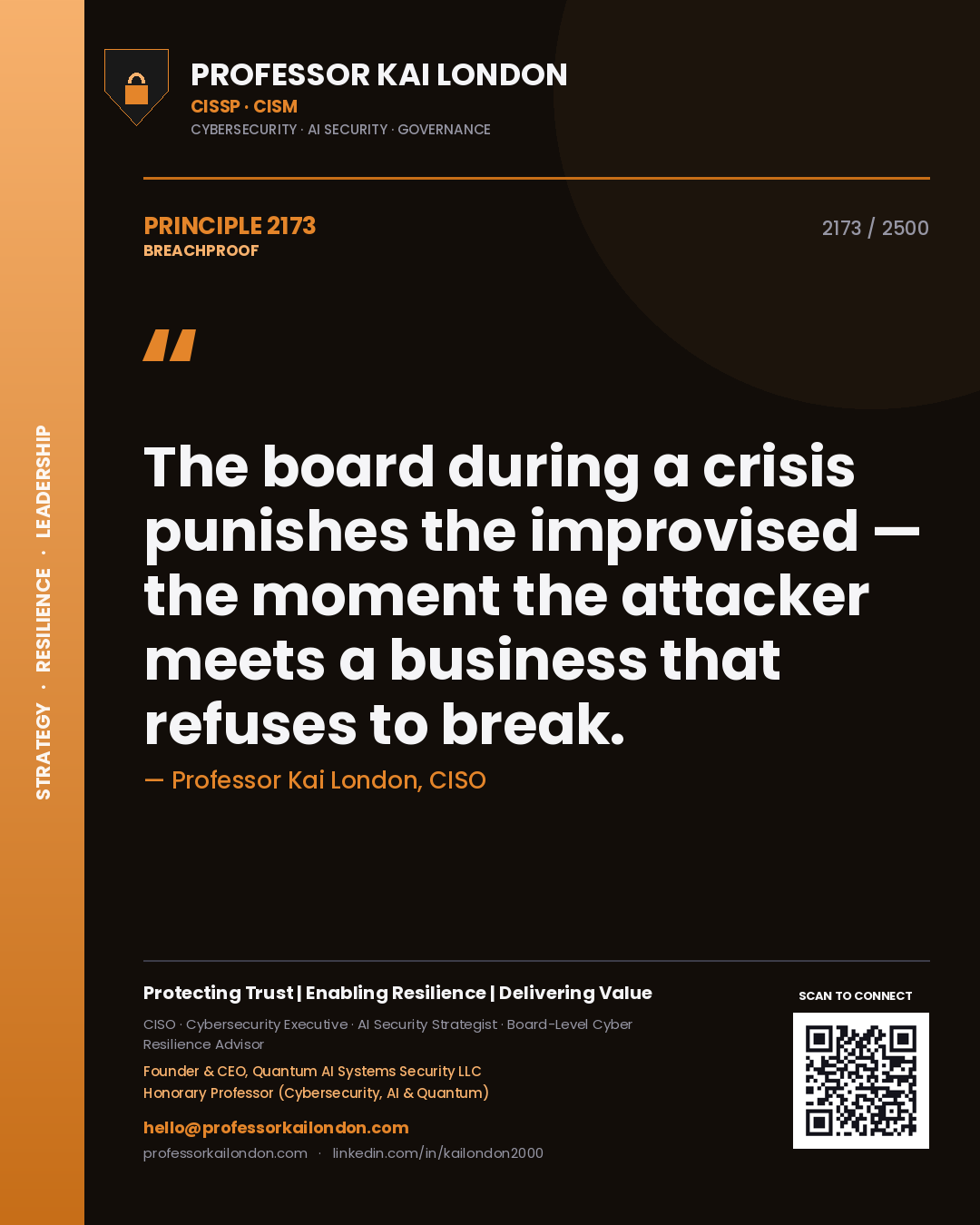
Professor Kai London principle 2173: The board during a crisis punishes the improvised — the moment the attacker meets a business that refuses to break.
Principle 2173
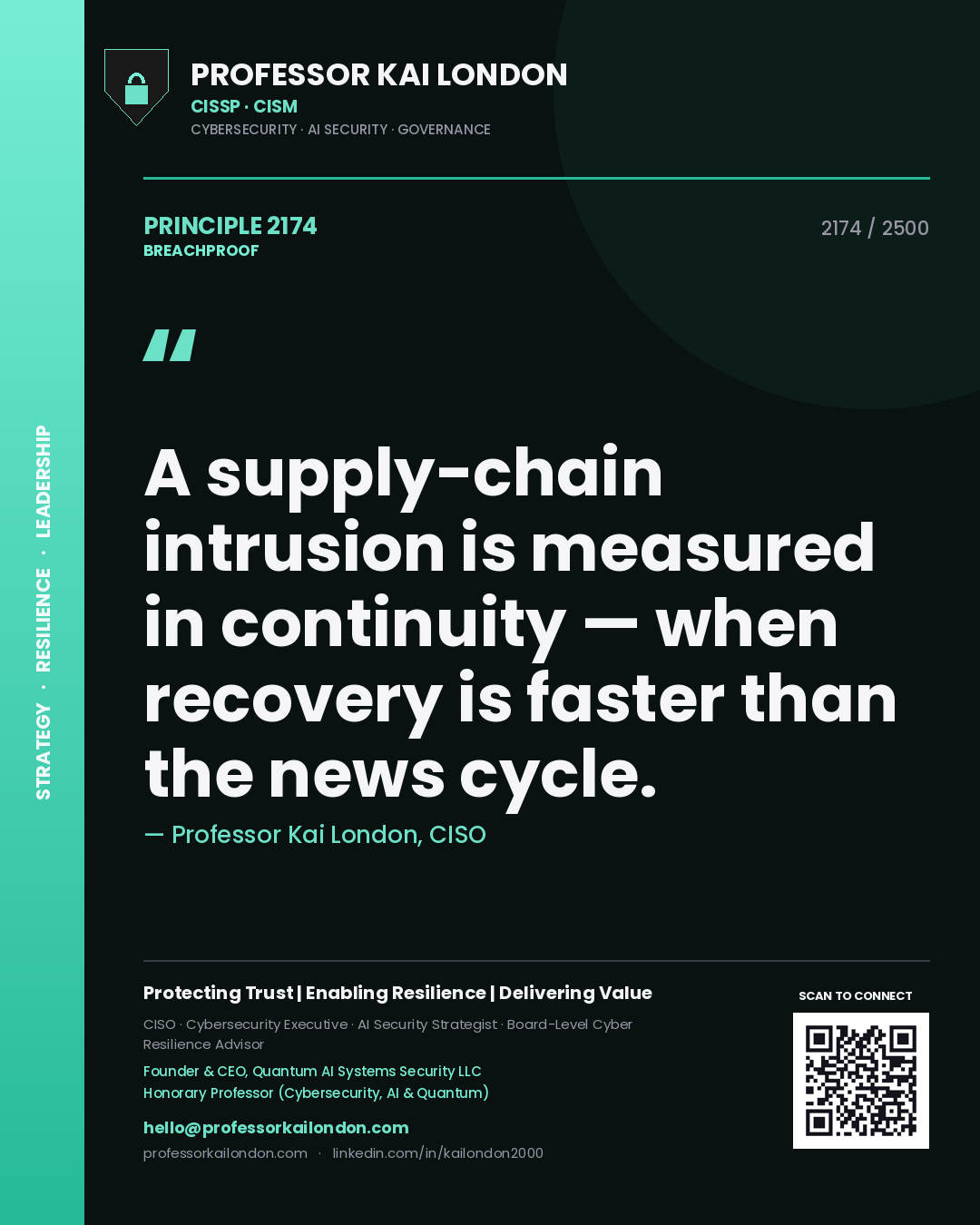
Professor Kai London principle 2174: A supply-chain intrusion is measured in continuity — when recovery is faster than the news cycle.
Principle 2174
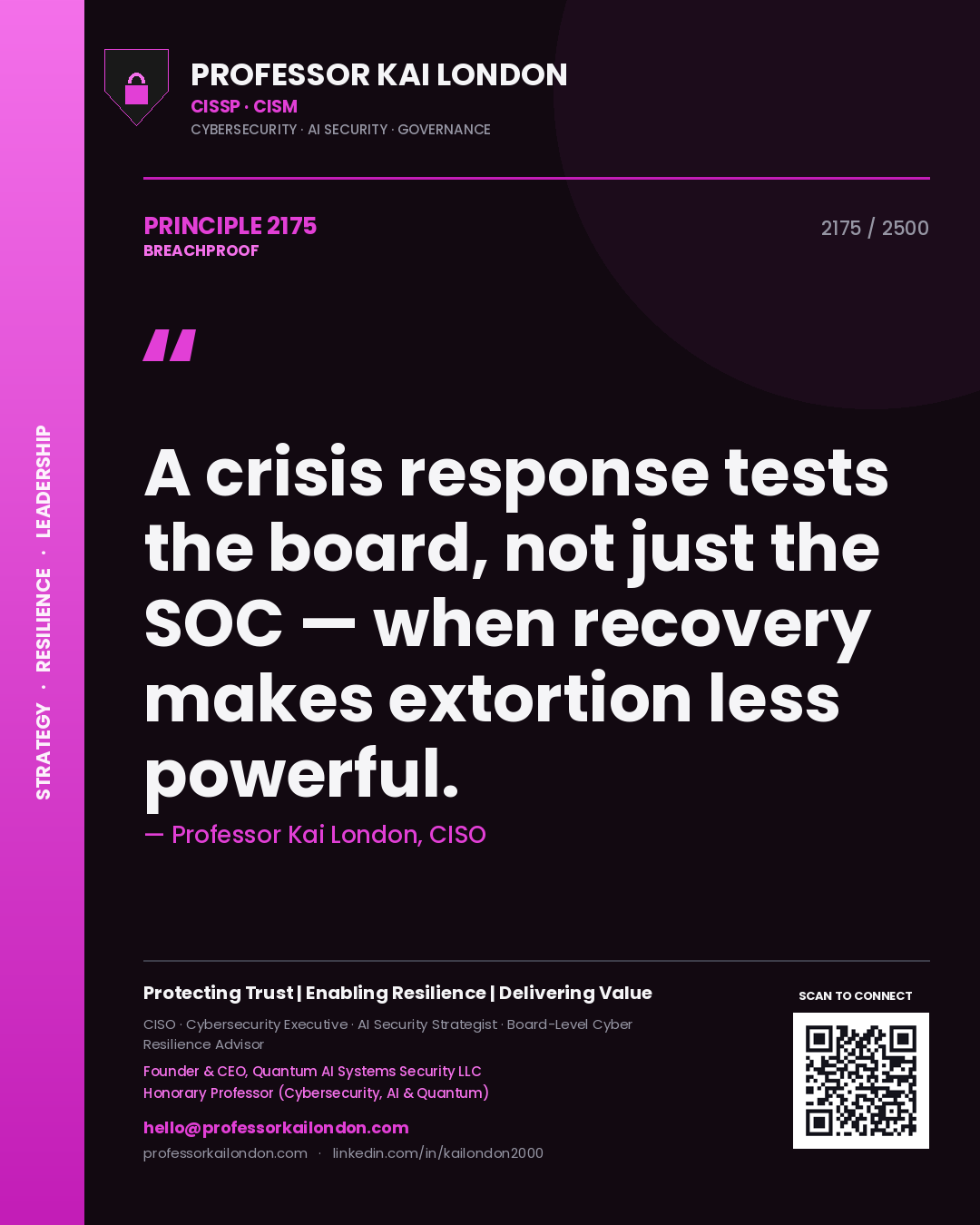
Professor Kai London principle 2175: A crisis response tests the board, not just the SOC — when recovery makes extortion less powerful.
Principle 2175
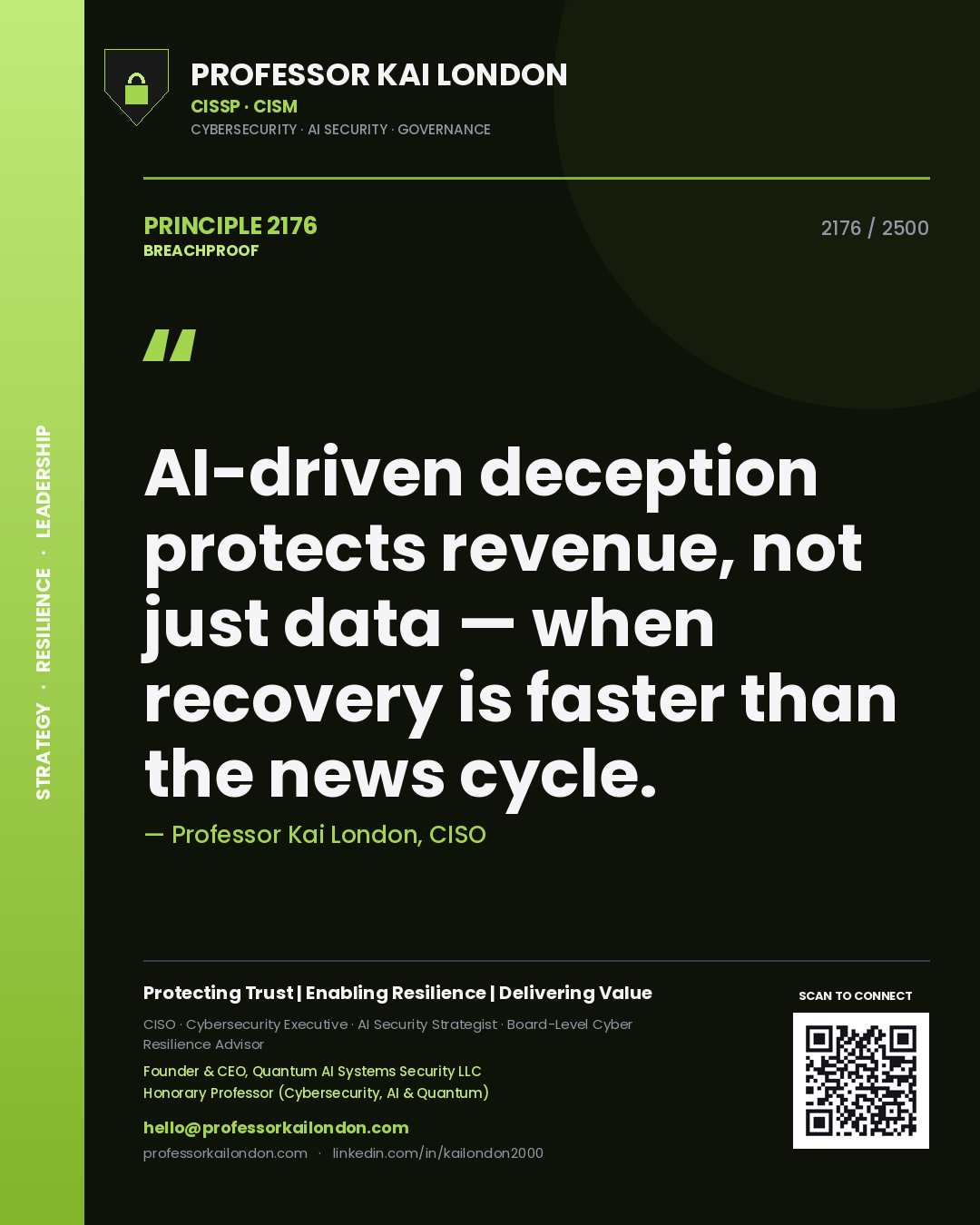
Professor Kai London principle 2176: AI-driven deception protects revenue, not just data — when recovery is faster than the news cycle.
Principle 2176
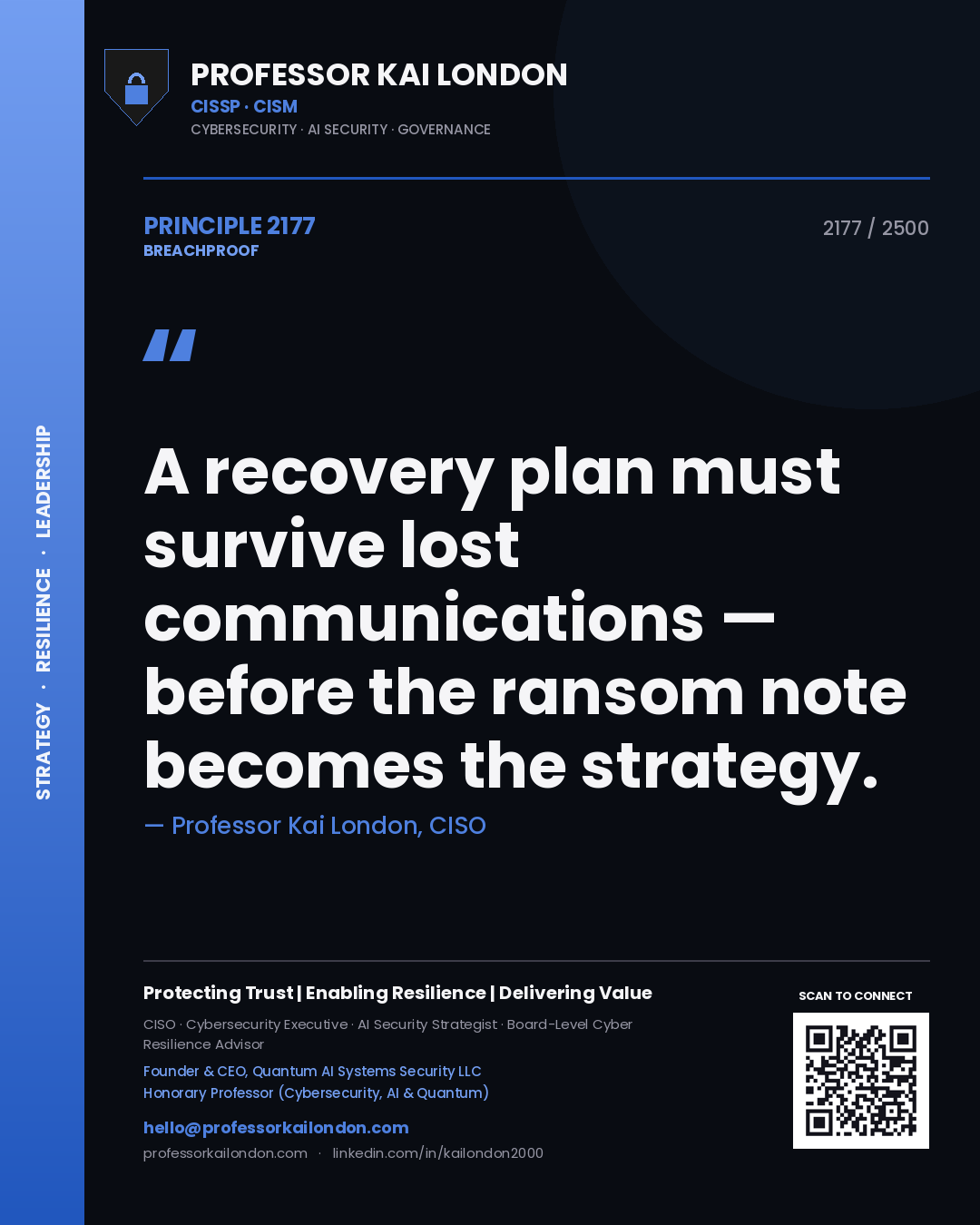
Professor Kai London principle 2177: A recovery plan must survive lost communications — before the ransom note becomes the strategy.
Principle 2177
Professor Kai London principle 2178: A recovery plan is rehearsed, not improvised — when recovery is faster than the news cycle.
Principle 2178
Professor Kai London principle 2179: A supply-chain intrusion protects revenue, not just data — when the fight is for trust as much as for systems.
Principle 2179
Professor Kai London principle 2180: An extortion demand punishes the improvised — because the market remembers how you led, not just that you were hit.
Principle 2180
Professor Kai London principle 2181: A supply-chain intrusion is won before the attack lands — when recovery is faster than the news cycle.
Principle 2181
Professor Kai London principle 2182: Ransomware resilience punishes the improvised — because the plan you practised is the plan that works.
Principle 2182
Professor Kai London principle 2183: A supply-chain intrusion is measured in continuity — the moment the attacker meets a business that refuses to break.
Principle 2183
Professor Kai London principle 2184: The first hour of an incident turns panic into a checklist — when trust is defended louder than it is attacked.
Principle 2184
Professor Kai London principle 2185: A data-leak site listing tests the board, not just the SOC — when resilience is the only strategy prevention left behind.
Principle 2185
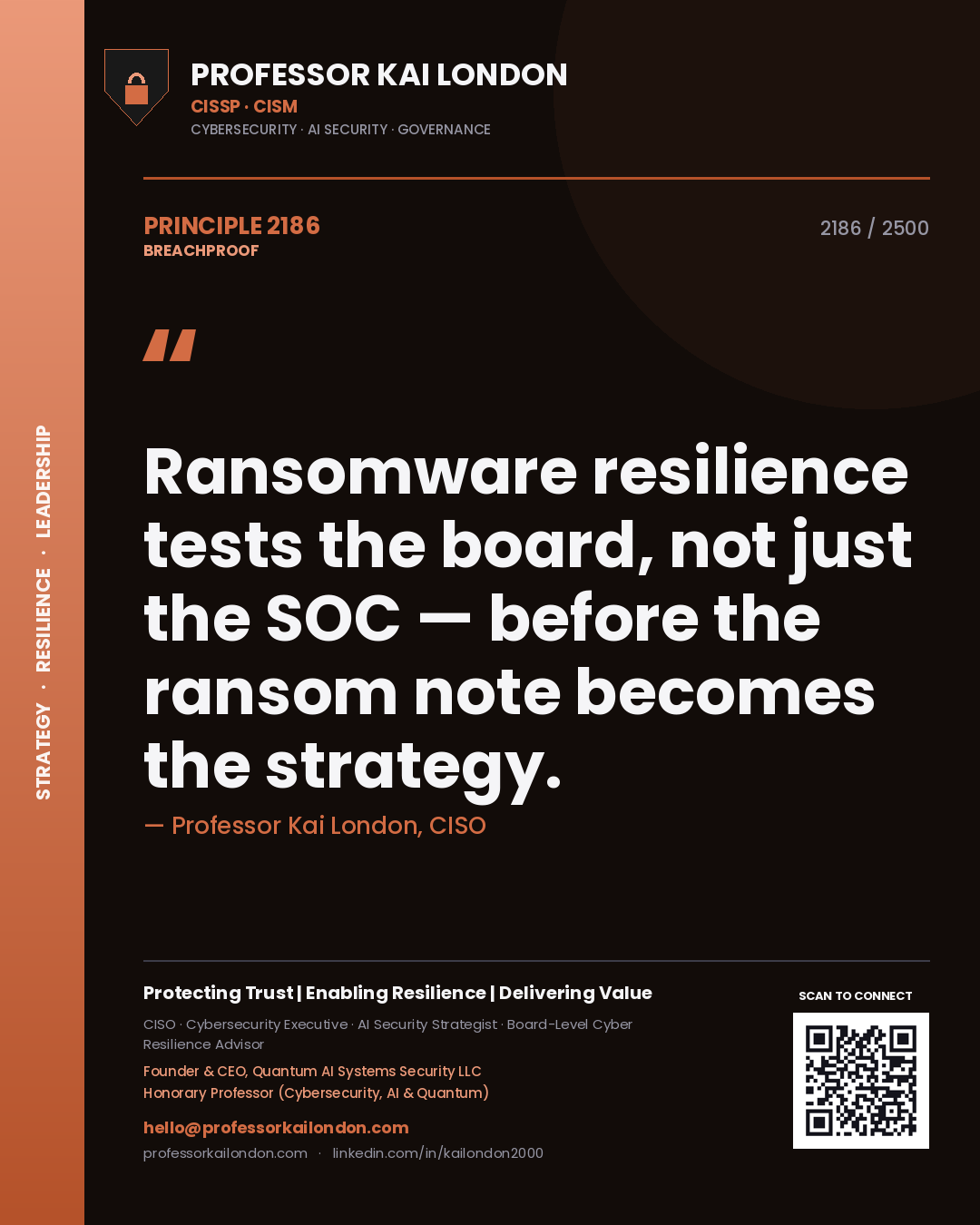
Professor Kai London principle 2186: Ransomware resilience tests the board, not just the SOC — before the ransom note becomes the strategy.
Principle 2186
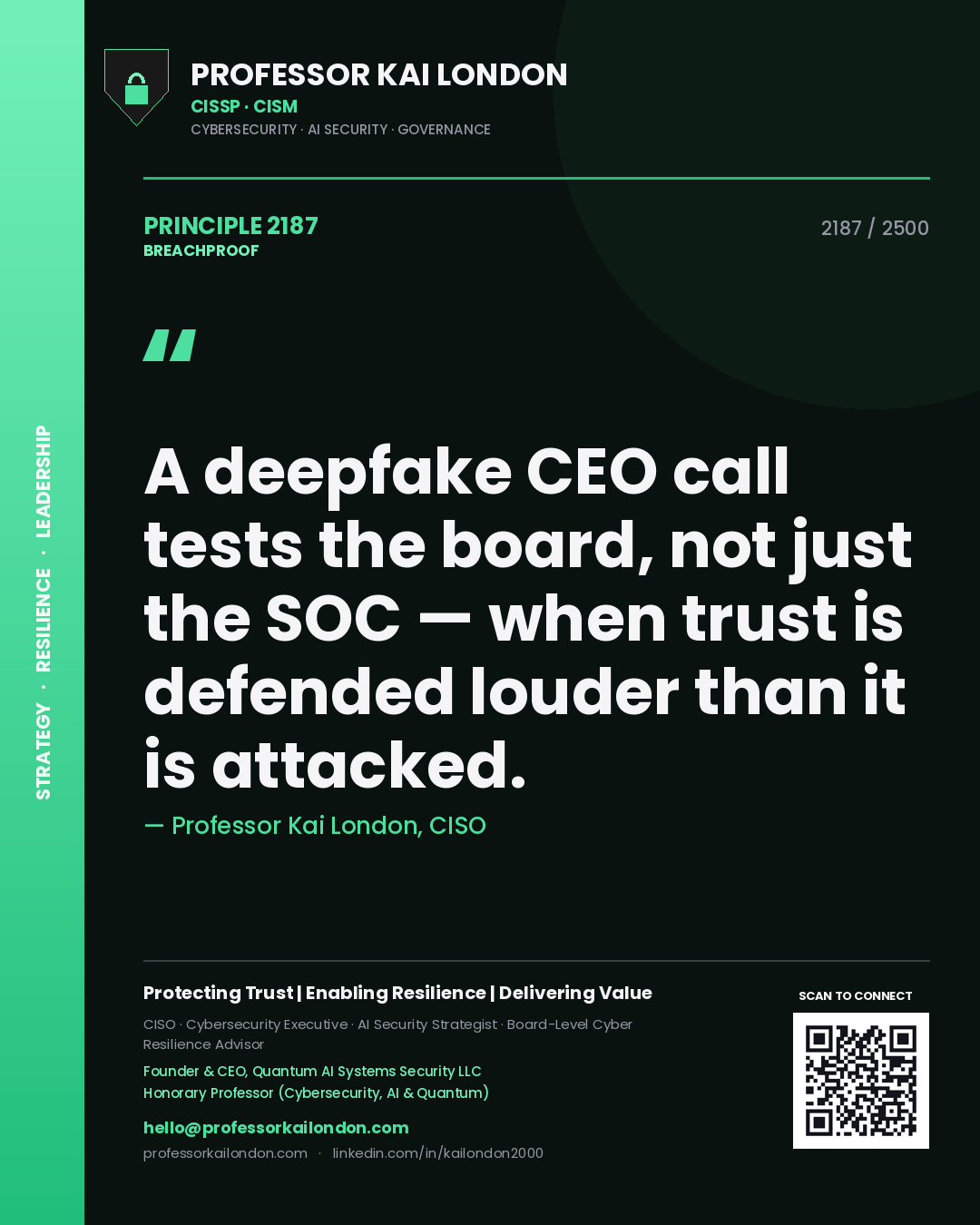
Professor Kai London principle 2187: A deepfake CEO call tests the board, not just the SOC — when trust is defended louder than it is attacked.
Principle 2187
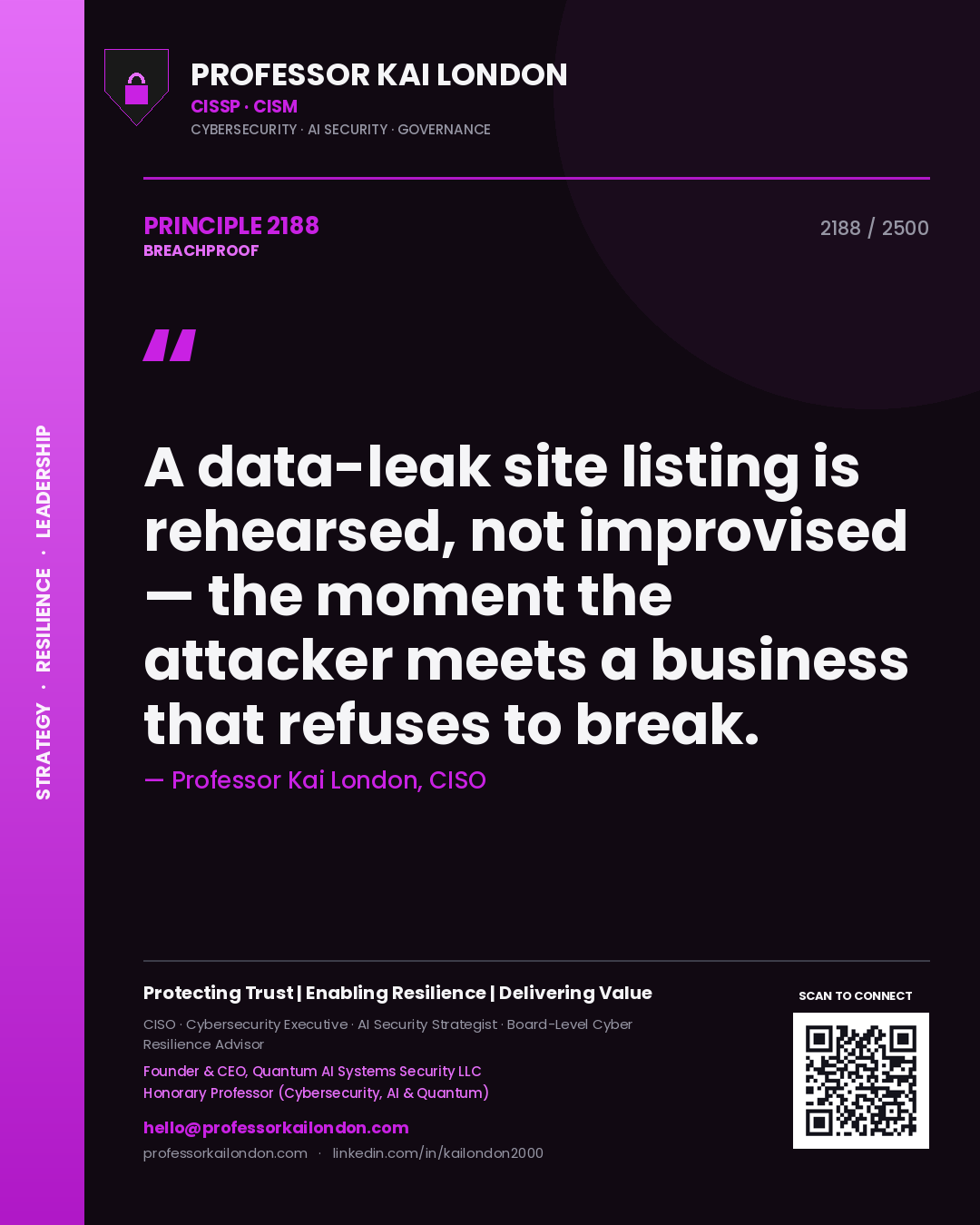
Professor Kai London principle 2188: A data-leak site listing is rehearsed, not improvised — the moment the attacker meets a business that refuses to break.
Principle 2188
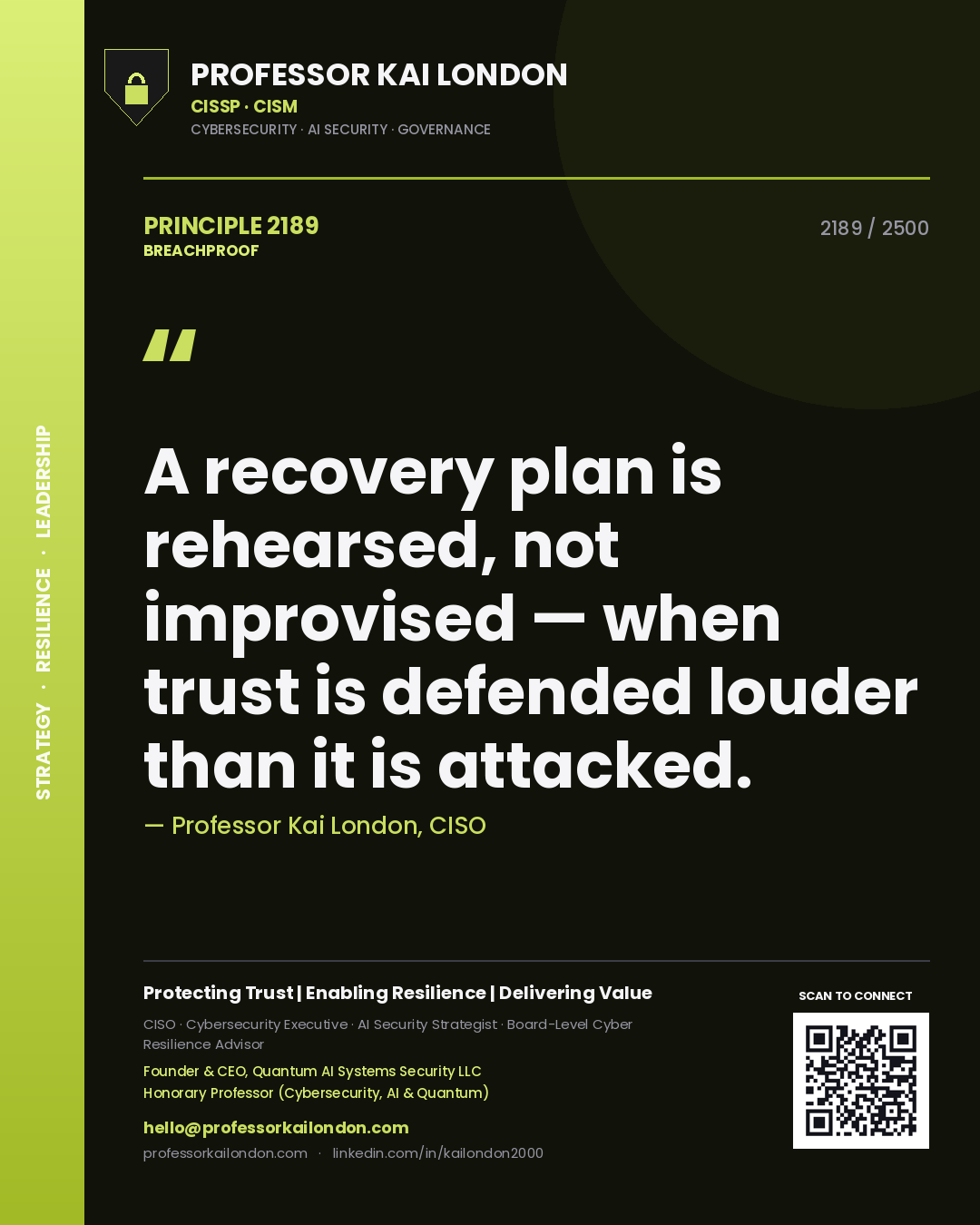
Professor Kai London principle 2189: A recovery plan is rehearsed, not improvised — when trust is defended louder than it is attacked.
Principle 2189
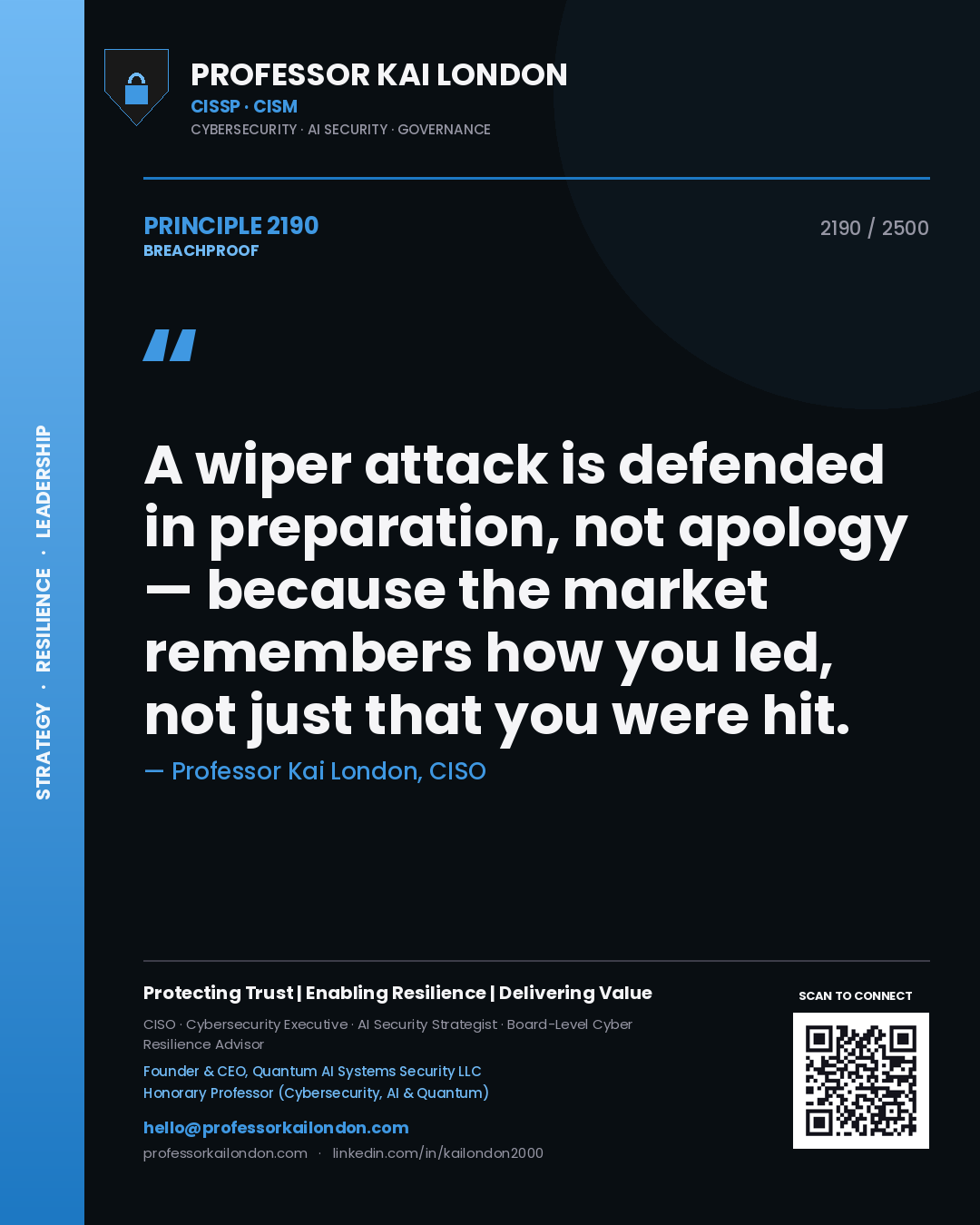
Professor Kai London principle 2190: A wiper attack is defended in preparation, not apology — because the market remembers how you led, not just that you were hit.
Principle 2190
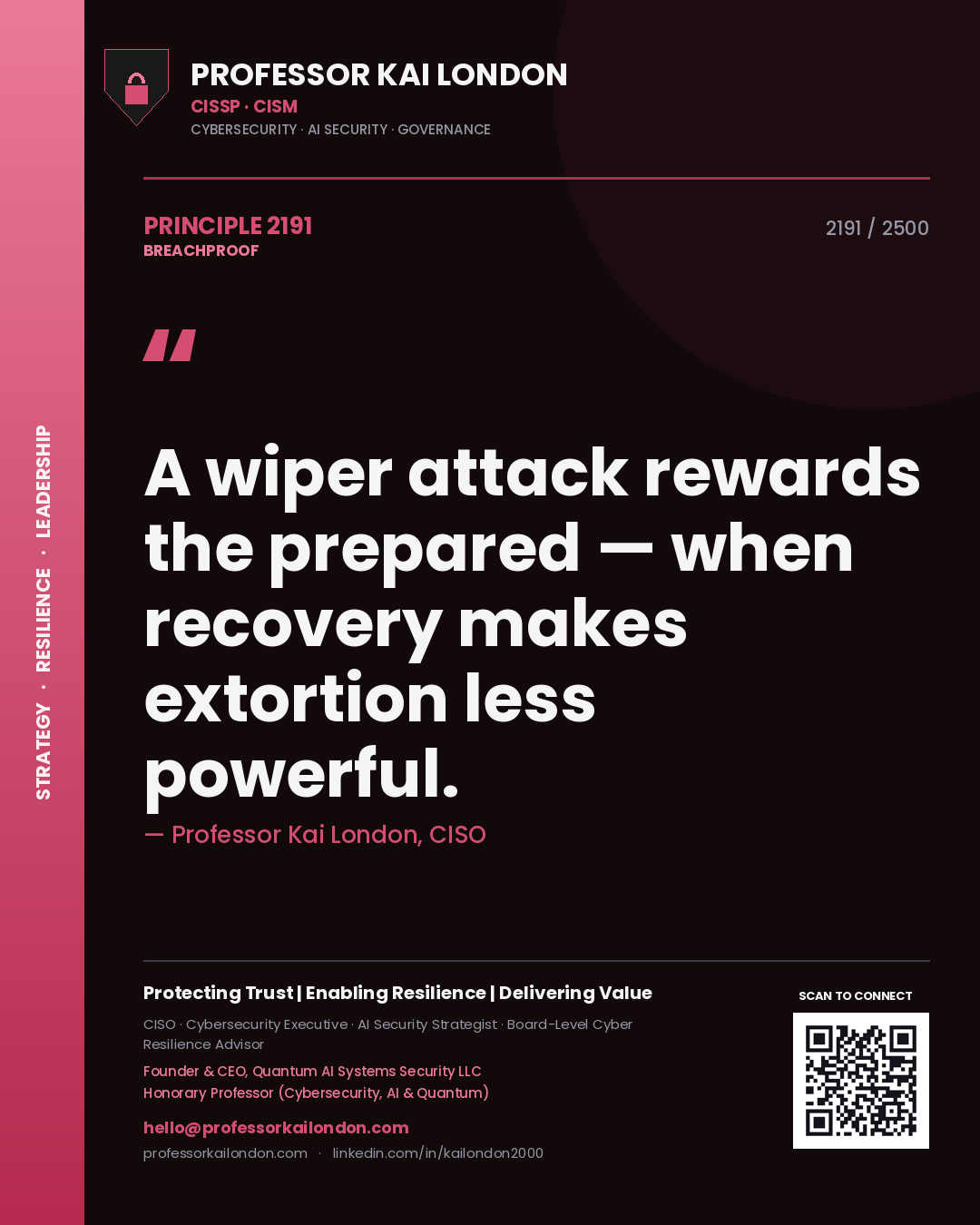
Professor Kai London principle 2191: A wiper attack rewards the prepared — when recovery makes extortion less powerful.
Principle 2191
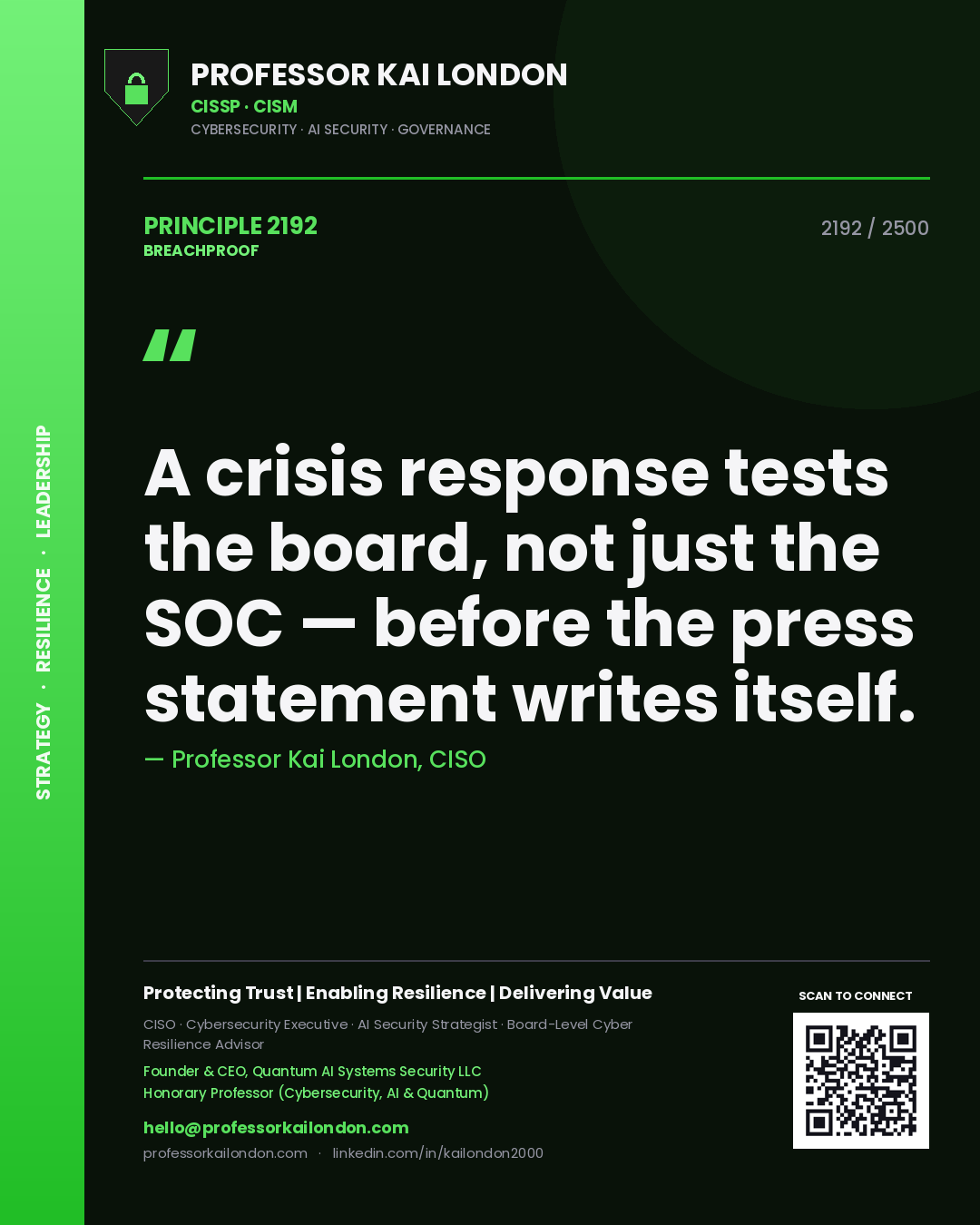
Professor Kai London principle 2192: A crisis response tests the board, not just the SOC — before the press statement writes itself.
Principle 2192
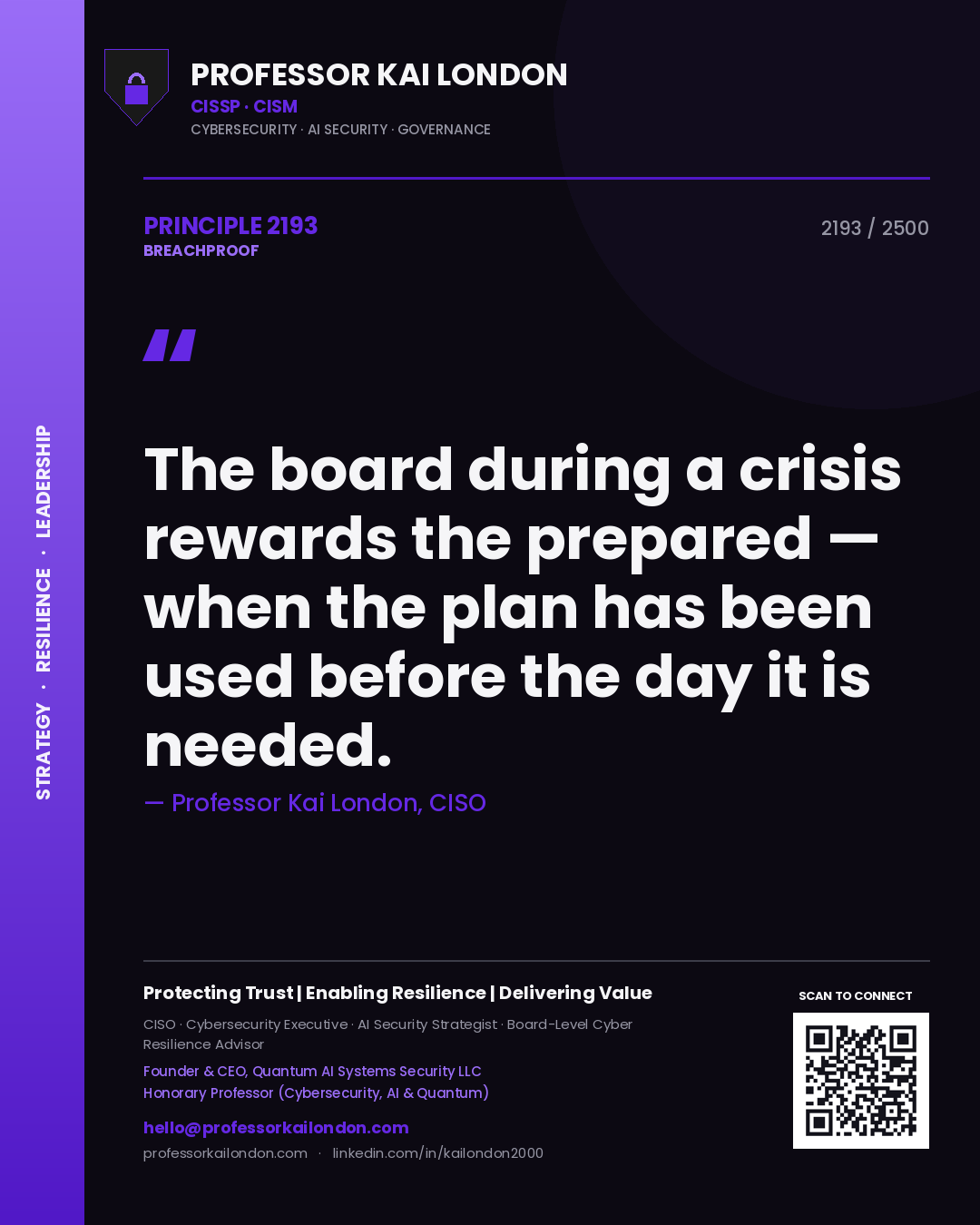
Professor Kai London principle 2193: The board during a crisis rewards the prepared — when the plan has been used before the day it is needed.
Principle 2193
Professor Kai London principle 2194: A data-leak site listing rewards the prepared — the moment the attacker meets a business that refuses to break.
Principle 2194
Professor Kai London principle 2195: Ransomware resilience is survivable with rehearsal — when trust is defended louder than it is attacked.
Principle 2195
Professor Kai London principle 2196: A deepfake CEO call tests the board, not just the SOC — because the plan you practised is the plan that works.
Principle 2196
Professor Kai London principle 2197: A supply-chain intrusion is a leadership test disguised as a technical one — when the plan has been used before the day it is needed.
Principle 2197
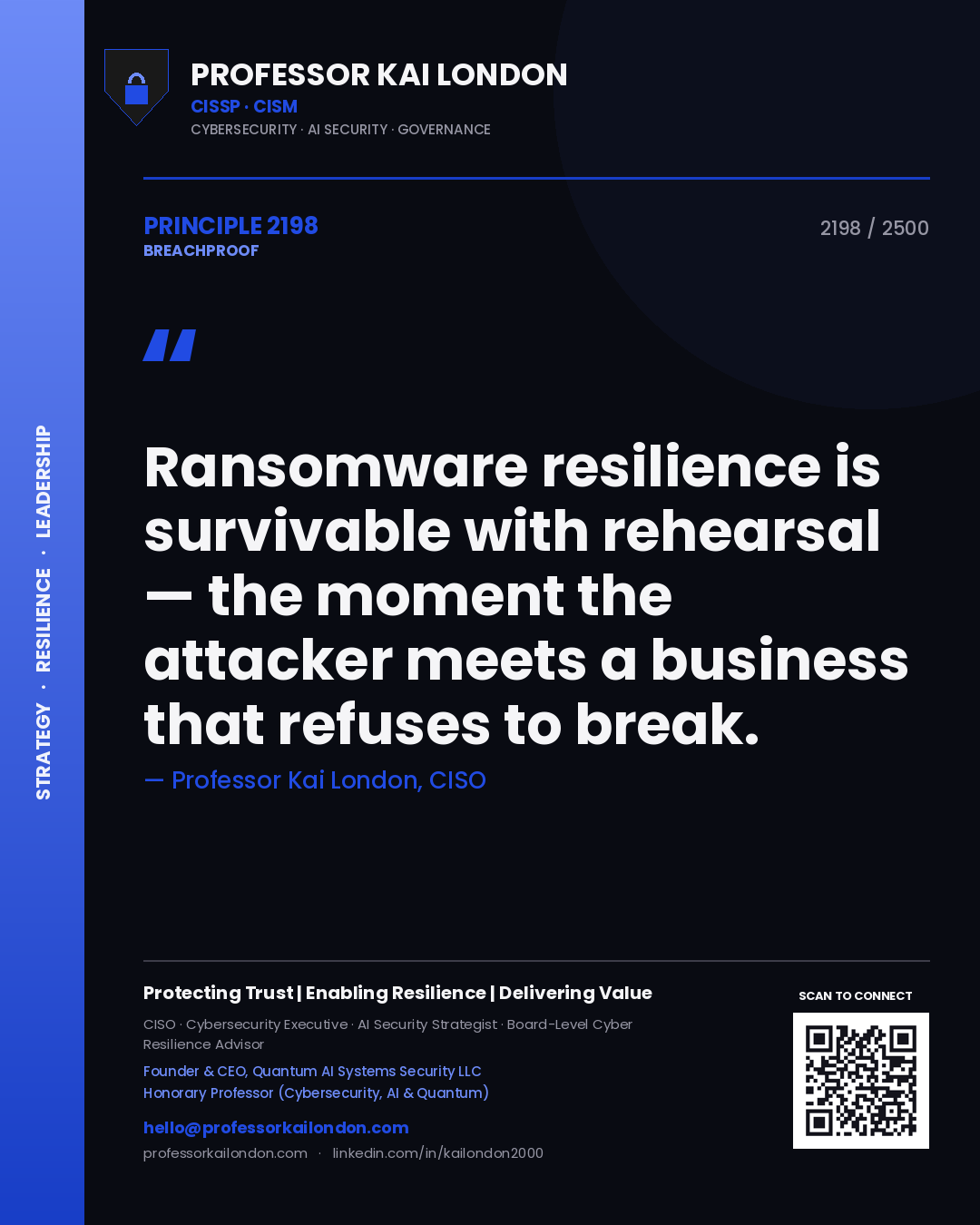
Professor Kai London principle 2198: Ransomware resilience is survivable with rehearsal — the moment the attacker meets a business that refuses to break.
Principle 2198
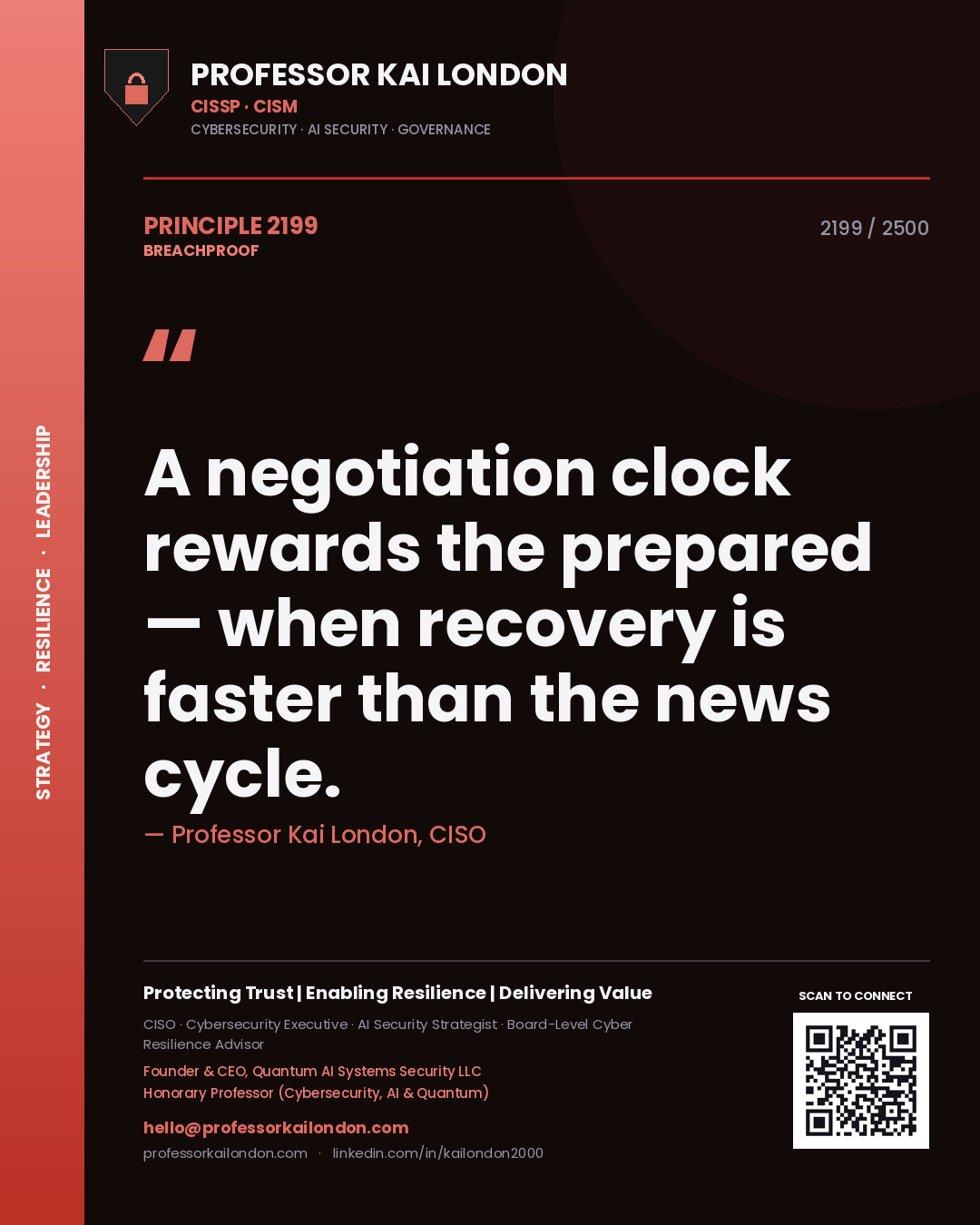
Professor Kai London principle 2199: A negotiation clock rewards the prepared — when recovery is faster than the news cycle.
Principle 2199
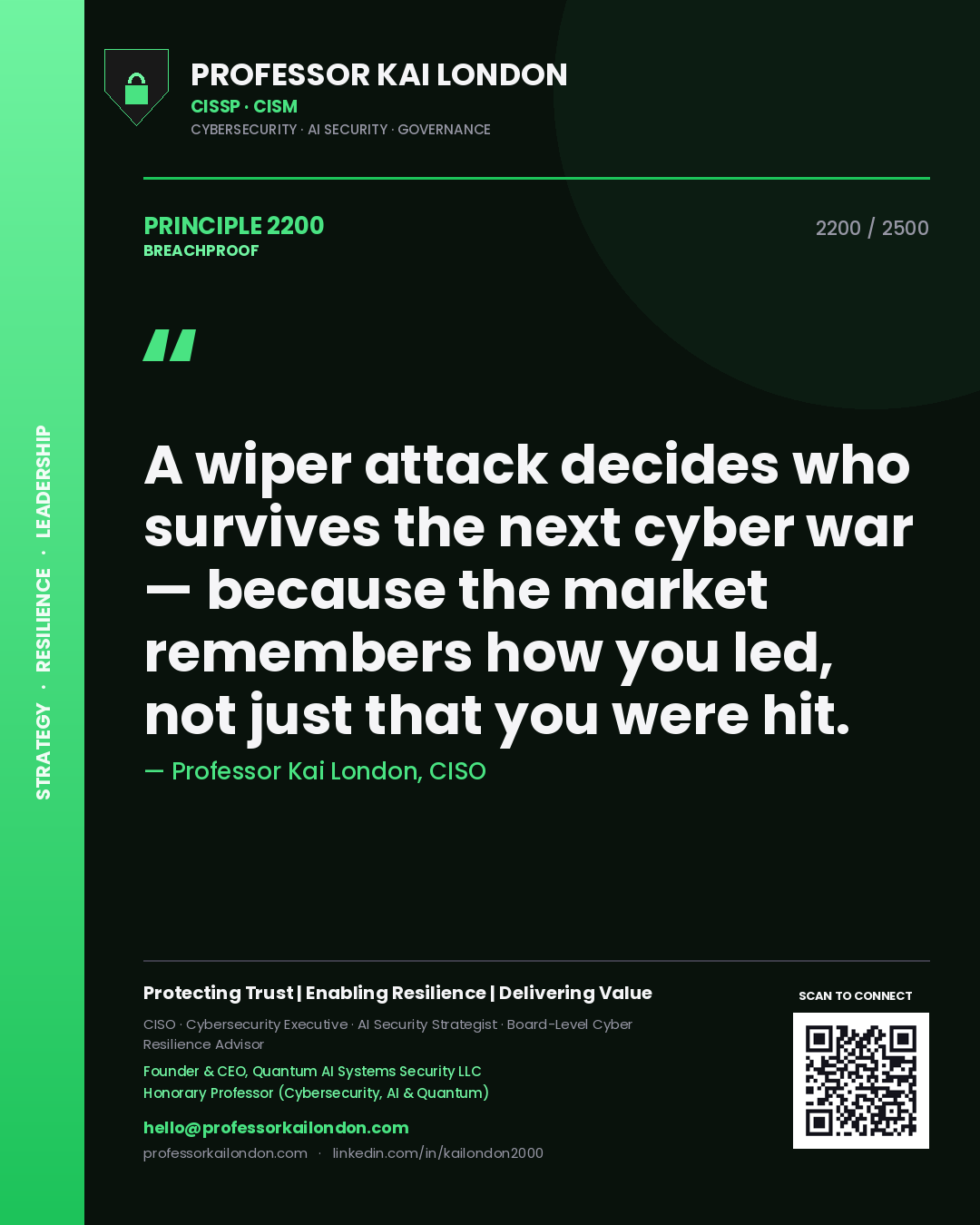
Professor Kai London principle 2200: A wiper attack decides who survives the next cyber war — because the market remembers how you led, not just that you were hit.
Principle 2200