The Last Login — Gallery (Page 1 of 100)
Professor Kai London principle 1: A credential should be verified — before standing access becomes standing risk.
Principle 1
Professor Kai London principle 2: A trust boundary has to be proven — because every breach begins with a login that should have been stopped.
Principle 2
Professor Kai London principle 3: A privileged account has to be proven.
Principle 3
Professor Kai London principle 4: An access decision should be verified.
Principle 4
Professor Kai London principle 5: A token is a decision, not a door — when the account is governed as tightly as the data.
Principle 5
Professor Kai London principle 6: A token has to be proven — because every breach begins with a login that should have been stopped.
Principle 6
Professor Kai London principle 7: An access decision must be watched — because an unused key is a door you forgot you built.
Principle 7
Professor Kai London principle 8: An identity must be watched — because every breach begins with a login that should have been stopped.
Principle 8
Professor Kai London principle 9: An authentication event is the new perimeter — when verification is continuous, not a one-time gate.
Principle 9
Professor Kai London principle 10: A session is a decision, not a door — when verification is continuous, not a one-time gate.
Principle 10
Professor Kai London principle 11: Every login has to be proven — when verification is continuous, not a one-time gate.
Principle 11
Professor Kai London principle 12: Conditional access must earn its scope — or the attacker signs in rather than breaks in.
Principle 12
Professor Kai London principle 13: A privileged account needs to be detected — when verification is continuous, not a one-time gate.
Principle 13
Professor Kai London principle 14: A privileged account must be watched — the moment trust is assumed instead of checked.
Principle 14
Professor Kai London principle 15: A privileged account is the new perimeter — because every breach begins with a login that should have been stopped.
Principle 15
Professor Kai London principle 16: An identity needs to be detected — because every breach begins with a login that should have been stopped.
Principle 16
Professor Kai London principle 17: An access decision has to be proven — before the last login is the attacker's first.
Principle 17
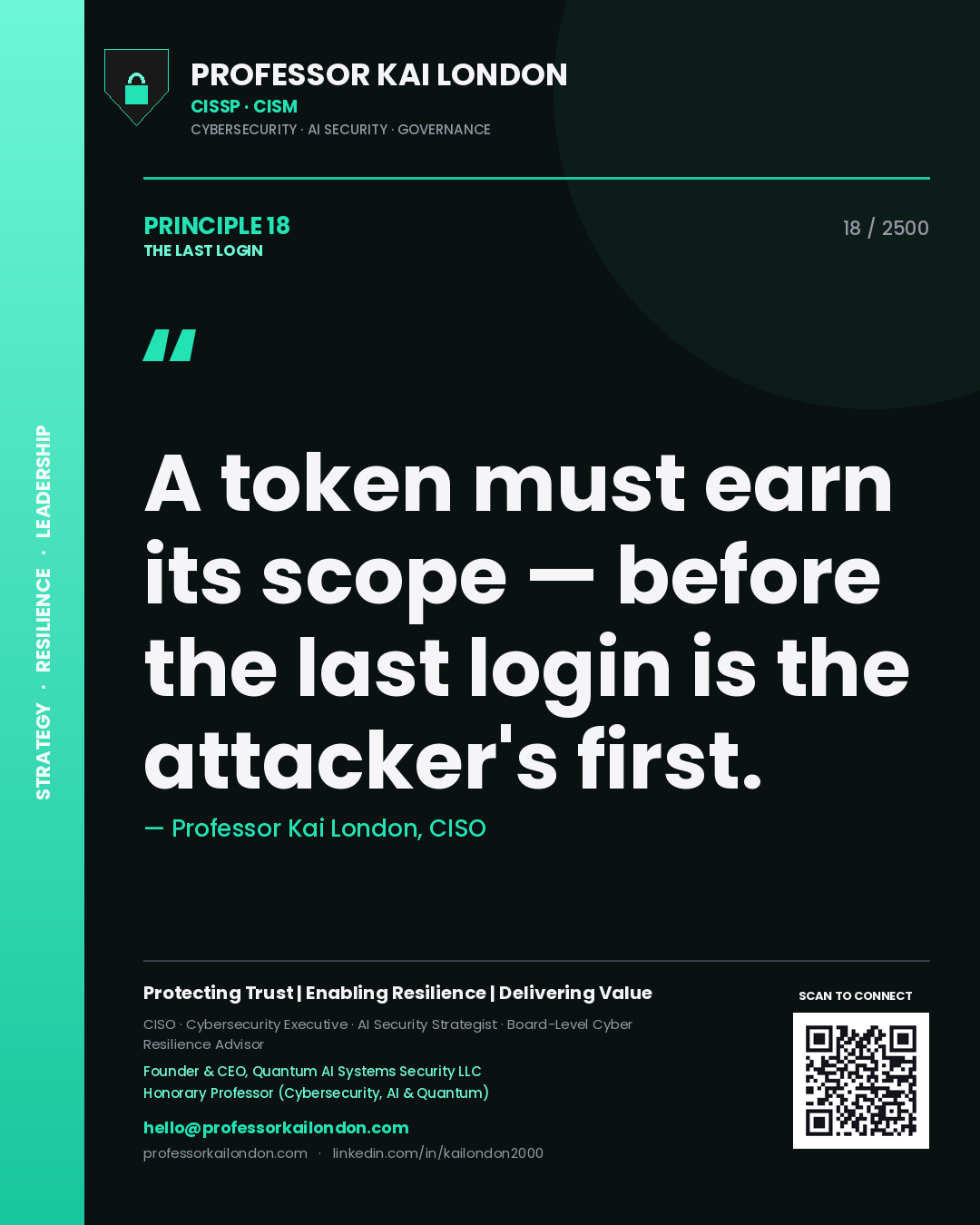
Professor Kai London principle 18: A token must earn its scope — before the last login is the attacker's first.
Principle 18
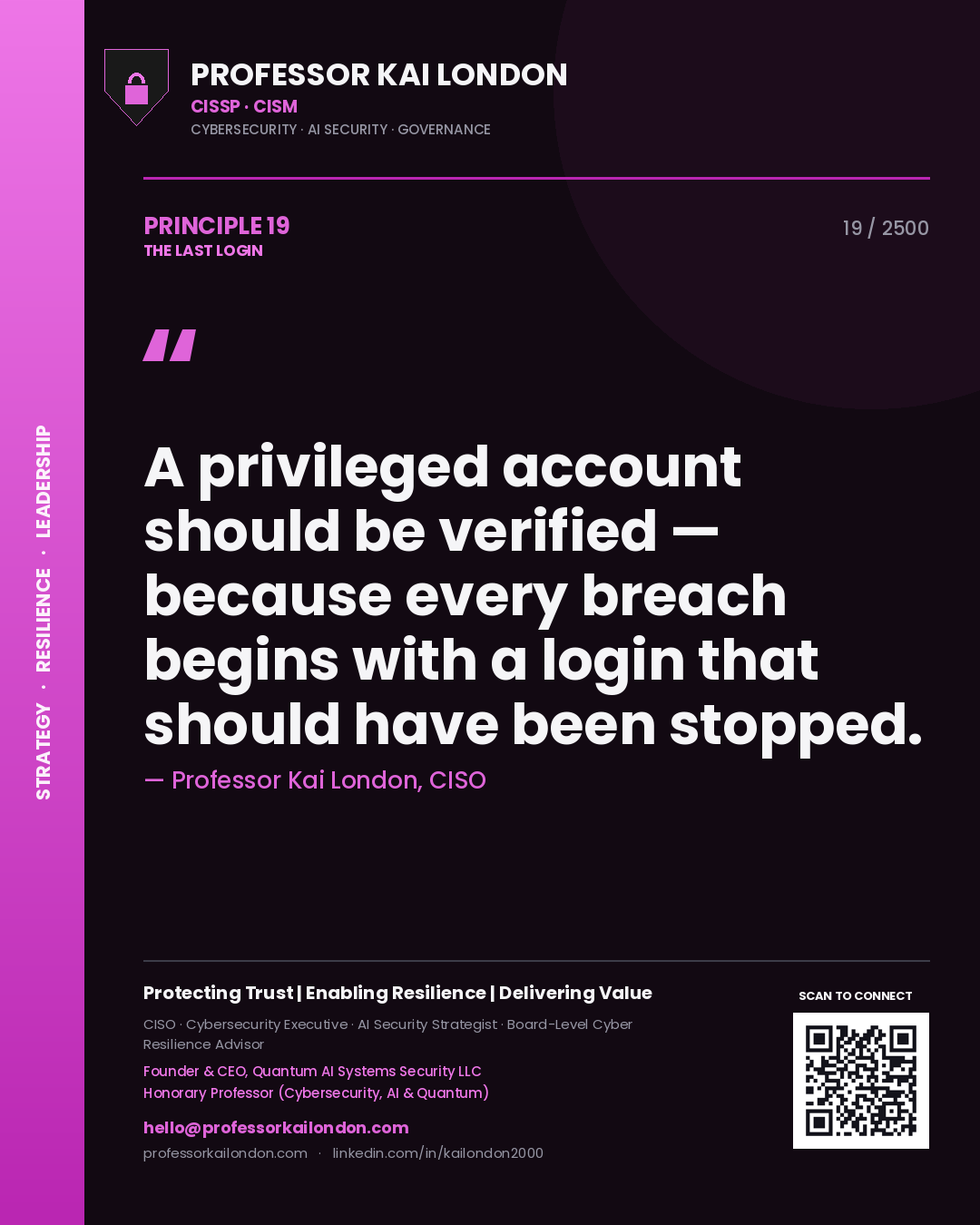
Professor Kai London principle 19: A privileged account should be verified — because every breach begins with a login that should have been stopped.
Principle 19
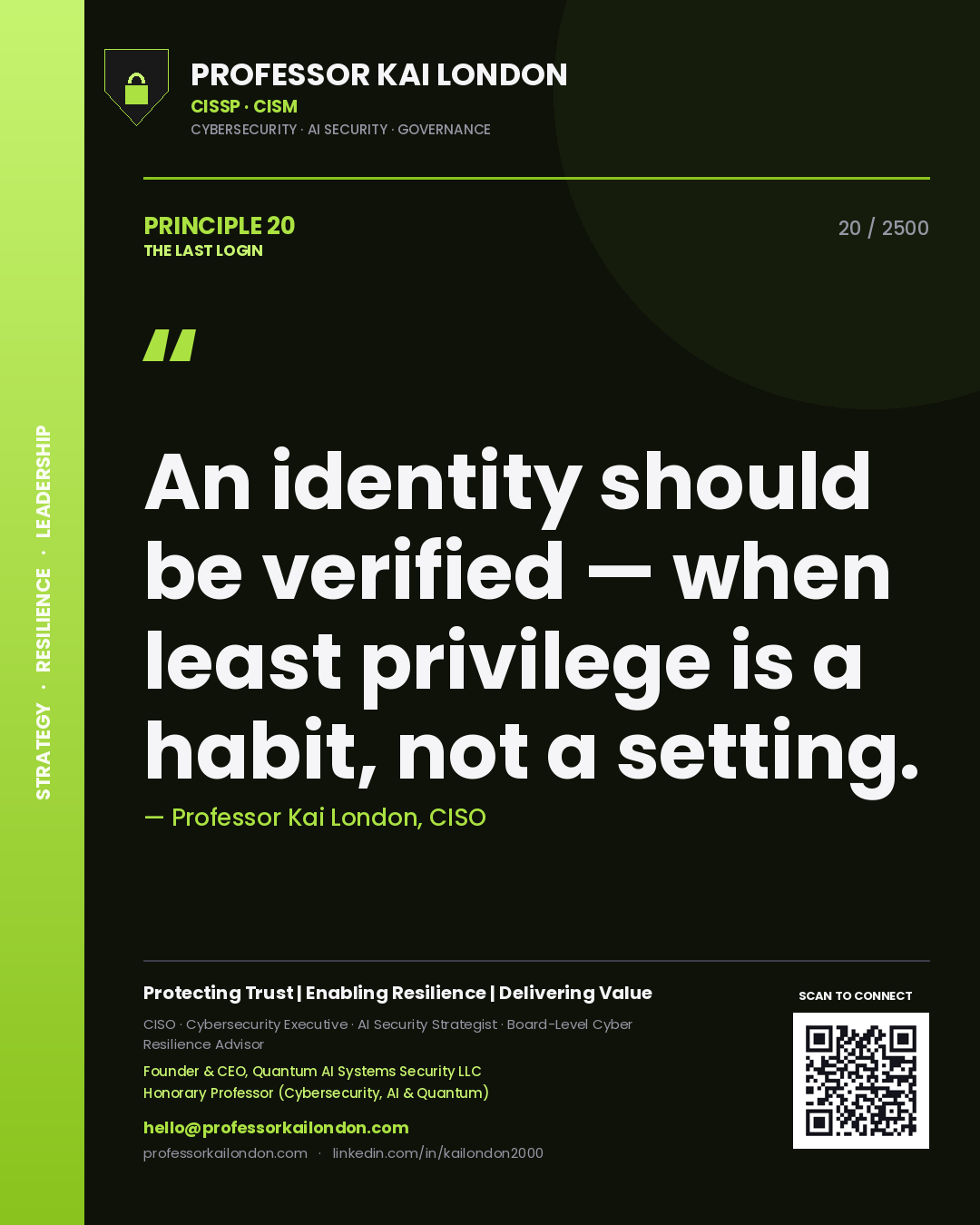
Professor Kai London principle 20: An identity should be verified — when least privilege is a habit, not a setting.
Principle 20
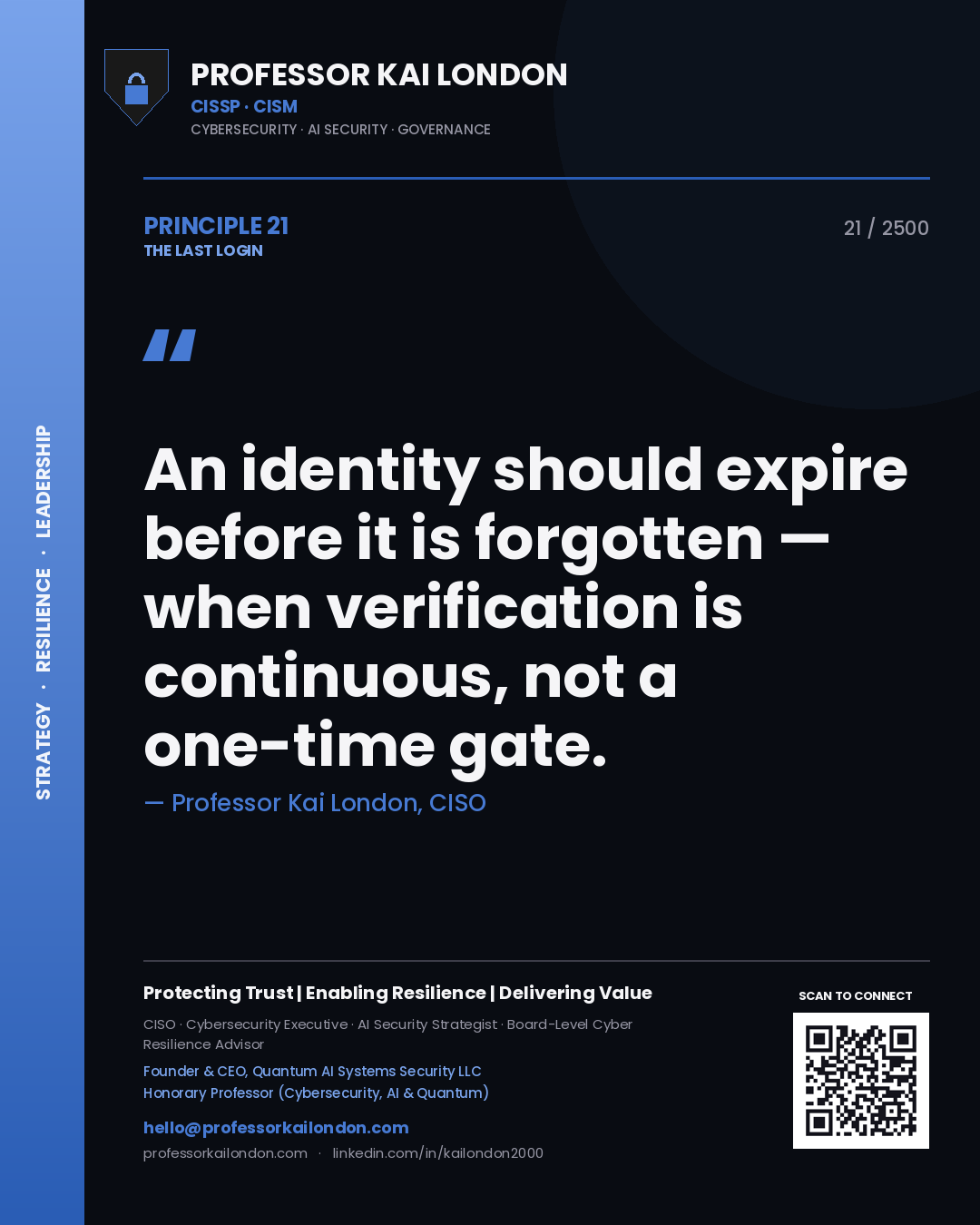
Professor Kai London principle 21: An identity should expire before it is forgotten — when verification is continuous, not a one-time gate.
Principle 21
Professor Kai London principle 22: A session must be limited — when detection meets the identity, not just the network.
Principle 22
Professor Kai London principle 23: An access decision must earn its scope — because every breach begins with a login that should have been stopped.
Principle 23
Professor Kai London principle 24: An identity should be verified — or the attacker signs in rather than breaks in.
Principle 24
Professor Kai London principle 25: A session is the new perimeter — the moment trust is assumed instead of checked.
Principle 25
Professor Kai London principle 26: A privileged account needs to be detected — when least privilege is a habit, not a setting.
Principle 26
Professor Kai London principle 27: A session must be limited — before standing access becomes standing risk.
Principle 27
Professor Kai London principle 28: Every login is the new perimeter — or the attacker signs in rather than breaks in.
Principle 28
Professor Kai London principle 29: A session has to be proven — before standing access becomes standing risk.
Principle 29
Professor Kai London principle 30: An access decision is a decision, not a door — or the attacker signs in rather than breaks in.
Principle 30
Professor Kai London principle 31: An authentication event must be watched — or the attacker signs in rather than breaks in.
Principle 31
Professor Kai London principle 32: A token is the new perimeter — when least privilege is a habit, not a setting.
Principle 32
Professor Kai London principle 33: An identity has to be proven.
Principle 33
Professor Kai London principle 34: A privileged account must be limited — before standing access becomes standing risk.
Principle 34
Professor Kai London principle 35: An access decision must earn its scope — because an unused key is a door you forgot you built.
Principle 35
Professor Kai London principle 36: A privileged account is the new perimeter — when least privilege is a habit, not a setting.
Principle 36
Professor Kai London principle 37: Conditional access should be verified — because an unused key is a door you forgot you built.
Principle 37
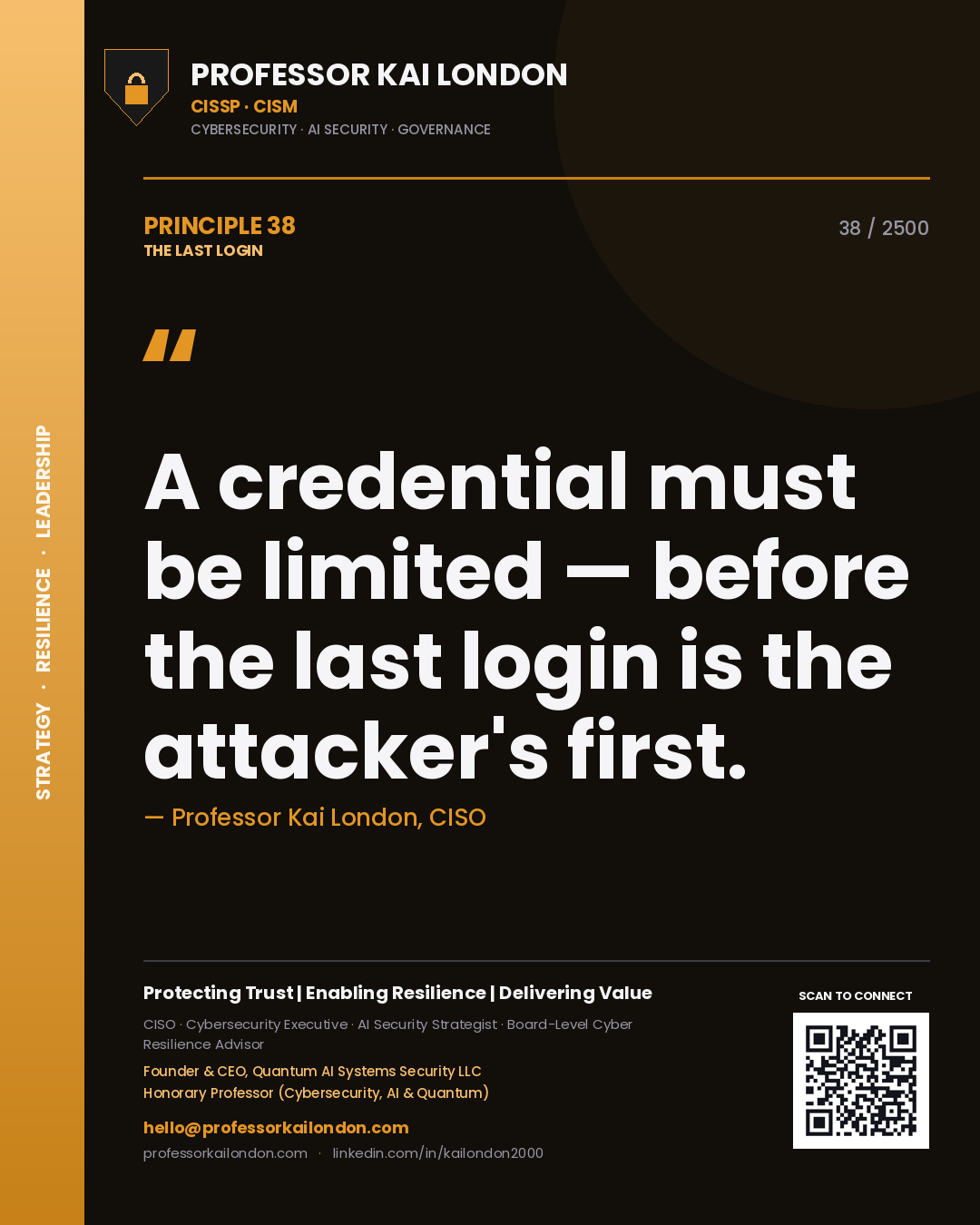
Professor Kai London principle 38: A credential must be limited — before the last login is the attacker's first.
Principle 38
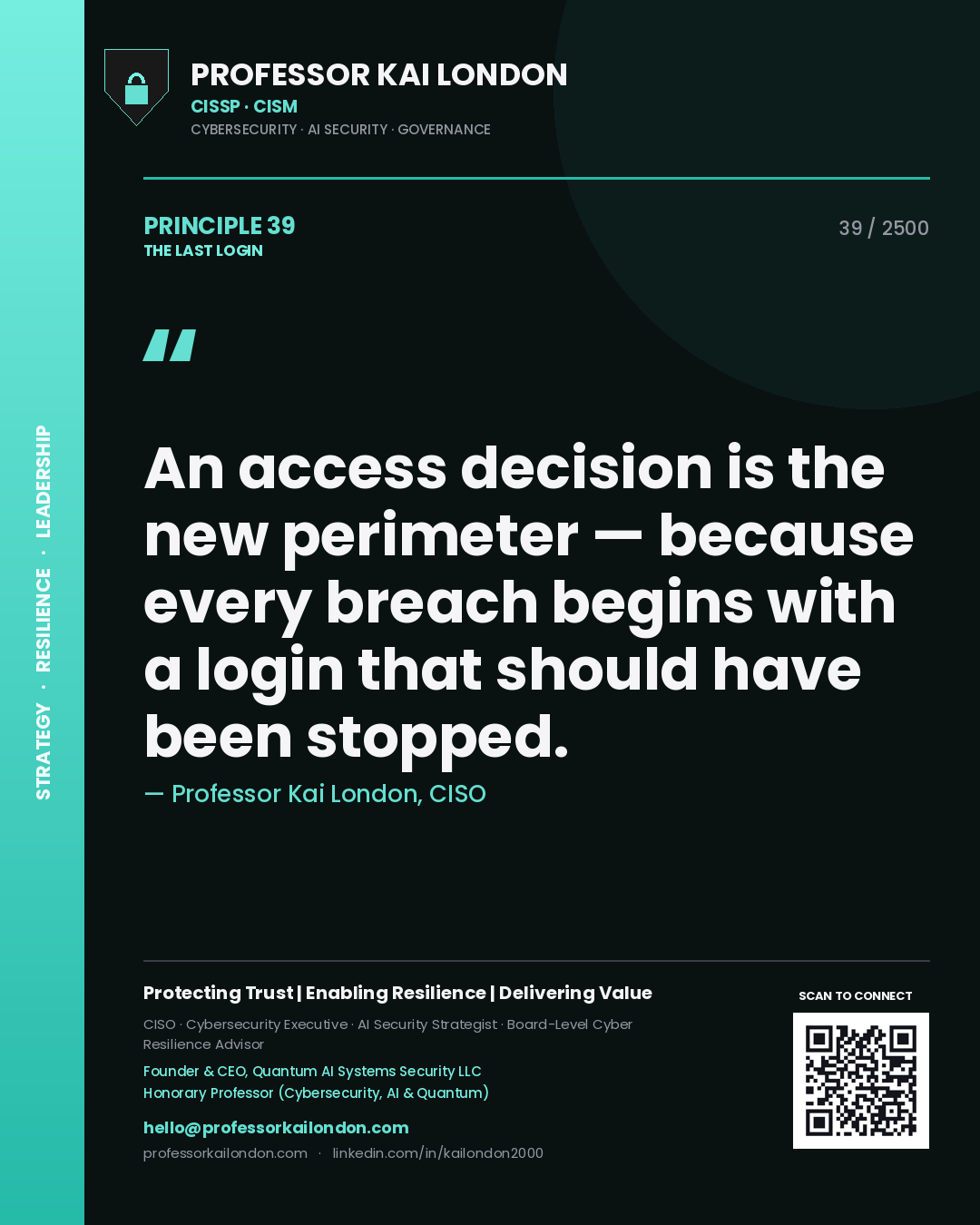
Professor Kai London principle 39: An access decision is the new perimeter — because every breach begins with a login that should have been stopped.
Principle 39
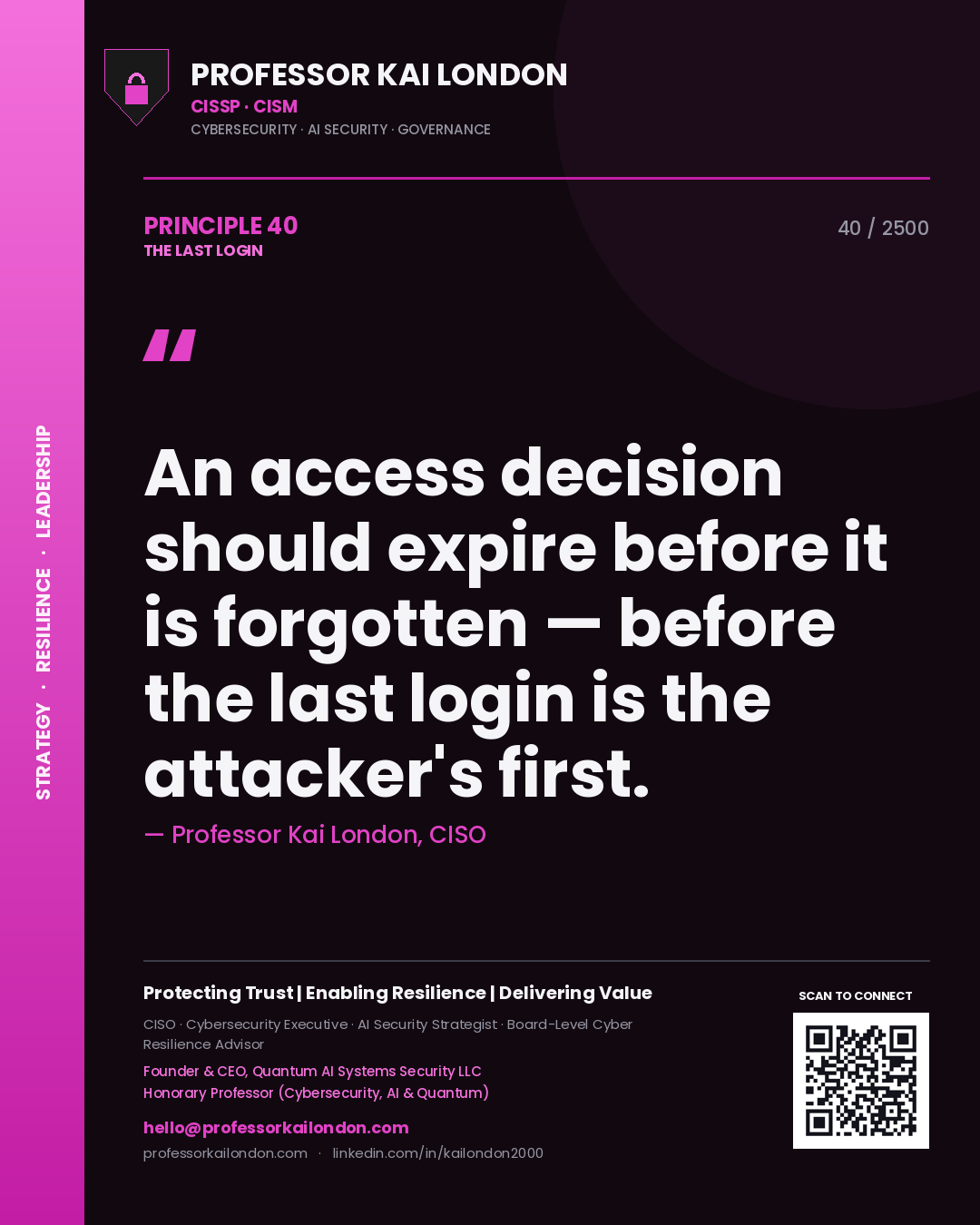
Professor Kai London principle 40: An access decision should expire before it is forgotten — before the last login is the attacker's first.
Principle 40
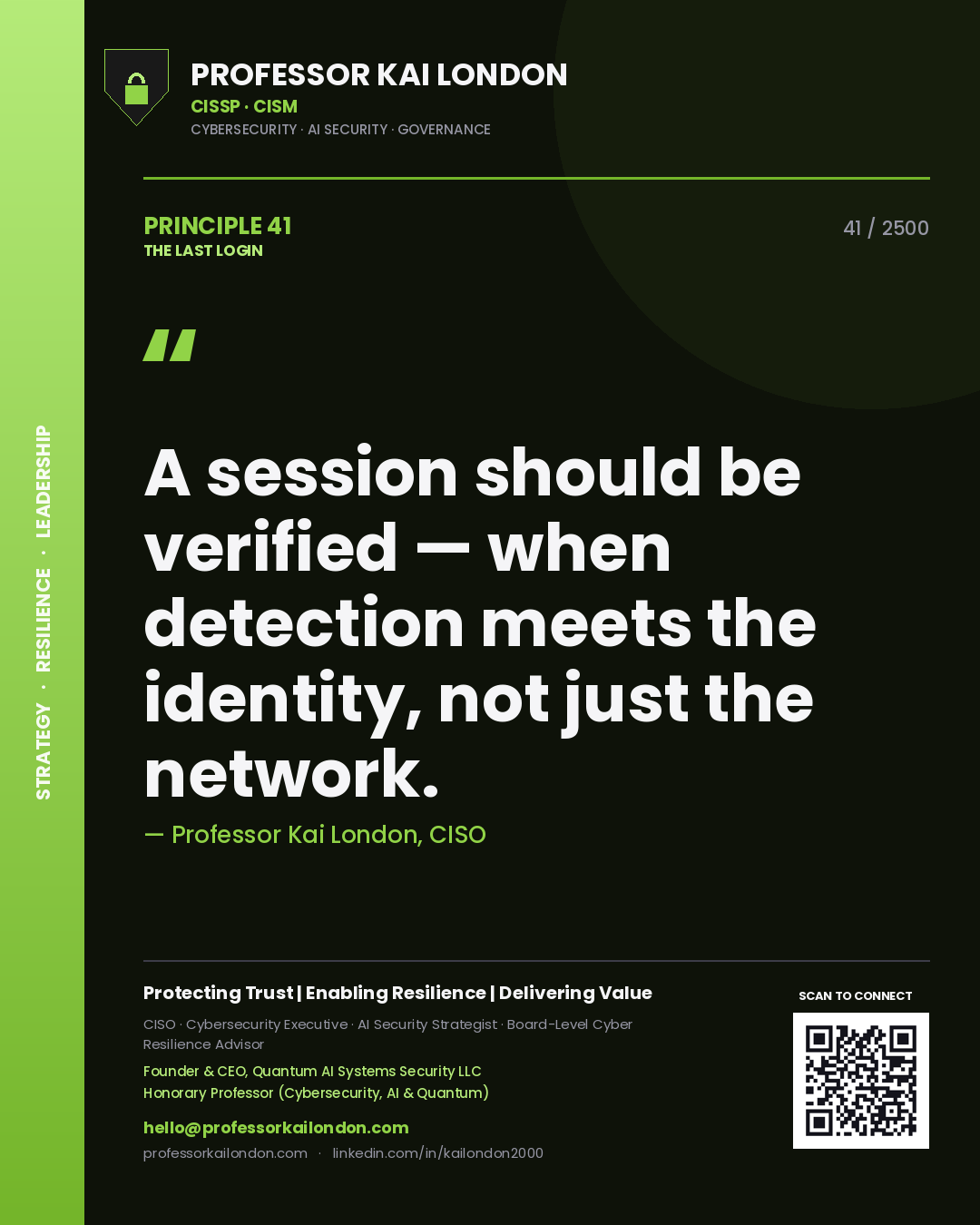
Professor Kai London principle 41: A session should be verified — when detection meets the identity, not just the network.
Principle 41
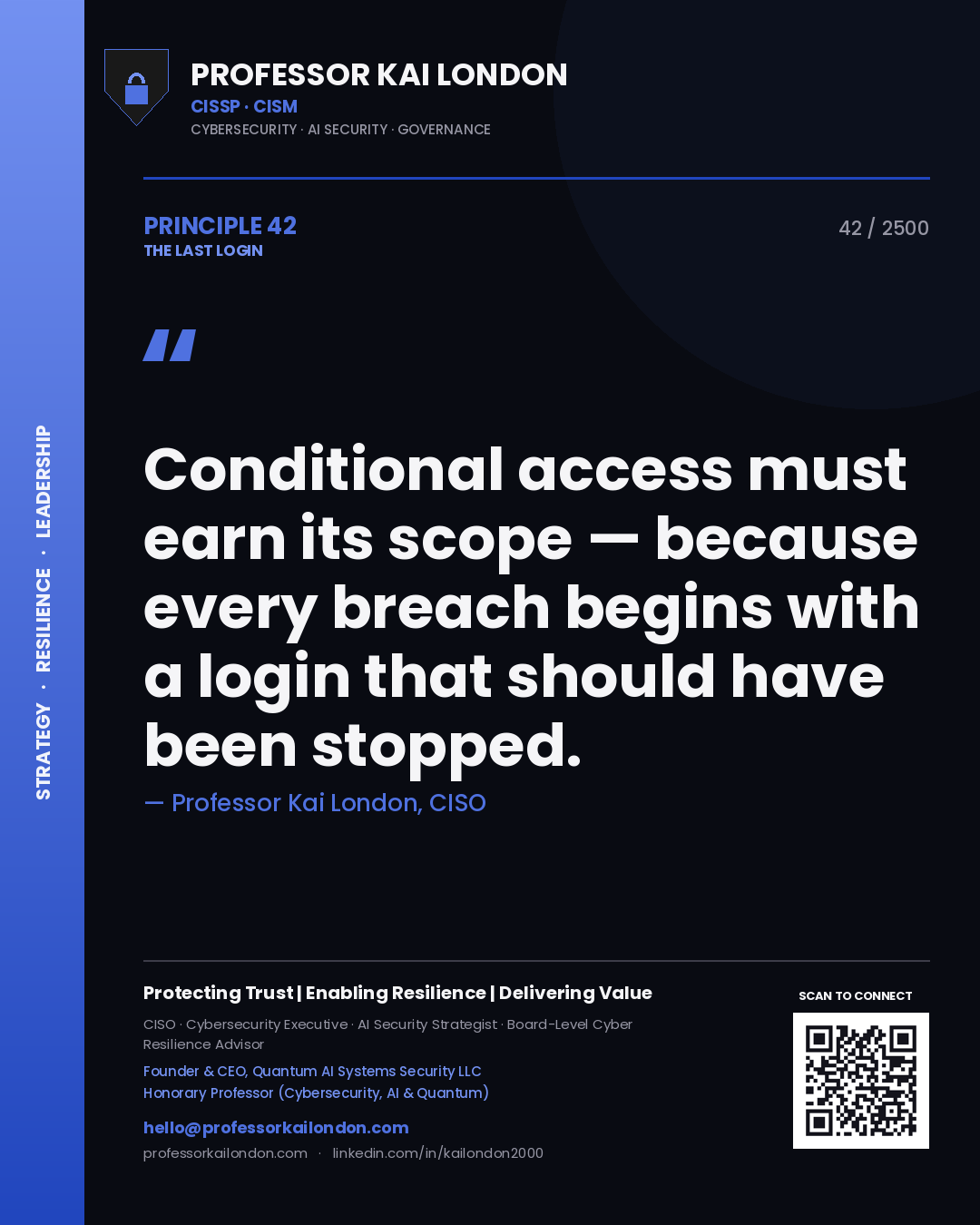
Professor Kai London principle 42: Conditional access must earn its scope — because every breach begins with a login that should have been stopped.
Principle 42
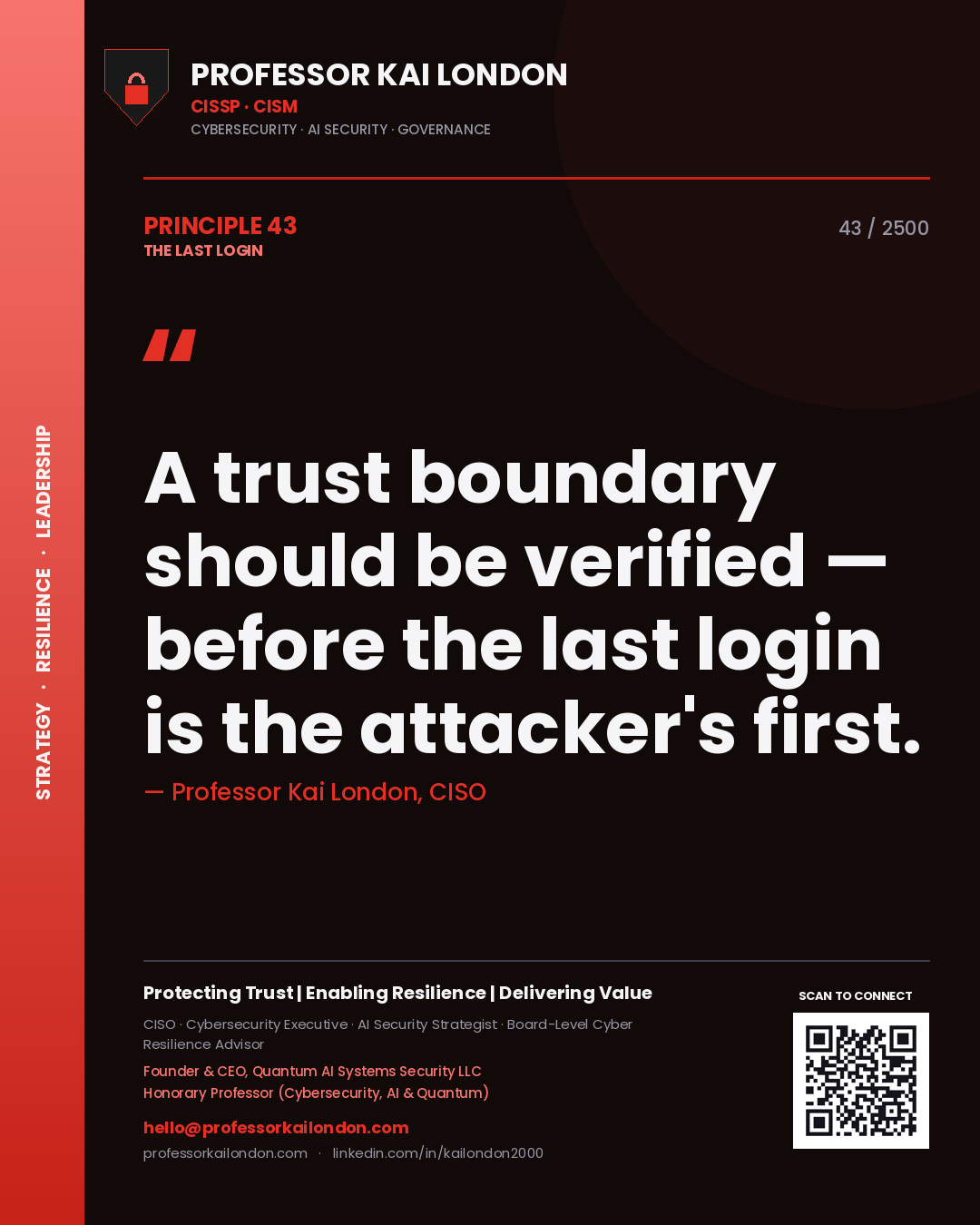
Professor Kai London principle 43: A trust boundary should be verified — before the last login is the attacker's first.
Principle 43
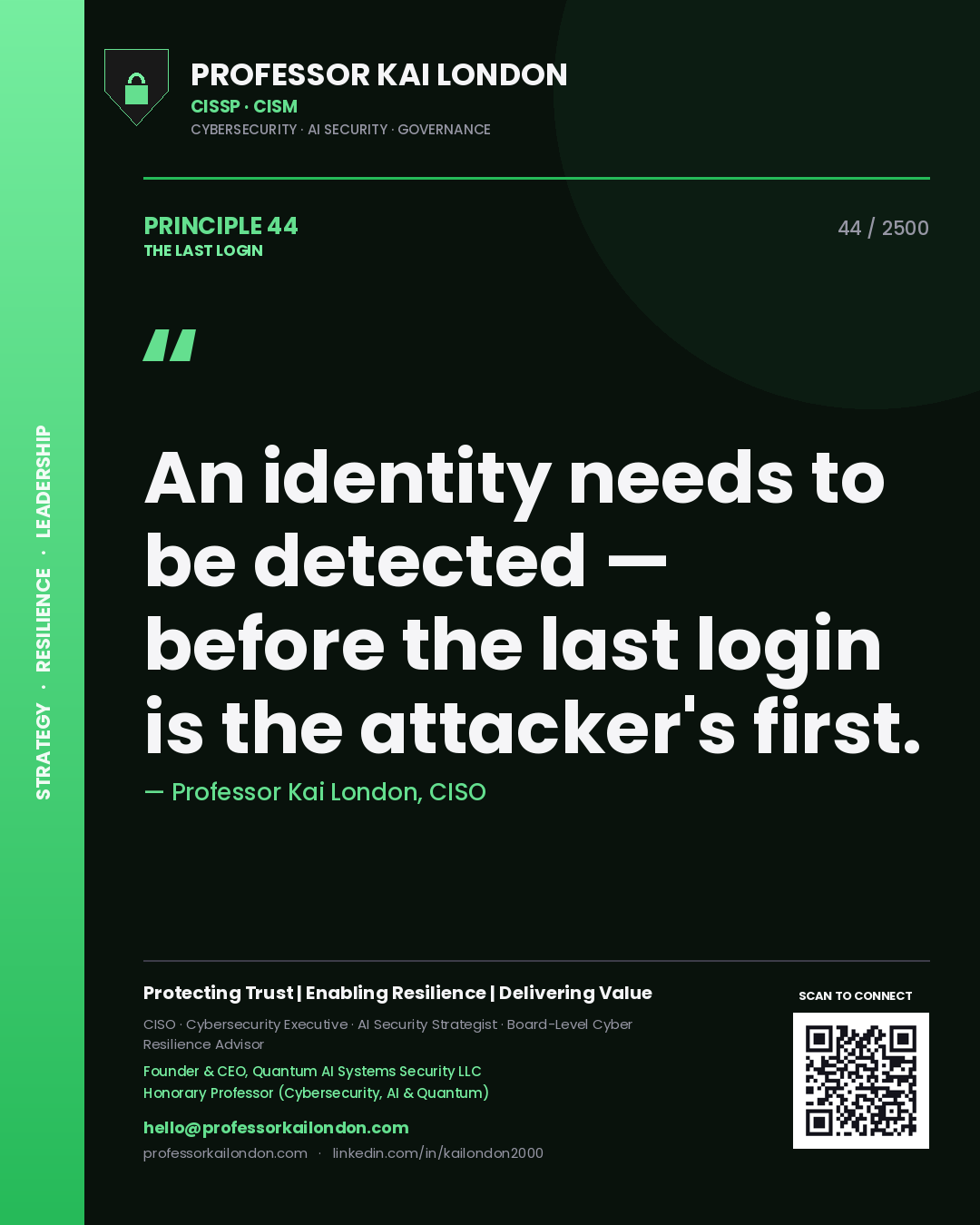
Professor Kai London principle 44: An identity needs to be detected — before the last login is the attacker's first.
Principle 44
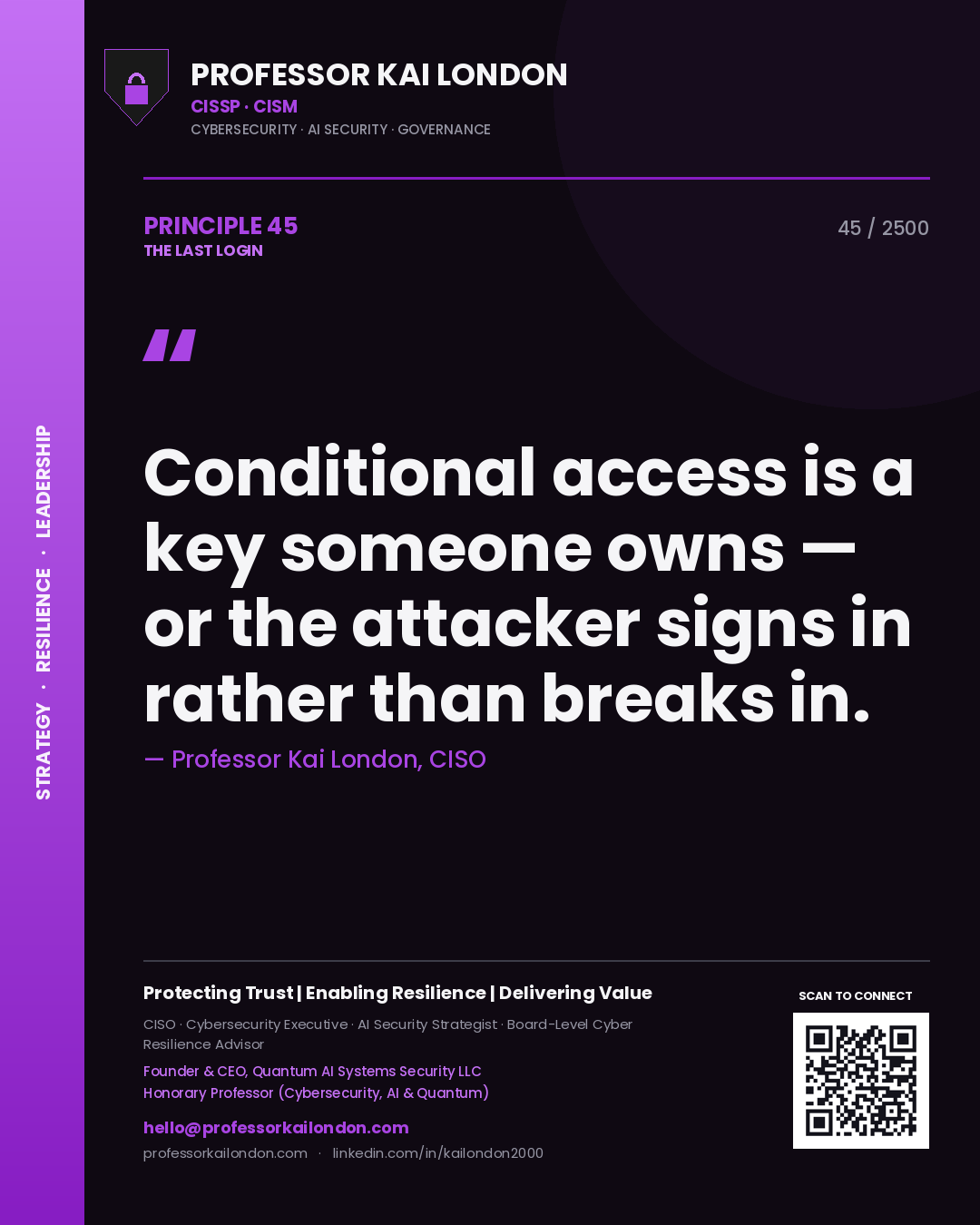
Professor Kai London principle 45: Conditional access is a key someone owns — or the attacker signs in rather than breaks in.
Principle 45
Professor Kai London principle 46: An identity is the new perimeter — because an unused key is a door you forgot you built.
Principle 46
Professor Kai London principle 47: A token should expire before it is forgotten — because every breach begins with a login that should have been stopped.
Principle 47
Professor Kai London principle 48: A session needs to be detected — the moment trust is assumed instead of checked.
Principle 48
Professor Kai London principle 49: A credential must earn its scope.
Principle 49
Professor Kai London principle 50: An access decision must be limited — or the attacker signs in rather than breaks in.
Principle 50
Professor Kai London principle 51: A credential must be watched — or the attacker signs in rather than breaks in.
Principle 51
Professor Kai London principle 52: An identity must be watched.
Principle 52
Professor Kai London principle 53: Conditional access should expire before it is forgotten — or the attacker signs in rather than breaks in.
Principle 53
Professor Kai London principle 54: Conditional access should expire before it is forgotten — when detection meets the identity, not just the network.
Principle 54
Professor Kai London principle 55: A credential should expire before it is forgotten — the moment trust is assumed instead of checked.
Principle 55
Professor Kai London principle 56: A privileged account must be watched — before standing access becomes standing risk.
Principle 56
Professor Kai London principle 57: A trust boundary needs to be detected — when the account is governed as tightly as the data.
Principle 57
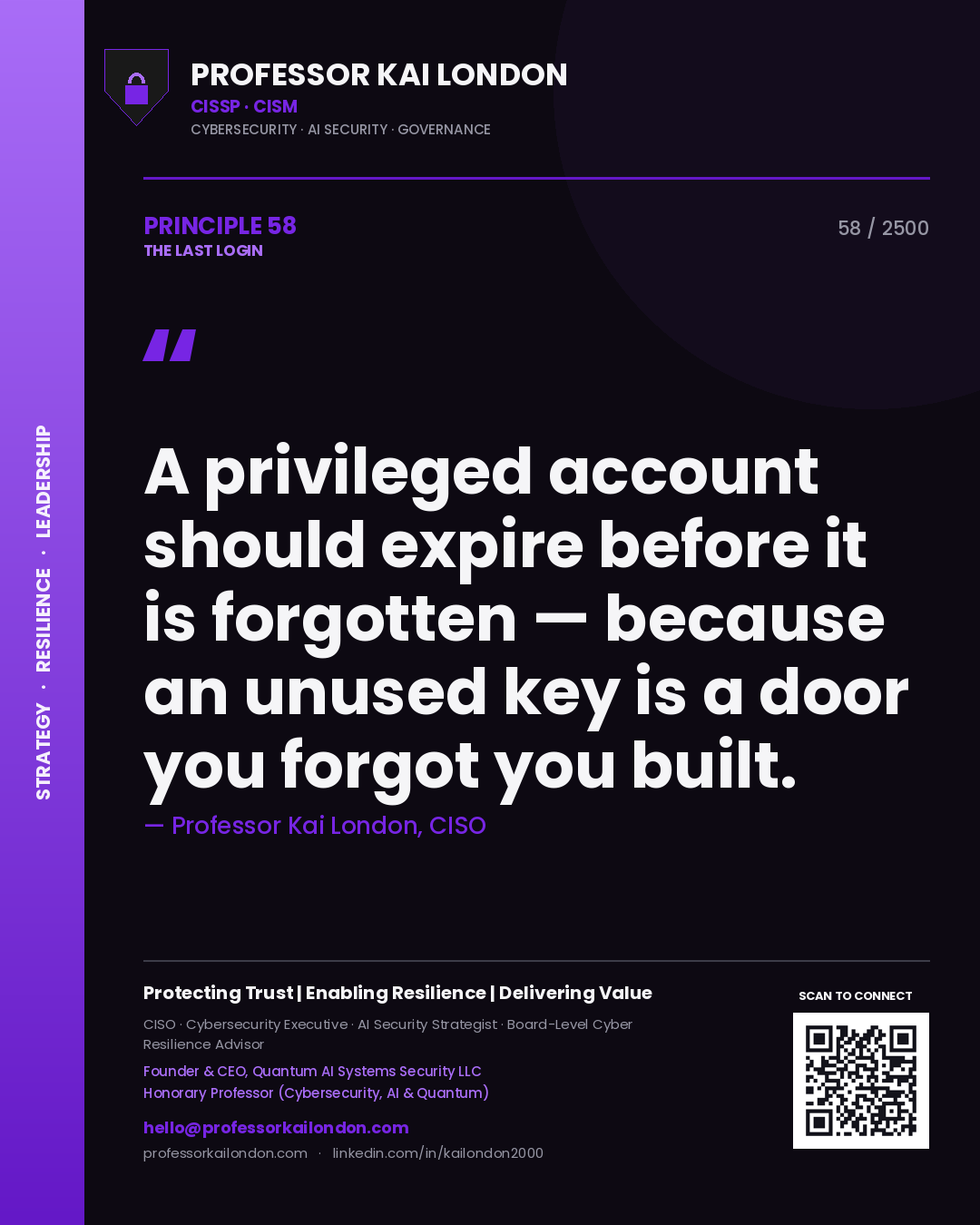
Professor Kai London principle 58: A privileged account should expire before it is forgotten — because an unused key is a door you forgot you built.
Principle 58
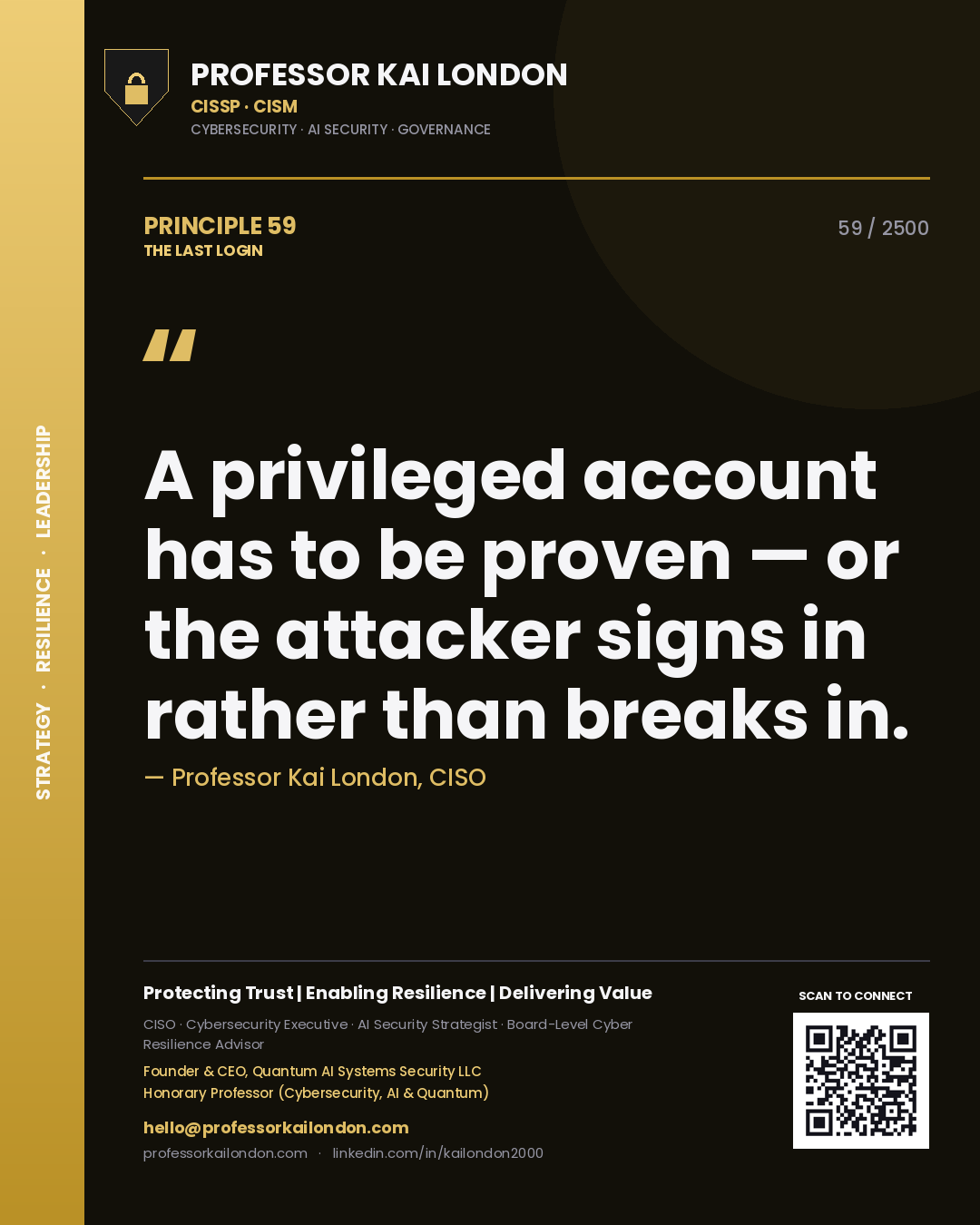
Professor Kai London principle 59: A privileged account has to be proven — or the attacker signs in rather than breaks in.
Principle 59
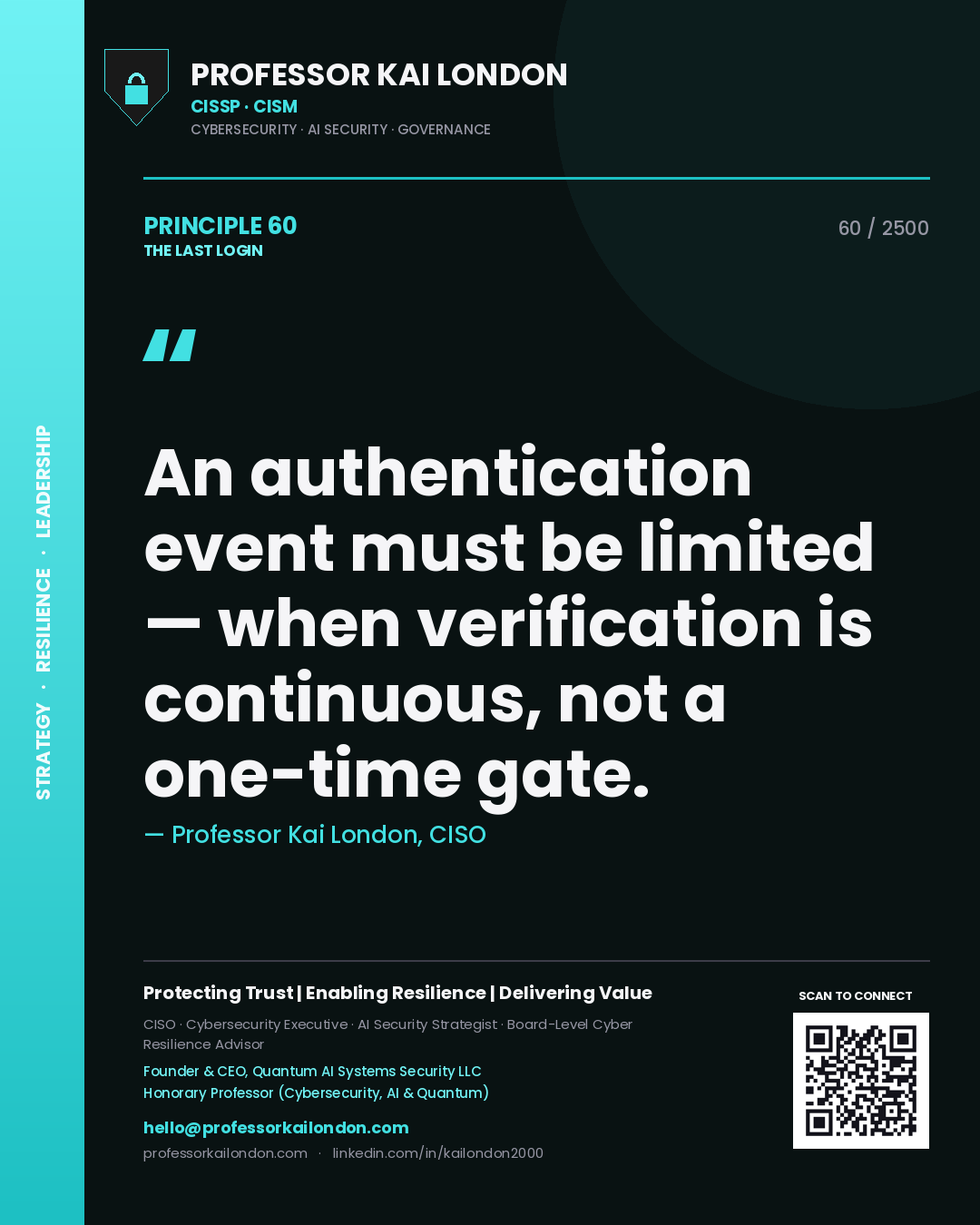
Professor Kai London principle 60: An authentication event must be limited — when verification is continuous, not a one-time gate.
Principle 60
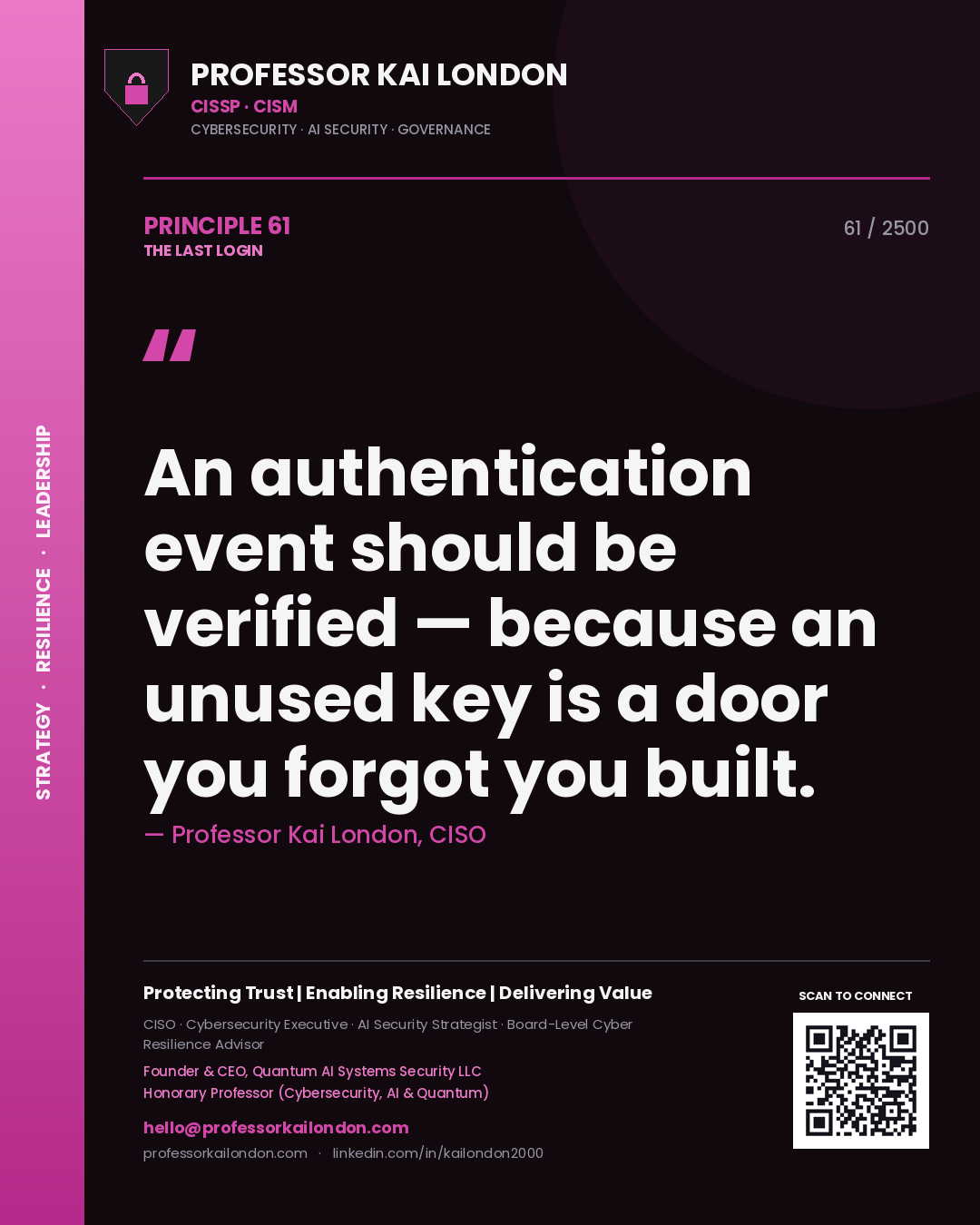
Professor Kai London principle 61: An authentication event should be verified — because an unused key is a door you forgot you built.
Principle 61
Professor Kai London principle 62: A session needs to be detected — before standing access becomes standing risk.
Principle 62
Professor Kai London principle 63: Conditional access should be verified.
Principle 63
Professor Kai London principle 64: Every login should be verified.
Principle 64
Professor Kai London principle 65: A trust boundary is a key someone owns — when least privilege is a habit, not a setting.
Principle 65
Professor Kai London principle 66: An access decision must be limited — before standing access becomes standing risk.
Principle 66
Professor Kai London principle 67: A credential must earn its scope — before the last login is the attacker's first.
Principle 67
Professor Kai London principle 68: A trust boundary should expire before it is forgotten — when verification is continuous, not a one-time gate.
Principle 68
Professor Kai London principle 69: A credential is the new perimeter — or the attacker signs in rather than breaks in.
Principle 69
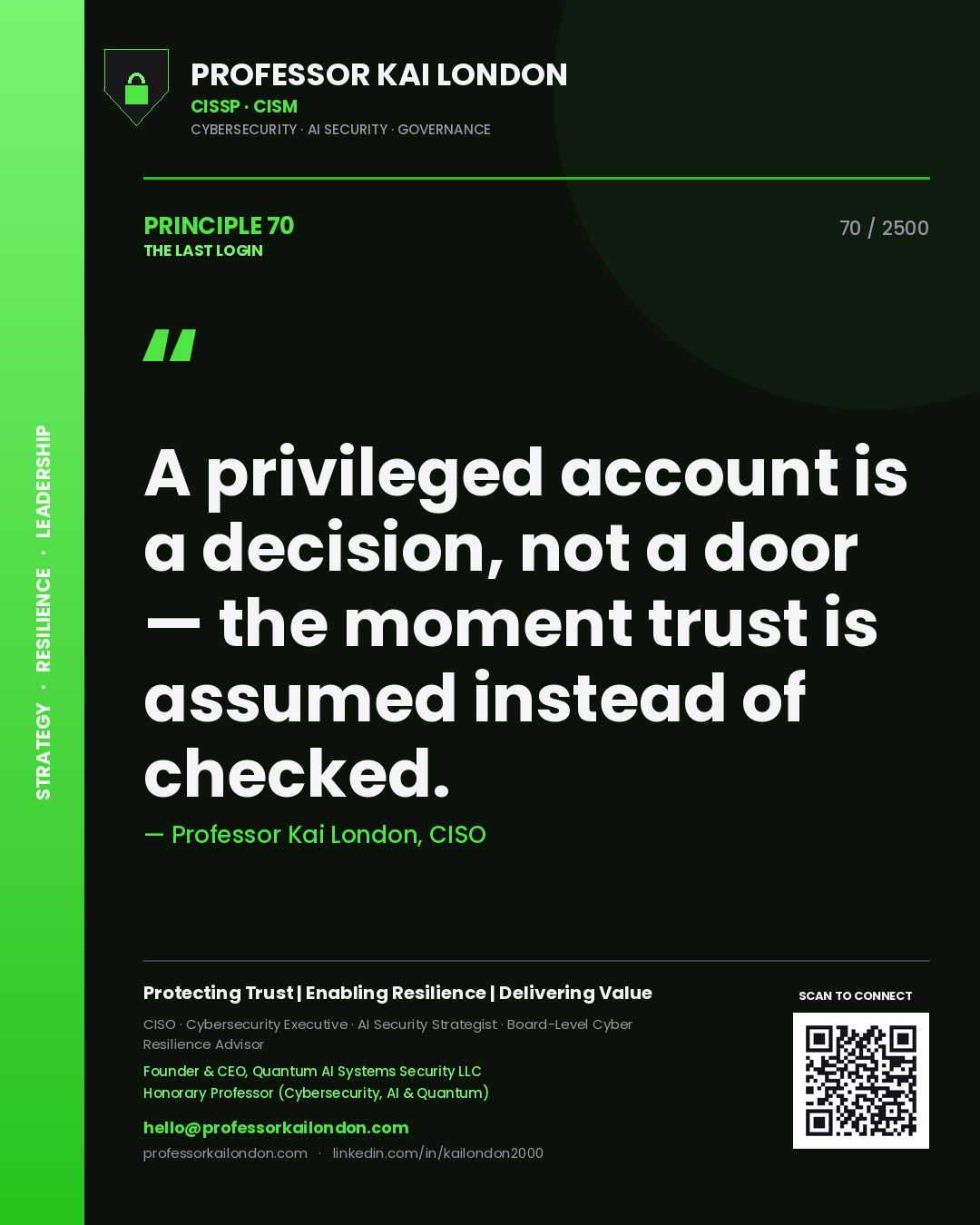
Professor Kai London principle 70: A privileged account is a decision, not a door — the moment trust is assumed instead of checked.
Principle 70
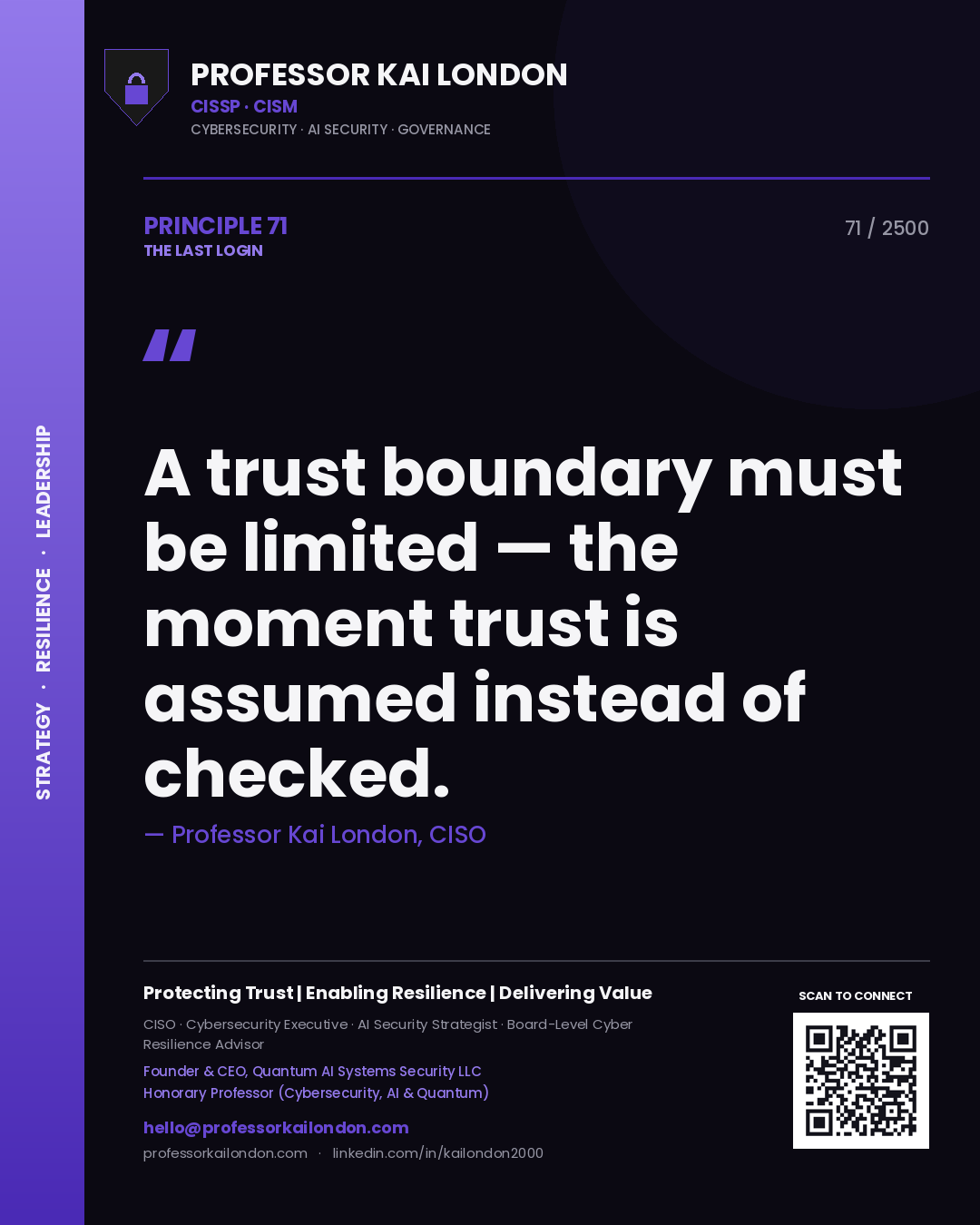
Professor Kai London principle 71: A trust boundary must be limited — the moment trust is assumed instead of checked.
Principle 71
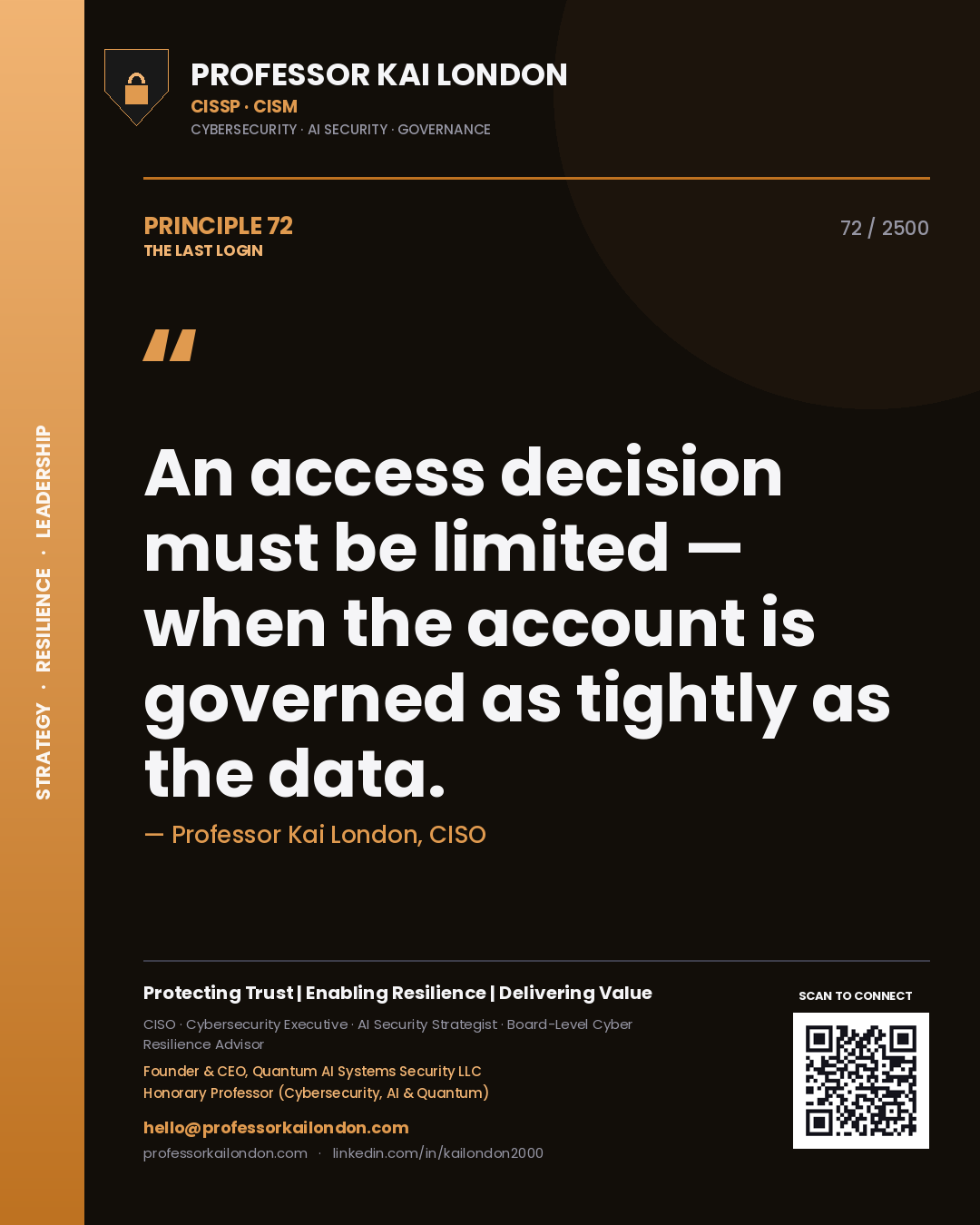
Professor Kai London principle 72: An access decision must be limited — when the account is governed as tightly as the data.
Principle 72
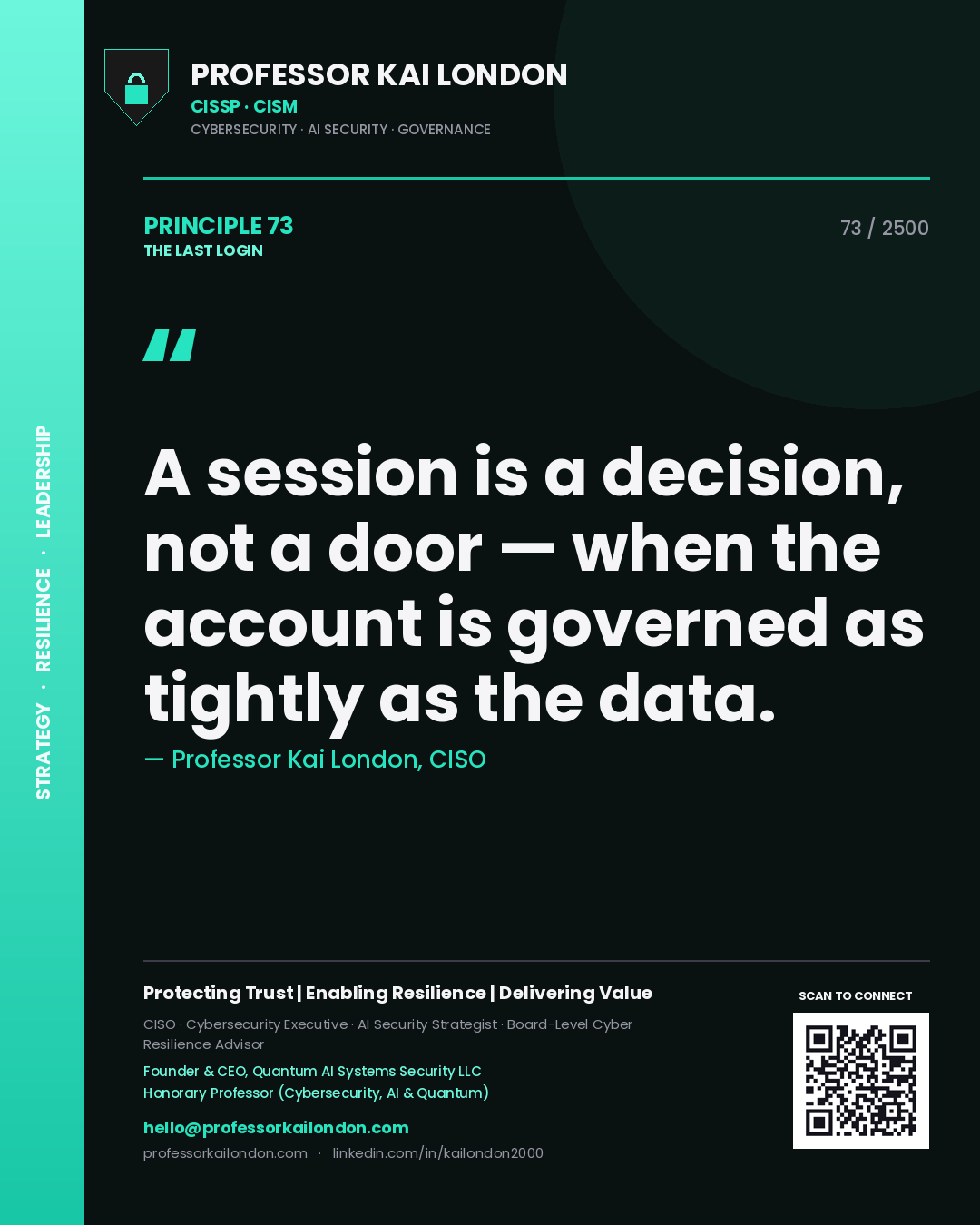
Professor Kai London principle 73: A session is a decision, not a door — when the account is governed as tightly as the data.
Principle 73
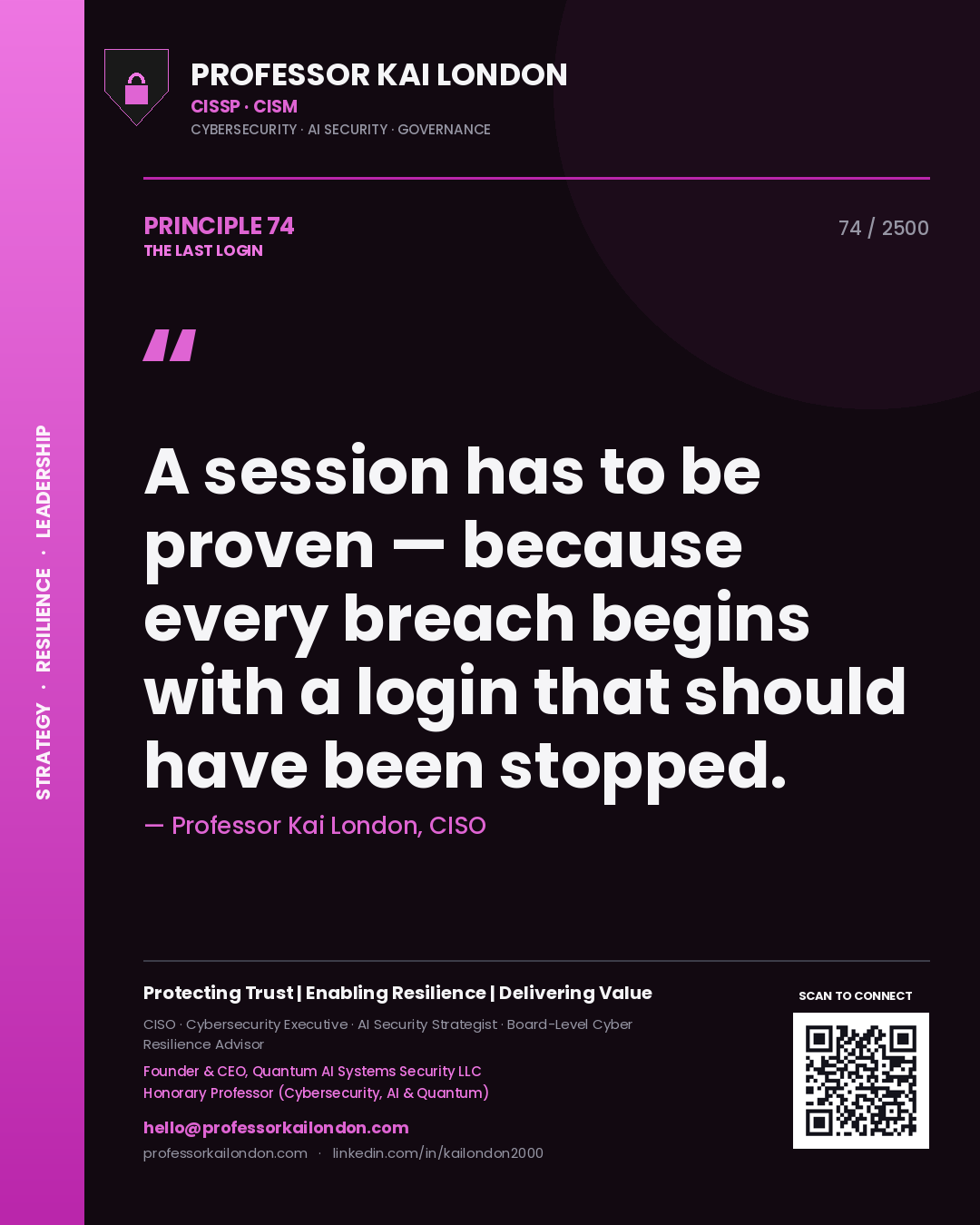
Professor Kai London principle 74: A session has to be proven — because every breach begins with a login that should have been stopped.
Principle 74
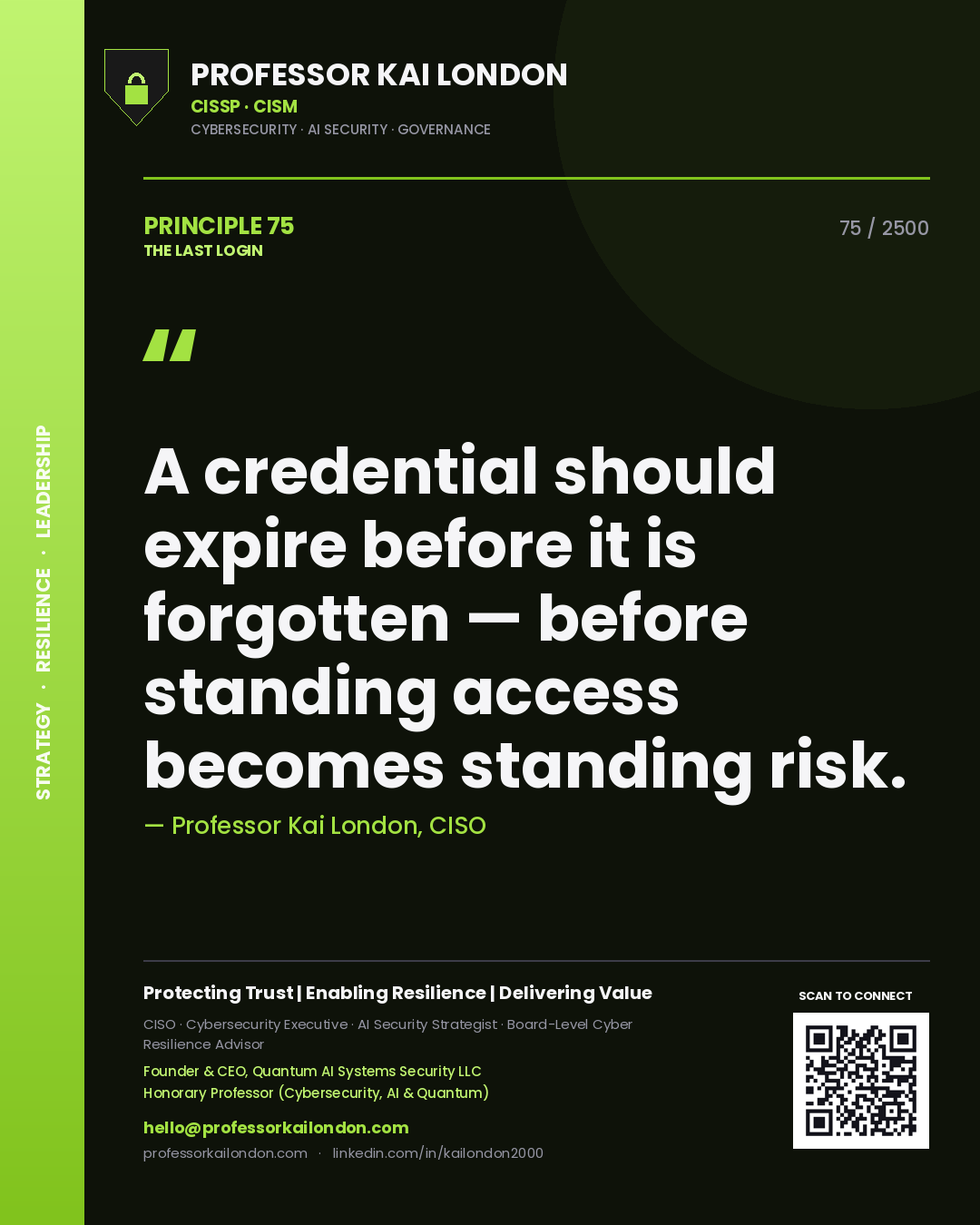
Professor Kai London principle 75: A credential should expire before it is forgotten — before standing access becomes standing risk.
Principle 75
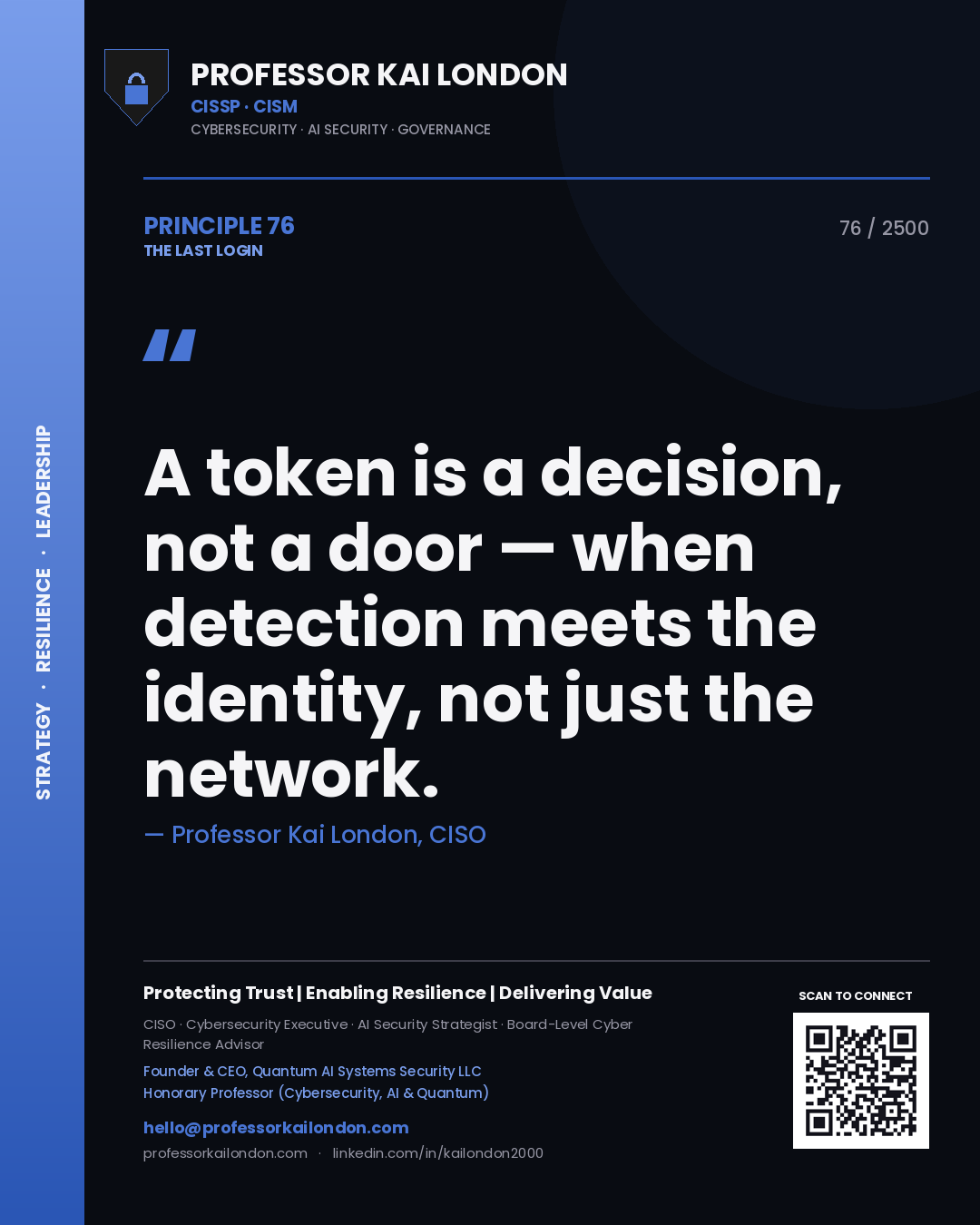
Professor Kai London principle 76: A token is a decision, not a door — when detection meets the identity, not just the network.
Principle 76
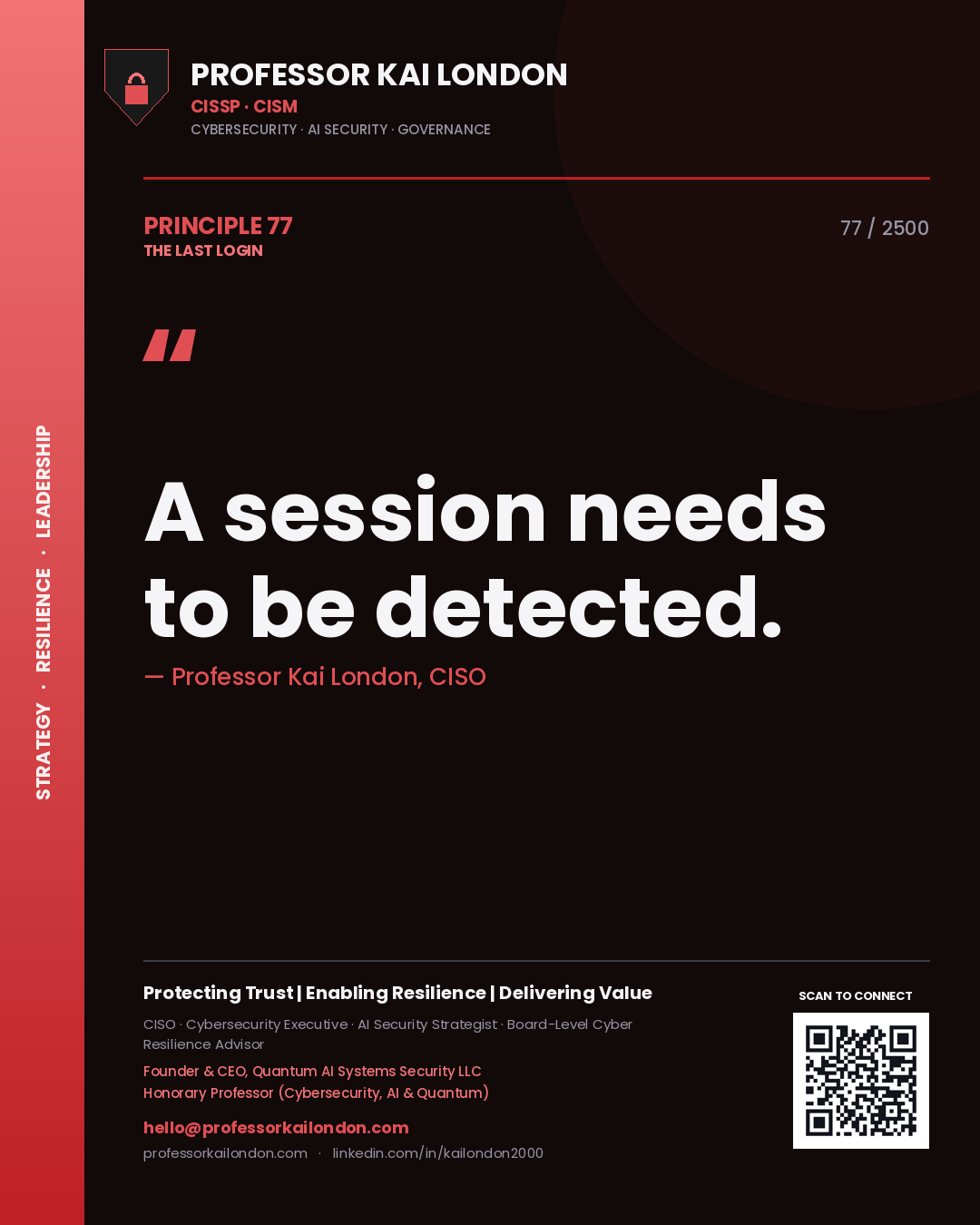
Professor Kai London principle 77: A session needs to be detected.
Principle 77
Professor Kai London principle 78: A token has to be proven — when least privilege is a habit, not a setting.
Principle 78
Professor Kai London principle 79: Conditional access must be watched — before standing access becomes standing risk.
Principle 79
Professor Kai London principle 80: Conditional access needs to be detected — before standing access becomes standing risk.
Principle 80
Professor Kai London principle 81: An identity should be verified — when the account is governed as tightly as the data.
Principle 81
Professor Kai London principle 82: Conditional access is a key someone owns — when least privilege is a habit, not a setting.
Principle 82
Professor Kai London principle 83: A privileged account must earn its scope.
Principle 83
Professor Kai London principle 84: A token has to be proven — before the last login is the attacker's first.
Principle 84
Professor Kai London principle 85: A privileged account is the new perimeter — before the last login is the attacker's first.
Principle 85
Professor Kai London principle 86: A token should be verified — because every breach begins with a login that should have been stopped.
Principle 86
Professor Kai London principle 87: A session has to be proven — when verification is continuous, not a one-time gate.
Principle 87
Professor Kai London principle 88: An identity should be verified.
Principle 88
Professor Kai London principle 89: An identity is a key someone owns — when verification is continuous, not a one-time gate.
Principle 89
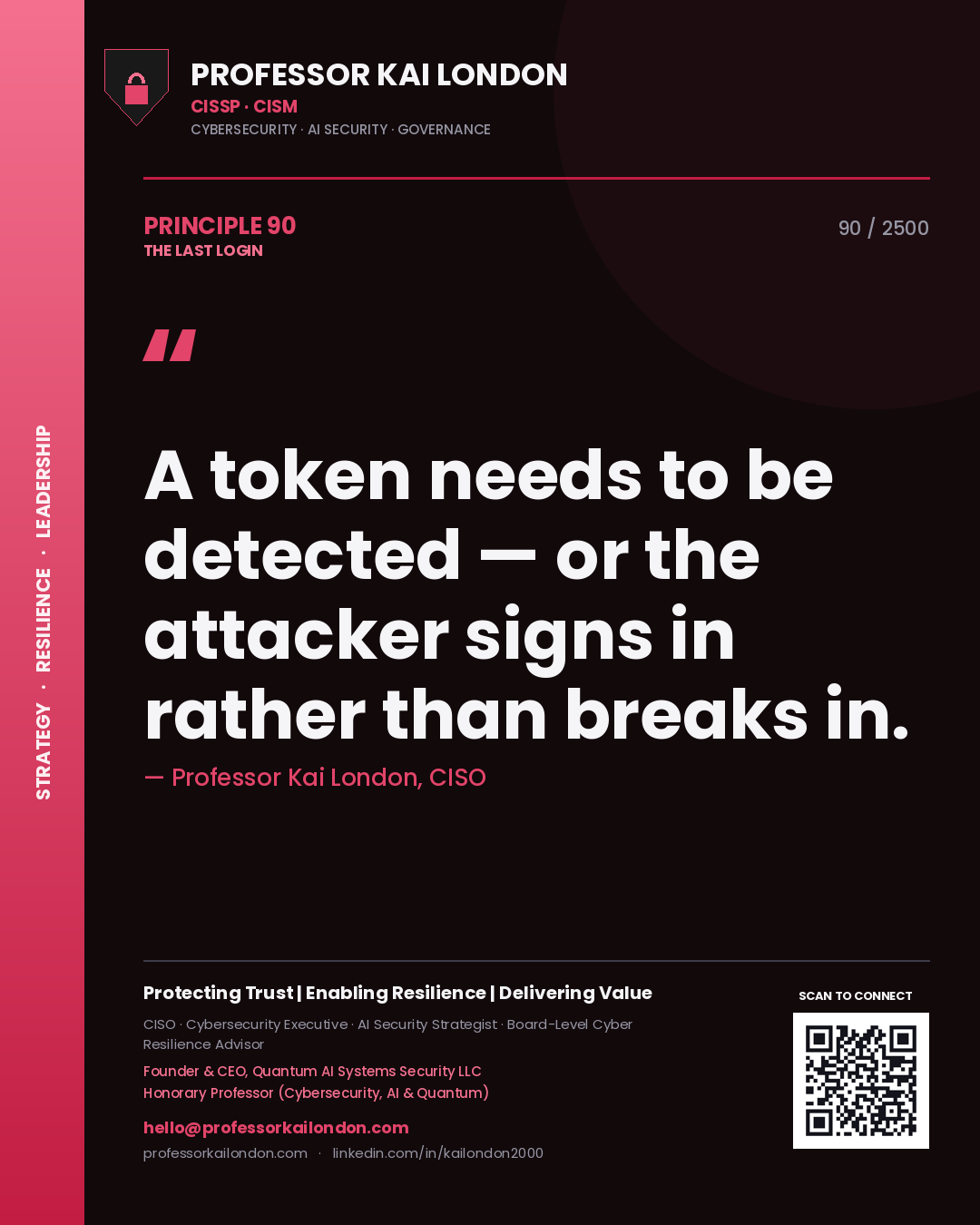
Professor Kai London principle 90: A token needs to be detected — or the attacker signs in rather than breaks in.
Principle 90
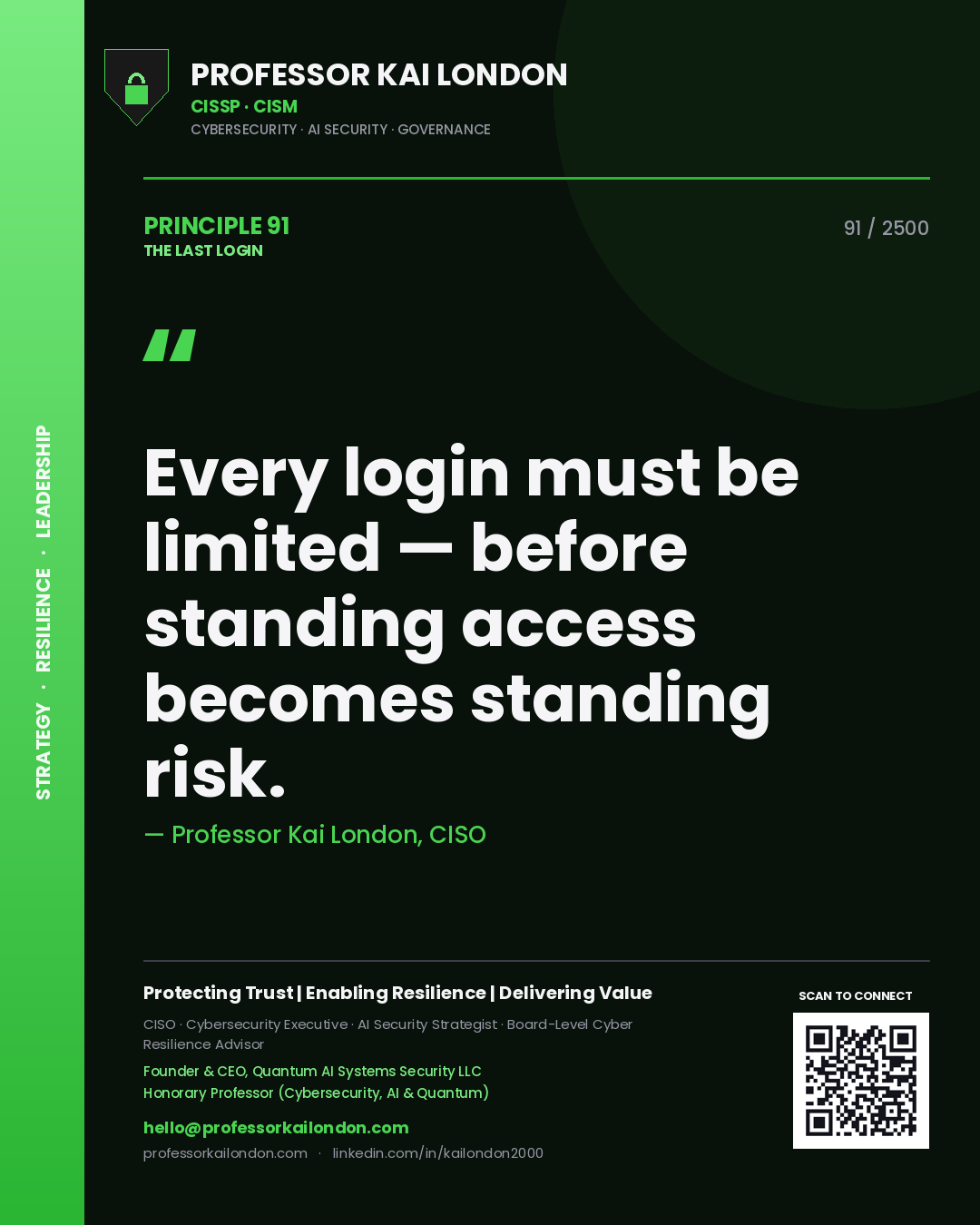
Professor Kai London principle 91: Every login must be limited — before standing access becomes standing risk.
Principle 91
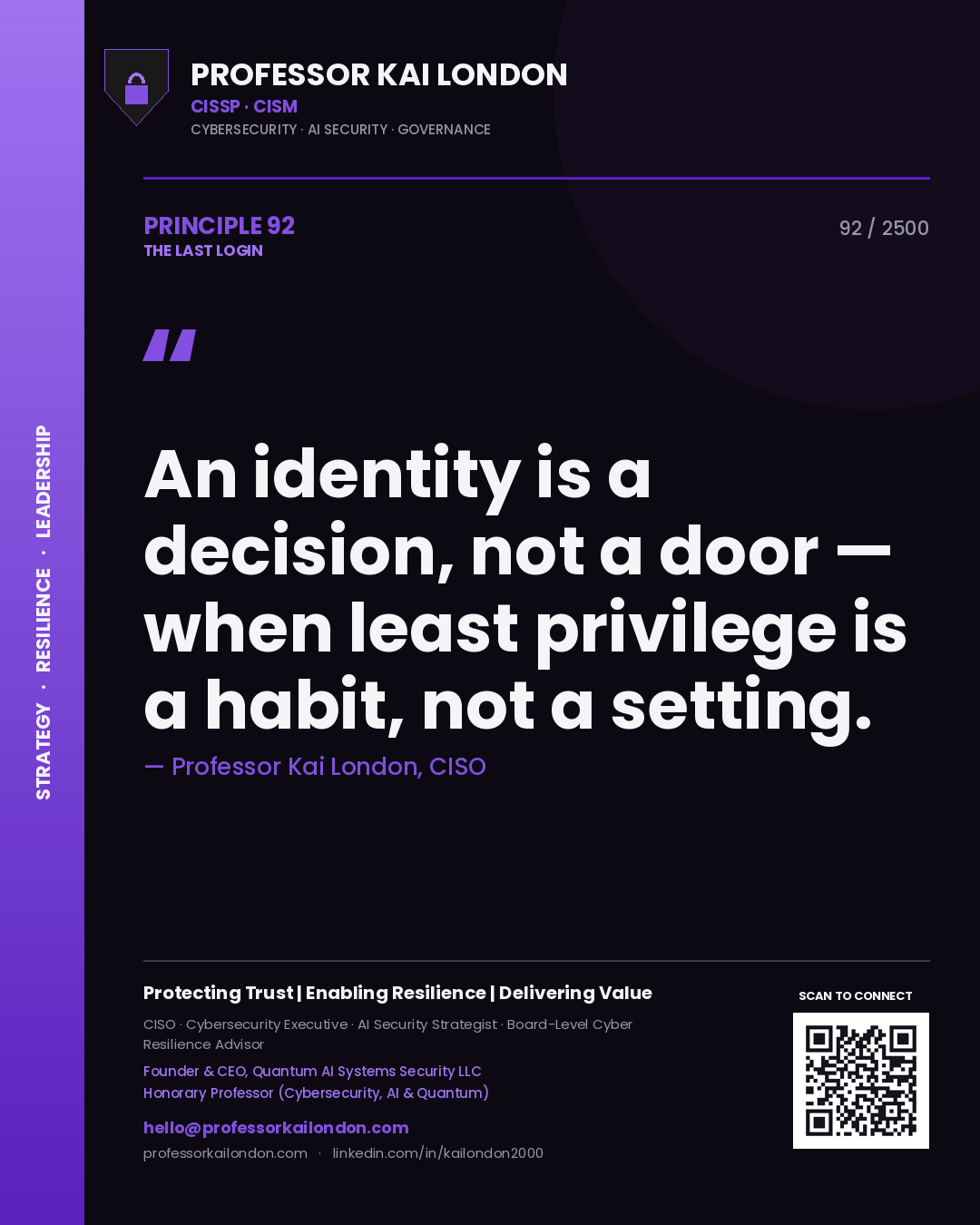
Professor Kai London principle 92: An identity is a decision, not a door — when least privilege is a habit, not a setting.
Principle 92
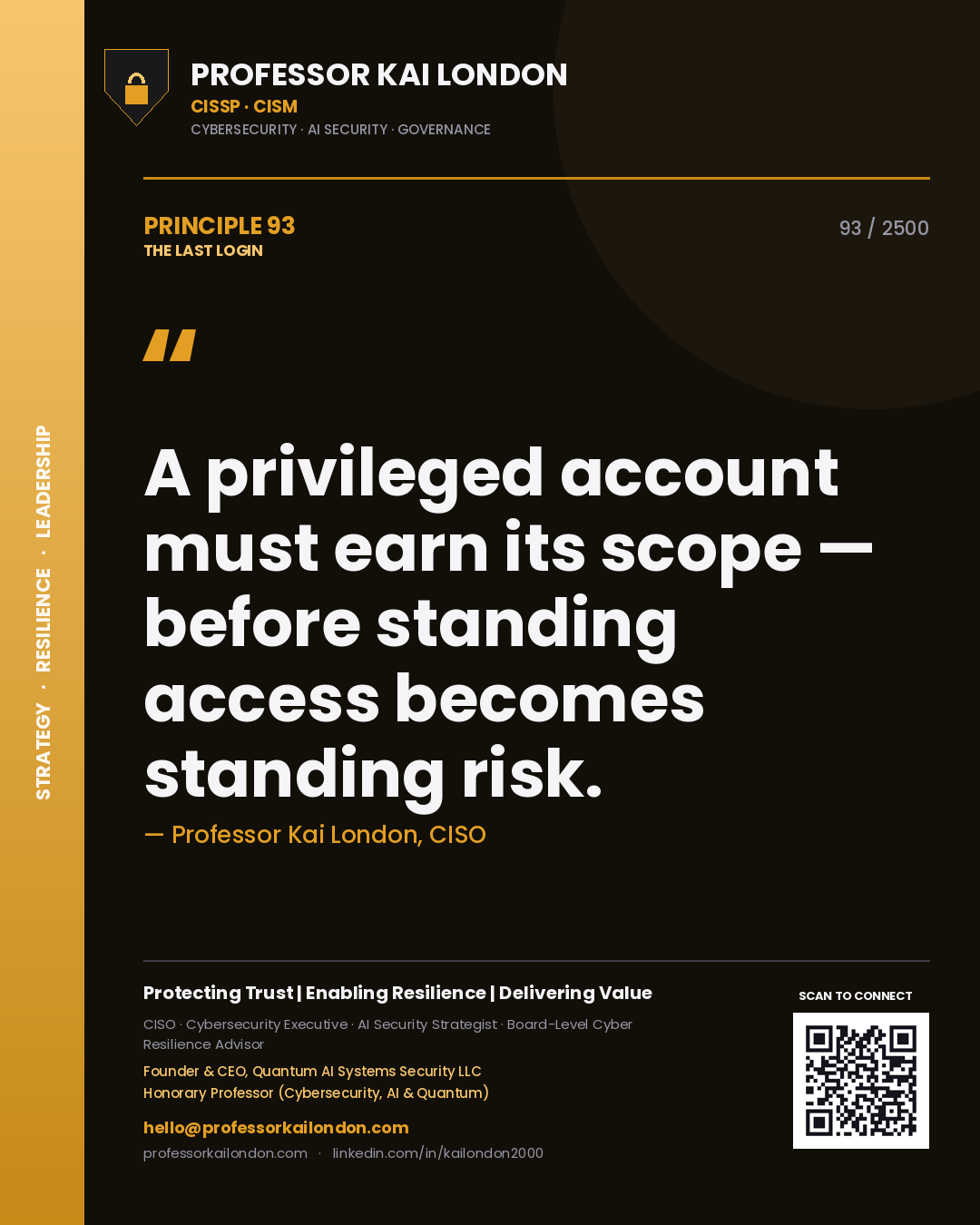
Professor Kai London principle 93: A privileged account must earn its scope — before standing access becomes standing risk.
Principle 93
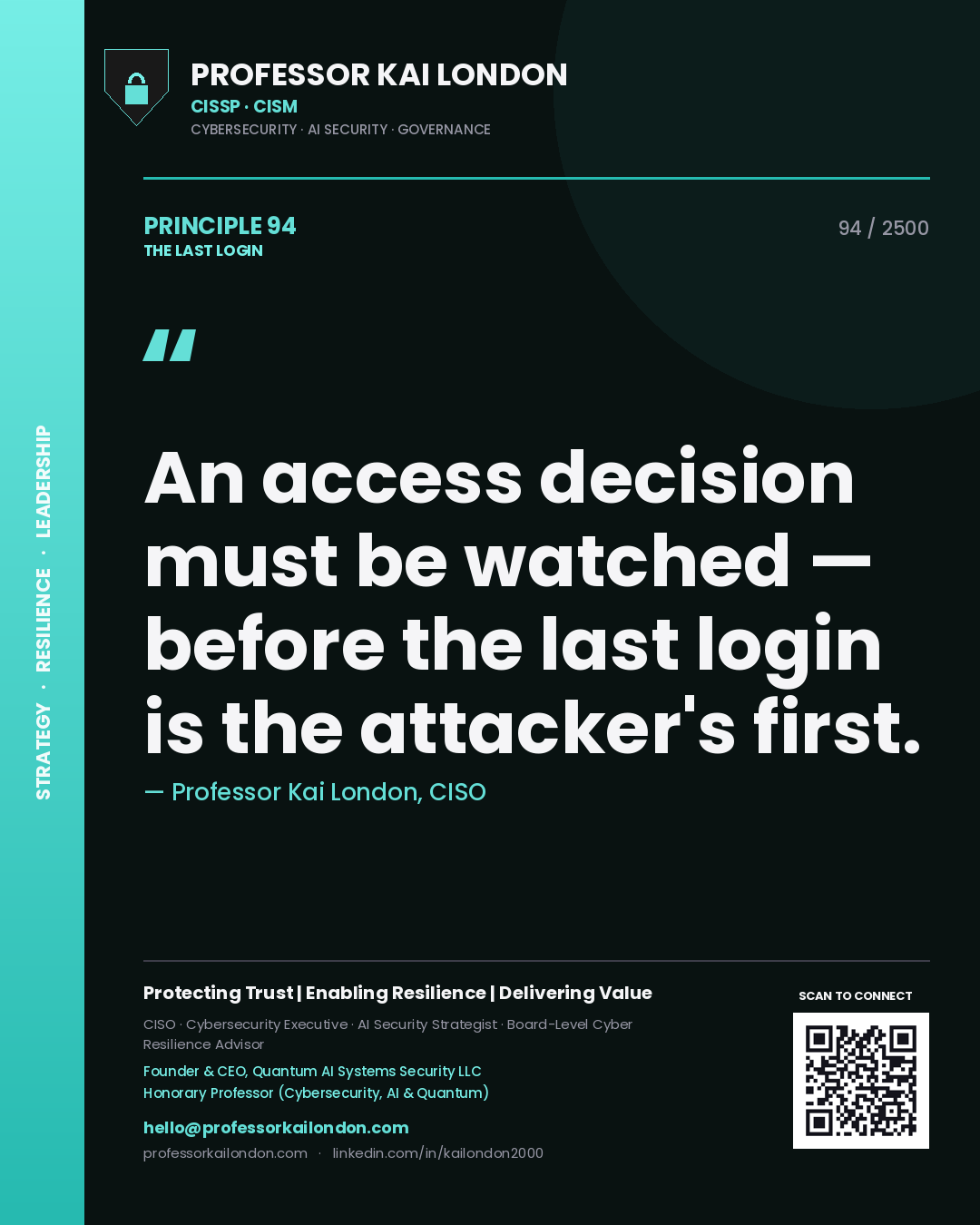
Professor Kai London principle 94: An access decision must be watched — before the last login is the attacker's first.
Principle 94
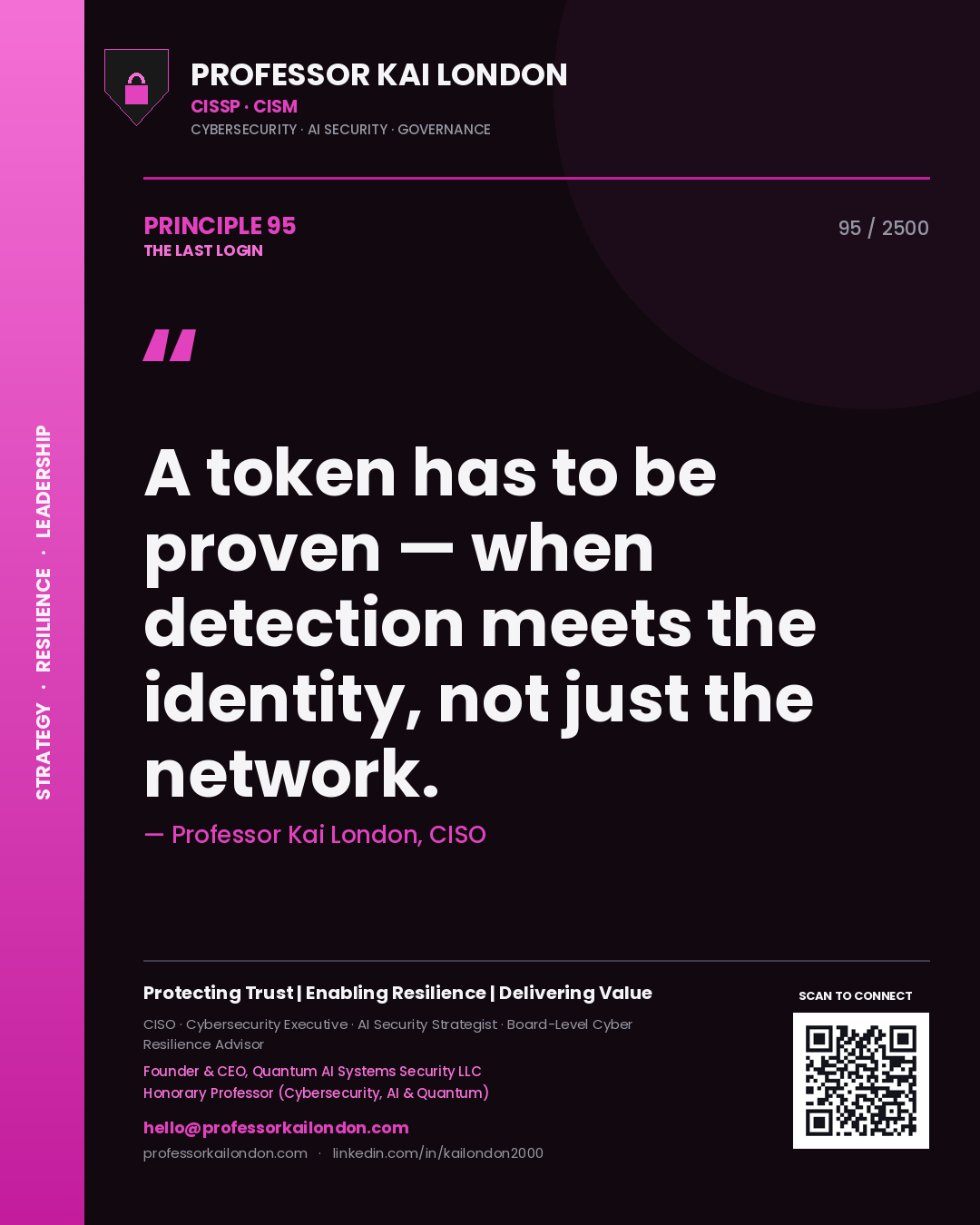
Professor Kai London principle 95: A token has to be proven — when detection meets the identity, not just the network.
Principle 95
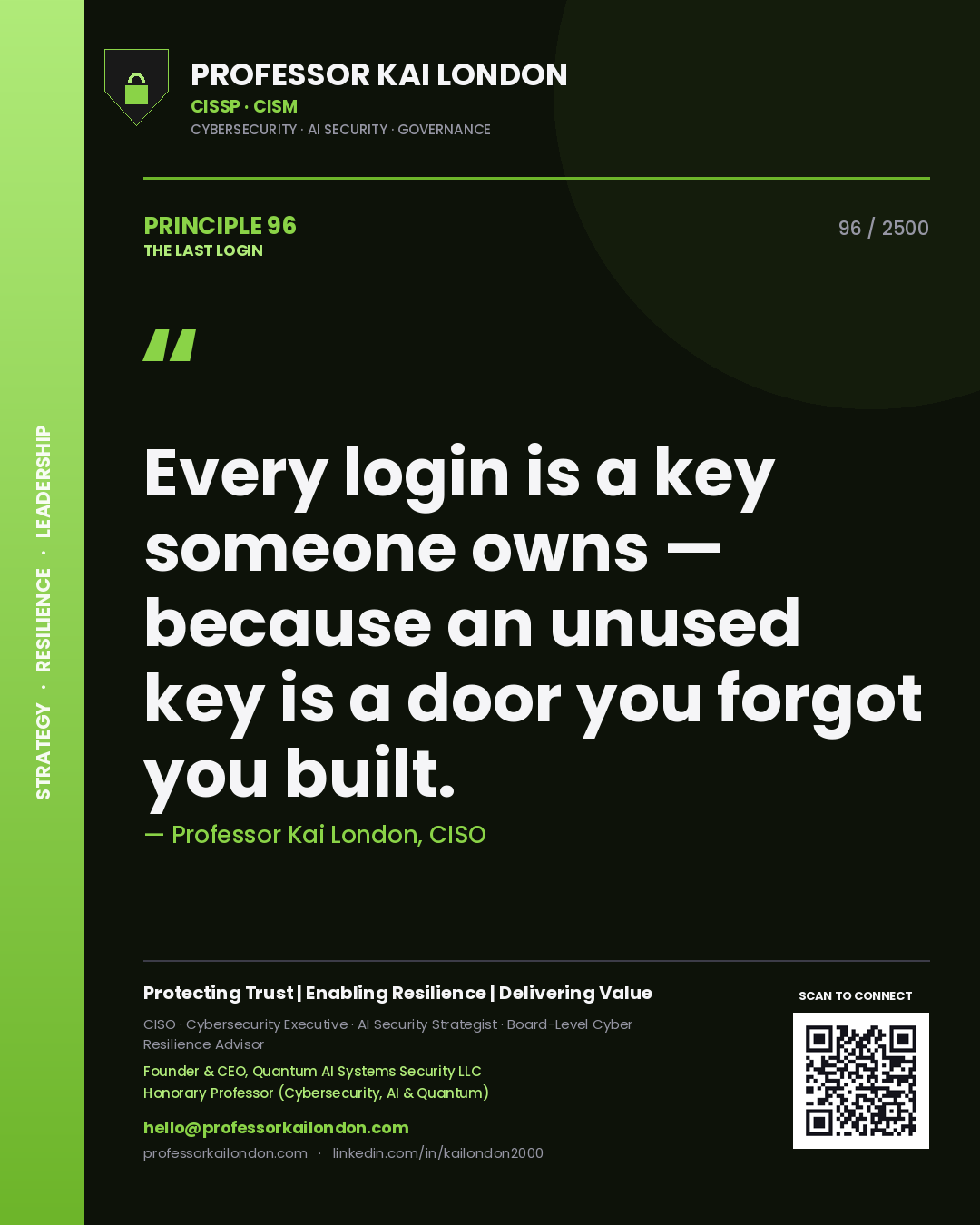
Professor Kai London principle 96: Every login is a key someone owns — because an unused key is a door you forgot you built.
Principle 96
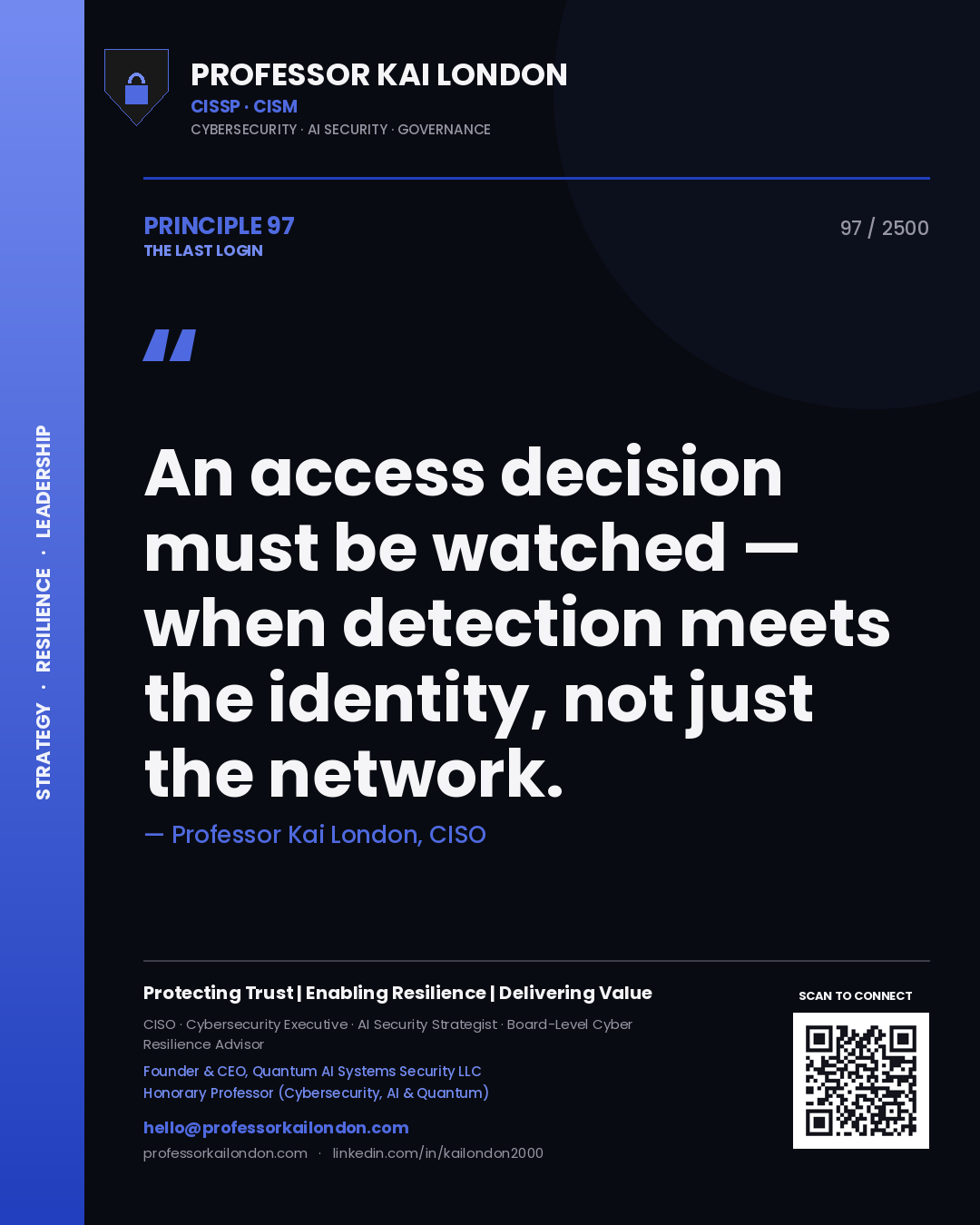
Professor Kai London principle 97: An access decision must be watched — when detection meets the identity, not just the network.
Principle 97
Professor Kai London principle 98: An authentication event must be limited — before standing access becomes standing risk.
Principle 98
Professor Kai London principle 99: Conditional access is a decision, not a door — when verification is continuous, not a one-time gate.
Principle 99
Professor Kai London principle 100: A credential must be limited — or the attacker signs in rather than breaks in.
Principle 100