The Day the Control Room Went Silent — Gallery (Page 13 of 100)
Professor Kai London principle 1201: A remote engineering laptop cannot be trusted just because it is old — because an unverified input can move the physical world.
Principle 1201
Professor Kai London principle 1202: A historian server protects operations without disrupting them — before a convenient bridge becomes the attack path.
Principle 1202
Professor Kai London principle 1203: An industrial process treats availability as its first language — when the plant keeps running because someone proved it could.
Principle 1203
Professor Kai London principle 1204: A safety system defends lives, not just data — when safety and security agree before the incident.
Principle 1204
Professor Kai London principle 1205: A firmware update protects operations without disrupting them — when the plant keeps running because trust was engineered.
Principle 1205
Professor Kai London principle 1206: A remote engineering laptop needs monitoring that respects the process — because an unverified input can move the physical world.
Principle 1206
Professor Kai London principle 1207: A SCADA system cannot be trusted just because it is old — when the control room stays loud enough to be heard.
Principle 1207
Professor Kai London principle 1208: A PLC cannot be patched on a memo's schedule — when safety and security agree before the incident.
Principle 1208
Professor Kai London principle 1209: A PLC needs visibility before it needs control — because a keystroke here moves the physical world.
Principle 1209
Professor Kai London principle 1210: The plant floor bridges IT risk into physical consequence — because a keystroke here moves the physical world.
Principle 1210
Professor Kai London principle 1211: A historian server must know its safe state before an attacker teaches it — because an unverified input can move the physical world.
Principle 1211
Professor Kai London principle 1212: A legacy controller cannot be trusted just because it is old.
Principle 1212
Professor Kai London principle 1213: A critical process governs consequence, not just configuration — because in OT a failure can cost more than money.
Principle 1213
Professor Kai London principle 1214: An OT network fails into safety, not into silence — when safety and security agree before the incident.
Principle 1214
Professor Kai London principle 1215: A critical process cannot be patched on a memo's schedule — because a keystroke here moves the physical world.
Principle 1215
Professor Kai London principle 1216: A serial-to-IP gateway defends lives, not just data — before the next attack finds the control room.
Principle 1216
Professor Kai London principle 1217: The plant floor needs monitoring that respects the process — when you see it, trust it, hand it back, and prove it.
Principle 1217
Professor Kai London principle 1218: A firmware update must know its safe state before an attacker teaches it — when you see it, trust it, hand it back, and prove it.
Principle 1218
Professor Kai London principle 1219: A PLC must know its safe state before an attacker teaches it — because critical infrastructure resilience is a public duty.
Principle 1219
Professor Kai London principle 1220: A safety instrumented system cannot be trusted just because it is old — the moment IT logic meets OT consequence.
Principle 1220
Professor Kai London principle 1221: A critical process bridges IT risk into physical consequence — because an unverified input can move the physical world.
Principle 1221
Professor Kai London principle 1222: A SCADA system must fail to a safe state — when the plant keeps running because someone proved it could.
Principle 1222
Professor Kai London principle 1223: A PLC cannot be trusted just because it is old — when safety and security agree before the incident.
Principle 1223
Professor Kai London principle 1224: A historian server must see it, trust it, hand it back, and prove it — because in OT a failure can cost more than money.
Principle 1224
Professor Kai London principle 1225: A control room cannot be trusted just because it is old — because critical infrastructure resilience is a public duty.
Principle 1225
Professor Kai London principle 1226: An industrial process governs consequence, not just configuration — before a convenient bridge becomes the attack path.
Principle 1226
Professor Kai London principle 1227: A control room treats availability as its first language — when safety and security agree before the incident.
Principle 1227
Professor Kai London principle 1228: A safety instrumented system can turn a digital compromise into a physical consequence — because in OT a failure can cost more than money.
Principle 1228
Professor Kai London principle 1229: A safety system needs visibility before it needs control — because a keystroke here moves the physical world.
Principle 1229
Professor Kai London principle 1230: An industrial process cannot be trusted just because it is old — before a convenient bridge becomes the attack path.
Principle 1230
Professor Kai London principle 1231: A safety instrumented system can turn a digital compromise into a physical consequence — when safety and security never argue during an incident.
Principle 1231
Professor Kai London principle 1232: A serial-to-IP gateway cannot be patched on a memo's schedule — when the control room stays loud enough to be heard.
Principle 1232
Professor Kai London principle 1233: A safety system needs visibility before it needs control — before a convenient bridge becomes the attack path.
Principle 1233
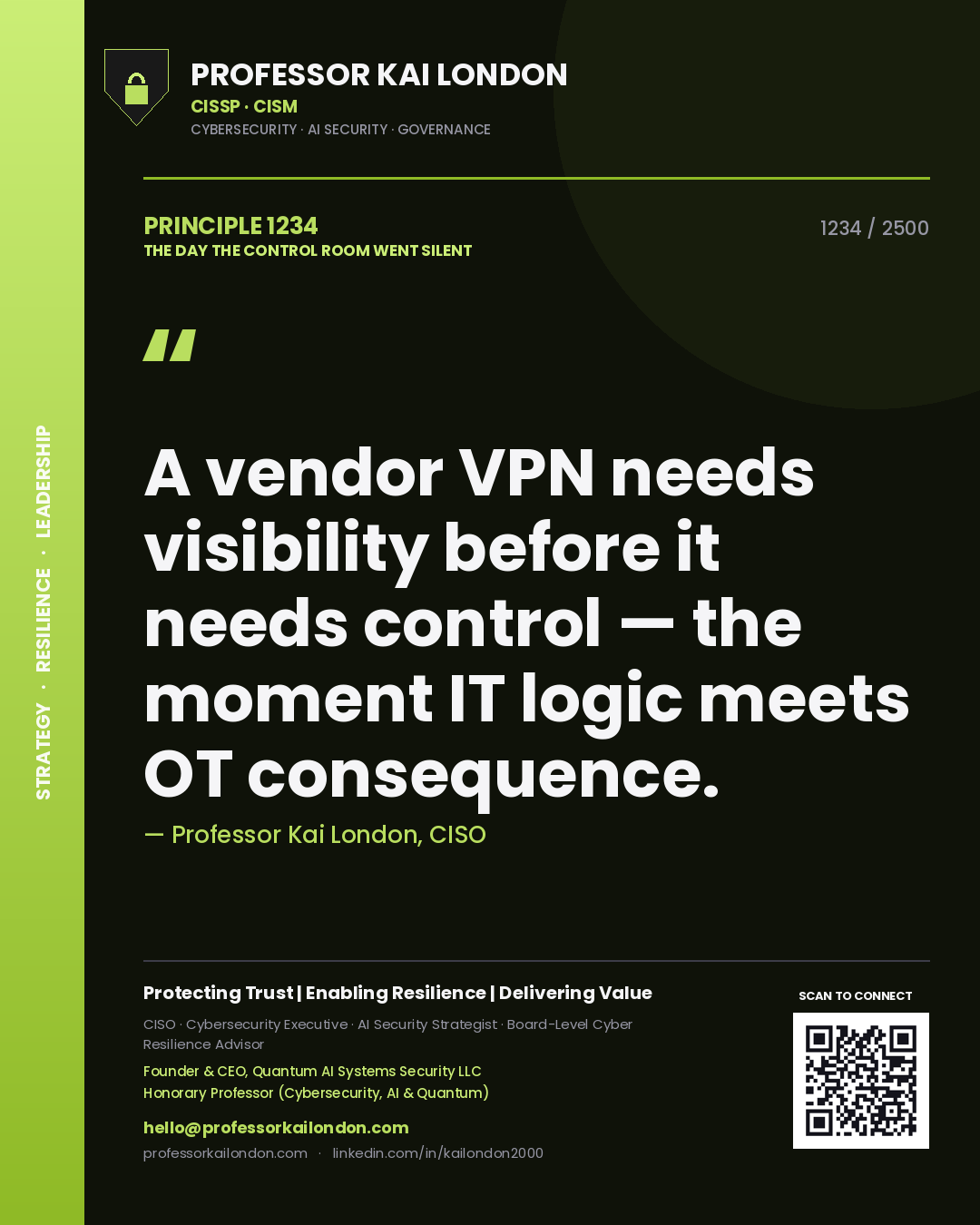
Professor Kai London principle 1234: A vendor VPN needs visibility before it needs control — the moment IT logic meets OT consequence.
Principle 1234
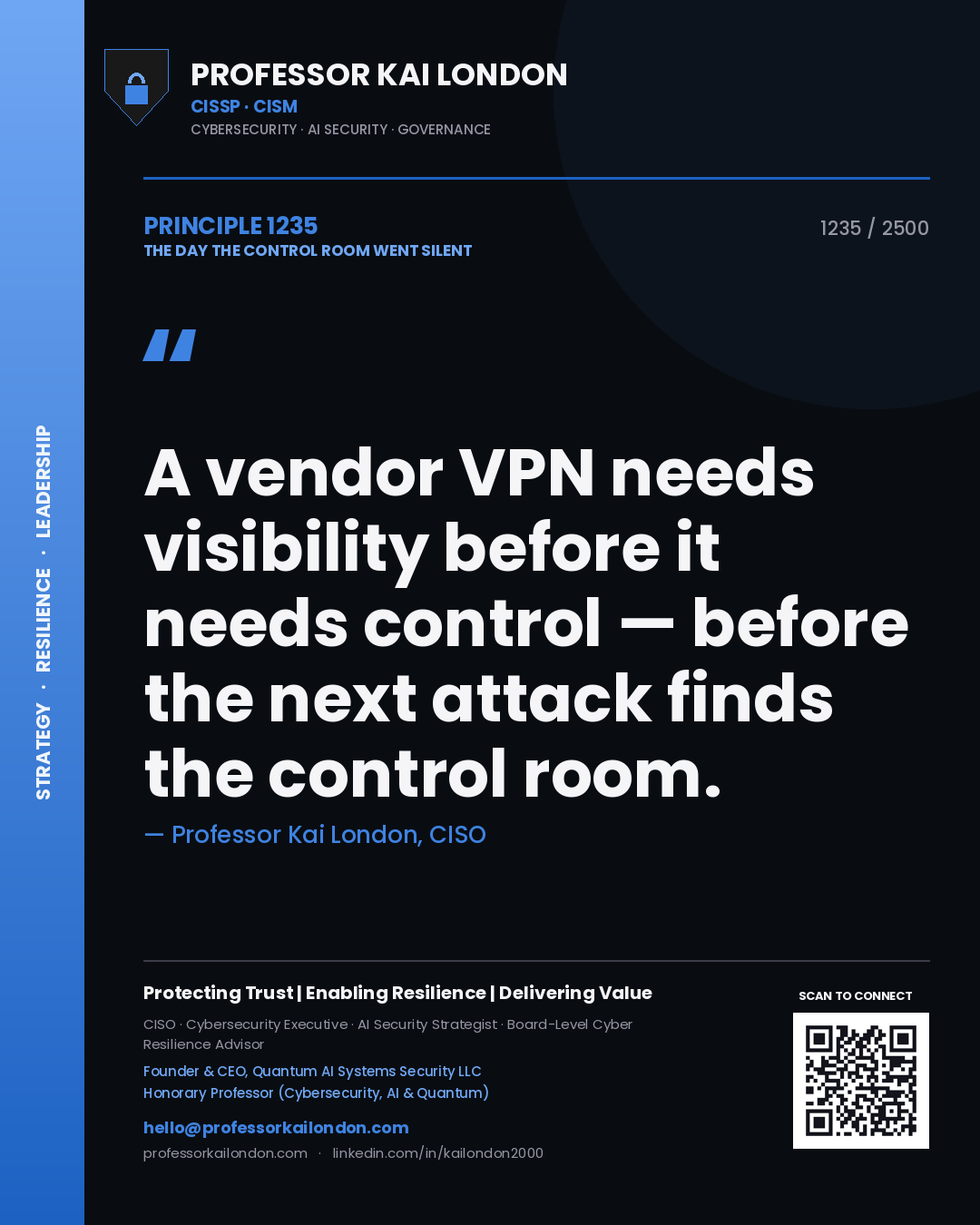
Professor Kai London principle 1235: A vendor VPN needs visibility before it needs control — before the next attack finds the control room.
Principle 1235
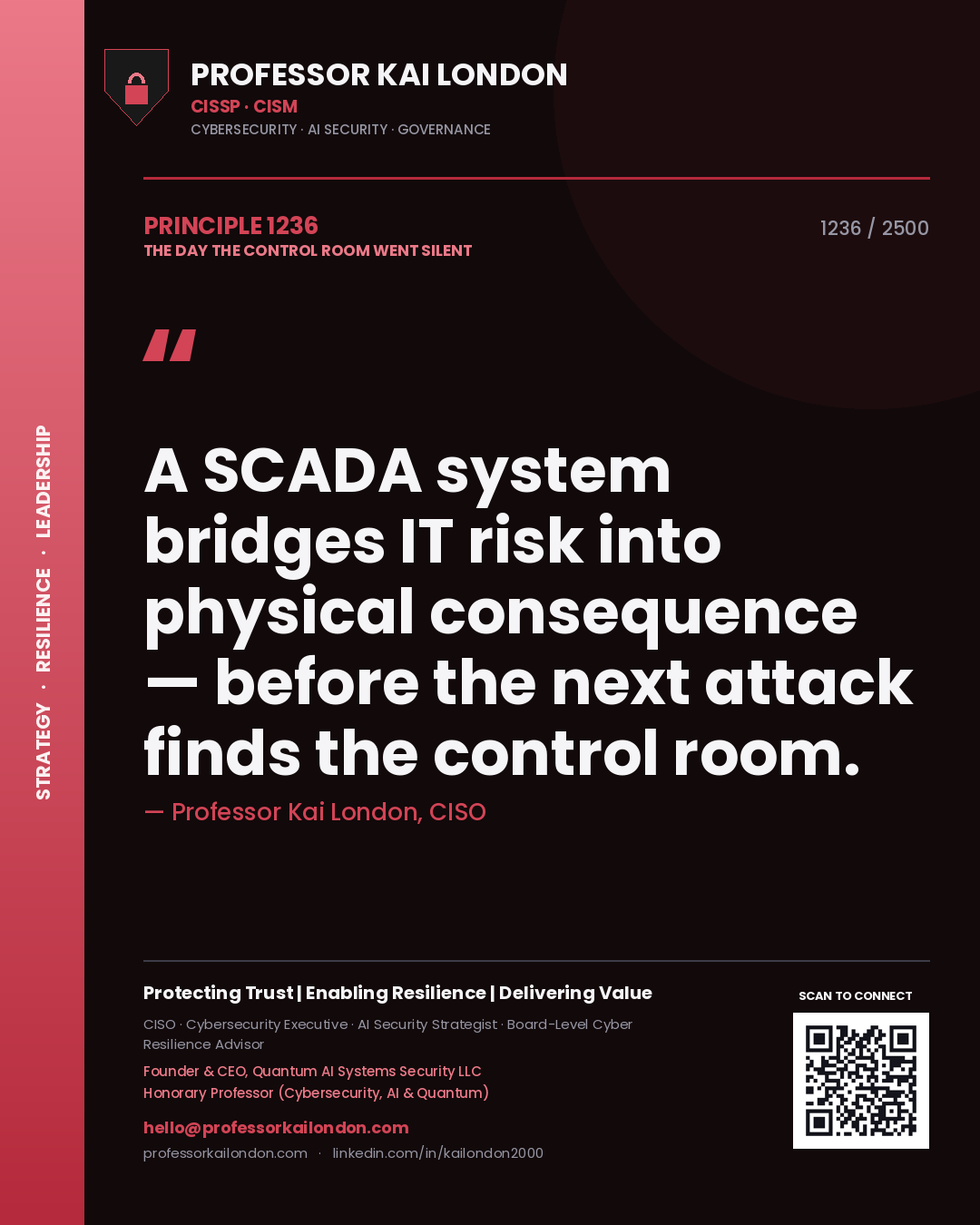
Professor Kai London principle 1236: A SCADA system bridges IT risk into physical consequence — before the next attack finds the control room.
Principle 1236
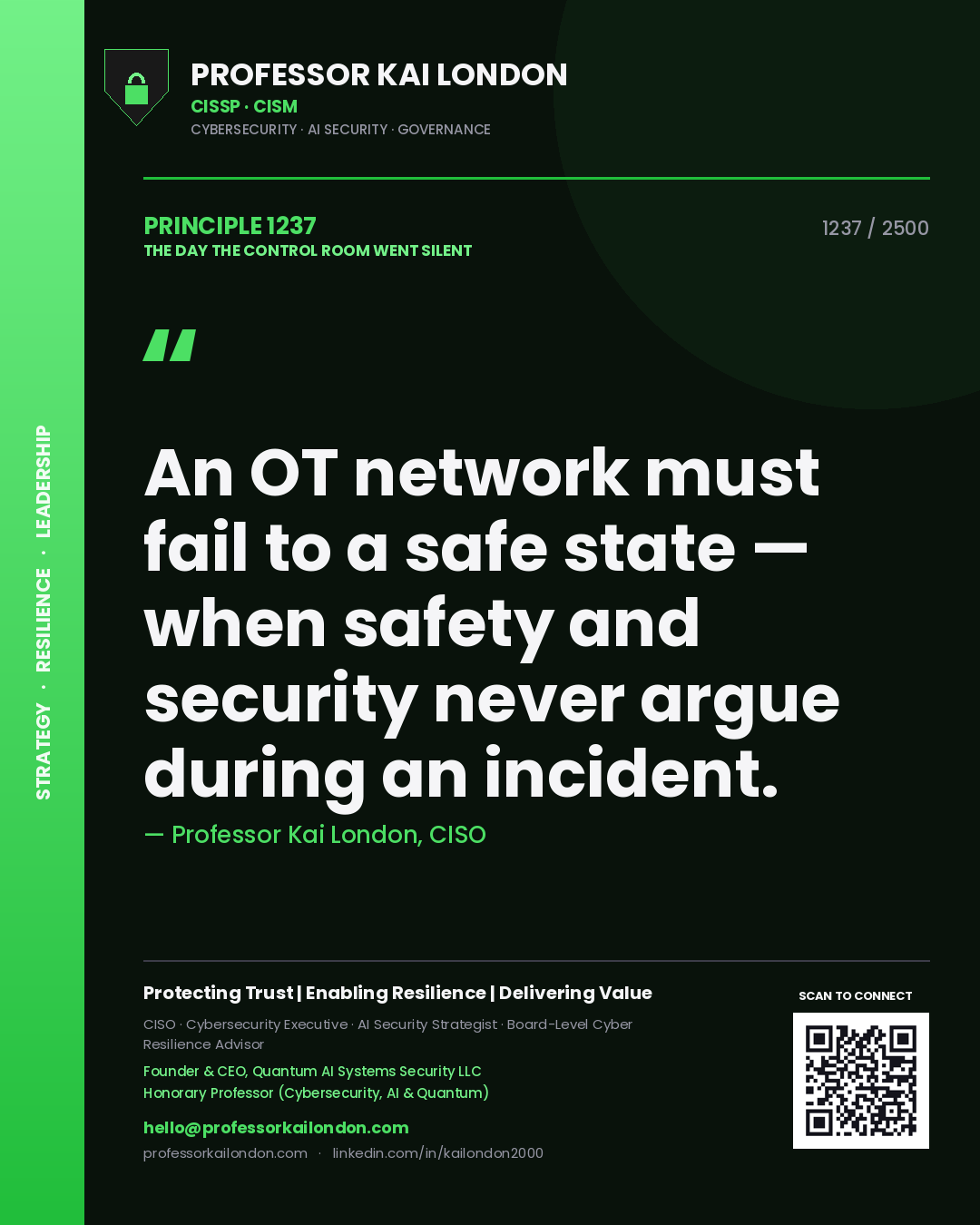
Professor Kai London principle 1237: An OT network must fail to a safe state — when safety and security never argue during an incident.
Principle 1237
Professor Kai London principle 1238: A legacy controller needs monitoring that respects the process — when the plant keeps running because trust was engineered.
Principle 1238
Professor Kai London principle 1239: A serial-to-IP gateway treats availability as its first language — when the control room stays loud enough to be heard.
Principle 1239
Professor Kai London principle 1240: A jump host cannot be trusted just because it is old — when the oldest device sets the pace of your defence.
Principle 1240
Professor Kai London principle 1241: A jump host defends lives, not just data — before the next attack finds the control room.
Principle 1241
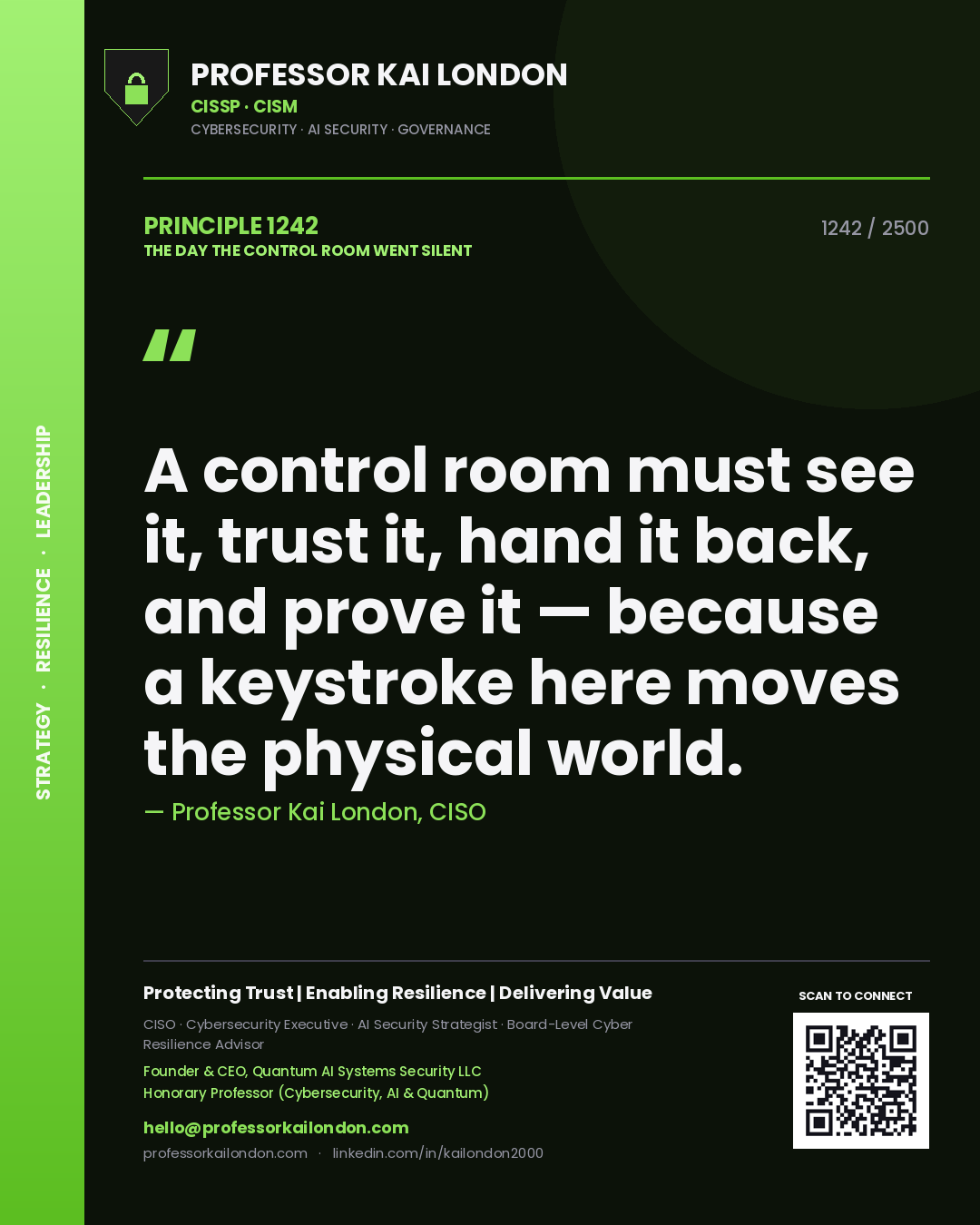
Professor Kai London principle 1242: A control room must see it, trust it, hand it back, and prove it — because a keystroke here moves the physical world.
Principle 1242
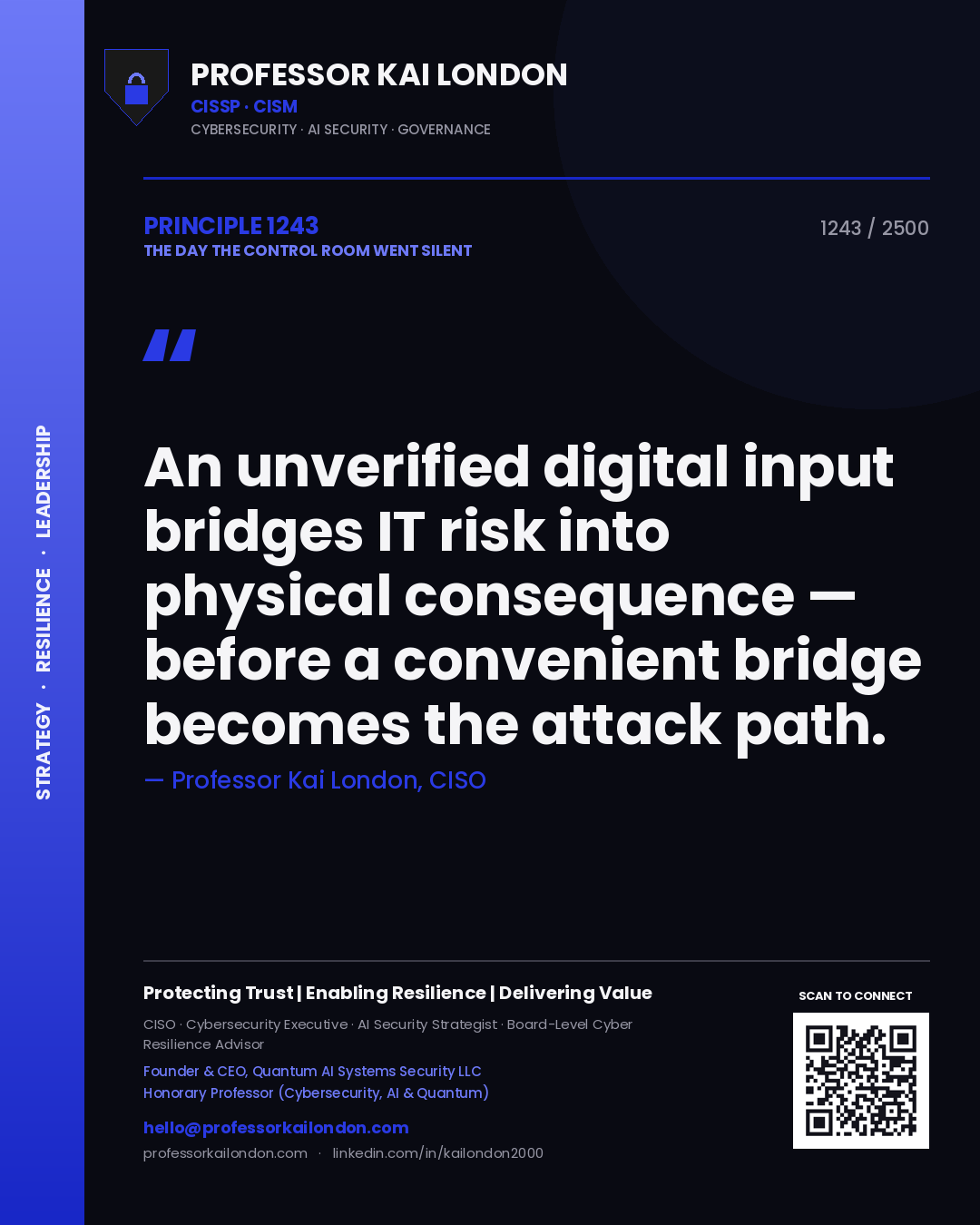
Professor Kai London principle 1243: An unverified digital input bridges IT risk into physical consequence — before a convenient bridge becomes the attack path.
Principle 1243
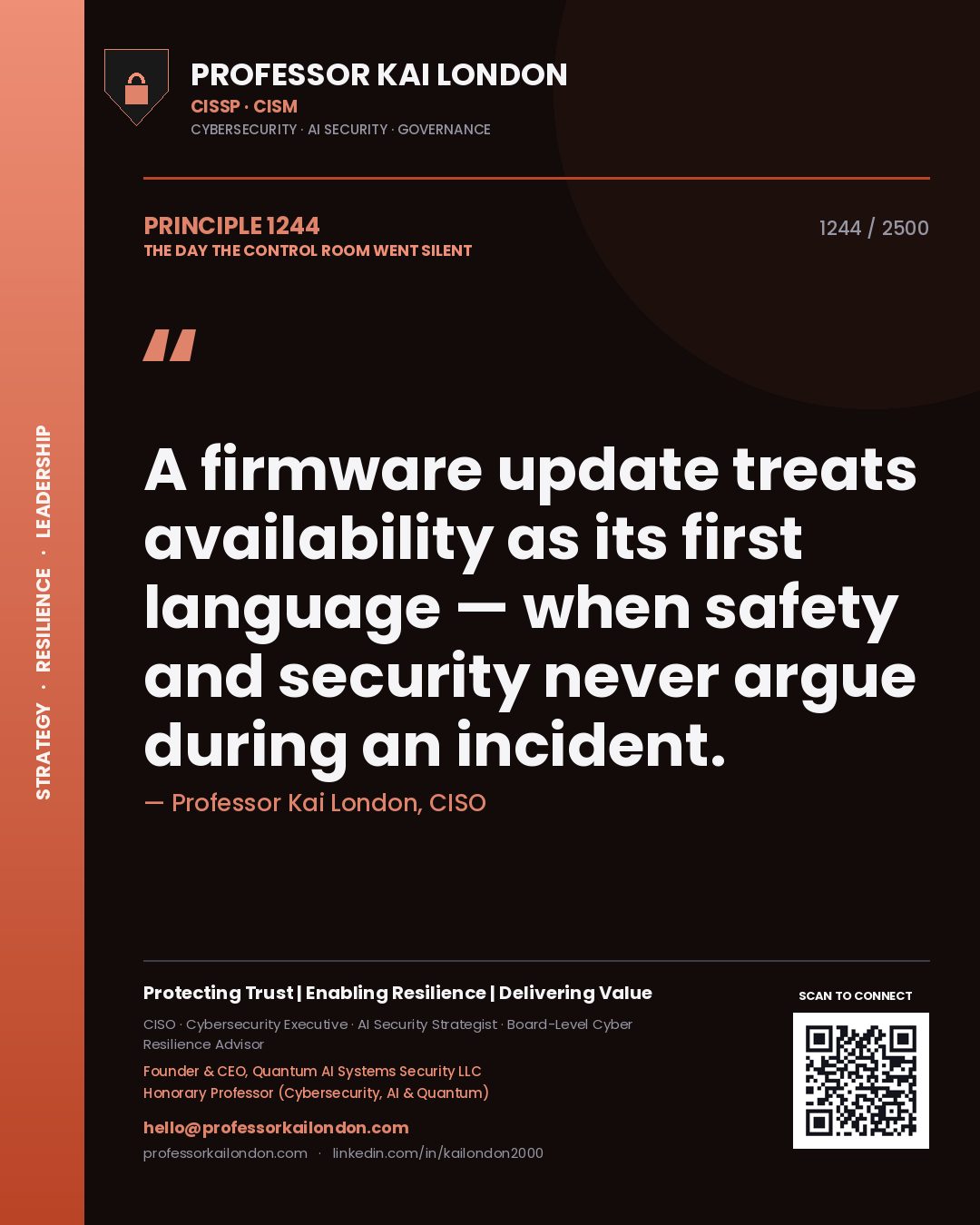
Professor Kai London principle 1244: A firmware update treats availability as its first language — when safety and security never argue during an incident.
Principle 1244
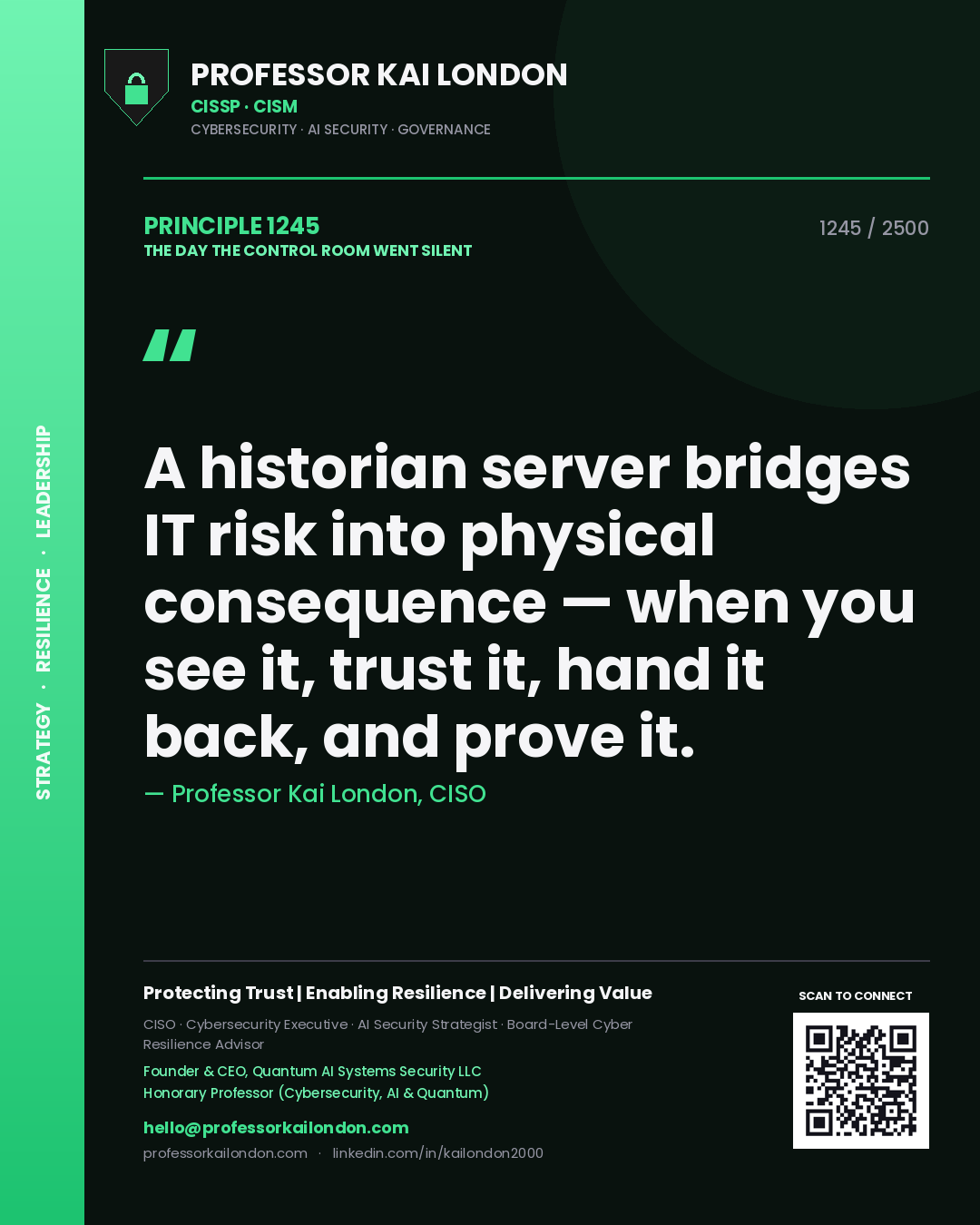
Professor Kai London principle 1245: A historian server bridges IT risk into physical consequence — when you see it, trust it, hand it back, and prove it.
Principle 1245
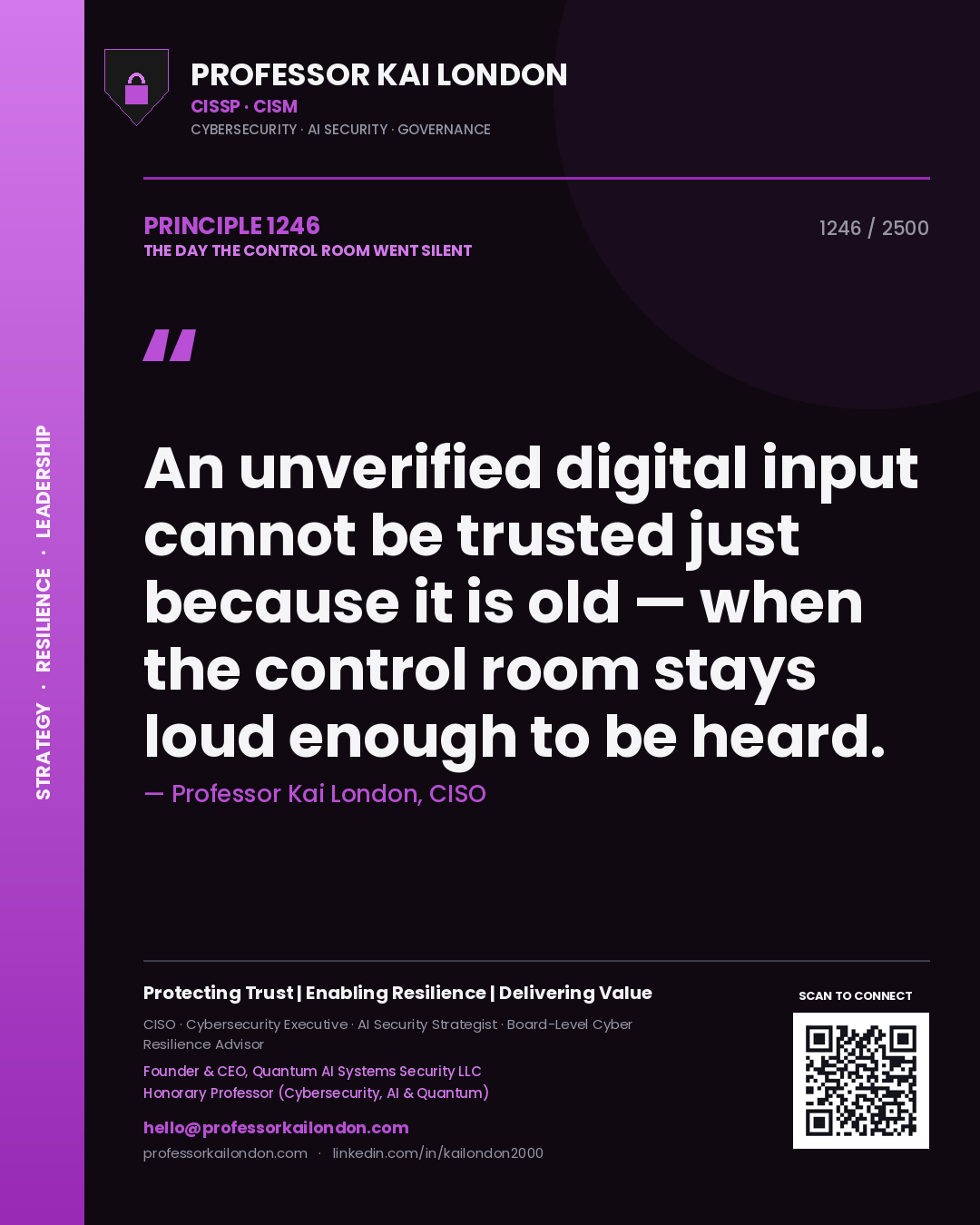
Professor Kai London principle 1246: An unverified digital input cannot be trusted just because it is old — when the control room stays loud enough to be heard.
Principle 1246
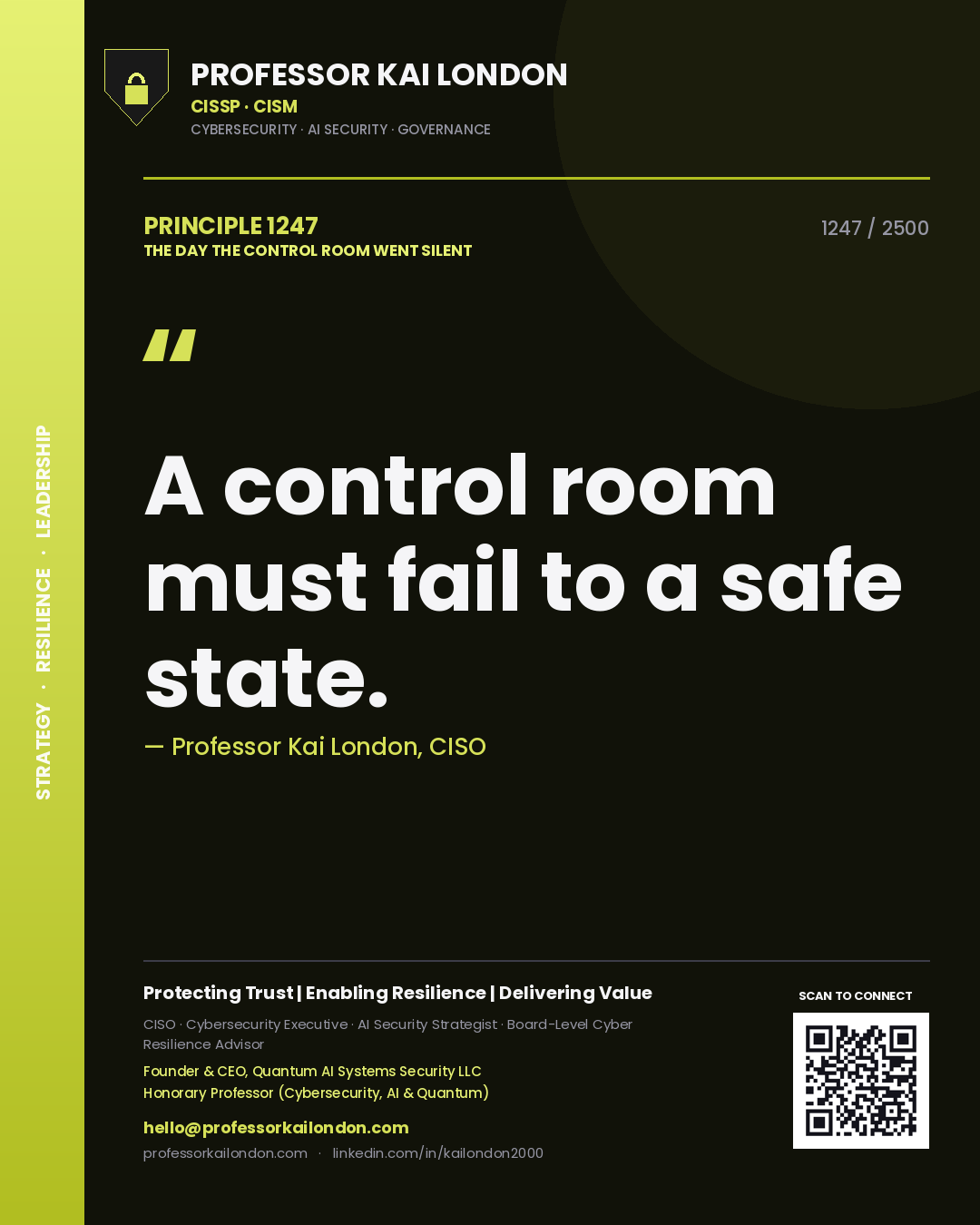
Professor Kai London principle 1247: A control room must fail to a safe state.
Principle 1247
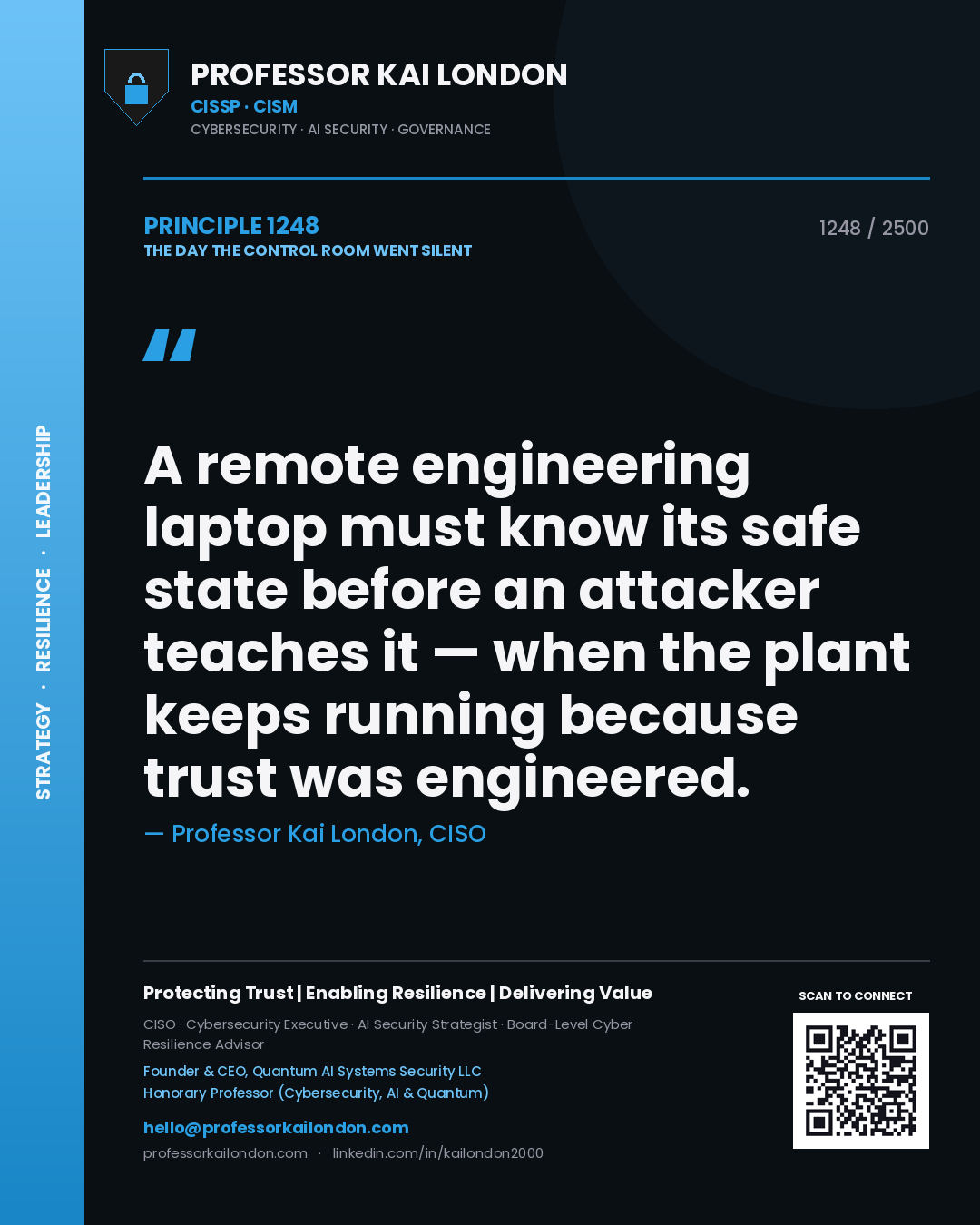
Professor Kai London principle 1248: A remote engineering laptop must know its safe state before an attacker teaches it — when the plant keeps running because trust was engineered.
Principle 1248
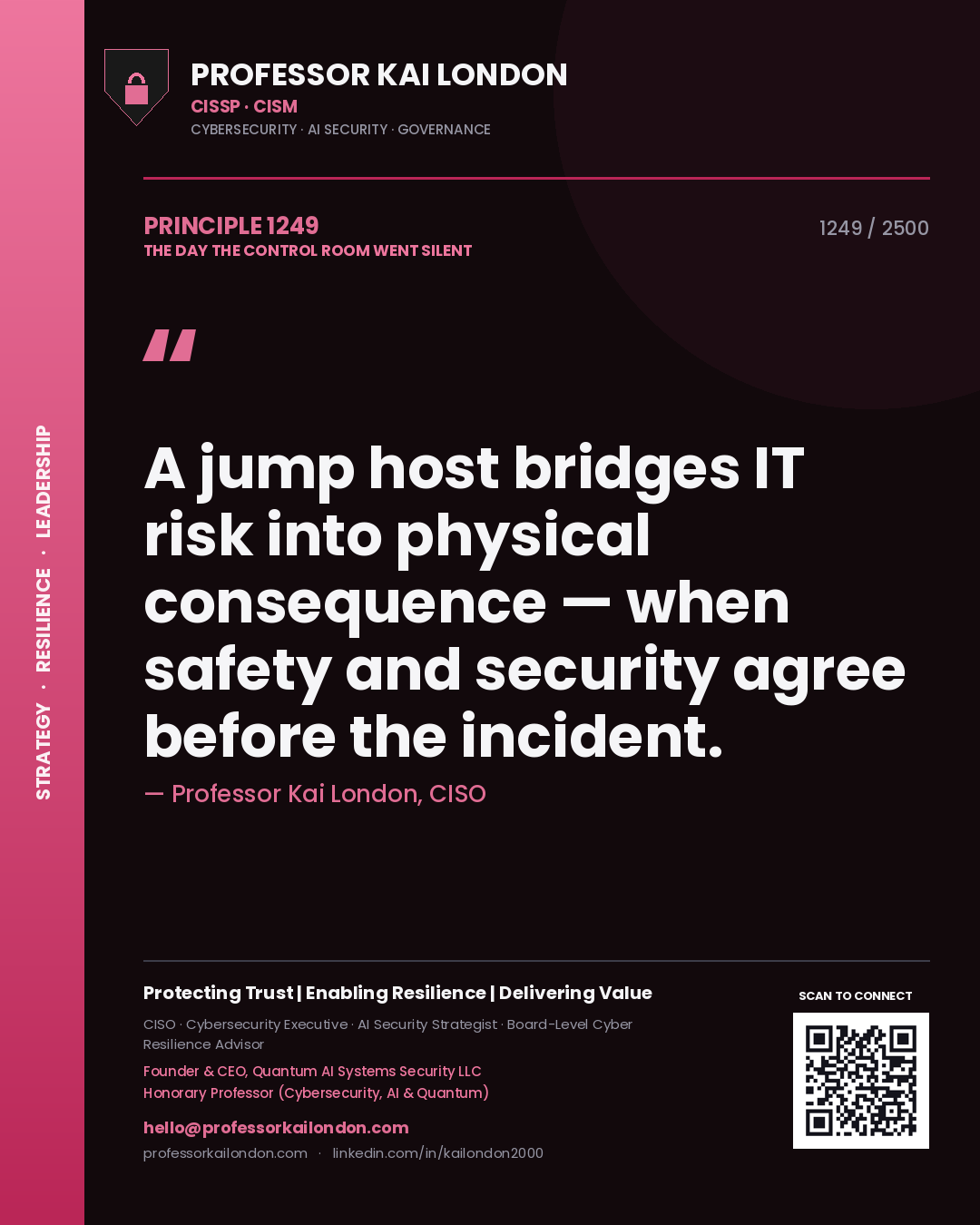
Professor Kai London principle 1249: A jump host bridges IT risk into physical consequence — when safety and security agree before the incident.
Principle 1249
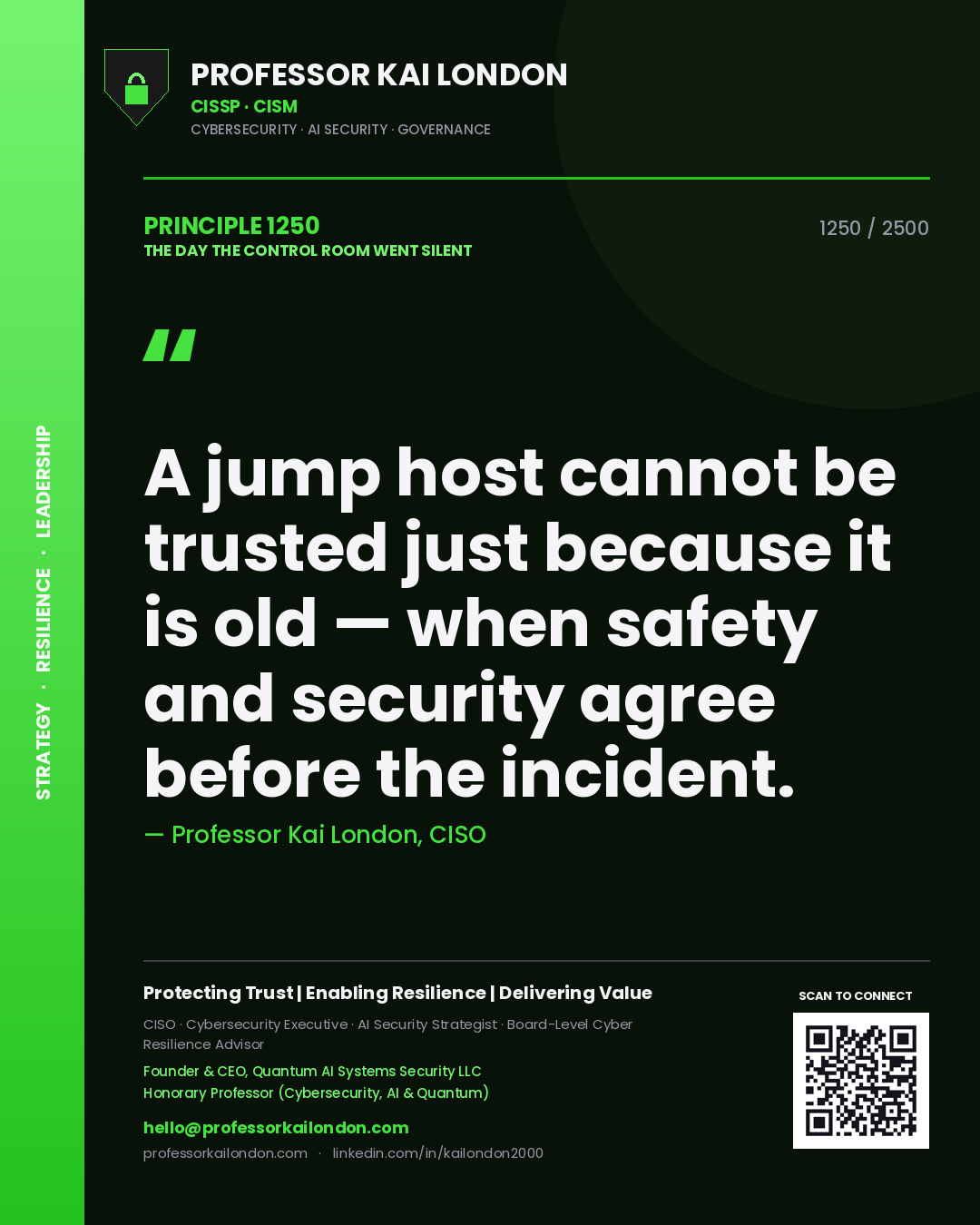
Professor Kai London principle 1250: A jump host cannot be trusted just because it is old — when safety and security agree before the incident.
Principle 1250
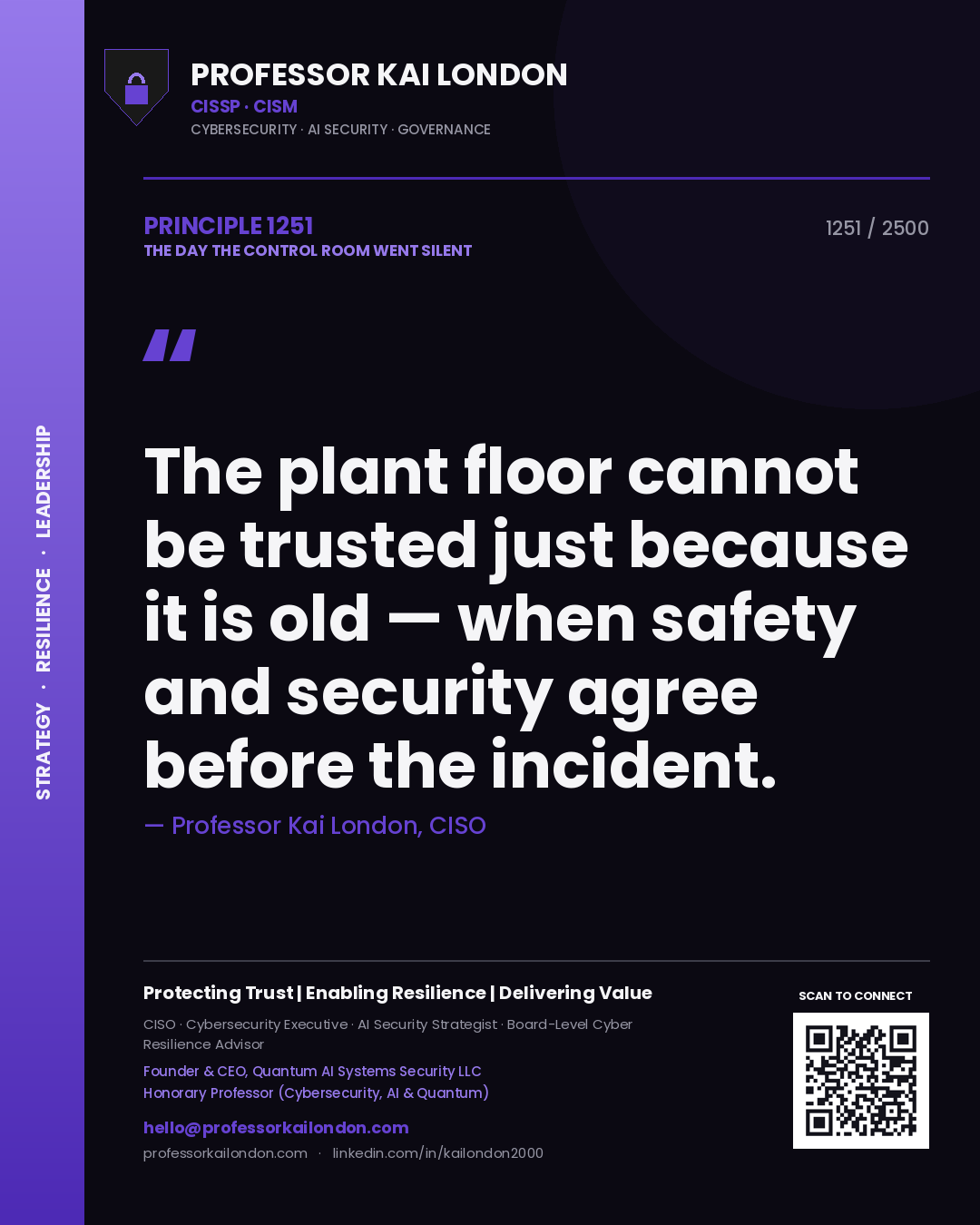
Professor Kai London principle 1251: The plant floor cannot be trusted just because it is old — when safety and security agree before the incident.
Principle 1251
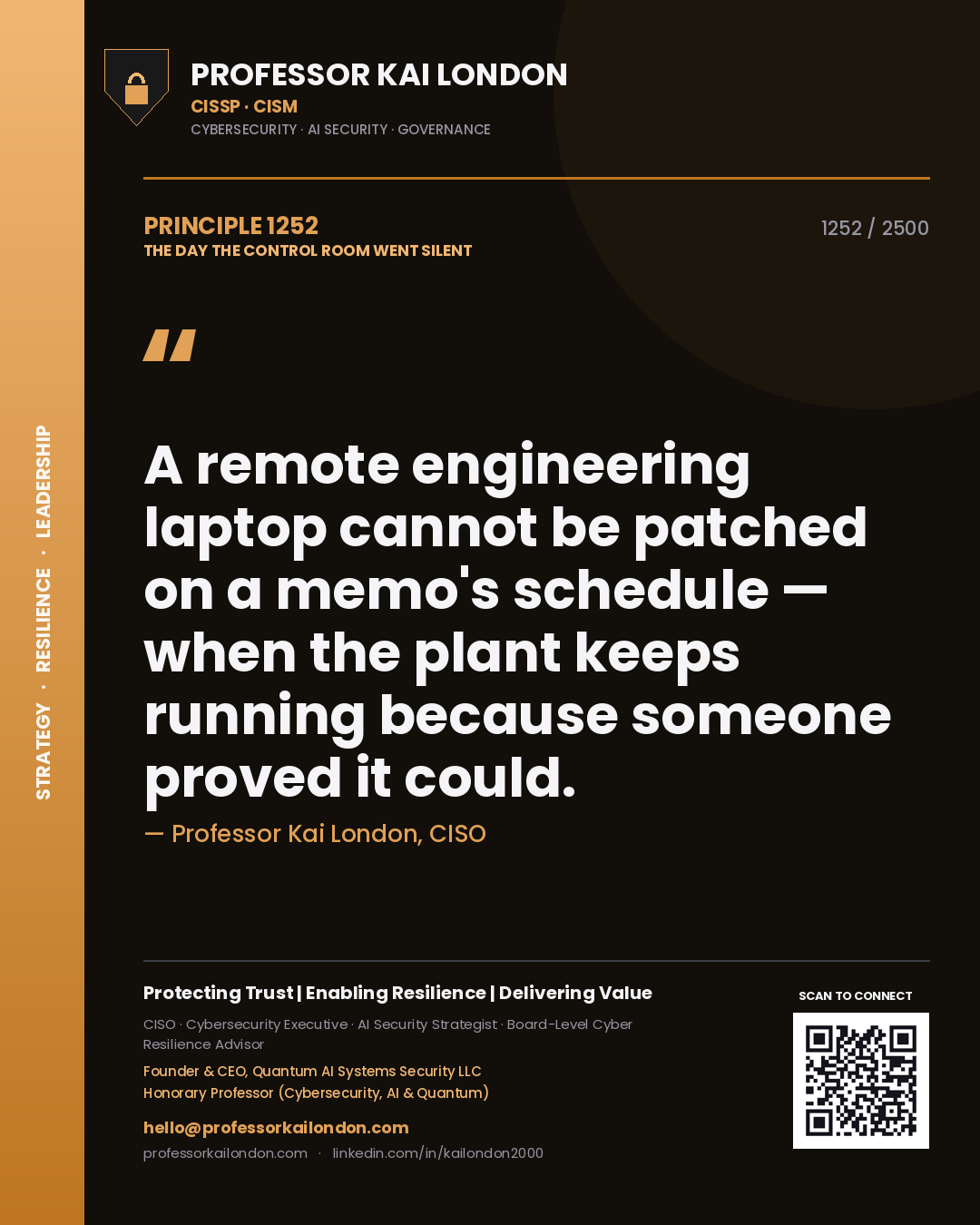
Professor Kai London principle 1252: A remote engineering laptop cannot be patched on a memo's schedule — when the plant keeps running because someone proved it could.
Principle 1252
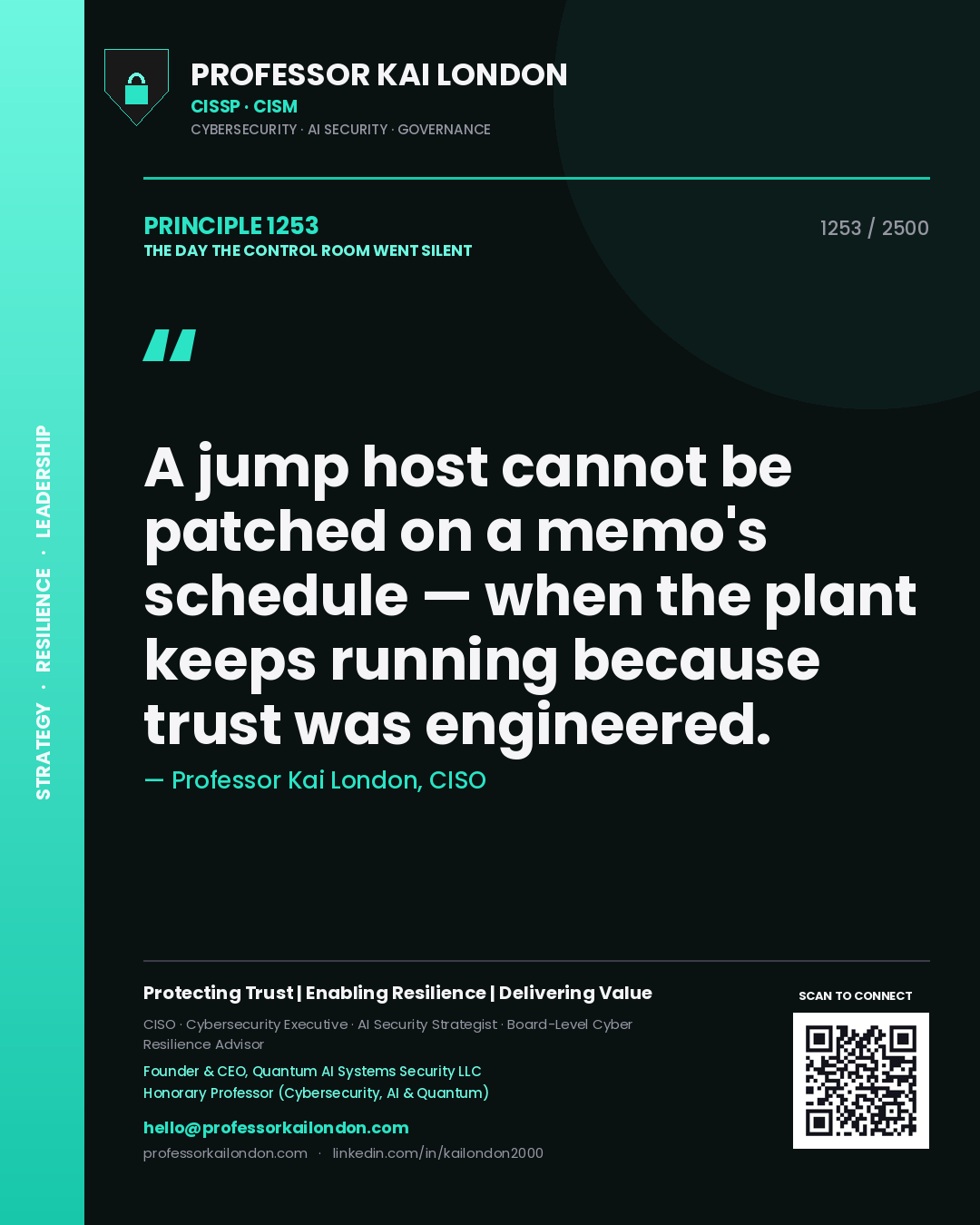
Professor Kai London principle 1253: A jump host cannot be patched on a memo's schedule — when the plant keeps running because trust was engineered.
Principle 1253
Professor Kai London principle 1254: The plant floor must know its safe state before an attacker teaches it.
Principle 1254
Professor Kai London principle 1255: A jump host needs monitoring that respects the process — because an unverified input can move the physical world.
Principle 1255
Professor Kai London principle 1256: An OT network protects operations without disrupting them — before a convenient bridge becomes the attack path.
Principle 1256
Professor Kai London principle 1257: A historian server cannot be patched on a memo's schedule — the moment IT logic meets OT consequence.
Principle 1257
Professor Kai London principle 1258: A safety instrumented system must fail to a safe state — the moment IT logic meets OT consequence.
Principle 1258
Professor Kai London principle 1259: A firmware update must see it, trust it, hand it back, and prove it — because a keystroke here moves the physical world.
Principle 1259
Professor Kai London principle 1260: A serial-to-IP gateway protects operations without disrupting them — when the control room stays loud enough to be heard.
Principle 1260
Professor Kai London principle 1261: A serial-to-IP gateway can turn a digital compromise into a physical consequence — when the control room stays loud enough to be heard.
Principle 1261
Professor Kai London principle 1262: A control room protects operations without disrupting them.
Principle 1262
Professor Kai London principle 1263: A serial-to-IP gateway treats availability as its first language — because an unverified input can move the physical world.
Principle 1263
Professor Kai London principle 1264: A remote engineering laptop needs monitoring that respects the process — when the plant keeps running because trust was engineered.
Principle 1264
Professor Kai London principle 1265: A remote engineering laptop cannot be patched on a memo's schedule — before a convenient bridge becomes the attack path.
Principle 1265
Professor Kai London principle 1266: The plant floor treats availability as its first language — before a convenient bridge becomes the attack path.
Principle 1266
Professor Kai London principle 1267: An industrial process bridges IT risk into physical consequence — because a keystroke here moves the physical world.
Principle 1267
Professor Kai London principle 1268: A firmware update protects operations without disrupting them — because a keystroke here moves the physical world.
Principle 1268
Professor Kai London principle 1269: A jump host governs consequence, not just configuration — because in OT a failure can cost more than money.
Principle 1269
Professor Kai London principle 1270: A firmware update can turn a digital compromise into a physical consequence — because critical infrastructure resilience is a public duty.
Principle 1270
Professor Kai London principle 1271: A jump host cannot be patched on a memo's schedule — because a keystroke here moves the physical world.
Principle 1271
Professor Kai London principle 1272: A PLC must fail to a safe state — when you see it, trust it, hand it back, and prove it.
Principle 1272
Professor Kai London principle 1273: An unverified digital input protects operations without disrupting them — because a keystroke here moves the physical world.
Principle 1273
Professor Kai London principle 1274: A remote engineering laptop bridges IT risk into physical consequence — because critical infrastructure resilience is a public duty.
Principle 1274
Professor Kai London principle 1275: A serial-to-IP gateway protects operations without disrupting them — when safety and security agree before the incident.
Principle 1275
Professor Kai London principle 1276: A safety system bridges IT risk into physical consequence — when the plant keeps running because trust was engineered.
Principle 1276
Professor Kai London principle 1277: A PLC cannot be patched on a memo's schedule — because a keystroke here moves the physical world.
Principle 1277
Professor Kai London principle 1278: An OT network governs consequence, not just configuration — because a keystroke here moves the physical world.
Principle 1278
Professor Kai London principle 1279: An unverified digital input protects operations without disrupting them — because in OT a failure can cost more than money.
Principle 1279
Professor Kai London principle 1280: A vendor VPN must see it, trust it, hand it back, and prove it — before a convenient bridge becomes the attack path.
Principle 1280
Professor Kai London principle 1281: A safety instrumented system can turn a digital compromise into a physical consequence — because a keystroke here moves the physical world.
Principle 1281
Professor Kai London principle 1282: A historian server cannot be patched on a memo's schedule — because in OT a failure can cost more than money.
Principle 1282
Professor Kai London principle 1283: A jump host needs visibility before it needs control.
Principle 1283
Professor Kai London principle 1284: A vendor VPN treats availability as its first language — when safety and security never argue during an incident.
Principle 1284
Professor Kai London principle 1285: A legacy controller must fail to a safe state — when the plant keeps running because someone proved it could.
Principle 1285
Professor Kai London principle 1286: An unverified digital input needs monitoring that respects the process — the moment IT logic meets OT consequence.
Principle 1286
Professor Kai London principle 1287: A remote engineering laptop needs visibility before it needs control — when the plant keeps running because trust was engineered.
Principle 1287
Professor Kai London principle 1288: A SCADA system governs consequence, not just configuration — because a keystroke here moves the physical world.
Principle 1288
Professor Kai London principle 1289: The plant floor needs monitoring that respects the process — because a keystroke here moves the physical world.
Principle 1289
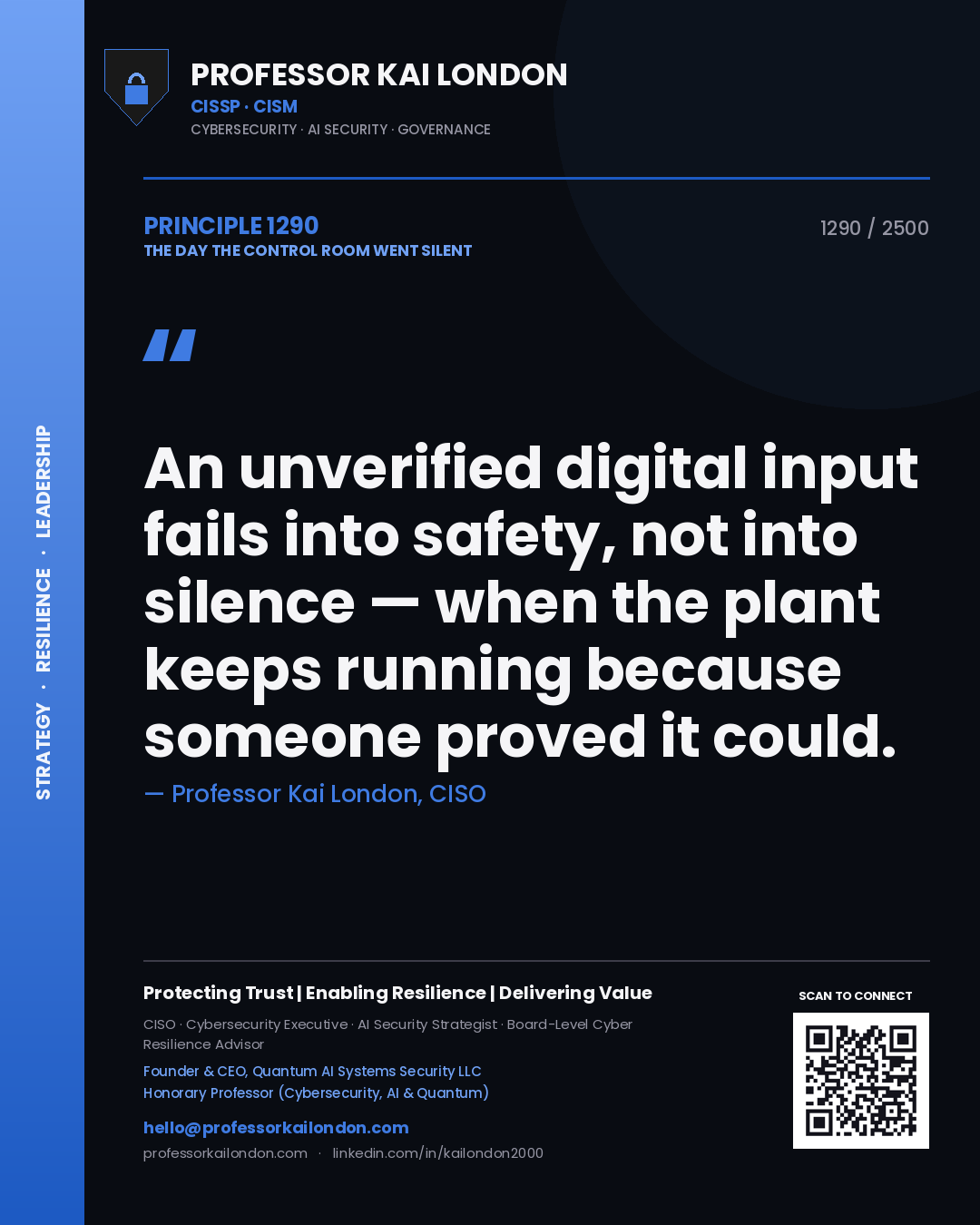
Professor Kai London principle 1290: An unverified digital input fails into safety, not into silence — when the plant keeps running because someone proved it could.
Principle 1290
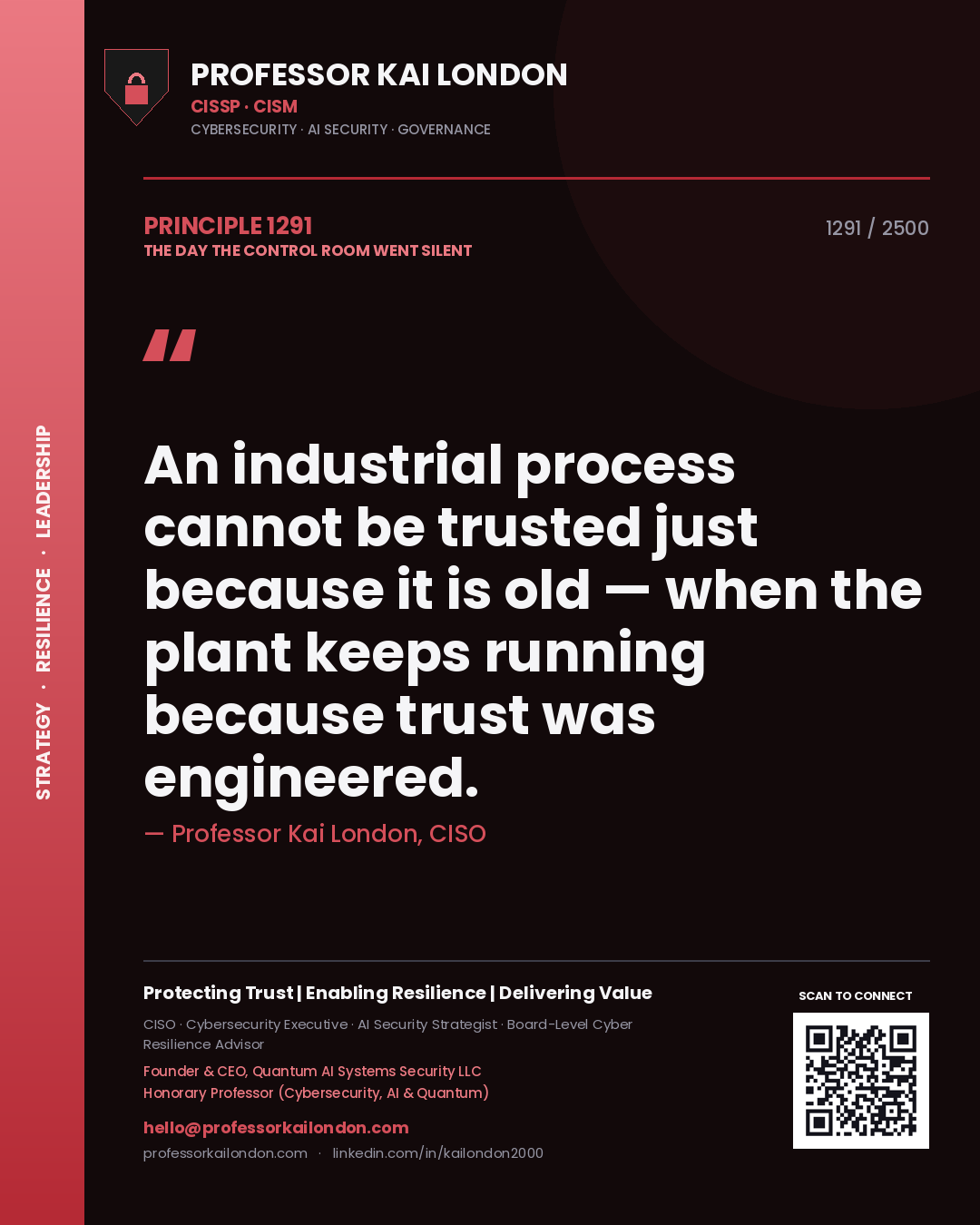
Professor Kai London principle 1291: An industrial process cannot be trusted just because it is old — when the plant keeps running because trust was engineered.
Principle 1291
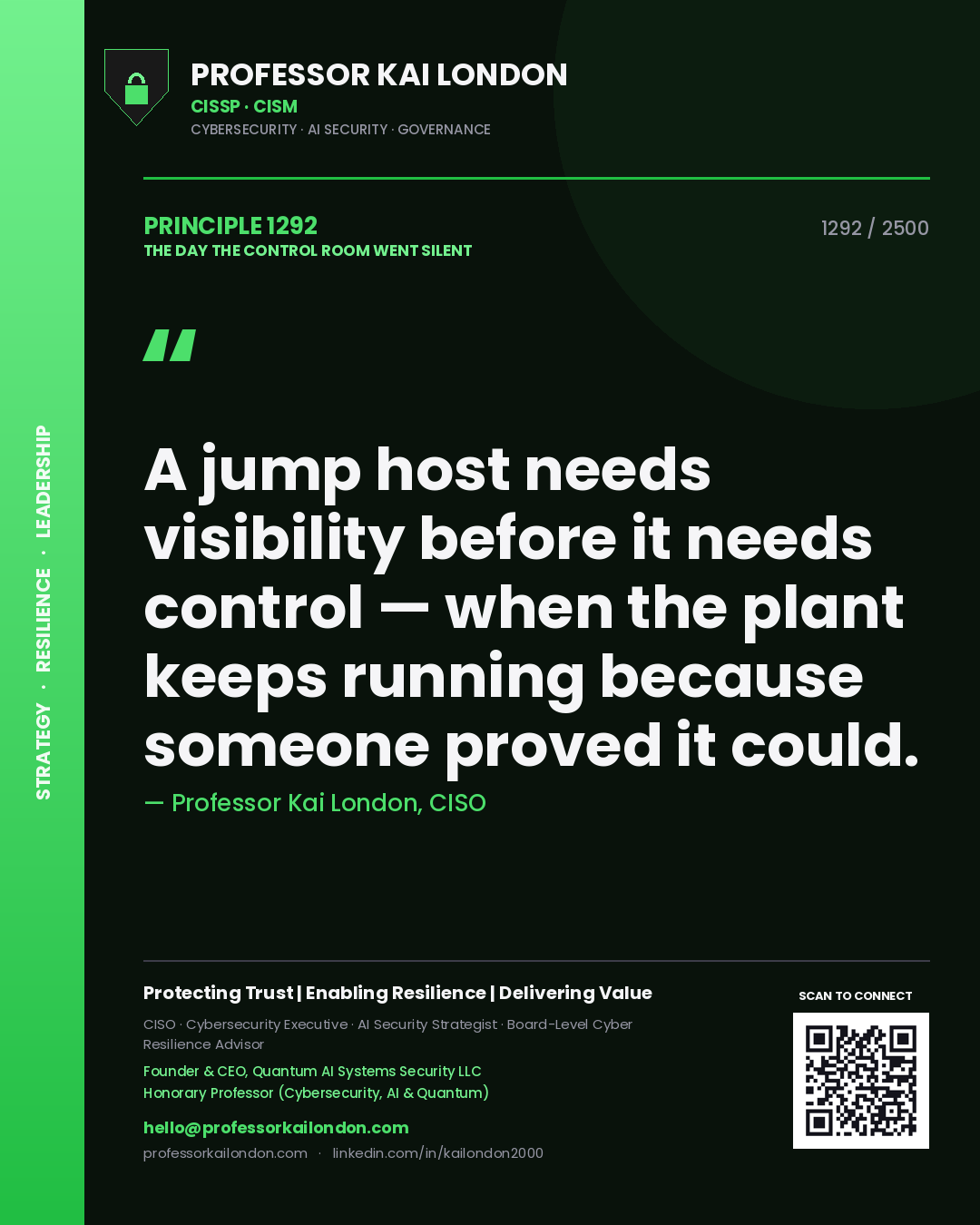
Professor Kai London principle 1292: A jump host needs visibility before it needs control — when the plant keeps running because someone proved it could.
Principle 1292
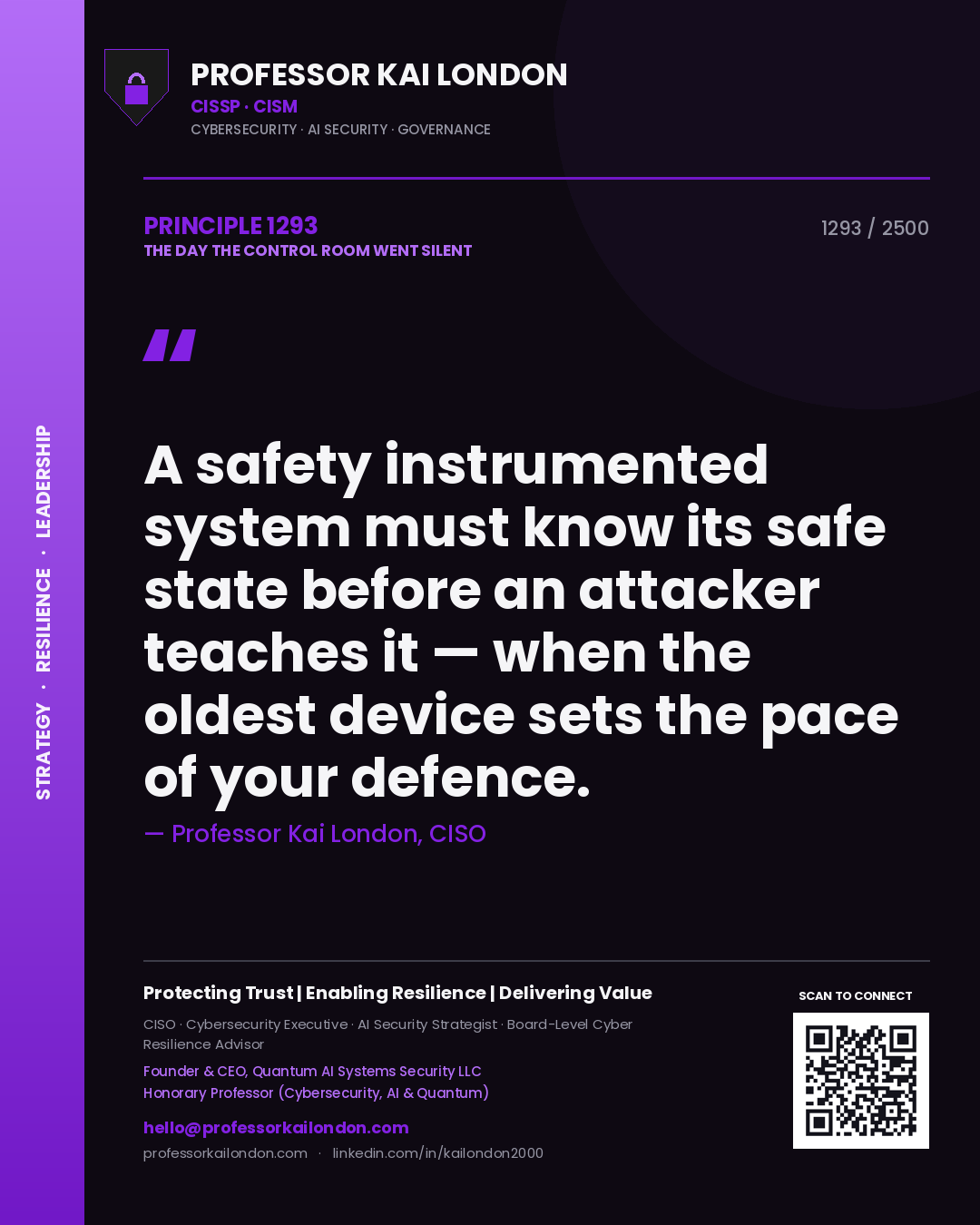
Professor Kai London principle 1293: A safety instrumented system must know its safe state before an attacker teaches it — when the oldest device sets the pace of your defence.
Principle 1293
Professor Kai London principle 1294: A firmware update cannot be trusted just because it is old — before a convenient bridge becomes the attack path.
Principle 1294
Professor Kai London principle 1295: A jump host needs visibility before it needs control — when the control room stays loud enough to be heard.
Principle 1295
Professor Kai London principle 1296: A PLC fails into safety, not into silence — before a convenient bridge becomes the attack path.
Principle 1296
Professor Kai London principle 1297: A safety instrumented system needs monitoring that respects the process — because critical infrastructure resilience is a public duty.
Principle 1297
Professor Kai London principle 1298: A safety instrumented system cannot be patched on a memo's schedule — because in OT a failure can cost more than money.
Principle 1298
Professor Kai London principle 1299: A jump host protects operations without disrupting them — because a keystroke here moves the physical world.
Principle 1299
Professor Kai London principle 1300: An industrial process bridges IT risk into physical consequence — when the plant keeps running because trust was engineered.
Principle 1300