Breachproof — Gallery (Page 6 of 100)
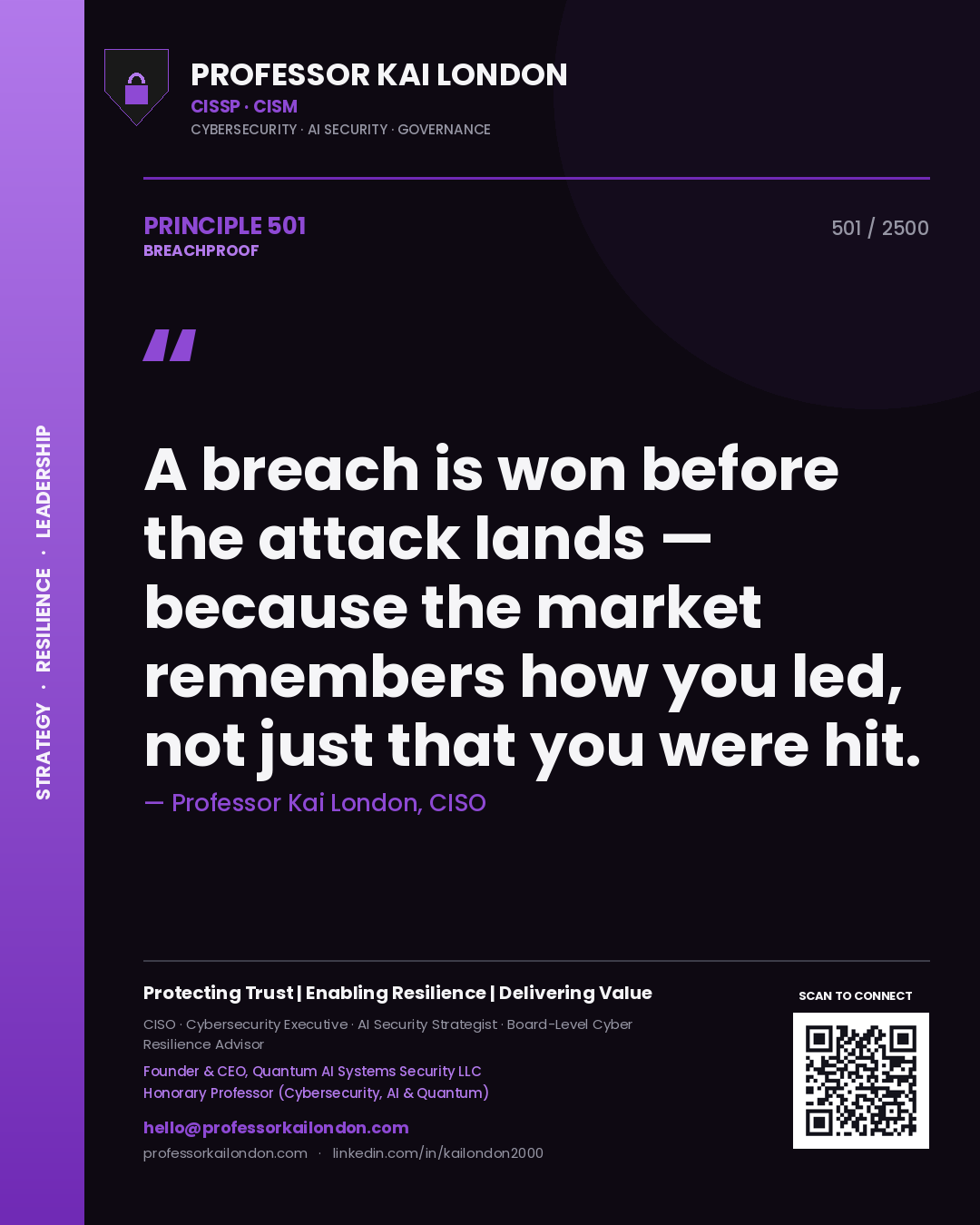
Professor Kai London principle 501: A breach is won before the attack lands — because the market remembers how you led, not just that you were hit.
Principle 501
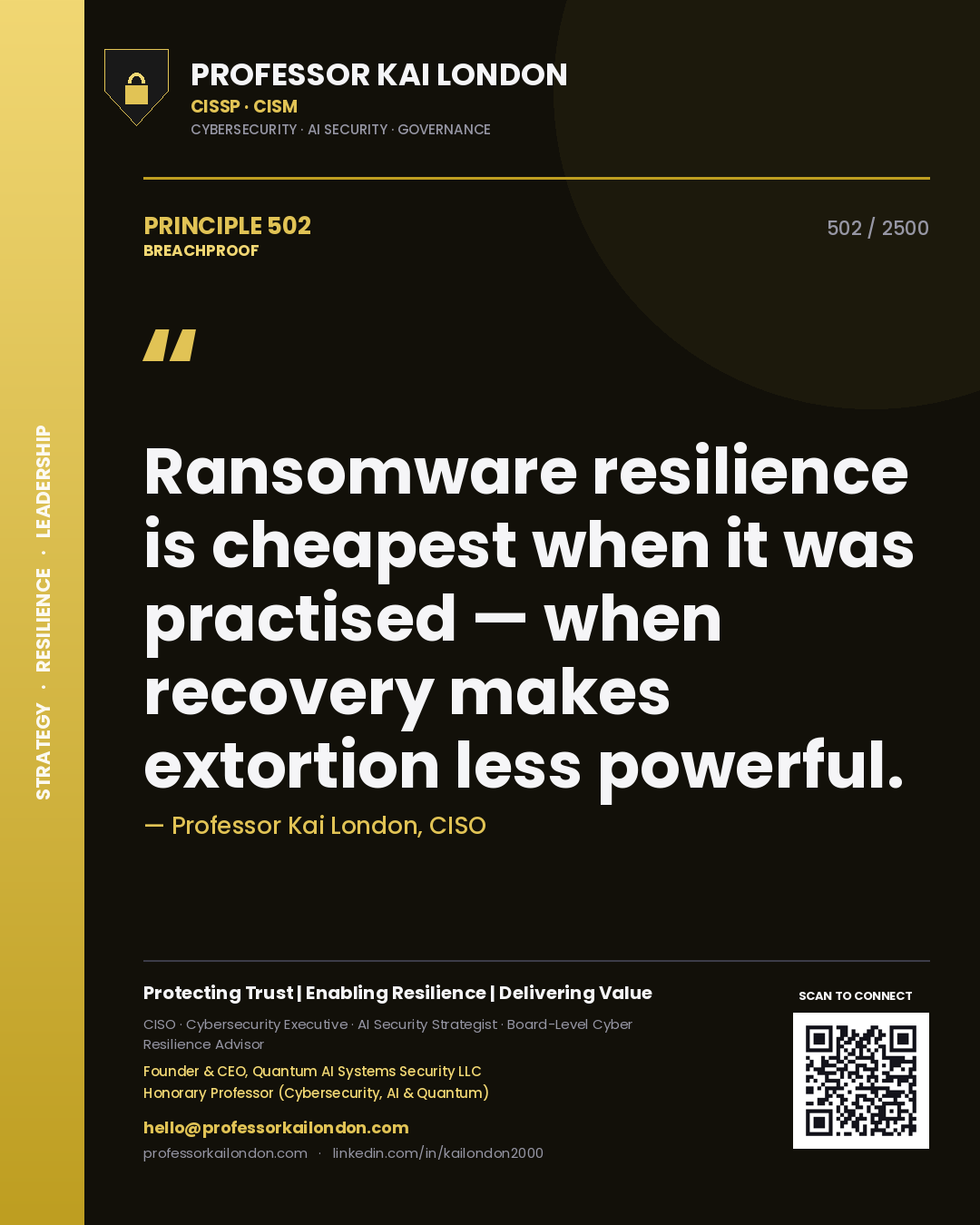
Professor Kai London principle 502: Ransomware resilience is cheapest when it was practised — when recovery makes extortion less powerful.
Principle 502
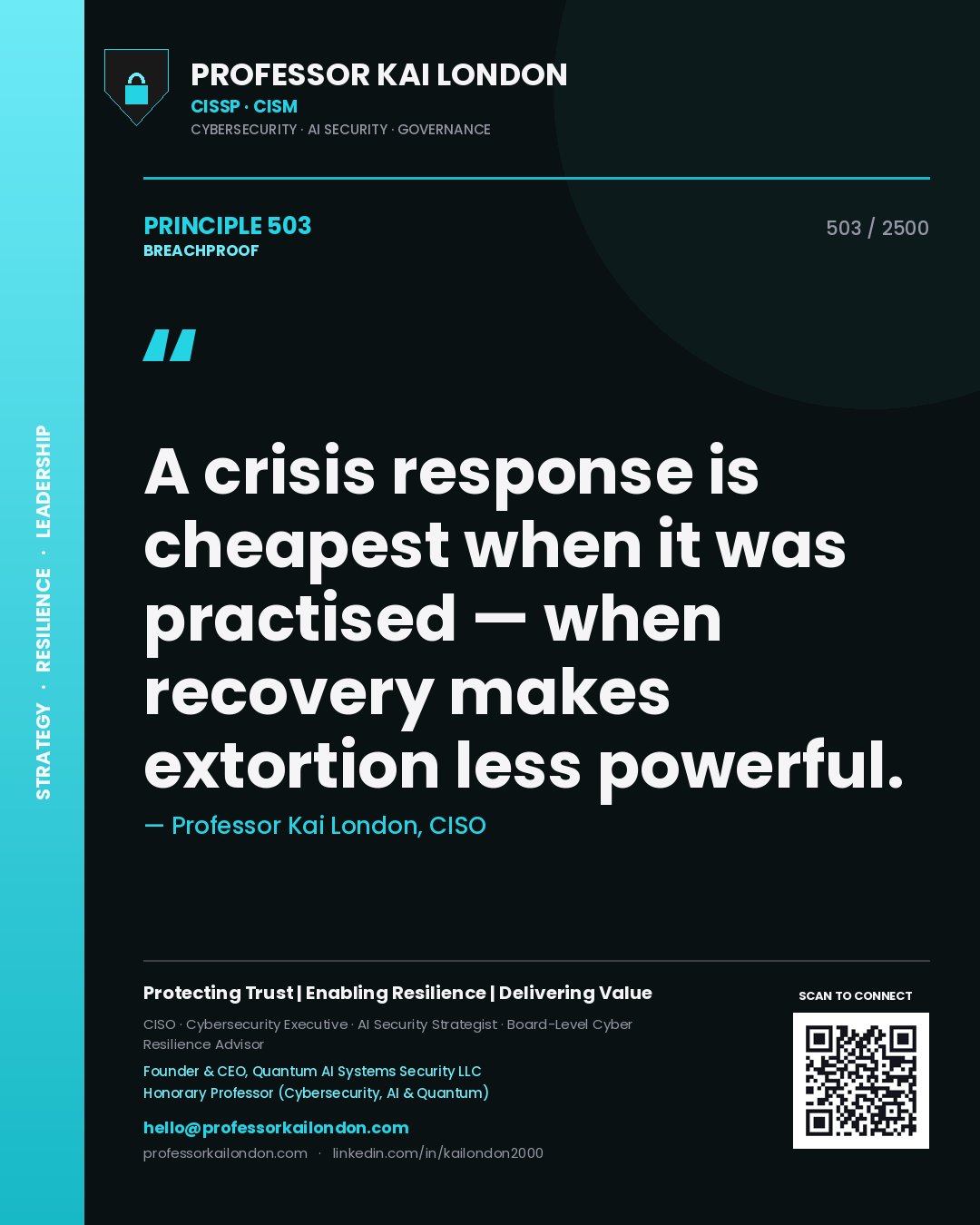
Professor Kai London principle 503: A crisis response is cheapest when it was practised — when recovery makes extortion less powerful.
Principle 503
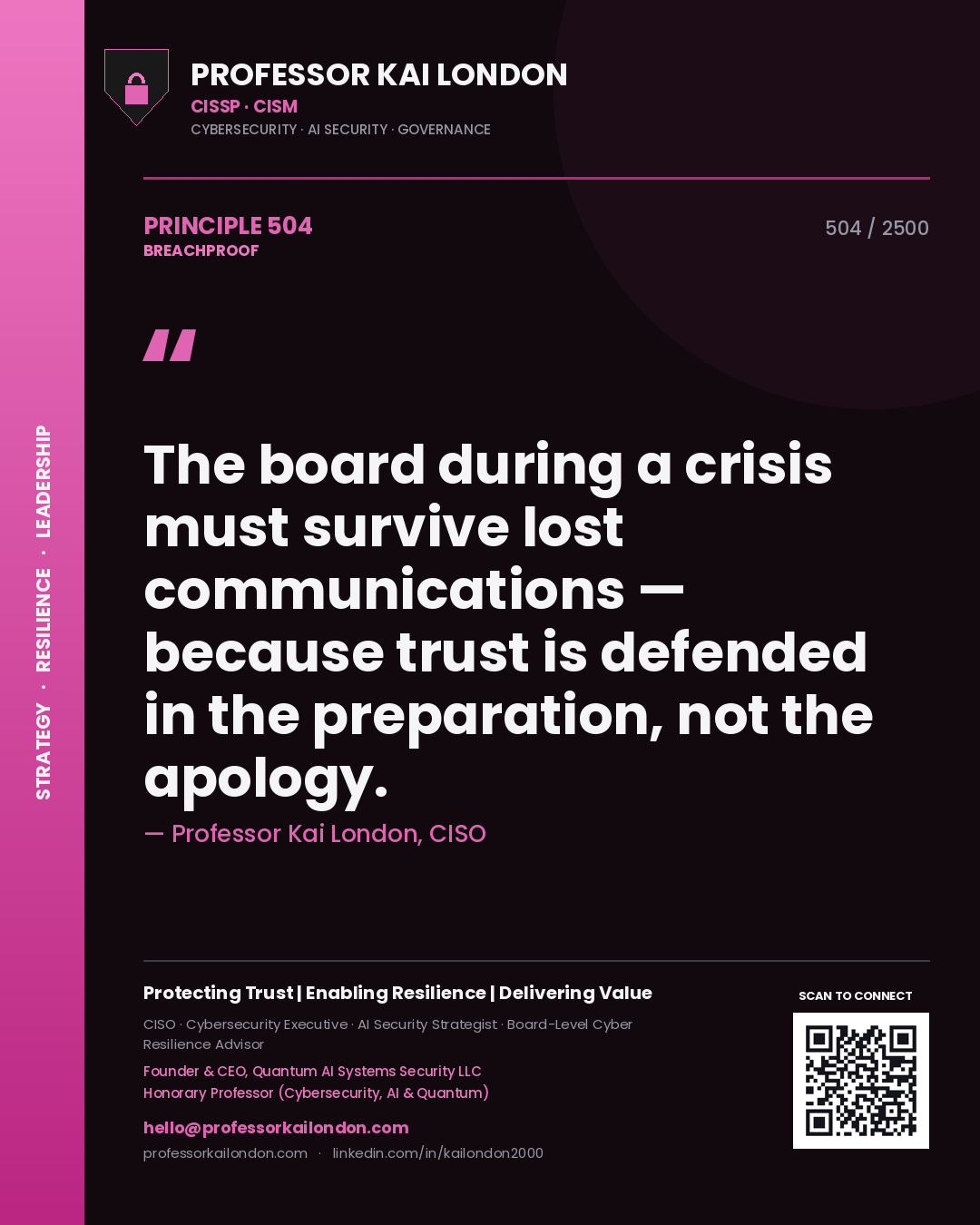
Professor Kai London principle 504: The board during a crisis must survive lost communications — because trust is defended in the preparation, not the apology.
Principle 504
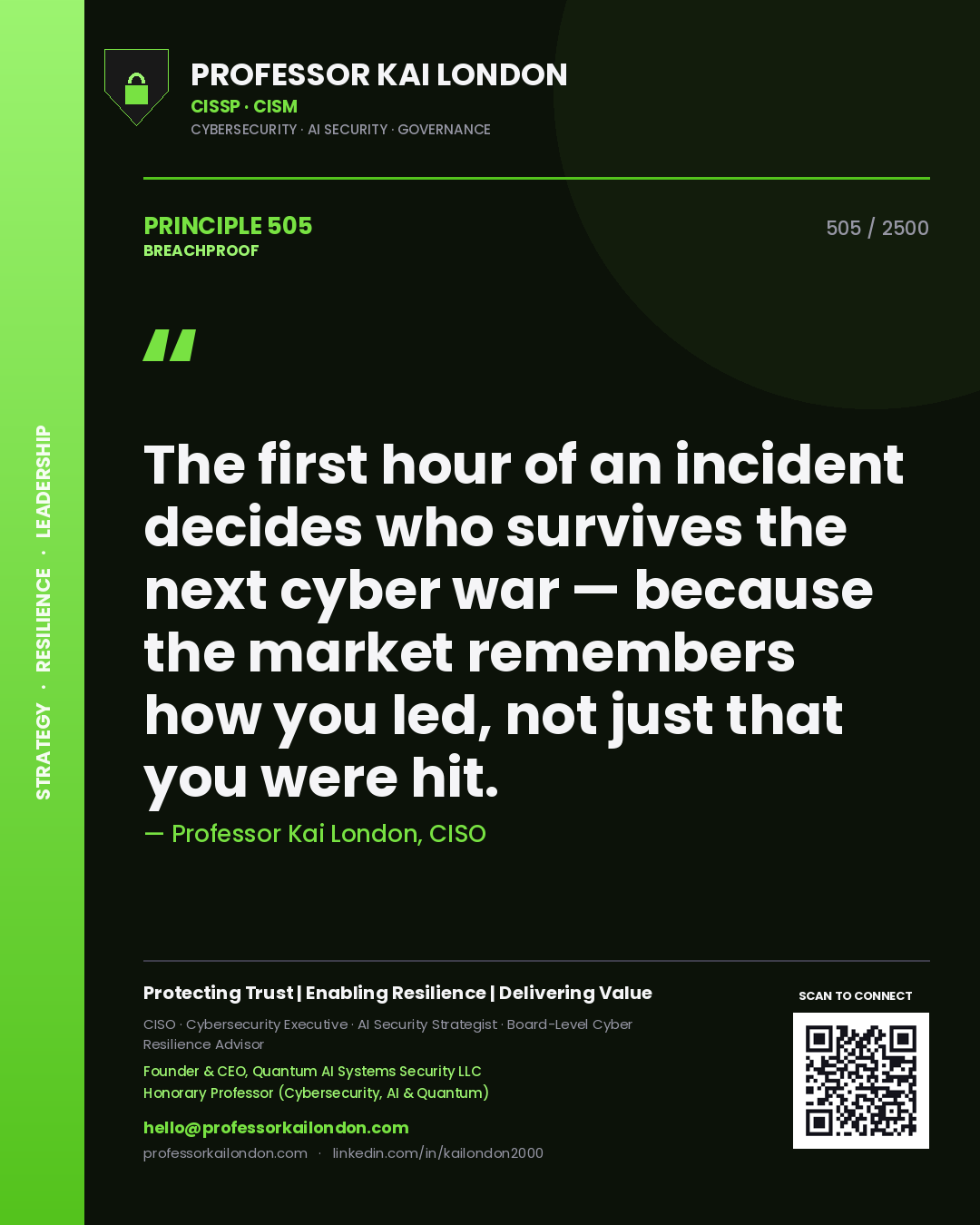
Professor Kai London principle 505: The first hour of an incident decides who survives the next cyber war — because the market remembers how you led, not just that you were hit.
Principle 505
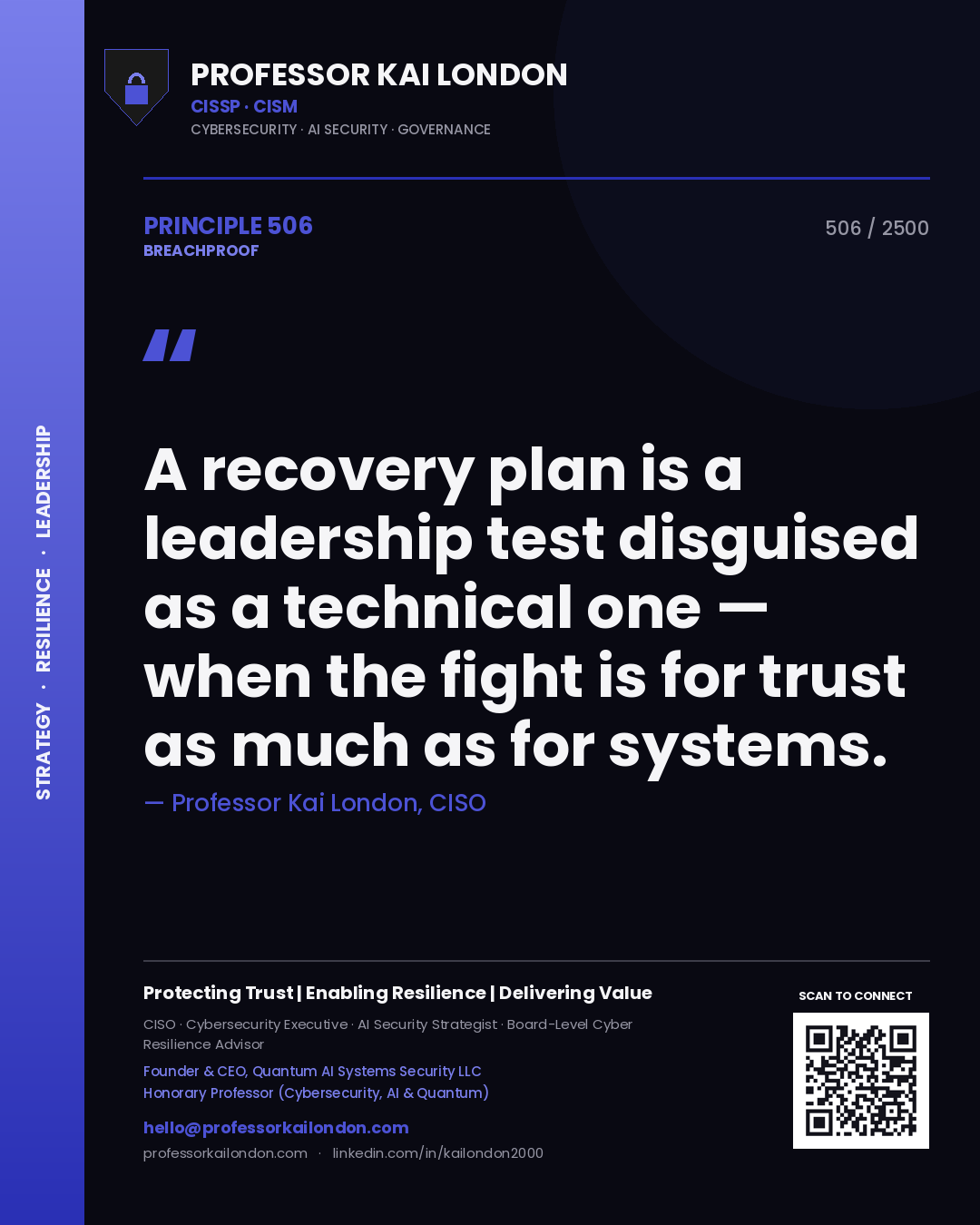
Professor Kai London principle 506: A recovery plan is a leadership test disguised as a technical one — when the fight is for trust as much as for systems.
Principle 506
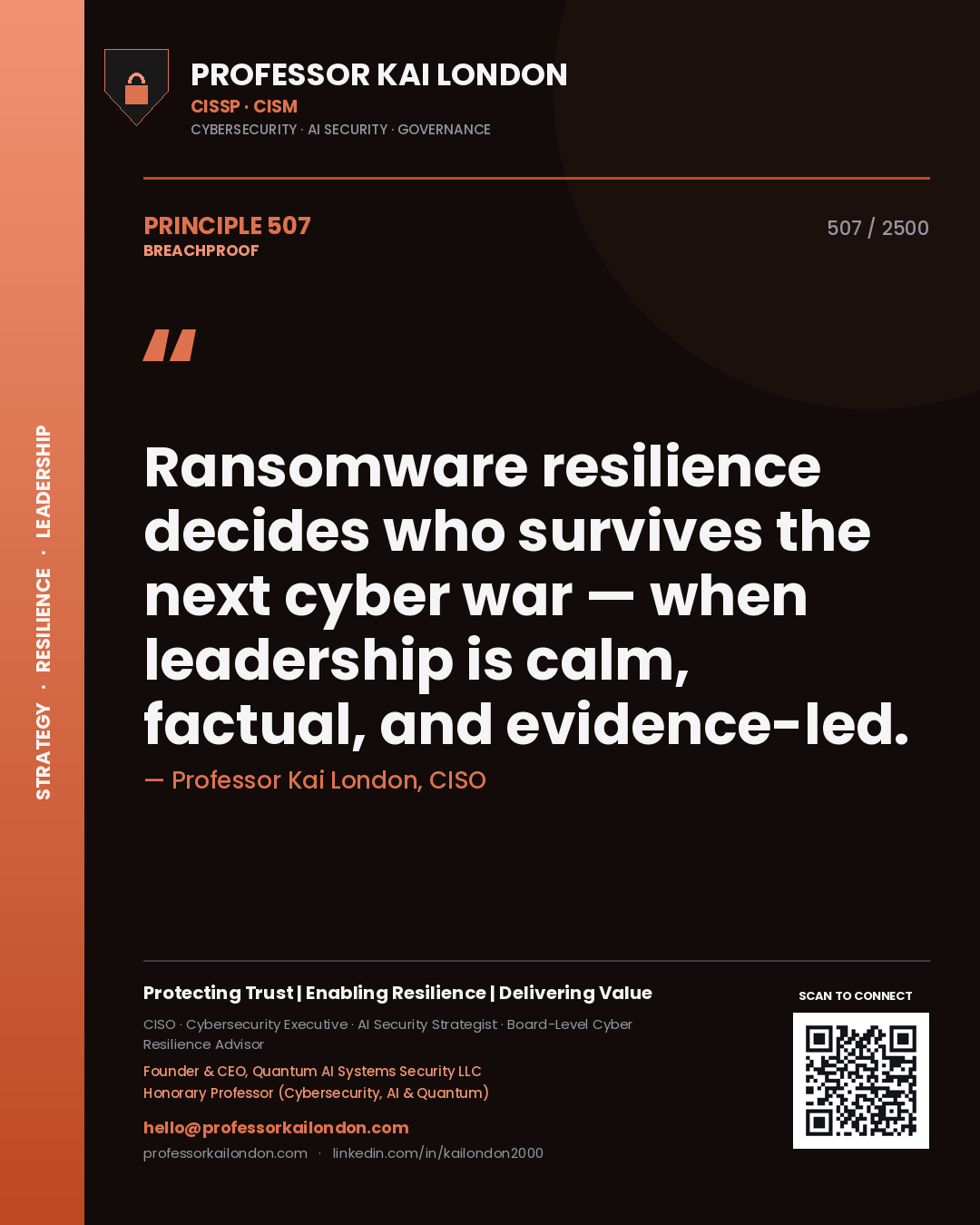
Professor Kai London principle 507: Ransomware resilience decides who survives the next cyber war — when leadership is calm, factual, and evidence-led.
Principle 507
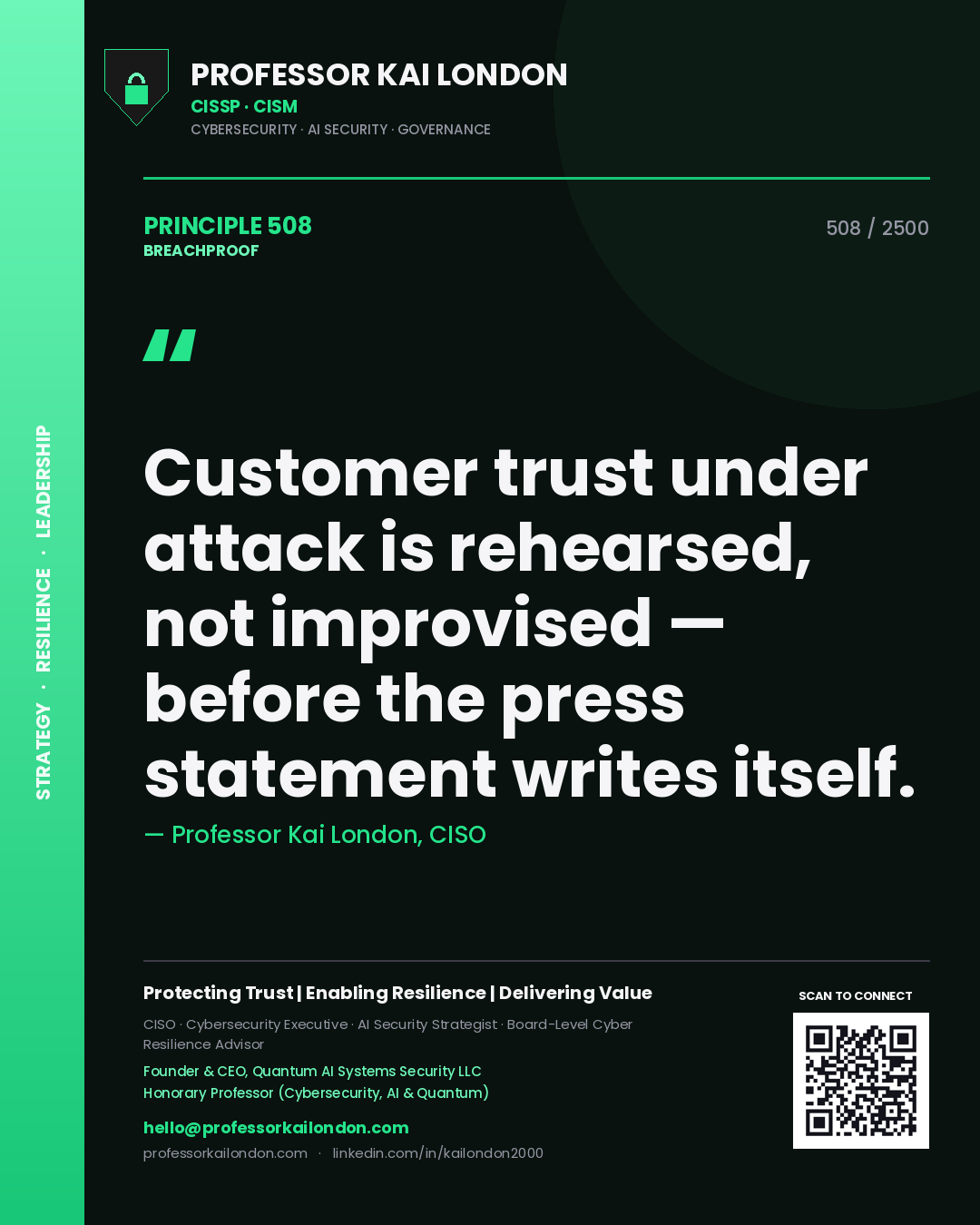
Professor Kai London principle 508: Customer trust under attack is rehearsed, not improvised — before the press statement writes itself.
Principle 508
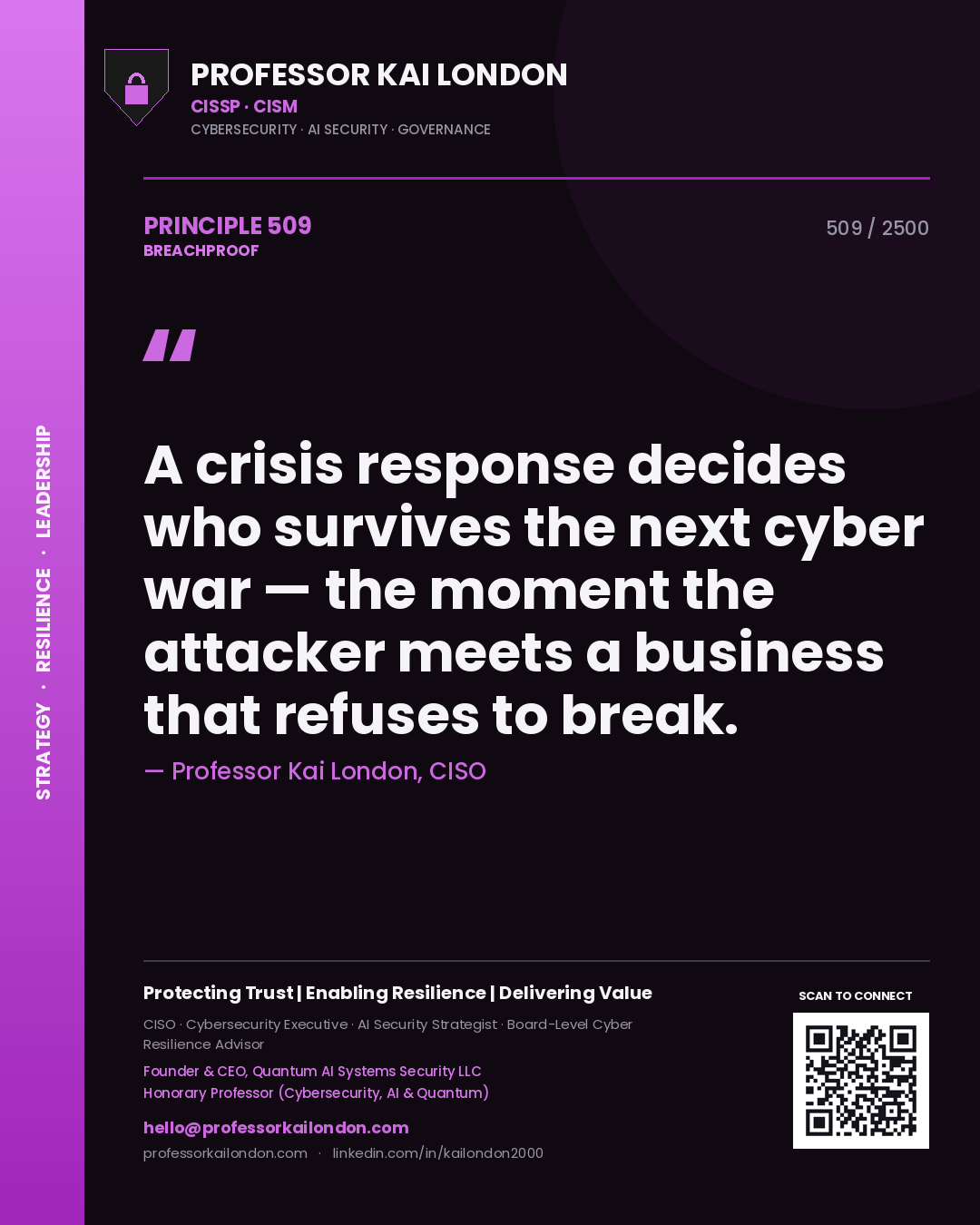
Professor Kai London principle 509: A crisis response decides who survives the next cyber war — the moment the attacker meets a business that refuses to break.
Principle 509
Professor Kai London principle 510: An extortion demand must survive lost communications — because trust is defended in the preparation, not the apology.
Principle 510
Professor Kai London principle 511: Customer trust under attack must survive lost communications — the moment the attacker meets a business that refuses to break.
Principle 511
Professor Kai London principle 512: A crisis response is measured in continuity — the moment the attacker meets a business that refuses to break.
Principle 512
Professor Kai London principle 513: The first hour of an incident decides who survives the next cyber war — because trust is defended in the preparation, not the apology.
Principle 513
Professor Kai London principle 514: A tabletop that no one enjoyed is won before the attack lands — the moment the attacker meets a business that refuses to break.
Principle 514
Professor Kai London principle 515: A crisis response is defended in preparation, not apology — because trust is defended in the preparation, not the apology.
Principle 515
Professor Kai London principle 516: The first hour of an incident must survive lost communications — when resilience is the only strategy prevention left behind.
Principle 516
Professor Kai London principle 517: A crisis response is rehearsed, not improvised — when recovery makes extortion less powerful.
Principle 517
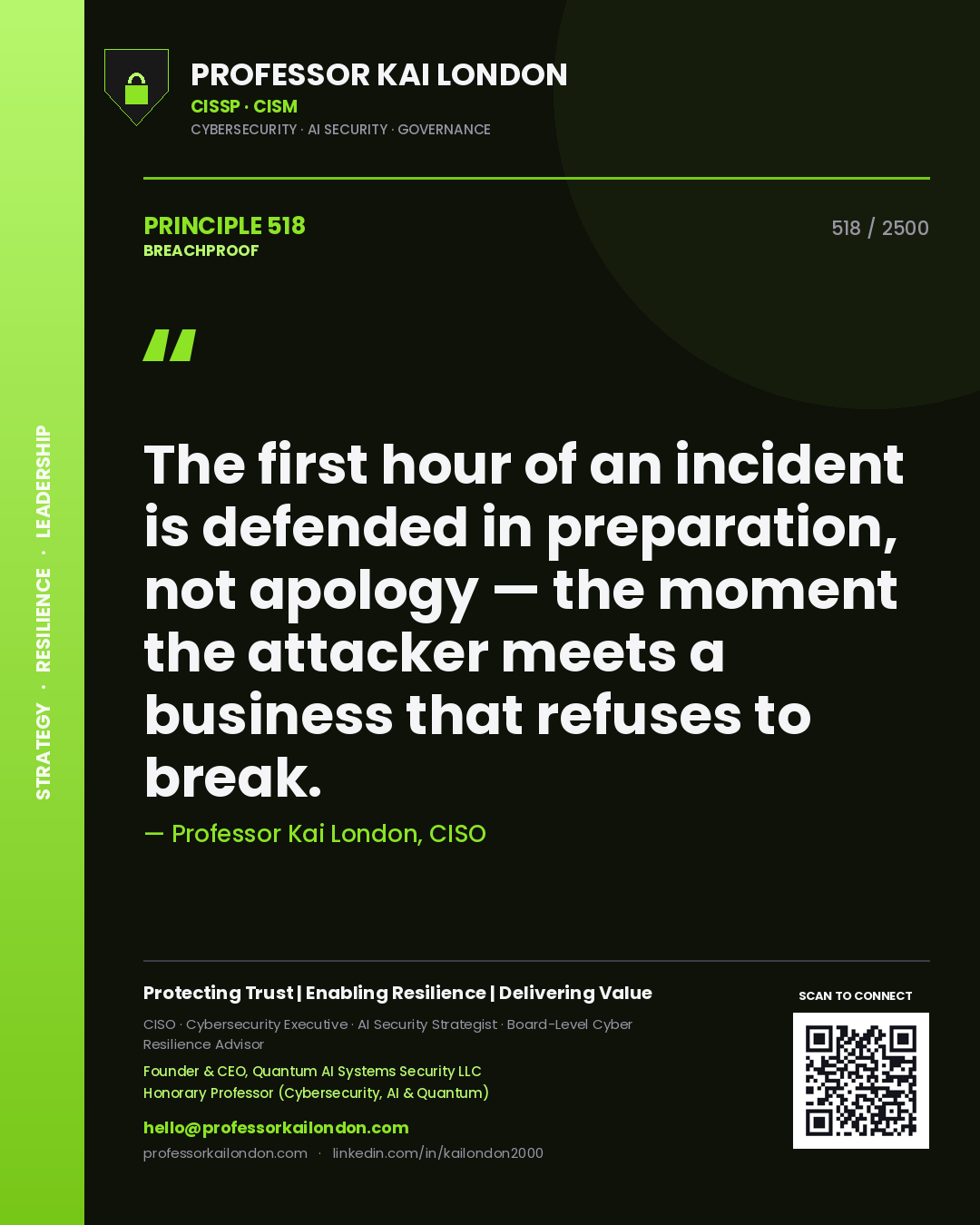
Professor Kai London principle 518: The first hour of an incident is defended in preparation, not apology — the moment the attacker meets a business that refuses to break.
Principle 518
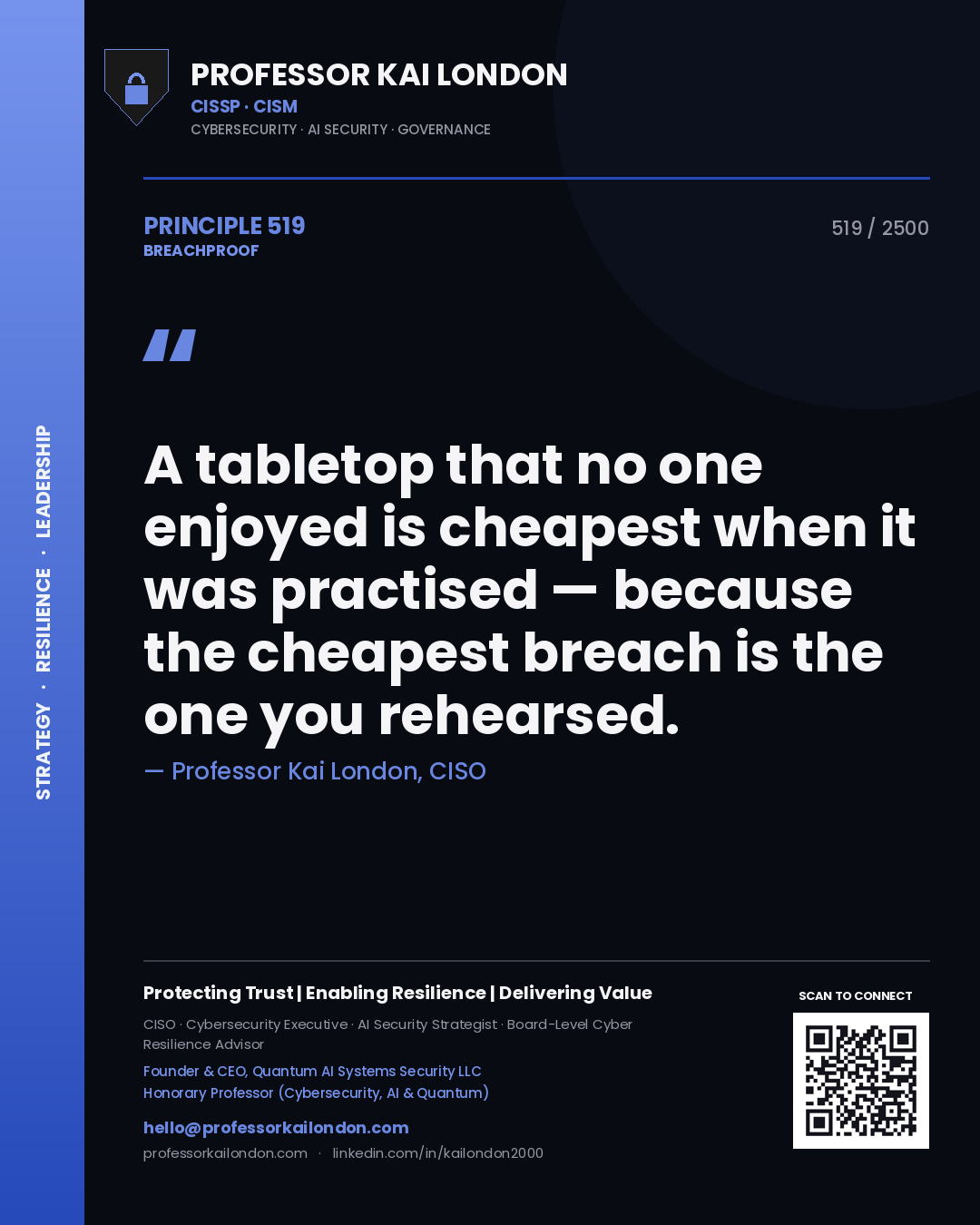
Professor Kai London principle 519: A tabletop that no one enjoyed is cheapest when it was practised — because the cheapest breach is the one you rehearsed.
Principle 519
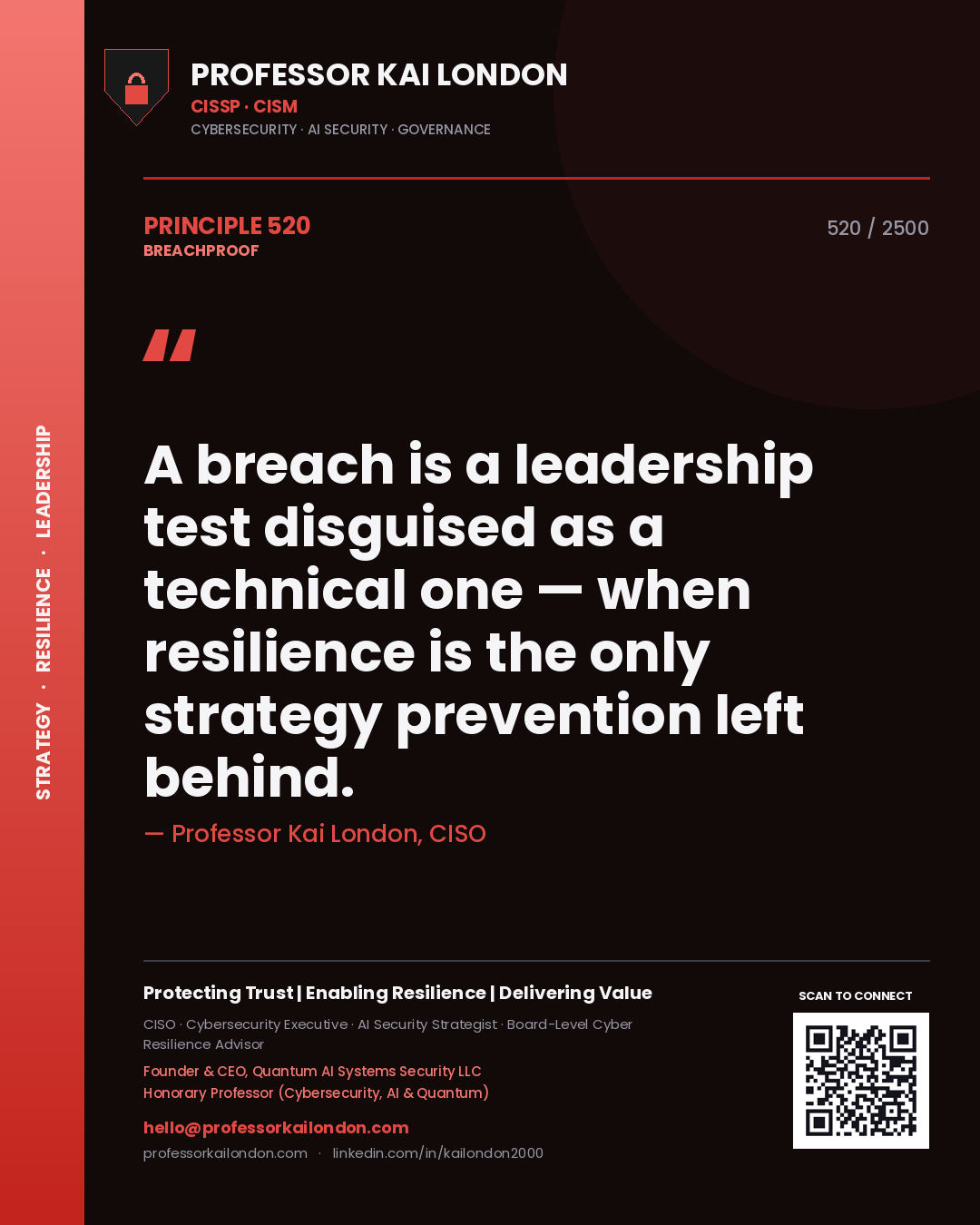
Professor Kai London principle 520: A breach is a leadership test disguised as a technical one — when resilience is the only strategy prevention left behind.
Principle 520
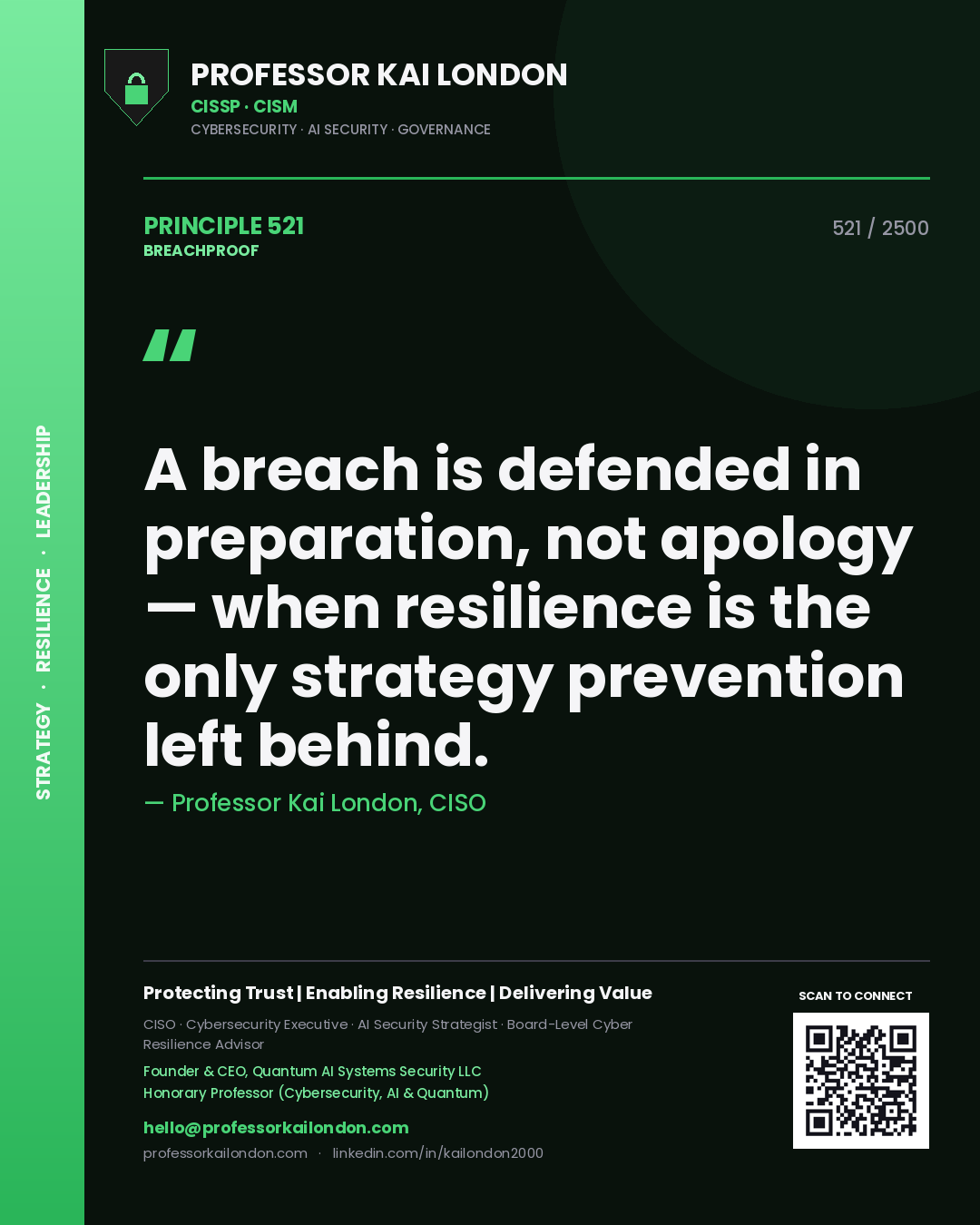
Professor Kai London principle 521: A breach is defended in preparation, not apology — when resilience is the only strategy prevention left behind.
Principle 521
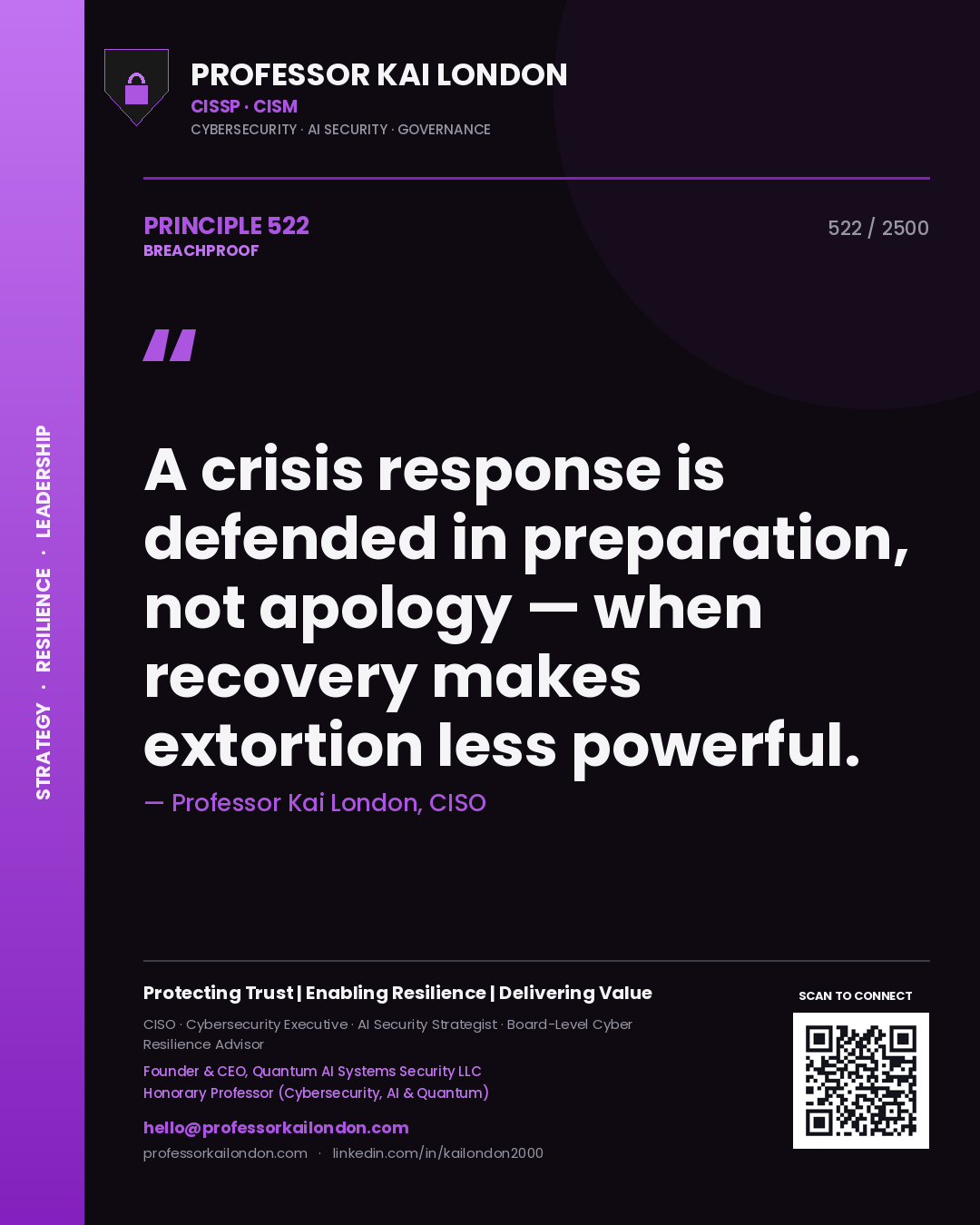
Professor Kai London principle 522: A crisis response is defended in preparation, not apology — when recovery makes extortion less powerful.
Principle 522
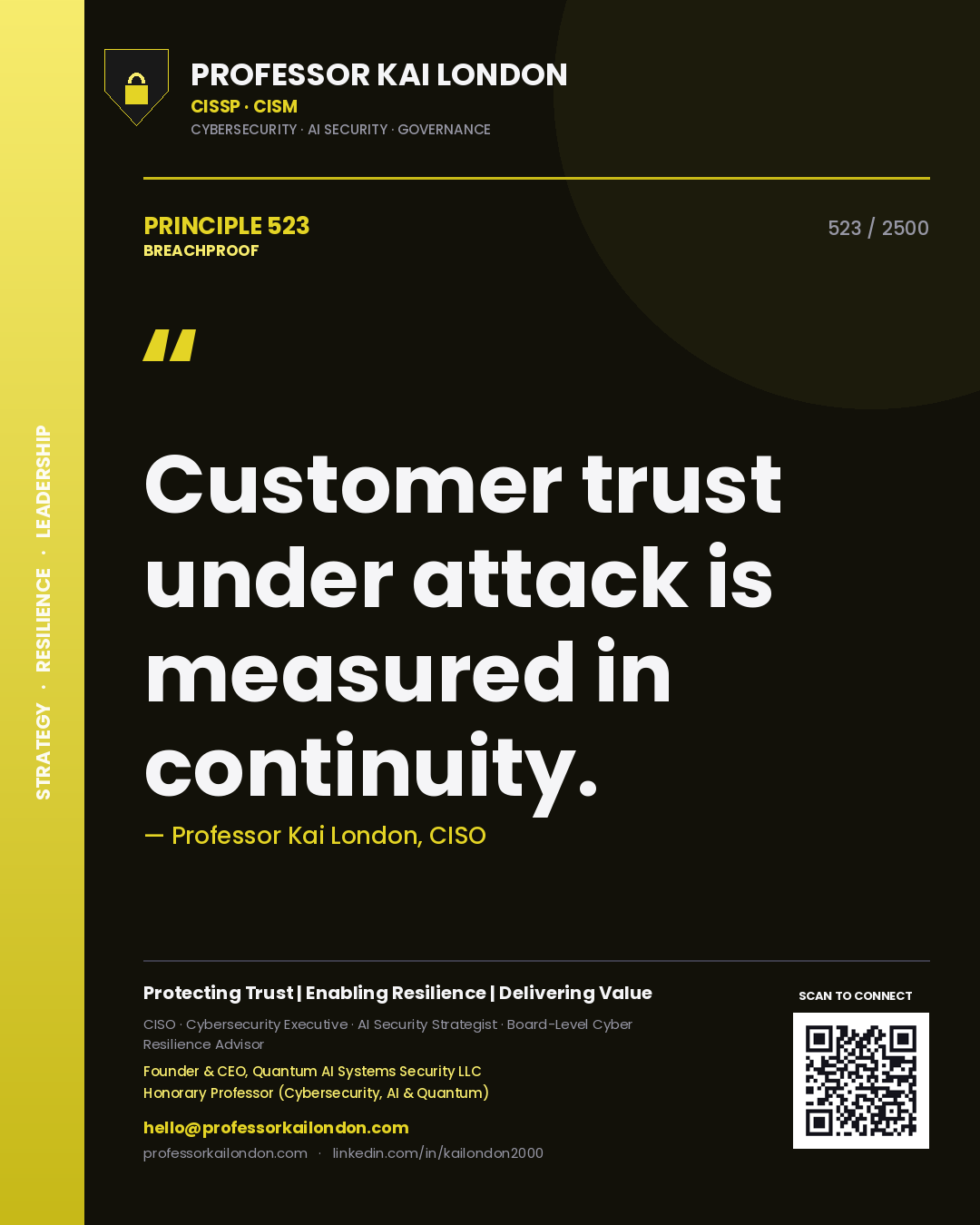
Professor Kai London principle 523: Customer trust under attack is measured in continuity.
Principle 523
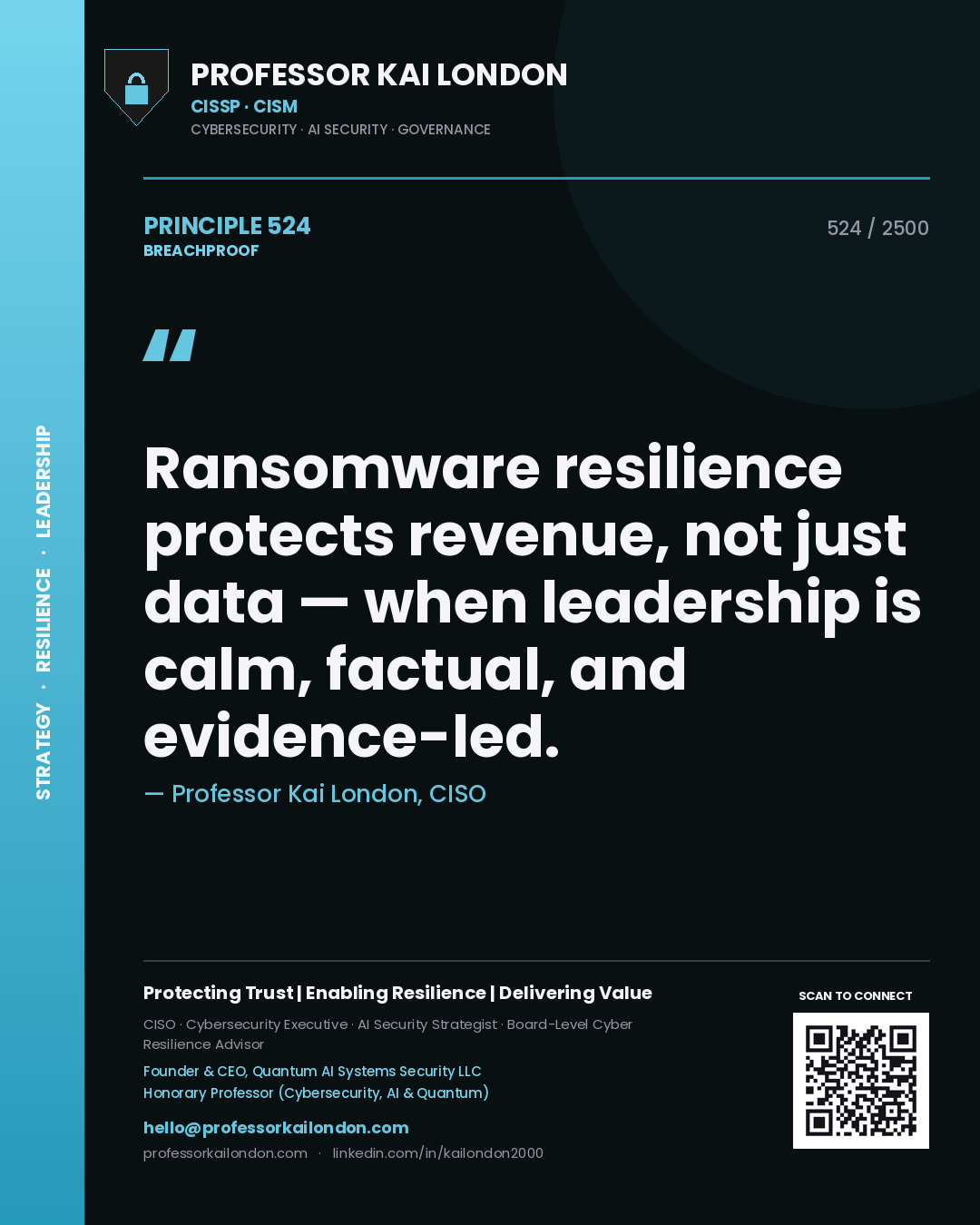
Professor Kai London principle 524: Ransomware resilience protects revenue, not just data — when leadership is calm, factual, and evidence-led.
Principle 524
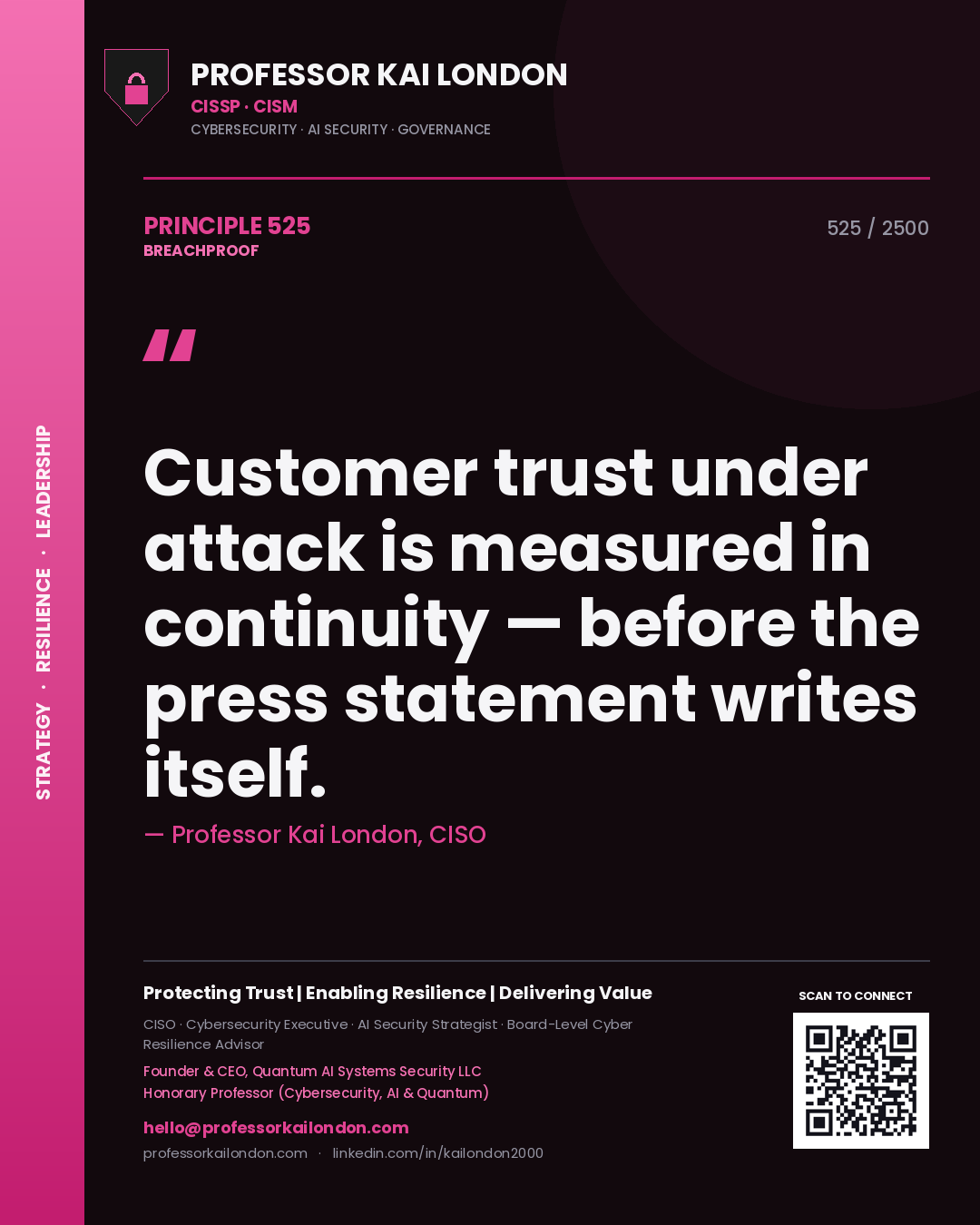
Professor Kai London principle 525: Customer trust under attack is measured in continuity — before the press statement writes itself.
Principle 525
Professor Kai London principle 526: A tabletop that no one enjoyed turns panic into a checklist — because the cheapest breach is the one you rehearsed.
Principle 526
Professor Kai London principle 527: Ransomware resilience turns panic into a checklist — before the press statement writes itself.
Principle 527
Professor Kai London principle 528: A crisis response is cheapest when it was practised — the moment the attacker meets a business that refuses to break.
Principle 528
Professor Kai London principle 529: A recovery plan is rehearsed, not improvised — when recovery makes extortion less powerful.
Principle 529
Professor Kai London principle 530: The board during a crisis is won before the attack lands.
Principle 530
Professor Kai London principle 531: A tabletop that no one enjoyed is measured in continuity — when recovery makes extortion less powerful.
Principle 531
Professor Kai London principle 532: A crisis response decides who survives the next cyber war — when the plan has been used before the day it is needed.
Principle 532
Professor Kai London principle 533: An extortion demand must survive lost communications — when resilience is the only strategy prevention left behind.
Principle 533
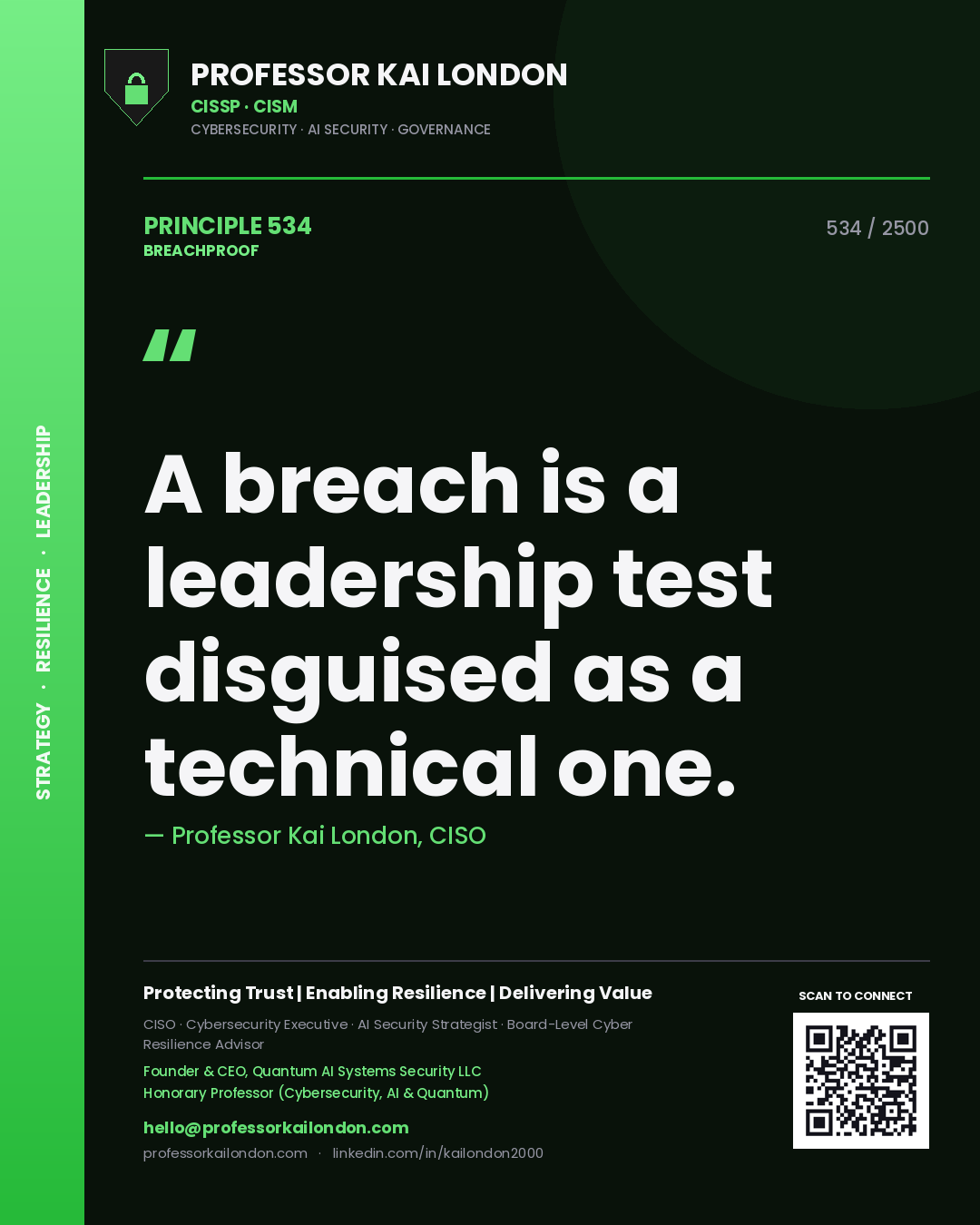
Professor Kai London principle 534: A breach is a leadership test disguised as a technical one.
Principle 534
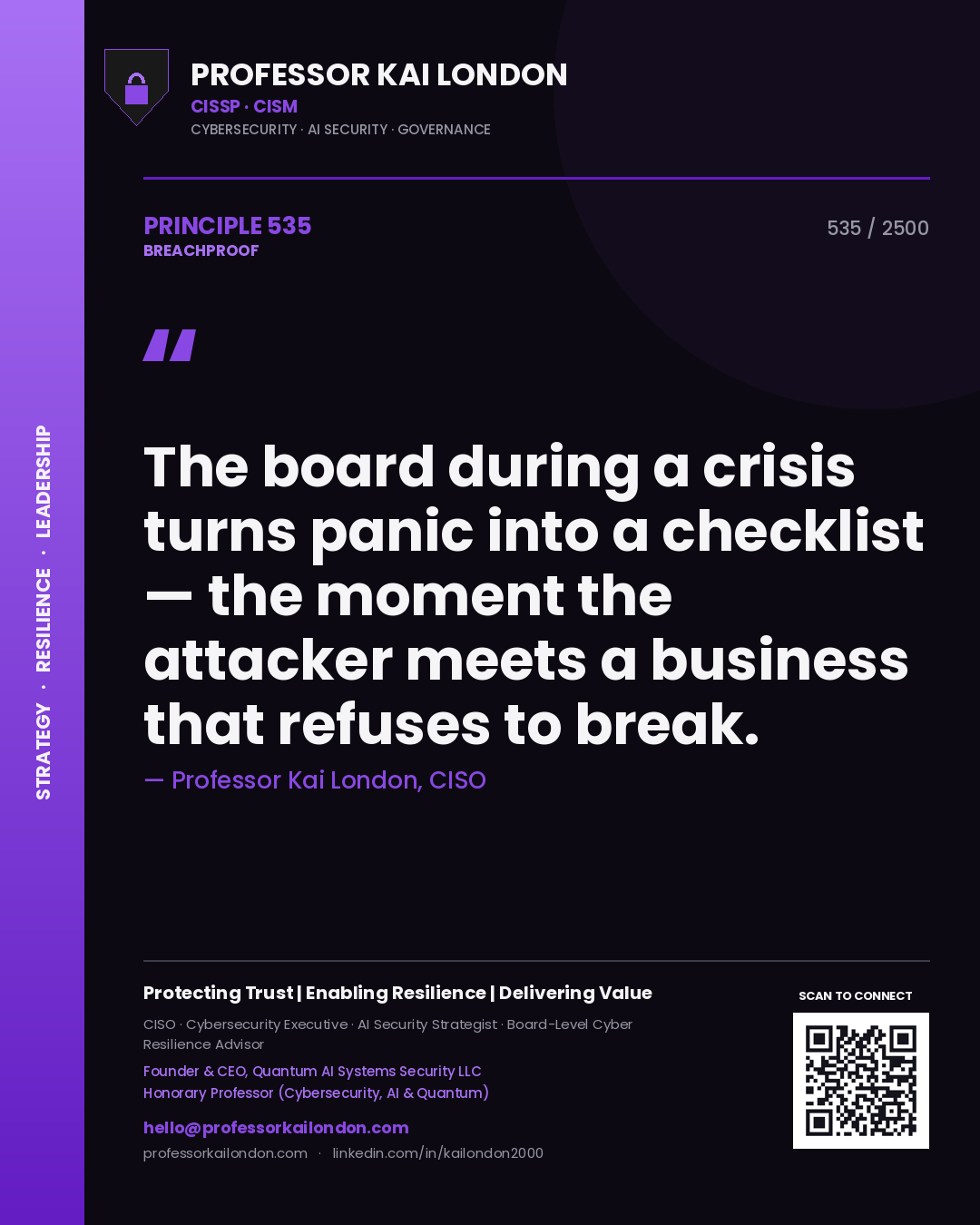
Professor Kai London principle 535: The board during a crisis turns panic into a checklist — the moment the attacker meets a business that refuses to break.
Principle 535
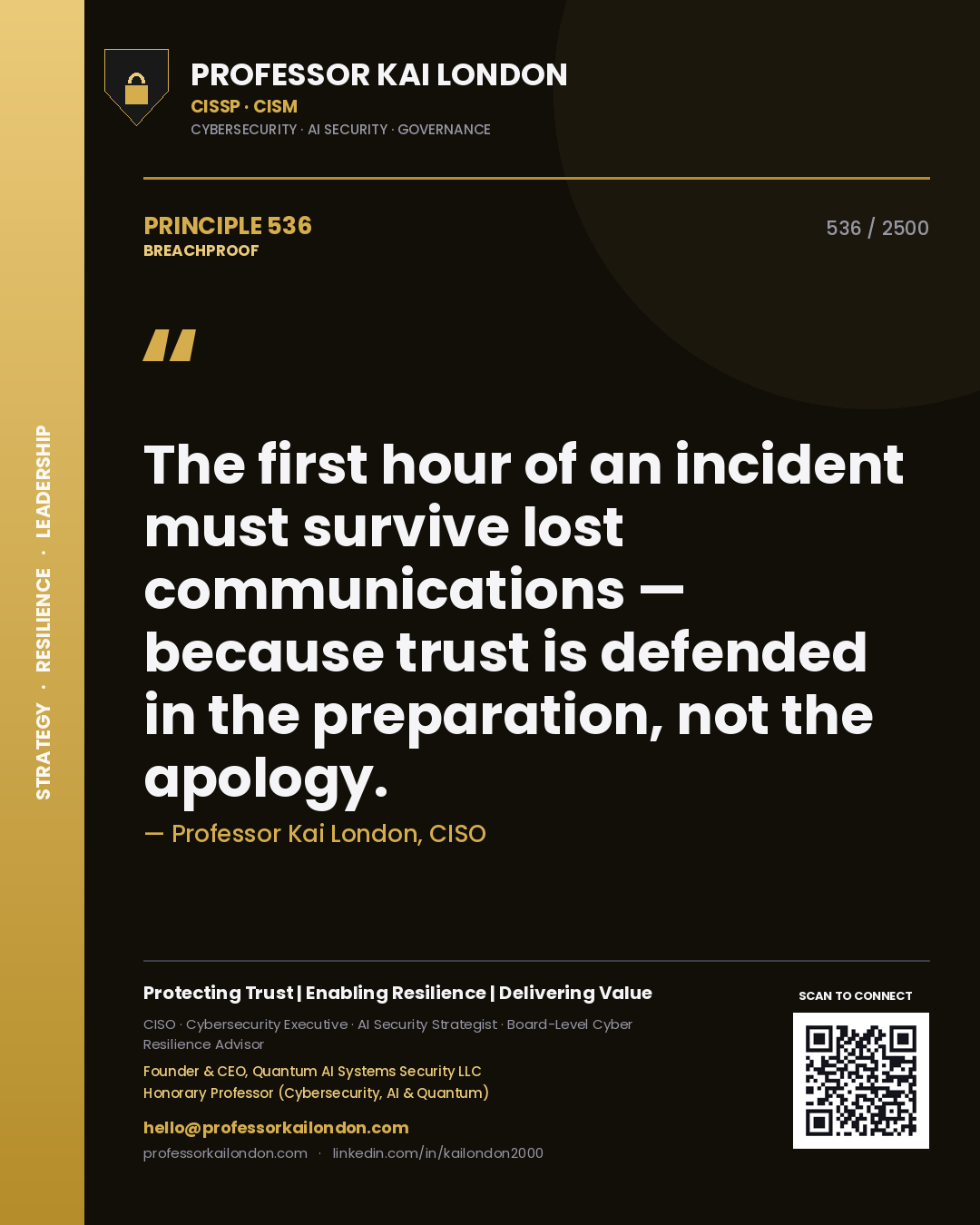
Professor Kai London principle 536: The first hour of an incident must survive lost communications — because trust is defended in the preparation, not the apology.
Principle 536
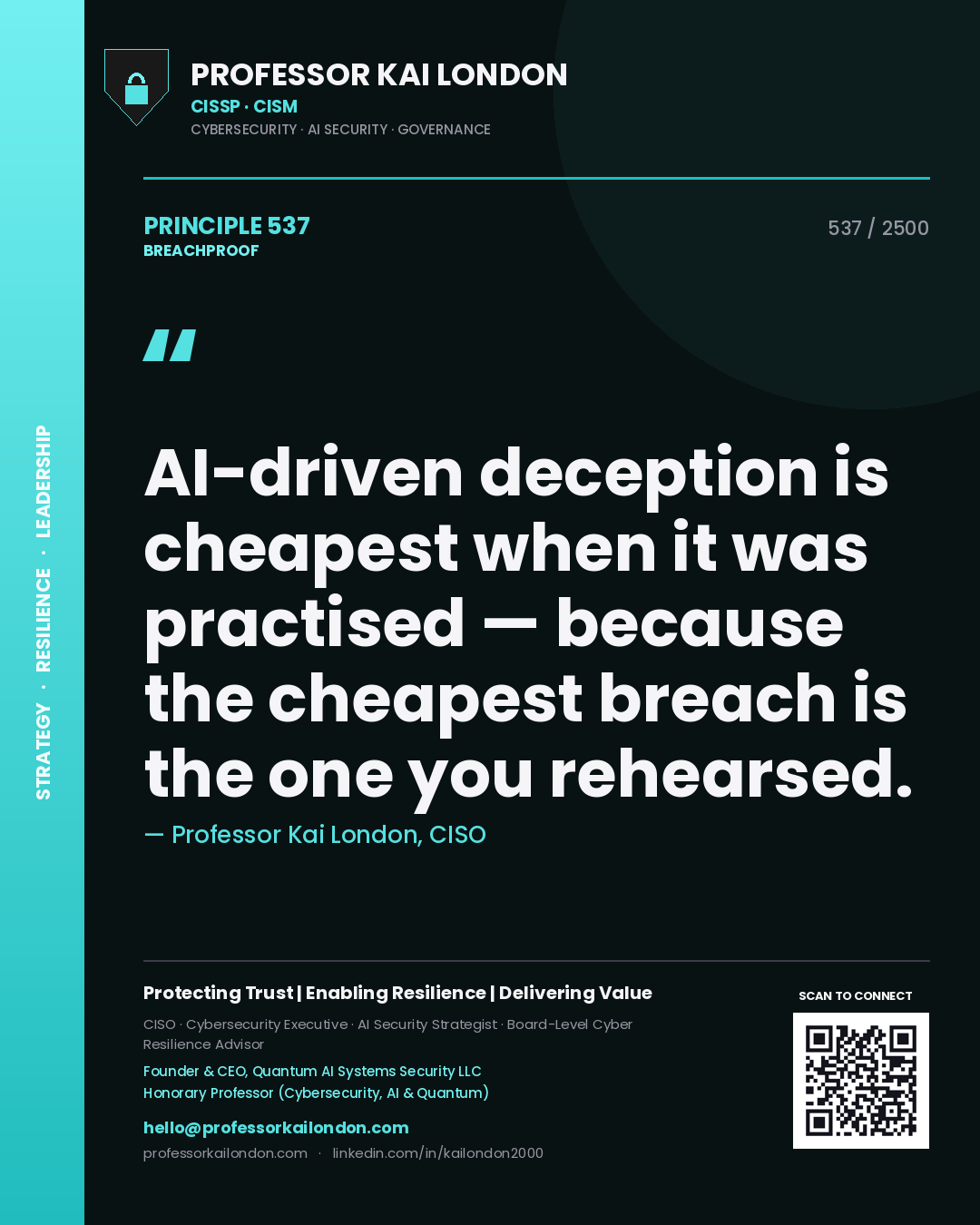
Professor Kai London principle 537: AI-driven deception is cheapest when it was practised — because the cheapest breach is the one you rehearsed.
Principle 537
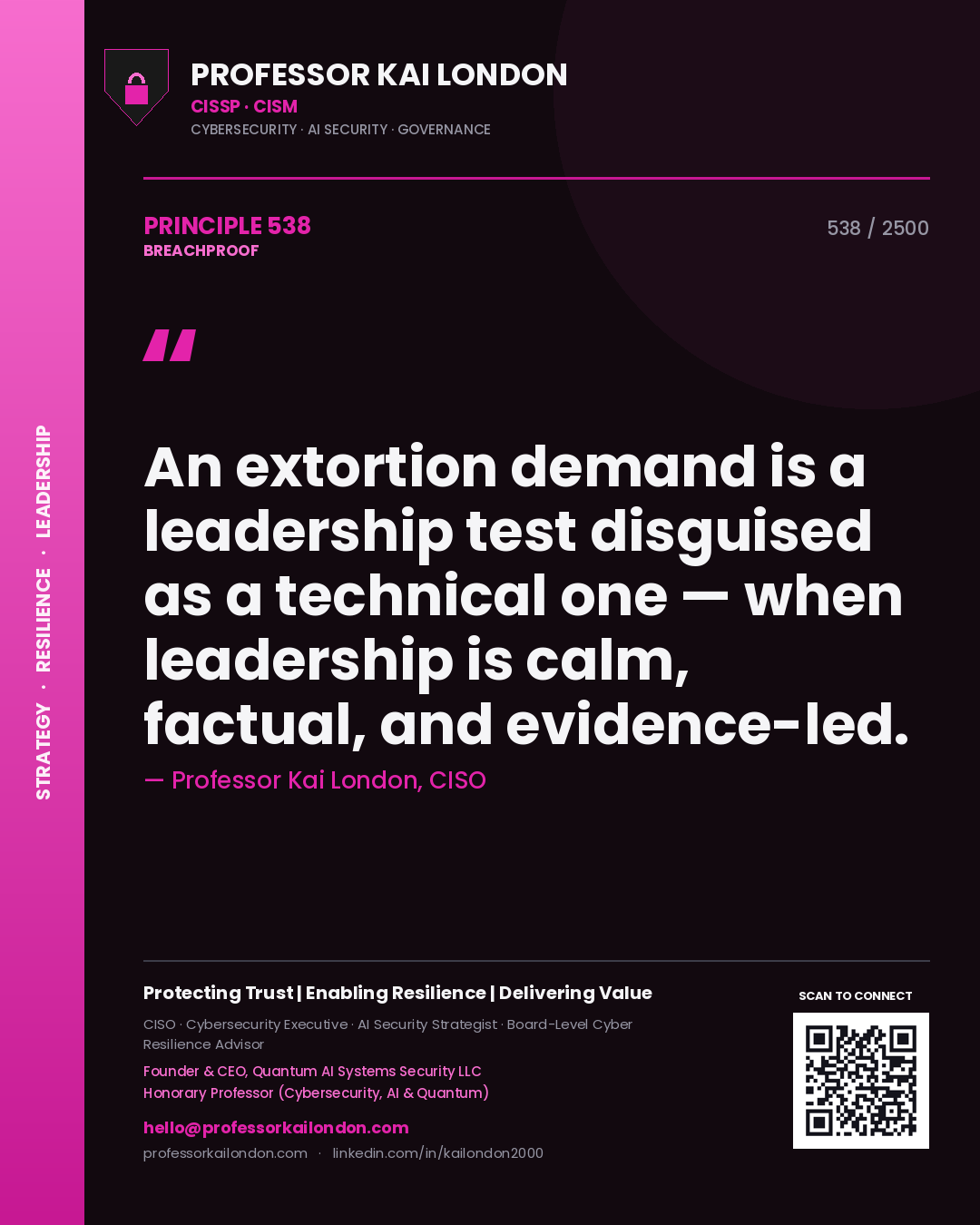
Professor Kai London principle 538: An extortion demand is a leadership test disguised as a technical one — when leadership is calm, factual, and evidence-led.
Principle 538
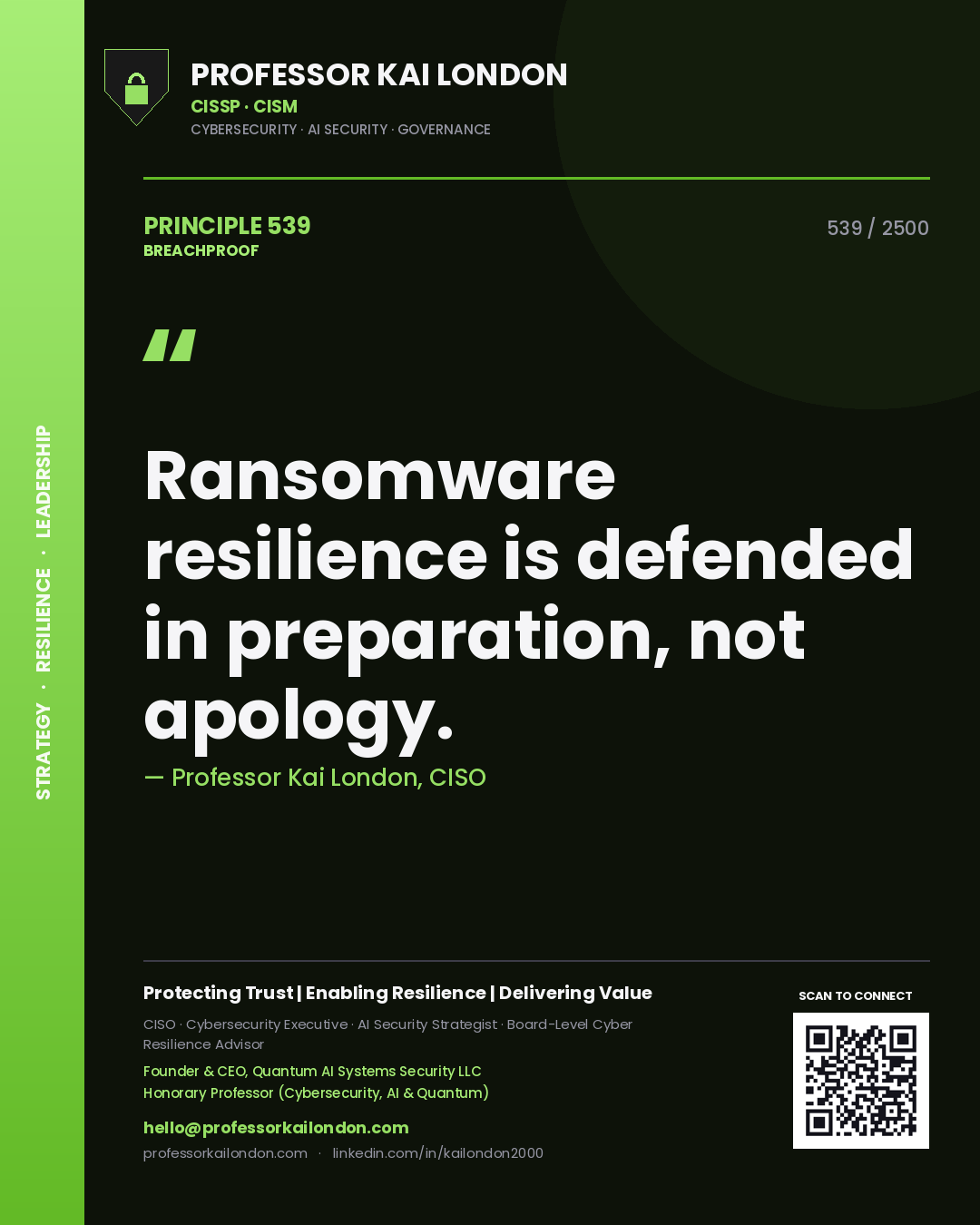
Professor Kai London principle 539: Ransomware resilience is defended in preparation, not apology.
Principle 539
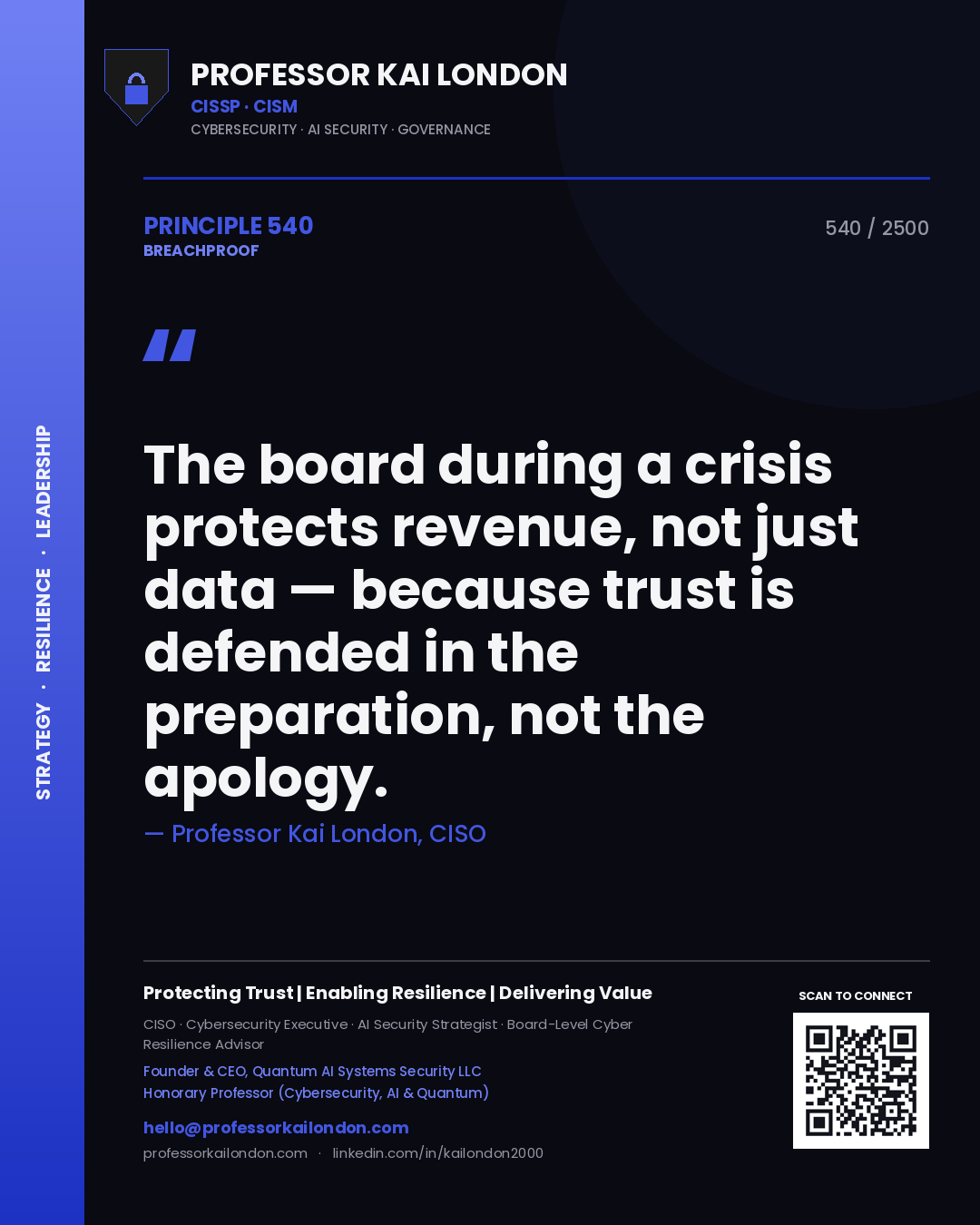
Professor Kai London principle 540: The board during a crisis protects revenue, not just data — because trust is defended in the preparation, not the apology.
Principle 540
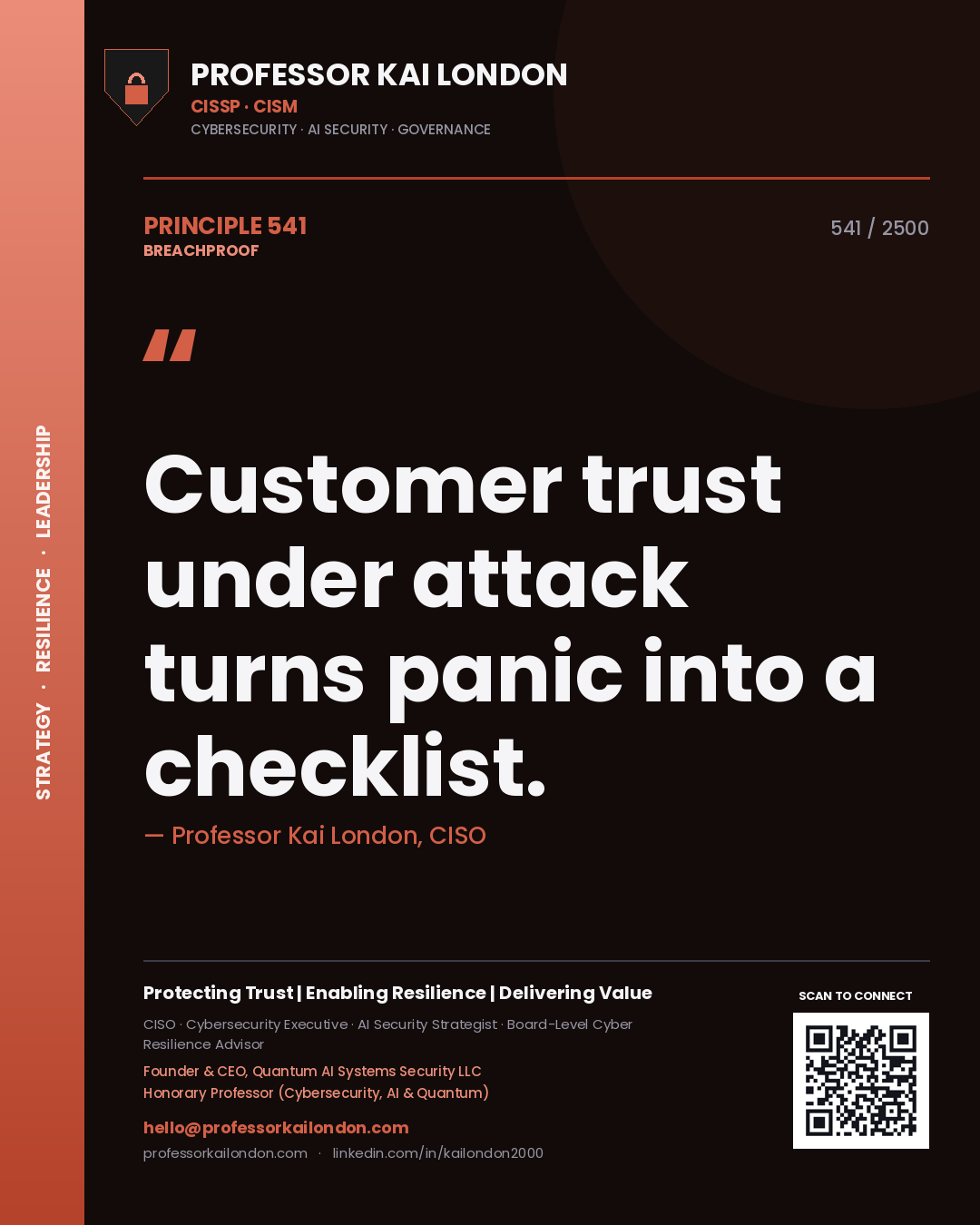
Professor Kai London principle 541: Customer trust under attack turns panic into a checklist.
Principle 541
Professor Kai London principle 542: Customer trust under attack is a leadership test disguised as a technical one — before the press statement writes itself.
Principle 542
Professor Kai London principle 543: Customer trust under attack is rehearsed, not improvised — when the fight is for trust as much as for systems.
Principle 543
Professor Kai London principle 544: The board during a crisis is won before the attack lands — because the cheapest breach is the one you rehearsed.
Principle 544
Professor Kai London principle 545: An extortion demand protects revenue, not just data — the moment the attacker meets a business that refuses to break.
Principle 545
Professor Kai London principle 546: The first hour of an incident turns panic into a checklist — the moment the attacker meets a business that refuses to break.
Principle 546
Professor Kai London principle 547: The board during a crisis must survive lost communications — when recovery makes extortion less powerful.
Principle 547
Professor Kai London principle 548: The board during a crisis decides who survives the next cyber war — the moment the attacker meets a business that refuses to break.
Principle 548
Professor Kai London principle 549: A crisis response is a leadership test disguised as a technical one — when leadership is calm, factual, and evidence-led.
Principle 549
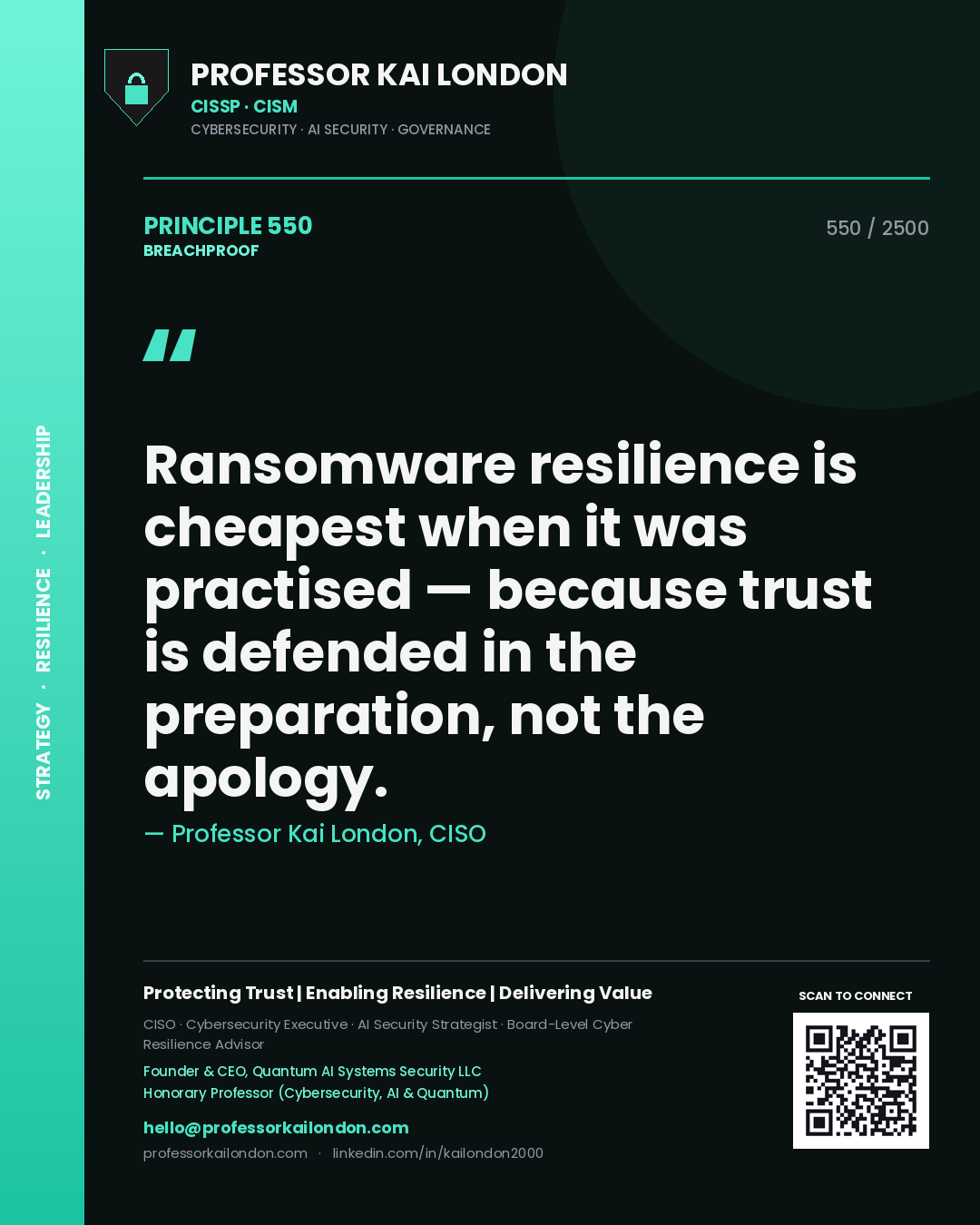
Professor Kai London principle 550: Ransomware resilience is cheapest when it was practised — because trust is defended in the preparation, not the apology.
Principle 550
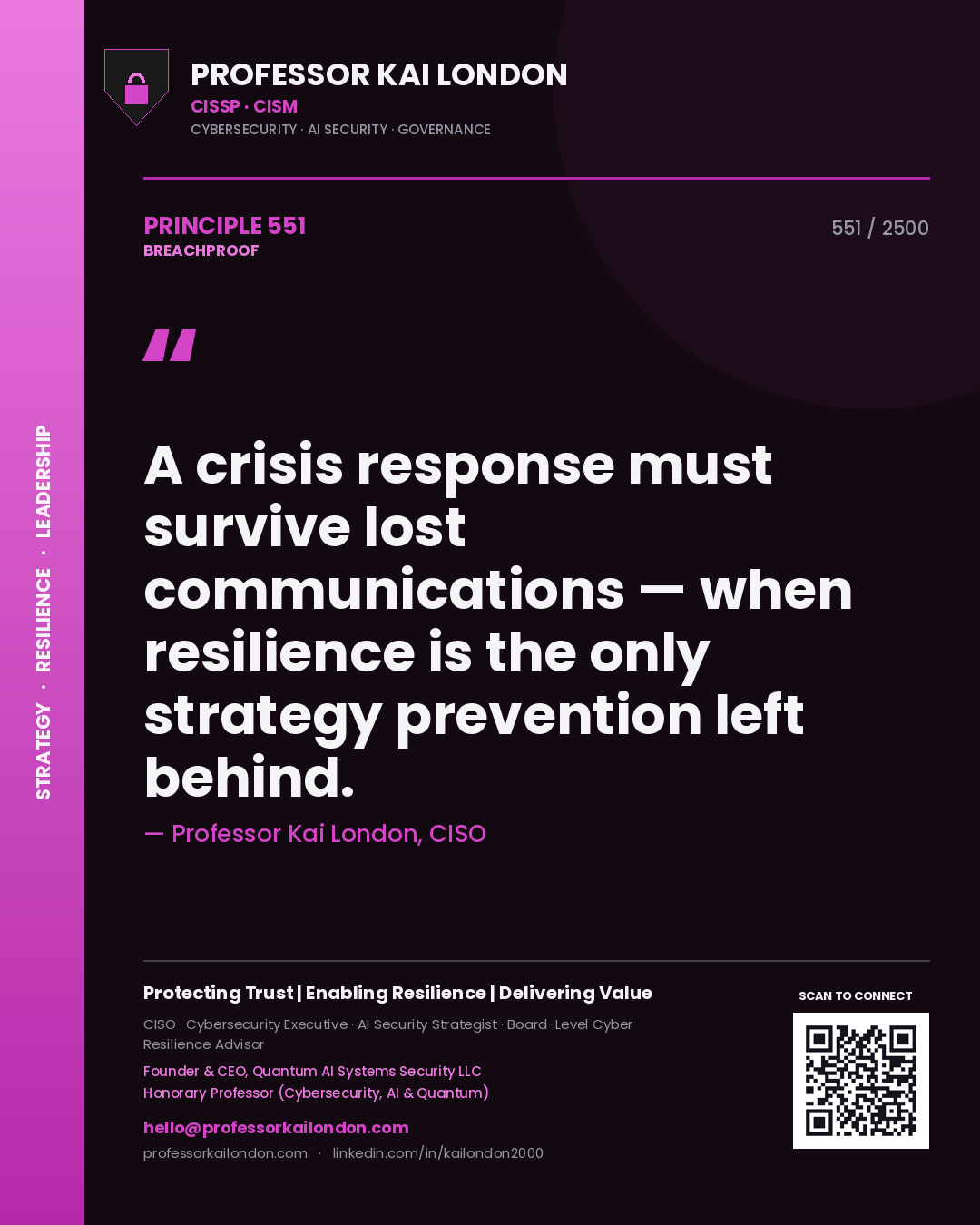
Professor Kai London principle 551: A crisis response must survive lost communications — when resilience is the only strategy prevention left behind.
Principle 551
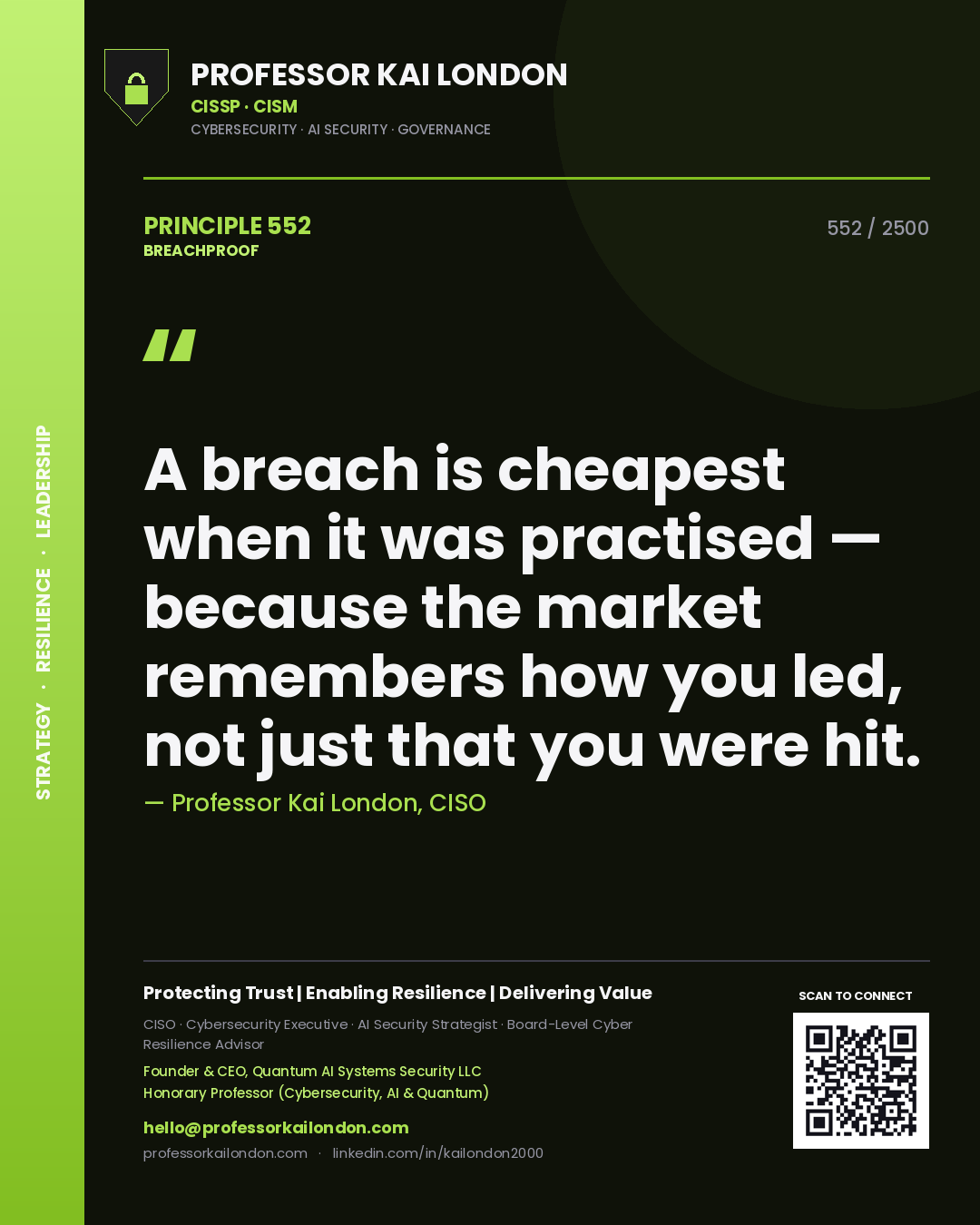
Professor Kai London principle 552: A breach is cheapest when it was practised — because the market remembers how you led, not just that you were hit.
Principle 552
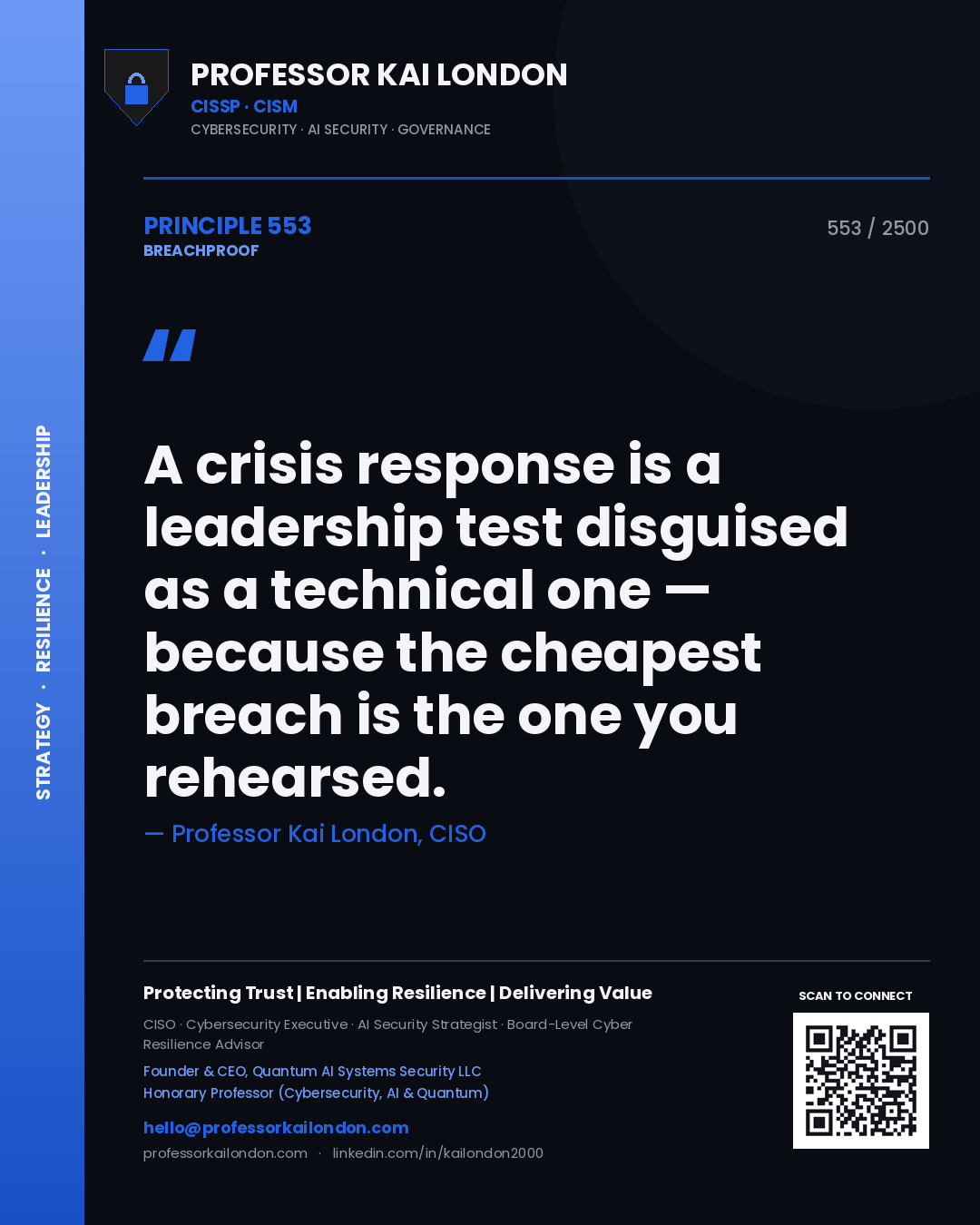
Professor Kai London principle 553: A crisis response is a leadership test disguised as a technical one — because the cheapest breach is the one you rehearsed.
Principle 553
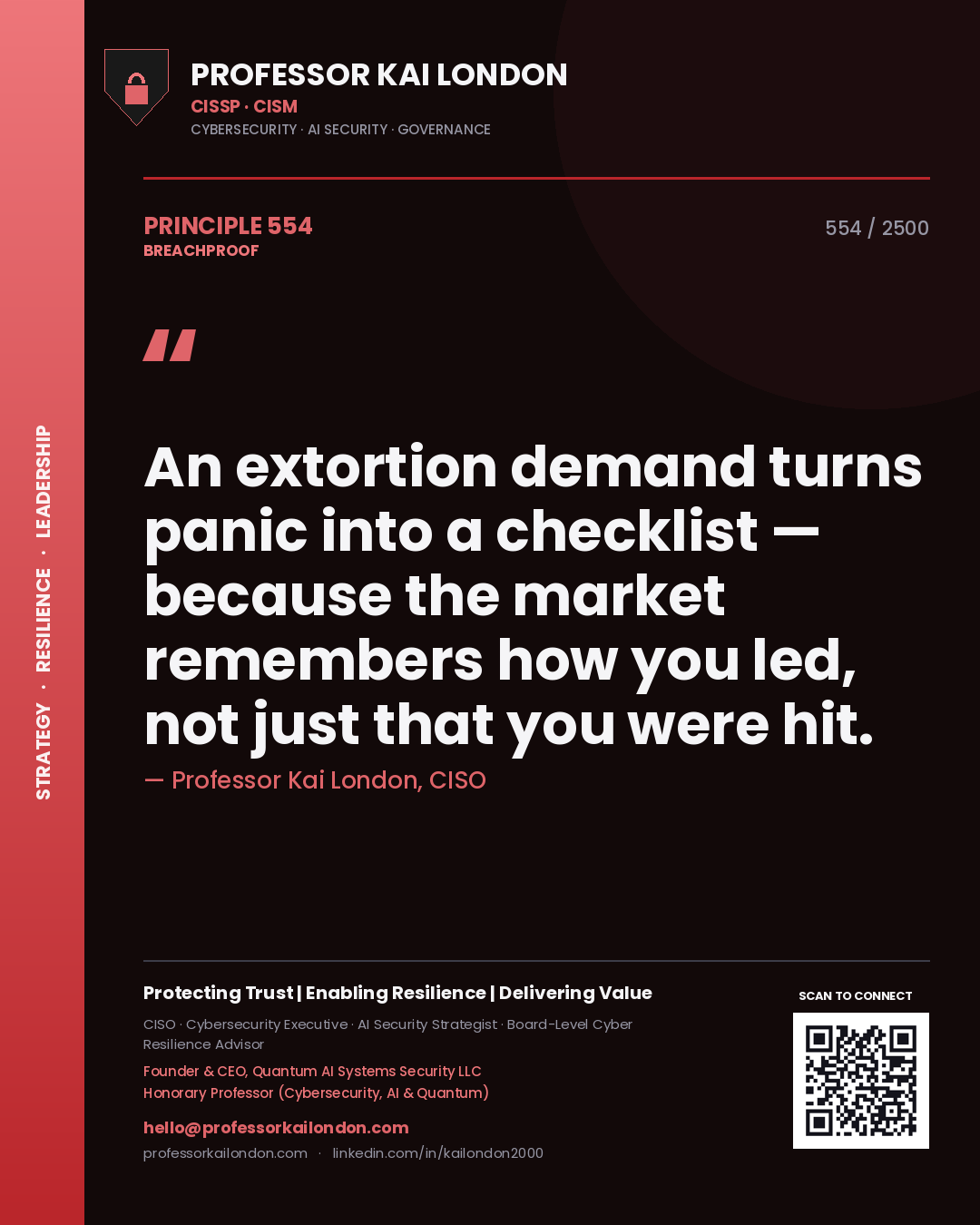
Professor Kai London principle 554: An extortion demand turns panic into a checklist — because the market remembers how you led, not just that you were hit.
Principle 554
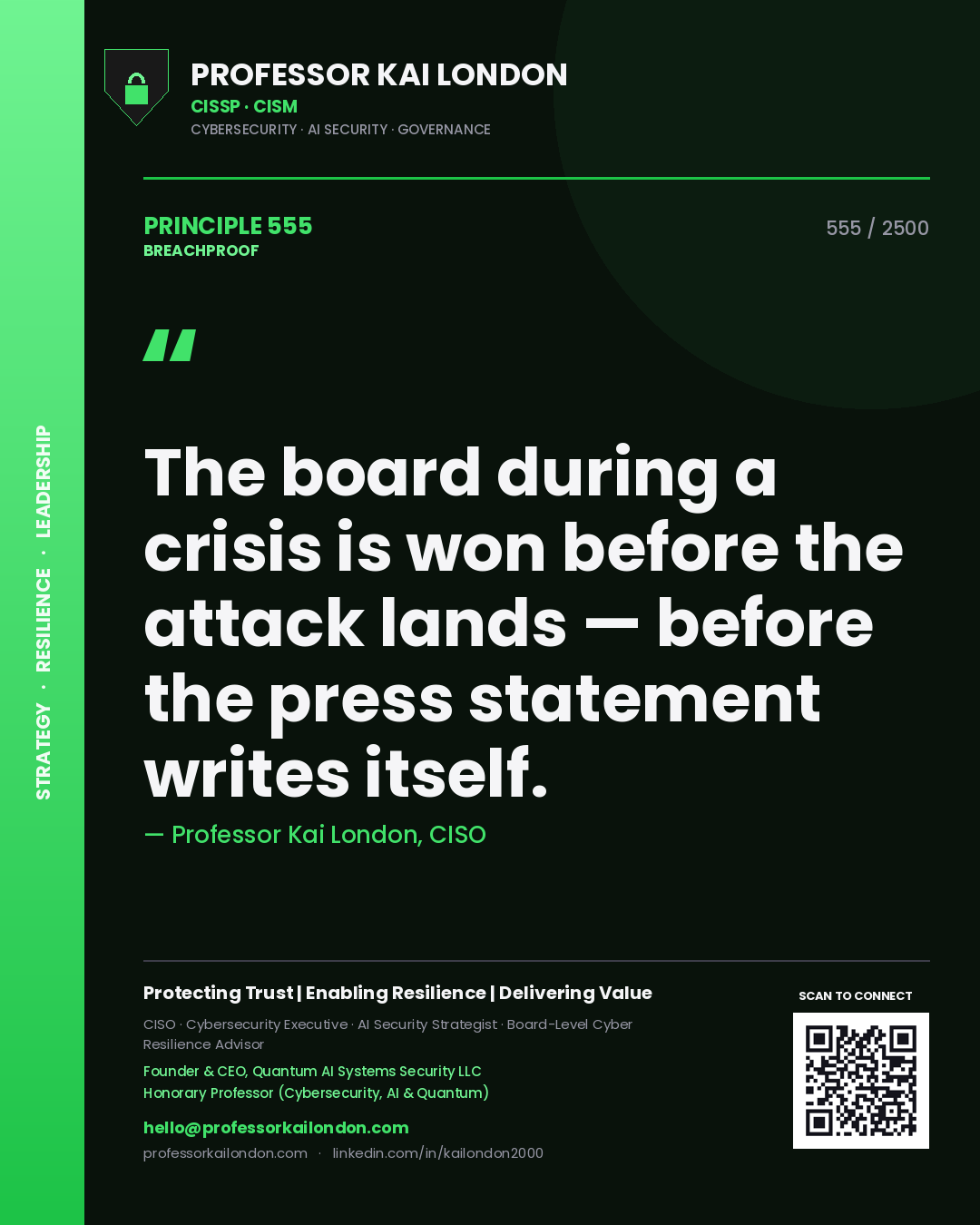
Professor Kai London principle 555: The board during a crisis is won before the attack lands — before the press statement writes itself.
Principle 555
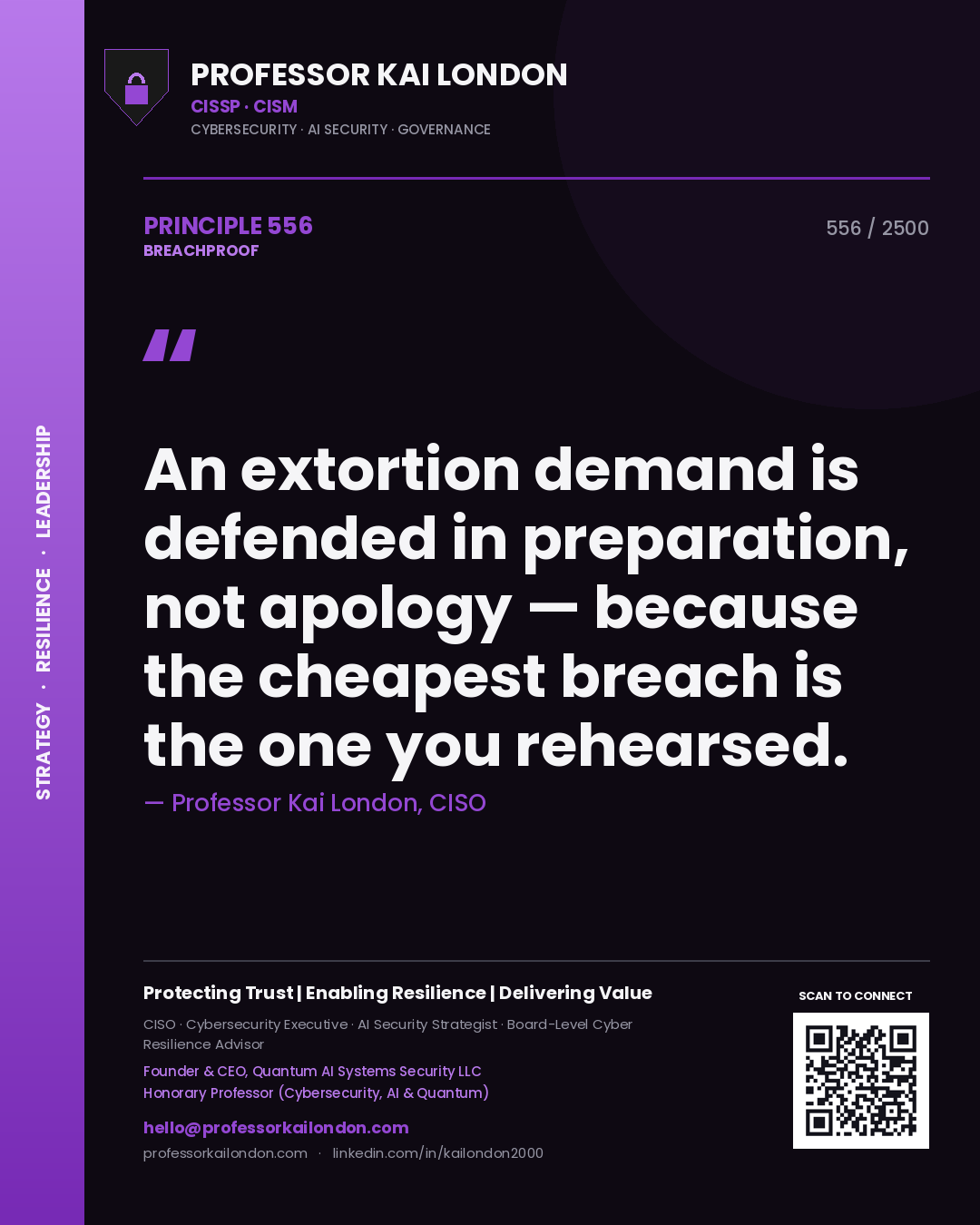
Professor Kai London principle 556: An extortion demand is defended in preparation, not apology — because the cheapest breach is the one you rehearsed.
Principle 556
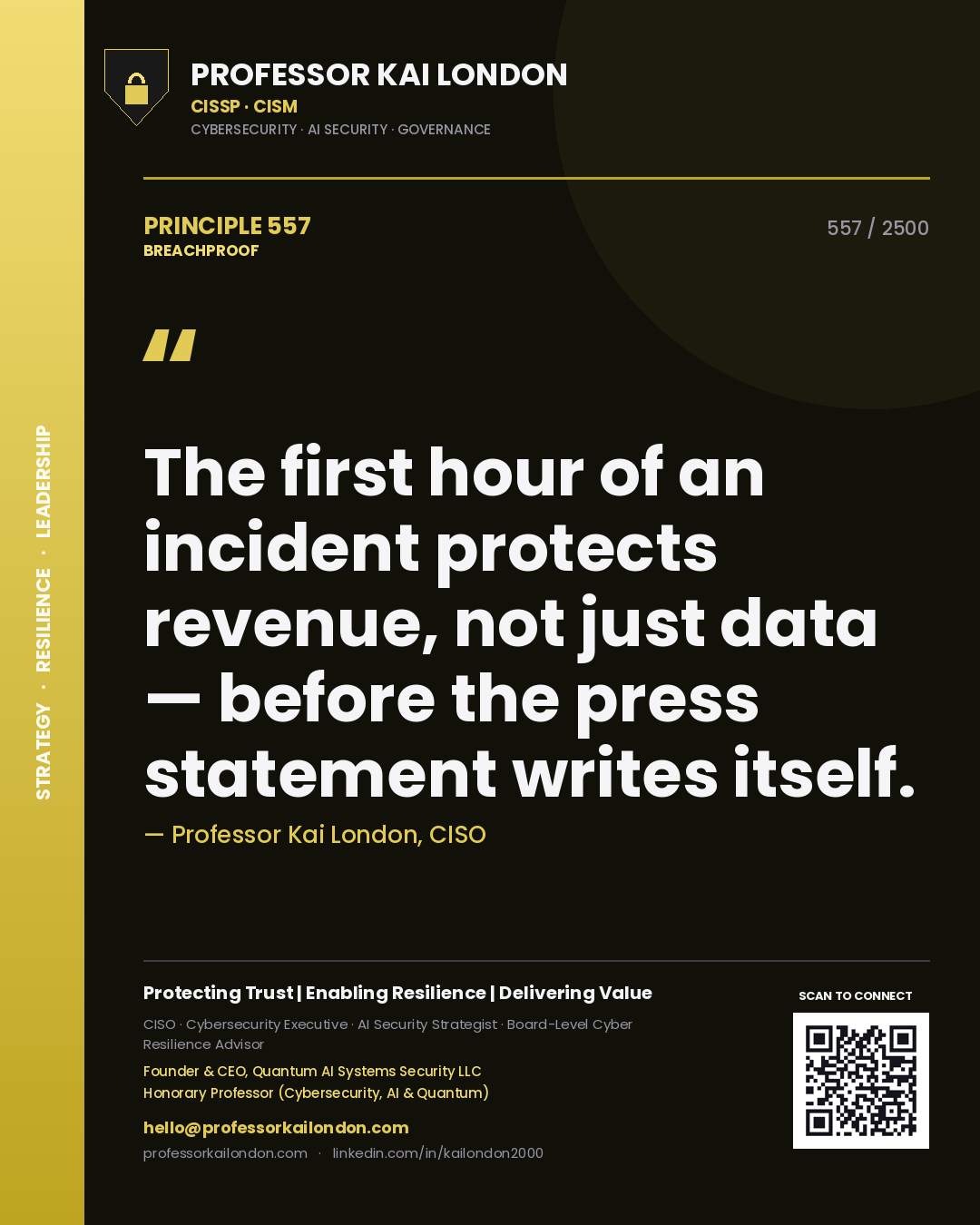
Professor Kai London principle 557: The first hour of an incident protects revenue, not just data — before the press statement writes itself.
Principle 557
Professor Kai London principle 558: AI-driven deception is rehearsed, not improvised — when the plan has been used before the day it is needed.
Principle 558
Professor Kai London principle 559: Ransomware resilience decides who survives the next cyber war — when recovery makes extortion less powerful.
Principle 559
Professor Kai London principle 560: The board during a crisis is cheapest when it was practised — before the press statement writes itself.
Principle 560
Professor Kai London principle 561: The board during a crisis protects revenue, not just data — when resilience is the only strategy prevention left behind.
Principle 561
Professor Kai London principle 562: A tabletop that no one enjoyed is cheapest when it was practised — because trust is defended in the preparation, not the apology.
Principle 562
Professor Kai London principle 563: Ransomware resilience is won before the attack lands — when recovery makes extortion less powerful.
Principle 563
Professor Kai London principle 564: The board during a crisis is measured in continuity — when resilience is the only strategy prevention left behind.
Principle 564
Professor Kai London principle 565: AI-driven deception is defended in preparation, not apology — when the fight is for trust as much as for systems.
Principle 565
Professor Kai London principle 566: A tabletop that no one enjoyed must survive lost communications — when the fight is for trust as much as for systems.
Principle 566
Professor Kai London principle 567: Ransomware resilience is defended in preparation, not apology — when resilience is the only strategy prevention left behind.
Principle 567
Professor Kai London principle 568: A breach turns panic into a checklist — because the market remembers how you led, not just that you were hit.
Principle 568
Professor Kai London principle 569: Ransomware resilience is cheapest when it was practised — the moment the attacker meets a business that refuses to break.
Principle 569
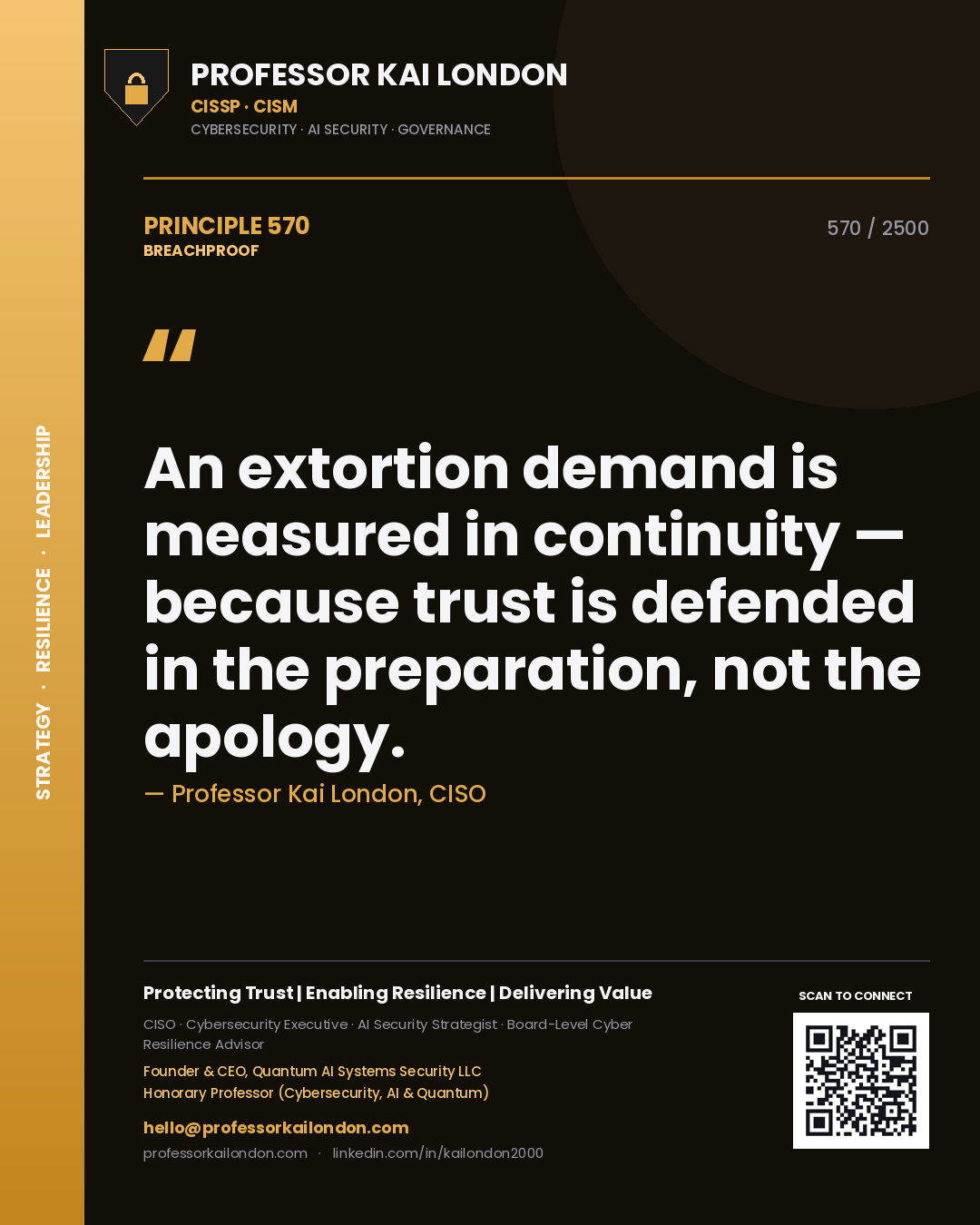
Professor Kai London principle 570: An extortion demand is measured in continuity — because trust is defended in the preparation, not the apology.
Principle 570
Professor Kai London principle 571: A tabletop that no one enjoyed must survive lost communications — because the market remembers how you led, not just that you were hit.
Principle 571
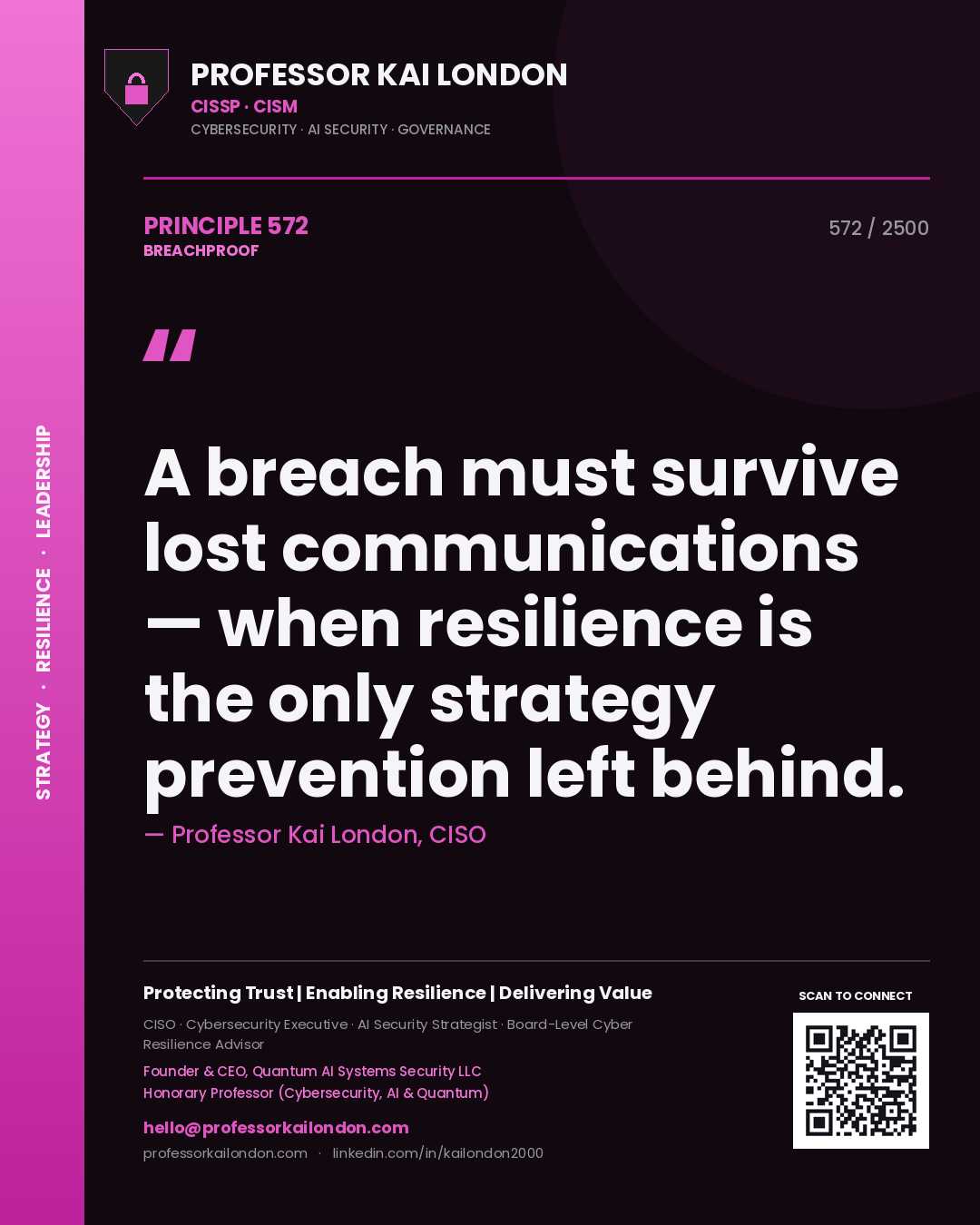
Professor Kai London principle 572: A breach must survive lost communications — when resilience is the only strategy prevention left behind.
Principle 572
Professor Kai London principle 573: A tabletop that no one enjoyed is a leadership test disguised as a technical one — because the market remembers how you led, not just that you were hit.
Principle 573
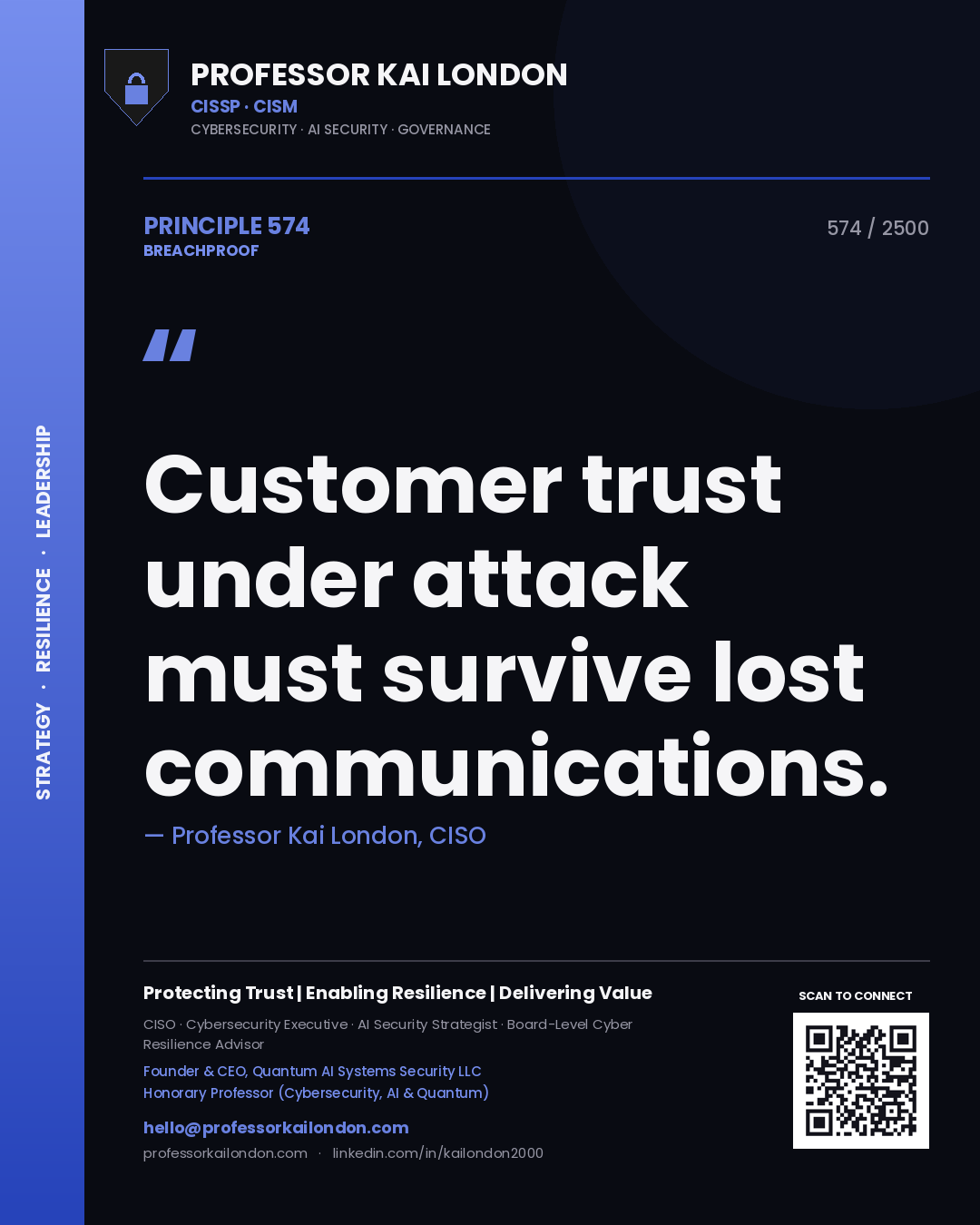
Professor Kai London principle 574: Customer trust under attack must survive lost communications.
Principle 574
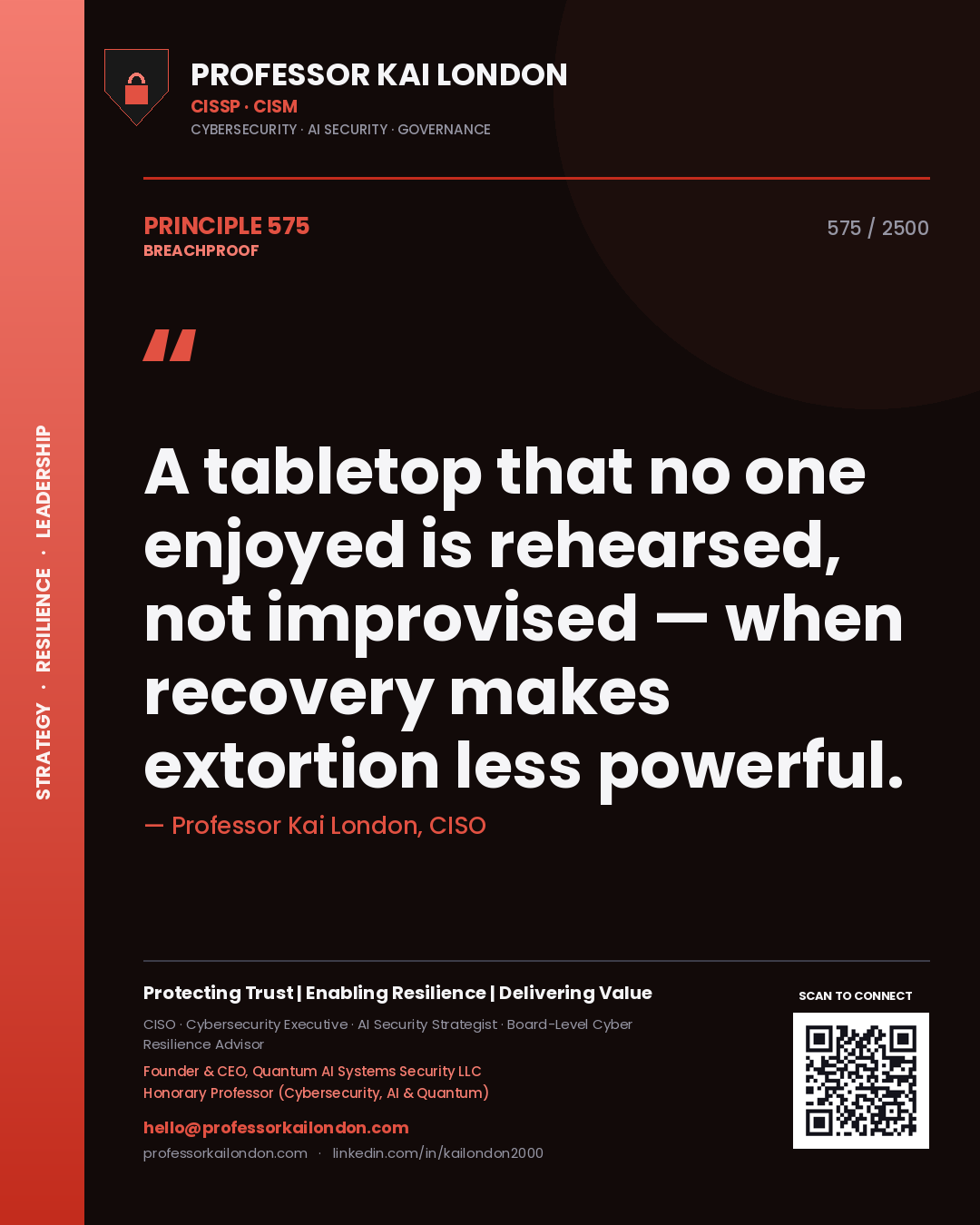
Professor Kai London principle 575: A tabletop that no one enjoyed is rehearsed, not improvised — when recovery makes extortion less powerful.
Principle 575
Professor Kai London principle 576: An extortion demand is rehearsed, not improvised — because the market remembers how you led, not just that you were hit.
Principle 576
Professor Kai London principle 577: A tabletop that no one enjoyed turns panic into a checklist — when the fight is for trust as much as for systems.
Principle 577
Professor Kai London principle 578: Ransomware resilience is measured in continuity — when recovery makes extortion less powerful.
Principle 578
Professor Kai London principle 579: Customer trust under attack is defended in preparation, not apology — because the cheapest breach is the one you rehearsed.
Principle 579
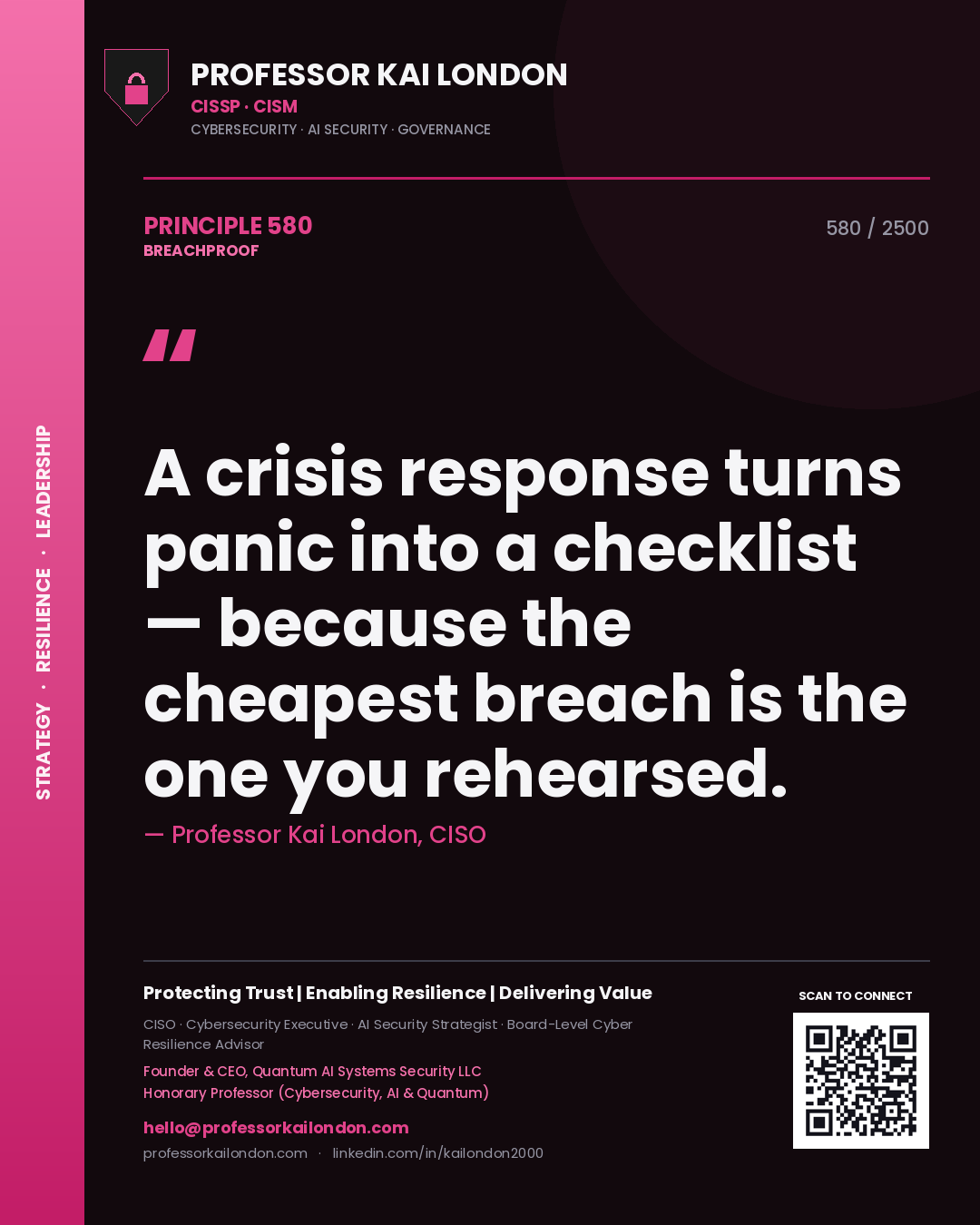
Professor Kai London principle 580: A crisis response turns panic into a checklist — because the cheapest breach is the one you rehearsed.
Principle 580
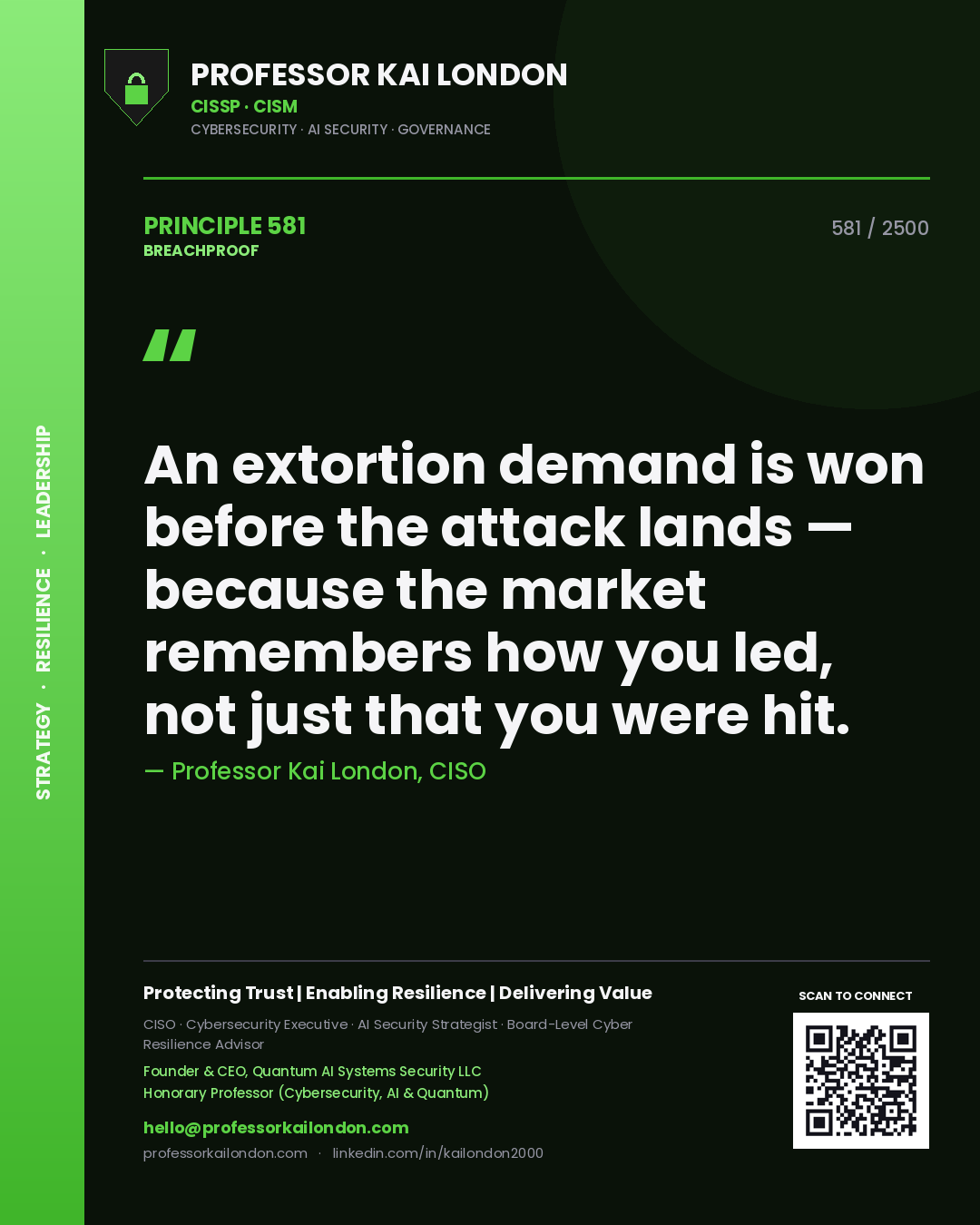
Professor Kai London principle 581: An extortion demand is won before the attack lands — because the market remembers how you led, not just that you were hit.
Principle 581
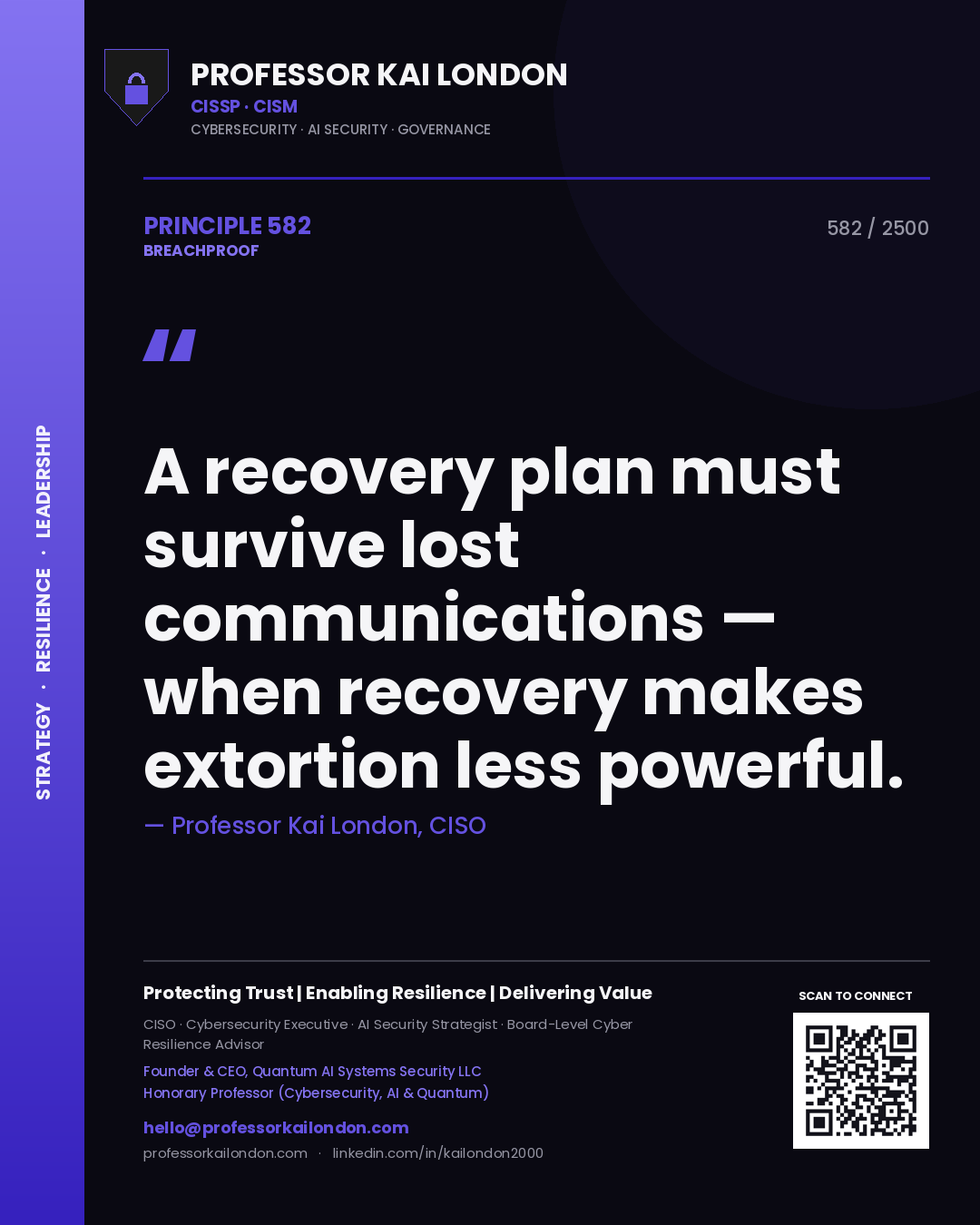
Professor Kai London principle 582: A recovery plan must survive lost communications — when recovery makes extortion less powerful.
Principle 582
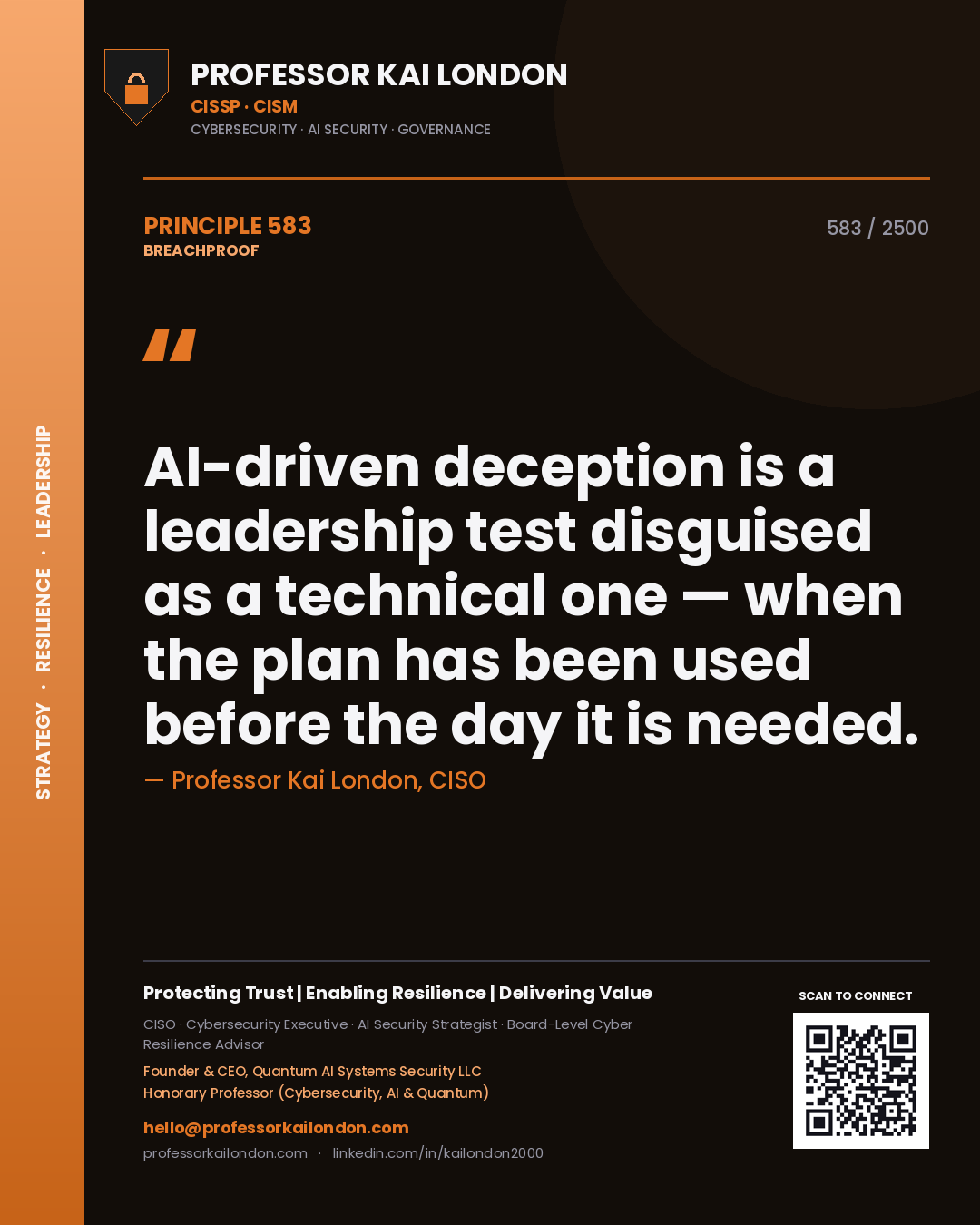
Professor Kai London principle 583: AI-driven deception is a leadership test disguised as a technical one — when the plan has been used before the day it is needed.
Principle 583
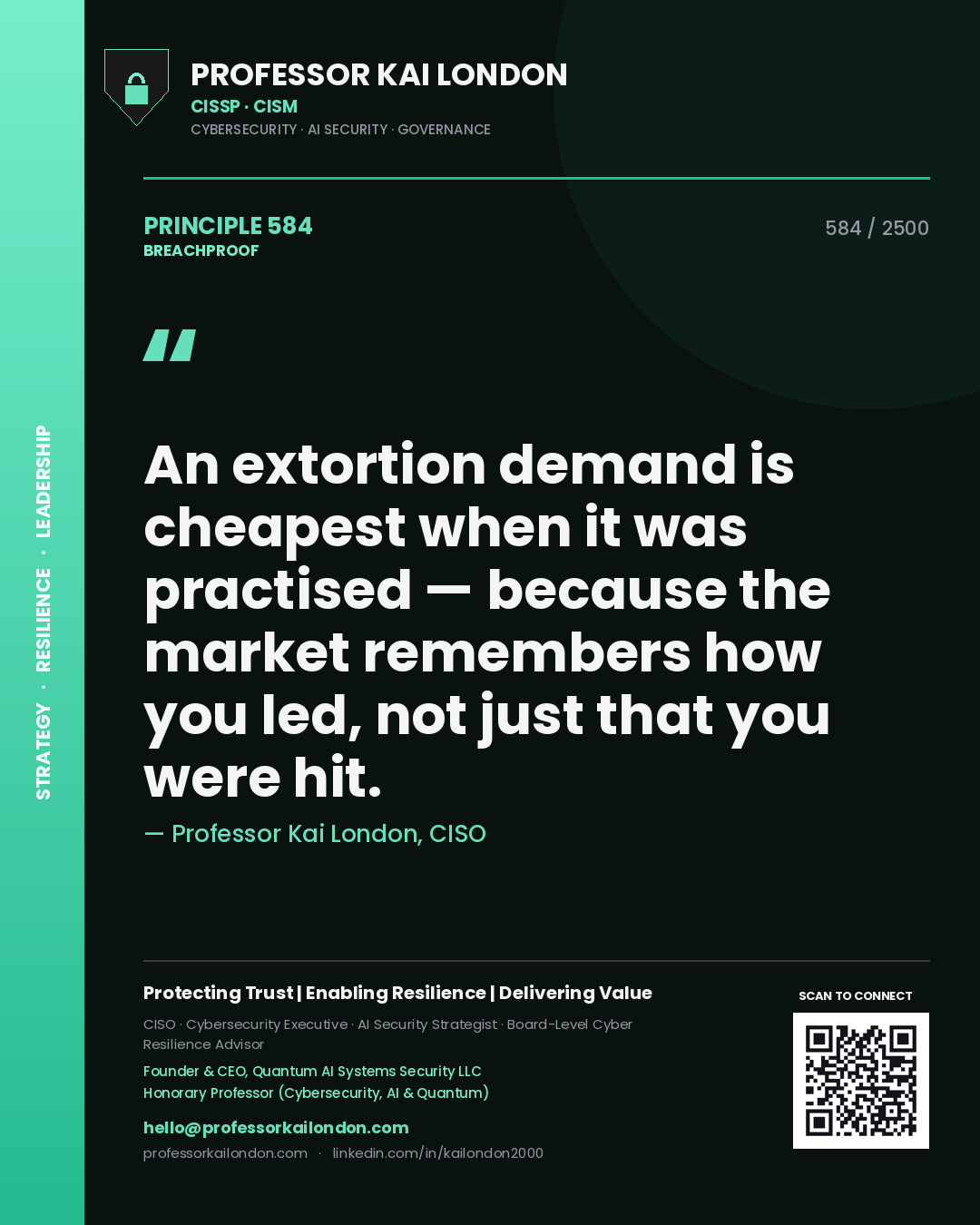
Professor Kai London principle 584: An extortion demand is cheapest when it was practised — because the market remembers how you led, not just that you were hit.
Principle 584
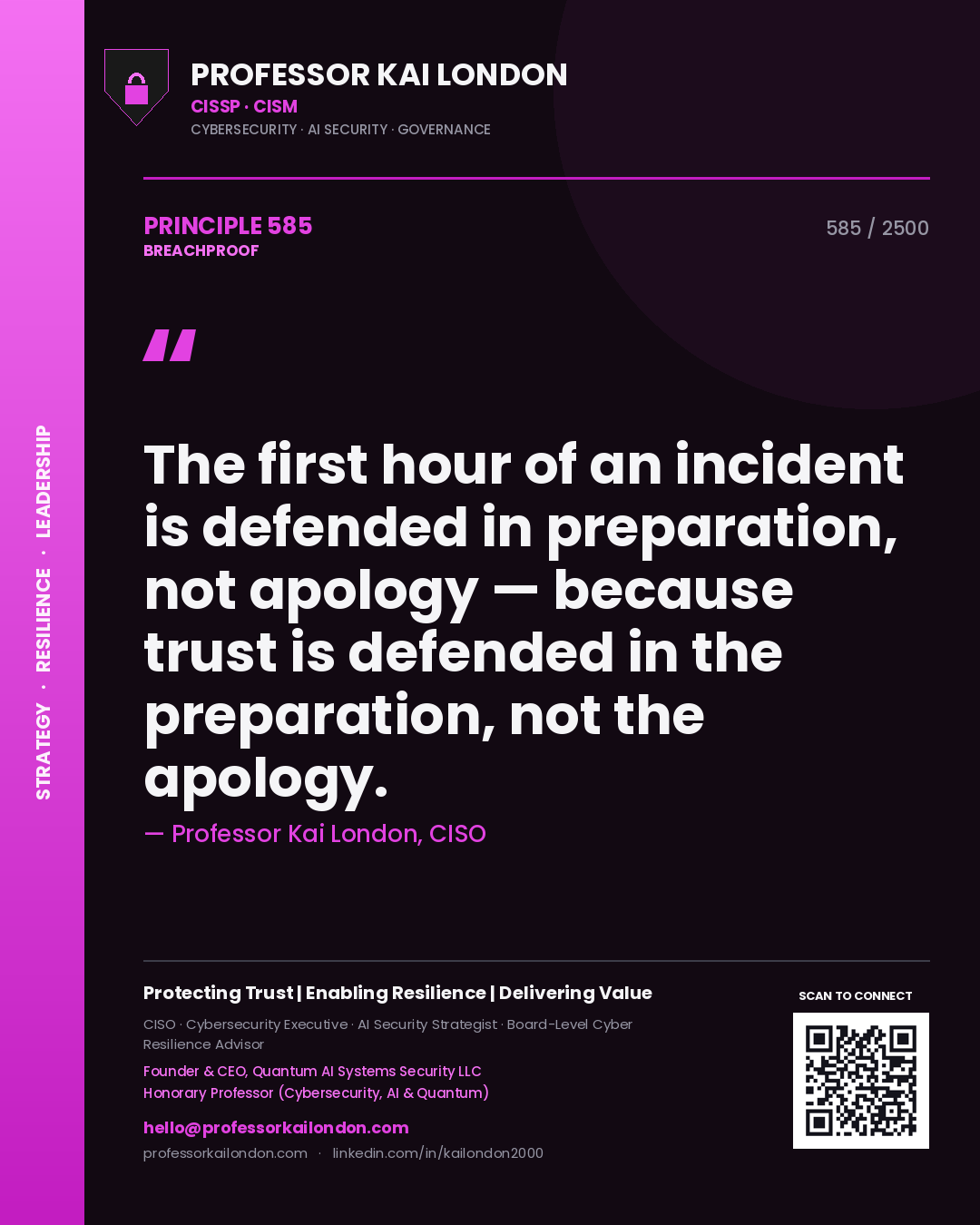
Professor Kai London principle 585: The first hour of an incident is defended in preparation, not apology — because trust is defended in the preparation, not the apology.
Principle 585
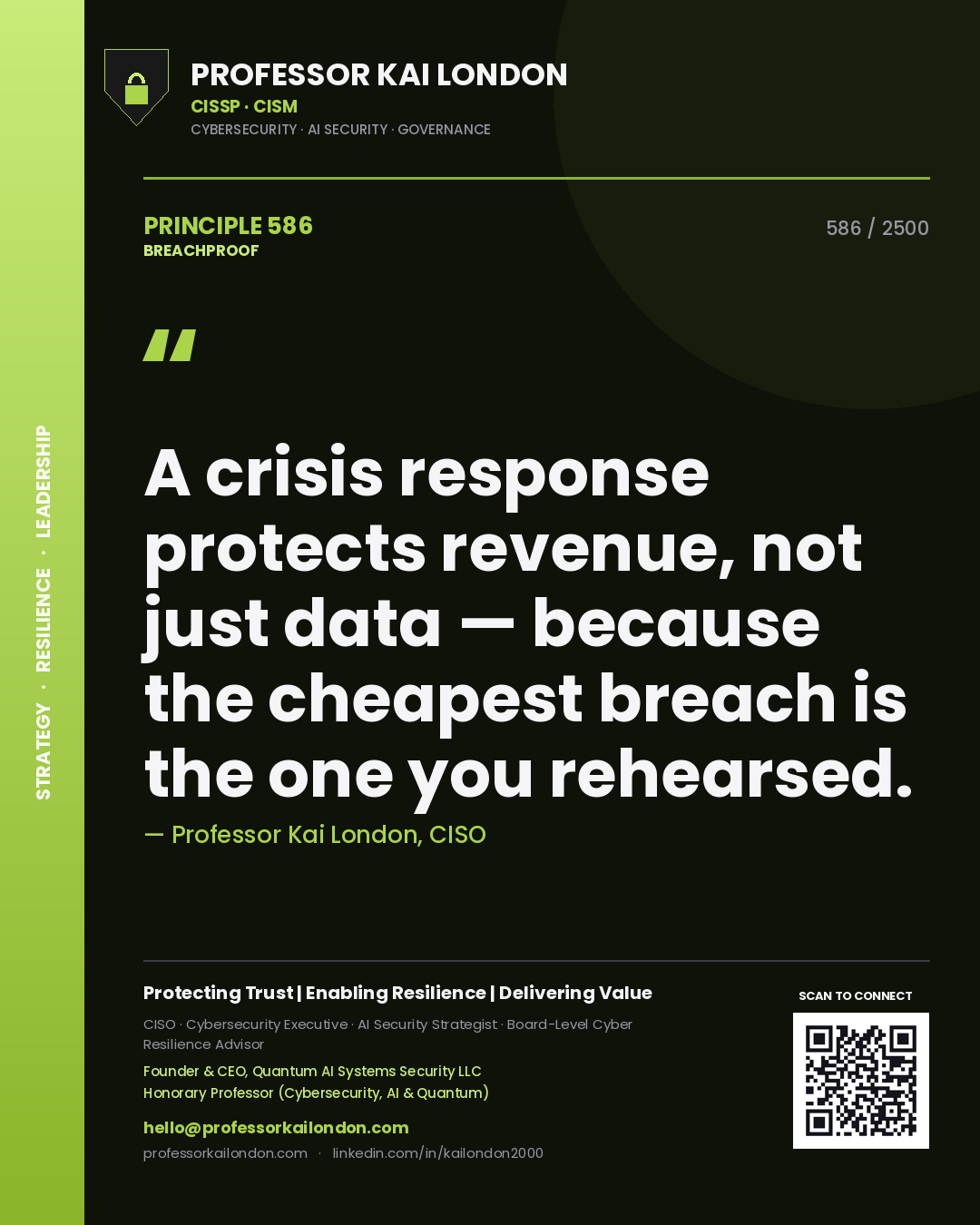
Professor Kai London principle 586: A crisis response protects revenue, not just data — because the cheapest breach is the one you rehearsed.
Principle 586
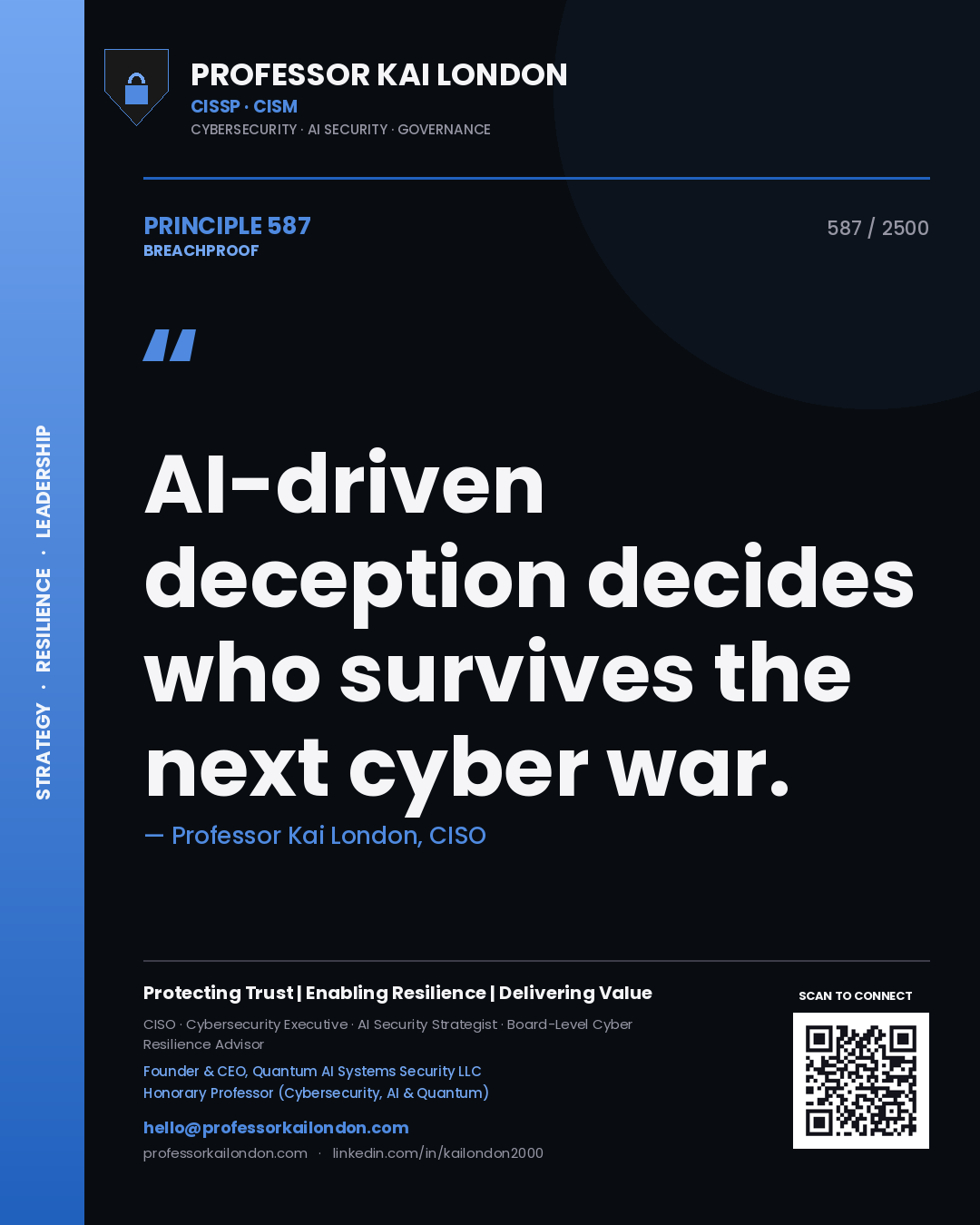
Professor Kai London principle 587: AI-driven deception decides who survives the next cyber war.
Principle 587
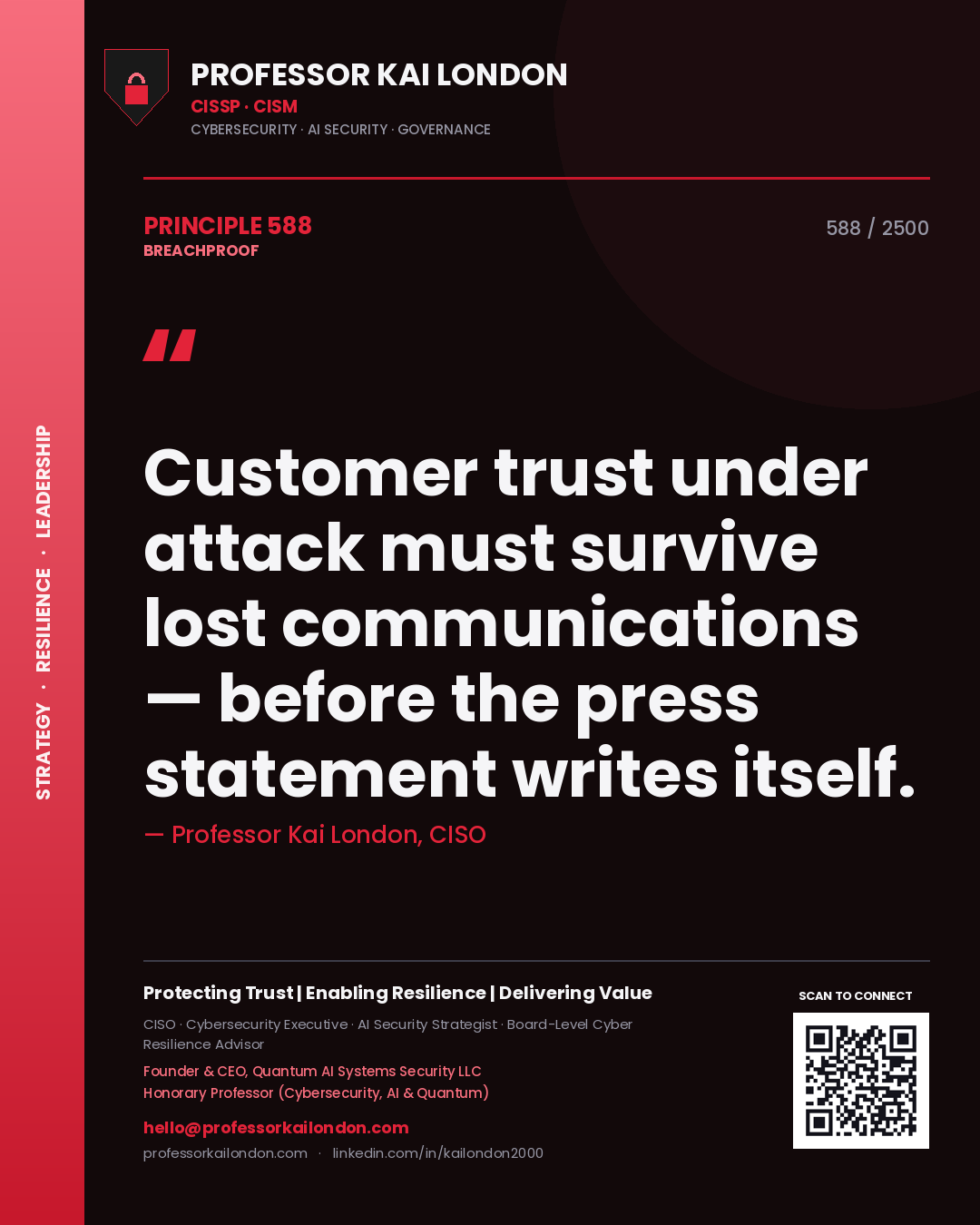
Professor Kai London principle 588: Customer trust under attack must survive lost communications — before the press statement writes itself.
Principle 588
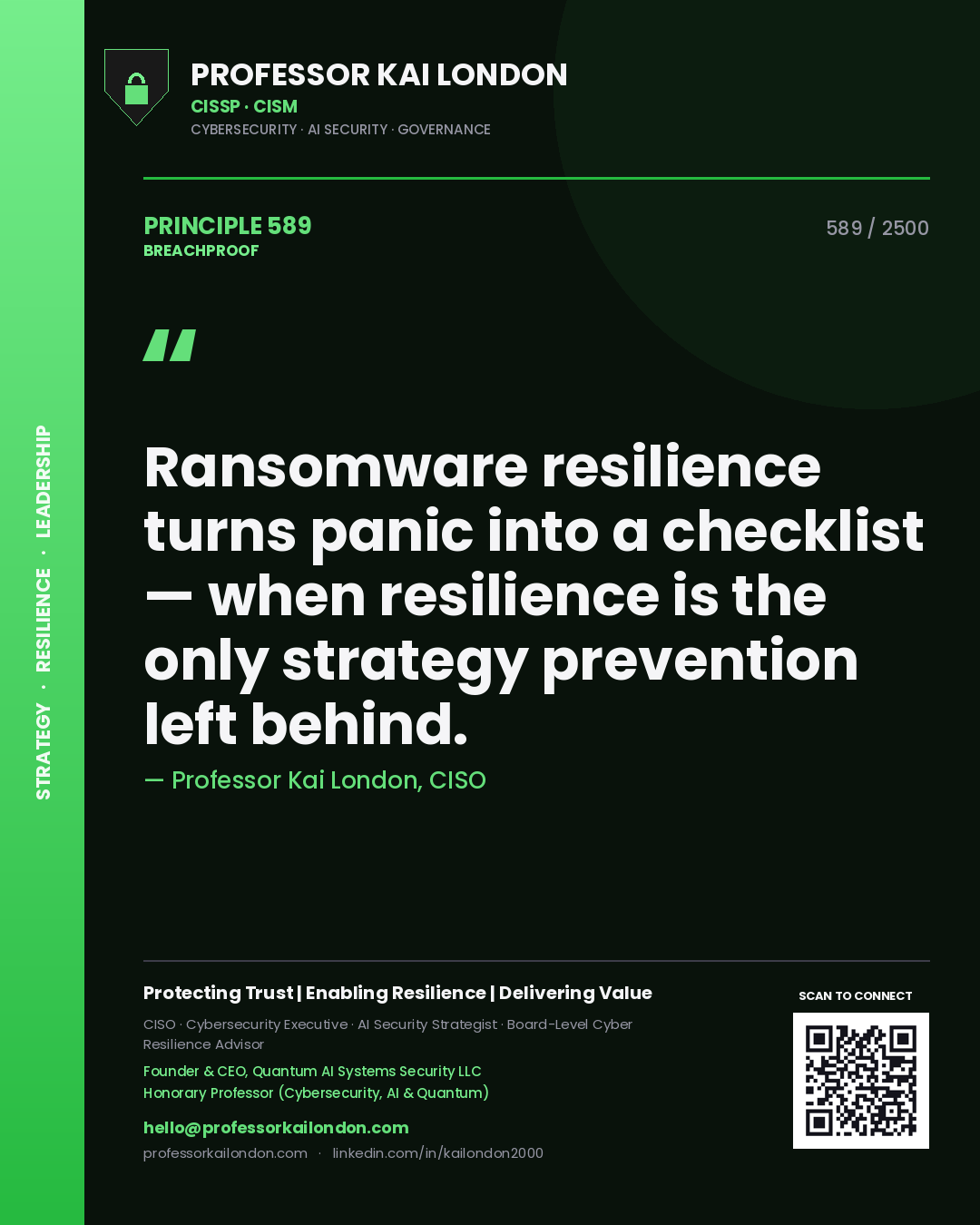
Professor Kai London principle 589: Ransomware resilience turns panic into a checklist — when resilience is the only strategy prevention left behind.
Principle 589
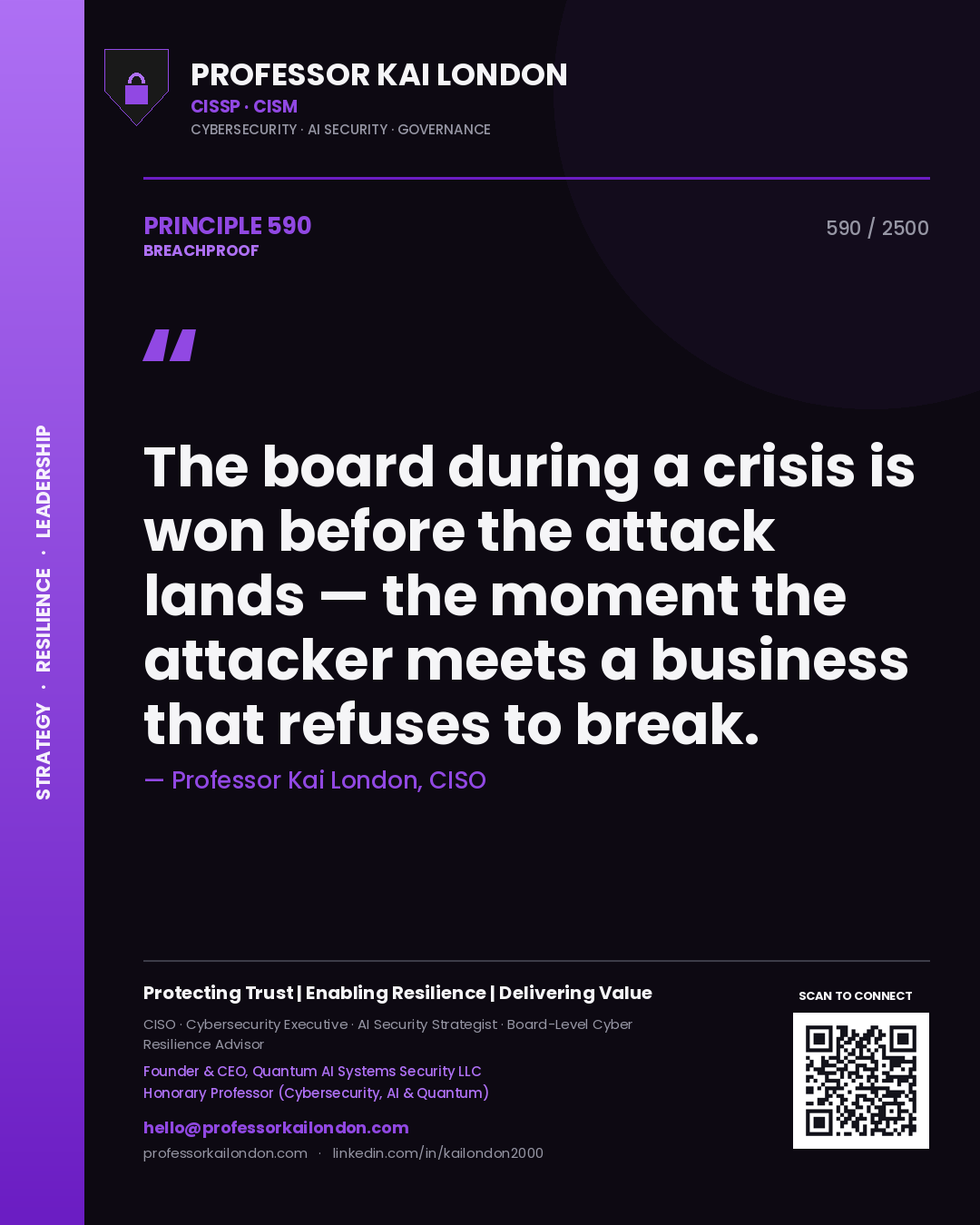
Professor Kai London principle 590: The board during a crisis is won before the attack lands — the moment the attacker meets a business that refuses to break.
Principle 590
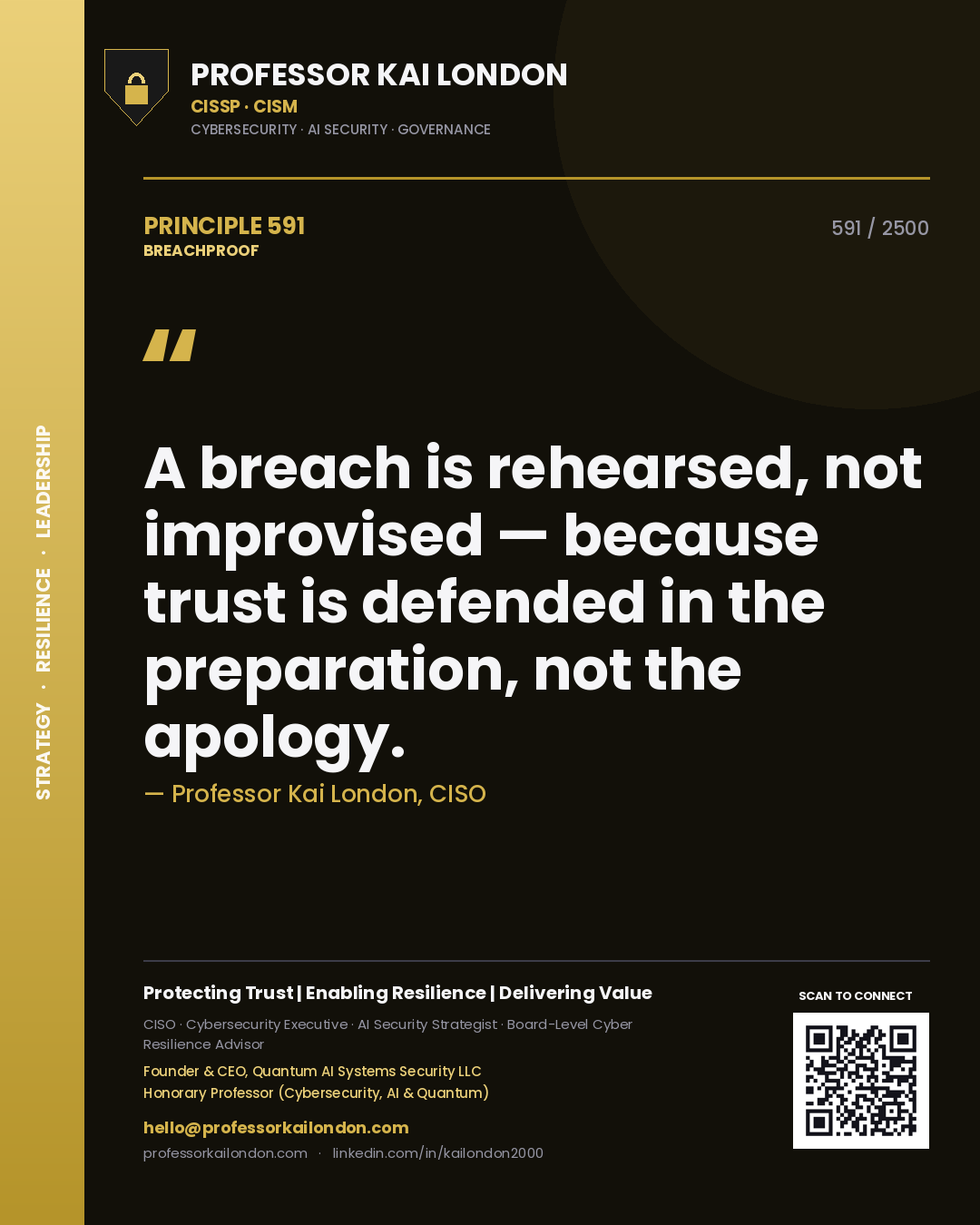
Professor Kai London principle 591: A breach is rehearsed, not improvised — because trust is defended in the preparation, not the apology.
Principle 591
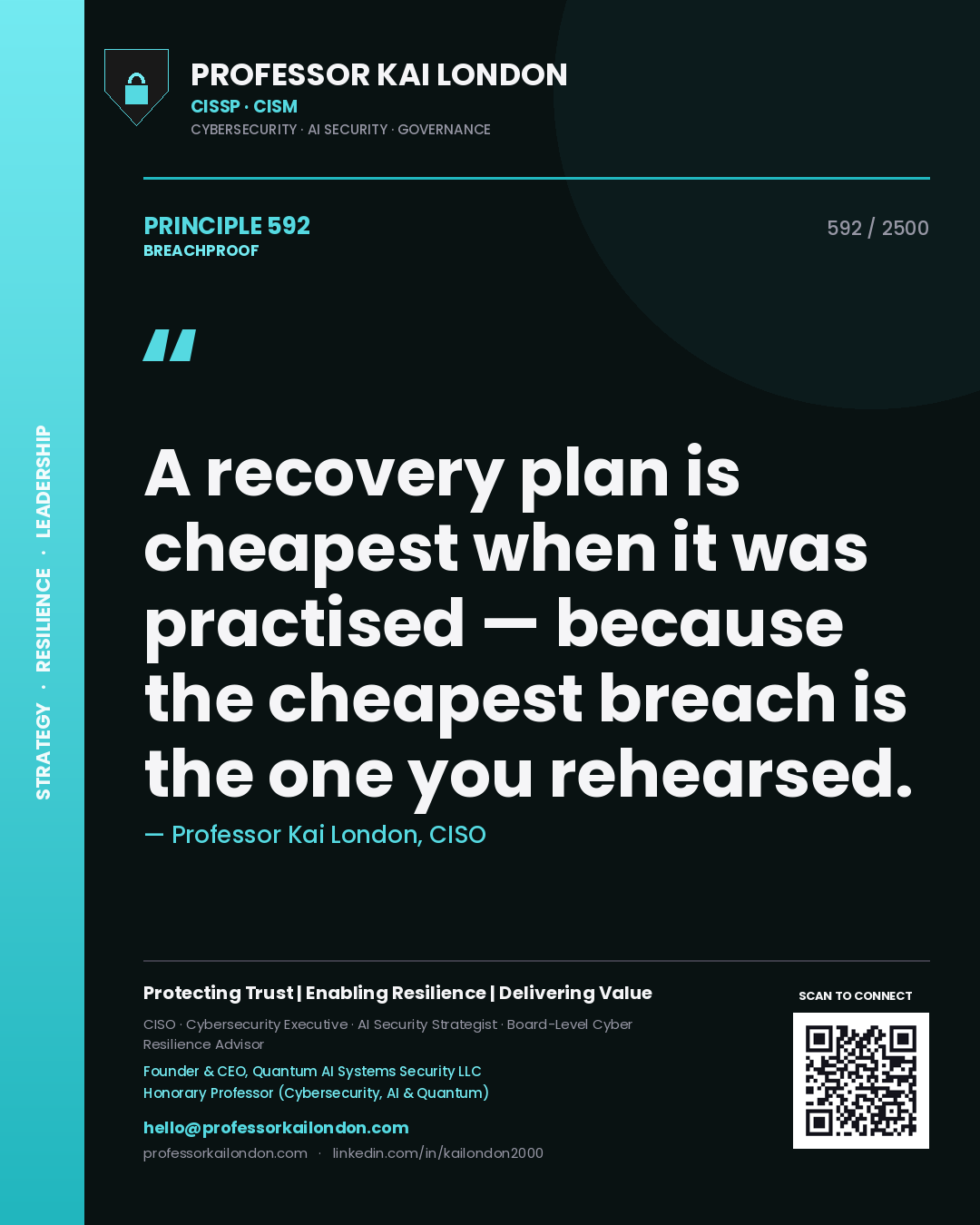
Professor Kai London principle 592: A recovery plan is cheapest when it was practised — because the cheapest breach is the one you rehearsed.
Principle 592
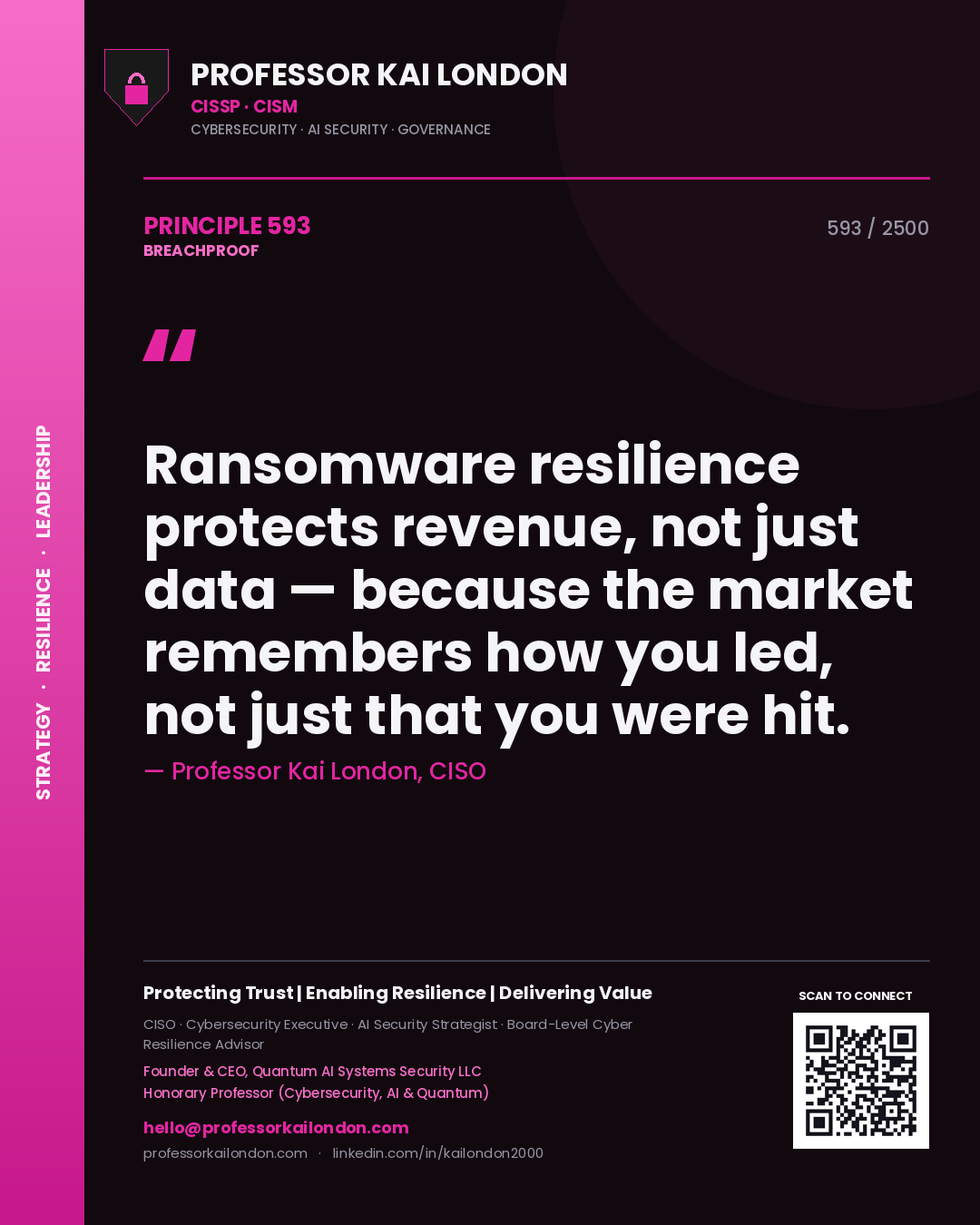
Professor Kai London principle 593: Ransomware resilience protects revenue, not just data — because the market remembers how you led, not just that you were hit.
Principle 593
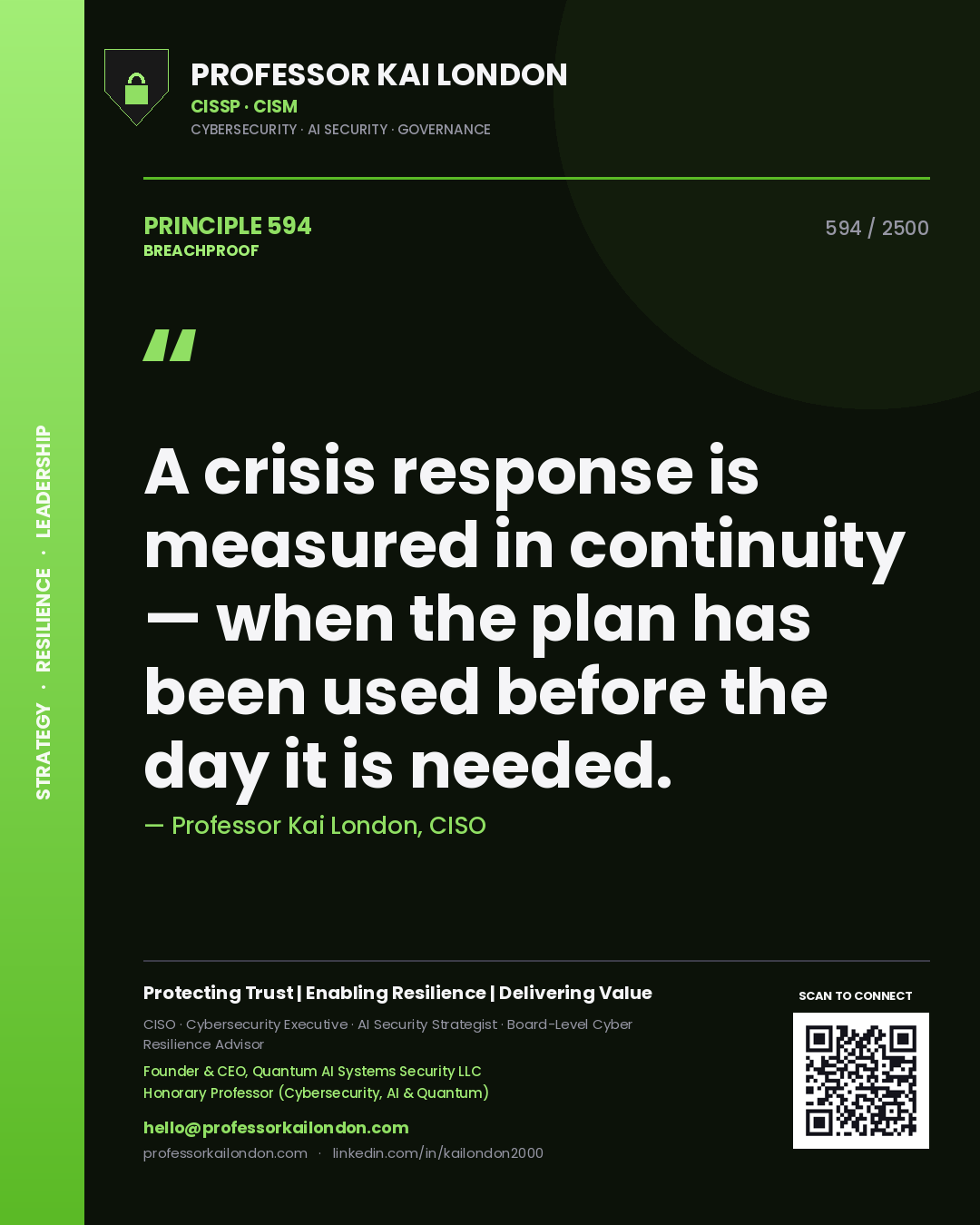
Professor Kai London principle 594: A crisis response is measured in continuity — when the plan has been used before the day it is needed.
Principle 594
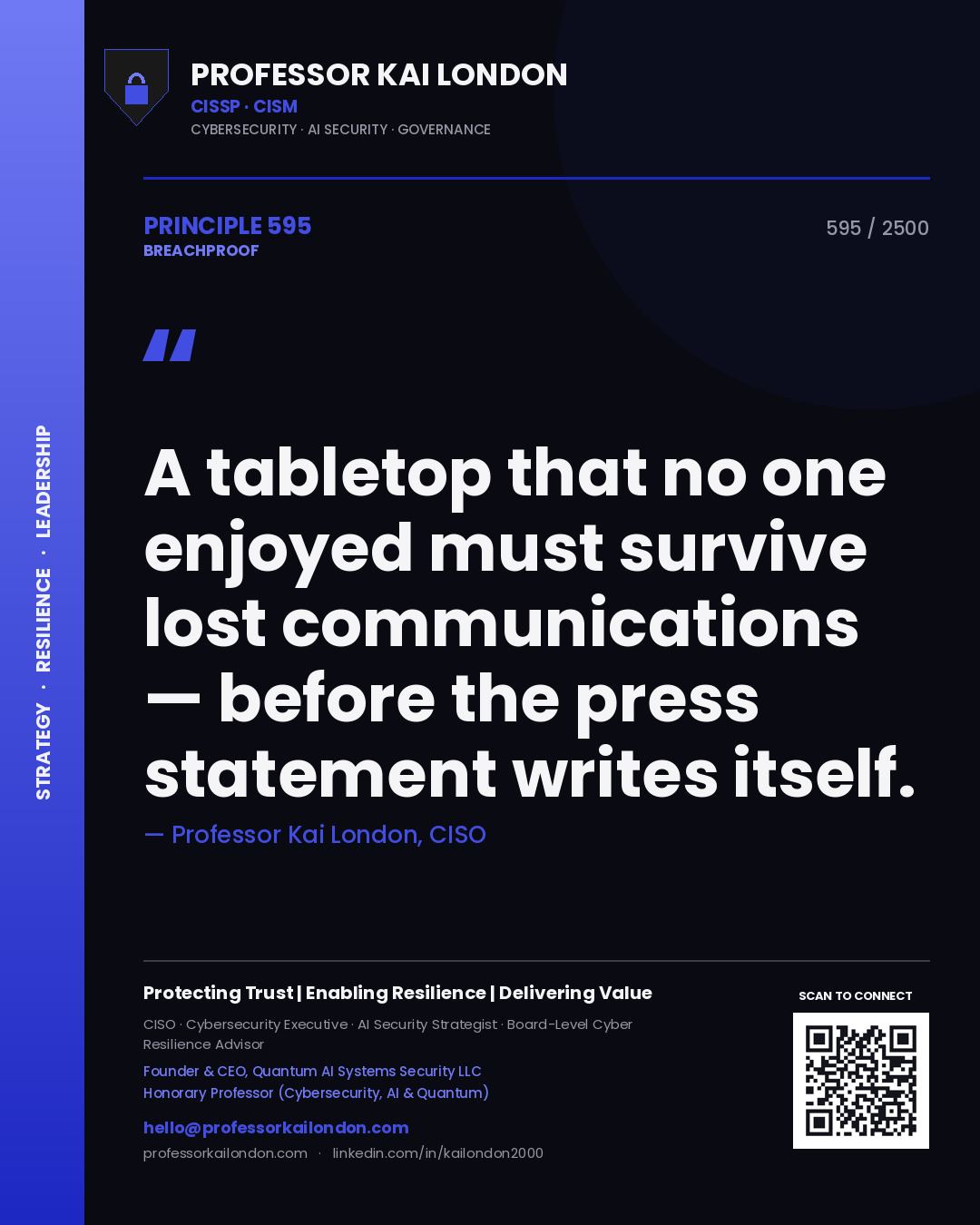
Professor Kai London principle 595: A tabletop that no one enjoyed must survive lost communications — before the press statement writes itself.
Principle 595
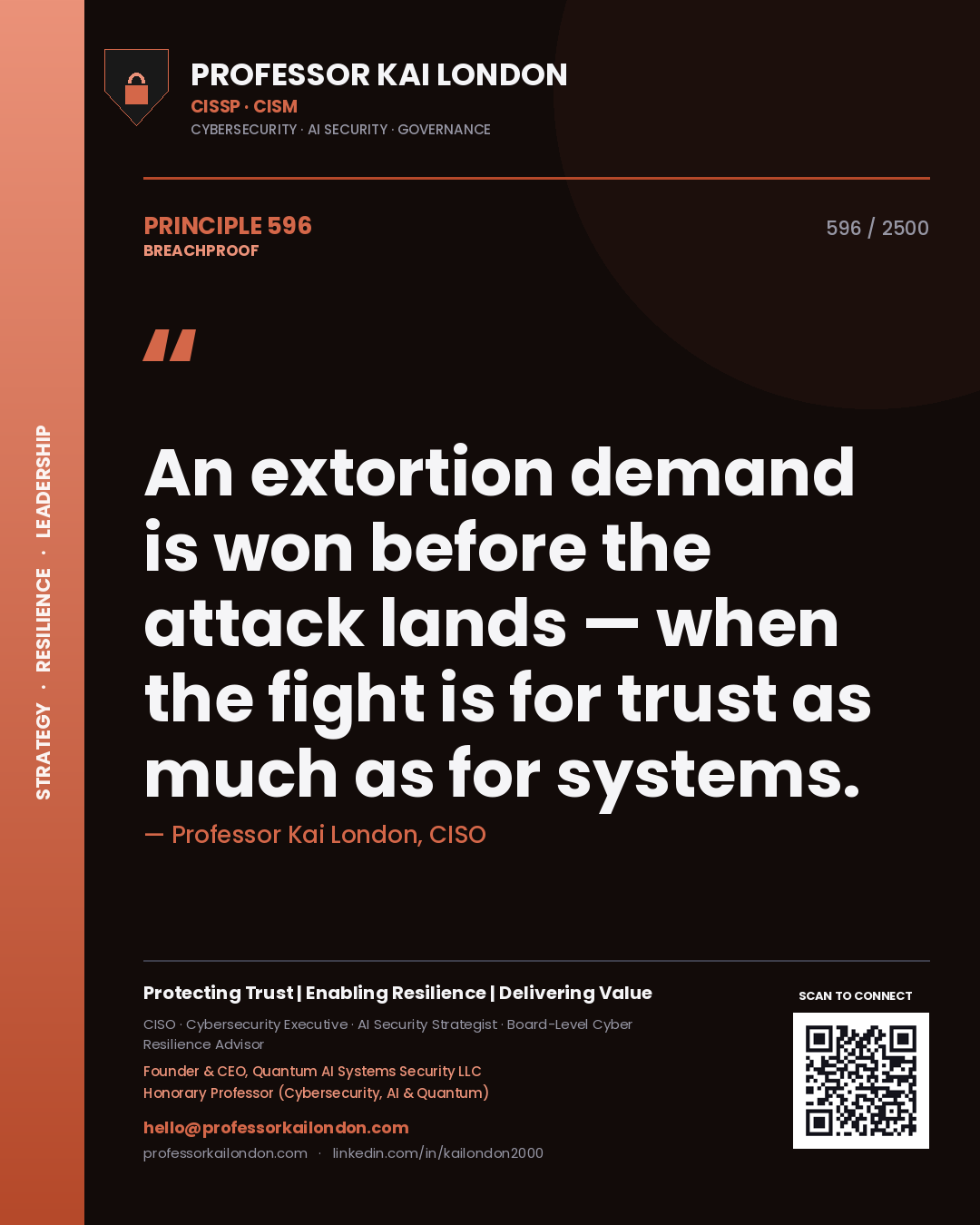
Professor Kai London principle 596: An extortion demand is won before the attack lands — when the fight is for trust as much as for systems.
Principle 596
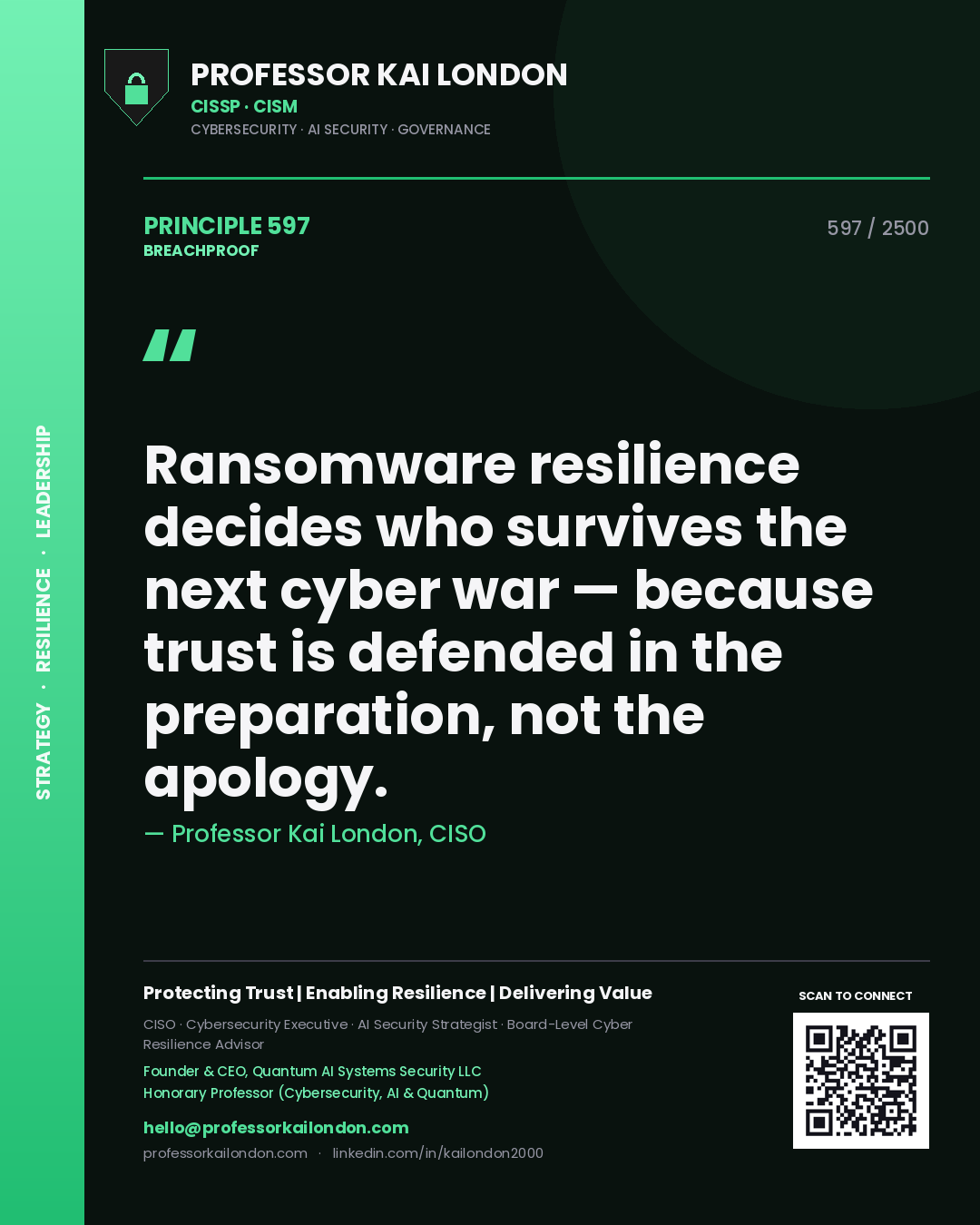
Professor Kai London principle 597: Ransomware resilience decides who survives the next cyber war — because trust is defended in the preparation, not the apology.
Principle 597
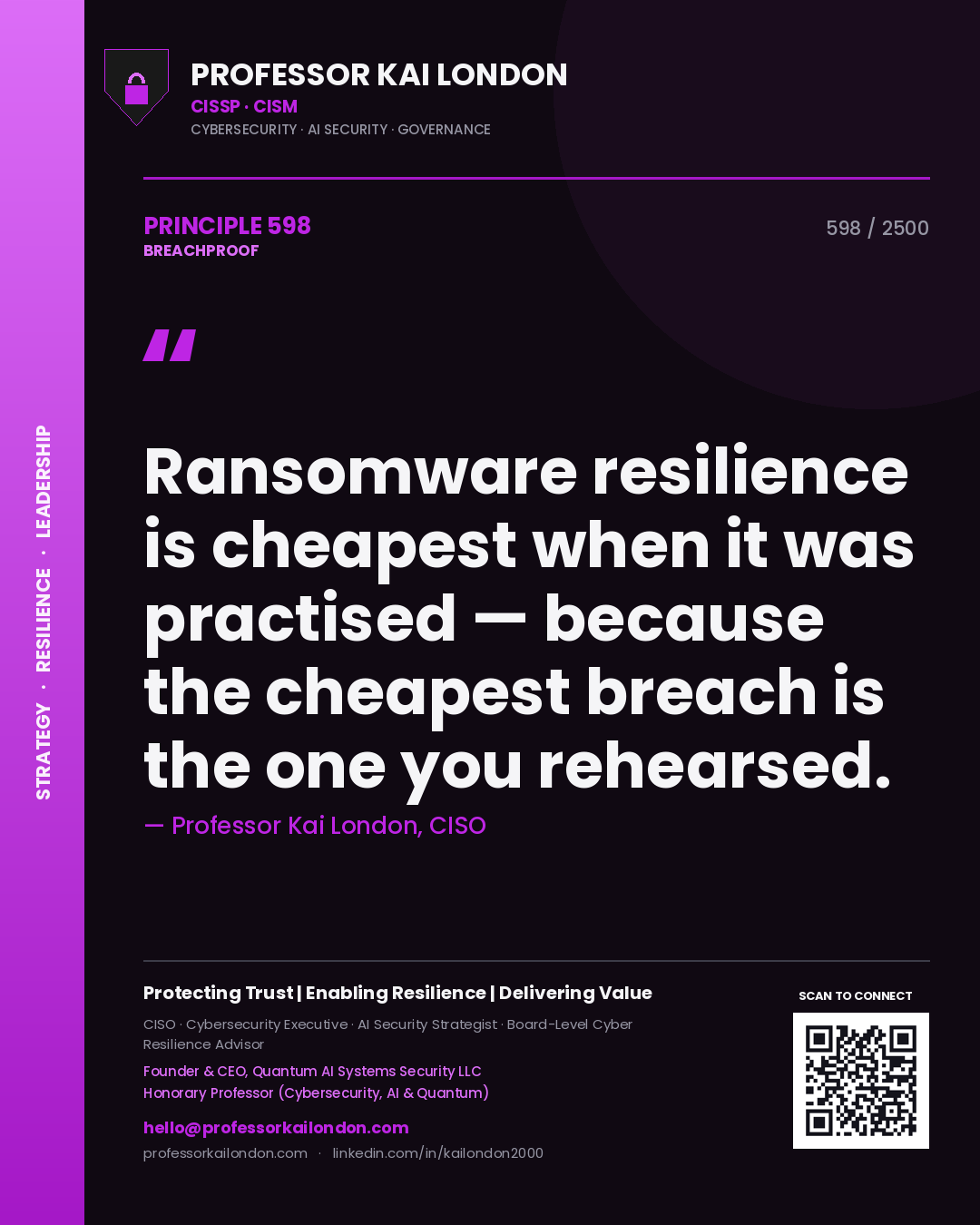
Professor Kai London principle 598: Ransomware resilience is cheapest when it was practised — because the cheapest breach is the one you rehearsed.
Principle 598
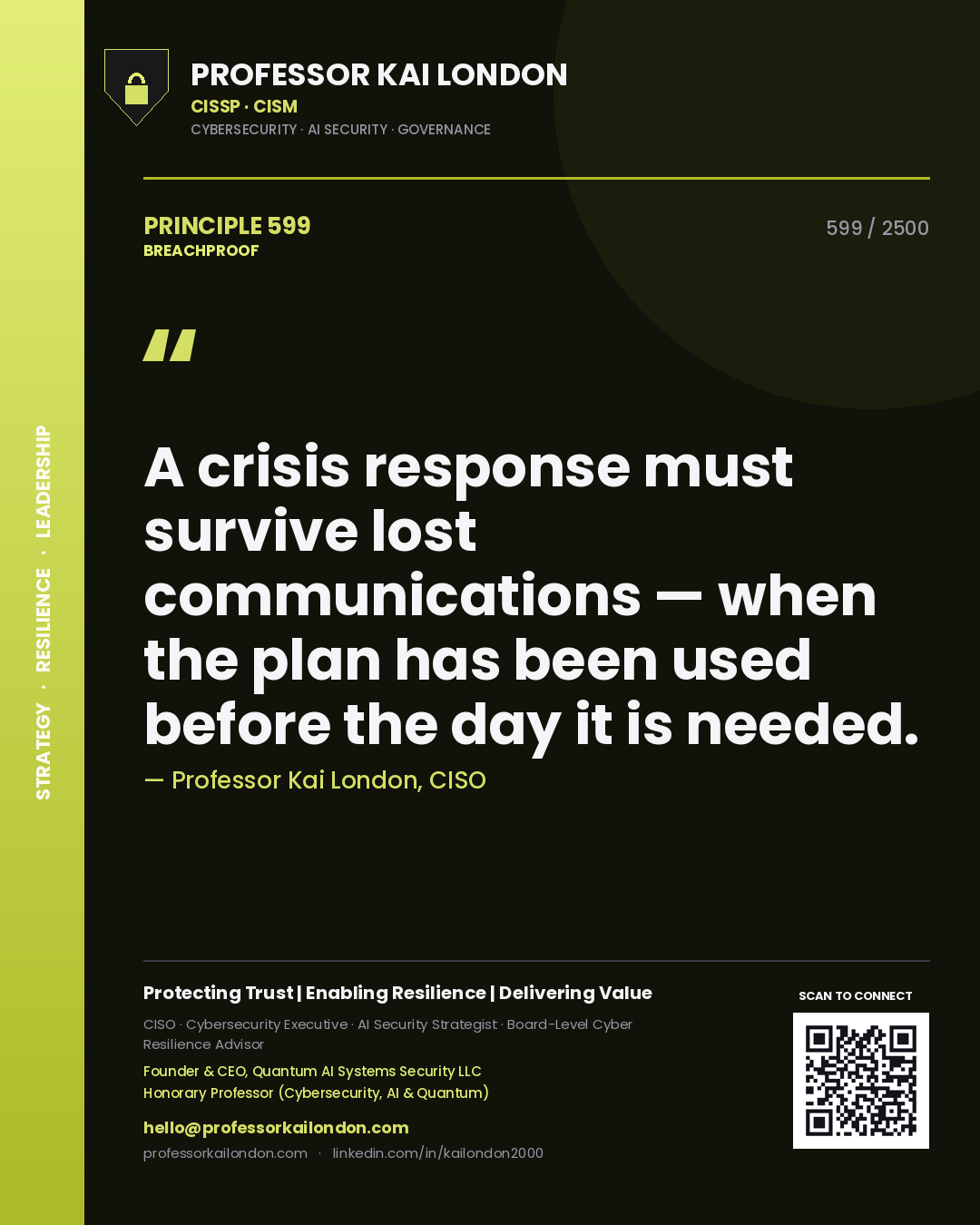
Professor Kai London principle 599: A crisis response must survive lost communications — when the plan has been used before the day it is needed.
Principle 599
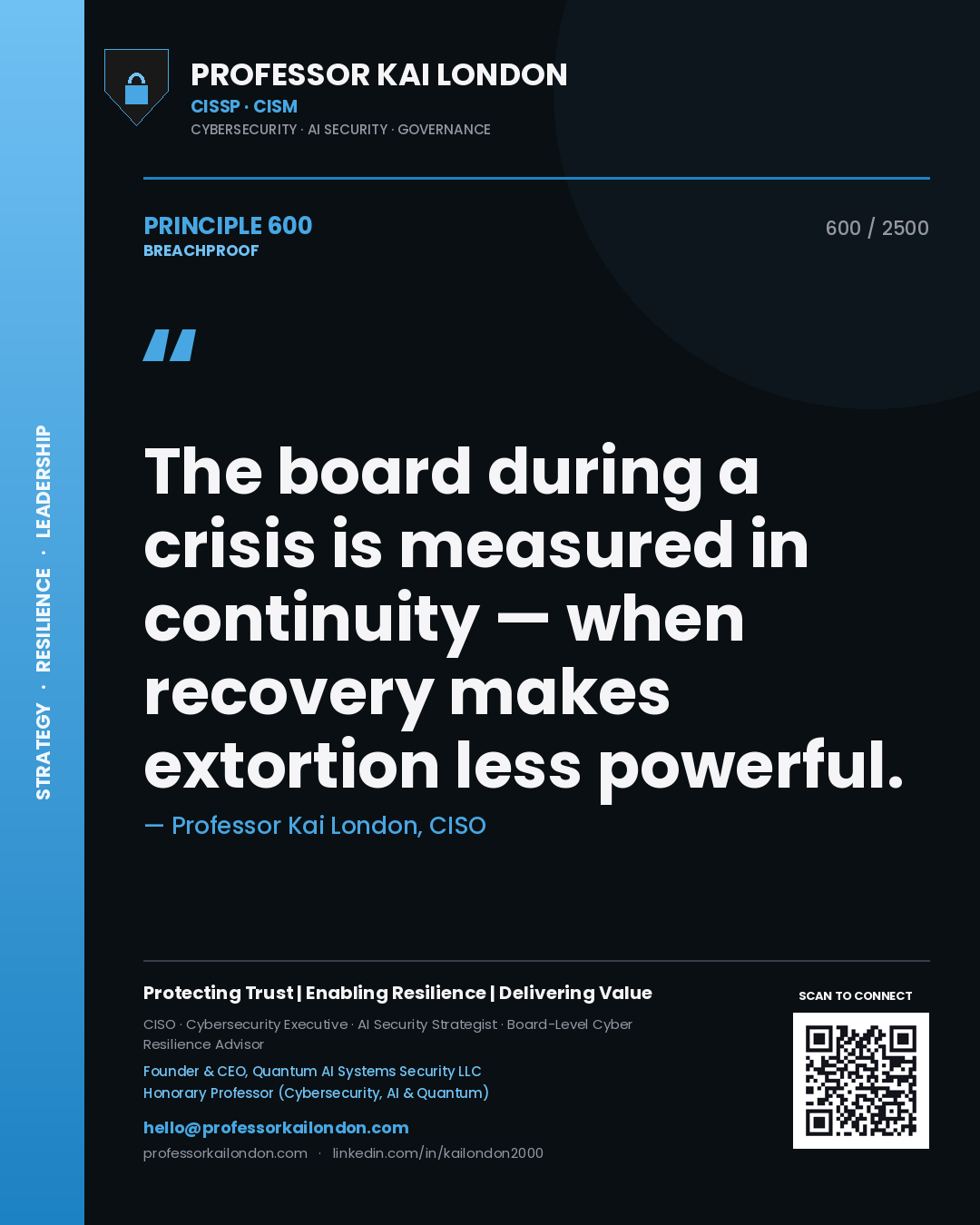
Professor Kai London principle 600: The board during a crisis is measured in continuity — when recovery makes extortion less powerful.
Principle 600