Breachproof — Gallery (Page 10 of 100)
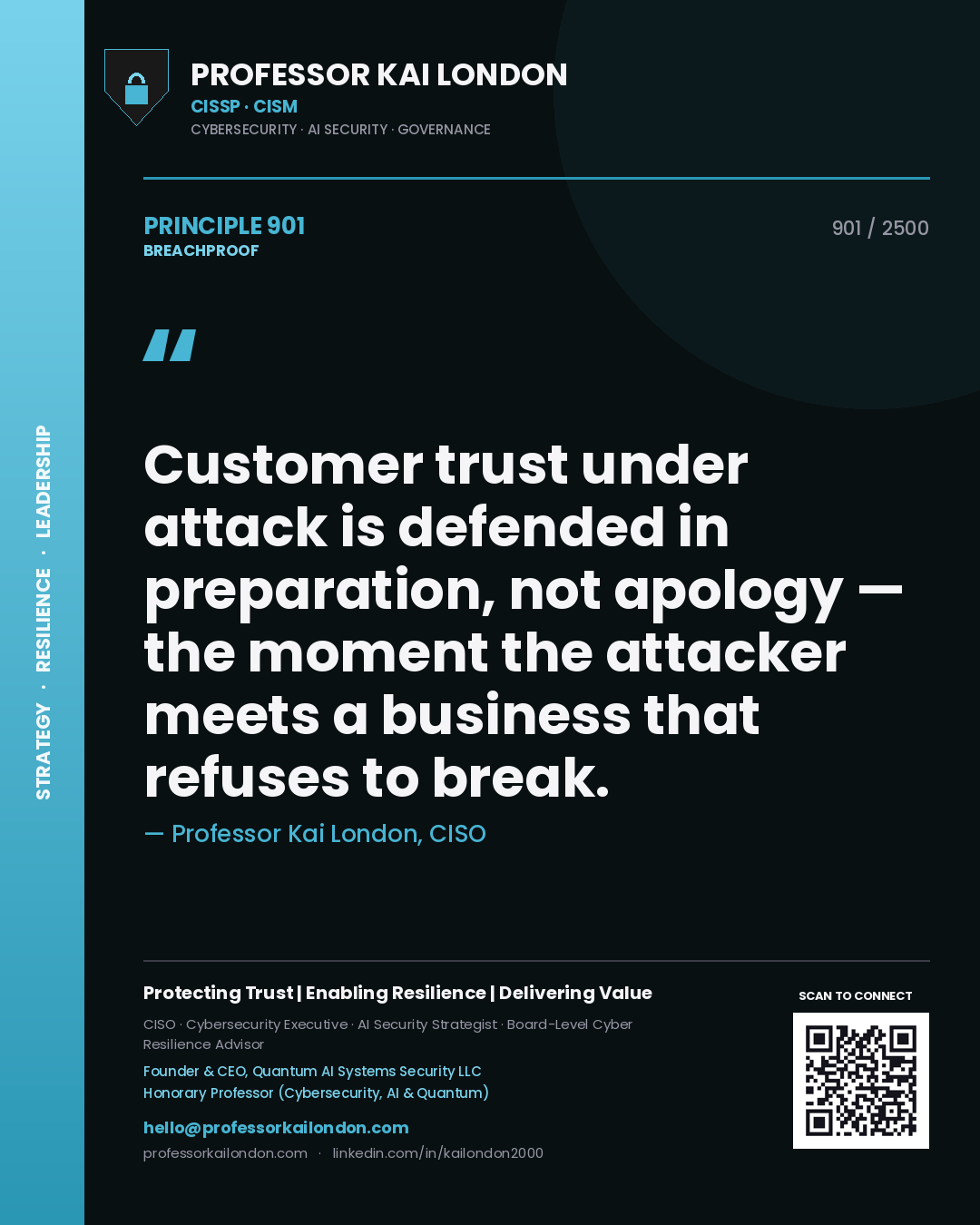
Professor Kai London principle 901: Customer trust under attack is defended in preparation, not apology — the moment the attacker meets a business that refuses to break.
Principle 901
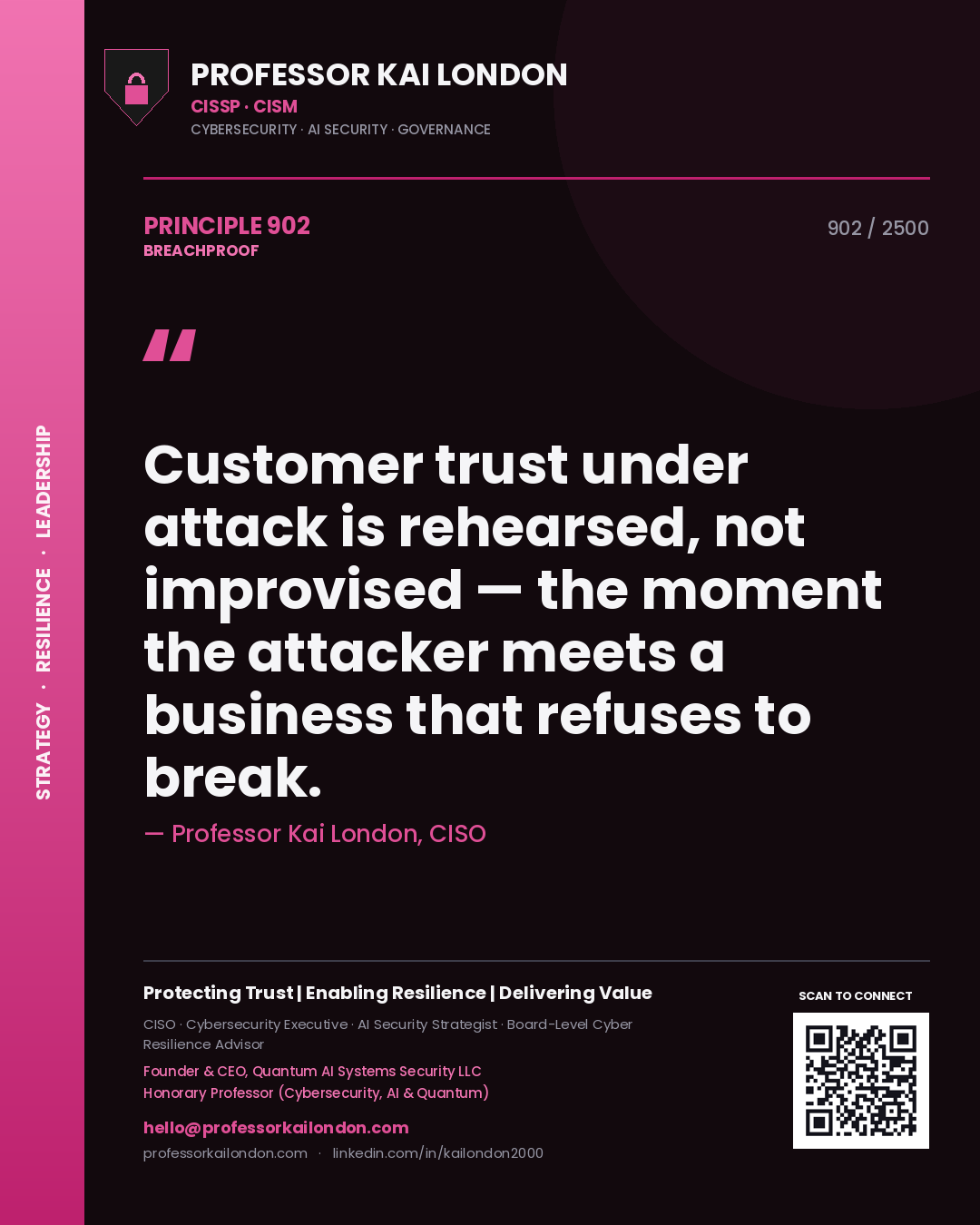
Professor Kai London principle 902: Customer trust under attack is rehearsed, not improvised — the moment the attacker meets a business that refuses to break.
Principle 902
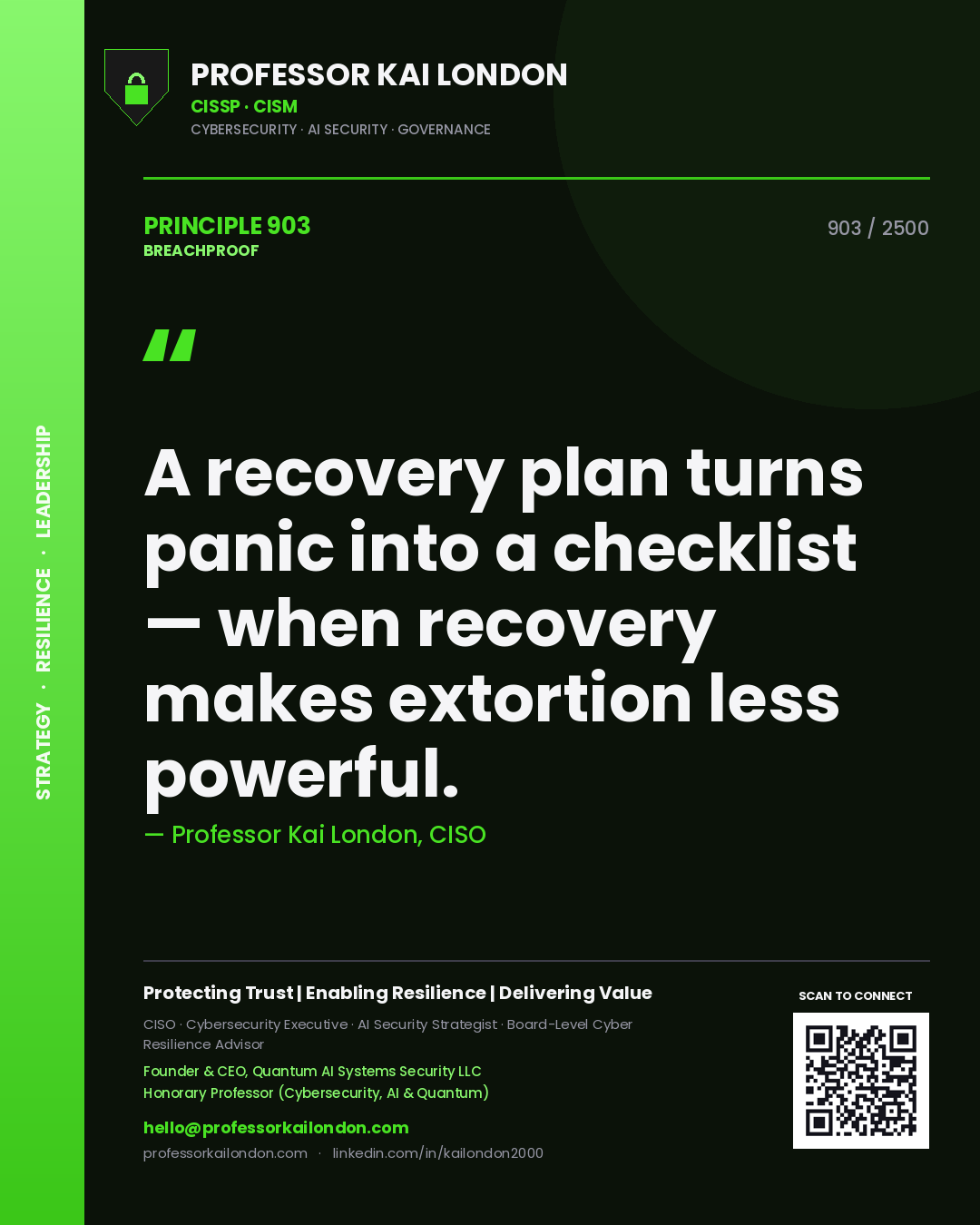
Professor Kai London principle 903: A recovery plan turns panic into a checklist — when recovery makes extortion less powerful.
Principle 903
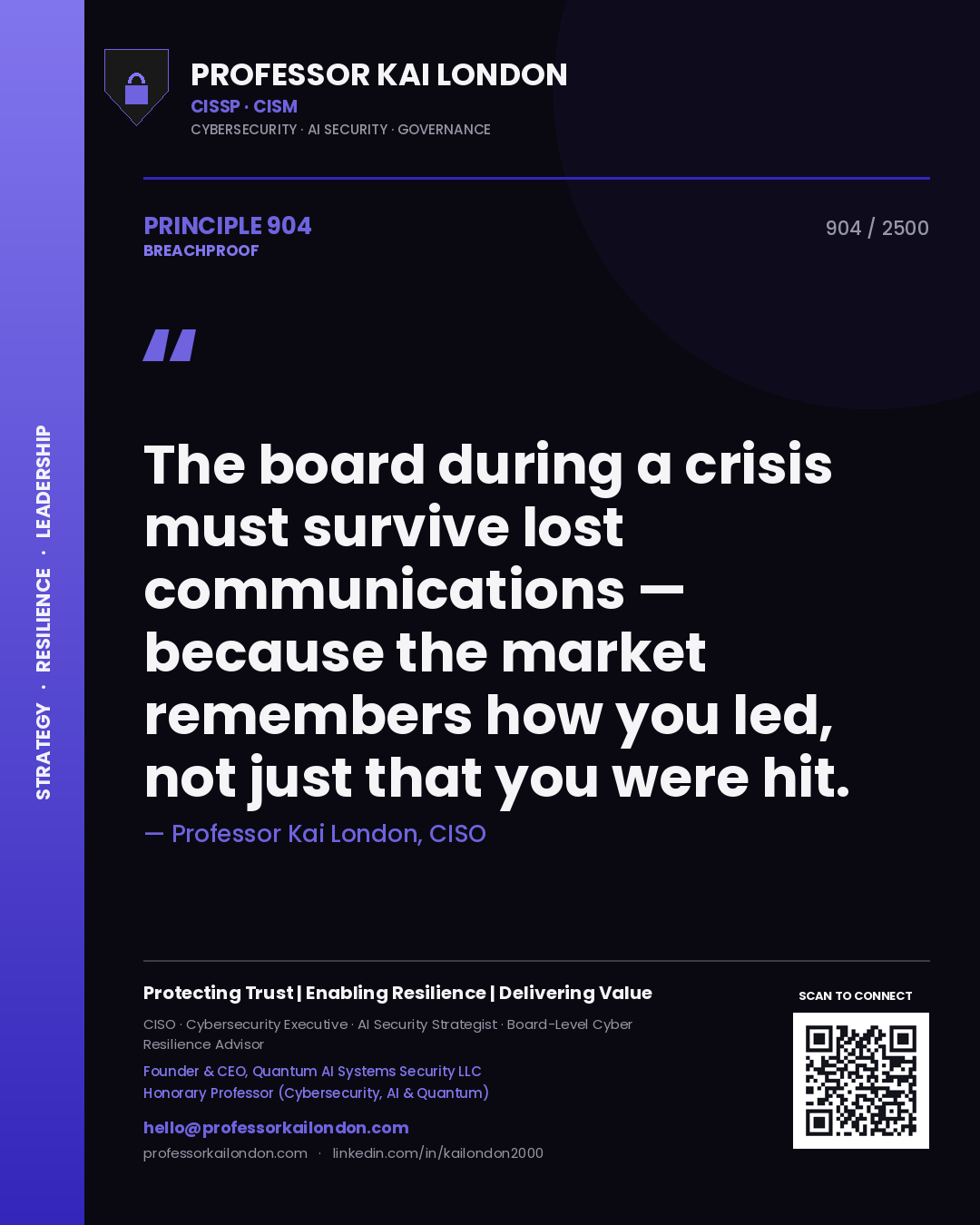
Professor Kai London principle 904: The board during a crisis must survive lost communications — because the market remembers how you led, not just that you were hit.
Principle 904
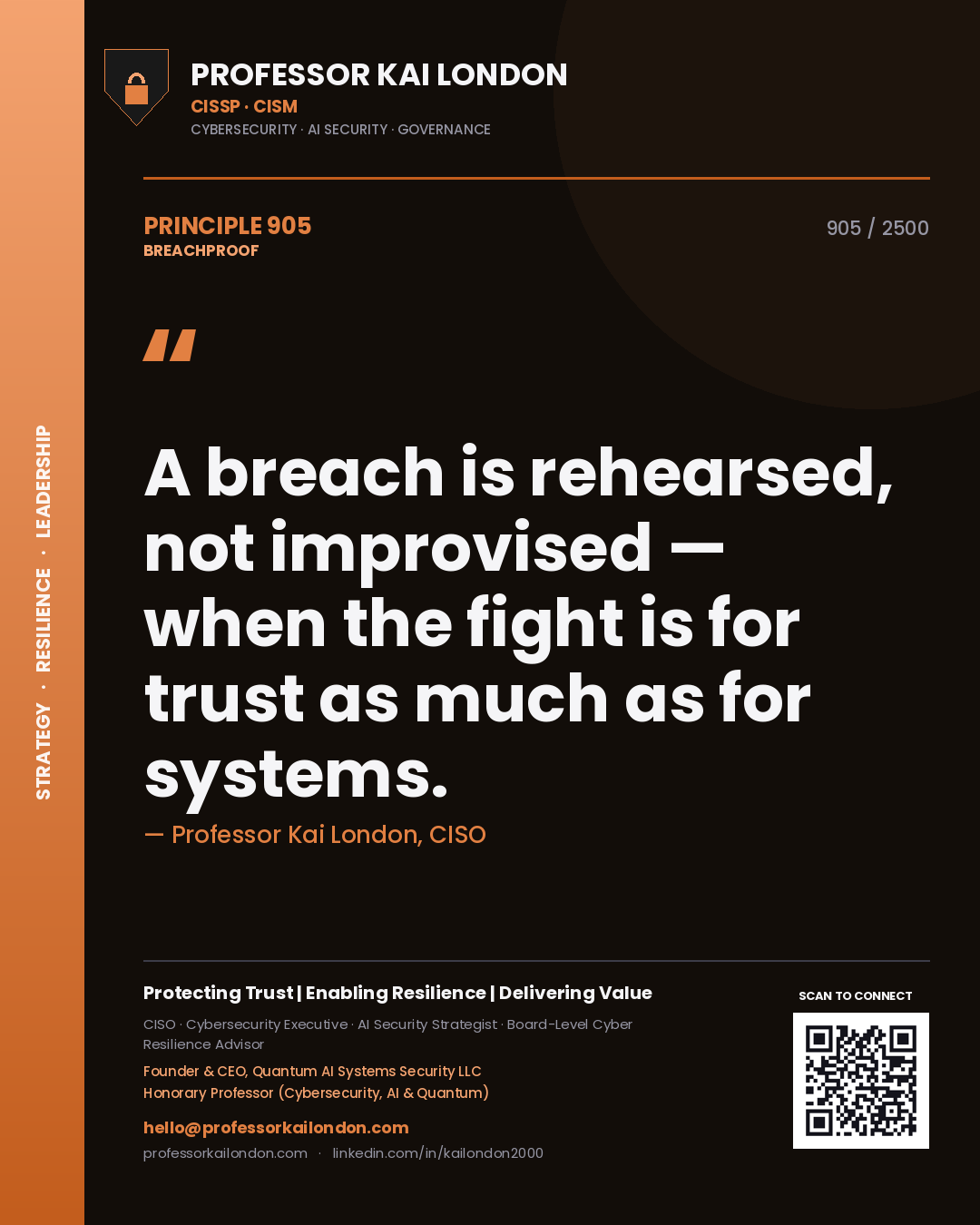
Professor Kai London principle 905: A breach is rehearsed, not improvised — when the fight is for trust as much as for systems.
Principle 905
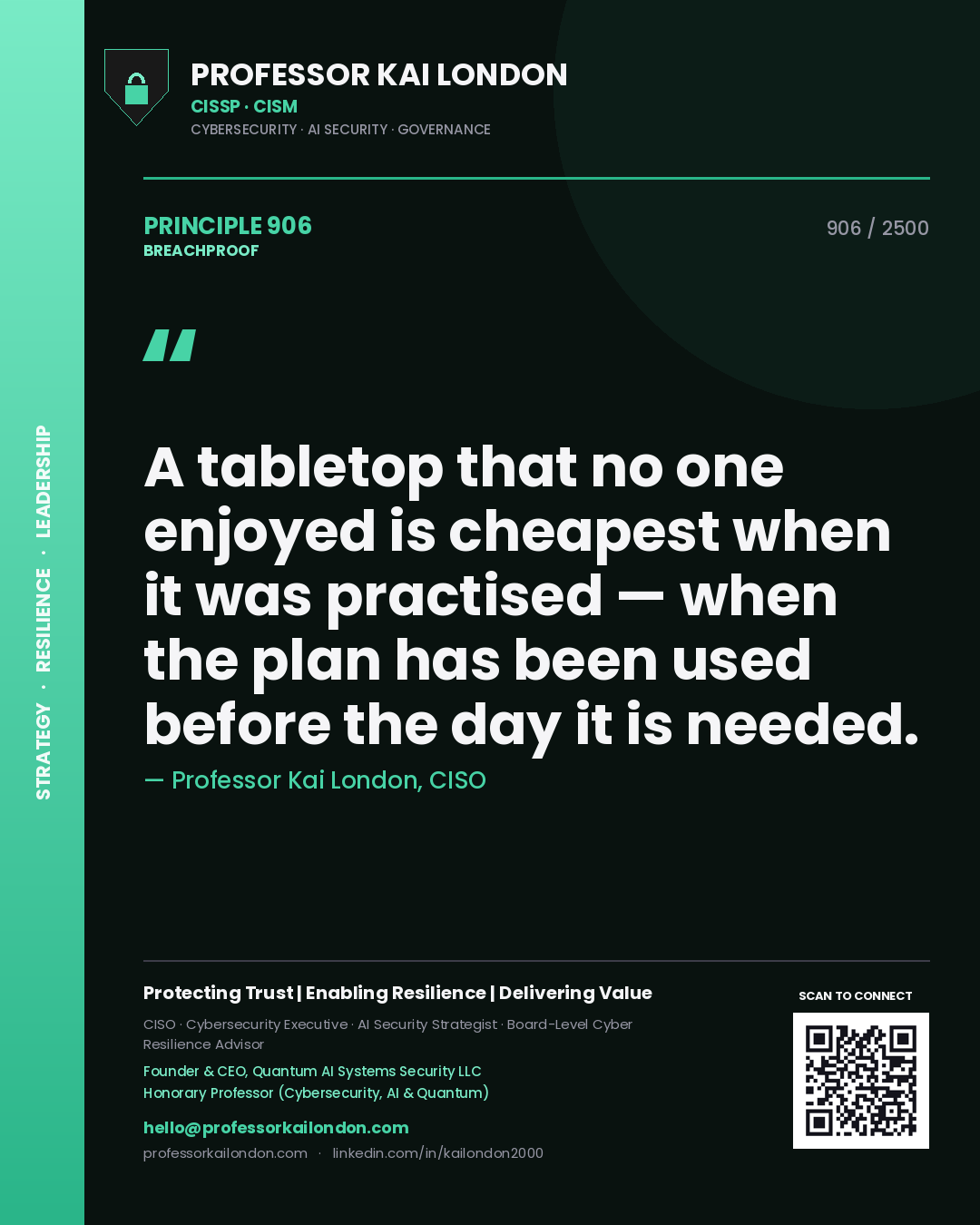
Professor Kai London principle 906: A tabletop that no one enjoyed is cheapest when it was practised — when the plan has been used before the day it is needed.
Principle 906
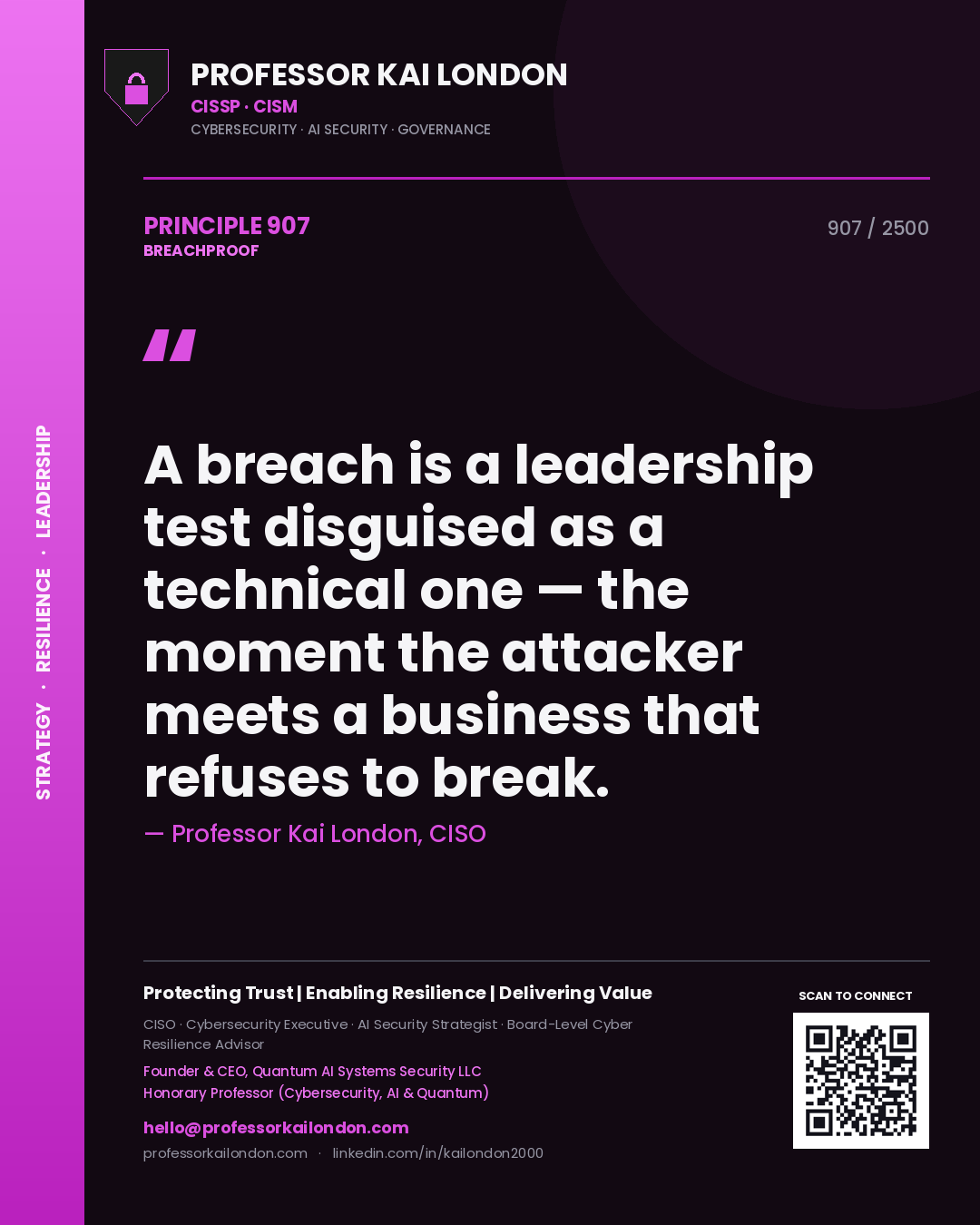
Professor Kai London principle 907: A breach is a leadership test disguised as a technical one — the moment the attacker meets a business that refuses to break.
Principle 907
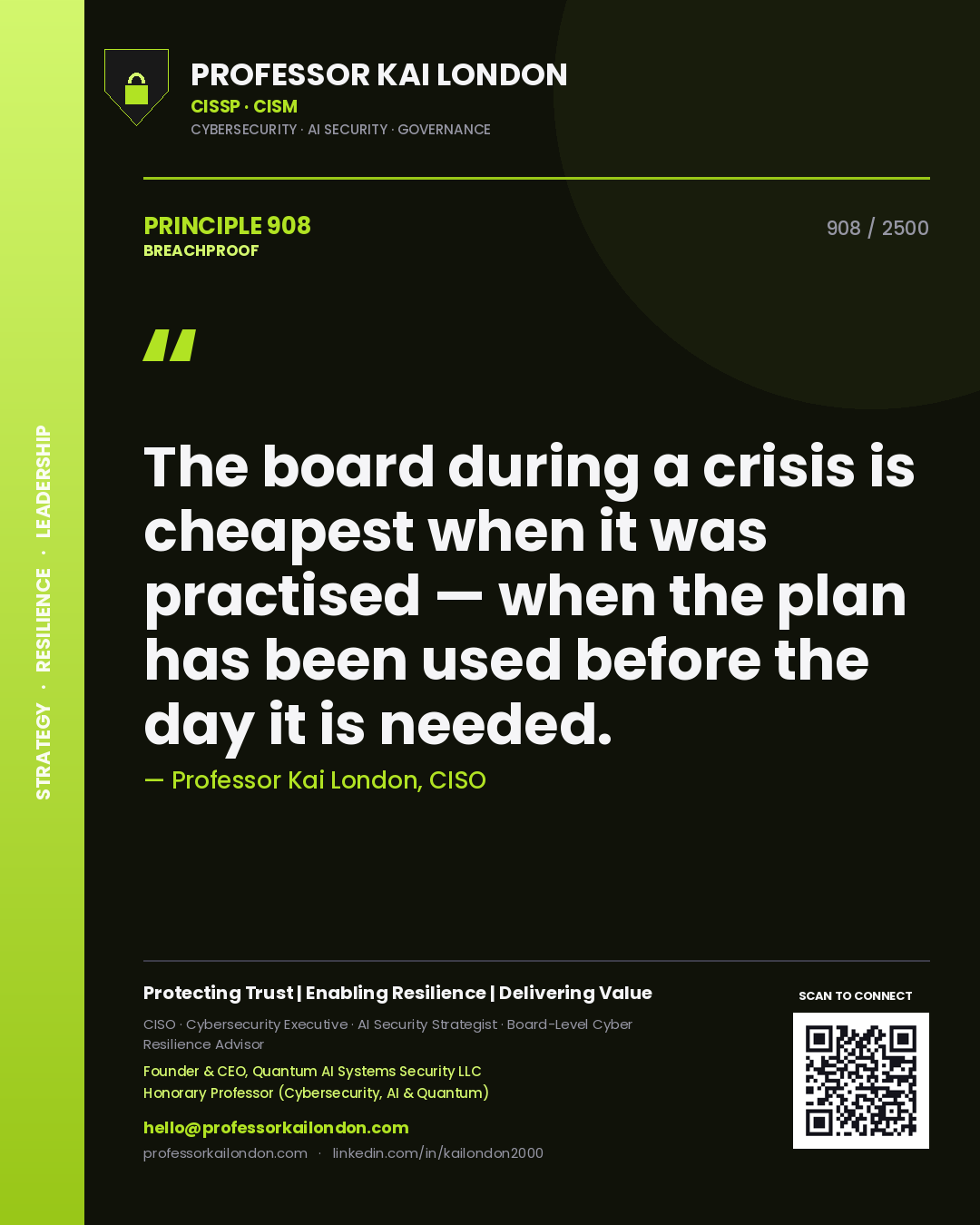
Professor Kai London principle 908: The board during a crisis is cheapest when it was practised — when the plan has been used before the day it is needed.
Principle 908
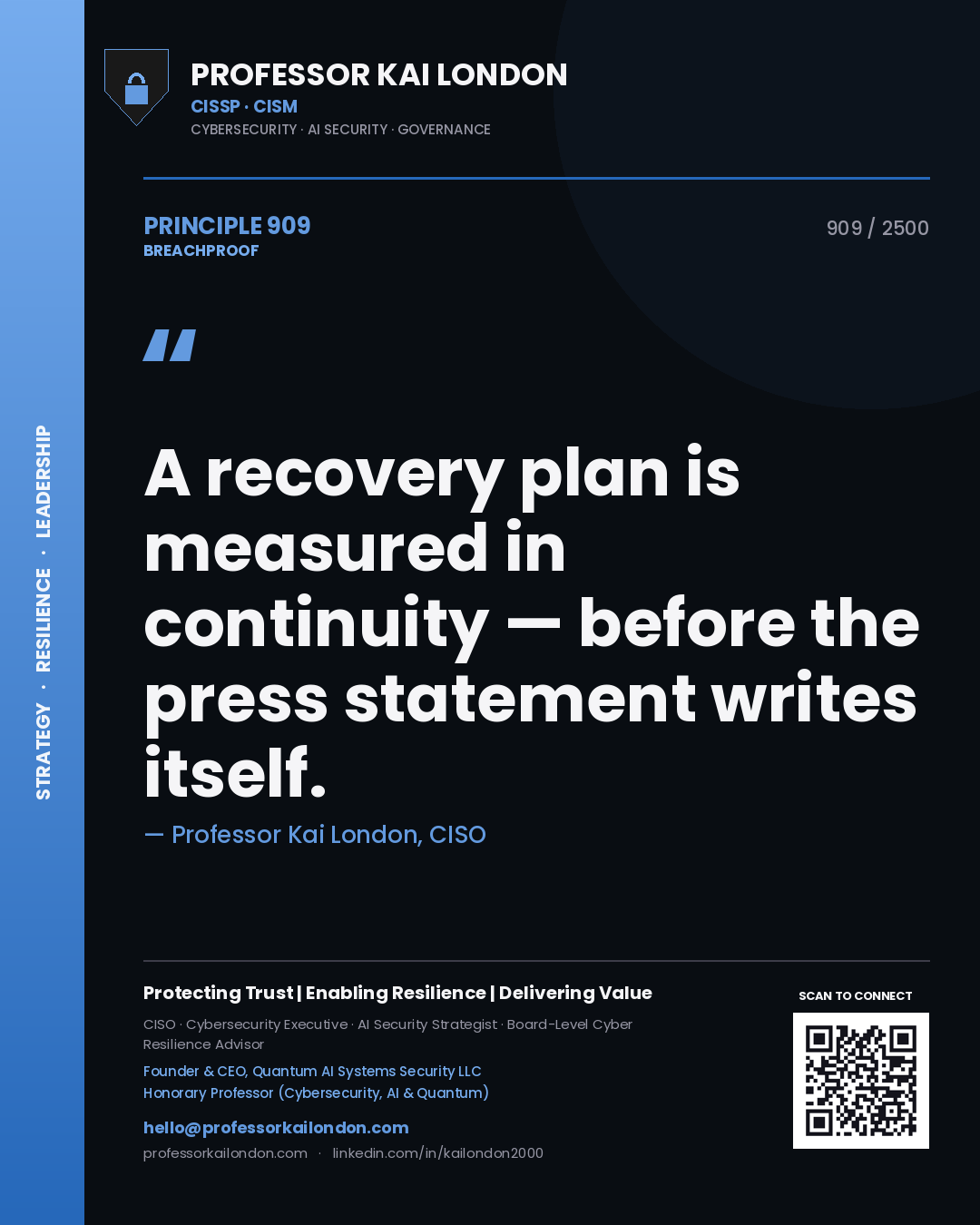
Professor Kai London principle 909: A recovery plan is measured in continuity — before the press statement writes itself.
Principle 909
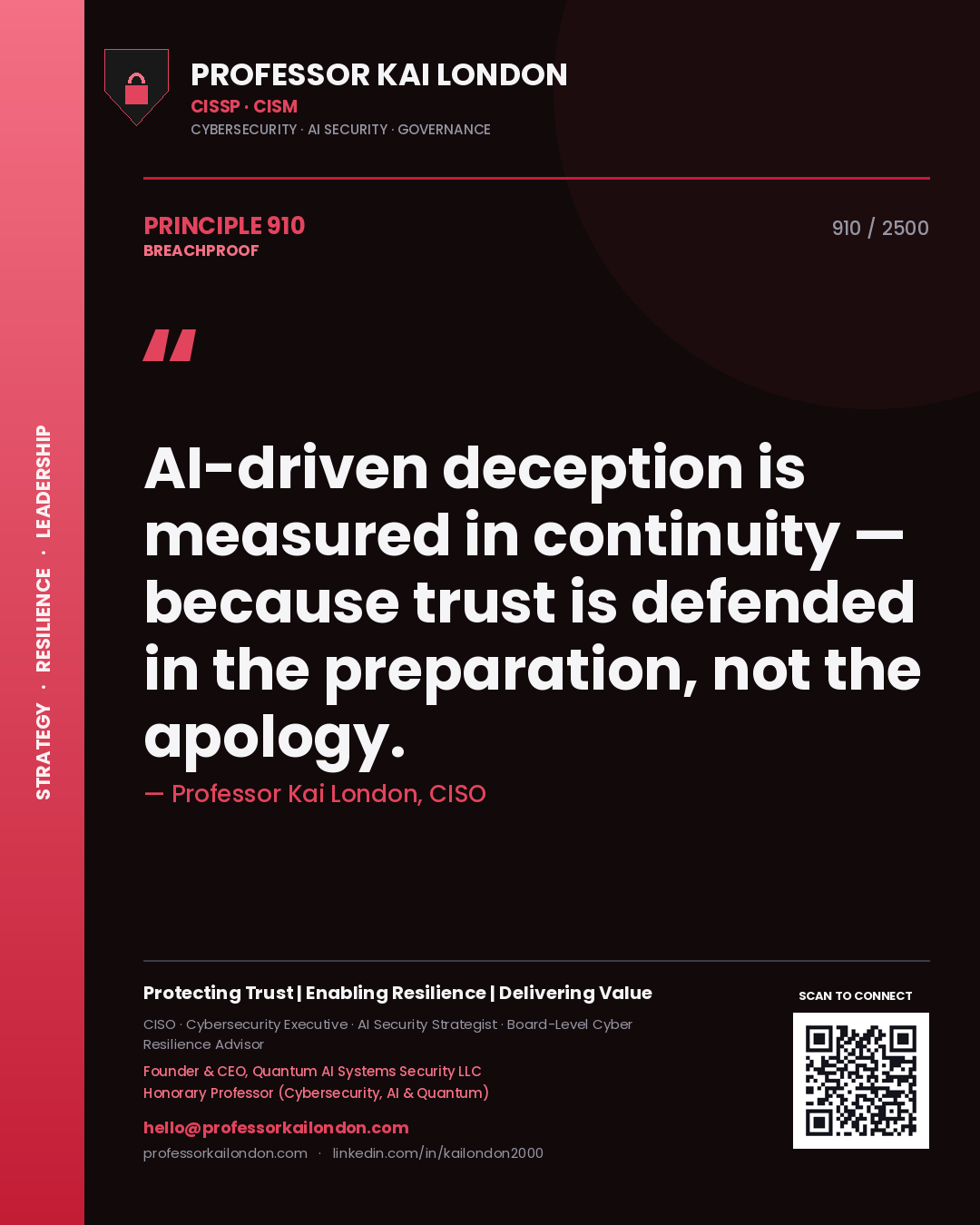
Professor Kai London principle 910: AI-driven deception is measured in continuity — because trust is defended in the preparation, not the apology.
Principle 910
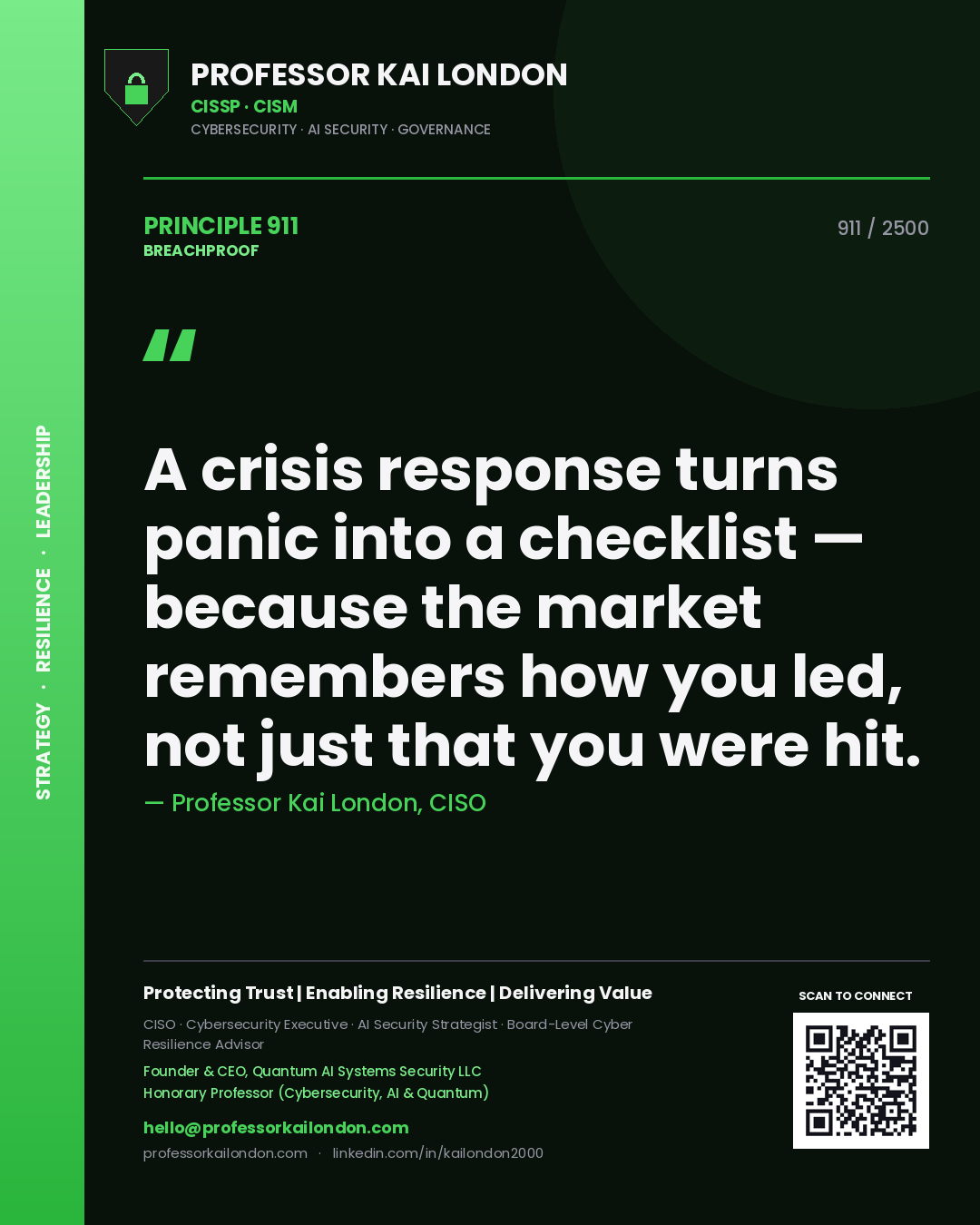
Professor Kai London principle 911: A crisis response turns panic into a checklist — because the market remembers how you led, not just that you were hit.
Principle 911
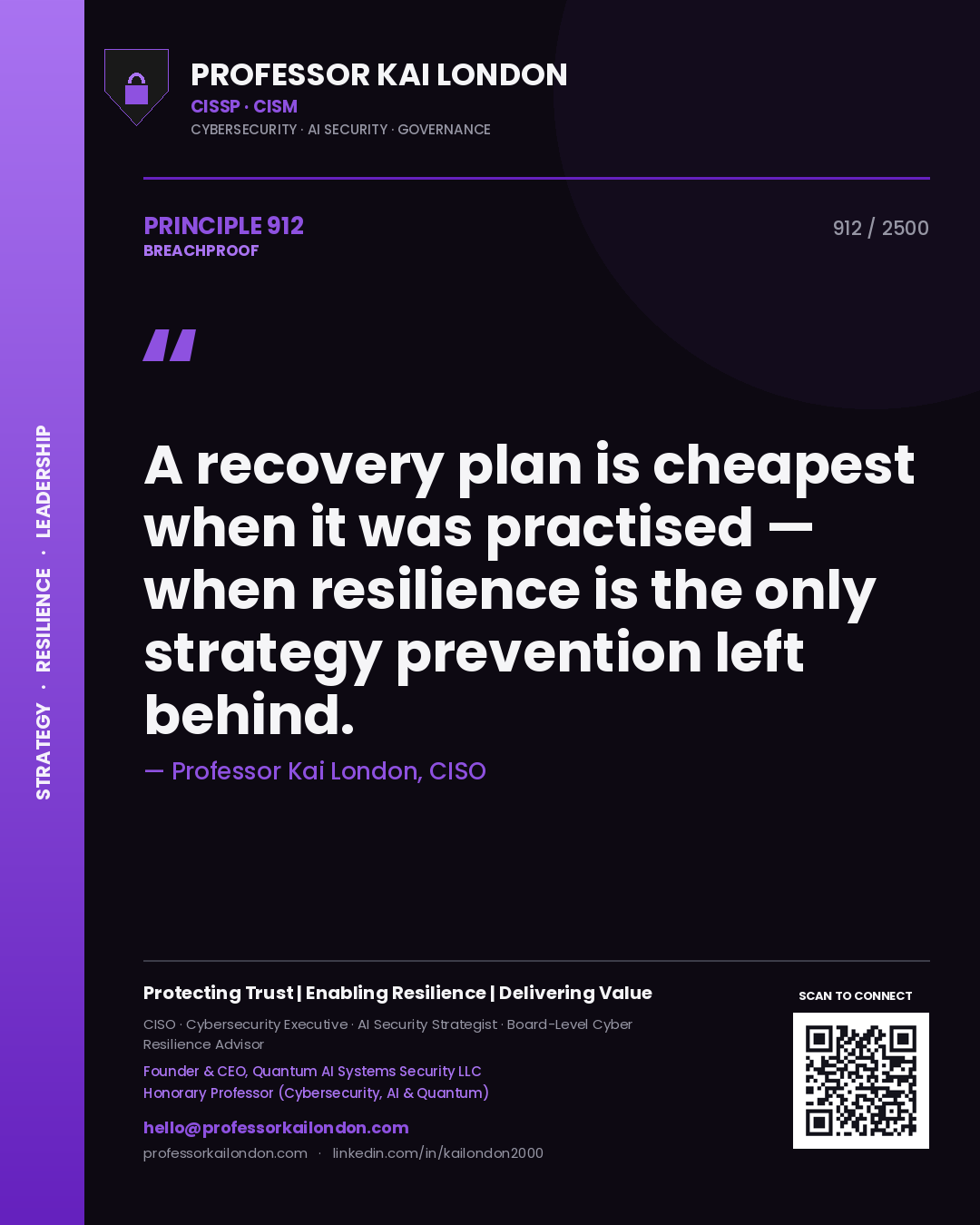
Professor Kai London principle 912: A recovery plan is cheapest when it was practised — when resilience is the only strategy prevention left behind.
Principle 912
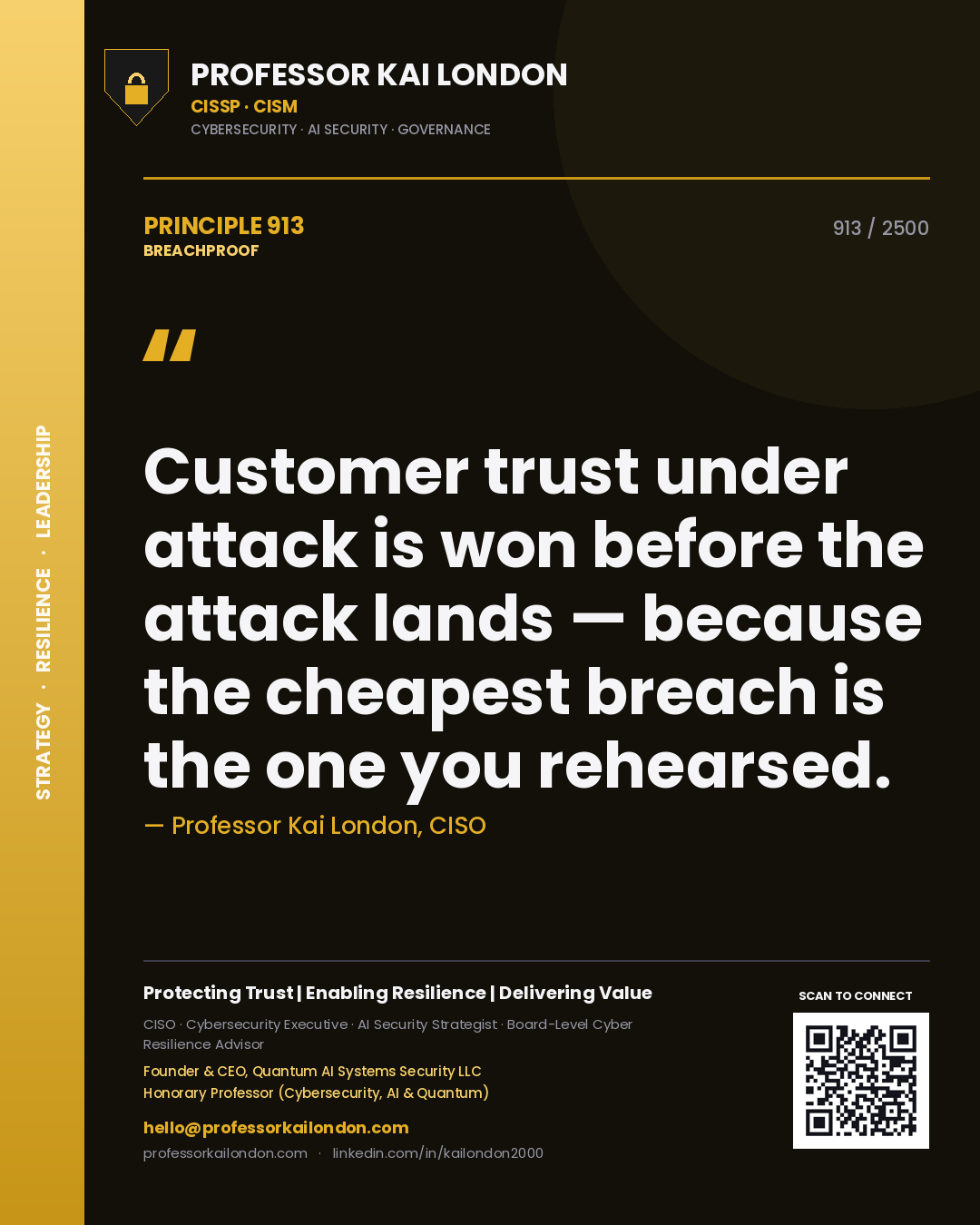
Professor Kai London principle 913: Customer trust under attack is won before the attack lands — because the cheapest breach is the one you rehearsed.
Principle 913
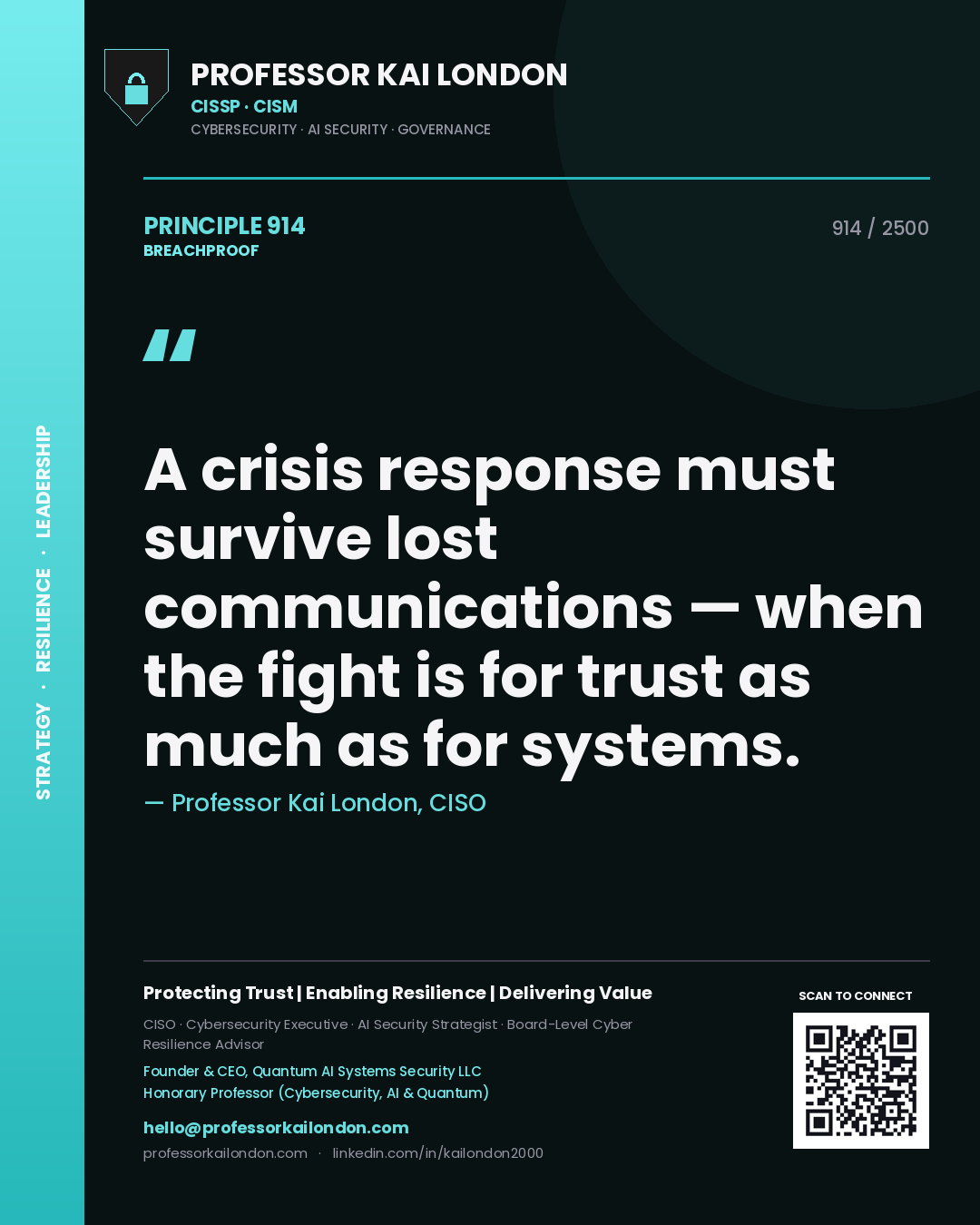
Professor Kai London principle 914: A crisis response must survive lost communications — when the fight is for trust as much as for systems.
Principle 914
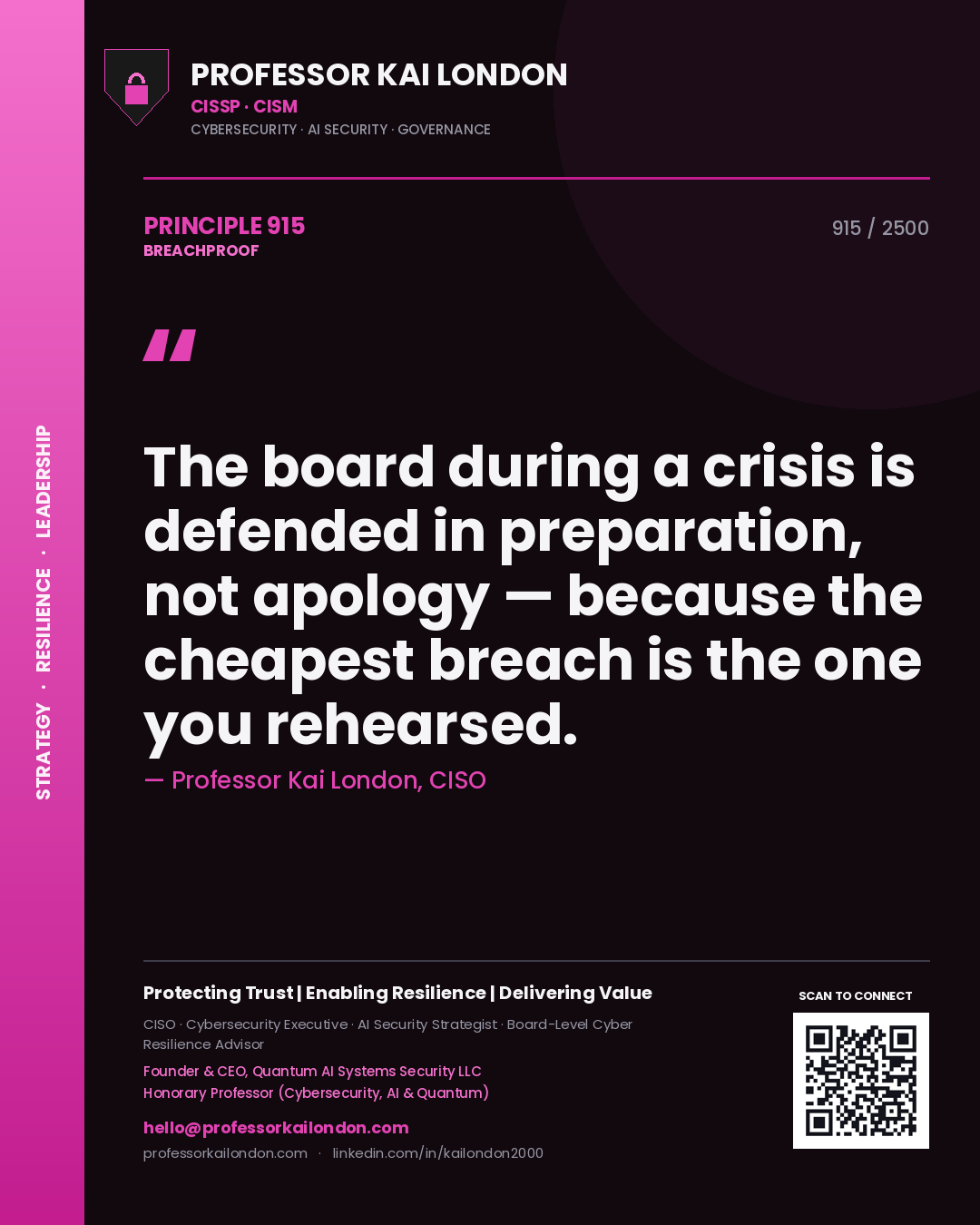
Professor Kai London principle 915: The board during a crisis is defended in preparation, not apology — because the cheapest breach is the one you rehearsed.
Principle 915
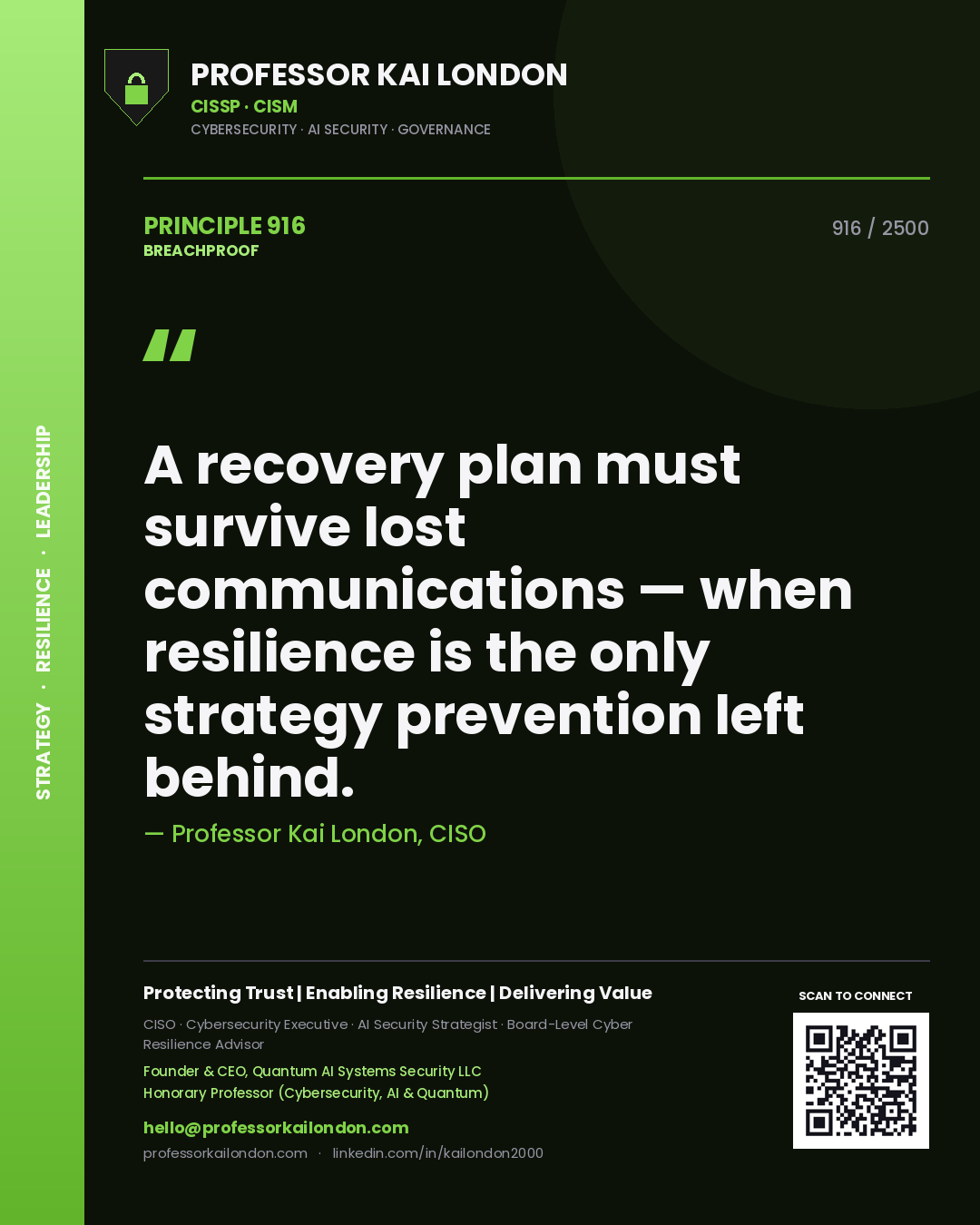
Professor Kai London principle 916: A recovery plan must survive lost communications — when resilience is the only strategy prevention left behind.
Principle 916
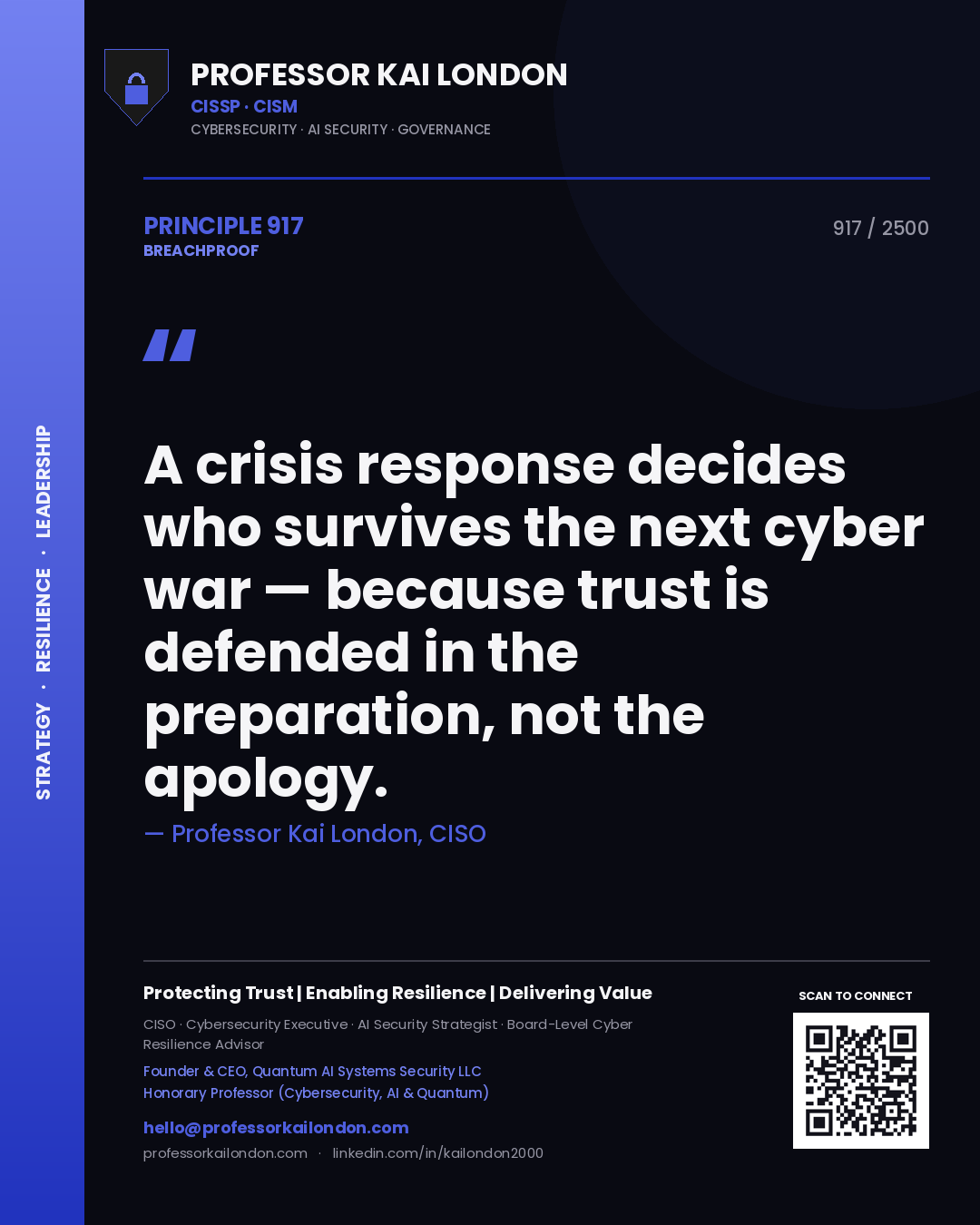
Professor Kai London principle 917: A crisis response decides who survives the next cyber war — because trust is defended in the preparation, not the apology.
Principle 917
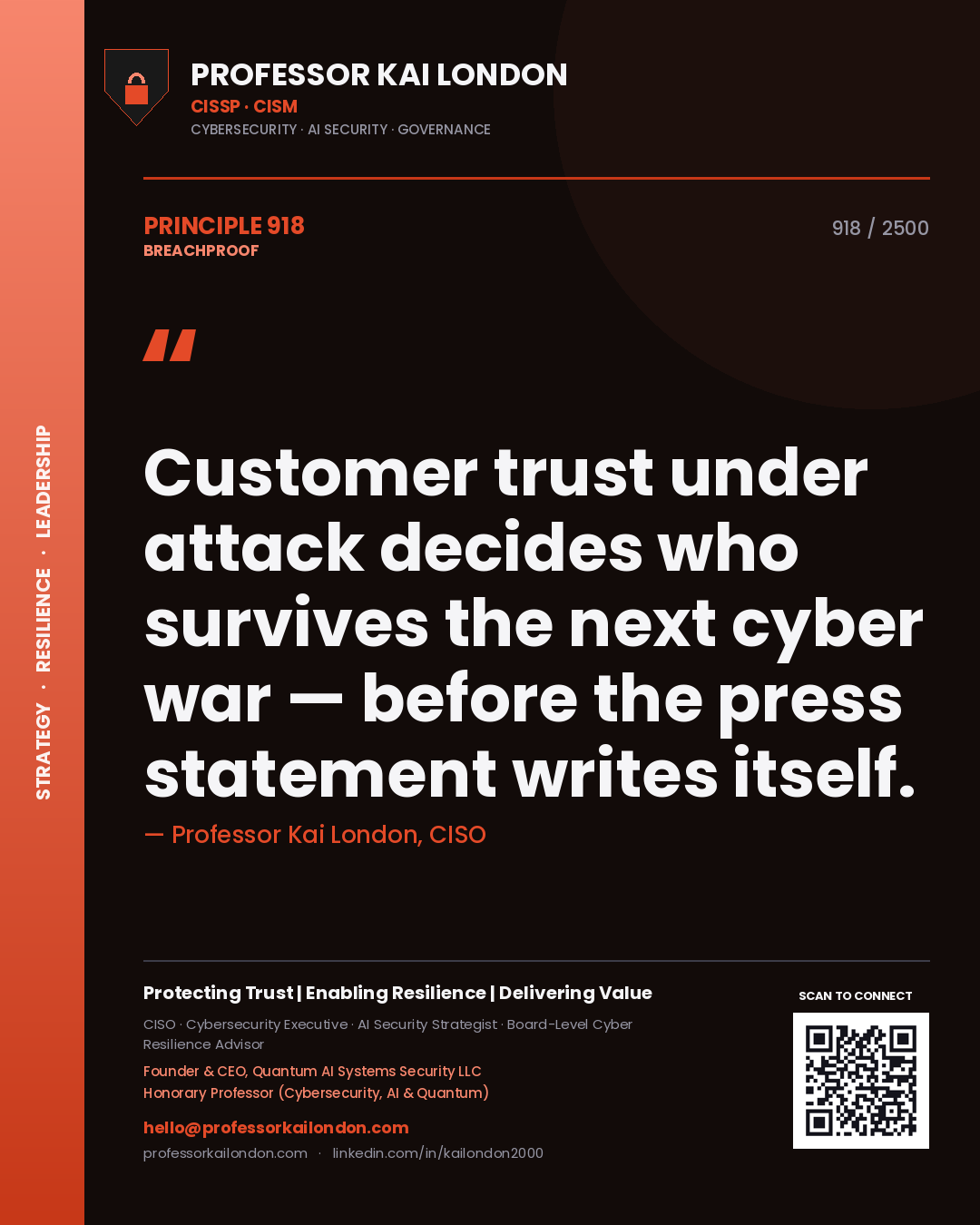
Professor Kai London principle 918: Customer trust under attack decides who survives the next cyber war — before the press statement writes itself.
Principle 918
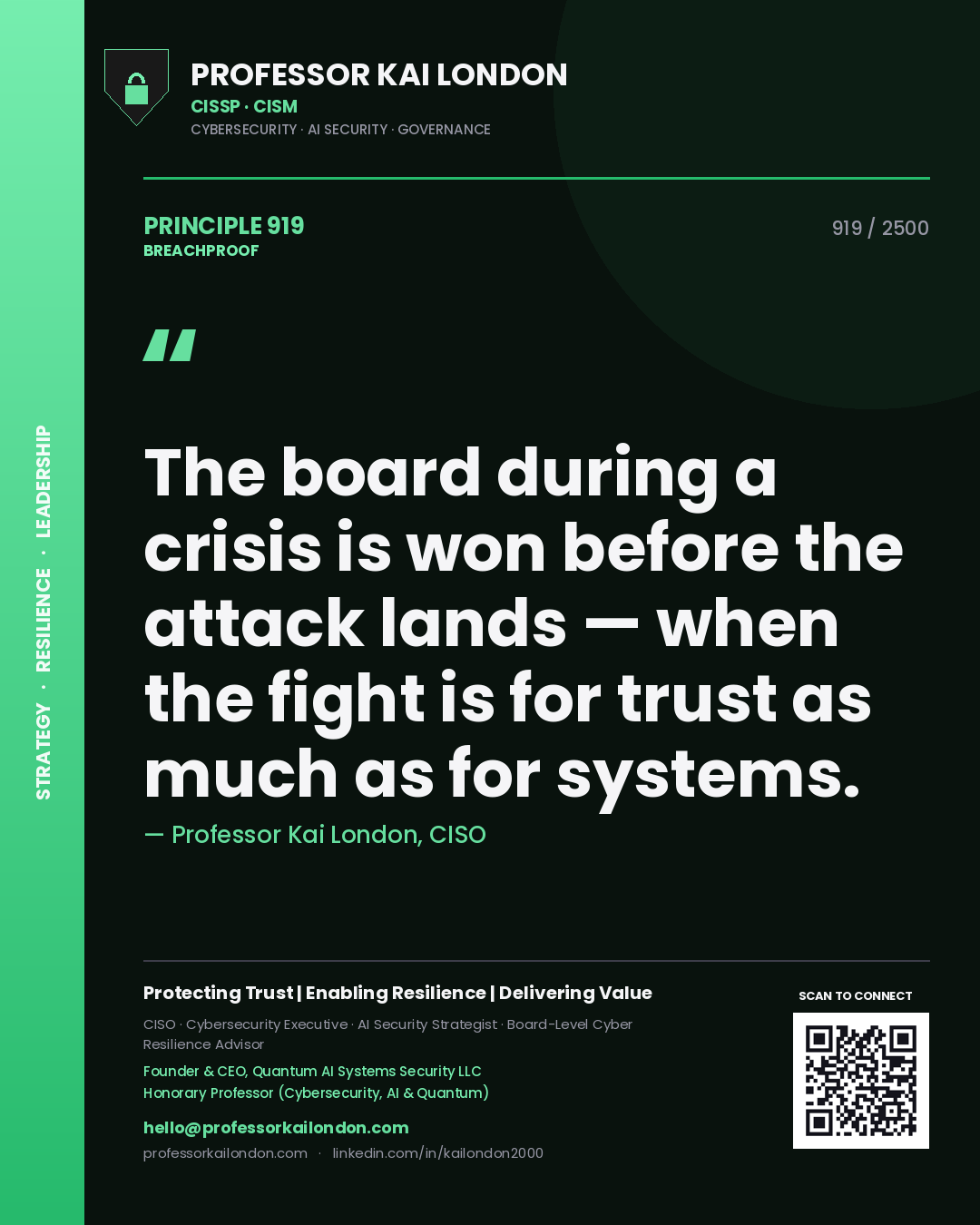
Professor Kai London principle 919: The board during a crisis is won before the attack lands — when the fight is for trust as much as for systems.
Principle 919
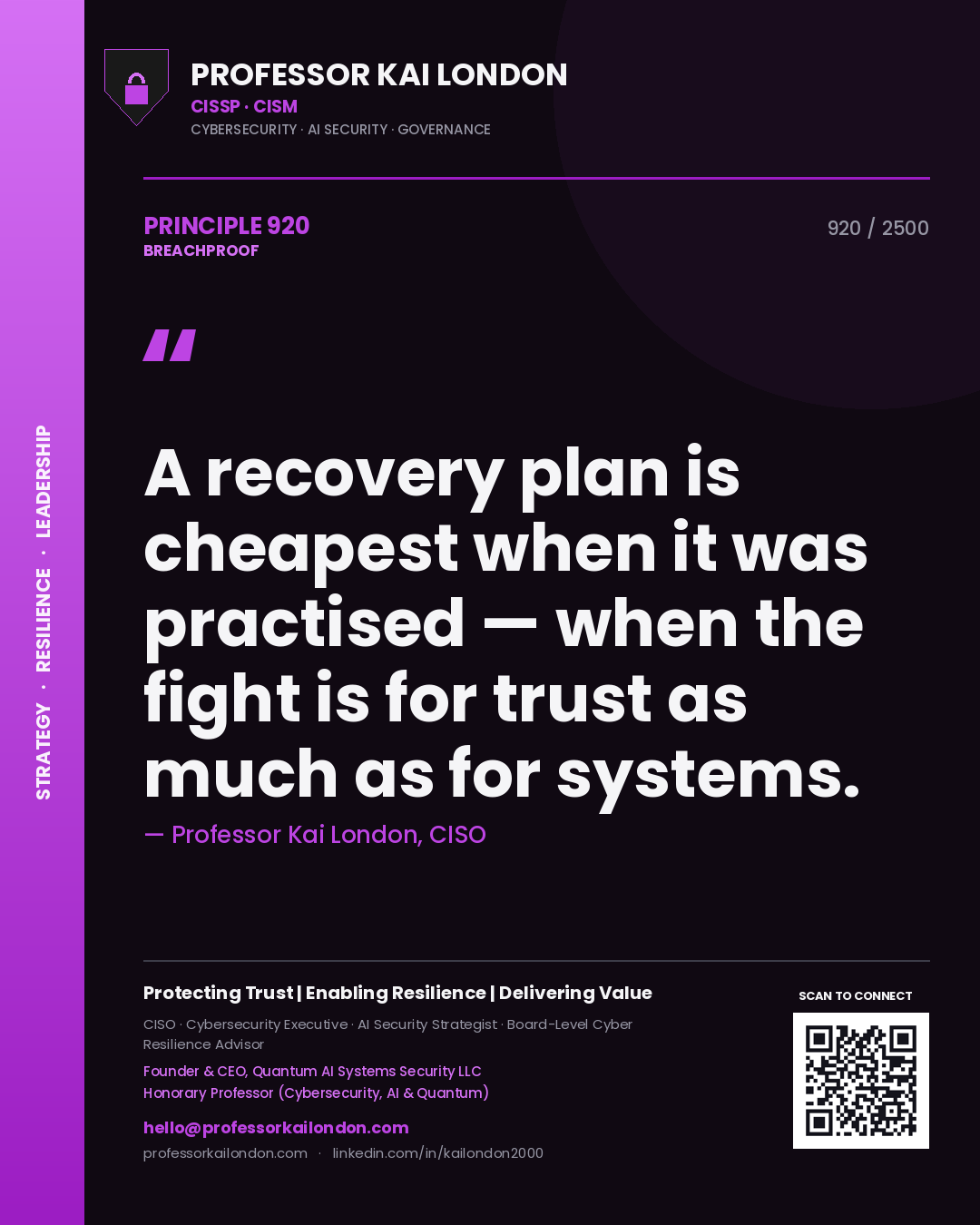
Professor Kai London principle 920: A recovery plan is cheapest when it was practised — when the fight is for trust as much as for systems.
Principle 920
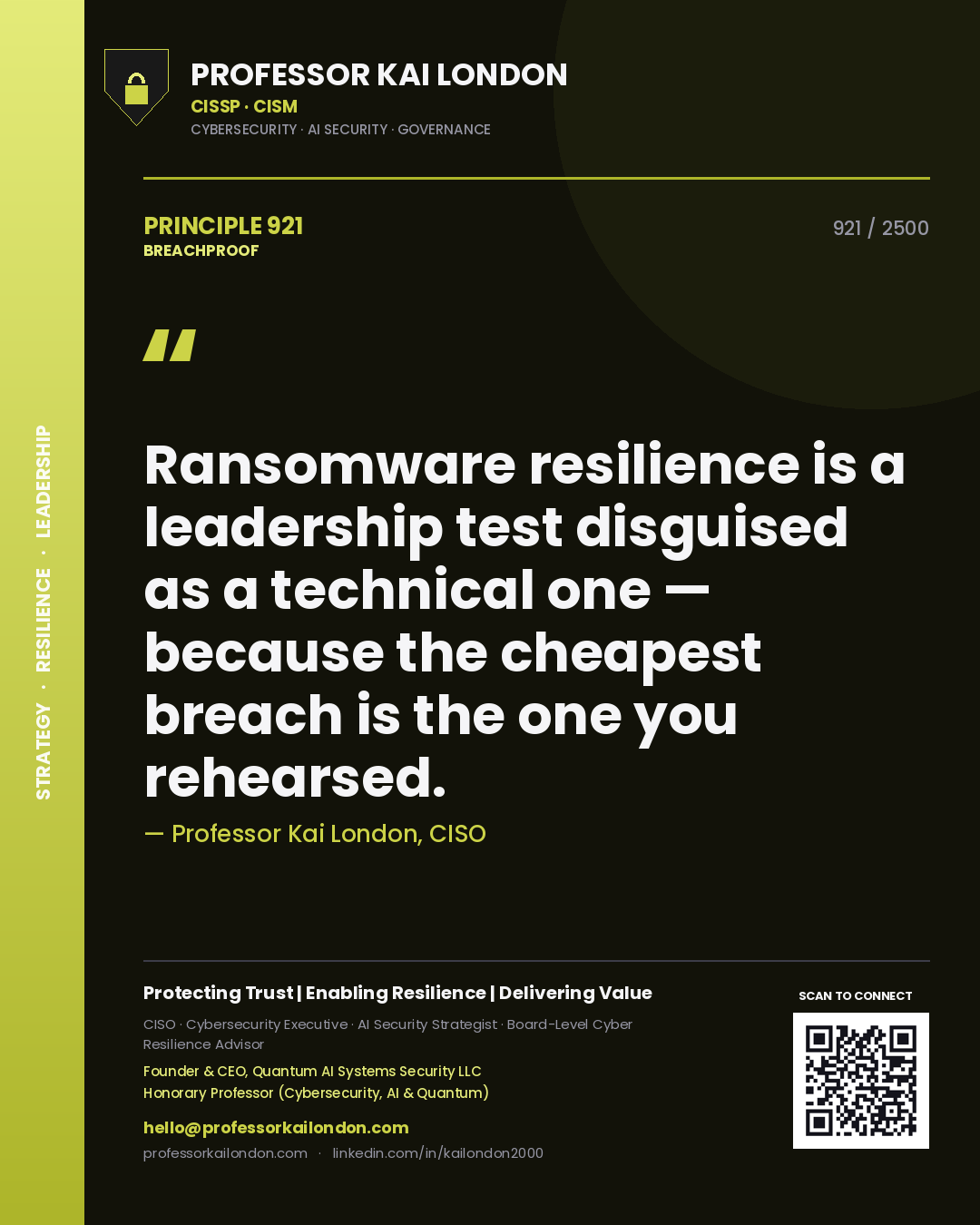
Professor Kai London principle 921: Ransomware resilience is a leadership test disguised as a technical one — because the cheapest breach is the one you rehearsed.
Principle 921
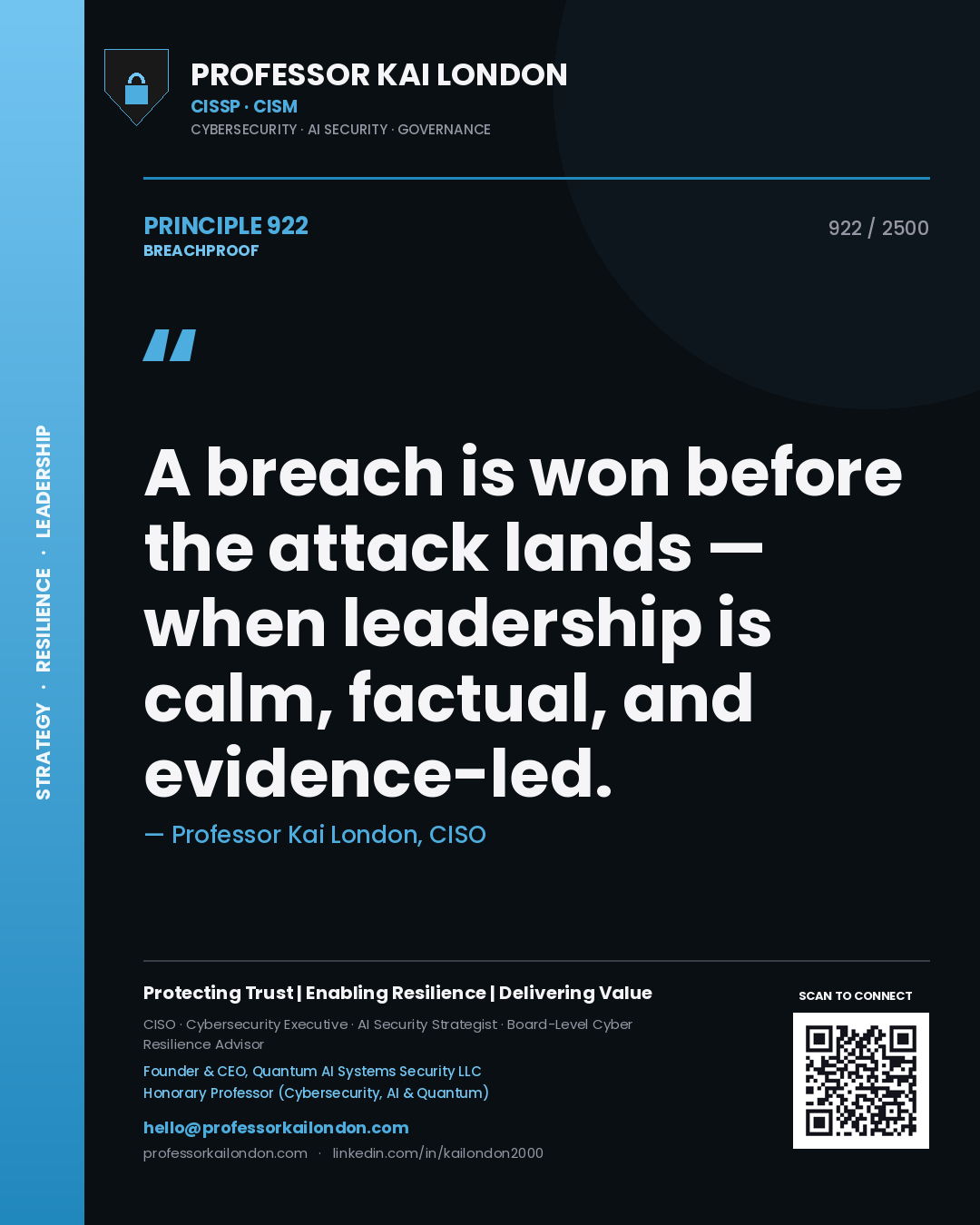
Professor Kai London principle 922: A breach is won before the attack lands — when leadership is calm, factual, and evidence-led.
Principle 922
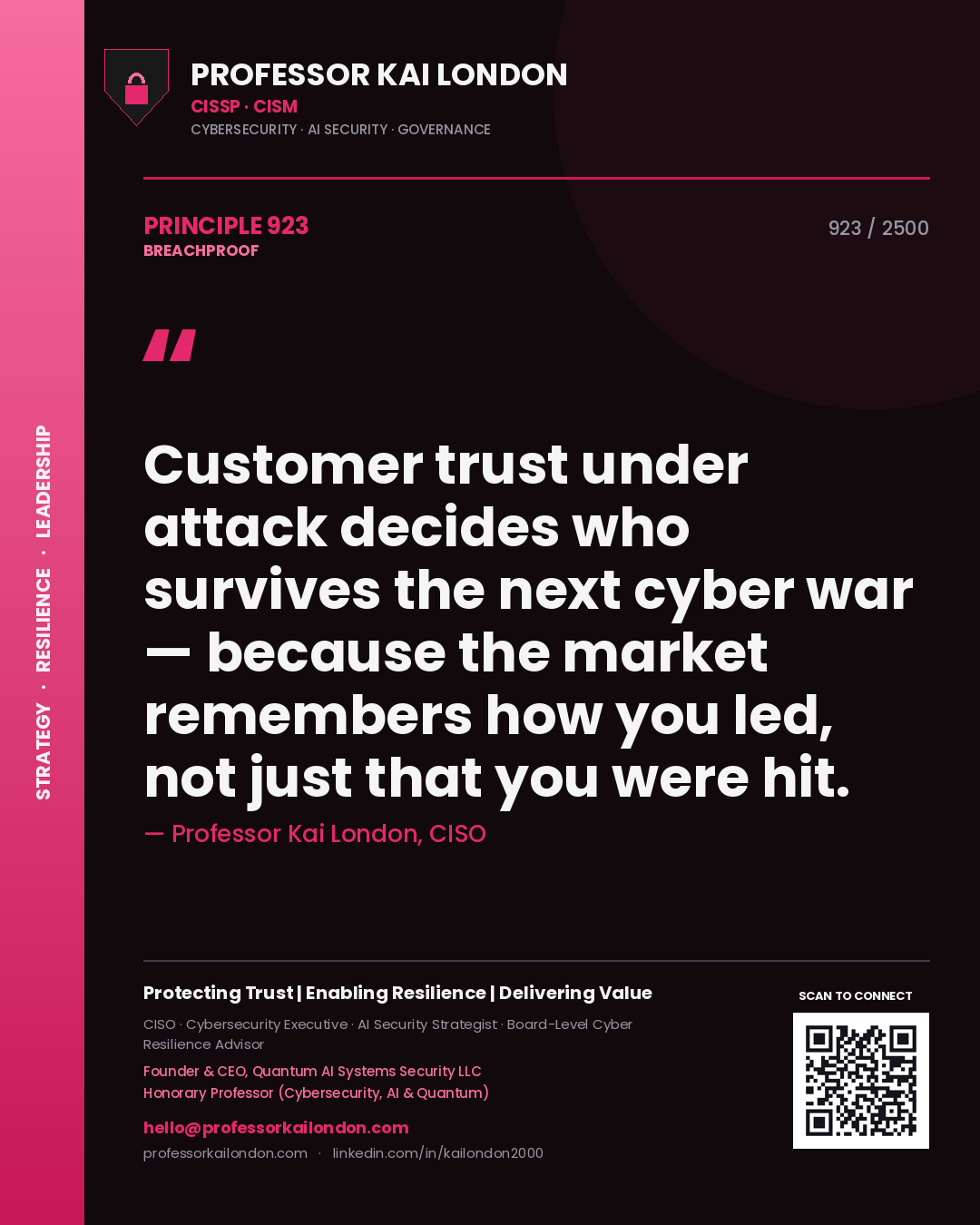
Professor Kai London principle 923: Customer trust under attack decides who survives the next cyber war — because the market remembers how you led, not just that you were hit.
Principle 923
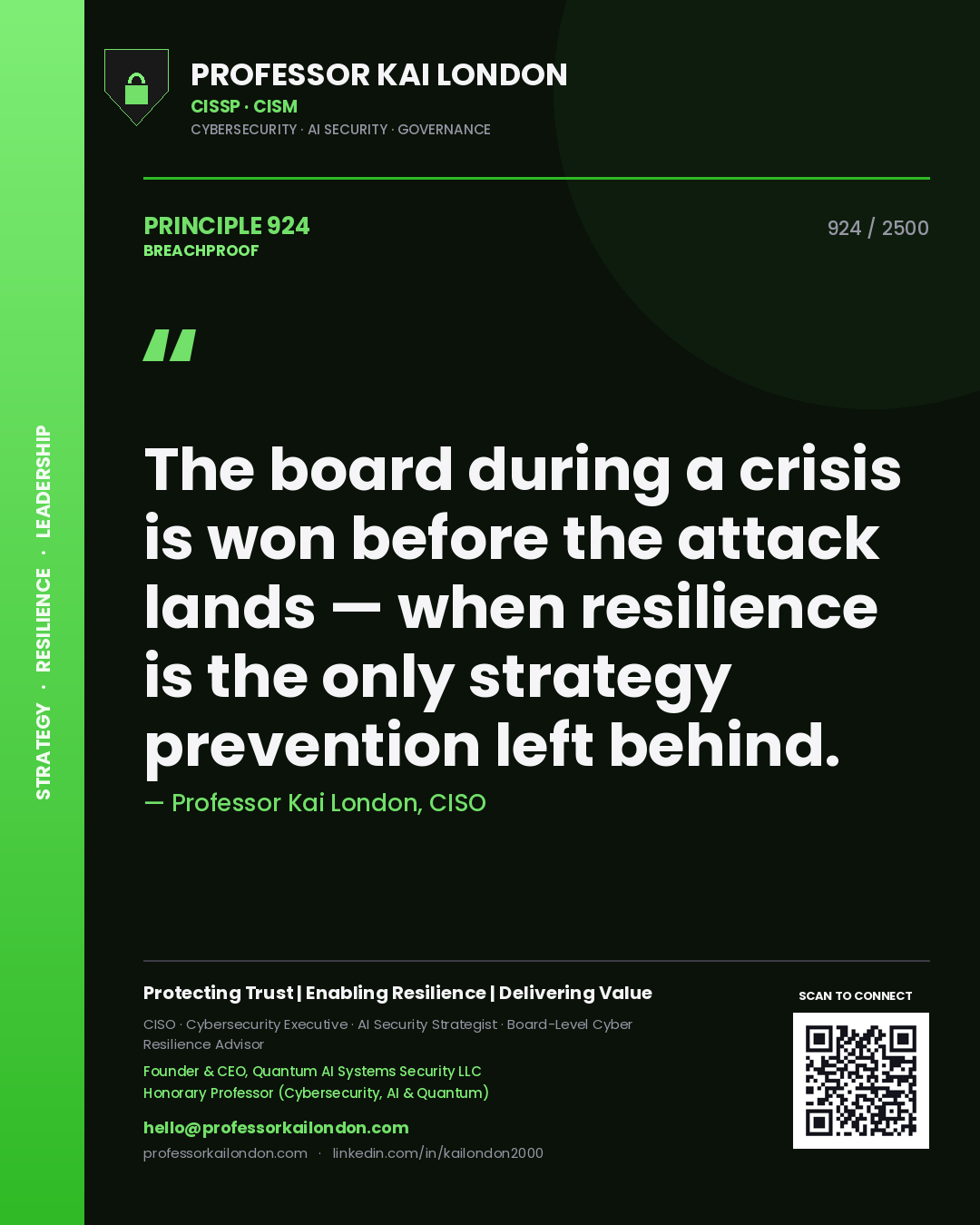
Professor Kai London principle 924: The board during a crisis is won before the attack lands — when resilience is the only strategy prevention left behind.
Principle 924
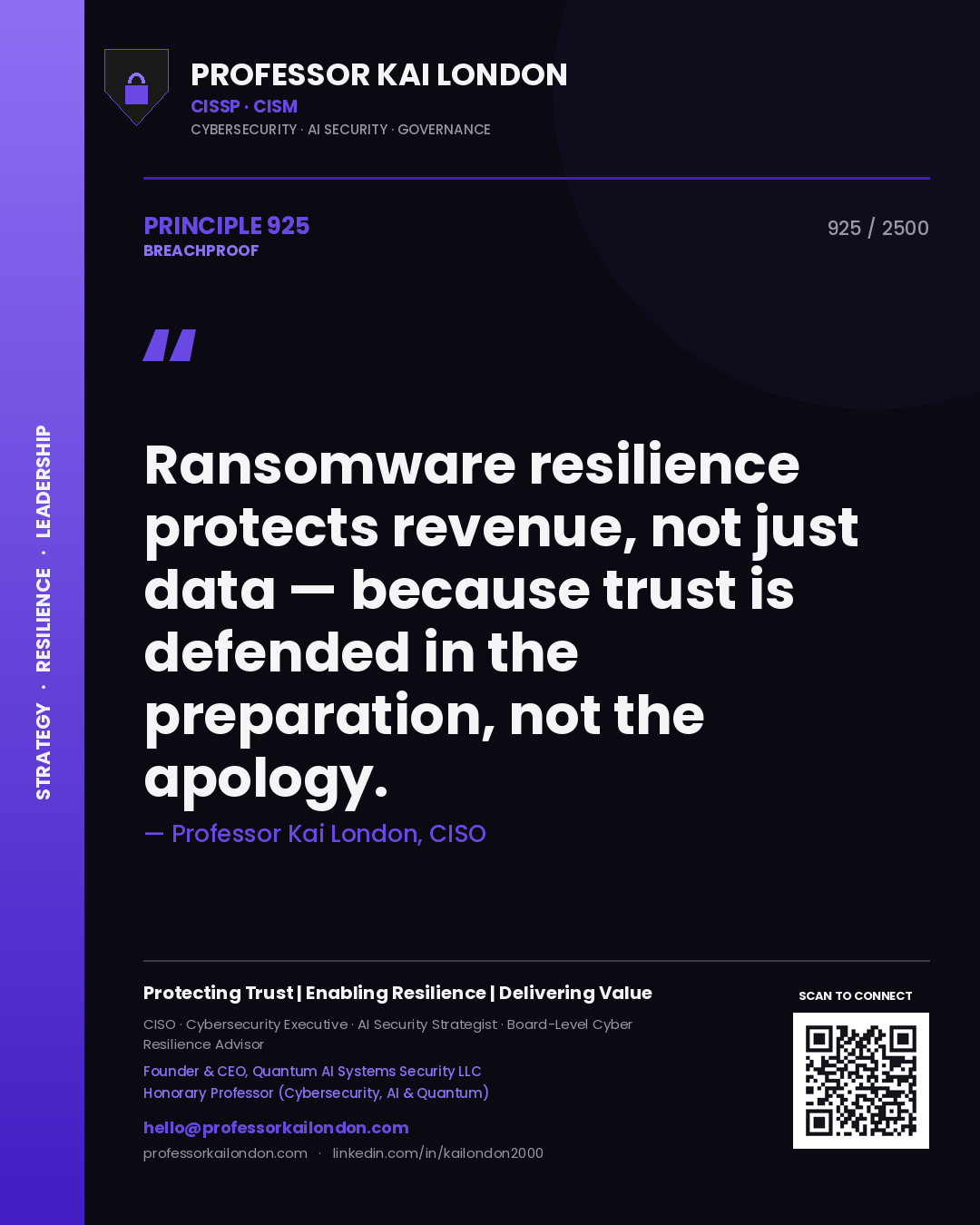
Professor Kai London principle 925: Ransomware resilience protects revenue, not just data — because trust is defended in the preparation, not the apology.
Principle 925
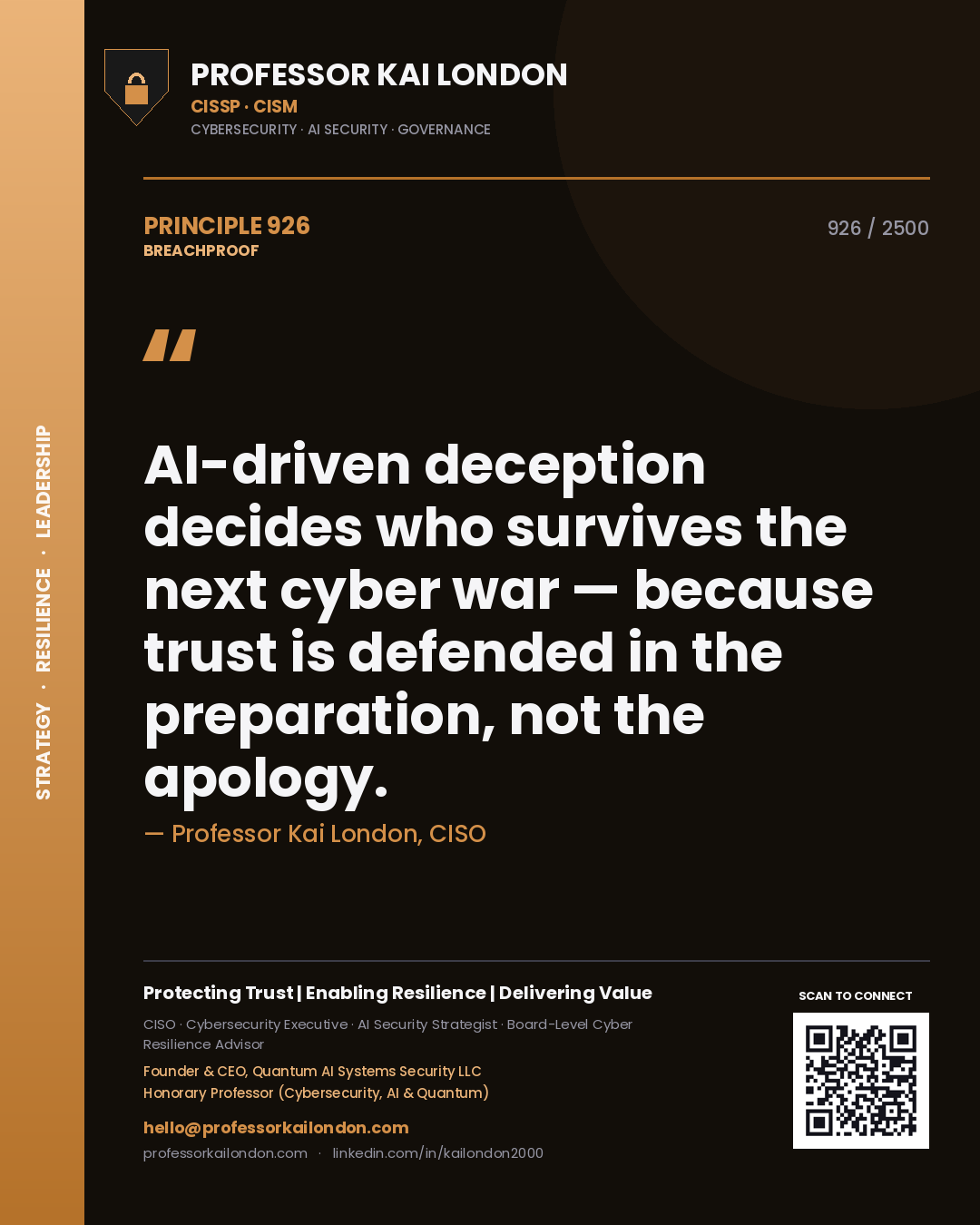
Professor Kai London principle 926: AI-driven deception decides who survives the next cyber war — because trust is defended in the preparation, not the apology.
Principle 926
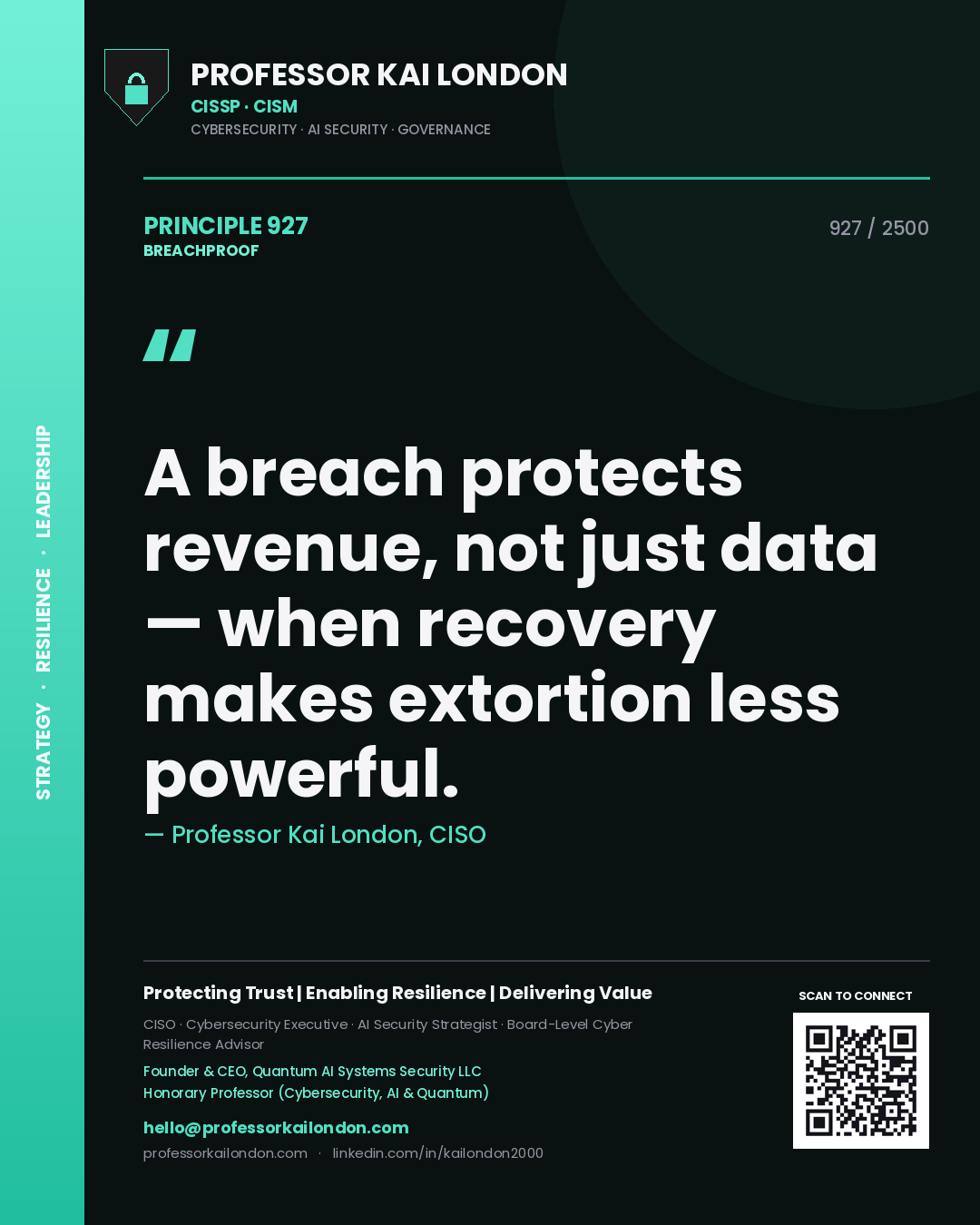
Professor Kai London principle 927: A breach protects revenue, not just data — when recovery makes extortion less powerful.
Principle 927
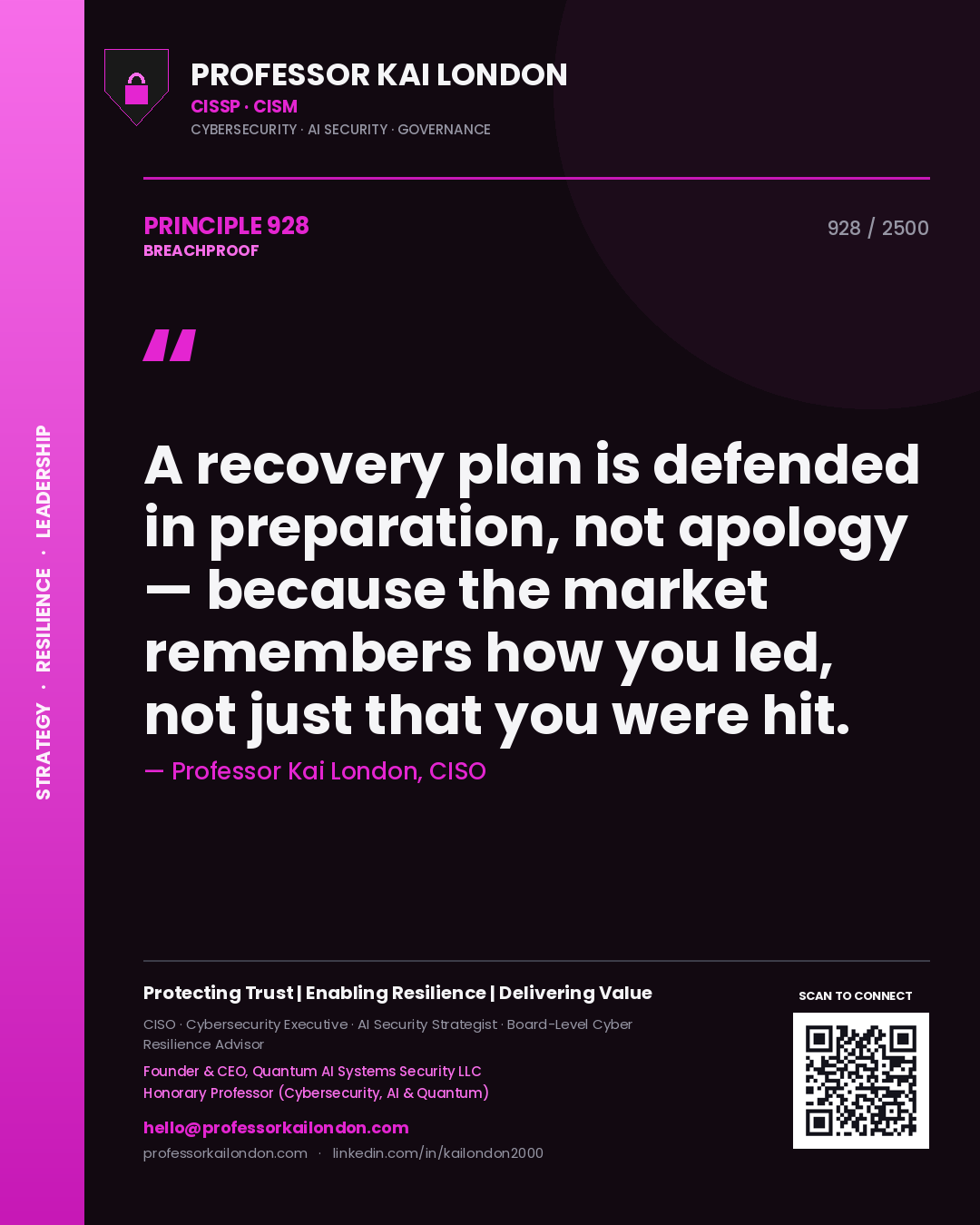
Professor Kai London principle 928: A recovery plan is defended in preparation, not apology — because the market remembers how you led, not just that you were hit.
Principle 928
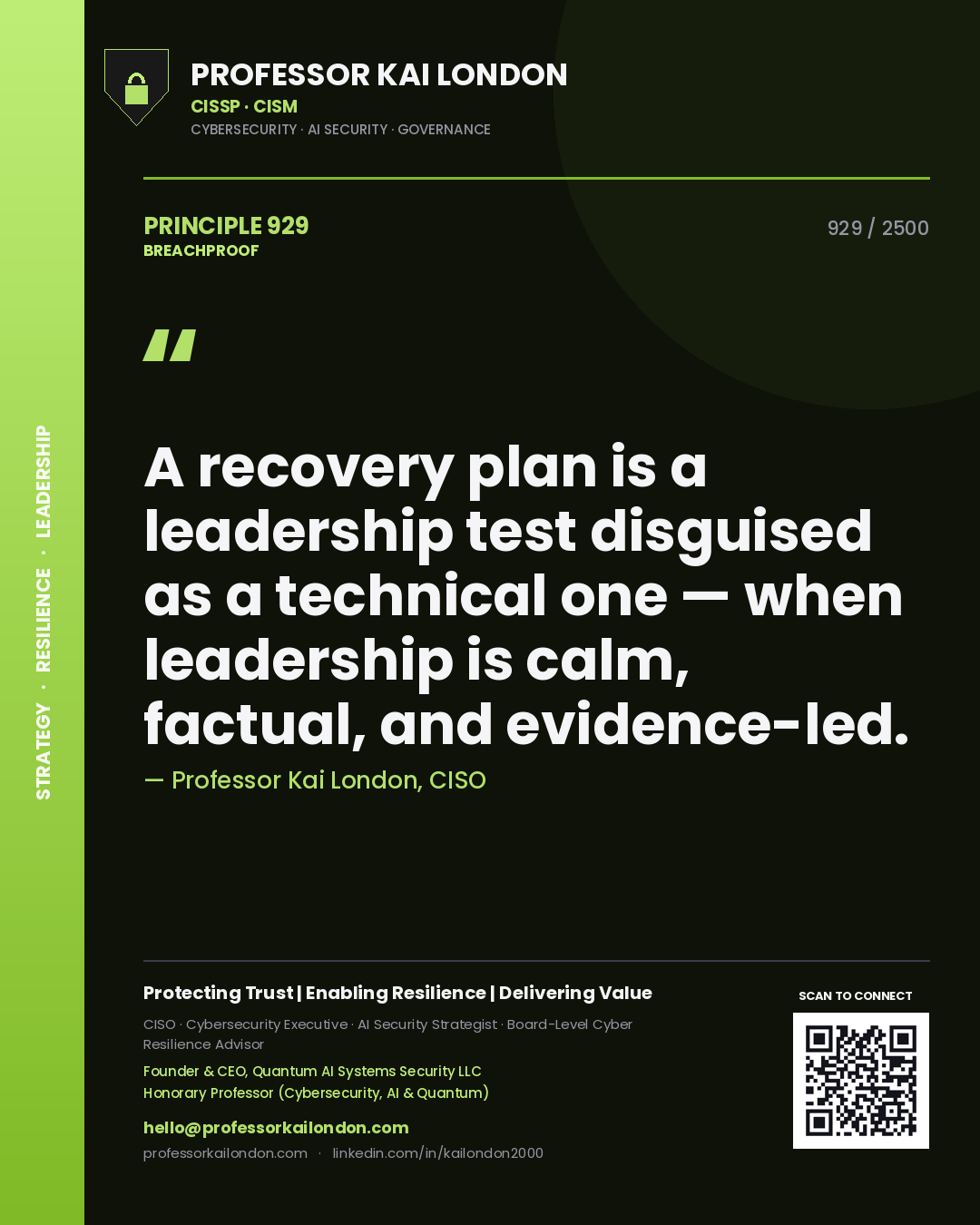
Professor Kai London principle 929: A recovery plan is a leadership test disguised as a technical one — when leadership is calm, factual, and evidence-led.
Principle 929
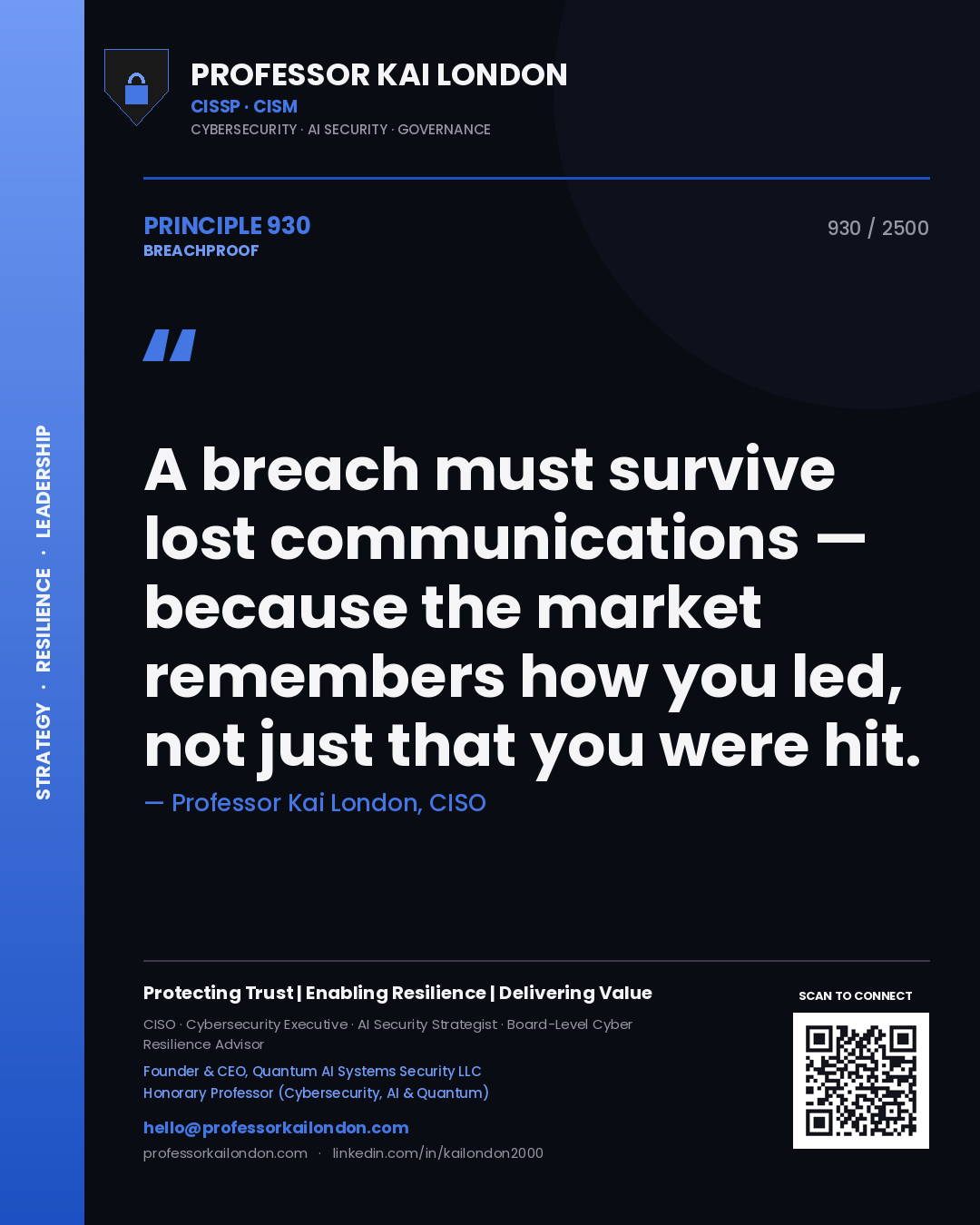
Professor Kai London principle 930: A breach must survive lost communications — because the market remembers how you led, not just that you were hit.
Principle 930
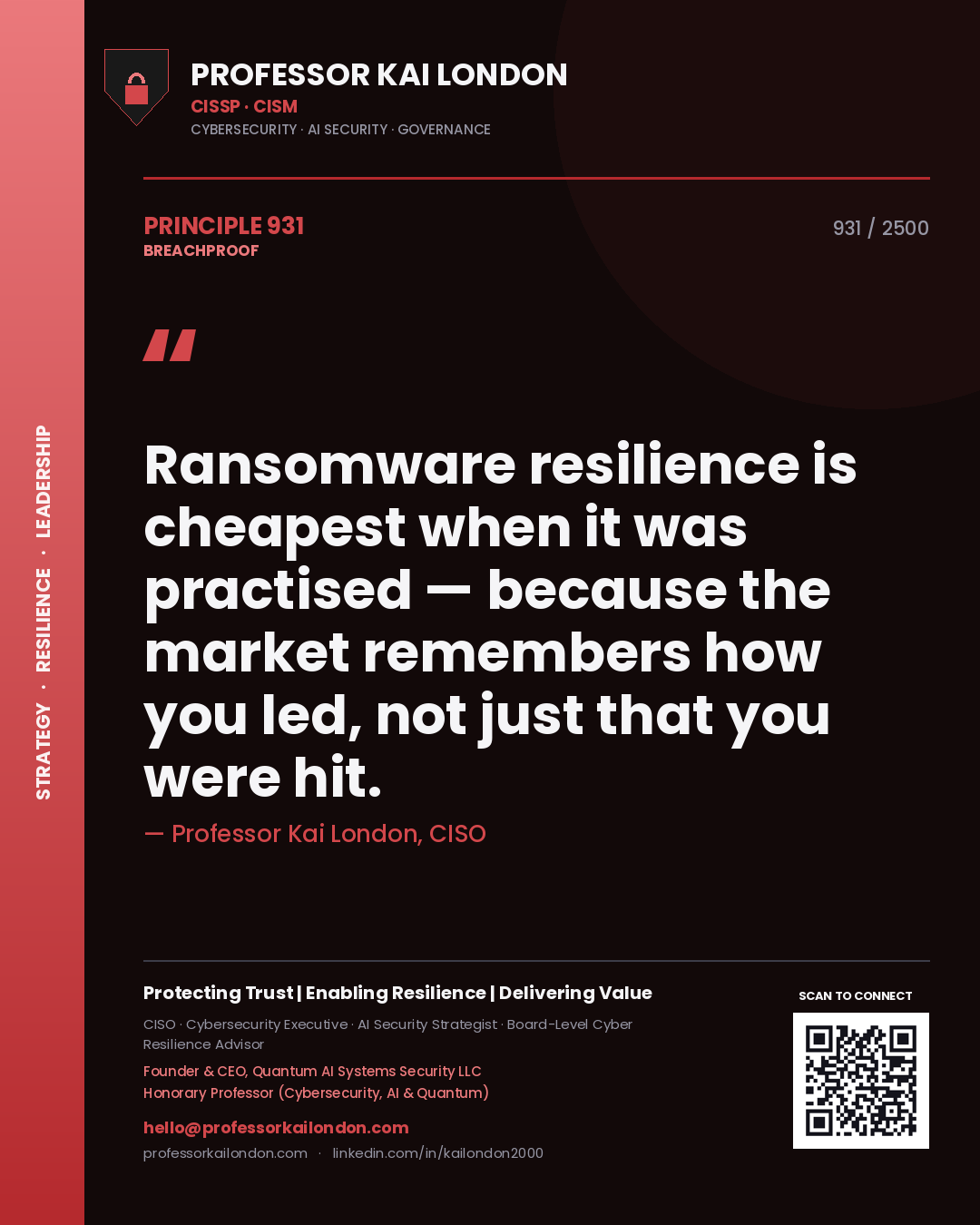
Professor Kai London principle 931: Ransomware resilience is cheapest when it was practised — because the market remembers how you led, not just that you were hit.
Principle 931
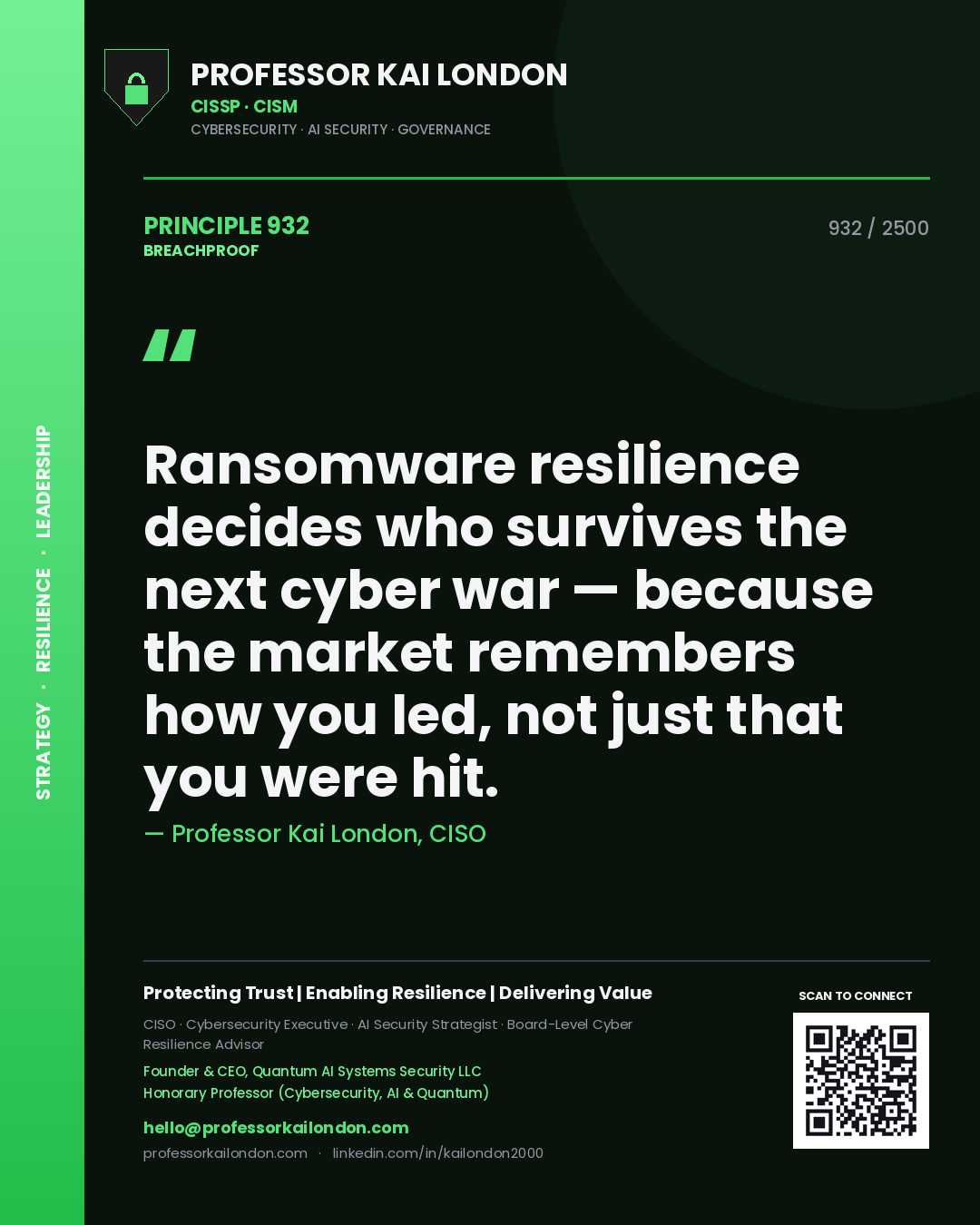
Professor Kai London principle 932: Ransomware resilience decides who survives the next cyber war — because the market remembers how you led, not just that you were hit.
Principle 932
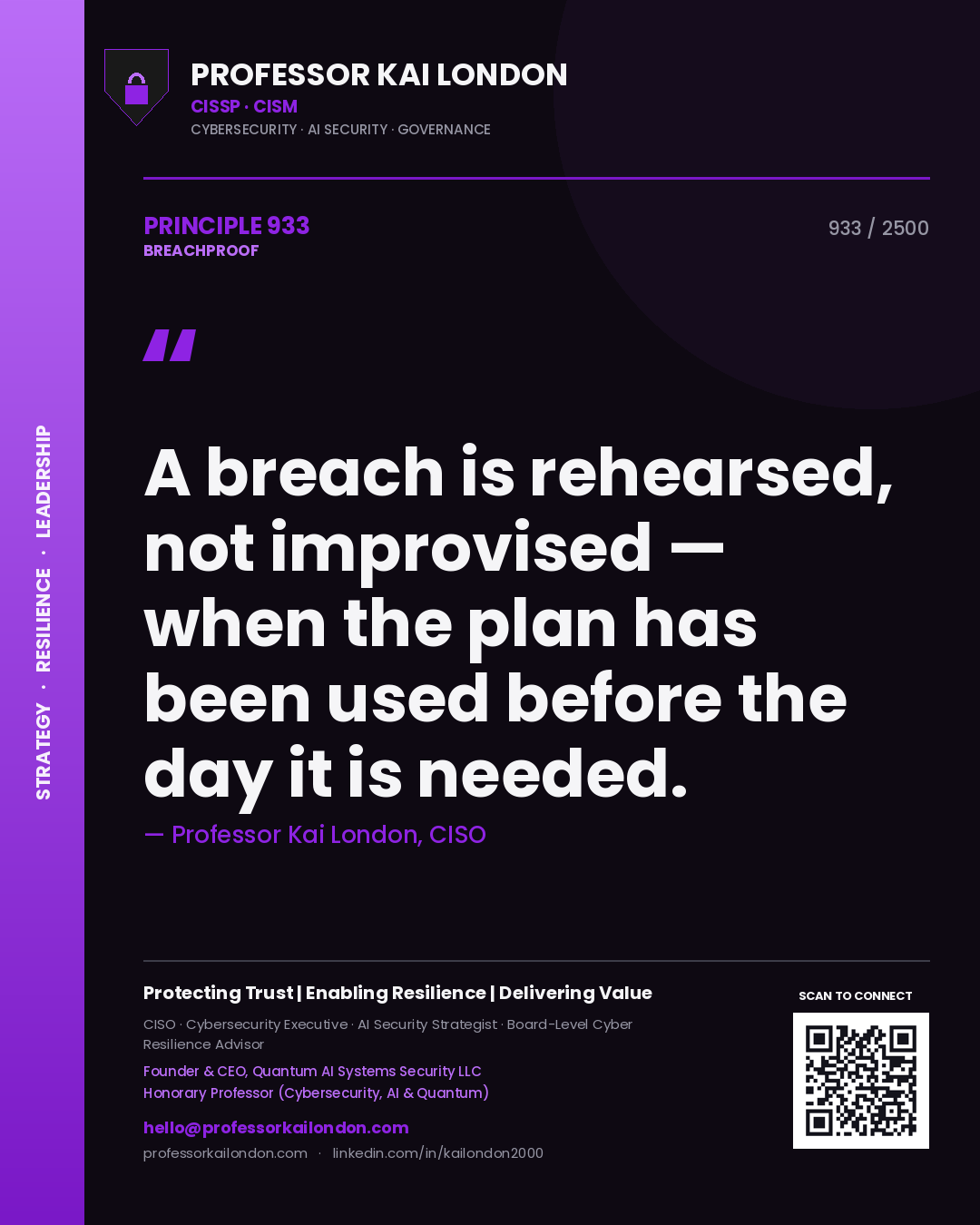
Professor Kai London principle 933: A breach is rehearsed, not improvised — when the plan has been used before the day it is needed.
Principle 933
Professor Kai London principle 934: A tabletop that no one enjoyed decides who survives the next cyber war — the moment the attacker meets a business that refuses to break.
Principle 934
Professor Kai London principle 935: A breach decides who survives the next cyber war — because trust is defended in the preparation, not the apology.
Principle 935
Professor Kai London principle 936: An extortion demand turns panic into a checklist — when the plan has been used before the day it is needed.
Principle 936
Professor Kai London principle 937: AI-driven deception turns panic into a checklist — when resilience is the only strategy prevention left behind.
Principle 937
Professor Kai London principle 938: An extortion demand is won before the attack lands — the moment the attacker meets a business that refuses to break.
Principle 938
Professor Kai London principle 939: AI-driven deception turns panic into a checklist — because the cheapest breach is the one you rehearsed.
Principle 939
Professor Kai London principle 940: AI-driven deception is a leadership test disguised as a technical one — when recovery makes extortion less powerful.
Principle 940
Professor Kai London principle 941: The first hour of an incident is cheapest when it was practised.
Principle 941
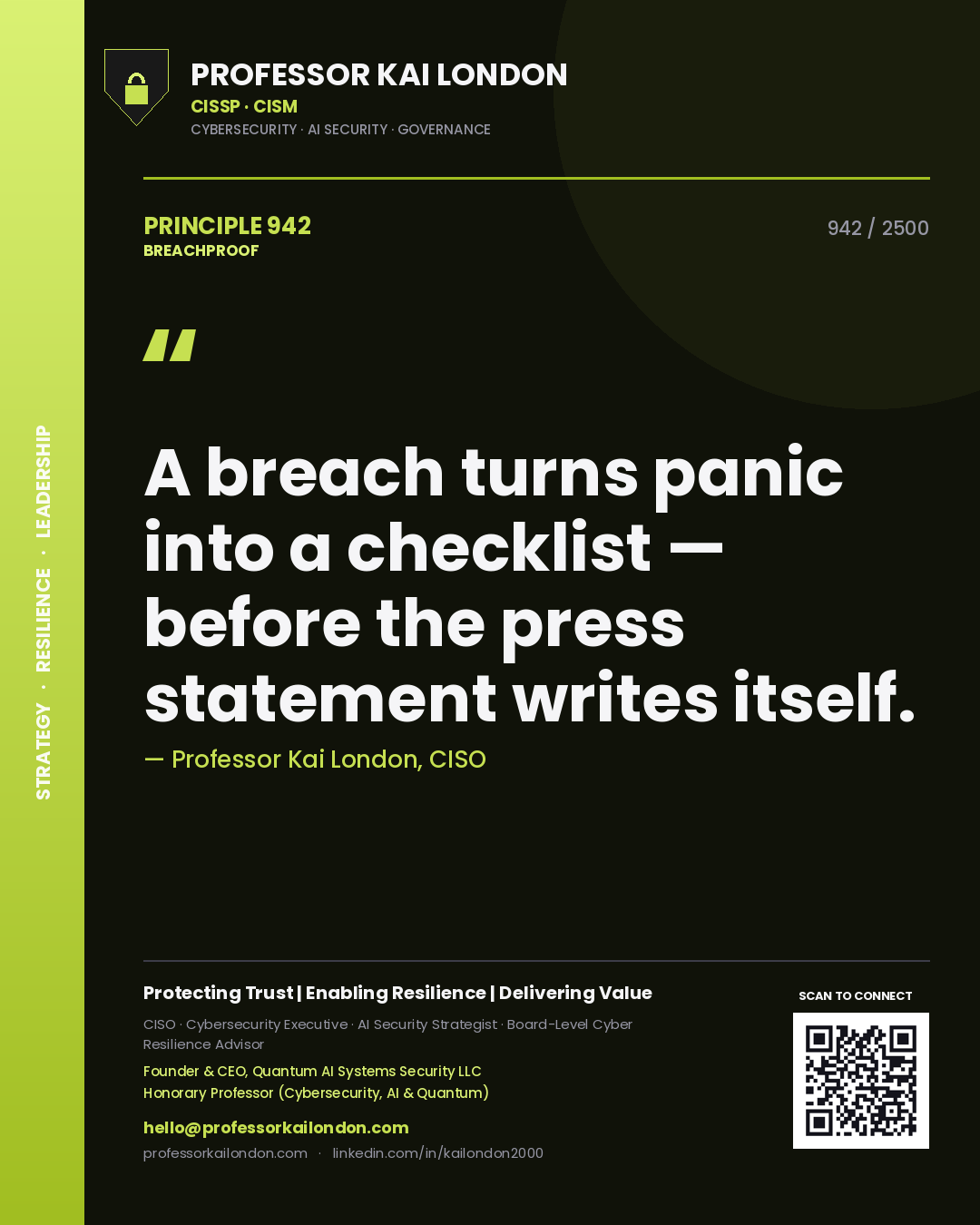
Professor Kai London principle 942: A breach turns panic into a checklist — before the press statement writes itself.
Principle 942
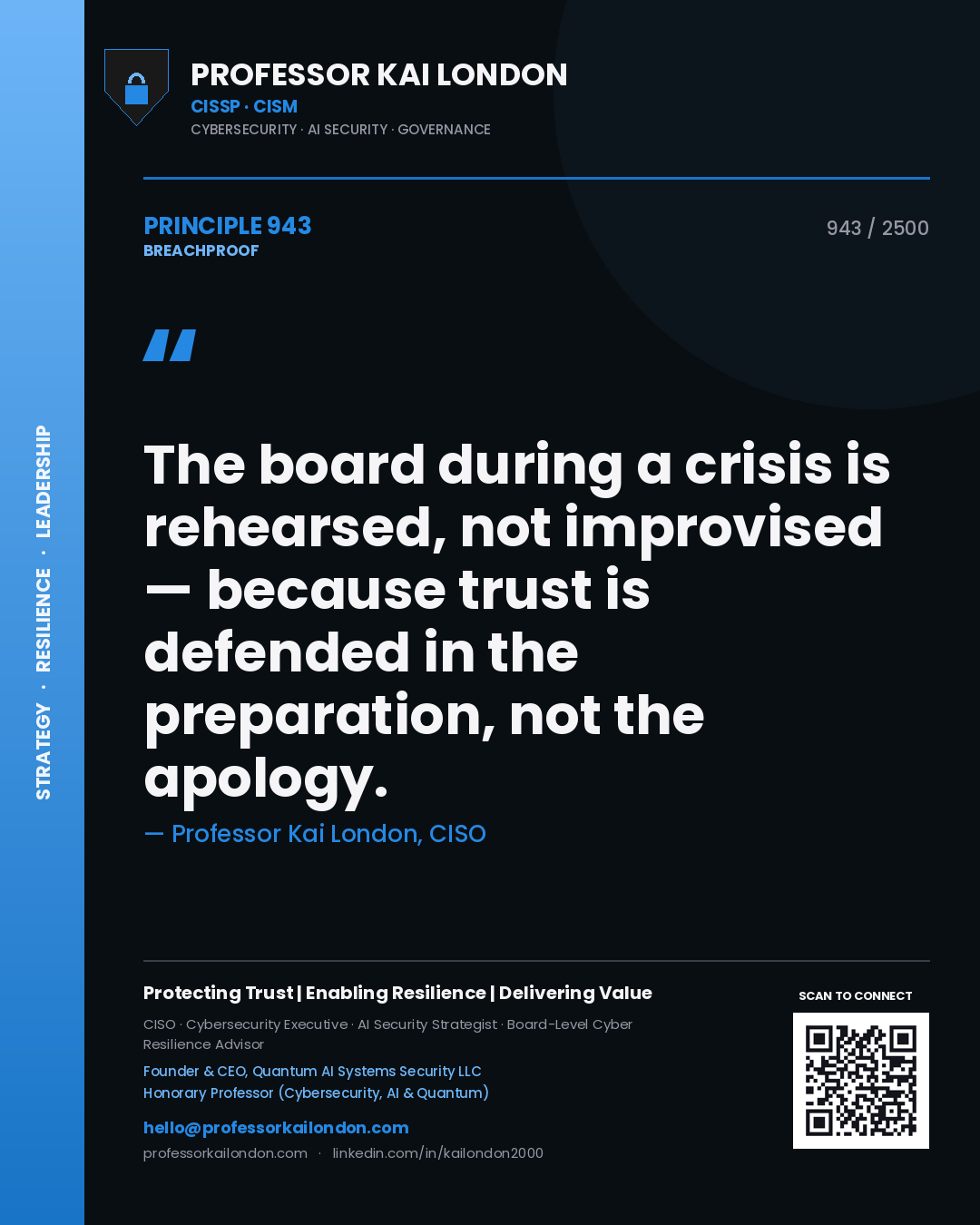
Professor Kai London principle 943: The board during a crisis is rehearsed, not improvised — because trust is defended in the preparation, not the apology.
Principle 943
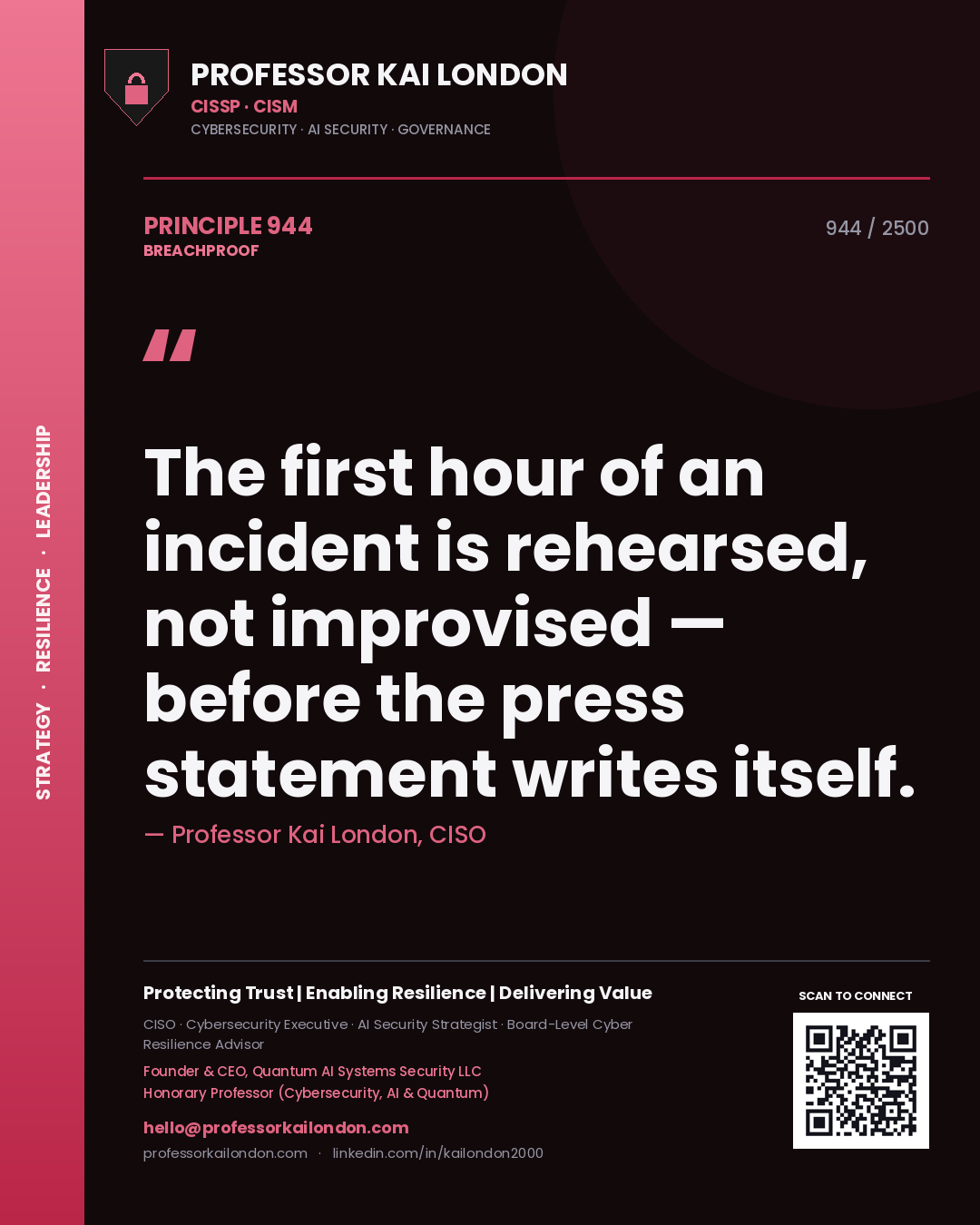
Professor Kai London principle 944: The first hour of an incident is rehearsed, not improvised — before the press statement writes itself.
Principle 944
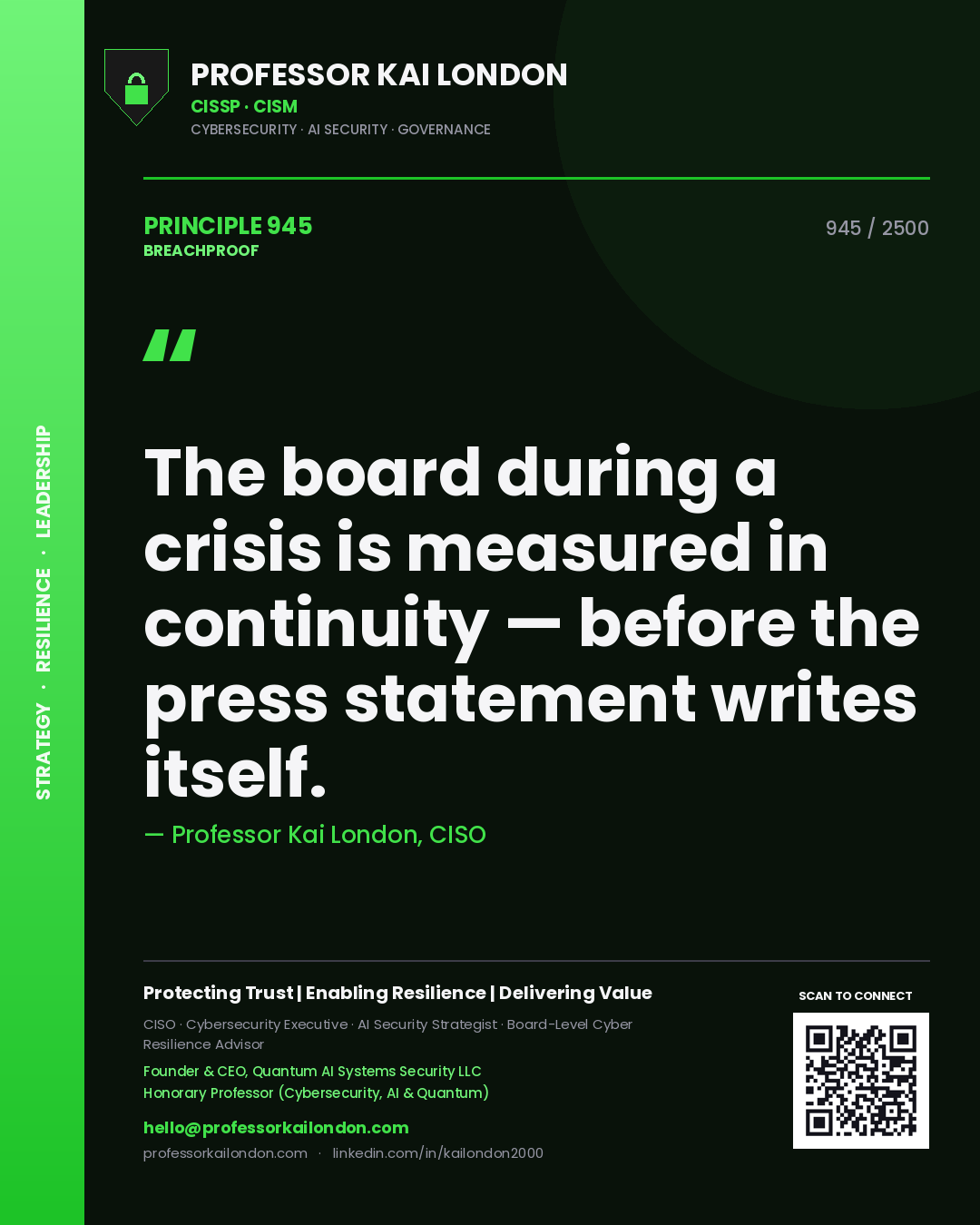
Professor Kai London principle 945: The board during a crisis is measured in continuity — before the press statement writes itself.
Principle 945
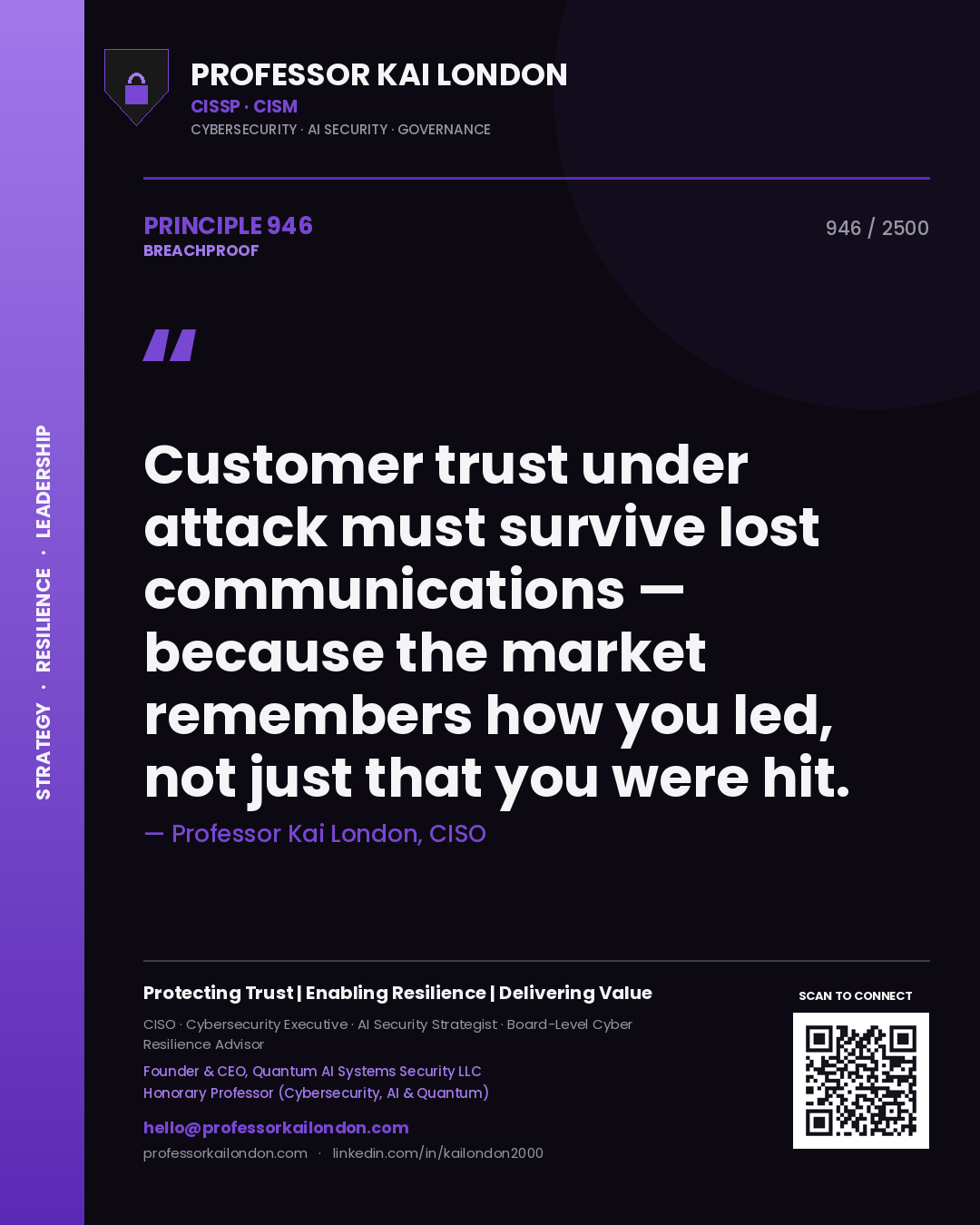
Professor Kai London principle 946: Customer trust under attack must survive lost communications — because the market remembers how you led, not just that you were hit.
Principle 946
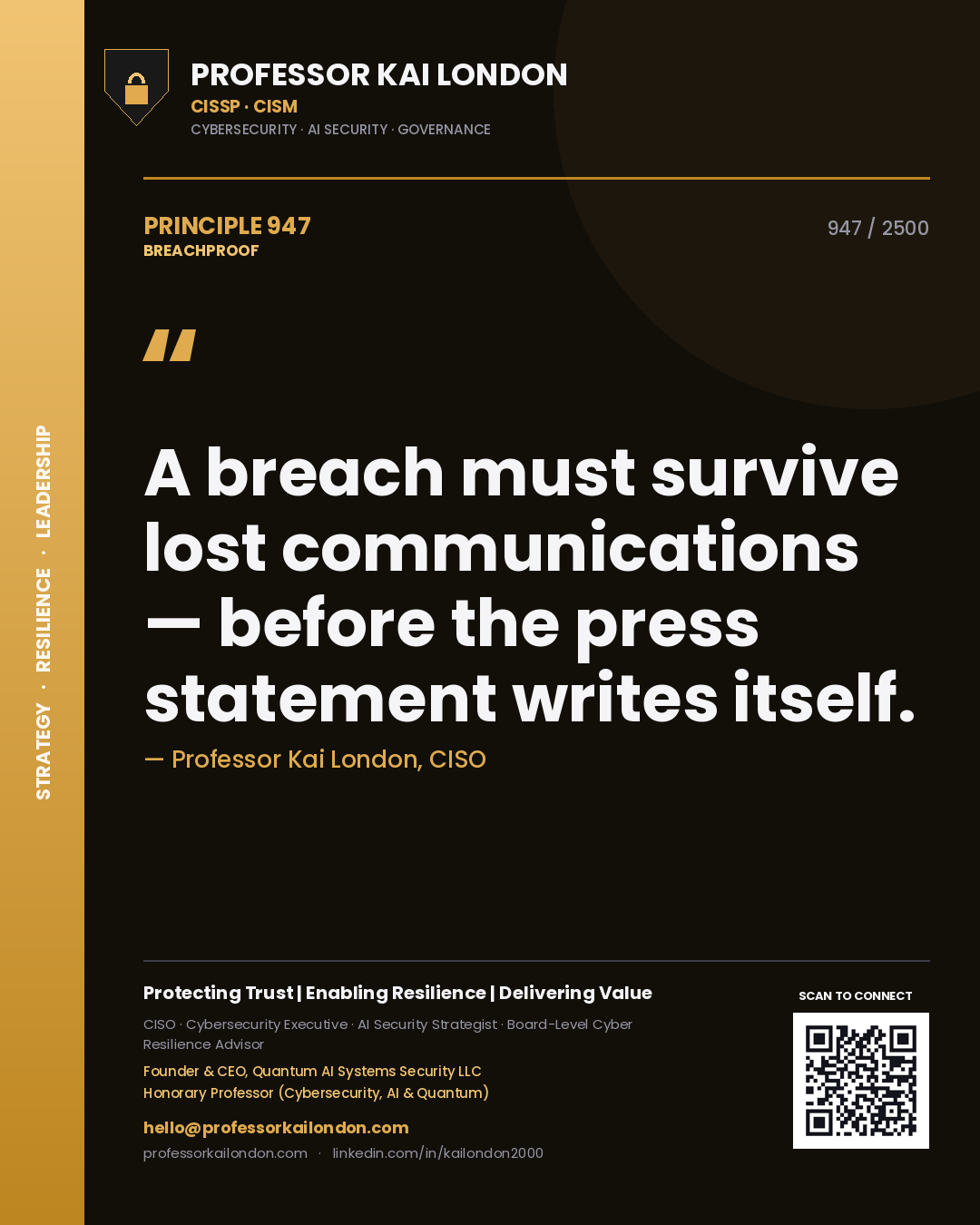
Professor Kai London principle 947: A breach must survive lost communications — before the press statement writes itself.
Principle 947
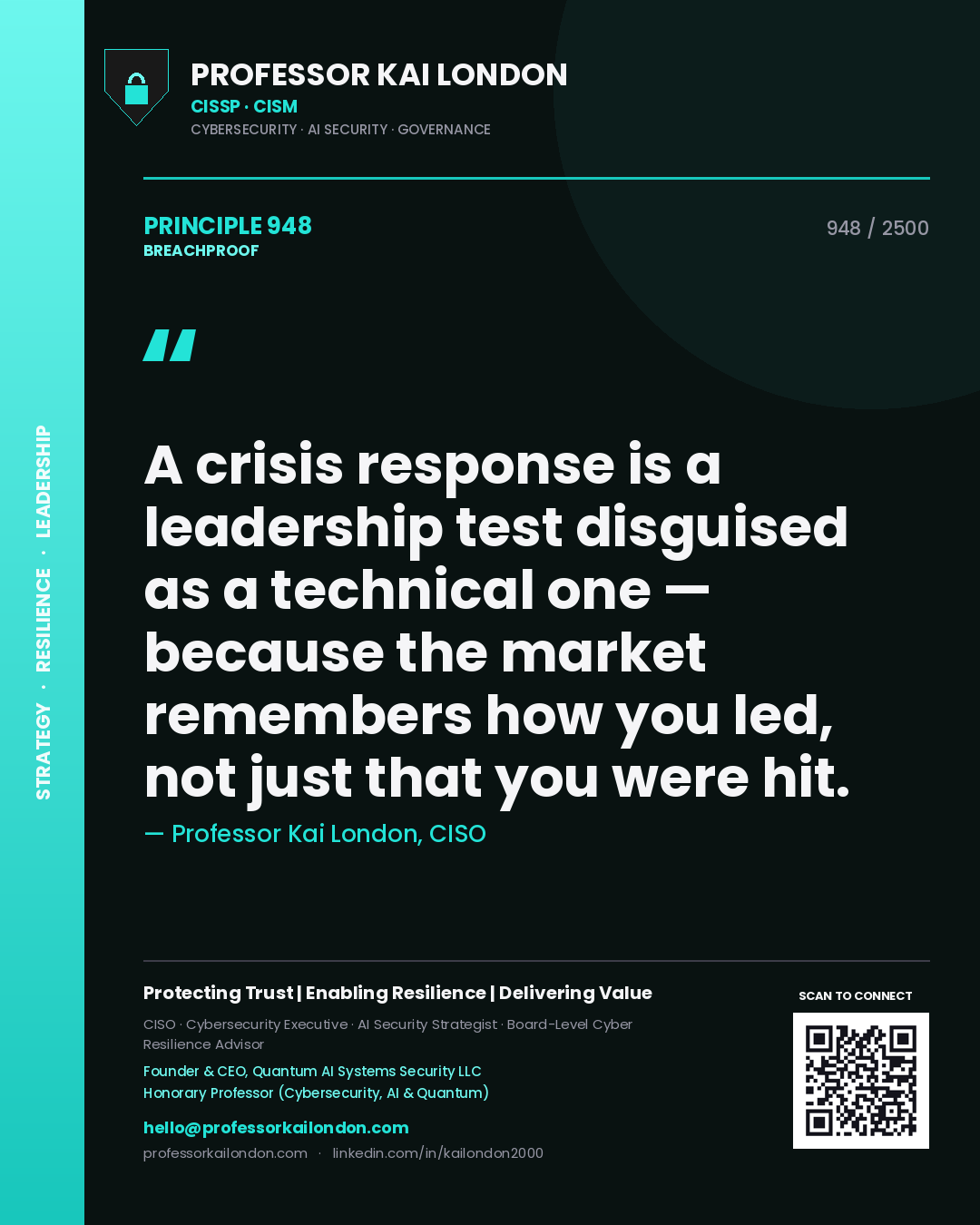
Professor Kai London principle 948: A crisis response is a leadership test disguised as a technical one — because the market remembers how you led, not just that you were hit.
Principle 948
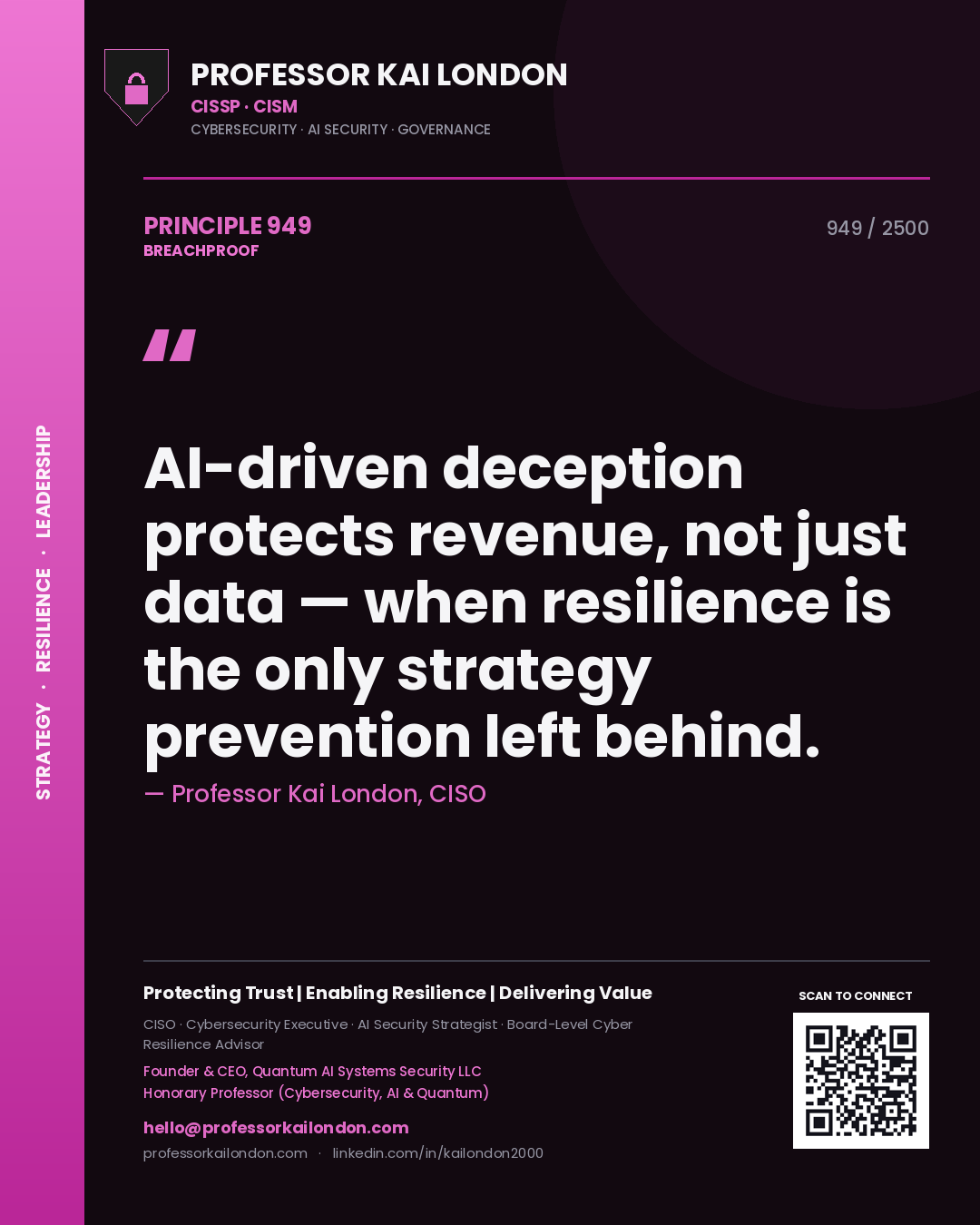
Professor Kai London principle 949: AI-driven deception protects revenue, not just data — when resilience is the only strategy prevention left behind.
Principle 949
Professor Kai London principle 950: A crisis response protects revenue, not just data — before the press statement writes itself.
Principle 950
Professor Kai London principle 951: The first hour of an incident must survive lost communications — because the market remembers how you led, not just that you were hit.
Principle 951
Professor Kai London principle 952: A recovery plan is defended in preparation, not apology — because the cheapest breach is the one you rehearsed.
Principle 952
Professor Kai London principle 953: Ransomware resilience must survive lost communications — because the cheapest breach is the one you rehearsed.
Principle 953
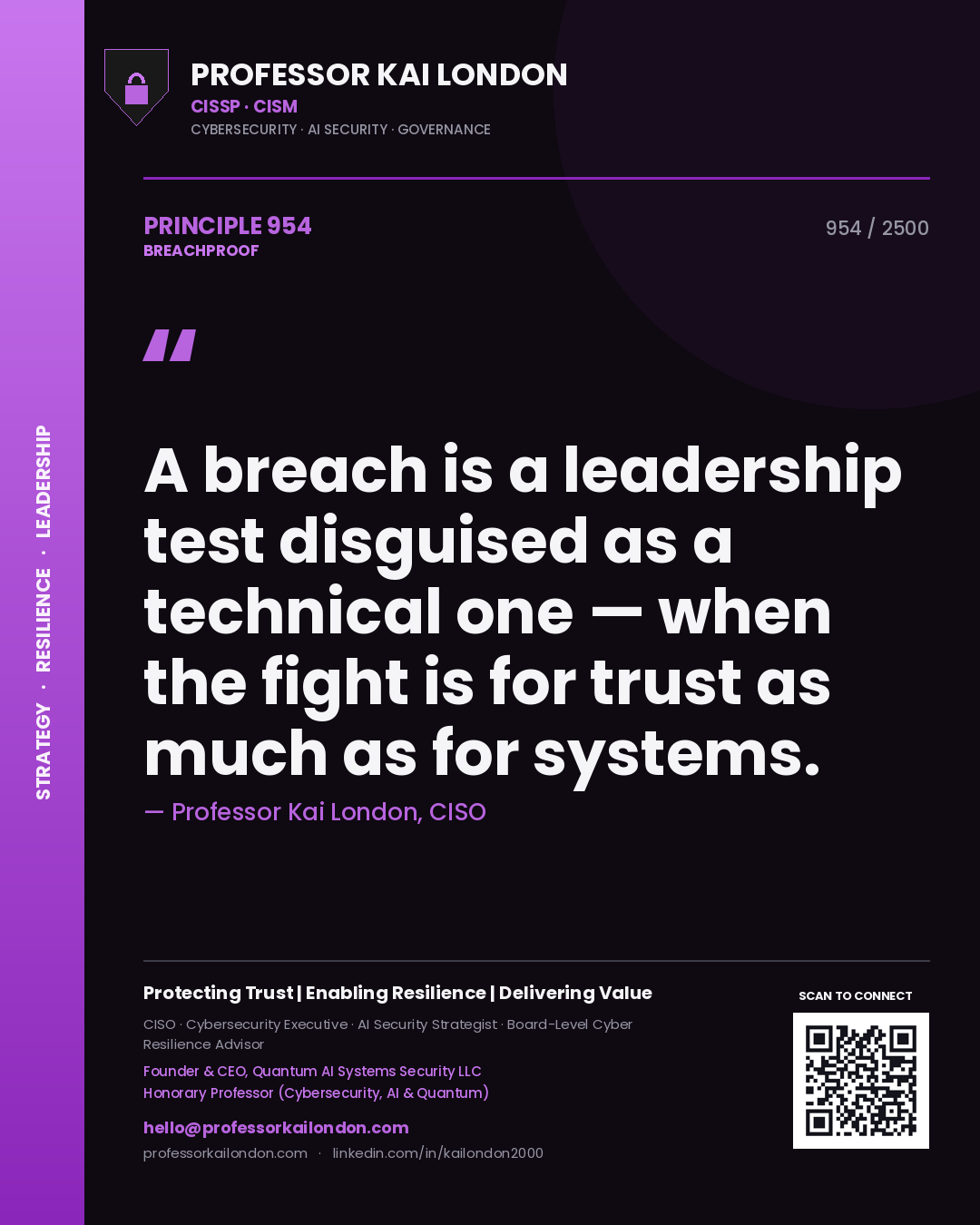
Professor Kai London principle 954: A breach is a leadership test disguised as a technical one — when the fight is for trust as much as for systems.
Principle 954
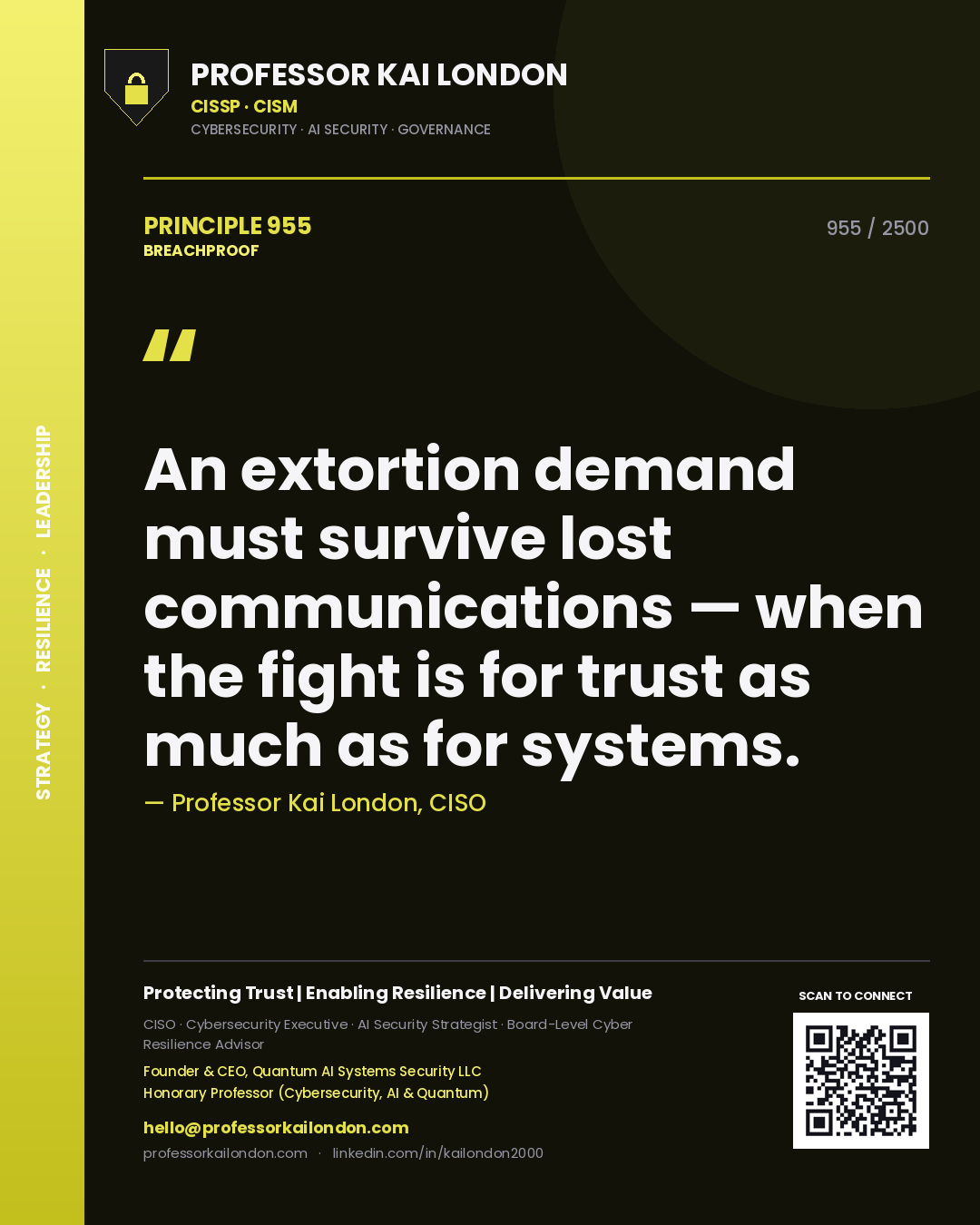
Professor Kai London principle 955: An extortion demand must survive lost communications — when the fight is for trust as much as for systems.
Principle 955
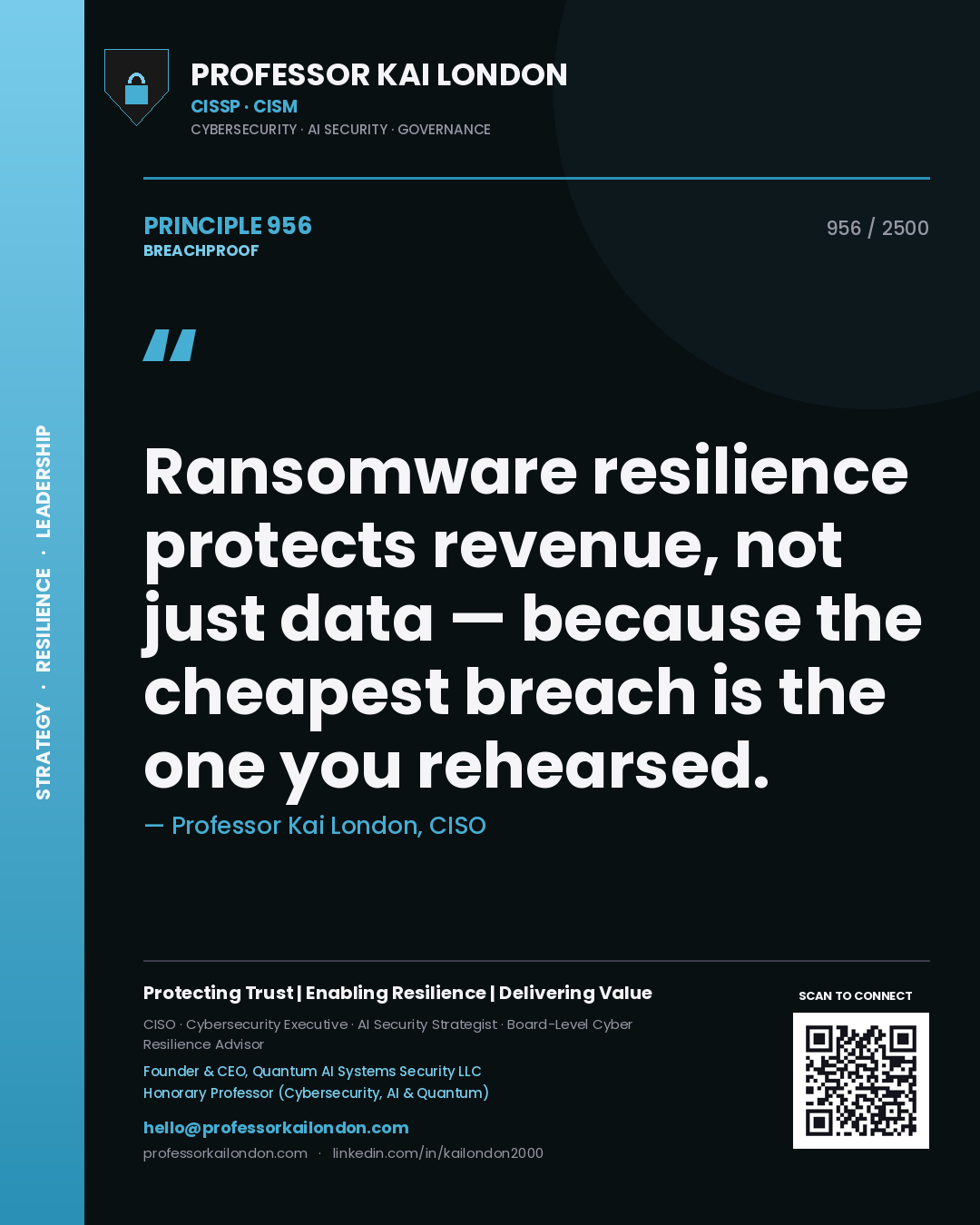
Professor Kai London principle 956: Ransomware resilience protects revenue, not just data — because the cheapest breach is the one you rehearsed.
Principle 956
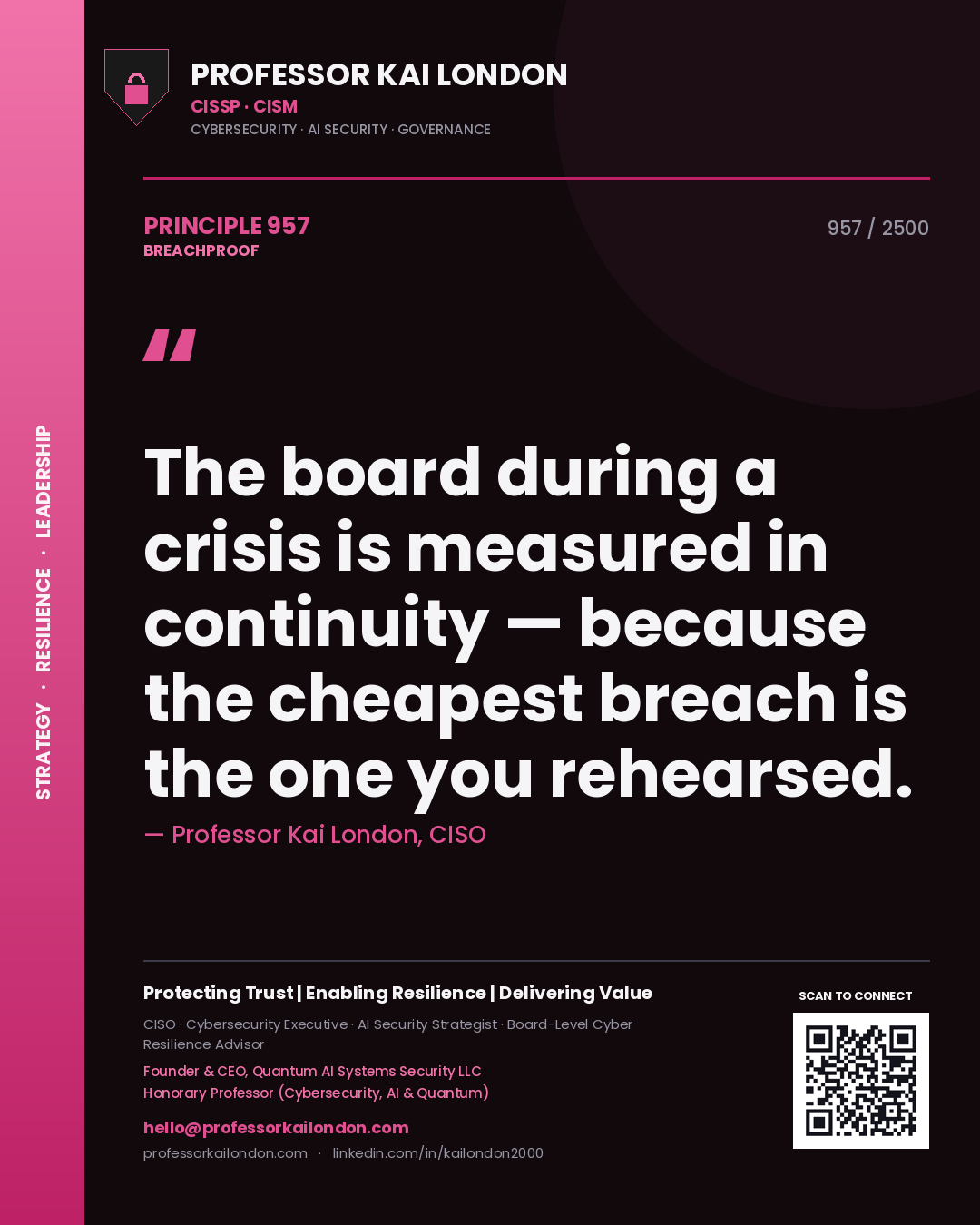
Professor Kai London principle 957: The board during a crisis is measured in continuity — because the cheapest breach is the one you rehearsed.
Principle 957
Professor Kai London principle 958: A tabletop that no one enjoyed protects revenue, not just data — when resilience is the only strategy prevention left behind.
Principle 958
Professor Kai London principle 959: AI-driven deception is cheapest when it was practised — when the fight is for trust as much as for systems.
Principle 959
Professor Kai London principle 960: A tabletop that no one enjoyed must survive lost communications — the moment the attacker meets a business that refuses to break.
Principle 960
Professor Kai London principle 961: A recovery plan protects revenue, not just data — when the plan has been used before the day it is needed.
Principle 961
Professor Kai London principle 962: The board during a crisis is a leadership test disguised as a technical one — because the cheapest breach is the one you rehearsed.
Principle 962
Professor Kai London principle 963: The first hour of an incident is cheapest when it was practised — because the market remembers how you led, not just that you were hit.
Principle 963
Professor Kai London principle 964: A recovery plan is rehearsed, not improvised — because the cheapest breach is the one you rehearsed.
Principle 964
Professor Kai London principle 965: The board during a crisis is measured in continuity.
Principle 965
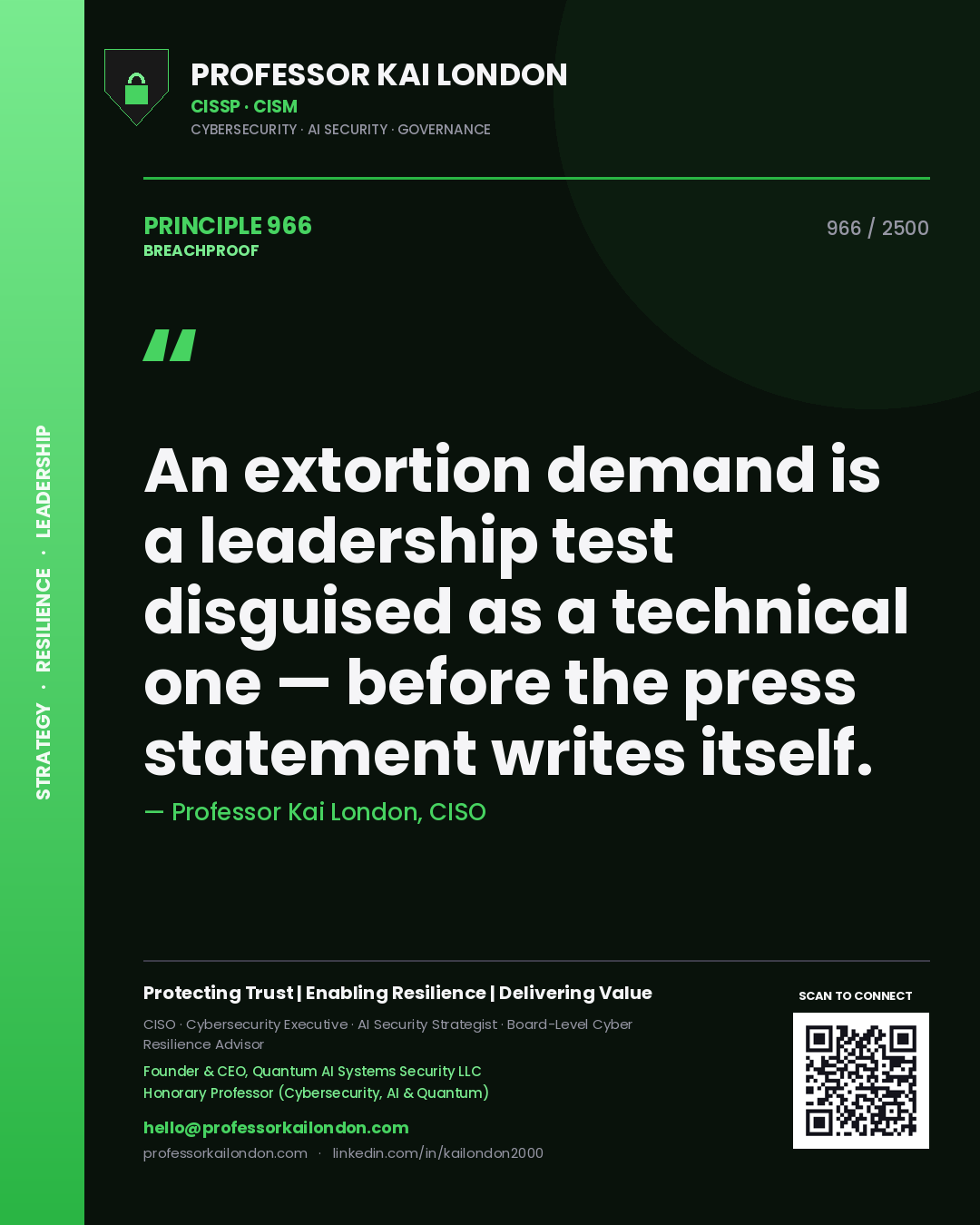
Professor Kai London principle 966: An extortion demand is a leadership test disguised as a technical one — before the press statement writes itself.
Principle 966
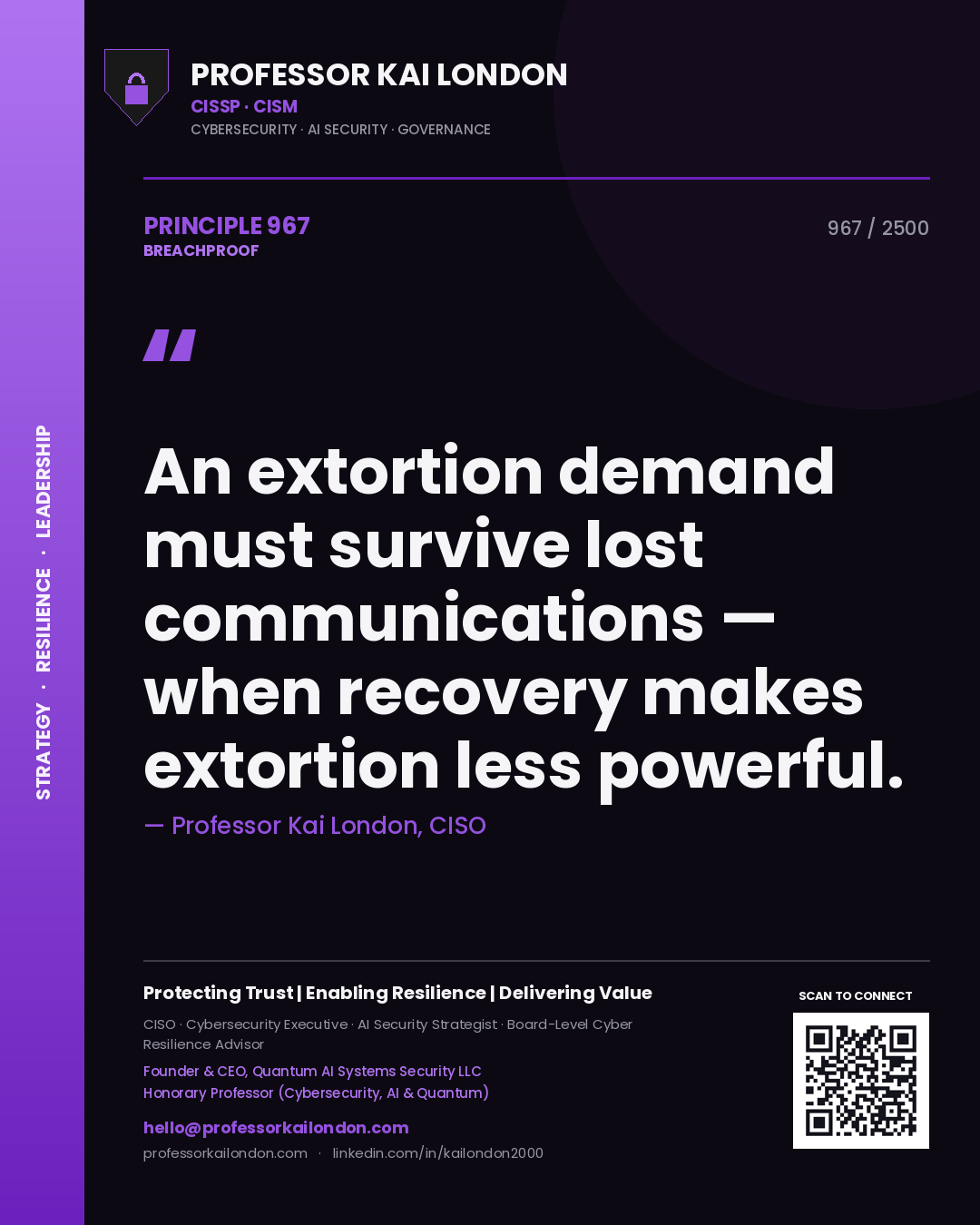
Professor Kai London principle 967: An extortion demand must survive lost communications — when recovery makes extortion less powerful.
Principle 967
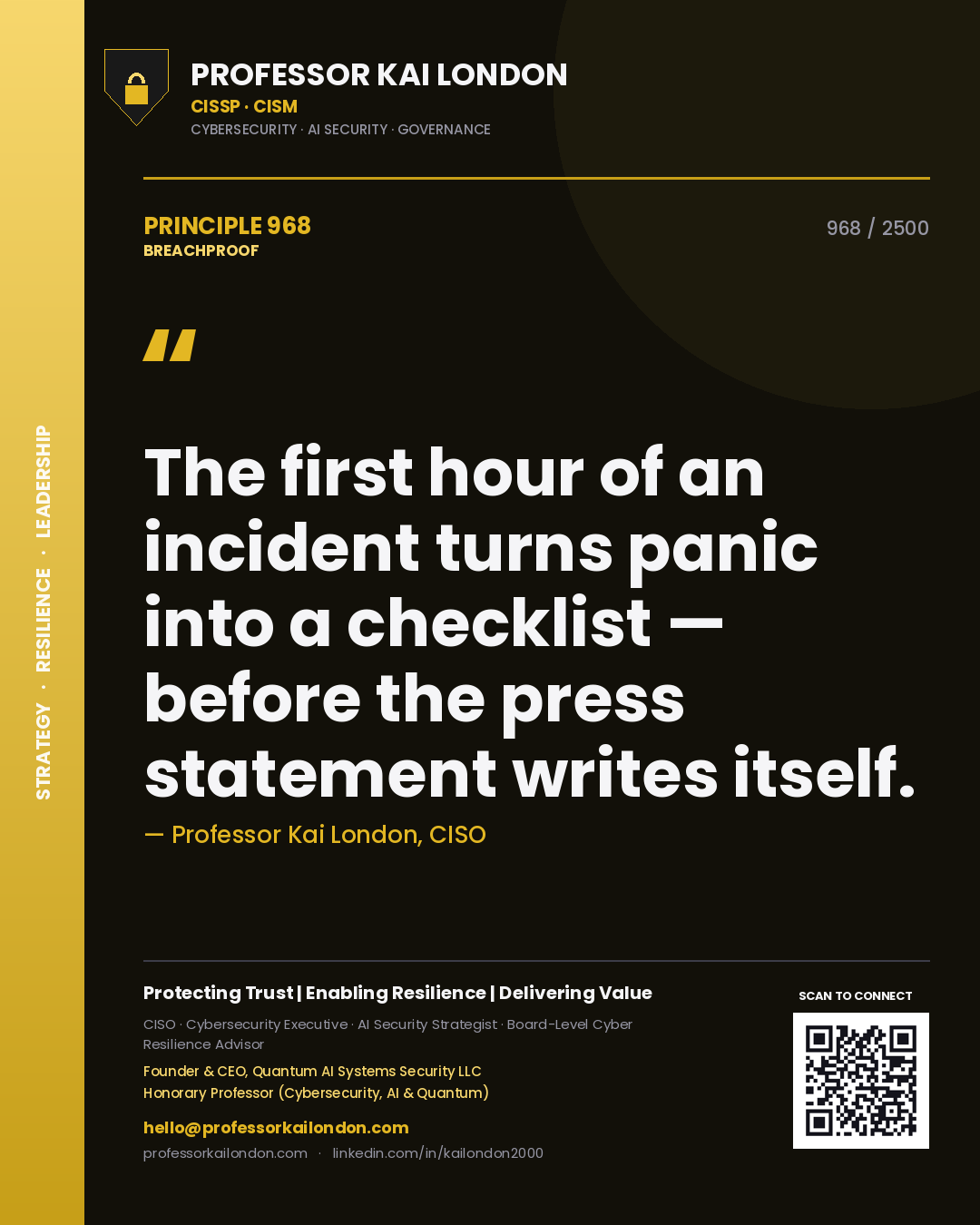
Professor Kai London principle 968: The first hour of an incident turns panic into a checklist — before the press statement writes itself.
Principle 968
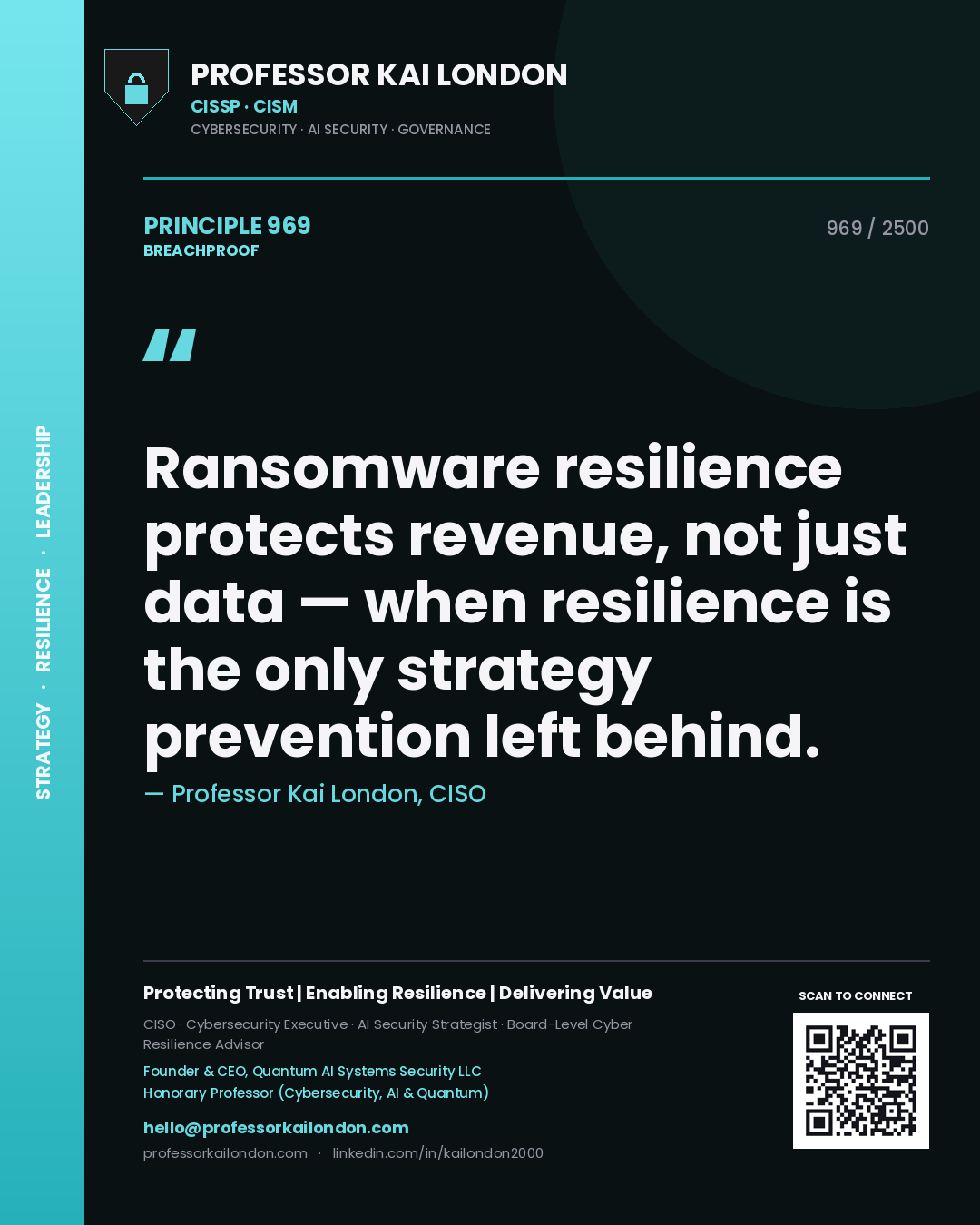
Professor Kai London principle 969: Ransomware resilience protects revenue, not just data — when resilience is the only strategy prevention left behind.
Principle 969
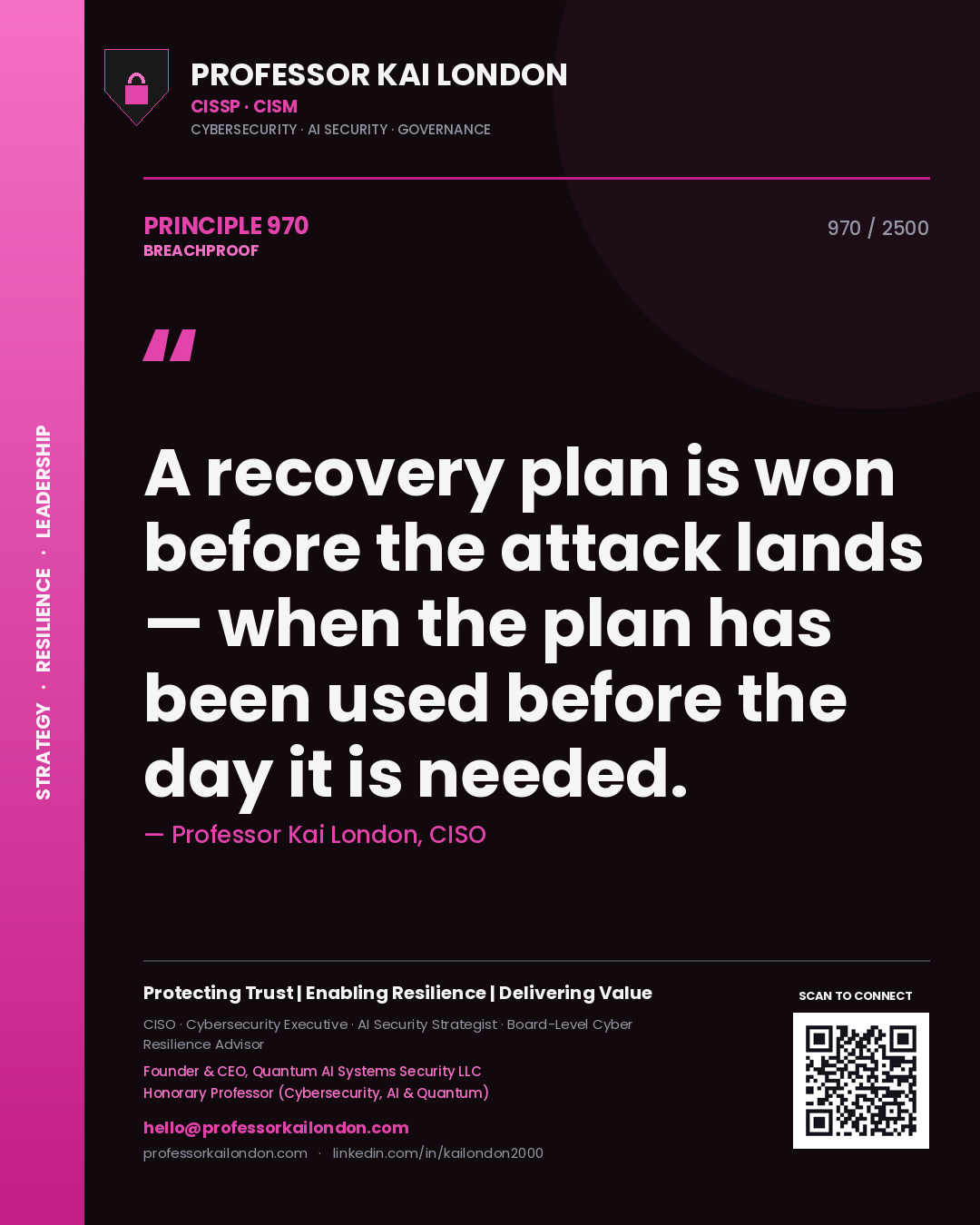
Professor Kai London principle 970: A recovery plan is won before the attack lands — when the plan has been used before the day it is needed.
Principle 970
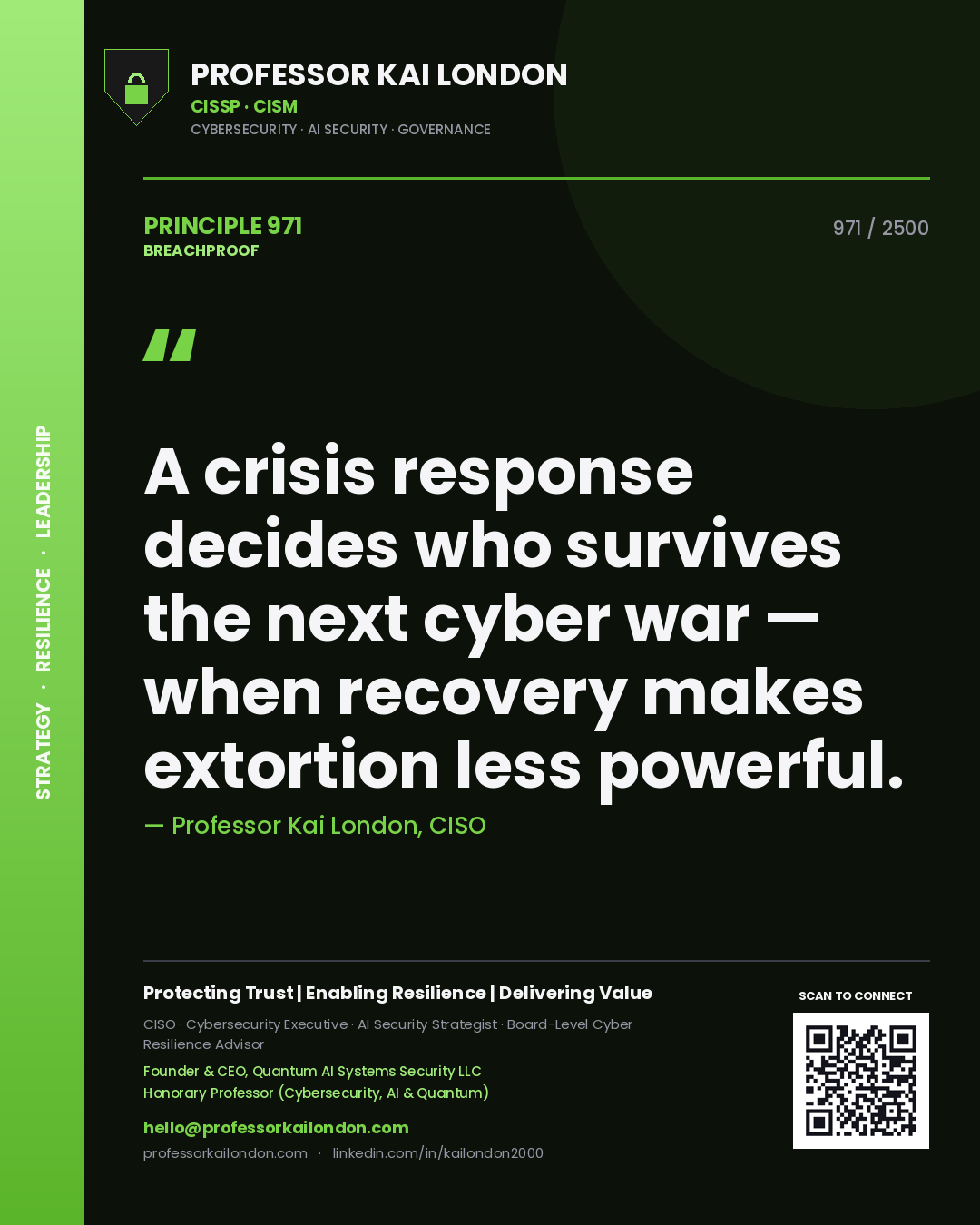
Professor Kai London principle 971: A crisis response decides who survives the next cyber war — when recovery makes extortion less powerful.
Principle 971
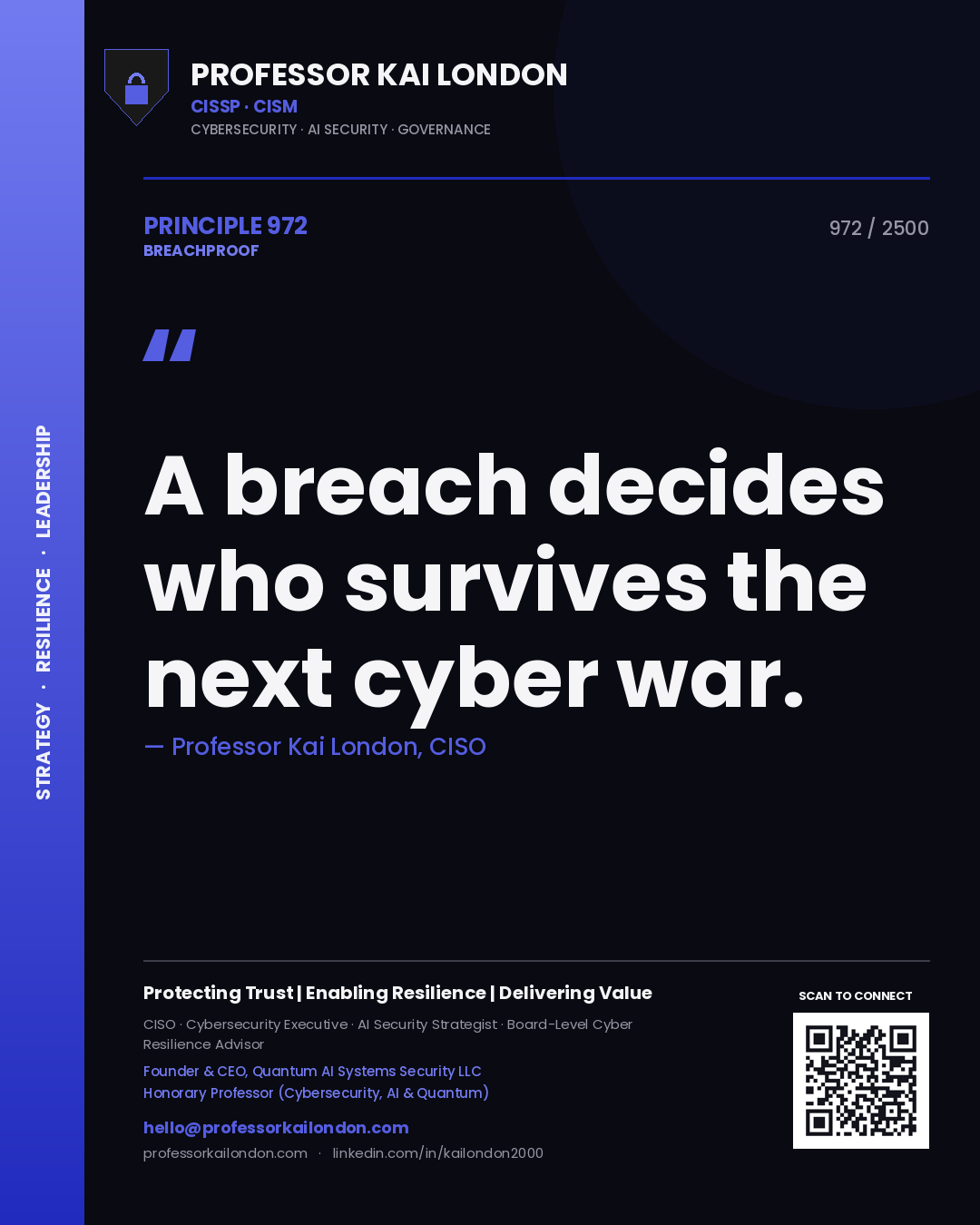
Professor Kai London principle 972: A breach decides who survives the next cyber war.
Principle 972
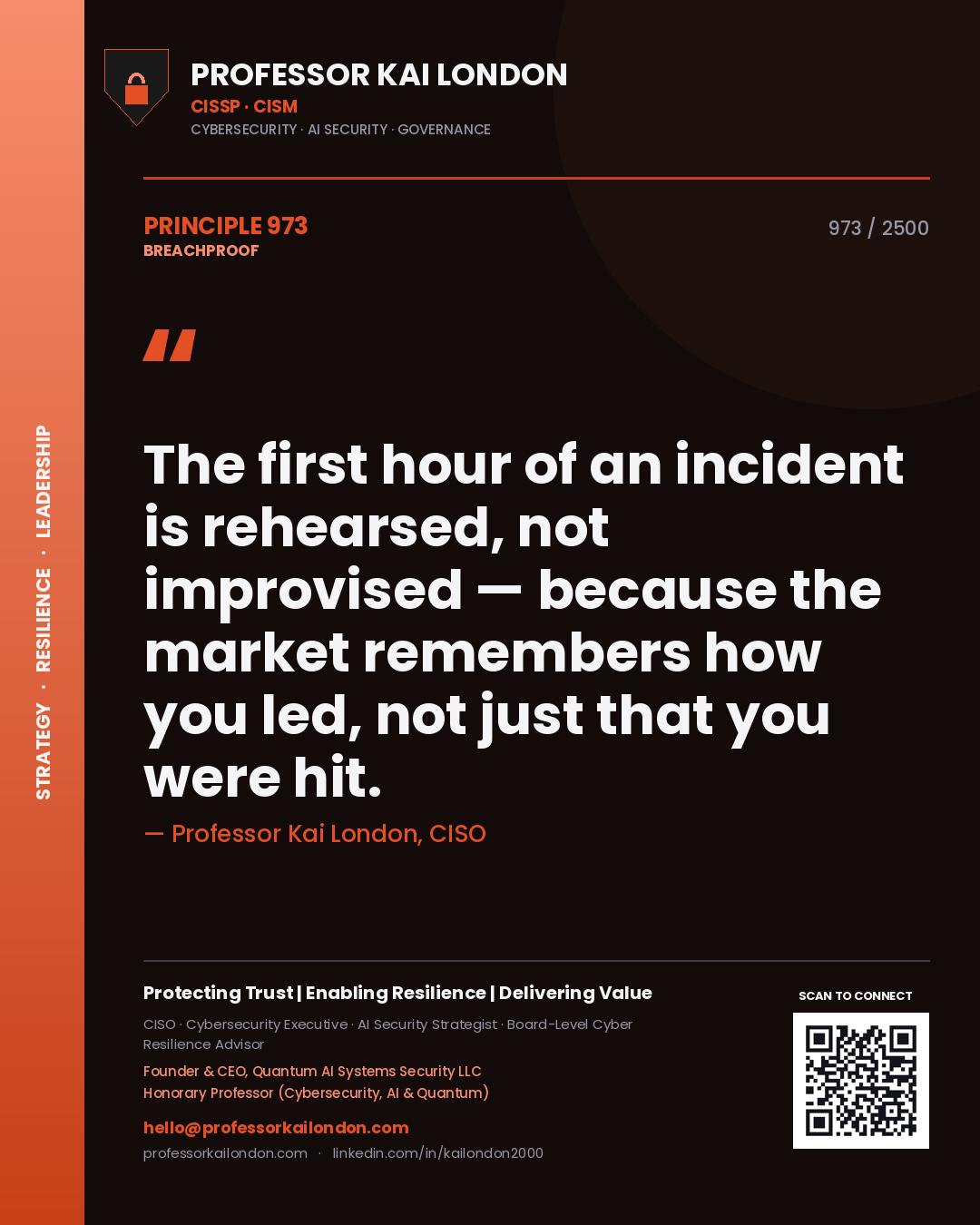
Professor Kai London principle 973: The first hour of an incident is rehearsed, not improvised — because the market remembers how you led, not just that you were hit.
Principle 973
Professor Kai London principle 974: A tabletop that no one enjoyed is rehearsed, not improvised — when resilience is the only strategy prevention left behind.
Principle 974
Professor Kai London principle 975: A breach turns panic into a checklist — because trust is defended in the preparation, not the apology.
Principle 975
Professor Kai London principle 976: A crisis response is defended in preparation, not apology — when leadership is calm, factual, and evidence-led.
Principle 976
Professor Kai London principle 977: A recovery plan is measured in continuity — because the market remembers how you led, not just that you were hit.
Principle 977
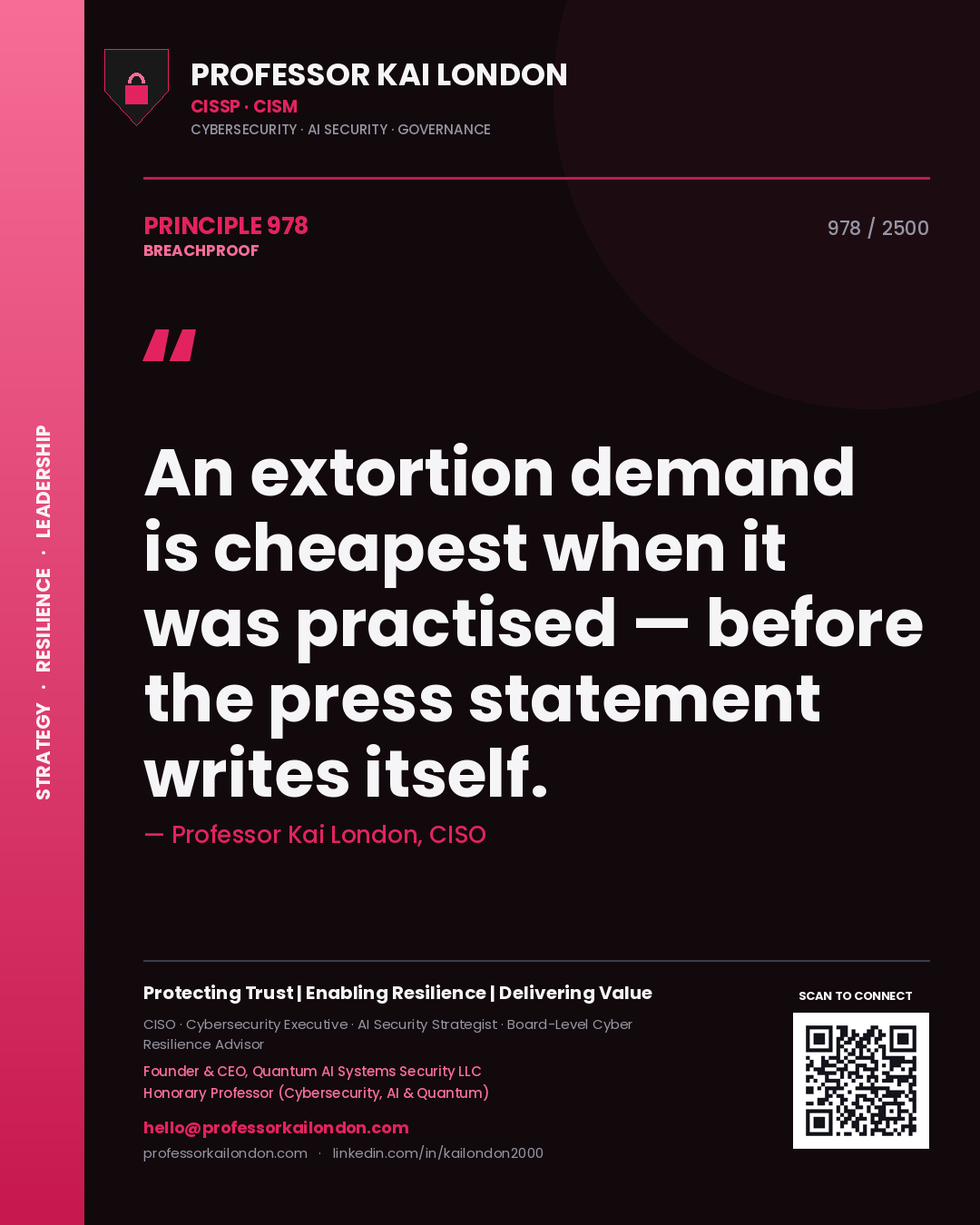
Professor Kai London principle 978: An extortion demand is cheapest when it was practised — before the press statement writes itself.
Principle 978
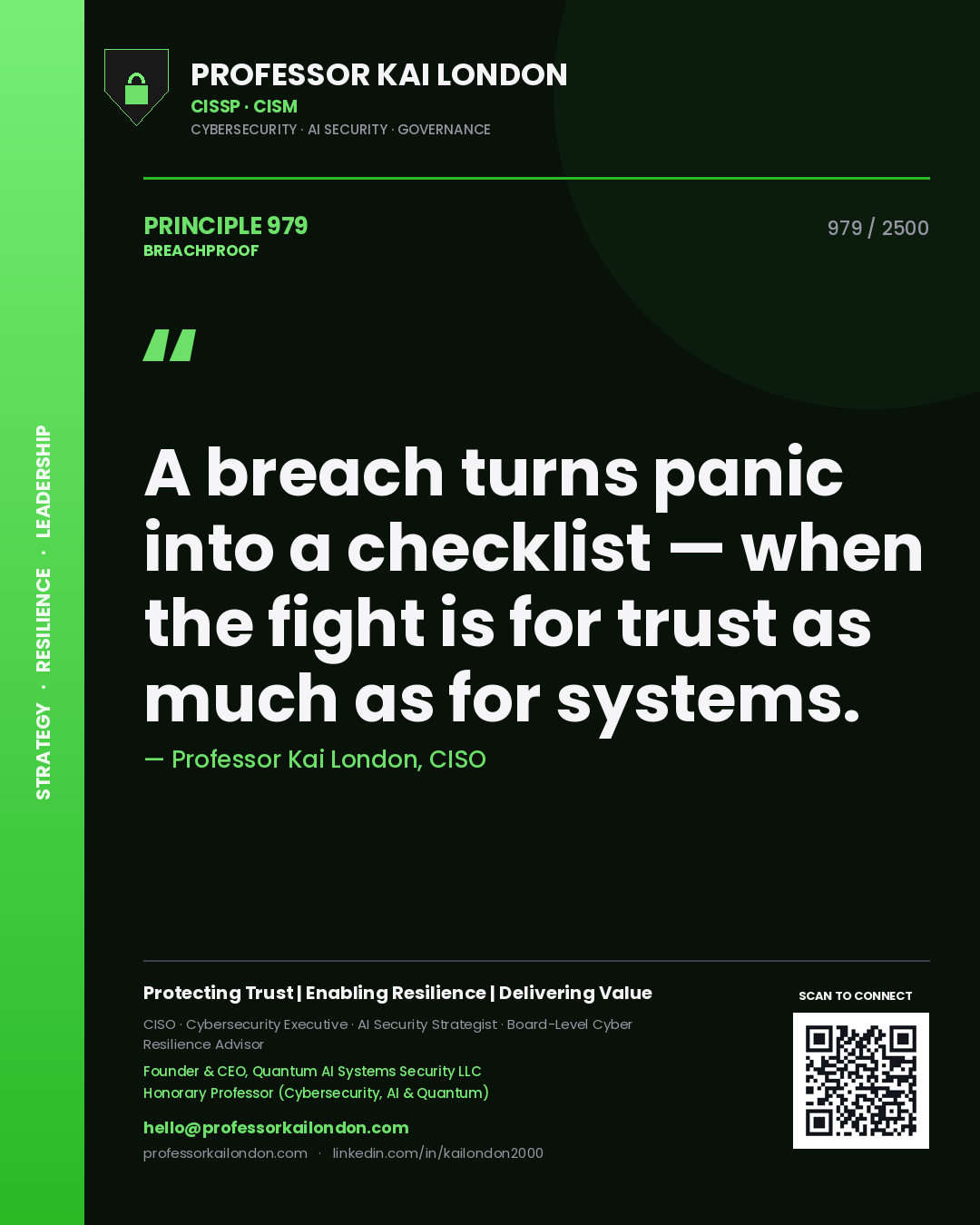
Professor Kai London principle 979: A breach turns panic into a checklist — when the fight is for trust as much as for systems.
Principle 979
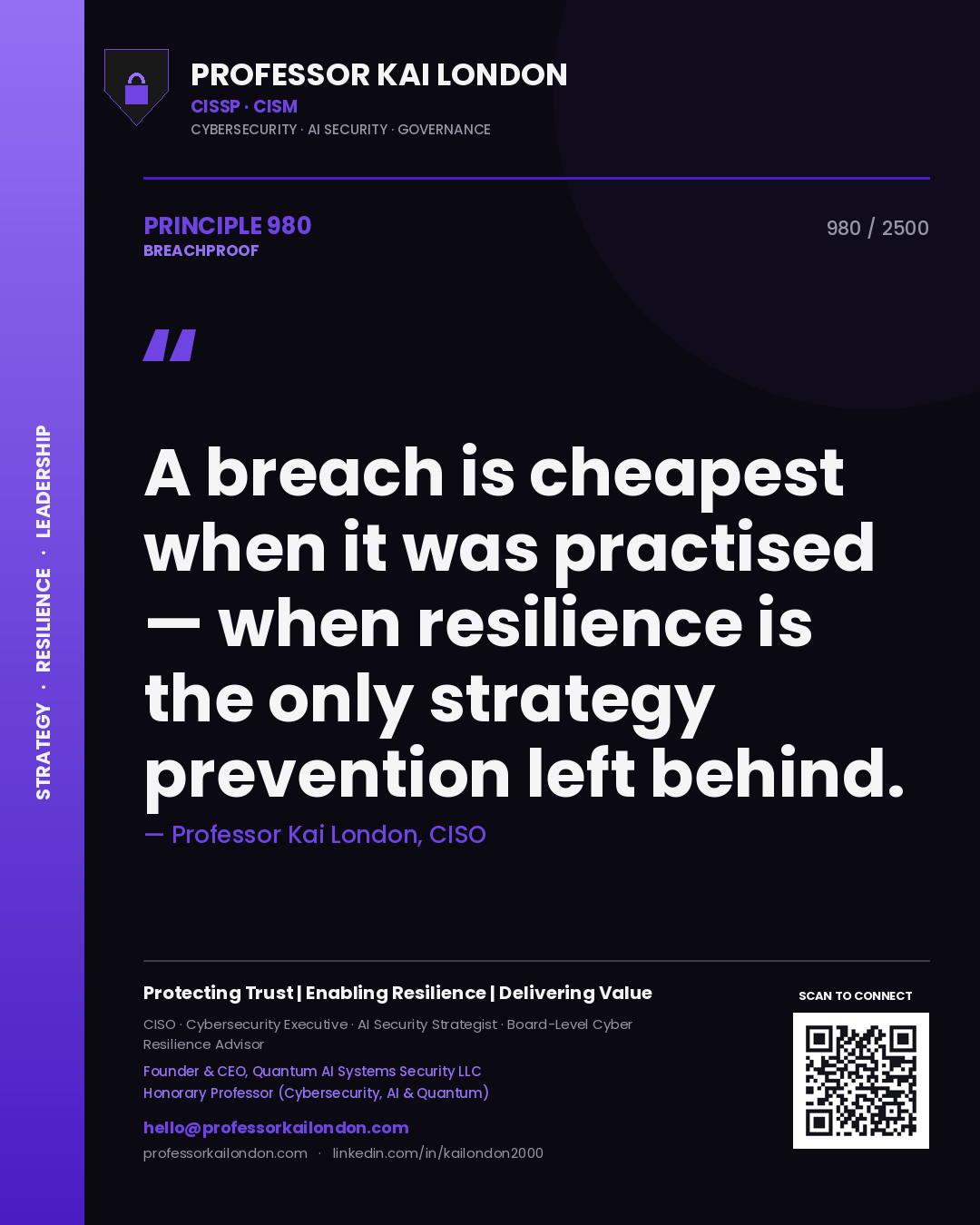
Professor Kai London principle 980: A breach is cheapest when it was practised — when resilience is the only strategy prevention left behind.
Principle 980
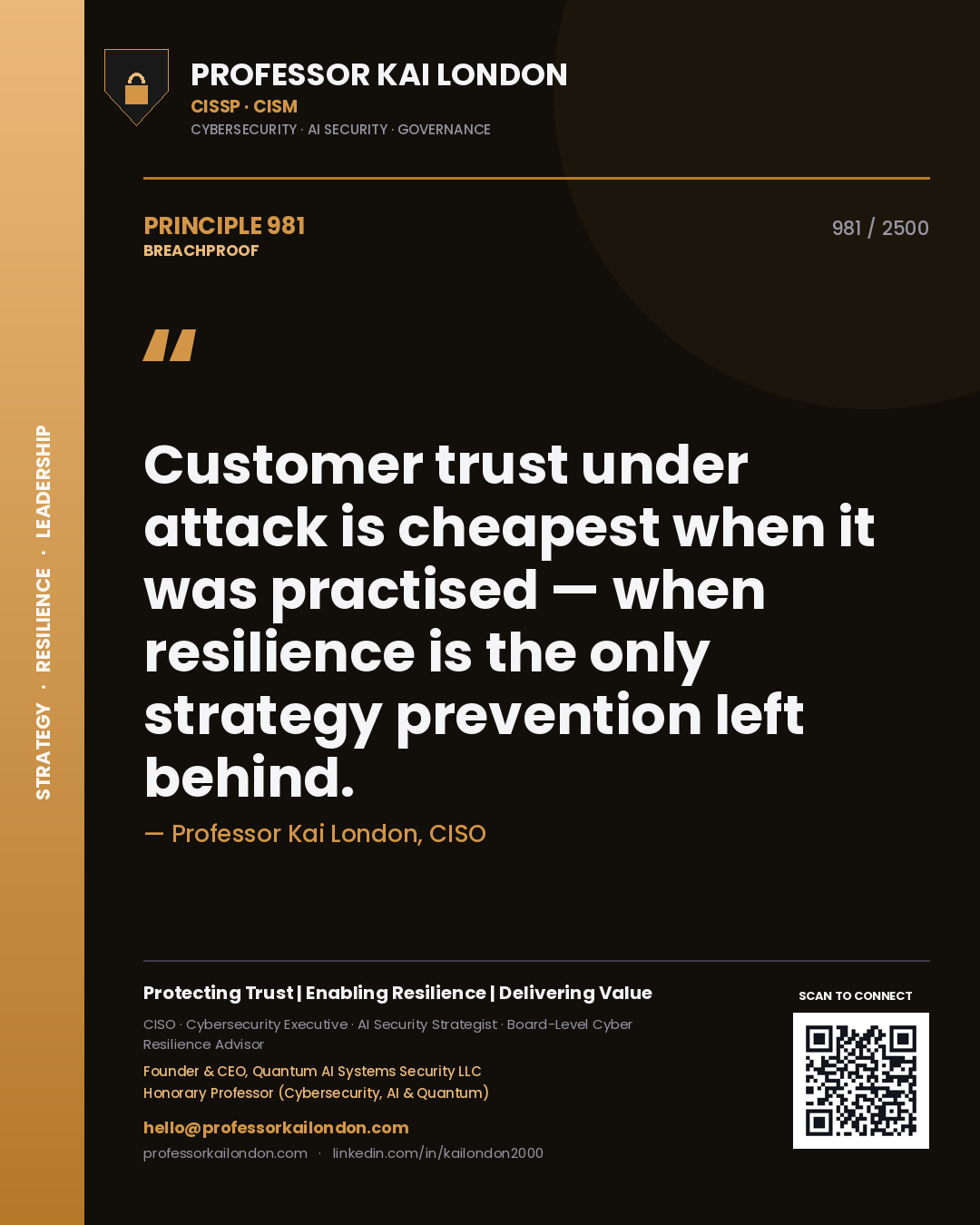
Professor Kai London principle 981: Customer trust under attack is cheapest when it was practised — when resilience is the only strategy prevention left behind.
Principle 981
Professor Kai London principle 982: A crisis response is defended in preparation, not apology — because the cheapest breach is the one you rehearsed.
Principle 982
Professor Kai London principle 983: A tabletop that no one enjoyed is rehearsed, not improvised — when leadership is calm, factual, and evidence-led.
Principle 983
Professor Kai London principle 984: The first hour of an incident turns panic into a checklist — when the plan has been used before the day it is needed.
Principle 984
Professor Kai London principle 985: The board during a crisis is measured in continuity — when leadership is calm, factual, and evidence-led.
Principle 985
Professor Kai London principle 986: The first hour of an incident is won before the attack lands — because the market remembers how you led, not just that you were hit.
Principle 986
Professor Kai London principle 987: The first hour of an incident protects revenue, not just data.
Principle 987
Professor Kai London principle 988: A tabletop that no one enjoyed is a leadership test disguised as a technical one — the moment the attacker meets a business that refuses to break.
Principle 988
Professor Kai London principle 989: The first hour of an incident is defended in preparation, not apology — before the press statement writes itself.
Principle 989
Professor Kai London principle 990: A crisis response is rehearsed, not improvised — because the cheapest breach is the one you rehearsed.
Principle 990
Professor Kai London principle 991: The first hour of an incident protects revenue, not just data — because the cheapest breach is the one you rehearsed.
Principle 991
Professor Kai London principle 992: Ransomware resilience is won before the attack lands — because the market remembers how you led, not just that you were hit.
Principle 992
Professor Kai London principle 993: A breach turns panic into a checklist — when leadership is calm, factual, and evidence-led.
Principle 993
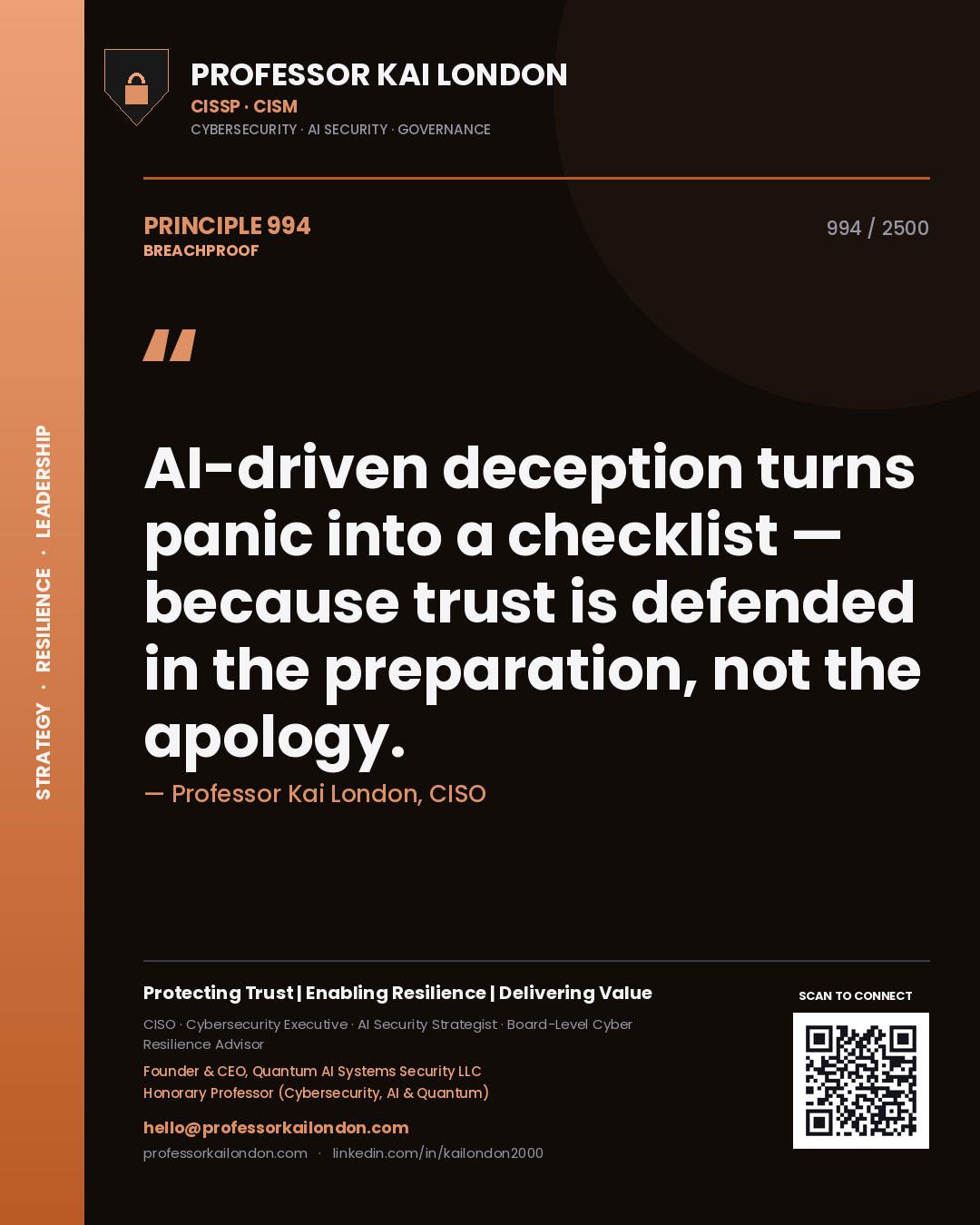
Professor Kai London principle 994: AI-driven deception turns panic into a checklist — because trust is defended in the preparation, not the apology.
Principle 994
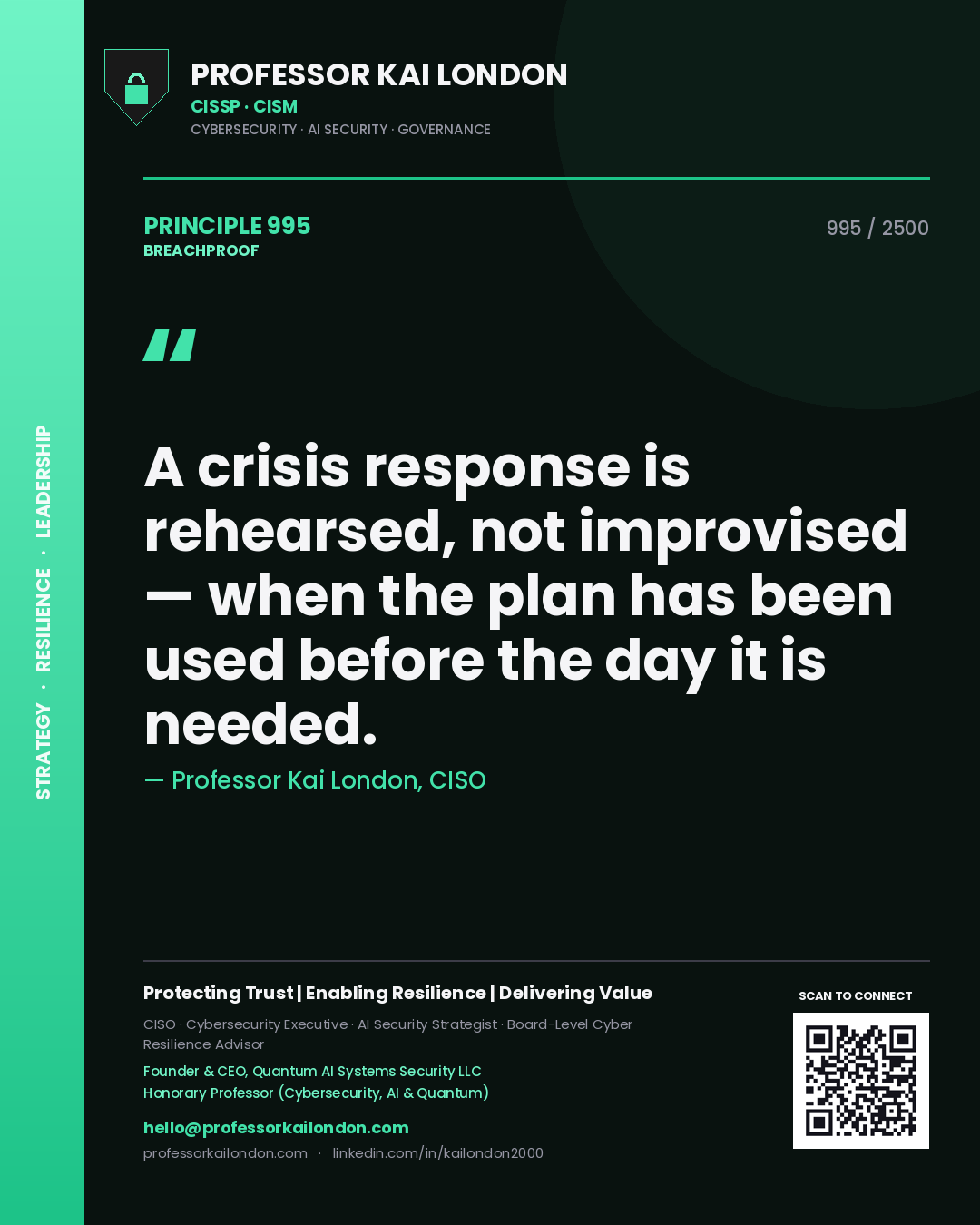
Professor Kai London principle 995: A crisis response is rehearsed, not improvised — when the plan has been used before the day it is needed.
Principle 995
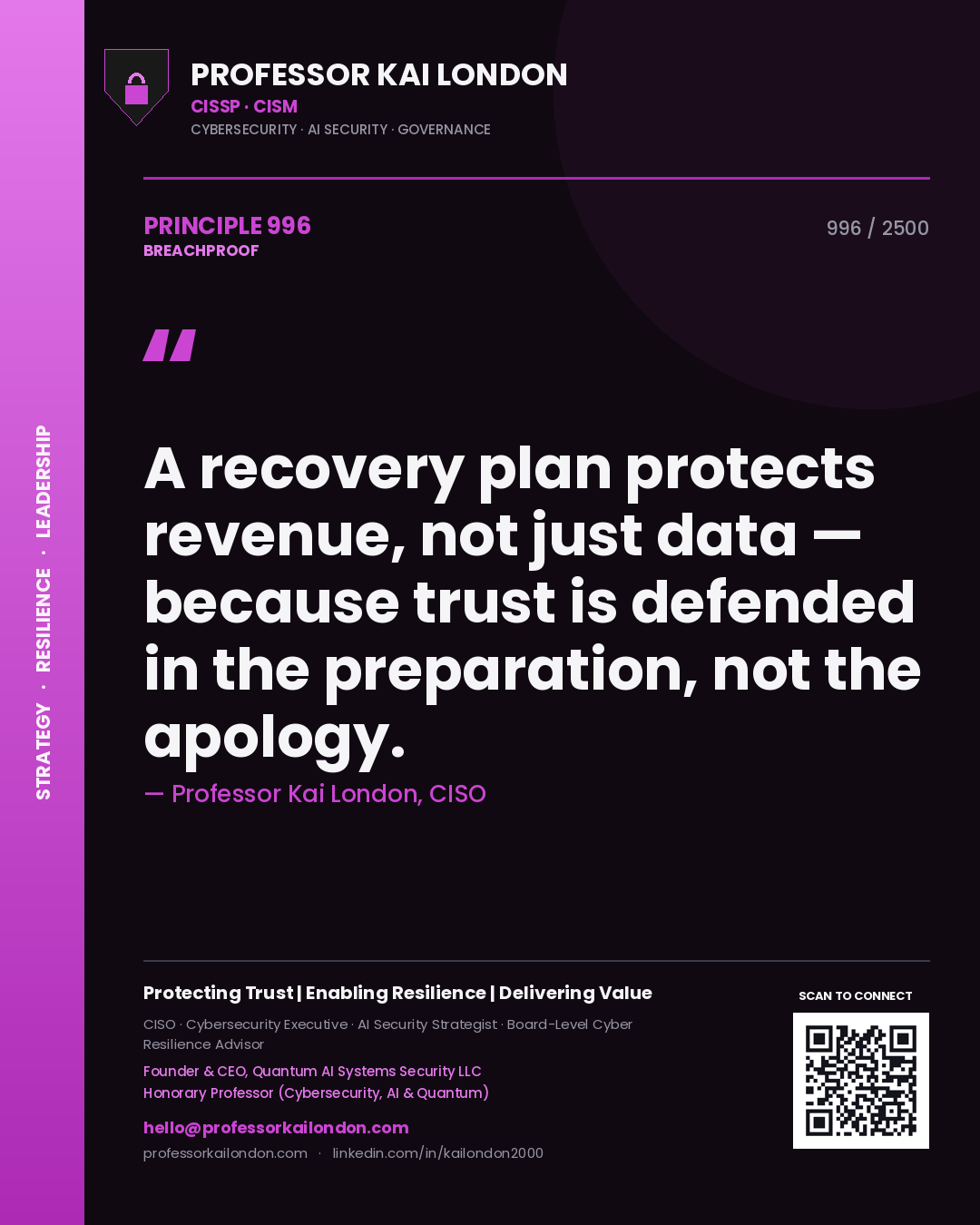
Professor Kai London principle 996: A recovery plan protects revenue, not just data — because trust is defended in the preparation, not the apology.
Principle 996
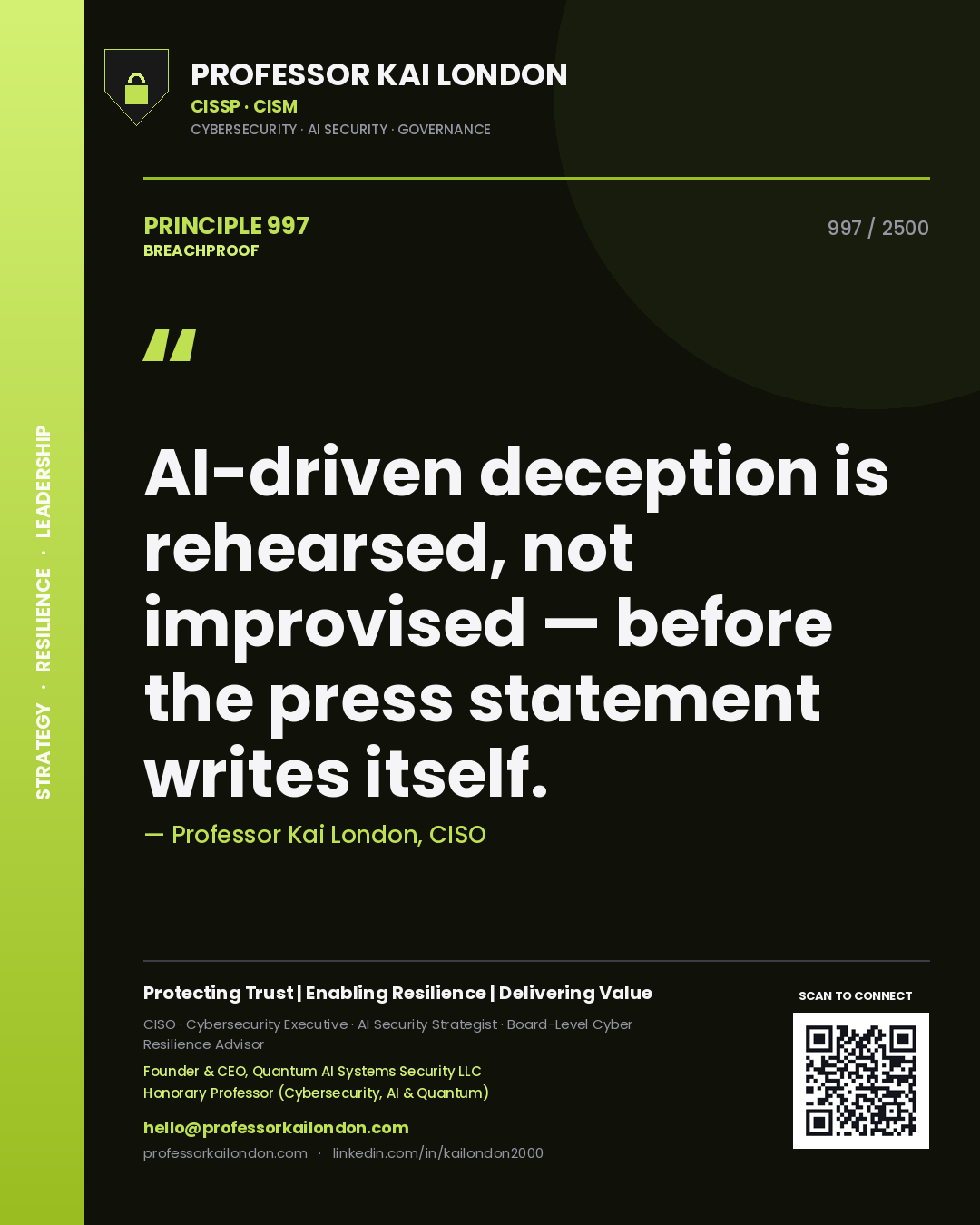
Professor Kai London principle 997: AI-driven deception is rehearsed, not improvised — before the press statement writes itself.
Principle 997
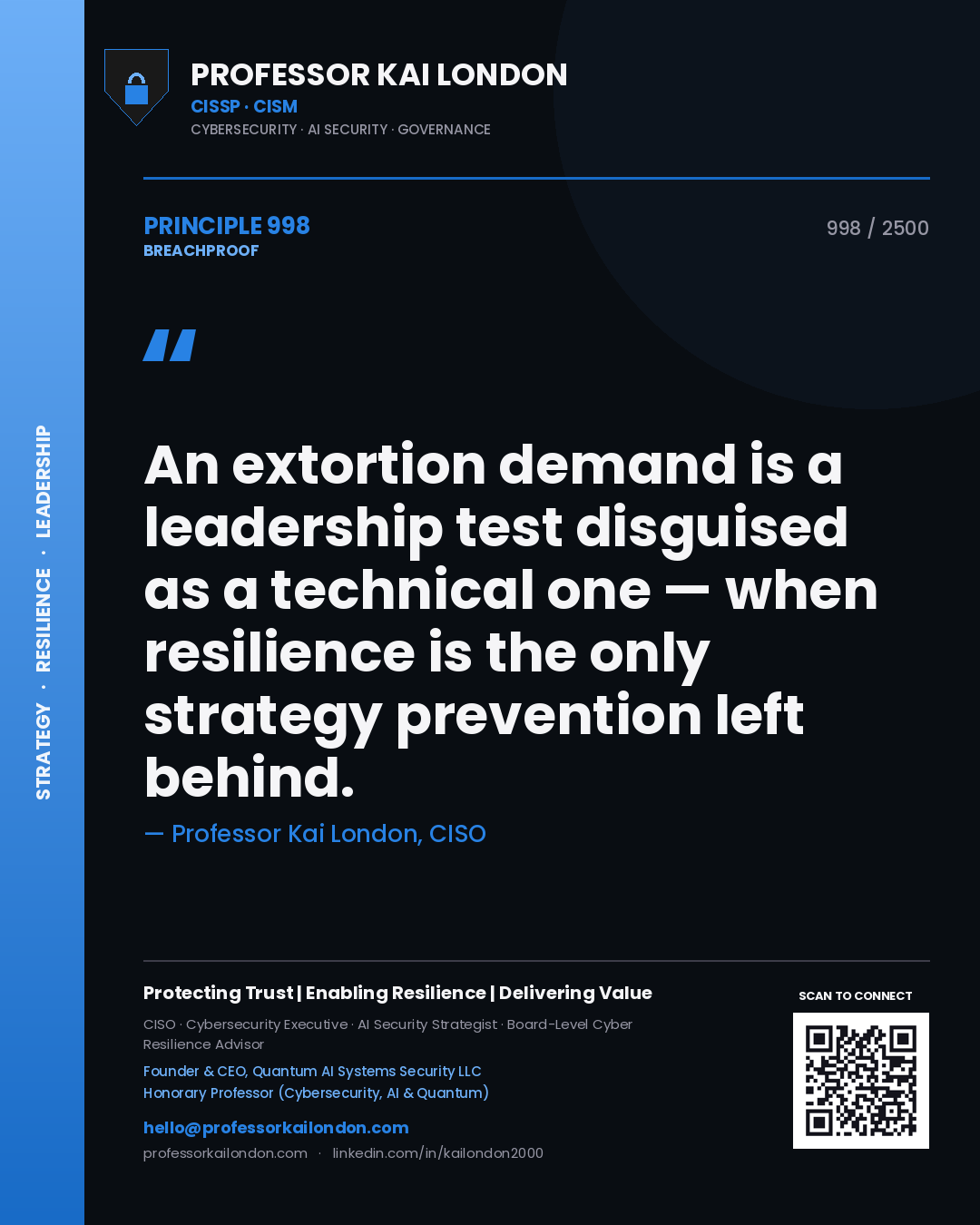
Professor Kai London principle 998: An extortion demand is a leadership test disguised as a technical one — when resilience is the only strategy prevention left behind.
Principle 998
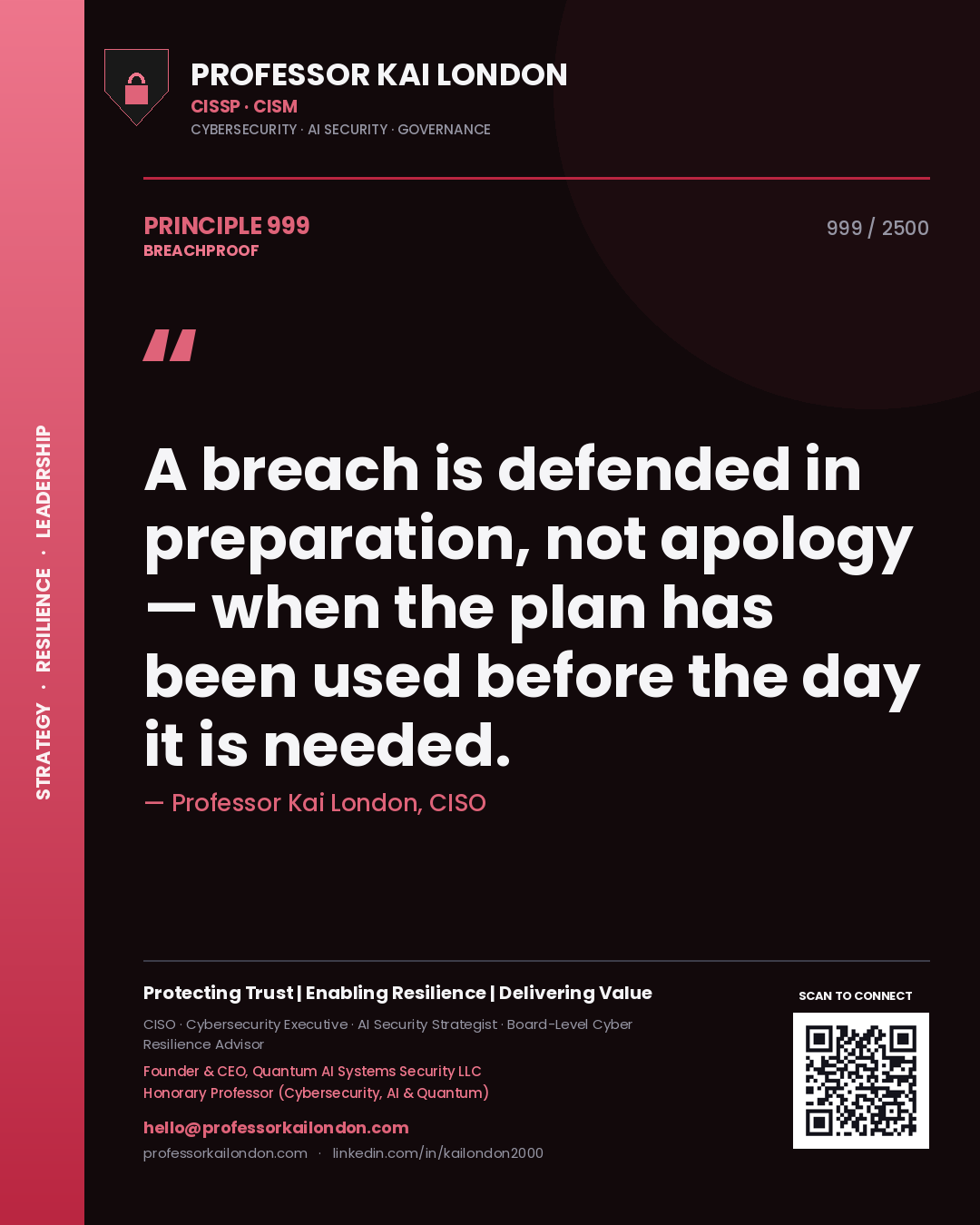
Professor Kai London principle 999: A breach is defended in preparation, not apology — when the plan has been used before the day it is needed.
Principle 999
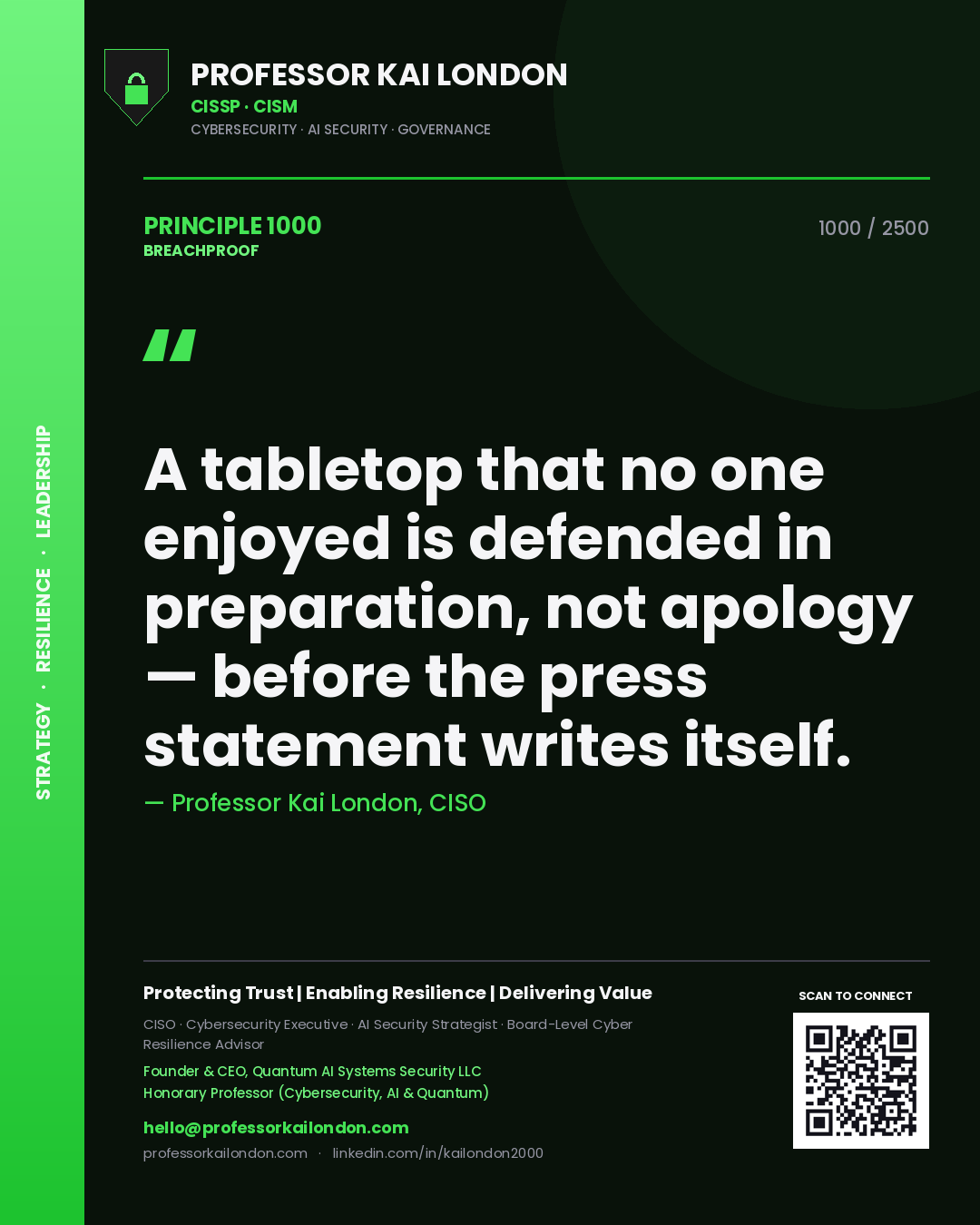
Professor Kai London principle 1000: A tabletop that no one enjoyed is defended in preparation, not apology — before the press statement writes itself.
Principle 1000