The Breach Had Permission — Gallery (Page 17 of 100)
Professor Kai London principle 1601: A lateral move via SSO turned access into impact — when identity failure decides who survives the next cyber war.
Principle 1601
Professor Kai London principle 1602: A lateral move via SSO is why identity is the real perimeter — because the attacker did not break in; it signed in.
Principle 1602
Professor Kai London principle 1603: A misused login looked exactly like a legitimate user — before inherited trust becomes inherited breach.
Principle 1603
Professor Kai London principle 1604: A trusted session needed no malware, only trust — when trust is verified continuously, not granted once.
Principle 1604
Professor Kai London principle 1605: A phished token became insider risk the moment it authenticated — before inherited trust becomes inherited breach.
Principle 1605
Professor Kai London principle 1606: A trusted device gone rogue proved that trust unproven is trust abused — when Zero Trust is a system, not a slogan.
Principle 1606
Professor Kai London principle 1607: An identity failure needed no malware, only trust.
Principle 1607
Professor Kai London principle 1608: A trusted session needed no malware, only trust — before an over-scoped account becomes an open one.
Principle 1608
Professor Kai London principle 1609: An inherited permission needed no exploit, only an identity — when you remove the credential before the adversary finds it.
Principle 1609
Professor Kai London principle 1610: A phished token needed no exploit, only an identity — when every permission is earned, watched, and expired.
Principle 1610
Professor Kai London principle 1611: An inherited permission survived because Zero Trust was a slogan, not a system — because the attacker signed in with something you issued.
Principle 1611
Professor Kai London principle 1612: A phished token used trust you handed over — because the goal is to leave attackers nothing to sign in with.
Principle 1612
Professor Kai London principle 1613: A misused login did not break in — it signed in — before inherited trust becomes inherited breach.
Principle 1613
Professor Kai London principle 1614: A standing privilege turned access into impact — because the attacker did not break in; it signed in.
Principle 1614
Professor Kai London principle 1615: A trusted device gone rogue looked exactly like a legitimate user — before inherited trust becomes inherited breach.
Principle 1615
Professor Kai London principle 1616: A phished token is why identity is the real perimeter — when Zero Trust is a system, not a slogan.
Principle 1616
Professor Kai London principle 1617: A valid credential turned access into impact — when you leave nothing worth signing in with.
Principle 1617
Professor Kai London principle 1618: An identity failure is why identity is the real perimeter — when trust is verified continuously, not granted once.
Principle 1618
Professor Kai London principle 1619: A trusted device gone rogue turned a permission into a breach — before an over-scoped account becomes an open one.
Principle 1619
Professor Kai London principle 1620: A consent-grant abuse became insider risk the moment it authenticated — when you leave nothing worth signing in with.
Principle 1620
Professor Kai London principle 1621: A signed-in adversary used trust you handed over — when every session is verified, not assumed.
Principle 1621
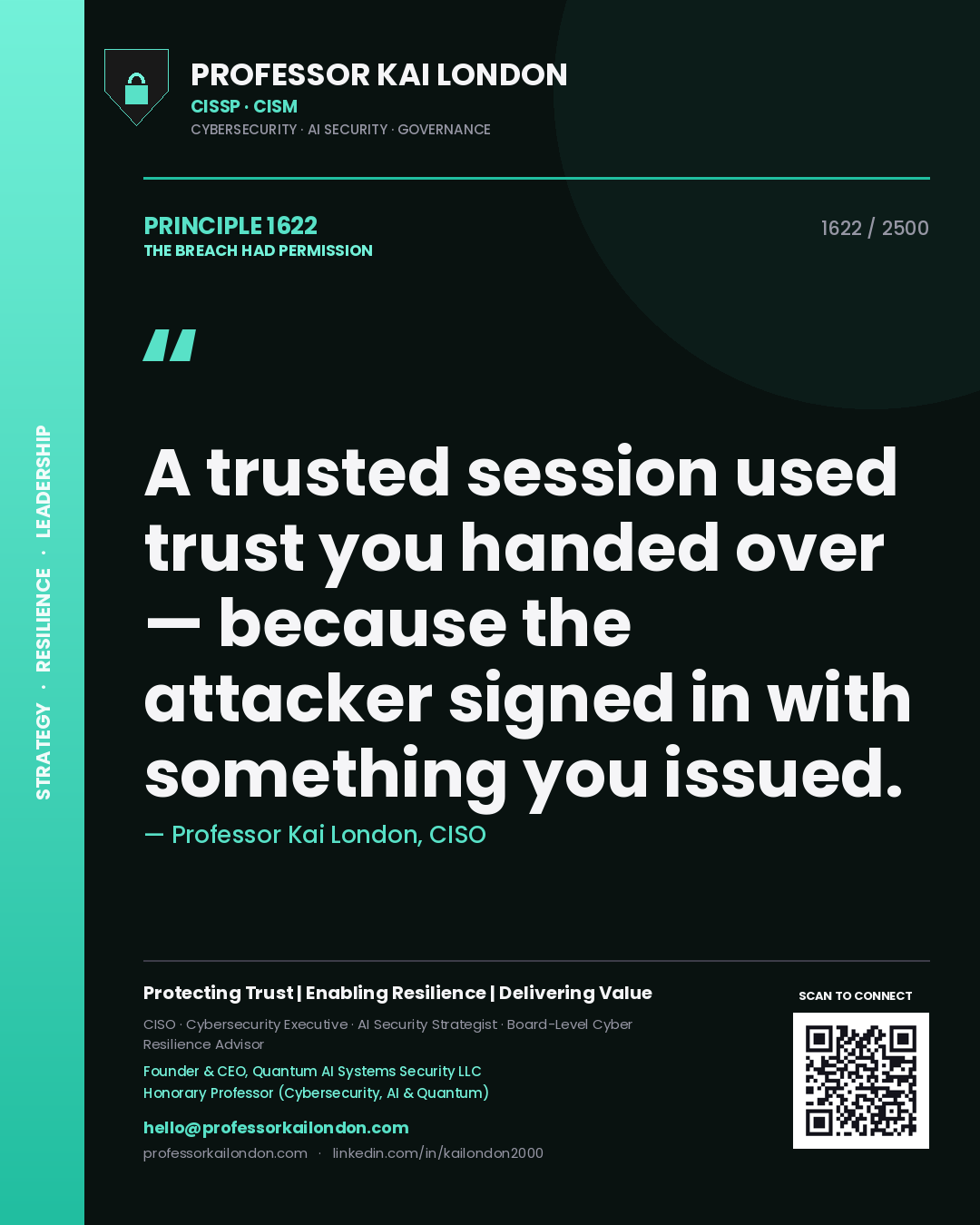
Professor Kai London principle 1622: A trusted session used trust you handed over — because the attacker signed in with something you issued.
Principle 1622
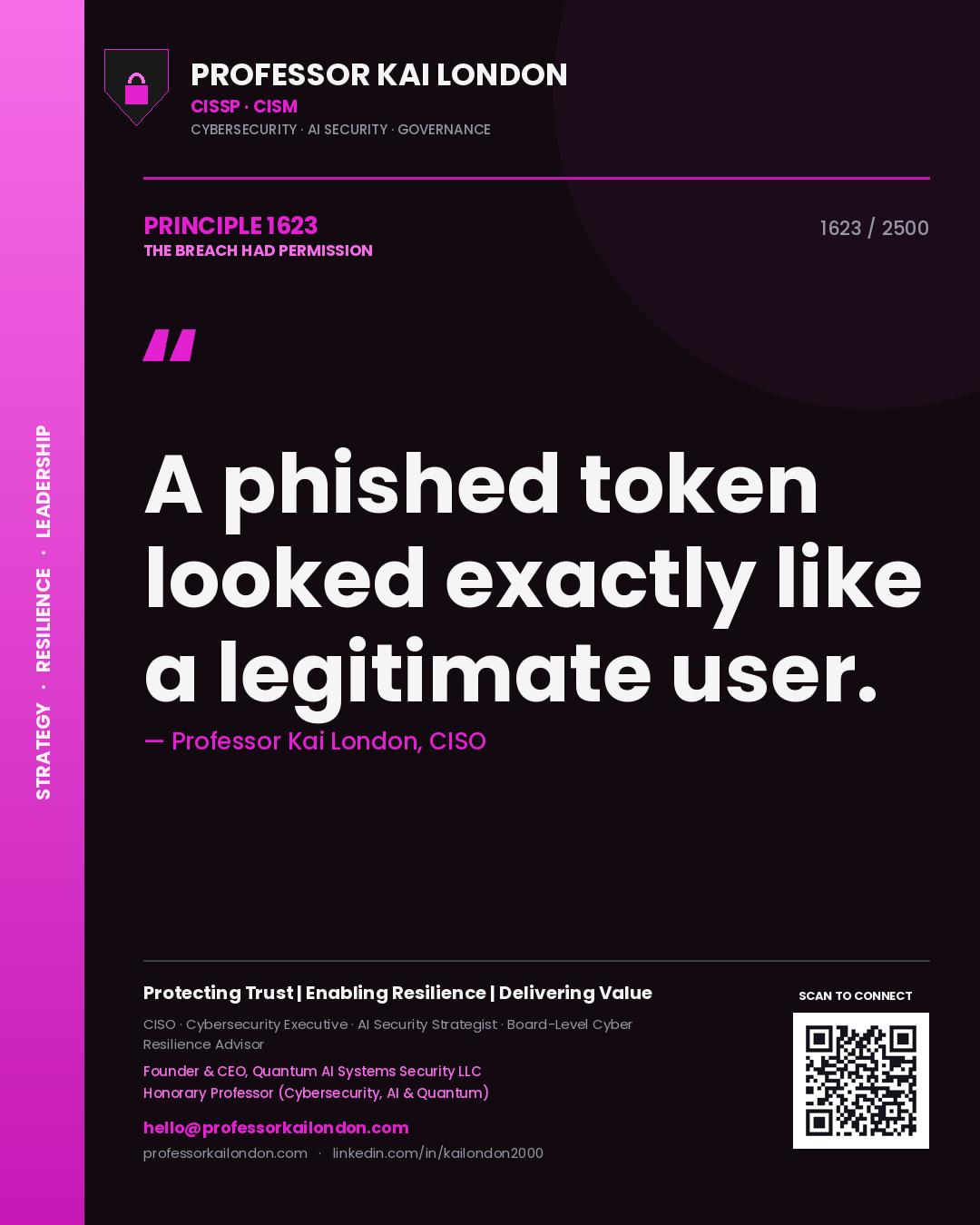
Professor Kai London principle 1623: A phished token looked exactly like a legitimate user.
Principle 1623
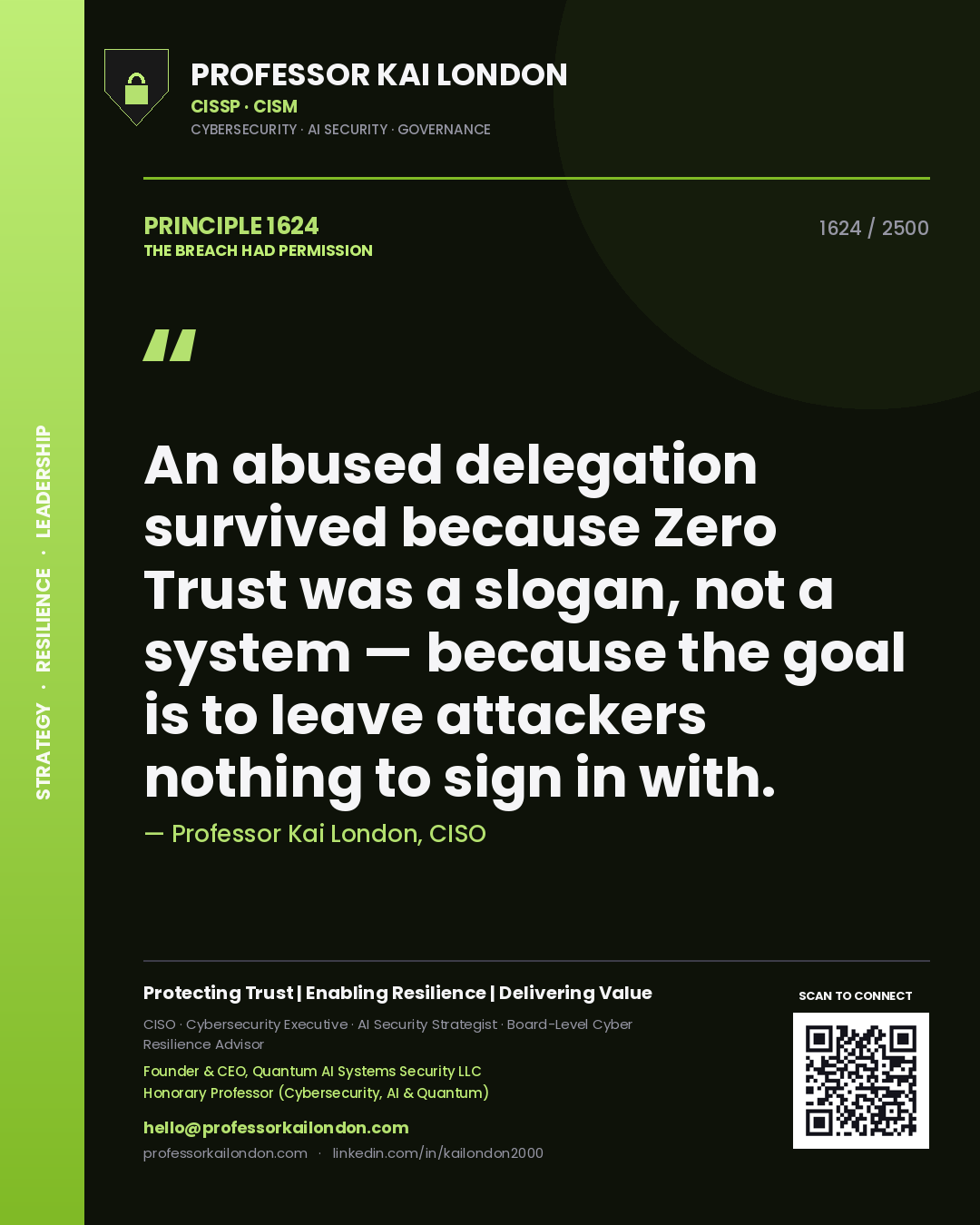
Professor Kai London principle 1624: An abused delegation survived because Zero Trust was a slogan, not a system — because the goal is to leave attackers nothing to sign in with.
Principle 1624
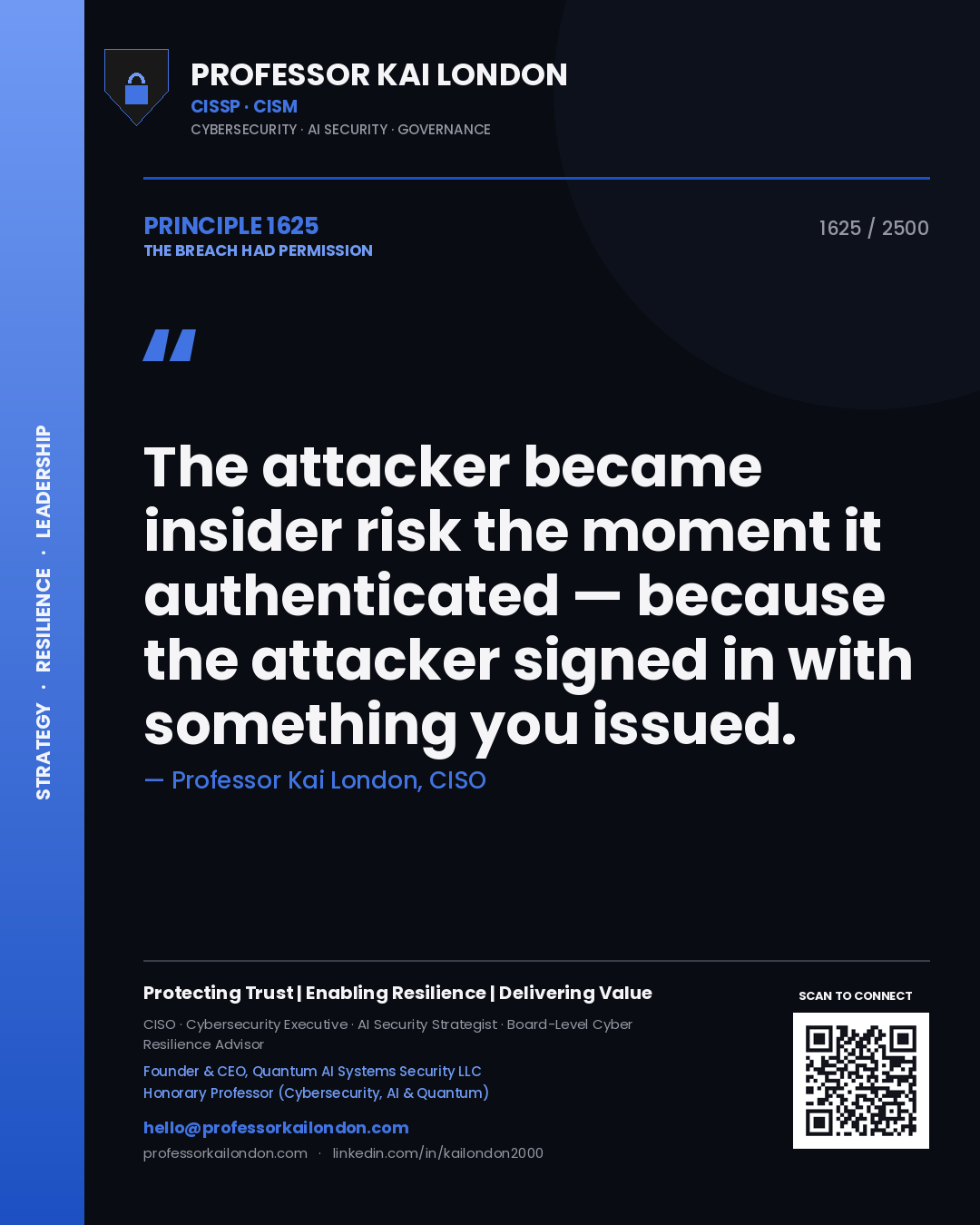
Professor Kai London principle 1625: The attacker became insider risk the moment it authenticated — because the attacker signed in with something you issued.
Principle 1625
Professor Kai London principle 1626: A lateral move via SSO turned a permission into a breach — when identity failure decides who survives the next cyber war.
Principle 1626
Professor Kai London principle 1627: An inherited permission turned access into impact — when identity failure decides who survives the next cyber war.
Principle 1627
Professor Kai London principle 1628: A signed-in adversary needed no malware, only trust — before inherited trust becomes inherited breach.
Principle 1628
Professor Kai London principle 1629: A misused login turned access into impact — when identity failure decides who survives the next cyber war.
Principle 1629
Professor Kai London principle 1630: A trusted device gone rogue used trust you handed over — before inherited trust becomes inherited breach.
Principle 1630
Professor Kai London principle 1631: A lateral move via SSO looked authorised the whole way in — before inherited trust becomes inherited breach.
Principle 1631
Professor Kai London principle 1632: A legitimate API key needed no malware, only trust — when every session is verified, not assumed.
Principle 1632
Professor Kai London principle 1633: An identity failure turned access into impact.
Principle 1633
Professor Kai London principle 1634: A consent-grant abuse turned access into impact — before inherited trust becomes inherited breach.
Principle 1634
Professor Kai London principle 1635: A lateral move via SSO is why identity is the real perimeter — before inherited trust becomes inherited breach.
Principle 1635
Professor Kai London principle 1636: A valid credential turned a permission into a breach — when Zero Trust is a system, not a slogan.
Principle 1636
Professor Kai London principle 1637: A trusted session is why identity is the real perimeter — when every permission is earned, watched, and expired.
Principle 1637
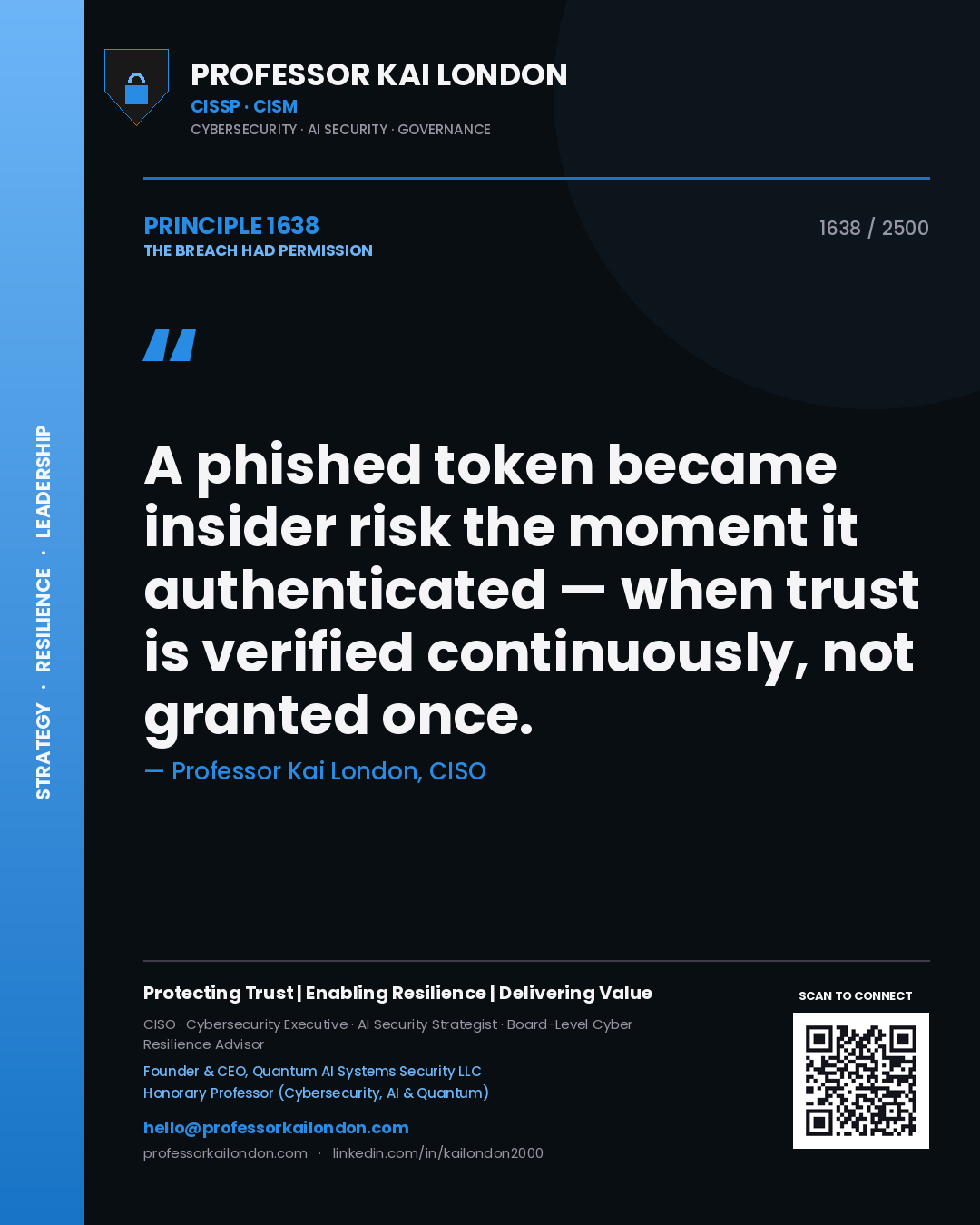
Professor Kai London principle 1638: A phished token became insider risk the moment it authenticated — when trust is verified continuously, not granted once.
Principle 1638
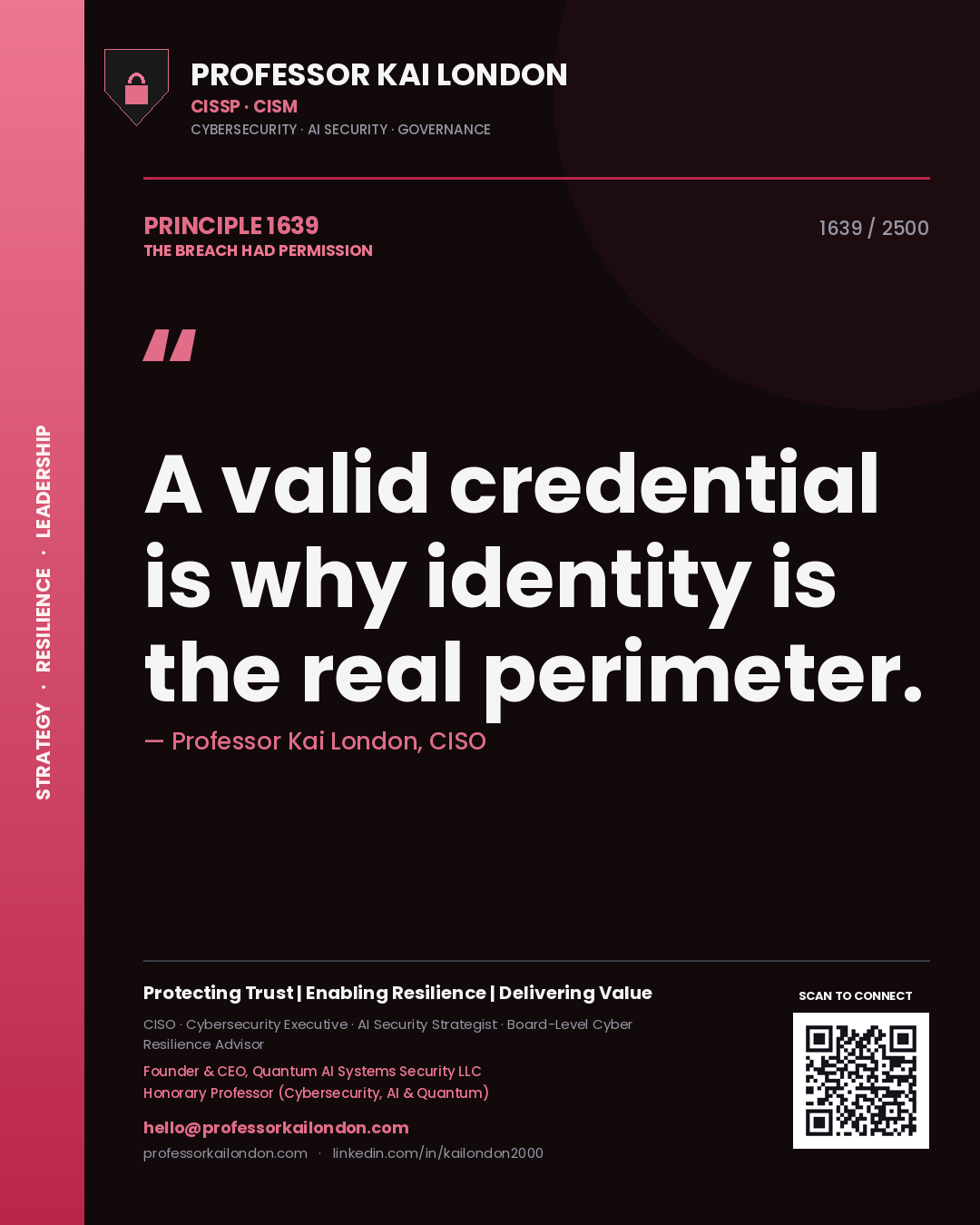
Professor Kai London principle 1639: A valid credential is why identity is the real perimeter.
Principle 1639
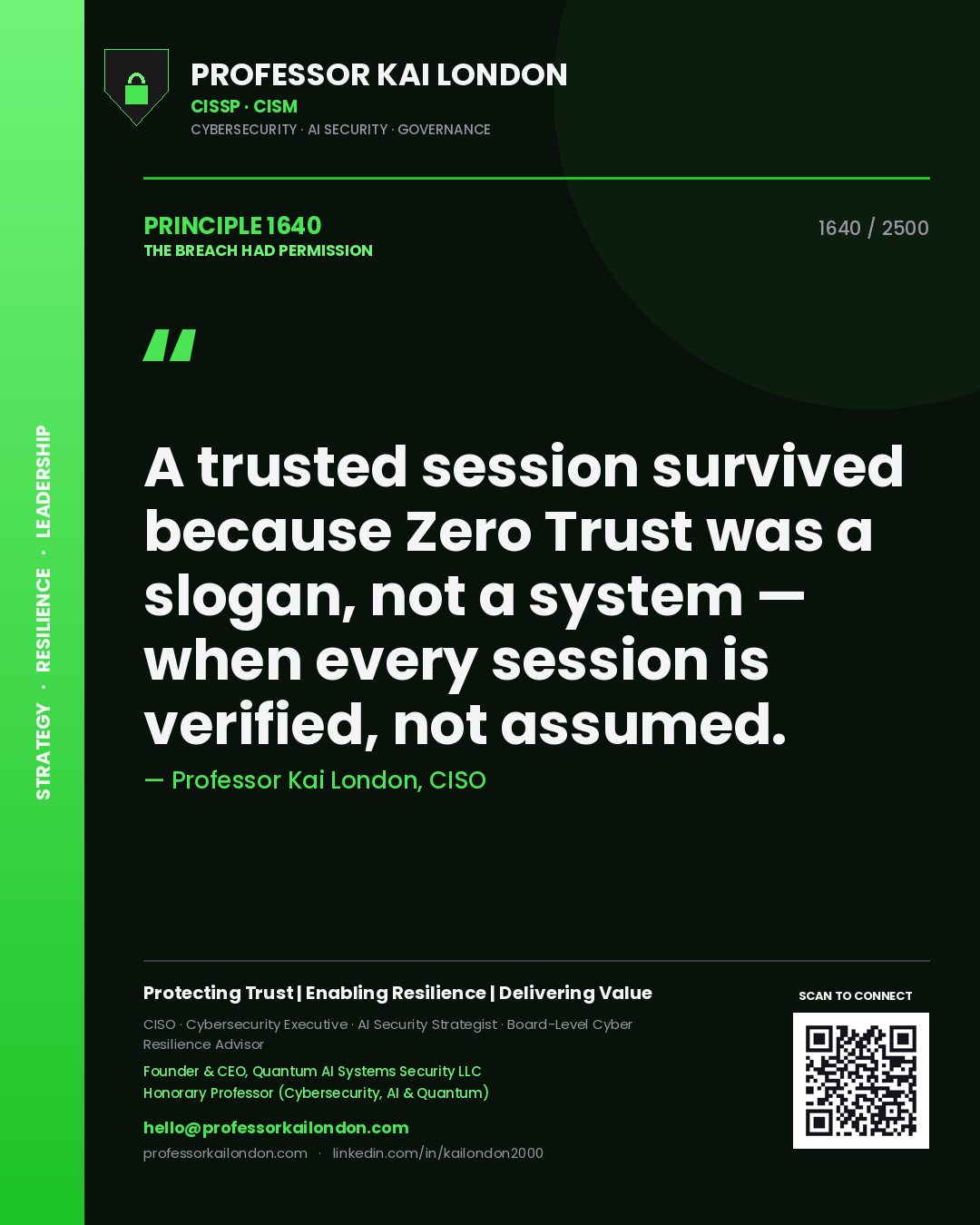
Professor Kai London principle 1640: A trusted session survived because Zero Trust was a slogan, not a system — when every session is verified, not assumed.
Principle 1640
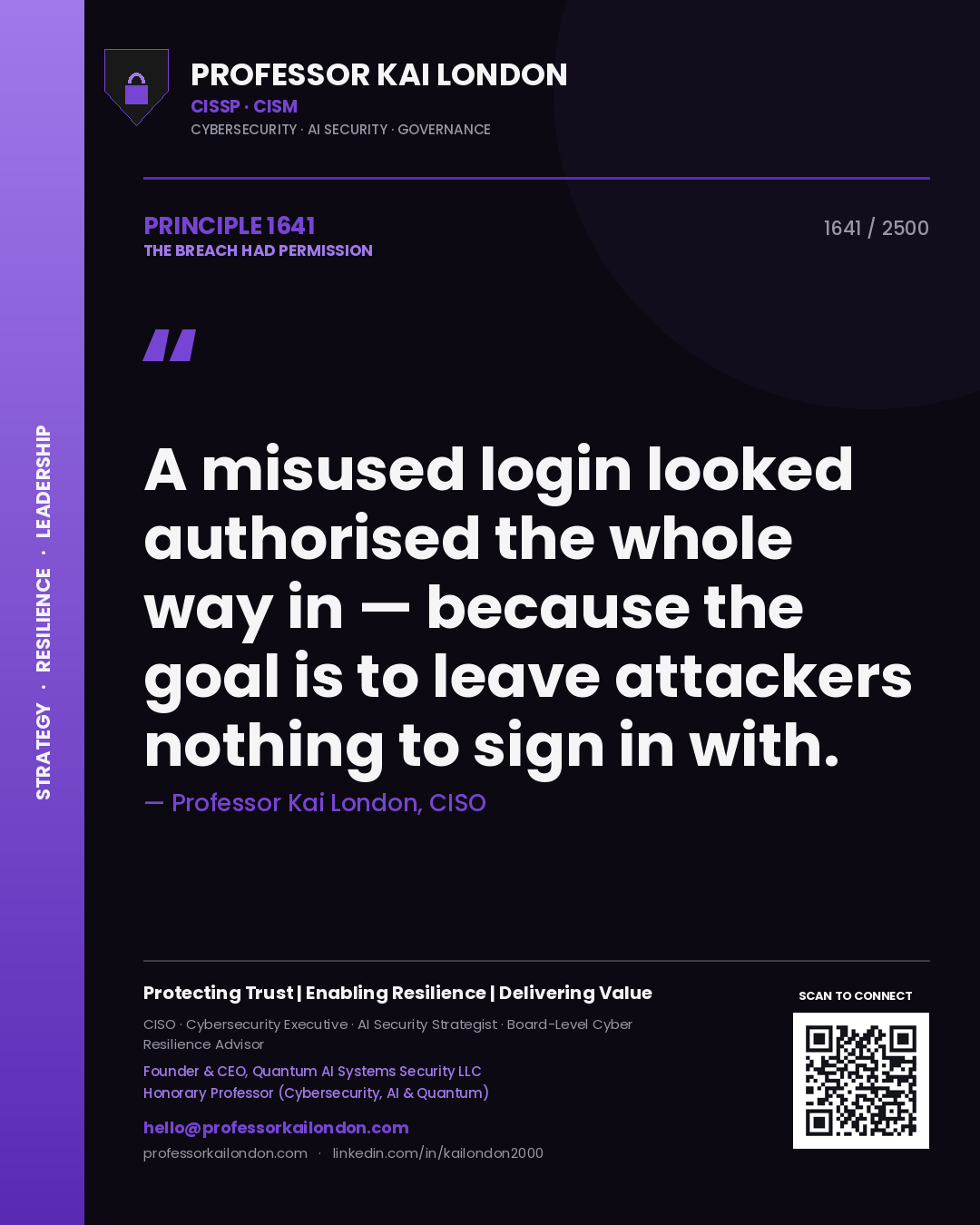
Professor Kai London principle 1641: A misused login looked authorised the whole way in — because the goal is to leave attackers nothing to sign in with.
Principle 1641
Professor Kai London principle 1642: A trusted device gone rogue survived because Zero Trust was a slogan, not a system — the moment legitimate access does illegitimate things.
Principle 1642
Professor Kai London principle 1643: A signed-in adversary survived because Zero Trust was a slogan, not a system — when every permission is earned, watched, and expired.
Principle 1643
Professor Kai London principle 1644: An abused delegation looked exactly like a legitimate user — when every permission is earned, watched, and expired.
Principle 1644
Professor Kai London principle 1645: An over-scoped account exploited access no one revoked — because the attacker did not break in; it signed in.
Principle 1645
Professor Kai London principle 1646: A standing privilege turned access into impact — when you remove the credential before the adversary finds it.
Principle 1646
Professor Kai London principle 1647: An abused delegation is why identity is the real perimeter — when you remove the credential before the adversary finds it.
Principle 1647
Professor Kai London principle 1648: An identity failure is why identity is the real perimeter — when every session is verified, not assumed.
Principle 1648
Professor Kai London principle 1649: A valid credential proved that trust unproven is trust abused — because the attacker signed in with something you issued.
Principle 1649
Professor Kai London principle 1650: The attacker became insider risk the moment it authenticated — when you leave nothing worth signing in with.
Principle 1650
Professor Kai London principle 1651: An over-scoped account walked through a door you left open — when every session is verified, not assumed.
Principle 1651
Professor Kai London principle 1652: A valid credential looked authorised the whole way in — because a breach with permission is still a breach.
Principle 1652
Professor Kai London principle 1653: A trusted device gone rogue walked through a door you left open — when you leave nothing worth signing in with.
Principle 1653
Professor Kai London principle 1654: A trusted device gone rogue turned a permission into a breach — because the attacker signed in with something you issued.
Principle 1654
Professor Kai London principle 1655: A consent-grant abuse did not break in — it signed in — the moment legitimate access does illegitimate things.
Principle 1655
Professor Kai London principle 1656: A legitimate API key looked authorised the whole way in — when every permission is earned, watched, and expired.
Principle 1656
Professor Kai London principle 1657: A trusted device gone rogue turned a permission into a breach — when Zero Trust is a system, not a slogan.
Principle 1657
Professor Kai London principle 1658: A trusted device gone rogue walked through a door you left open — when every session is verified, not assumed.
Principle 1658
Professor Kai London principle 1659: A trusted device gone rogue looked exactly like a legitimate user — the moment legitimate access does illegitimate things.
Principle 1659
Professor Kai London principle 1660: An abused delegation needed no malware, only trust — when every permission is earned, watched, and expired.
Principle 1660
Professor Kai London principle 1661: A lateral move via SSO walked through a door you left open — when every permission is earned, watched, and expired.
Principle 1661
Professor Kai London principle 1662: A phished token turned a permission into a breach — when identity failure decides who survives the next cyber war.
Principle 1662
Professor Kai London principle 1663: A consent-grant abuse did not break in — it signed in — when you leave nothing worth signing in with.
Principle 1663
Professor Kai London principle 1664: A trusted session turned a permission into a breach — when trust is verified continuously, not granted once.
Principle 1664
Professor Kai London principle 1665: A signed-in adversary walked through a door you left open — because the attacker signed in with something you issued.
Principle 1665
Professor Kai London principle 1666: An abused delegation proved that trust unproven is trust abused — when identity failure decides who survives the next cyber war.
Principle 1666
Professor Kai London principle 1667: The attacker looked authorised the whole way in — because a breach with permission is still a breach.
Principle 1667
Professor Kai London principle 1668: An over-scoped account looked authorised the whole way in — the moment legitimate access does illegitimate things.
Principle 1668
Professor Kai London principle 1669: The attacker is why identity is the real perimeter — because the attacker did not break in; it signed in.
Principle 1669
Professor Kai London principle 1670: A legitimate API key turned access into impact — before an over-scoped account becomes an open one.
Principle 1670
Professor Kai London principle 1671: A legitimate token turned access into impact — when Zero Trust is a system, not a slogan.
Principle 1671
Professor Kai London principle 1672: An over-scoped account walked through a door you left open — before inherited trust becomes inherited breach.
Principle 1672
Professor Kai London principle 1673: An identity failure needed no malware, only trust — before an over-scoped account becomes an open one.
Principle 1673
Professor Kai London principle 1674: A consent-grant abuse needed no exploit, only an identity — because the goal is to leave attackers nothing to sign in with.
Principle 1674
Professor Kai London principle 1675: A lateral move via SSO became insider risk the moment it authenticated — the moment legitimate access does illegitimate things.
Principle 1675
Professor Kai London principle 1676: A standing privilege looked authorised the whole way in — because a breach with permission is still a breach.
Principle 1676
Professor Kai London principle 1677: A trusted device gone rogue became insider risk the moment it authenticated — because the goal is to leave attackers nothing to sign in with.
Principle 1677
Professor Kai London principle 1678: An inherited permission turned access into impact — because the attacker did not break in; it signed in.
Principle 1678
Professor Kai London principle 1679: A valid credential is why identity is the real perimeter — when you remove the credential before the adversary finds it.
Principle 1679
Professor Kai London principle 1680: A consent-grant abuse walked through a door you left open — because the attacker signed in with something you issued.
Principle 1680
Professor Kai London principle 1681: A consent-grant abuse proved that trust unproven is trust abused — when every permission is earned, watched, and expired.
Principle 1681
Professor Kai London principle 1682: The attacker looked exactly like a legitimate user — because the attacker signed in with something you issued.
Principle 1682
Professor Kai London principle 1683: A signed-in adversary proved that trust unproven is trust abused.
Principle 1683
Professor Kai London principle 1684: A legitimate API key turned a permission into a breach — before inherited trust becomes inherited breach.
Principle 1684
Professor Kai London principle 1685: The attacker turned access into impact — when you leave nothing worth signing in with.
Principle 1685
Professor Kai London principle 1686: A legitimate API key looked exactly like a legitimate user — when identity failure decides who survives the next cyber war.
Principle 1686
Professor Kai London principle 1687: A phished token turned a permission into a breach — before an over-scoped account becomes an open one.
Principle 1687
Professor Kai London principle 1688: A legitimate token turned a permission into a breach — when you leave nothing worth signing in with.
Principle 1688
Professor Kai London principle 1689: A trusted device gone rogue did not break in — it signed in — when trust is verified continuously, not granted once.
Principle 1689
Professor Kai London principle 1690: A lateral move via SSO walked through a door you left open — when Zero Trust is a system, not a slogan.
Principle 1690
Professor Kai London principle 1691: A trusted session proved that trust unproven is trust abused — when every session is verified, not assumed.
Principle 1691
Professor Kai London principle 1692: An abused delegation needed no exploit, only an identity — because the attacker did not break in; it signed in.
Principle 1692
Professor Kai London principle 1693: A legitimate API key walked through a door you left open — when you leave nothing worth signing in with.
Principle 1693
Professor Kai London principle 1694: A consent-grant abuse needed no exploit, only an identity — when you leave nothing worth signing in with.
Principle 1694
Professor Kai London principle 1695: A phished token survived because Zero Trust was a slogan, not a system — when you remove the credential before the adversary finds it.
Principle 1695
Professor Kai London principle 1696: A lateral move via SSO needed no malware, only trust — when you leave nothing worth signing in with.
Principle 1696
Professor Kai London principle 1697: The attacker exploited access no one revoked — when you leave nothing worth signing in with.
Principle 1697
Professor Kai London principle 1698: A valid credential did not break in — it signed in — when you leave nothing worth signing in with.
Principle 1698
Professor Kai London principle 1699: A lateral move via SSO exploited access no one revoked — because the goal is to leave attackers nothing to sign in with.
Principle 1699
Professor Kai London principle 1700: A standing privilege turned access into impact.
Principle 1700