The Breach Had Permission — Gallery (Page 15 of 100)
Professor Kai London principle 1401: An over-scoped account proved that trust unproven is trust abused — because the attacker signed in with something you issued.
Principle 1401
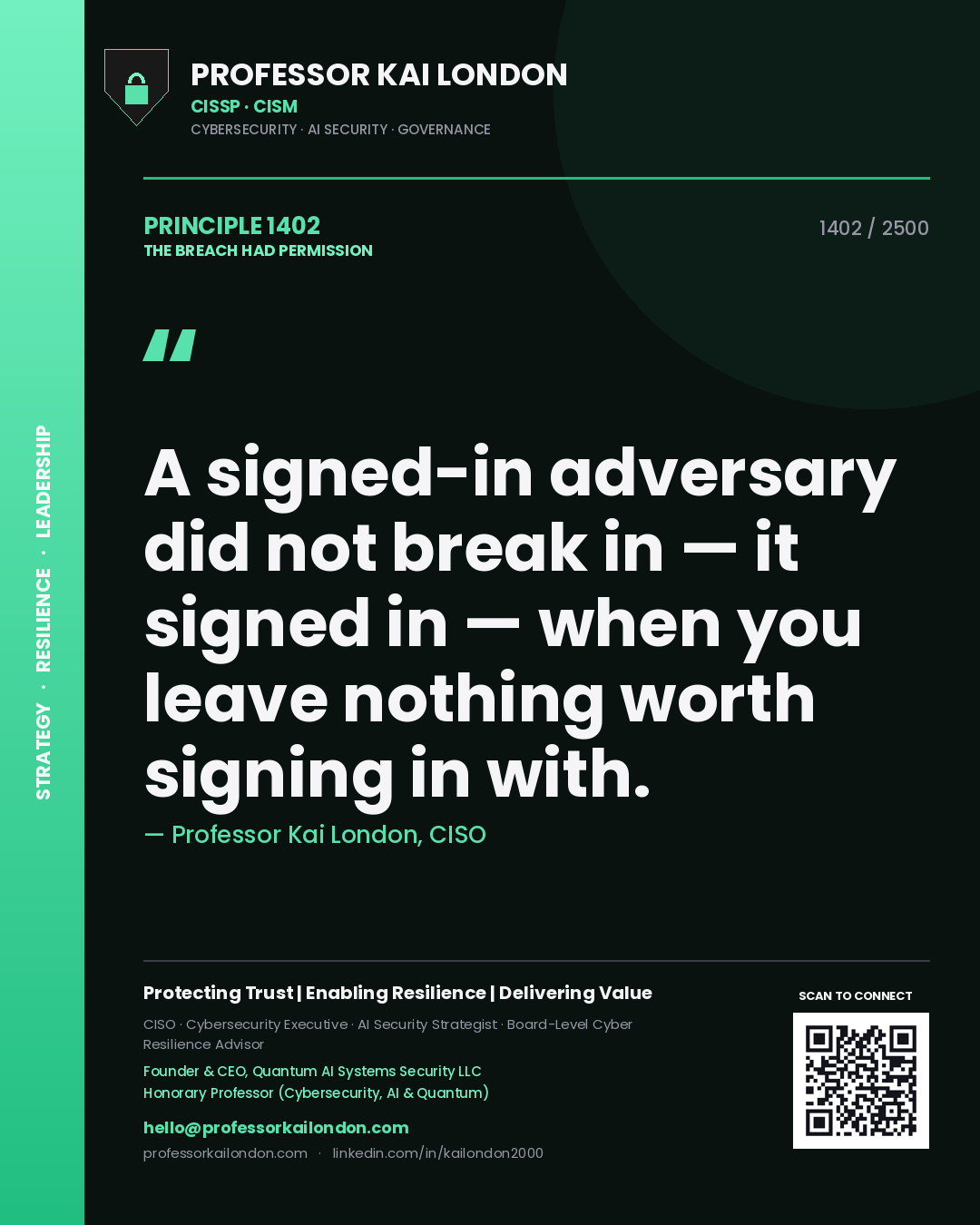
Professor Kai London principle 1402: A signed-in adversary did not break in — it signed in — when you leave nothing worth signing in with.
Principle 1402
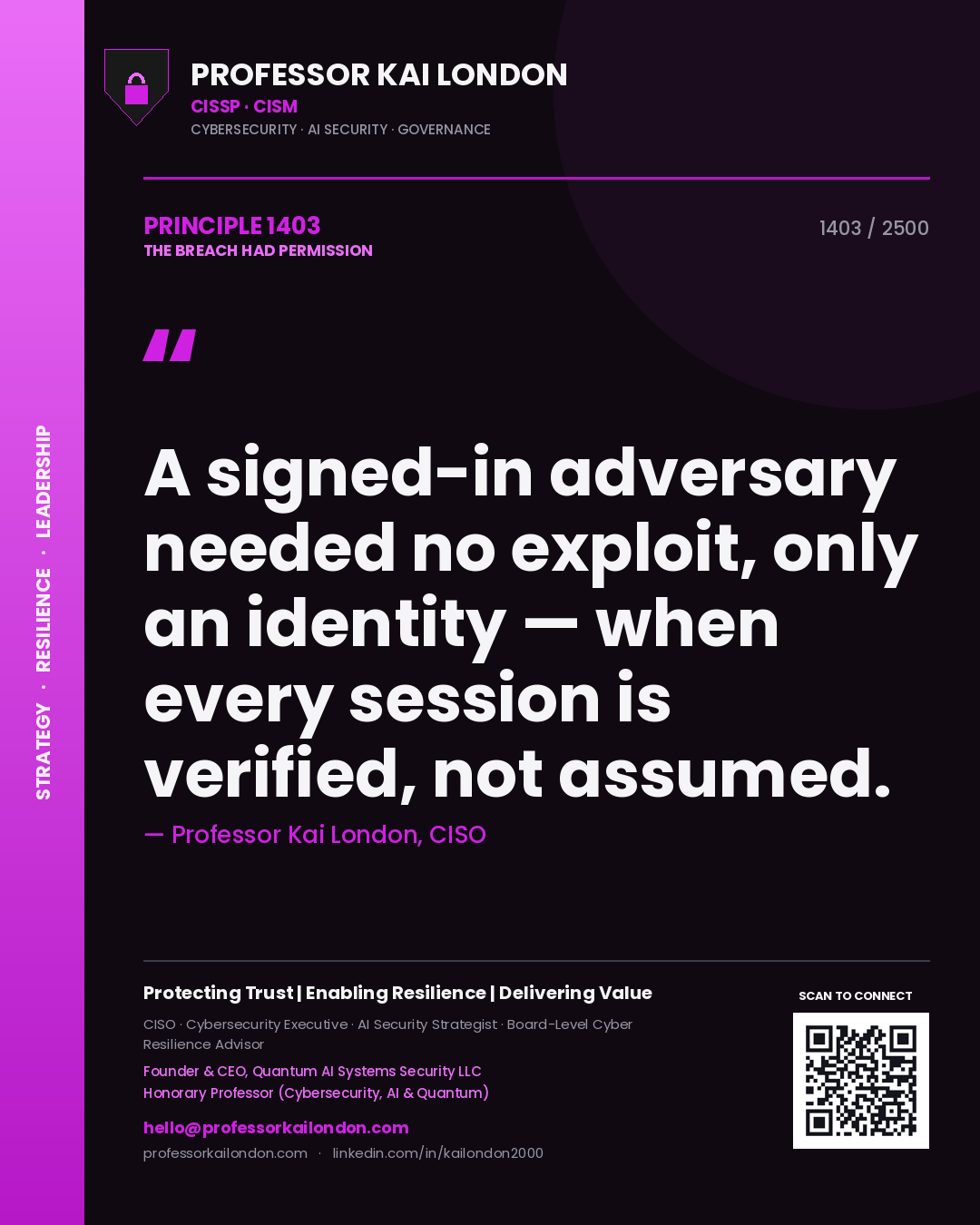
Professor Kai London principle 1403: A signed-in adversary needed no exploit, only an identity — when every session is verified, not assumed.
Principle 1403
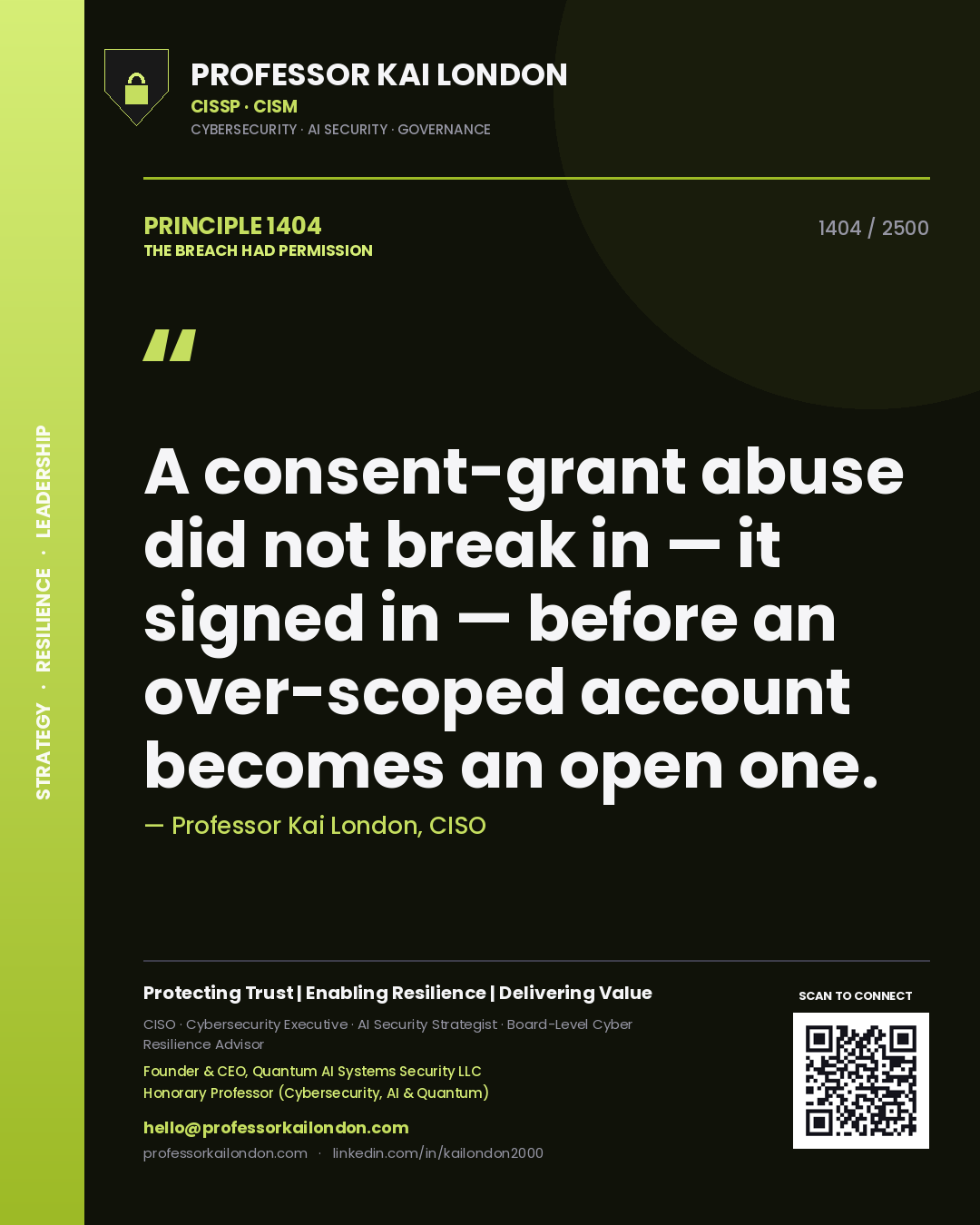
Professor Kai London principle 1404: A consent-grant abuse did not break in — it signed in — before an over-scoped account becomes an open one.
Principle 1404
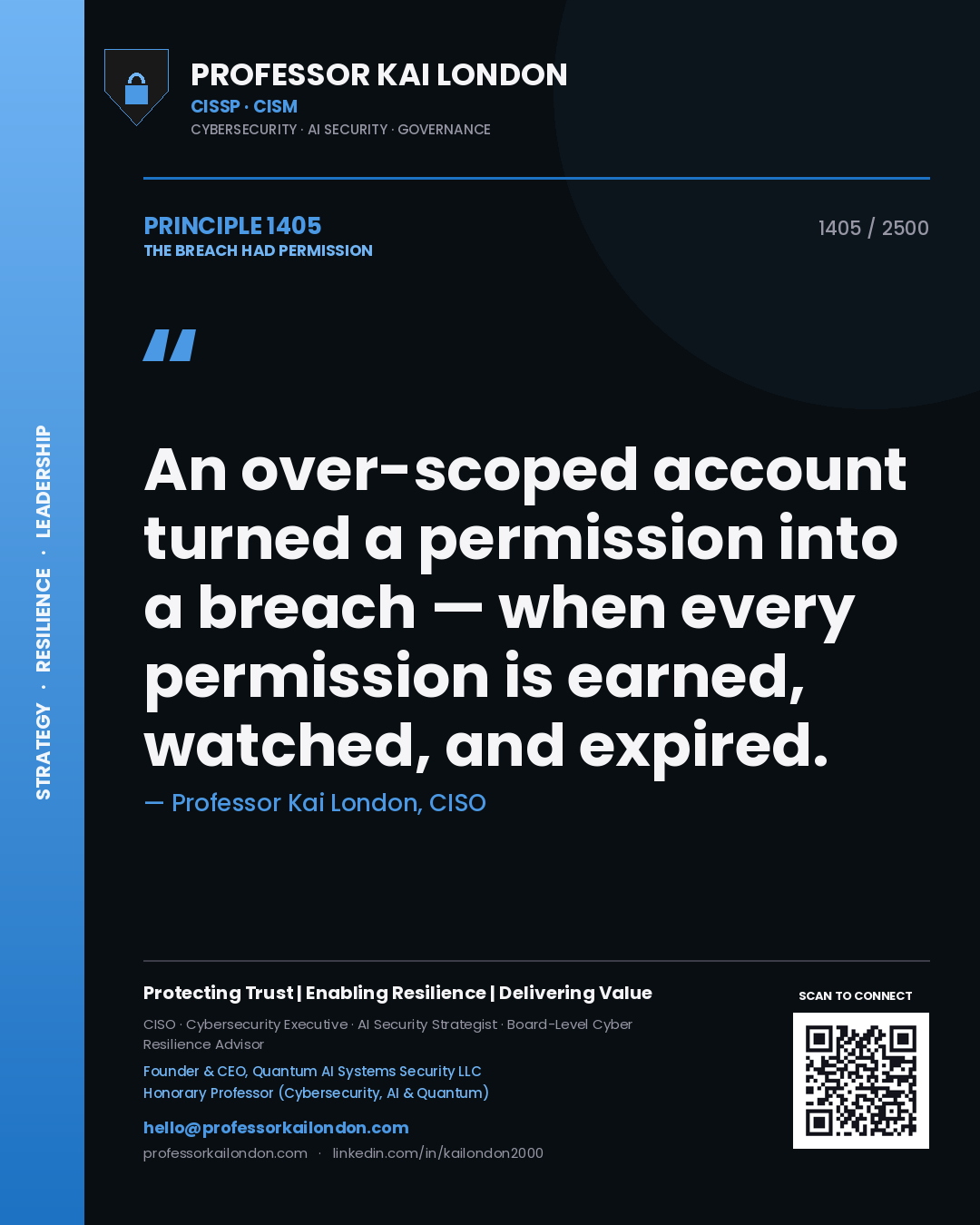
Professor Kai London principle 1405: An over-scoped account turned a permission into a breach — when every permission is earned, watched, and expired.
Principle 1405
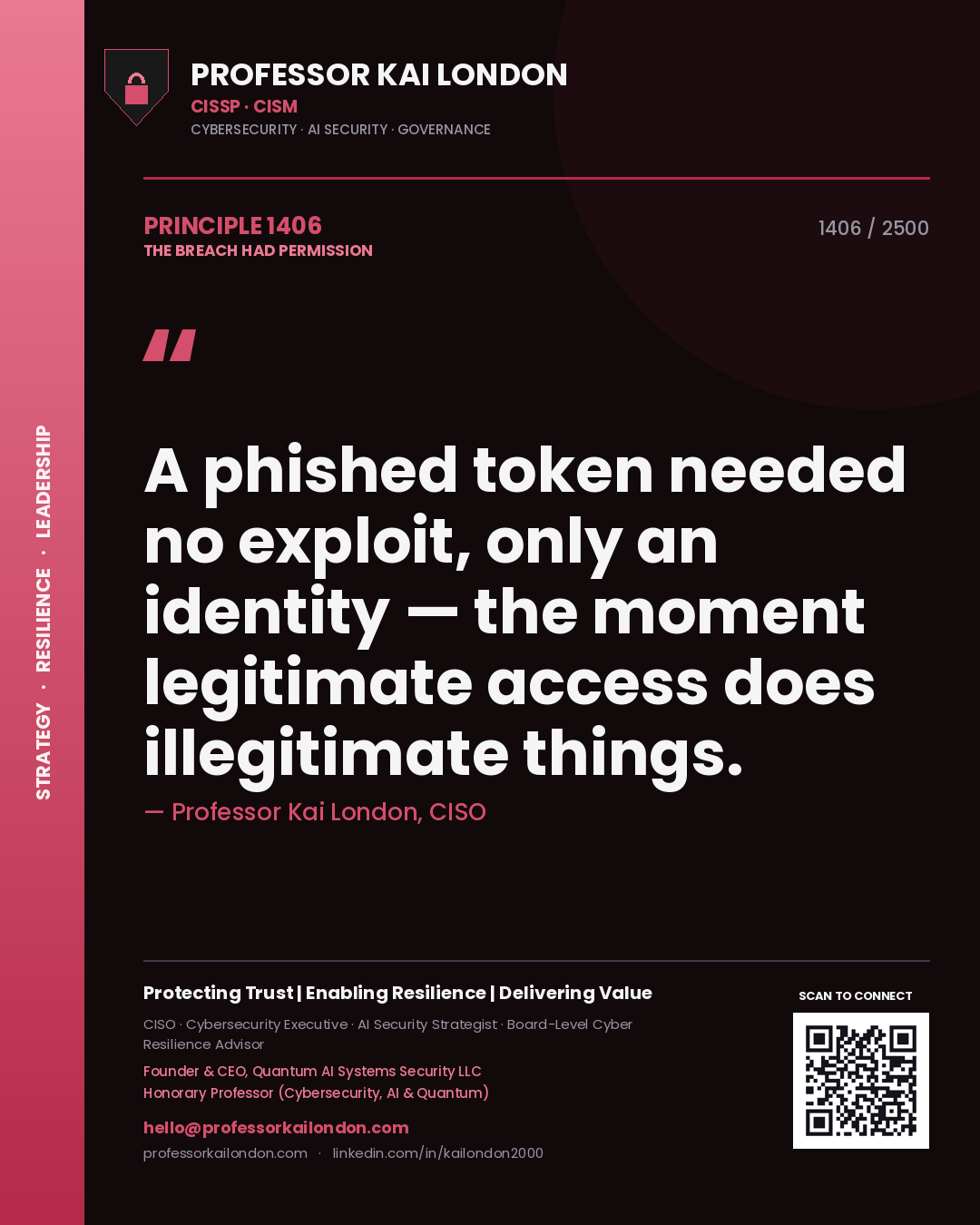
Professor Kai London principle 1406: A phished token needed no exploit, only an identity — the moment legitimate access does illegitimate things.
Principle 1406
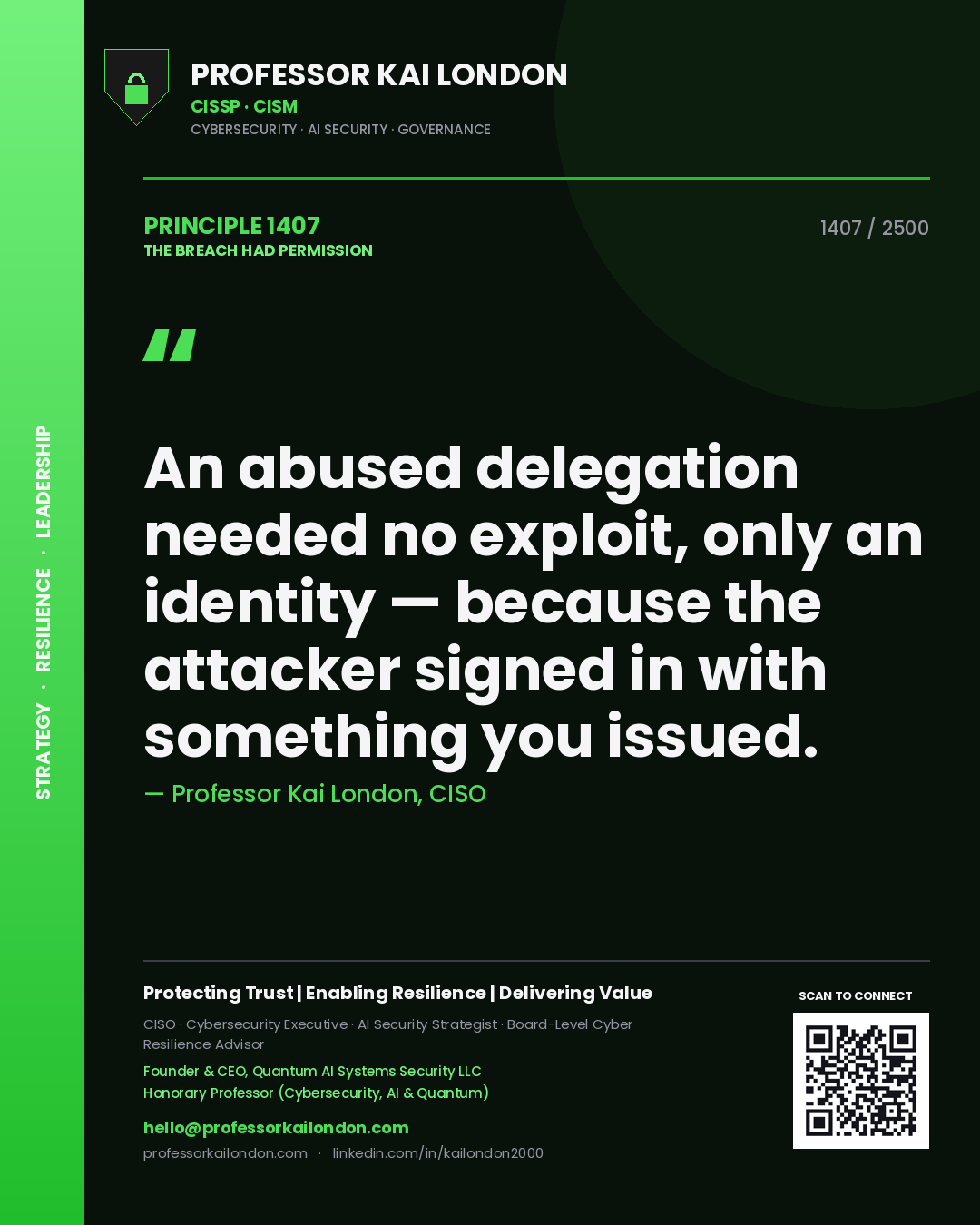
Professor Kai London principle 1407: An abused delegation needed no exploit, only an identity — because the attacker signed in with something you issued.
Principle 1407
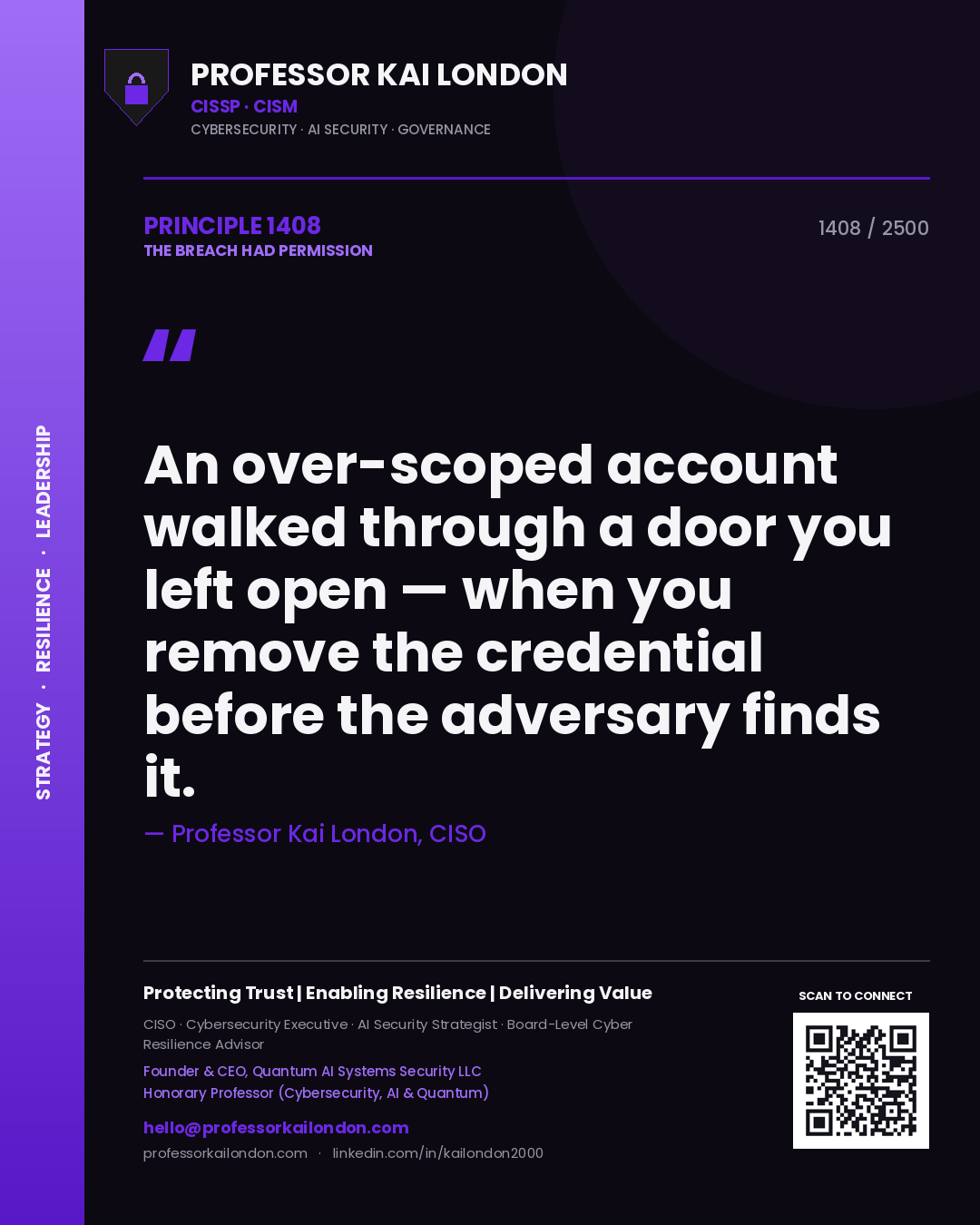
Professor Kai London principle 1408: An over-scoped account walked through a door you left open — when you remove the credential before the adversary finds it.
Principle 1408
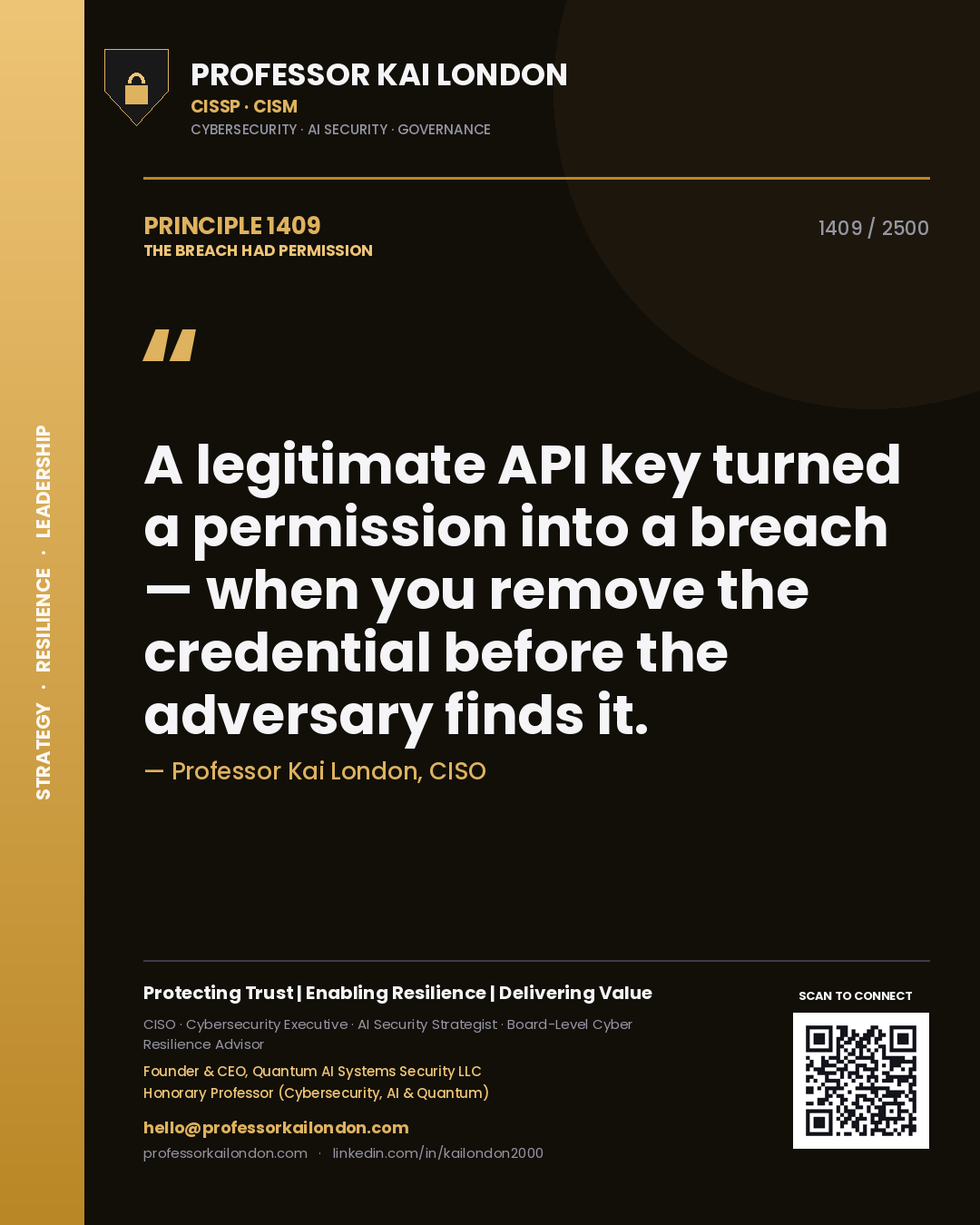
Professor Kai London principle 1409: A legitimate API key turned a permission into a breach — when you remove the credential before the adversary finds it.
Principle 1409
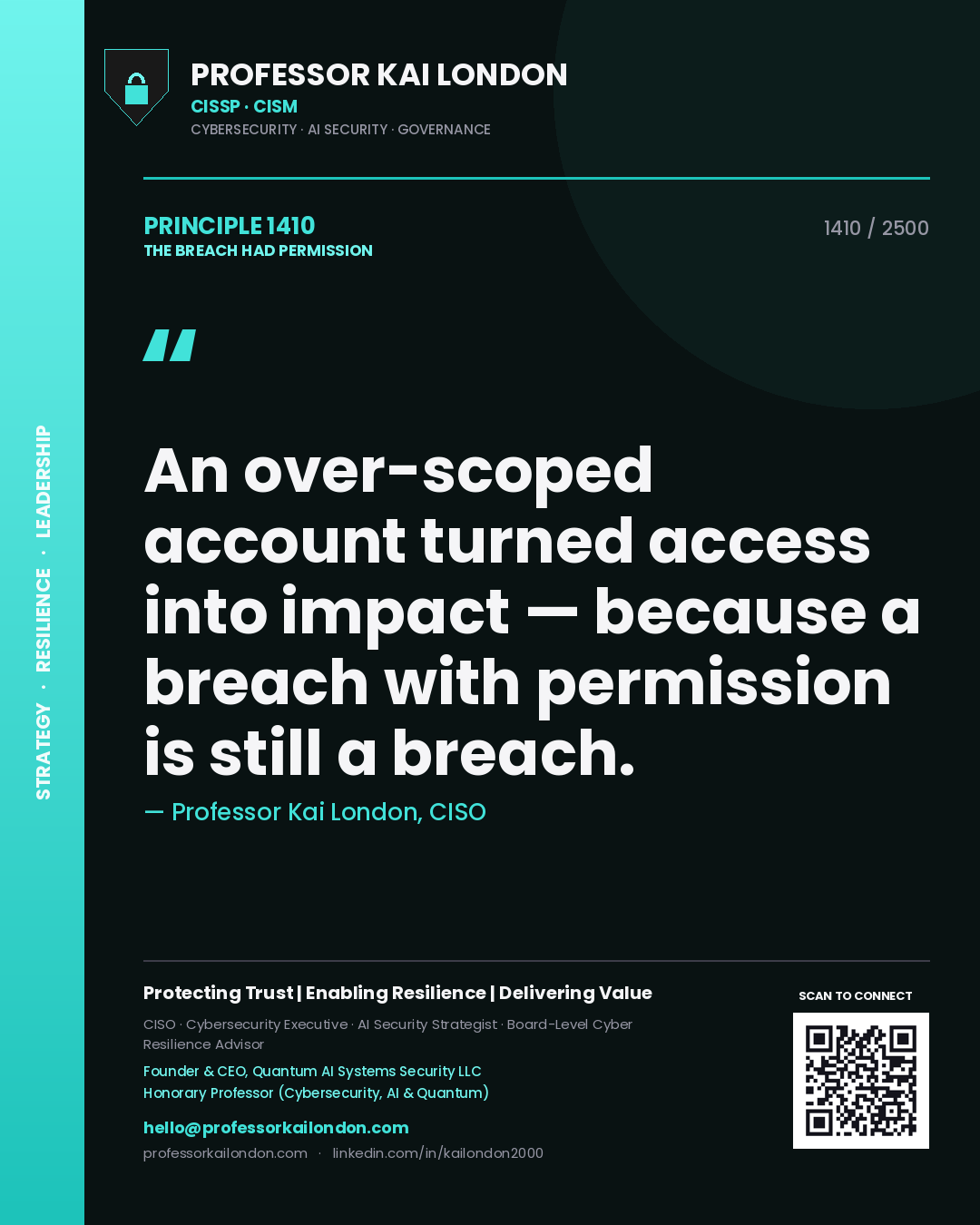
Professor Kai London principle 1410: An over-scoped account turned access into impact — because a breach with permission is still a breach.
Principle 1410
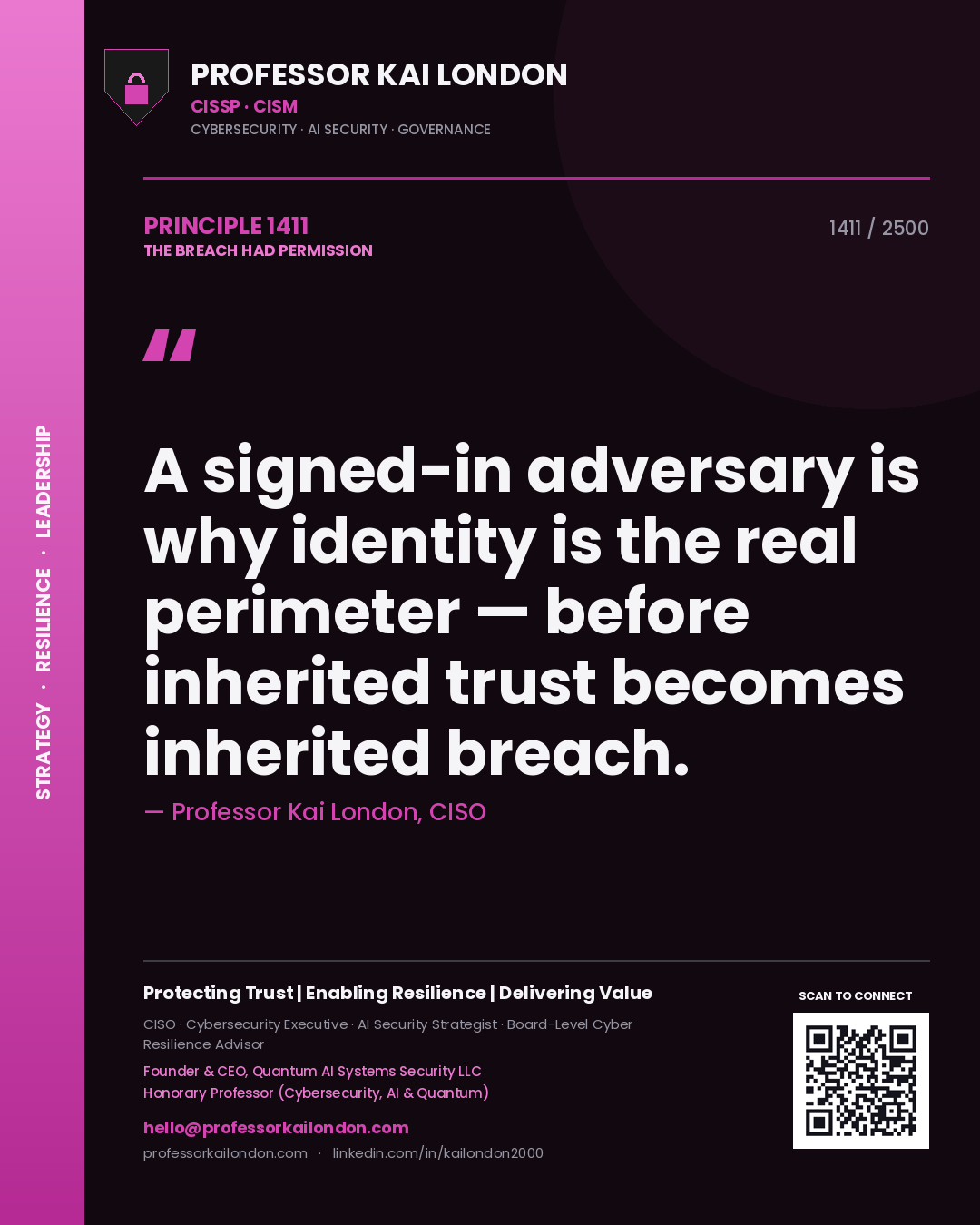
Professor Kai London principle 1411: A signed-in adversary is why identity is the real perimeter — before inherited trust becomes inherited breach.
Principle 1411
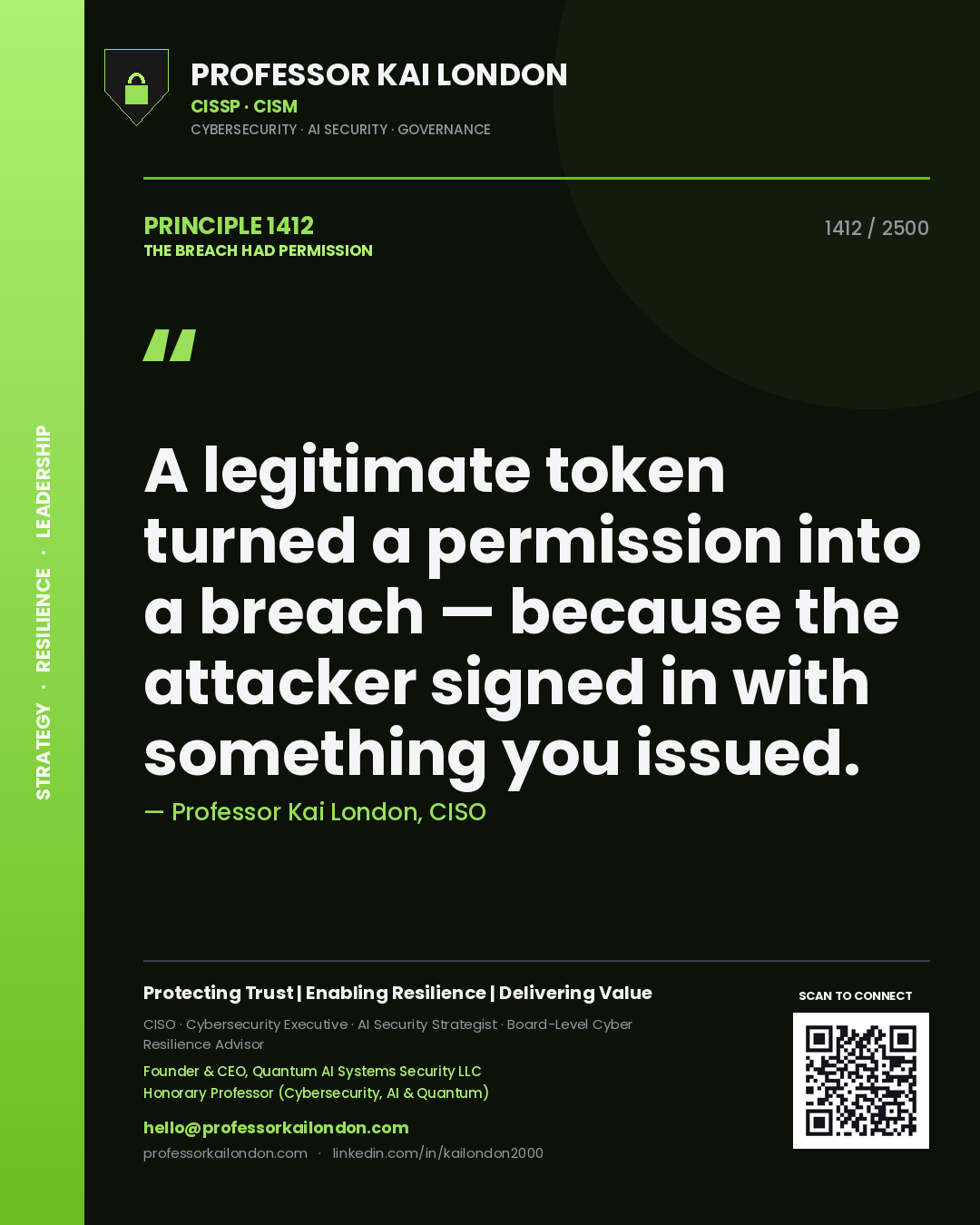
Professor Kai London principle 1412: A legitimate token turned a permission into a breach — because the attacker signed in with something you issued.
Principle 1412
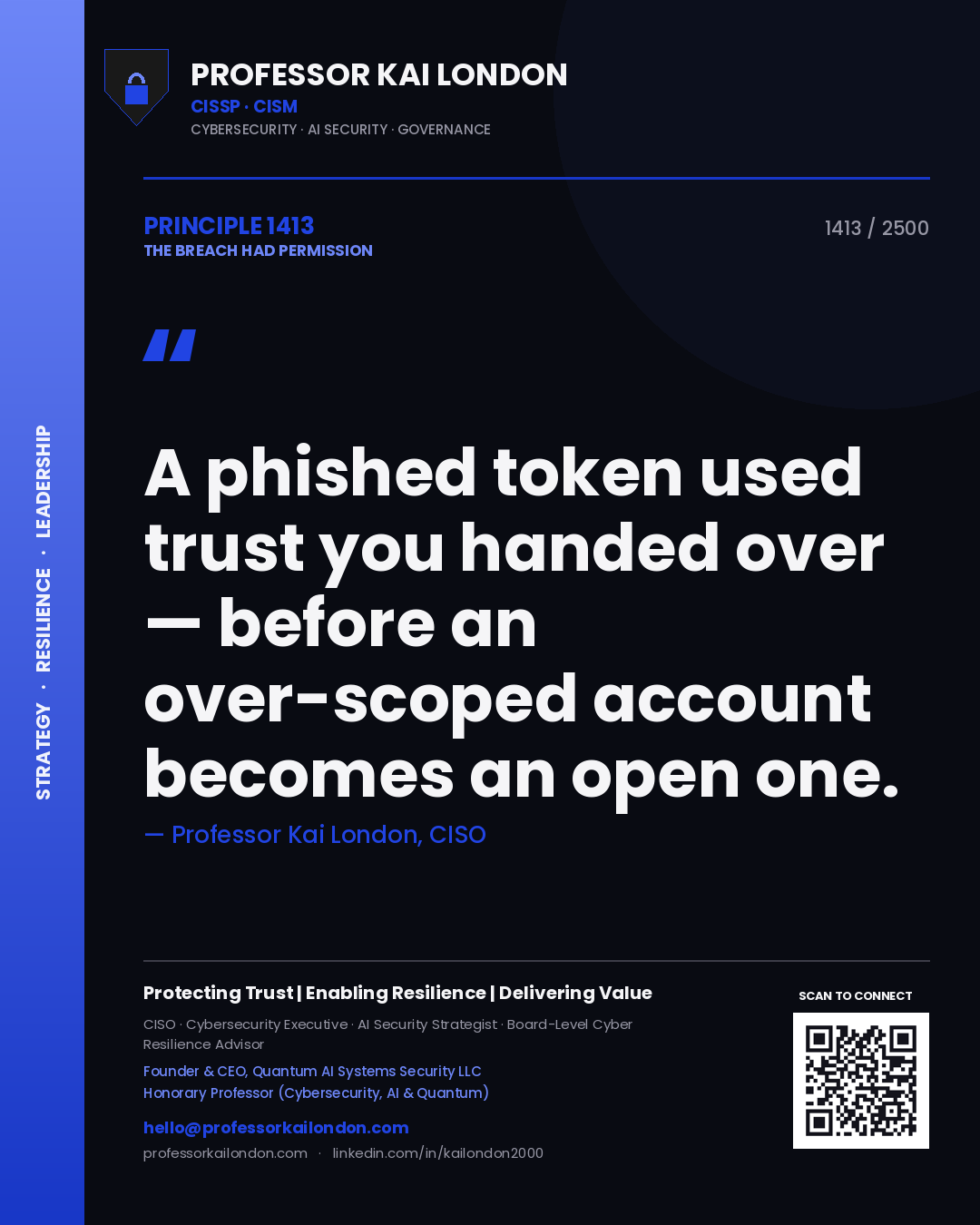
Professor Kai London principle 1413: A phished token used trust you handed over — before an over-scoped account becomes an open one.
Principle 1413
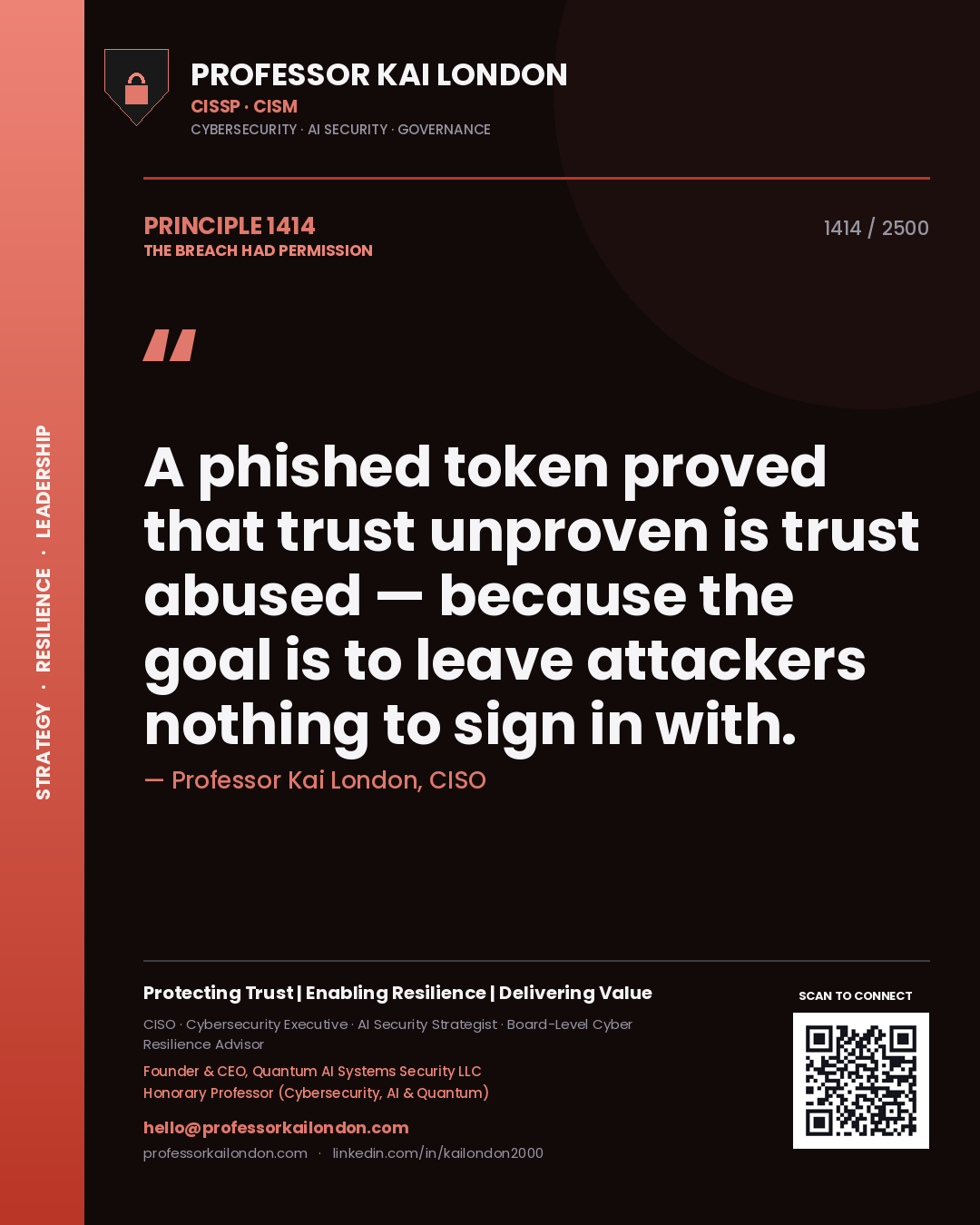
Professor Kai London principle 1414: A phished token proved that trust unproven is trust abused — because the goal is to leave attackers nothing to sign in with.
Principle 1414
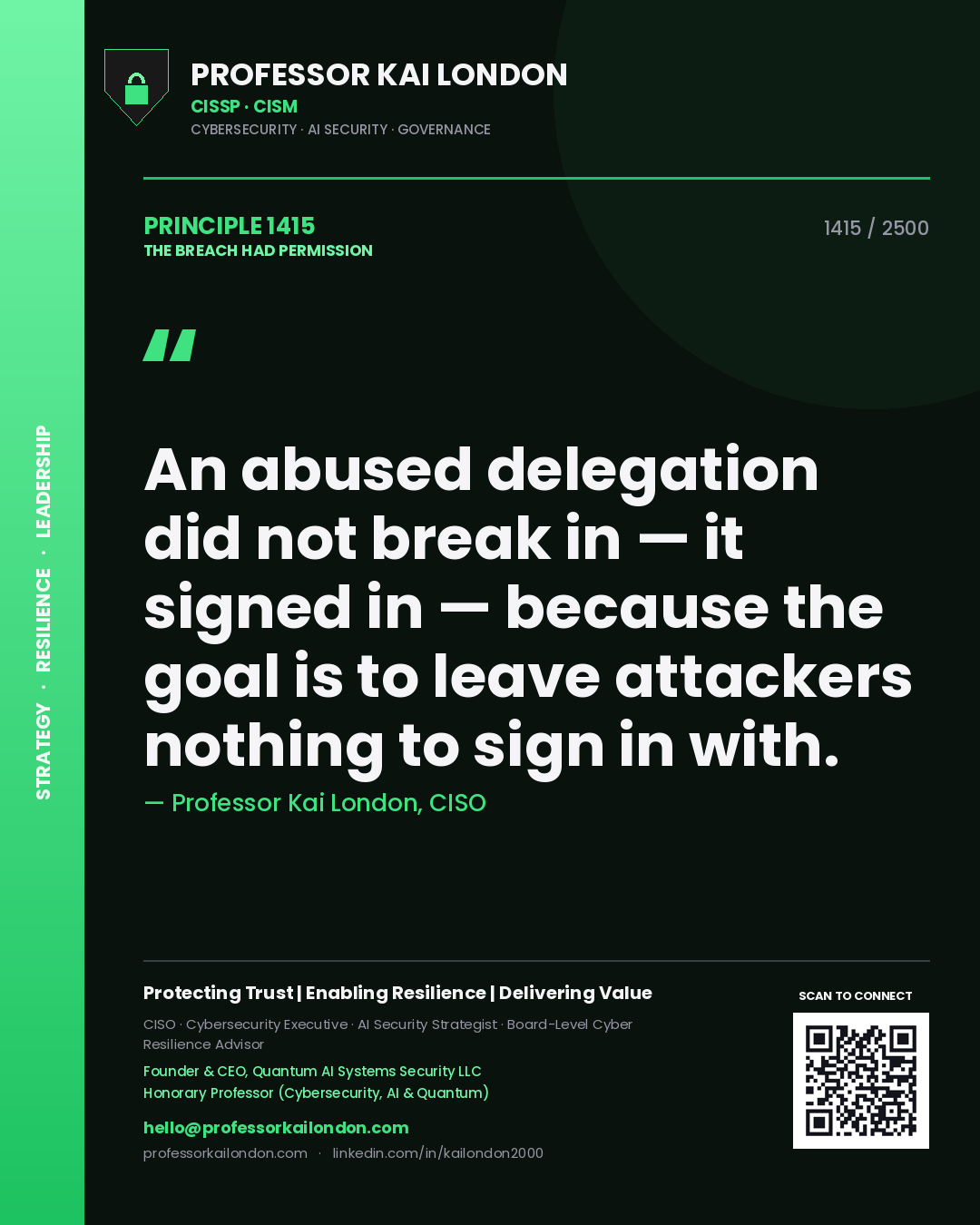
Professor Kai London principle 1415: An abused delegation did not break in — it signed in — because the goal is to leave attackers nothing to sign in with.
Principle 1415
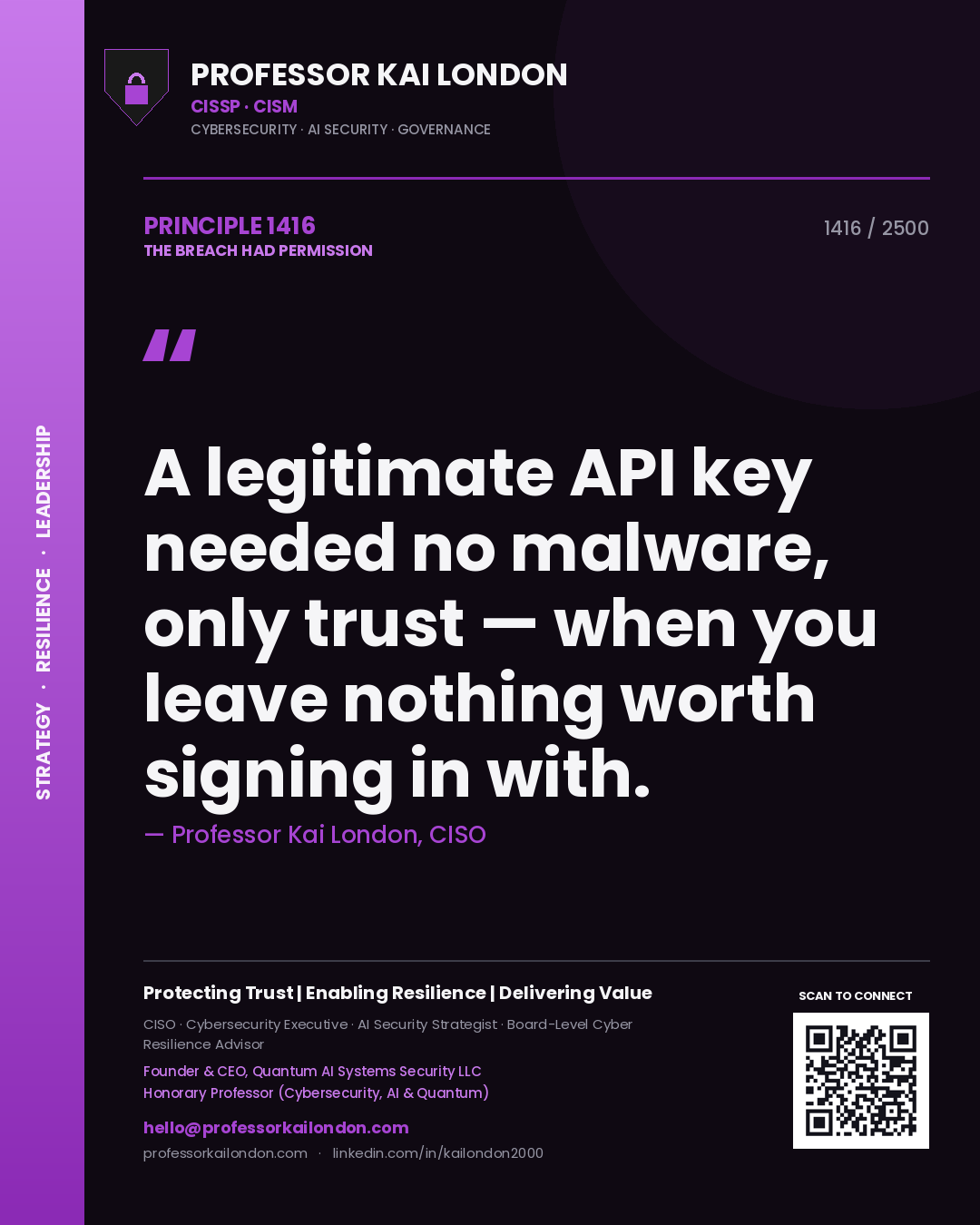
Professor Kai London principle 1416: A legitimate API key needed no malware, only trust — when you leave nothing worth signing in with.
Principle 1416
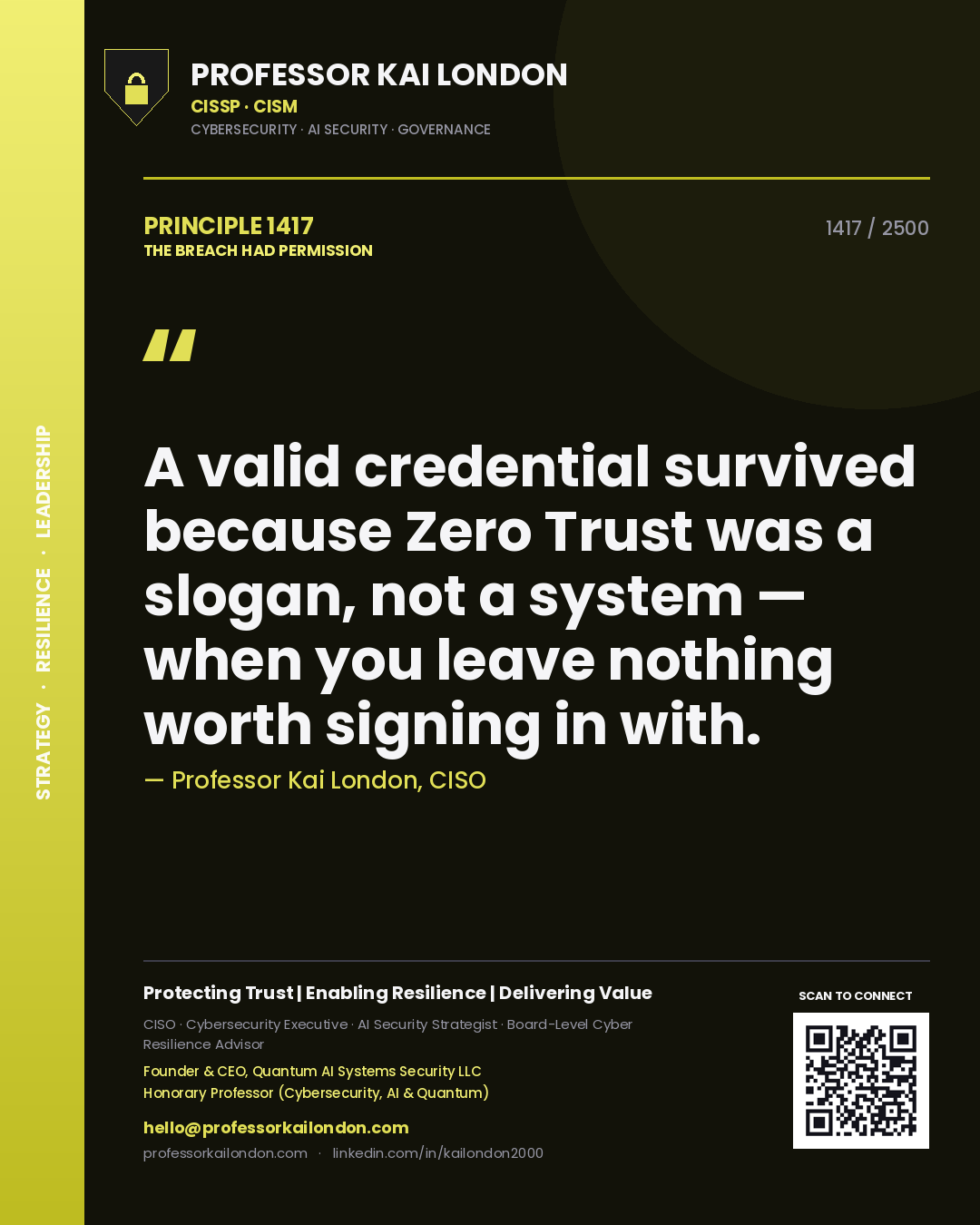
Professor Kai London principle 1417: A valid credential survived because Zero Trust was a slogan, not a system — when you leave nothing worth signing in with.
Principle 1417
Professor Kai London principle 1418: A legitimate API key walked through a door you left open — because the attacker signed in with something you issued.
Principle 1418
Professor Kai London principle 1419: A phished token survived because Zero Trust was a slogan, not a system — when trust is verified continuously, not granted once.
Principle 1419
Professor Kai London principle 1420: An over-scoped account proved that trust unproven is trust abused — when Zero Trust is a system, not a slogan.
Principle 1420
Professor Kai London principle 1421: A phished token turned access into impact.
Principle 1421
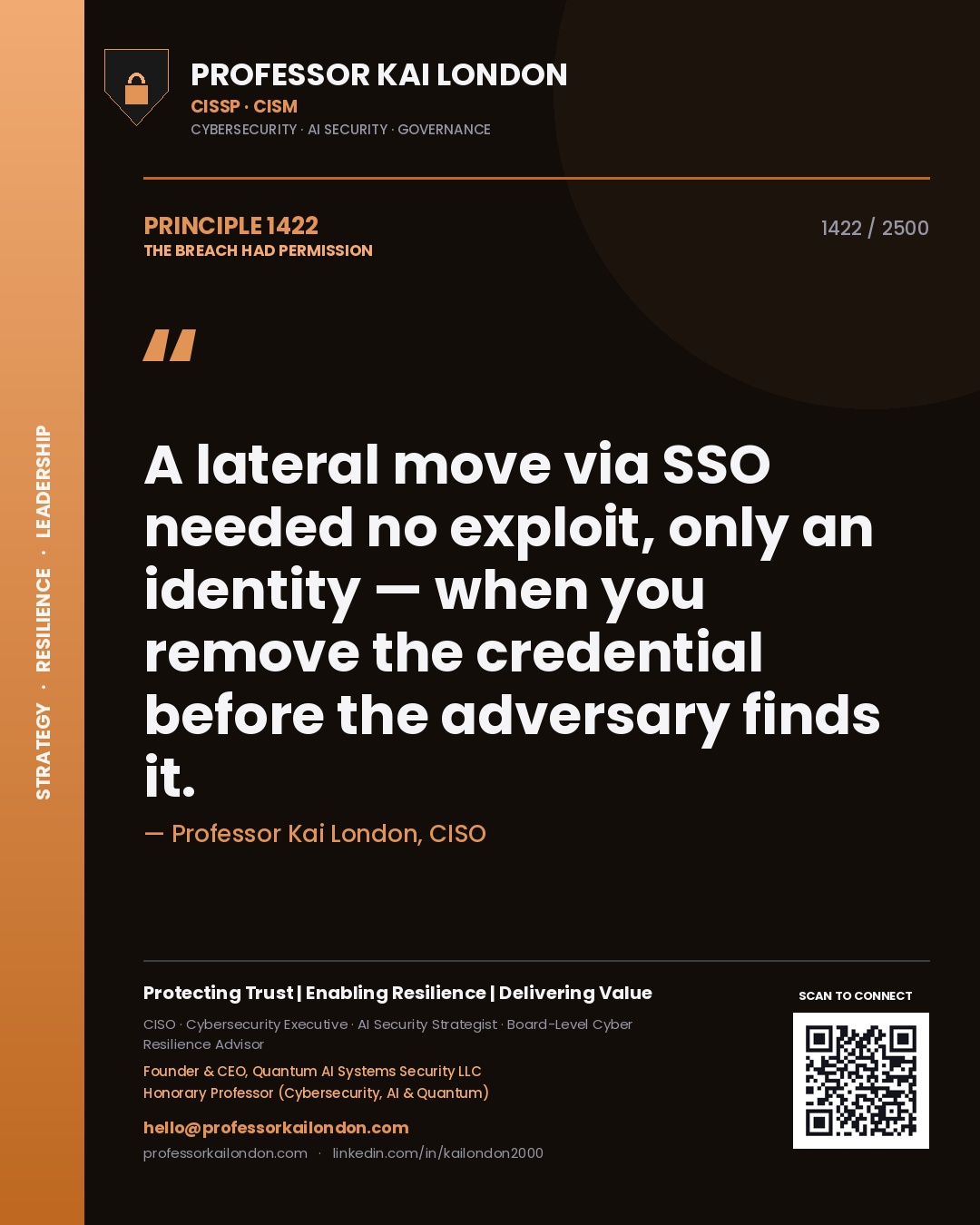
Professor Kai London principle 1422: A lateral move via SSO needed no exploit, only an identity — when you remove the credential before the adversary finds it.
Principle 1422
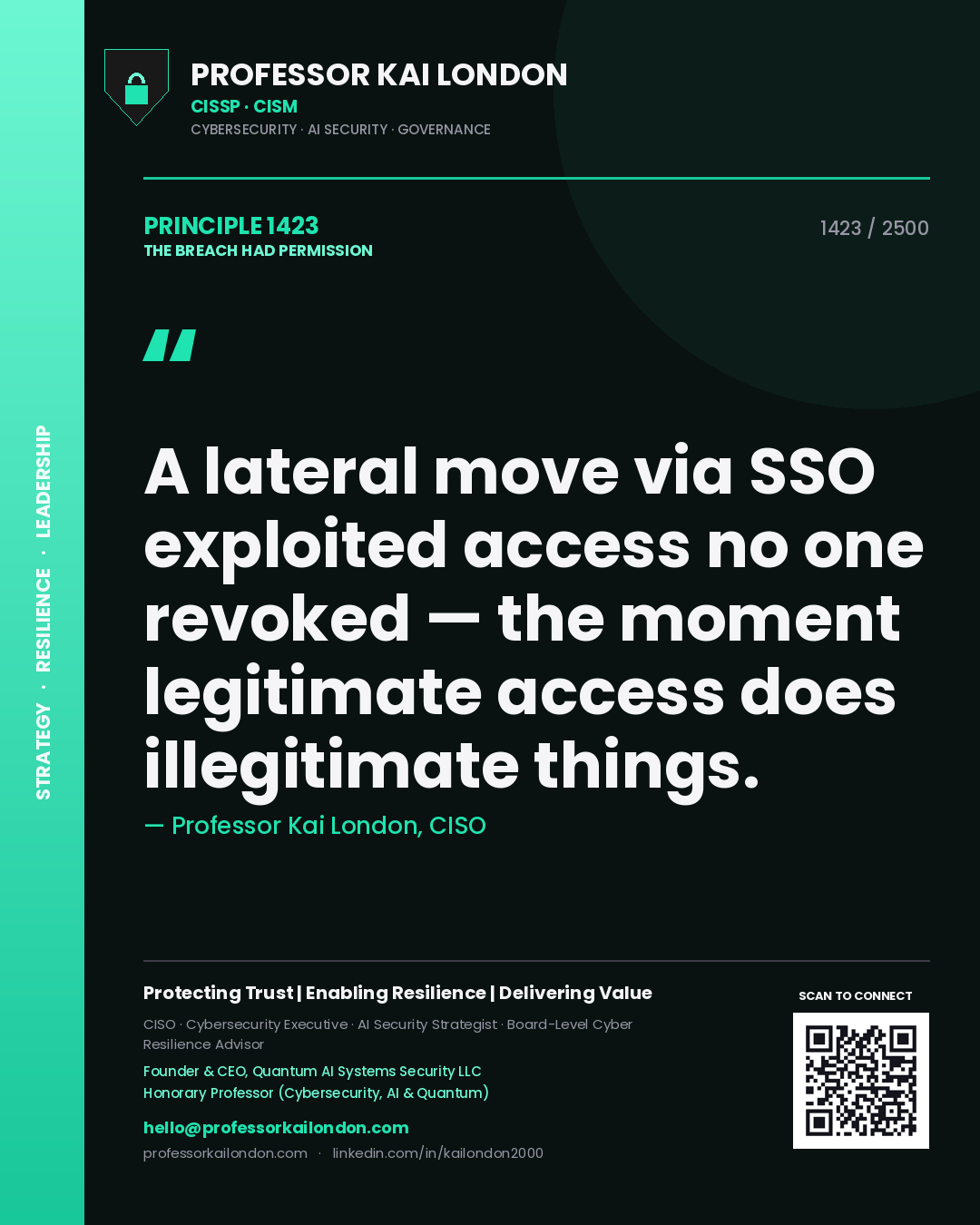
Professor Kai London principle 1423: A lateral move via SSO exploited access no one revoked — the moment legitimate access does illegitimate things.
Principle 1423
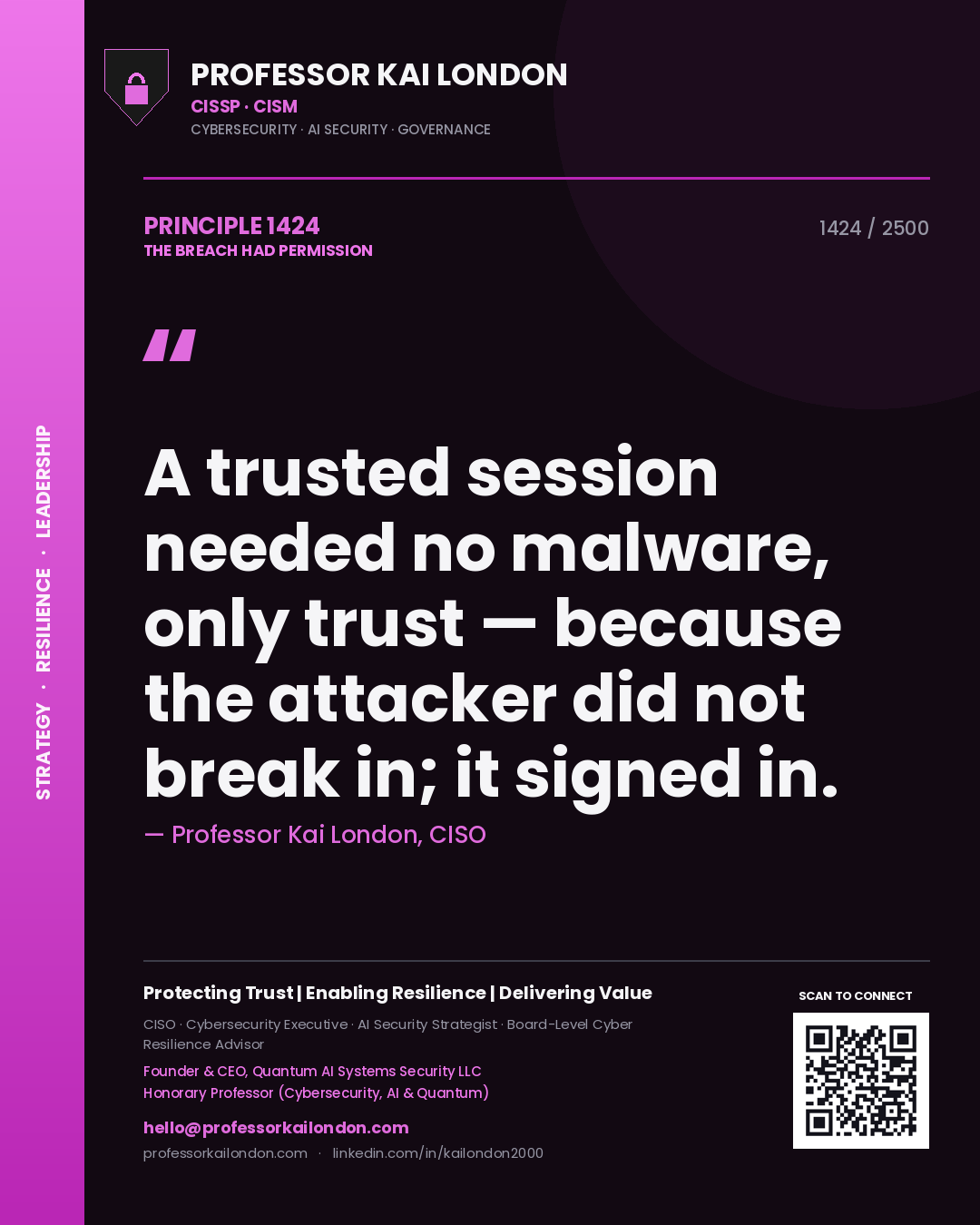
Professor Kai London principle 1424: A trusted session needed no malware, only trust — because the attacker did not break in; it signed in.
Principle 1424
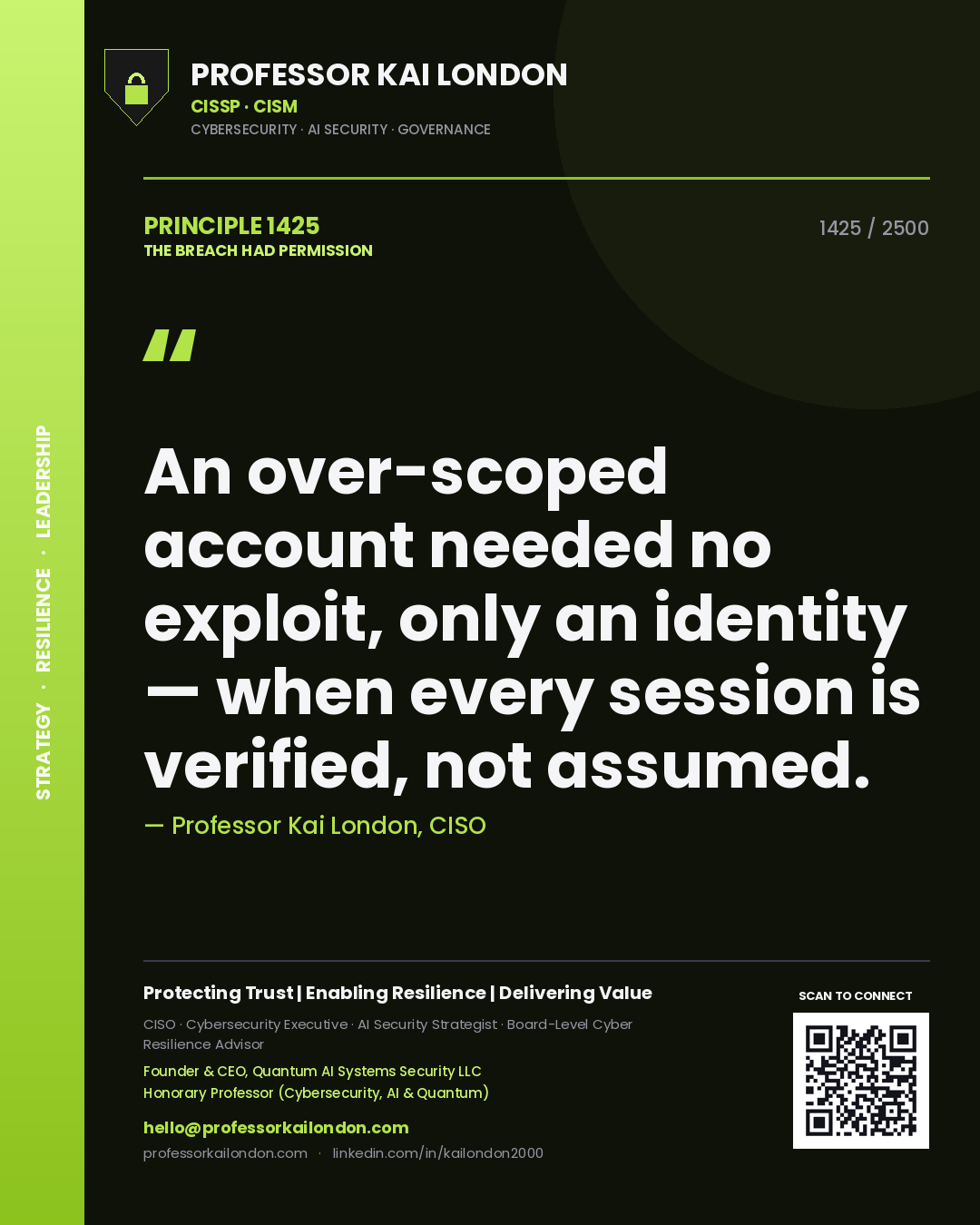
Professor Kai London principle 1425: An over-scoped account needed no exploit, only an identity — when every session is verified, not assumed.
Principle 1425
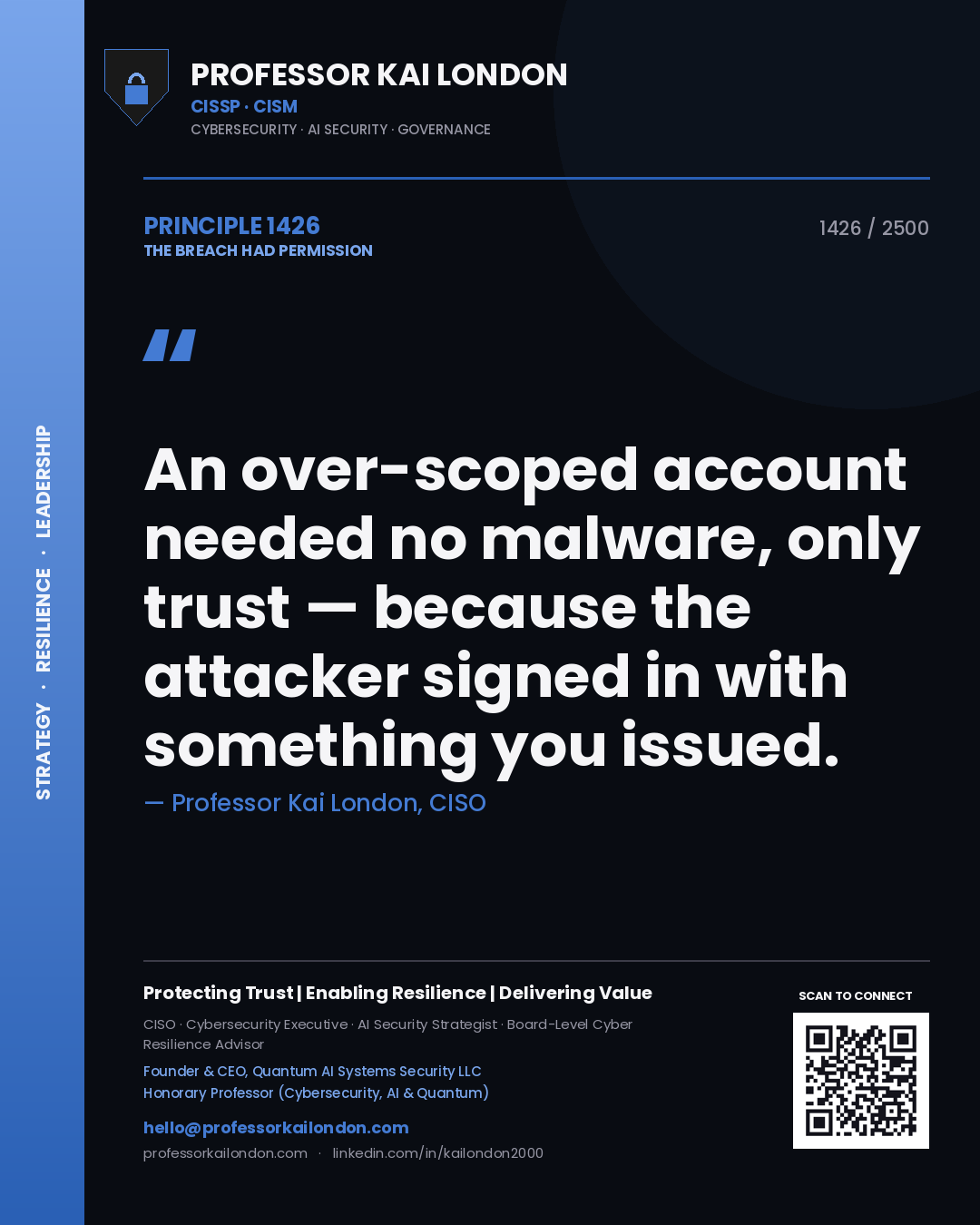
Professor Kai London principle 1426: An over-scoped account needed no malware, only trust — because the attacker signed in with something you issued.
Principle 1426
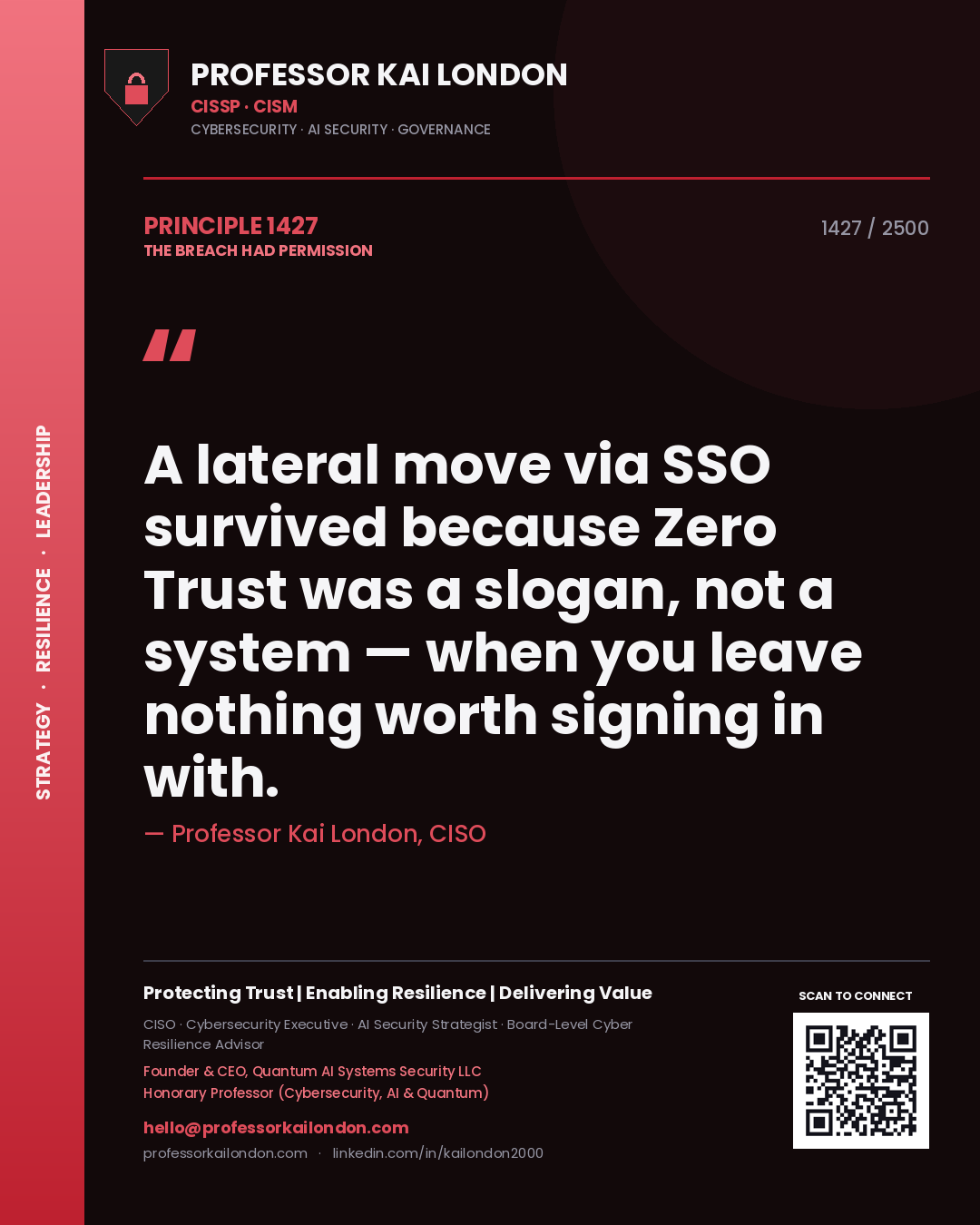
Professor Kai London principle 1427: A lateral move via SSO survived because Zero Trust was a slogan, not a system — when you leave nothing worth signing in with.
Principle 1427
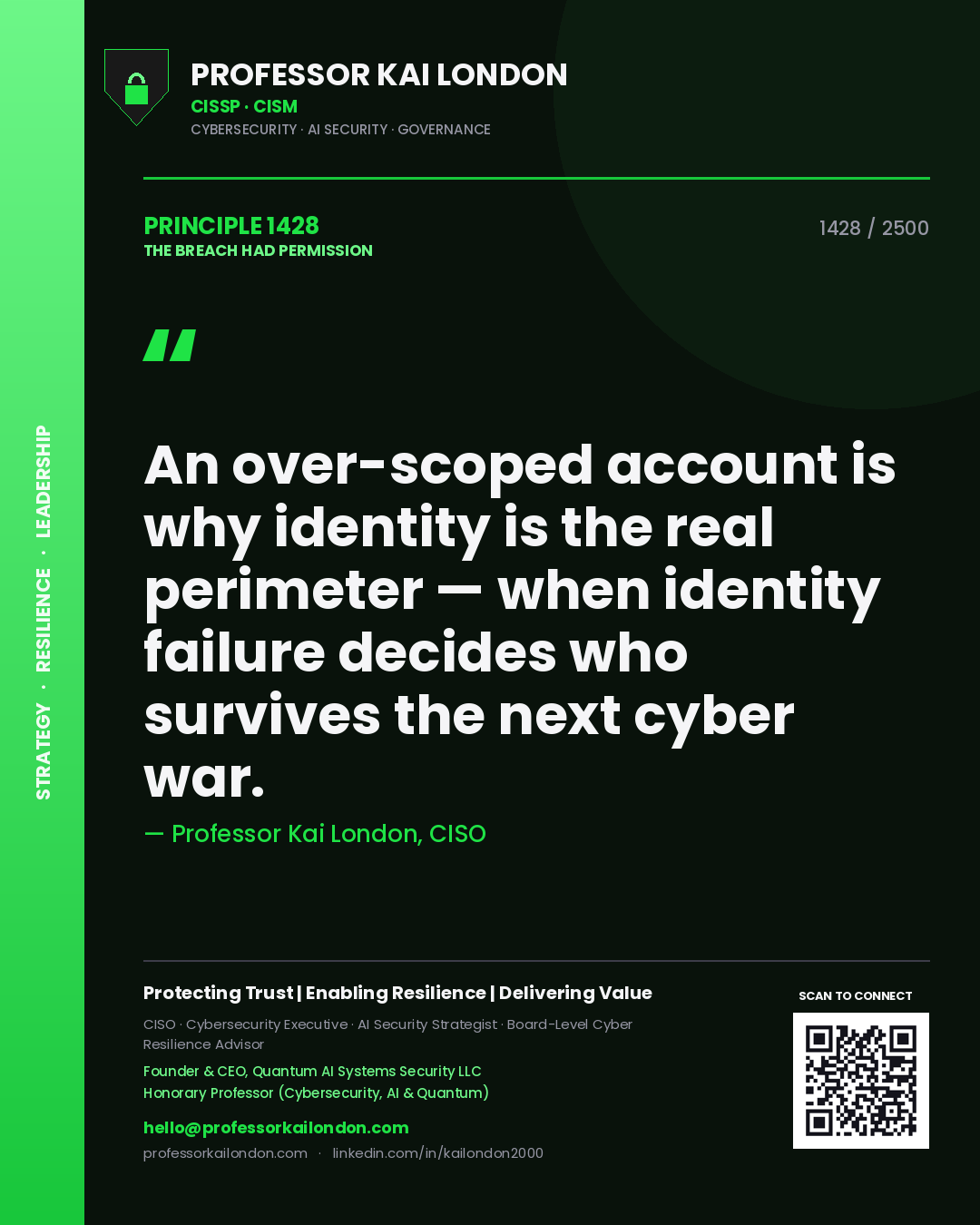
Professor Kai London principle 1428: An over-scoped account is why identity is the real perimeter — when identity failure decides who survives the next cyber war.
Principle 1428
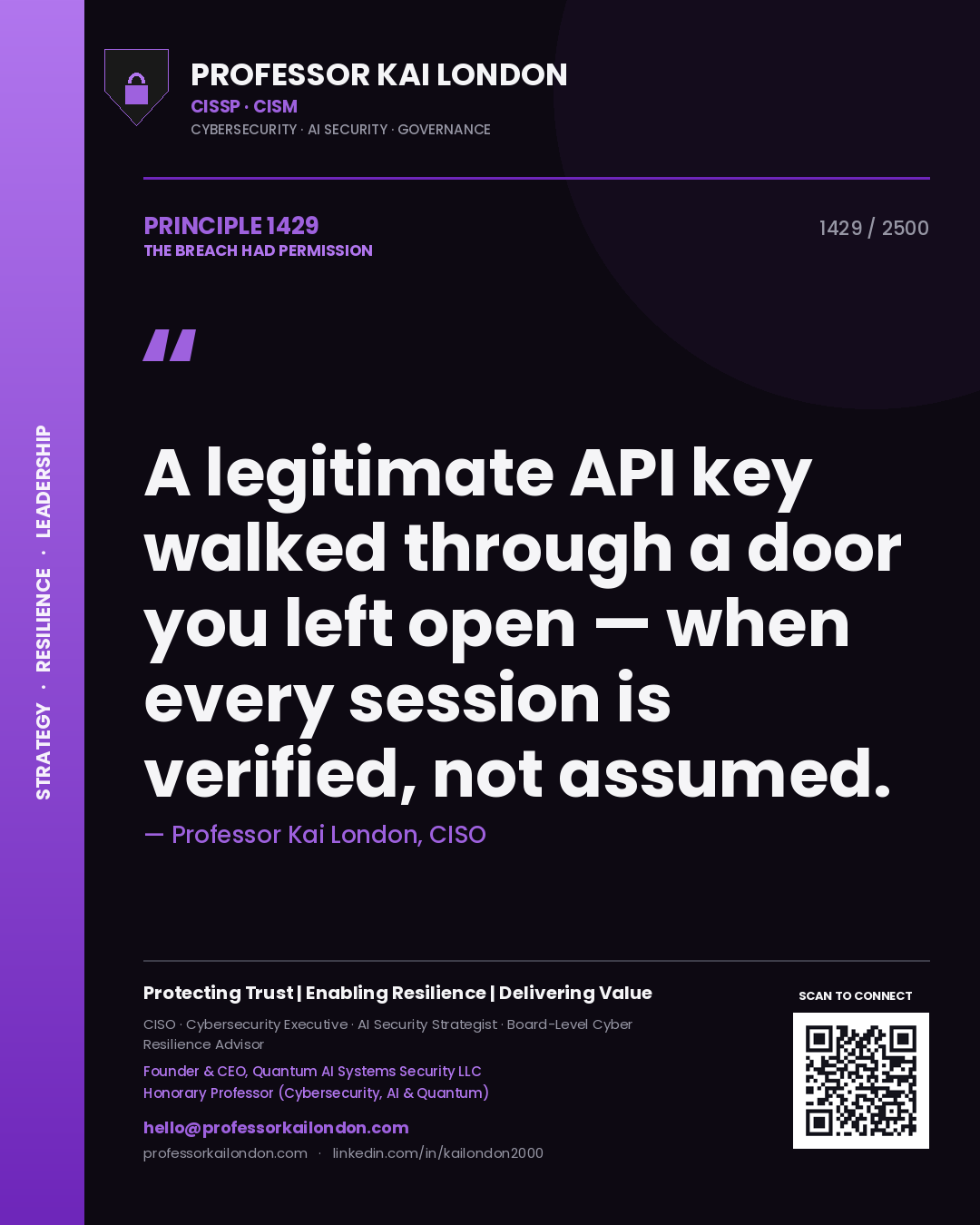
Professor Kai London principle 1429: A legitimate API key walked through a door you left open — when every session is verified, not assumed.
Principle 1429
Professor Kai London principle 1430: An identity failure walked through a door you left open — when you leave nothing worth signing in with.
Principle 1430
Professor Kai London principle 1431: A signed-in adversary needed no exploit, only an identity — before inherited trust becomes inherited breach.
Principle 1431
Professor Kai London principle 1432: A legitimate token became insider risk the moment it authenticated — when you leave nothing worth signing in with.
Principle 1432
Professor Kai London principle 1433: A misused login looked authorised the whole way in — when you remove the credential before the adversary finds it.
Principle 1433
Professor Kai London principle 1434: A signed-in adversary proved that trust unproven is trust abused — because the attacker signed in with something you issued.
Principle 1434
Professor Kai London principle 1435: A legitimate API key looked exactly like a legitimate user — because the attacker signed in with something you issued.
Principle 1435
Professor Kai London principle 1436: A legitimate API key is why identity is the real perimeter — because a breach with permission is still a breach.
Principle 1436
Professor Kai London principle 1437: A signed-in adversary exploited access no one revoked — when you leave nothing worth signing in with.
Principle 1437
Professor Kai London principle 1438: An identity failure exploited access no one revoked — before an over-scoped account becomes an open one.
Principle 1438
Professor Kai London principle 1439: A valid credential turned access into impact — when every permission is earned, watched, and expired.
Principle 1439
Professor Kai London principle 1440: A misused login turned access into impact — when you leave nothing worth signing in with.
Principle 1440
Professor Kai London principle 1441: A misused login used trust you handed over — before inherited trust becomes inherited breach.
Principle 1441
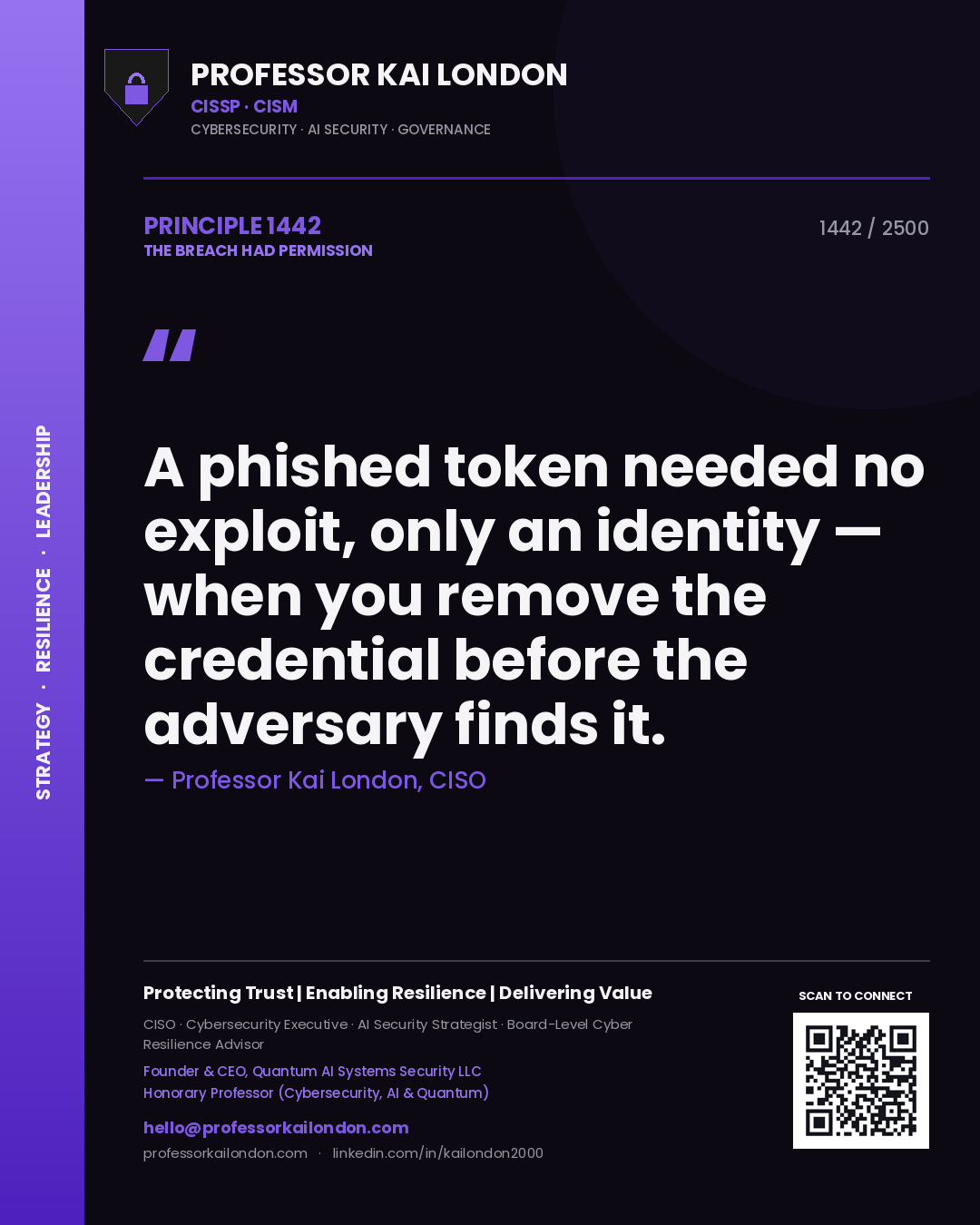
Professor Kai London principle 1442: A phished token needed no exploit, only an identity — when you remove the credential before the adversary finds it.
Principle 1442
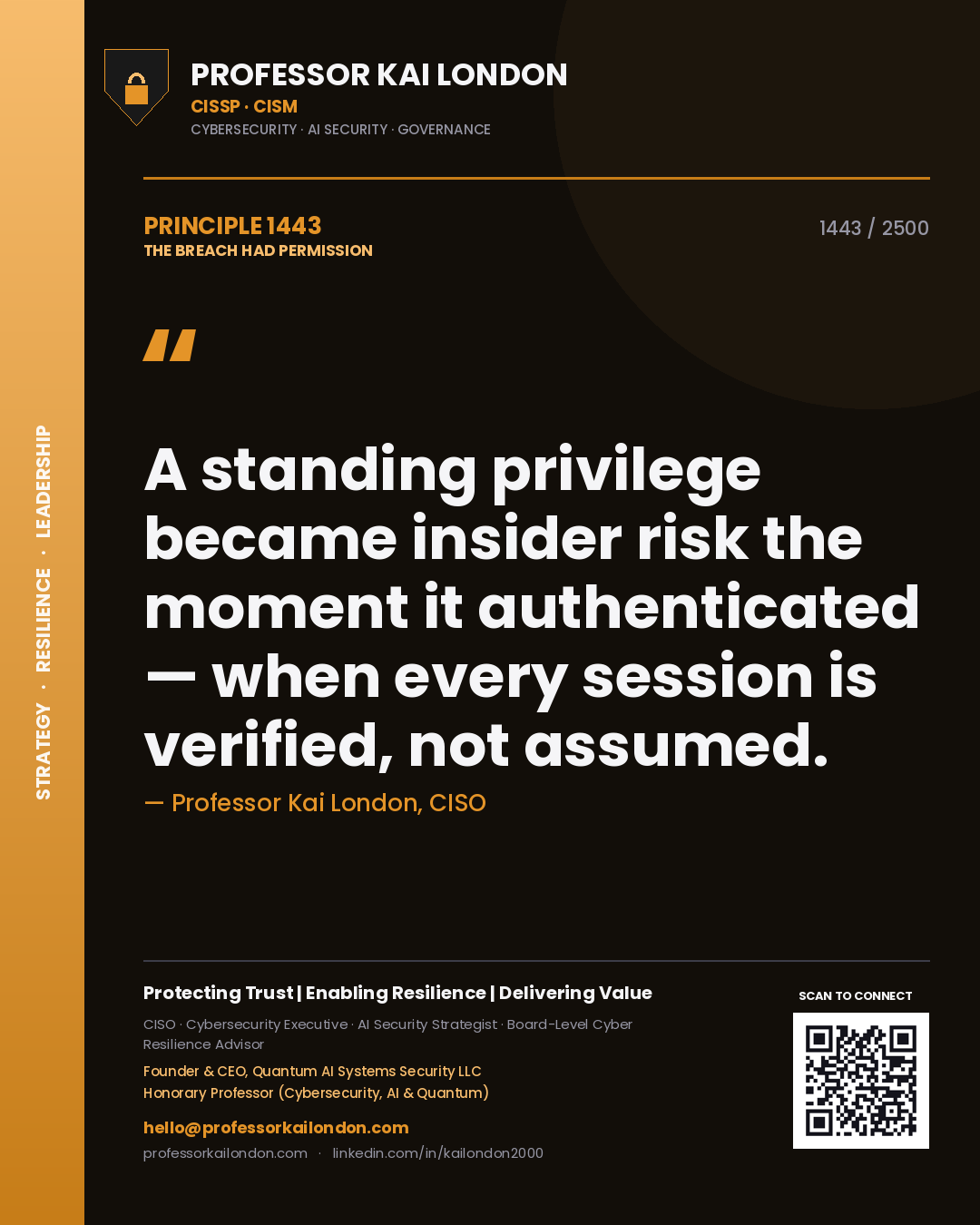
Professor Kai London principle 1443: A standing privilege became insider risk the moment it authenticated — when every session is verified, not assumed.
Principle 1443
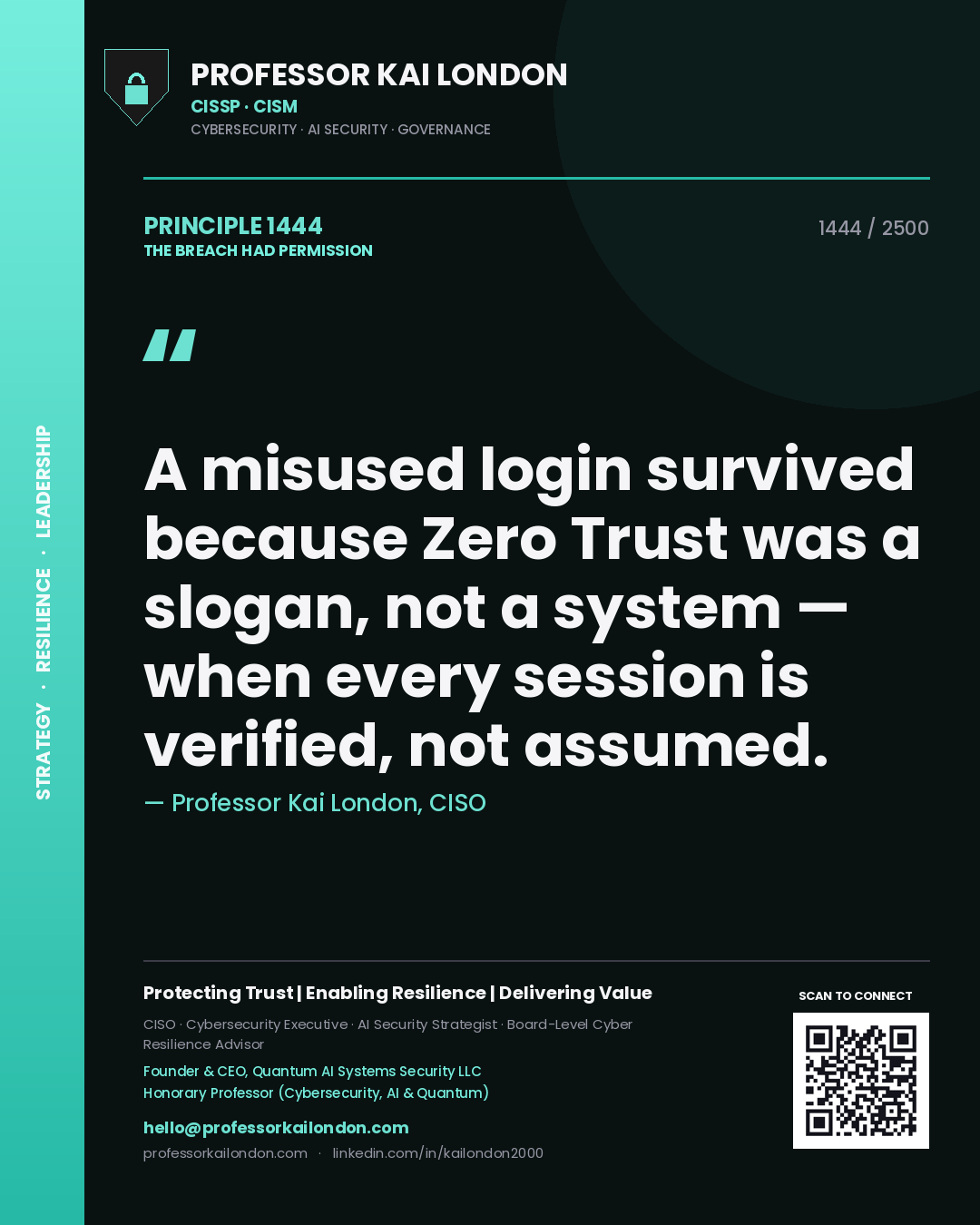
Professor Kai London principle 1444: A misused login survived because Zero Trust was a slogan, not a system — when every session is verified, not assumed.
Principle 1444
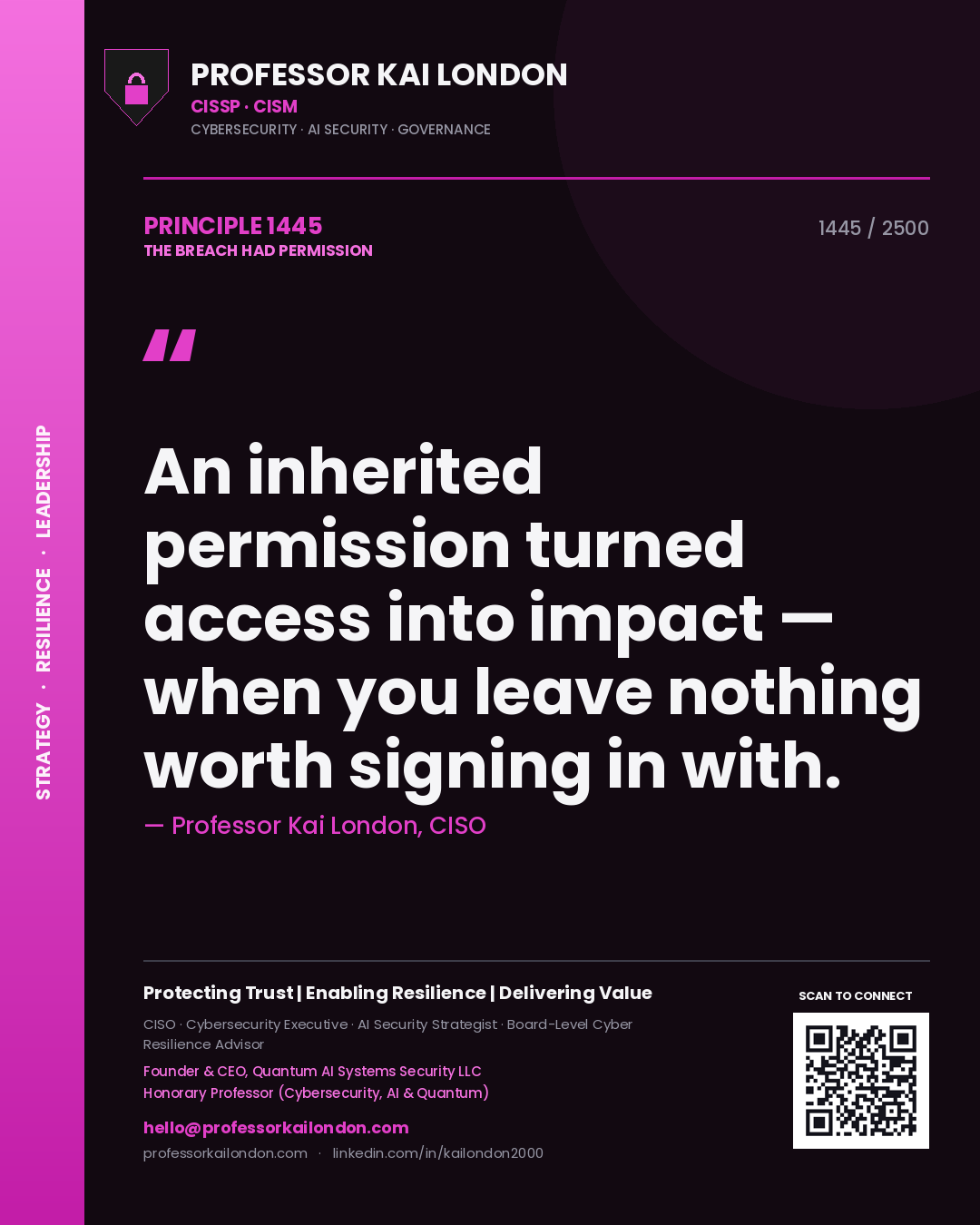
Professor Kai London principle 1445: An inherited permission turned access into impact — when you leave nothing worth signing in with.
Principle 1445
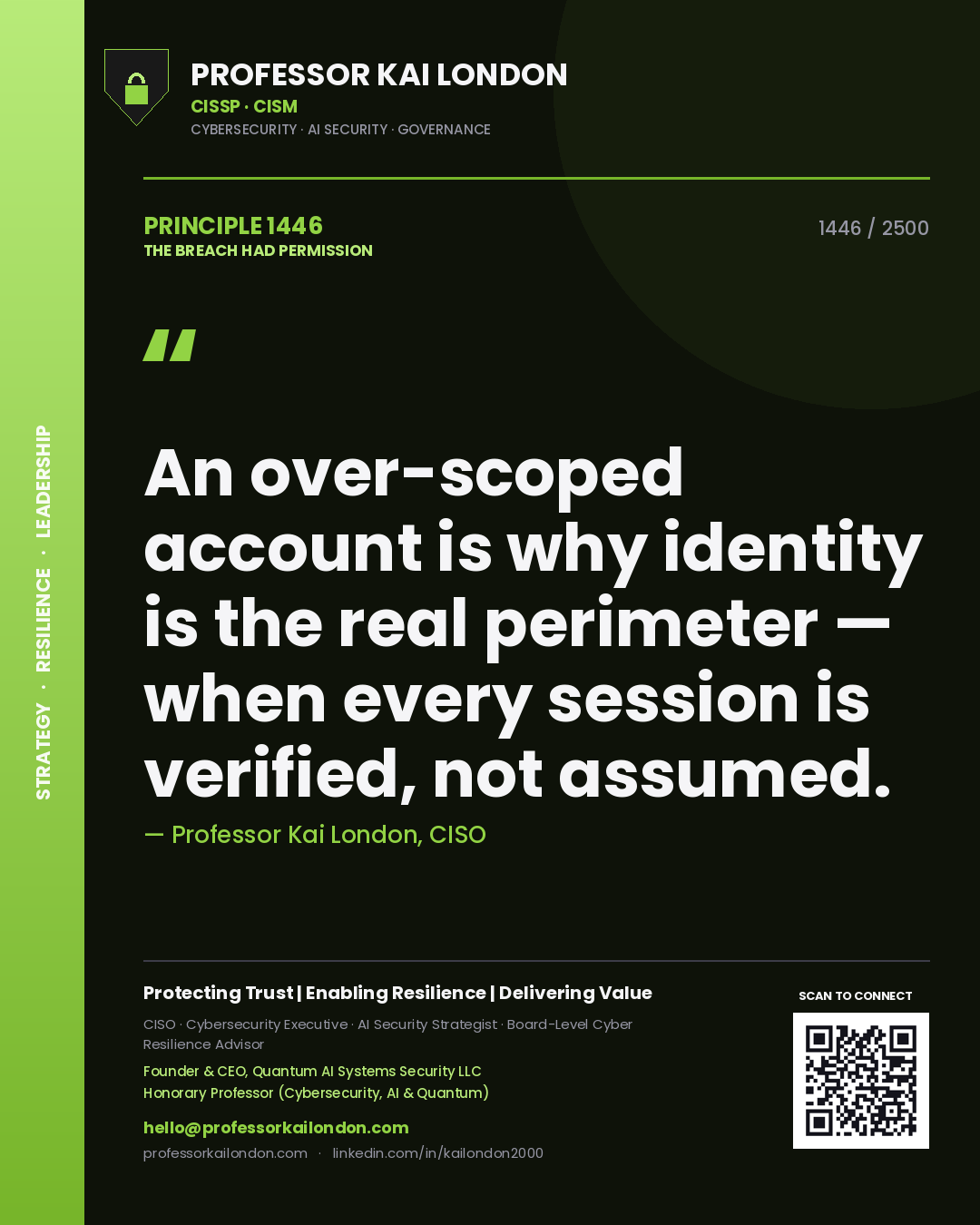
Professor Kai London principle 1446: An over-scoped account is why identity is the real perimeter — when every session is verified, not assumed.
Principle 1446
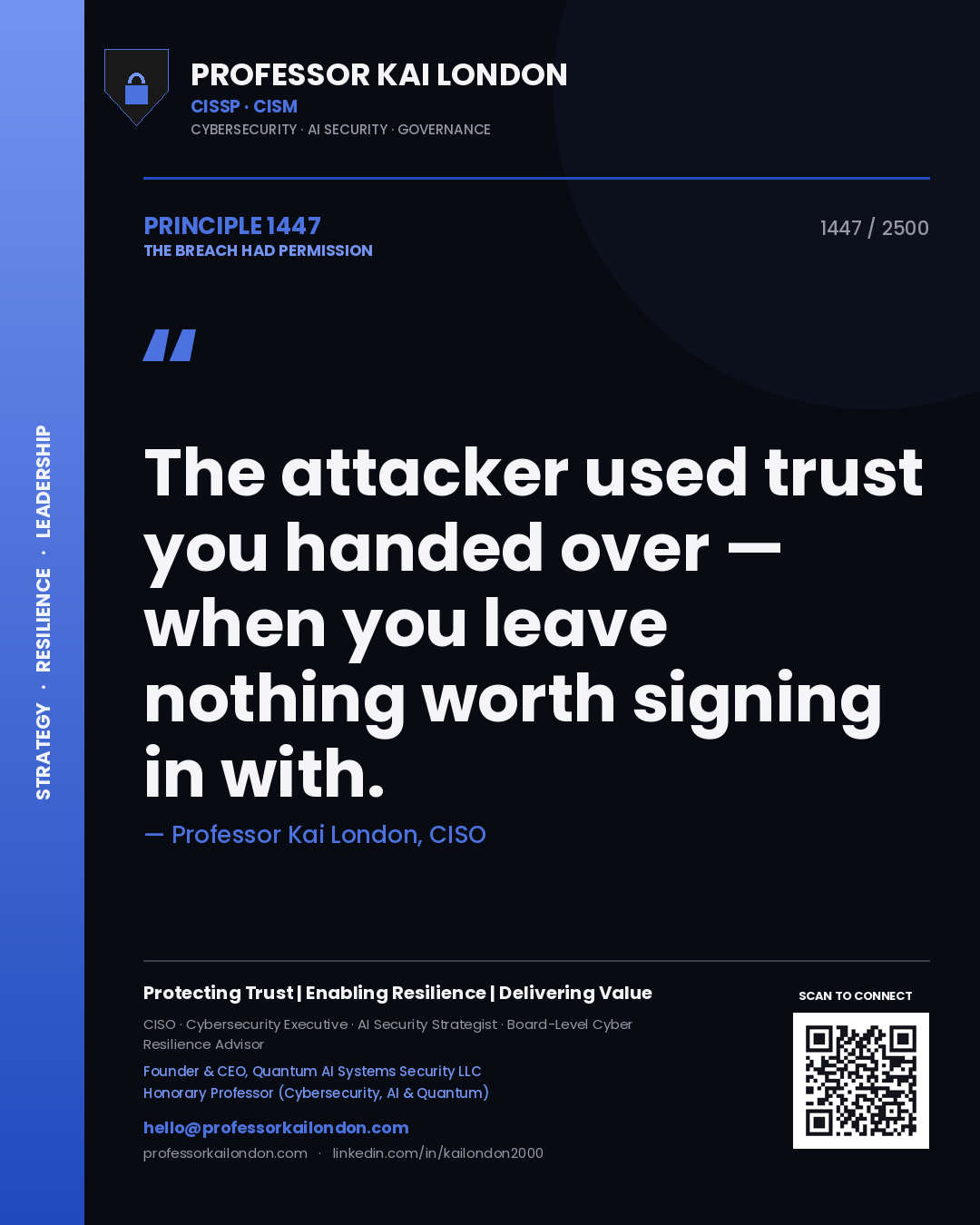
Professor Kai London principle 1447: The attacker used trust you handed over — when you leave nothing worth signing in with.
Principle 1447
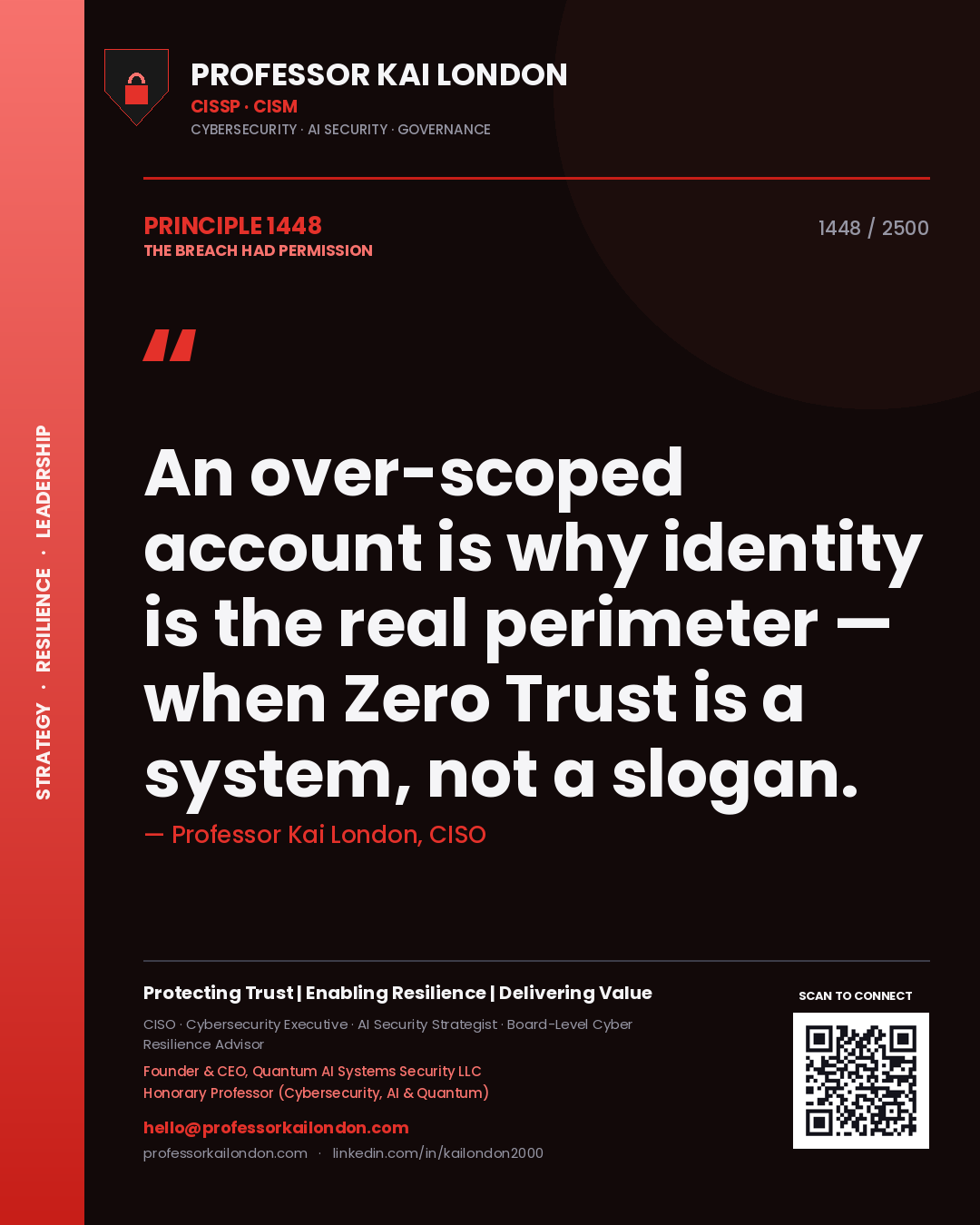
Professor Kai London principle 1448: An over-scoped account is why identity is the real perimeter — when Zero Trust is a system, not a slogan.
Principle 1448
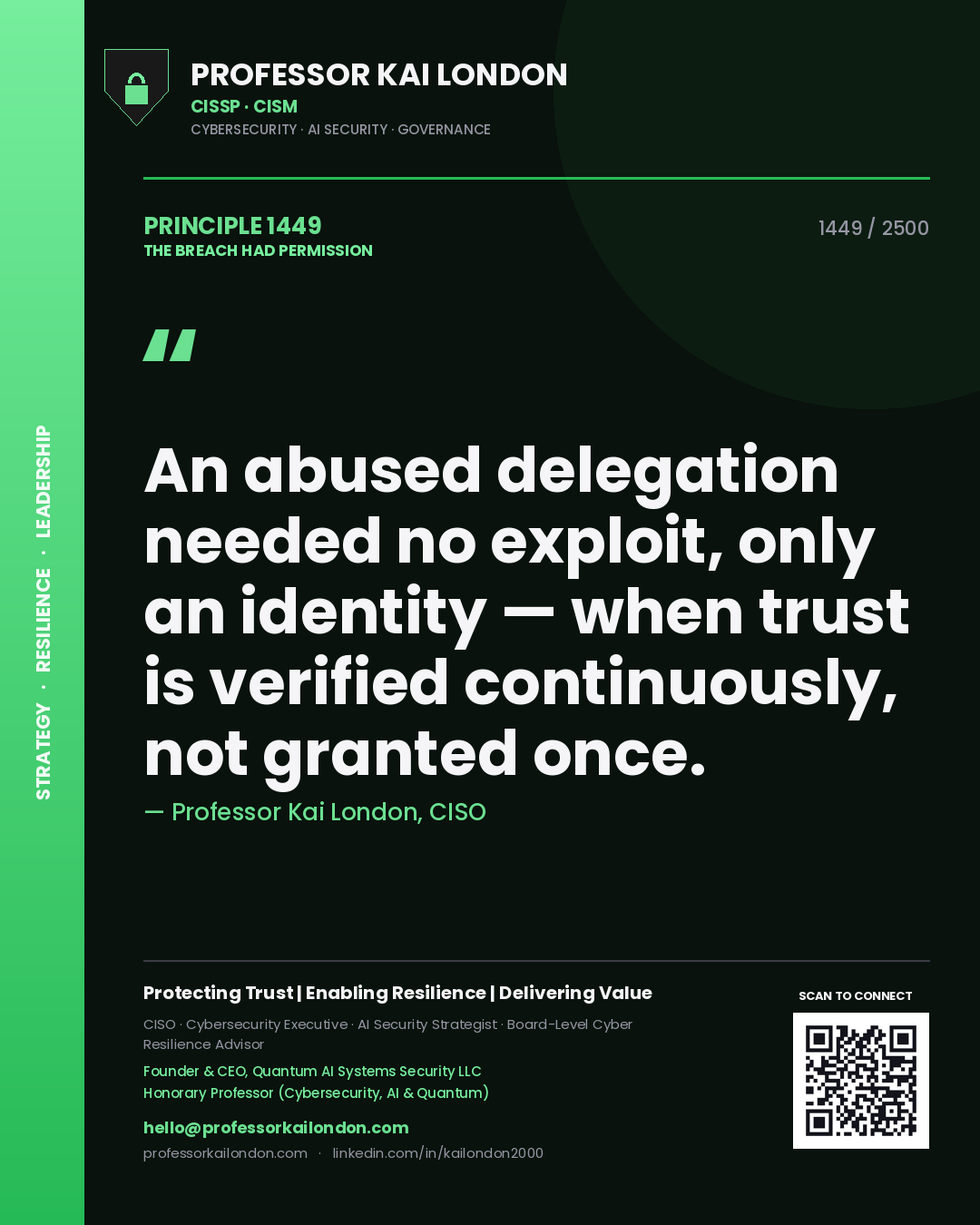
Professor Kai London principle 1449: An abused delegation needed no exploit, only an identity — when trust is verified continuously, not granted once.
Principle 1449
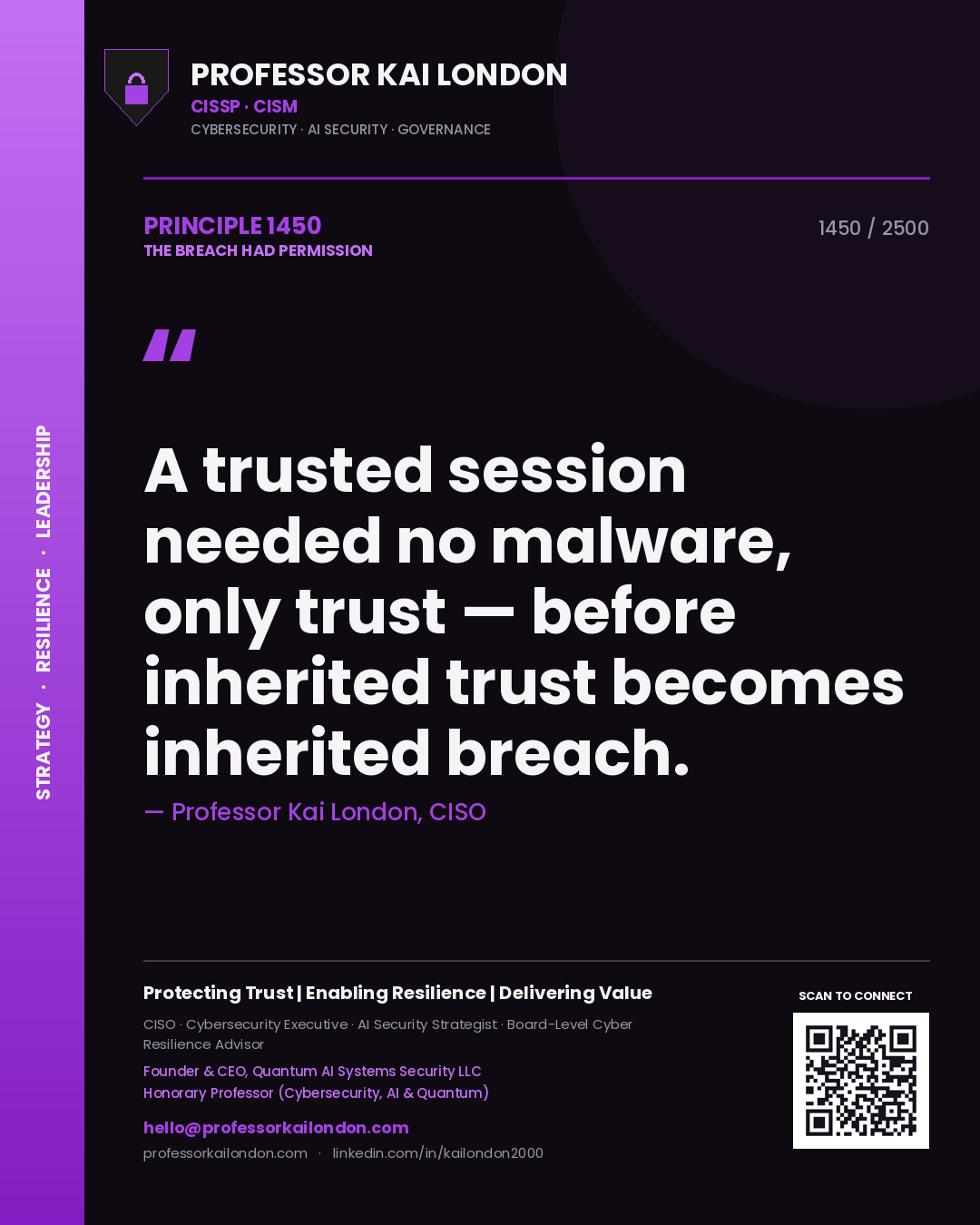
Professor Kai London principle 1450: A trusted session needed no malware, only trust — before inherited trust becomes inherited breach.
Principle 1450
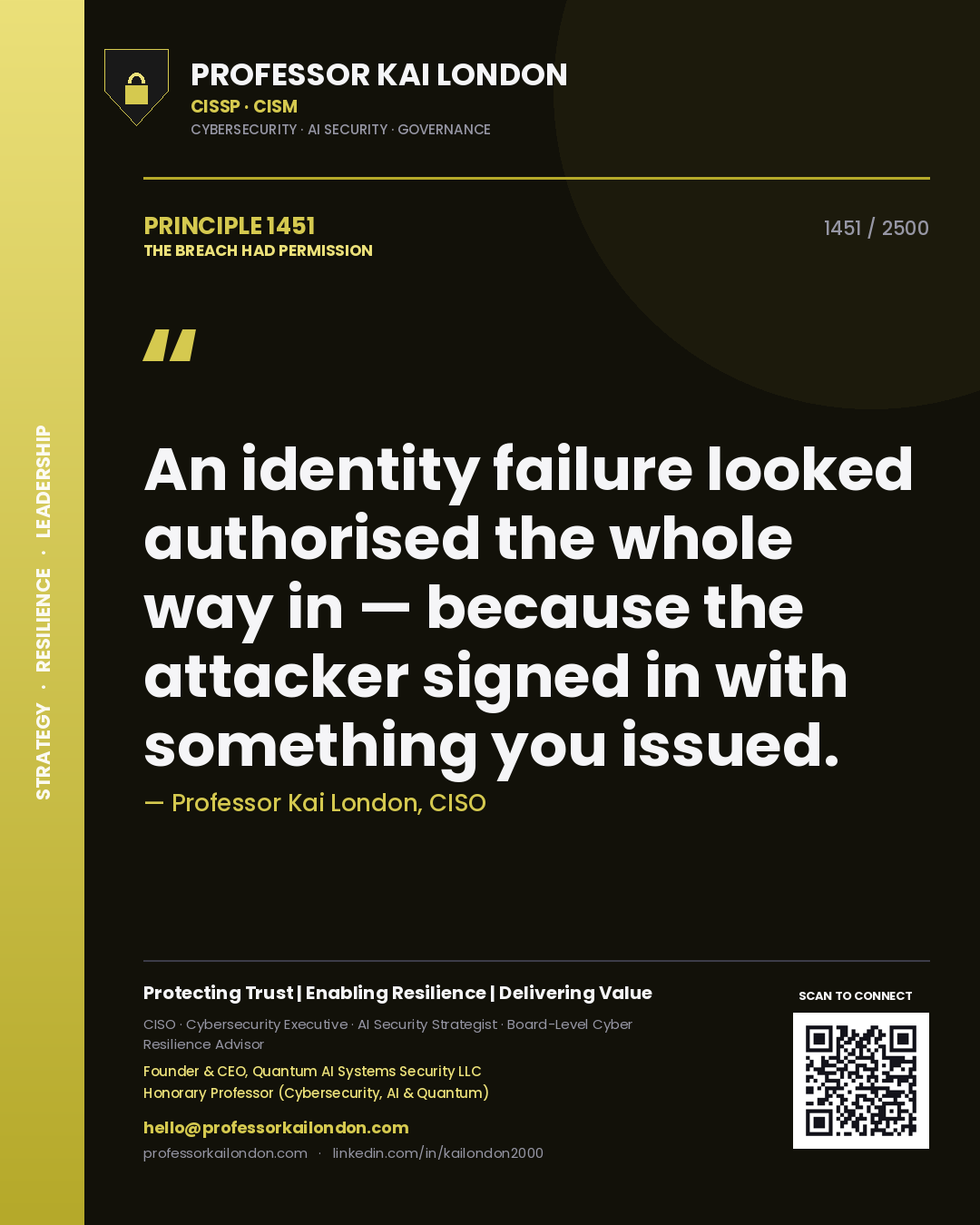
Professor Kai London principle 1451: An identity failure looked authorised the whole way in — because the attacker signed in with something you issued.
Principle 1451
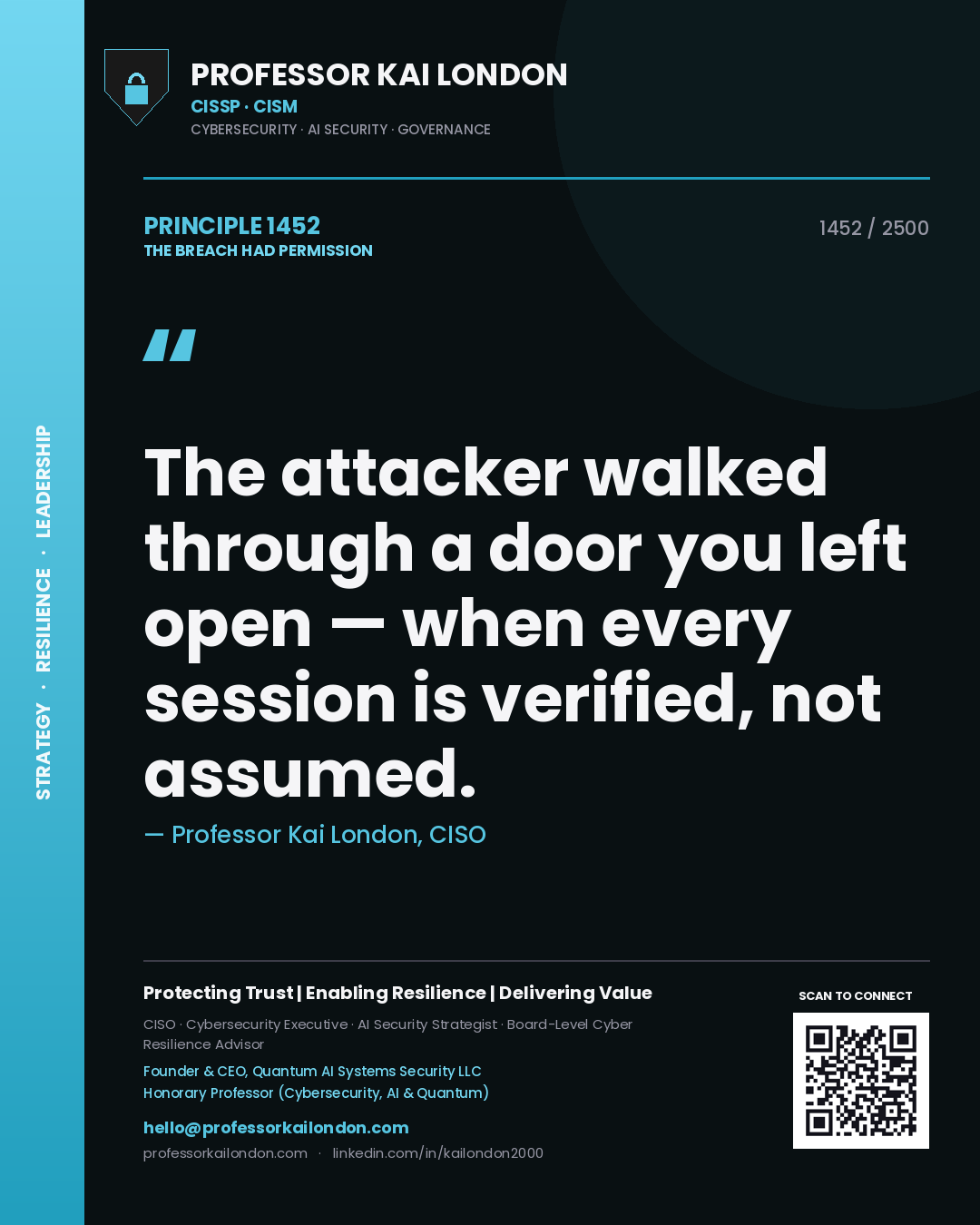
Professor Kai London principle 1452: The attacker walked through a door you left open — when every session is verified, not assumed.
Principle 1452
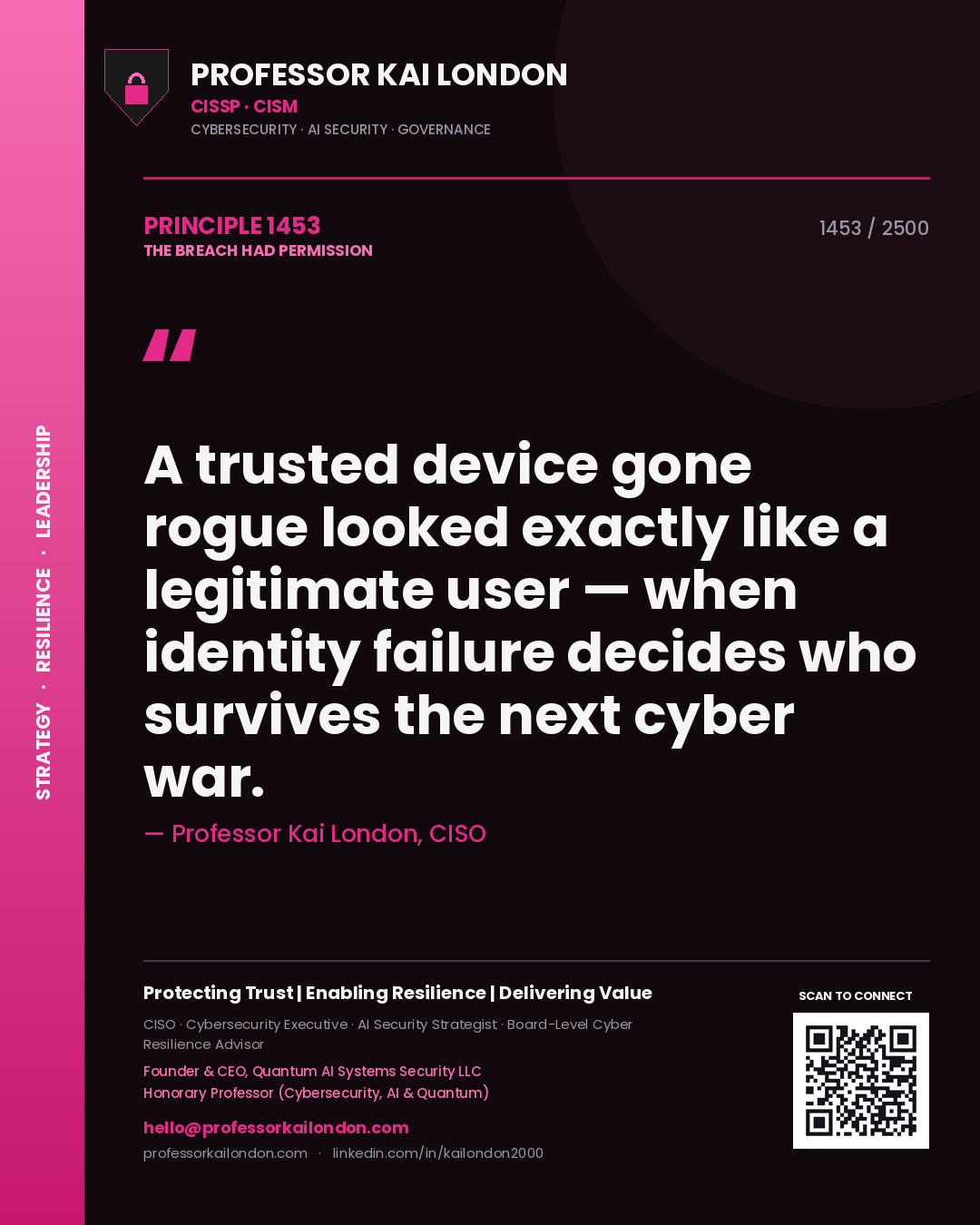
Professor Kai London principle 1453: A trusted device gone rogue looked exactly like a legitimate user — when identity failure decides who survives the next cyber war.
Principle 1453
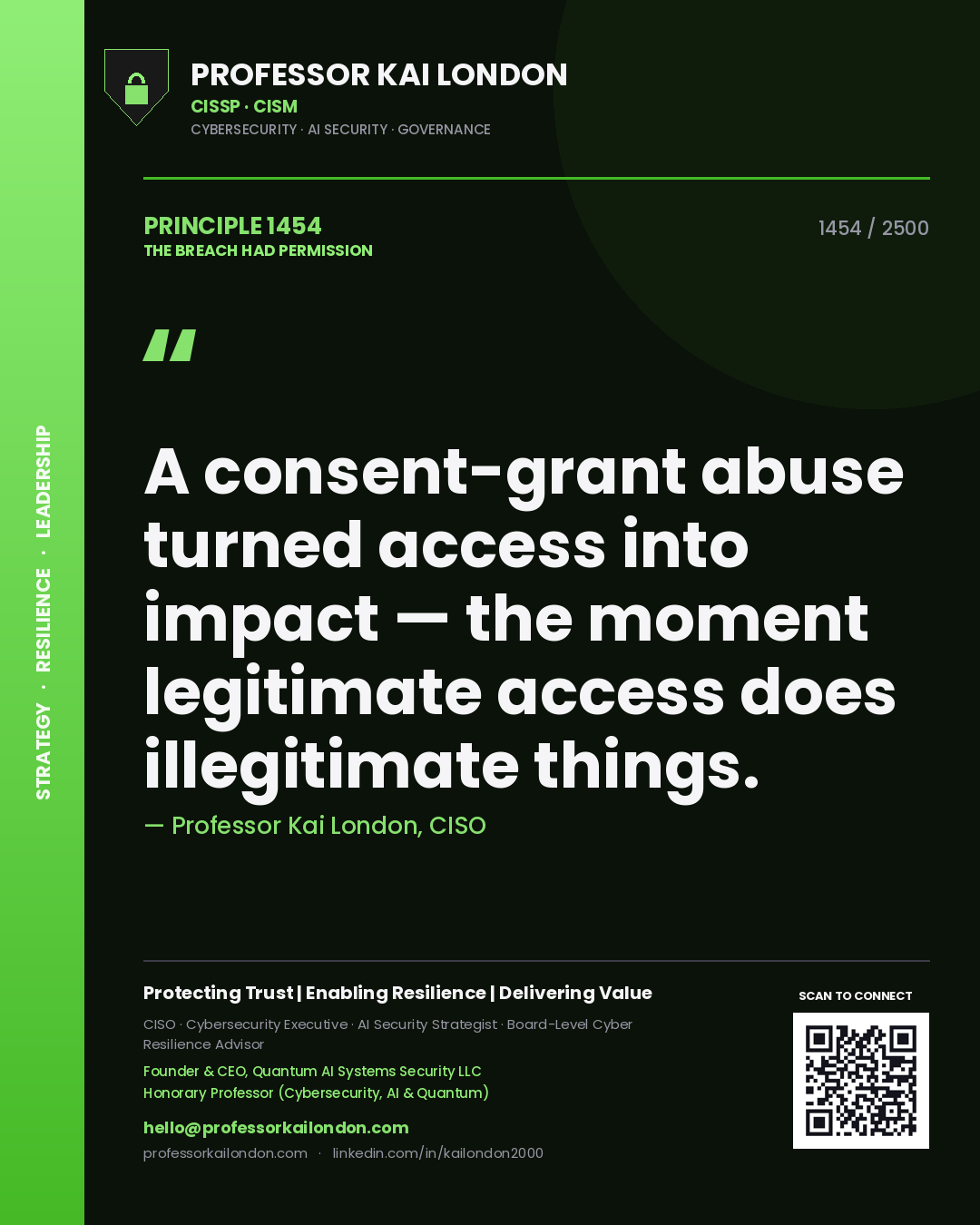
Professor Kai London principle 1454: A consent-grant abuse turned access into impact — the moment legitimate access does illegitimate things.
Principle 1454
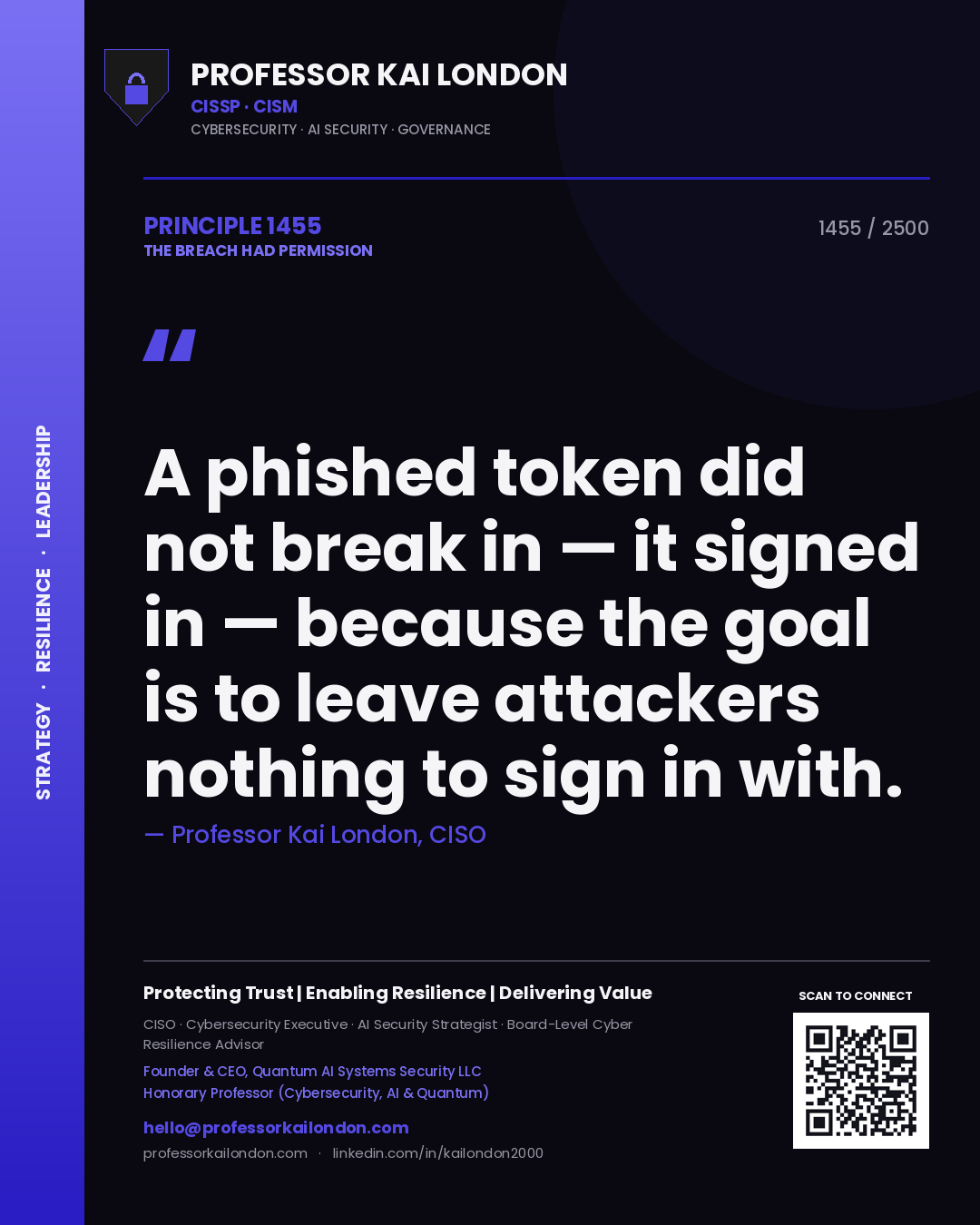
Professor Kai London principle 1455: A phished token did not break in — it signed in — because the goal is to leave attackers nothing to sign in with.
Principle 1455
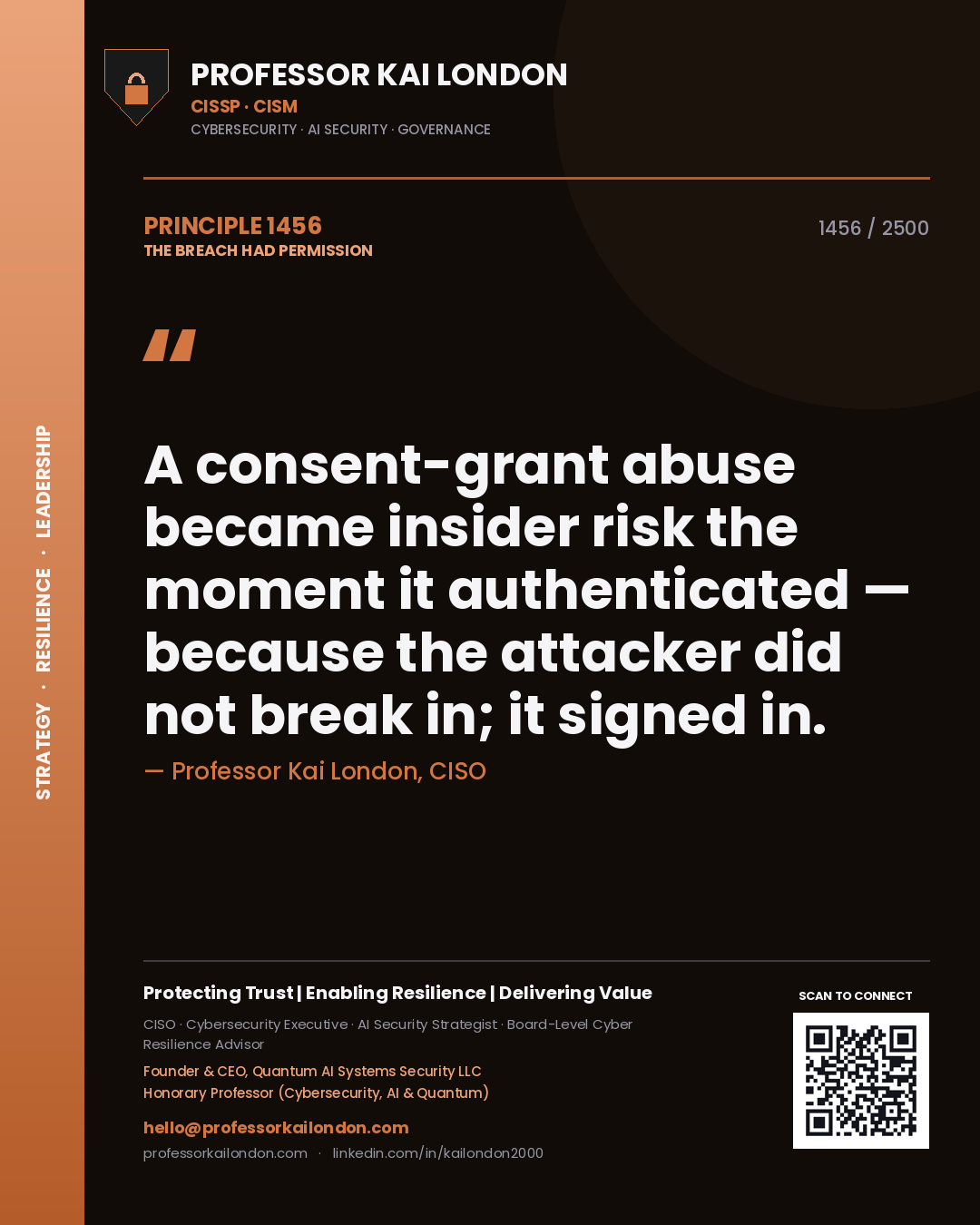
Professor Kai London principle 1456: A consent-grant abuse became insider risk the moment it authenticated — because the attacker did not break in; it signed in.
Principle 1456
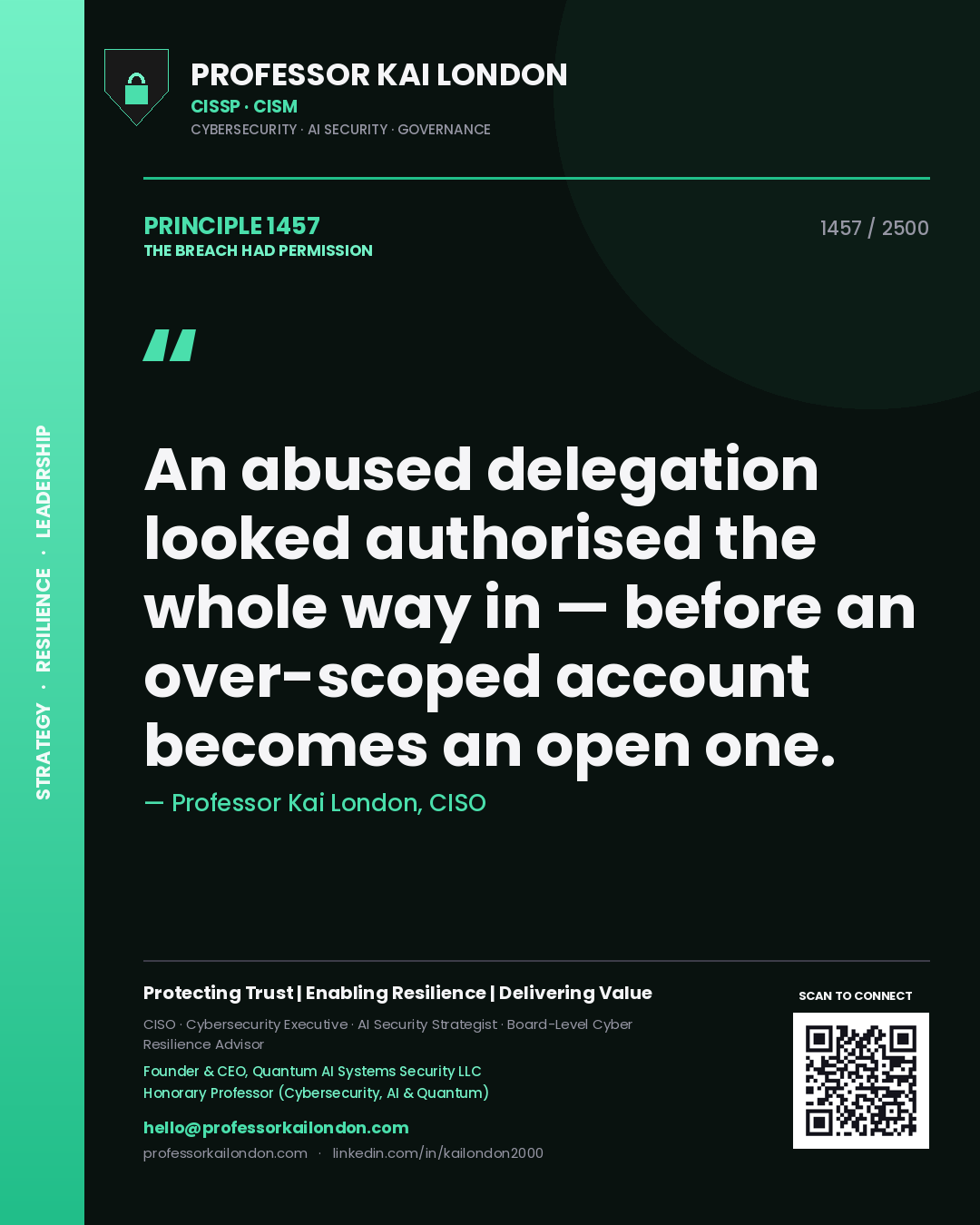
Professor Kai London principle 1457: An abused delegation looked authorised the whole way in — before an over-scoped account becomes an open one.
Principle 1457
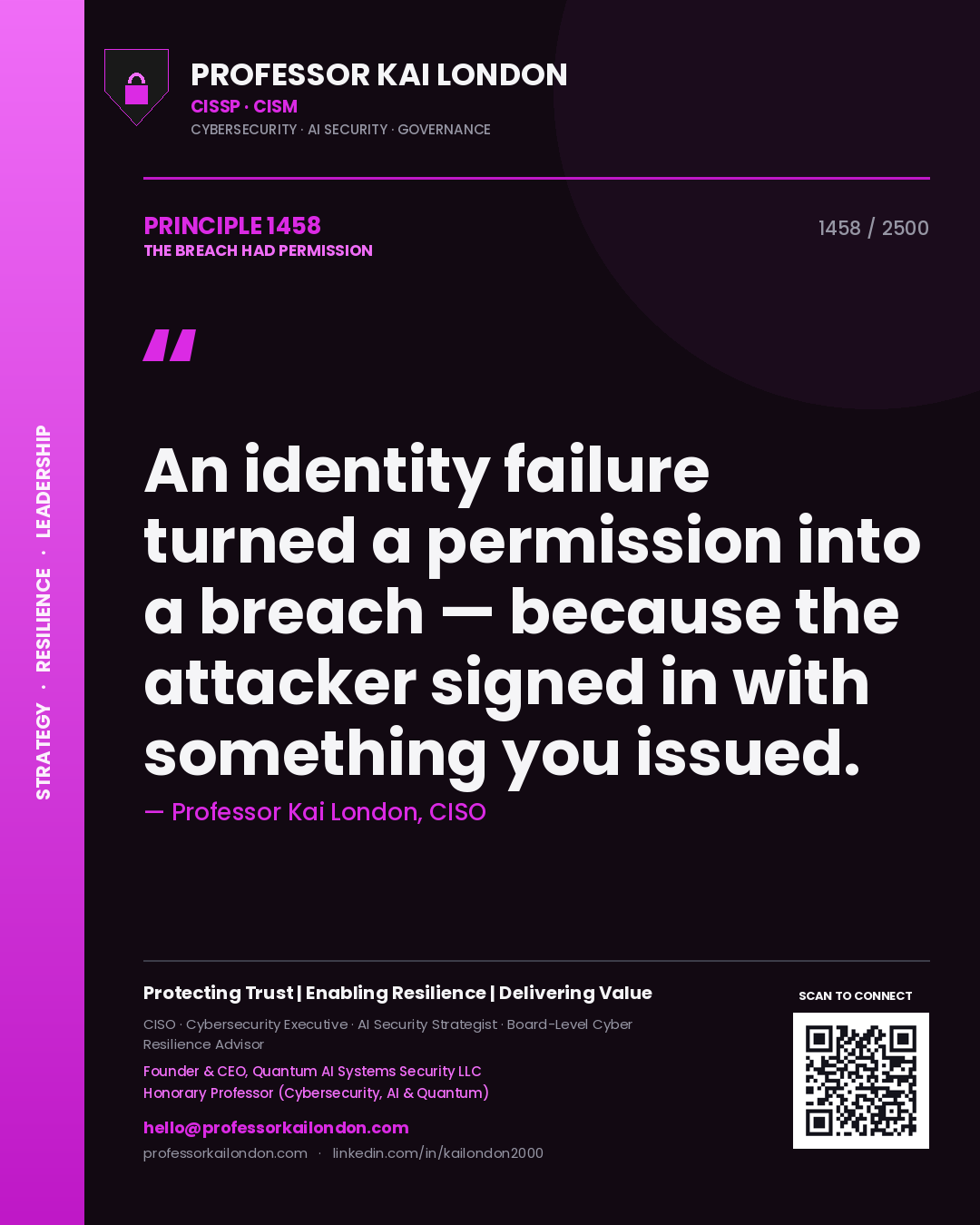
Professor Kai London principle 1458: An identity failure turned a permission into a breach — because the attacker signed in with something you issued.
Principle 1458
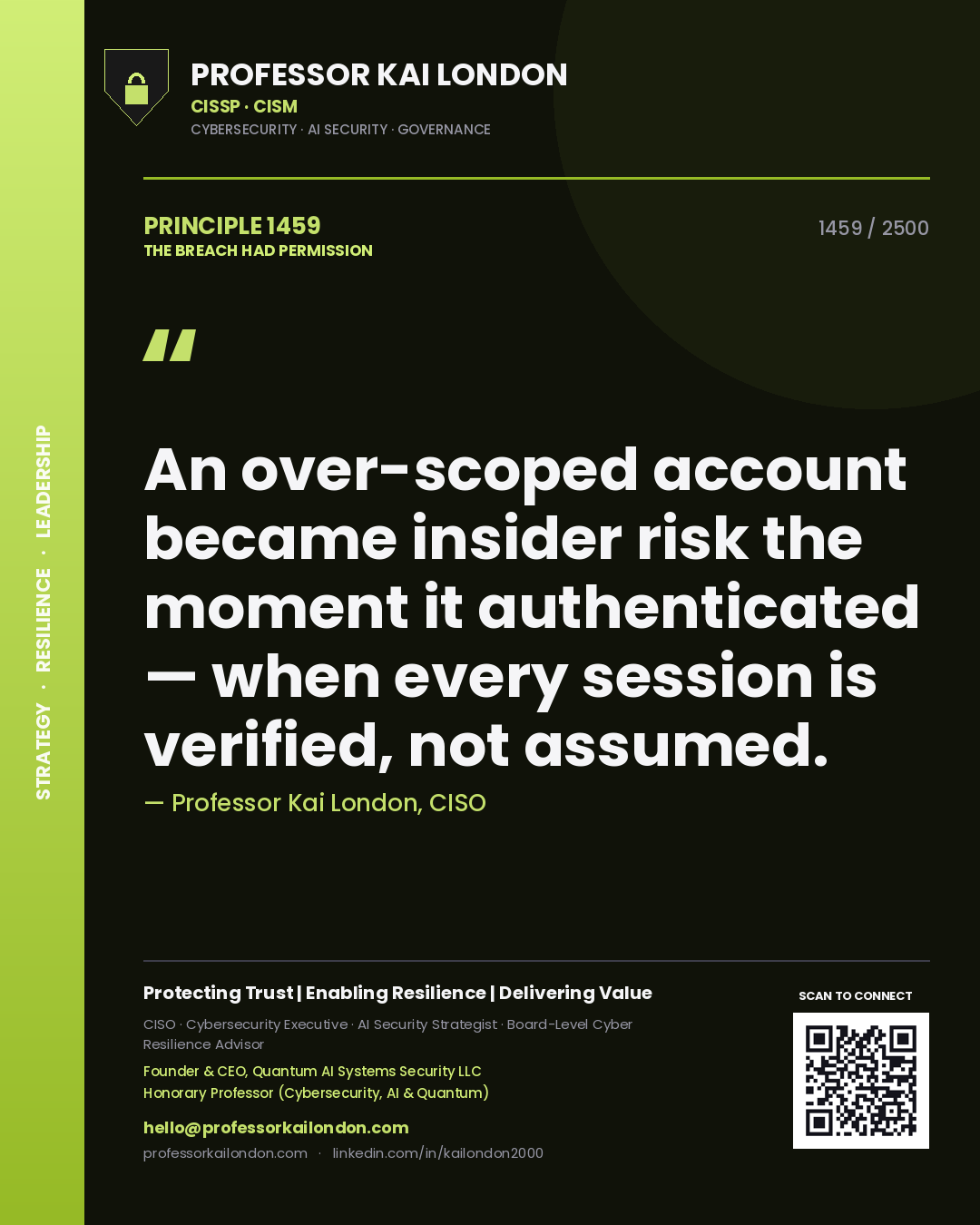
Professor Kai London principle 1459: An over-scoped account became insider risk the moment it authenticated — when every session is verified, not assumed.
Principle 1459
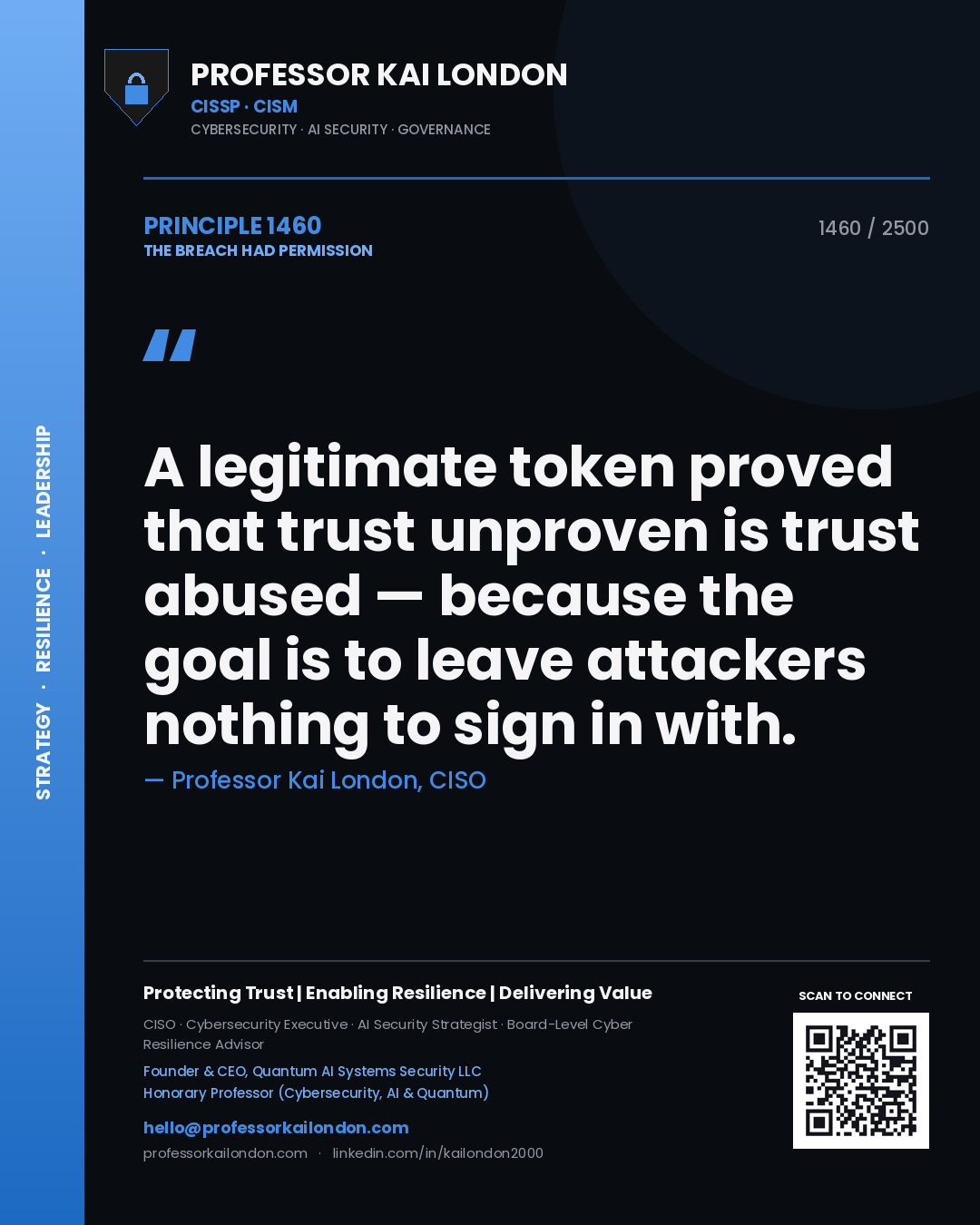
Professor Kai London principle 1460: A legitimate token proved that trust unproven is trust abused — because the goal is to leave attackers nothing to sign in with.
Principle 1460
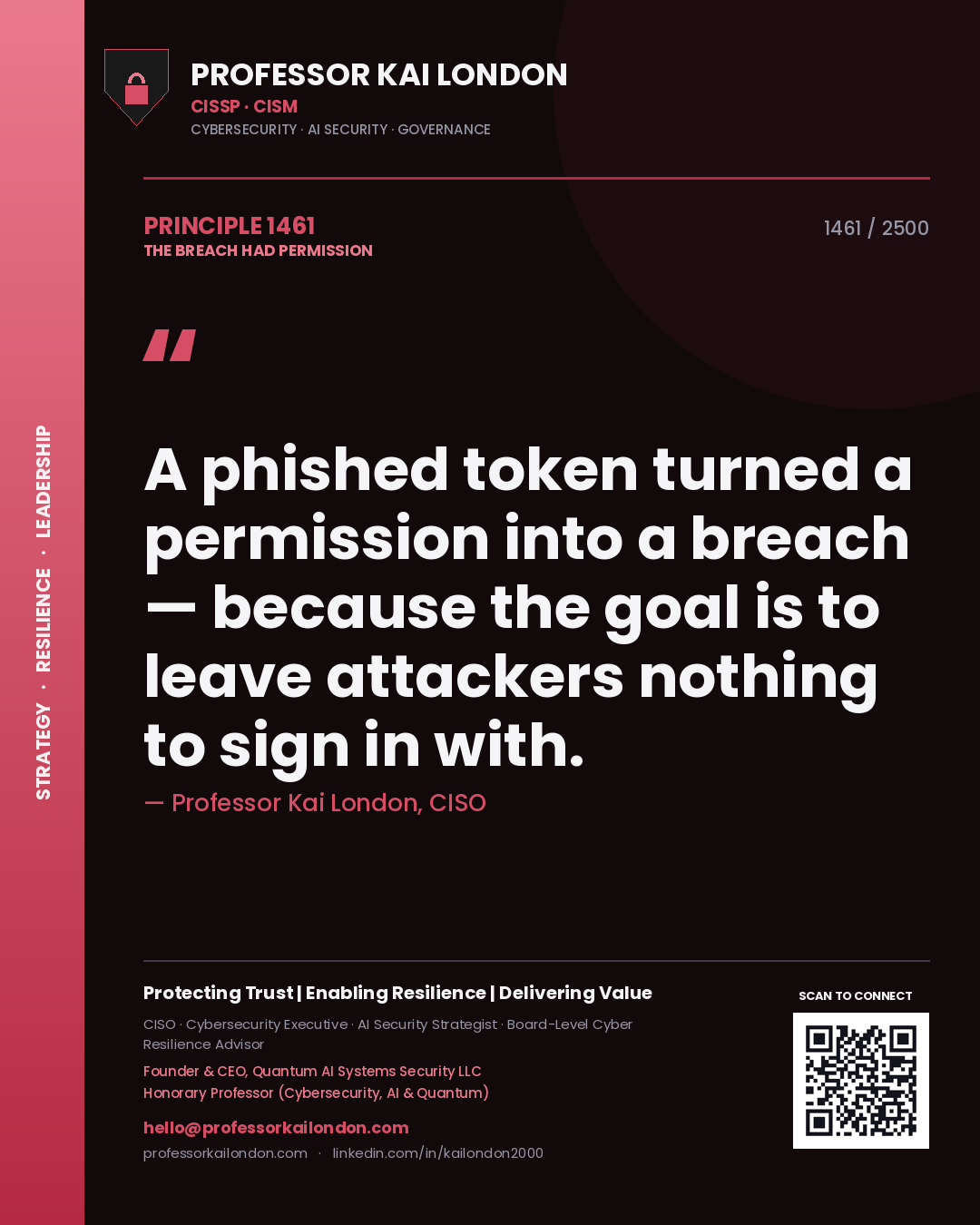
Professor Kai London principle 1461: A phished token turned a permission into a breach — because the goal is to leave attackers nothing to sign in with.
Principle 1461
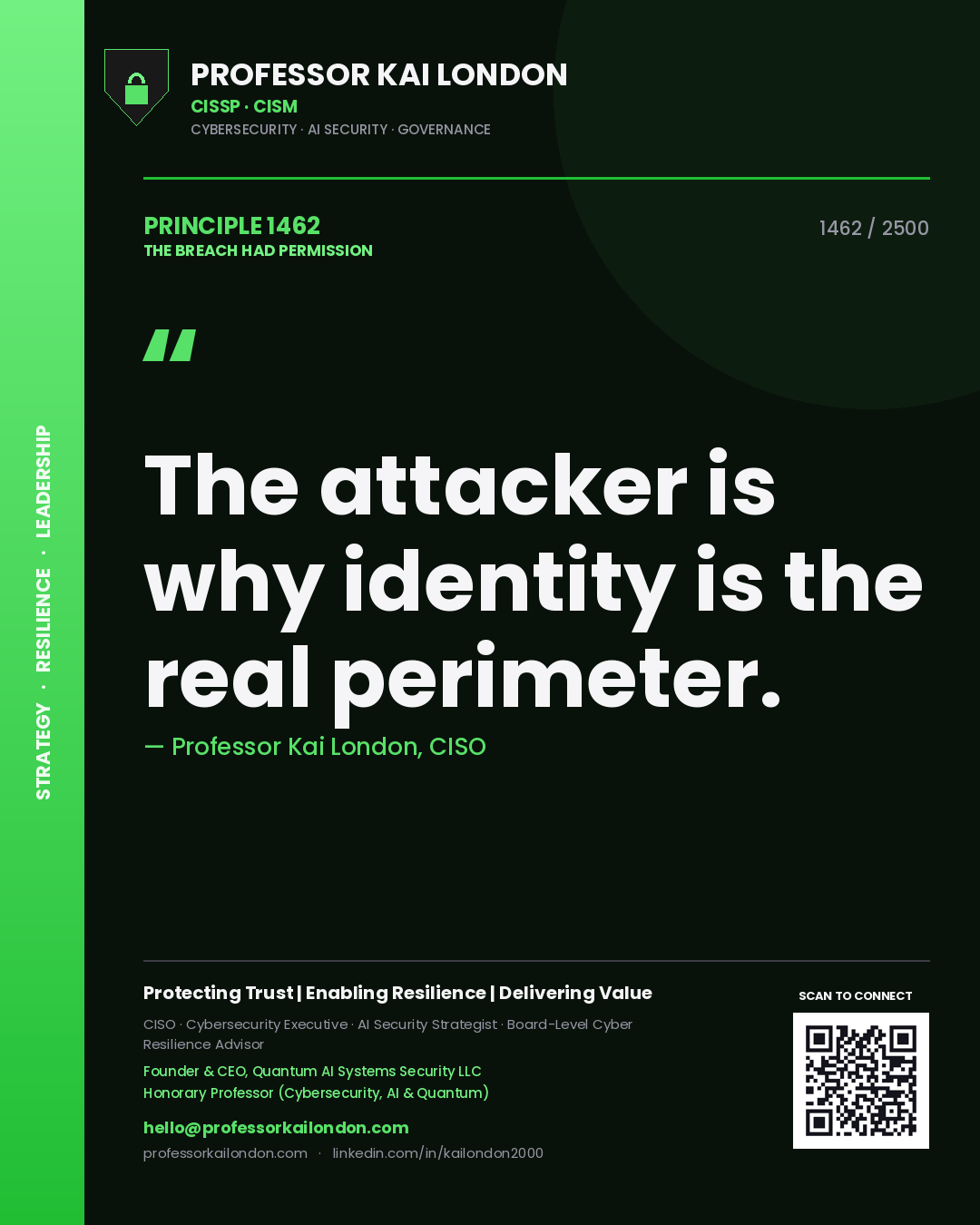
Professor Kai London principle 1462: The attacker is why identity is the real perimeter.
Principle 1462
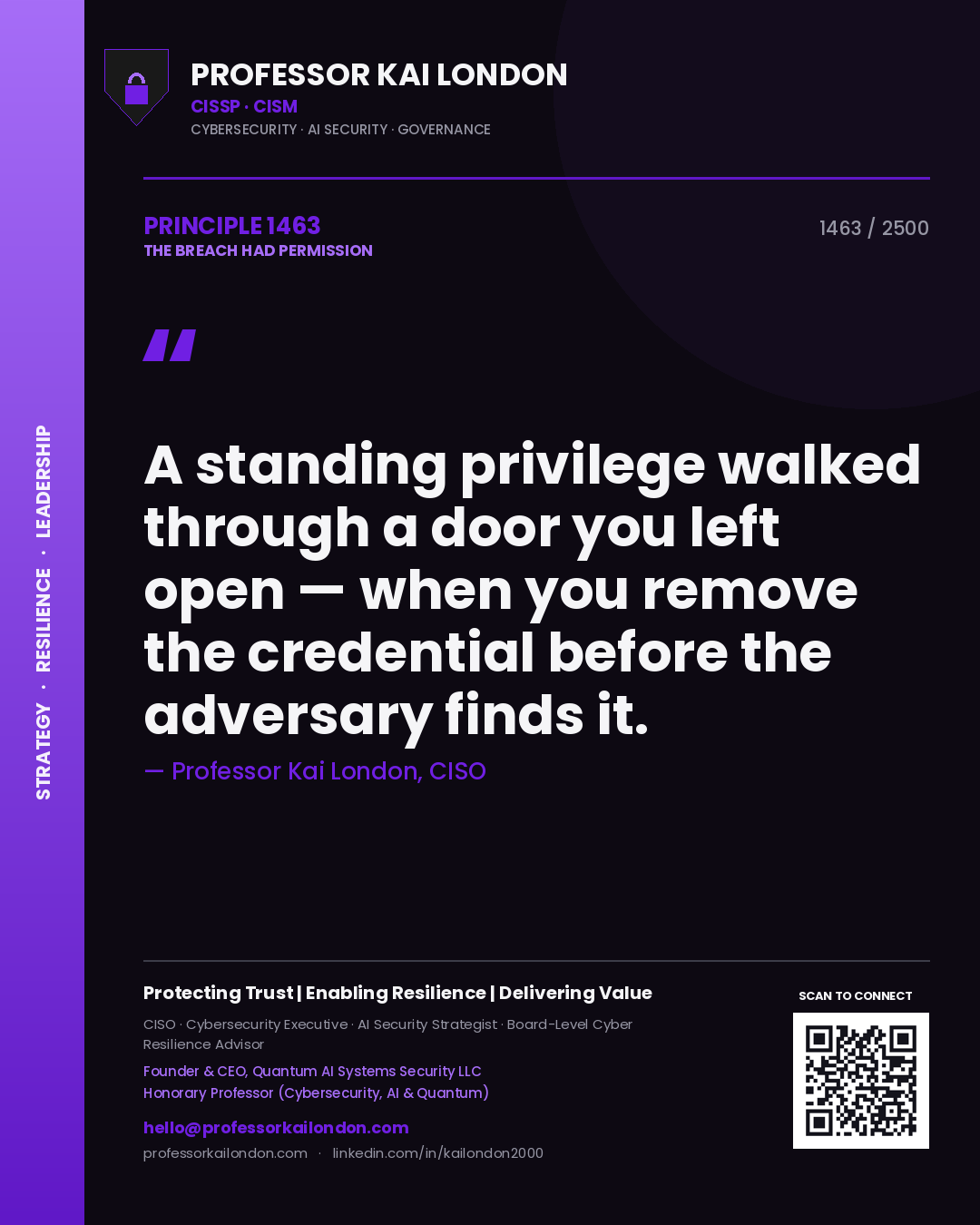
Professor Kai London principle 1463: A standing privilege walked through a door you left open — when you remove the credential before the adversary finds it.
Principle 1463
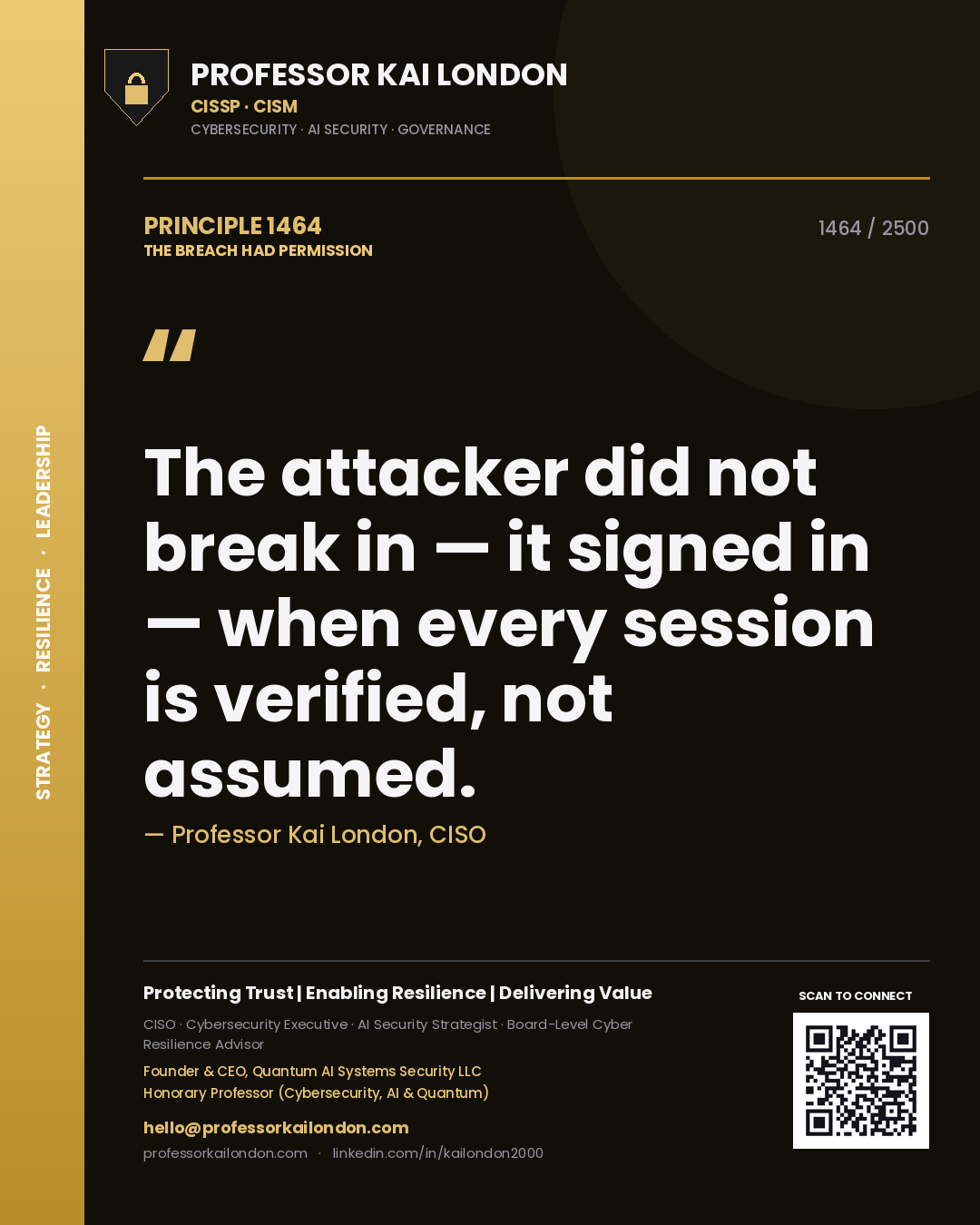
Professor Kai London principle 1464: The attacker did not break in — it signed in — when every session is verified, not assumed.
Principle 1464
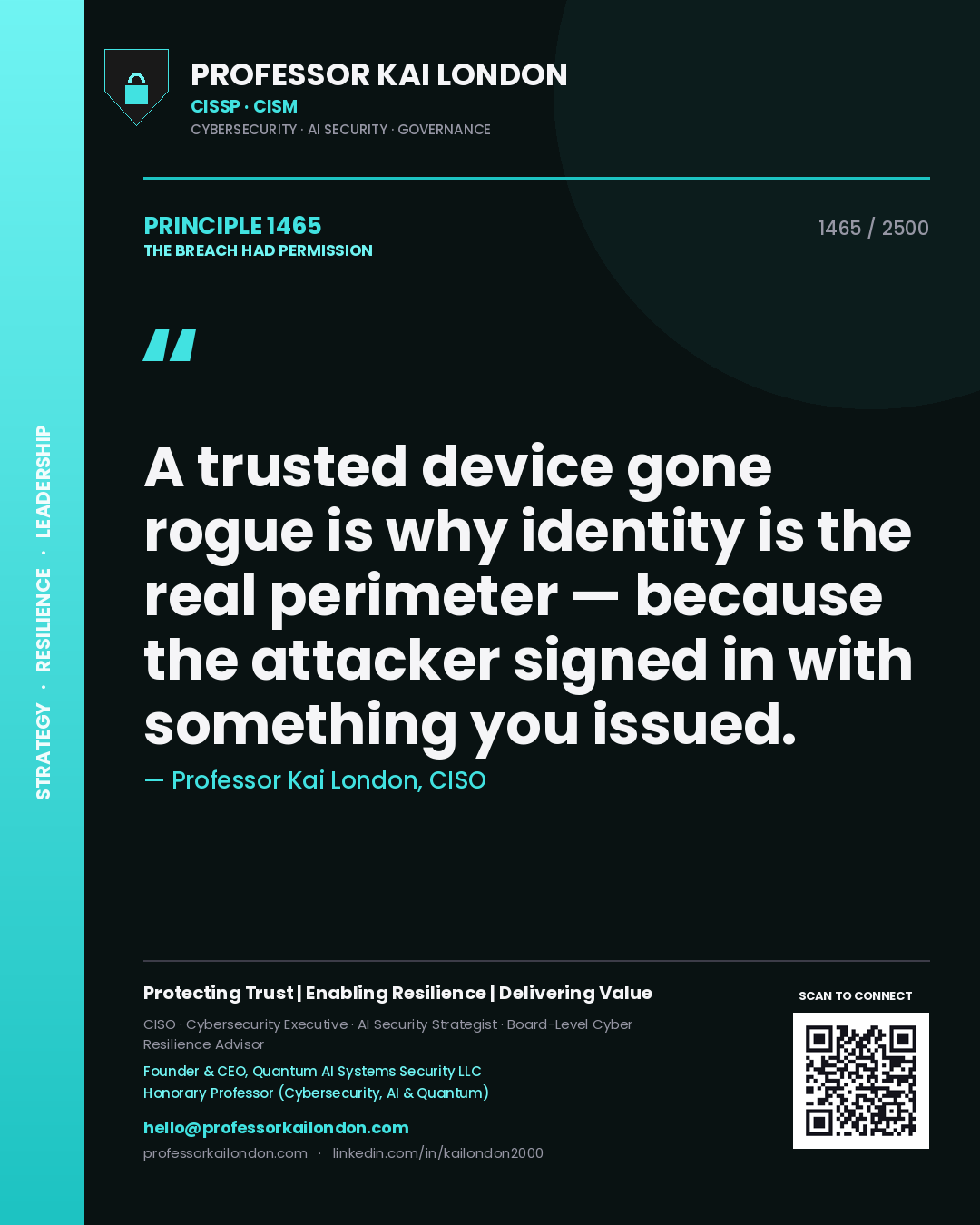
Professor Kai London principle 1465: A trusted device gone rogue is why identity is the real perimeter — because the attacker signed in with something you issued.
Principle 1465
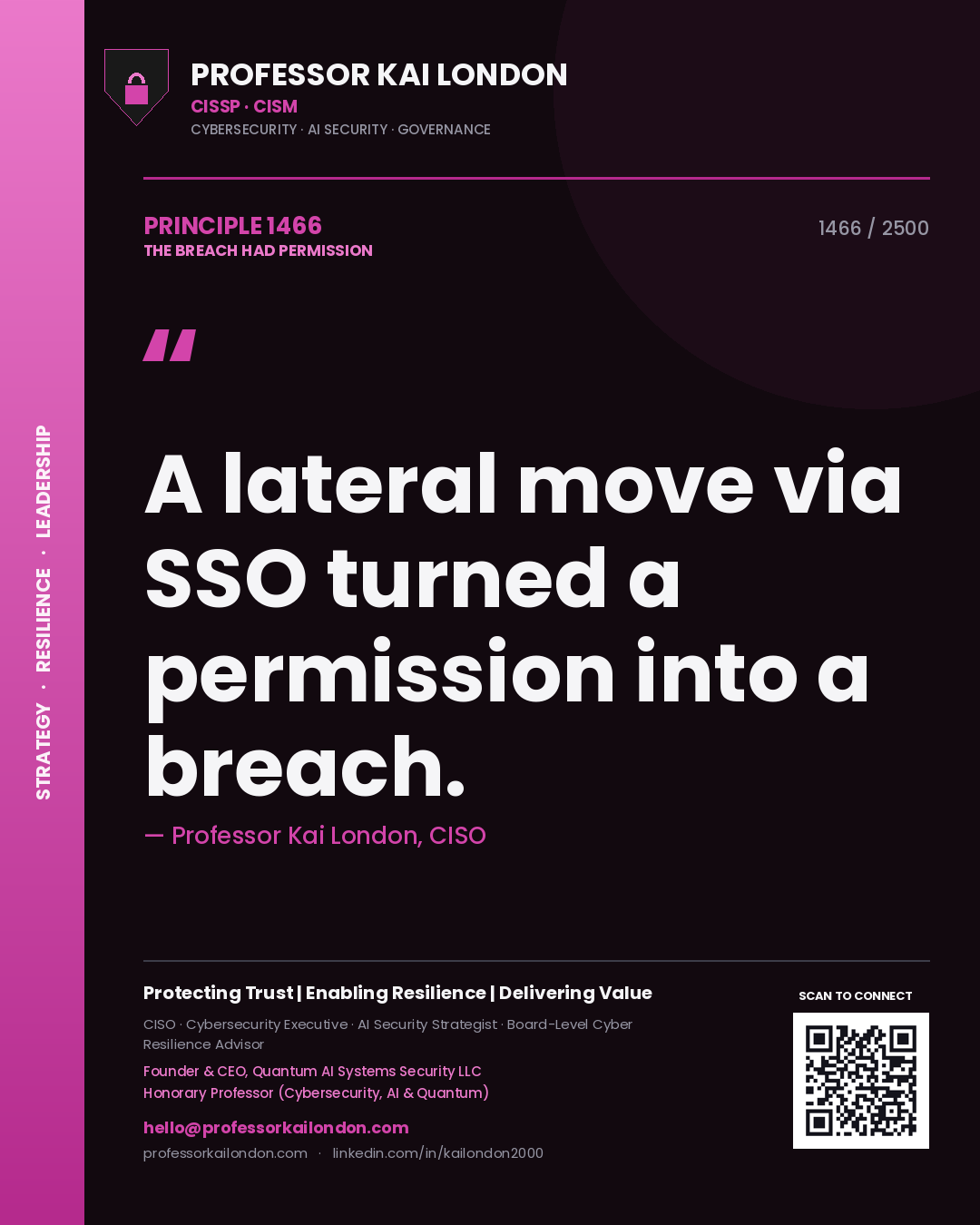
Professor Kai London principle 1466: A lateral move via SSO turned a permission into a breach.
Principle 1466
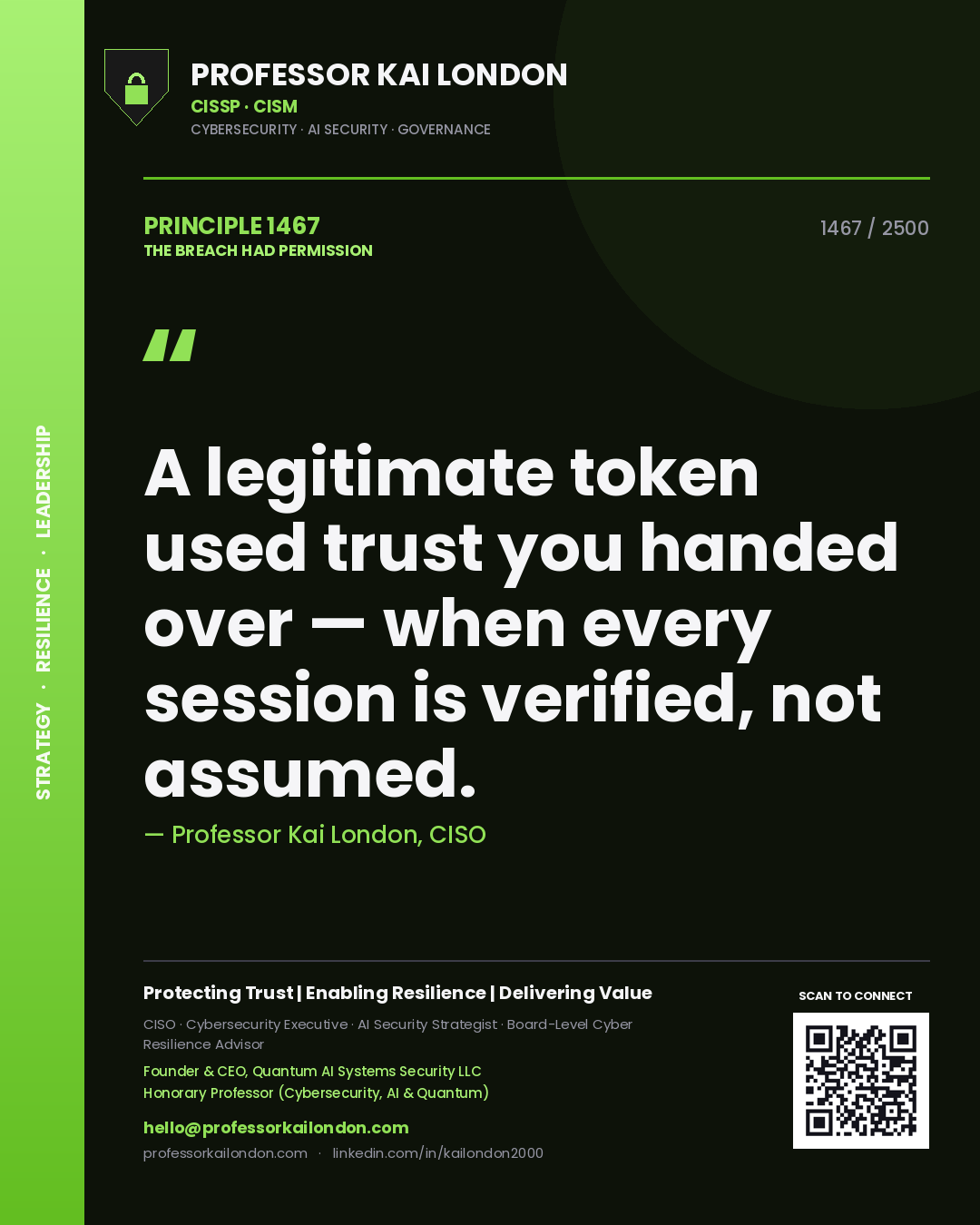
Professor Kai London principle 1467: A legitimate token used trust you handed over — when every session is verified, not assumed.
Principle 1467
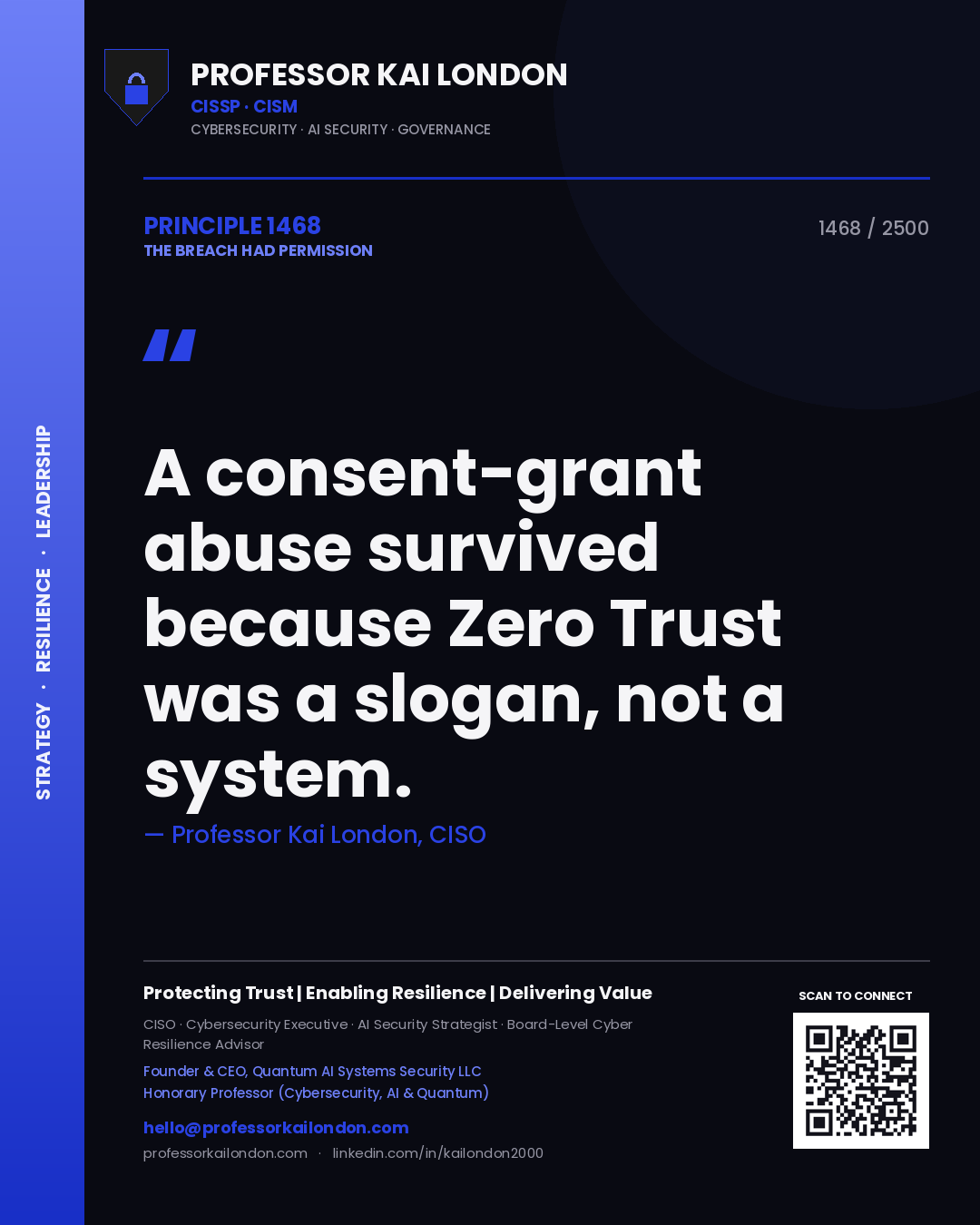
Professor Kai London principle 1468: A consent-grant abuse survived because Zero Trust was a slogan, not a system.
Principle 1468
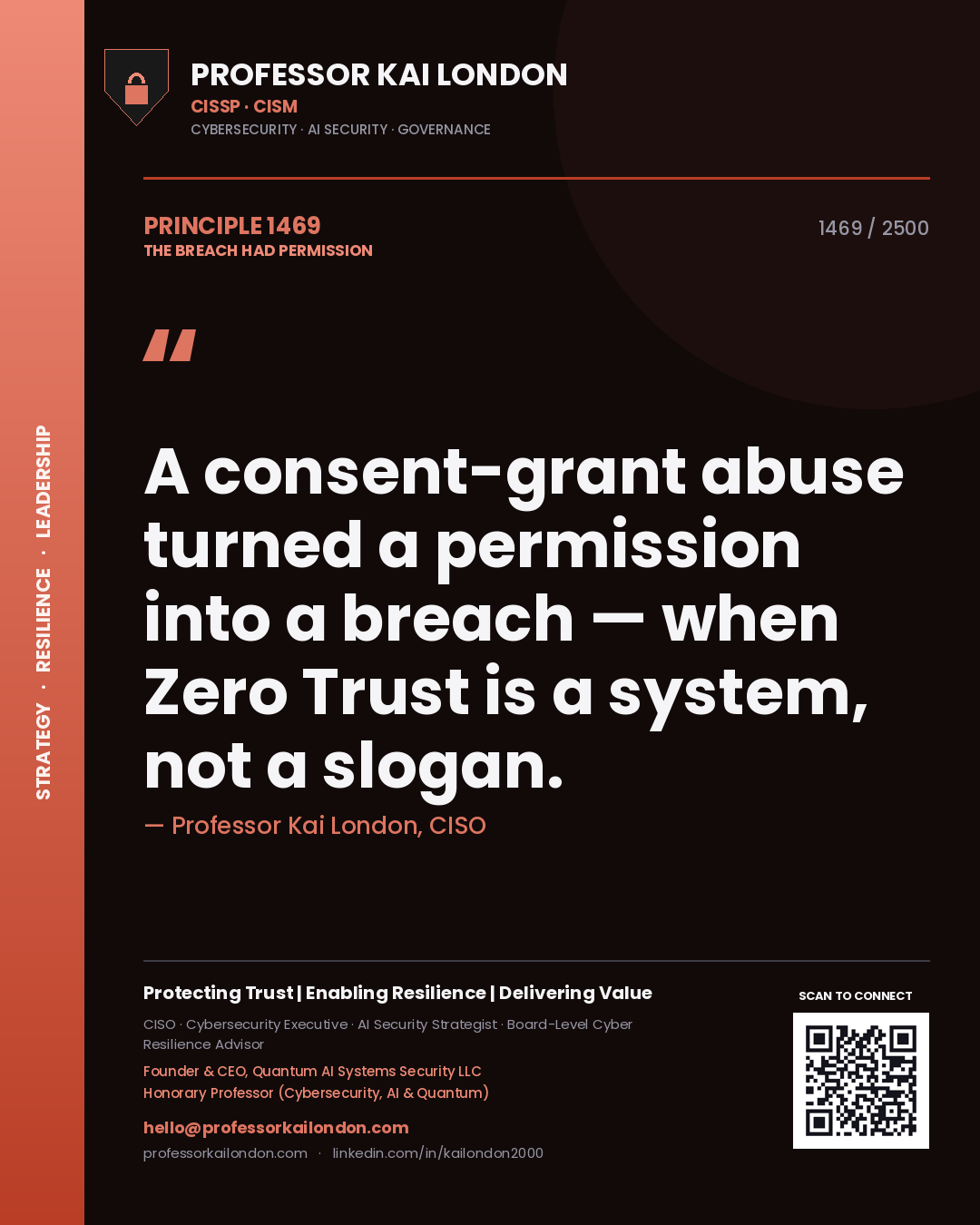
Professor Kai London principle 1469: A consent-grant abuse turned a permission into a breach — when Zero Trust is a system, not a slogan.
Principle 1469
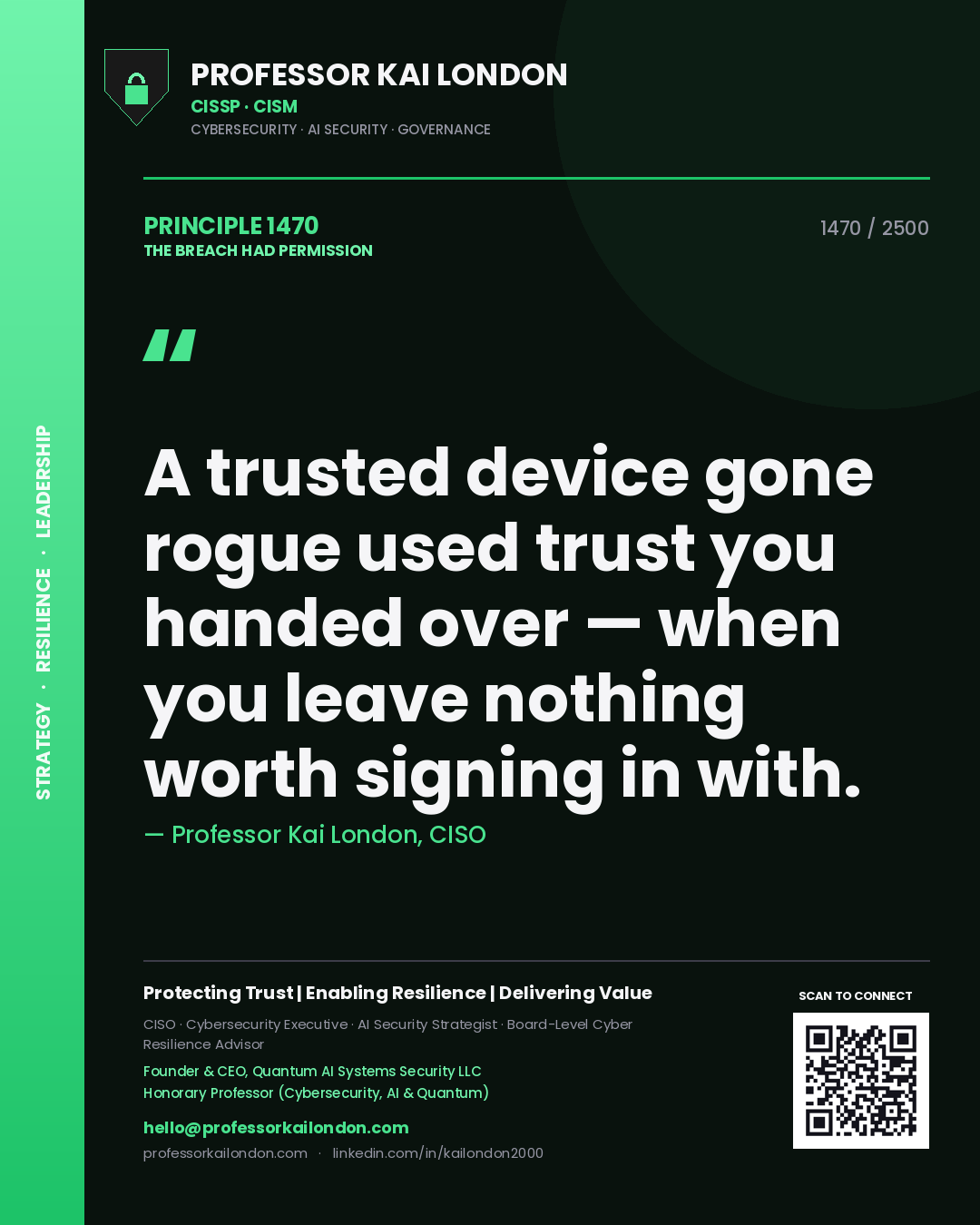
Professor Kai London principle 1470: A trusted device gone rogue used trust you handed over — when you leave nothing worth signing in with.
Principle 1470
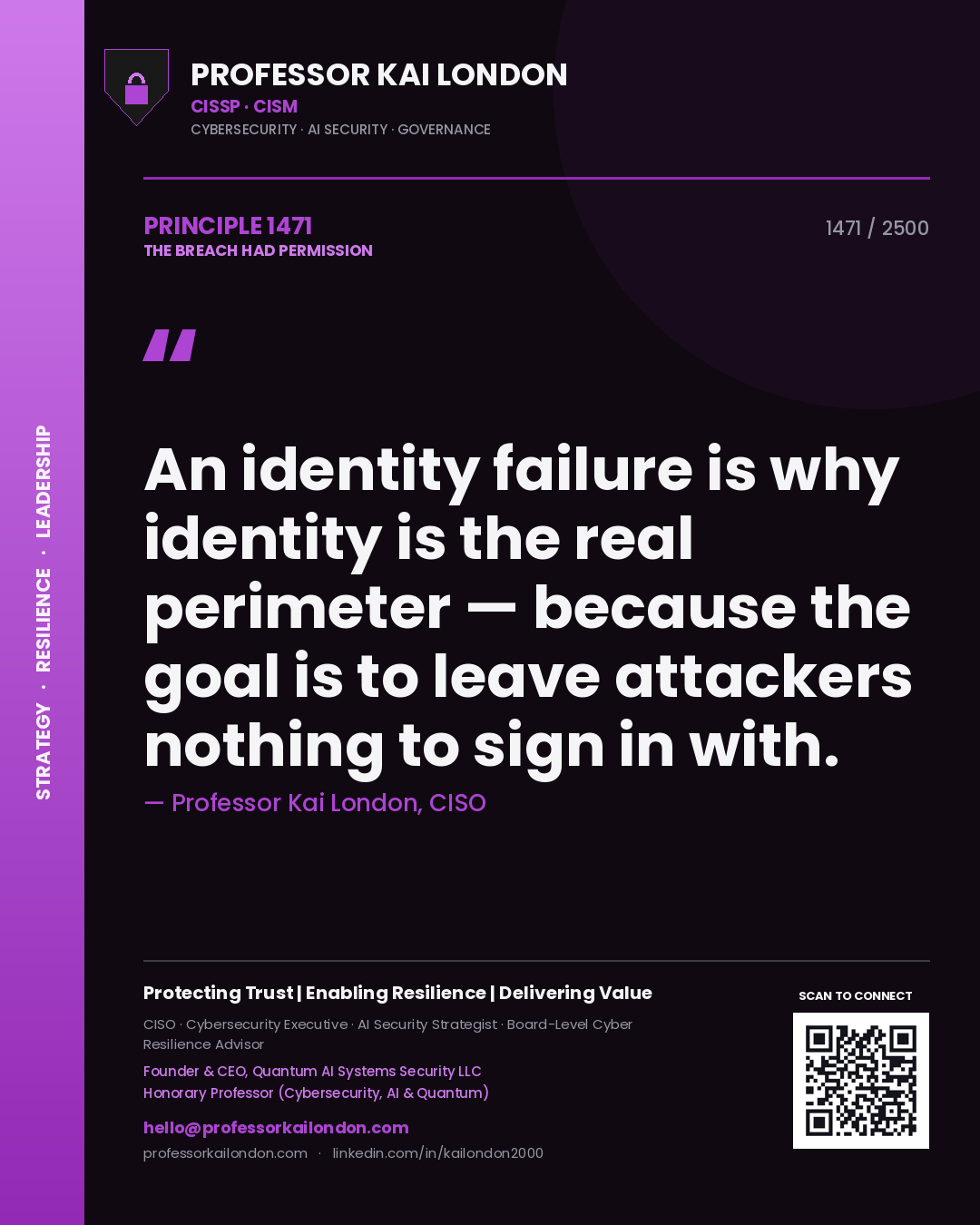
Professor Kai London principle 1471: An identity failure is why identity is the real perimeter — because the goal is to leave attackers nothing to sign in with.
Principle 1471
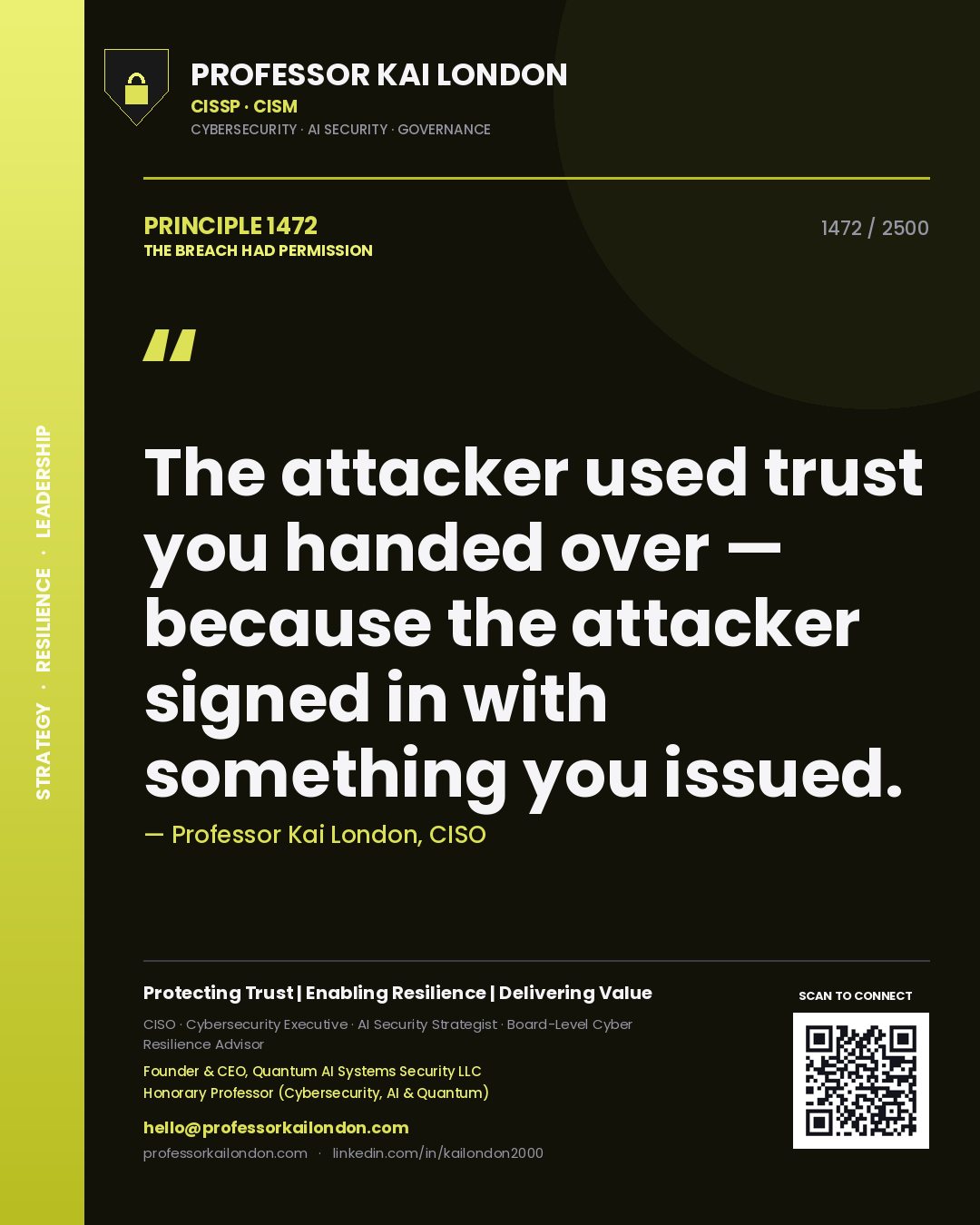
Professor Kai London principle 1472: The attacker used trust you handed over — because the attacker signed in with something you issued.
Principle 1472
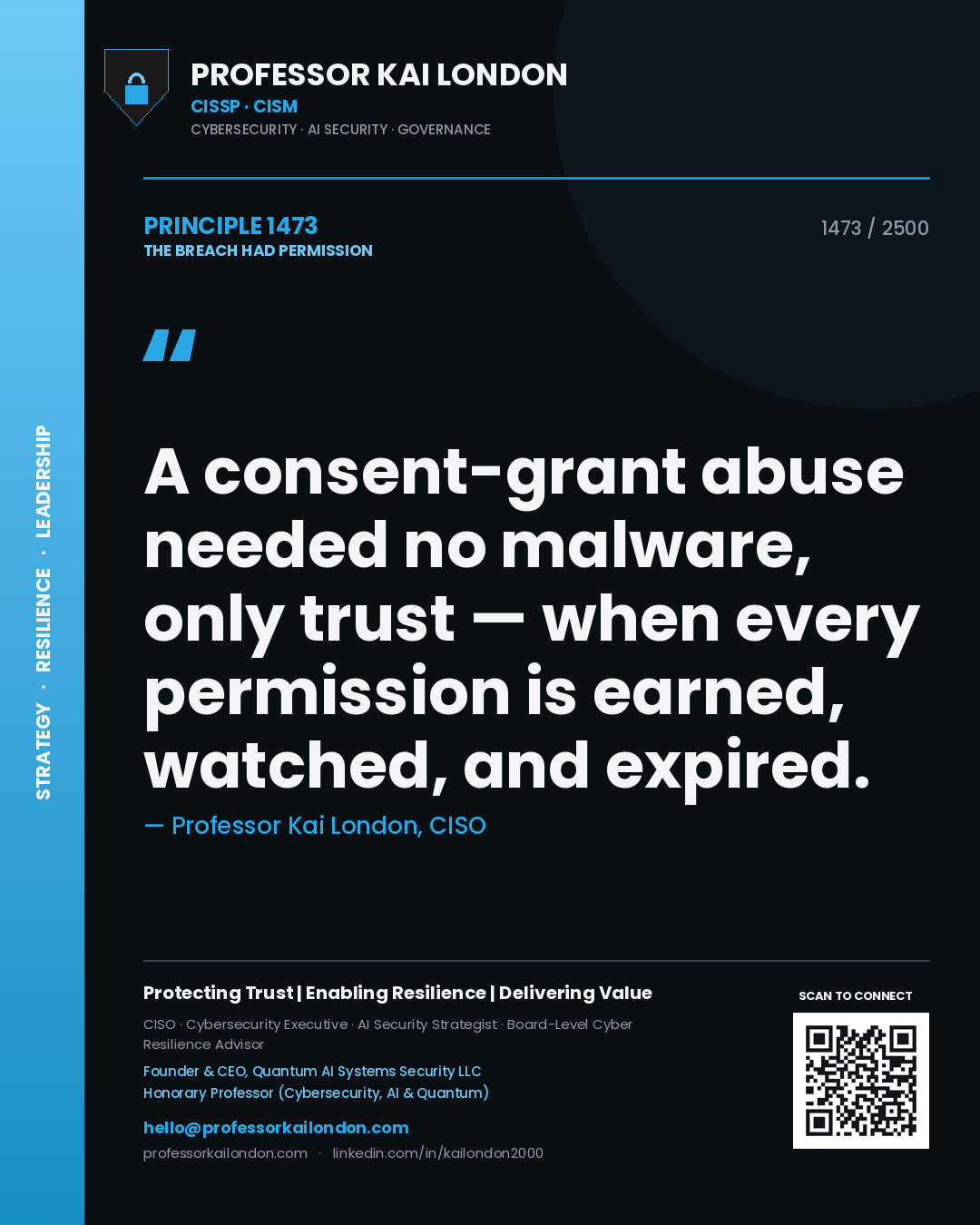
Professor Kai London principle 1473: A consent-grant abuse needed no malware, only trust — when every permission is earned, watched, and expired.
Principle 1473
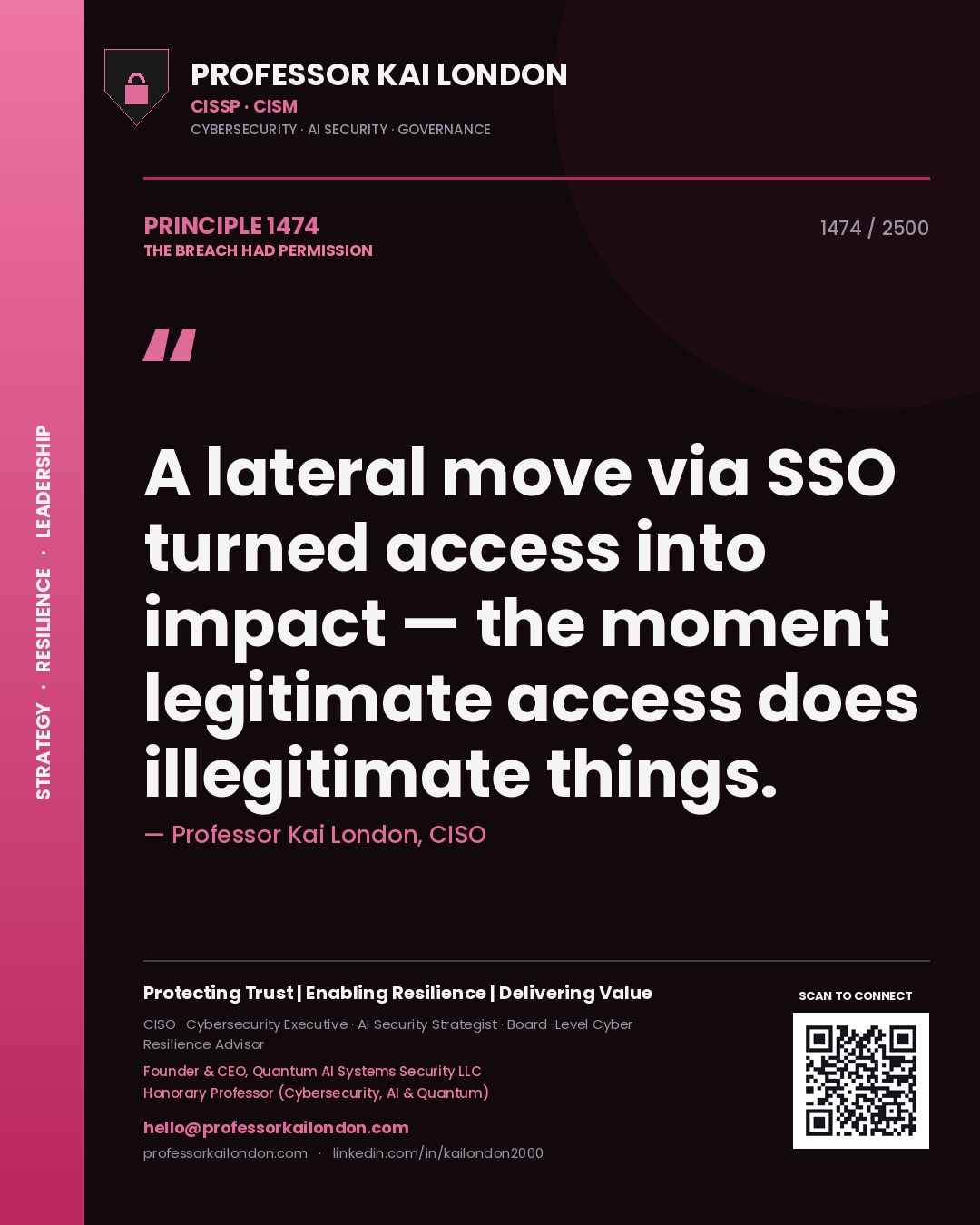
Professor Kai London principle 1474: A lateral move via SSO turned access into impact — the moment legitimate access does illegitimate things.
Principle 1474
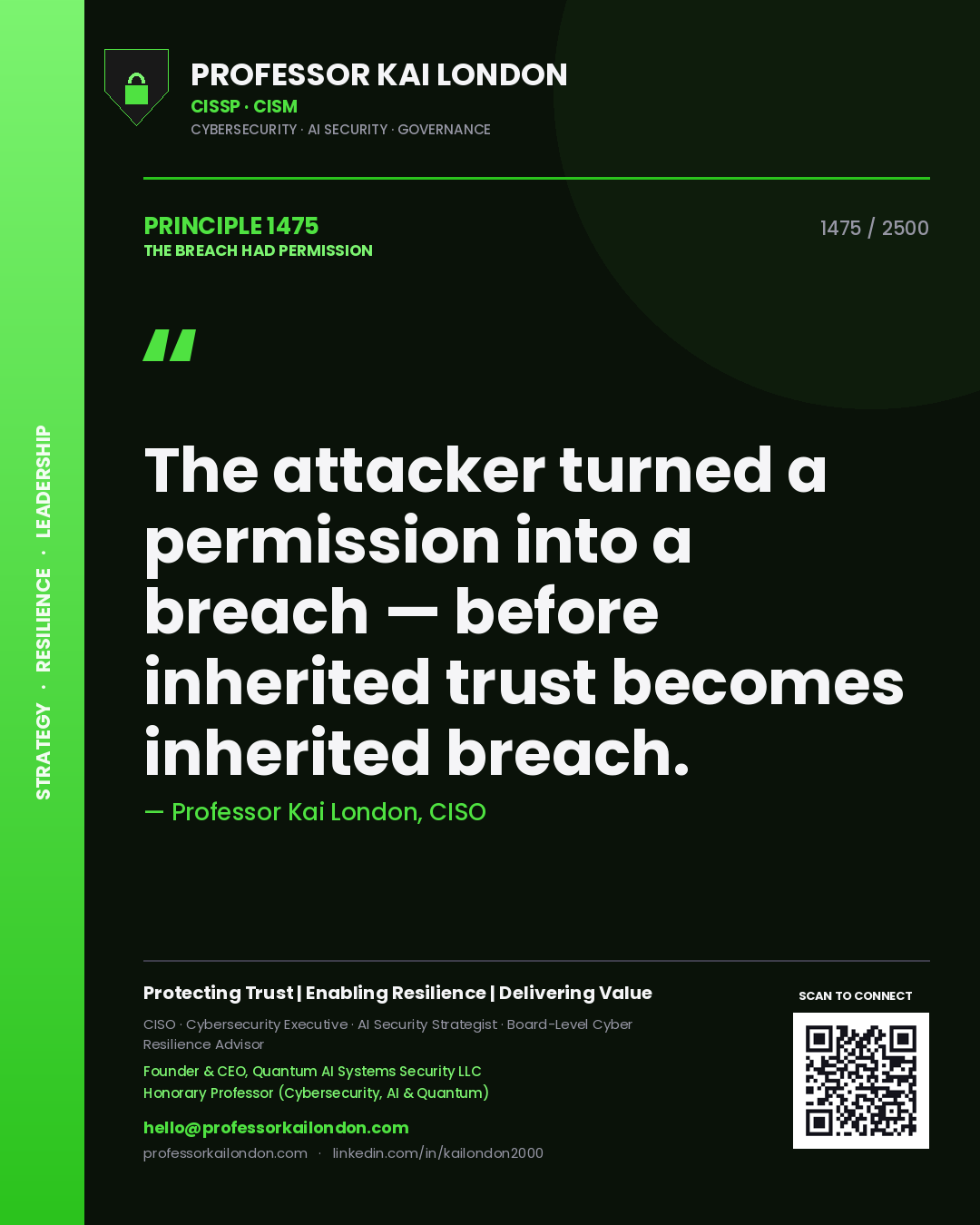
Professor Kai London principle 1475: The attacker turned a permission into a breach — before inherited trust becomes inherited breach.
Principle 1475
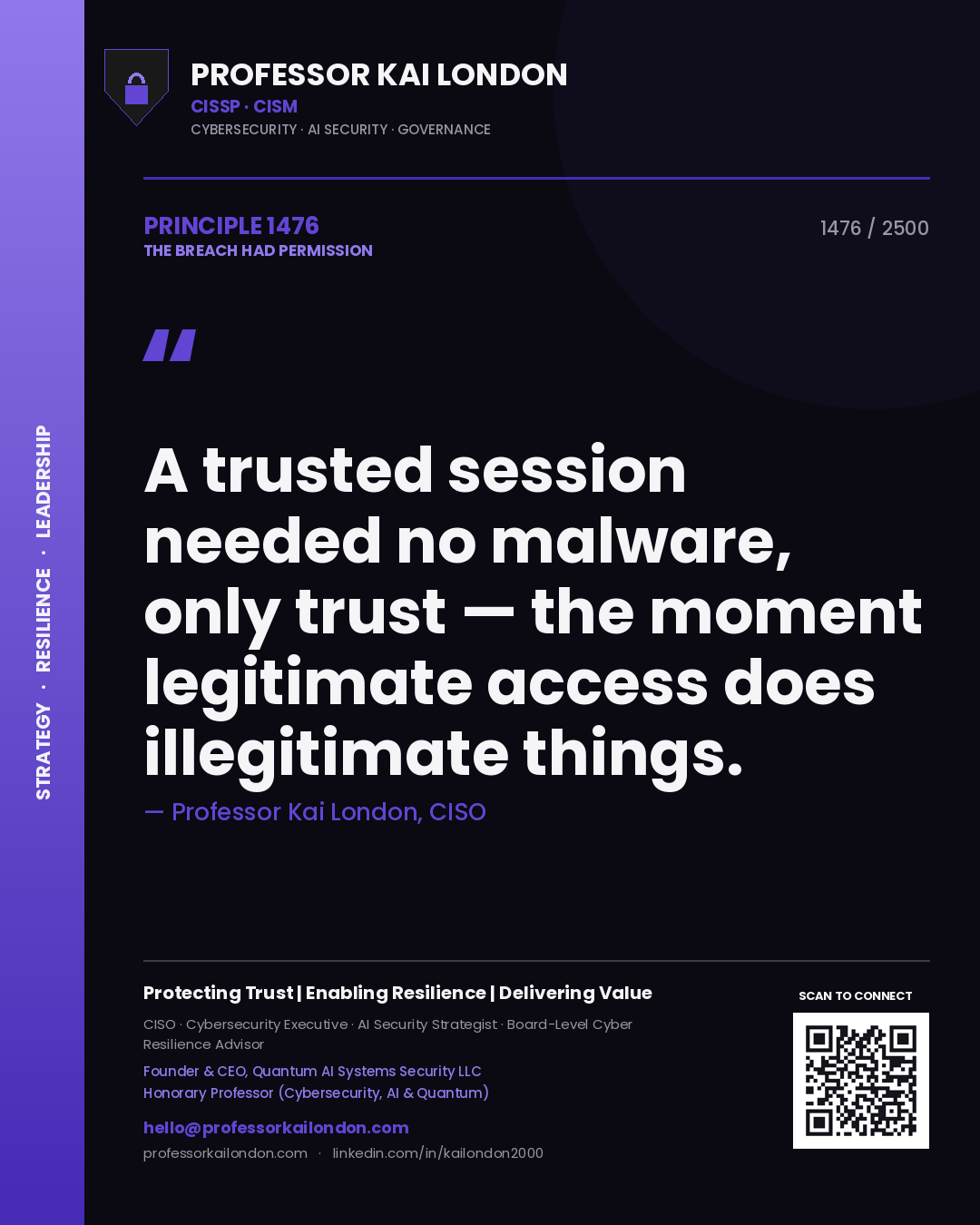
Professor Kai London principle 1476: A trusted session needed no malware, only trust — the moment legitimate access does illegitimate things.
Principle 1476
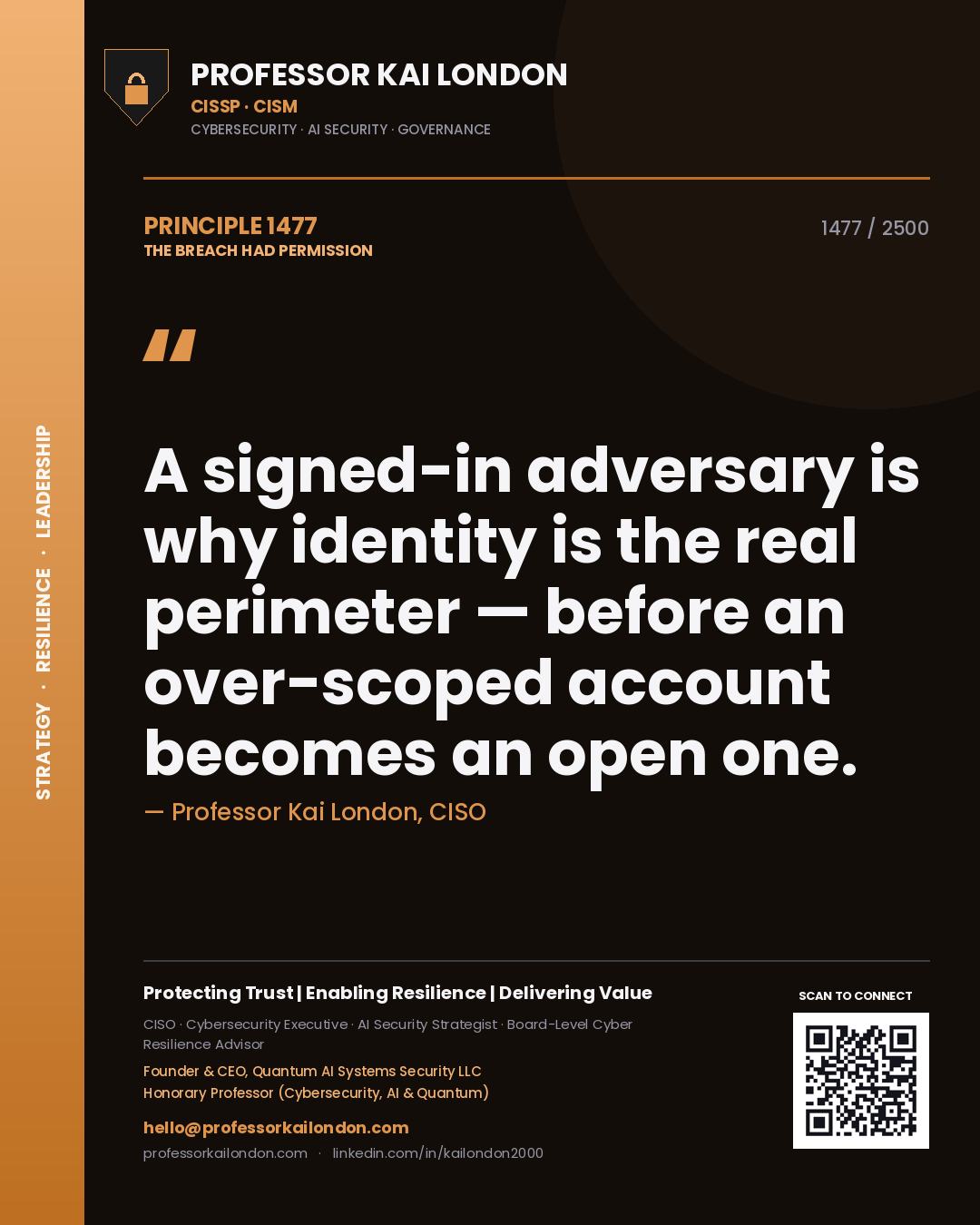
Professor Kai London principle 1477: A signed-in adversary is why identity is the real perimeter — before an over-scoped account becomes an open one.
Principle 1477
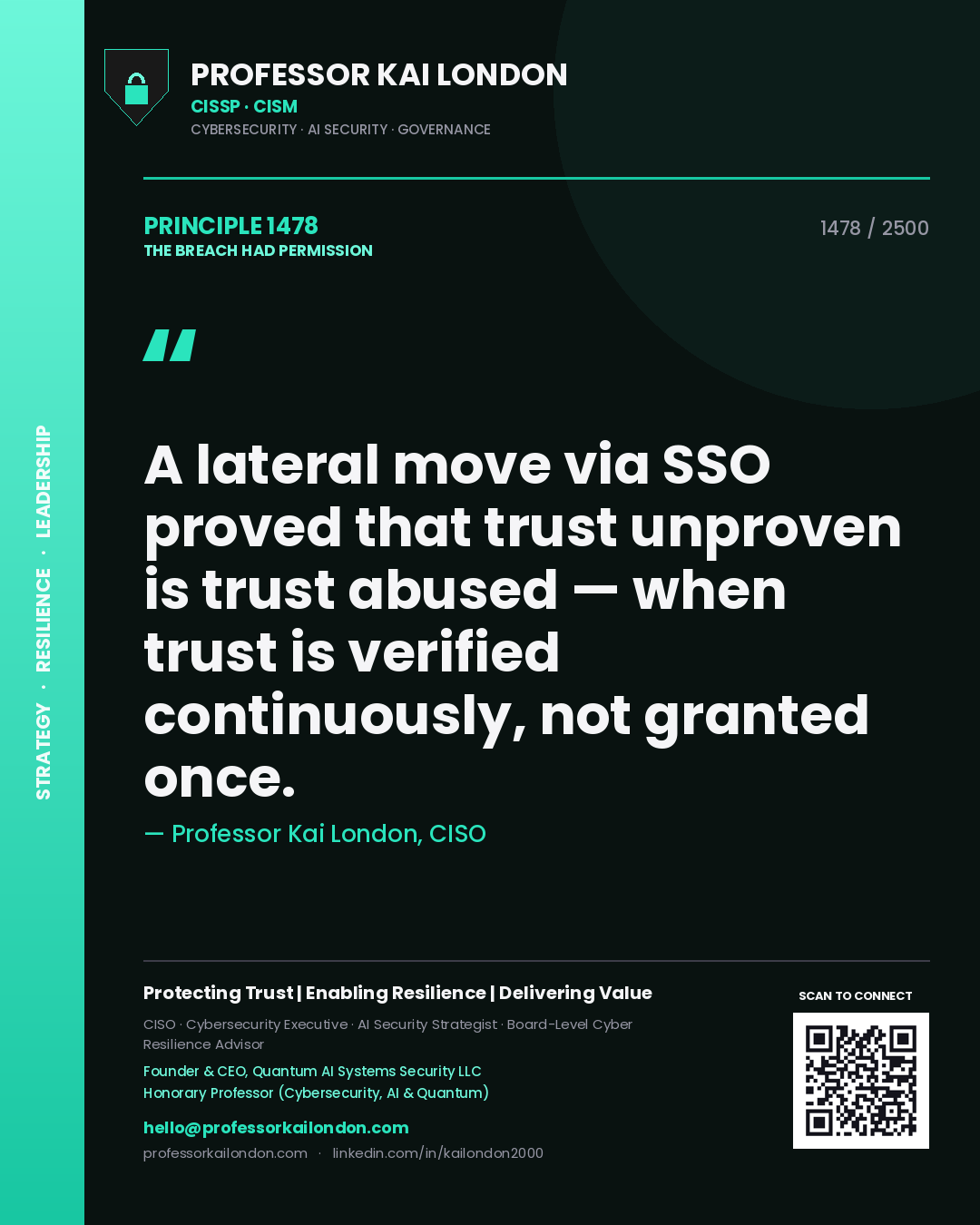
Professor Kai London principle 1478: A lateral move via SSO proved that trust unproven is trust abused — when trust is verified continuously, not granted once.
Principle 1478
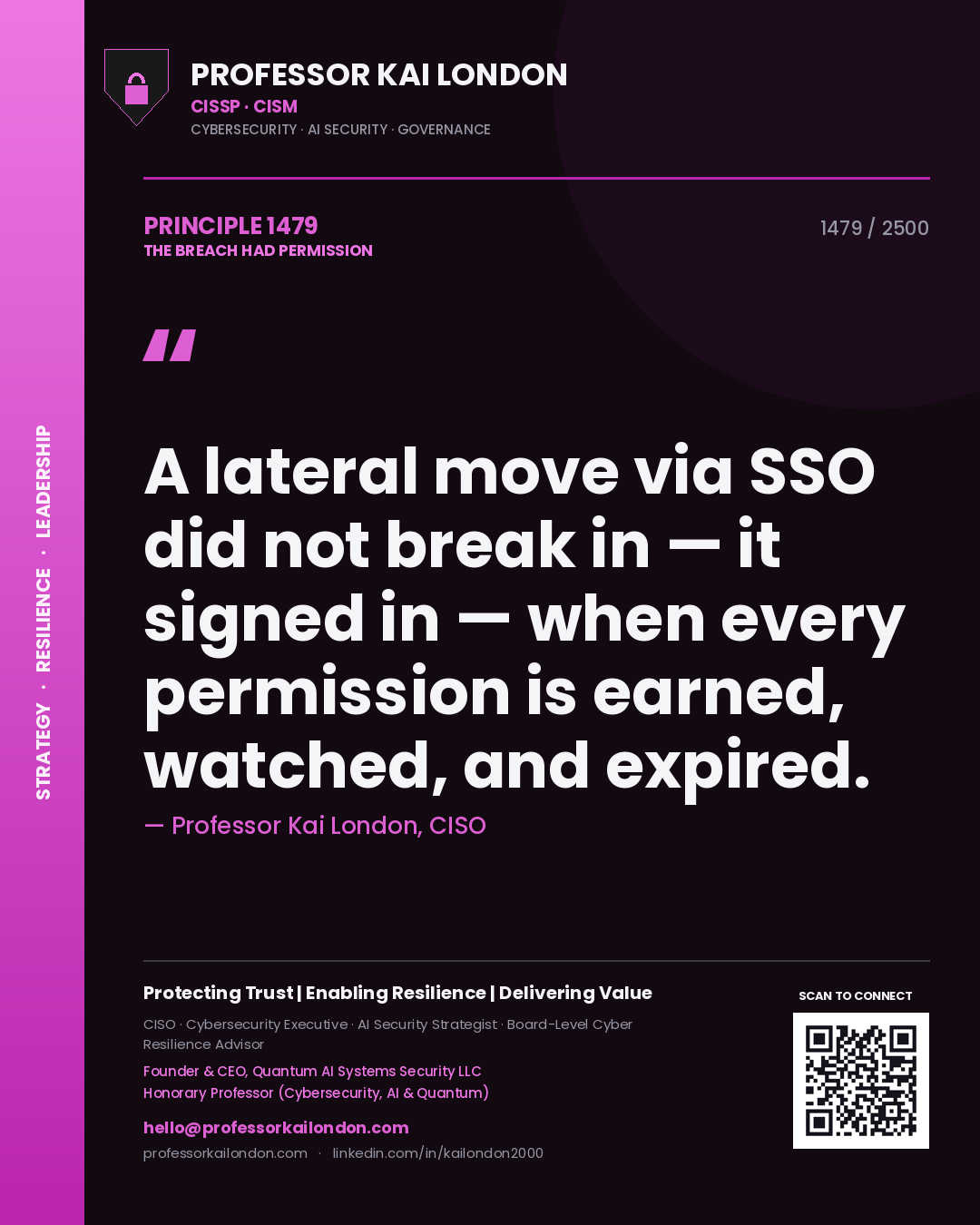
Professor Kai London principle 1479: A lateral move via SSO did not break in — it signed in — when every permission is earned, watched, and expired.
Principle 1479
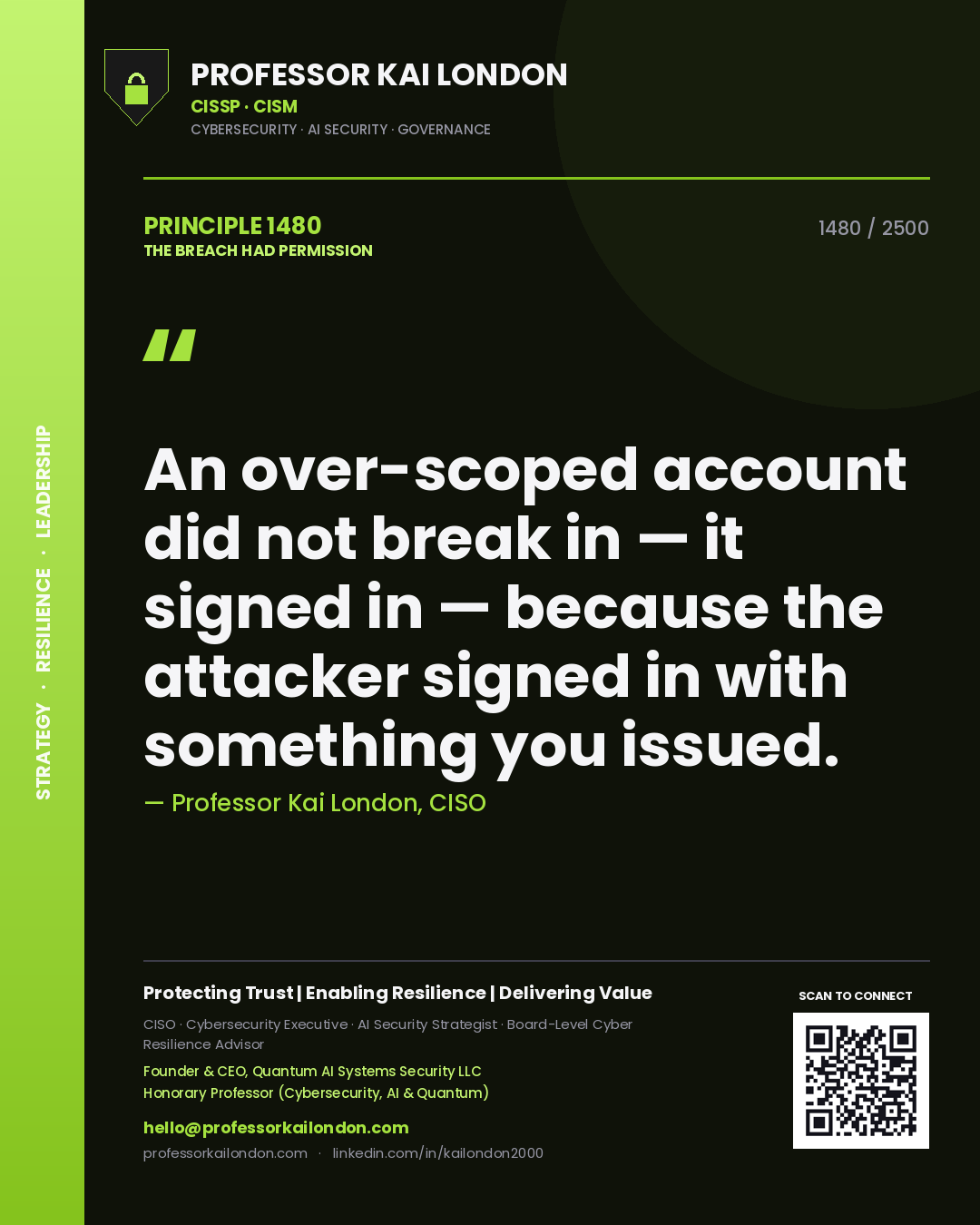
Professor Kai London principle 1480: An over-scoped account did not break in — it signed in — because the attacker signed in with something you issued.
Principle 1480
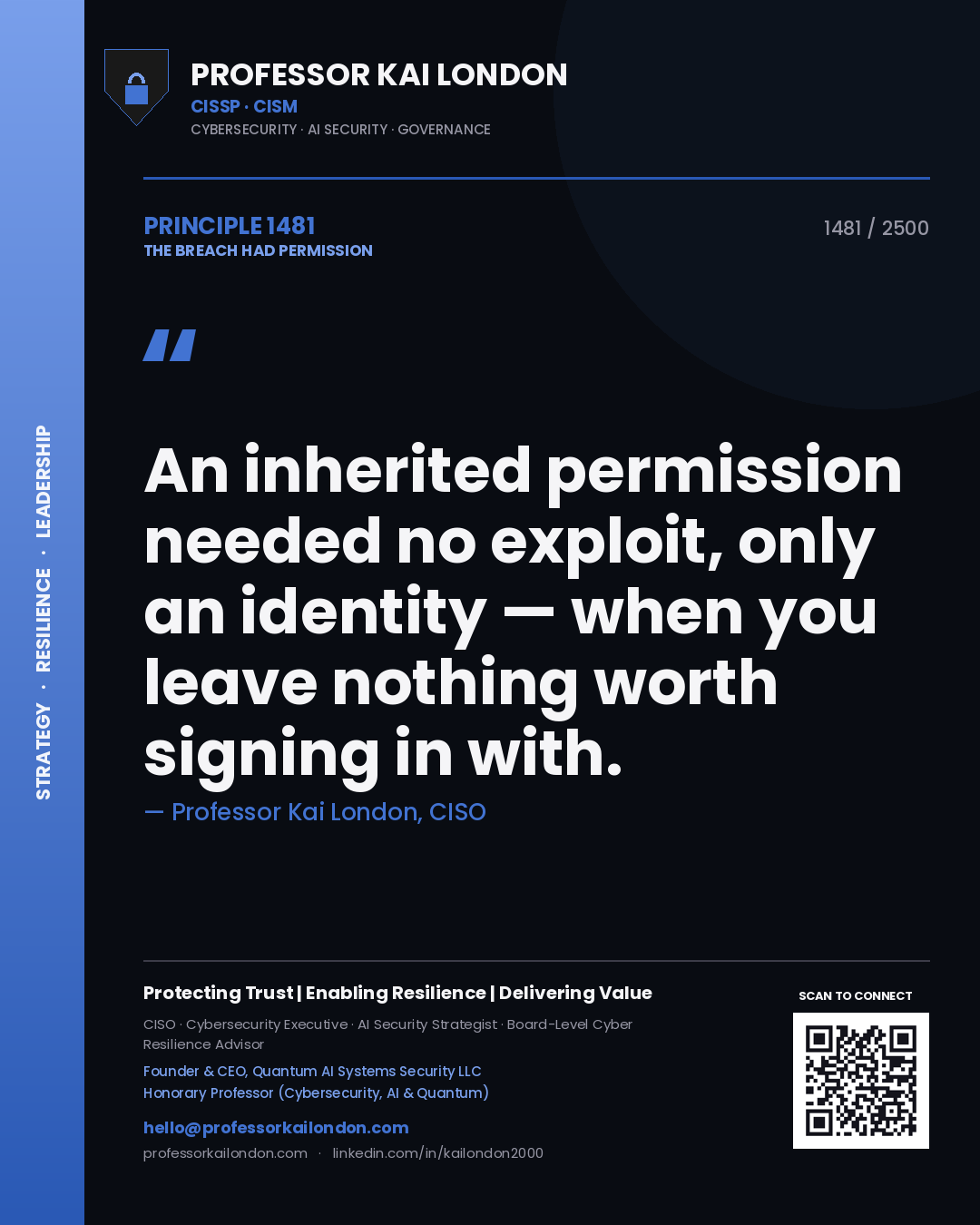
Professor Kai London principle 1481: An inherited permission needed no exploit, only an identity — when you leave nothing worth signing in with.
Principle 1481
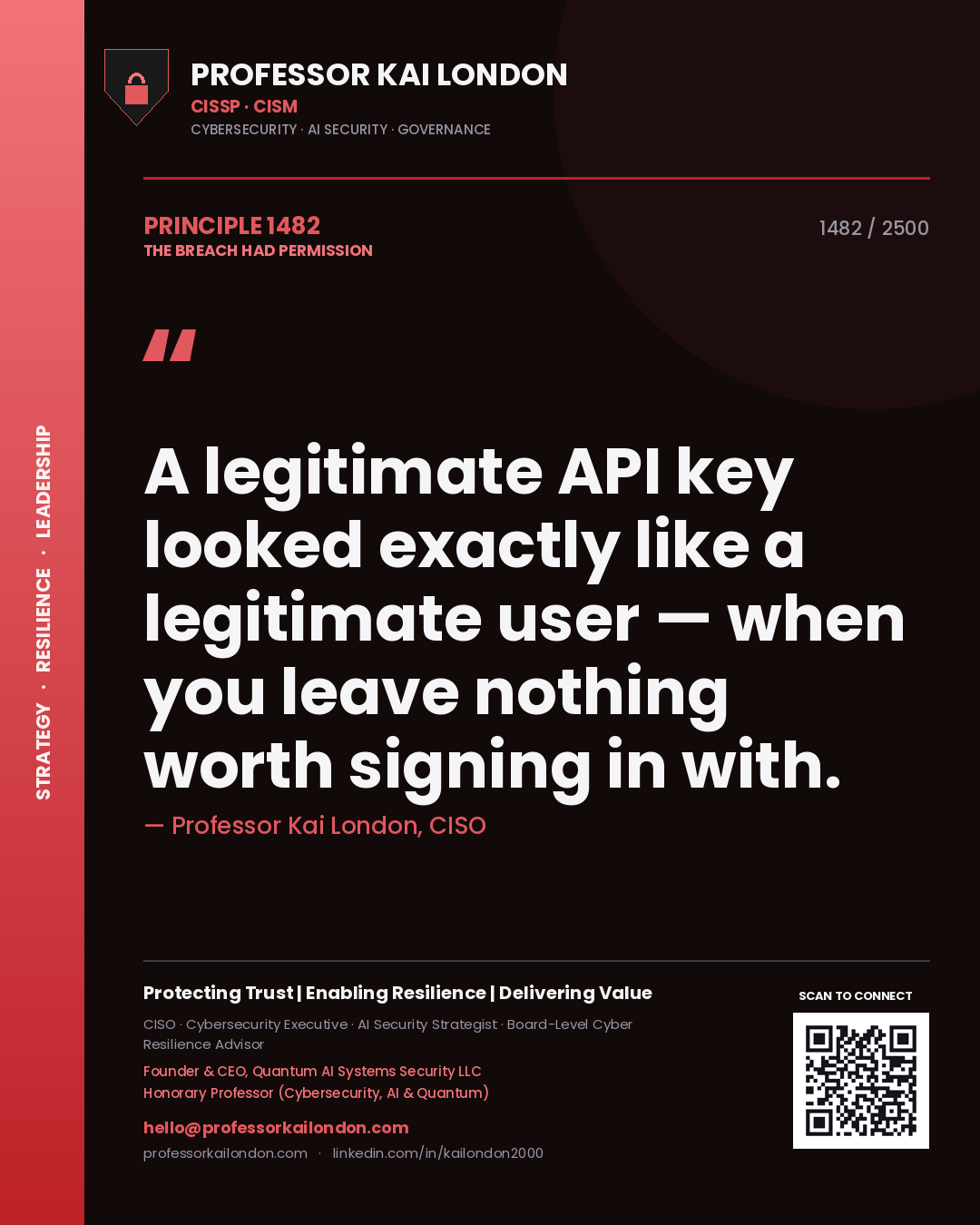
Professor Kai London principle 1482: A legitimate API key looked exactly like a legitimate user — when you leave nothing worth signing in with.
Principle 1482
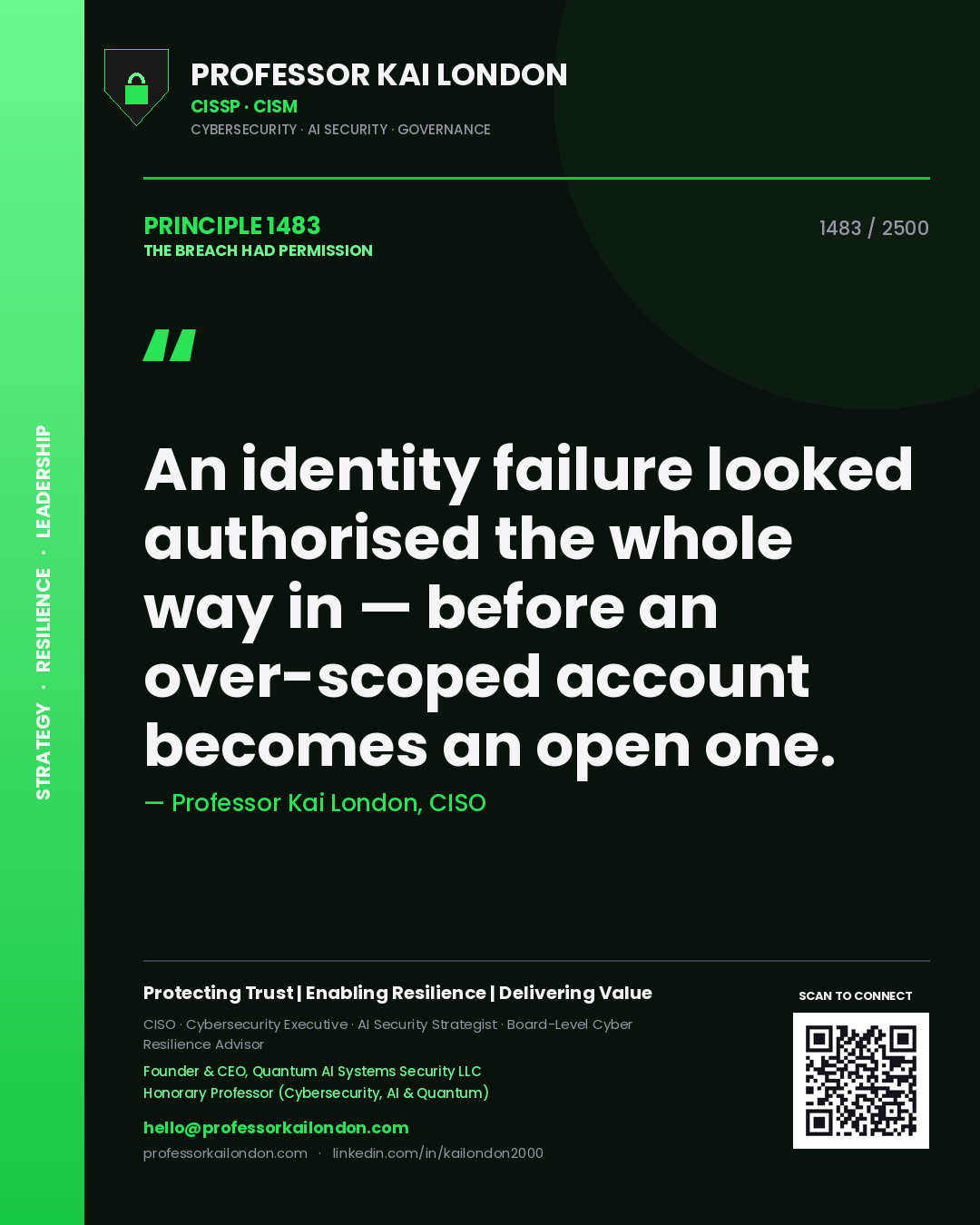
Professor Kai London principle 1483: An identity failure looked authorised the whole way in — before an over-scoped account becomes an open one.
Principle 1483
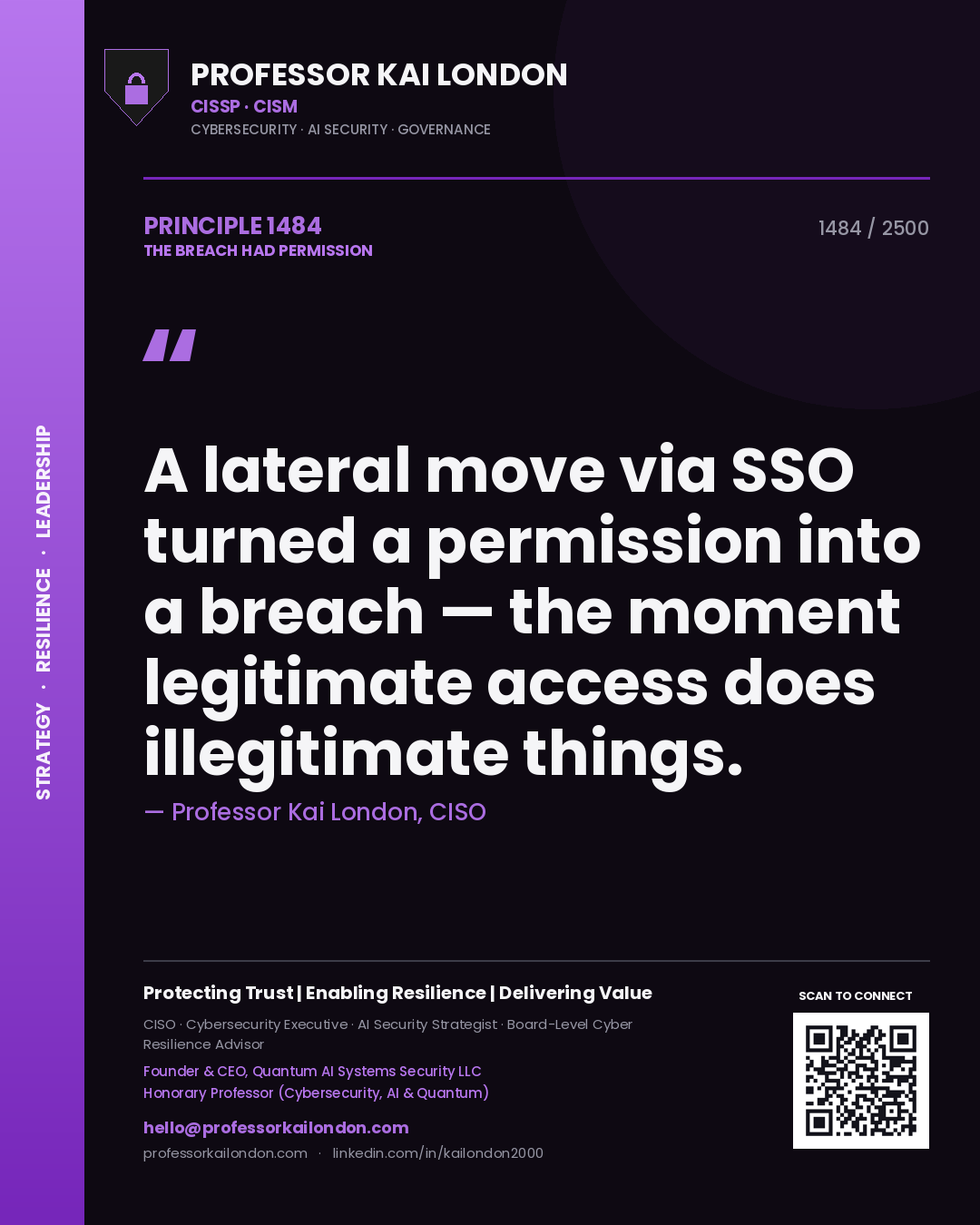
Professor Kai London principle 1484: A lateral move via SSO turned a permission into a breach — the moment legitimate access does illegitimate things.
Principle 1484
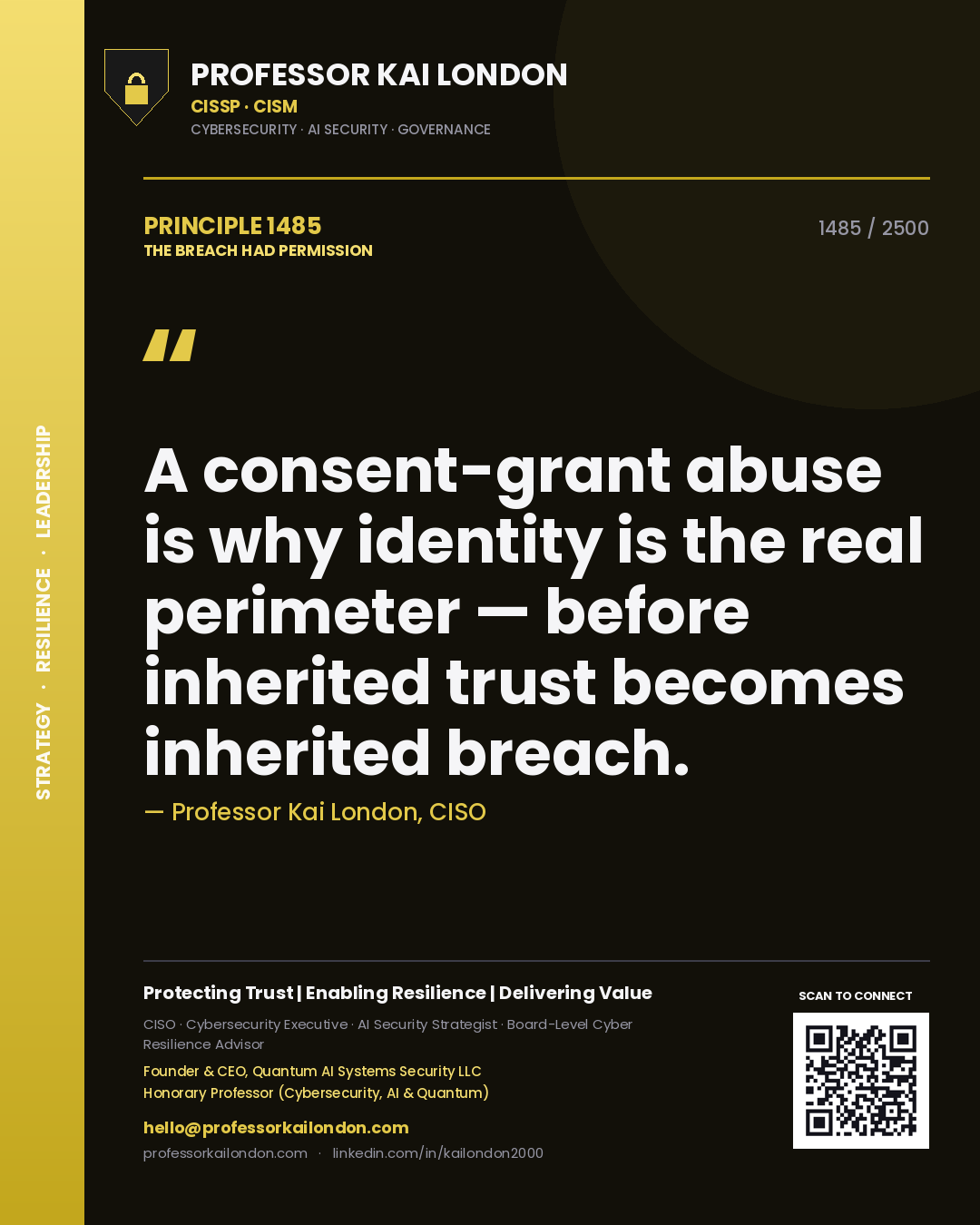
Professor Kai London principle 1485: A consent-grant abuse is why identity is the real perimeter — before inherited trust becomes inherited breach.
Principle 1485
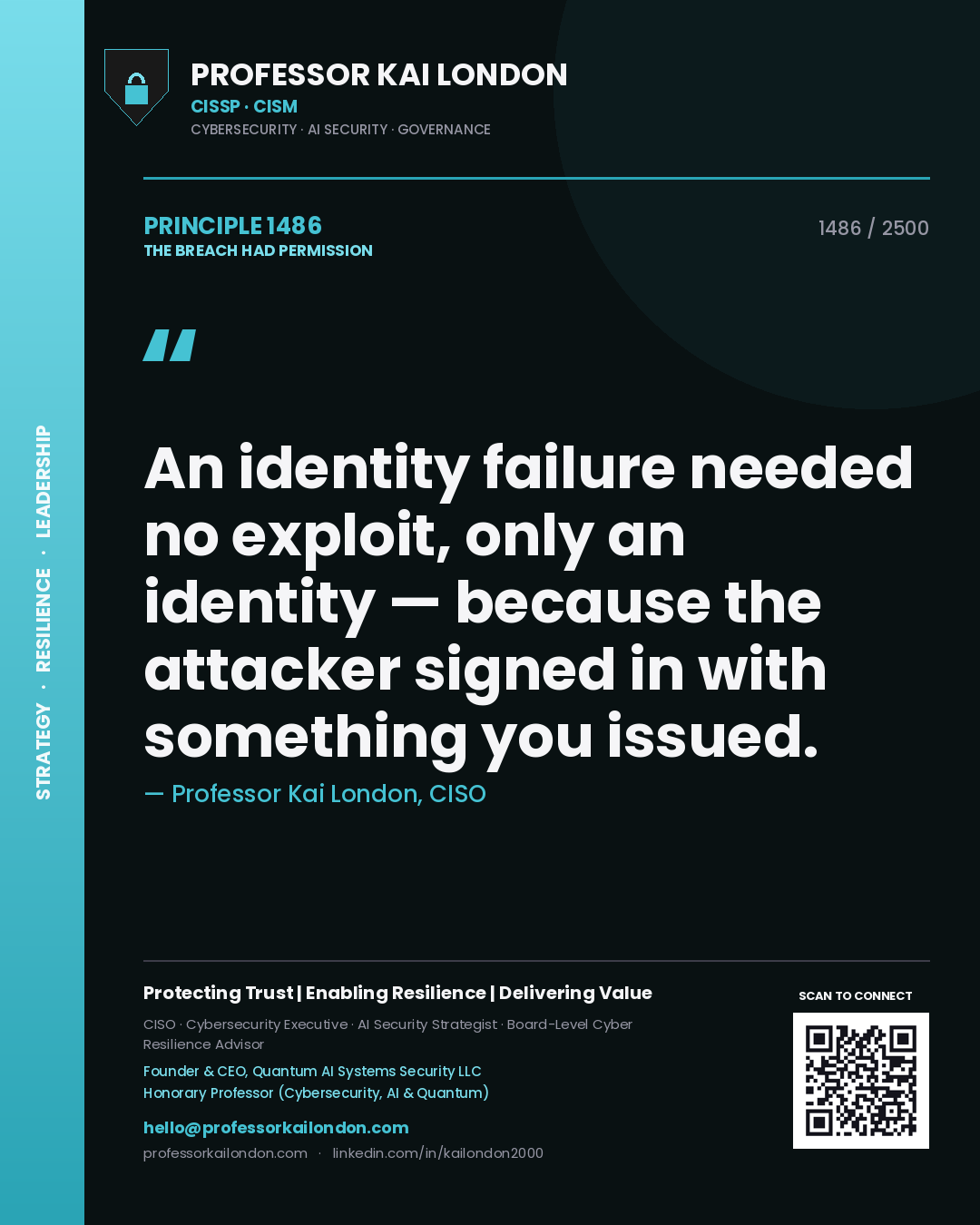
Professor Kai London principle 1486: An identity failure needed no exploit, only an identity — because the attacker signed in with something you issued.
Principle 1486
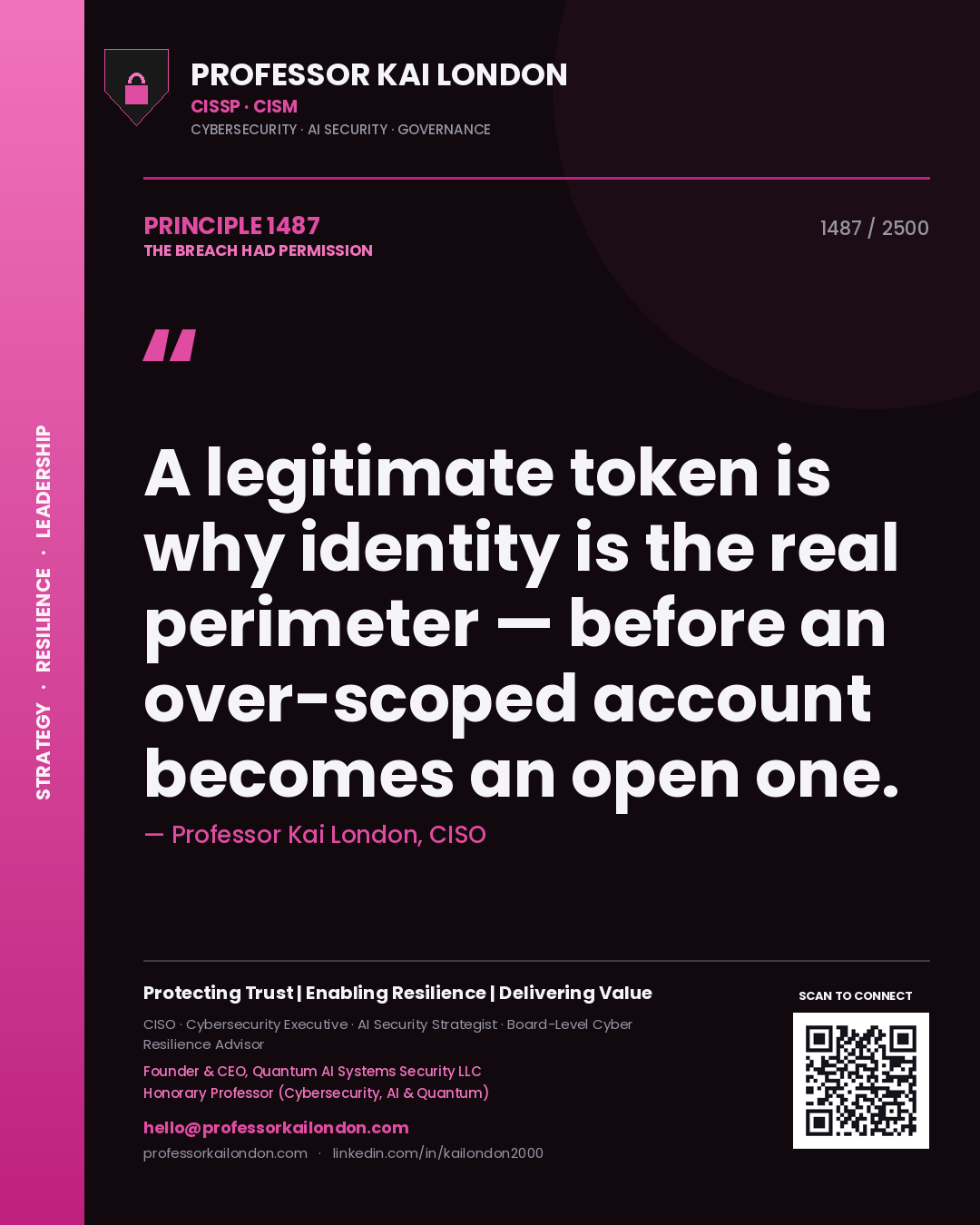
Professor Kai London principle 1487: A legitimate token is why identity is the real perimeter — before an over-scoped account becomes an open one.
Principle 1487
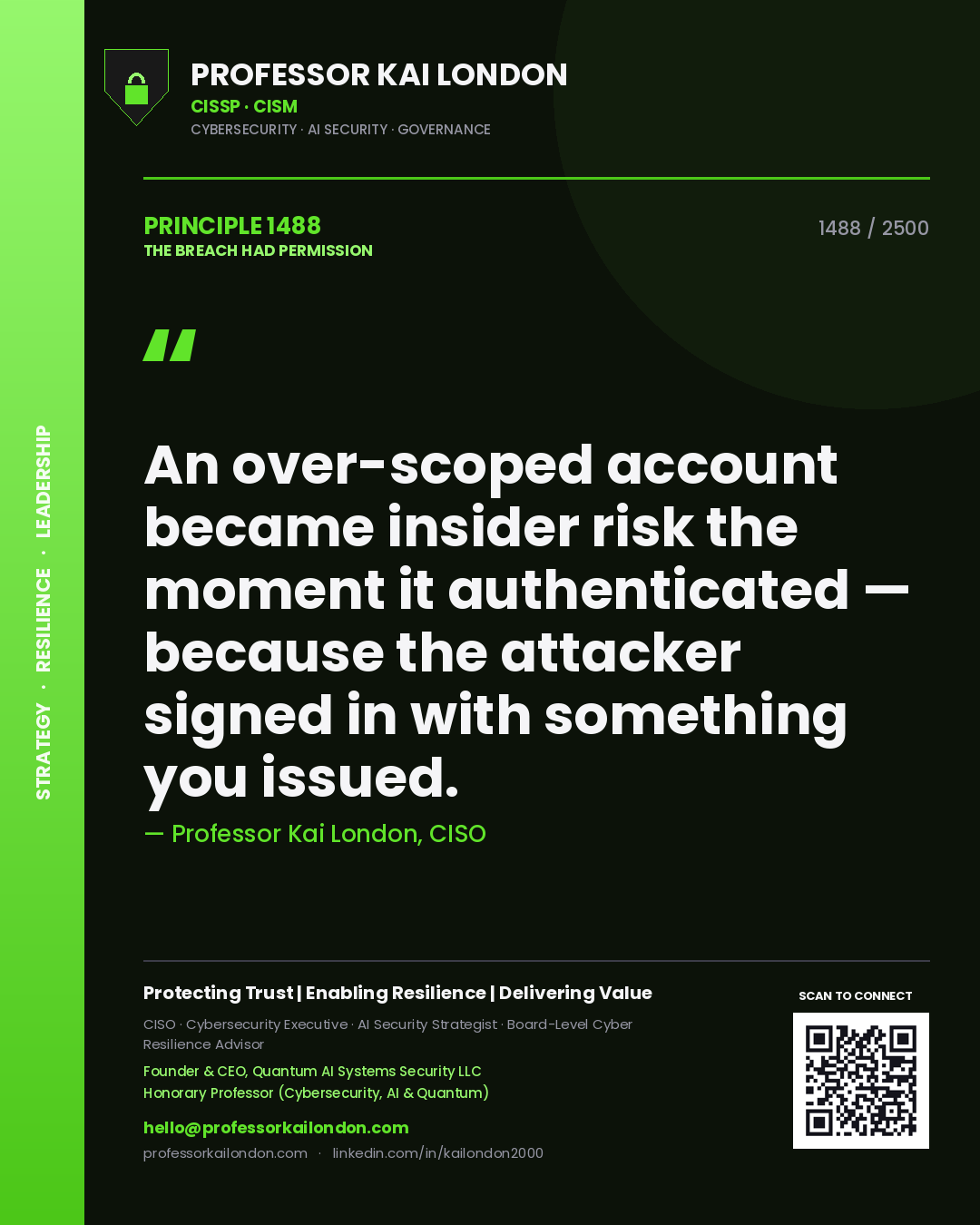
Professor Kai London principle 1488: An over-scoped account became insider risk the moment it authenticated — because the attacker signed in with something you issued.
Principle 1488
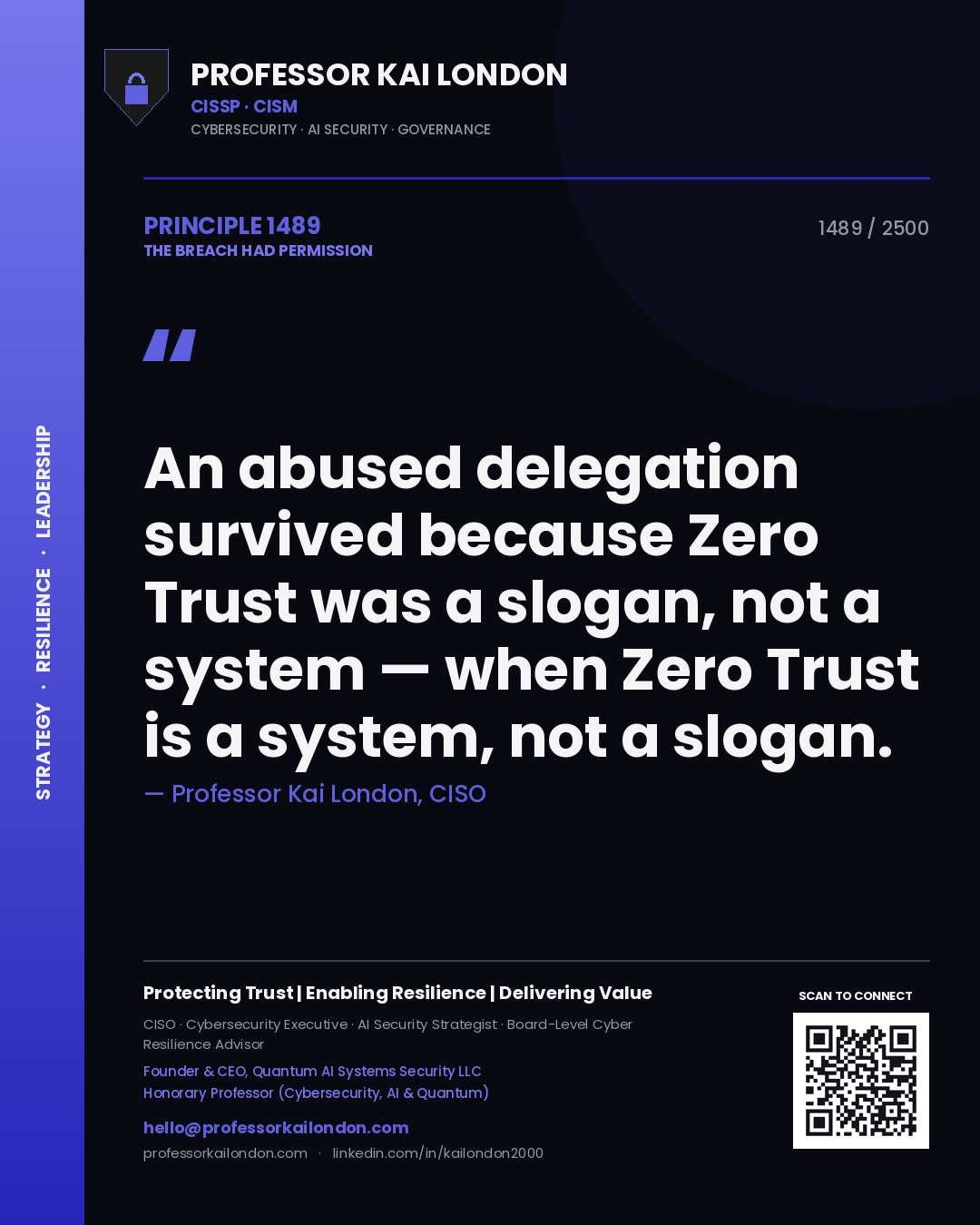
Professor Kai London principle 1489: An abused delegation survived because Zero Trust was a slogan, not a system — when Zero Trust is a system, not a slogan.
Principle 1489
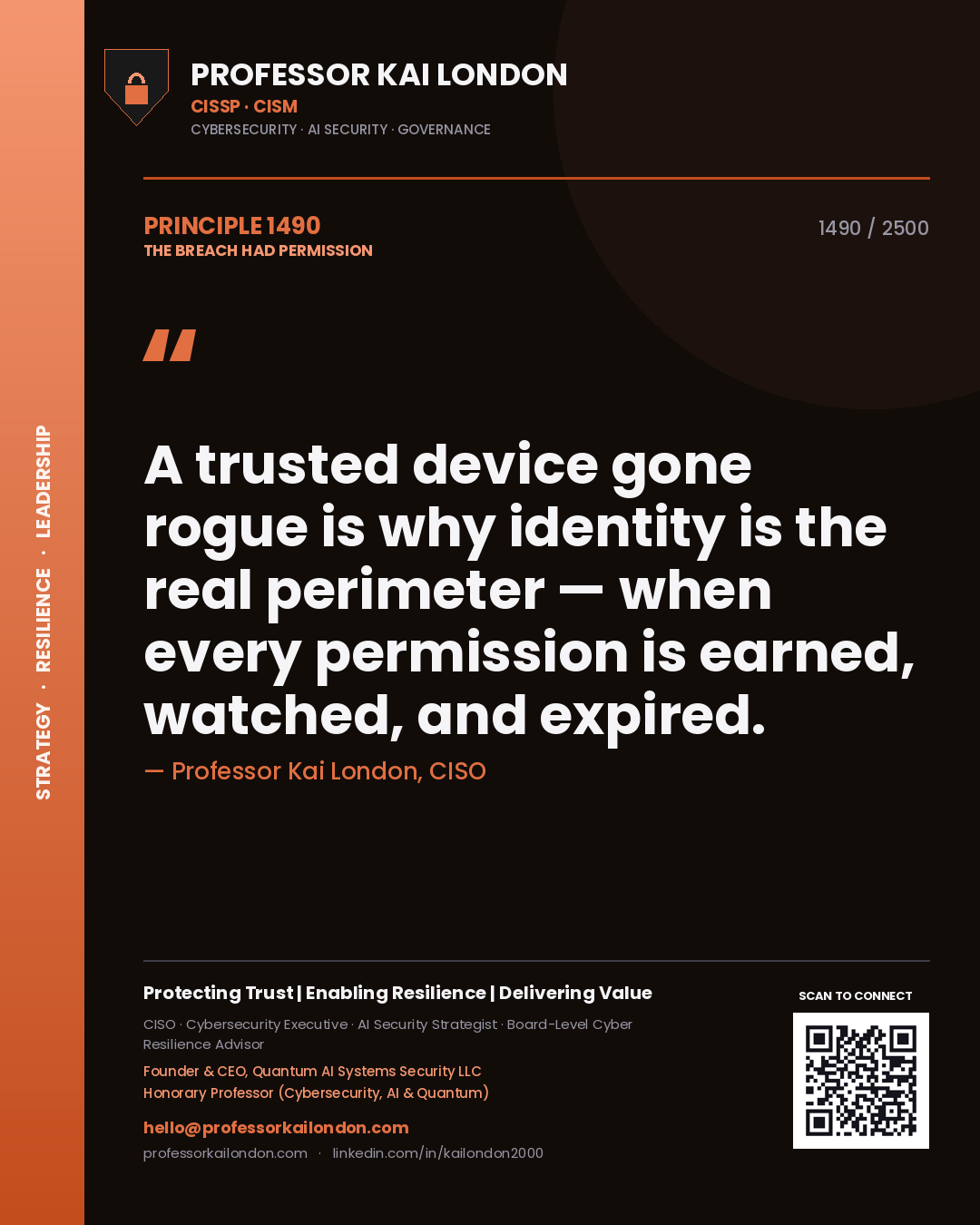
Professor Kai London principle 1490: A trusted device gone rogue is why identity is the real perimeter — when every permission is earned, watched, and expired.
Principle 1490
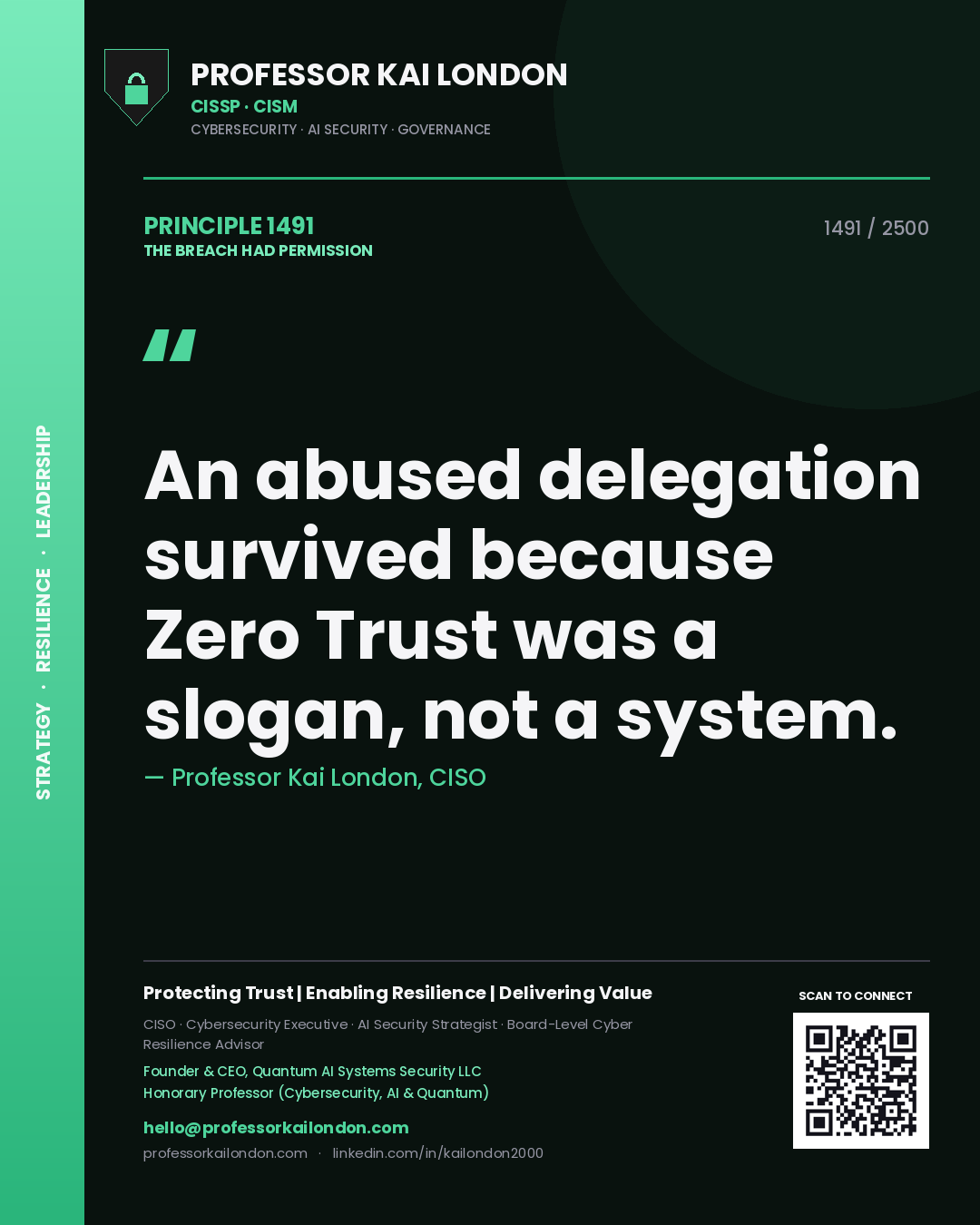
Professor Kai London principle 1491: An abused delegation survived because Zero Trust was a slogan, not a system.
Principle 1491
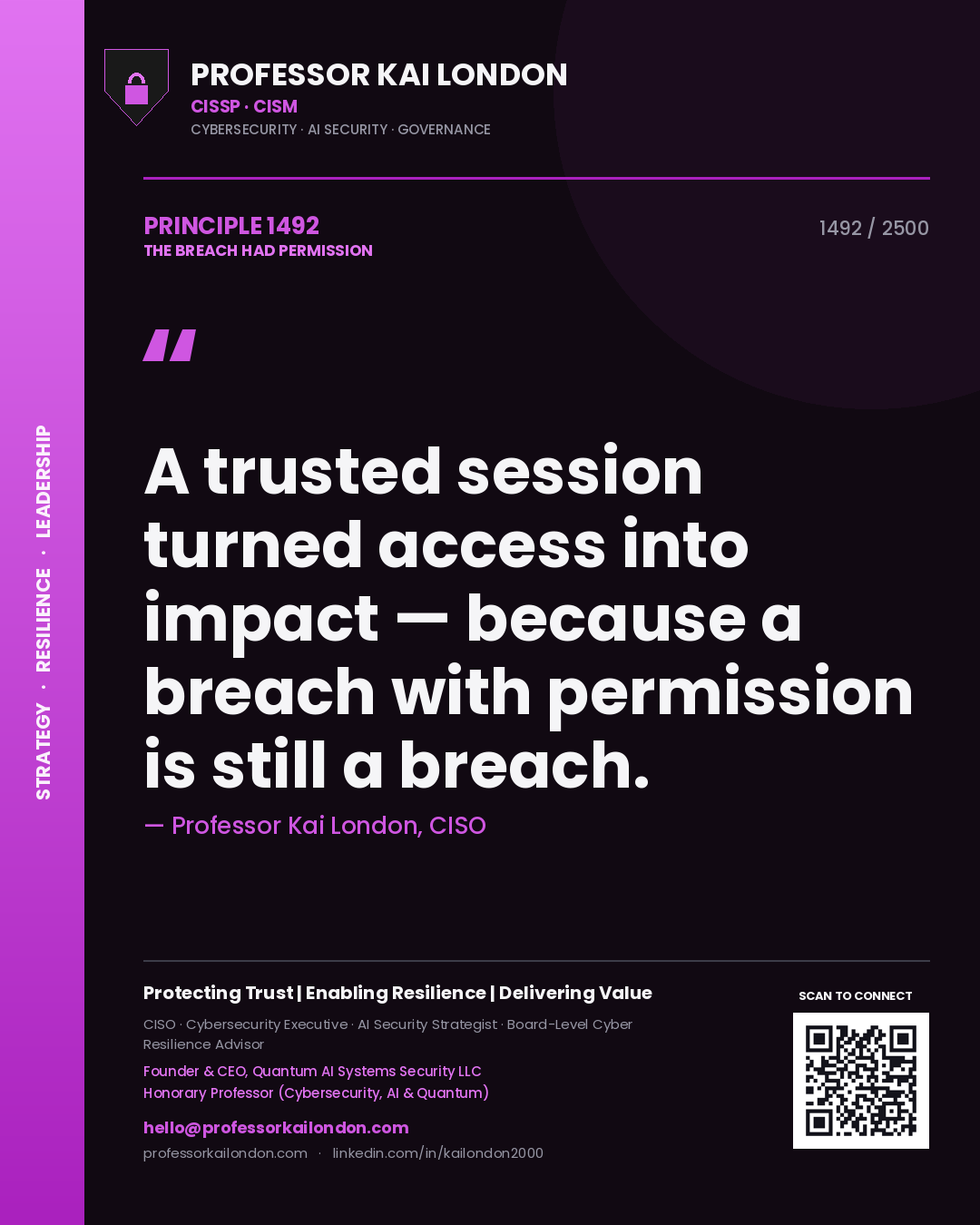
Professor Kai London principle 1492: A trusted session turned access into impact — because a breach with permission is still a breach.
Principle 1492
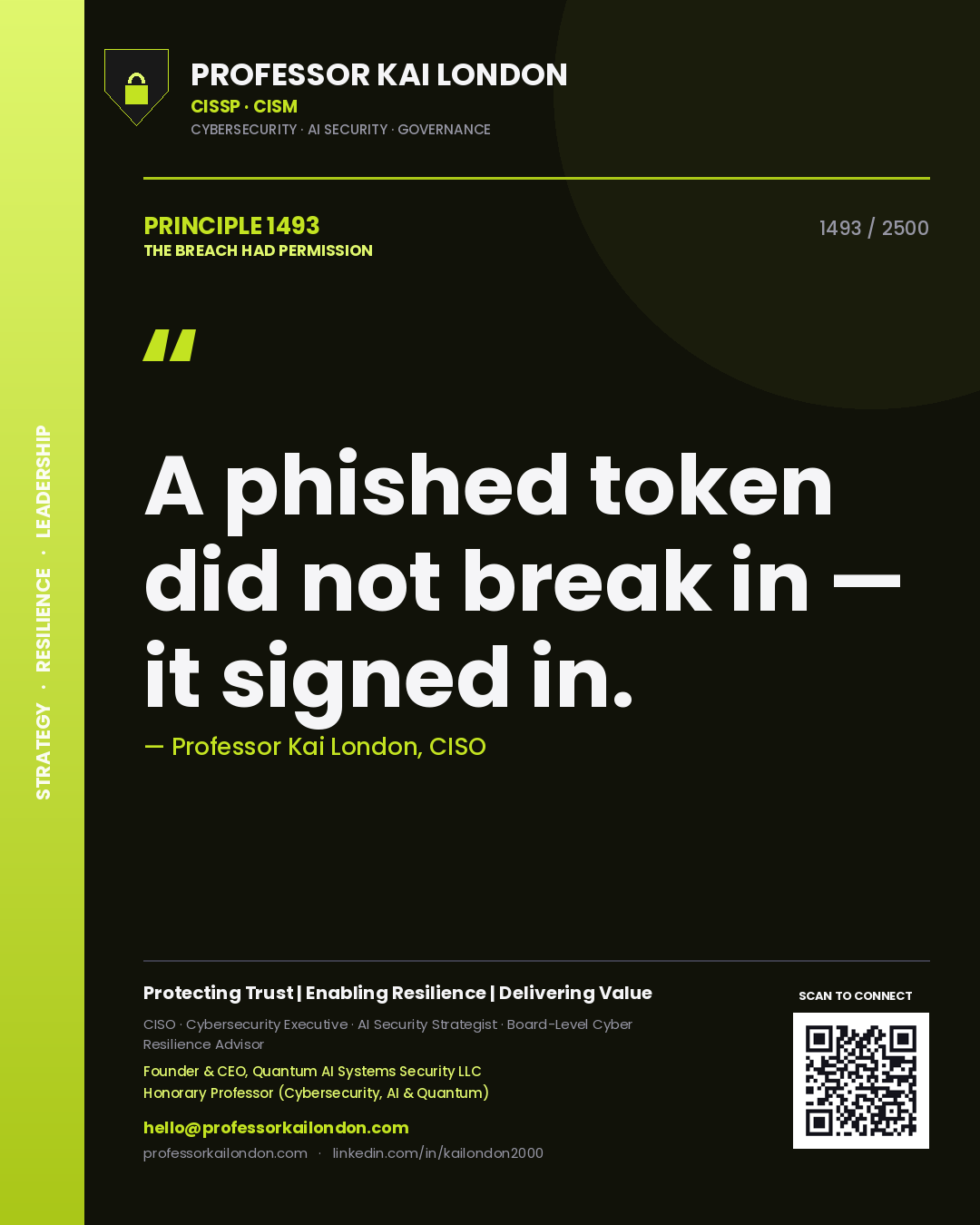
Professor Kai London principle 1493: A phished token did not break in — it signed in.
Principle 1493
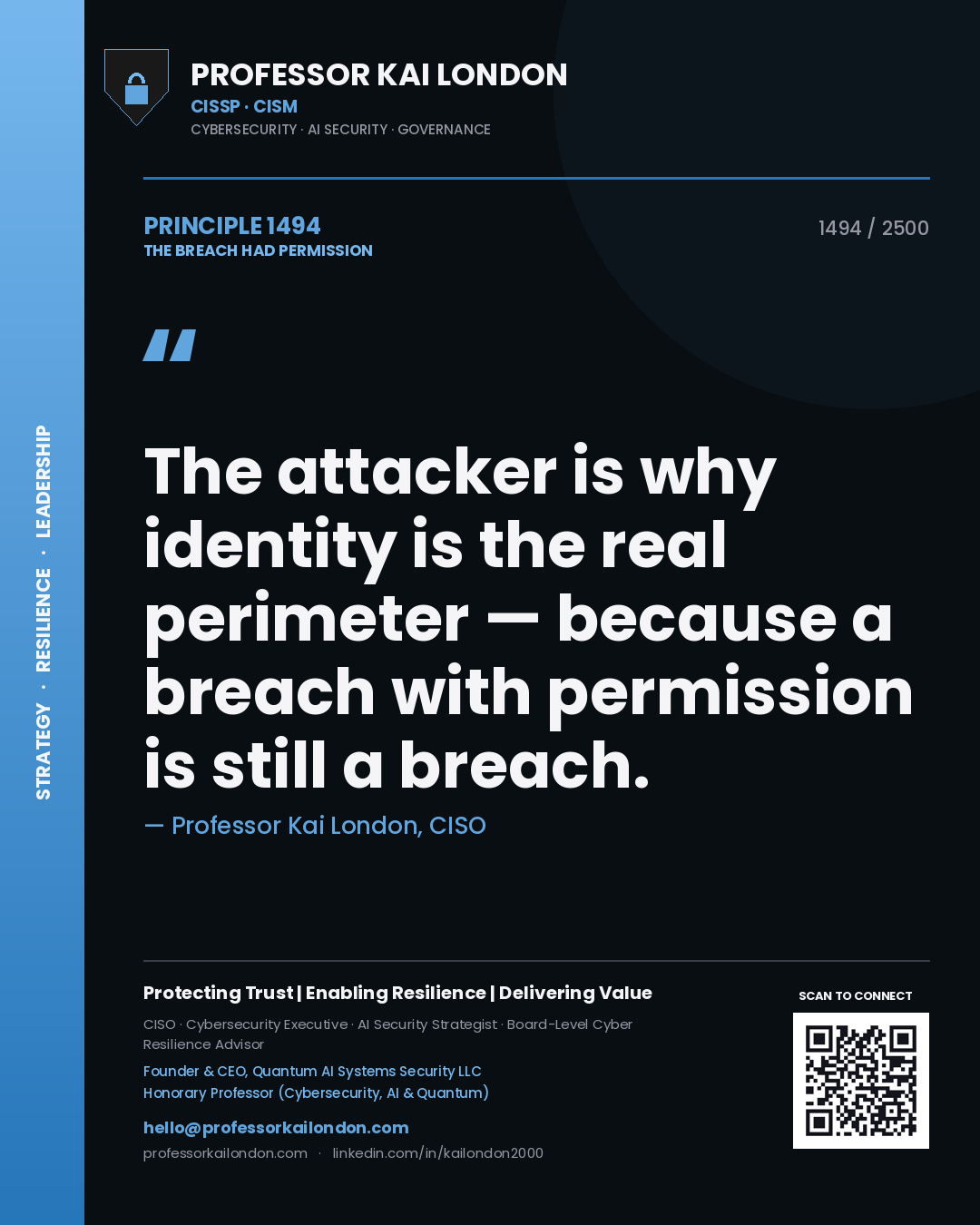
Professor Kai London principle 1494: The attacker is why identity is the real perimeter — because a breach with permission is still a breach.
Principle 1494
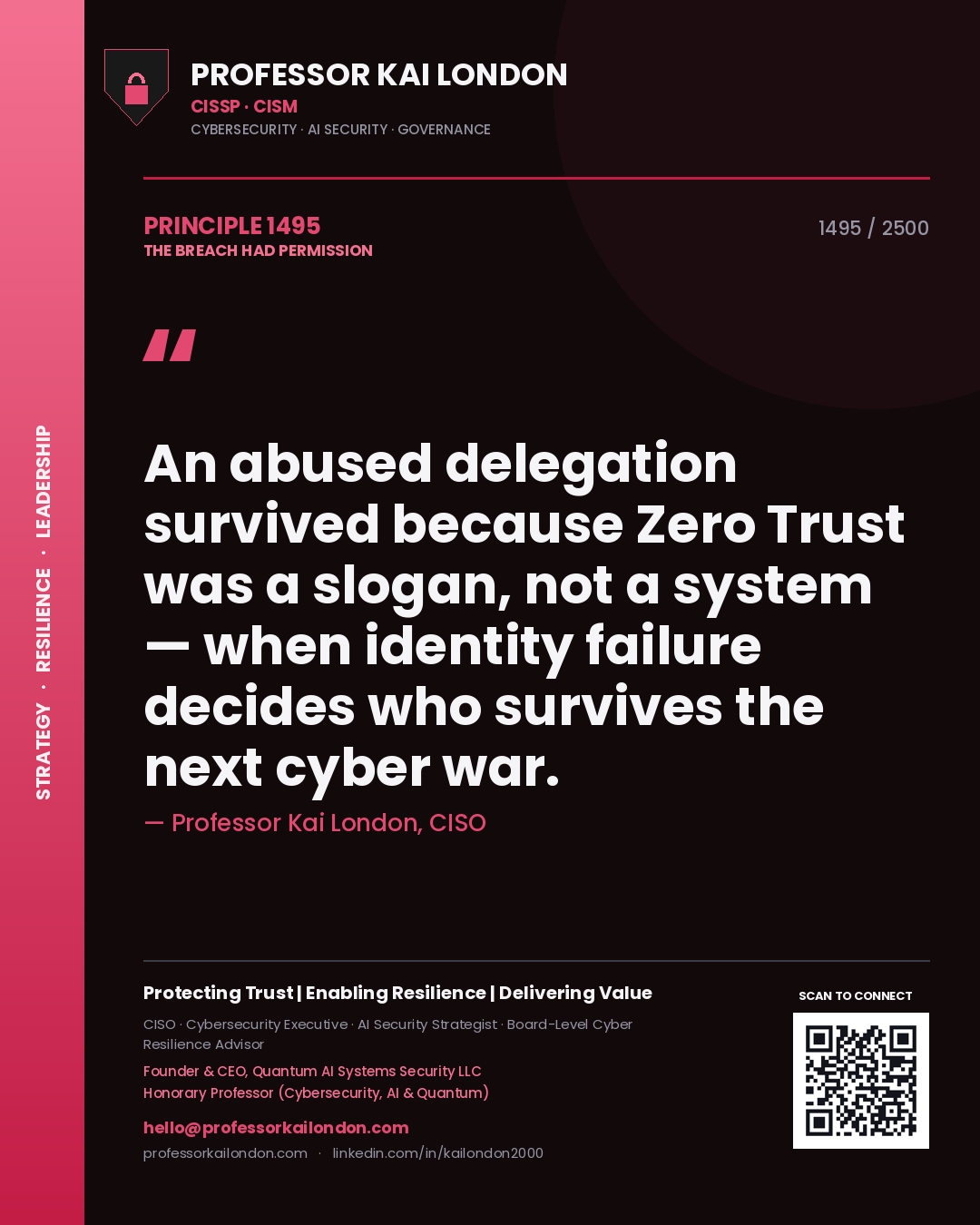
Professor Kai London principle 1495: An abused delegation survived because Zero Trust was a slogan, not a system — when identity failure decides who survives the next cyber war.
Principle 1495
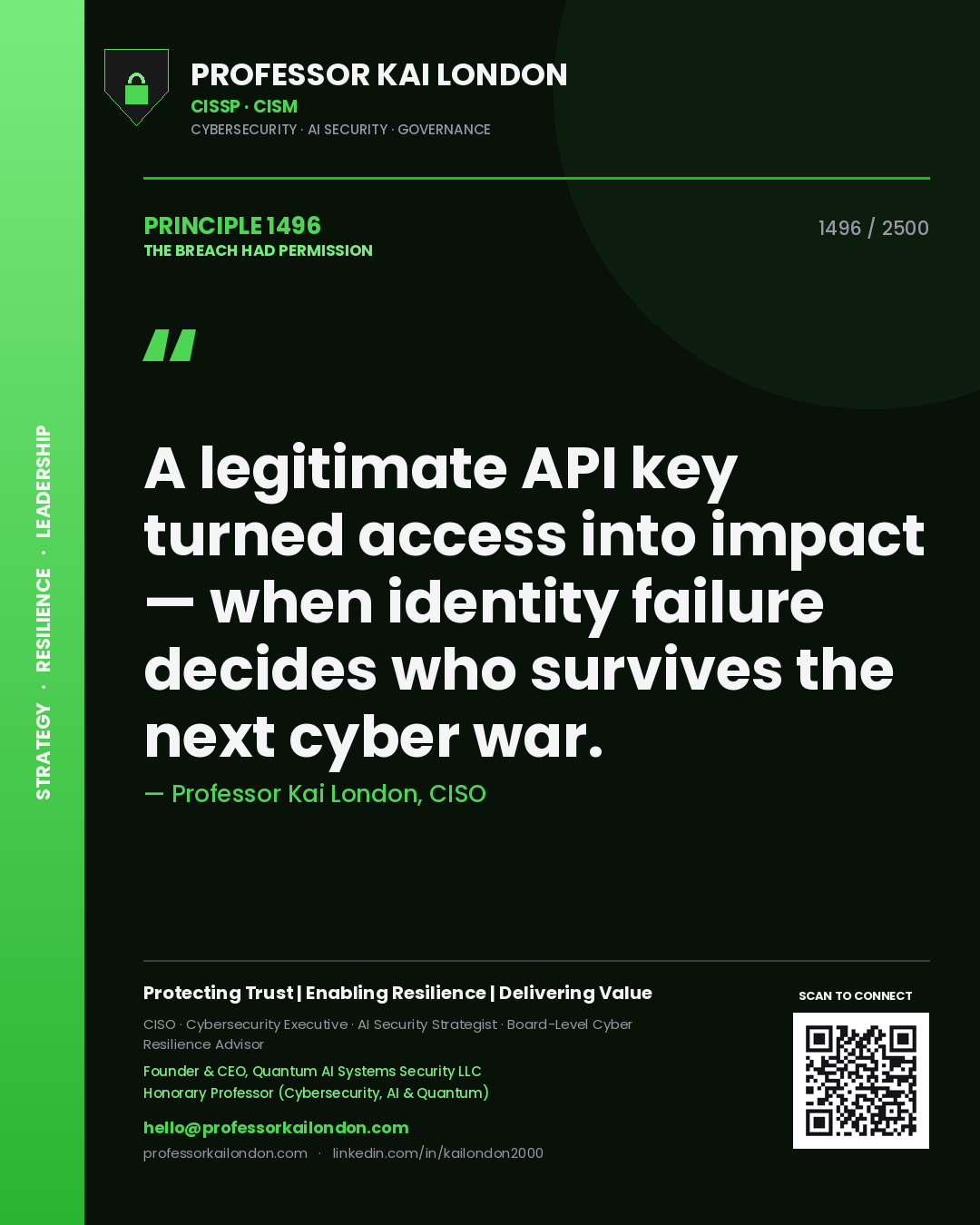
Professor Kai London principle 1496: A legitimate API key turned access into impact — when identity failure decides who survives the next cyber war.
Principle 1496
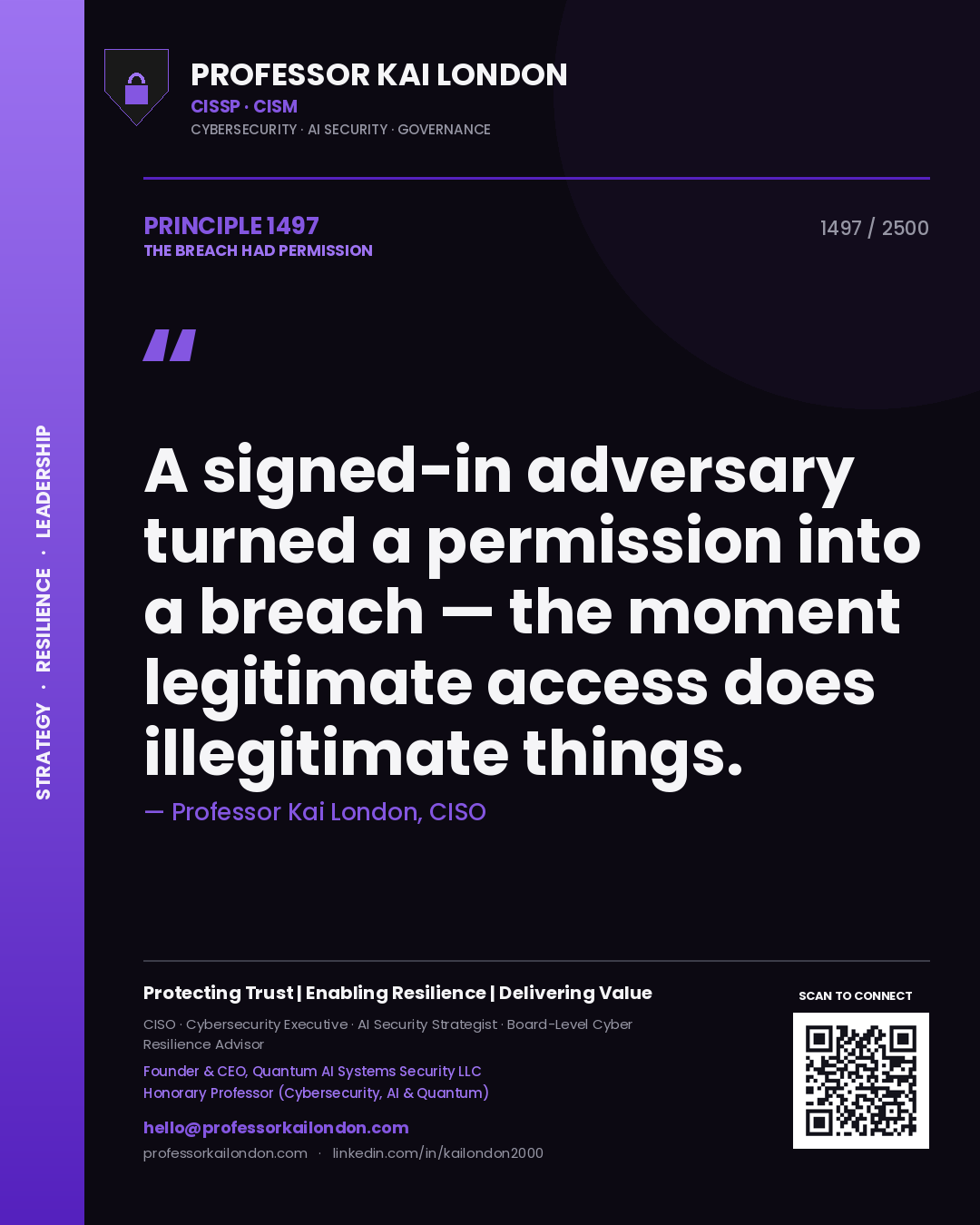
Professor Kai London principle 1497: A signed-in adversary turned a permission into a breach — the moment legitimate access does illegitimate things.
Principle 1497
Professor Kai London principle 1498: An inherited permission turned a permission into a breach — when you leave nothing worth signing in with.
Principle 1498
Professor Kai London principle 1499: A lateral move via SSO proved that trust unproven is trust abused — before an over-scoped account becomes an open one.
Principle 1499
Professor Kai London principle 1500: An abused delegation needed no exploit, only an identity.
Principle 1500