The Invisible Airborne Perimeter — Gallery (Page 21 of 100)
Professor Kai London principle 2001: A captive portal hides risk in plain air — before the invisible becomes the ingress.
Principle 2001
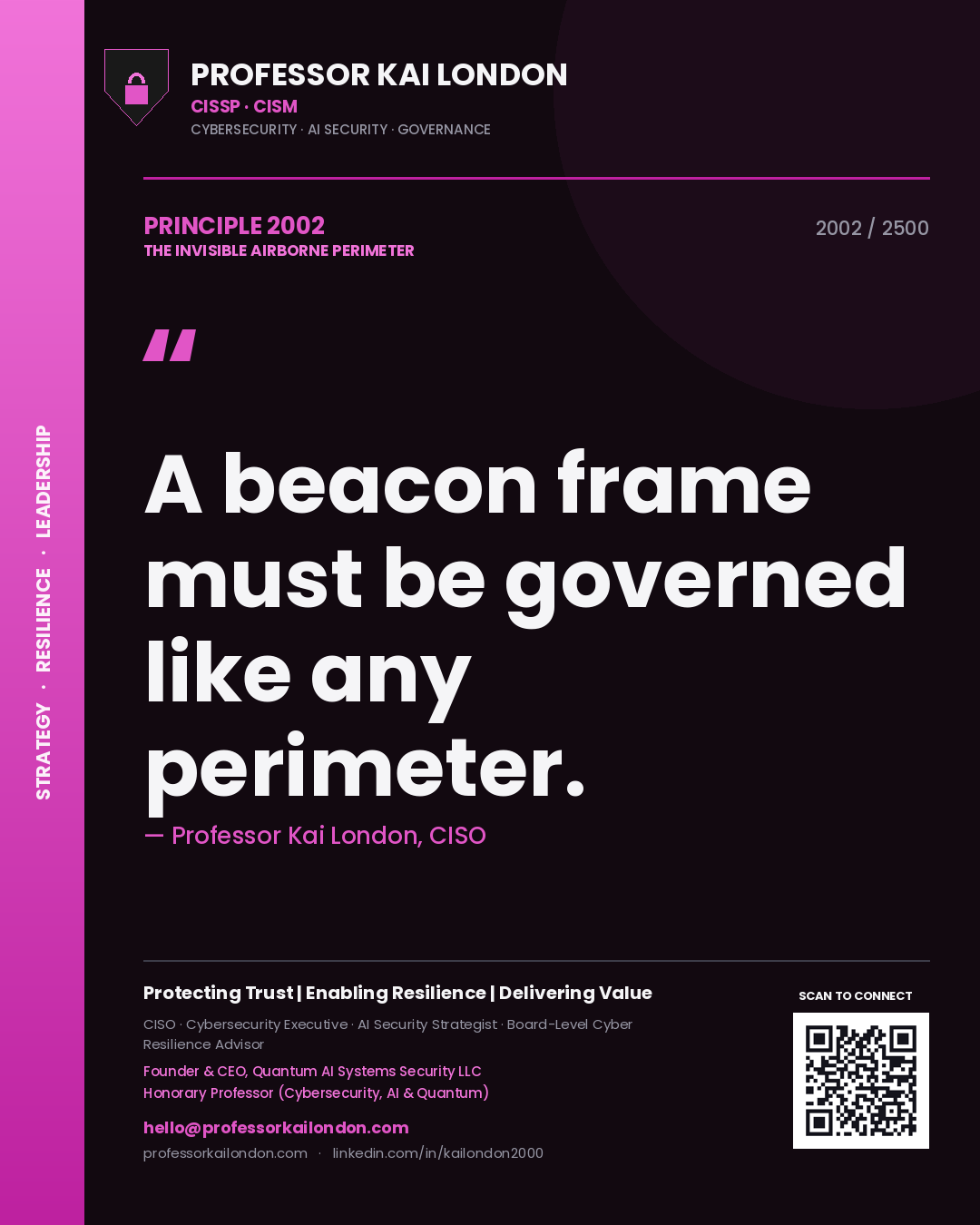
Professor Kai London principle 2002: A beacon frame must be governed like any perimeter.
Principle 2002
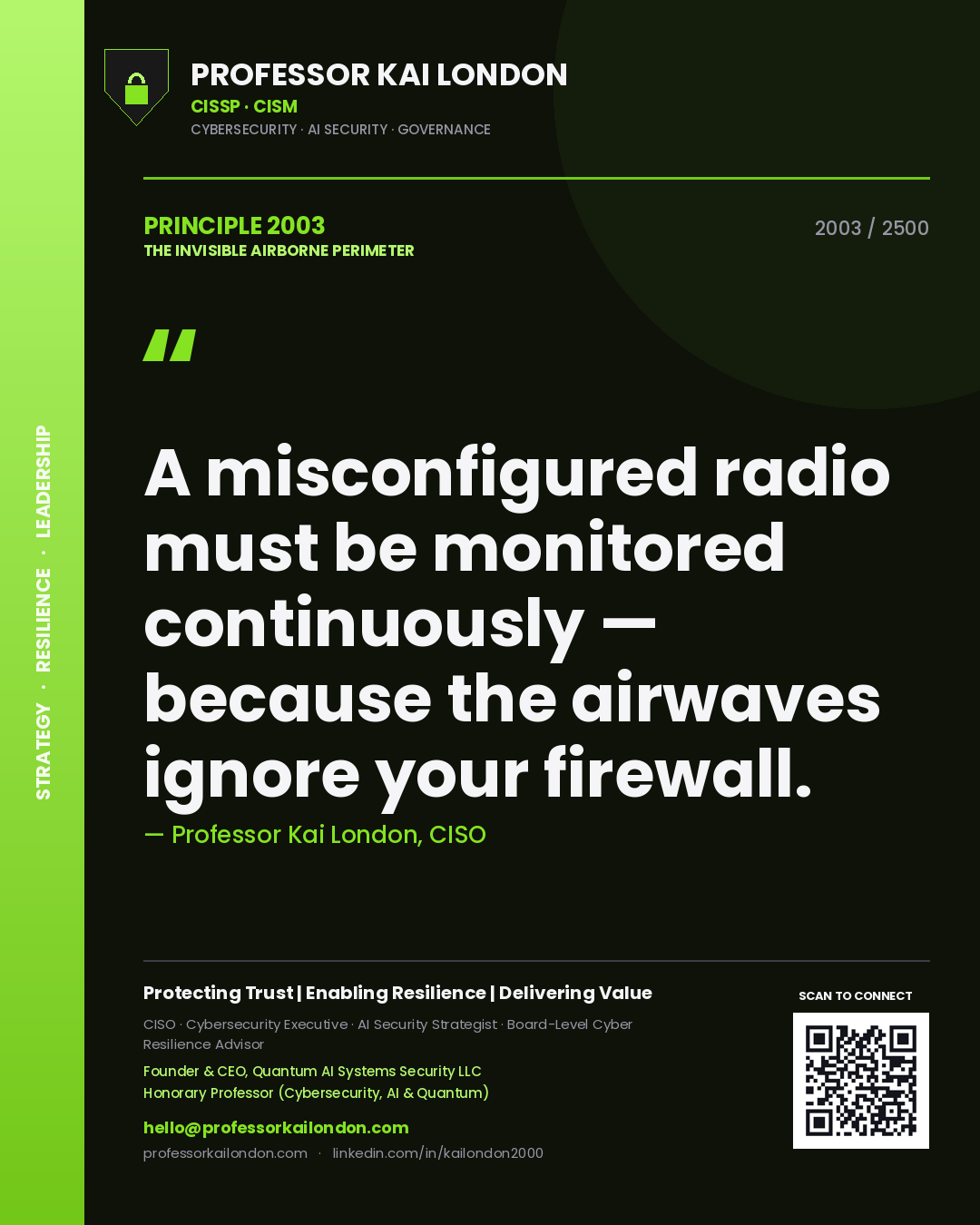
Professor Kai London principle 2003: A misconfigured radio must be monitored continuously — because the airwaves ignore your firewall.
Principle 2003
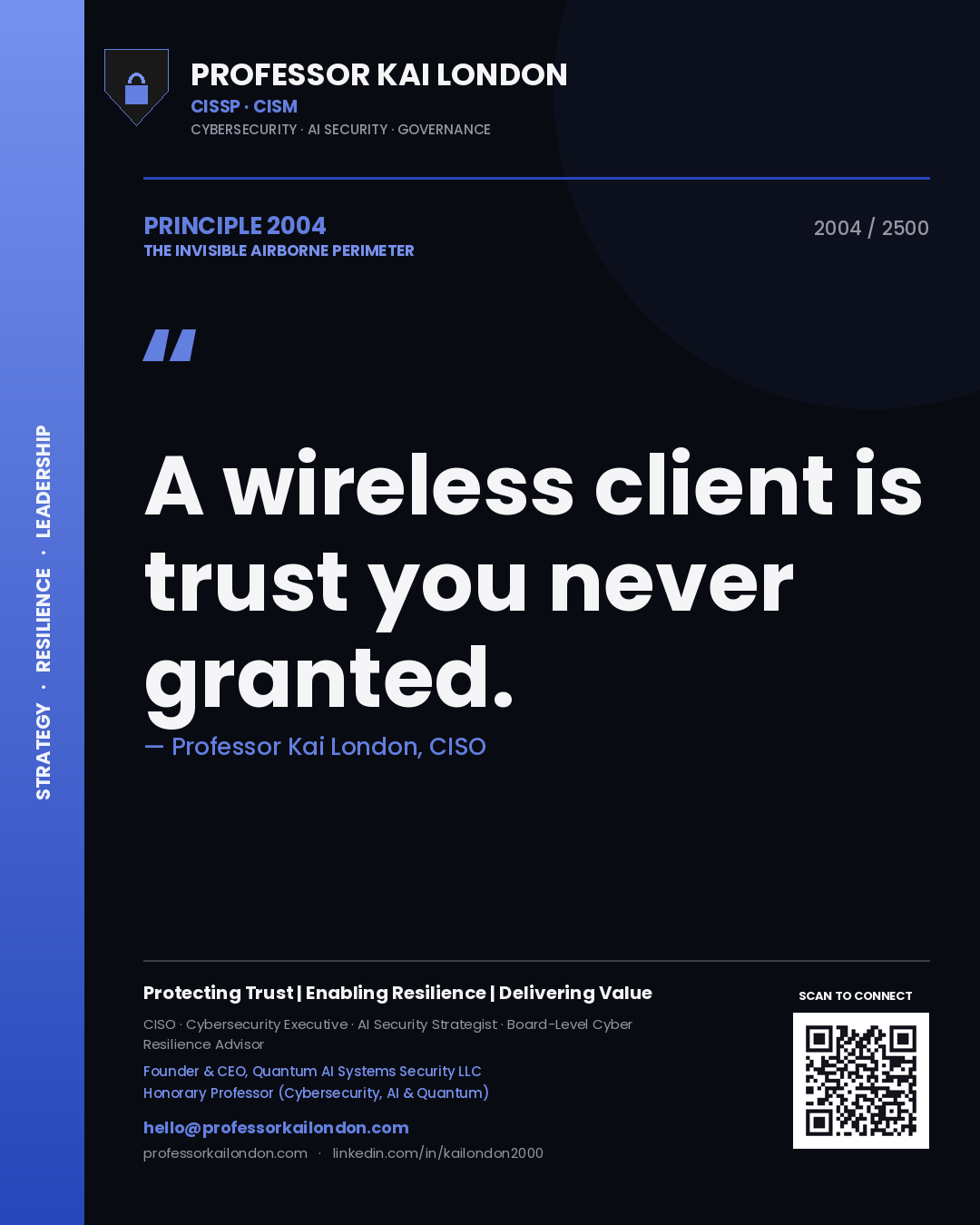
Professor Kai London principle 2004: A wireless client is trust you never granted.
Principle 2004
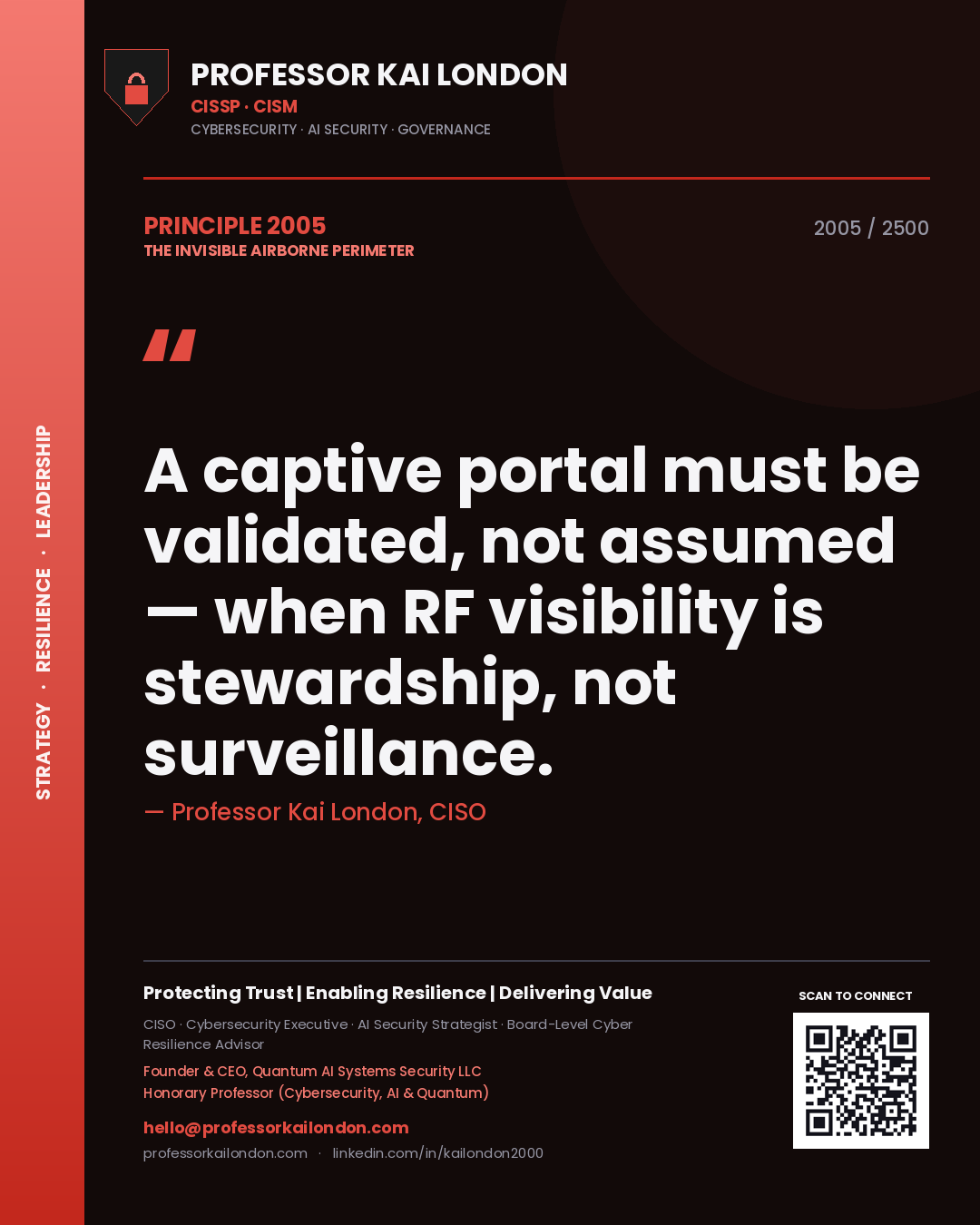
Professor Kai London principle 2005: A captive portal must be validated, not assumed — when RF visibility is stewardship, not surveillance.
Principle 2005
Professor Kai London principle 2006: The spectrum around you is trust you never granted — when every SSID has an owner and a purpose.
Principle 2006
Professor Kai London principle 2007: A wireless trust zone extends your perimeter without asking — the moment convenience outruns control.
Principle 2007
Professor Kai London principle 2008: A rogue transmitter must be watched at the frame level — when NIS2 reaches the frequencies you forgot to defend.
Principle 2008
Professor Kai London principle 2009: A guest SSID must be monitored continuously.
Principle 2009
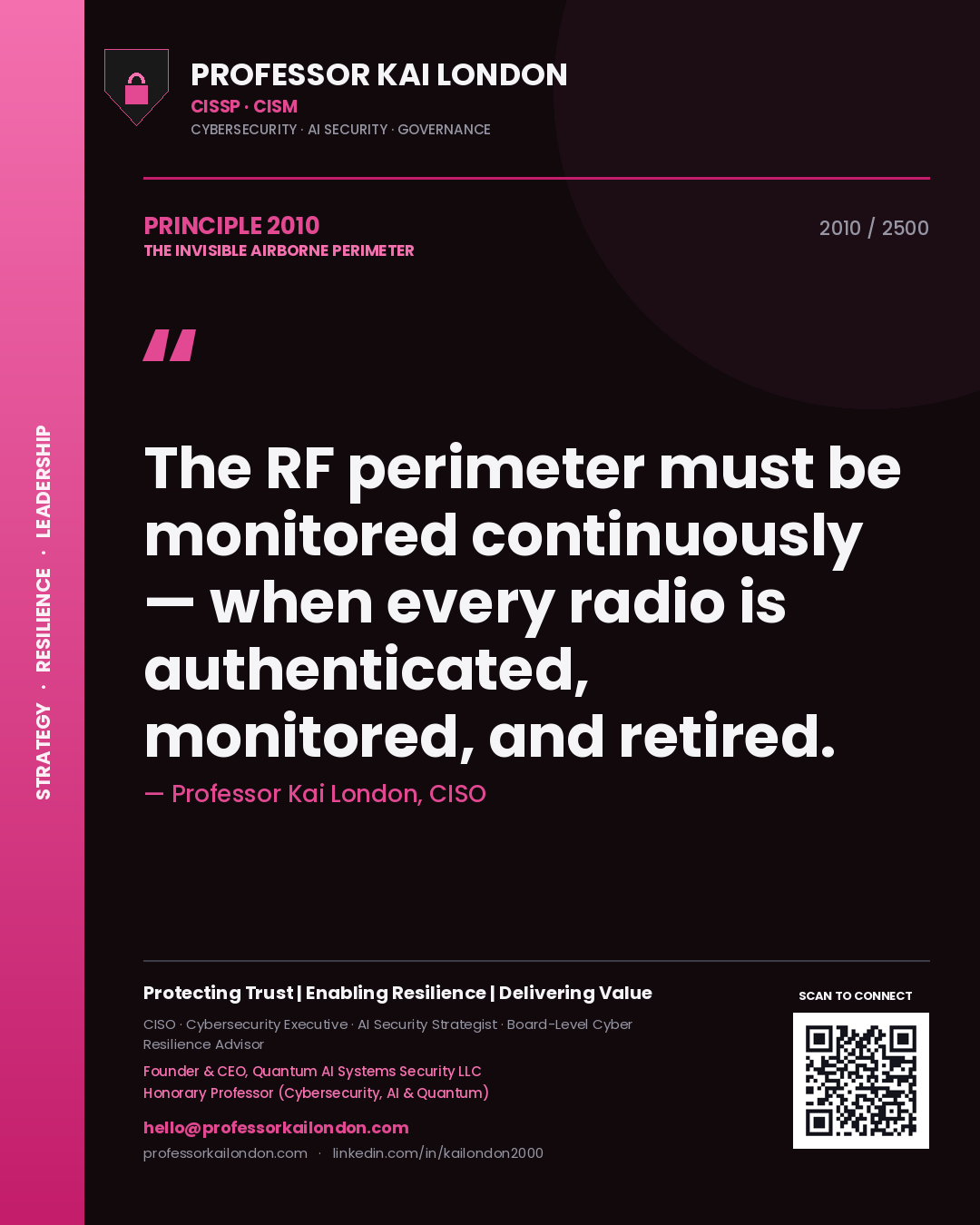
Professor Kai London principle 2010: The RF perimeter must be monitored continuously — when every radio is authenticated, monitored, and retired.
Principle 2010
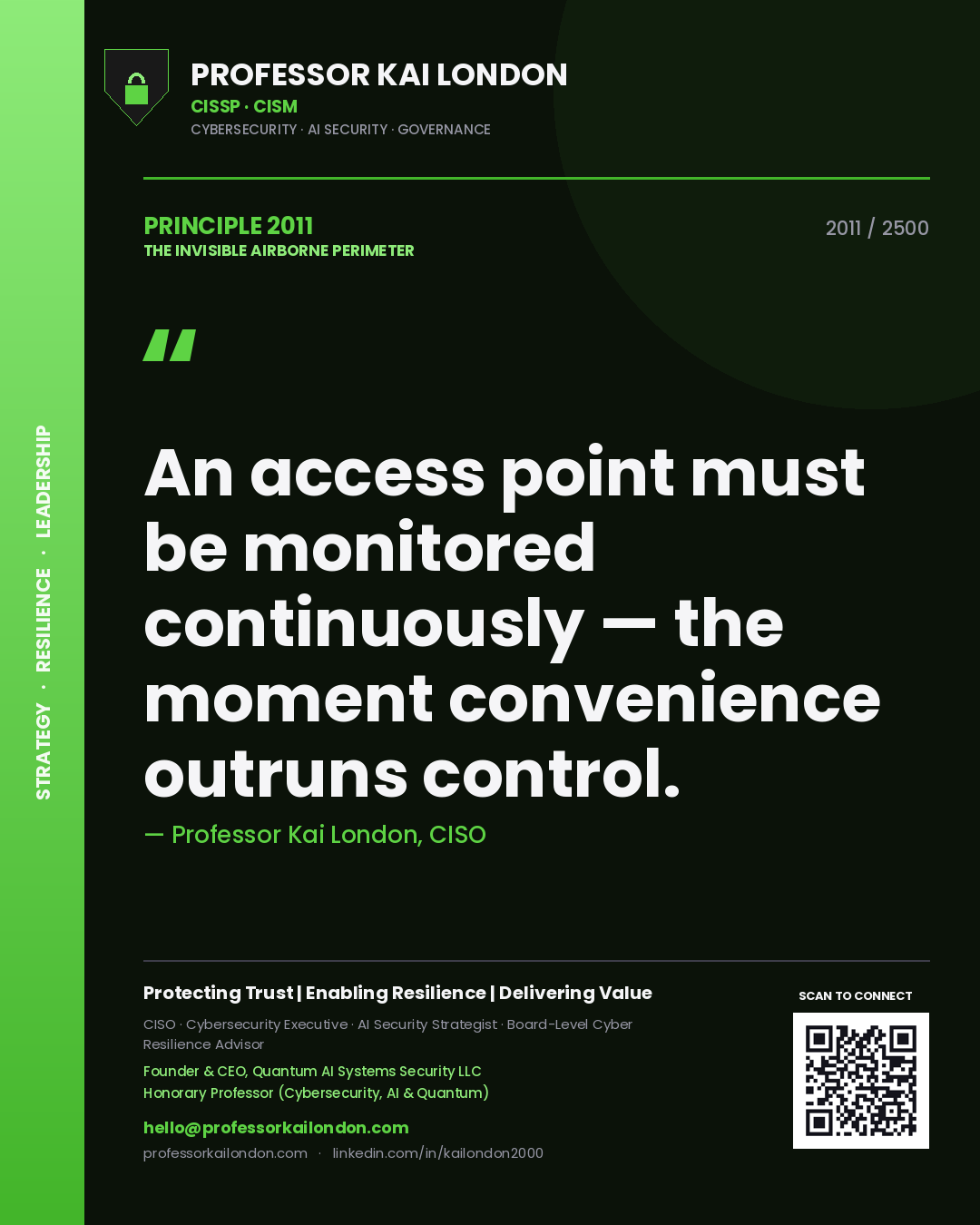
Professor Kai London principle 2011: An access point must be monitored continuously — the moment convenience outruns control.
Principle 2011
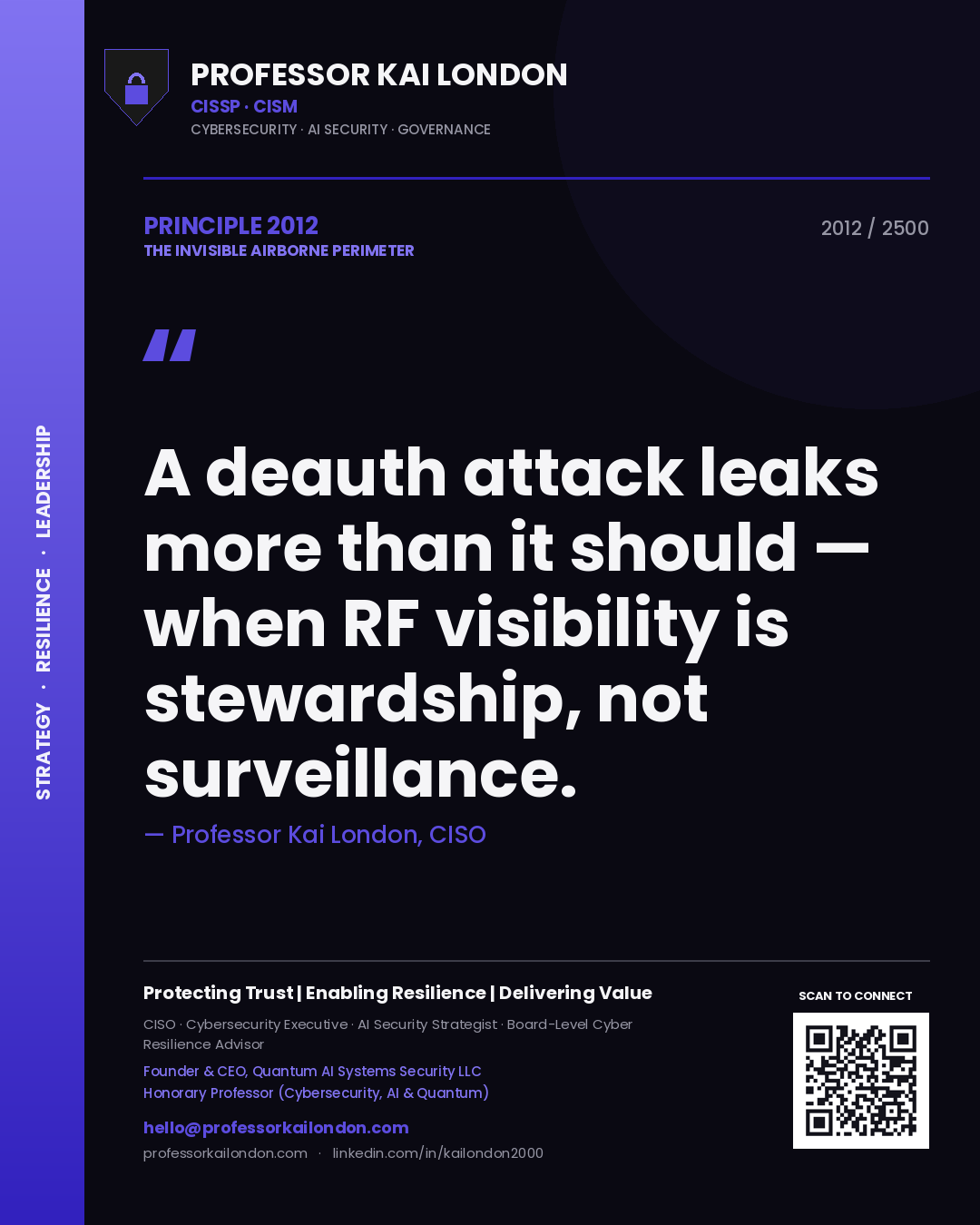
Professor Kai London principle 2012: A deauth attack leaks more than it should — when RF visibility is stewardship, not surveillance.
Principle 2012
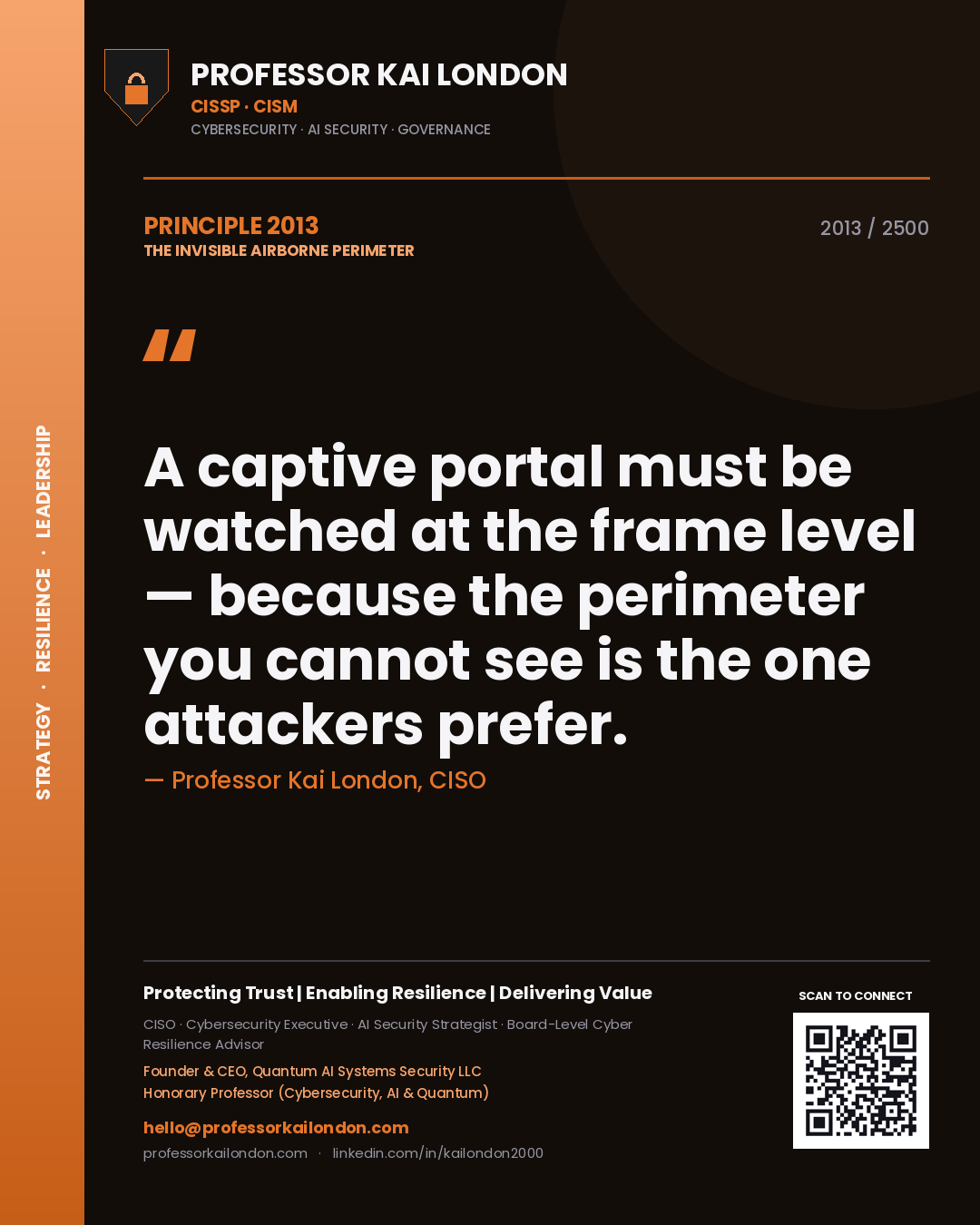
Professor Kai London principle 2013: A captive portal must be watched at the frame level — because the perimeter you cannot see is the one attackers prefer.
Principle 2013
Professor Kai London principle 2014: A deauth attack hides risk in plain air — because airborne trust is still trust that can be abused.
Principle 2014
Professor Kai London principle 2015: An airborne signal must be governed like any perimeter — before a rogue AP becomes a quiet backdoor.
Principle 2015
Professor Kai London principle 2016: A misconfigured radio is a door with no frame — because airborne trust is still trust that can be abused.
Principle 2016
Professor Kai London principle 2017: A deauth attack leaks more than it should — before an evil-twin becomes an open door.
Principle 2017
Professor Kai London principle 2018: A deauth attack is an attack surface you cannot see — when every radio is authenticated, monitored, and retired.
Principle 2018
Professor Kai London principle 2019: A deauth attack is a door with no frame — before a rogue AP becomes a quiet backdoor.
Principle 2019
Professor Kai London principle 2020: A beacon frame must be watched at the frame level — when the airborne layer is treated as zero-trust, not free space.
Principle 2020
Professor Kai London principle 2021: An access point is trust you never granted — because the perimeter you cannot see is the one attackers prefer.
Principle 2021
Professor Kai London principle 2022: A wireless trust zone is an attack surface you cannot see — because the airwaves ignore your firewall.
Principle 2022
Professor Kai London principle 2023: A misconfigured radio must be watched at the frame level — when NIS2 reaches the frequencies you forgot to defend.
Principle 2023
Professor Kai London principle 2024: A rogue transmitter is wide open by default — when every SSID has an owner and a purpose.
Principle 2024
Professor Kai London principle 2025: A bridged device must be validated, not assumed — the moment convenience outruns control.
Principle 2025
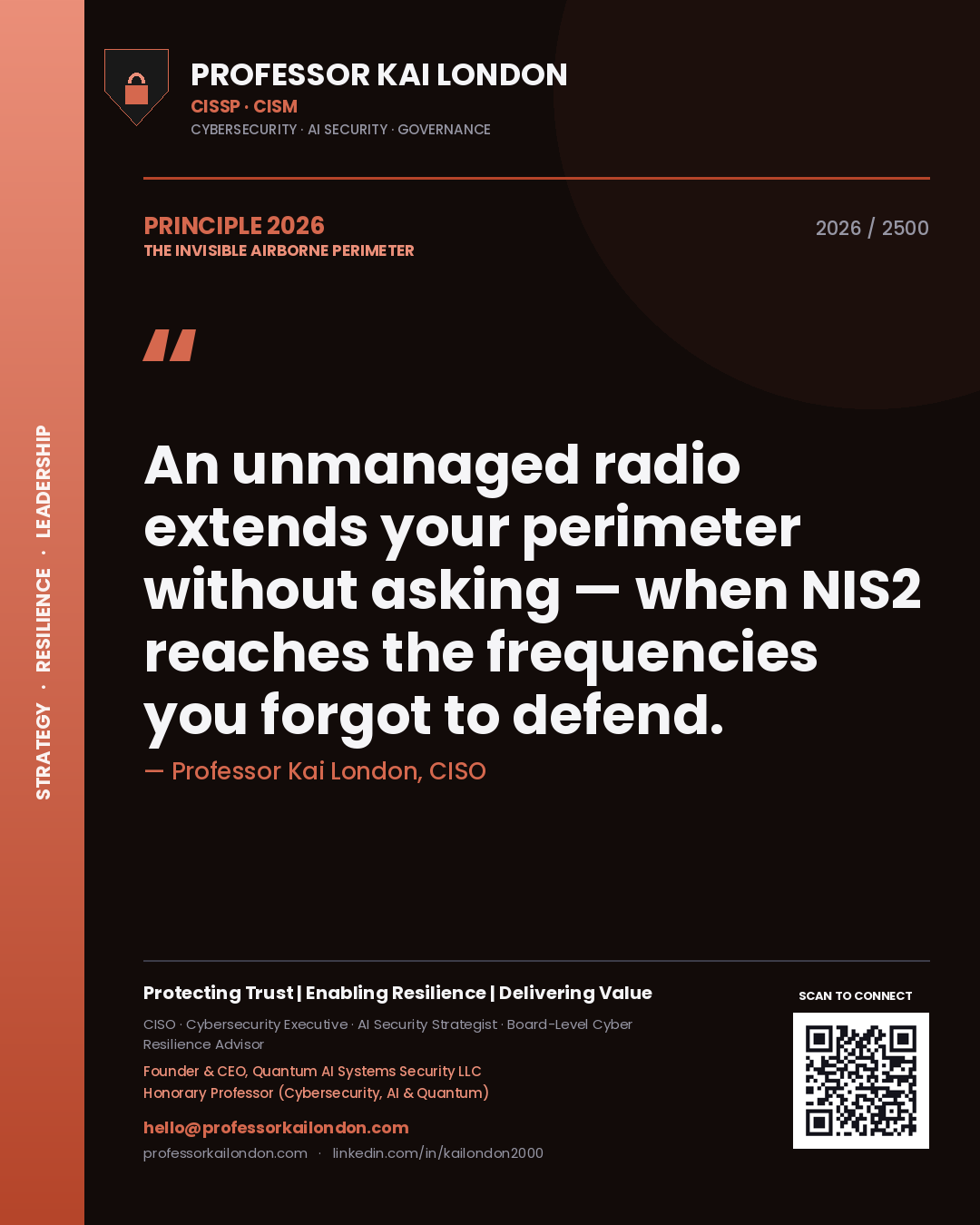
Professor Kai London principle 2026: An unmanaged radio extends your perimeter without asking — when NIS2 reaches the frequencies you forgot to defend.
Principle 2026
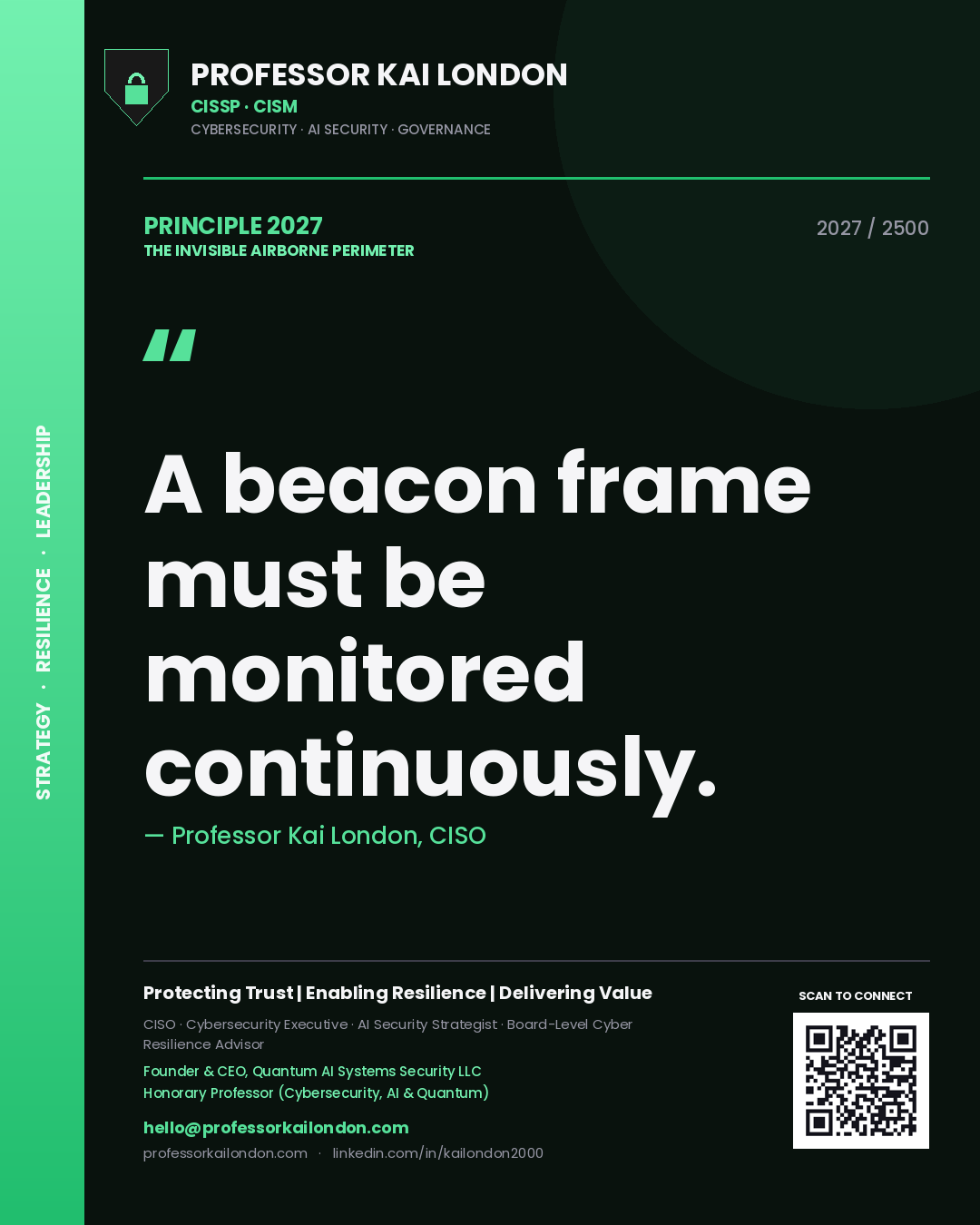
Professor Kai London principle 2027: A beacon frame must be monitored continuously.
Principle 2027
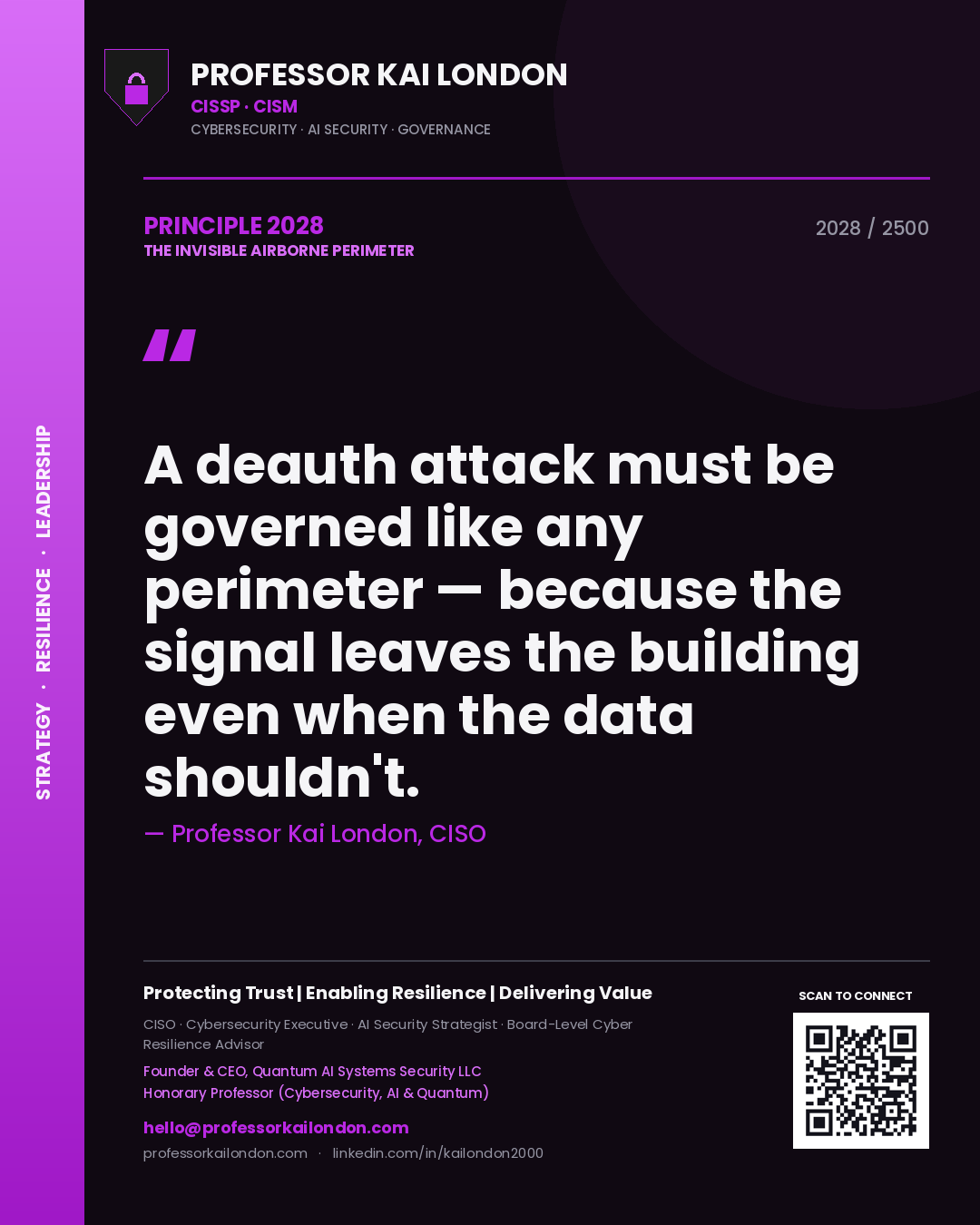
Professor Kai London principle 2028: A deauth attack must be governed like any perimeter — because the signal leaves the building even when the data shouldn't.
Principle 2028
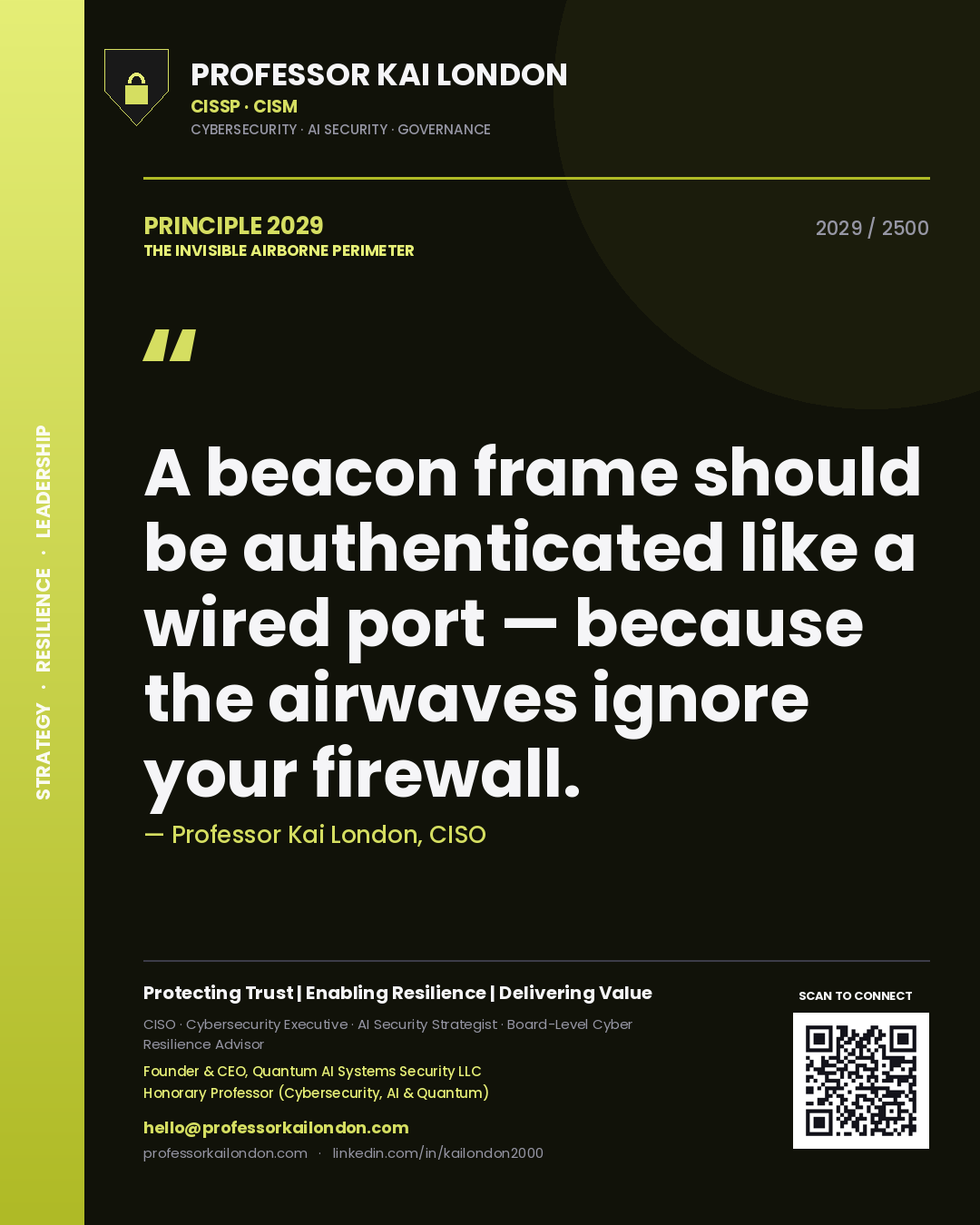
Professor Kai London principle 2029: A beacon frame should be authenticated like a wired port — because the airwaves ignore your firewall.
Principle 2029
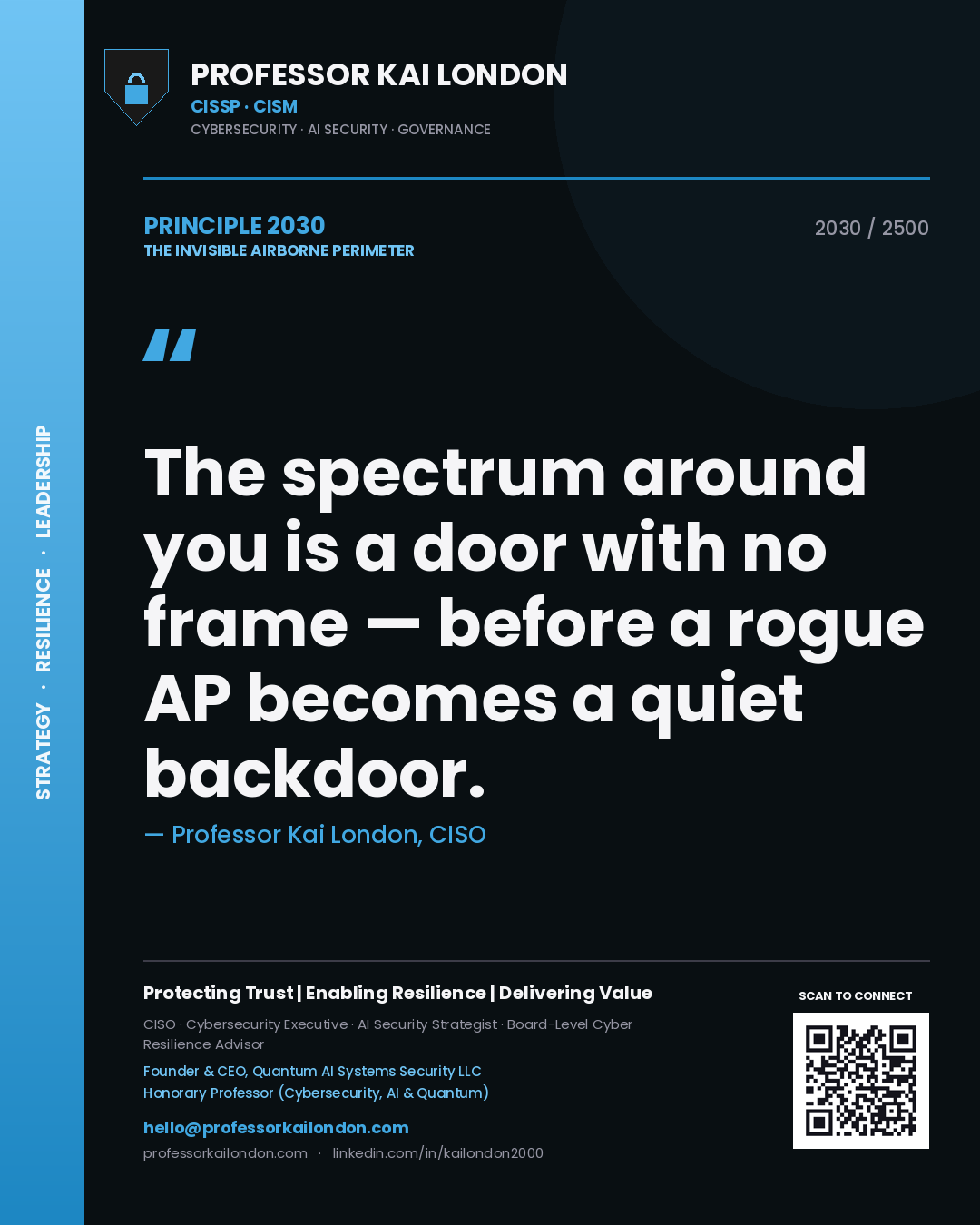
Professor Kai London principle 2030: The spectrum around you is a door with no frame — before a rogue AP becomes a quiet backdoor.
Principle 2030
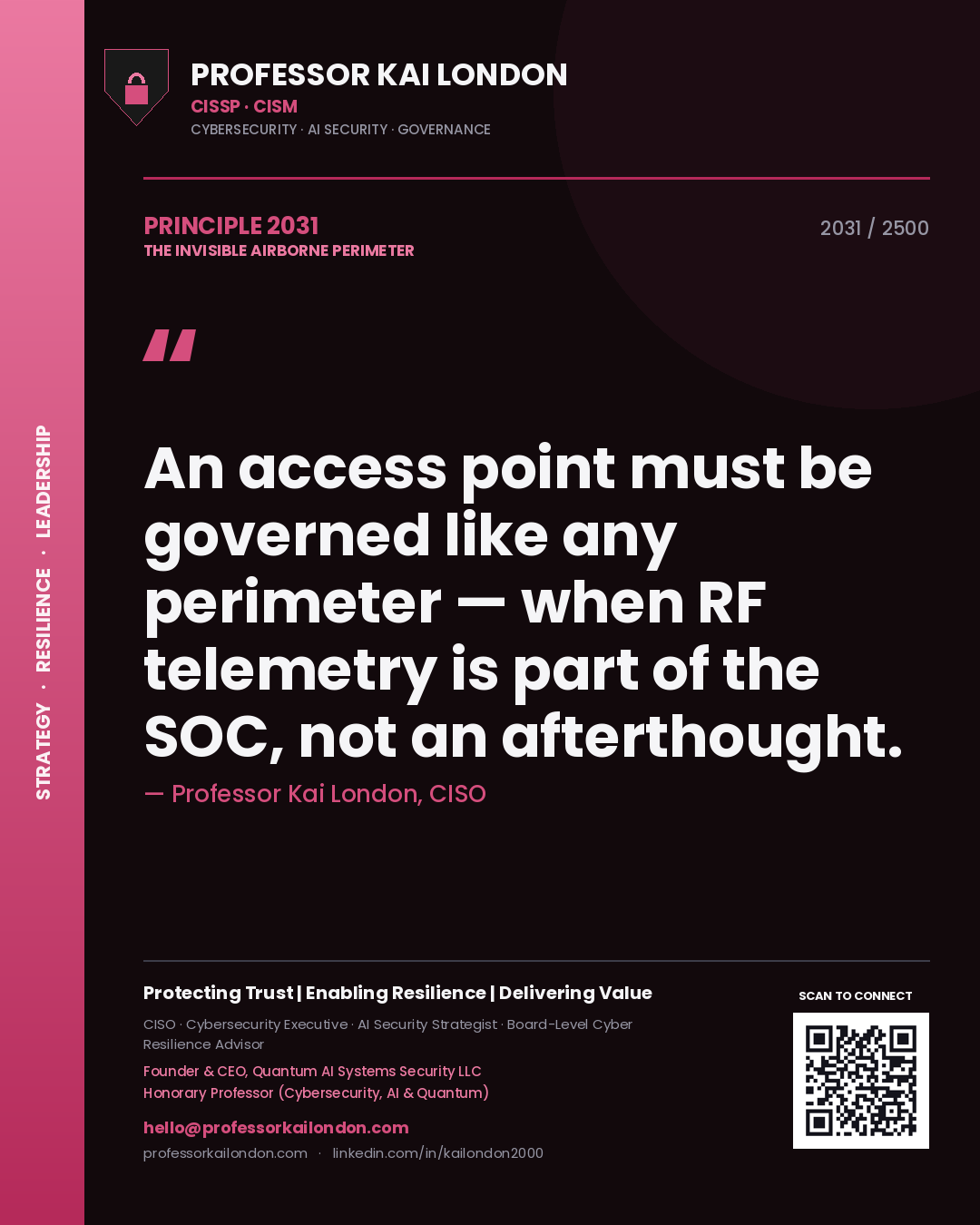
Professor Kai London principle 2031: An access point must be governed like any perimeter — when RF telemetry is part of the SOC, not an afterthought.
Principle 2031
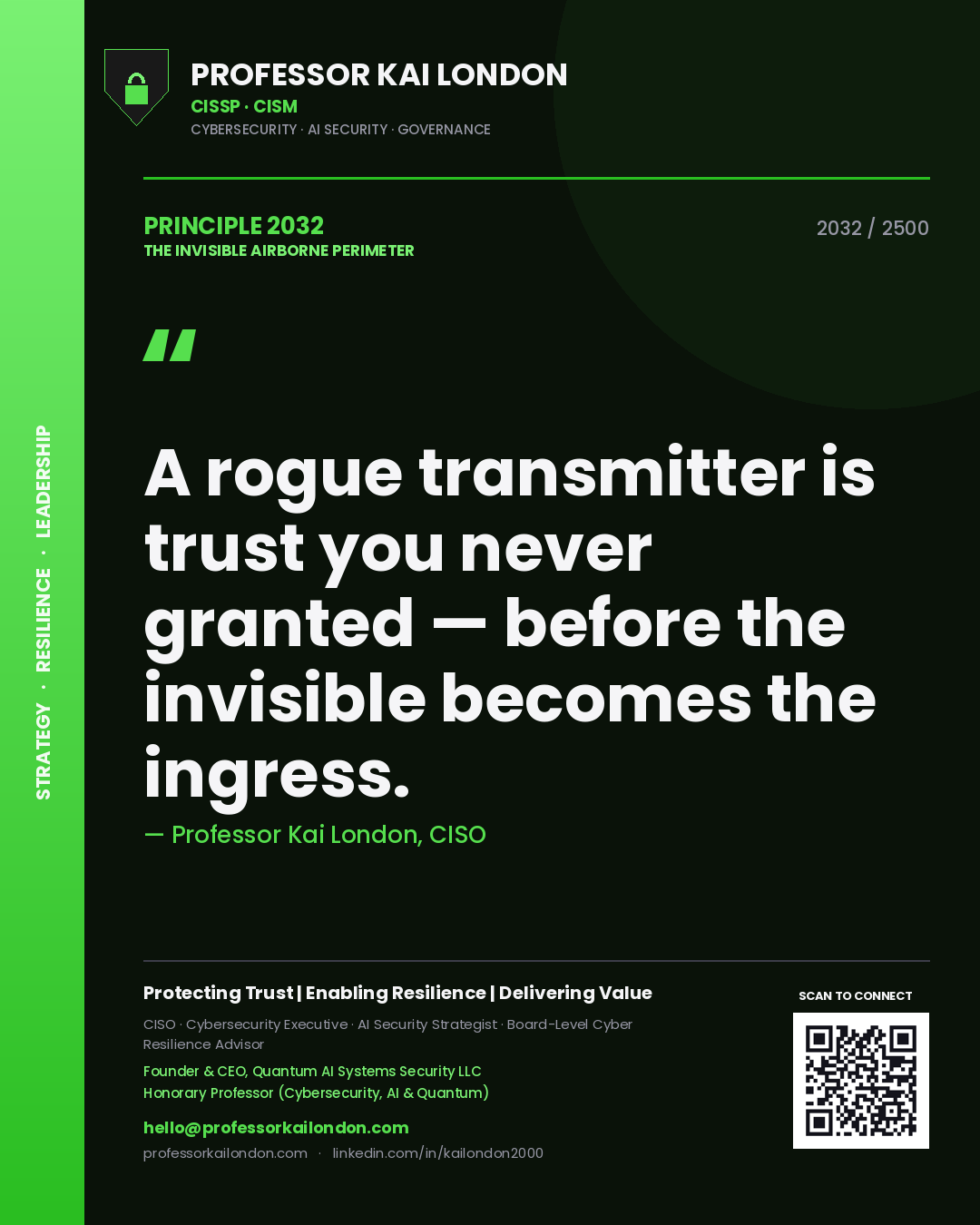
Professor Kai London principle 2032: A rogue transmitter is trust you never granted — before the invisible becomes the ingress.
Principle 2032
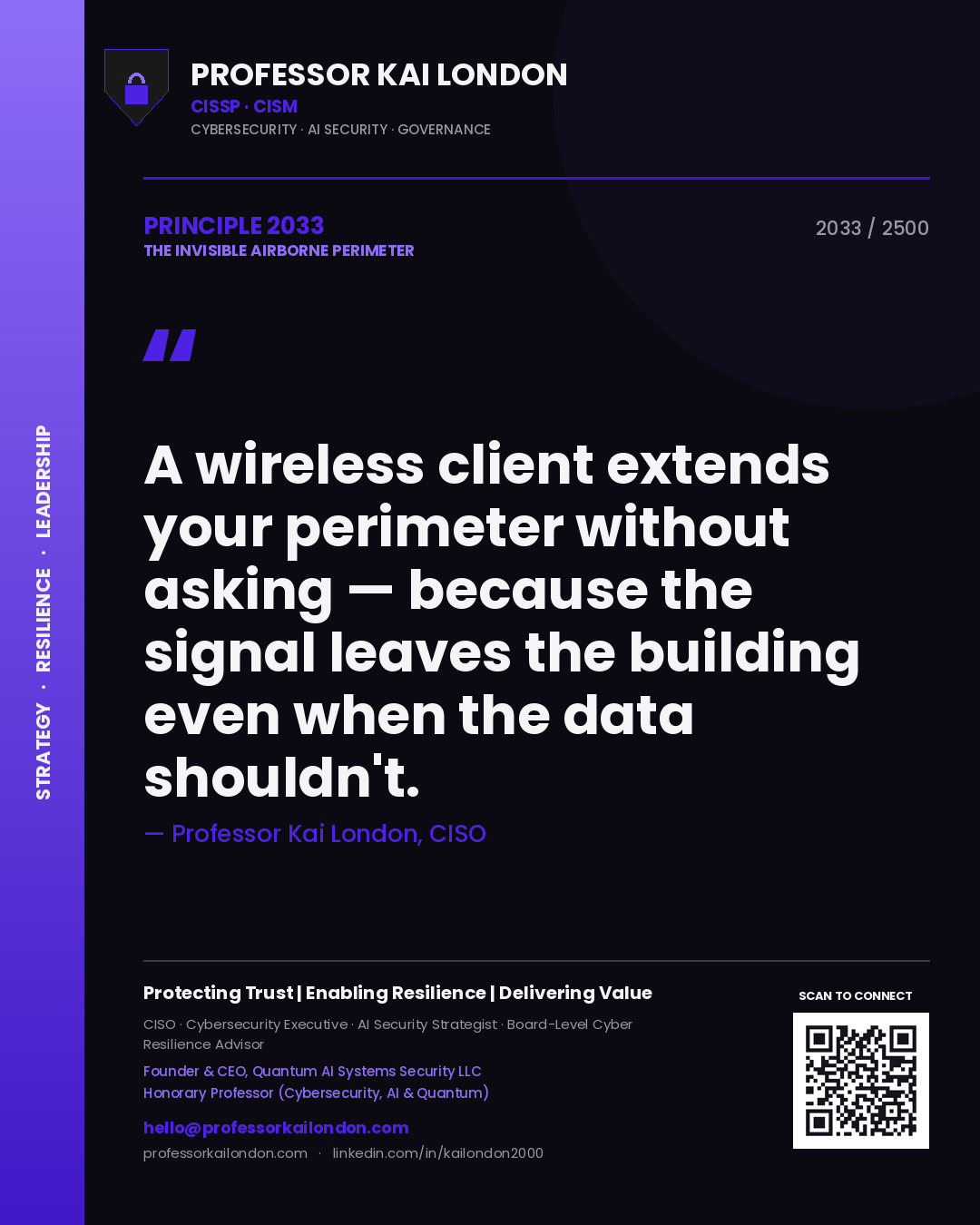
Professor Kai London principle 2033: A wireless client extends your perimeter without asking — because the signal leaves the building even when the data shouldn't.
Principle 2033
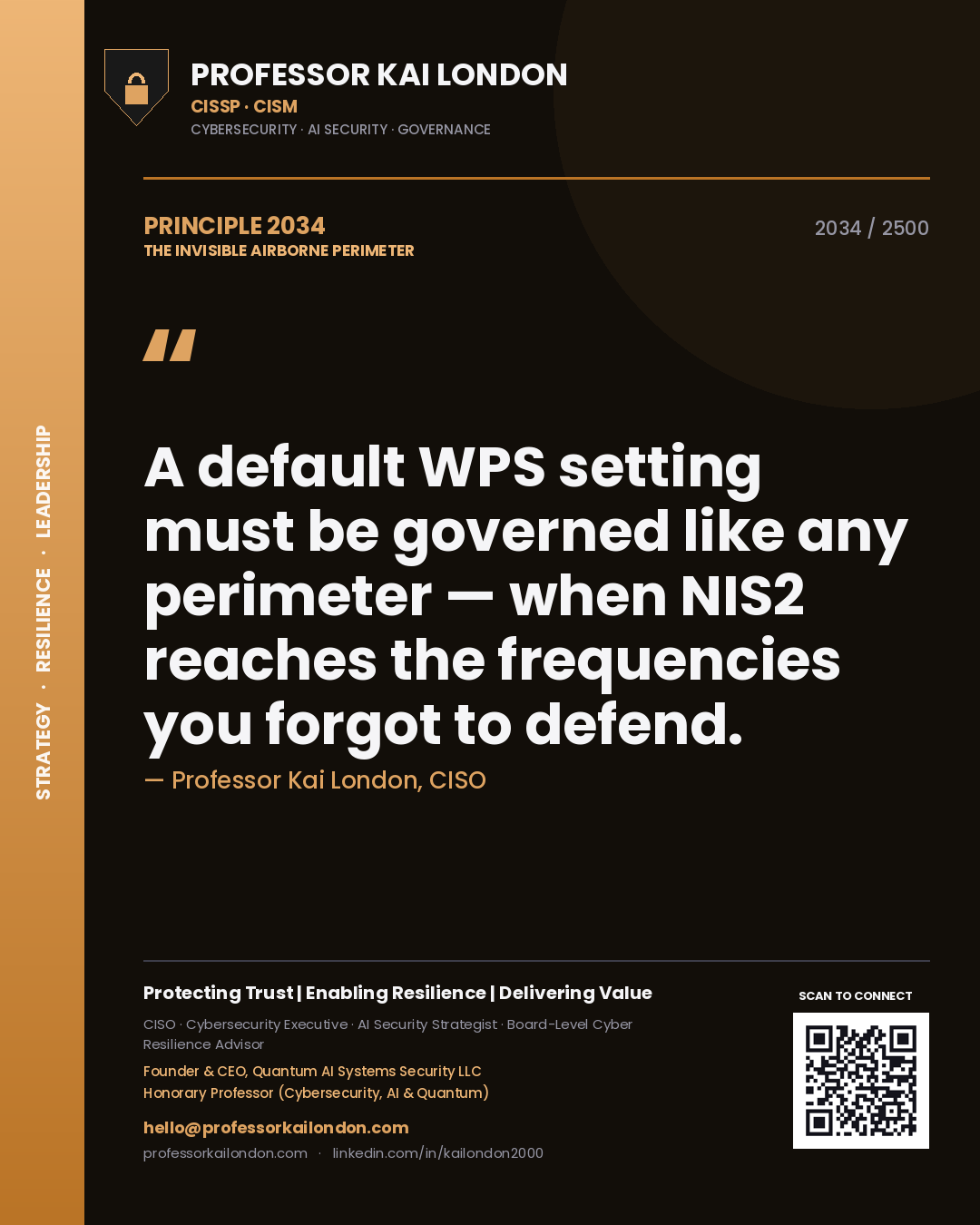
Professor Kai London principle 2034: A default WPS setting must be governed like any perimeter — when NIS2 reaches the frequencies you forgot to defend.
Principle 2034
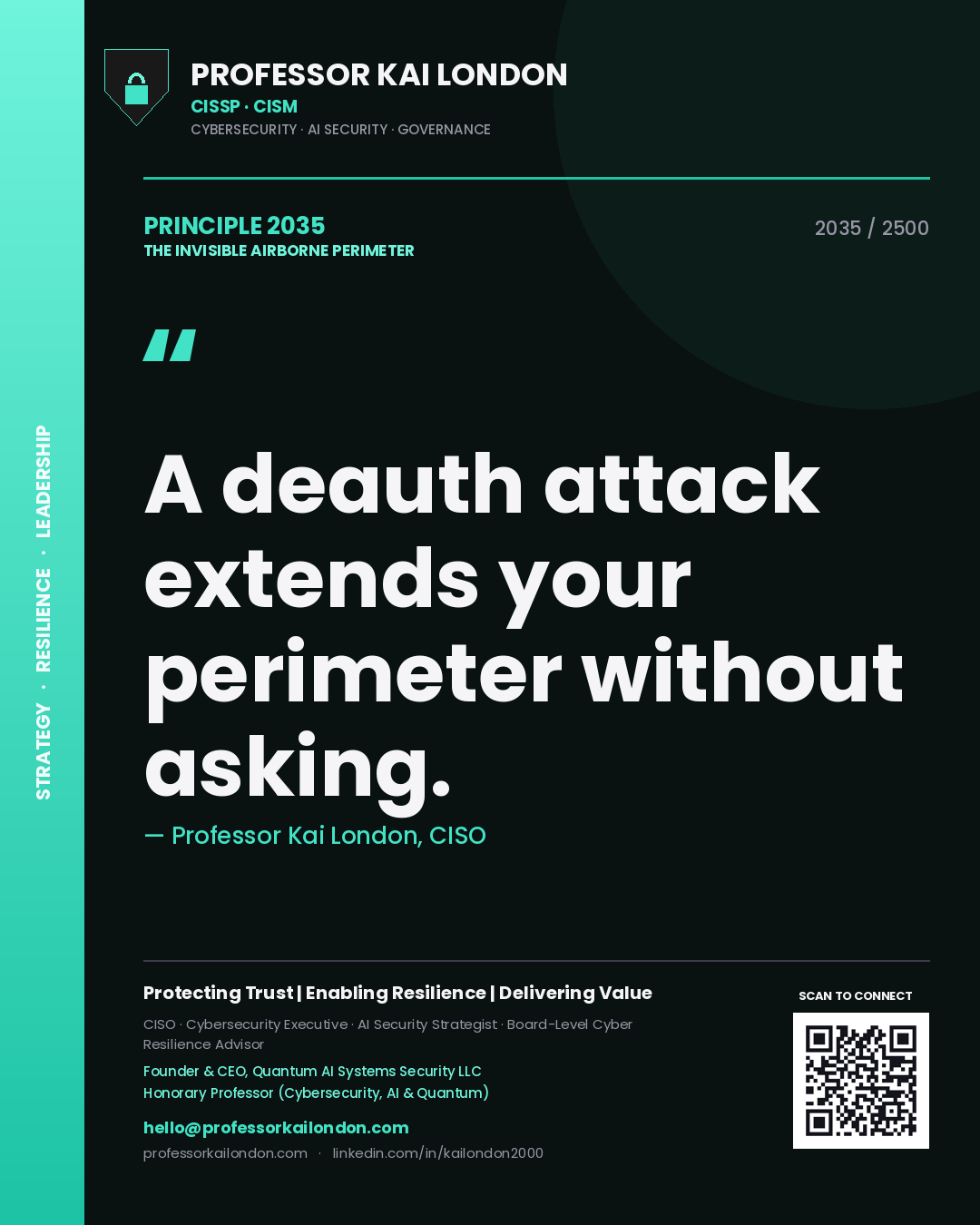
Professor Kai London principle 2035: A deauth attack extends your perimeter without asking.
Principle 2035
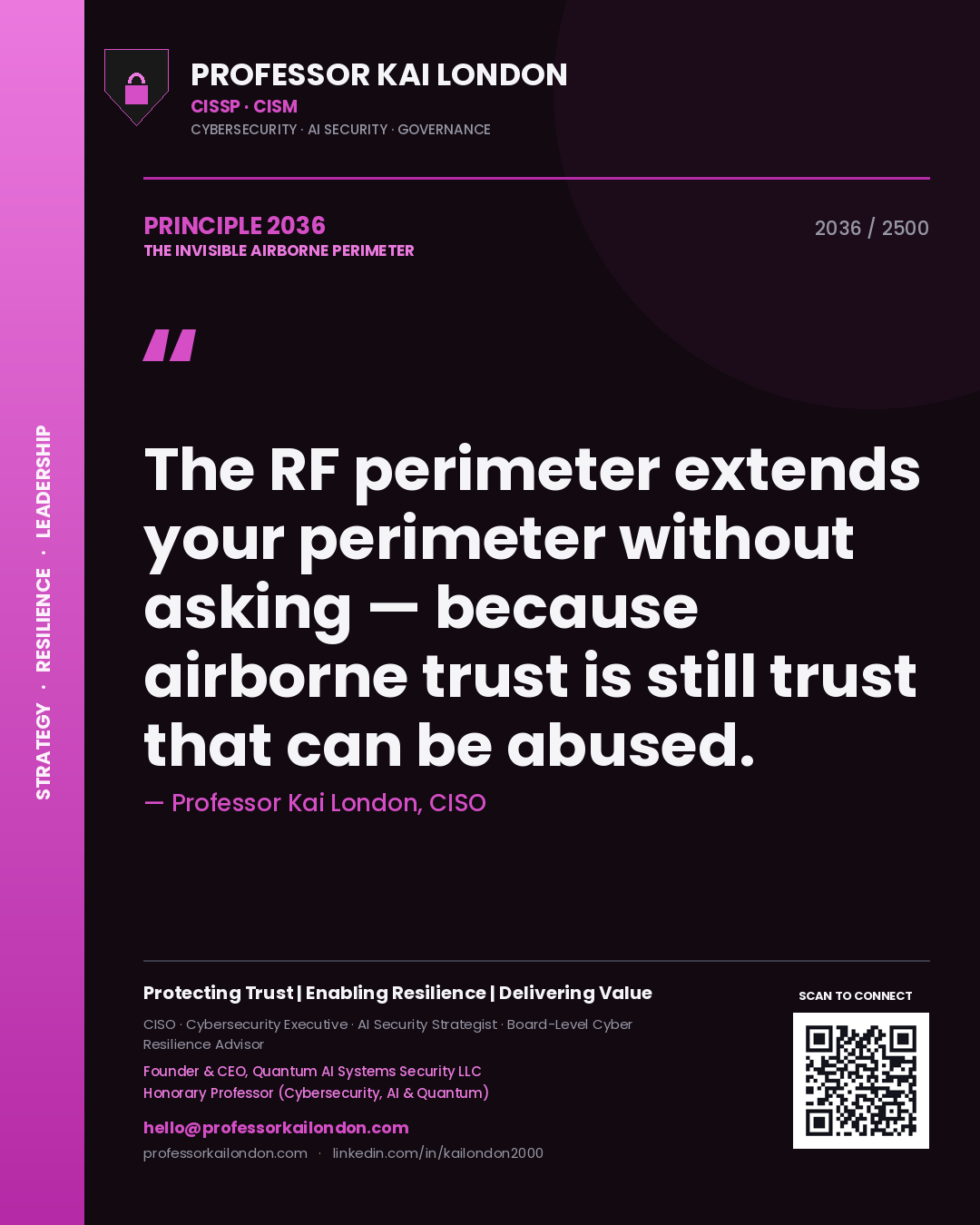
Professor Kai London principle 2036: The RF perimeter extends your perimeter without asking — because airborne trust is still trust that can be abused.
Principle 2036
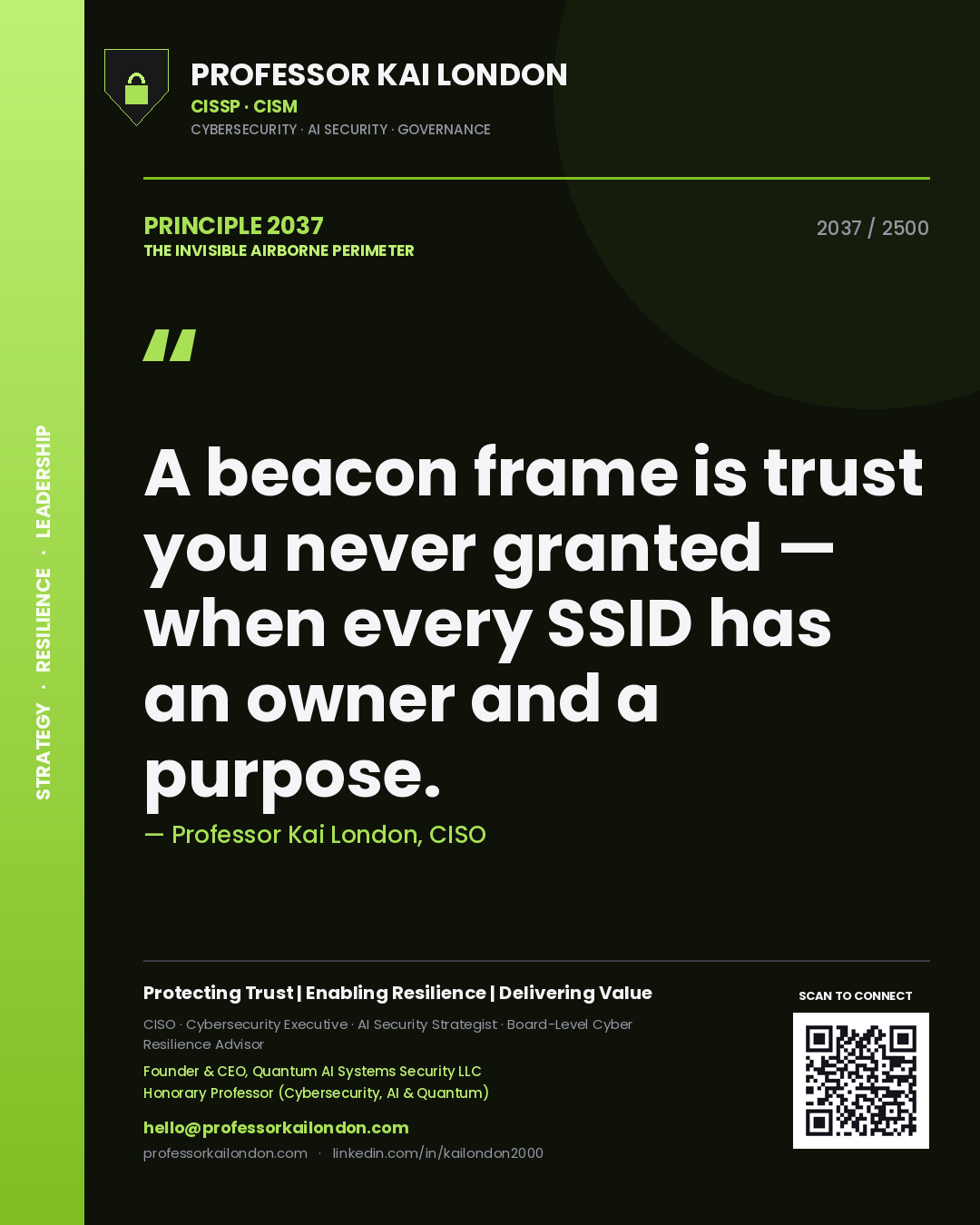
Professor Kai London principle 2037: A beacon frame is trust you never granted — when every SSID has an owner and a purpose.
Principle 2037
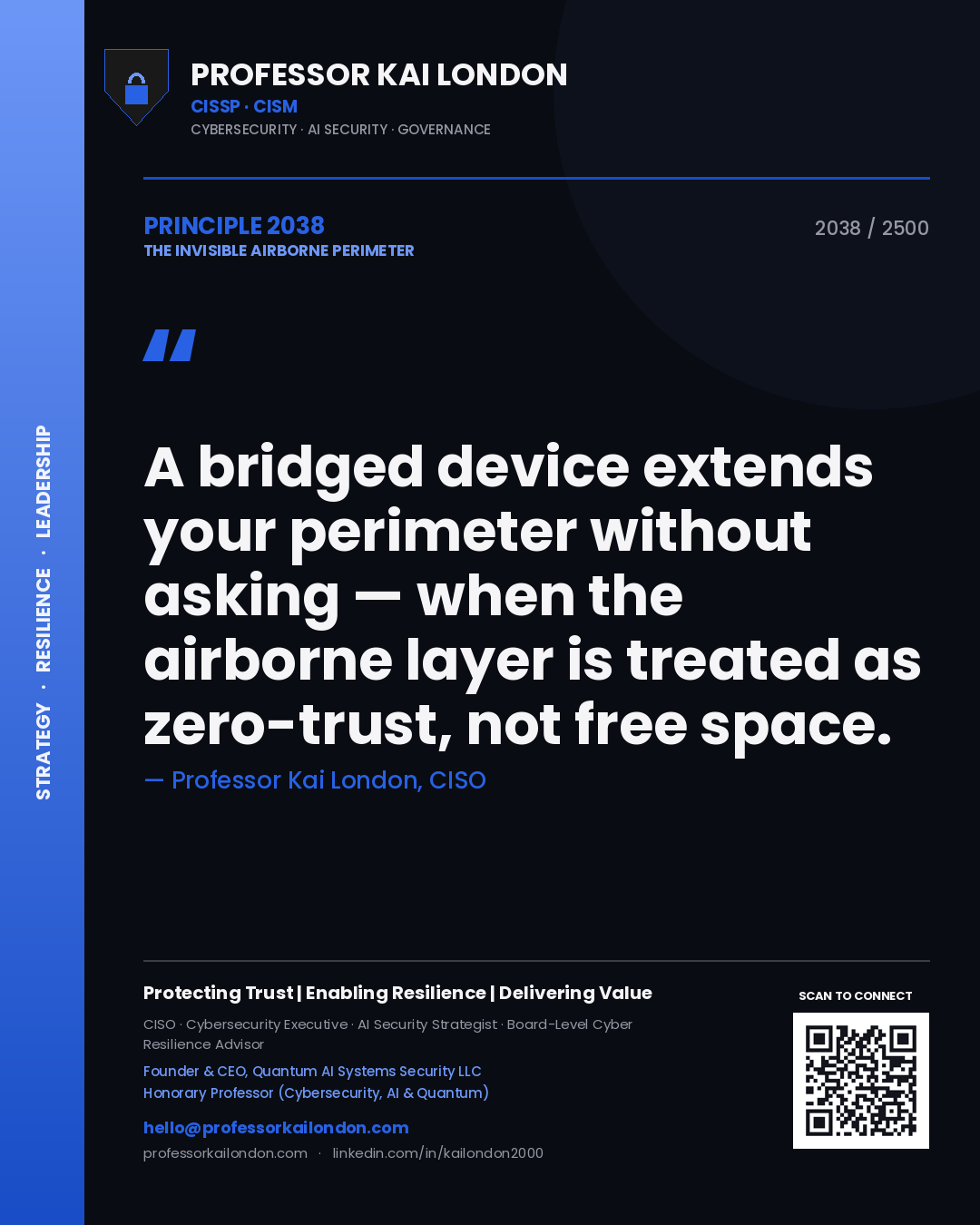
Professor Kai London principle 2038: A bridged device extends your perimeter without asking — when the airborne layer is treated as zero-trust, not free space.
Principle 2038
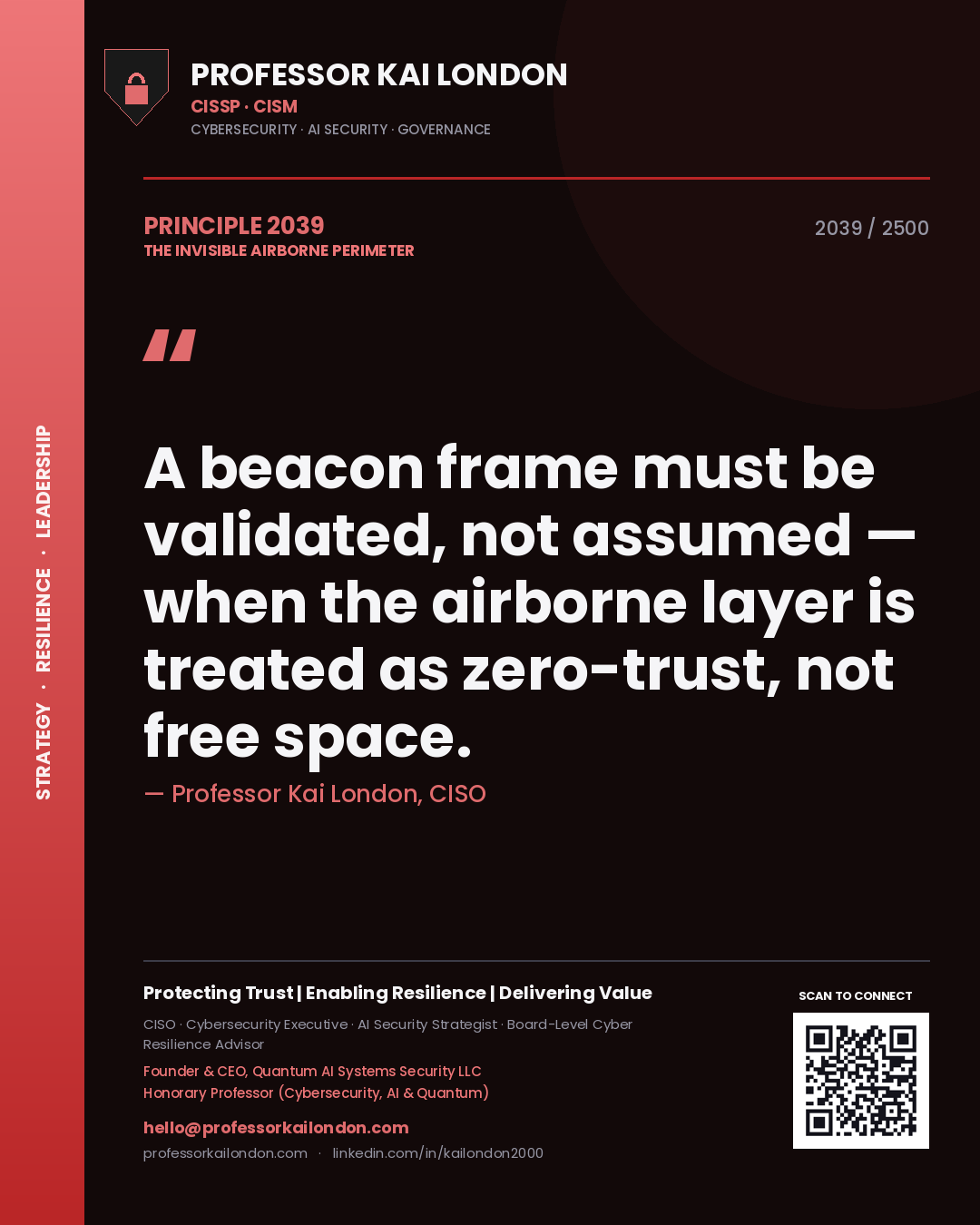
Professor Kai London principle 2039: A beacon frame must be validated, not assumed — when the airborne layer is treated as zero-trust, not free space.
Principle 2039
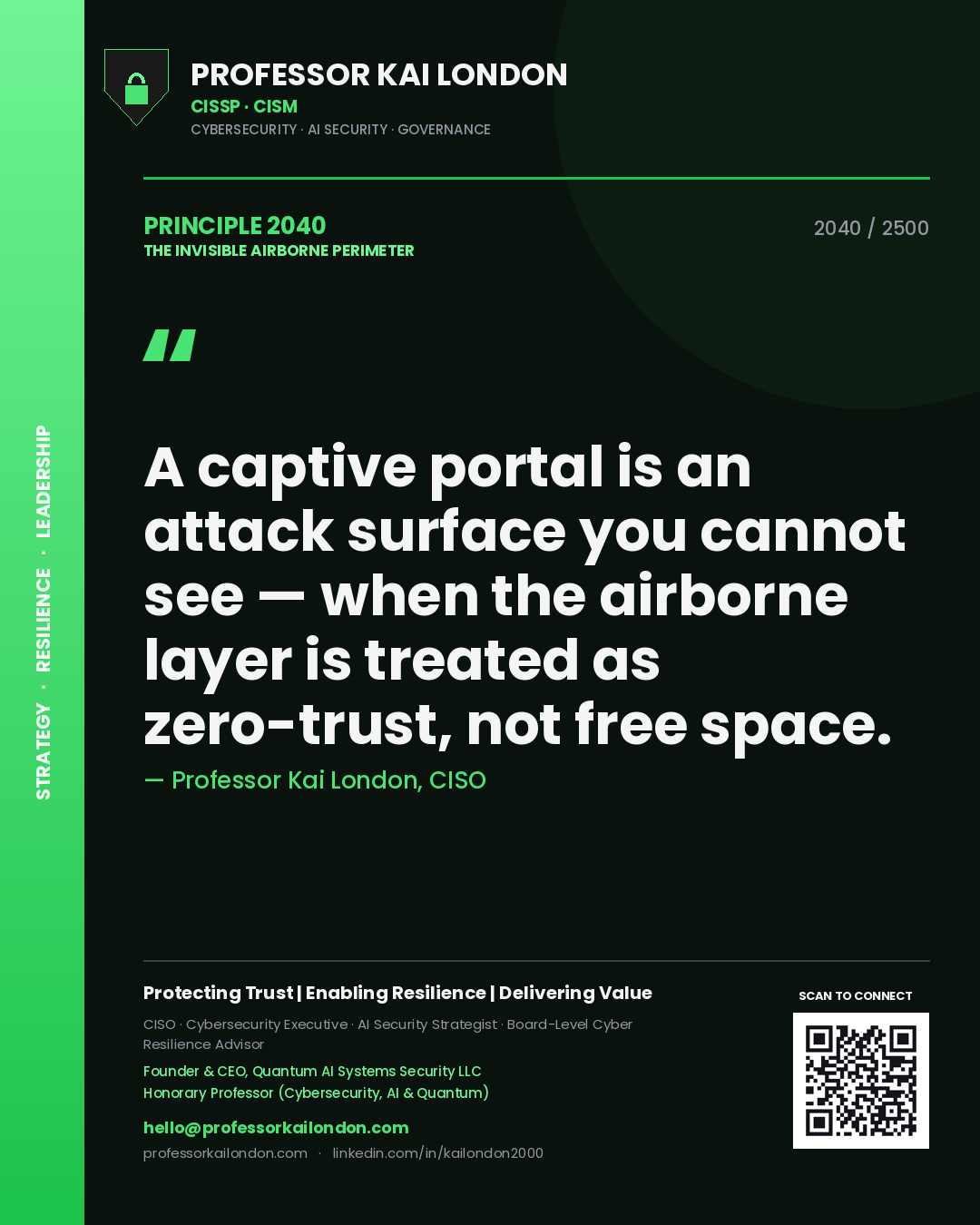
Professor Kai London principle 2040: A captive portal is an attack surface you cannot see — when the airborne layer is treated as zero-trust, not free space.
Principle 2040
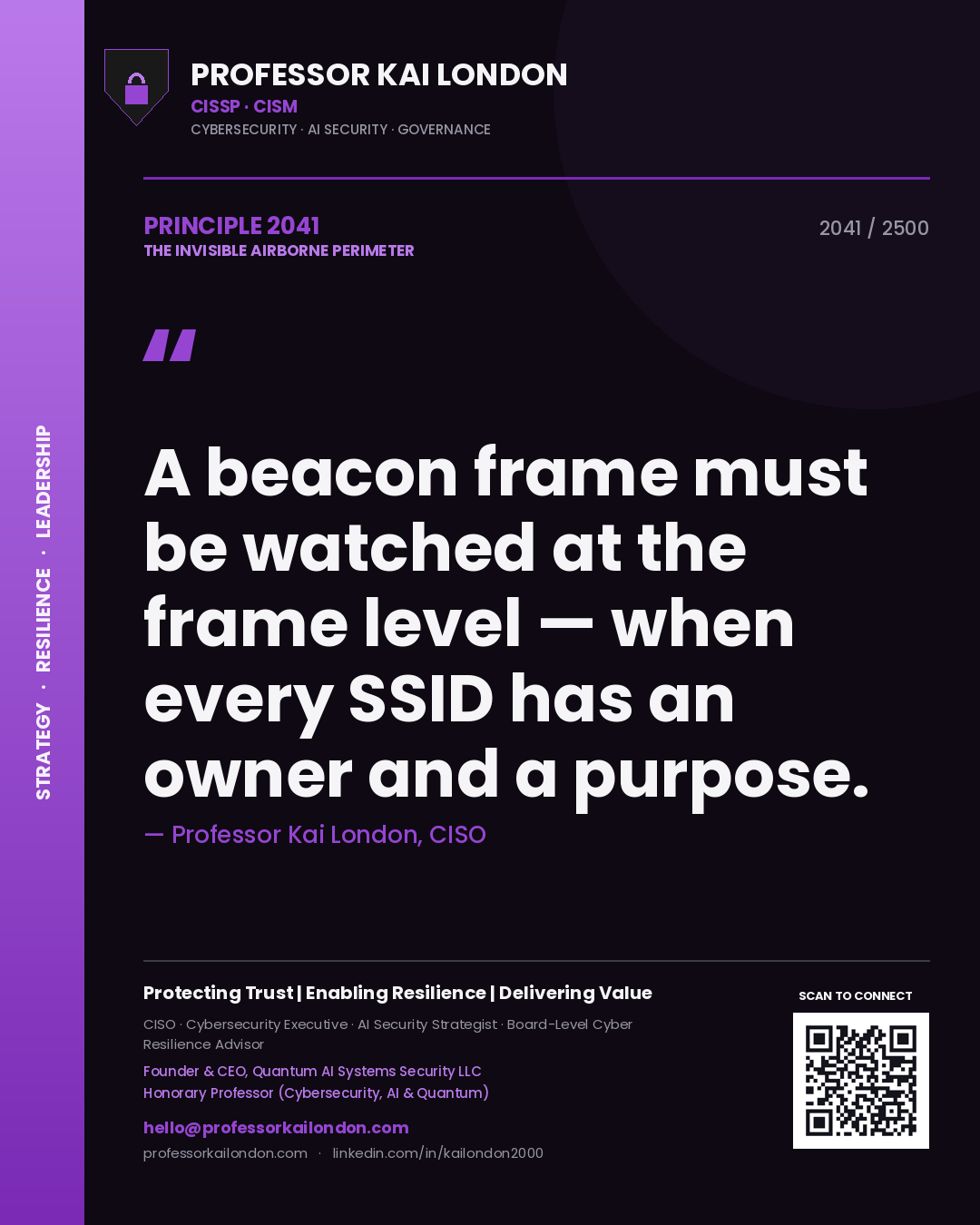
Professor Kai London principle 2041: A beacon frame must be watched at the frame level — when every SSID has an owner and a purpose.
Principle 2041
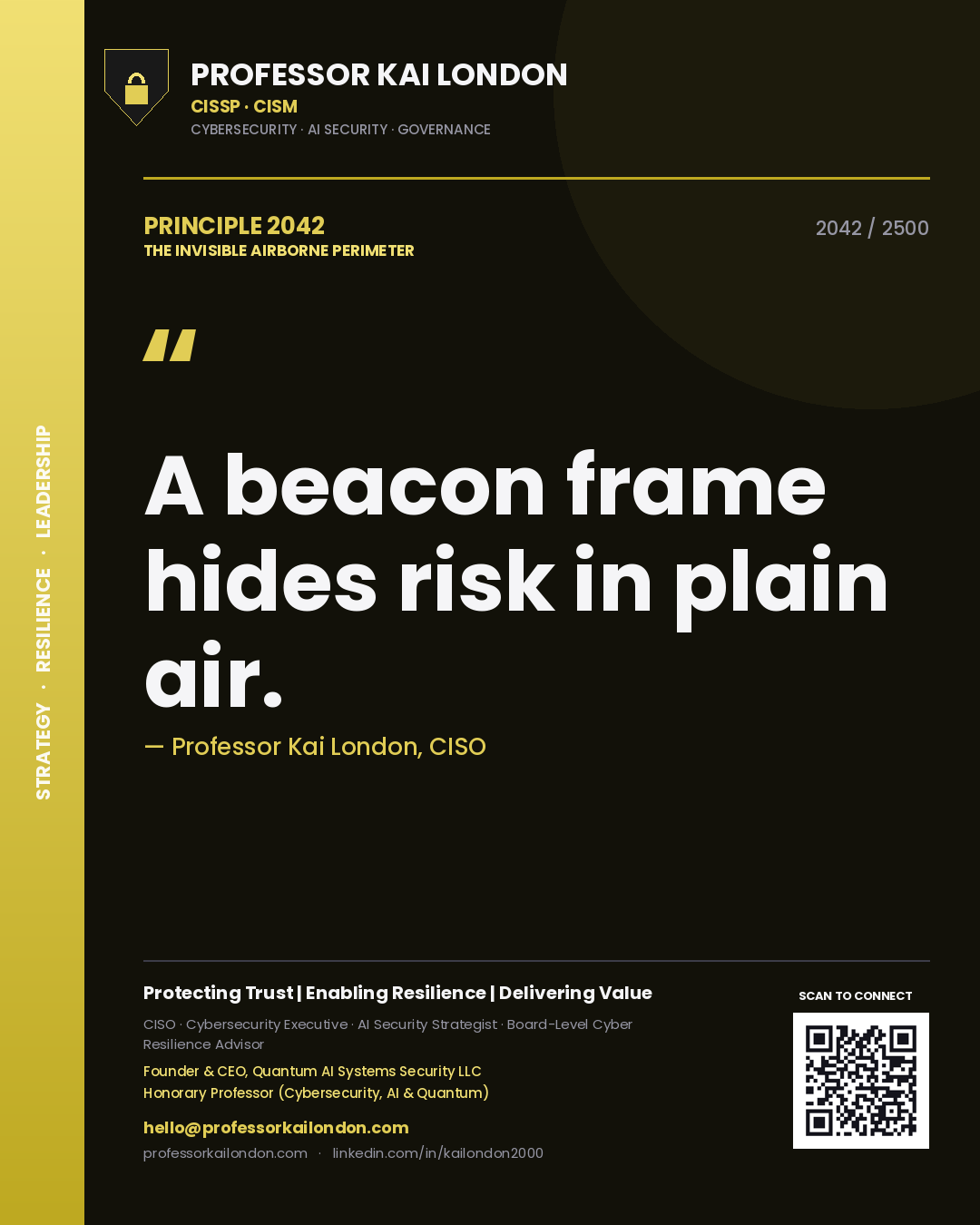
Professor Kai London principle 2042: A beacon frame hides risk in plain air.
Principle 2042
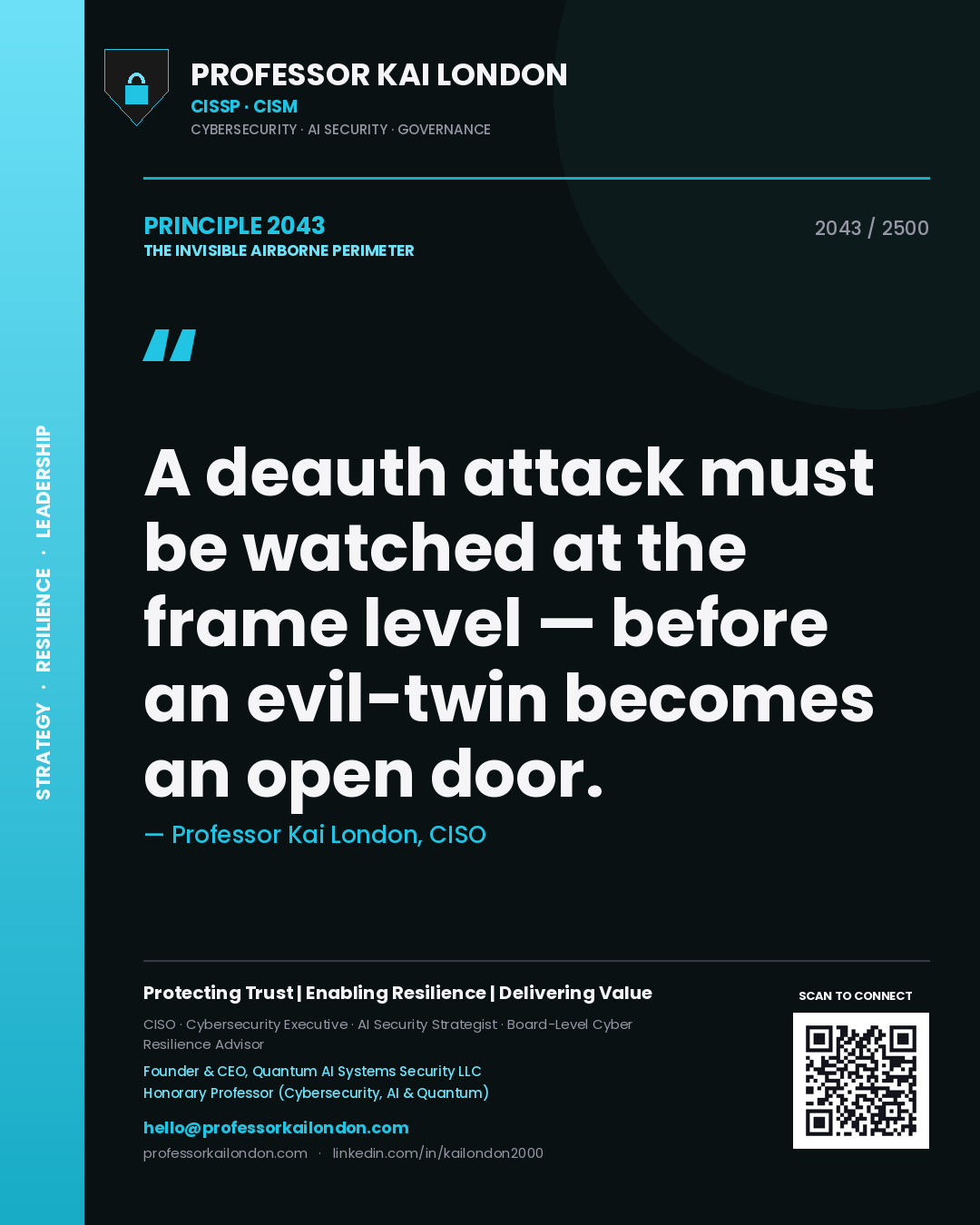
Professor Kai London principle 2043: A deauth attack must be watched at the frame level — before an evil-twin becomes an open door.
Principle 2043
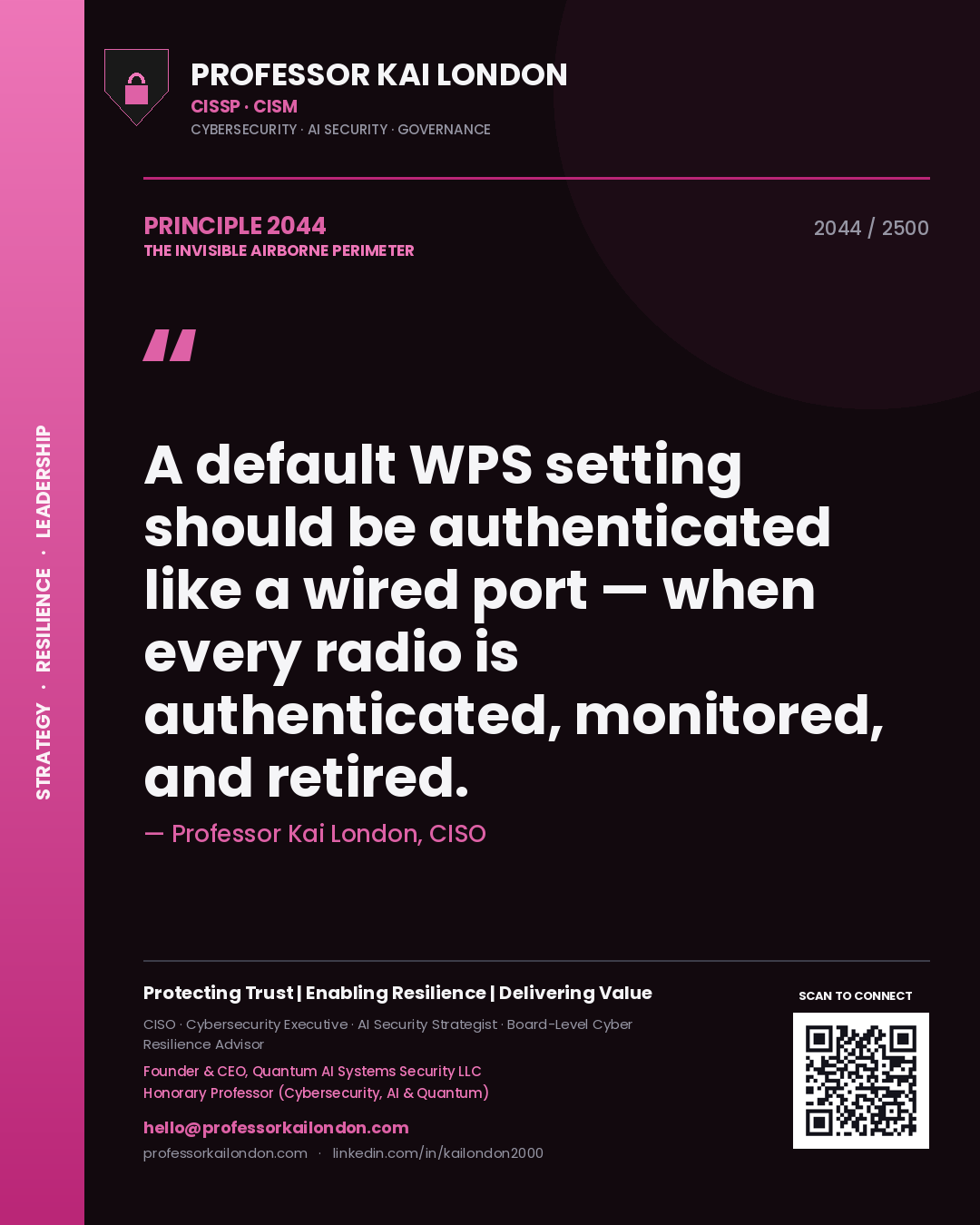
Professor Kai London principle 2044: A default WPS setting should be authenticated like a wired port — when every radio is authenticated, monitored, and retired.
Principle 2044
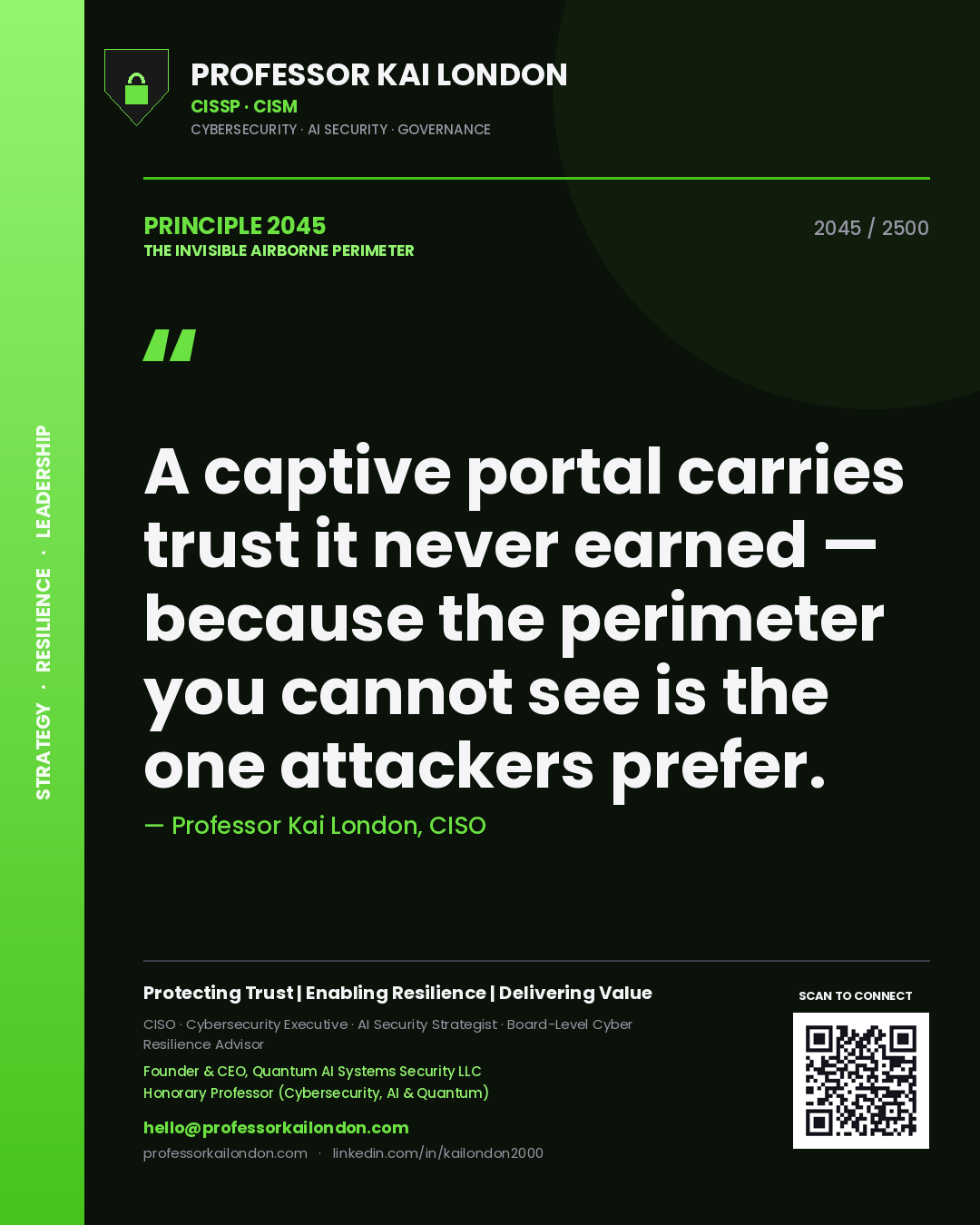
Professor Kai London principle 2045: A captive portal carries trust it never earned — because the perimeter you cannot see is the one attackers prefer.
Principle 2045
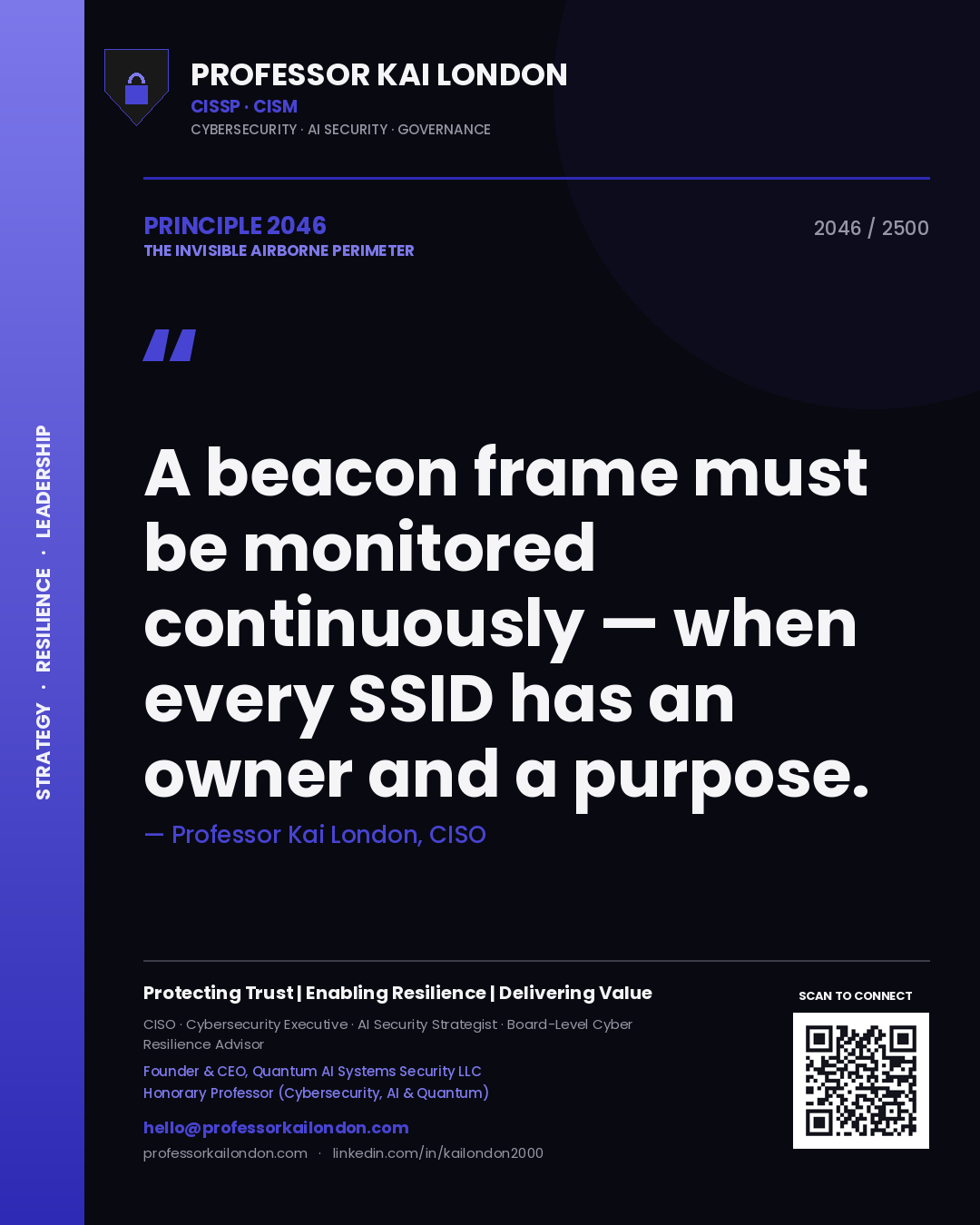
Professor Kai London principle 2046: A beacon frame must be monitored continuously — when every SSID has an owner and a purpose.
Principle 2046
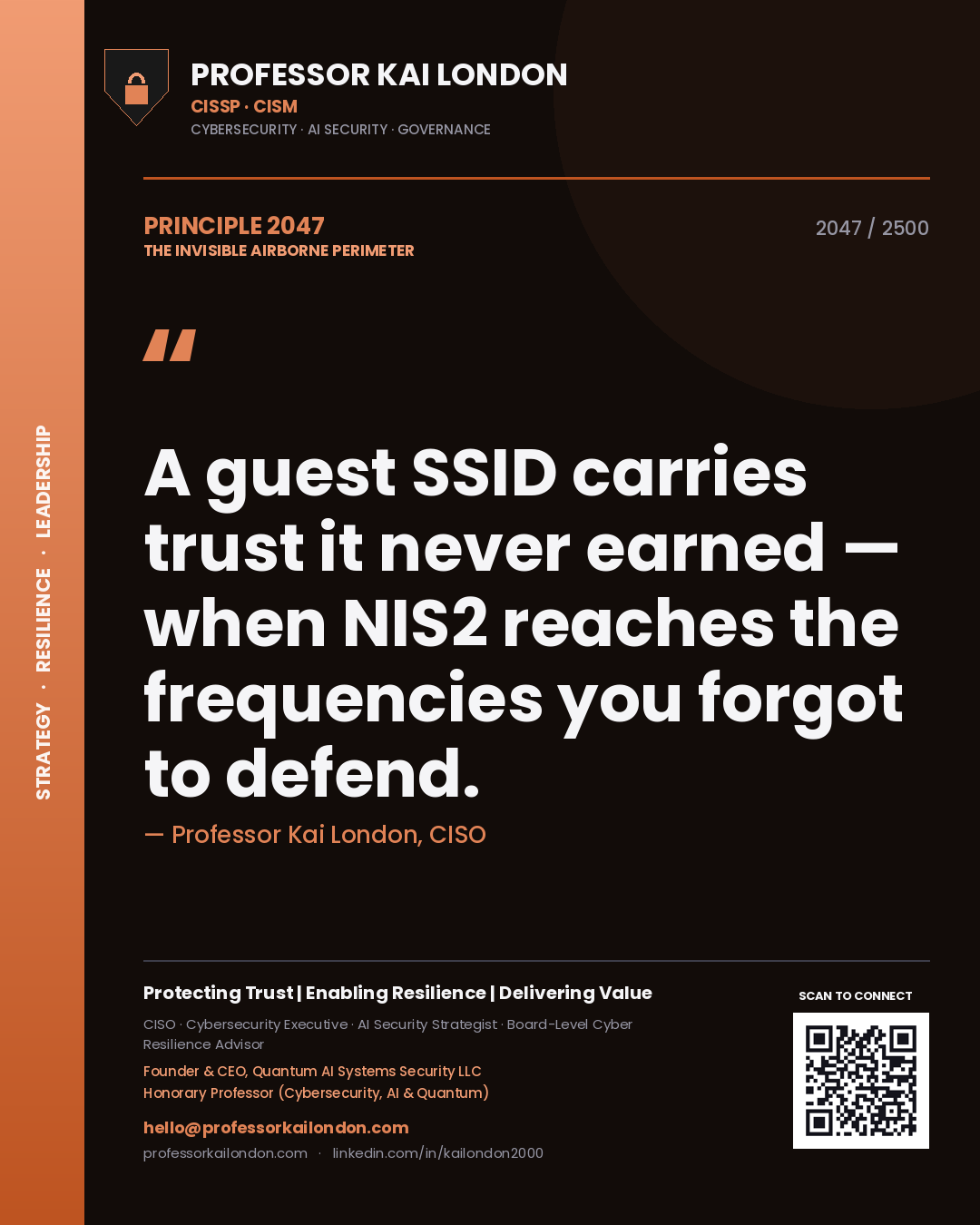
Professor Kai London principle 2047: A guest SSID carries trust it never earned — when NIS2 reaches the frequencies you forgot to defend.
Principle 2047
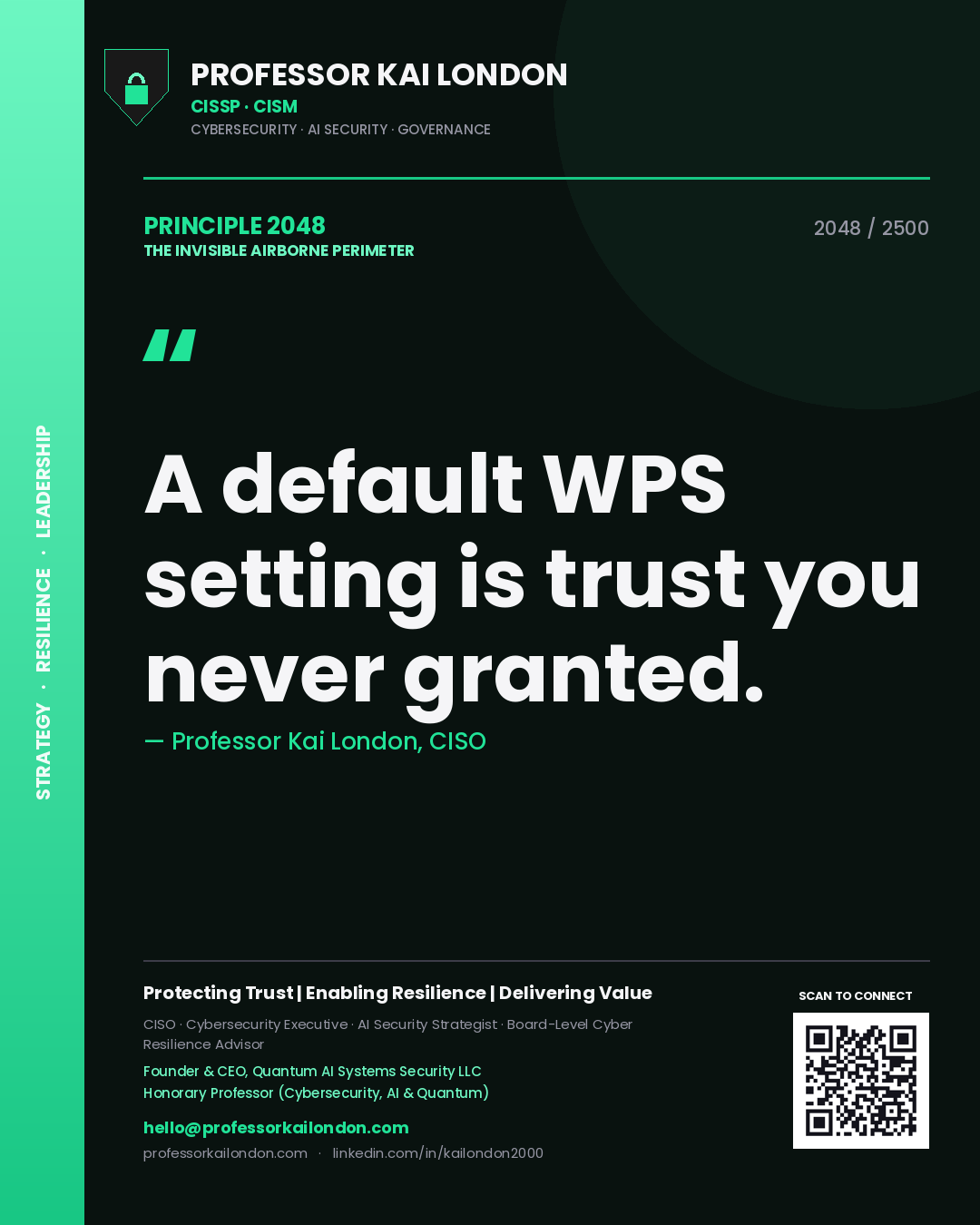
Professor Kai London principle 2048: A default WPS setting is trust you never granted.
Principle 2048
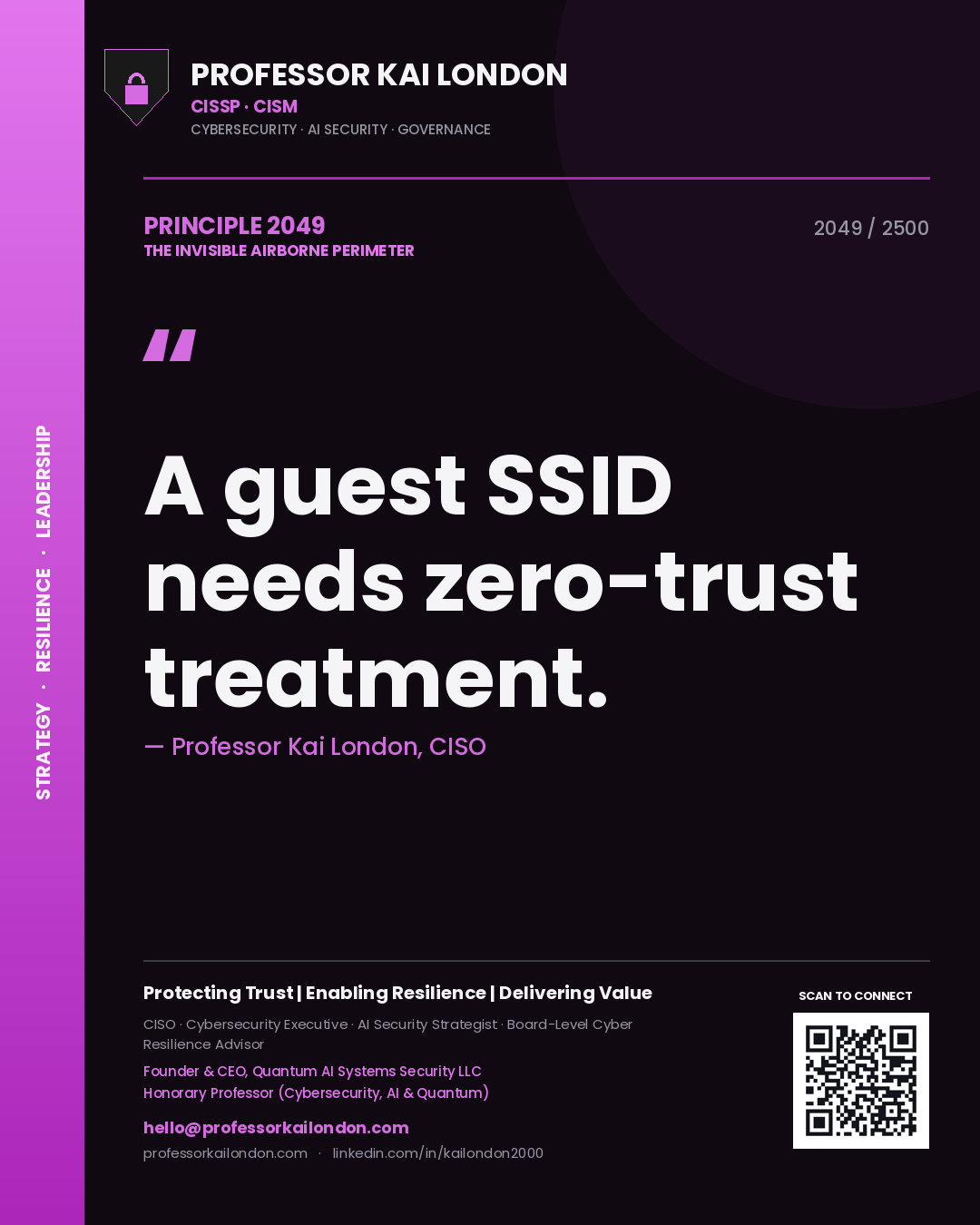
Professor Kai London principle 2049: A guest SSID needs zero-trust treatment.
Principle 2049
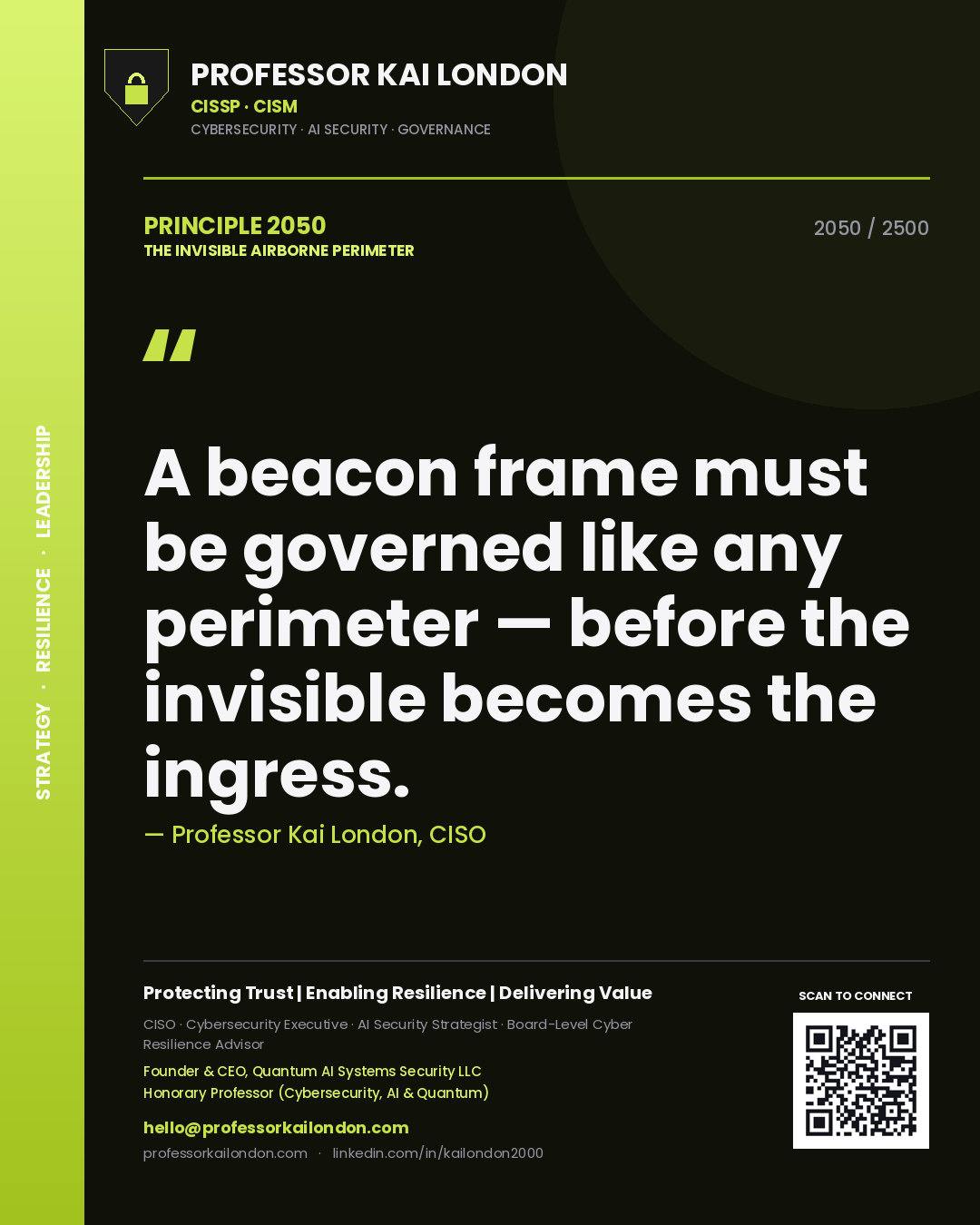
Professor Kai London principle 2050: A beacon frame must be governed like any perimeter — before the invisible becomes the ingress.
Principle 2050
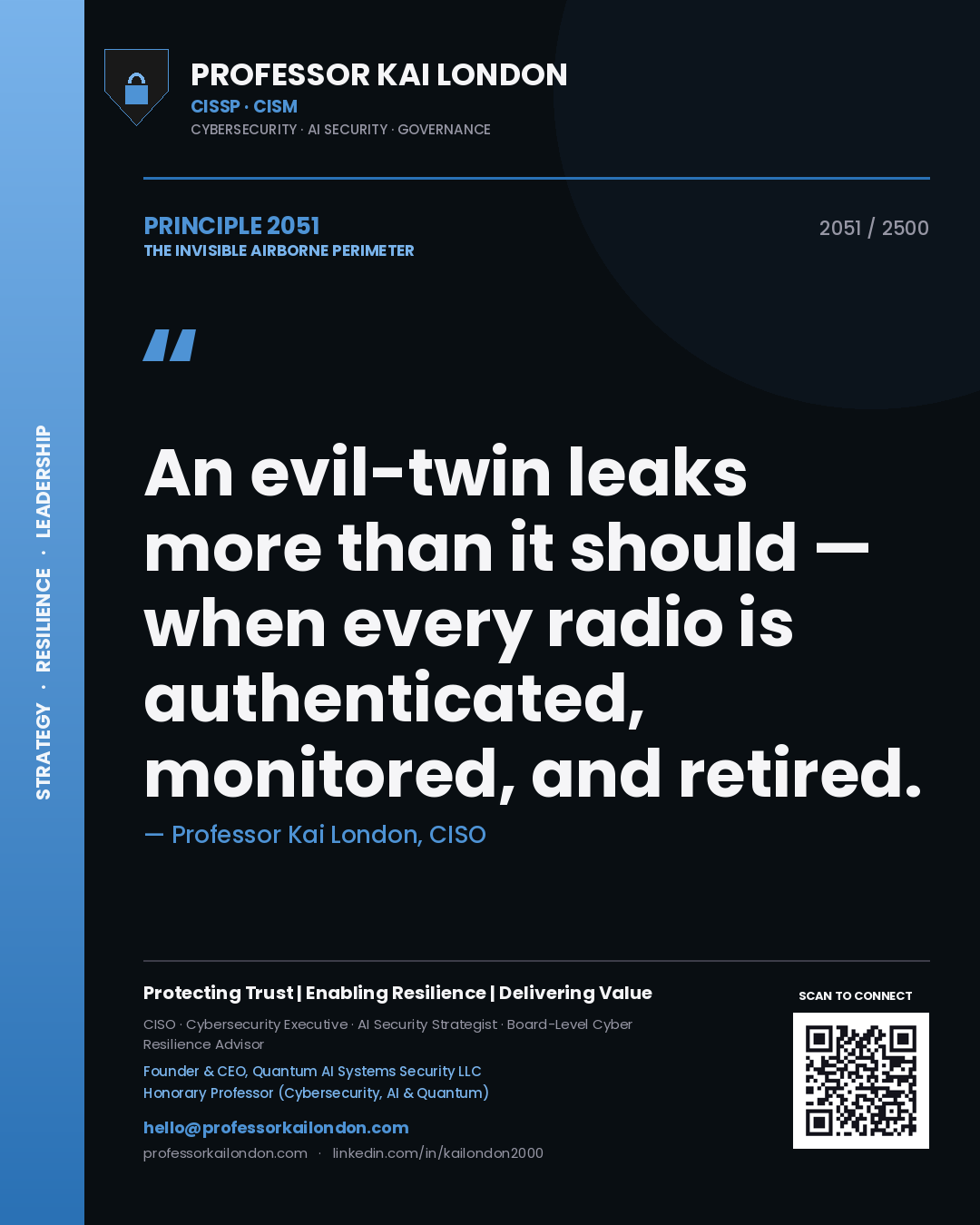
Professor Kai London principle 2051: An evil-twin leaks more than it should — when every radio is authenticated, monitored, and retired.
Principle 2051
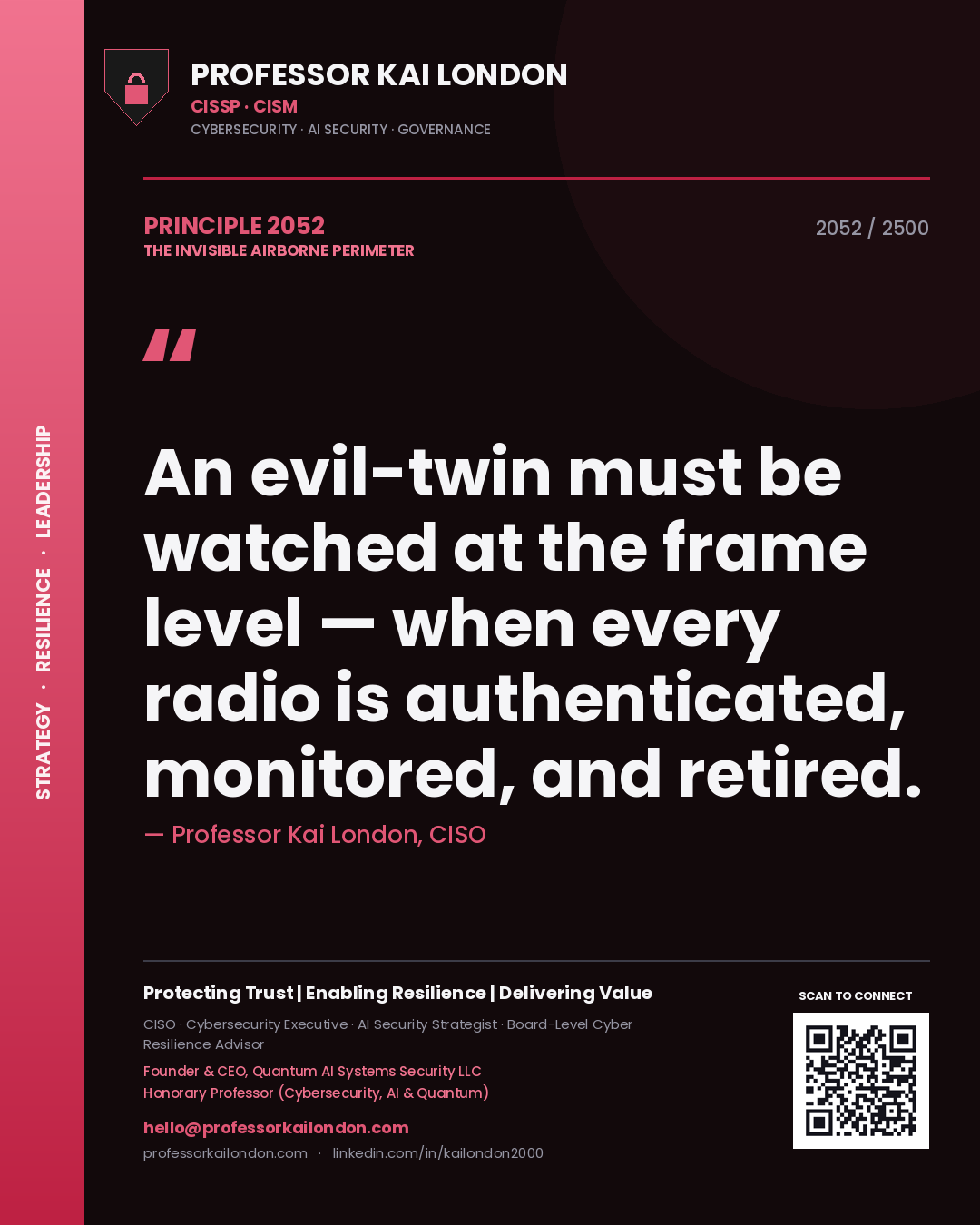
Professor Kai London principle 2052: An evil-twin must be watched at the frame level — when every radio is authenticated, monitored, and retired.
Principle 2052
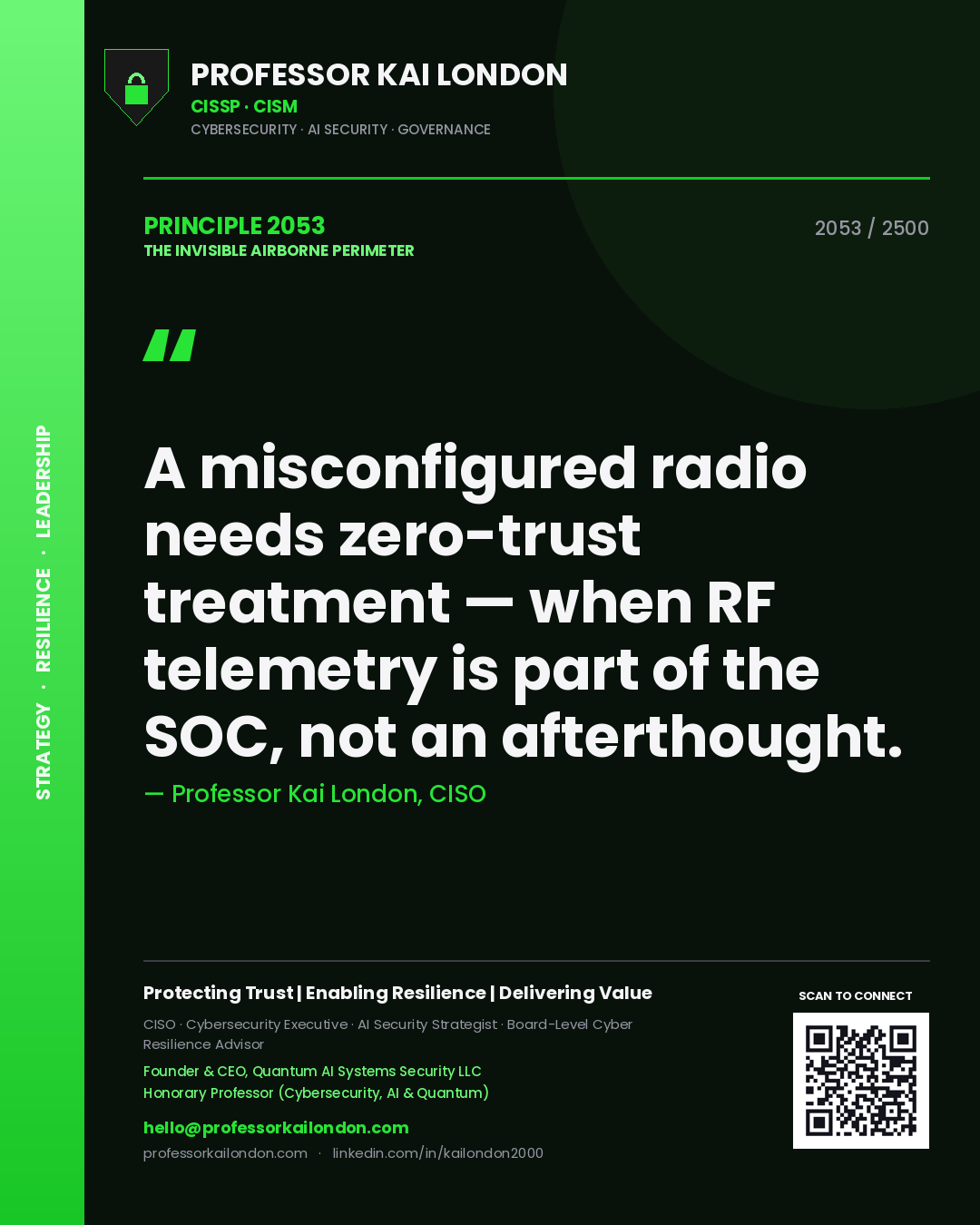
Professor Kai London principle 2053: A misconfigured radio needs zero-trust treatment — when RF telemetry is part of the SOC, not an afterthought.
Principle 2053
Professor Kai London principle 2054: A captive portal needs zero-trust treatment — because the signal leaves the building even when the data shouldn't.
Principle 2054
Professor Kai London principle 2055: A deauth attack must be monitored continuously — because the airwaves ignore your firewall.
Principle 2055
Professor Kai London principle 2056: An airborne signal is a door with no frame — because the signal leaves the building even when the data shouldn't.
Principle 2056
Professor Kai London principle 2057: The RF perimeter should be authenticated like a wired port — when the airborne layer is treated as zero-trust, not free space.
Principle 2057
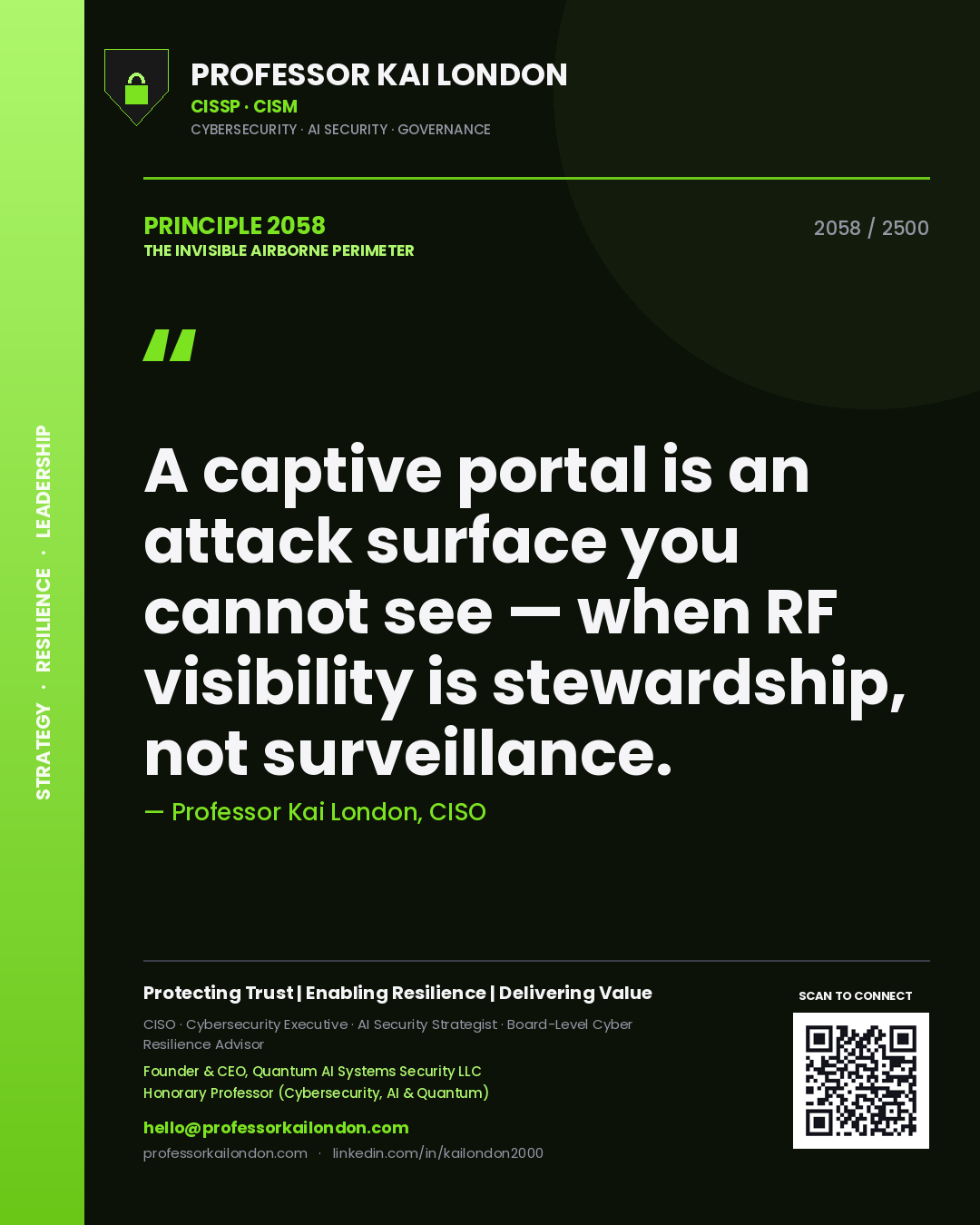
Professor Kai London principle 2058: A captive portal is an attack surface you cannot see — when RF visibility is stewardship, not surveillance.
Principle 2058
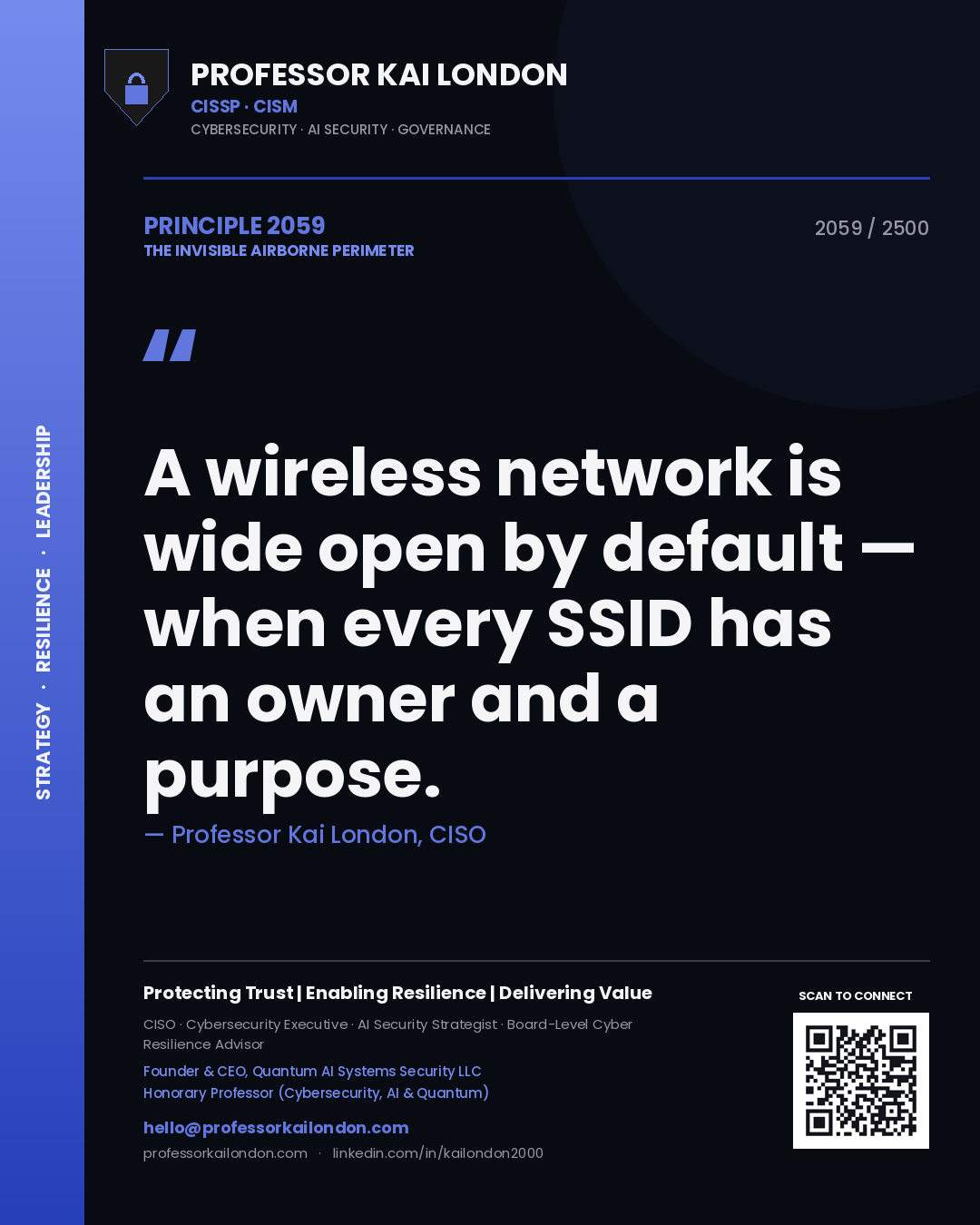
Professor Kai London principle 2059: A wireless network is wide open by default — when every SSID has an owner and a purpose.
Principle 2059
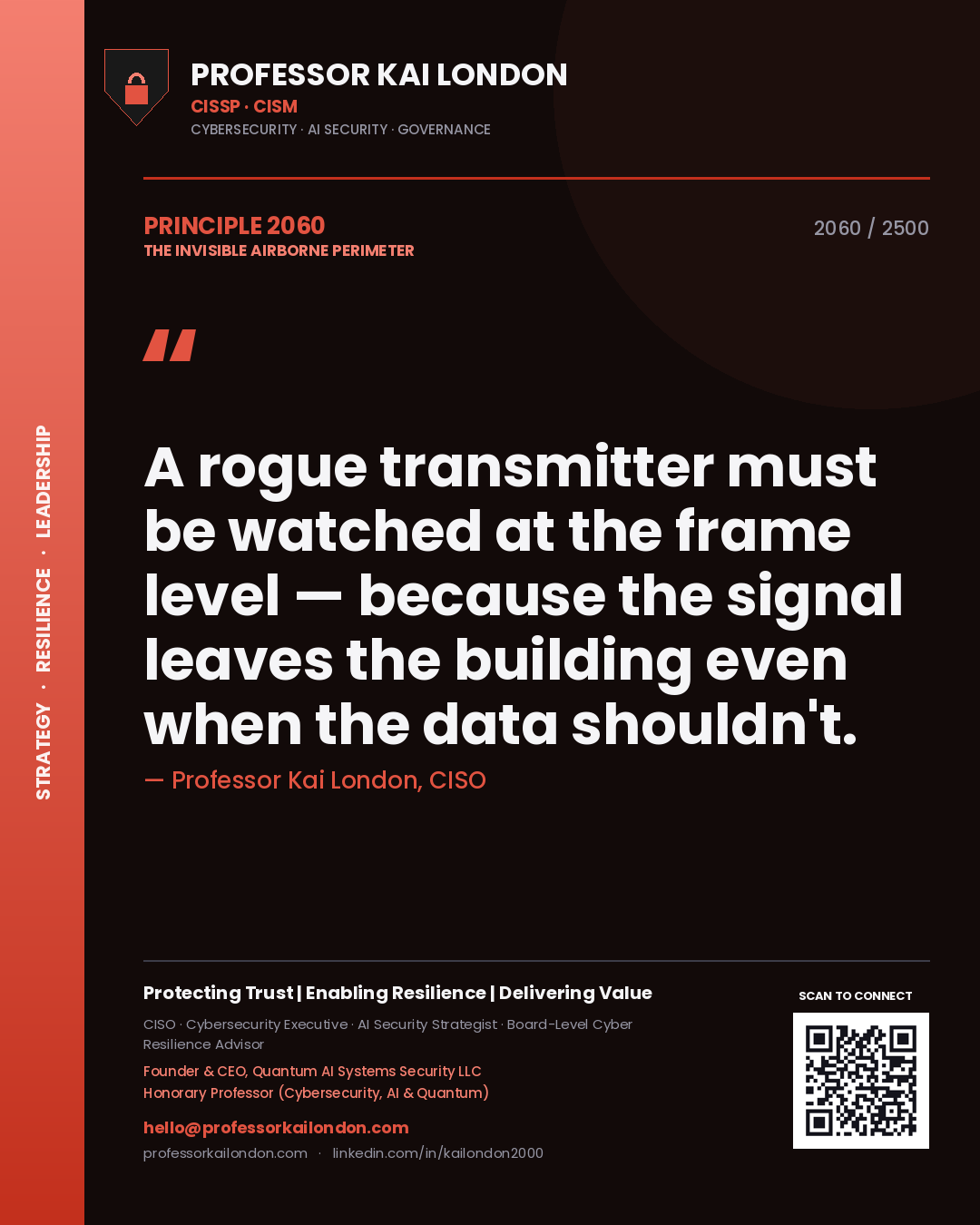
Professor Kai London principle 2060: A rogue transmitter must be watched at the frame level — because the signal leaves the building even when the data shouldn't.
Principle 2060
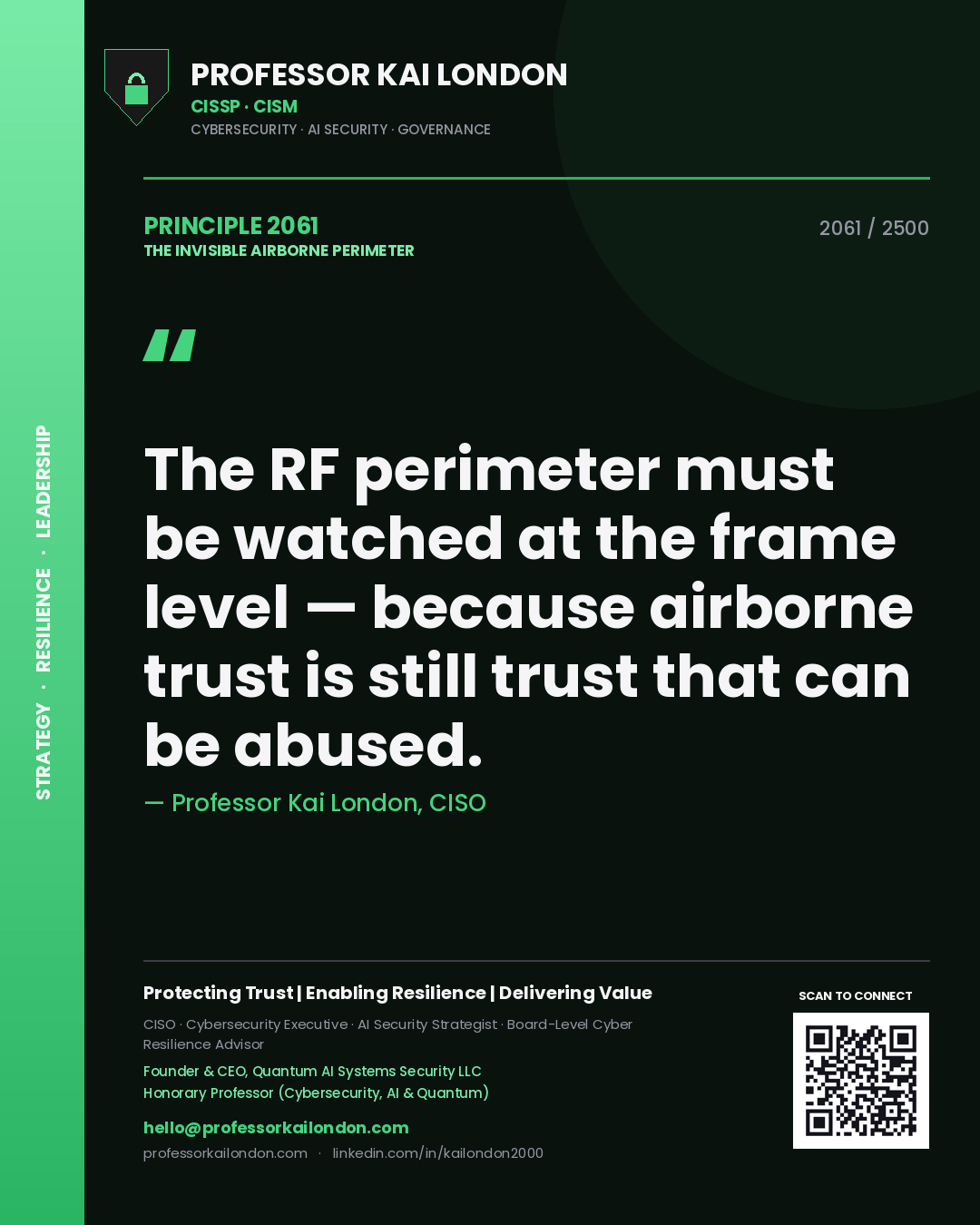
Professor Kai London principle 2061: The RF perimeter must be watched at the frame level — because airborne trust is still trust that can be abused.
Principle 2061
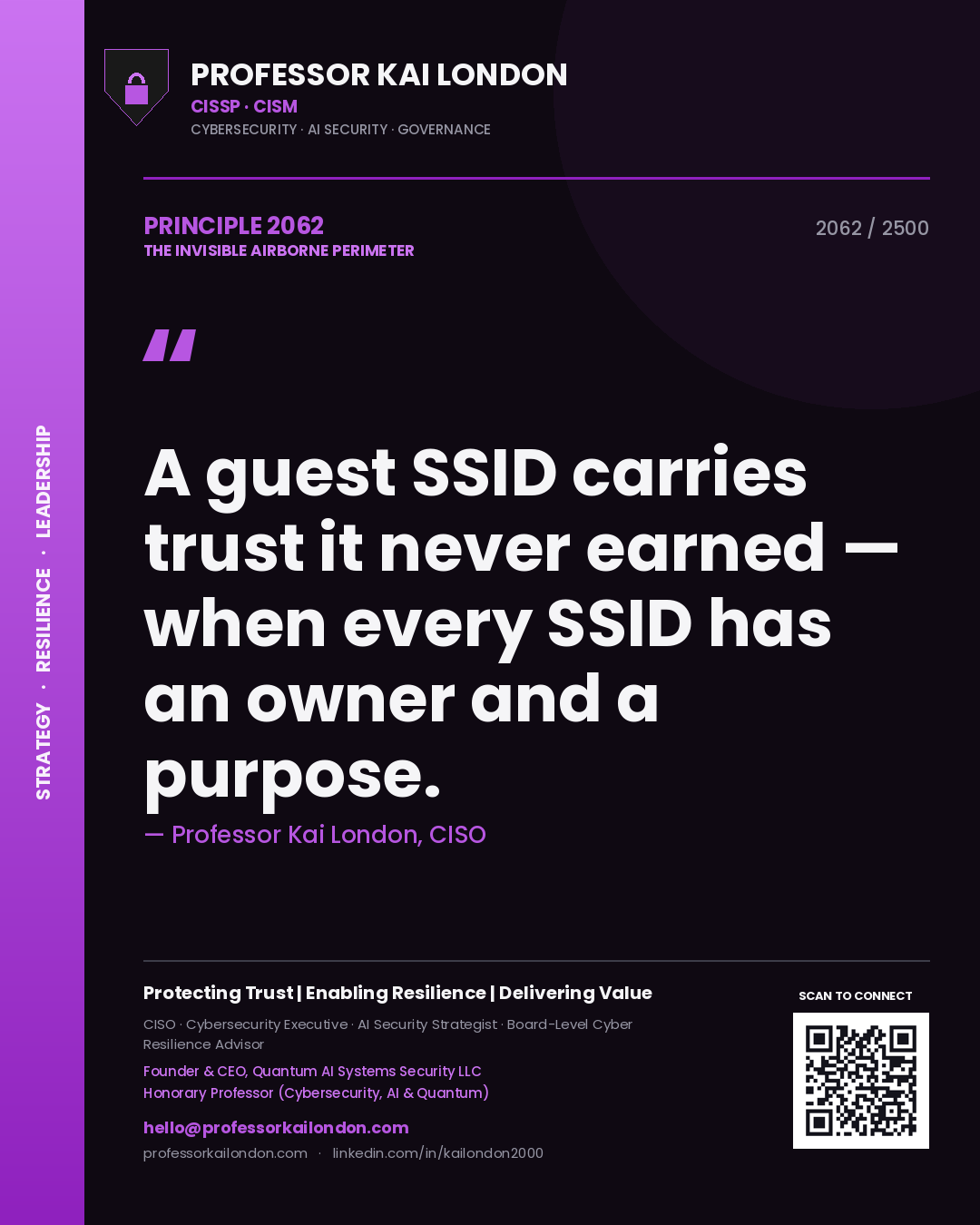
Professor Kai London principle 2062: A guest SSID carries trust it never earned — when every SSID has an owner and a purpose.
Principle 2062
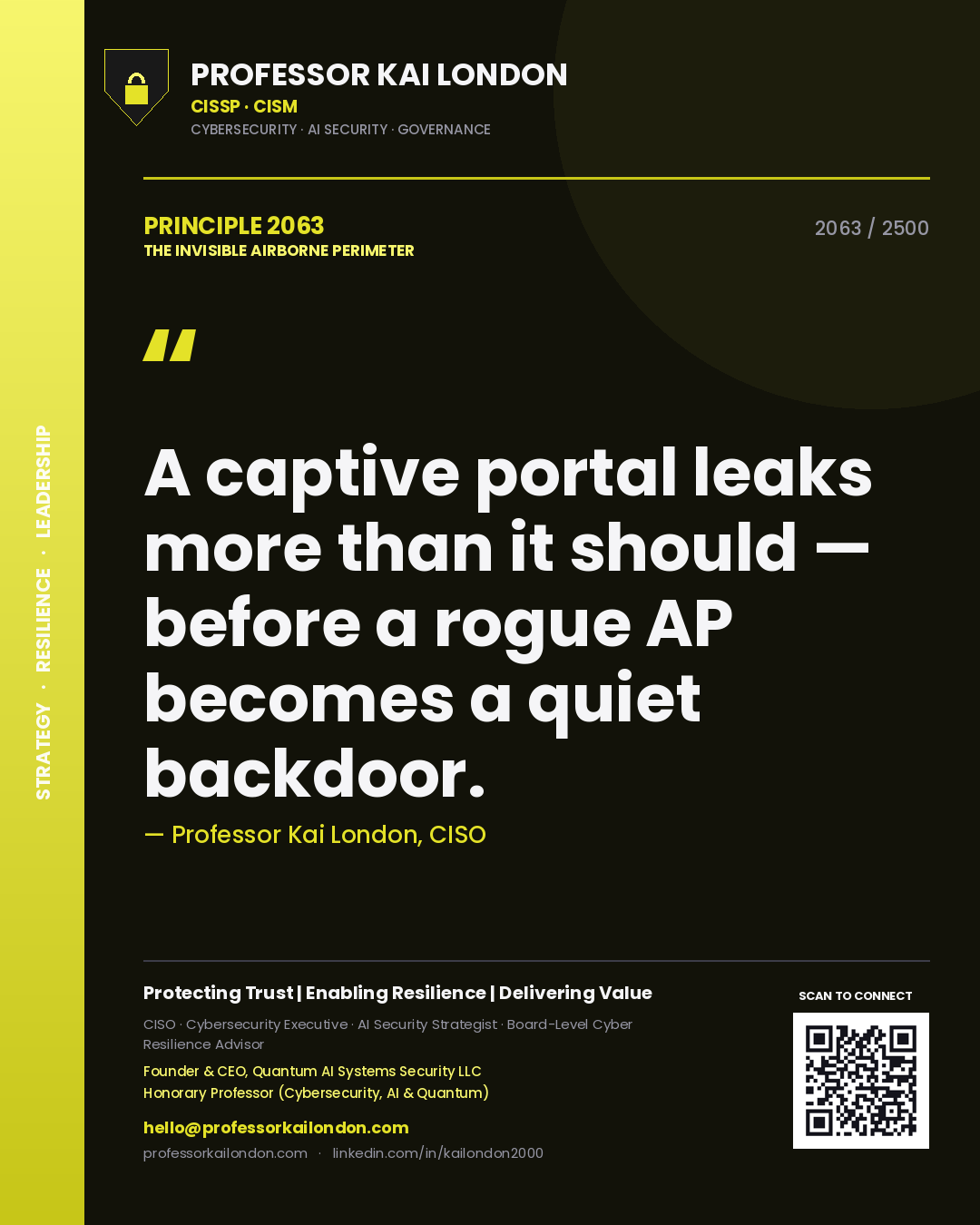
Professor Kai London principle 2063: A captive portal leaks more than it should — before a rogue AP becomes a quiet backdoor.
Principle 2063
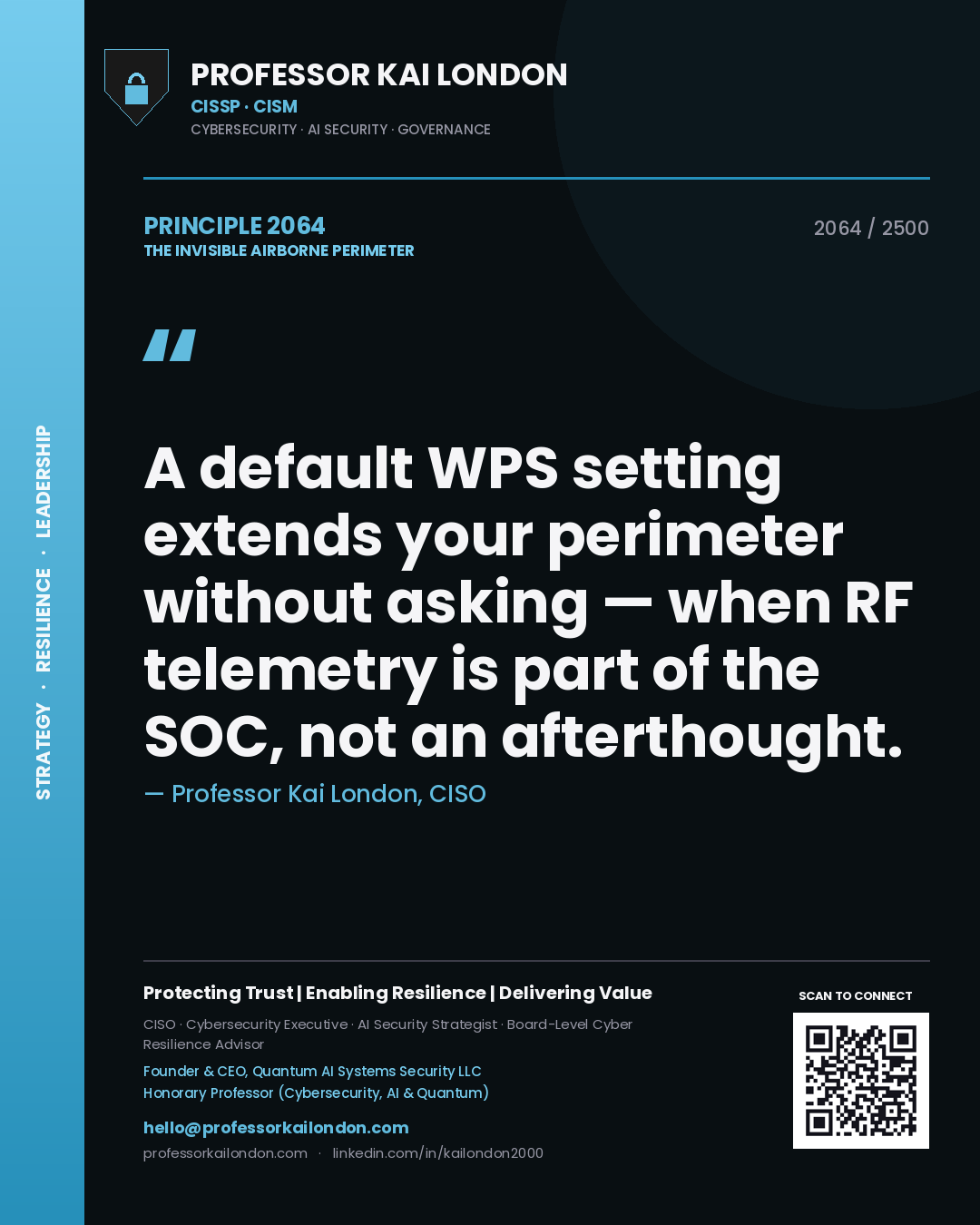
Professor Kai London principle 2064: A default WPS setting extends your perimeter without asking — when RF telemetry is part of the SOC, not an afterthought.
Principle 2064
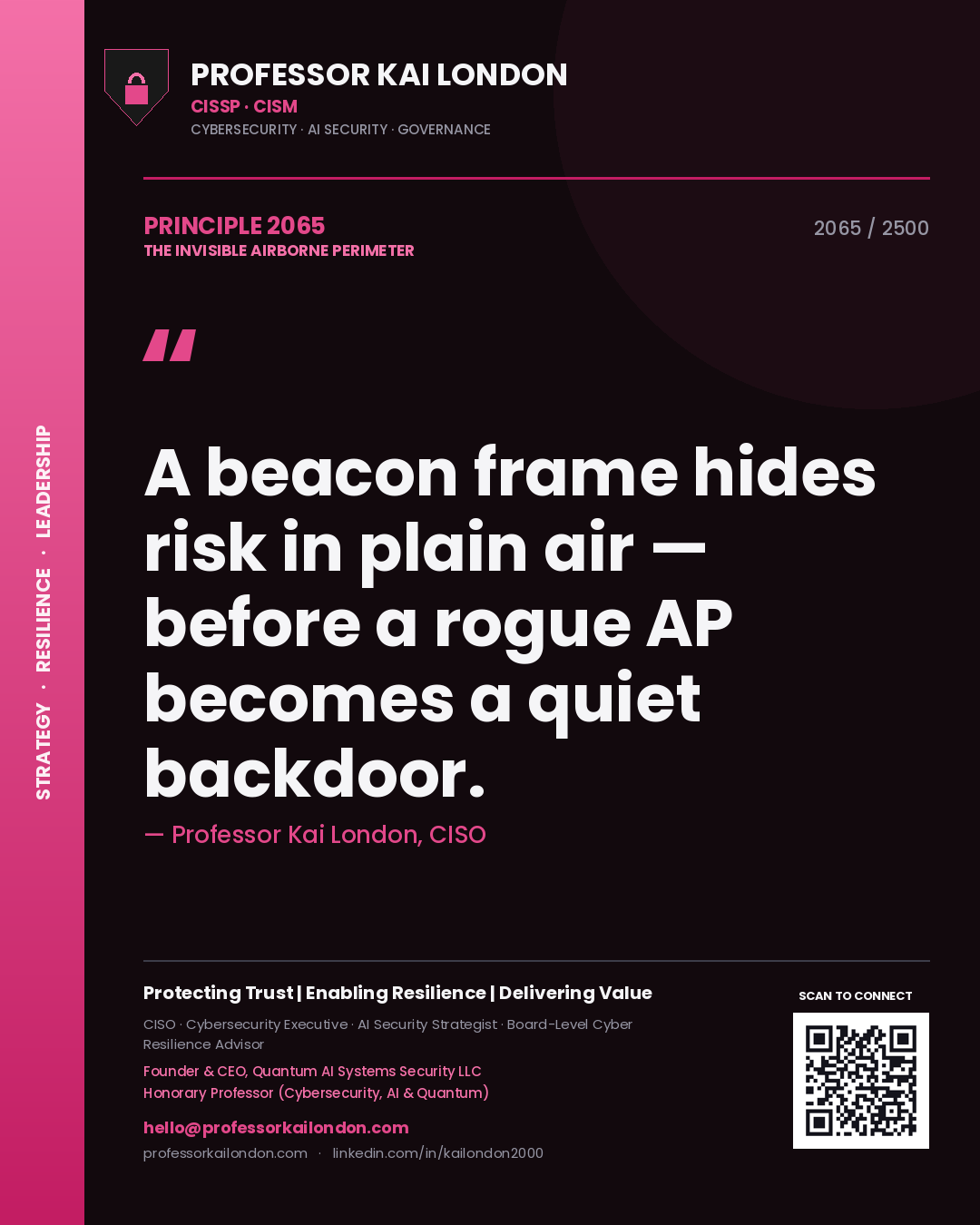
Professor Kai London principle 2065: A beacon frame hides risk in plain air — before a rogue AP becomes a quiet backdoor.
Principle 2065
Professor Kai London principle 2066: A captive portal carries trust it never earned — when every SSID has an owner and a purpose.
Principle 2066
Professor Kai London principle 2067: An access point must be governed like any perimeter — when every radio is authenticated, monitored, and retired.
Principle 2067
Professor Kai London principle 2068: A wireless trust zone extends your perimeter without asking.
Principle 2068
Professor Kai London principle 2069: A captive portal must be validated, not assumed — when RF telemetry is part of the SOC, not an afterthought.
Principle 2069
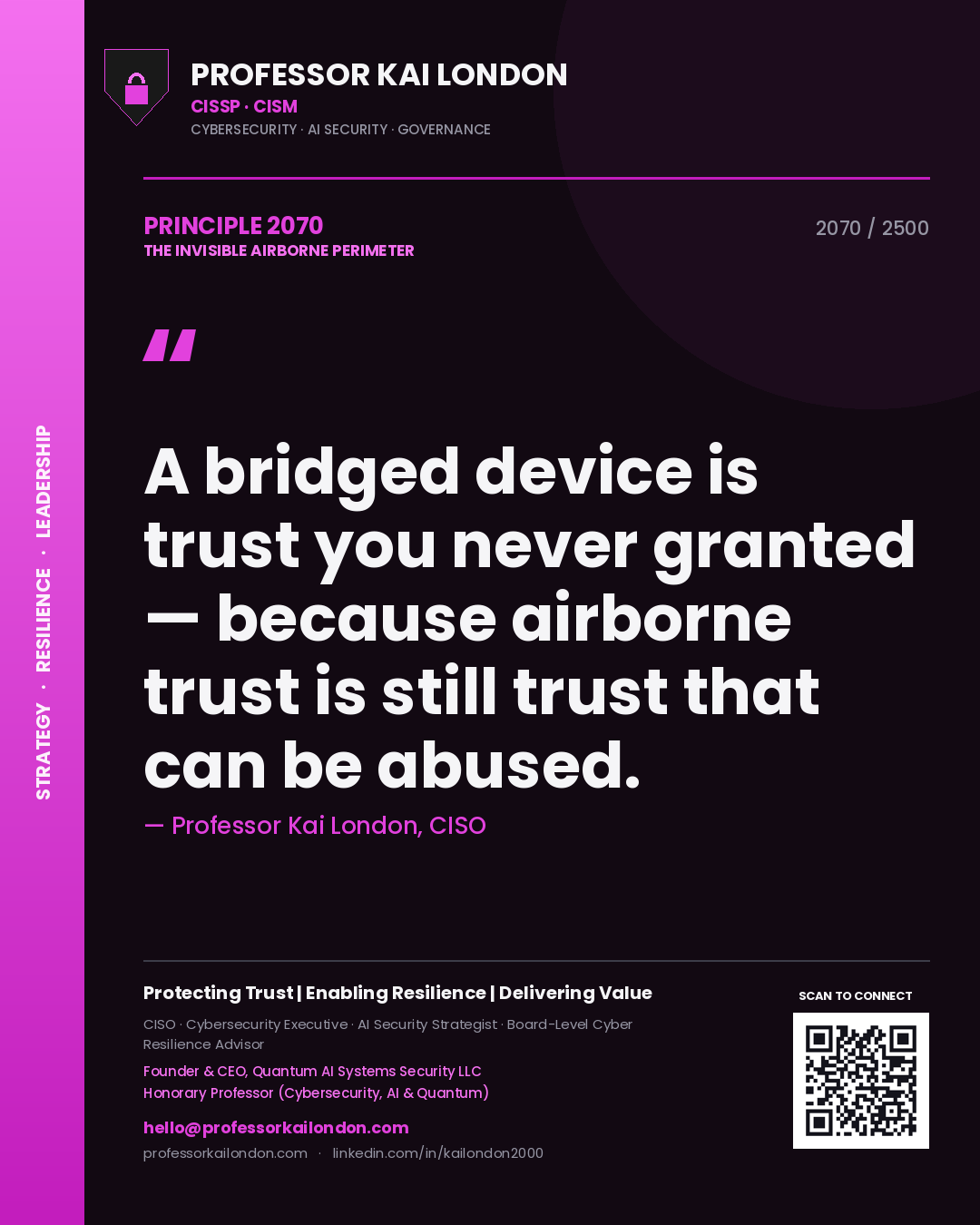
Professor Kai London principle 2070: A bridged device is trust you never granted — because airborne trust is still trust that can be abused.
Principle 2070
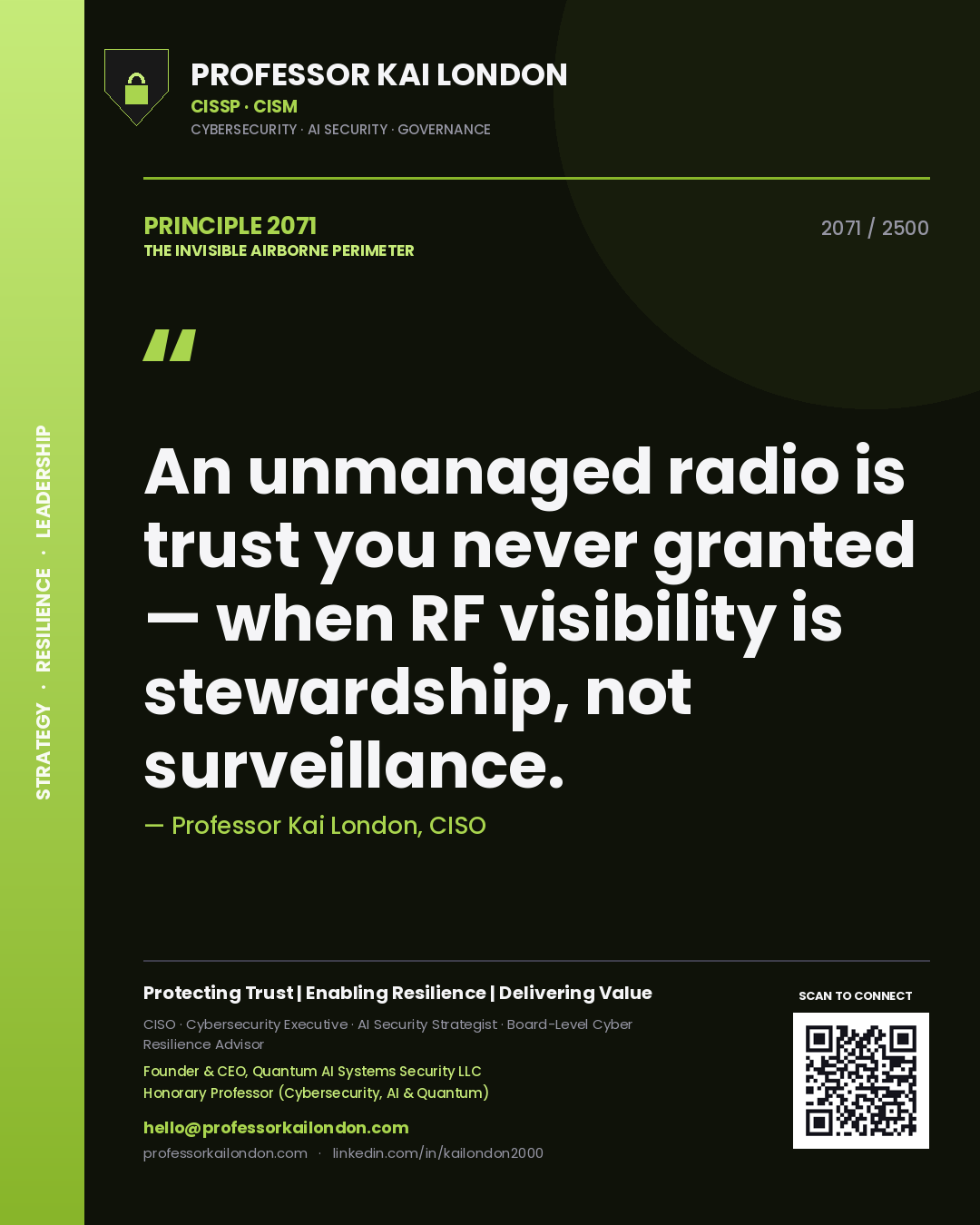
Professor Kai London principle 2071: An unmanaged radio is trust you never granted — when RF visibility is stewardship, not surveillance.
Principle 2071
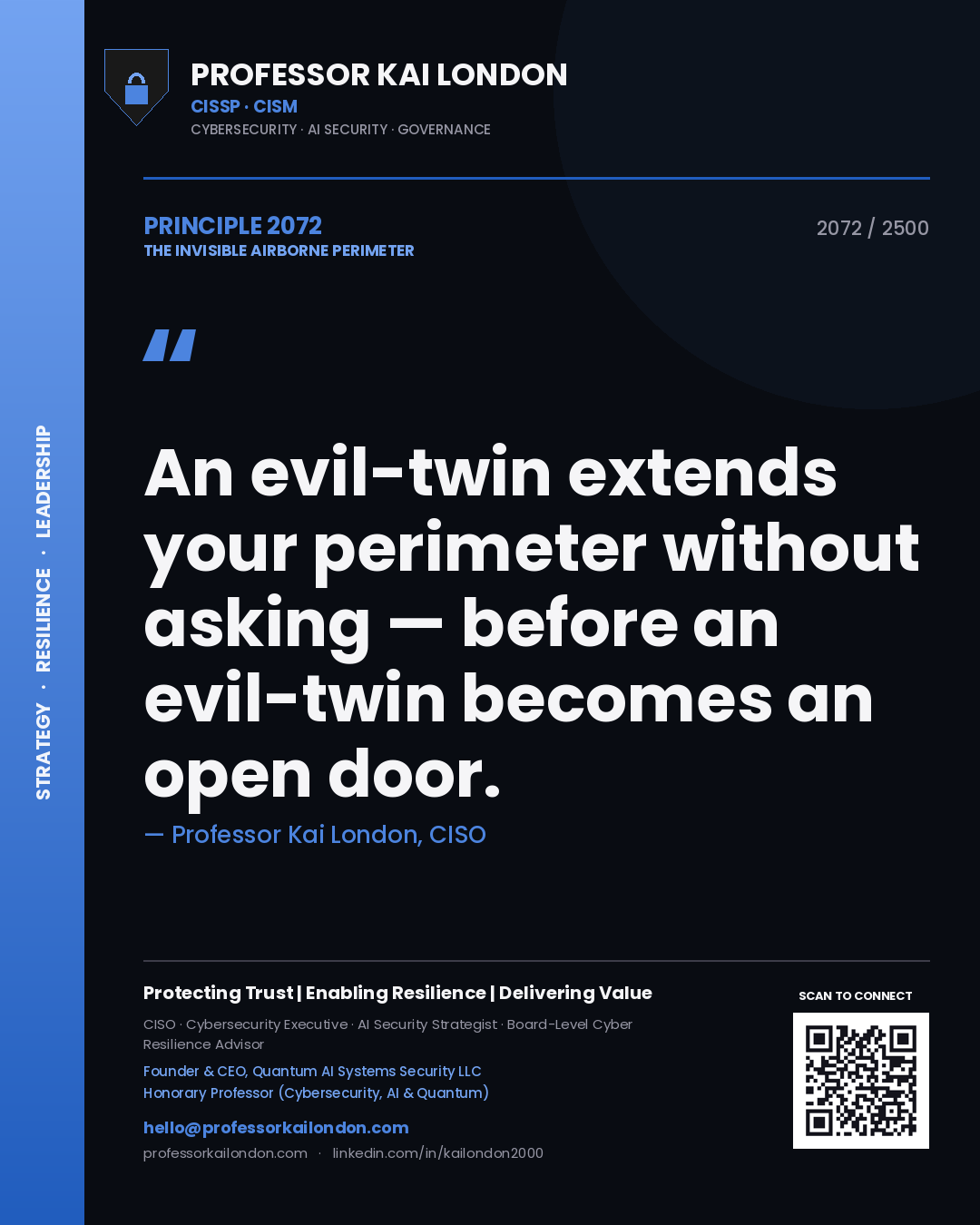
Professor Kai London principle 2072: An evil-twin extends your perimeter without asking — before an evil-twin becomes an open door.
Principle 2072
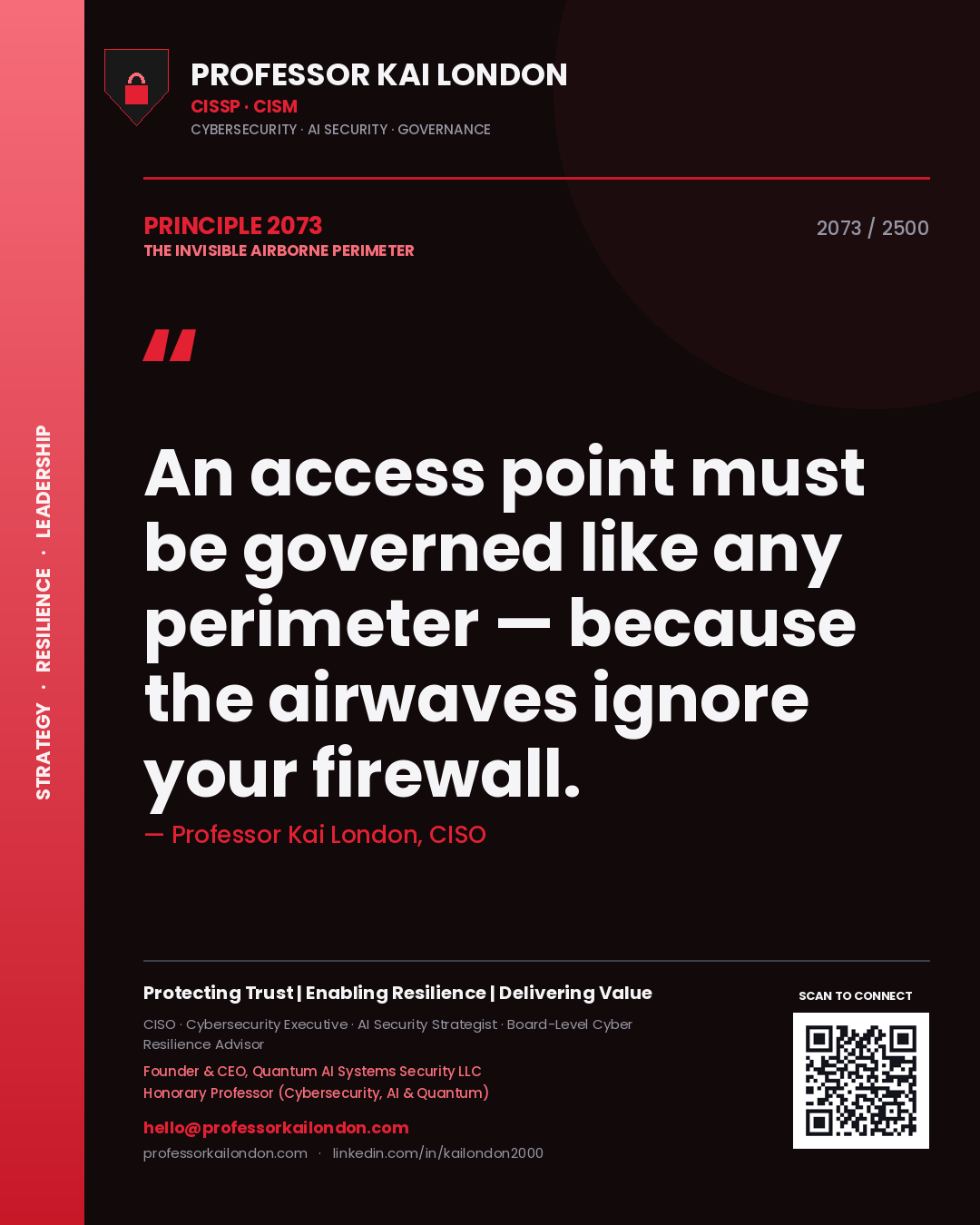
Professor Kai London principle 2073: An access point must be governed like any perimeter — because the airwaves ignore your firewall.
Principle 2073
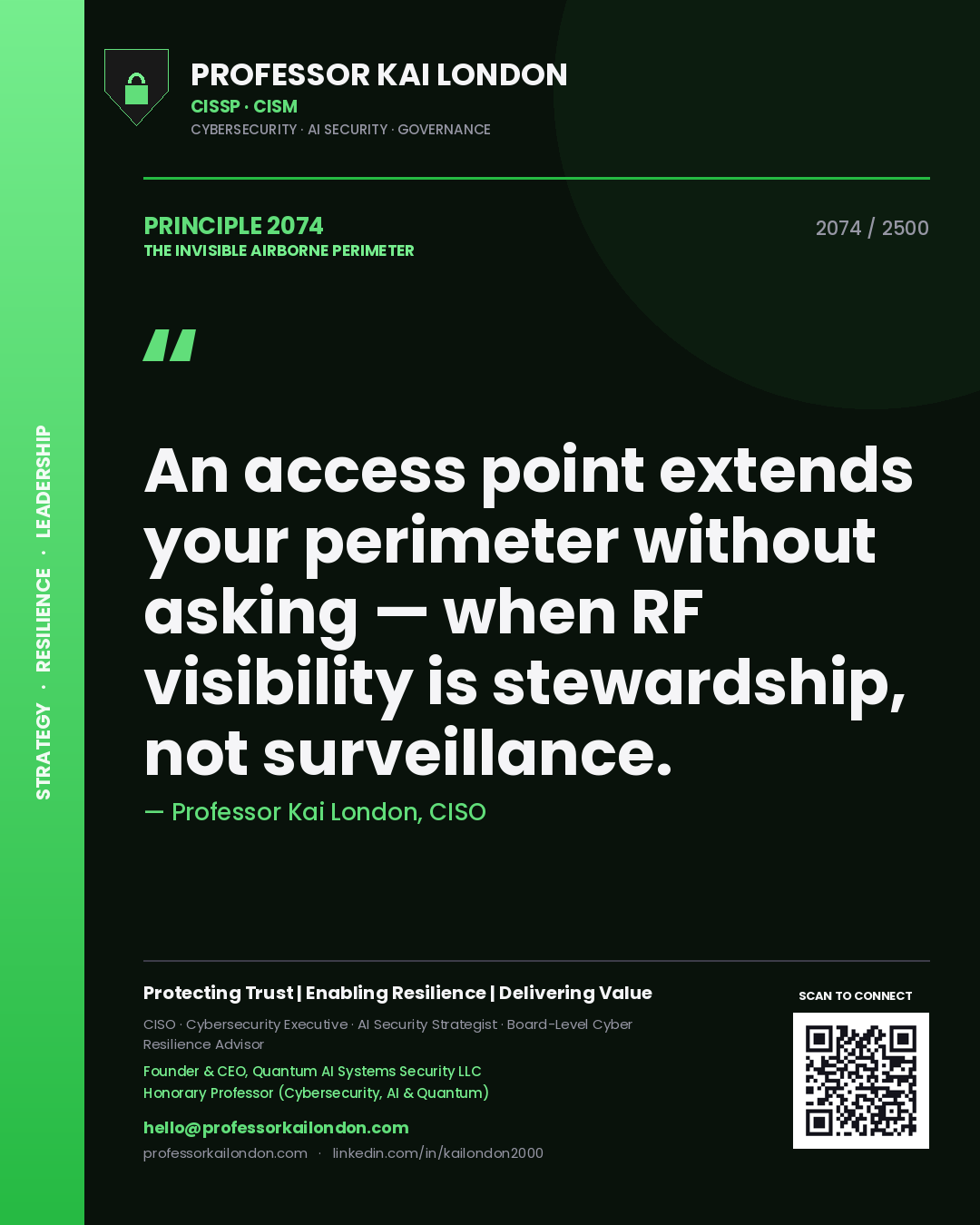
Professor Kai London principle 2074: An access point extends your perimeter without asking — when RF visibility is stewardship, not surveillance.
Principle 2074
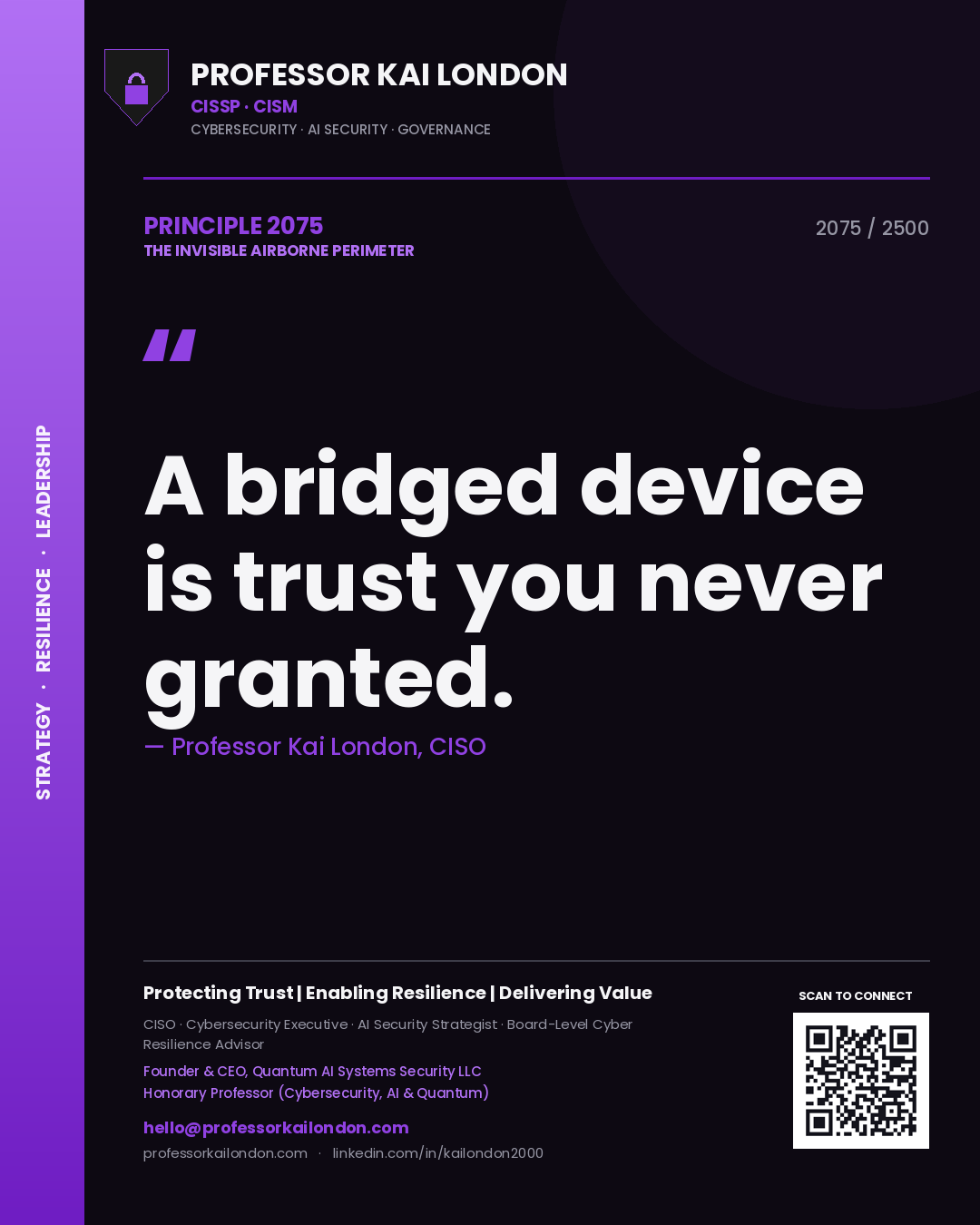
Professor Kai London principle 2075: A bridged device is trust you never granted.
Principle 2075
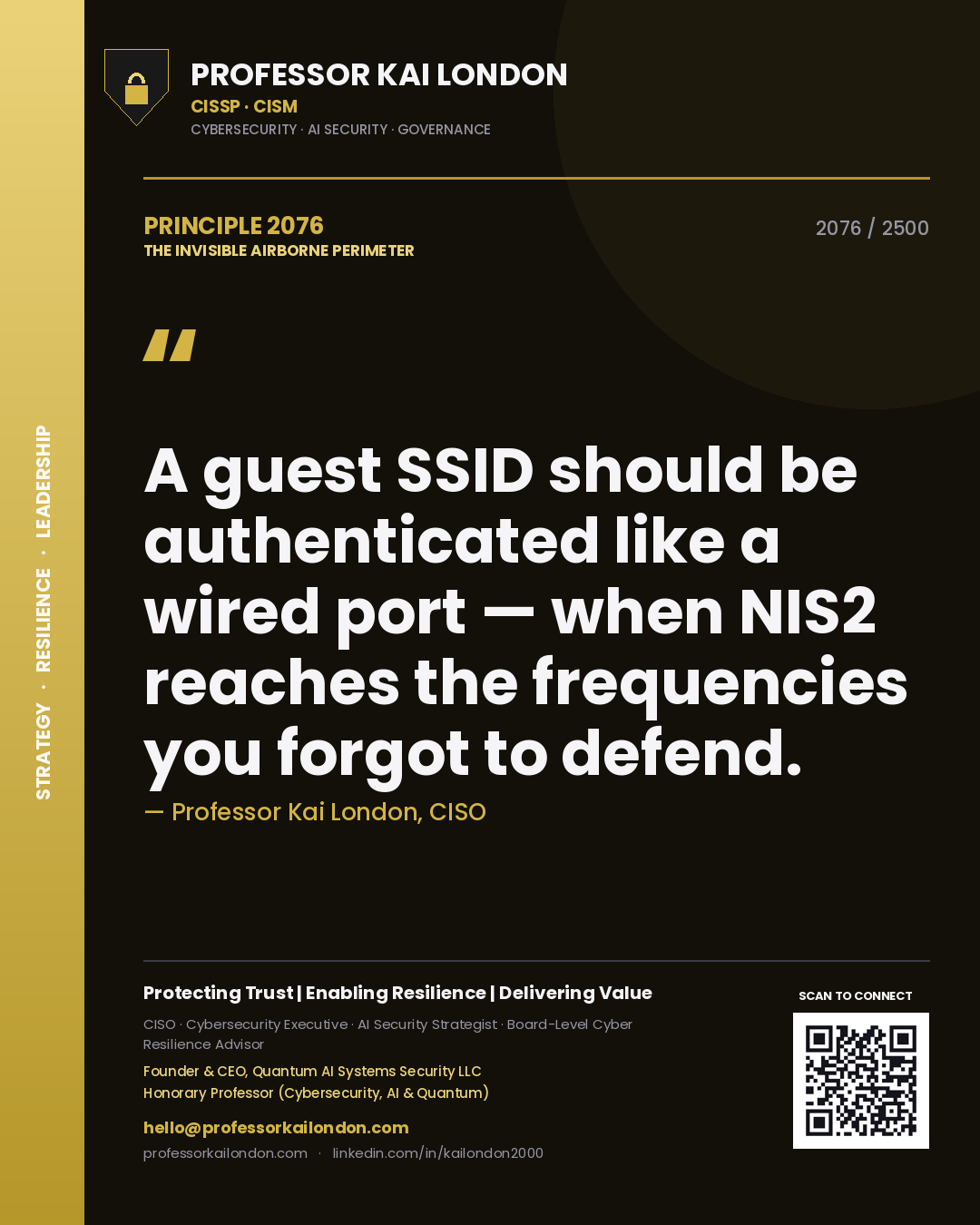
Professor Kai London principle 2076: A guest SSID should be authenticated like a wired port — when NIS2 reaches the frequencies you forgot to defend.
Principle 2076
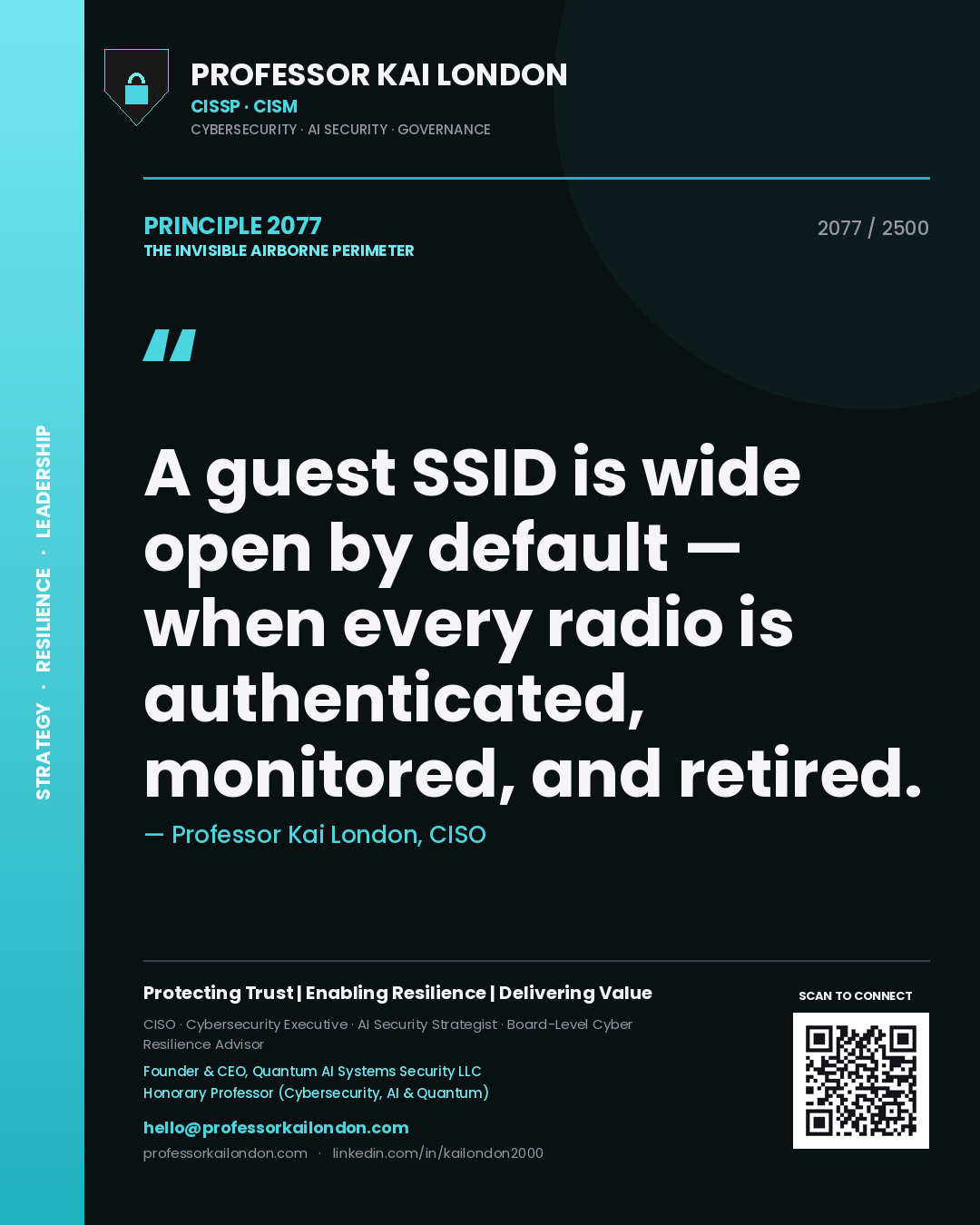
Professor Kai London principle 2077: A guest SSID is wide open by default — when every radio is authenticated, monitored, and retired.
Principle 2077
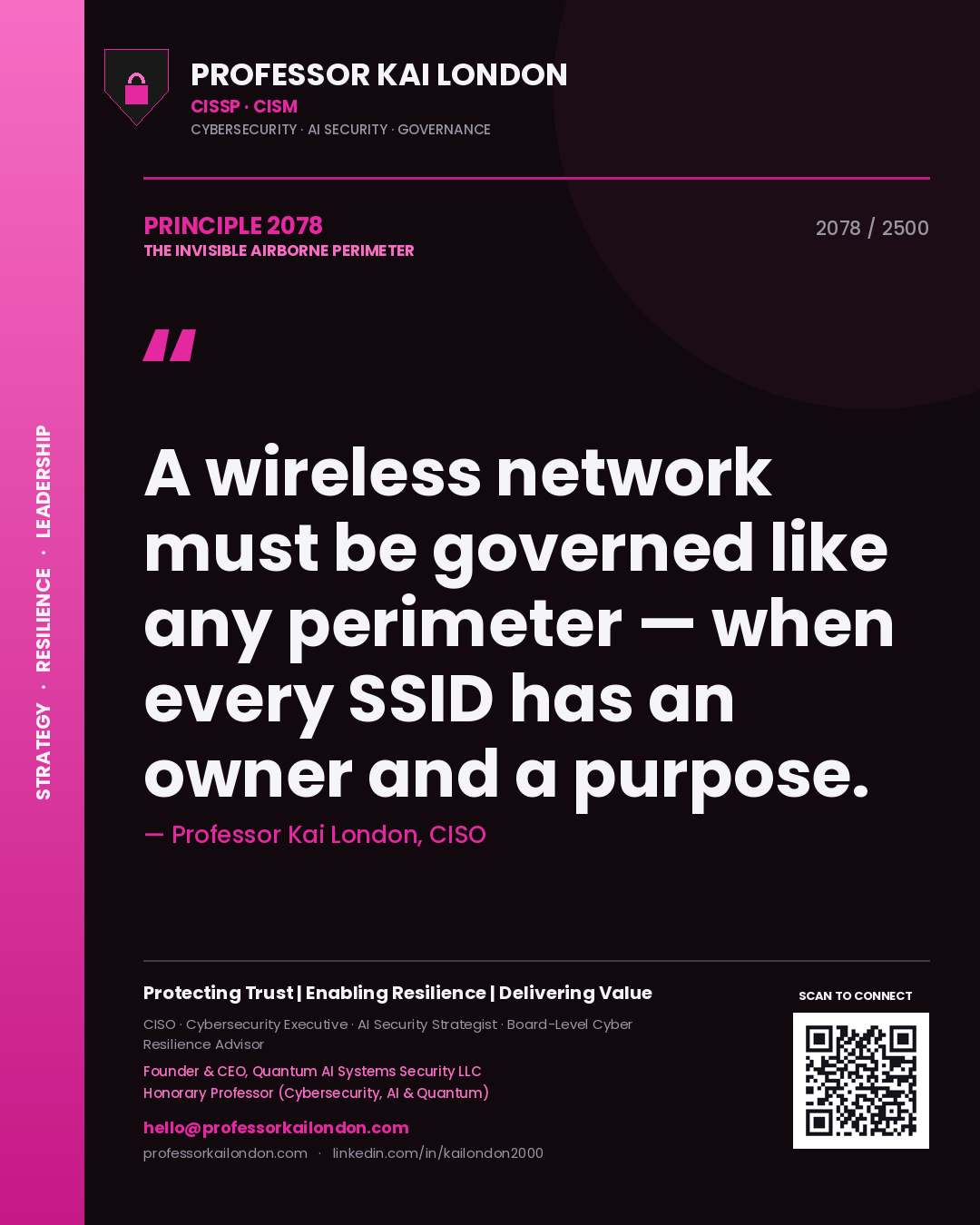
Professor Kai London principle 2078: A wireless network must be governed like any perimeter — when every SSID has an owner and a purpose.
Principle 2078
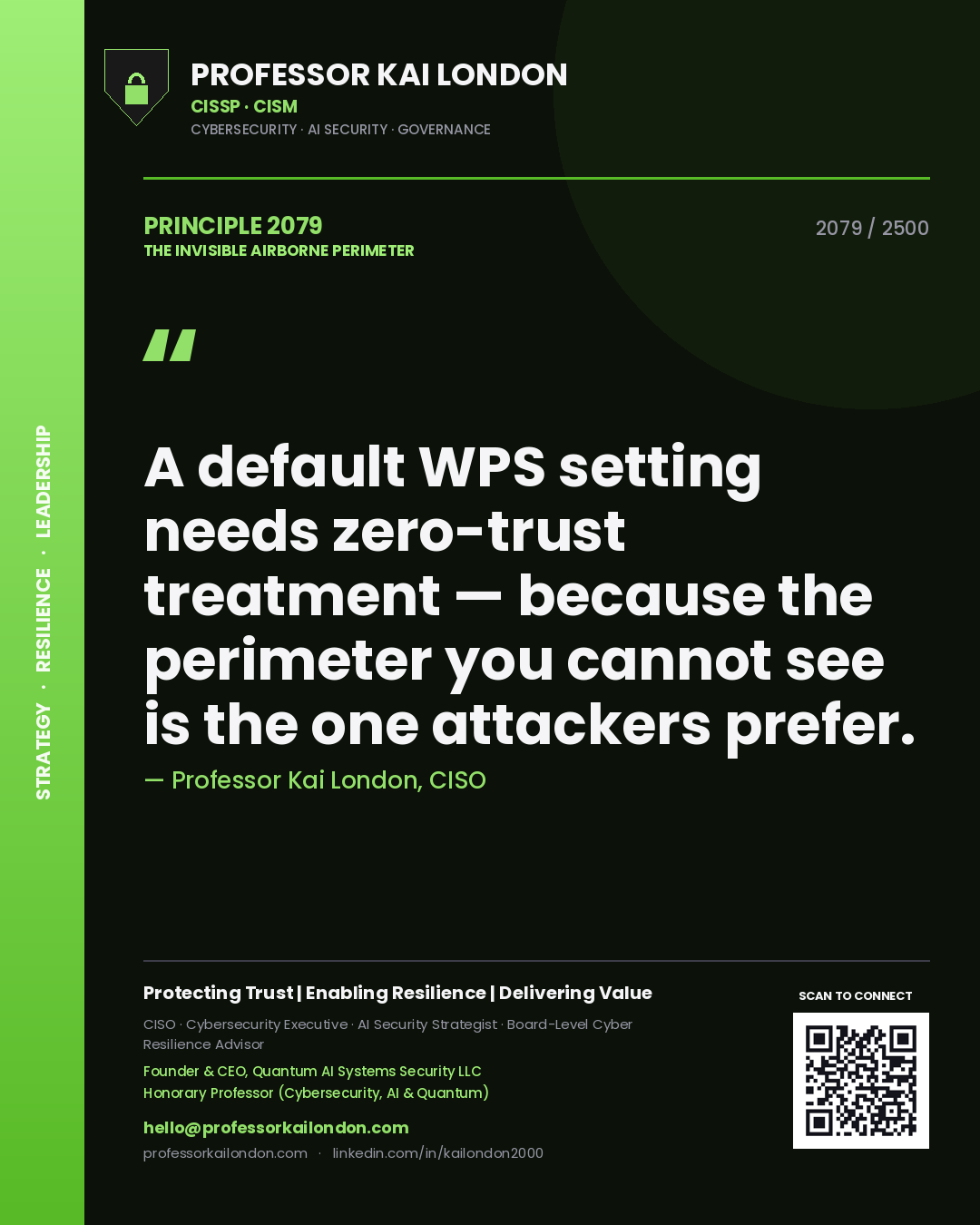
Professor Kai London principle 2079: A default WPS setting needs zero-trust treatment — because the perimeter you cannot see is the one attackers prefer.
Principle 2079
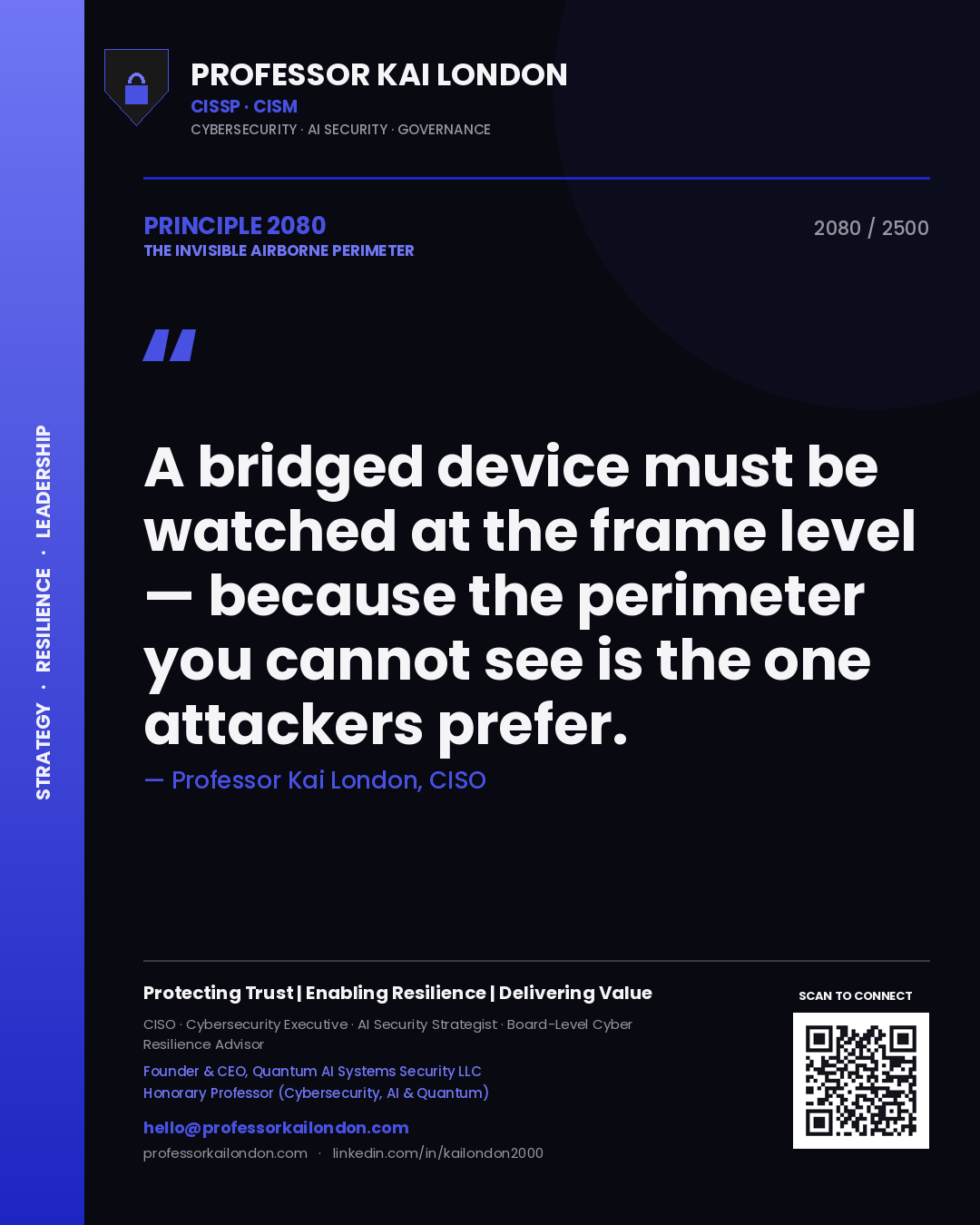
Professor Kai London principle 2080: A bridged device must be watched at the frame level — because the perimeter you cannot see is the one attackers prefer.
Principle 2080
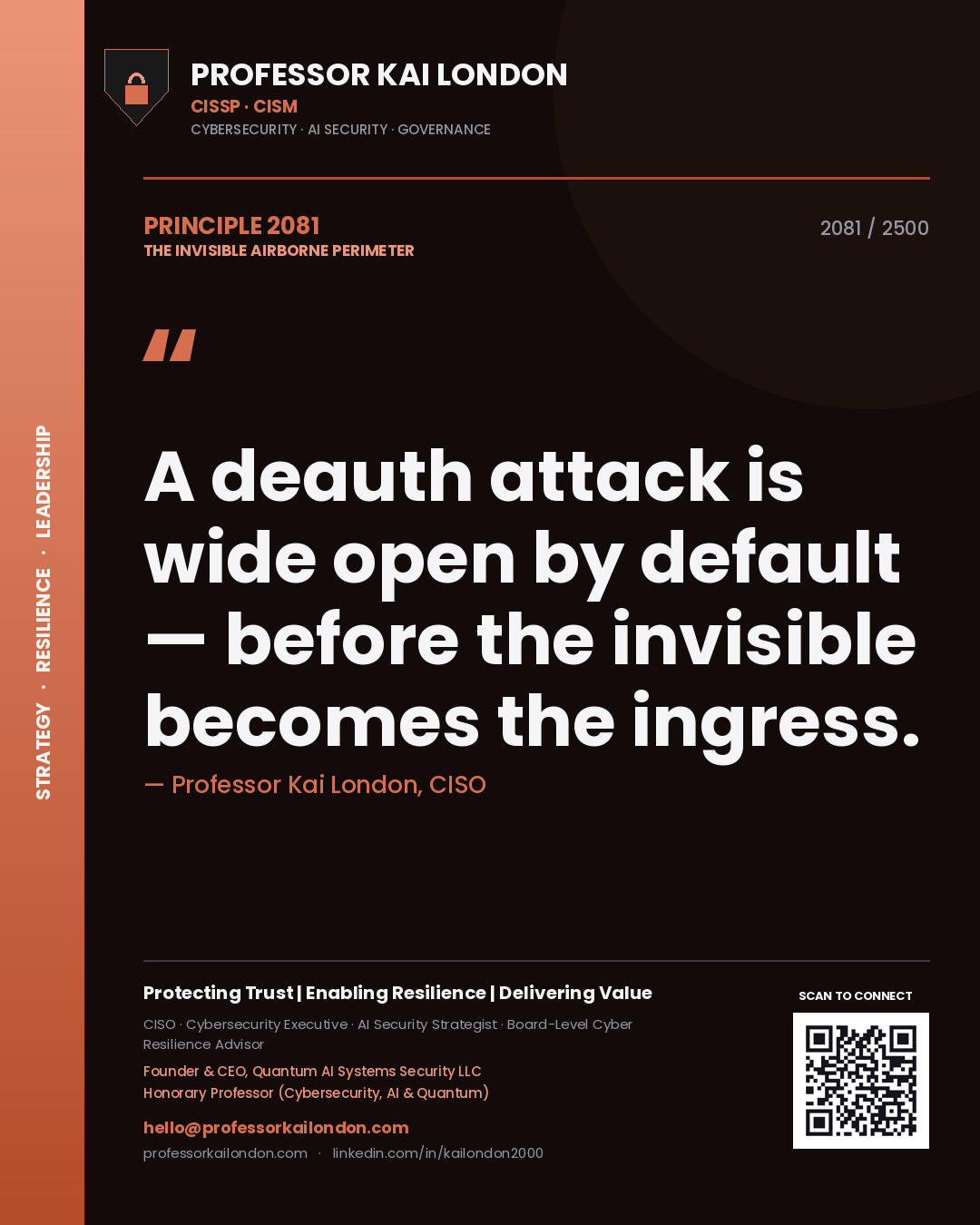
Professor Kai London principle 2081: A deauth attack is wide open by default — before the invisible becomes the ingress.
Principle 2081
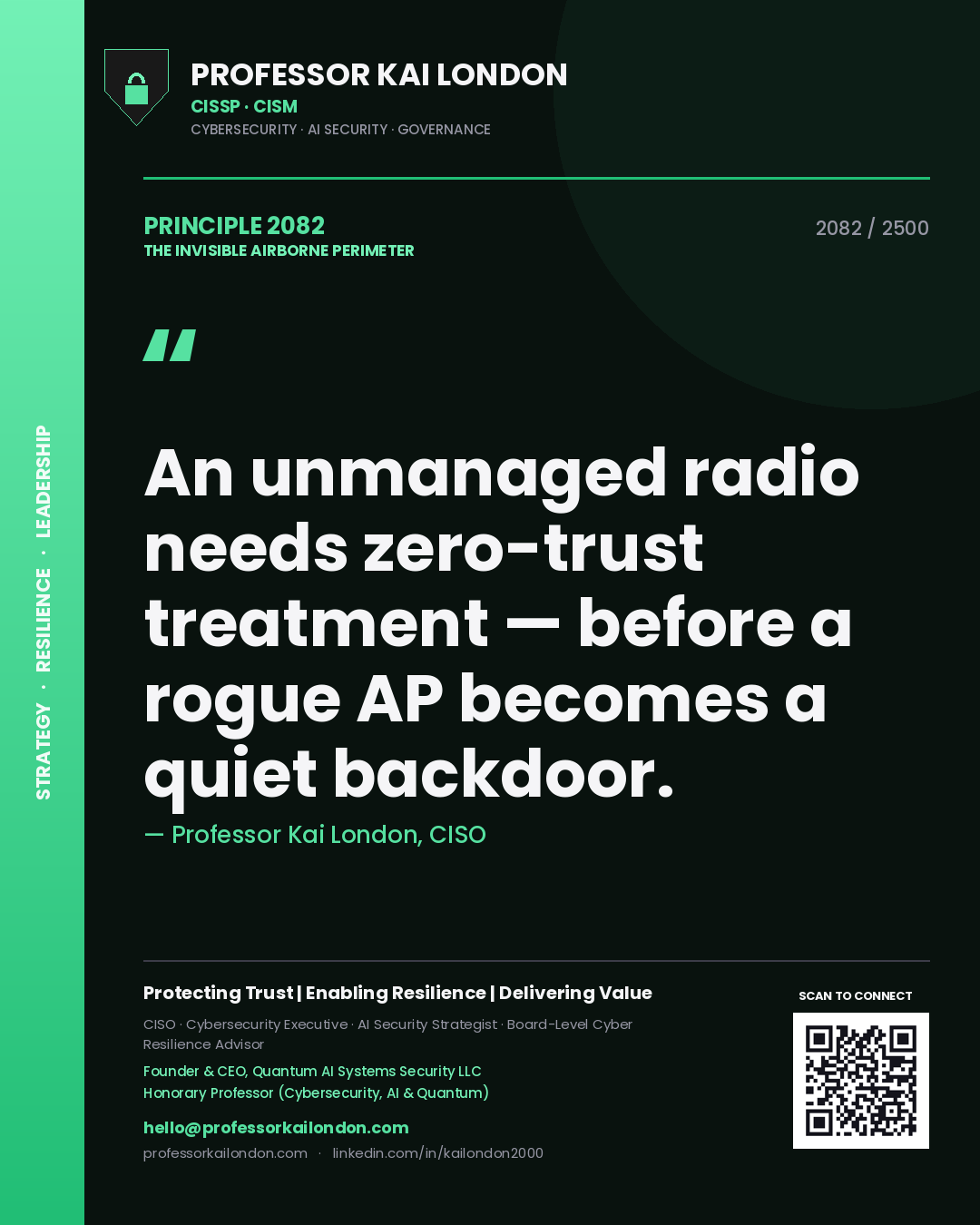
Professor Kai London principle 2082: An unmanaged radio needs zero-trust treatment — before a rogue AP becomes a quiet backdoor.
Principle 2082
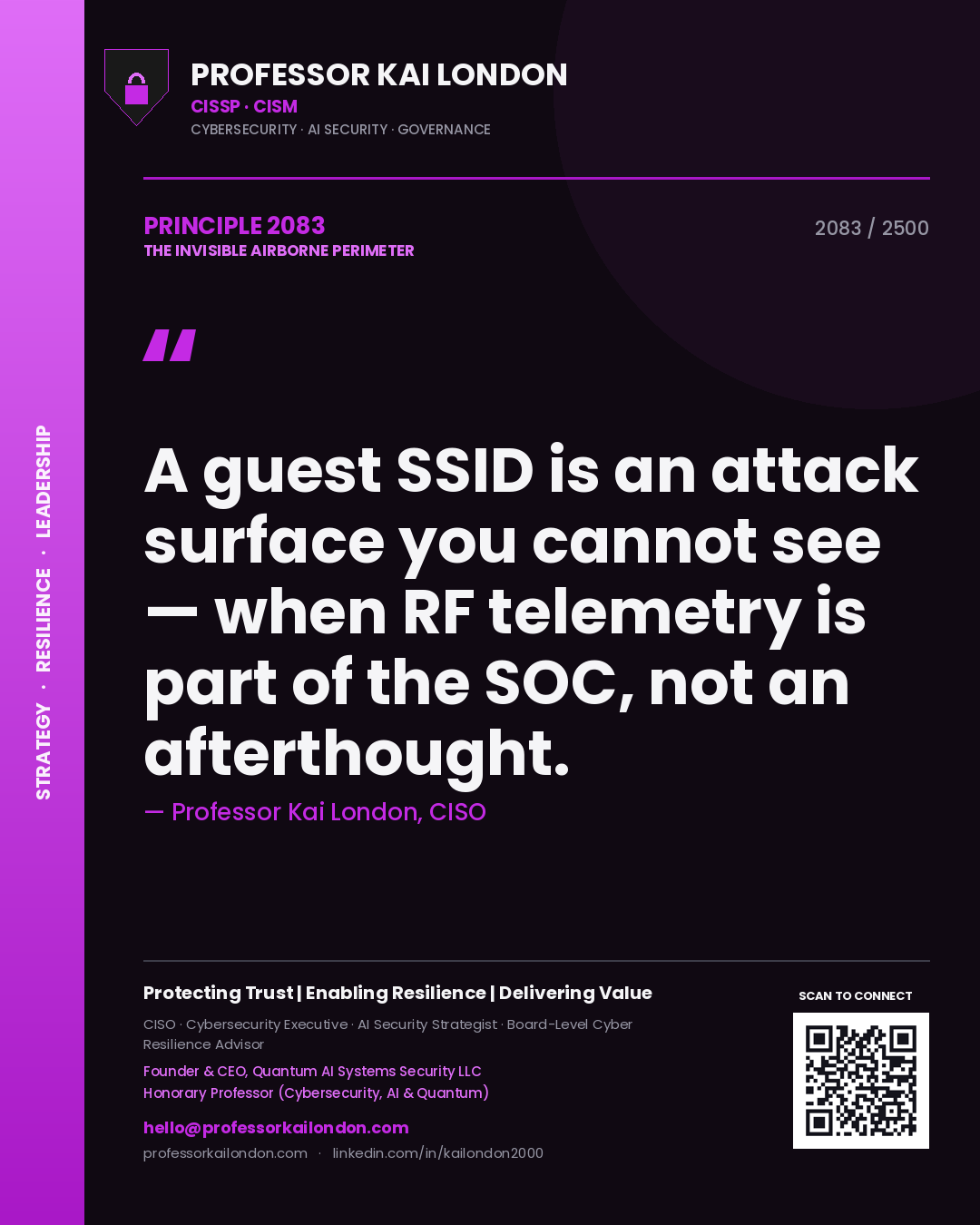
Professor Kai London principle 2083: A guest SSID is an attack surface you cannot see — when RF telemetry is part of the SOC, not an afterthought.
Principle 2083
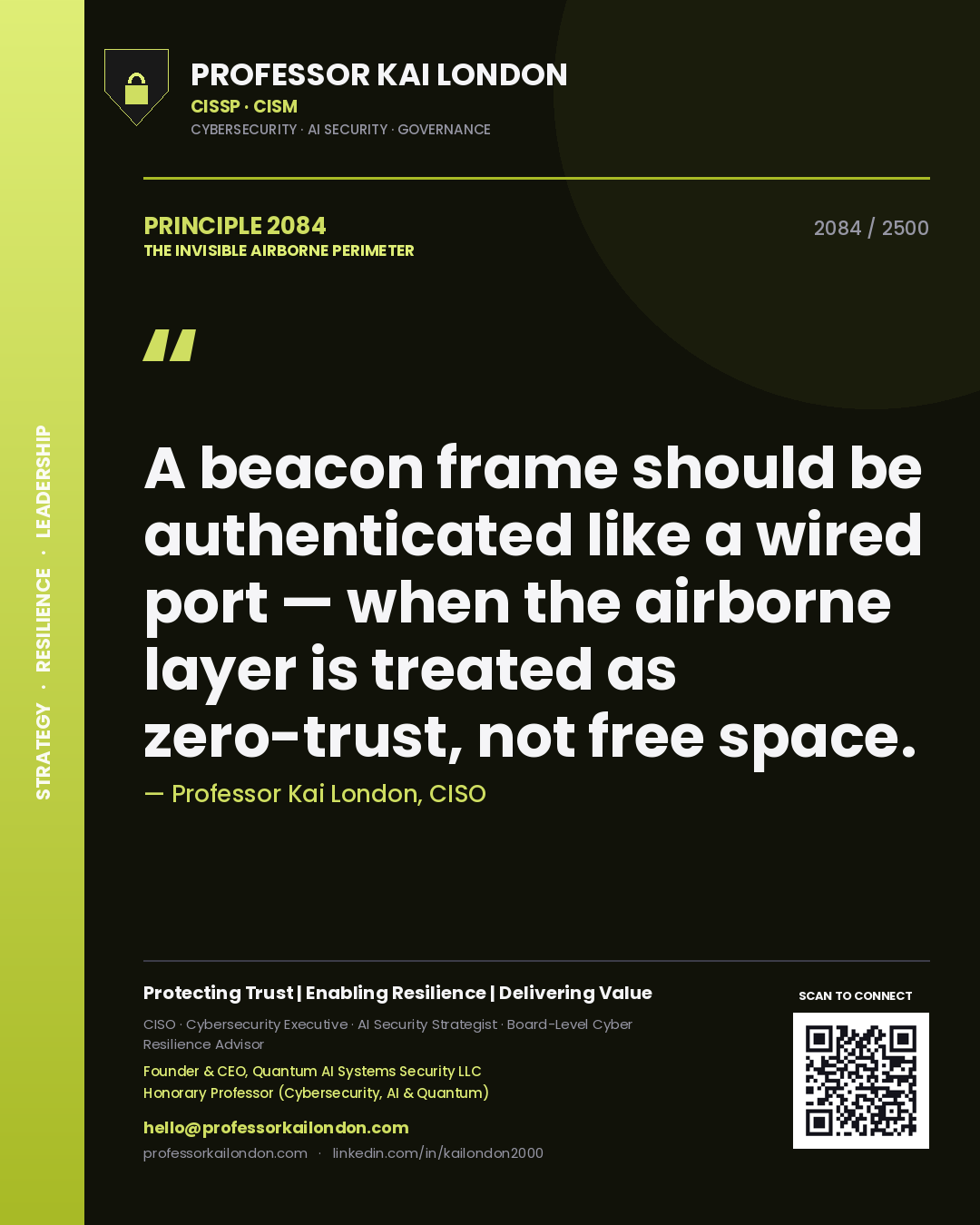
Professor Kai London principle 2084: A beacon frame should be authenticated like a wired port — when the airborne layer is treated as zero-trust, not free space.
Principle 2084
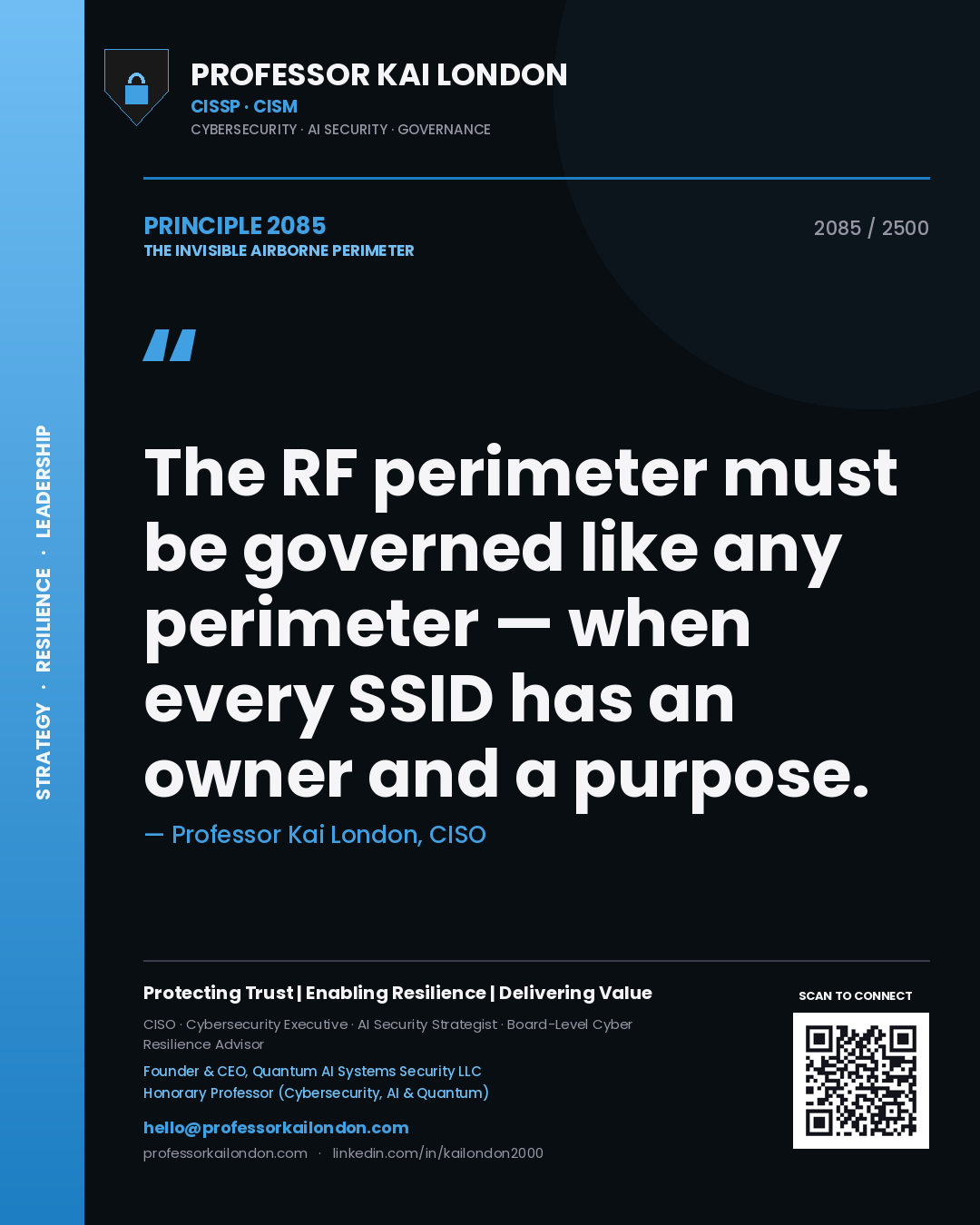
Professor Kai London principle 2085: The RF perimeter must be governed like any perimeter — when every SSID has an owner and a purpose.
Principle 2085
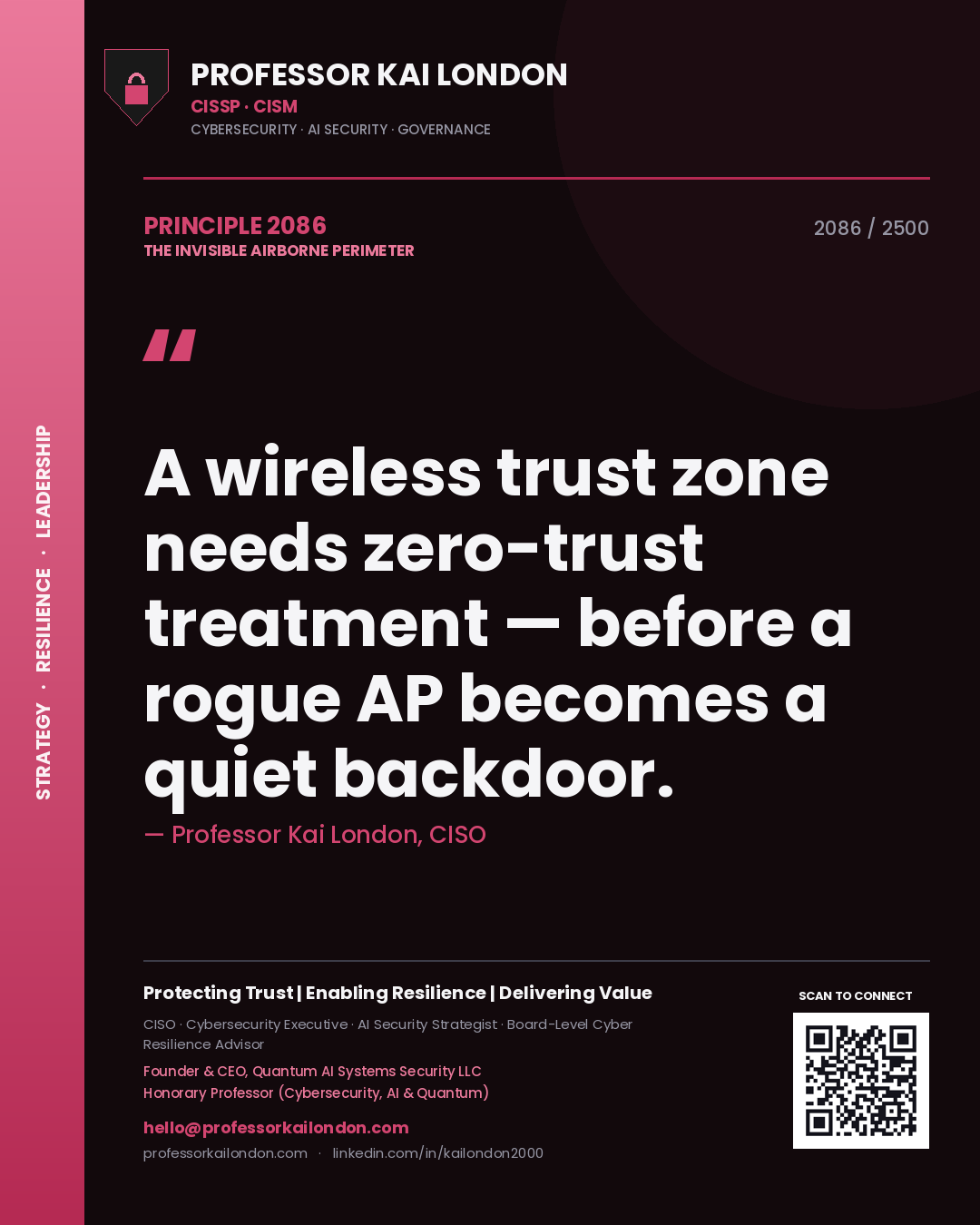
Professor Kai London principle 2086: A wireless trust zone needs zero-trust treatment — before a rogue AP becomes a quiet backdoor.
Principle 2086
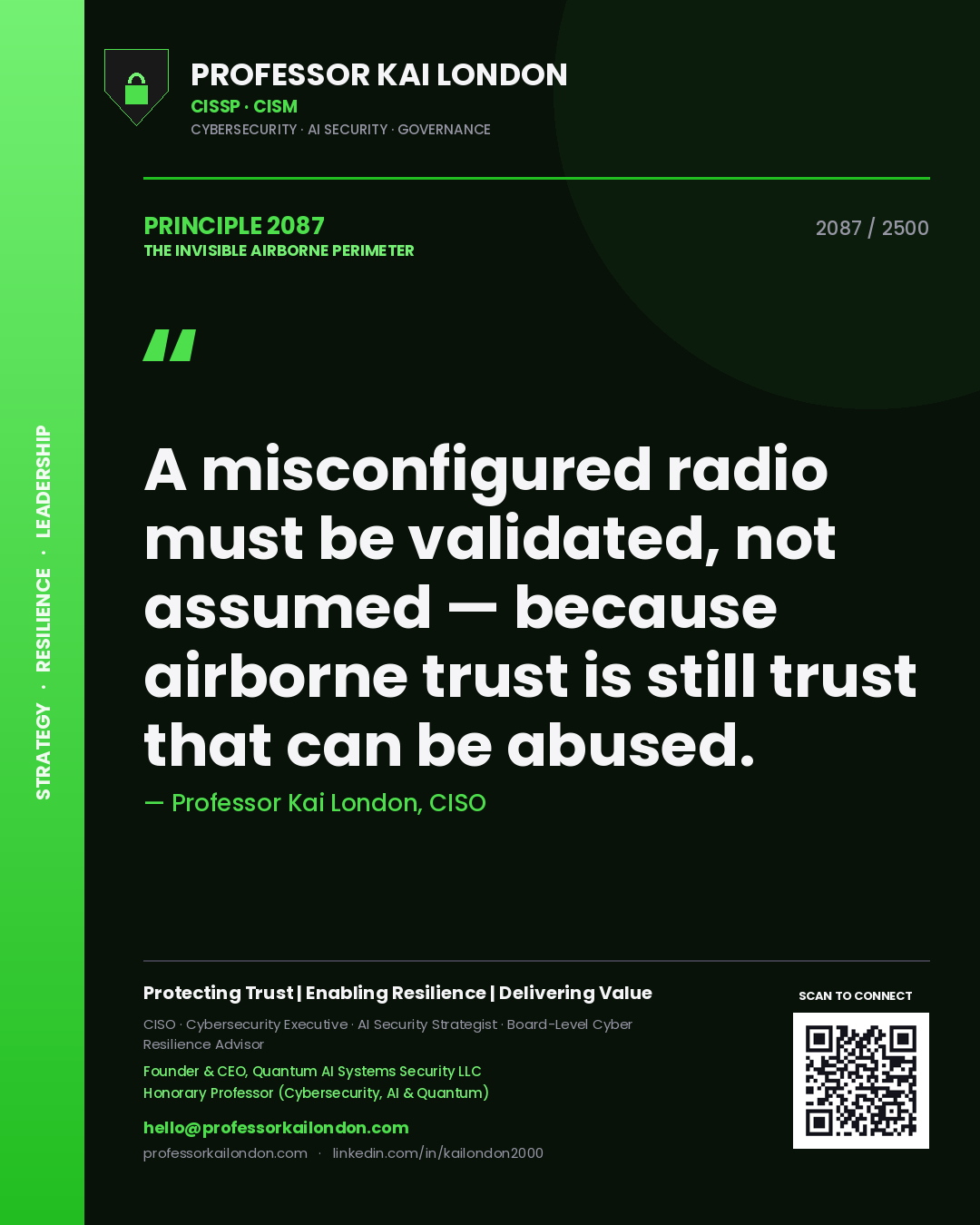
Professor Kai London principle 2087: A misconfigured radio must be validated, not assumed — because airborne trust is still trust that can be abused.
Principle 2087
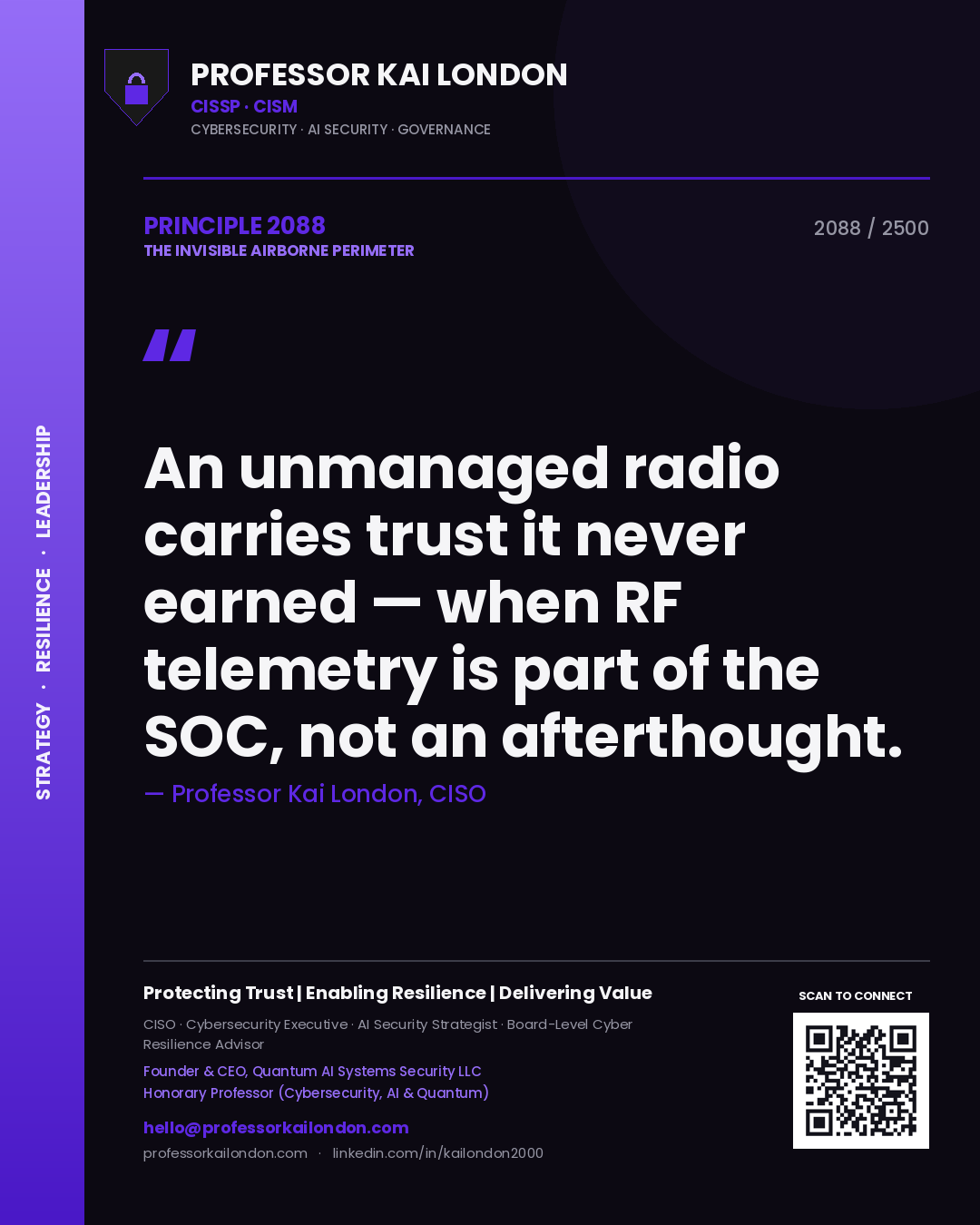
Professor Kai London principle 2088: An unmanaged radio carries trust it never earned — when RF telemetry is part of the SOC, not an afterthought.
Principle 2088
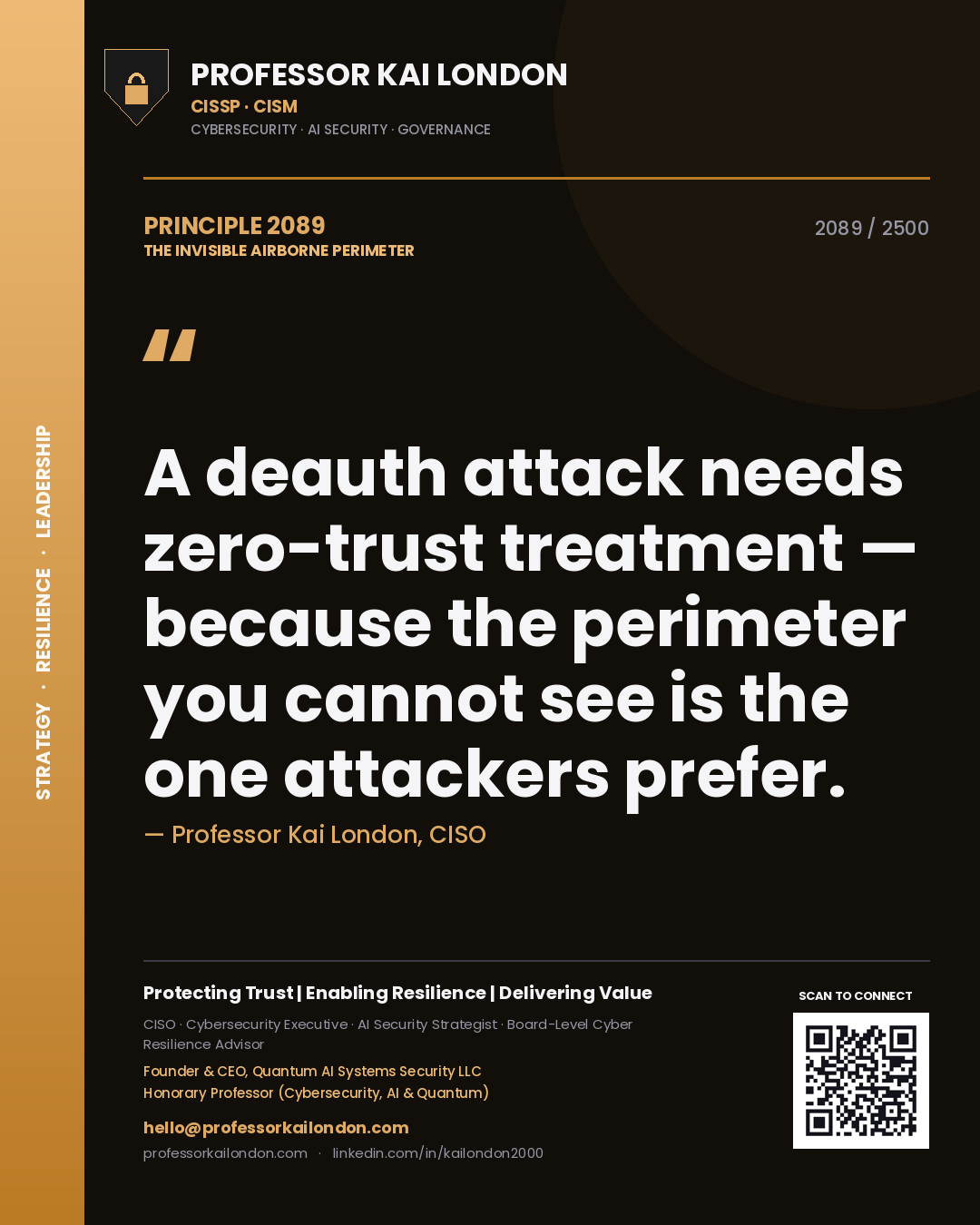
Professor Kai London principle 2089: A deauth attack needs zero-trust treatment — because the perimeter you cannot see is the one attackers prefer.
Principle 2089
Professor Kai London principle 2090: A beacon frame extends your perimeter without asking — when RF telemetry is part of the SOC, not an afterthought.
Principle 2090
Professor Kai London principle 2091: A default WPS setting is wide open by default — because the airwaves ignore your firewall.
Principle 2091
Professor Kai London principle 2092: A wireless trust zone is trust you never granted — because the perimeter you cannot see is the one attackers prefer.
Principle 2092
Professor Kai London principle 2093: The spectrum around you should be authenticated like a wired port — when every radio is authenticated, monitored, and retired.
Principle 2093
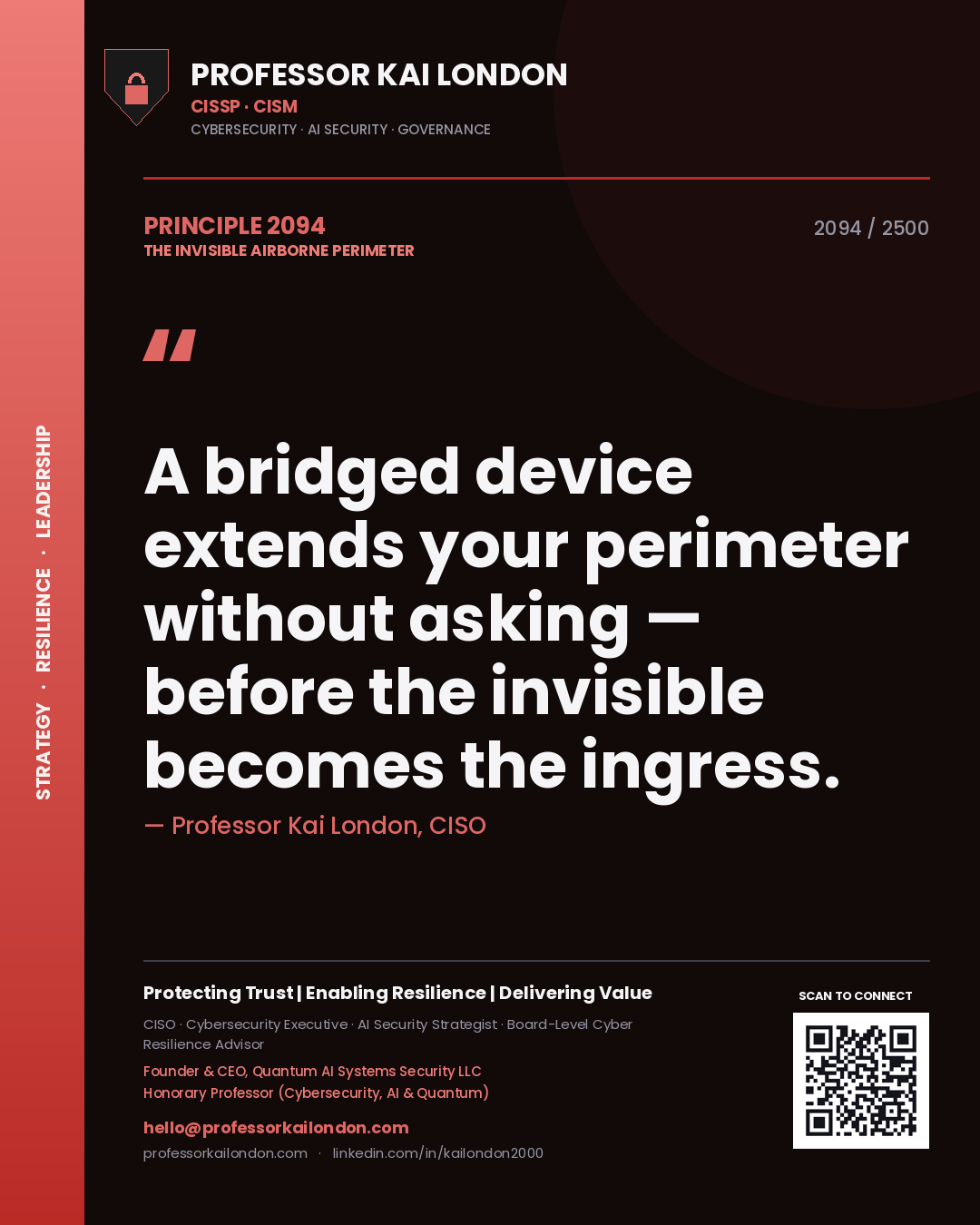
Professor Kai London principle 2094: A bridged device extends your perimeter without asking — before the invisible becomes the ingress.
Principle 2094
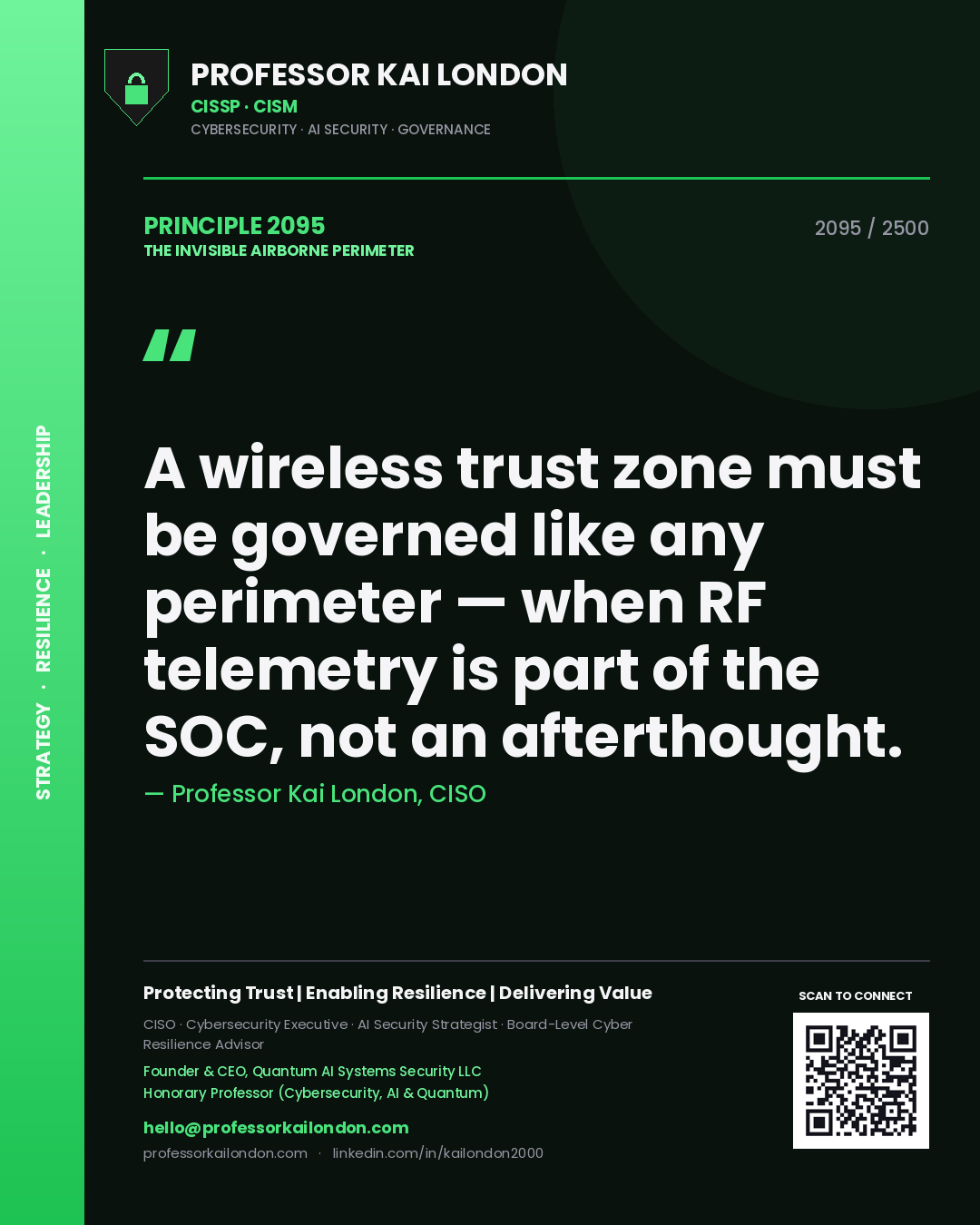
Professor Kai London principle 2095: A wireless trust zone must be governed like any perimeter — when RF telemetry is part of the SOC, not an afterthought.
Principle 2095
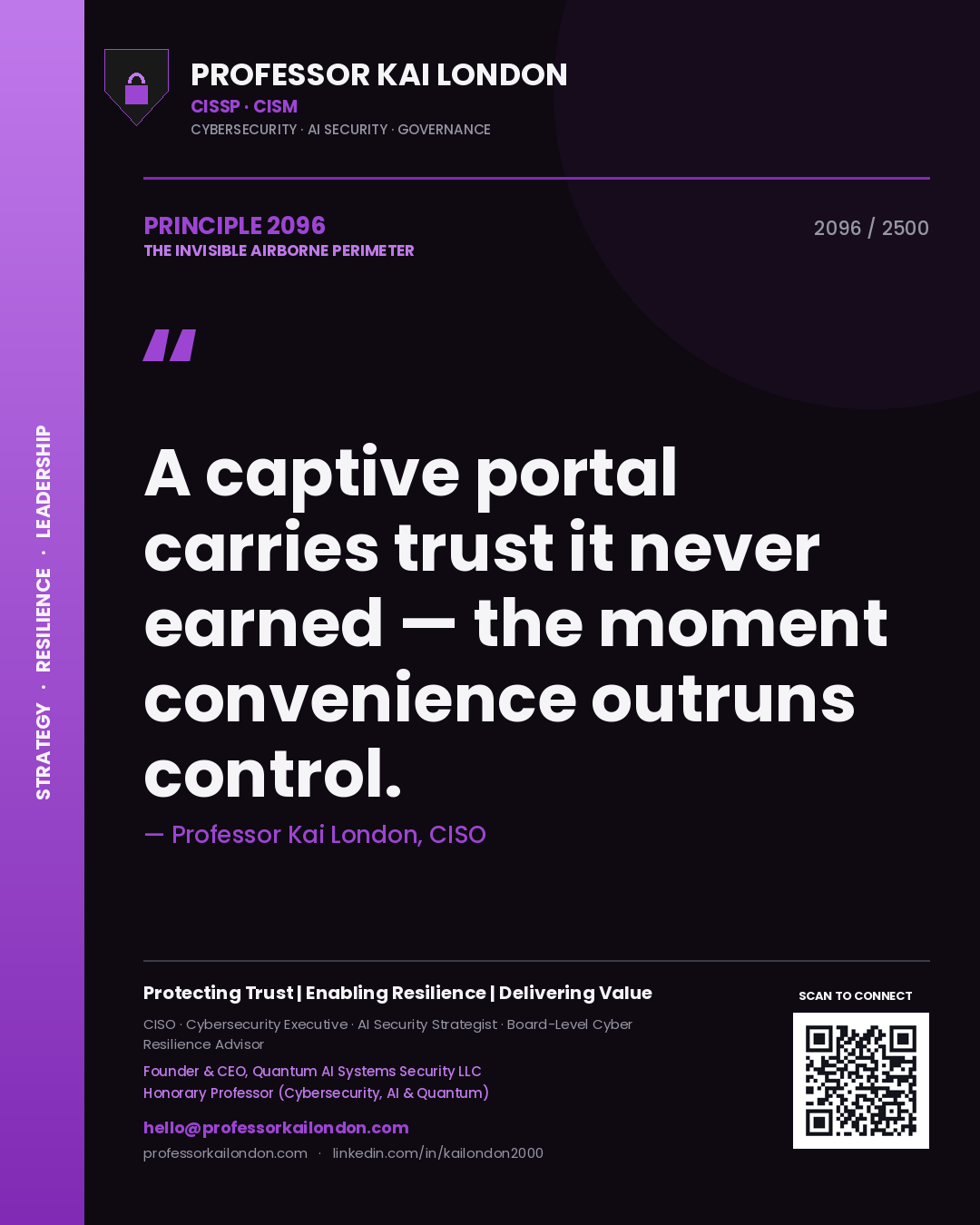
Professor Kai London principle 2096: A captive portal carries trust it never earned — the moment convenience outruns control.
Principle 2096
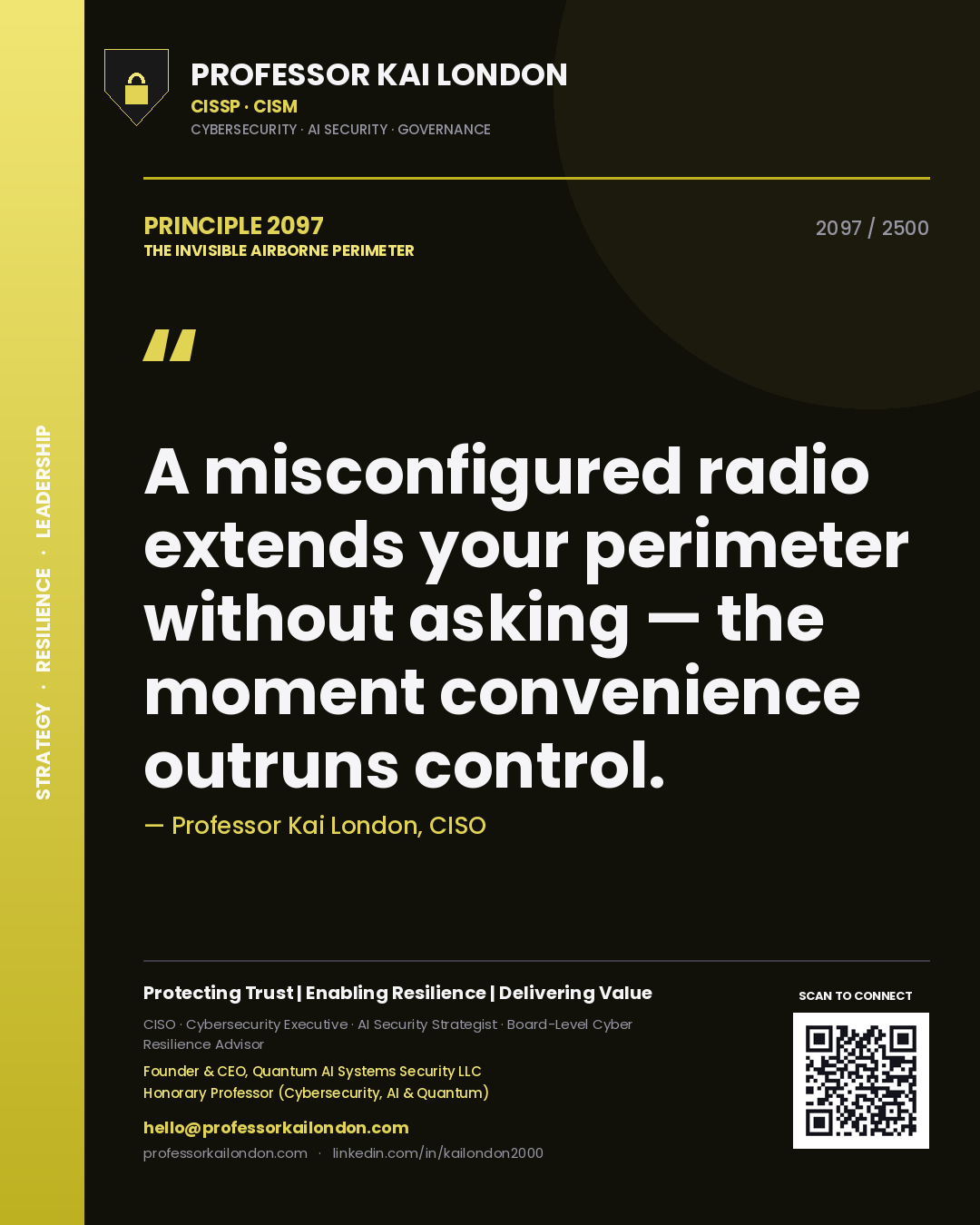
Professor Kai London principle 2097: A misconfigured radio extends your perimeter without asking — the moment convenience outruns control.
Principle 2097
Professor Kai London principle 2098: An airborne signal must be monitored continuously — when every SSID has an owner and a purpose.
Principle 2098
Professor Kai London principle 2099: A bridged device must be governed like any perimeter — because airborne trust is still trust that can be abused.
Principle 2099
Professor Kai London principle 2100: An unmanaged radio is trust you never granted.
Principle 2100